
A
Species Profile

Abyssinian

Felis catus

The Ticked-Coat Dynamo
Dina da/Shutterstock.com

Abyssinian Distribution

Click a location to explore more animals from that region

Origin Location

This map shows the native origin of the Abyssinian. As a domesticated species, they are now found worldwide.

Loading map...

Found in 1 country

Size Comparison

Human 5'8"
Abyssinian 9 in

Abyssinian stands at 14% of average human height.

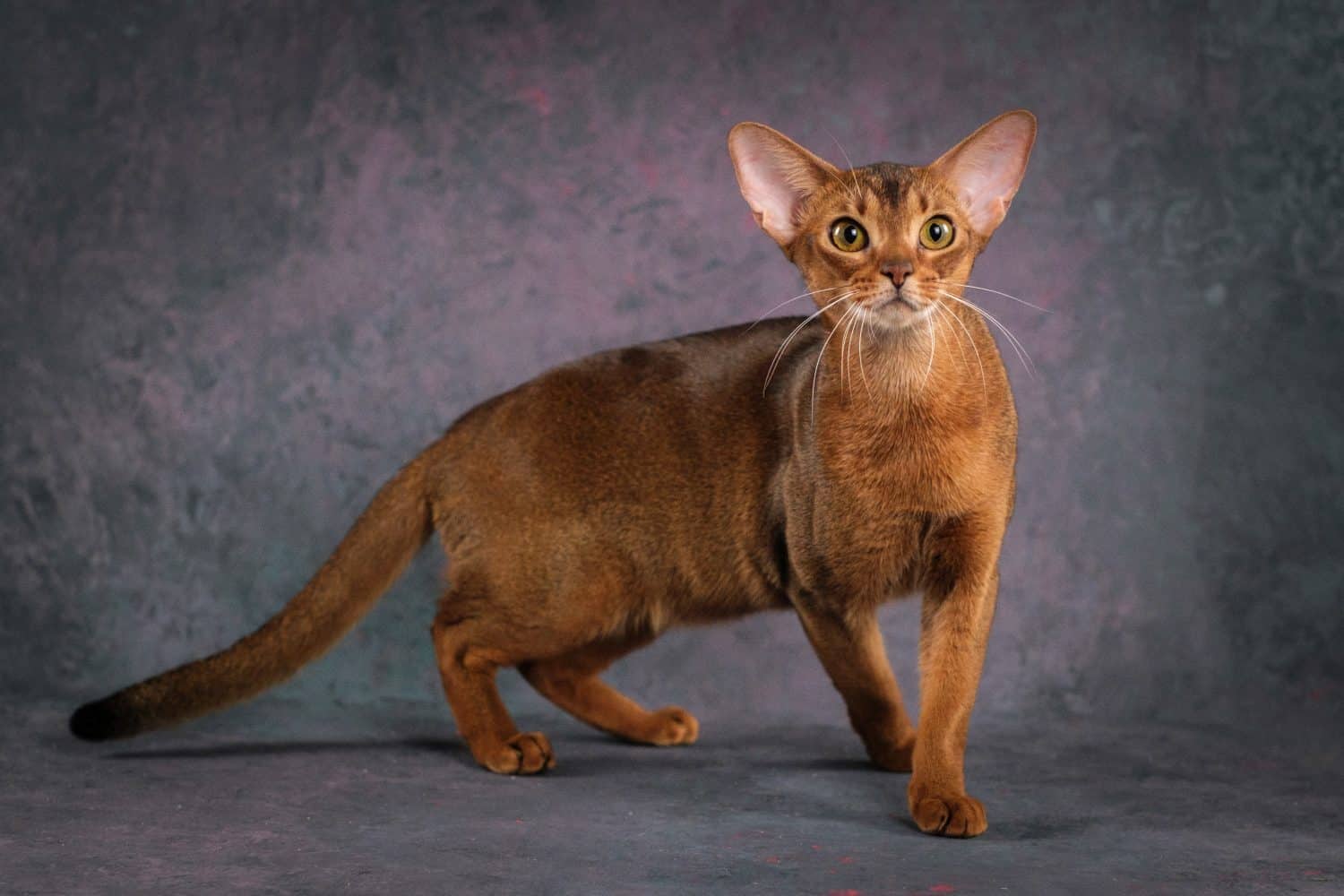
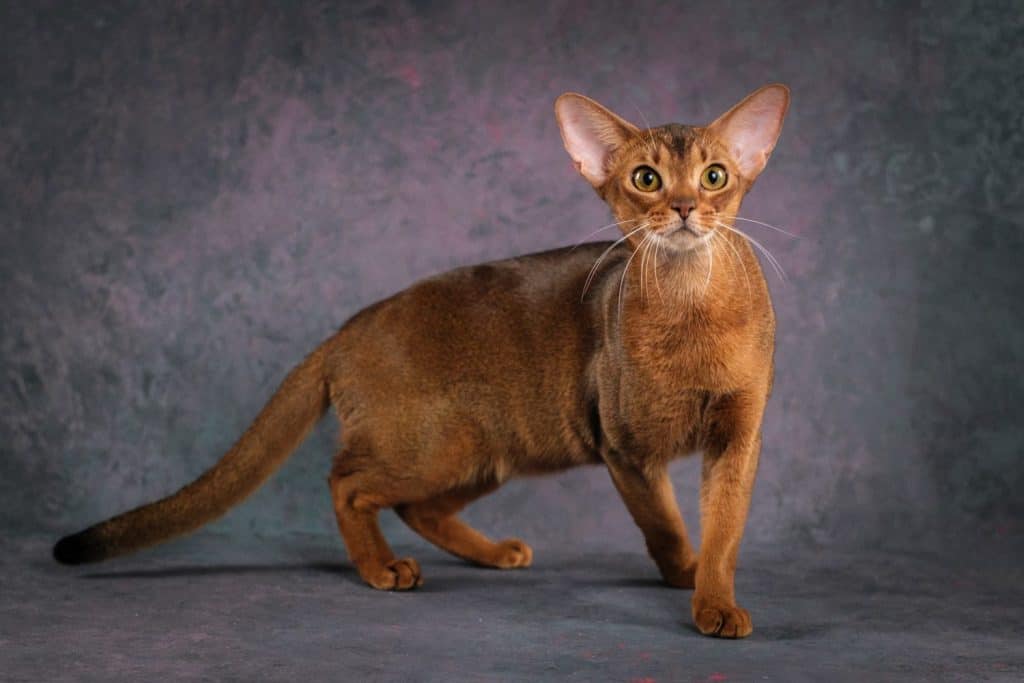
A ginger Abyssinian cat poses against a beautiful background in a photo studio.

At a Glance

Domesticated
Also Known As Abby, Aby, Abie, Abisinio, Abessinier
Diet Carnivore
Activity Crepuscular+
Lifespan 11 years
Weight 5.5 lbs
Status Not Evaluated
Did You Know?

Abyssinians are famous for a "ticked" (agouti) coat-each hair is banded with multiple colors, rather than forming classic tabby stripes.

Scientific Classification

The Abyssinian is a short-haired domestic cat breed known for its ticked (agouti) coat, alert expression, and active, social temperament.

Kingdom
Animalia
Phylum
Chordata
Class
Mammalia
Order
Carnivora
Family
Felidae
Genus
Felis
Species
catus

Distinguishing Features

  • Ticked (agouti) coat with banded hairs giving a warm, shimmering look
  • Sleek, athletic build; long legs and tail
  • Wedge-shaped head with large, alert ears
  • Typically very active, curious, and people-oriented

Physical Measurements

Males and females differ in size

Height
9 in (9 in – 10 in)
9 in (8 in – 10 in)
Length
2 ft 1 in (1 ft 10 in – 2 ft 4 in)
2 ft 3 in (1 ft 12 in – 2 ft 6 in)
Weight
11 lbs (9 lbs – 13 lbs)
8 lbs (6 lbs – 10 lbs)
Tail Length
11 in (9 in – 12 in)
10 in (9 in – 12 in)
Top Speed
30 mph
Short sprint bursts

Appearance

Primary Colors
Secondary Colors
Skin Type Abyssinian (Felis catus) has a short, fine, close single coat with little undercoat. Low shedding; weekly grooming is enough. Poor diet or low water can cause dandruff; routine parasite and dental care help.
Distinctive Features
  • Domestic cat breed (not a wild species); distinguished from the average Felis catus by a uniquely even ticked/agouti coat and a notably athletic, fine-boned build.
  • Head: slightly wedge-shaped with a gentle contour; alert, expressive face often described as 'fox-like.'
  • Ears: large, open at the base, set as if listening; contribute to the breed's attentive expression.
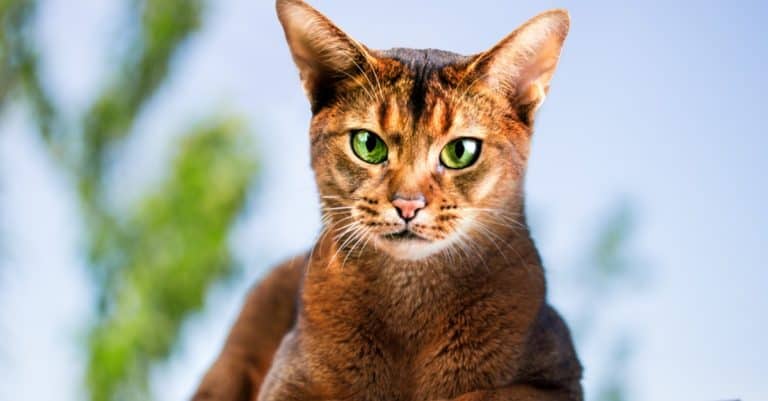
  • Eyes: large almond shape; common colors include gold, green, or hazel (registry-dependent), emphasized by darker 'eyeliner' shading typical of ticked coats.
  • Body: medium size, lithe and muscular; long legs and a graceful, springy gait-built for climbing and speed.
  • Tail: long and tapering; often darker at the tip with strong ticking along the length.
  • Temperament trait (breed hallmark): highly active, curious, people-oriented; benefits from vertical space, interactive play, and puzzle feeders to prevent boredom.
  • Care requirement: short coat needs minimal grooming, but high activity level means environmental enrichment is more critical than for many other short-haired breeds.
  • Abyssinian cats can be prone to periodontal disease (need regular dental care), patellar luxation and progressive retinal atrophy (PRA) in some lines, and amyloidosis affecting kidney and liver in some pedigrees.

Sexual Dimorphism

Sexual dimorphism is moderate. Both sexes share the same ticked coat and athletic outline, but males are often slightly larger and more muscular with broader heads/cheeks; females tend to be finer-boned and more delicate in facial structure.

  • Often heavier and more muscular through shoulders/chest; broader head with more pronounced cheek pads (especially if not neutered).
  • May present a thicker neck and slightly more substantial bone structure while retaining the breed's sleek look.
  • Typically smaller overall with a finer, more streamlined frame.
  • Head/face often appears slightly more refined with less cheek fullness.

Did You Know?

Abyssinians are famous for a "ticked" (agouti) coat-each hair is banded with multiple colors, rather than forming classic tabby stripes.

They're often nicknamed "Abys" and sometimes "bunny cats" because their coat can resemble a hare's ticking.

Common registry-recognized colors include ruddy, red/sorrel, blue, and fawn (availability/terms vary by registry).

The breed's sleek, arched body and long legs give it a notably athletic silhouette compared with the average domestic shorthair.

A well-known early historical reference is a cat called "Zula," shown in Britain in the 1870s and often cited in breed origin lore.

Despite the "Abyssinian" name, modern accounts suggest the breed was largely developed in Britain from ticked cats, with debated geographic roots.

Their high engagement means many Abys excel at clicker training, puzzle feeders, and learning routines (fetch, target, leash-walk).

Unique Adaptations

  • Ticked (agouti) coat pattern: banded hairs create a shimmering, "salt-and-pepper" look that echoes wild felids' camouflage, even though Abyssinians are fully domestic (Felis catus).
  • Short, fine coat: lower grooming burden than many long-haired breeds; weekly brushing usually suffices while still controlling shedding.
  • Lean, muscular build: designed for quick acceleration and jumping-great for agility-style play and vertical enrichment.
  • Large, alert ears and wide, expressive eyes: a "keen" facial look paired with strong attention to movement and sound-typical cat senses, emphasized by the breed's head/ear set.

Interesting Behaviors

  • High-perch scouting: they seek elevated vantage points (tops of shelves, cat trees) to monitor activity like a small predator.
  • "Helping" behavior: many Abys insist on supervising chores-typing, cooking prep, and unpacking boxes-often inserting paws into the process.
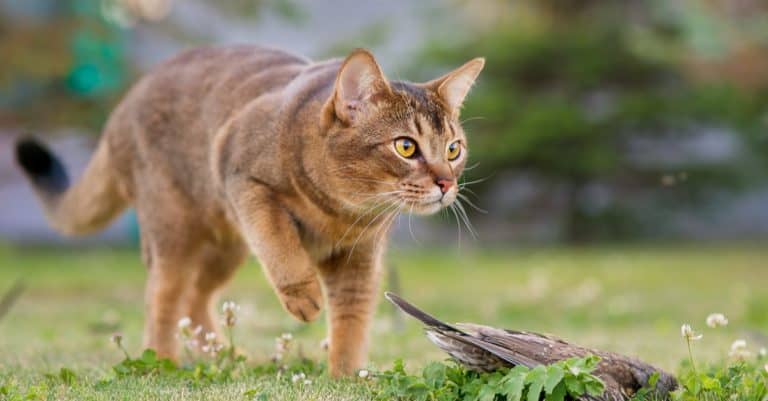
  • Interactive play drive: strong interest in chase-and-pounce games (wand toys, balls) and short, intense play bursts.
  • Social following: they commonly trail favorite people room-to-room and prefer being near you over being carried for long periods.
  • Problem-solving curiosity: they investigate cabinets, latches, and new objects; boredom can lead to inventive mischief.
  • Vocal-but-not-always-loud communication: frequent chirps/trills and expressive body language rather than constant loud meowing.

Cultural Significance

Abyssinians helped popularize the sleek, "natural" short-haired show-cat aesthetic in Europe and North America. Their wildcat-like ticked coat has long fueled public fascination and frequent (often romanticized) associations with ancient-world cats-especially Egyptian art-making the Abyssinian an enduring cultural symbol of an elegant, energetic domestic cat rather than a wild species.

Myths & Legends

The Abyssinian cat (Felis catus) tale says a cat tied to the breed came to Britain from Abyssinia (now Ethiopia) after the 1868 British expedition — an origin story often linked to the show cat Zula.

The "cats of the pharaohs" association: because Abyssinians resemble the sleek, upright-eared cats depicted in ancient Egyptian art, they're frequently wrapped into modern retellings that imagine them as descendants of temple cats or royal companions.

The Abyssinian cat (Felis catus) name has long been argued: did it come from Ethiopia, from cats moved by sea trade through ports, or is it a Victorian label for a ticked British breed?

Conservation Status

NE Not Evaluated

Has not yet been evaluated against the criteria.

Population Stable

Life Cycle

Birth 4 kittens
Lifespan 11 years

Lifespan

In the Wild
9–13 years
In Captivity
9–13 years

Reproduction

Mating System Polygynandry
Social Structure Managed Domestic
Breeding Pattern Transient
Fertilization Internal Fertilization
Birth Type Managed_selective

Felis catus are polygynandrous: both males and females may have many mates. Queens are seasonally polyestrous with induced ovulation; matings are brief and superfecundation is common. Abyssinian breeding is usually managed with chosen pairings and health screening, and many pets are neutered.

Behavior & Ecology

Social Colony Group: 4
Activity Crepuscular, Cathemeral, Diurnal
Diet Carnivore High-protein animal-based foods (e.g., poultry- or rabbit-based wet food / raw-meat-style diets formulated for cats); many Abyssinians show strong preference for novel, meat-forward textures due to high activity and food motivation.

Temperament

Highly active, athletic, and exploratory; strong drive for climbing, jumping, and interactive play (breed-typical above the general domestic cat baseline).
Social, people-oriented, and often follows caregivers room-to-room; many prefer constant proximity rather than lap-sitting.
Intelligent, novelty-seeking, and prone to opening doors/cabinets; benefits from clicker training, puzzle feeders, and rotating enrichment to prevent frustration.
Playful and generally tolerant with other cats/dogs when well-socialized; can become pushy or jealous if attention/resources are limited-multiple feeding stations/litter boxes reduce conflict.
Care requirement: short coat is low-maintenance (weekly brushing usually sufficient), but high daily activity needs (multiple short play sessions, vertical territory, safe window perches) are critical.
Abyssinians are prone to dental disease, progressive retinal atrophy, pyruvate kinase deficiency, and renal amyloidosis. Pain or vision loss can cause irritability or withdrawal; checkups and early care help keep normal social behavior.

Communication

Meow Often frequent/insistent in this breed when seeking interaction or play
Purr Affiliative/comfort; can also occur with stress
Trill/chirp Greeting and friendly solicitation; commonly used by social individuals
Chatter At prey/birds through windows
Yowl/howl Distress, mating-related in intact cats, or discomfort
Growl/hiss Defensive warning; usually brief if well-socialized
Allorubbing and head-butting (bunting) to exchange scent with humans/other cats; common in socially affiliative Abyssinians.
Scent marking via cheek glands and scratching; scratching also functions as a visual signal-provide multiple scratch surfaces to reduce furniture targeting.
Tail/ear posture and body orientation: upright tail and forward ears during friendly approach; flattened ears/sideways stance during conflict.
Allogrooming and social sleeping in bonded pairs/groups; more likely with adequate resources and low crowding.
Play signaling: play bows, rapid darts, and inhibited biting; because Abyssinians are high-arousal players, structured play and appropriate toys help keep play from escalating.
Attention-seeking behaviors (bringing toys, tapping with paws, sitting on keyboards, door-scratching) used to initiate interaction; often increases if understimulated.

Habitat

Biomes:
Temperate Forest Temperate Grassland Mediterranean Savanna Desert Hot Desert Cold Tropical Rainforest Tropical Dry Forest Boreal Forest (Taiga) Tundra Alpine Wetland +6
Terrain:
Plains Coastal Riverine Hilly Mountainous Island
Elevation: Up to 19685 ft 1 in

Ecological Role

Obligate carnivorous mesopredator (domestic companion) with strong hunting propensity; in outdoor contexts can function as an invasive/introduced predator impacting native small wildlife.

Rodent population suppression around human habitation (pest control) Behavioral enrichment and human-animal companionship (anthropogenic role) Nutrient cycling via prey remains/scat in local environments (minor)

Diet Details

Main Prey:
Small rodents Small birds Small reptiles Amphibians Large insects and other invertebrates

Human Interaction

Domestication Status

Domesticated

Felis catus came from Near Eastern/African wildcats (Felis lybica) and was domesticated long ago when cats lived near early farms to help control rodents. The Abyssinian is a modern pedigreed breed of domestic cat, bred in the 19th–20th century (mainly UK and US) for a ticked (agouti) coat, athletic body, and friendly, active nature.

Danger Level

Low
  • Scratches and bites (especially during play or handling stress)
  • Allergic reactions (dander/saliva)
  • Zoonoses uncommon but possible (e.g., ringworm; rare bacterial infections from bites)
  • Trip/fall hazards in the home due to high activity and climbing behavior

As a Pet

Suitable as Pet

Legality: Abyssinian cat (Felis catus) is usually legal where pet cats are allowed. Local rules may require a license, rabies shot, microchip, spay/neuter, or limits on number of pets. Exotic hybrid rules do not apply.

Care Level: Moderate

Purchase Cost: $800 - $2,500
Lifetime Cost: $12,000 - $30,000

Economic Value

Uses:
Companion animal industry Selective breeding/pedigree sales Veterinary services Pet products and nutrition Cat shows and registries
Products:
  • pedigree kittens (breeder sales)
  • stud services (where applicable)
  • show participation/registration fees
  • pet insurance policies
  • specialty diets and enrichment products (interactive toys, climbing structures)

Relationships

Related Species 8

Ecological Equivalents 5

Animals that fill a similar ecological role in their ecosystem

Somali cat
Somali cat Felis catus Closely related in breed history and often considered the long-haired counterpart. Similarly high-energy, people-oriented, and enrichment-demanding, with a comparable agile 'busy' temperament.
Egyptian Mau
Egyptian Mau Felis catus Short-haired, athletic, alert domestic breed commonly compared to Abyssinians. Overlaps in niche as an active indoor companion with a strong play-and-chase drive and a need for interactive exercise.
Bengal cat Felis catus Domestic breed occupying a similar household niche as a highly active, stimulation-seeking companion. Like Abyssinians, it often needs vertical space, puzzle feeding, and daily interactive play to prevent boredom.
Feral domestic cat Felis catus Shares the same predatory role as a small-prey hunter/mesopredator. Abyssinians retain strong chase and play behaviors typical of the species but are generally selected for sociability and indoor companionship, so management focuses on enrichment and safety rather than roaming.
Stoat
Stoat Mustela erminea Small, agile, high-metabolism predator that hunts similar prey (rodents) and uses quick bursts of pursuit, functionally occupying a similar niche in many temperate environments, though from a different family.

Quick Take

  • While affectionate, Abyssinians are notoriously disinterested in being lap cats.
  • Pyruvate Kinase Deficiency is a technical red blood cell constraint that triggers severe anemia.
  • Conversely, genetic tests prove the Abyssinian actually originated near Southeast Asia.
  • Reviewing genealogy is the mandatory scouting stage for preventing inherited blindness in Abyssinian kittens.

Perhaps too much emphasis is given to the uncertain point of origin of the Abyssinian cat. What truly matters is that this friendly, intelligent, curious, and companionable animal is here among us today. A lover of high places and eternally interested in watching what you are doing, the Abyssinian’s exquisite list of traits is the perfect answer that cat fanciers can offer to those who love their dogs. It can do so many dog-like things, yet it also knows where the litter box is and what it is used for.

An educational infographic about Abyssinian cats featuring sections on their history, traits, physical stats, health concerns, and breed color standards.
Forget the 'lap cat' stereotype—this high-climbing genius has a secret history that genetic testing only recently uncovered. © A-Z Animals

Breed History

The origin of the Abyssinian cat breed is shrouded in mystery. It was once believed that the Abyssinians were cats imported from Abyssinia (now Ethiopia), but the cat actually earned the name in reference to the Abyssinian War, and some cats during that period were imported by colonialists to Europe. These cats were exhibited in cat shows in the 1800s and called “Abyssinians.” But there’s no proof that those imported cats were true early Abyssinians.

Recent genetic tests have shown that the Abyssinian breed most likely originated in parts of Southeast Asia and the coast of the Indian Ocean. The earliest example of an Abyssinian is a taxidermied exhibit that was purchased between 1834 and 1836 by a museum supplier. It was labeled “Patrie, domestica India,” and is still on exhibit at the Leiden Zoological Museum in the Netherlands.
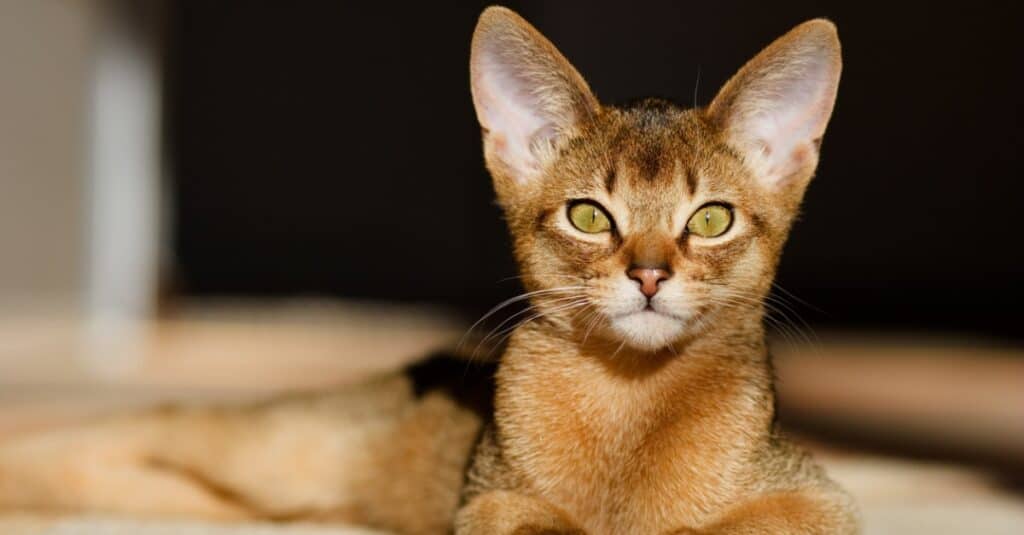
Abyssinian sunbathing

While it’s one of the oldest cat breeds in the world, the Abyssinian breed’s exact origins are mysterious.

Traits: What To Know Before You Buy

The most important thing to know about an Abyssinian, or Aby for short, is that you are not getting a couch potato out of the deal. If you don’t want to be followed around and have a cat underfoot, you should think about some other pet. Abyssinians are born to superintend your activities or those of other members of your family.

Some cats like to be under things, and some cats like to be above things. If you can’t find your Aby, then look up. Despite speculation that their ancestors came from a desert environment, the current breed is very fond of trees and other high perches.

Abyssinians are famously good-natured so long as they have been properly introduced. They can peacefully co-exist with birds, dogs, small children, and even goldfish. If you’ve ever fancied having a cat that can play fetch, you may well get your wish with an Abyssinian.

Personality

If there is one complaint about an Abyssinian’s personality, it may perhaps be that they are almost too smart. They love to learn, and they learn by observing things at close quarters. This means that they are not shy about getting into your business while you are doing it.

They are also very good at figuring out how to get into things or spaces that you may not want them in. These inquisitive creatures always want to know what’s on the other side of that barrier.

One area that often surprises people about the Abyssinian personality is that they are very affectionate but notoriously disinterested in being a lap cat. They like curling up beside you, not on top of you. In this position, they are perfectly content to let you pet them and scratch their ears, but they are not noted for being a cat you hold or carry around.

While Abyssinians are open-minded about their companions in life, they do like having others of one sort or another around. No matter if it is a human or another cat, they are very sociable and can become bored and destructive if left alone too much.

They have very loud motors when it comes to purring, but they balance this with the rather sparse use of their voice. If they talk, it’s because there is a topic of importance they wish to discuss with you.

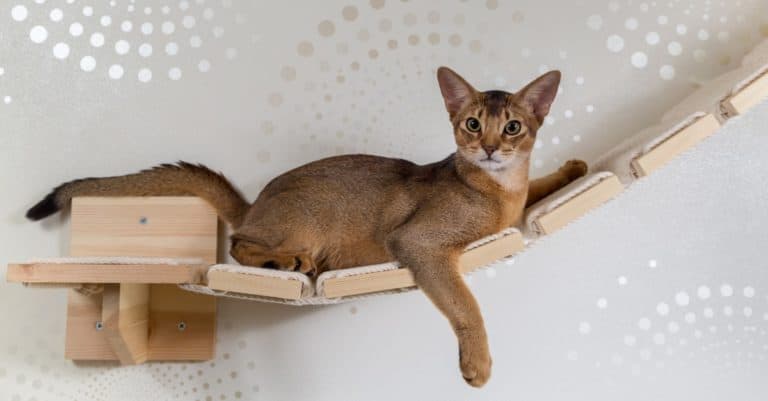
Abyssinian cat ruddy closeup on a wooden ladder, a pole, a hammock
While affectionate, Abyssinians are notoriously disinterested in being lap cats.

Size And Weight

The Abyssinian is a medium to small-sized breed of cat. Although medium in overall size, their very lithe build and thin legs make them register on the smaller end of that medium scale so far as weight is concerned.

Abys generally run from 8 to 10 inches in height and are anywhere from 12 to 16 inches in length. They tip the scales at a svelte 8 to 12 lbs.
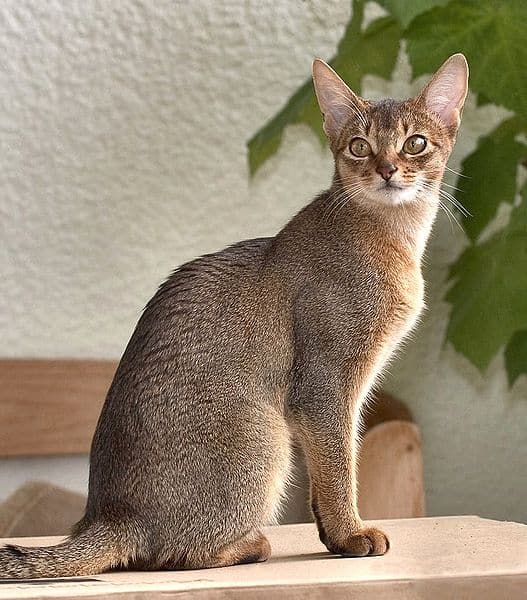
The average Abyssinian Cat will weigh between 8 and 12lbs and reach a height of 8 to 10 inches.

Prices

As purebred cats, Abyssinians are not inexpensive pets. Kittens can cost anywhere from $500 to $2200. Rarer Abyssinians and those coming from premier bloodlines can run all the way up to $5000.

The wild card in this is that you can obtain an Abyssinian kitten for much less than these numbers indicate, but they are not capable of being used to breed more Abyssinians. For a so-called “pet” Aby, you can find common ones in the $500-$900 range. Without getting into exotic toys, expensive foods, or unanticipated health issues, the average cost of maintaining an Abyssinian is about $400 a year.
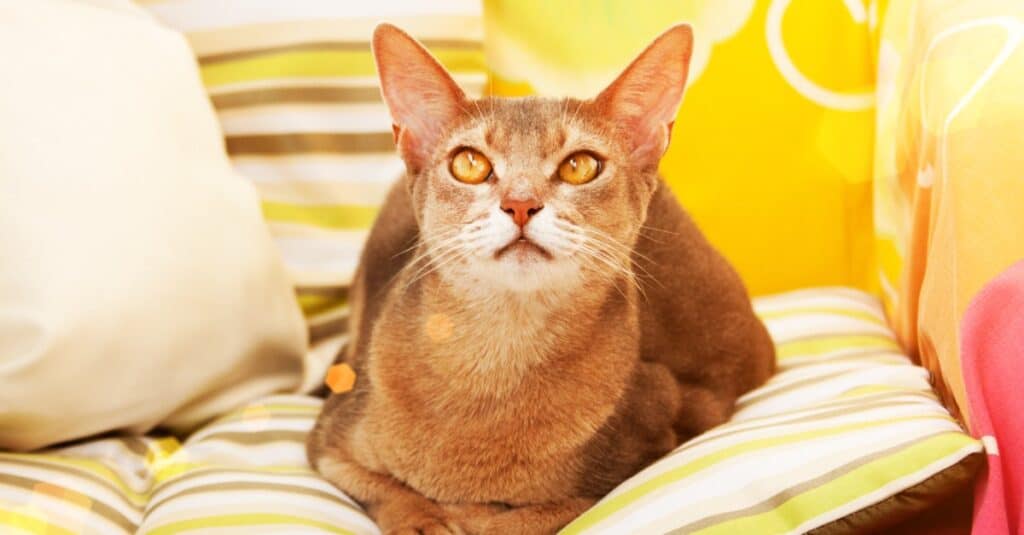
Abyssinian laying on striped pillows

Abyssinians are typically priced from 0-00, while those with premier bloodlines can cost 00.

Kittens

Like most other cats, Abyssinians have litters in the range of about six kittens. Kittens tend to be somewhat darker than their parents when born, but will lighten up as their distinctive coat develops.

They reach full height in about six months. After that, they gradually put on bulk until they are fully developed at around one year from their birth.

Like their parents, the kittens are very playful and intelligent. They make wonderful pets for children to grow up with.
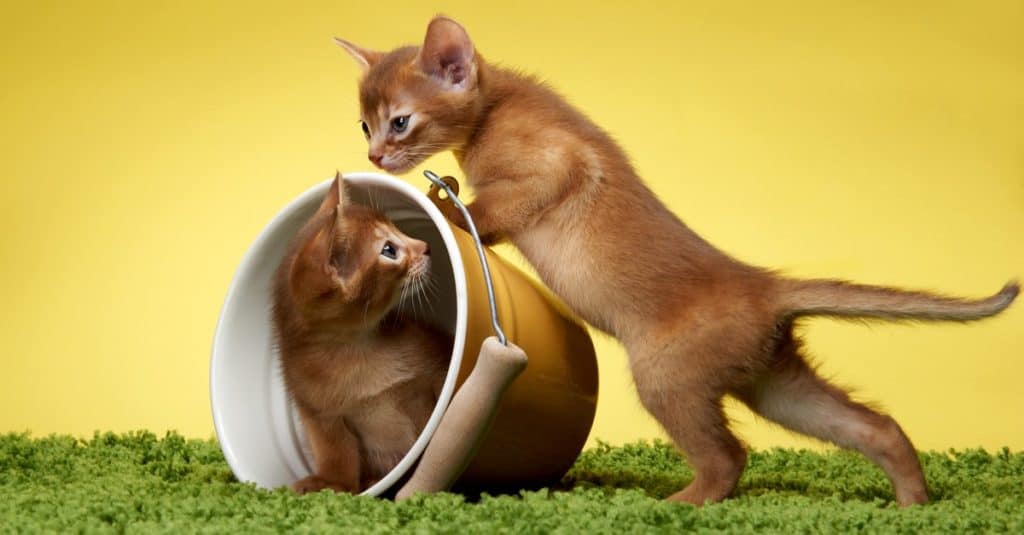
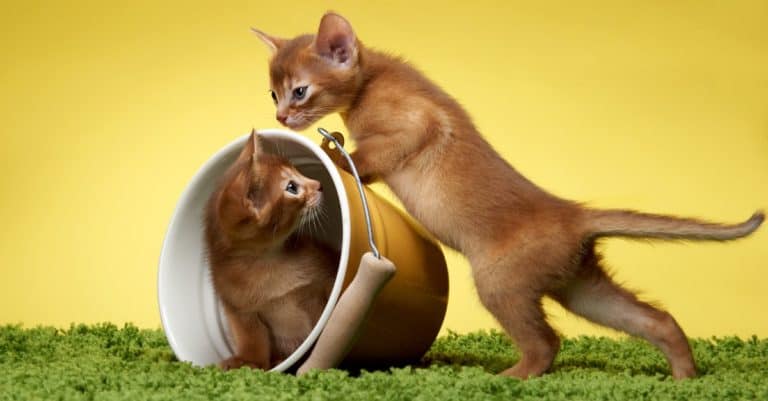
Abyssinian kittens playing

Abyssinian kittens tend to be born with darker coats than their parents, which lighten as they grow older.

Lifespan

Their curious nature and love of heights can artificially shorten their natural lifespan due to accidents. Barring any early death due to misadventure, however, Abyssinians easily last into the 13 to 15 year range. With proper care and diligence, living into their 20s is not too uncommon.

Given the large initial investment in acquiring one, Aby owners usually watch their cat’s health very carefully and tend to their veterinary needs promptly. This means that Abyssinians are less likely to develop conditions that require them to be euthanized at an earlier age.

Their longevity is also helped by their ectomorphic body characteristics and their generally vigorous levels of activity throughout their lives. Conversely, the relatively small genetic stock of the breed has led to some lingering hereditary issues that appear more often in Abyssinians than in the general cat population.
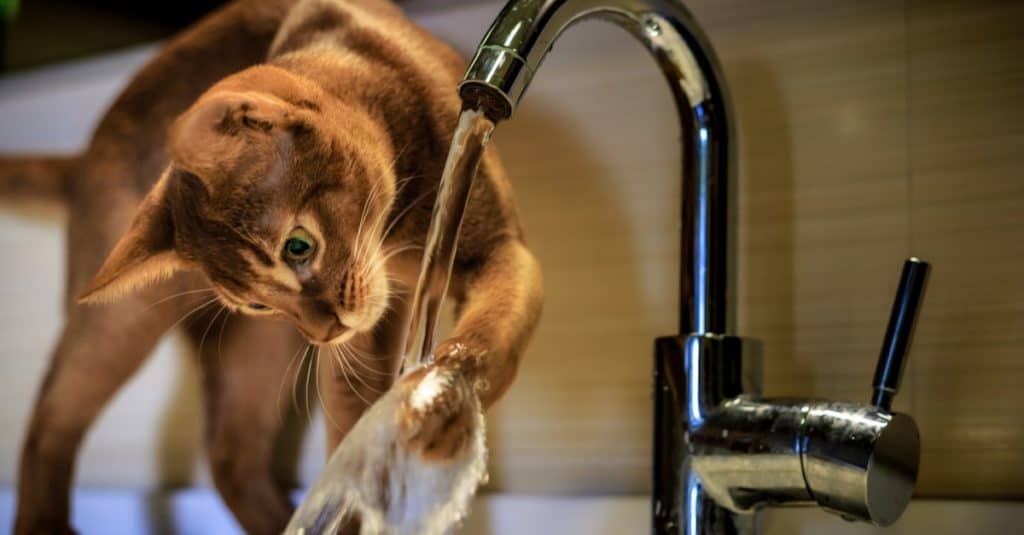
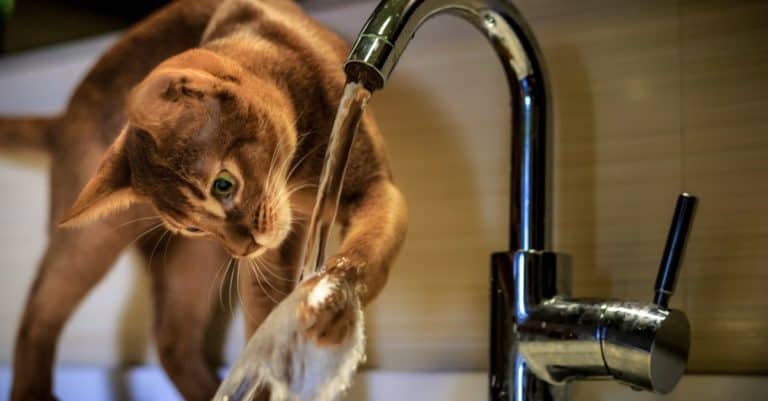
Abyssinian playing with water

The longevity of the typical Abyssinian is aided by its endomorphic body characteristics and vigorous levels of activity throughout its life.

Among the diseases that most commonly afflict these cats are:

  • Chronic Renal Failure: Also known as simple kidney failure, this hereditary condition is one you will want to guard against by carefully examining the ancestry of any prospective kitten you may be in the market for.
  • Hyperthyroidism: The general litheness of the breed can be accentuated by hyperthyroidism. This condition forces the body to burn energy it does not necessarily need or want to burn. This, in turn, causes the already thin cat to be thinner still and makes it harder for them to put or keep weight on their bodies. Medication can control the problem.
  • Luxating Patella: In a human, this would be known as a dislocated kneecap. Painful to suffer, painful to force back into its correct position, it is nevertheless not a major worry since a large number of quadrupeds have been known to suffer from this malady at one time or another.
  • Progressive Retinal Atrophy: In the long-lived Abyssinian, retinal atrophy first strikes in the form of increasing night blindness. This eventually develops into full-fledged blindness under all conditions. This is a genetic trait of the breed for which there is no cure. The only available prevention is to carefully scrutinize the genealogy of any prospective kitten or cat purchase.
  • Pyruvate Kinase Deficiency: This is the big one for Abyssinians. Pyruvate Kinase Deficiency is an inherited red blood cell condition that causes anemia and other blood disorders. The only known cure is a bone marrow transplant.
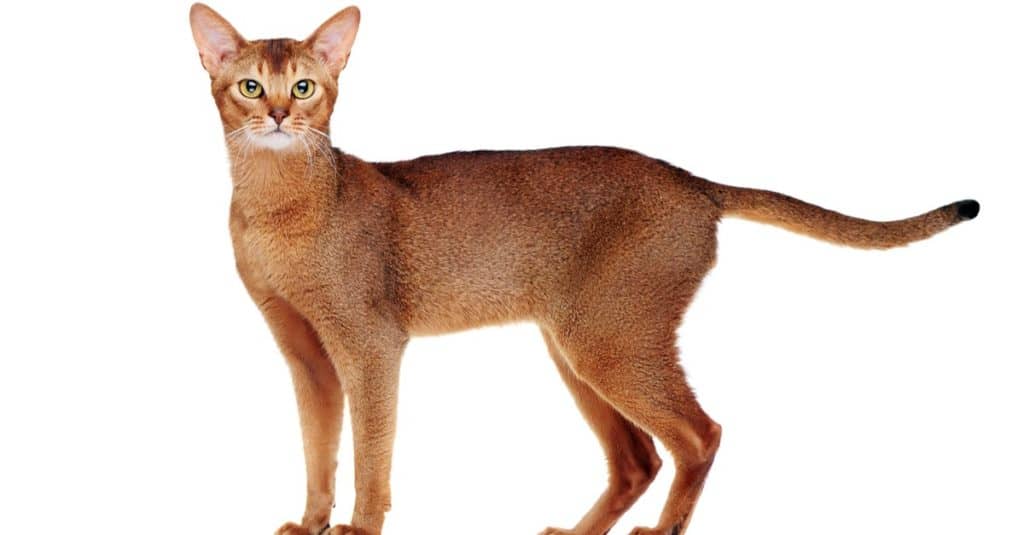
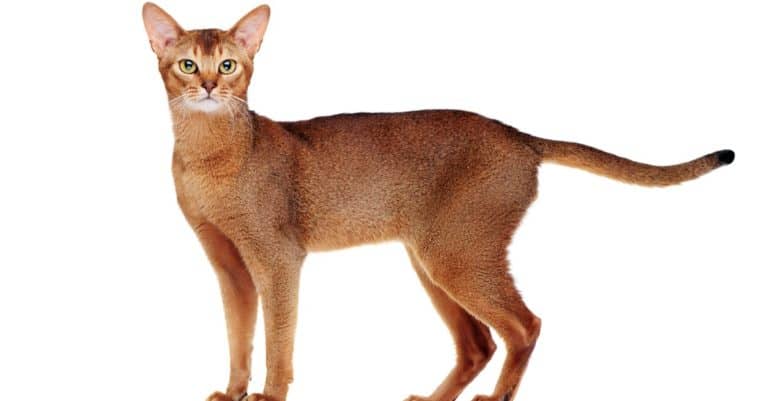
Abyssinian cat side view full length, isolated on white background
To be considered a true Abyssinian by breeders, the cat must be colored either ruddy, cinnamon, fawn, or blue.

Breed Versus Mixed Breed

To be a genuine Abyssinian, breeders require that a specimen must be one of four colors.

  • Ruddy: The first recognized coat color for an Abyssinian is ruddy, which is a combination of reddish-brown with ticks, or small lengths, of black peeking through in places. This ripple of multi-hued fur color along any individual strand is one of the main distinctive features of an Abyssinian. The black is found on the ends of the fur and is most pronounced on the tail and at the lower extremities of the paws. It must also have a fully red nose to qualify.
  • Cinnamon: More reddish than the brownish Ruddy Abyssinian, and more of an orange-brown in the underneath areas of the coat. All Abyssinians require the darkest hues to be on the tips of the fur. The Cinnamon has Chocolate Brown at the tail tip and feet, as well as a darkish pink nose.
  • Fawn: The lighter-hued Fawn Abyssinian is somewhat evocative of a light Siamese color coat with rose-beige as the primary color and light brown at the ends. Light cocoa brown on the tail tip and feet are matched with a salmon-colored nose.
  • Blue: The Blue Abyssinian is not a blue cat but rather one that has a warm beige coat somewhat similar to the Fawn but is tipped with bluish-gray slate highlights rather than brownish ones. Tail and lower paws have the same requirement for predominant dark hues, and the nose is a reddish pink.

Very slight variations of these color schemes are enough to disqualify a cat from being a cat breeder’s standard purebred Abyssinian. Black hair on a red Aby will disqualify. With few exceptions around the face, white patches or spots will disqualify. A dark necklace, or ring that goes entirely around the neck area, will disqualify. There are no recognized crossbreed Abyssinians.

There is, however, a separate group called Silver Abyssinians, which includes the colors: black silver, blue silver, fawn silver, and sorrel silver.

View all 326 animals that start with A

Sources

  1. Just Fun Facts / Accessed April 9, 2021
  2. Abyssinian Cat / Accessed April 9, 2021
  3. Pet MD / Accessed April 9, 2021
  4. Pet Finder / Accessed April 9, 2021
  5. Britannica / Accessed April 9, 2021
  6. Cat Time / Accessed April 9, 2021
  7. The Spruce Pets / Accessed April 9, 2021
  8. The Cat Fancier's Assiciation / Accessed April 9, 2021
Abby Parks

About the Author

Abby Parks

Abby Parks has authored a fiction novel, theatrical plays, short stories, poems, and song lyrics. She's recorded two albums of her original songs, and is a multi-instrumentalist. She has managed a website for folk music and written articles on singer-songwriters, folk bands, and other things music-oriented. She's also a radio DJ for a folk music show. As well as having been a pet parent to rabbits, birds, dogs, and cats, Abby loves seeking sightings of animals in the wild and has witnessed some more exotic ones such as Puffins in the Farne Islands, Southern Pudu on the island of Chiloe (Chile), Penguins in the wild, and countless wild animals in the Rocky Mountains (Big Horn Sheep, Mountain Goats, Moose, Elk, Marmots, Beavers).
Connect:

Thank you for reading! Have some feedback for us?


Abyssinian FAQs (Frequently Asked Questions)

The average number of babies an Abyssinian has is 6.