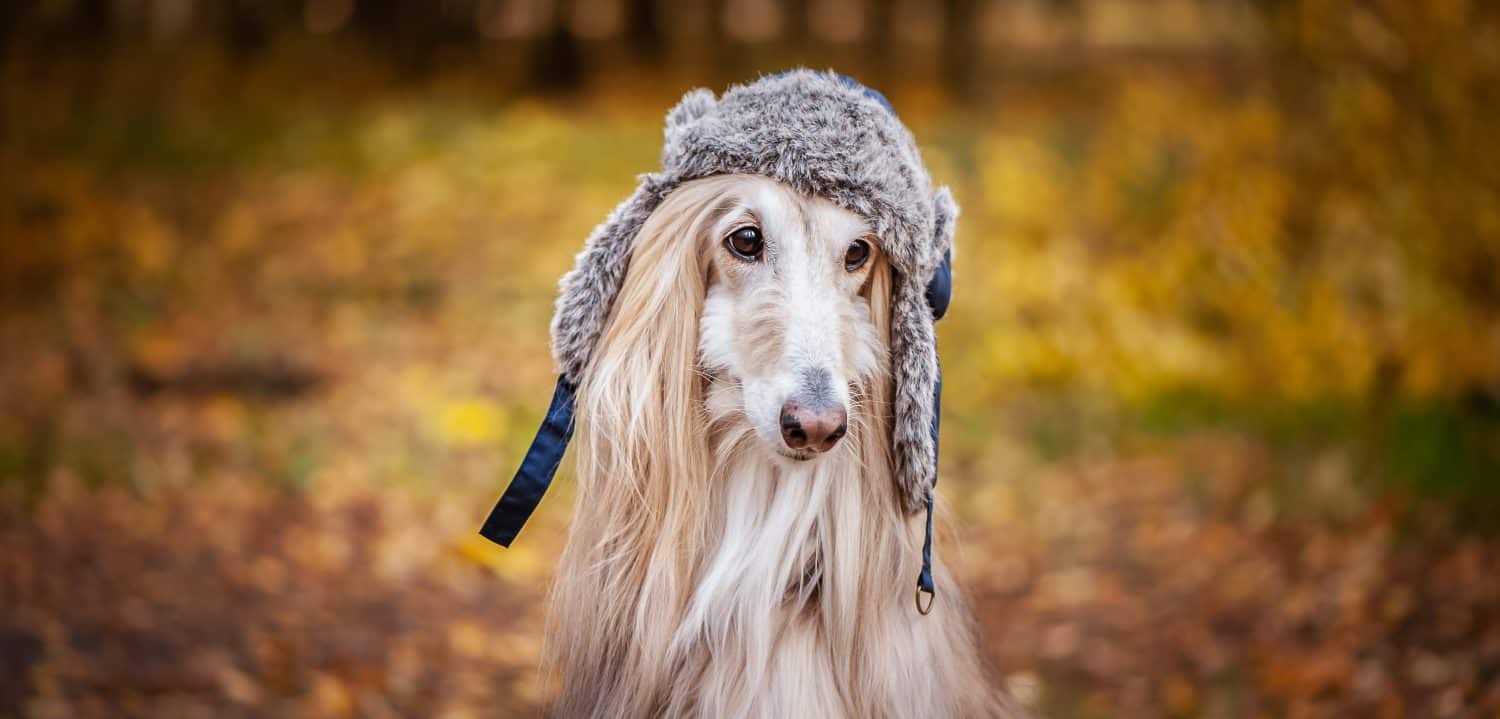
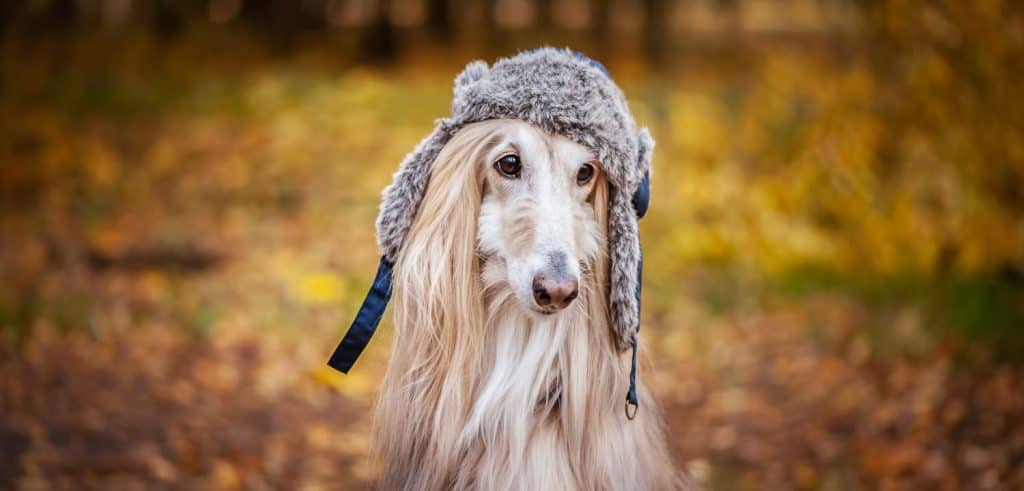

Afghan Hounds are an ancient breed whose lineage was recorded thousands of years ago by people in Afghanistan, northern India, and Pakistan. Though they are easily found in rescue shelters, breeders will also sell them to make a profit.
Originally bred as hunting dogs, these dogs are strong and independent, requiring plenty of exercise to keep healthy and mentally occupied. They tend to be on their feet constantly, showing off their hair. However, some owners keep them shaved or short-haired to help them cool off in warmer environments.
3 Pros and Cons of Owning Afghan Hounds
To understand the advantages and disadvantages of adopting an Afghan Hound (especially considering the high price of the breed), this list provides an unbiased look. All of these factors should be considered when deciding if this breed is the right animal for the household. Here are a few pros and cons of the breed:
| Pros | Cons |
|---|---|
| Warm personalities: These dogs are social and loving with the members of their human family, making them a sweet family pet. | Needs a lot of space: These dogs usually do not stay comfortable in small spaces and need a spacious area to let their energy out. |
| Energetic: If you are looking for a dog breed that is energetic and pushes you to get out of the house, this is the right pup. With a constant desire to exercise, they are a great jogging companion. | Strong chase instinct: These dogs have very strong chase instincts, which may not be best for small animals or especially excitable children. |
| Minimal shedding: If you are someone who is looking for a minimal mess and brushing, these dogs shed surprisingly little for having such a long coat. | High-maintenance grooming: Even though they do not shed a lot, it takes a lot of time to groom these dogs because of their long, silky hair. This issue can be remedied by keeping the puppy shaved or short-haired, which some owners will do to keep their dogs cool when the weather gets warmer. |
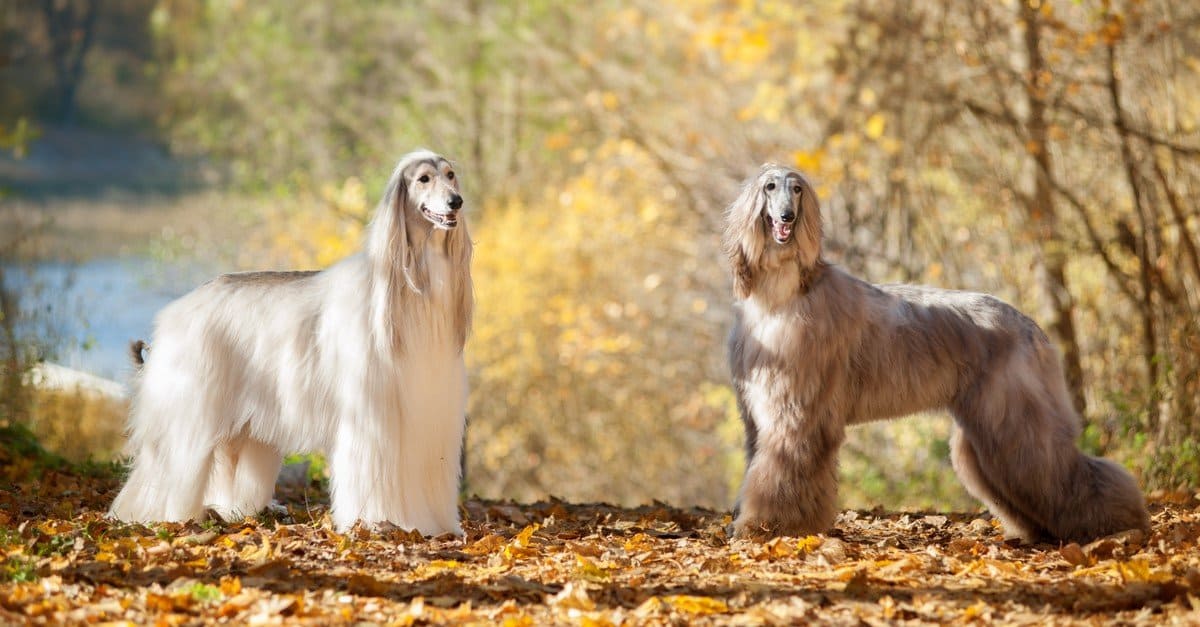
The Afghan Hound is one of the most ancient dog breeds.
©Olga_i/Shutterstock.com
History and Origins
This ancient breed is believed to be one of the oldest purebred dogs, with some claiming that a pair of Afghan Hounds were on Noah’s Ark. Its exact origin in the vast area of Afghanistan, India, and Pakistan is unknown. However, it has been used as a hunting dog and status symbol for centuries. These sighthound dogs can locate their prey using their excellent vision and swift speed.
Since ancient times, the Afghan hound has been a part of Eastern culture. It was not until the late 1800s, when officers from the British Empire brought the breed to Europe, that it was recognized in Western society. By the early 1900s, the Afghan hound had become a favorite of the British elite.
The American Kennel Club first registered an Afghan Hound in 1927, but it wasn’t until the early 1930s that the breed started to become popular in the United States. One of the most important dogs of this time period was a breeding pair imported from England by Zeppo Marx, the youngest Marx Brother. The Afghan Hound has become known for its presence in shows and as a pet. A giant sculpture of an Afghan Hound named Kabul was created by Pablo Picasso in Chicago’s Daley Plaza.
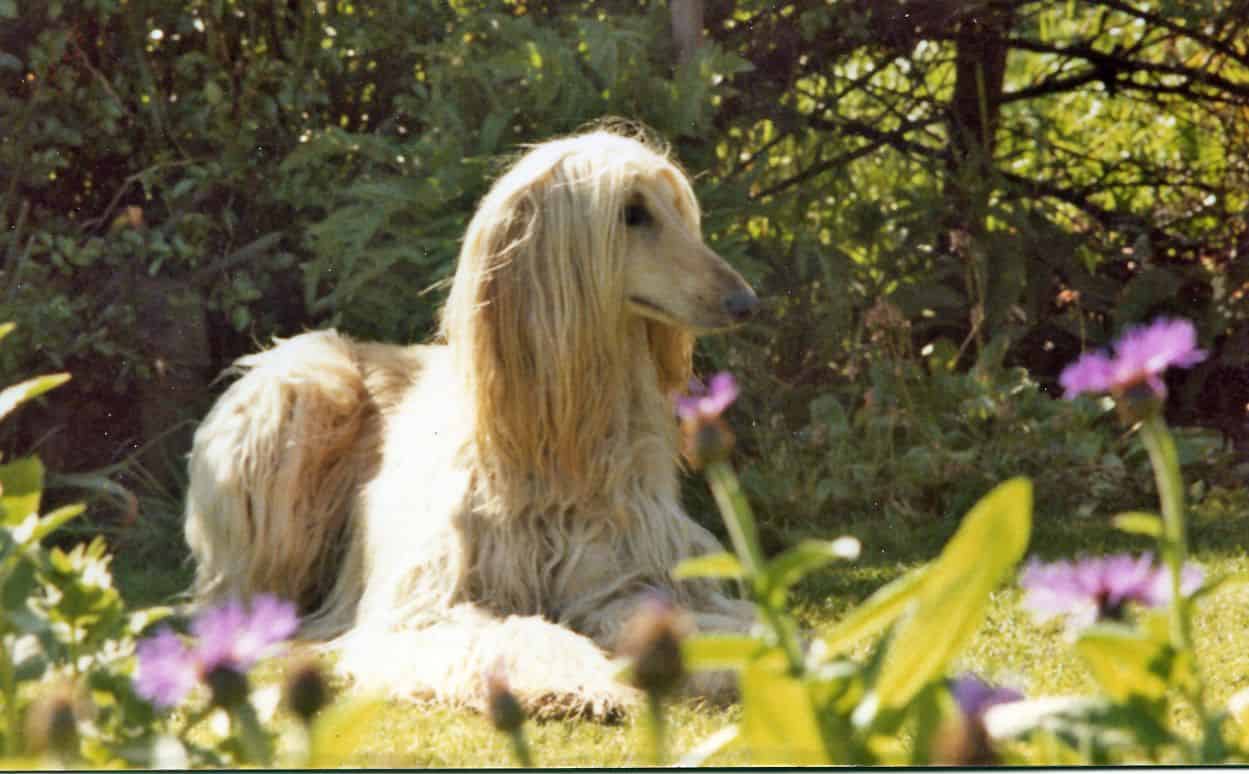
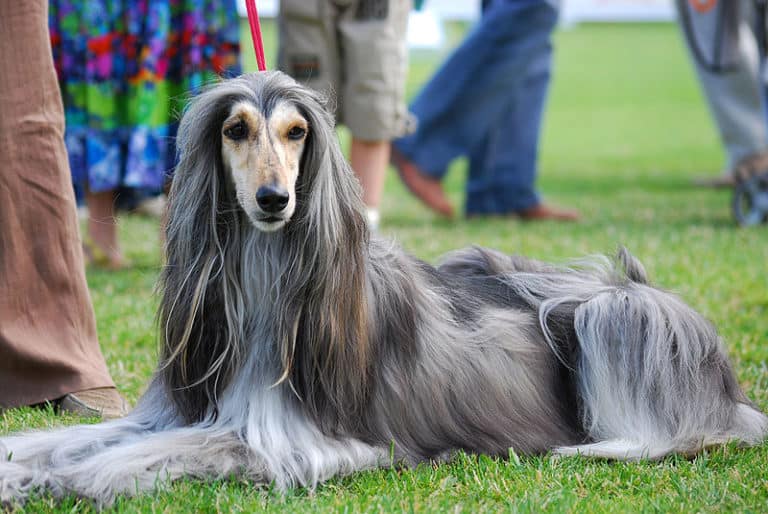
‘Afghan Hounds are considered one of the oldest dog breeds.
©Paul Dixon (yettis doings) / CC BY-SA 2.0, Flickr – Original / License
Size and Weight
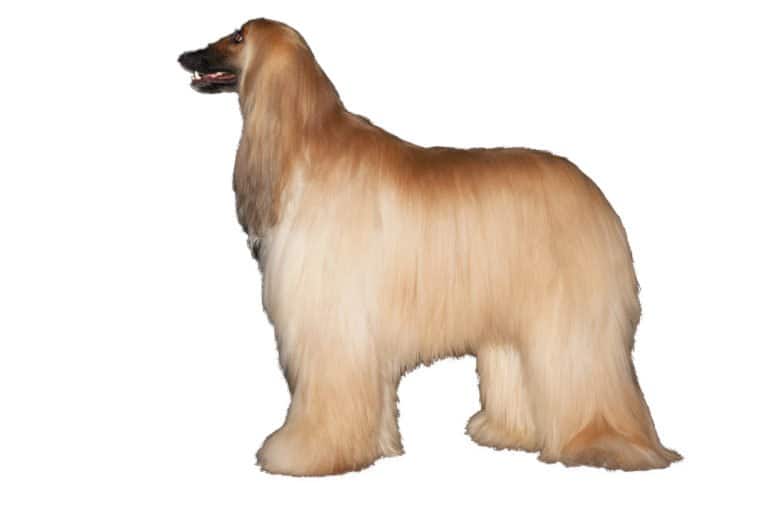
With long and beautiful hair, these dogs have a slim but athletic physique. Female Afghan hounds are usually about 25 inches tall, though the males stand a little taller at 27 inches. Meanwhile, both female and male varieties weigh about 50 to 60 pounds.
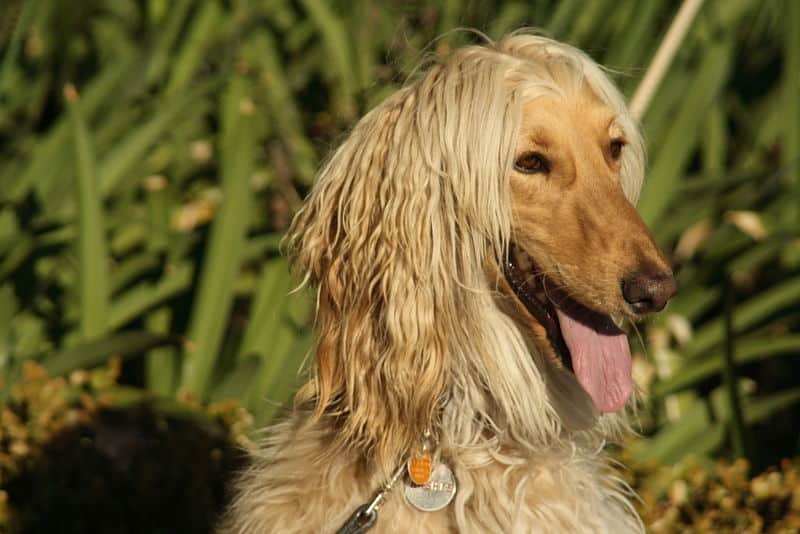
An Afghan Hound usually weighs between 50-60 pounds.
©Flickr user Esparta, CC BY 2.0, via Wikimedia Commons – Original / License
Common Health Issues
The beautiful appearance of the Afghan hound can be deceiving, as the breed comes with multiple health concerns that will require regular veterinary care to prevent and treat them.
Their long legs and tall build put them at significant risk of hip and elbow dysplasia, evidenced by the misalignment of the bones in the joints that hold them. Issues often arise in the thyroid gland, which regulates various metabolic processes.
Juvenile cataracts can be another concern for this dog breed. These cataracts cloud the eye, preventing the dog from seeing clearly, eventually leading to blindness.
Laryngeal paralysis is common in these dogs. This paralysis makes breathing difficult, though the condition is treatable. Unfortunately, before the treatment begins, it is unclear if the animal will still have a good quality of life.
One of the diseases that this breed can permanently face is Von Willebrand disease. The condition prevents the blood from clotting since the animal would lack certain proteins that are supposed to manage clotting. Though the trait is ingrained in the DNA, not all Afghans develop it.
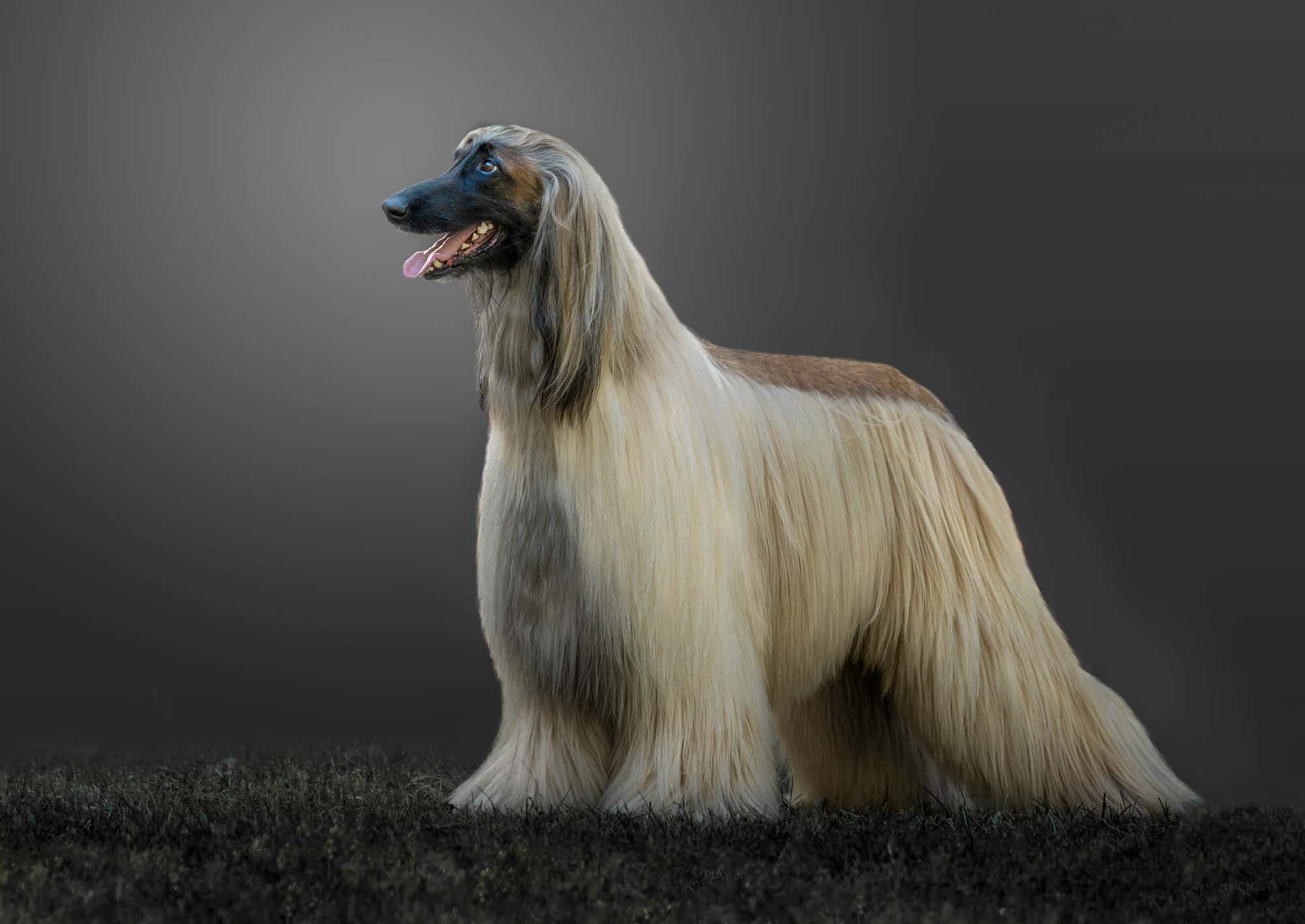
Afghan Hounds are prone to hip and elbow dysplasia.
©xyom/ via Getty Images
Temperament
Afghan hounds are very content and easy-going in temperament, though they are always up and running. Due to their natural hunting desire, their intelligence is well-suited for outdoor activities that require endurance or energy. They also tend to be strong-willed and aloof.
While it is usually common for them to stay distant from strangers, they are very warm towards their human families. They can sometimes be timid with new experiences and people, but are generally very brave, making them a good breed for protecting the home.
To ensure that these dogs become acclimated to other breeds, they need to be introduced to a social circle from early on.
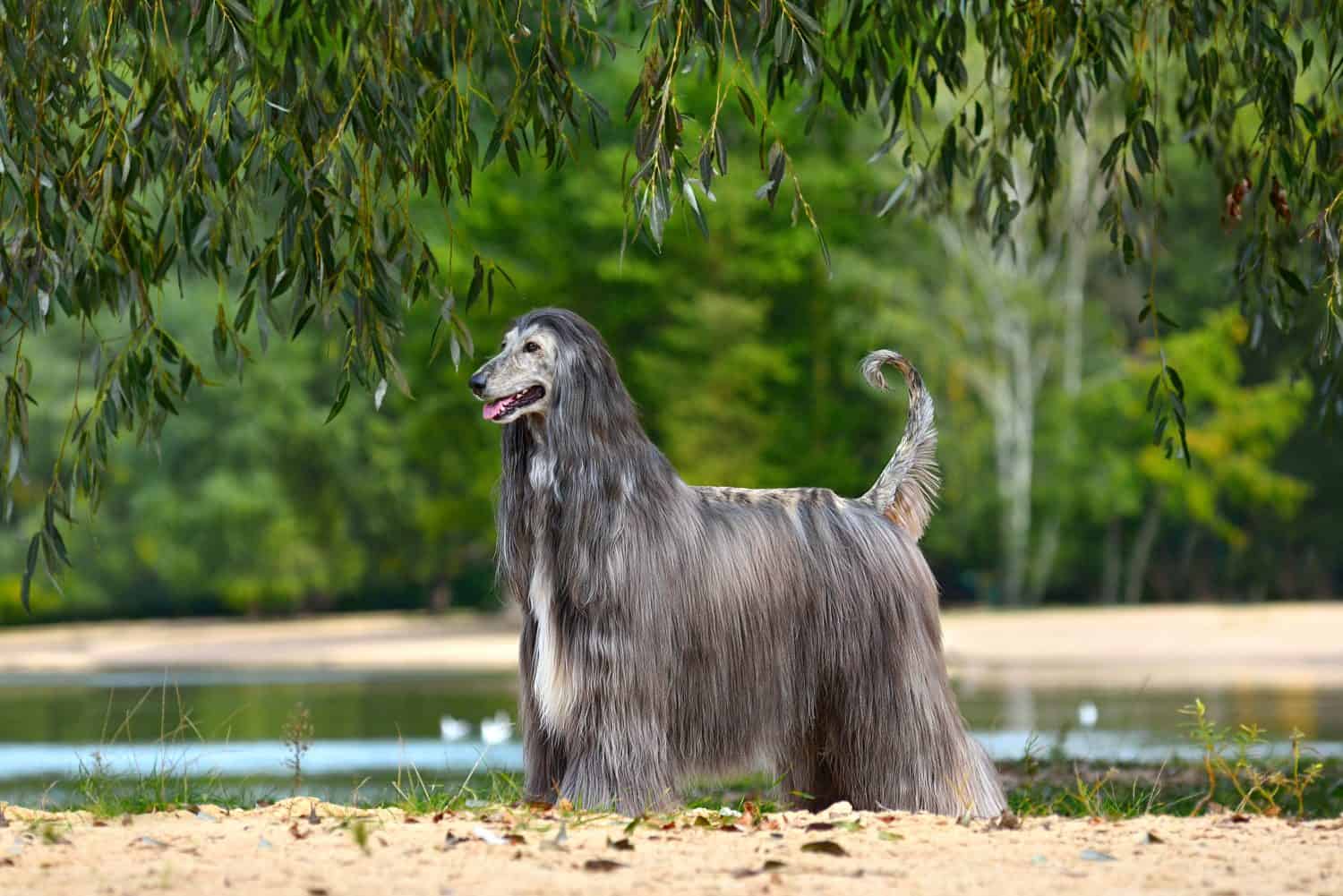
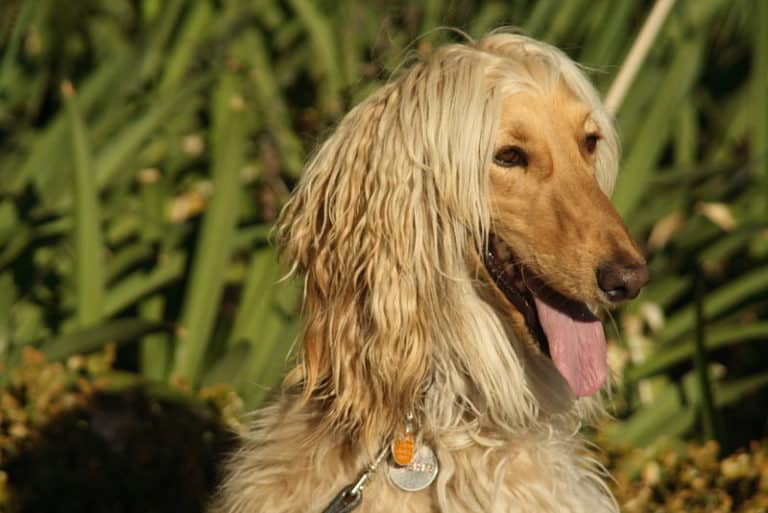
Afghan hounds are easy-going dogs.
©Natallia Yaumenenka/Shutterstock.com
How to Take Care of Afghan Hounds
Before you finalize your decision to adopt an Afghan Hound from a rescue or a breeder, you need to understand the amount of care that goes into them. This breed has many grooming needs, and they need to be fed regularly to thrive and grow. Here are some things that you should know about taking good care of these dogs:
The Best Dog Food
Afghan dogs do well with a high-quality protein-based diet. Split the dog food into two meals, totaling approximately 2 to 2.5 cups of high-quality dog food a day to keep your pet satisfied. Some of the human foods these dogs enjoy include chicken and sweet potatoes. However, the food and nutrition requirements of the Afghan hound puppies are different from those of adults, as they need more protein in their growth years.
With the pronounced risk of hip and elbow dysplasia that accompanies Afghan Hounds’ lanky frame, adding glucosamine to this dog’s diet is a good plan. Hypothyroidism is another serious concern, and this condition has an association with laryngeal paralysis. Feeding Afghan Hounds an organic diet could help mitigate endocrine (hormonal) disruptions linked to hypothyroidism and laryngeal paralysis.
Maintenance and Grooming
Afghan hounds do not shed much, but brushing through their long hair takes a while, so account for the extra time during their grooming session. These sessions should include regular bathing to prevent dander and to keep their fur glossy.
Brush through the hair while it is still moist, using a grooming spray to prevent painful tangles. Often, these dogs require some type of oil to nourish the fur. In the same session, owners should keep their pet’s nails trimmed.
If you want to spend less time on their hair, you need to keep your pet short-haired.
Training
When it comes to training, the strong-willed nature of the Afghan hounds makes them quite stubborn. A firm but positive tone is necessary to convey authority, though owners may still have a hard time with training. They are not known to be obedient and often do not respond to training tricks.
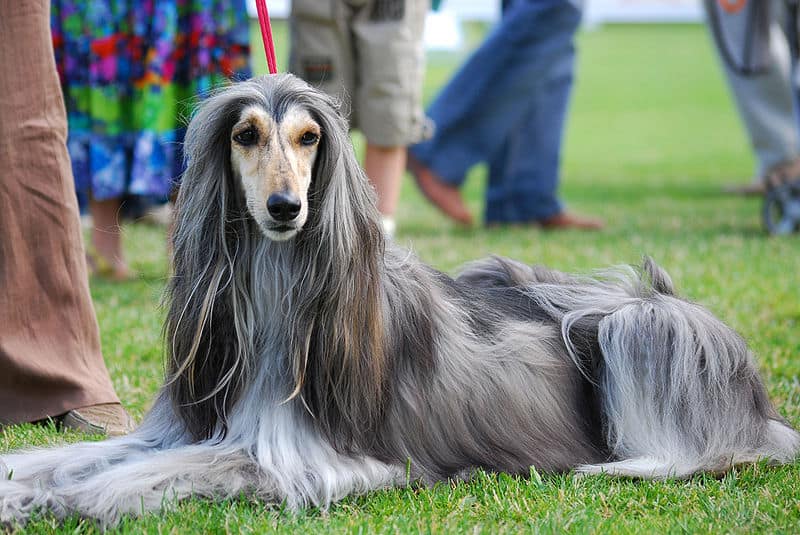
Afghan Hounds can be tricky to train due to their strong will and stubborn nature.
©I, Lilly M, CC BY-SA 3.0, via Wikimedia Commons – Original / License
Exercise
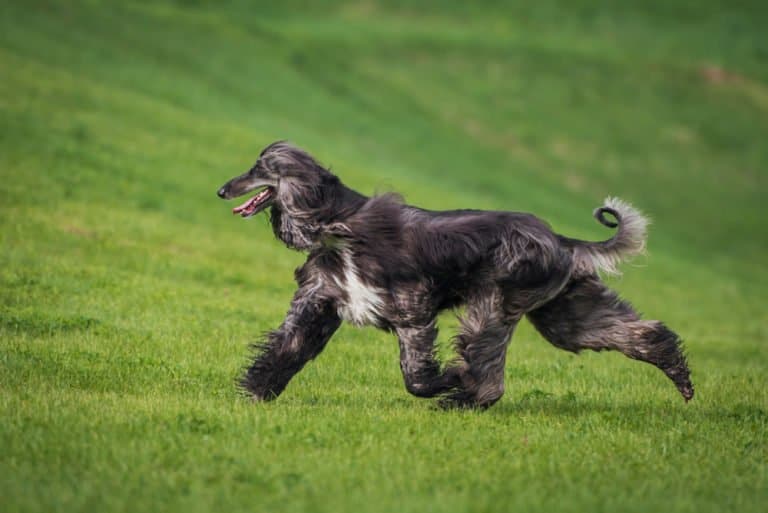
Afghan hounds are highly energetic dogs, which means that they need to have regular exercise to keep them happy. Optimally, make sure that your dog gets at least two hours of exercise every day for it to remain fit and healthy.
They would need a lot of space to run around. Physical activity is known to positively impact these dogs, helping them to maintain their good behavior.
Puppies
An Afghan hound puppy needs to be taken care of in a similar way as you would take care of an adult variety. However, they will need to have more protein in their diet than adults, helping them to grow into athletic and strong adults. To ensure that the food is not overwhelming, break their meals into several small meals.
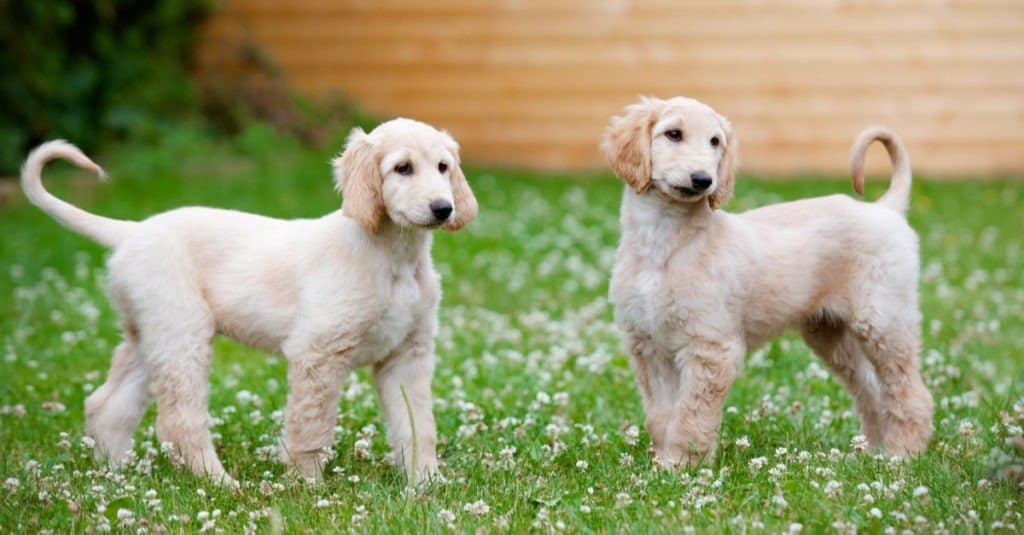
Afghan hounds are high-energy dogs and need a minimum of 2 hours of exercise per day.
©otsphoto/Shutterstock.com
With Children
Afghan Hounds can be good with children, especially if raised with them, but their sensitive and sometimes aloof nature means they are generally better suited to families with older children who know how to interact gently with dogs. It is said that the best would be to let your puppy grow old with your children to increase as well as maintain their compatibility. However, Afghan hounds usually have low pain tolerance, which could sometimes be a problem with children in the long run.
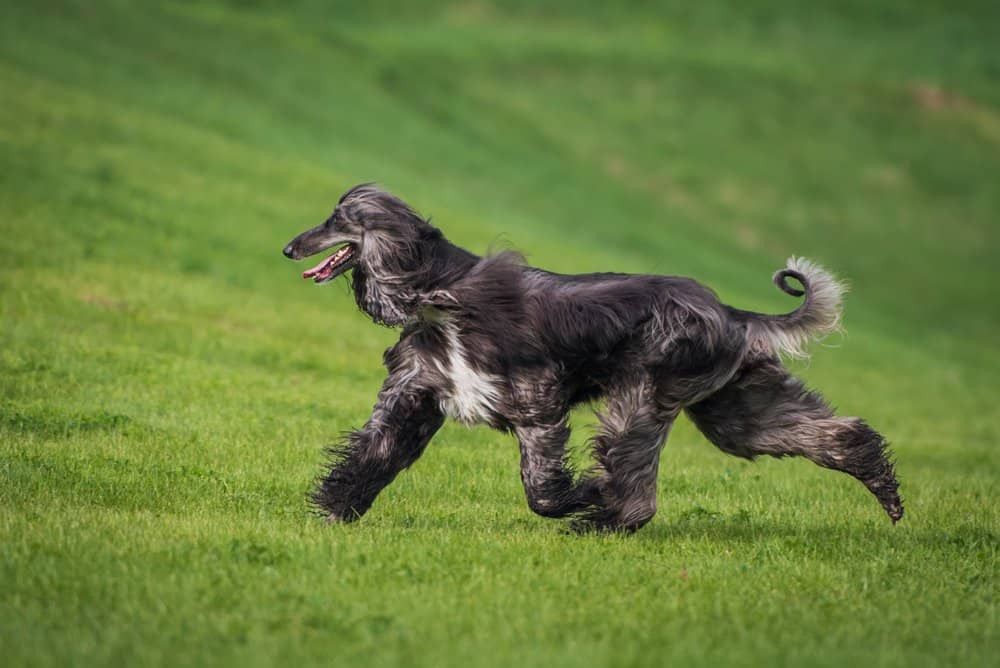
Afghan Hounds love to play but need time after they eat before exercising.
©Maria Ivanushkina/Shutterstock.com
Dogs Similar to the Afghan Hound
Though it is easy to see the history of the Afghan hound on a pedigree database, some pet owners may want an alternative breed that would work for them. Here are some dogs that are similar to the Afghan:
- Basenji: These dogs were also originally bred for hunting purposes. They are energetic and affectionate and are often known as barkless dogs.
- Bloodhound: These dogs originated in France and were used for hunting purposes. They are now also used for tracking people down.
- Greyhound: These dogs are known to be the fastest dog breed. They are racers and make sweet and calm pets, especially when they are old.
Famous Afghan Hounds
Pablo Picasso famously adopted an Afghan Hound named Kabul, including him in many famous paintings to show his admiration. These animals are often featured in dog shows, allowing their elegance to be admired. Among the many celebrities who have brought this dog into their families are Salvador Dali and Marianne Faithfull.
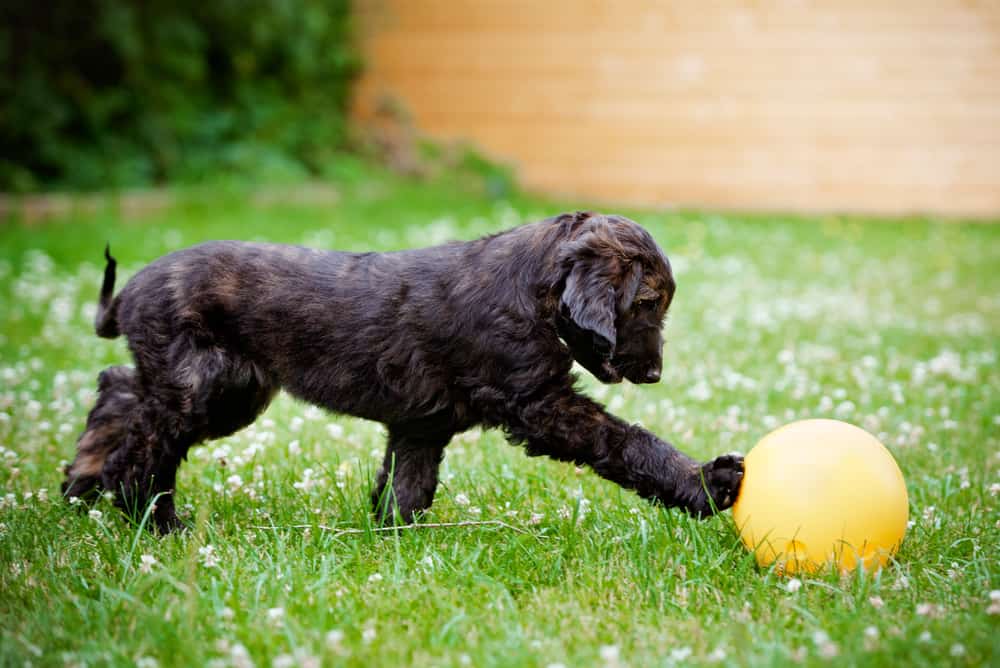
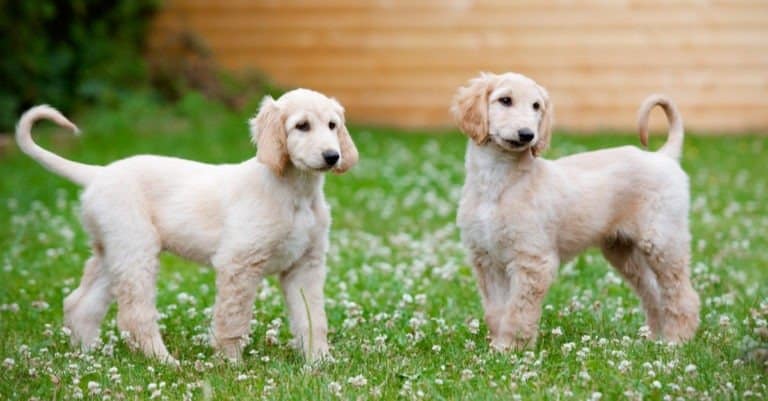
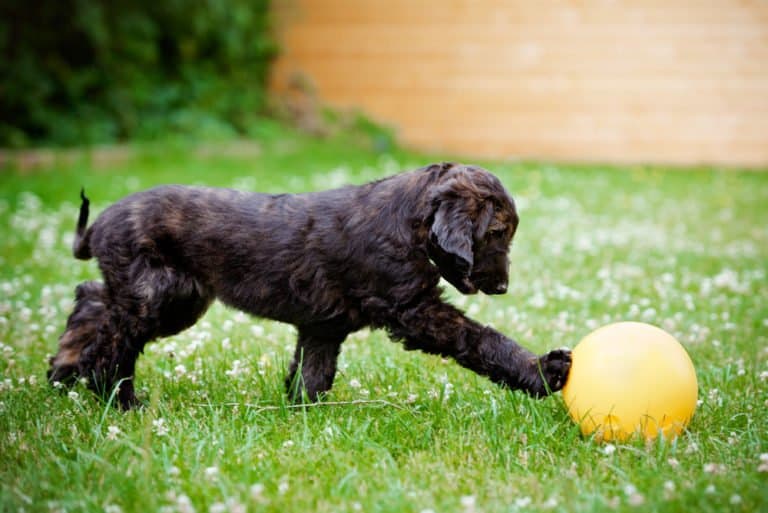
Afghan Hound puppies are playful and energetic, but like all puppies, they need regular breaks and should not be overexercised while growing.
©otsphoto/Shutterstock.com
Afghan Hound Pictures
View all of our Afghan Hound pictures in the gallery.

otsphoto/Shutterstock.com
Sources
- hillspet.com / Accessed October 20, 2019
- mentalfloss.com / Accessed October 20, 2019
- dogbreeds911.com / Accessed October 20, 2019
- pawdiet.com / Accessed October 20, 2019
- afghanhoundclubofamerica.org / Accessed October 20, 2019
- tythedogguy.com / Accessed October 20, 2019
- dogtime.com / Accessed October 20, 2019
- dogtime.com / Accessed October 20, 2019