A
Species Profile

Anteater

Myrmecophagidae

Built to raid ant cities
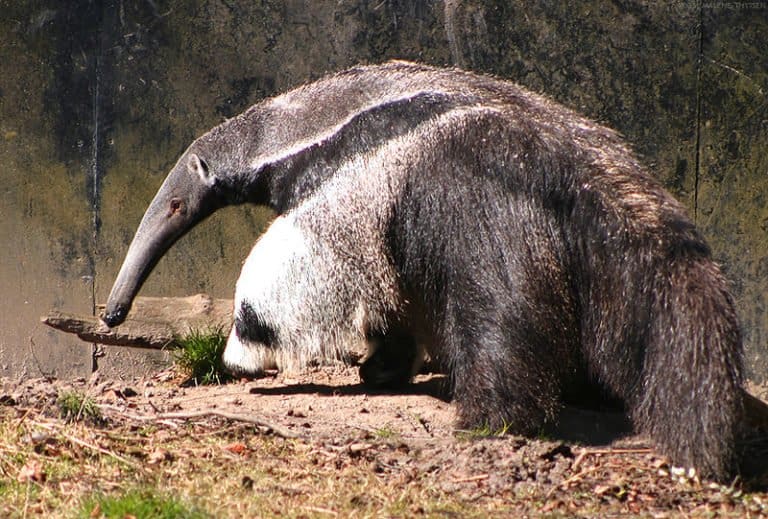
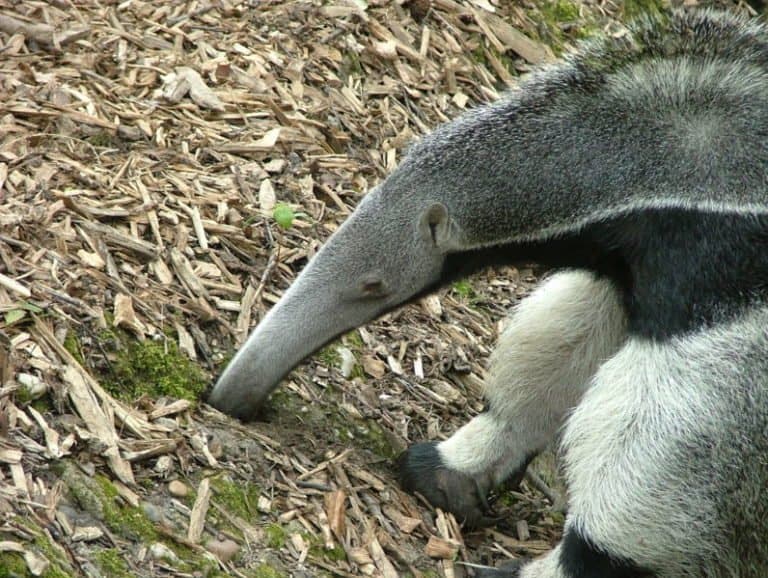
Malene Thyssen / Creative Commons

Anteater Distribution

Click a location to explore more animals from that region

Endemic Species
Loading map...

Size Comparison

Human 5'8"
Anteater 1 ft 4 in

Anteater stands at 23% of average human height.

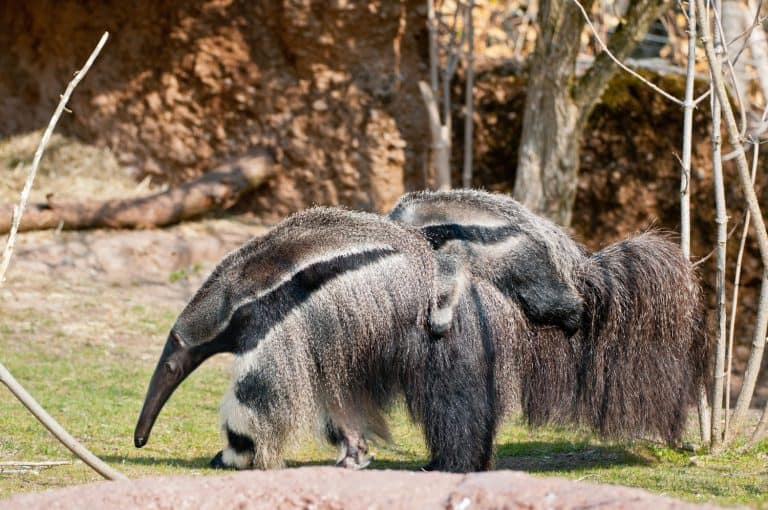
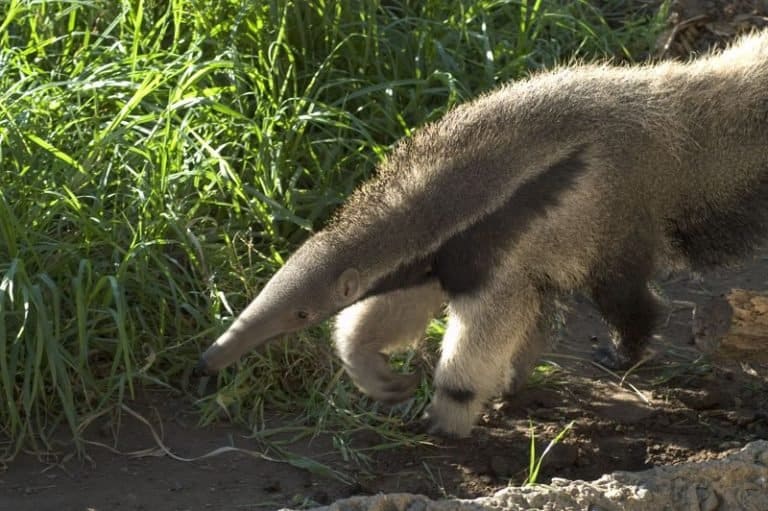
Giant anteater in a zoo setting

At a Glance

Family Overview This page covers the Anteater family as a group. Stats below are general traits shared across the family.
Also Known As Ant-eater, Ant eater, Antbear, Ant-bear
Activity Nocturnal+
Lifespan 12 years
Weight 50 lbs
Status Not Evaluated
Did You Know?

The family has just 3 living species: the giant anteater plus two tamanduas (northern and southern).

Scientific Classification

Family Overview "Anteater" is not a single species but represents an entire family containing multiple species.

True anteaters (Myrmecophagidae) are specialized New World mammals in the order Pilosa, adapted for feeding primarily on ants and termites using an elongated snout, reduced/absent teeth, and a long sticky tongue.

Kingdom
Animalia
Phylum
Chordata
Class
Mammalia
Order
Pilosa
Family
Myrmecophagidae

Distinguishing Features

  • Elongated tubular snout with very small mouth opening
  • Toothless (or functionally toothless) with keratinized mouth parts
  • Extremely long protrusible tongue with sticky saliva
  • Powerful forelimbs with large curved claws for tearing insect nests
  • Dense fur; often a prominent tail (especially giant anteater)

Physical Measurements

Males and females differ in size

Height
1 ft 10 in (12 in – 2 ft 11 in)
2 ft 4 in (1 ft 4 in – 2 ft 11 in)
Length
1 in (0 in – 1 in)
5 ft 3 in (1 ft 2 in – 7 ft 3 in)
Weight
33 lbs (0 lbs – 99 lbs)
40 lbs (0 lbs – 88 lbs)
Tail Length
2 ft 2 in (7 in – 2 ft 11 in)
2 ft 4 in (7 in – 2 ft 11 in)
Top Speed
30 mph
Big ground anteaters fastest

Appearance

Primary Colors
Secondary Colors
Skin Type Skin of these mammals has coarse to shaggy fur; hair very long and bushy in giant anteaters (big tail), shorter and denser in tamanduas. Feet have thick callused skin; snout hairy or sparse.
Distinctive Features
  • Family-wide measurement ranges (smallest to largest members within Myrmecophagidae): total length ~0.9-2.2 m (including tail); body mass ~3-45 kg. Tail contributes substantially (often ~0.4-0.9 m depending on species).
  • Family-wide lifespan range: roughly ~7-25+ years (wild typically lower; captive individuals can reach the upper end, with occasional reports approaching ~30 years).
  • Elongated, tubular snout; very small mouth opening; teeth absent or functionally absent across the family (extreme specialization for myrmecophagy).
  • Extremely long, protrusible tongue (often ~40-60 cm in the largest species) coated with sticky saliva; tongue rapidly flicked to harvest ants/termites.
  • Powerful forelimbs with enlarged curved claws used to rip open ant/termite nests and as primary defense; forefeet often knuckle-walked to protect claws.
  • Long tail: very large and plume-like in giant anteaters (used as a 'blanket' when resting), and long/prehensile in tamanduas (aiding climbing and stability).
  • Small eyes and ears relative to head; reliance on smell is prominent for locating prey and navigating.
  • Convergent overall 'anteater' look with pangolins/aardvarks, but Myrmecophagidae are strictly New World pilosans (not closely related to those Old World lineages).
  • Myrmecophagidae (true anteaters) eat ants and termites, are mostly solitary, and use strong claws for feeding and defense. Activity time varies. Giant anteaters live on the ground; tamanduas climb trees. Found in the Americas.

Sexual Dimorphism

Sexual dimorphism is generally subtle across Myrmecophagidae. Males often average slightly larger/heavier with more robust forequarters, but overlap between sexes is substantial. Coat color/pattern is not strongly sex-linked; any differences are usually size/shape and reproductive anatomy rather than distinct male/female coloration.

  • On average, slightly larger body mass and more robust forelimbs/shoulders in some populations/species (variable, with broad overlap).
  • External genitalia differences; no consistent, sex-specific coat pattern across the family.
  • Mammary glands/teats (used for nursing a single offspring in most cases); otherwise similar coat and overall appearance to males.
  • Often slightly smaller on average in some populations/species (variable, with broad overlap).

Did You Know?

The family has just 3 living species: the giant anteater plus two tamanduas (northern and southern).

Across the family, adults range roughly from ~3 to ~45 kg-small tamanduas to the giant anteater.

They have little to no functional teeth; most food is swallowed with minimal chewing.

Their tongues are long, sticky, and highly mobile-largest individuals can extend a tongue to around 60 cm.

Tamanduas are semi-arboreal and use prehensile tails for balance and gripping; the giant anteater is mainly terrestrial.

They're often compared to aardvarks and pangolins, but those are distant relatives-similar diets drove convergent evolution.

Their powerful foreclaws are built for tearing into insect nests and for defense, not for digging long burrows like some other insectivores.

Unique Adaptations

  • Elongated snout and reduced/absent teeth: the skull and jaws are specialized for probing nests and rapid tongue use rather than biting.
  • Extraordinary tongue apparatus: a long tongue anchored by specialized muscles and supported by elongated hyoid structures; coated with sticky saliva to capture insects.
  • Robust forelimbs with large curved claws: optimized for ripping into ant/termite nests and for defense; claws also shape their distinctive "knuckle-walking" style in some contexts to protect the claws.
  • Strong sense of smell (relative to vision): helps locate insect colonies and navigate complex habitats.
  • Dense, sometimes shaggy pelage and tough skin: offers protection from biting/stinging insects and abrasion while foraging.
  • Prehensile tail in tamanduas: aids climbing and stability in arboreal foraging-an adaptation not shared by the largely ground-dwelling giant anteater.

Interesting Behaviors

  • Myrmecophagy with "hit-and-move" foraging: they typically feed at many nests per day rather than destroying one site completely; time at a single nest varies with prey aggression and nest type.
  • Mostly solitary lifestyles: adults usually travel alone outside breeding and maternal care; overlap can occur where food is abundant.
  • Activity timing is flexible: depending on temperature, habitat cover, and human disturbance, individuals may be more diurnal, crepuscular, or nocturnal (with variation among species and regions).
  • Habitat use spans forests, savannas, and wetlands across the Americas; tamanduas commonly forage in trees and on the ground, while the giant anteater usually forages on open ground.
  • Defensive posture: when threatened, they may rear up and use the foreclaws to strike-an effective defense against predators.
  • Maternal care is extended: typically a single offspring is carried and nursed for months; the young of terrestrial forms may ride on the parent's back for concealment and transport.

Cultural Significance

True anteaters (Myrmecophagidae) are well-known American mammals. Names like tamandua come from Tupi and mean 'ant eater.' Often wrongly compared to pangolins and aardvarks, they, especially the giant anteater, are symbols for protecting grasslands, savannas, and wetlands.

Myths & Legends

South American folk tales tell of a jaguar facing a tamandua or other anteater, where the anteater's strong front legs and firm grip become the key moment, making it an unexpected, fierce foe.

A widely cited name for these animals in Tupi (an Indigenous Brazilian language family) translates as "ant eater," reflecting their strong cultural association with their specialized diet in regions where they are native.

Early Spanish and Portuguese colonial names calling them "ant bear" compared anteaters to Old World bears. These names joined regional stories and travel accounts that described them as strange, bear-like ant eaters.

In Neotropical oral storytelling more broadly, anteaters are often placed among forest and savanna animals as solitary, self-reliant figures-appearing in didactic tales that highlight patience, persistence, and the dangers of underestimating quiet animals.

Conservation Status

NE Not Evaluated (family-level taxa like Myrmecophagidae are not assessed as a single unit by IUCN). Member species show a conservation-range from Least Concern (Tamandua spp.) to Vulnerable (Giant anteater, Myrmecophaga tridactyla), with local declines in parts of their ranges. Family-wide biological ranges/generalizations: Measurements span from the smaller tamanduas (~3-8 kg; head-body ~40-70 cm) to the giant anteater (~25-45+ kg; head-body ~100-140 cm, plus a long tail). Lifespan varies by species and setting, roughly ~9-15 years in the wild, and commonly up to ~20-25 years in captivity. Behavior/ecology: all are specialized myrmecophages (ants/termites) with low reproductive rates (typically single offspring), generally solitary, and strong dependence on intact foraging habitat; activity can be diurnal, nocturnal, or cathemeral depending on climate and disturbance. Notable variation: the giant anteater is primarily terrestrial and more exposed to road mortality and fire, while tamanduas are more scansorial/arboreal and may be more impacted by forest structure change and localized capture for the pet trade.

Has not yet been evaluated against the criteria.

Population Unknown

Protected Under

  • CITES: Giant anteater (Myrmecophaga tridactyla) is listed on Appendix II (international trade regulated); protections for other Myrmecophagidae vary by country and listing.
  • National/subnational wildlife laws: varying degrees of legal protection across range states in Central and South America (species-level provisions differ).
  • Protected areas: portions of the family's range occur within national parks/reserves, but effectiveness depends on enforcement, connectivity, and fire/road pressures.

You might be looking for:

Giant anteater

40%

Myrmecophaga tridactyla

Largest living anteater; terrestrial, open habitats; very long snout and bushy tail.

Southern tamandua

22%

Tamandua tetradactyla

Medium-sized, partly arboreal anteater; found in South America.

Silky anteater

20%

Cyclopes didactylus

Small, fully arboreal anteater; separate family (Cyclopedidae) within suborder Vermilingua.

Northern tamandua

18%

Tamandua mexicana

Medium-sized, partly arboreal anteater; ranges into Central America.

Life Cycle

Birth 1 pup
Lifespan 12 years

Lifespan

In the Wild
7–18 years
In Captivity
10–26 years

Reproduction

Mating System Promiscuity
Social Structure Solitary
Breeding Pattern Transient
Fertilization Internal Fertilization
Birth Type Internal_fertilization

True anteaters (Myrmecophagidae: giant anteater, tamanduas, silky anteaters) are mostly solitary and mate with many partners. Males mate when ranges overlap. Fertilization is internal, courtship is brief, no lasting pair bonds; mothers care for young.

Behavior & Ecology

Social No fixed group name (most often solitary; mother-young pair when parenting) Group: 1
Activity Nocturnal, Crepuscular, Cathemeral
Diet Myrmecophage Ants and termites (family-wide specialization; relative emphasis varies by species, habitat, and local prey availability).

Temperament

Generally non-gregarious and avoidance-oriented; relies on stealth, crypsis (notably in silky anteaters), and withdrawal rather than social defense.
When threatened, can become highly defensive at close range (e.g., rearing up and using strong forelimbs/claws); intensity varies by species, body size, and context (cornered vs. escape available).
Strong foraging-driven behavior focused on locating ant/termite resources; individuals often show route fidelity within a home range and adjust movement with prey availability and disturbance.
Behavior/ecology varies across the family: terrestrial vs. strongly arboreal lifestyles (giant anteater largely terrestrial; tamanduas semi-arboreal; silky anteater highly arboreal), which influences encounter rates and visibility.
Activity varies widely within the family: silky anteaters tend toward nocturnality; tamanduas often nocturnal/crepuscular; giant anteaters are frequently cathemeral and may shift toward nocturnality near humans or in hotter conditions.
Body size range across the family is very broad (from small, lightweight arboreal forms to large terrestrial forms), influencing spacing, predation risk, and defensive behavior.
Lifespan varies by species and conditions: about 7–15+ years in the wild and often 15–26+ years in captivity; smaller species usually live shorter lives than the largest, but data are uneven.

Communication

Snorts/huffs and brief grunts used in agitation or close encounters Reported especially in larger species
Hisses, squeals, or harsh exhalations during handling, territorial encounters, or when threatened Varies by species and context
Low-intensity mother-young contact sounds may occur at close range; overall vocal communication is limited compared to many social mammals.
Scent marking via anal glands/urine and rubbing on substrates; olfactory cues are important for locating mates, assessing presence, and spacing Especially in dense vegetation or nocturnal settings
Tactile communication between mother and young (carrying/clinging, nudging) is central to parental care.
Postural/visual threat displays at close range (e.g., piloerection, rearing, forelimb display) and defensive striking with claws.
Chemical/olfactory assessment during brief encounters (sniffing, investigating trails); reliance on smell is generally strong across the family.

Habitat

Biomes:
Tropical Rainforest Tropical Dry Forest Savanna Wetland Temperate Grassland Temperate Forest
Terrain:
Plains Hilly Plateau Valley Riverine Coastal Rocky +1
Elevation: Up to 6561 ft 8 in

Ecological Role

Specialist predator of social insects (ants and termites) across Neotropical ecosystems, with species varying from primarily terrestrial to more arboreal foragers.

Regulation of ant and termite populations (top-down control) Shaping insect community composition and colony distribution via selective predation Soil disturbance and microhabitat creation from digging/opening nests (can aid aeration and water infiltration locally) Contribution to nutrient cycling by redistributing soil/organic material during foraging

Diet Details

Main Prey:
Ants Termites Social insects

Human Interaction

Domestication Status

Wild

True anteaters (family Myrmecophagidae: giant anteater, tamanduas, silky anteater) are wild Neotropical mammals and are not domesticated. People affect them mainly by changing habitat, roadkill, hunting, rescue and rehab, and zoo care. They eat ants/termites, have long tongues, vary in size and habits, and reproduce slowly.

Danger Level

Moderate
  • Defensive injury: powerful foreclaws can cause deep lacerations if an animal is cornered, handled, or attacked (risk increases with larger species)
  • Handling hazards for rescuers/keepers: stress-induced aggression, zoonotic concerns typical of wild mammals (generally low but non-zero), and bites/scratches
  • Indirect risk from human-wildlife conflict situations (e.g., dogs provoking an encounter; roadside encounters)

As a Pet

Not Suitable as Pet

Legality: Laws differ by place. Many areas ban keeping wild animals or need permits. Trade is often restricted. Even if allowed, rules and where they come from make anteaters uncommon pets. Check local wildlife authorities.

Care Level: Expert Only

Purchase Cost: Up to $15,000
Lifetime Cost: $50,000 - $250,000

Economic Value

Uses:
Ecotourism/wildlife viewing Ecosystem services (invertebrate predation) Conservation and zoo education/research Negative economic impacts (road collisions; occasional property disturbance when foraging)
Products:
  • Non-consumptive value via tourism and education (no inherent commercial 'product' required)
  • Occasionally bushmeat/hides/claws in localized or illegal contexts (not a sustainable or legal product in many areas)
  • Illegal wildlife trade (live animals) occurs but is widely discouraged and often prohibited

Relationships

Related Species 4

Giant anteater Myrmecophaga tridactyla Shared Family
Southern tamandua Tamandua tetradactyla Shared Genus
Northern tamandua Tamandua mexicana Shared Genus
Silky anteaters Cyclopes Shared Genus

Types of Anteater

10

Explore 10 recognized types of anteater

Giant anteater Myrmecophaga tridactyla
Southern tamandua Tamandua tetradactyla
Northern tamandua Tamandua mexicana
Silky anteater Cyclopes didactylus
Central American silky anteater Cyclopes dorsalis
Rondônia silky anteater Cyclopes catellus
Xingu silky anteater Cyclopes xinguensis
Red silky anteater Cyclopes rufus
Thomas's silky anteater Cyclopes thomasi
Ida's silky anteater Cyclopes ida

A giant anteater can consume up to 35,000 ants in one day!

Anteater refers to several medium-sized insect-eating mammals found in the Southern Hemisphere. Anteaters are edentate animals, meaning they have no teeth. However, they use their long tongues to eat the insects that comprise the bulk of their diet. Giant anteaters, the most well-known of the four species, can consume as many as 35,000 ants or termites in a single day.

5 Incredible Anteater Facts

  • The anteater has the longest tongue of any animal in relation to its body size.
  • The pygmy sloth is one of the anteater’s closest relatives, but their common ancestor is more than 55 million years old.
  • Their legs, which look like panda faces, are part of the giant anteater’s protective coloring. Baby anteaters have similar coloring, which allows the baby to “vanish” while making its mother look bigger.
  • The paws of all four species feature enormous, long, and sharp claws that require the animals to walk on their knuckles or wrists to avoid stabbing themselves.
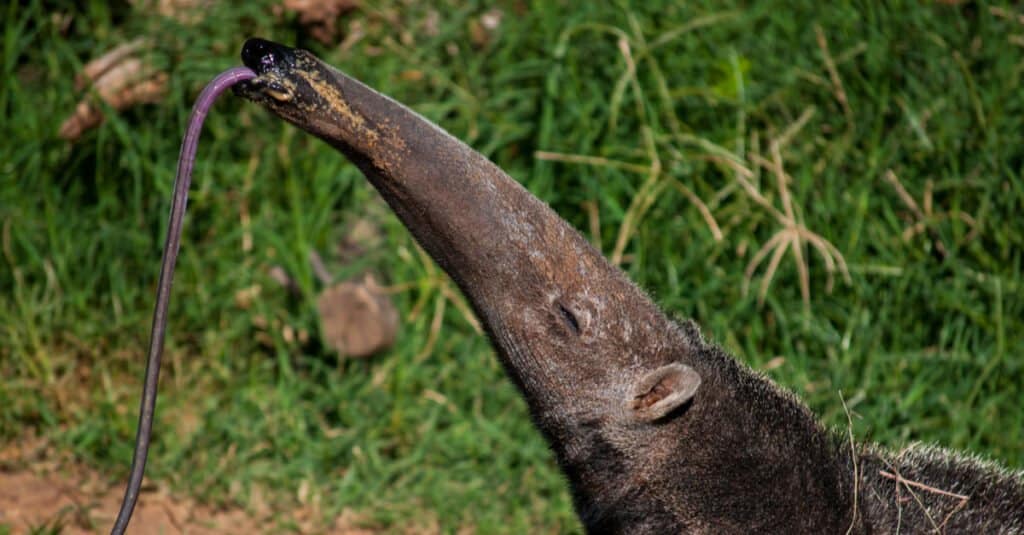
What do anteater eat - an anteater tongue

The anteater is known for its long, thin tongue that can extend greater than the length of its head.

Scientific Name

The giant anteater’s scientific name is Myrmecophaga tridactyla, which is Greek in origin and means three-fingered anteater. This is the animal that most people think of when referring to anteaters. Other anteaters are southern tamanduas (Tamandua tetradactyla), northern tamanduas (Tamandua Mexicana), and silky anteaters (Cyclopes didactylus), the smallest animal in this classification. Tamandua means anteater in the native language Tupi and in Brazilian Portuguese. Tetradactyla is Greek for four claws. Cyclopes, also from Greek, means squirrel, while didactylus means two-toed.

Evolution and History

Anteaters have a lineage that can be traced back millions of years. When the Xenarthra superorder of mammals present in South America divided during the Late Cretaceous Epoch 66 million years ago, it separated the order Pilosa — which anteaters, as well as sloths, belonged — from Cingulata (whose only surviving member is the armadillo). It was between the Paleocene and Eocene epochs, around 55 million years ago, that anteaters split from sloths. Then anteater species evolved, with the genus Cyclopes (family of the silky anteater) developing in the Oligocene Epoch around 30 million years ago and the Myrmecophaga (family of the giant anteater) becoming distinct from the Tamandua (family of the northern and southern tamanduas) in the Late Miocene subepoch around 10 million years ago.

Anteaters lived in the isolated island continent of South America up until about 3 million years ago, when the Isthmus of Panama formed, connecting South America to North America. Members of all species of anteaters migrated via Central America as part of the Great American Biotic Interchange.

Early fossil records for anteaters are relatively rare, with some evidence of animals that were extinct anteater species or close relatives. It’s thought that the giant anteater may have had a more arboreal (tree-dwelling) lifestyle like the silky anteater and northern and southern tamanduas but changed to its current ground-dwelling lifestyle due to being in open habitats including savannah in South America and having access to insects such as termites.
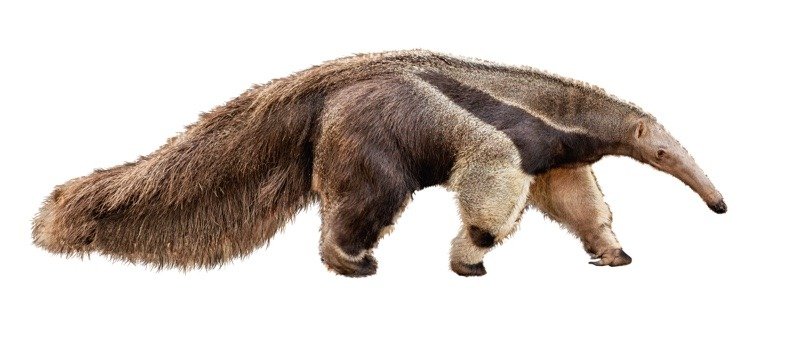
An isolated photo of an anteater on a white background

Anteaters’ lineage goes back as far as 66 million years.

4 Types of Anteaters

While there are some extinct species of anteaters, four types of anteaters exist today:

  • Giant anteater (Myrmecophaga tridactyla)
  • Silky anteater (Cyclopes didactylus), also known as the pygmy anteater
  • Northern tamandua (Tamandua mexicana)
  • Southern tamandua (Tamandua tetradactyla), also called the collared anteater or lesser anteater.

They vary in size, with the giant anteater being the largest species of anteater. Their habitats also vary, with species preferring different environments and locations.

All anteater species have long snouts, thin tongues that extend to be greater than the length of their heads, and no teeth. While the other three species have a prehensile tail, the giant anteater does not. Read on to learn about the differences in appearance, behavior, habitat, diet, predators, threats, reproduction, and lifecycles of these four anteater species.
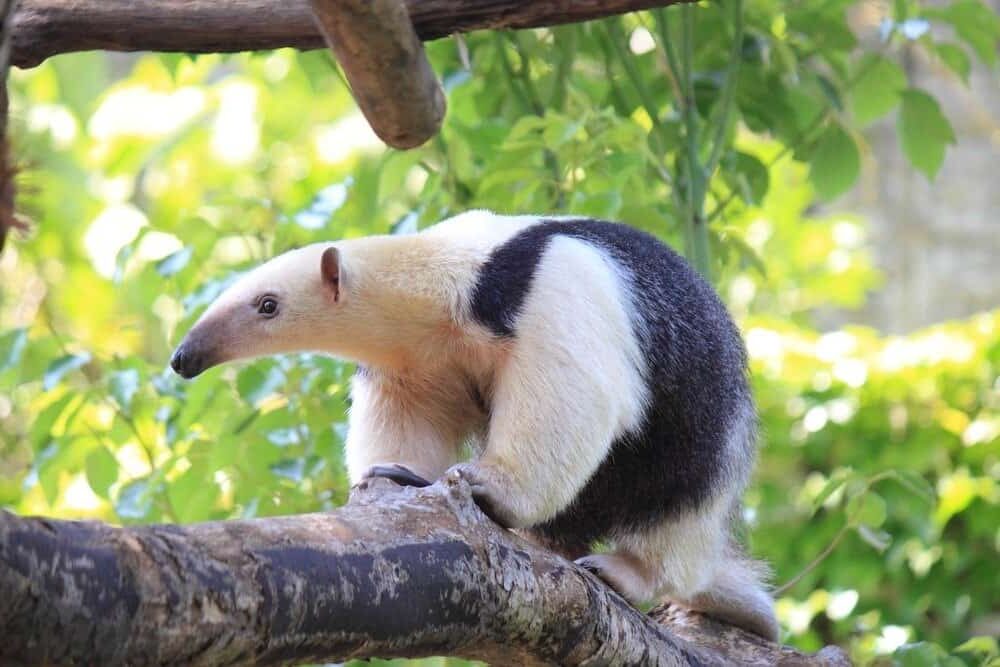
stinkiest animals - Lesser Anteater

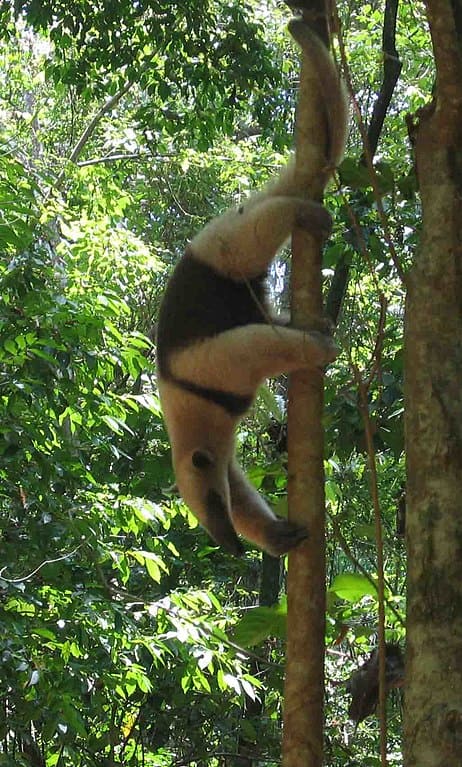
The tamandua, also called the lesser anteater, is one of the four types of anteater.

Appearance and Behavior

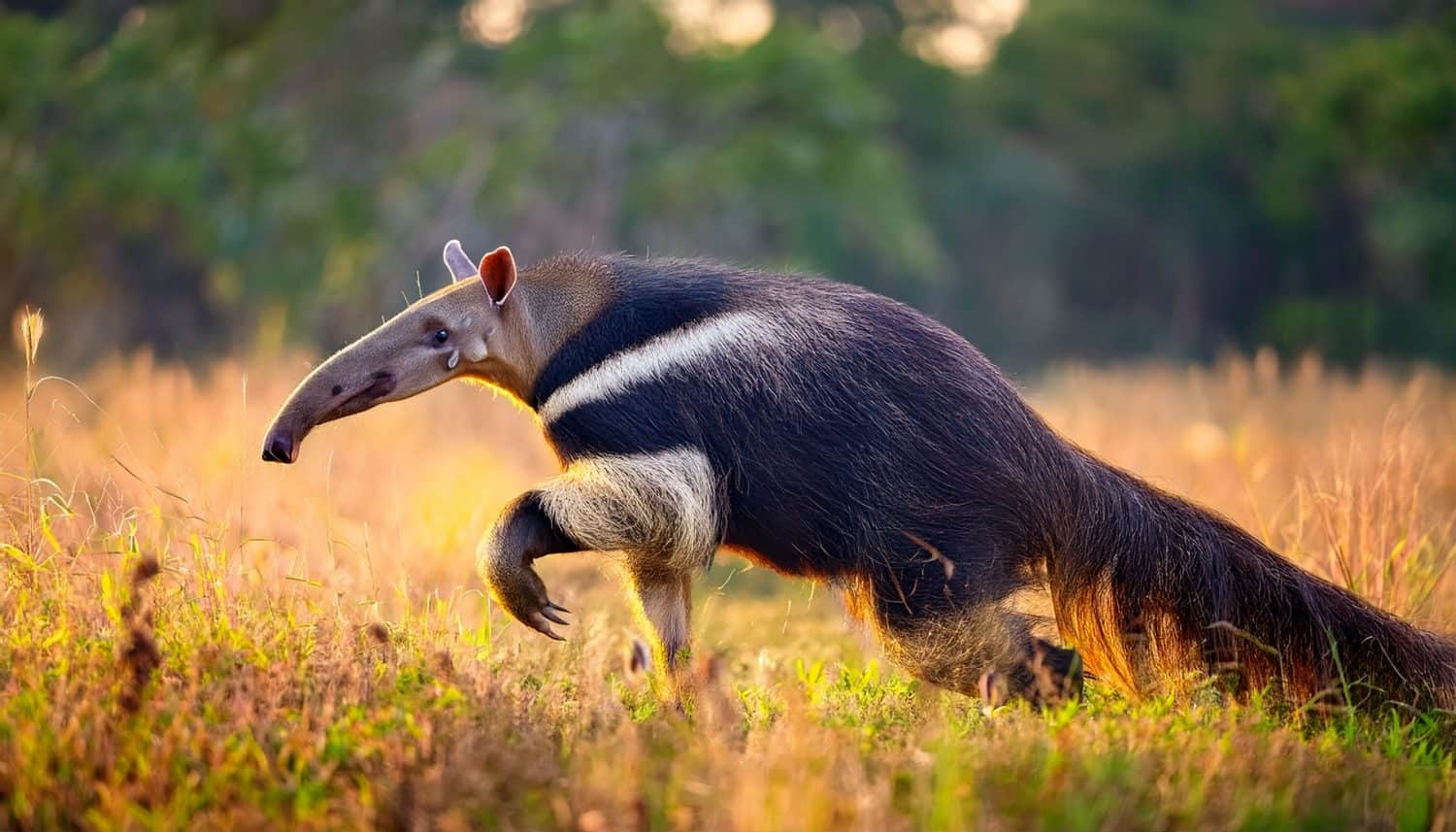
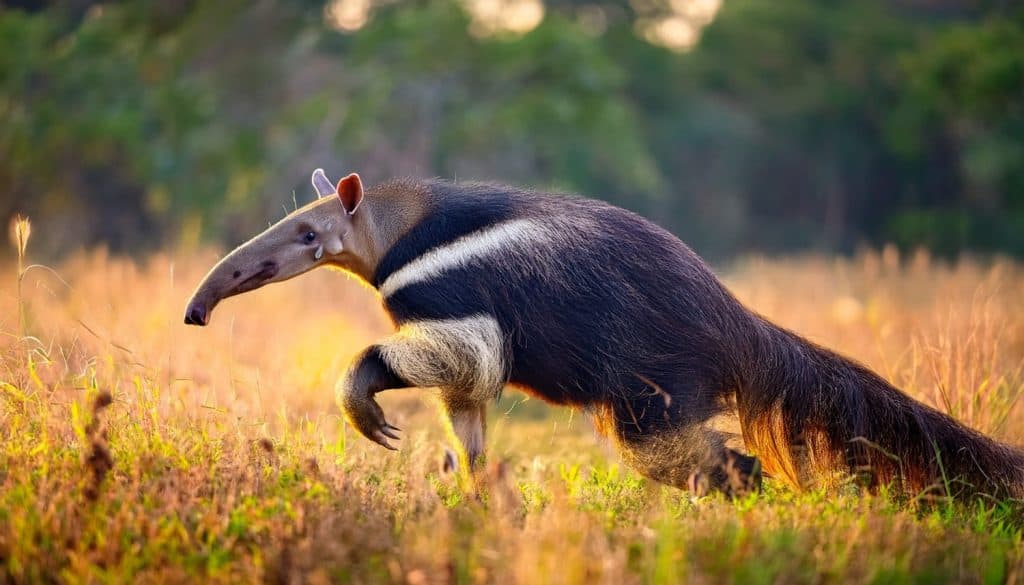
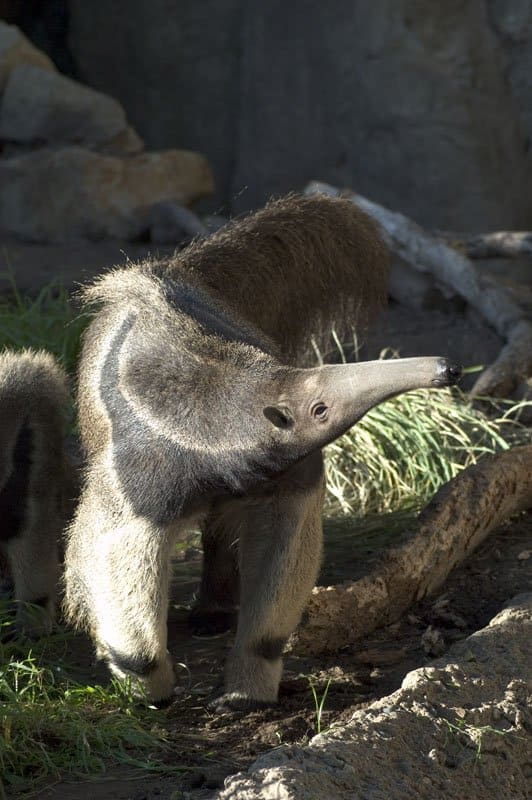
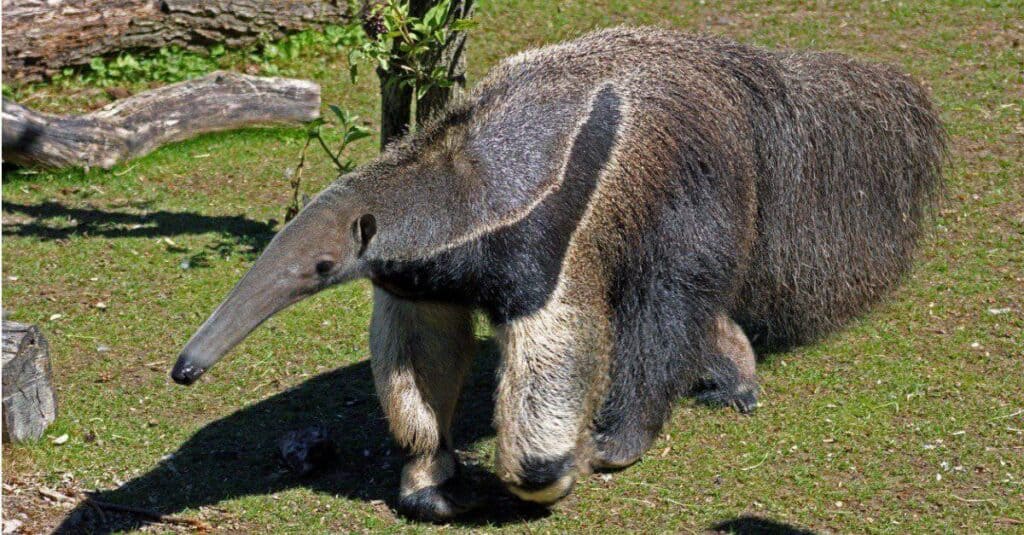
The giant anteater typically measures 5-8 feet long from nose to tail and weighs up to 140 pounds. It has a long nose and a narrow head with small eyes and round ears. Giant anteaters have coarse grey or brown hair with a white-and-black stripe running the length of their bodies. The bushy tail is two to three feet long.

Giant anteaters are animals with long front claws, which they curl under to walk. They use their powerful legs and claws to ward off larger animals and can become aggressive when cornered, rearing up on their hind legs, and using their tails for balance. They are generally asocial, avoiding other animals, including other anteaters, and only coming together to mate.

These animals have poor vision, so they use their keen sense of smell, which is 40 times more powerful than humans, to find food. Giant anteaters have tongues that can reach two feet, beginning at their breastbones. Backward-facing spiny projections cover their tongues, which, combined with their sticky saliva, help collect bugs.

Northern tamanduas are much smaller than giant anteaters, their body length ranging from 1.5 feet to 2.5 feet, with tails measuring 1.3 feet to 2.2 feet. These anteaters are fawn to brownish in color with a distinct, black “V” running down their backs. These anteaters are active both in the day and night, usually for about eight-hour stretches, and spend about half of their time in trees, many of which are hollow.

Southern tamanduas range from 1.7 feet to 2.9 feet, with tails measuring 1.3 feet to 1.9 feet. Some have strong black markings on a body that is blond, tan, or brown. The underside and the end of the tail are hairless and somewhat scaly. They are primarily nocturnal but are occasionally active during the day. Collared anteaters spend much of their time foraging arboreally as they are somewhat clumsy on the ground. When threatened in a tree, this anteater may grasp a branch with its hind feet and tail, using its powerful forearms for self-defense.

Tamanduas are sometimes called the “stinkers of the forest” because of their ability to detonate a skunk-like stink bomb from a gland under its tail when it is threatened.

Silky anteaters are, by far, the smallest of the species, weighing less than a pound. They are nocturnal creatures, living high up in trees, rarely descending to the ground. These animals almost look like little creampuffs because of their silky fur that resembles the seed pods of the Ceiba trees where they primarily live. They are difficult to find in the wild, so little is known about their social habits.
Weakest Animals

Giant anteaters have long front claws, which they curl under to allow them to walk.

Habitat

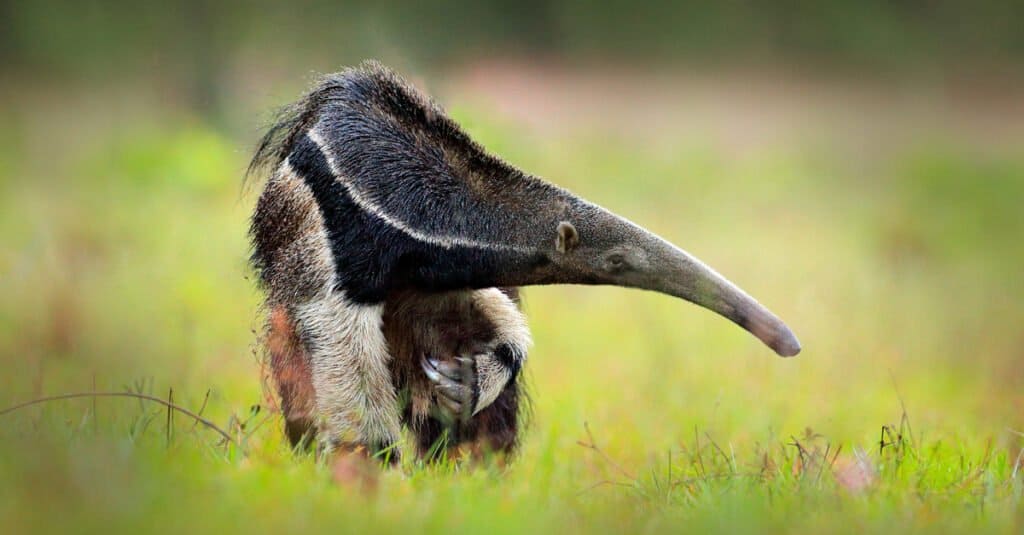
The giant anteater is an animal that lives in the grasslands, forests, jungles, and lower mountain regions of Central and South America. To thrive, they require large grassy areas that are abundant in ants along with patches of forest.

Northern tamanduas live in rainforests, plantations, gallery forests, and arid savannahs. They typically live beside streams and trees with abundant amounts of vines, which often house ant and termite nests. When not active, they rest in hollow trees or burrows of other animals. In Panama, northern tamanduas often swim between islands.

Southern tamanduas live in South America, ranging from Venezuela and Trinidad southward to northern Argentina, southern Brazil and Uruguay at elevations up to 6,500 feet. These anteaters also commonly live near streams and rivers.
Animals that Eat Insects – Anteater

An anteater’s habitat varies depending on the species.

Population

Giant anteater population numbers are declining primarily due to habitat loss and overhunting by humans. Reports indicate that about 5,000 to 10,000 individuals are left in the wild. According to IUCN, the tamanduas and silky anteaters are relatively widespread, but no population estimates are available.

Diet

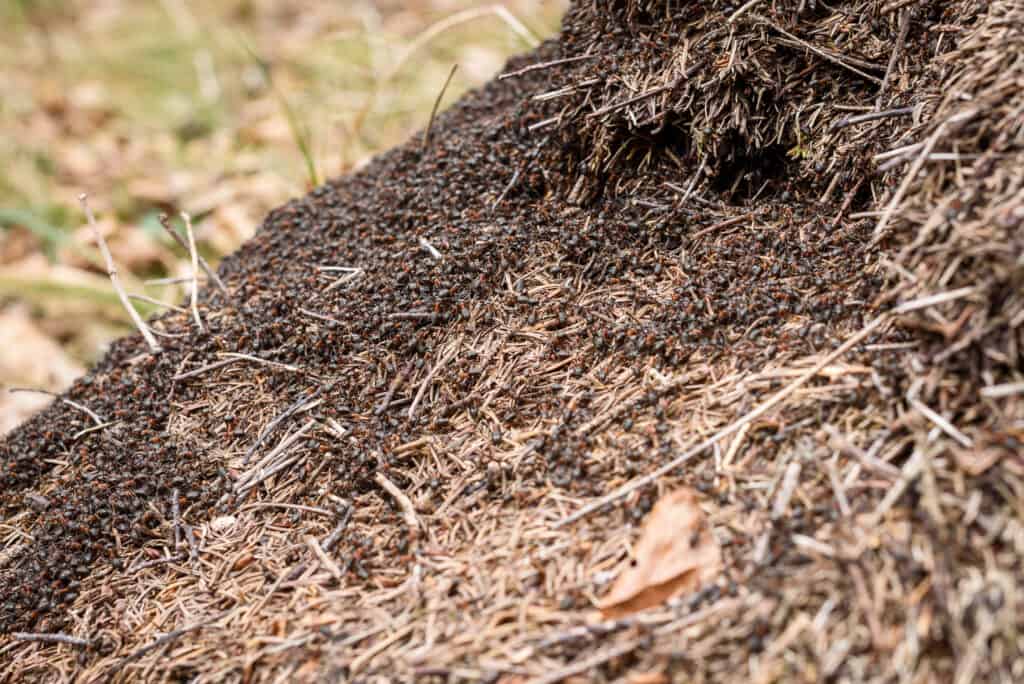
All types of anteaters use their sharp claws to tear into anthills and insect nests. They eat quickly, flicking their long tongues up to 150 times per minute. Most giant anteaters and tamanduas feed on anthills or termite mounds in less than 40 seconds. These quick meals have a two-fold purpose. For one, they leave some of the insects in their nests to repopulate so that they have a continual source of food. Secondly, they avoid painful stings from ants when the insects begin to realize the danger to their nests.

Silky anteaters consume insects found in the tops of trees. Southern tamanduas avoid eating army ants and leaf-eating ants as these species have strong chemical defenses. They also eat honey and bees.
Ant supercolony

Most giant anteaters and tamanduas will take less than 40 seconds to feast on an anthill.

Predators and Threats

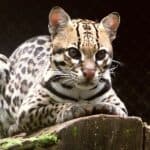
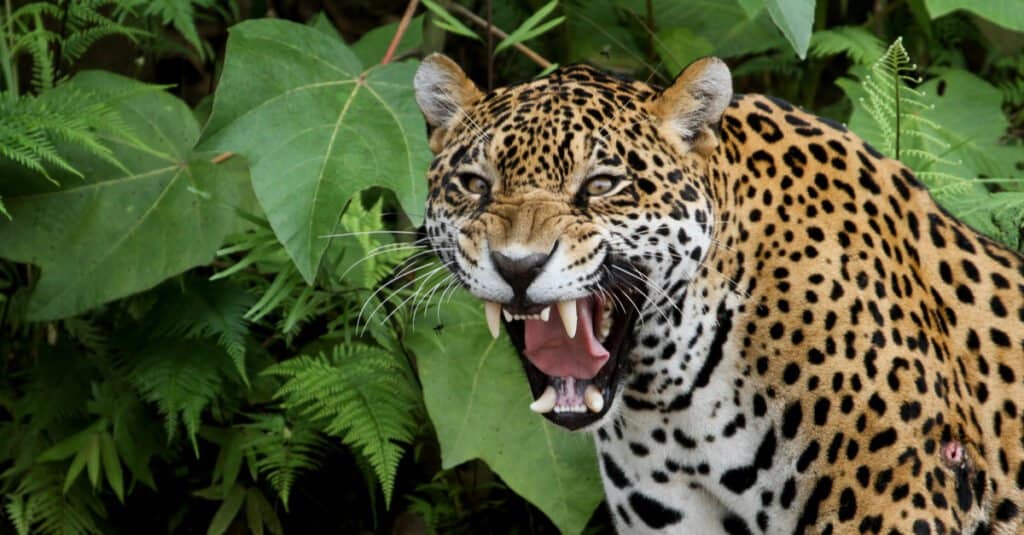
The International Union for Conservation of Nature (IUCN) Red List officially classifies giant anteaters as vulnerable, as they are the most threatened mammals in Central America and are extinct in Guatemala, El Salvador, and Uruguay. The loss of their grassland habitats is a major threat as sugar cane growers regularly burn their fields, ultimately affecting anteater habitats. Some humans hunt them for food, while others kill them simply because they consider anteaters to be pests. In the Brazilian Cerrado Biome, many are killed by road traffic. Cougars and jaguars are their natural predators.

The Iberá Project has rescued more than 10 orphaned anteaters and reintroduced them to the wild in Argentina. Conservationists are collecting data in the Cerrado Biome to determine how roadways affect these animals in the hope that new protections will be enacted.

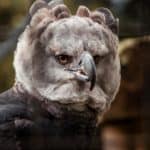
Northern tamanduas are not considered threatened. Their natural predators include jaguars, large snakes, and eagles. Harpy eagles, eagle hawks, and spectacled owls prey on silky anteaters. The conservation status of tamanduas and silky anteaters is listed as least concern.
Largest Jaguar - Jaguar Header

One of the anteater’s natural predators is the jaguar.

Reproduction and Life Cycle

All female anteaters give birth to a single baby, although the gestation period varies by species and sometimes by region. Giant anteaters have a gestation period of about 190 days, while tamandua gestation ranges from 130 to 150 days. Silky anteaters have a 120-day gestation.

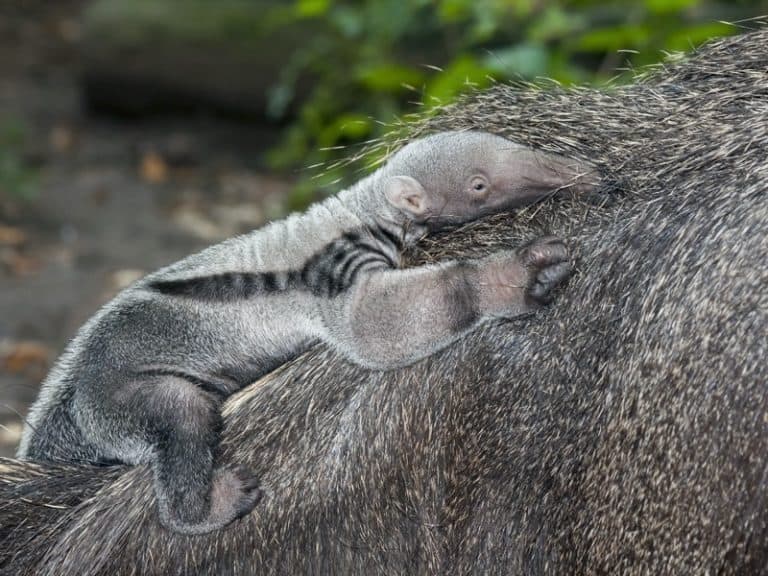
Female anteaters give birth standing up. Babies immediately climb onto their mothers’ backs and have a full coat of hair and adult-like markings. They spend much of their nursing period on their mothers’ backs to remain safe from predators, remaining there until they are about half the size of their mothers. They can spend up to two years with their mother and usually become independent when the female becomes pregnant again. Male anteaters hide their testicles inside their body; little is known about their breeding habits, but they can breed as often as every nine months. Anteaters reach sexual maturity between 2.5 and 4 years. Their lifespan is 14 years in the wild and as much as 26 years in captivity.

Tamandua females are polyestrous, meaning they will come into heat multiple times during the mating season if they don’t become impregnated. Mating normally occurs in the fall, with birth in the spring. These babies also cling to their mothers’ backs, but the female will sometimes place a baby on a safe branch while she forages. Their maximum lifespan is approximately 9 years.

Silky anteater females place their young in a nest of dry leaves inside a tree trunk. Both parents raise the young, with the male sometimes carrying the baby on its back. Parents feed their offspring by regurgitating semi-digested insects. These animals have an average lifespan of 2.3 years.
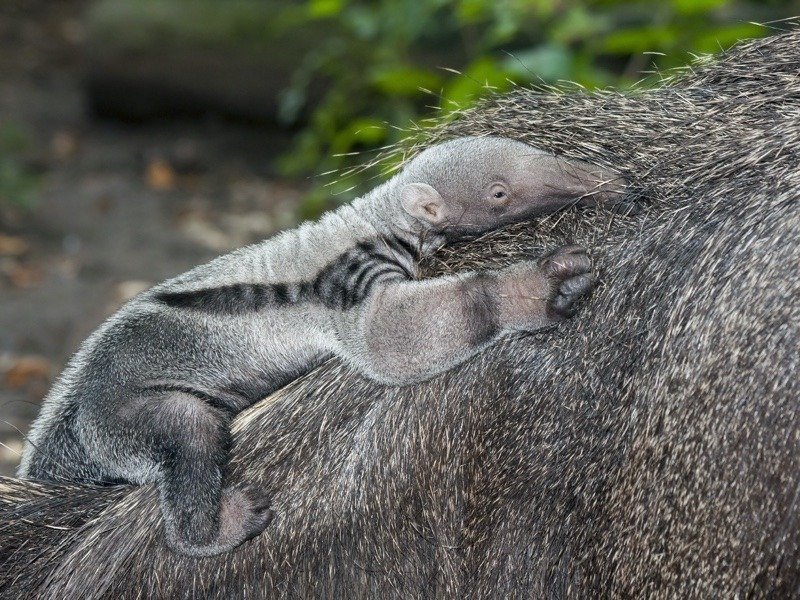
Baby anteater on its mother's back

Baby anteaters stay on their mothers’ backs during nursing to remain safe from predators.

Anteaters in Zoos

About 90 giant anteaters live in zoos around the world. Breeding occurs year-round in captivity, although births are rare. The San Diego Zoo is one of the few facilities that have anteaters. The first anteaters came from Paraguay in 1937, and the first birth at the zoo occurred in 1980. Their diets may be different, too, with anteaters in captivity getting a specially manufactured high-protein diet along with fruit and meat in addition to insects.

Both the San Diego Zoo and Denver Zoo often keep their anteaters off exhibit, using them primarily as animal ambassadors, meaning they are only displayed for special events or outreach programs.

San Diego Zoo Safari

The San Diego Zoo is one of the few facilities to house anteaters.

View all 326 animals that start with A
How to say Anteater in ...
Bulgarian
Голям мравояд
Catalan
Ós formiguer
Czech
Mravenečník velký
Danish
Stor myresluger
German
Großer Ameisenbär
English
Giant Anteater
Spanish
Myrmecophaga tridactyla
Finnish
Isomuurahaiskarhu
French
Tamanoir
Hungarian
Sörényes hangyász
Italian
Myrmecophaga tridactyla
Japanese
オオアリクイ
Dutch
Reuzenmiereneter
English
Kjempemaursluker
Polish
Mrówkojad wielki
Portuguese
Tamanduá-bandeira
Swedish
Jättemyrslok
Chinese
大食蟻獸

Sources

  1. National Geographic
  2. Kate Horowitz for Mental Floss
  3. Sea World
  4. Smithsonian's National Zoo & Conservation Biology Institute
  5. Mom.com
  6. How Stuff Works
  7. San Diego Zoo
Catherine Gin

About the Author

Catherine Gin

Catherine Gin has more than 15 years of experience working as an editor for digital, print and social media. She grew up in Australia with an alphabet of interesting animals, from echidnas and funnel-web spiders to kookaburras and quokkas, as well as beautiful native plants including bottlebrushes and gum trees. Being based in the U.S. for a decade has expanded Catherine's knowledge of flora and fauna, and she and her husband hope to have a hobby farm and vegetable garden in future.

Thank you for reading! Have some feedback for us?


Anteater FAQs (Frequently Asked Questions)

Depending on where they live, anteater species are preyed upon by cougars, jaguars, large snakes, owls, hawks, and eagles.