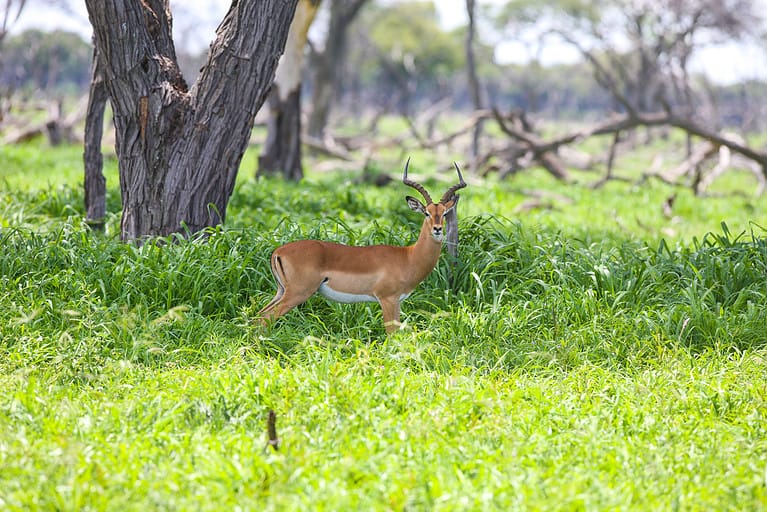




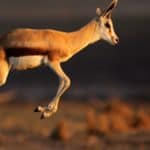
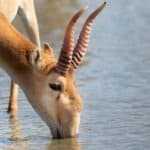
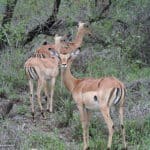
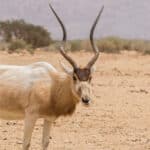
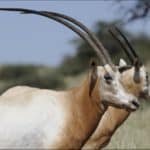
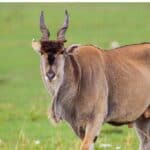
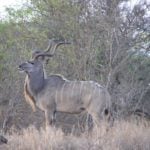
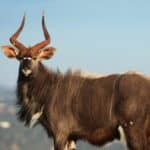
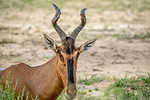
“The antelope is one of the fastest land animals in the world”
With its elegant, bounding leap, the antelope is an animal that roams the forests and plains of Africa and Asia, relying on its incredible speed and agility to elude the most fearsome predators.
However, it is important to explain that ‘Antelope’ is a blanket name that covers around 91 different subspecies around the globe. Most of these species are native to Africa. In East Africa alone, there are around 40 different subspecies of antelope.
Antelopes are revered and much appreciated even by ancient cultures, due to their speed, their long horns that are capable of causing much damage, and their beauty, eyes, and lashes that are exceptionally large.
Although very common and widespread, it still faces enormous dangers from excessive hunting and poaching.
Incredible Antelope Facts!
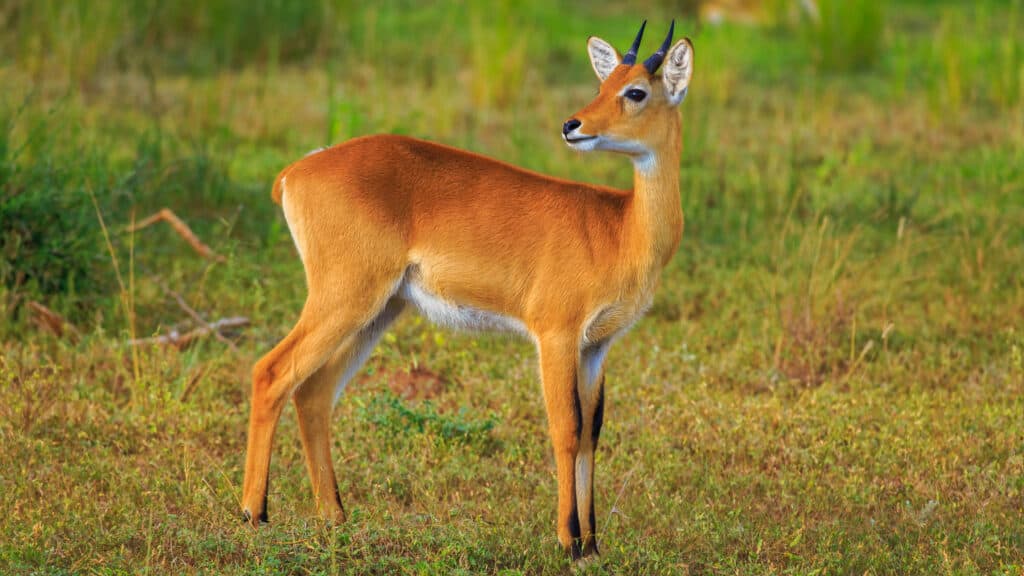
The oribi antelope is small, with reddish fur.
©Anil Varma/Shutterstock.com
- The antelope is an animal that has played an important role in human medicine and culture. In some African traditions, it is commonly associated with the wind.
- The antelope’s horns are composed of keratin. This is the same substance found in nails, hair, claws, and hooves. However, as opposed to deer, which the antelope is often compared to, antelopes keep the same horns for their entire lives instead of shedding them every year.
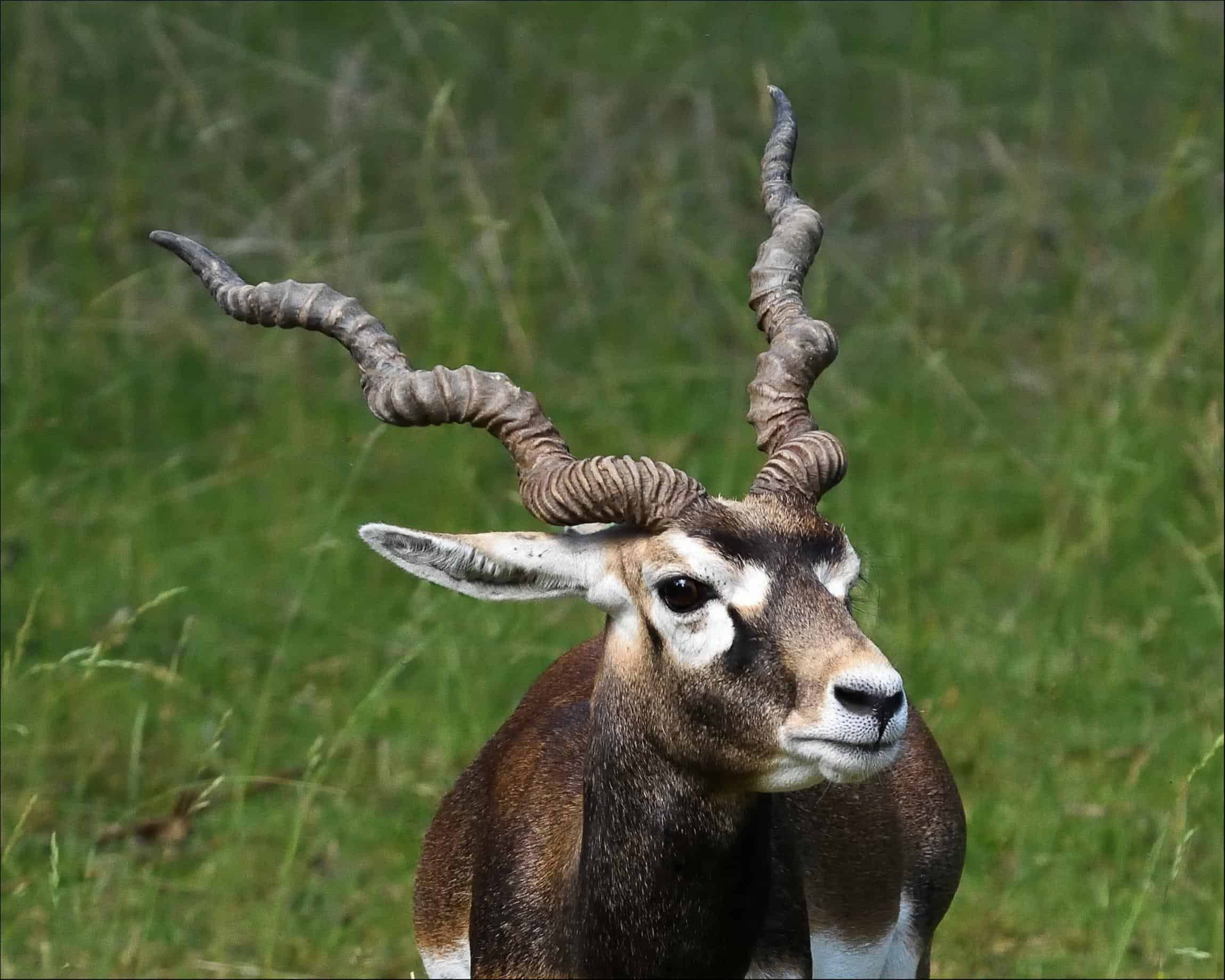
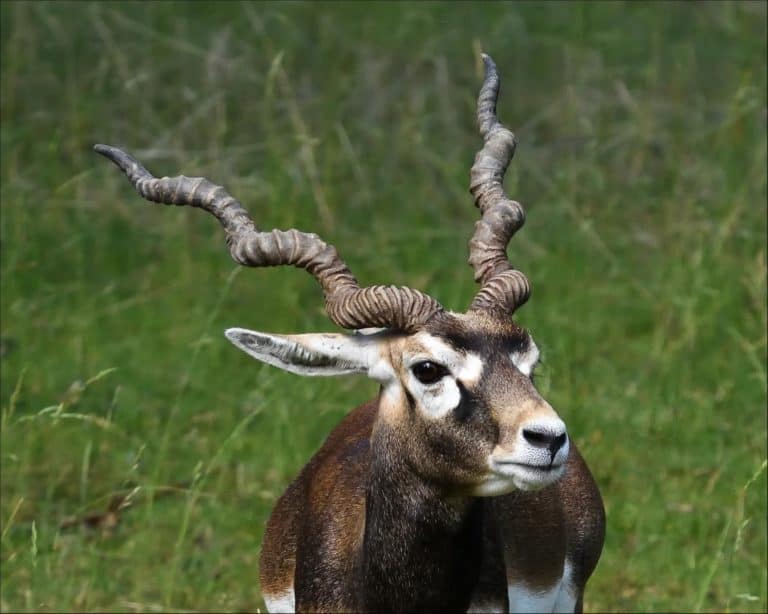
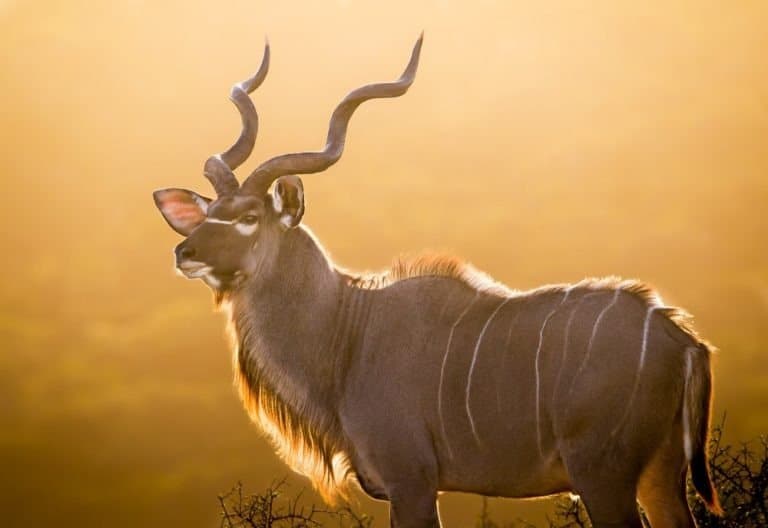
- The structure and shape of antelope horns vary widely. Some horns form spirals, others are curved, and yet others have ridges. Experts can often distinguish antelope species based merely on the appearance of their horns.
Evolution and Origins
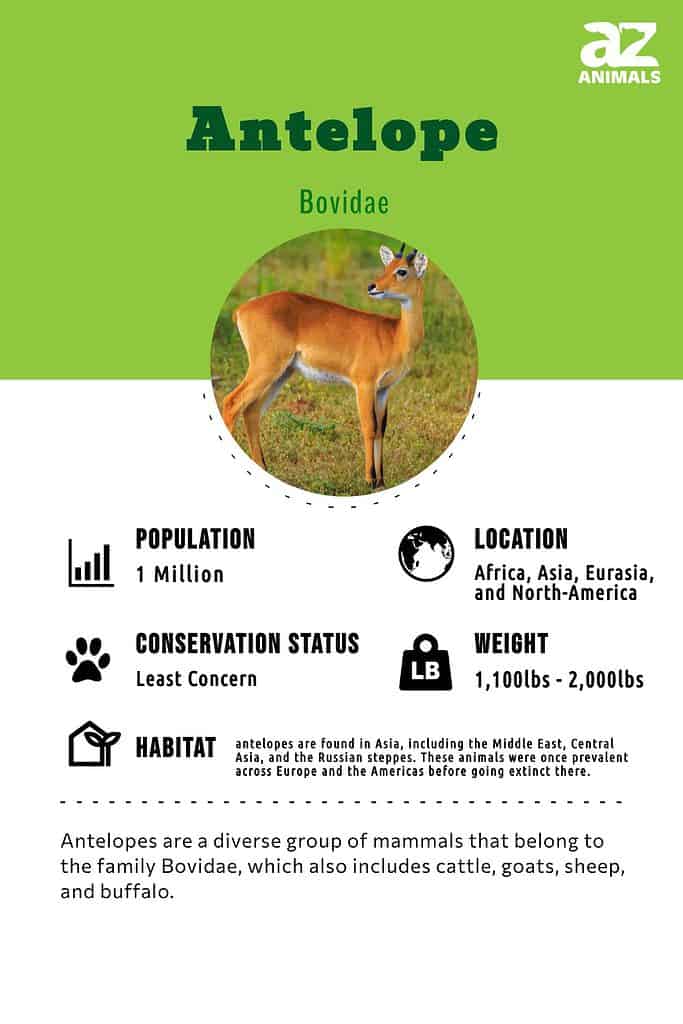
Antelopes are a diverse group of mammals that belong to the family Bovidae, which also includes cattle, goats, sheep, and buffalo. The first known antelopes appeared in the Miocene epoch, around 20 million years ago, in Africa and Asia.
Over time, they evolved into a wide variety of forms adapted to different environments and ecological niches, such as savannas, deserts, and mountains. Today, there are over 90 species of antelopes found throughout Africa, Asia, and parts of Europe and North America.
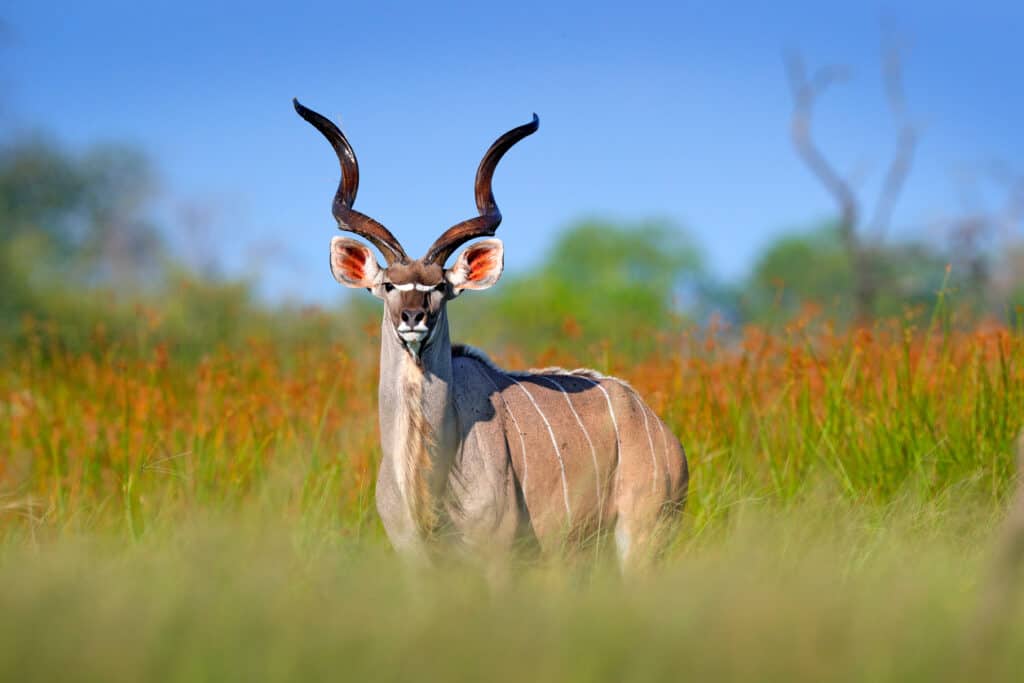
The horns of male antelopes are used for fighting and display, while females typically do not have horns.
Scientific Name
©Ondrej Prosicky/Shutterstock.com
Antelope is more an informal classification than a scientific one. There is no single scientific name that includes all these animals. Instead, the name antelope describes any deer-like animal within the family Bovidae that has a similar appearance and physiology.
It is generally accepted that there are several distinct subfamilies that fall within the general term of antelope, but this is still a matter of scientific debate.
Due to the lack of precise scientific criteria, there are many different edge cases. For instance, the pronghorn, or the American antelope, is not actually a true antelope at all. The giraffe is more closely related to the pronghorn than the antelopes.
Antelopes are incredibly widespread animals. They make up approximately 91 of the 140 or so known species of the Bovidae family, which also includes sheep, goats, and domesticated cattle. More distantly, they belong to the order Artiodactyla with giraffes and pigs.
The most distinctive feature of this order is the even number of hooves. The name antelope came to us from the original Greek via Medieval Latin, but the actual meaning of the word is currently unknown.
Different Types of Antelope
- Cattle
- Domestic water buffalo
- Goat
- Sheep
- Bovinae
- Bos
- Caprinae
- Bison
- Wildebeest
- Ovis
- Oryx
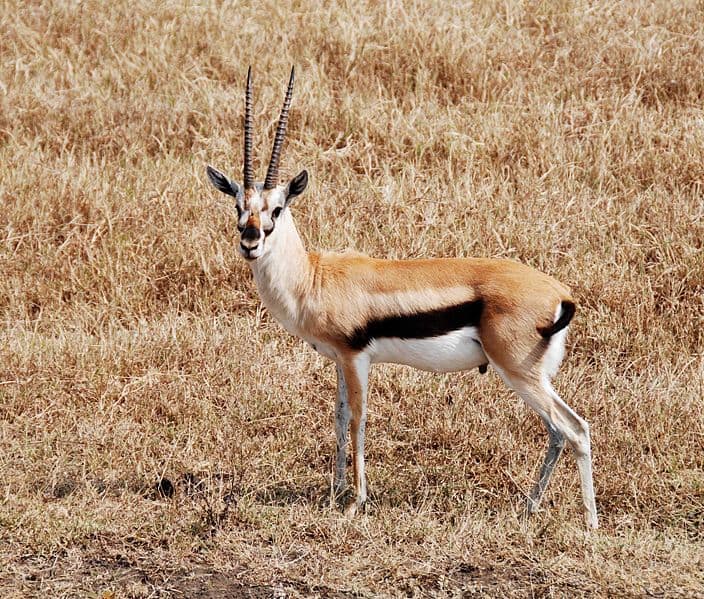
- Gazelles
- Domestic yak
- Chamois
- Musk ox
- Antilopinae
- Gerenuk
- Serows
- Blackbuck
- Duiker
- Sable antelope
- Dik-dik
- Hartebeest
- Roan antelope
- Saiga antelope
- Addax
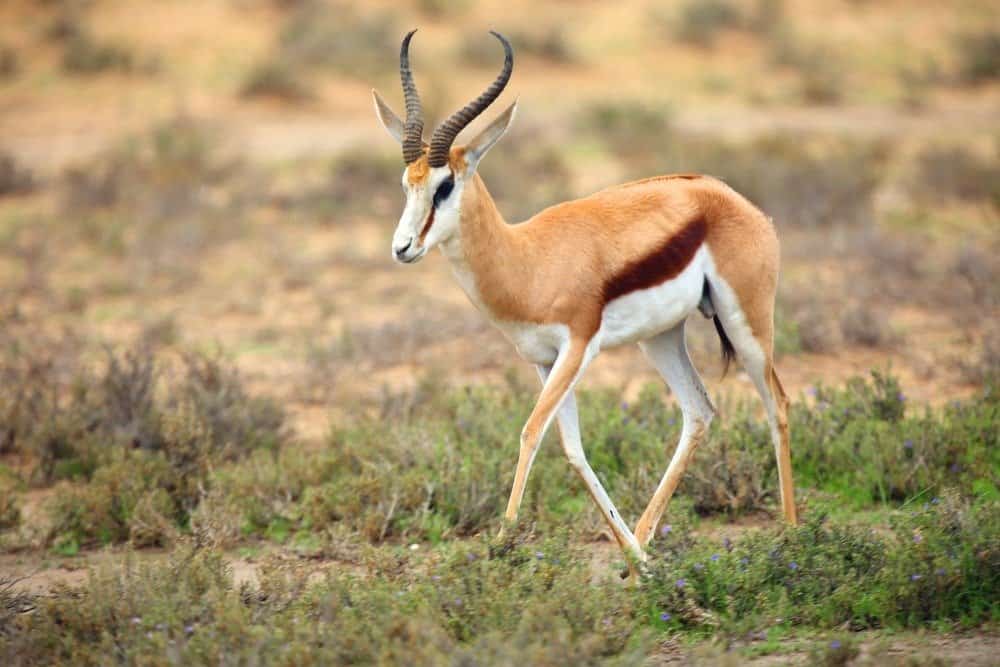
- Springbok
- Waterbuck
- Alcelaphinae
- Kobs
- Cephalophus
- Common duiker
- Reduncinae
- Lechwe
- Reedbuck
- Bluebuck
- Hirola
- Blesbok
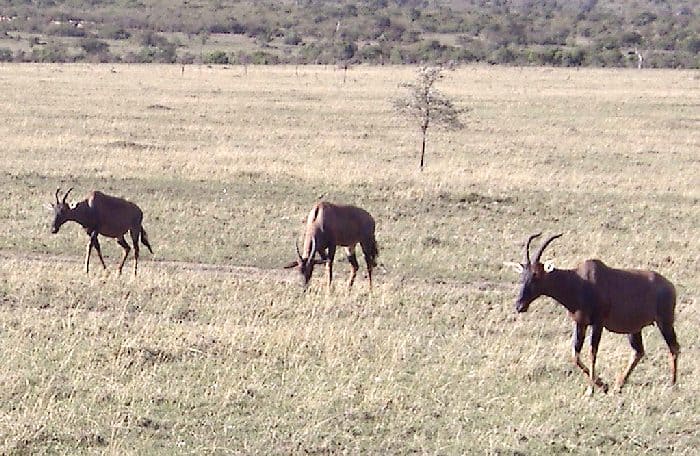
- Topi
- Blue duiker
- Grey rhebok
- Yellow-backed duiker
- Red forest duiker
- Zebra duiker
- Puku
- Leptobos
- Maxwell’s duiker
- Hypsodontinae
Appearance and Behavior
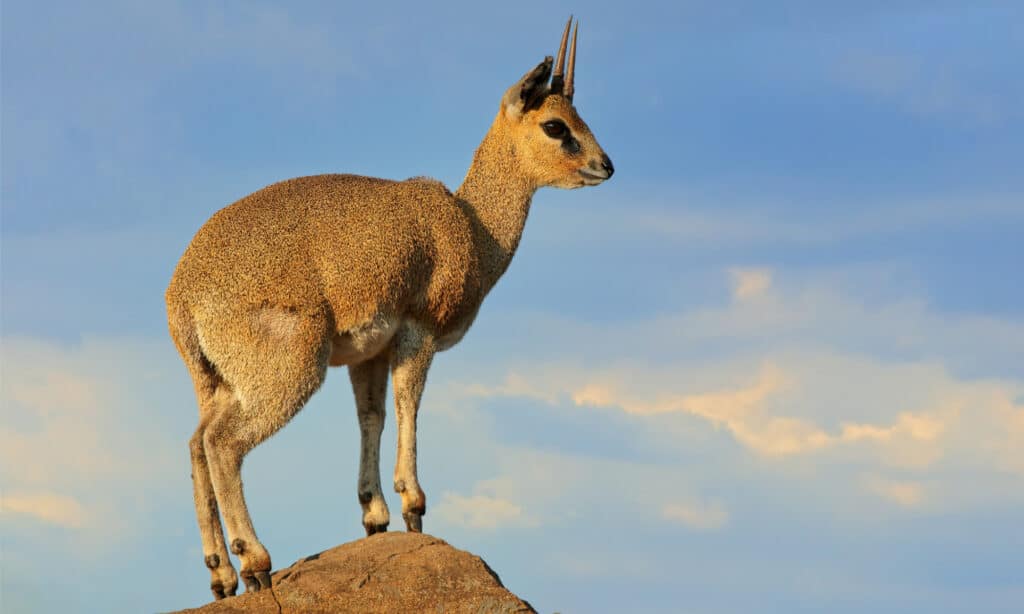
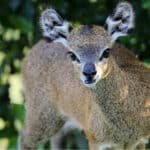
Klipspringers are 2 feet tall and weigh between 20-40 pounds.
©iStock.com/EcoPic
Because of its massive diversity, it is difficult to talk about a single characteristic or appearance of the antelope. Most tend to have a deer-like appearance with spikes or corkscrew horns, but the largest members of the group almost resemble a cross between a deer and cattle.
There are generally two types of antelope, which vary by habitat. Small to medium animals such as the duikers and reedbucks are more adapted to concealed cover in forests and wetlands.
Thanks to their short legs, round back, and large rear end, they are capable of fast, sporadic movements to elude predators. These animals have camouflaged colorings or markings to provide an extra layer of defense. They tend to forage on foliage by themselves but then pair together with mates monogamously during the breeding season.
The larger antelopes, on the other hand, are built for deserts, open plains, and savannas. They graze on the grass and rely on pure speed to help them avoid predators. They tend to congregate into large herds in which a dominant male will mate with multiple females.
The size of the herd can vary quite a bit. Some herds consist of no more than 10 or 20 individuals, while other antelopes have herds of thousands, which can make for quite the spectacle on the open plains. These herds may undertake large migrations during certain parts of the year in search of new food reservoirs and grazing land.
Antelopes vary dramatically in size between the small royal antelope, which weighs a mere 4 pounds, and the truly gigantic eland, which weighs up to 1,800 pounds, or about as much as some cattle. The topi is perhaps the longest, reaching nearly 9 feet. Males tend to have larger bodies and horns than females, but in a few species, the females may lack horns altogether, or they will have smaller horns than the males.
©Karel Bartik/Shutterstock.com
Like many other bovids, the entire body of the antelope is remarkably well adapted for the consumption and digestion of vegetation. It has a multi-chambered stomach filled with specialized bacteria to ferment and break down the tough cellulose of the plant matter. The antelope will also regurgitate the food as cud and chew it again with its well-developed molar teeth to aid in digestion.
Another important feature is the antelope’s visual acuity. They have horizontal pupils located on the side of the head that enable them to see predators coming from the periphery of their vision. The acute sense of smell also aids in communication.
Specialized fluids secreted from scent glands around the face, knees, and hooves allow them to mark territory and communicate with other members. Antelopes also have a suite of whistles, barks, bleats, grunts, and moos. These vocalizations serve as a means of alarm calls, warnings, or greetings.
Habitat
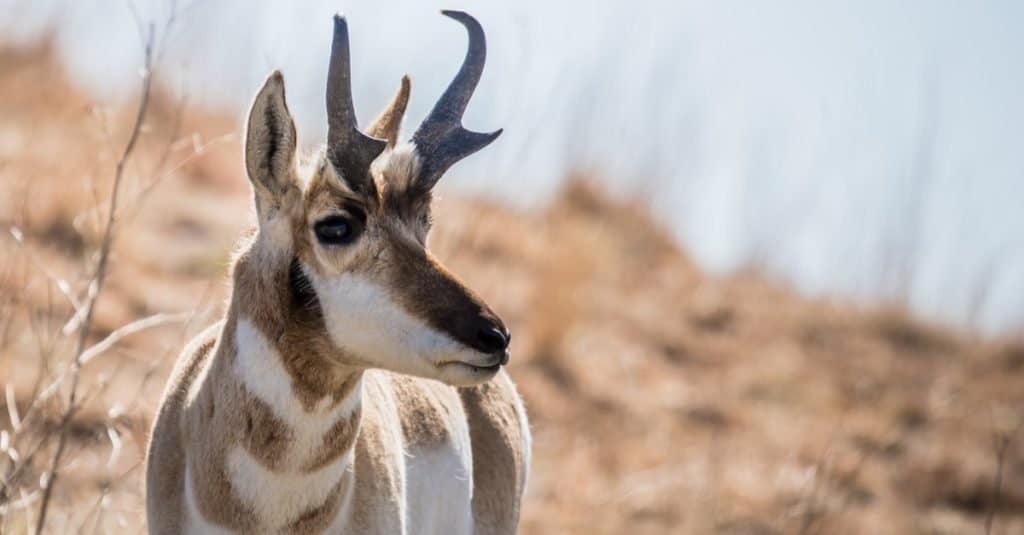
Pronghorn antelope grazing in grasslands.
©Jen DeVos/Shutterstock.com
Approximately 71 species of antelopes inhabit the African continent. Most of the remaining antelopes are found in Asia, including the Middle East, Central Asia, and the Russian steppes. These animals were once prevalent across Europe and the Americas before going extinct there. No known antelopes have ever evolved in Australia.
As mentioned previously, antelopes tend to live exclusively in either forests or open plains, rarely mixing the two. Habitation dictates the survival strategies of each species, from body size to diet to social organization.
Diet
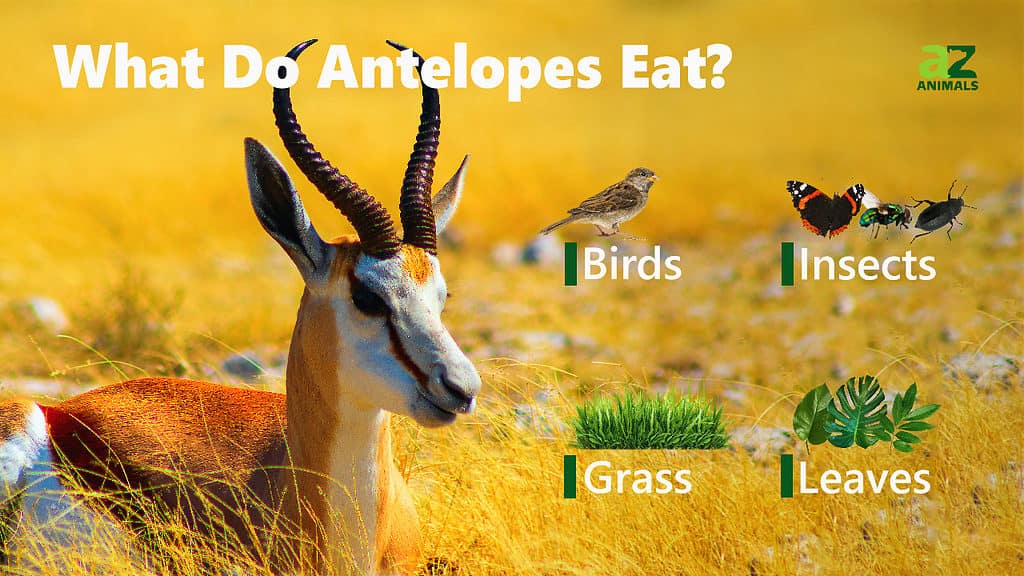
The antelopes feed almost exclusively on vegetation. The only exception is the duiker (a small- or medium-sized antelope located in forests), which supplements its herbivorous diet with small amounts of meat from mammals, insects, and birds.
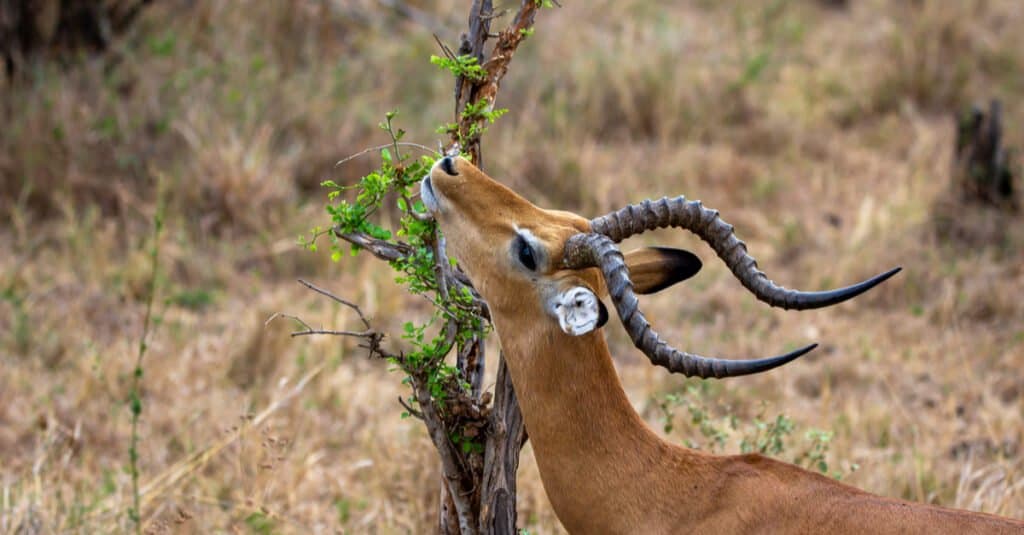
There are generally two types of foraging strategies: browsers and grazers. Browsers tend to feed on leaves, seeds, fruits, flowers, and bark close to the ground. Grazers tend to consume grasses and similar vegetation.
The gerenuk and dibatags have a unique strategy of standing on their hind legs to reach leaves in tall trees. It takes an enormous amount of time to break down the plant matter into a usable form, but this strategy is highly beneficial since foliage and grazing land can support a large number of antelopes at a single time.
These animals spend a great deal of their time searching for and feeding on food. In order to find adequate sources, some antelopes have cleverly offloaded the work to other animals. They will actively follow bird flocks, monkey troops, or migrating zebras in search of prime foraging grounds.
For a complete analysis of antelope diets, make sure to read ‘What Do Antelopes Eat?’
Predators and Threats
©Benas Bakevicius/Shutterstock.com
Antelopes are some of the most common prey animals in Africa. They make a tempting meal for cheetahs, lions, hyenas, civets, pythons, and large birds. Because of the antelope’s incredible speed, many predators prefer to sneak up on them and pick off individual stragglers. The cheetah, as one of the few animals fast enough to catch them, relies on its pure speed. These chases often make for spectacular footage in nature documentaries.
These animals have a number of strategies to deal with a dangerous predators, the most important of which is their speed and agility. If the animal cannot evade its pursuer outright, then it may try to hide in water or foliage. Some species will actually freeze in place to avoid being noticed. If everything else fails, then the antelope may stand its ground and defend itself with its sharp horns.
Antelopes are hunted by humans for both their horns and their meat. Some cultures have local taboos against antelope hunting. However, the animal can still become accidentally ensnared in traps. Habitat loss is another significant threat to many types of antelopes.
Reproduction, Babies, and Lifespan
Antelopes pursue so many different courtship and mating rituals that it is difficult to discuss all of them in detail. Breeding strategies can vary between full monogamy and a dominant breeding pair within a herd. In other species, males compete with each other every season for the right to breed with females.
Once the female is impregnated, gestation lasts anywhere between four and nine months. The mother produces only a single calf at a time, while twins are relatively rare. Because the calf is highly vulnerable at birth, they generally have two different strategies to protect the young. Most antelopes prefer to hide the calf in a concealed location, while the mother rejoins the herd or hunts on its own.
In the second strategy, the calf is expected to begin traveling immediately with the herd from almost the moment it is born. In exchange, the herd provides additional protection for the young calf.
The age of maturity varies widely between species. Some of these animal species come of age in as little as six months. Some take as long as eight years to fully develop. Females usually mature faster than males on average. Lifespan likewise can vary between three years and 28 years based on the species.
Population
According to the IUCN Red List, around a quarter of antelope species are currently threatened by extinction, and several have already gone extinct in the 19th and 20th centuries. But even among those groups in good health, many appear to be in decline and could face pressure in the future due to hunting and declining habitats. The exact population numbers are not known.
Antelopes in the Zoo
The San Diego Zoo Safari Park has perhaps the largest collection of these animals in the United States, including springboks, lechwes, waterbucks, sables, roan antelope, gazelles, white-bearded gnu (a type of wildebeest), blesboks, and many more.
One of the most important denizens is a breeding herd of saigas, a critically endangered antelope that inhabits the Eurasian steppe. The zoo has bred more than 100 saiga calves in captivity and also assists with conservation efforts across Russia.
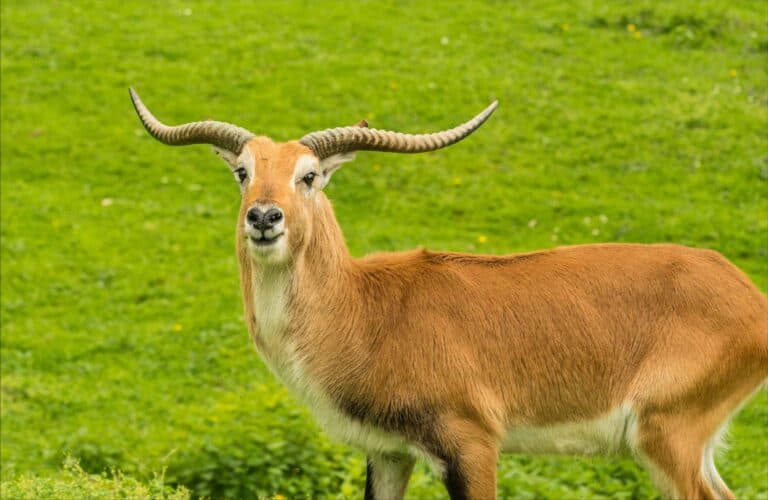
If you don’t live near San Diego, then there are still several ways to see live antelopes. The Little Rock Zoo in Arkansas contains three species of antelopes: the yellow-backed duiker, the greater kudu, and the dik-dik. The Buffalo Zoo contains the roan antelope and the addax. The Saint Louis Zoo has the addax, the lesser kudu, Speke’s gazelle, and the gerenuk. Finally, the Smithsonian’s National Zoo contains the dama gazelle and the scimitar-horned oryx.
Antelopes and Humans
Antelope hunting is very popular in regions that are their natural habitat. In fact, many people have made antelope hunting into business by creating farms. Some claim to have adapted sustainable practices and conscious hunting practices.
It is essential to note that out of 91 species of antelope 25 are in various stages of conservation by the IUCN; 9 Species have been classified as endangered, 9 as vulnerable, and 5 as critically endangered. IUCN also says that 70% of the species are under threat of extinction and 62% of species are rapidly declining in numbers.
Meat
Although not as popular as venison, deer, or buffalo, the meat of antelope is known for being lean and healthy. The taste of the meat largely depends upon how fast the hunter can skin, remove the entrails and cook the meat. According to seasoned hunters, if too much time passes before the animal is processed, the meat does not taste good.
Antelope meat has a mild sage-like flavor and is granular and sweet in taste. It is almost the same as venison and just as lean. The best way to cook antelope meat is to cook it over the fire, like grilling, roasting, or medium-rare in the oven. Overcooked meat becomes dry and tough to chew.
Horn
Antelope are killed more for the pursuit of their horns than as a game. In many cultures, the horns have been used for medicinal and mystical purposes. In ancient times natives of Africa, America, and Asia used the horns for various purposes. In India and China, deadly weapons were fashioned by tipping the horns with metal, parrying shields were reinforced, and they can also be turned into knives and other striking weapons.
Some cultures believed that the antelope horns are an effective aphrodisiac. They were hunted down for the sole purpose of collecting the horns, which were ground into powder form and consumed. The Saiga males have fallen prey to this belief and are now termed critically endangered with around 50,000 of them left in the world.
Antelope and Heraldry
Antelopes are widely used in heraldry, however, their forms are altered from their natural form. They are seen to have the body of a stag, the tail of a lion, and serrated horns. They have also been given small tusk which is placed with a snout. The heraldry was designed by Europeans during the middle-ages, who had no idea what an antelope really looked like and imagined it as a monster hunter.
Antelope Pictures
View all of our Antelope pictures in the gallery.

Petr Ganaj/Shutterstock.com
How to say Antelope in ...
Sources
- David Burnie, Dorling Kindersley (2011) Animal, The Definitive Visual Guide To The World's Wildlife / Accessed December 5, 2008
- Tom Jackson, Lorenz Books (2007) The World Encyclopedia Of Animals / Accessed December 5, 2008
- David Burnie, Kingfisher (2011) The Kingfisher Animal Encyclopedia / Accessed December 5, 2008
- Richard Mackay, University of California Press (2009) The Atlas Of Endangered Species / Accessed December 5, 2008
- David Burnie, Dorling Kindersley (2008) Illustrated Encyclopedia Of Animals / Accessed December 5, 2008
- Dorling Kindersley (2006) Dorling Kindersley Encyclopedia Of Animals / Accessed December 5, 2008
- David W. Macdonald, Oxford University Press (2010) The Encyclopedia Of Mammals / Accessed December 5, 2008
- Britannica / Accessed October 26, 2020