



A
Species Profile

Arctic Fox

Vulpes lagopus

Built for blizzards, born for tundra
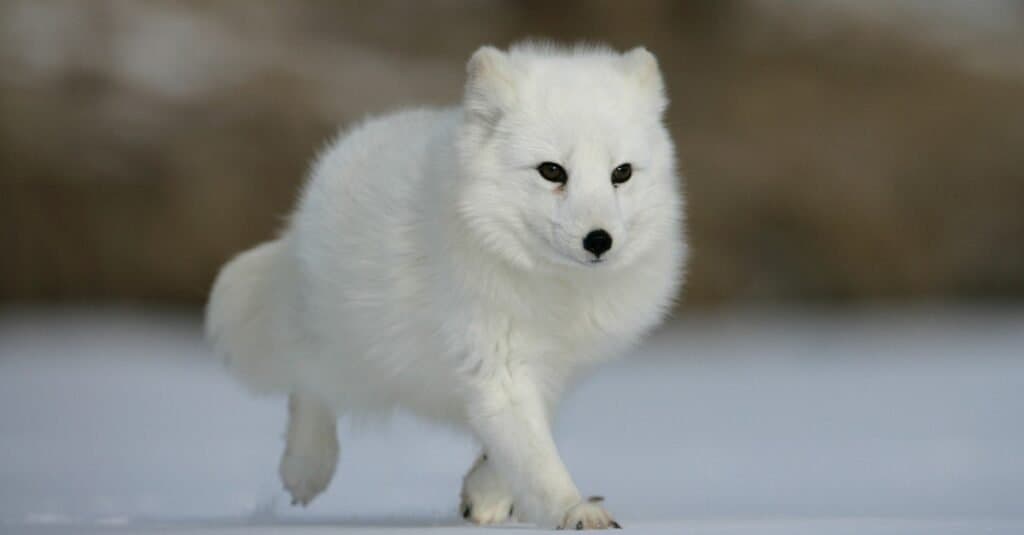
L-N/Shutterstock.com

Arctic Fox Distribution

Click a location to explore more animals from that region

Invasive Species

This map shows coastal regions where Arctic Fox are found.

Loading map...

Size Comparison

Human 5'8"
Arctic Fox 11 in

Arctic Fox stands at 16% of average human height.

At a Glance

Wild Species
Also Known As Polar fox, White fox, Snow fox, Blue fox
Diet Omnivore
Activity Cathemeral+
Lifespan 4 years
Weight 9 lbs
Status Least Concern
Did You Know?

Adults are typically 46-68 cm long (head-body) with a 30-35 cm tail; mass commonly ~2.5-9.0 kg (sex and region vary).

Scientific Classification

The Arctic fox (Vulpes lagopus) is a small canid specialized for tundra life, known for seasonal coat color changes (white in winter in many populations; brown/gray in summer) and exceptional cold tolerance.

Kingdom
Animalia
Phylum
Chordata
Class
Mammalia
Order
Carnivora
Family
Canidae
Genus
Vulpes
Species
Vulpes lagopus

Distinguishing Features

  • Very dense insulating fur including on the foot pads
  • Short muzzle, small rounded ears, and compact body to reduce heat loss
  • Often shows seasonal color change (white winter morph common; blue morph occurs year-round in some coastal areas)
  • Caches food and relies heavily on lemming cycles; also scavenges marine carrion and follows polar bears

Physical Measurements

Males and females differ in size

Height
11 in (10 in – 12 in)
10 in (9 in – 12 in)
Length
3 ft 1 in (2 ft 6 in – 3 ft 7 in)
2 ft 7 in (2 ft 4 in – 2 ft 11 in)
Weight
10 lbs (7 lbs – 21 lbs)
7 lbs (6 lbs – 9 lbs)
Tail Length
1 ft 1 in (12 in – 1 ft 2 in)
12 in (10 in – 1 ft 2 in)
Top Speed
31 mph
Reported up to 50 km/h

Appearance

Primary Colors
Secondary Colors
Skin Type Thick mammalian skin covered by an exceptionally dense double coat (long guard hairs over fine underfur); fur extends onto the footpads (fully furred soles) for insulation and traction on snow/ice.
Distinctive Features
  • Compact canid built for heat conservation: short muzzle and notably short, rounded ears (reduced surface area) and a thick "brush" tail used for facial/foot insulation when curled up resting.
  • Exceptional cold adaptation: very low lower critical temperature reported around −40 °C, reflecting high insulation of the winter coat and compact morphology (commonly cited in physiological/ecological syntheses of the species).
  • Adult size (species-typical ranges): head-body length ~46-68 cm; tail length ~30-35 cm; shoulder height ~25-30 cm; adult mass commonly ~3-9 kg (with strong regional/seasonal and prey-cycle variation).
  • Circumpolar tundra specialist: pelage and body proportions are optimized for open Arctic tundra; seasonal color change in many populations aligns with snow cover duration.
  • Denning ecology closely tied to appearance/behavior: uses large, long-lived dens (often on well-drained ridges/esker-like features) that can have many entrances (reports of dozens and in some cases ~100).
  • What Arctic foxes eat shapes body and coat across years: strongly tied to lemming cycles; they also eat marine mammal leftovers, polar bear kills, birds, eggs and insects, affecting weight and molt.
  • As red foxes move north with climate change, competition grows. Arctic fox (Vulpes lagopus) lives in the tundra, smaller and more compact, with shorter ears and legs.

Sexual Dimorphism

Sexual dimorphism is slight; males average somewhat larger/heavier than females, but with substantial overlap. Differences are most evident in body mass and overall robustness, varying with region and prey abundance.

  • On average higher body mass and slightly larger skull/body dimensions; males may appear more robust through shoulders and neck, especially in peak-condition years.
  • On average slightly lower body mass and a somewhat finer overall build; otherwise pelage coloration and seasonal molt patterns are the same as males.

Did You Know?

Adults are typically 46-68 cm long (head-body) with a 30-35 cm tail; mass commonly ~2.5-9.0 kg (sex and region vary).

In winter coat, the species' lower critical temperature has been measured at about −56 °C (Scholander et al., 1950), among the lowest recorded for any mammal.

It has the largest maximum litter size of any wild canid: up to 25 pups reported; more commonly ~5-8, strongly tied to lemming abundance.

Arctic fox dens can be enormous, long-used structures with dozens of entrances; >100 entrances have been documented in some den complexes used for decades.

Two main color morphs occur: "white" morph (white winter coat) and "blue" morph (darker, often slate/charcoal, especially in winter).

A GPS-tracked Arctic fox made an exceptional dispersal from Svalbard toward Canada-~3,500 km in ~76 days-showing their capacity for long-distance travel over sea ice (Tarroux et al., 2019).

They routinely cache surplus food (e.g., lemmings, seabird eggs, carrion) to buffer winter scarcity and lemming-cycle crashes.

Unique Adaptations

  • Exceptional insulation: dense winter fur and compact body shape reduce heat loss; measured lower critical temperature ~−56 °C in winter coat (Scholander et al., 1950).
  • Furred footpads ("hare-footed") insulate against ice and improve traction on snow.
  • Short ears, short muzzle, and relatively short legs reduce exposed surface area-classic tundra thermoregulation morphology.
  • Seasonal molt and color morphs: white morph provides winter camouflage in snow; blue morph can be advantageous in coastal/rocky, low-snow or variable-snow environments.
  • High-fat storage and energy management: can build fat reserves and adjust activity/foraging to endure long periods of low prey availability.
  • Cold-weather nose and limb heat conservation: like other Arctic mammals, relies on physiological heat-saving strategies to keep core temperature stable during severe cold.

Interesting Behaviors

  • Lemming-cycle breeding: reproductive output rises sharply in peak lemming years; in poor years, many pairs may skip breeding entirely or raise small litters.
  • Monogamy with biparental care: a mated pair typically raises the litter; in some populations, extra adults may help provision pups (cooperative breeding reported).
  • Denning ecology: adults maintain multi-entrance dens on well-drained slopes/ridges; dens can be re-used across generations and become nutrient "hotspots" that green the tundra around them.
  • Caching and scavenging: frequently stores food and scavenges from larger predators' kills; in coastal/sea-ice settings, may follow polar bears to feed on leftovers.
  • Subnivean hunting: uses acute hearing to locate prey moving under snow, then performs a high pounce to break through crusted snow to seize lemmings.
  • Seasonal movements and dispersal: some individuals roam widely (including over sea ice) to track food; long-distance dispersal is a notable life-history strategy.
  • Flexible foraging: shifts among rodents, birds/eggs, fish, invertebrates, berries, and carrion depending on local seasonal availability.

Cultural Significance

Across the circumpolar Arctic, the Arctic fox (Vulpes lagopus) has long been important for warm fur and the fur trade (blue fox). Now it is a key sign of Arctic health: warming winters and less snow and ice let red foxes move north, causing declines in Fennoscandia.

Myths & Legends

In Finnish and Sami tradition, the Northern Lights are known as "fox fires," said to be sparked when an Arctic fox runs across snowy hills and its tail sweeps up glowing snow into the sky.

Arctic trickster tales: In Inuit and other circumpolar oral traditions, the fox often appears as a small, clever survivor who outwits larger animals (and sometimes humans), emphasizing intelligence and adaptability in a harsh landscape.

Raven-and-fox story cycles: In several Arctic story traditions where ravens are prominent culture heroes/tricksters, foxes frequently appear as rivals, helpers, or opportunists-narratives that mirror real scavenging behavior around larger feeders.

Name-legend in science: The species epithet means "hare-footed," reflecting the long-observed defining trait of furred feet and linking traditional natural history description with formal zoological naming.

Conservation Status

LC Least Concern

Widespread and abundant in the wild.

Population Stable

Protected Under

  • Regional legal protection varies across the circumpolar range: fully protected with hunting/trapping prohibited in Norway, Sweden, and Finland (core of the highly threatened Fennoscandian population); regulated harvest/trapping allowed in parts of Canada, Russia, Greenland, and Iceland under national/subnational rules.
  • EU Habitats Directive: the Arctic fox is listed on Annex II and Annex IV in the EU context (relevant to the Fennoscandian population), requiring strict protection and designation/management of key sites where applicable.
  • Species biology (key metrics commonly cited in field references for Vulpes lagopus): head-body length ~46-68 cm; tail length ~30-36 cm; adult mass commonly ~3-9 kg (sex-, season-, and region-dependent); wild longevity typically ~3-6 years (maximum recorded around 11 years); large litters possible (often ~5-8, with maxima reported >20 in peak prey years). These traits interact with prey cycles and climate-driven ecosystem change to shape population variability and conservation risk.
  • HUBS (group-level conservation landscape; Canidae/Vulpes context): Most foxes are Least Concern (e.g., red fox Vulpes vulpes; fennec fox V. zerda), but several canids/foxes are highly threatened due to habitat loss, persecution, and disease (e.g., Darwin's fox Lycalopex fulvipes = Endangered; Ethiopian wolf Canis simensis = Endangered). Across foxes/canids, common threats include habitat loss/fragmentation, climate change effects on prey and habitat, hunting/persecution and fur trade (historical or ongoing), disease outbreaks (rabies/mange), and infrastructure/industrial expansion. The Arctic fox is globally LC but declining, while specific regional populations (especially Fennoscandia) remain conservation priorities.

Life Cycle

Birth 7 kits
Lifespan 4 years

Lifespan

In the Wild
1–10 years
In Captivity
8–15 years

Reproduction

Mating System Monogamy
Social Structure Socially Monogamous
Breeding Pattern Long Term
Fertilization Internal Fertilization
Birth Type Internal_fertilization

Arctic fox (Vulpes lagopus) are usually socially monogamous: a male and female share a den, breed in late winter, and both care for large litters (5–11 pups, ~52-day gestation). With abundant prey, polygamy, communal dens, and helpers occur.

Behavior & Ecology

Social Family group Group: 9
Activity Cathemeral, Crepuscular
Diet Omnivore Lemmings (Dicrostonyx/Lemmus spp.)-when abundant, rodent prey can dominate diet in inland tundra; classic field studies and reviews report lemmings as the primary prey with strong multi-annual tracking of lemming cycles (e.g., Hersteinsson & Macdonald 1992; Angerbjörn et al. 2004).
Seasonal Migratory 2,179 mi

Temperament

Territorial and den-centered defensive behavior during breeding; heightened aggression near dens and concentrated food
Generally wary of novel stimuli/people, but can become bolder and more tolerant of close conspecific presence where food subsidies are predictable (coastal/refuse-associated systems)
Opportunistic, flexible forager; tolerance toward mates/offspring and (when present) helper females; otherwise spacing is maintained via territoriality
High parental investment with biparental care; extended-family helping behavior occurs in some populations/years (resource-dependent variation)

Communication

Short barks/yaps used in alarm and agonistic/territorial contexts
Growls and snarls during close-range aggression at food or den
Whines/whimpers in appeasement and parent-offspring interactions
High-pitched screams in intense conflicts Reported in canids including Vulpes; field reports for V. lagopus summarized in species accounts
Scent marking with urine and feces Including latrine use) and glandular scents; marks placed along travel routes, prominent objects, and territory boundaries (core canid mechanism; described for arctic fox in ecology syntheses
Visual signaling via posture, tail carriage, facial expressions, and piloerection in threat/submission and during mate/parent-pup interactions
Tactile communication: nose-touching, grooming, play behavior (especially in pups) supporting social bonding and hierarchy within the family at dens

Habitat

Terrain:
Plains Plateau Coastal Island Riverine Hilly Mountainous Sandy Rocky +3
Elevation: Up to 9842 ft 6 in

Ecological Role

Opportunistic tundra mesopredator and facultative scavenger that couples rodent cycles, bird breeding success, and carrion subsidies (including marine-derived resources) across Arctic ecosystems.

Regulates prey populations (notably lemmings/voles; locally affects nesting success of ground-nesting birds via predation on adults/chicks/eggs) Carrion removal and redistribution of nutrients on tundra and coastal zones (including marine-to-terrestrial nutrient transfer) Trophic coupling across cyclic rodent years, stabilizing energy flow by switching prey and scavenging Potential seed dispersal via seasonal berry consumption (local/seasonal) Supports den-site nutrient hotspots (prey remains and excreta can enrich vegetation around dens over time)

Diet Details

Main Prey:
Lemmings Voles Ground-nesting birds Bird eggs Arctic hare Fish Marine invertebrates Carrion +2
Other Foods:
Berries Tundra plant material Seaweed

Human Interaction

Domestication Status

Wild

The Arctic fox (Vulpes lagopus) is a wild canid, not domesticated. People mainly meet it by hunting, trapping, and fur farming. Fur farms began in the early 1900s, especially in Iceland, breeding coat-color types (like “blue”) and captive lines, but did not produce a dog-like domesticated form.

Danger Level

Low
  • Bites/scratches if cornered, handled, or habituated; canids can carry zoonotic pathogens
  • Rabies exposure risk in some regions (any wild canid encounter should be treated as a potential rabies risk depending on local epidemiology)
  • Zoonotic parasites (reported in Arctic/subarctic foxes in various regions), including Echinococcus spp. and other helminths; risk increased by handling carcasses/skins without hygiene
  • Sarcoptic mange and other ectoparasites (generally low risk to humans but relevant to animal handling and domestic animal exposure)
  • Food-conditioning/habituation at dumps or tourist sites can increase nuisance interactions (approaches, scavenging) even though serious attacks are rare

As a Pet

Not Suitable as Pet

Legality: Laws for Arctic Fox (Vulpes lagopus) vary. Often treated as exotic: ownership may be banned or need permits, enclosures, vet checks, and import limits (CITES). Many US states restrict ownership; some European countries need licenses.

Care Level: Expert Only

Purchase Cost: $3,000 - $10,000
Lifetime Cost: $20,000 - $60,000

Economic Value

Uses:
Fur trade and fur-farming Subsistence use (regional/Indigenous) Ecotourism and wildlife viewing Scientific research and monitoring (climate-change and tundra ecosystem indicator)
Products:
  • Pelts/fur garments (white and 'blue' morph fur)
  • Trim and cold-weather apparel materials
  • Taxidermy/specimens (regulated)
  • Ecosystem services value via research (tundra predator-prey dynamics; sentinel for contaminants and disease)

Relationships

“Arctic Foxes Are Iceland’s Only Native Mammal”

Arctic foxes (often misspelled as artic fox or artic foxes) are small, adorable animals and have natural adaptations protecting them from predators and frigid temperatures. According to fossils, Arctic foxes got their start in Tibet during the Pliocene Epoch, 2.6 million years ago, then spread to North America and Eurasia by migrating over ice-land bridges. The species is Iceland’s only native mammal, and while hundreds of thousands currently roam around the Arctic Circle, climate change threatens to decimate populations in the coming years.
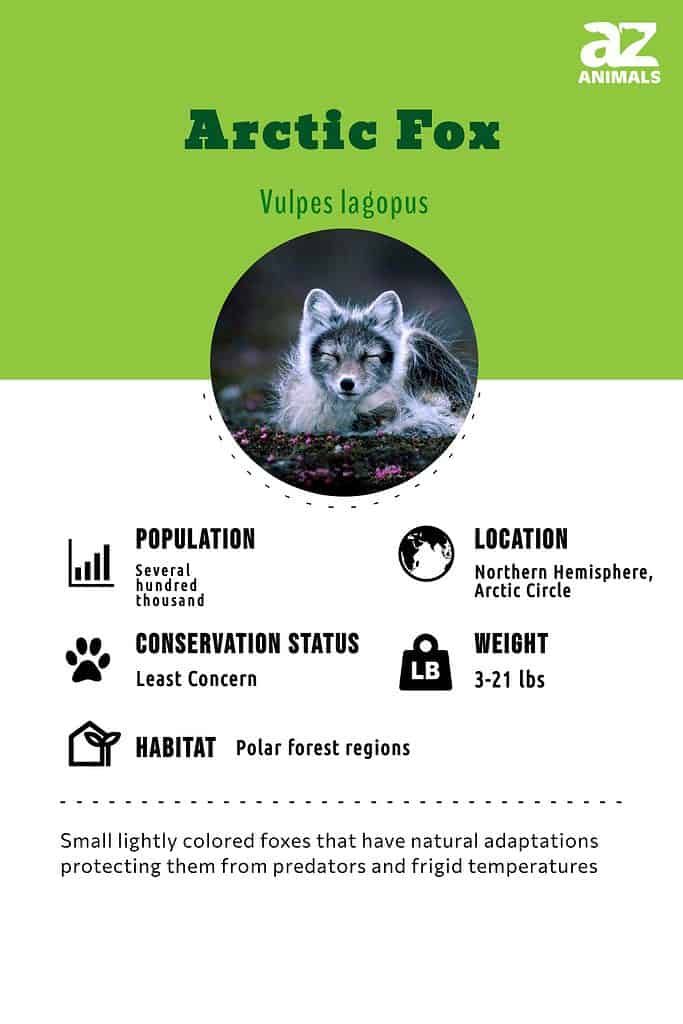
Incredible Arctic Fox Facts!

  • They are burrow dwellers that occupy elaborate dens, some of which are centuries old!
  • The species diverged from domesticated dogs 12 million years ago.
  • Arctic foxes are the main carriers of the Arctic rabies virus.
  • Individuals of the species can trek up to 96.3 miles (155 kilometers) in a single day!
  • These foxes are smart, curious, and fast! When avoiding predators and hunting prey, they can sprint up to 50 kilometers per hour.

Want to discover more facts? Make sure to read ’10 Incredible Arctic Fox Facts’ to learn more about these amazing animals.

Watch on YouTube

Scientific Name

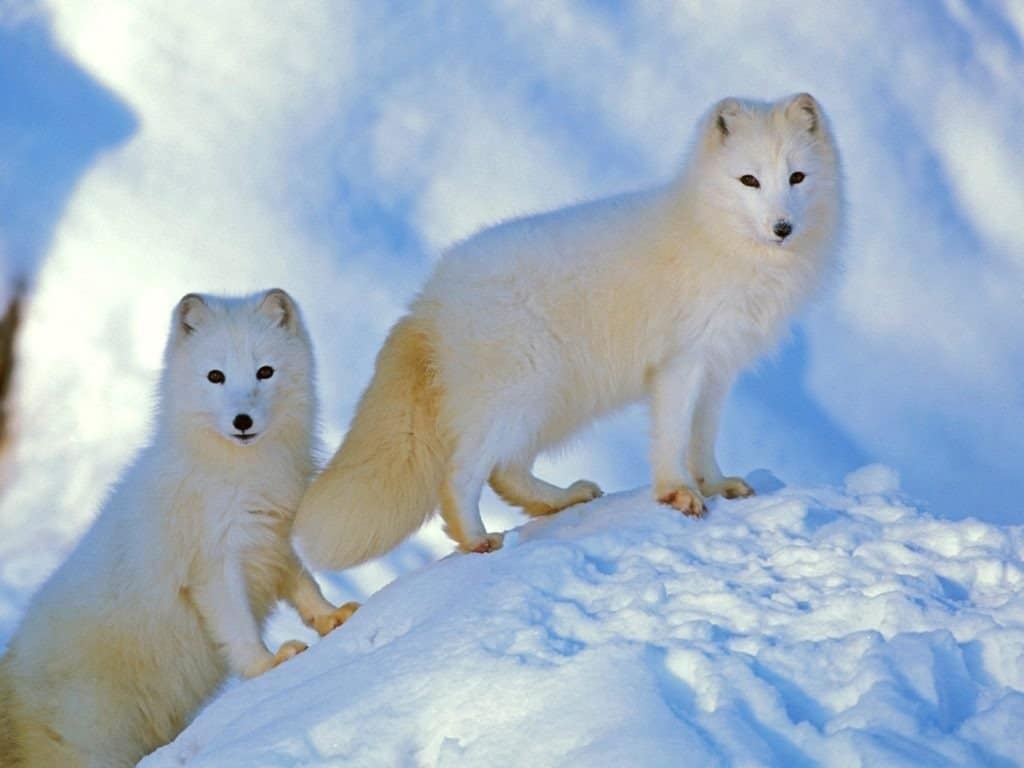
Pair of Arctic Foxes standing together on snowhill, alert

The scientific name for the Arctic Fox is Vulpes lagopus

The scientific name for these foxes is Vulpes lagopus — which has Ancient Greek and Latin roots. “Vulpes” is the Latin word for “fox,” and lagopus comes from two Ancient Greek words, lagōs, which means “hare,” and pous, which means “foot.” Together the scientific name translates to “hairy-footed fox.”

In 1758, the father of taxonomy, Carl Linneaus, assigned the species two names: Alopex lagopus and Canis lagopus. Since then, scientists have gathered more genetic information and changed it to Vulpes lagopus.

Arctic foxes are also known as white foxes, polar foxes, and snow foxes. Adult males are called “dogs” and females “vixens.” A group of these foxes is known as either a “skulk” or a “leash.”

Tiriganiarjuk is the Inuit word for Arctic fox, which translates to “the little white one.” In other native languages, the species name translates to “the one who walks a lot.”

Appearance and Behavior
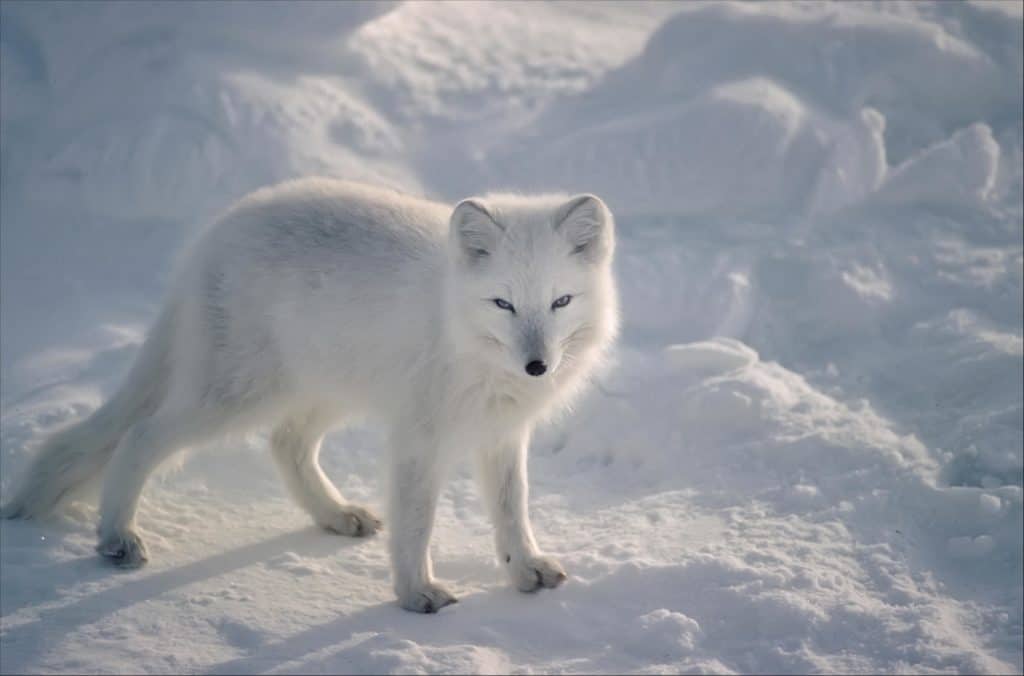
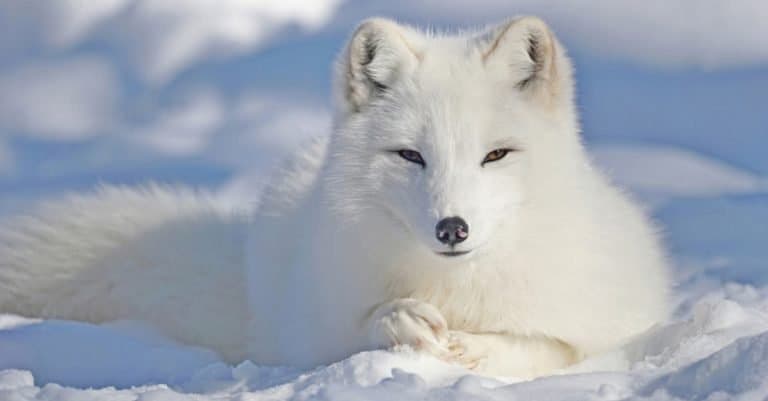
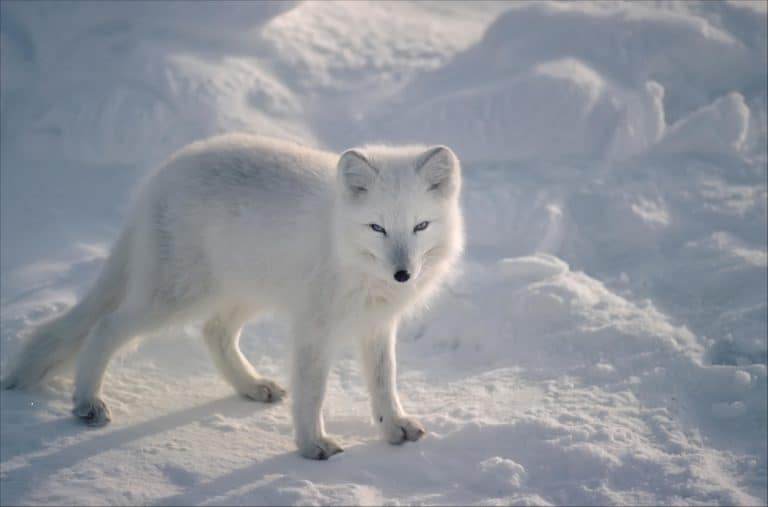
Arctic Fox on snow

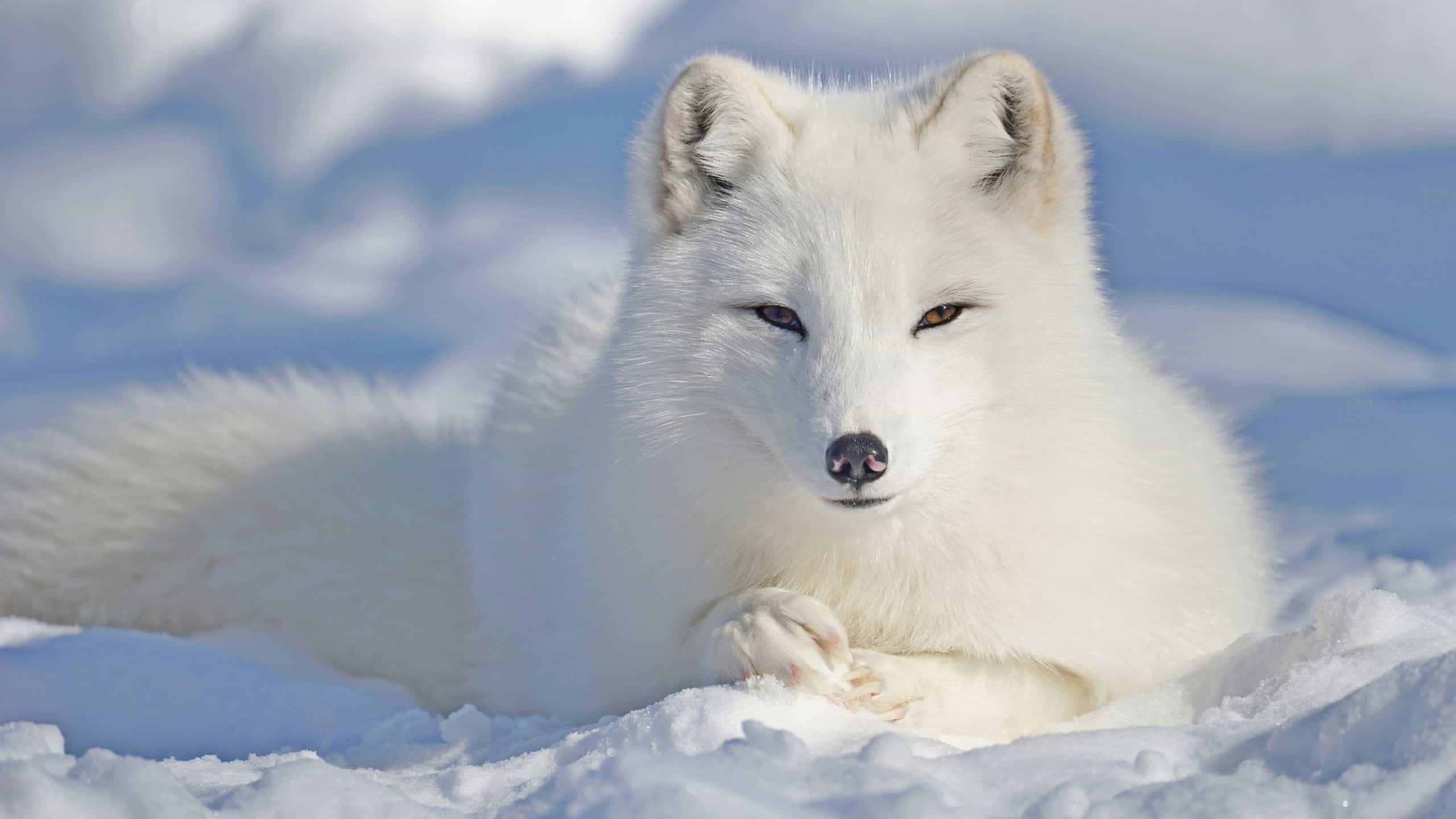
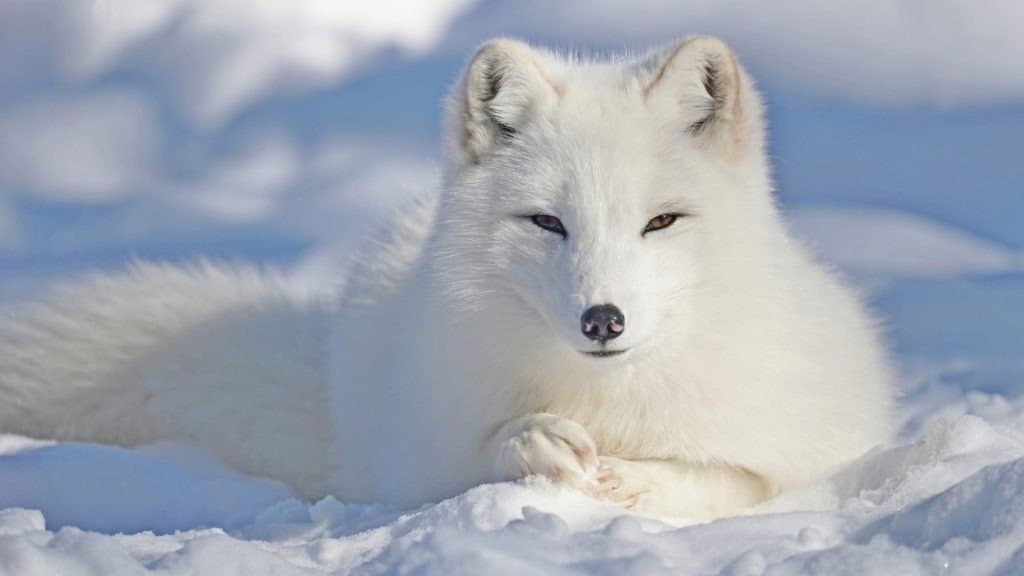
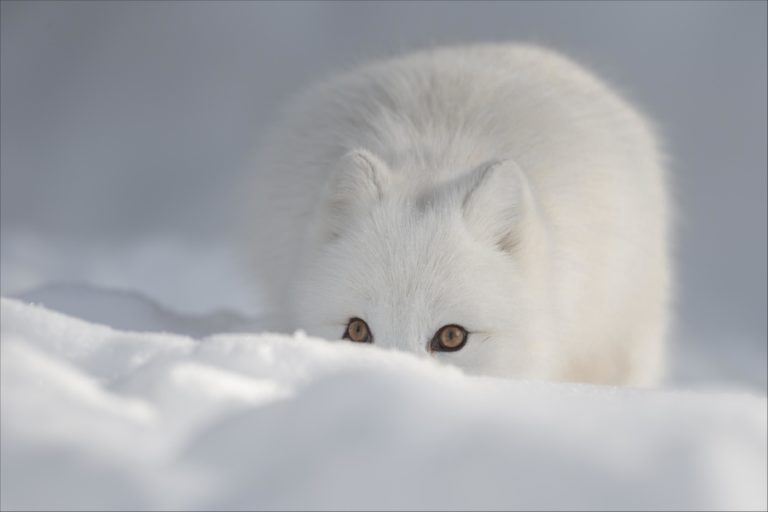
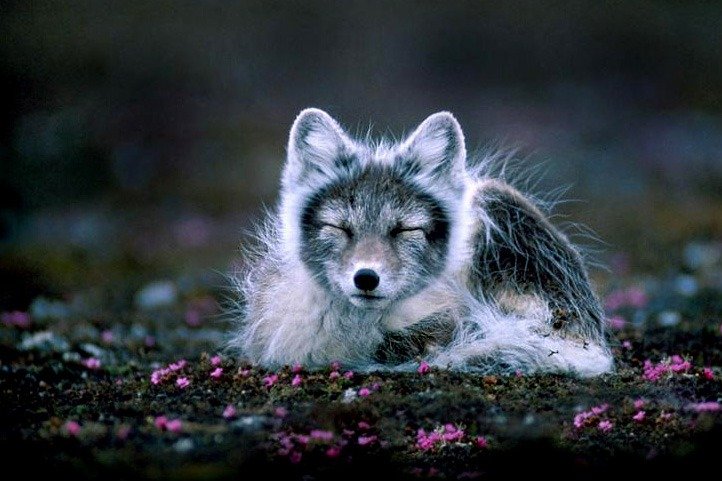
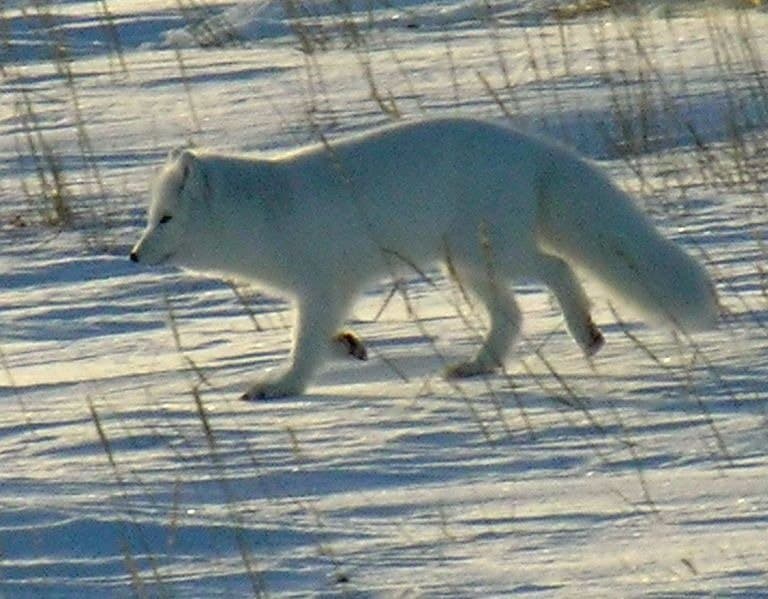
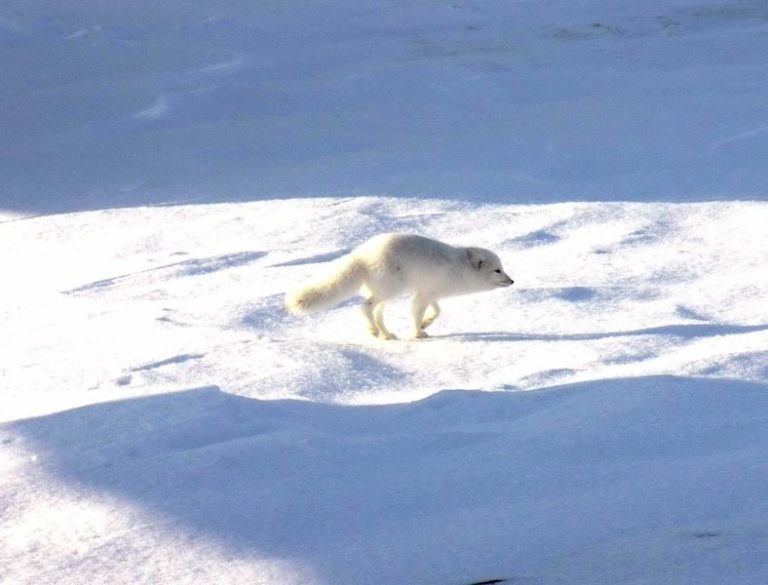
Arctic foxes have two key colors in their coats: white and blue.

Appearance

The male foxes are slightly larger than females of the species. Large individuals are about the size of Jack Russell terriers; smaller ones are the size of chihuahuas.

GenderAverage SizeAverage HeightAverage Weight
Female20 inches (52 centimeters)9.8 to 11.8 inches (25 to 30 centimeters)3.1 to 7.1 pounds (1.4 to 3.2 kilograms)
Male22 inches (55 centimeters)9.8 to 11.8 inches (25 to 30 centimeters)7.1 to 20.7 pounds (3.2 to 9.4 kilograms)

Adaptations That Keep Arctic Foxes Warm

Arctic foxes are animals that are present in two color morphs: white and blue. Ninety-nine percent have the white color morph, meaning their fur is white in winter to blend in with the ice and brown in summer to camouflage with cliffs and rocks. The other one percent — mainly in coastal regions — has the blue morph, meaning they have rock blue-ice coloring in the winter and gray-blue in the summer. These color adaptations help them blend into the environment and evade predators.

Both male and female fox tails — aka “brushes” — measure about 12 inches (30 centimeters). More than just a balance aid, they also serve as blankets. It’s one of several adaptations that allow them to survive sub-zero winters. In addition to their long and warm tails, Arctic foxes also have fur-covered paws that work to keep their bodies toasty warm in the winter.

Thick ears, short muzzles, and multilayer pelage also help Arctic foxes survive freezing environments. Their fur is the warmest of any mammal, and their compact bodies optimally conserve heat. Better yet, they can separately control their paw and core temperatures — which makes for comfortable ice walks!

Ideally engineered to withstand harsh climates, they don’t start shivering until the mercury reaches -94 °F (-70 °C). Learn about the toughest animals in the world here.

Behavior

Arctic foxes are animals that can be active around the clock. During the autumn and winter, they lead more solitary lives and reduce activity to preserve insular fat — but they don’t hibernate. In the spring and summer, these foxes convene to live as families, breed, and raise pups.

When not out hunting, foraging, or teaching pups survival tactics, arctic foxes hang out in gigantic, maze-like dens that typically face southward to best harness the sun’s heat. In warm weather, they sleep outside; during the harsh winters, they slumber inside.

Arctic fox dens are constructed for maximum predator evasion and pup protection. Some are so complex that they have more than 100 entrances! Appreciative of their ancestors’ burrowing efforts, the foxes preserve dens instead of building new complexes every year. In fact, some are hundreds of years old!

Pair of Arctic Foxes standing together on snowhill, alert

Pair of Arctic Foxes standing together on snowhill, alert

Habitat

Polar Regions of the Arctic Circle is where Arctic Foxes can be found

Where can you find Arctic foxes? The species populates the Northern Hemisphere’s Arctic Circle where summer temperatures range between 14 and 86 °F (-10 and 30 °C), and the winter thermometer hovers around -30° F (-34°C).

Communities are scattered throughout the treeless tundra regions of North America, Asia, Europe, Greenland, and Iceland, with most populations living in pack-ice areas. However, some Canadian Arctic foxes inhabit boreal forests filled with pines and spruces.

To date, scientists have identified four subspecies.

Subspecies LocationArctic Fox Subspecies Scientific Name
Bering Islands Arctic foxV.I. beringensis
Greenland Arctic foxV.I. foragoapusis
Iceland Arctic foxV.I. fuliginosus
Pribilof Islands Arctic foxV.I. pribilofensis

The Evolution and Origins

The arctic fox was thought to originally evolve in Europe however, the ice sheets expanded during a glacial period that happened on Earth about 2.6 million years ago. With that said, fossil evidence now suggests that the animal may have pre-adapted to live in a harsh, freezing environment. That is one reason the mammal was able to survive.

A jawbone was discovered while hiking up and down Tibetan mountains about 4,730 meters above sea level. That was the first discovery fossil that was unearthed that did not match any known fox species. Not only did the bone prove that arctic foxes existed in the area around that time, but also proved that they were mostly meat eaters.

Arctic Fox Diet: Prey

What do Arctic foxes eat? Their meals of choice are lemmings, voles, hares, and other small rodents. When their preferred meat is unavailable, Arctic foxes chow down on fish, snow geese eggs, ptarmigan, grouse, puffins, ringed seal pups, and reindeer. When things are truly scarce, they turn to berries and seaweed.

And yes, when faced with starvation, they eat their own feces!

During the summer and autumn, aided by their sharp smell and sight senses, they hunt prey. They can sniff out seal lairs from over a mile away and hear lemmings burrowing several inches below ground. On a good day, a family of foxes can down dozens of rodents. When lucky enough to have a surplus of food, the foxes bury it for a rainy day.

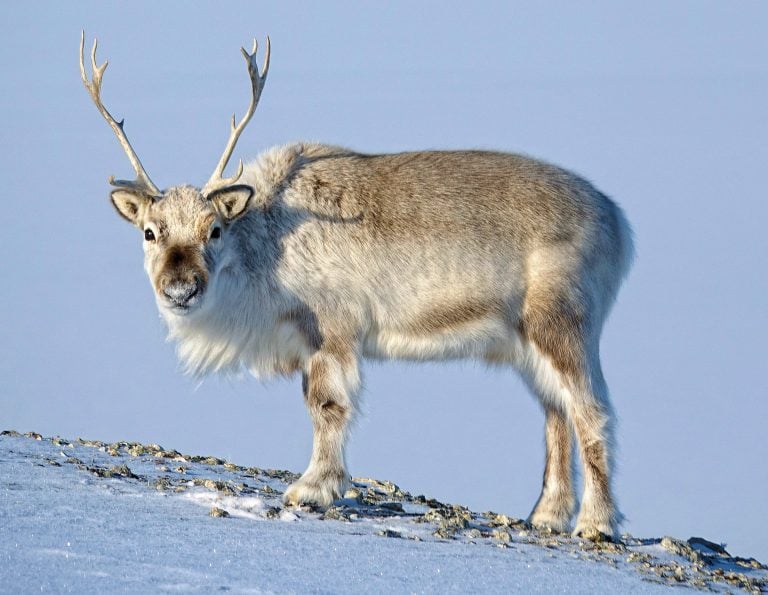
But life gets a lot tougher in the winter. Meat is much harder to find, and vegetation is dormant. To survive, these foxes stalk polar bears and dine on their scraps. But it’s a dangerous endeavor because polar bears prey on foxes!

Predators and Threats
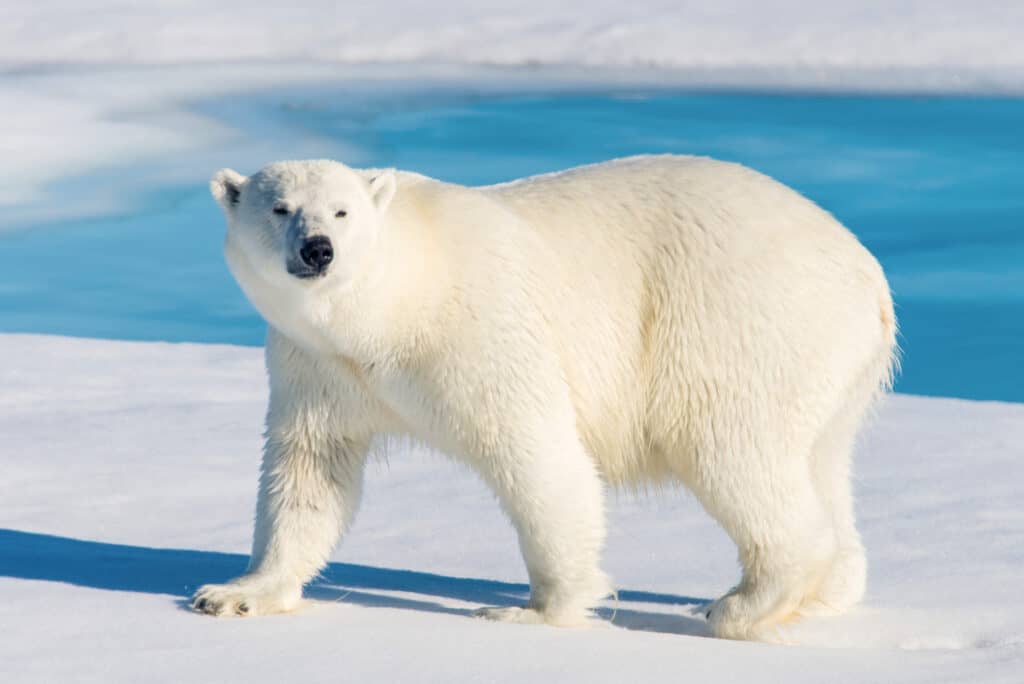
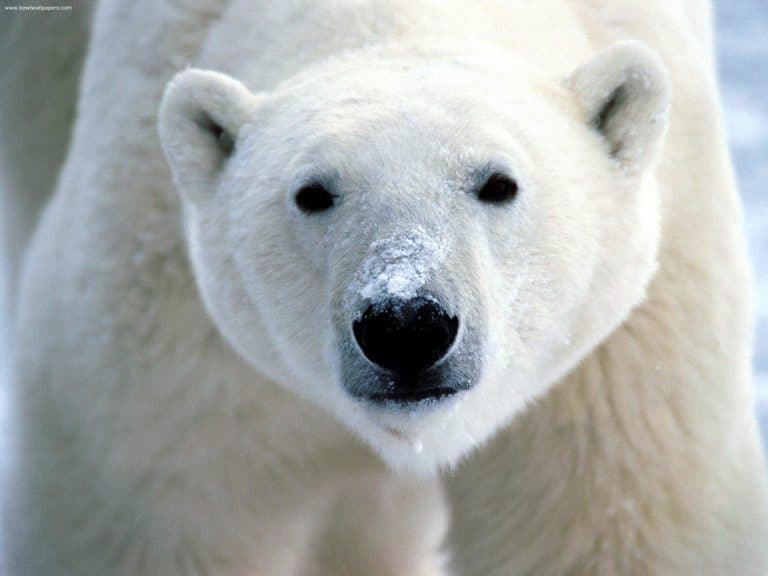
A Polar Bear, The white bear is center frame. looking toward the camera. The bear's head is frame left, it is standing on ice/snow, swimming-pool-blue water is visible in the background.

Polar bears are one of the main predators of Arctic foxes

What animals prey on Arctic foxes? The species’ main predators are polar bears, wolves, wolverines, brown bears, red foxes, and humans. They also must keep an eye out for fast golden eagles, bald eagles, and snowy owls that swoop down and snatch baby foxes.

But these days, natural predators aren’t their worst threat — climate change and offshore drilling are fast becoming the species’ main nemesis. Arctic temperatures are skyrocketing — which leads to reduced sea ice and rising sea levels. Add some destructive oil extraction off the coast, and it’s an ecological tinderbox on the brink of explosion.

Plus, even though the foxes are still plentiful in most regions, other animals are dying off and creating food shortages. Moreover, due to rapidly melting ice, their lighter coats are becoming a liability, not an advantage. To complete the perfect storm, increasingly, these foxes are losing ground to the larger red fox.

Native Arctic peoples still retain the right to hunt polar foxes for sustenance, but commercial hunting of the species is now off-limits.

Reproduction, Babies, and Lifespan

Reproduction
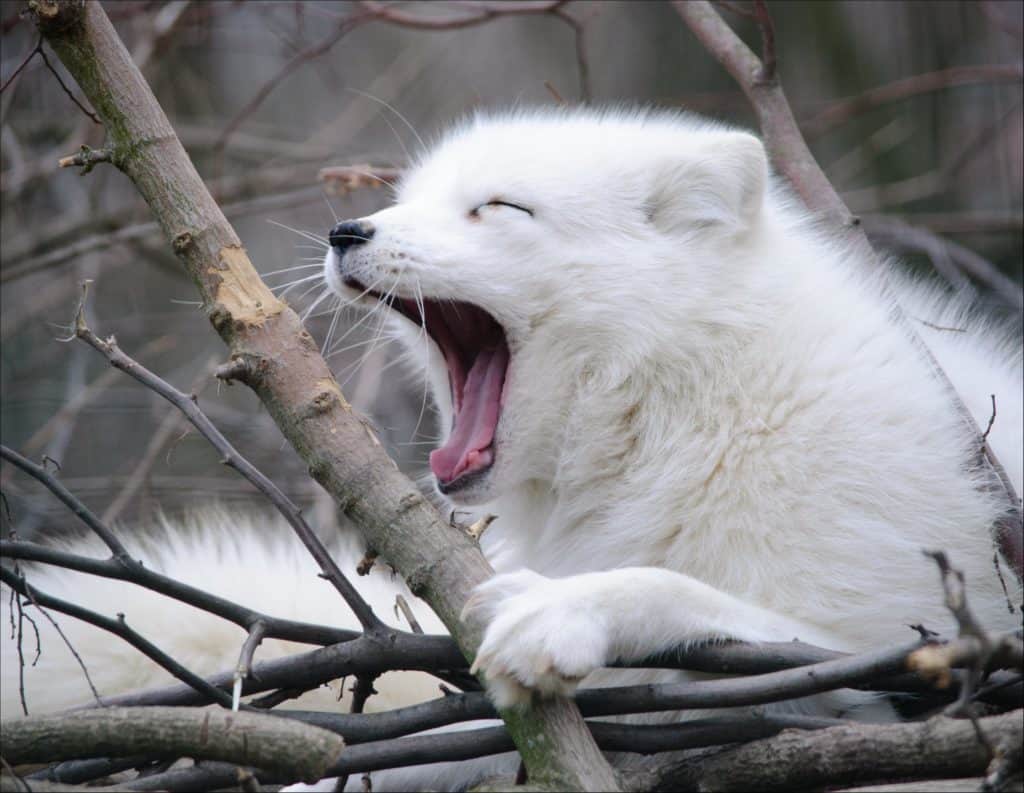
Arctic Fox lying on snow

A young arctic fox yawning in a pile of sticks

When the snow melts and the sun comes out of hibernation, these foxes gather for the mating season between late February and May. In food-insecure populations, these foxes form monogamous pairs for the season. In communities where food is abundant, they’re more promiscuous and form complex social structures where multiple individuals look after each others’ newborns.

Typically, inland populations are more monogamous than coastal ones — the exception is Icelandic Arctic foxes. The subspecies exhibit strong familial ties, and offspring will often stick around their parents’ territories for a long time, even in times of famine when food can be found elsewhere.

Females gestate for about 52 days and give birth between April and July to litters ranging between five and 25, the most of all carnivore species.

Babies
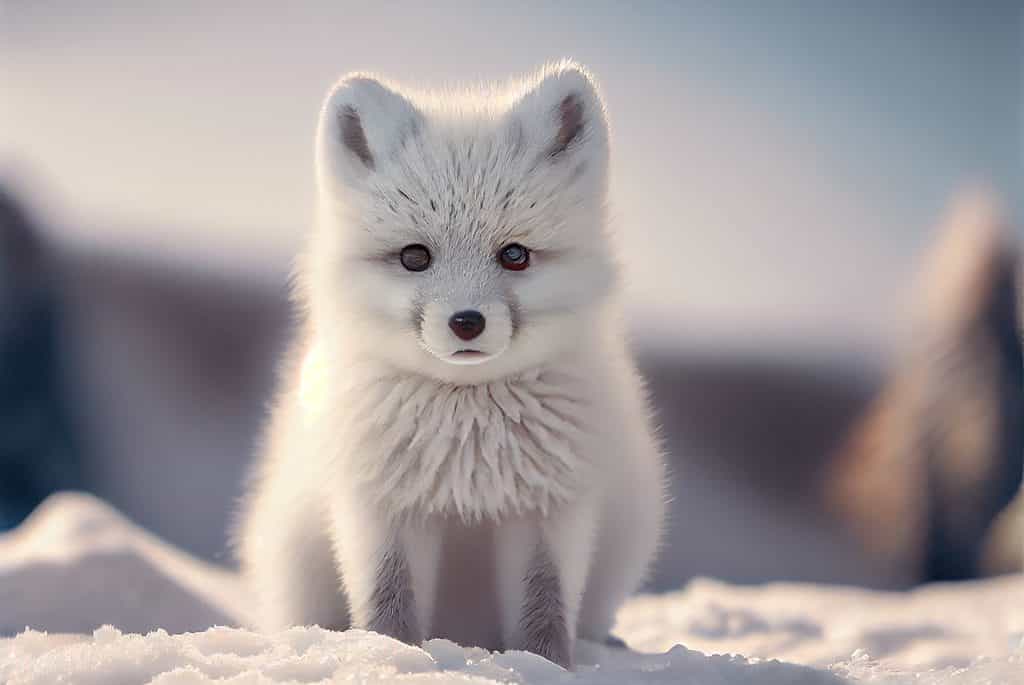
baby arctic fox

Baby Arctic fox (Vulpes lagopus) in snow habitat, winter landscape, Svalbard, Norway

Baby Arctic foxes are called “kits.” They’re born with dark fur and enjoy the care and attention of both parents. Kits nurse for about 45 days and begin to emerge from the den after three weeks. By week nine, the pups are usually ready to make it independently. At nine months, they’re sexually mature and ready to start mating.

Lifespan

Arctic foxes don’t live long. Though fast, in the wild most become bear prey between three and six years old. But even in captivity, they usually only make it to ten or eleven.

Population
Types of Wild Dogs

There are a few hundred thousand of Arctic Foxes left in the wild

Currently, several hundred thousand of these foxes live in the wild, and the International Union for the Conservation of Nature categorizes the species under Least Concern on its Red List. But that doesn’t tell the whole story.

Climate change is rapidly damaging Arctic fox habitats, and if things don’t change over the next decade, the species could become a global warming casualty.

Already, the Scandinavian population is Endangered. Less than 200 individuals remain, and severe inbreeding further threatens its survival. Conservationists are in the process of introducing new individuals of breeding age into the area, but will their efforts work?

It remains to be seen.

Arctic Foxes In United States’ Zoos
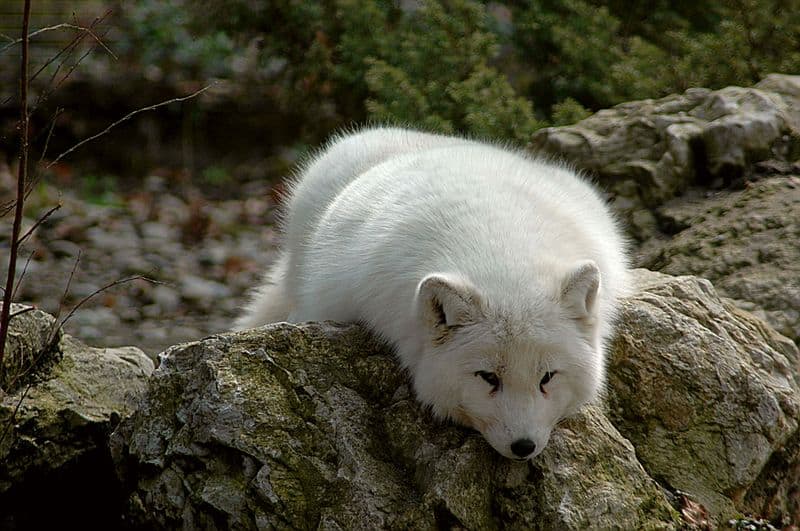
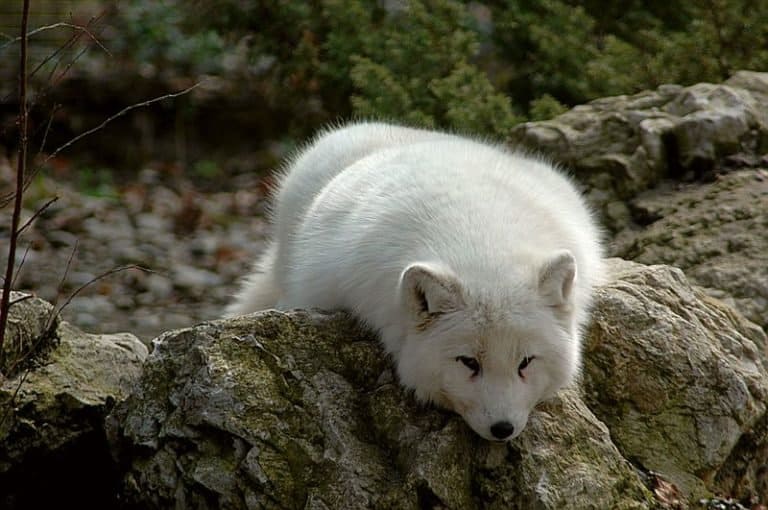
Arctic Fox lying on rock

Arctic Foxes do very well in captivity and can live up to 14 years old if taken care of properly

Below is a partial list of U.S. zoos with these foxes.

Detroit Zoo: Moxie and Alex, two females, live in the Detroit Zoo’s state-of-the-art Arctic Ring of Life habitat.

San Diego Zoo: Despite being in sunny California, the San Diego Zoo is home to two of these foxes named Isiq and Kaniq that live in the Polar Bear Plunge enclosure.

Stone Zoo: Stone Zoo, in Stoneham, Massachusetts, cares for two fast Arctic foxes that love to whiz around their enclosure.

Point Defiance Zoo: Point Defiance Zoo and Aquarium in Tacoma, Washington maintains a large exhibit for two of them.

North Carolina Zoo: The Rocky Coast exhibit at the North Carolina Zoo is home to two of the foxes.

Other stateside zoos with these foxes include:

View all 326 animals that start with A
How to say Arctic Fox in ...
Bulgarian
Полярна лисица
Catalan
Guineu àrtica
Czech
Liška polární
Danish
Polarræv
German
Polarfuchs
English
Arctic Fox
Esperanto
Arkta vulpo
Spanish
Alopex lagopus
Estonian
Polaarrebane
Finnish
Naali
French
Renard polaire
Hebrew
שועל שלג
Croatian
Arktička lisica
Italian
Alopex lagopus
Japanese
ホッキョクギツネ
Latin
Vulpes lagopus
Dutch
Poolvos
English
Fjellrev
Polish
Lis polarny
Portuguese
Raposa-do-ártico
Slovenian
Polarna lisica
Swedish
Fjällräv
Turkish
Kutup tilkisi
Chinese
北極狐

Sources

  1. David Burnie, Dorling Kindersley (2011) Animal, The Definitive Visual Guide To The World's Wildlife / Accessed November 15, 2008
  2. Tom Jackson, Lorenz Books (2007) The World Encyclopedia Of Animals / Accessed November 15, 2008
  3. David Burnie, Kingfisher (2011) The Kingfisher Animal Encyclopedia / Accessed November 15, 2008
  4. Richard Mackay, University of California Press (2009) The Atlas Of Endangered Species / Accessed November 15, 2008
  5. David Burnie, Dorling Kindersley (2008) Illustrated Encyclopedia Of Animals / Accessed November 15, 2008
  6. Dorling Kindersley (2006) Dorling Kindersley Encyclopedia Of Animals / Accessed November 15, 2008
  7. David W. Macdonald, Oxford University Press (2010) The Encyclopedia Of Mammals / Accessed November 15, 2008
  8. Qui, J. (2014) Origins of Arctic fox traced back to Tibet - https://www.nature.com/news/origins-of-arctic-fox-traced-back-to-tibet-1.15398 / Accessed October 7, 2020
  9. Icelandic Institute of Natural History. Mammals. Náttúrufræðistofnun Íslands / Accessed October 7, 2020
  10. Center for Biological Diversity. ARCTIC FOX (Alopex lagopus). Arctic fox / Accessed October 7, 2020
  11. Brears, R. C Arctic Foxes: Constant Gardeners of the Arctic. Oceanwide Expeditions. https://oceanwide-expeditions.com/blog/arctic-foxes-the-constant-gardeners-of-the-arctic / Accessed October 7, 2020
  12. Matias, D. (2019) Arctic Fox Sets Record In Walking From Norway To Canada. NPR. https://www.npr.org/2019/07/02/737993673/arctic-fox-sets-record-in-walking-from-norway-to-canada / Accessed October 7, 2020
  13. Canada's Arctic. Tiriganiarjuk — Arctic Fox . Anirniliit - those which breathe / Accessed October 7, 2020
  14. Bragg, R. Which Arctic Animal Has the Warmest Fur? Animals.mom.com. https://animals.mom.com/arctic-animal-warmest-fur-11195.html / Accessed October 7, 2020
  15. Noren, K; et al "From monogamy to complexity: social organization of arctic foxes (Vulpes lagopus) in contrasting ecosystems". Canadian Journal of Zoology. 90 (9): 1102–1116 / Accessed October 7, 2020
Rebecca Bales

About the Author

Rebecca Bales

Rebecca is an experienced Professional Freelancer with nearly a decade of expertise in writing SEO Content, Digital Illustrations, and Graphic Design. When not engrossed in her creative endeavors, Rebecca dedicates her time to cycling and filming her nature adventures. When not focused on her passion for creating and crafting optimized materials, she harbors a deep fascination and love for cats, jumping spiders, and pet rats.
Connect:

Thank you for reading! Have some feedback for us?


Arctic Fox FAQs (Frequently Asked Questions)

Arctic foxes are omnivores, meaning they eat both meat and plants.