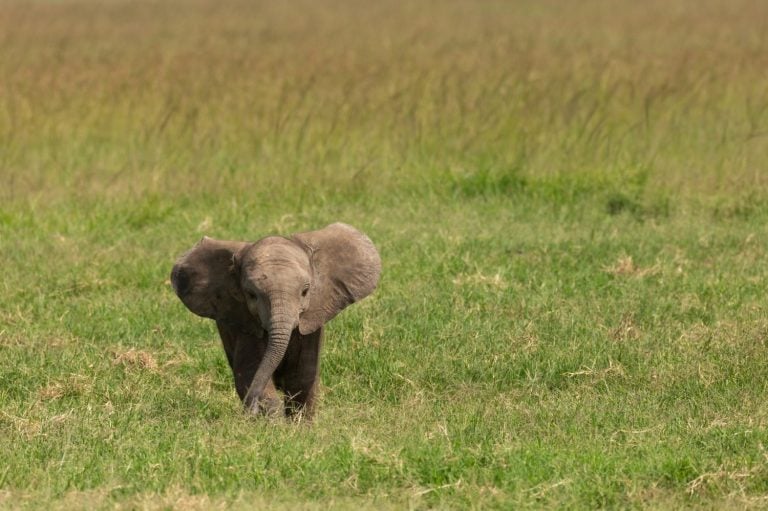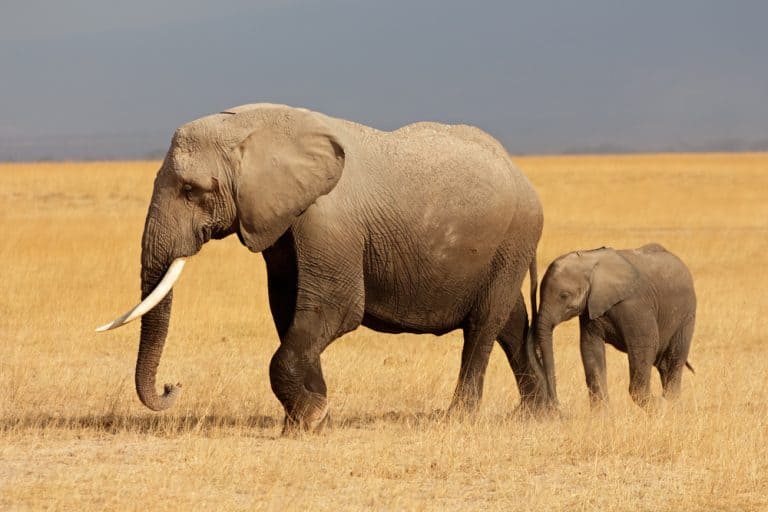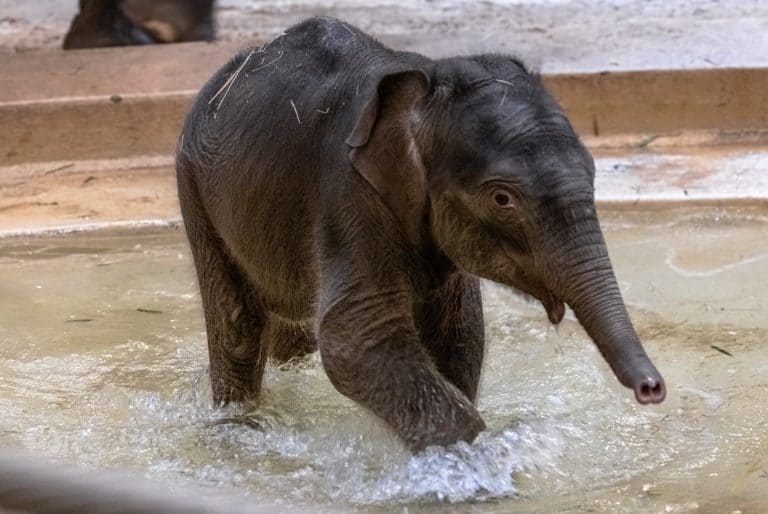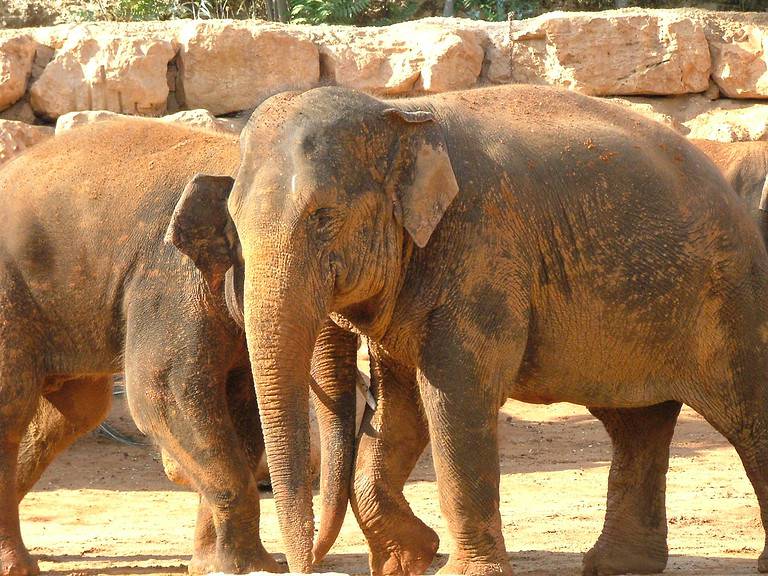
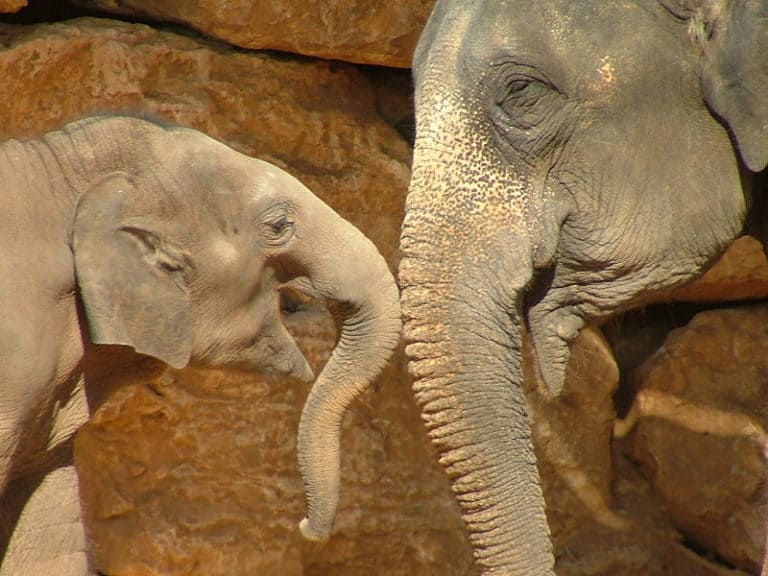








The Asian Elephant is the largest land animal in Asia.
Elephants are the largest land animals in the world, but the Asian elephant is smaller than its cousin, the African elephant. This species is found throughout southeast Asia, primarily in forested regions in India. They are classified as endangered and are victims of poaching for their tusks and skin.
Incredible Asian Elephant Facts!
- These elephants have a finger-like appendage on the end of their trunks that allows them to pick objects up.
- Elephants are considered one of the most intelligent animals, as they are capable of using tools and showing grief and compassion.
- Asian elephants can have about 60,000 muscles in their trunks.
- These elephants are sociable animals that form matriarchal groups.
- These elephants are central to many Hindu beliefs.
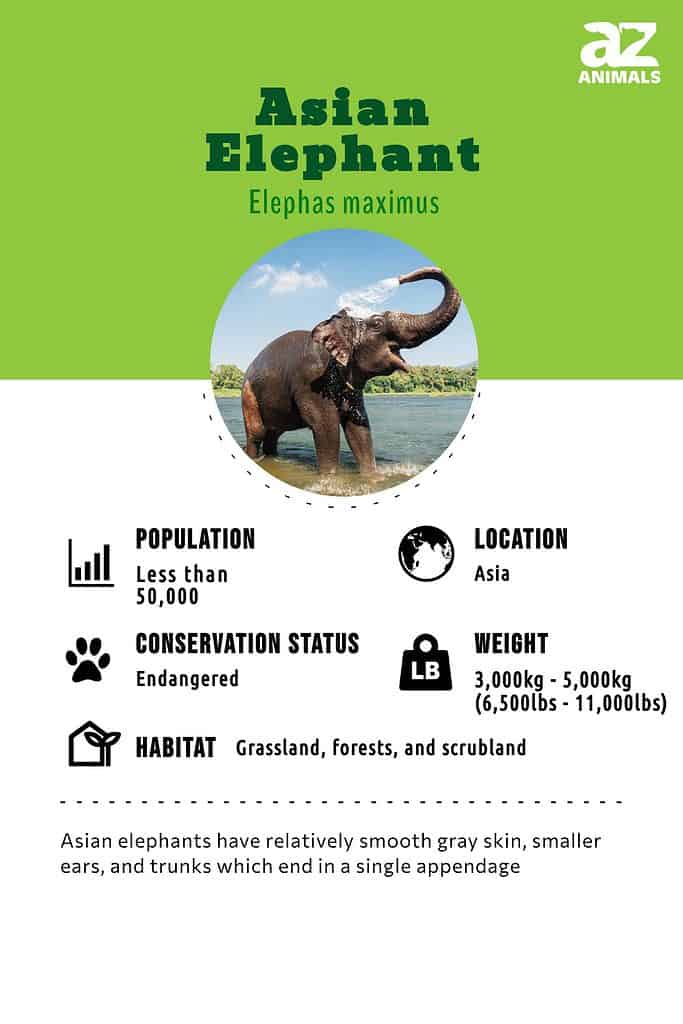
Scientific Name
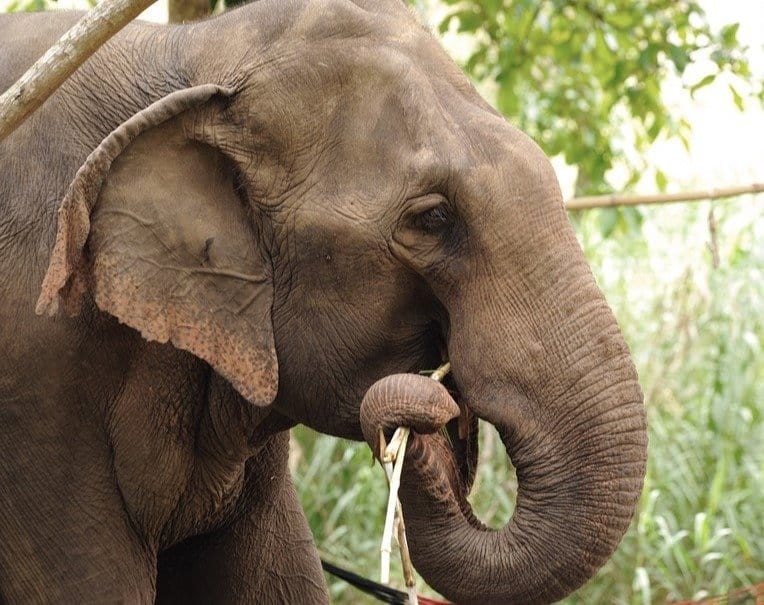
The three subspecies of the Asian elephant include the Indian, the Sri Lankan, and the Sumatran
©SOMMAI/Shutterstock.com
There are three subspecies of Asian elephants with three separate scientific names. The subspecies are grouped by location and size. They all share the scientific name Elephas maximus. In Greek linguistics, “elephant” refers to a horned or antlered beast. In Latin, “ele” means arch, and “phant” means large. Maximus also means large. The Sri Lankan elephant, Elephas maximus maximus, is the largest of the Asian elephants and is native to Sri Lanka. The Sumatran elephant, Elephas maximus sumatranus, is native to the tiny island of Sumatra and is the smallest of the subspecies. Finally, the Indian elephant, Elephas maximus indicus, has the largest range and is native to mainland Asia.
Some scientists suggest that Borneo pygmy elephants may be a subspecies of these elephants. If so, they would be the smallest of all the subspecies. Borneo pygmy elephants have different proportions and rounder faces than Asian elephants, however. They are also more docile.
Appearance
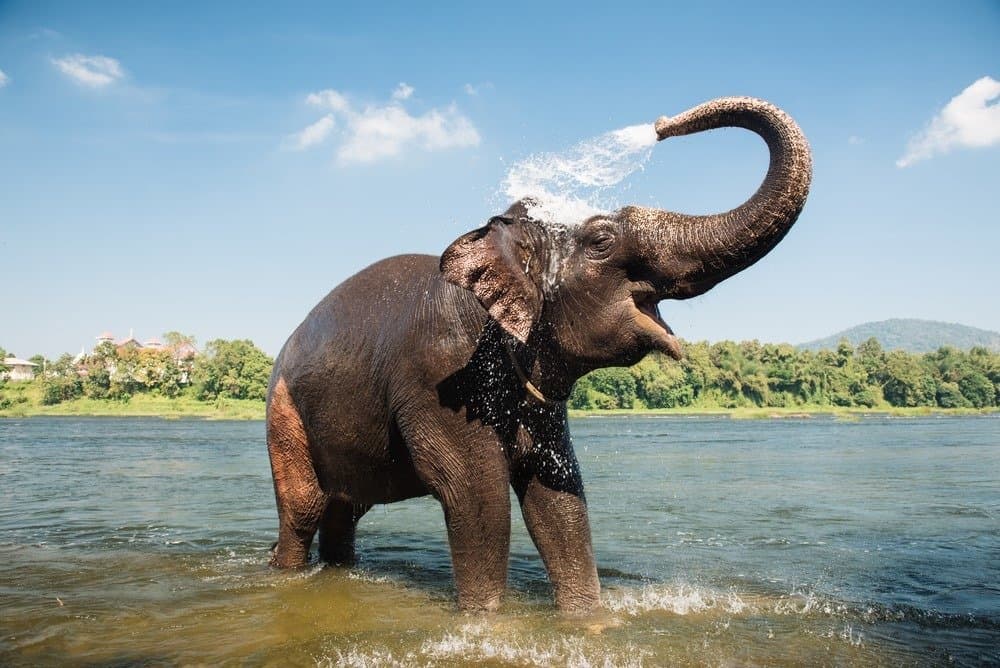
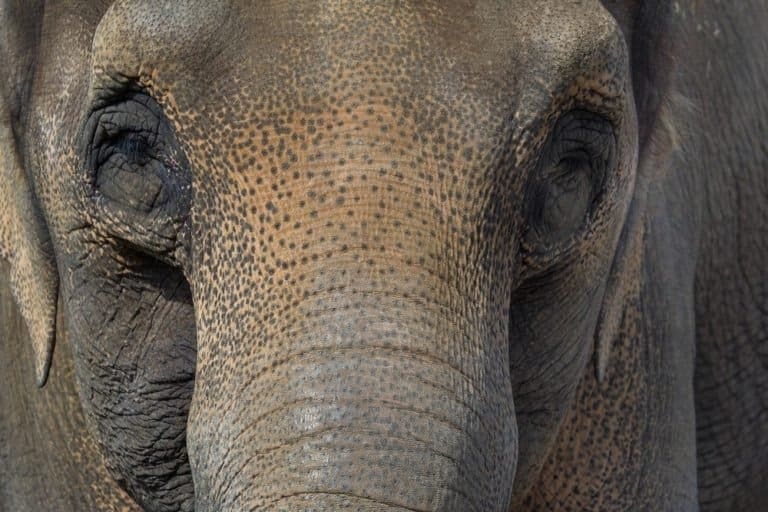
Asian elephants’ pinks spots around their ears and faces are believed to be as a result of diet and genetics
©Dmytro Gilitukha/Shutterstock.com
Though they are smaller than their African counterparts, Asian elephants are still enormous mammals. They stand anywhere from 6.6ft to 9.8ft tall, with the largest species being the Sri Lankan variety. These elephants can weigh anywhere from 2.25-2.5 tons, which is slightly larger than a jeep. They are usually gray or brown. These elephants feature light pink spots of de-pigmentation around their ears and faces. These are thought to vary based on diet and genetics. Young Asian elephants are covered in fine red hair, which darkens as they age.
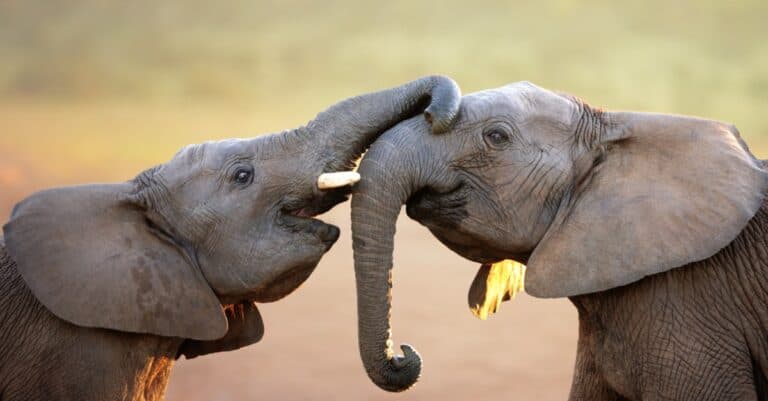
Perhaps their most remarkable feature is their long trunk. The end of elephant trunks features a single finger-like muscle (African elephants have two). Their trunks contain about 60,000 muscles and are perfect for exploring their surroundings through smell and touch. Asian elephants also have small, rounded ears, which help regulate their body temperature.
Not all Asian elephants have tusks. Some males feature prominent tusks, but females have none. Some males have a smaller variety of tusks called “tushes.”
The largest known Asian elephant was a bull elephant named Raja Gaj. He stood at 11ft tall, which is 2ft taller than the average elephant. Raja Gaj was last seen at the Bardia National Park in 2007. He was about 70 years old at the time.
Asian Elephant vs. African Elephant
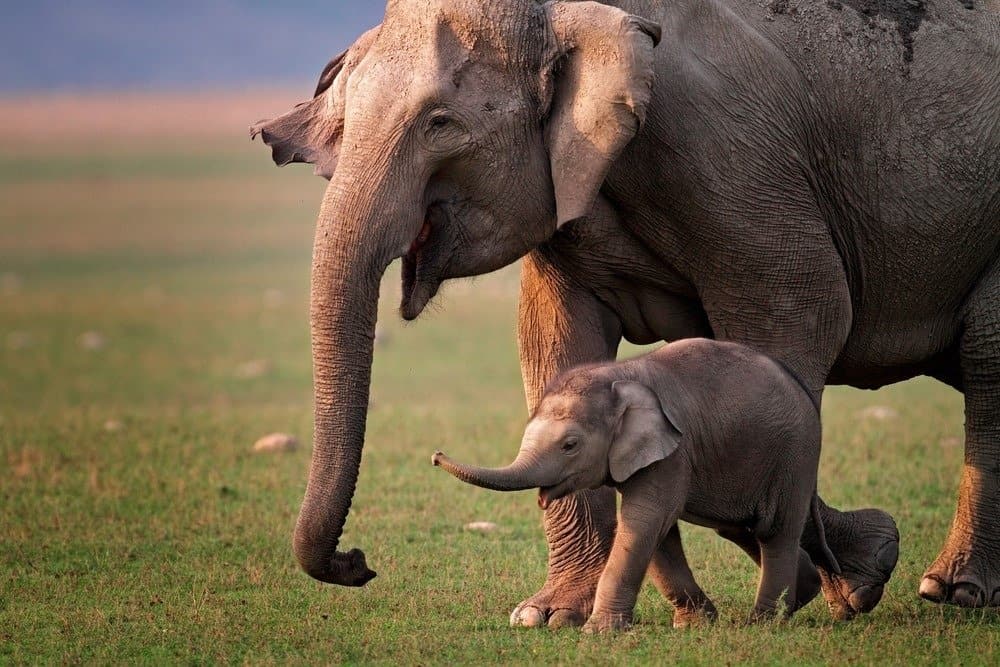
Asian elephants are unlikely to ever come across their African counterparts in the wild
©Mogens Trolle/Shutterstock.com
There are many differences in appearance between Asian and African elephants. Asian elephants are smaller than their better-known counterparts in Africa. They have two domes on the top of their heads, where the African elephant has one rounded dome. Asian elephants have smoother skin, firmer trunks, and one single “finger” on the end of their trunks. In contrast, African elephants have rough skin, softer trunks, and two “fingers” on the end of their trunks that makes them better able to manipulate objects than Asian elephants.
Asian elephants and African elephants will never meet in the wild, as their ranges do not overlap. African elephants are native to west and central Africa, while Asian elephants live in India, southeast Asia, Sumatra, and Sri Lanka.
Types
There are three main subspecies of Asian elephant:
- Indian elephants (Elephas maximus indicus): These elephants’ stomachs are proportionate to their body size and their females may occasionally have small tusks. They are also darker than Sumatran elephants but lighter than their Sri Lankan relatives.
- Sri Lankan elephants (Elephas maximus maximus): The largest of the three subspecies, these giants are also the darkest too. Like Indian elephants, they have 19 pairs of ribs.
- Sumatran elephants (Elephas maximus sumatranus): The lightest of Asian elephants, these herbivores have 20 pairs of ribs. They also have the least amount of discoloration out of all three subspecies.
There is also the another subspecies unique to Borneo:
- Borneo elephants (Elephas maximus borneensis): The smallest of all Asian elephants, this mammal evolved separately from all its relatives on Borneo and is known for having tusks which are straighter than usual and a longer tail on average.
Evolution
During the Pliocene era (between 2.8 – 5.3 million years ago), the species Elephas maximus originated in Africa. Following that period, these mammals moved to Eurasia.
It is worth noting that Elephas hysudricus, the ancestor of the species currently in existence, is believed to have lived in the Middle East. Archaeologists have actually discovered fossils (certain of which are as recent as 3,000 centuries ago) in Jordan.
Behavior
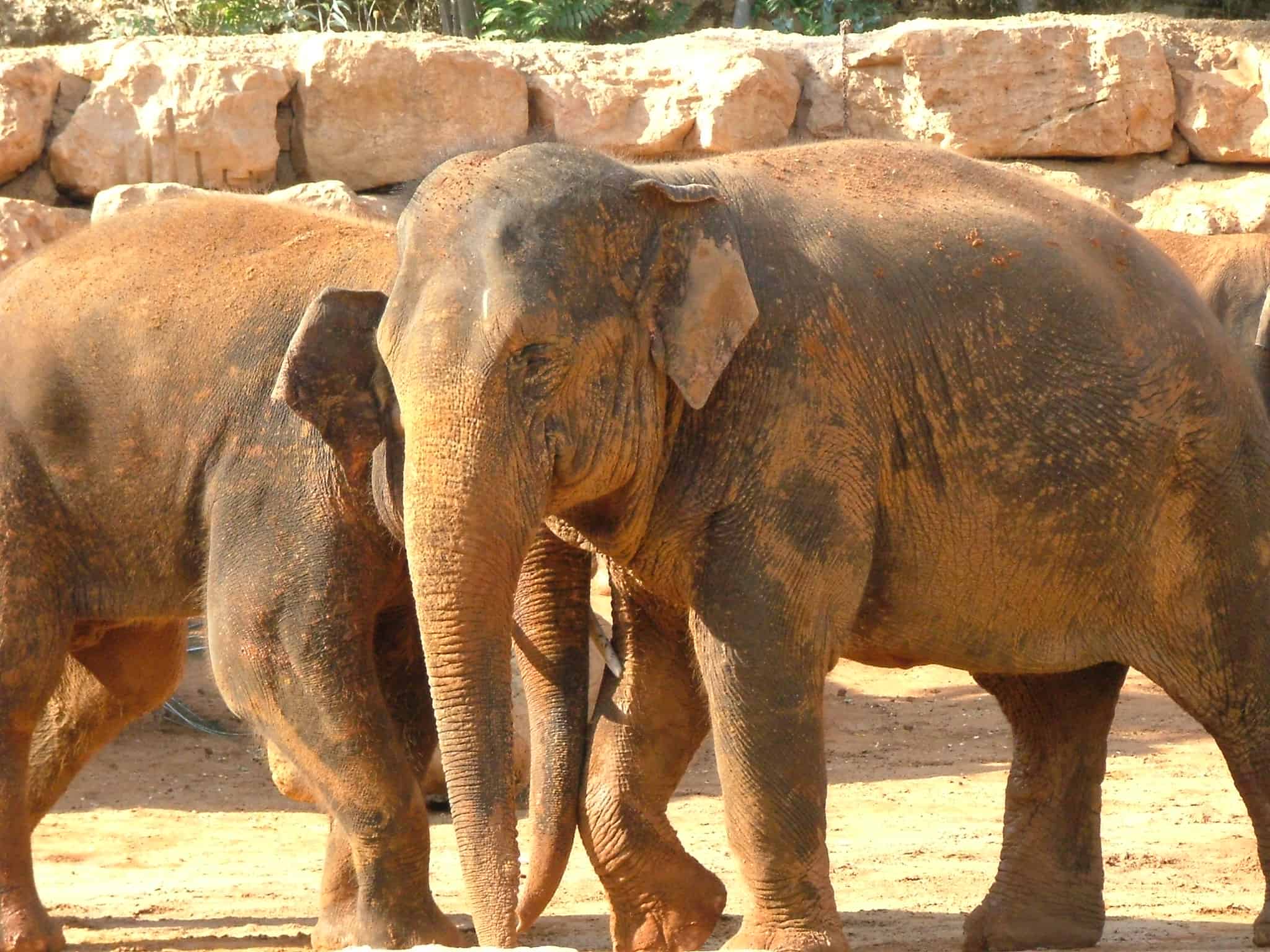
Elephants are capable of communicating with each other using sounds humans are unable to detect
©SuperJew, CC BY-SA 3.0, via Wikimedia Commons – Original / License
Male elephants are solitary for most of their lives. Females live in matriarchal groups called herds. These herds are led by one female elephant. She is typically the oldest of the group and leads them on familiar tracks in search of food and water. These herds of females can be up to 20 individuals.
These elephants travel at dusk and dawn and lounge around during the heat of the day. They are not territorial. Elephants can communicate with each other using low-pitched sounds that humans cannot hear. These sounds can alert other elephants up to 2 miles away.
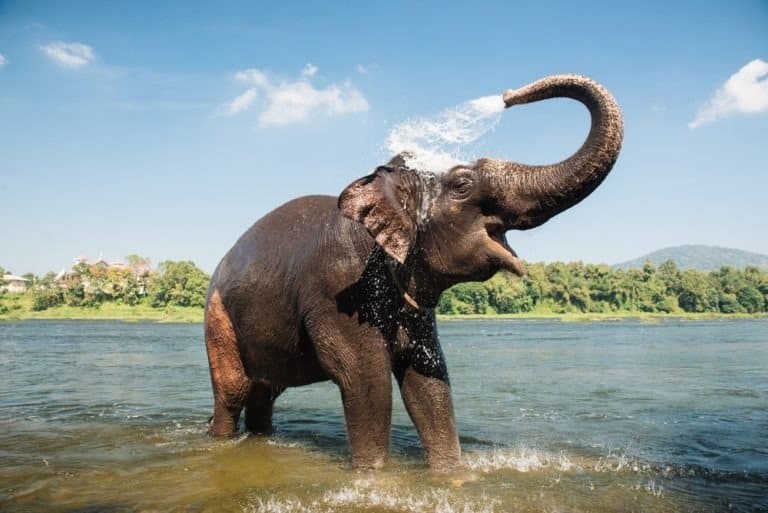
These elephants enjoy the water and use their trunks to spray themselves with water and mud. This practice helps protect their skin from pests. Some areas of their skin are thin and sensitive, while others are up to an inch thick. Due to a large number of nerves in their skin, elephant skin is sensitive, and the mud baths offer much-needed protection.
Habitat
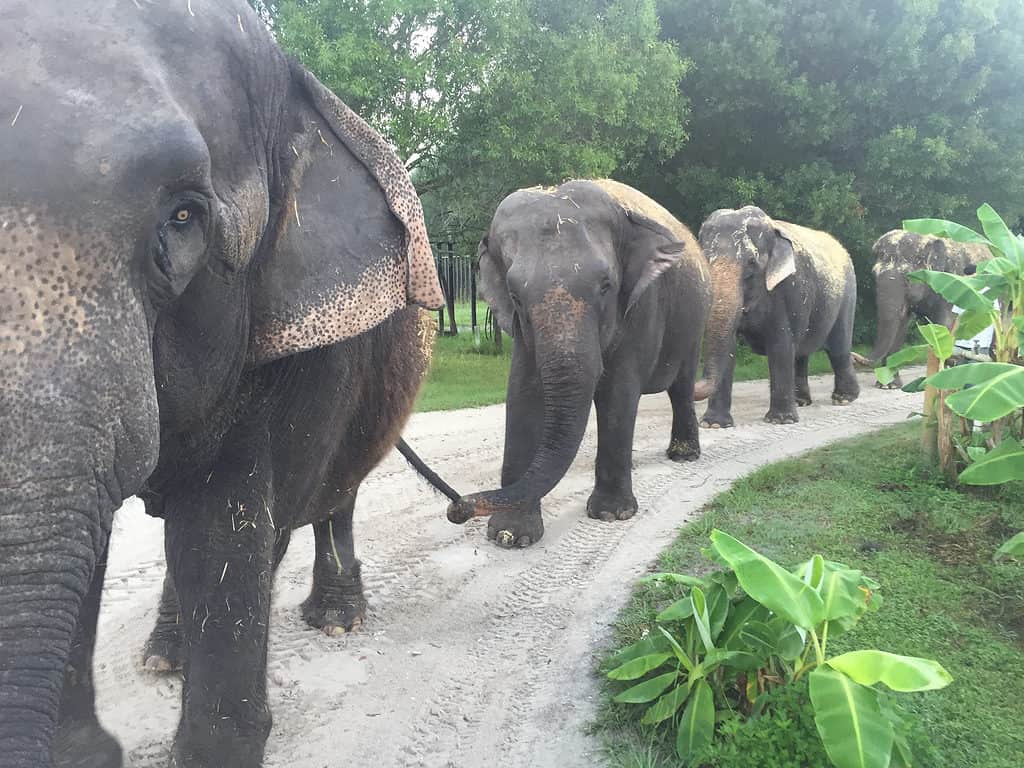
Asian elephants conduct seasonal migrations
©ElephantErik/Shutterstock.com
These species of elephants are found in India and Southeast Asia. They once stretched as far north as the Yangtze River, but their range has steadily declined. They are considered to be forest animals, but they also enjoy forests with a few areas of grassland in them. These transitional areas where forest and grassland meet provide a rich variety of plants for the elephants to eat.
These elephants are migratory within their spacious home range. They conduct seasonal migrations. Humans often disrupt the migration paths that were long traveled by Asian elephants.
Diet
Like all elephant species, these elephants are herbivores. Their diet consists of roots, grass, and the bark of trees. In a single day, some elephants can eat up to 300lbs of food. Because they need to consume an enormous amount of food, they spend about 3/4 of their day seeking it out. Elephants need to consume such large amounts of food because their bodies can only process about 44% of the food that they eat. They must drink water at least once a day, so they are always close to a source of water.
Herds of these elephants also have a taste for cultivated farm crops, such as bananas and cane sugar. These herds can be a destructive force for farmers if one decides to encroach on their crops.
In captivity, Asian elephants have their diets tailored to their specific needs. They are fed sporadically throughout the day to closely mimic the frequency of feeding they would do in the wild. Elephants in captivity usually eat hay bales, alfalfa pellets, and bran oats. They also eat fresh fruits and veggies like sweet potatoes, carrots, and apples.
Predators and Threats
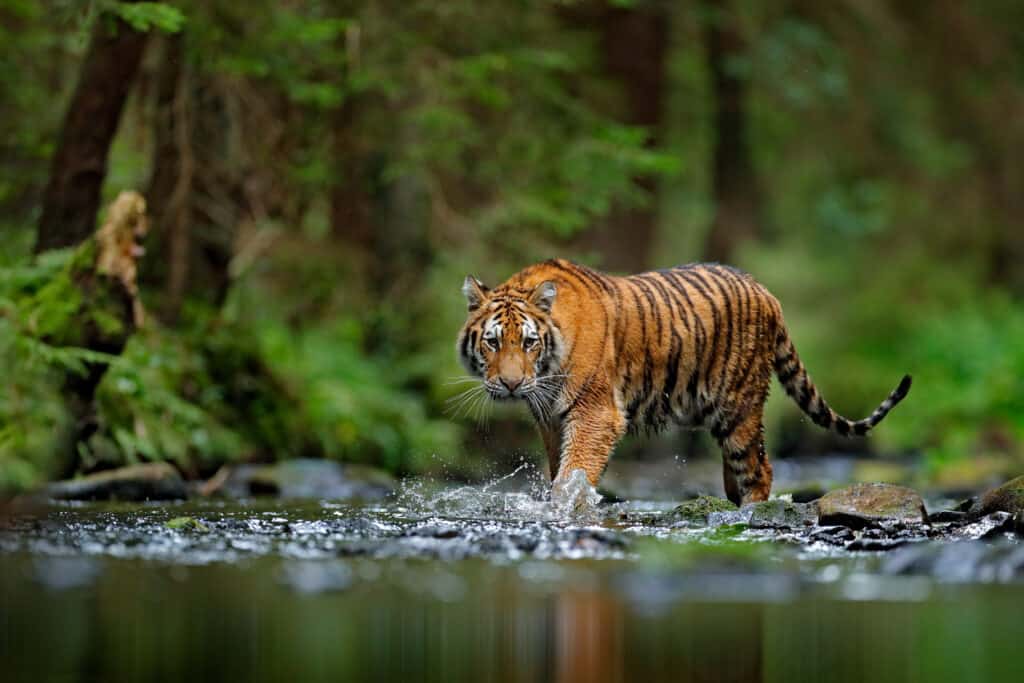
Tigers may attempt to attack younger elephants
©Ondrej Prosicky/Shutterstock.com
These elephants have few natural predators. Because they are one of the largest land animals, there is little incentive for predators to attempt to take down an adult elephant. Tigers occasionally prey on younger, smaller Asian elephants.
Humans present the biggest threats to Asian elephants. Indirectly, deforestation affects elephant habitats and migratory routes. Forests are cut down in order to create room for new farmland, which brings the elephants into closer contact with humans. Conflicts between elephants and humans arise when elephants roam their territory and find it has been replaced by farmland.
Although it is illegal to poach wild elephants, this activity has nevertheless played a role in the decline of the Asian elephant population. Elephants are hunted for their ivory, which is particularly a threat to male elephants while both genders of elephants are hunted for their skin, which is used for jewelry.
Young elephants are sometimes trafficked out of the wild for the tourism industry. They are trained at a young age to be ridden and to perform for tourists.
Reproduction
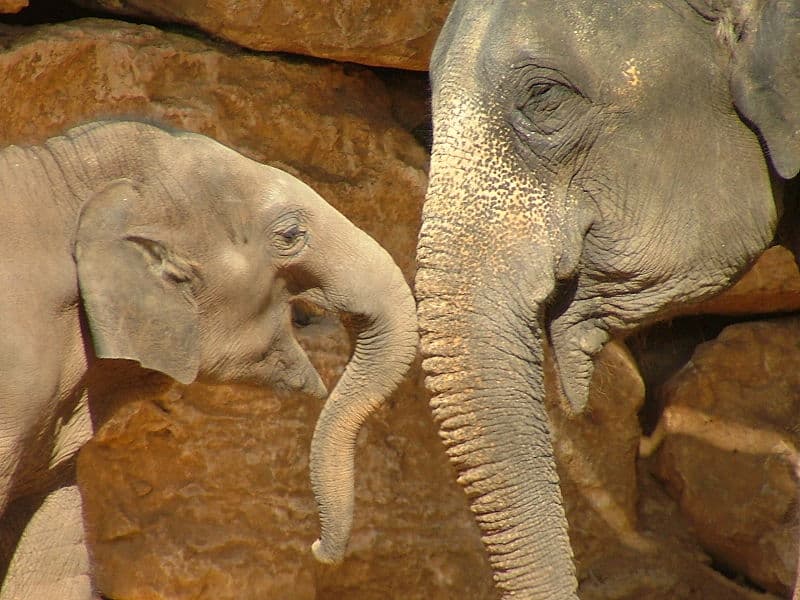
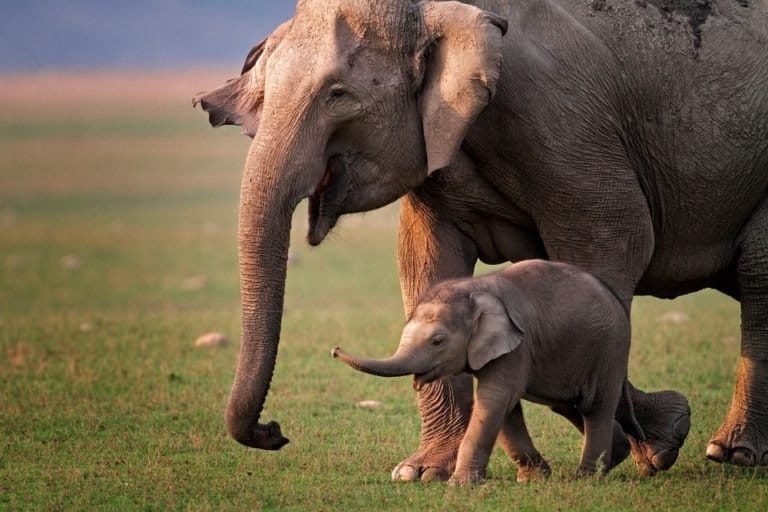
The bond between mother and calf can last a lifetime
©SuperJew, CC BY-SA 3.0, via Wikimedia Commons – Original / License
Female elephants give birth every 3 to 8 years. Male elephants, called bulls, typically father their first child after age 30, while females are fertile in their mid-teens. Males take a longer time to grow strong enough to compete with other males for mates, which is why it takes so long for them to be able to mate.
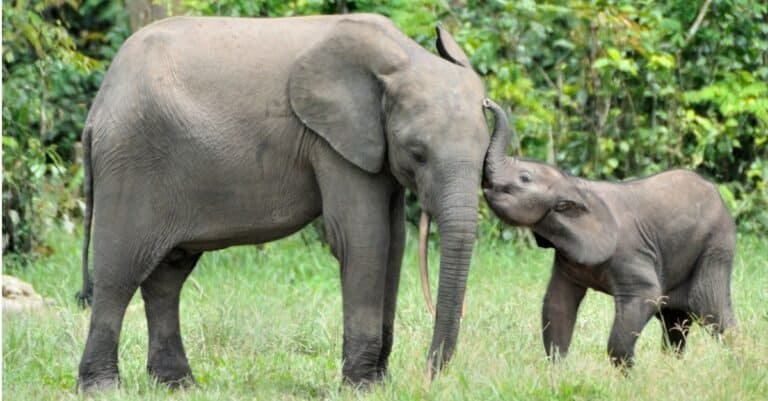
Female elephants, called cows, have the longest gestation period of any animal. Their young are born after 22 months and weigh up to 350 lbs. Occasionally, two calves are born. Soon after they are born, calves can nurse. Fun facts about Asian elephant herd structure are that young are taken care of by all of the female elephants in the herd, referred to as “aunties.” They are weaned off of milk after six months, but they remain attached to the mother for much longer, sometimes until another young is born. Male calves will leave the herd once they reach sexual maturity. Female calves will live with the herd indefinitely.
There is not a lot of data on wild elephant populations, but they are thought to live to be about 50 years old.
Population
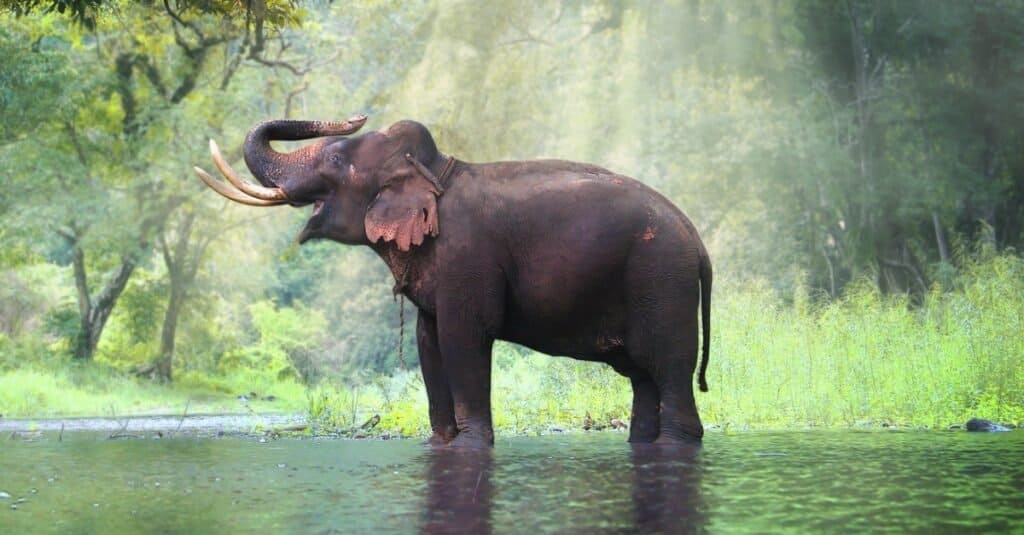
The population of Asian elephants has declined by more than half over the past eight decades
©iStock.com/goodze
Asian elephants are endangered due to habitat loss, habitat fragmentation, and poaching. Recent population counts have estimated that there are less than 50,000 individuals left in the wild.
Because of these environmental and human pressures, Asian elephants have experienced a significant population decline. They have lost over 50% of their numbers in the last 75 years. Asian elephants are at risk of going extinct, and many conservation efforts have been made to save the various species of Asian elephants. The Indian variety is the most populous and widespread of the subspecies.
In the Zoo
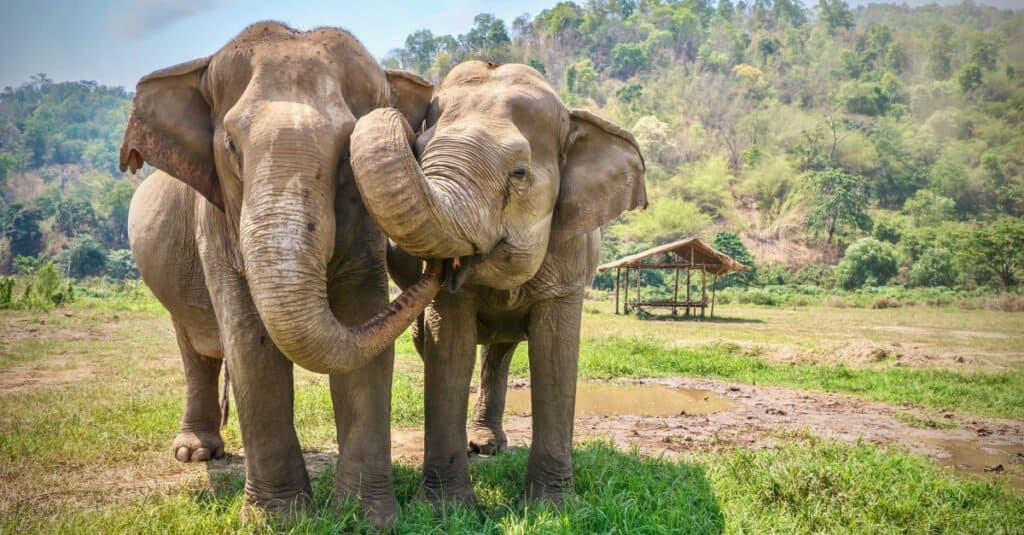
A significant portion of the Asian elephant population lives in captivity
©CherylRamalho/Shutterstock.com
About a third of the entire Asian elephant population is in captivity. Most of these elephants live in Myanmar, India, and Thailand. These captive elephants are mostly used in the tourism industry in these places.
Many zoos in the US have Asian elephants for patrons to visit and have associated conservation plans to help save the Asian elephant species. Among these zoos are the Smithsonian National Zoo in Washington, DC, and the Buttonwood Zoo in Massachusetts.
Similar Animals
- African Forest Elephants: They roam the dense thick forest with an ease which would be beyond their larger relatives. But what other differences set them apart from their African cousins? Find out here.
- African Bush Elephants: Extremely gregarious and social, these giant mammals prefer to roam the open savannah. Find out all there is to know about the largest land mammals on the planet.
- Elephant vs. Mammoth: How did they evolve? How closely are they related? Where did they live?Discover the answers to these questions and more, here.
Asian Elephant Pictures
View all of our Asian Elephant pictures in the gallery.

SOMMAI/Shutterstock.com
How to say Asian Elephant in ...
Sources
- National Georgraphic / Accessed December 18, 2020
- Association of Zoos & Aquariums / Accessed December 18, 2020
- WWF / Accessed December 18, 2020
- Smithsonian's National Zoo & Conservation Biology Institute / Accessed December 18, 2020
- Elephant Country / Accessed December 18, 2020
- Safaris Africana / Accessed December 18, 2020