B
Species Profile

Bear

Ursidae

Eight species, one mighty family
Alan D. Wilson, CC BY-SA 3.0, via Wikimedia Commons

Bear Distribution

Click a location to explore more animals from that region

Loading map...

Size Comparison

Human 5'8"
Bear 3 ft 7 in

Bear stands at 64% of average human height.

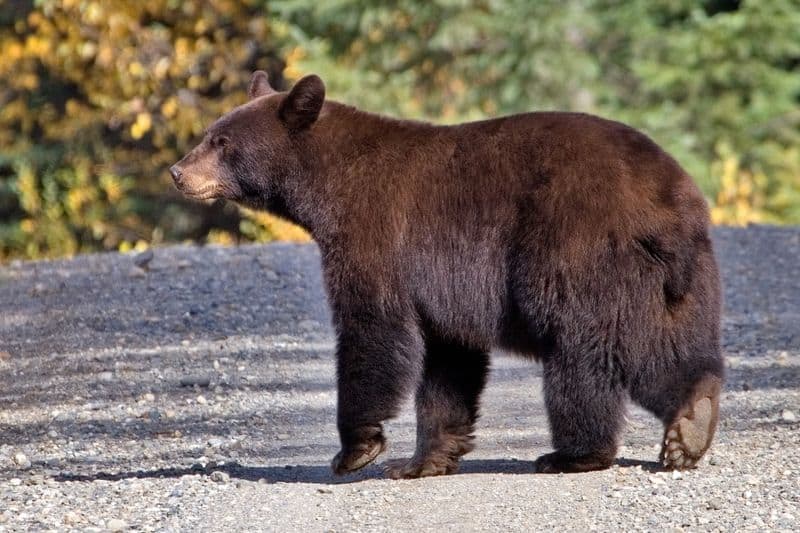
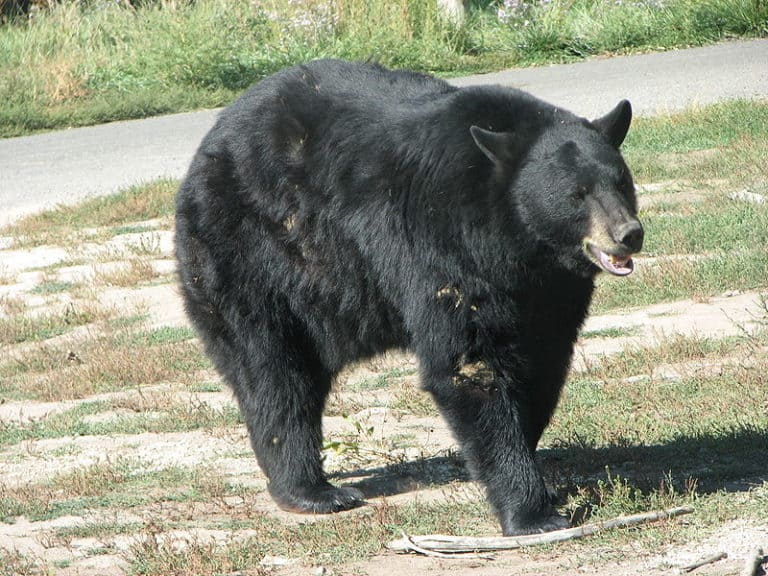
A black bear (female) in Horsefly Peninsula, Quesnel Lake, British Columbia

At a Glance

Family Overview This page covers the Bear family as a group. Stats below are general traits shared across the family.
Also Known As Bruin, Teddy bear, Honey bear
Diet Omnivore
Activity Cathemeral+
Lifespan 20 years
Weight 800 lbs
Status Not Evaluated
Did You Know?

Size spans from sun bears (~25-65 kg) to polar bears commonly ~350-700 kg (occasionally more).

Scientific Classification

Family Overview "Bear" is not a single species but represents an entire family containing multiple species.

Bears (family Ursidae) are large-bodied carnivorans found across the Northern Hemisphere and parts of South America. Most are omnivorous with powerful limbs, plantigrade feet, and strong jaws; one species (polar bear) is primarily carnivorous, while the giant panda is largely herbivorous (bamboo).

Kingdom
Animalia
Phylum
Chordata
Class
Mammalia
Order
Carnivora
Family
Ursidae

Distinguishing Features

  • Large, robust body with strong shoulder musculature
  • Plantigrade stance (walk on soles of feet) with non-retractile claws
  • Excellent sense of smell; generally smaller reliance on vision
  • Generally solitary with large home ranges (varies by species)
  • Seasonal fat accumulation; hibernation/torpor in several species (not all)

Physical Measurements

Males and females differ in size

Height
377 ft 4 in (229 ft 8 in – 524 ft 11 in)
2 ft 11 in (1 ft 12 in – 4 ft 3 in)
Length
5 ft 7 in (3 ft 3 in – 8 ft 2 in)
Weight
485 lbs (60 lbs – 1,543 lbs)
243 lbs (55 lbs – 661 lbs)
Tail Length
4 in (1 in – 6 in)
3 in (1 in – 6 in)
Top Speed
34 mph

Appearance

Primary Colors
Secondary Colors
Skin Type Dense fur over thick skin; coat varies by climate and season, with insulating underfur and guard hairs. Cold bears are heavy-coated; warm bears have shorter hair. They molt, have tough foot pads, plantigrade, clawed toes.
Distinctive Features
  • Family-level size range (smallest to largest living members): roughly ~25-65 kg to ~300-700+ kg; standing shoulder height and body length scale accordingly (small, forest-dwelling bears to very large Arctic/coastal bears).
  • Lifespan range across the family: typically ~15-35 years in the wild (often longer in managed care), varying by species, habitat productivity, and human pressures.
  • Build and locomotion: large-bodied mammals with powerful shoulders/forelimbs, plantigrade gait, and strong neck/back musculature; short tail; robust skull and jaws.
  • Claws: strong, non-retractile claws used for digging, tearing, defense, and (in some species) climbing; relative claw length/curvature varies with ecology (digging, foraging, climbing, traction on ice/ground).
  • Senses: exceptionally strong olfaction is a common hallmark; hearing and vision are generally adequate but vary by context and species.
  • Most bears are omnivorous and eat plants, bugs, dead animals, fish, and mammals. Exceptions: polar bears are mainly meat-eaters (often marine mammals) and giant pandas eat mostly bamboo.
  • Ecological roles: can function as apex predators or large omnivores/mesopredators depending on region; important as scavengers and, in many ecosystems, seed dispersers and agents of soil disturbance via digging/foraging.
  • Many temperate bears enter winter torpor or den and have big seasonal fat changes, but timing, length, and whether torpor happens vary by species, latitude, sex, breeding state, and food (e.g., polar versus tropical/subtropical).
  • Habitat breadth across the family: tundra/sea-ice margins, boreal forests, temperate woodlands, mountains, and tropical forests; strong regional variation in home range size and movement tied to food seasonality.
  • Human-bear coexistence/conflict: many bears exploit human foods where accessible; conflict mitigation commonly hinges on attractant management (secure garbage/livestock feed), habitat connectivity, and minimizing risky encounters-pressures and solutions differ by region and species.

Sexual Dimorphism

Across most Ursidae, males are typically larger and heavier than females, with dimorphism often expressed in body mass, skull size, and neck/shoulder musculature. The magnitude varies by species and population (often greater where high-calorie foods or strong mating competition occur).

  • Generally larger body mass and overall size; more robust skull/jaw proportions.
  • Often thicker neck and more pronounced shoulder/forelimb musculature.
  • Can show larger canine teeth and broader head/forehead profile (population-dependent).
  • Generally smaller and lighter-bodied; relatively finer head/neck proportions.
  • Reproductive state influences seasonal body condition; females in denning/with cubs may show distinct behavioral ecology (more secretive, risk-averse habitat use).

Did You Know?

Size spans from sun bears (~25-65 kg) to polar bears commonly ~350-700 kg (occasionally more).

Diet diversity is extreme: polar bears are mostly carnivorous, while giant pandas are bamboo specialists; most others are flexible omnivores.

Many bears use "delayed implantation," timing pregnancy so cubs are born when conditions (often winter dens) are safest.

Bears can gain large fat reserves seasonally and some enter hibernation/torpor-yet tropical species (e.g., sun bear) may not hibernate.

Across the family, smell is a standout sense; bears routinely follow distant food odors and use scent to communicate.

Even "carnivore" order members, bears often shape plant communities by seed dispersal and digging that aerates soil.

Unique Adaptations

  • Plantigrade feet and powerful limb bones for digging, climbing, turning logs/rocks, and long-distance walking; this build supports both strength and endurance.
  • Large, curved claws adapted to varied tasks-excavating roots and burrows, climbing (in some species), tearing wood, and gripping slippery prey (e.g., fish).
  • Exceptional olfaction paired with a strong jaw/teeth toolkit: dentition supports omnivory across the family, from crushing vegetation to processing meat; specialization occurs in panda and polar bear lineages.
  • Metabolic flexibility: many species can enter hibernation/torpor with lowered heart rate and energy use, relying on fat stores; the degree of torpor varies across Ursidae.
  • Delayed implantation (common in the family): embryos pause development so birth aligns with favorable seasons and maternal condition.
  • Dense fur and insulating fat in cold-adapted species; at the other extreme, tropical bears often have shorter coats and behaviors geared to heat management (shade, nocturnal activity).

Interesting Behaviors

  • Seasonal physiology varies widely: long winter hibernation/torpor is common in temperate bears, while tropical bears may stay active year-round; denning length and depth differ by region and food supply.
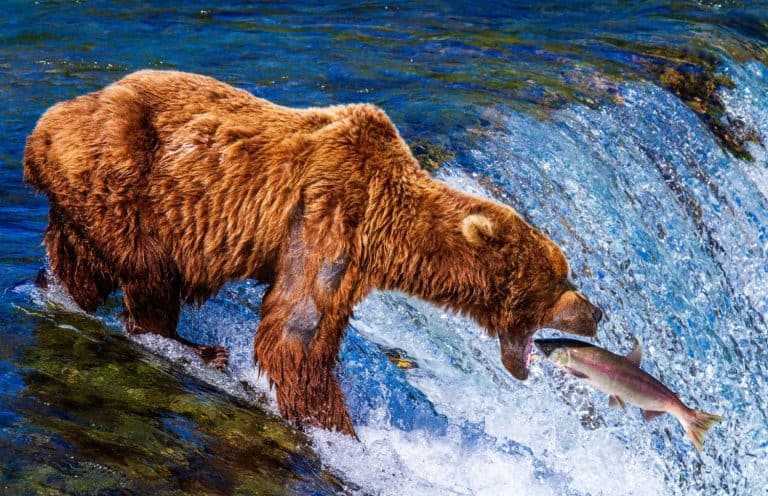
  • Flexible foraging: many species switch between berries, nuts, insects, carrion, and large prey; coastal populations may focus on salmon, while others rely heavily on plants or hard mast in autumn.
  • Scent communication is a family hallmark-tree rubbing, claw marking, and urine/scent posts advertise identity and reproductive status; marking intensity often peaks in breeding season.
  • Mostly solitary lifestyles with social "hotspots": bears typically avoid each other, but tolerate close neighbors at rich food sources (salmon runs, fruiting trees, dumps-where human conflict can rise).
  • Long maternal care: females den or shelter with cubs and may raise them for 1.5-3+ years (varies by species), teaching foraging and risk avoidance.
  • Locomotion diversity: many bears climb well (especially smaller forest species), most swim strongly, and some travel long distances tracking seasonal foods or sea ice.

Cultural Significance

Bears (Ursidae), including the spectacled bear in South America, are symbols of strength, protection, and wild places. They appear in Indigenous stories, emblems, and kids' tales. People manage food, crop, and livestock conflicts with nonlethal methods to keep bears' ecological roles.

Myths & Legends

Ainu (Japan): In a bear-sending ceremony, the bear is honored as a mountain spirit visiting humans in animal form, then respectfully sent back to the spirit world with gifts.

Korea: A founding myth tells of a bear who endures a ritual trial, becomes a woman, and gives birth to a legendary founder-king-linking bears to origin and transformation.

Inuit Arctic traditions: The polar bear is treated with great respect; stories describe it as a wise, powerful being whose spirit responds to hunters' conduct and ritual care.

Finno-Karelian folklore (Finland/Karelia): The bear is so revered it is addressed by euphemistic secret names and celebrated in songs and rituals that treat it as a forest kinsman.

Celtic Gaul and Britain: A bear goddess associated with wilderness and abundance appears in inscriptions and iconography, reflecting the bear as a sacred presence.

Norse and Germanic tradition: "Berserkers" are described as warriors who fought with bear-like fury-stories and sagas link bear symbolism to strength, trance, and battle power.

European folktales: 'Goldilocks and the Three Bears' and a widely told Russian folktale about a girl and a bear use bear households as mirrors of human society-both fearsome and familiar.

Conservation Status

NE Not Evaluated (family-level; IUCN assesses individual species rather than the entire family as a single unit)

Has not yet been evaluated against the criteria.

Population Unknown

Protected Under

  • CITES (all bear species are listed; several are subject to the highest level of trade restriction)
  • National/subnational wildlife protection laws and hunting regulations (highly variable by country and population)
  • Protected areas and habitat conservation programs (critical for multiple threatened bear species, especially in Asia and for giant panda reserves)

You might be looking for:

Brown Bear

20%

Ursus arctos

Widespread large bear; includes grizzly bears and Kodiak bears as regional populations/subspecies.

View Profile

American Black Bear

18%

Ursus americanus

Common North American bear; highly adaptable and often found near forests and mountains.

View Profile

Polar Bear

16%

Ursus maritimus

Arctic marine-associated bear specialized for sea-ice hunting, primarily seals.

View Profile

Asian Black Bear

11%

Ursus thibetanus

Asian forest bear with a pale chest crescent; also called the moon bear.

View Profile

Sun Bear

10%

Helarctos malayanus

Small tropical Southeast Asian bear with a short coat and long tongue for insects and honey.

View Profile

Sloth Bear

10%

Melursus ursinus

Indian subcontinent bear specialized for termites and ants; shaggy coat and elongated snout.

Spectacled Bear

9%

Tremarctos ornatus

South America’s only native bear; Andean cloud forests; pale facial markings.

View Profile

Giant Panda

6%

Ailuropoda melanoleuca

A highly specialized ursid with a bamboo-based diet; native to China.

View Profile

Life Cycle

Birth 2 cubs
Lifespan 20 years

Lifespan

In the Wild
10–35 years
In Captivity
15–50 years

Reproduction

Mating System Promiscuity
Social Structure Solitary
Breeding Pattern Transient
Fertilization Internal Fertilization
Birth Type Internal_fertilization

Bears (Ursidae) are mostly solitary, multi-mate breeders. Males may mate with many females; pairings last days to weeks. Many species show delayed implantation. Mothers care for cubs for months to years; males do not help. Multiple paternity occurs.

Behavior & Ecology

Social Sloth (also reported: "sleuth") Group: 1
Activity Cathemeral, Crepuscular, Diurnal, Nocturnal
Diet Omnivore Varies strongly across Ursidae, but bears commonly focus on the highest-calorie foods available seasonally (e.g., berries and nuts; salmon runs; seal fat/blubber in polar bears; bamboo in giant pandas).
Seasonal Hibernates

Temperament

Bears (Ursidae) vary but are often cautious, independent, and avoid risk. They usually avoid fights, but can be very defensive (especially mothers with cubs) or aggressive at food sources.
Aggression and boldness vary by species/ecology: more predatory or food-stressed contexts can increase bold, persistent behavior; heavily herbivorous/foraging-focused lifestyles often correlate with fewer predatory pursuits but not necessarily reduced defensiveness.
Intraspecific variation is strong: age/sex (adult males vs. females with cubs), season (hyperphagia), and human food conditioning can shift behavior from shy to assertive.
Body size range across Ursidae (smallest-largest members) is broad: roughly ~25 kg to 700+ kg in mass, with head-body lengths about ~1.0 m to ~3.0 m (reflecting major ecological differences among species).
Lifespan range across the family is also broad: commonly ~15-30+ years in the wild depending on species and mortality pressures, and up to ~35-45 years in captivity for some species.

Communication

huffs/woofs Short-range warnings, agitation
growls Threat/defense
roars High arousal; more typical in intense conflicts in some species
moans/groans Low-intensity social context; can occur during courtship or mild distress
jaw clacking/popping or teeth chattering Threat display in some contexts
cub bawls/bleats/whines Distress, contact-seeking
chuffs/snorts Close-range signaling; context-dependent
scent marking via urine, feces, and glandular secretions; marking intensity often peaks during breeding season and along travel routes
tree rubbing and scratching (visual + scent marks), including bite marks on trunks and branches
ground scratching and pawing to deposit scent and create conspicuous signposts
body postures and threat displays (standing, head lowering, bluff charges), plus facial expressions and ear position changes
close-range chemical investigation (sniffing) to identify individuals, reproductive status, and recent presence
vocal-postural combinations in aggressive or defensive encounters; play behavior (especially in juveniles) supports social learning and conflict management

Habitat

Biomes:
Tropical Rainforest Tropical Dry Forest Savanna Desert Hot Desert Cold Mediterranean Temperate Grassland Temperate Forest Temperate Rainforest Boreal Forest (Taiga) Tundra Alpine Freshwater Marine Wetland +9
Terrain:
Mountainous Hilly Plateau Plains Valley Coastal Island Riverine Rocky +3
Elevation: Up to 18044 ft 8 in

Ecological Role

Large-bodied, wide-ranging consumers (often omnivorous) that function as predators and scavengers as well as major plant-foragers; their role spans from apex predator (polar bear in marine-ice systems) to herbivore-like specialist (giant panda) depending on species and habitat.

Seed dispersal and plant regeneration via fruit consumption and scat deposition Nutrient transport and cycling (including moving marine-derived nutrients inland where bears feed on fish/carcasses) Carrion removal and facilitation of scavenger communities Regulation of prey populations (especially via predation on vulnerable young/weak individuals and localized predation pressure) Soil disturbance/bioturbation from digging and foraging that can alter microhabitats and nutrient availability

Diet Details

Main Prey:
Insects and other invertebrates Fish Marine mammals Terrestrial mammals Carrion
Other Foods:
Fruits and berries Nuts and seeds Grasses, sedges, forbs, and shoots Roots, tubers, bulbs and other underground plant parts Fungi Honey and other sugar-rich plant-derived foods Bamboo +1

Human Interaction

Domestication Status

Wild

Ursidae (bears) are not domesticated; all living species remain wild. People have hunted, feared, honored, and kept bears in zoos, circuses, or private collections. Some bears were tamed or raised from cubhood for display, but that is not true domestication and does not reliably stop dangerous behavior.

Danger Level

High
  • Severe injury or death from defensive attacks (especially at close range, around food, or involving females with cubs)
  • Predatory attacks are uncommon but can occur in some contexts/species/populations
  • High risk escalation where bears are food-conditioned (garbage, hand-feeding) or habituated to people
  • Significant property damage and vehicle-collision risk in bear-occupied landscapes
  • Zoonotic/health risks (e.g., parasites such as Trichinella from undercooked bear meat; other region-specific pathogens)

As a Pet

Not Suitable as Pet

Legality: Keeping bears as pets is mostly illegal or tightly restricted in many places; where allowed, owners need special wildlife permits, proper cages, inspections, and liability insurance. Many areas ban native bears or call all bears dangerous wild animals.

Care Level: Expert Only

Purchase Cost: Up to $25,000
Lifetime Cost: $100,000 - $1,000,000

Economic Value

Uses:
Ecotourism and wildlife viewing Conservation funding and ecosystem/cultural value Regulated hunting (varies by country/species) Subsistence use (limited, region-specific) Commercial products from parts (historical and/or illegal in many areas) Captive display (zoos/sanctuaries; historically entertainment) Conflict management costs (public agencies, communities, property owners)
Products:
  • Tourism services (guided viewing, lodging)
  • Meat and fat/oil (region- and law-dependent)
  • Hides/fur (region- and law-dependent)
  • Trophies (where legal)
  • Traditional-medicine derivatives including bile (often illegal/controversial; linked to bear farming/poaching in some regions)
  • Educational/research value in accredited institutions

Bear Facts

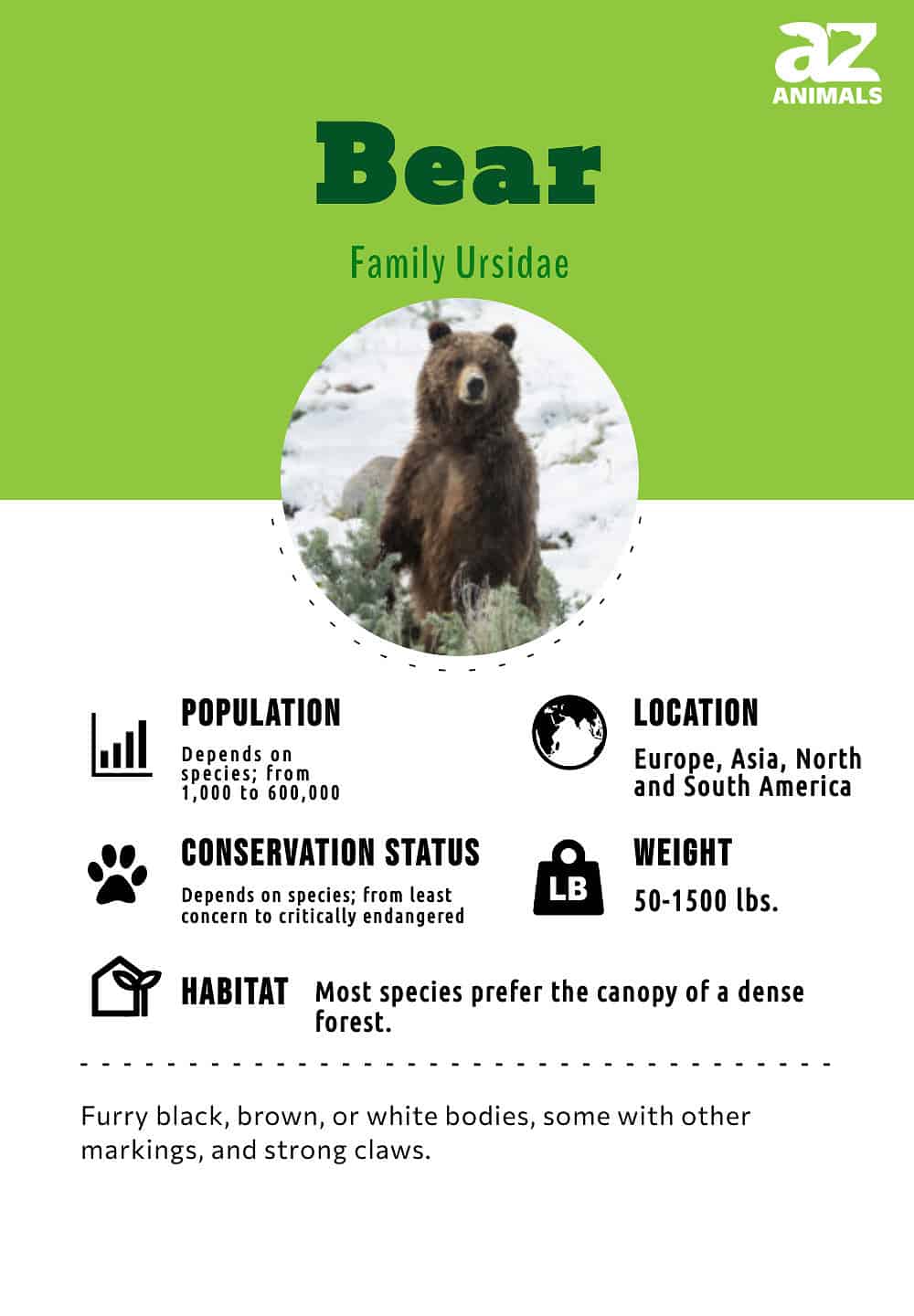
There are eight different species of bears across the world with a conservation status ranging from vulnerable to least concern. Depending on the bear species, habitats include North America, South America, Europe, Asia, and the northern-most polar regions. While not ordinarily a threat to humans, bears are animals that can be very dangerous if startled, provoked, or approached when young bears (cubs) are present.

4 Amazing Facts:

  • While considered a carnivorous species, most bears eat vegetation as their primary food source. In fact, just 10% of a grizzly bear’s diet is meat!
  • Polar bears are on average not just the largest bear species, but also the largest carnivorous land animal on Earth!
  • Do NOT try to outrun a bear. Black bears can run up to 35 miles per hour, which is significantly faster than the fastest human ever. Even larger grizzly bears can reach speeds that top 30 miles per hour.
  • Many bear experts believe bears can smell from up to 20 miles away.

Types – The 8 Different Species
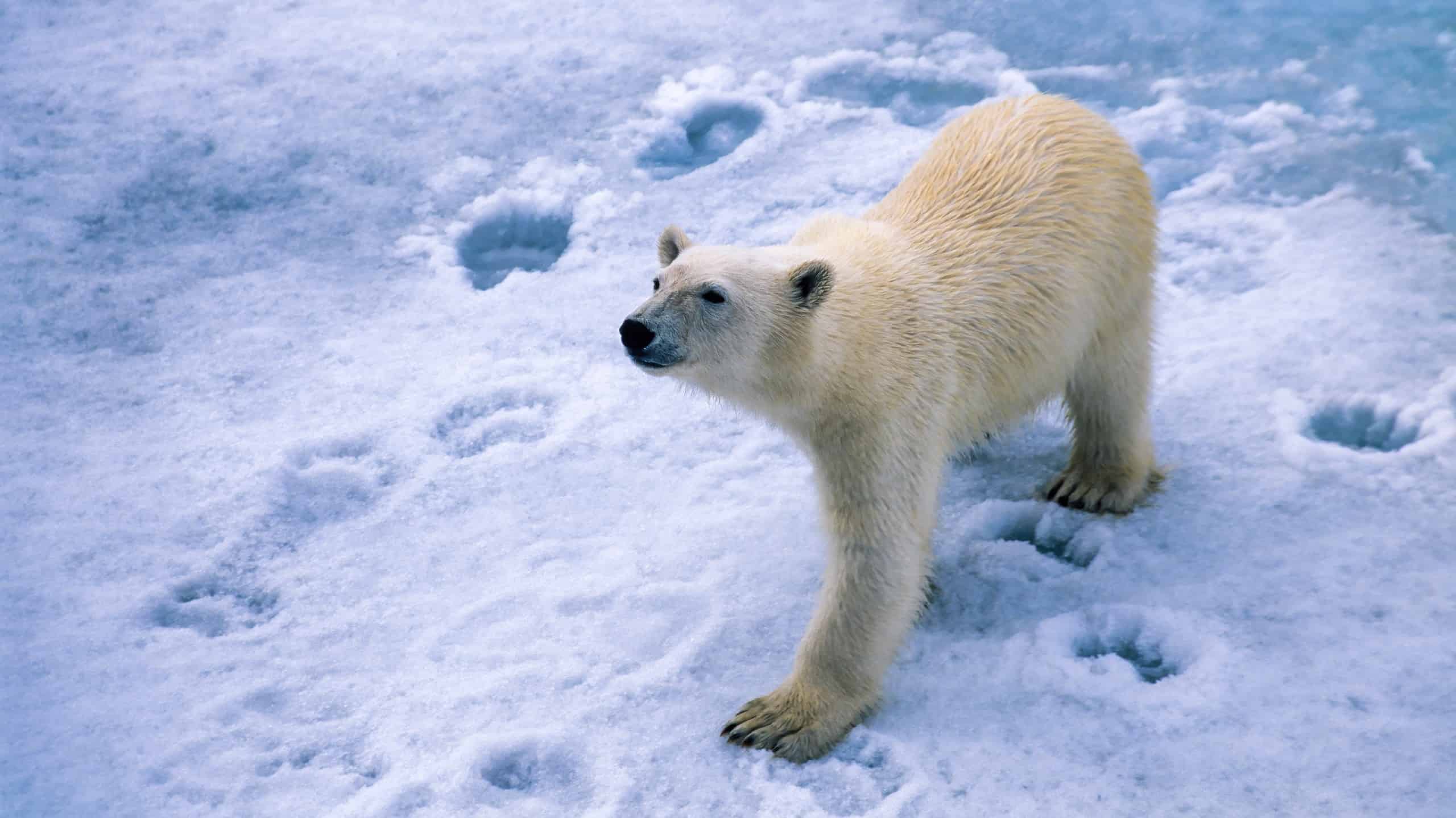
Polar bear leaving tracks on fresh snow.

One of the eight unique species of bears is the Polar Bear found in the Arctic region.

There are eight unique species of bears that vary in size, appearance and food preference. You can predominantly find them throughout North America, South America, Europe and Asia. The bear species include:

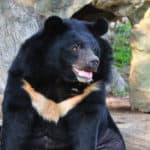
  • Asiatic Black Bear (Asian Black Bear) – The Asiatic black bear, also referred to as the moon bear, is primarily an herbivore bear species found predominantly in Southern Asia, Afghanistan and parts of Japan. They are often found in trees in mountainous areas.
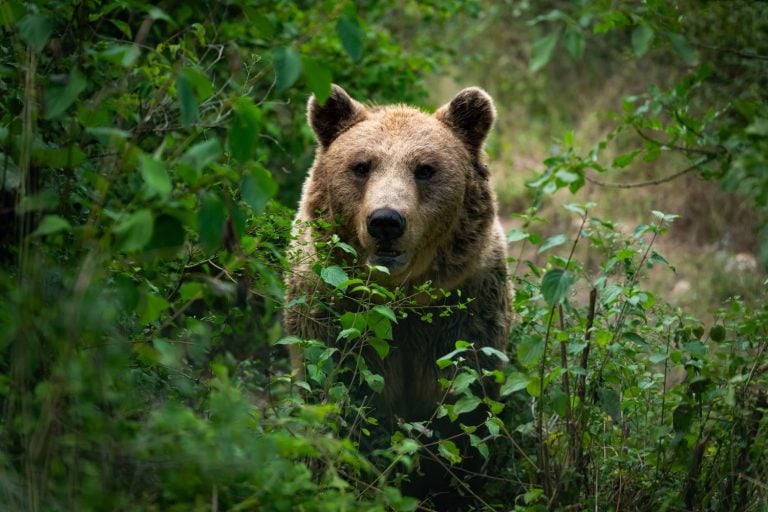
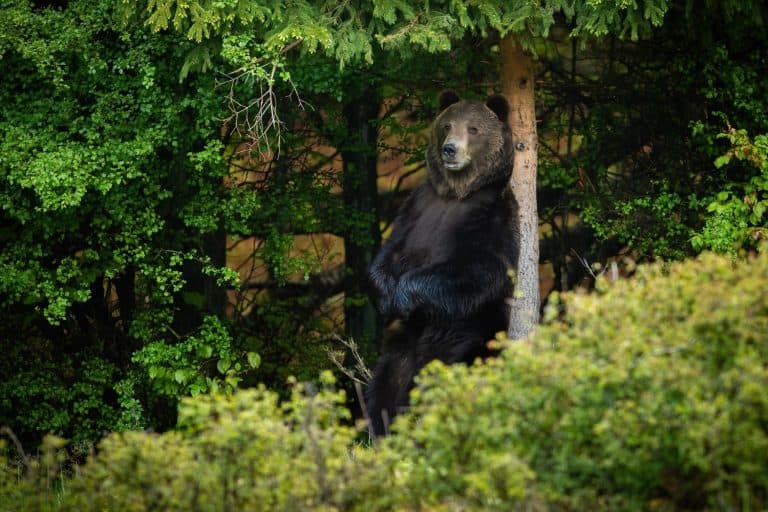
  • Brown Bear – The brown bear, also referred to as the grizzly bear, is found in North America, Asia and Europe. It is distinguished by the humps that rest over its shoulders and massive brown physique. This bear species is the least likely to become extinct of all the bears, at this time.
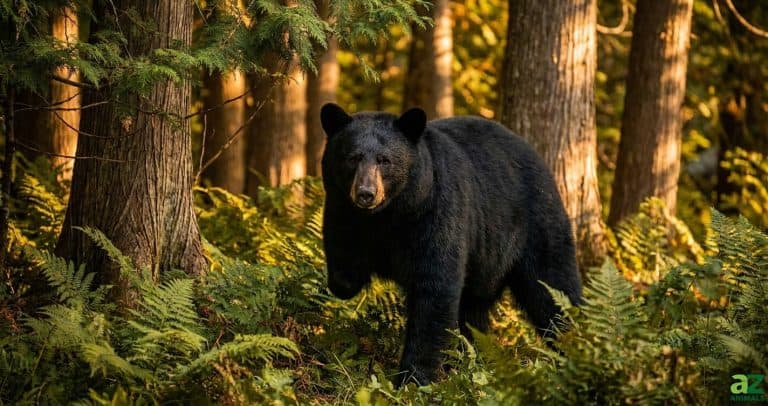
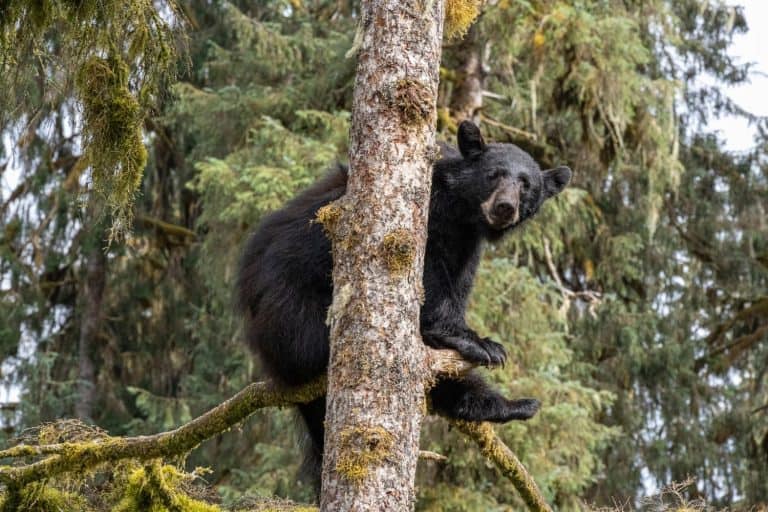
  • North American Black Bear – The North American black bear can be found from Northern Canada to Central Mexico. It does not have a climate preference. It will even feed on prickly pear cactus. This bear species prefers mountainous regions, but you will find them in meadows and wetlands, too.
  • Polar Bear – Polar bears are found only in the Arctic region surrounding the North Pole. They travel by floating glacial ice blocks. As these ice packs melt, the threat to the existence of polar bears increases, making them highly susceptible to extinction.
  • Spectacled Bear – The spectacled bear, also referred to as the Andean bear, enjoys spending time in trees. It is the only bear species to reside in South America. These bears are vulnerable to extinction because of human killing for profit and superstition.
  • Panda Bear – The Panda bear might be the most well-known bear on the planet due to its adorable appearance. It primarily feasts on bamboo in Central China. Panda bears are considered endangered because of black market demand.
  • Sloth Bear – The sloth bear receives its name from its similarities to the sloth animal. The long snout allows it to consume prey not typically associated with bears, including ants and termites. Sloth bears are found in India and Sri Lanka.
  • Sun Bear – Sun bears are distinctive because of the cream, crescent markings on their chests. As they often eat bees’ nests, they are commonly referred to as honey bears. You can find them in Malaysia and Indonesia, and they are vulnerable to extinction due to deforestation.

Scientific Names And Evolution
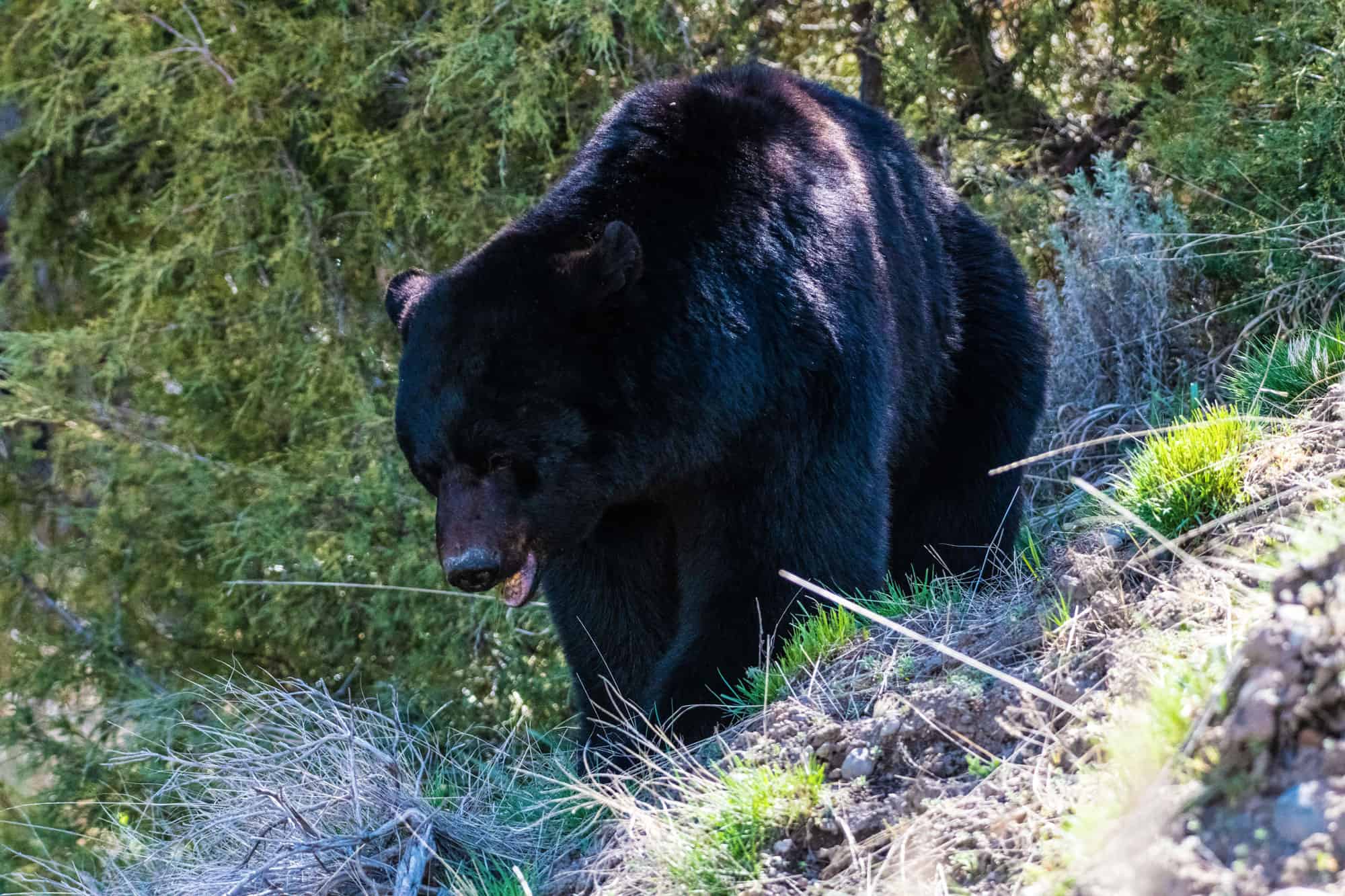
Animal Wildlife, Animals In The Wild, Bear, Beauty, Black Bear

There are two species of black bear, the Asiatic and the North American, but the North American can be a lot bigger.

The family name for bears is Ursidae. The Pandas belong to the subfamily Ailuropodinae, and the Spectacled bears belong to the subfamily Tremarctinae (which once included the now extinct American giant short-faced and Florida short-faced bears). All other bears belong to the subfamily Ursinae. Ursus, which means bear in Latin, is the genus. There are multiple subspecies as well. The following are the eight genus (or subfamily) and species names of bears:

The evolution of bears is relatively recent. They are the latest addition to carnivores, having evolved from small, dog-like mammals about 40 million years ago. In fact, it was only about 20 million years ago that bears became identifiably unique as Ursavus elmensis, or the dawn bear. It is thought that the subfamily Tremarctinae of the spectacled bear diverged from Ursinae about 5.7 million years ago. Later, 4-5 million years ago, black bears, brown bears, and polar bears diverged, according to DNA studies. Then bears began to travel across the Bering Strait approximately 1.3 million years ago.

Appearance & Behavior
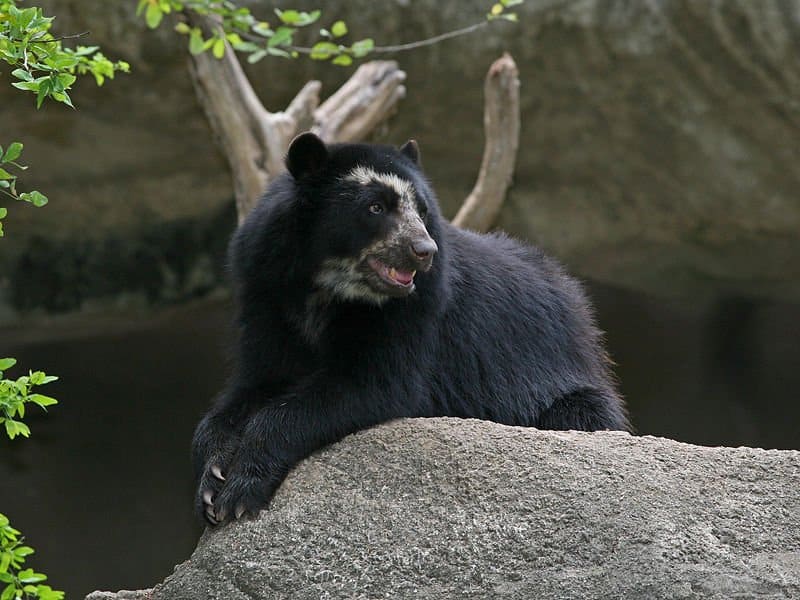
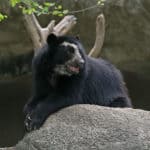
Spectacled Bear sitting in cave entrance

The Spectacled Bear has white around the eyes, making it look like it is wearing spectacles or goggles.

Bears are noted for their furry bodies and strong claws. Some climb trees, and others swim. Certain bear subspecies have even more distinctive markings around the eyes and on their chest that set them apart from the others.

Various species of bears have adapted to their environments over time. For example, polar bears are white to blend in with the snow, and North American black bears have versatile eating habits that include corn crops and cactus depending on their region of residence.

All bears have an acute sense of smell, hearing and sight. They often hear and smell humans before they see humans and flee as a result. Bears are solitary creatures by nature. However, mothers and cubs will travel together, and bears will travel in pairs during mating seasons.

The approximate weights of the various bear species are as follows:

  • Asiatic Black Bear: 50 – 116 kg (110 – 255 lbs)
  • Brown Bear: 93 – 410 kg (205 – 900 lbs)
  • North American Black Bear 39 – 409 kg (86 – 900 lbs)
  • Polar Bear 200 – 682 kg (440 – 1,500 lbs)
  • Spectacled Bear 64 – 125 kg (140 – 275 lbs)
  • Panda Bear 70 – 125 kg (155 – 275 lbs)
  • Sloth Bear 55 – 141 kg (120 – 310 lbs)
  • Sun Bear 22 – 50 kg (50 – 110 lbs)

Hibernation
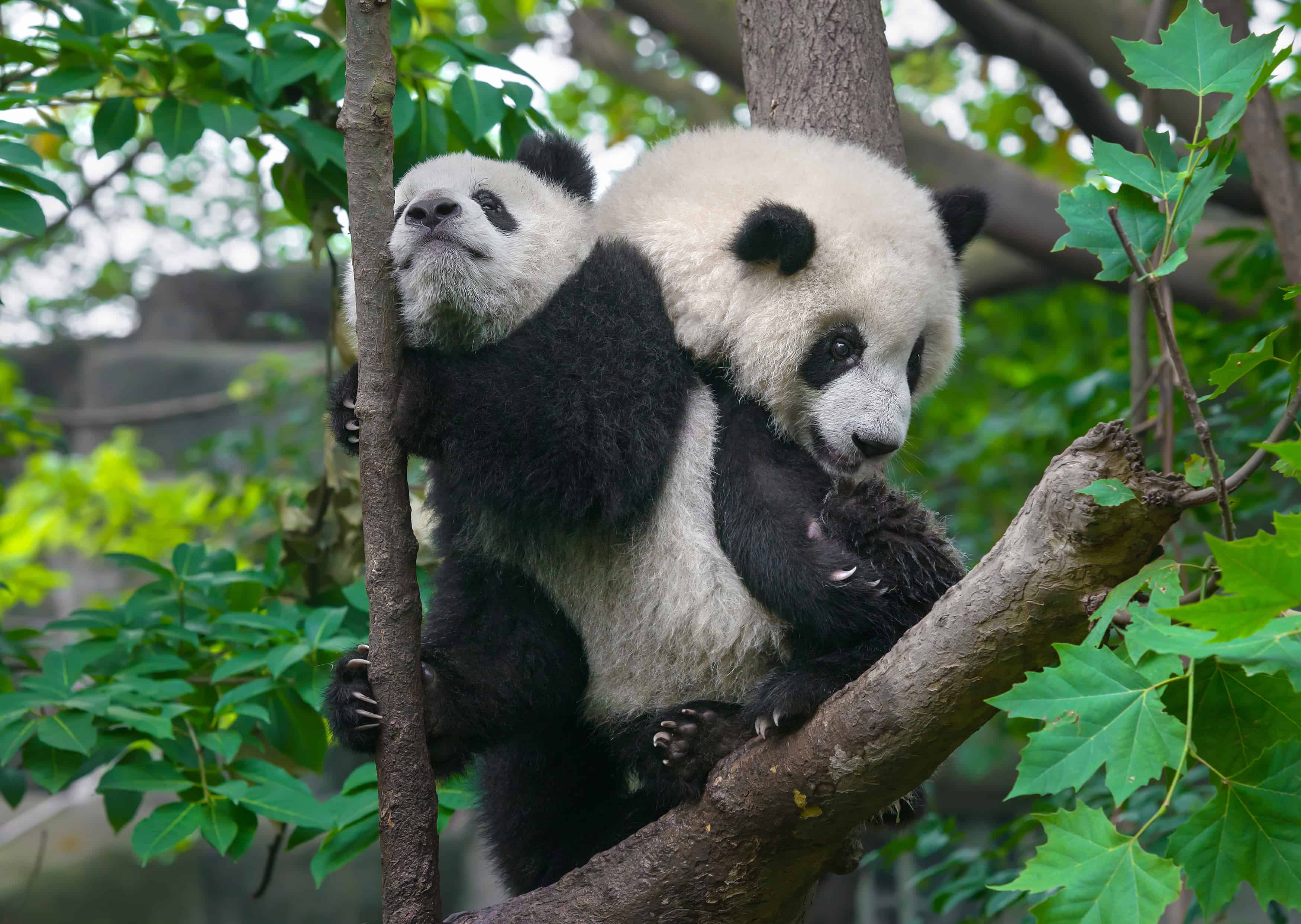
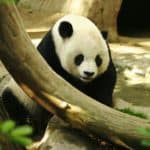
Giant panda bears in forest tree

Giant panda bears do not hibernate but migrate with the seasons to follow food sources.

Many species of bears will hibernate for long periods to save energy during winters when prey and other food sources are in short supply. Bears will hibernate in locations such as caves, hollowed-out trees, holes they dig in the ground, and dens that bears have dug in prior years. Before hibernating, bears will become hyperphagic, which means they’ll eat excessively to build energy reserves. For example, Himalayan black bears will reach up to 400 pounds before they hibernate. That’s significantly higher than their normal weight, which is between 200 and 265 pounds!

However, not all bear species hibernate. Panda bears will adjust their latitude throughout the year to find more abundant seasonal food rather than hibernating. Likewise, Asiatic black bears in southern climates will also skip hibernating. Finally, while polar bears do not hibernate; however, pregnant polar bears will construct maternity dens where they stay for long periods in a dormant state.

Habitats

The geographic regions of bear species are as diverse as their appearance. Most bear species prefer to live within the canopy of a dense forest. You can find bears throughout North America, Europe, Asia and Africa. They never made it to the Antarctic or Australia. While bears are curious by nature, many times, if they hear or smell a human, they will hide up a tree. Some bears prefer higher elevations, such as the Asiatic black bear, and others prefer coastal regions, such as polar bears. You will even find bears in desert climates, including the spectacled bears and American black bears. Bear populations that are unable to adapt to new habitats are vulnerable to extinction as their current homes are destroyed for development and for lumber.

Diet and Food
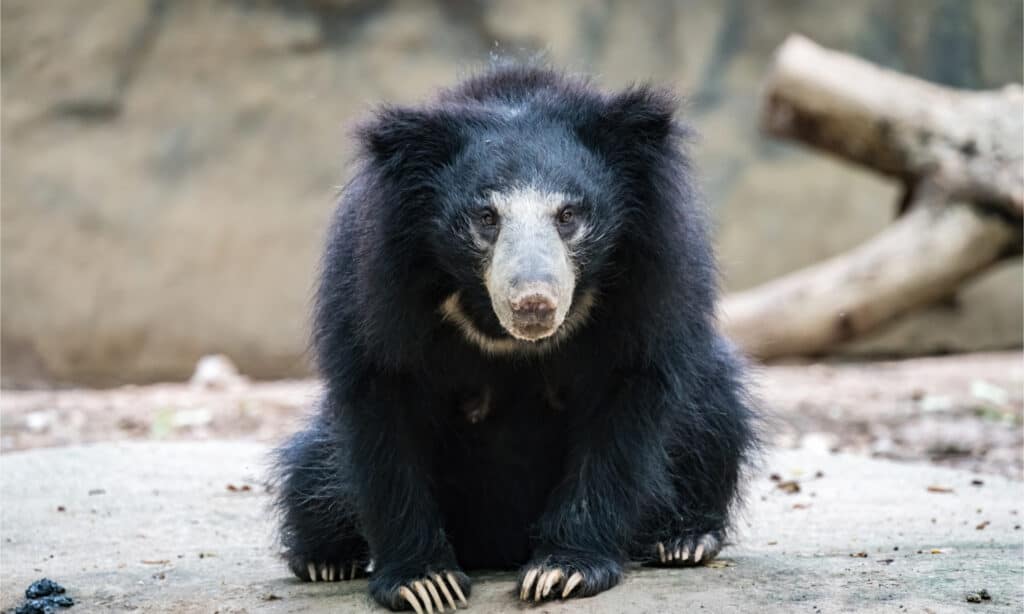
The Sloth Bear has a long snout for eating ants and termites.

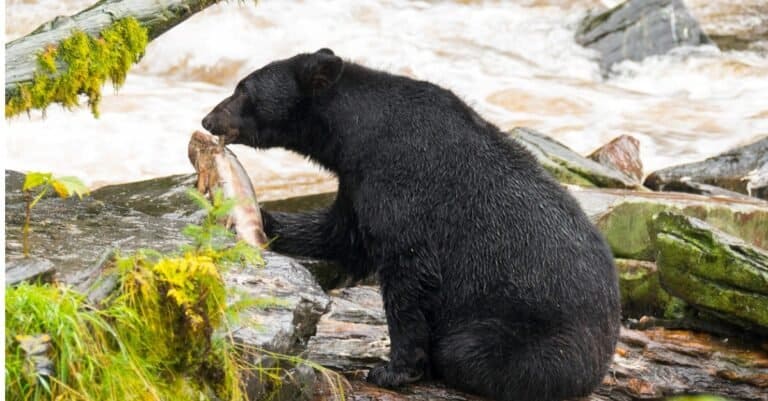
Bears have proven they can survive on almost anything. Most bears eat vegetation; for example, the panda bear eats bamboo. However, many North American bears have adapted to their environments and will eat other animals and fish, including elk, caribou, and salmon. The polar bear, also referred to as the maritime bear, is a carnivorous animal as it typically eats seals, as well as whales and smaller walruses, on occasion. The sloth bear survives on ants and termites.

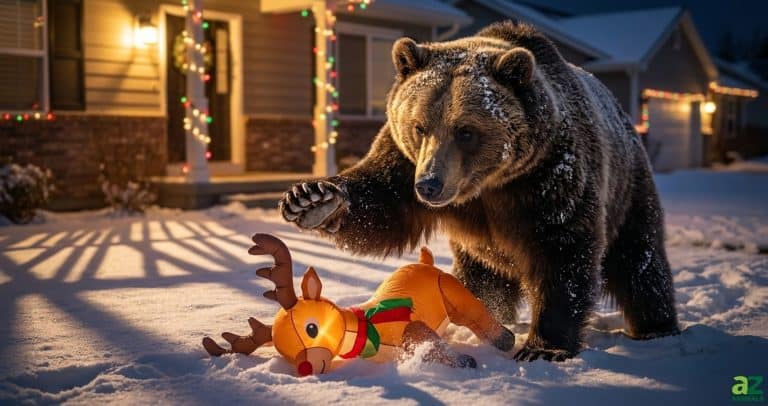
A growing concern exists for bears eating human food as it causes them to destroy property and even break into homes to seek out more of the same. Eventually, these bears are put down as they become an increasing threat to humans. This tragic result is avoidable as long as humans do not feed wild bears. On rare occasions, bears will eat a poisonous plant by mistake and die. Other than that, bears can eat almost anything to live.

Population

Today, all bear species are somewhat susceptible to extinction. Some bear species are more vulnerable than others. Asiatic black bears, polar bears, panda bears, sloth bears, and sun bears are all considered in danger of extinction. Brown bears are categorized as stable, and the American black bears are increasing in population and are considered of least concern at the moment.

  • Asiatic Black Bear – Less than 50,000
  • Brown Bear – 200,000
  • North American Black Bear – 600,000
  • Polar Bear – 20,000 to 25,000
  • Spectacled Bear – Less than 2,000
  • Panda Bear – 2,000
  • Sloth Bear – 7,000 to 10,000
  • Sun Bear – Unknown, possibly less than 1,000

Extinction
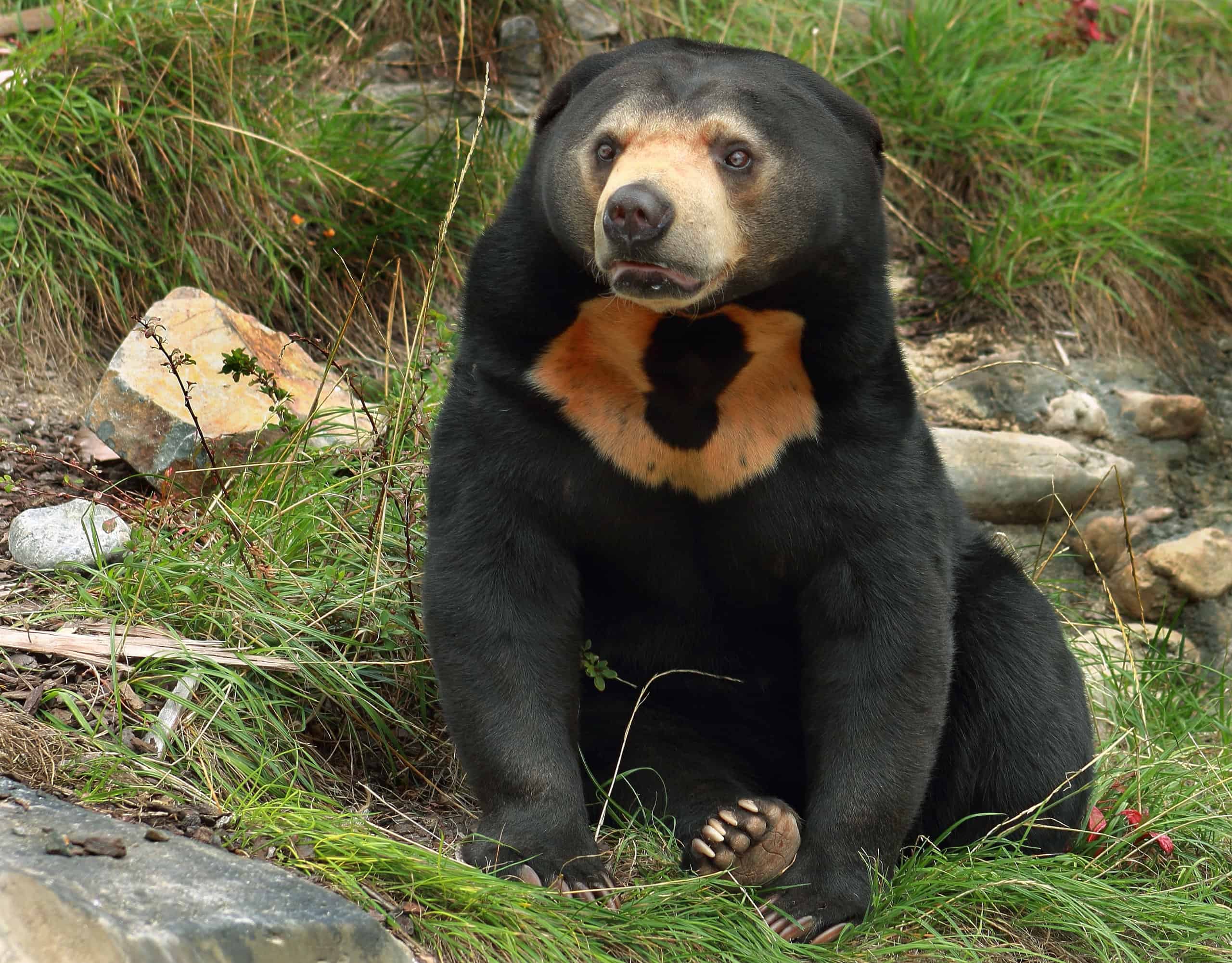
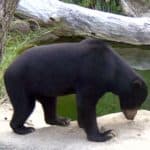
Sun Bear

The Sun Bear, which has a distinctive chest mark and a population of only about 1,000, is the closest to extinction of any of the bear species.

While several bear species of today are vulnerable to extinction, only a few bear species or subspecies have become extinct in recent history. This includes the Californian grizzly bear in the 1920s and the Mexican grizzly bear in the 1960s. Both became extinct due to hunting. The same is true of the Atlas bear, the only bear native to Africa. It was hunted to extinction in the 1870s.

The giant panda bear was near extinction in recent times when drastic efforts were made to save the species. Many scientists believe the polar bear is under severe threat due to climate change. Their existence may be directly connected to their ability to adapt.

Among the bear species that are extinct are the giant short-faced bear and cave bears. The giant short-faced bear was a carnivorous animal that stood 12-feet high, ran over 40 mph, weighed over 1,500 pounds and lived in the northern half of North America. It became extinct around the end of the Ice Age due to loss of habitat. Cave bears resided in much of Europe but died out around 25,000 years ago before the last Ice Age began. They were believed to weigh up to 1,500 pounds just like the short-faced bear.

Predators and Threats

Bear cubs are particularly susceptible to any number of predators, such as coyotes and wolves; however, adult bears experience very few natural predators. The primary predators that target bears are other bears and humans. Illegal bear hunting is likely the greatest predator. Some cultures poach bears for their meat and various body parts and organs to sell on the black market. Environmental change is another significant threat to bears, their natural habitats, and their food sources. Also, human deforestation and development are threatening many bear species and subspecies.

Mating, Babies, and Lifespan
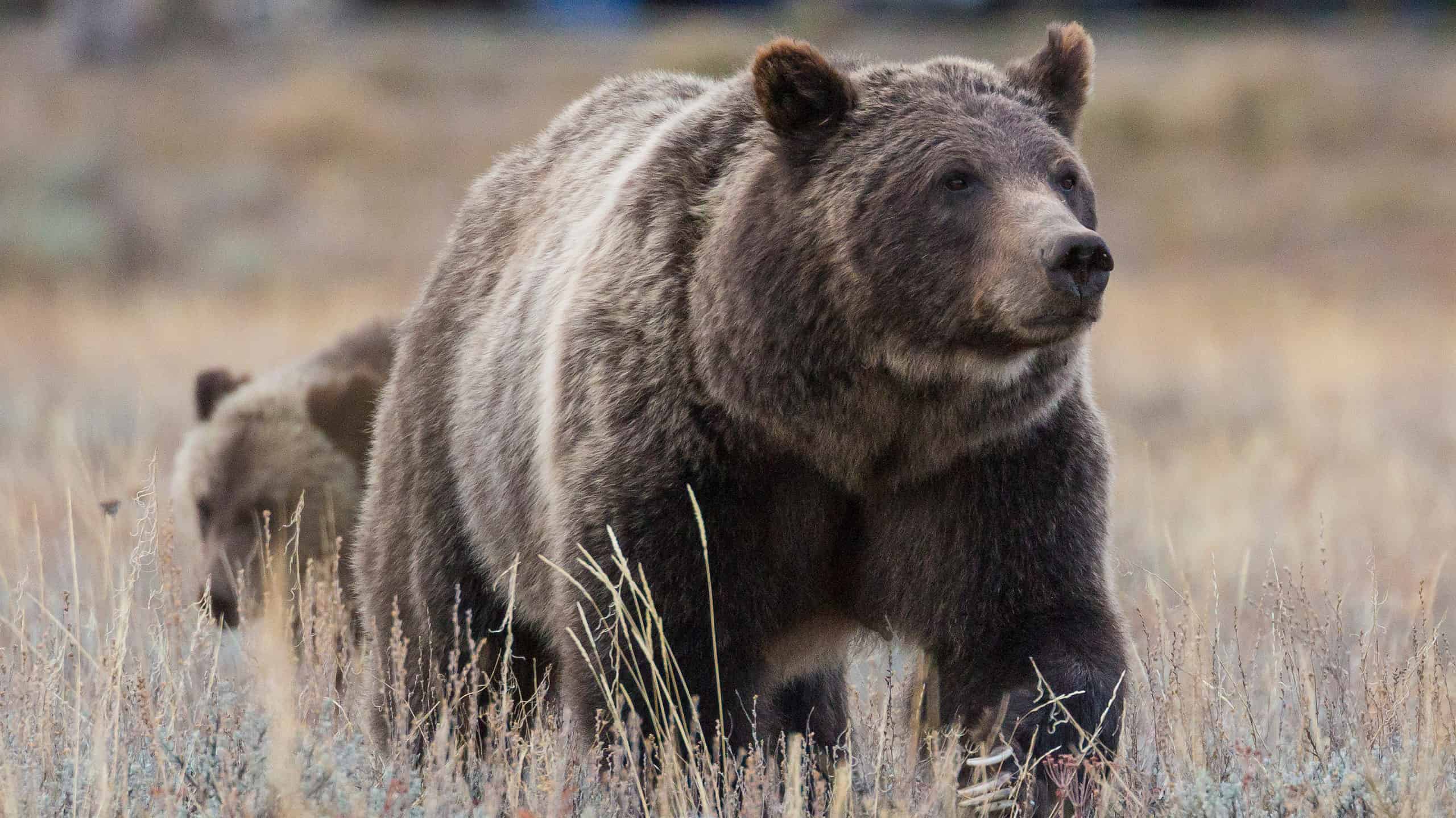
Grizzly 399 with a cub

This Grizzly and her cub are members of a subspecies of brown bear and can expect to live for 30 years.

A courting process does occur between a male and a female bear during the spring. Male bears are promiscuous and will mate with several female bears, if possible, over time. Only the largest males will mate due to because of the high level of competition. Because of this competition, female bears will also take on several partners in their lifetimes. However, during the courting and mating process, both bears became nearly inseparable. The season of breeding and mating lasts from May to early July. Females typically give birth in January and February.

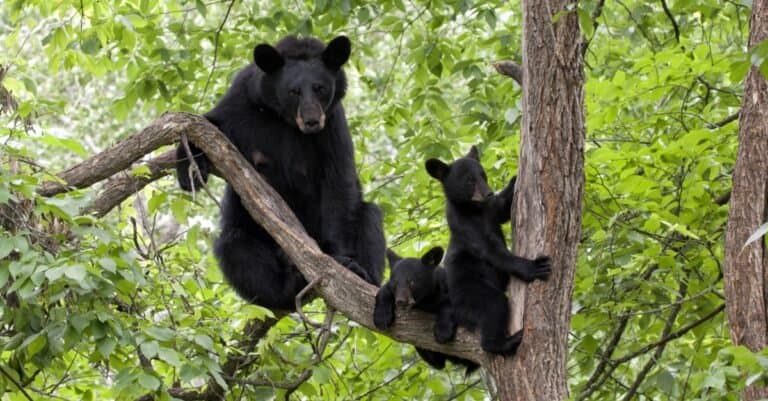
Female bears mate and experience a fertilized eggs and embryos much like humans. They will give birth to between one and six bear cubs, but usually just one to three. Mother bears are quite affectionate and protective. They will care for and den with their cubs for up to three years, often less. During this time, the cubs will feed on the mother’s milk and food gathered by their mother and themselves. When it is time to separate, the cubs do not take it well. As a result, siblings often stay together for a duration after the initial separation.

The average lifespan of each bear species varies, including:

  • Asiatic Black Bear – 25 to 30 years, Oldest on Record: 42 years
  • Brown Bear – 20 to 30 years, Oldest on Record: 40 years
  • North American Black Bear – 20 years, Oldest on Record: 39 years
  • Polar Bear – 20 to 30 years, Oldest on Record: 45 years
  • Spectacled Bear – 20 years, Oldest on Record: 37 years
  • Panda Bear – 15 to 20 years, Oldest on Record: 38 years
  • Sloth Bear – 20 years, Oldest on Record: 27 years
  • Sun Bear – 25 years, Oldest on Record: 34 years

It is important to note that most bear species live longer in captivity than in the wild. The averages listed above represent the average lifespan of a wild bear. The oldest age on record is representative of any bear regardless of being wild or captive. As bears age, their health begins to decline just as with humans, including dental health, eyesight, and an overall dulling of the senses. This decline greatly affects their quality of life and ability to survive.

More:

View all 453 animals that start with B
How to say Bear in ...
Bulgarian
Мечка
Catalan
Ós
Czech
Medvědovití
Danish
Bjørne
German
Bären
English
Bear
Spanish
Oso
Esperanto
Urso
French
Ursidés
Croatian
Medvjedi
Italian
Orso
Dutch
Beer
English
Bjørnefamilienno
English
Urs
Japanese
クマ科
Polish
Niedźwiedziowate
Portuguese
Urso
Finnish
Karhut
Swedish
Björnar
Turkish
Ayıgiller

Sources

  1. David Burnie, Dorling Kindersley (2011) Animal, The Definitive Visual Guide To The World's Wildlife / Accessed November 11, 2008
  2. Tom Jackson, Lorenz Books (2007) The World Encyclopedia Of Animals / Accessed November 11, 2008
  3. David Burnie, Kingfisher (2011) The Kingfisher Animal Encyclopedia / Accessed November 11, 2008
  4. Richard Mackay, University of California Press (2009) The Atlas Of Endangered Species / Accessed November 11, 2008
  5. David Burnie, Dorling Kindersley (2008) Illustrated Encyclopedia Of Animals / Accessed November 11, 2008
  6. Dorling Kindersley (2006) Dorling Kindersley Encyclopedia Of Animals / Accessed November 11, 2008
  7. David W. Macdonald, Oxford University Press (2010) The Encyclopedia Of Mammals / Accessed November 11, 2008

Thank you for reading! Have some feedback for us?


Bear FAQs (Frequently Asked Questions)

While this question may sound ridiculous on the surface, consider that orcas often eat moos. So, stranger things have happened in the animal kingdom! If a bear and shark met, it’s likely the shark would have the advantage. Bears will hunt salmon in the water, but they’re ill-adapted for battling an apex predator of the seas.