



Quick Take
- Despite its name, the blue whale isn't actually blue, and the real reason behind its color is stranger than you'd expect. See the real coloring →
- The world's largest animal may have been named as a joke, and the evidence is a 300-year-old pun hidden in its scientific name. Uncover the naming pun →
- Its sheer size does not make it invincible. A specific predator has been documented killing full-grown adults in coordinated attacks. Meet the killer predator →
- A blue whale calf consumes an almost unbelievable daily quantity of milk, a number that reframes what 'fast growth' really means. See the calf's milk intake →
The blue whale is the largest animal on Earth and likely the largest animal ever to have lived. While this ocean mammoth is dubbed “blue,” its color is more a reflection of the water it swims in — its skin is actually gray.

Classification
The blue whale is a type of baleen whale that, depending on the time of year, is found in the world’s oceans. Its scientific name is Balaenoptera musculus. Translated, Balaenoptera means ‘winged whale,’ while musculus could mean ‘muscle’ or a diminutive form of ‘mouse’ — possibly a pun by Carl Linnaeus.
Anatomy and Appearance
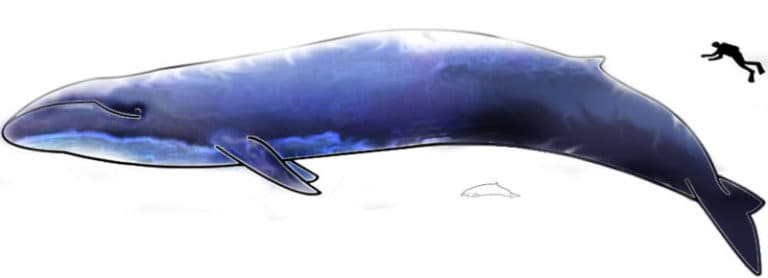
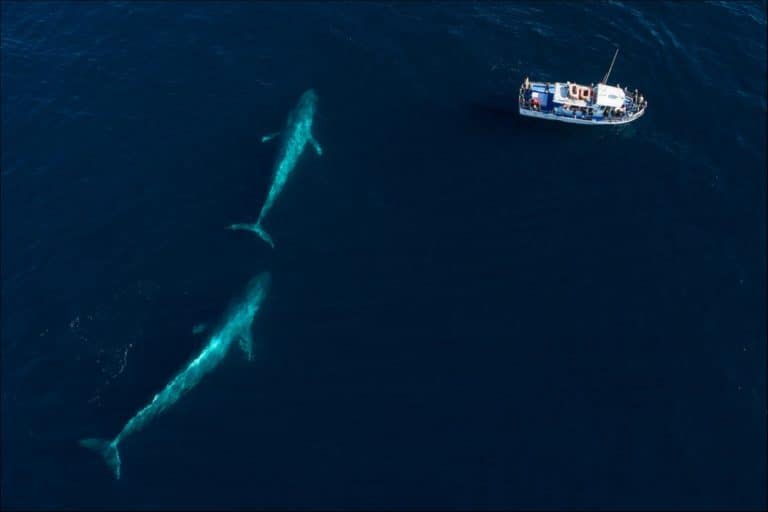
In terms of length, blue whales have often been compared to three school buses lined up back to back. These whales measure 90 to 100 feet long and are estimated to weigh up to 330,000 pounds (150 to 200 tons). Even their inner organs are weighty. The heart of a blue whale can weigh up to 400 pounds, while its tongue can weigh 5,400 pounds, which is more than the average weight of an adult female elephant.
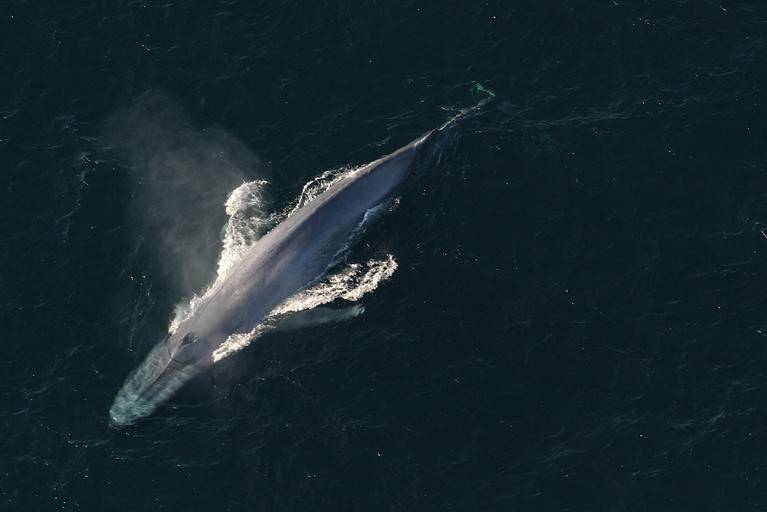
Blue whales have sleek, streamlined bodies to aid in their navigation through the ocean. Their smooth skin is a mottled gray-blue color, while their underbellies can have a yellowish tint due to microorganisms living on their skin, giving them a “sulfur bottom” appearance. They have two blowholes on top of their heads used to expel air and water vapor in a powerful, visible spout when they come to the surface to breathe. Water shooting from the spout can reach as high as 30 feet in the air! Watch a blue whale blow water in the video below:
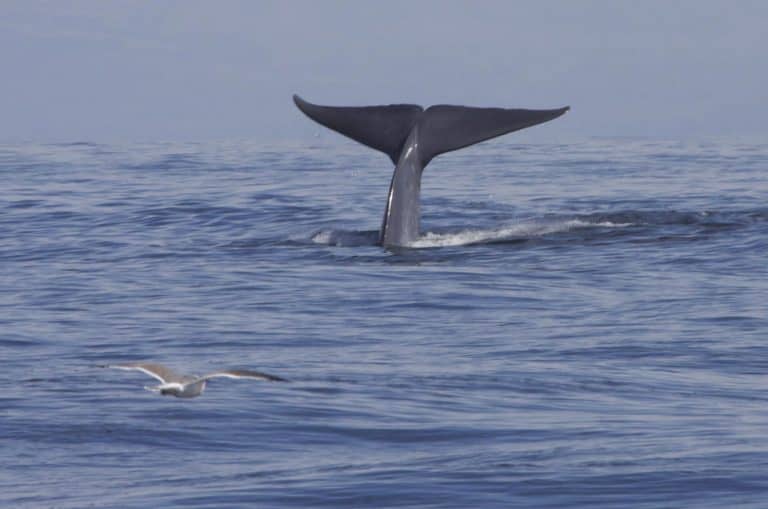
The blue whale possesses a small dorsal fin near the rear of its body and pectoral flippers (up to 10 feet long) to aid its maneuvering. It relies heavily on its enormous rubbery tail, or fluke, which provides it with power and stability and helps to propel the massive creature through the ocean. Blue whales also use their flukes to make powerful dives to depths of more than 300 meters (1,000 feet).
Evolution and History
The blue whale is found throughout the world’s oceans, except for the Arctic. It is thought to be the most enormous creature to have ever existed. It is the largest alive today.
The blue whale diverged from other Balaenopteridae (including fin and northern minke whales) between 5 and 10 million years ago, and the oldest fossil representing something similar to today’s blue whale dates back almost 2 million years.
Distribution and Habitat
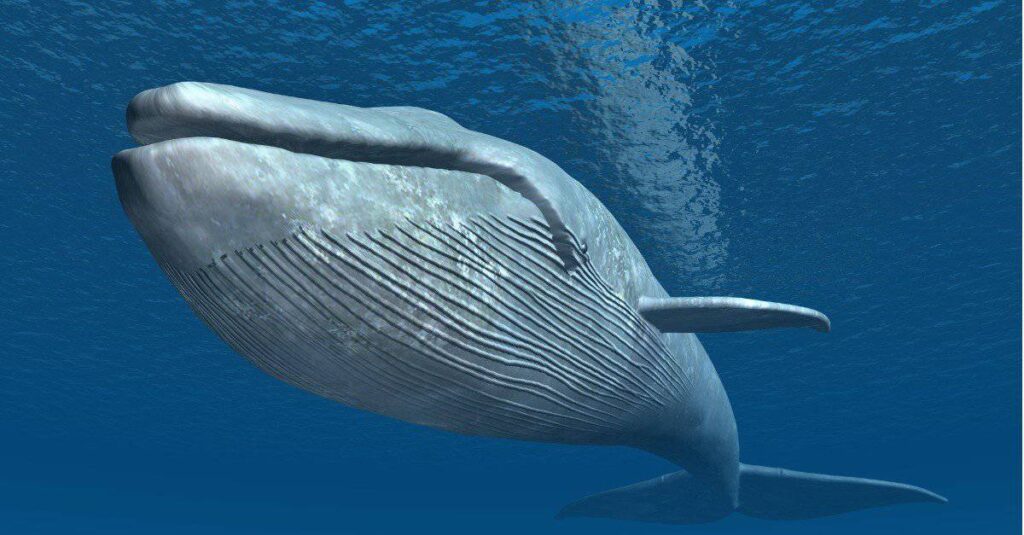
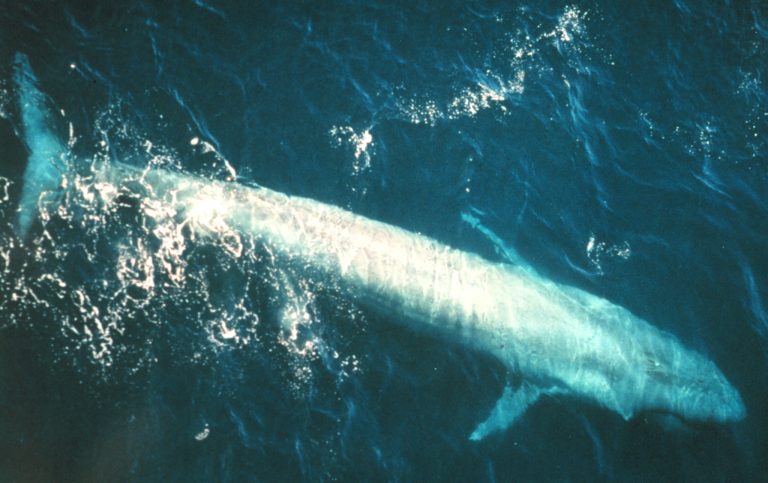
The blue whale has an enormously long body that is slim and narrow, helping it easily cut through the water.
©iStock.com/MR1805
Found in oceans worldwide, blue whales are migratory creatures that spend their summers in more frigid waters where food is plentiful. They relocate to warmer oceanic areas to breed. The migratory patterns of blue whales are generally less well understood and seem more unpredictable than those of other baleen whales, even skipping migration some years.
Behavior and Lifestyle
Blue whales are primarily solitary animals. They sometimes gather in groups to feed, breed, or when mothers are with their young.
Blue whales are known for using a variety of sounds — including hums, squeaks, and rumbles (collectively known as songs) — to communicate with one another, particularly during the breeding season in winter. These gigantic mammals also produce some of the loudest sounds on Earth. In fact, by reaching volumes of up to 188 decibels, they make the loudest sound of any animal on Earth.
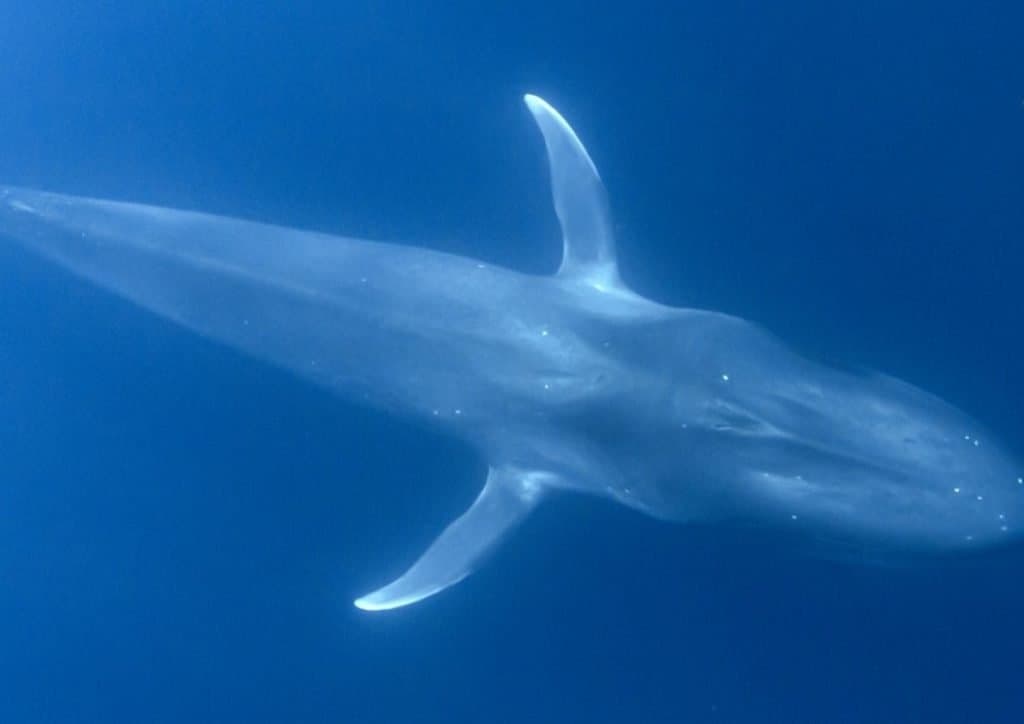
Blue whales feed in frigid waters and migrate to warmer areas to reproduce.
©Rich Carey/Shutterstock.com
Reproduction and Life Cycles
Blue whales breed in the warmer, tropical waters during the winter or early spring. After a gestation period that lasts nearly a year, the female blue whale gives birth to a single calf upon returning to the breeding region. Female blue whales feed heavily in the summer because they largely refrain from eating when nursing their young.
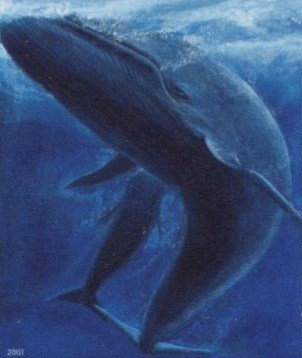
Blue whale calves are born measuring around 23 feet in length and weighing approximately 5,000 to 6,000 pounds. They remain by their mother’s side for at least their first year. Up to the time they are weaned at 8 months old, blue whale calves are known to consume up to 198 pounds of milk daily. Blue whales can start reproducing when they are between 10 and 15 years old, with females giving birth every 2 to 3 years. Blue whales can live for up to 40 years.
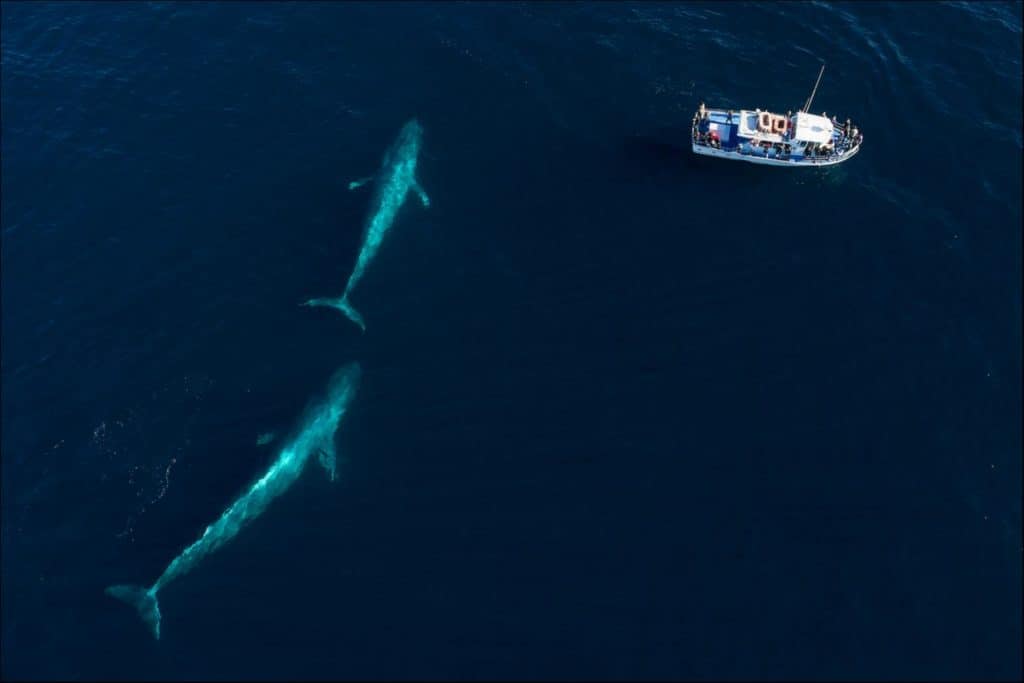
Blue whales can start reproducing between 10 and 15 years old, with females giving birth every 2 or 3 years.
©Chase Dekker/Shutterstock.com
Diet and Prey
The blue whale is a carnivorous animal that doesn’t have proper teeth. Instead, it has baleen plates in its mouth to help it filter and feed on small prey. Its diet mainly consists of krill and small crustaceans, along with the occasional small fish. To feed, a blue whale swims up toward a shoal of prey as the pleats in its neck allow its throat to expand. It will take an enormous gulp of water into the sac created in its lower jaw and shut its mouth. Then, the whale expels the water while retaining thousands of tiny creatures in its fine baleen plates. It finally swallows to consume the krill.
Blue whales can consume over six tons of prey daily in their summer feeding grounds. Although they eat a lot during the summer, they barely eat anything when they migrate to warmer waters for winter breeding.
Predators and Threats
While you may imagine that blue whales have no real ocean predators due to their enormous size, they are at risk from killer whales (orcas). While juvenile blue whales are at high risk of attacks, killer whales have also been documented as having killed full-grown blue whales. Orcas hunt in groups and are capable of launching coordinated attacks on blue whales, where they bite their body parts and ram them mercilessly. Once the attack is successful, killer whales will devour the carcass.
Another serious threat to blue whales has been humans. In the ages preceding the rise of the whaling industry, humans could only obtain blue whale meat and blubber when a beaching occurred. As whaling technology improved, hunters were able to pursue blue whales in the open oceans. Up until the 1960s, blue whales were commercially hunted into scarcity for products refined from their meat and blubber.
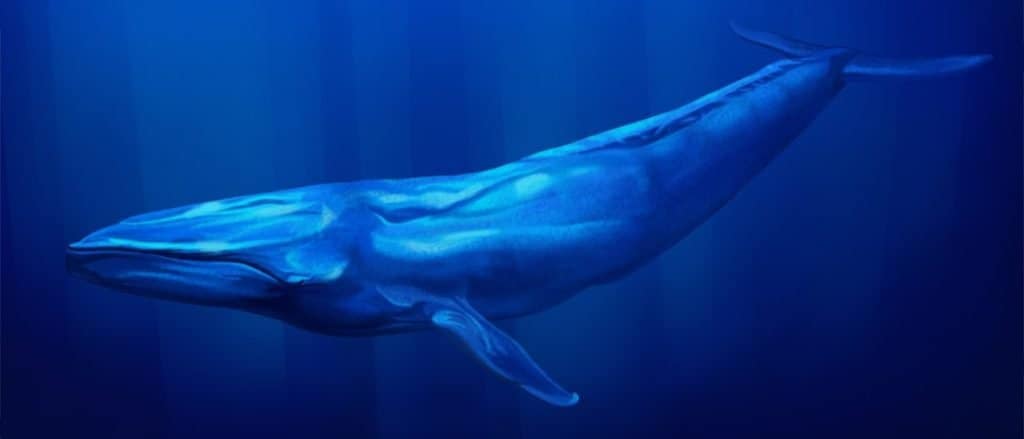
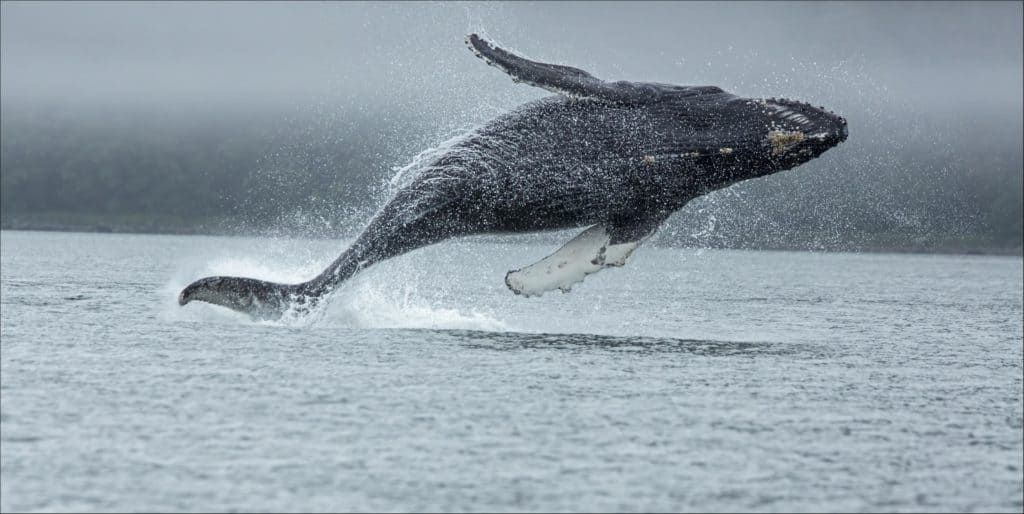
The blue whale is the largest on Earth.
©Atomic Roderick/Shutterstock.com
Conservation
In the last 80 years, the relationship between humans and the blue whale has changed drastically, as 1978 saw the end of intentional blue whale hunting. Because of overhunting, the blue whale population has dropped from what biologists estimate was 200,000 in the 1800s to approximately 20,000 today. They are listed as endangered by the IUCN. Their greatest threat today is global warming.
Blue Whale Pictures
View all of our Blue Whale pictures in the gallery.

T. Bjornstad (TBjornstad) / Public domain, from Wikimedia Commons, the free media repository
How to say Blue Whale in ...
Sources
- David Burnie, Dorling Kindersley Animal, The Definitive Visual Guide To The World's Wildlife / Accessed November 10, 2008
- Tom Jackson, Lorenz Books The World Encyclopedia Of Animals / Accessed November 10, 2008
- David Burnie, Kingfisher The Kingfisher Animal Encyclopedia / Accessed November 10, 2008
- Richard Mackay, University of California Press The Atlas Of Endangered Species / Accessed November 10, 2008
- David Burnie, Dorling Kindersley Illustrated Encyclopedia Of Animals / Accessed November 10, 2008
- Dorling Kindersley Dorling Kindersley Encyclopedia Of Animals / Accessed November 10, 2008
- David W. Macdonald, Oxford University Press The Encyclopedia Of Mammals / Accessed November 10, 2008
- Blue Whale Facts / Accessed November 10, 2008
- Blue Whale Information / Accessed November 10, 2008