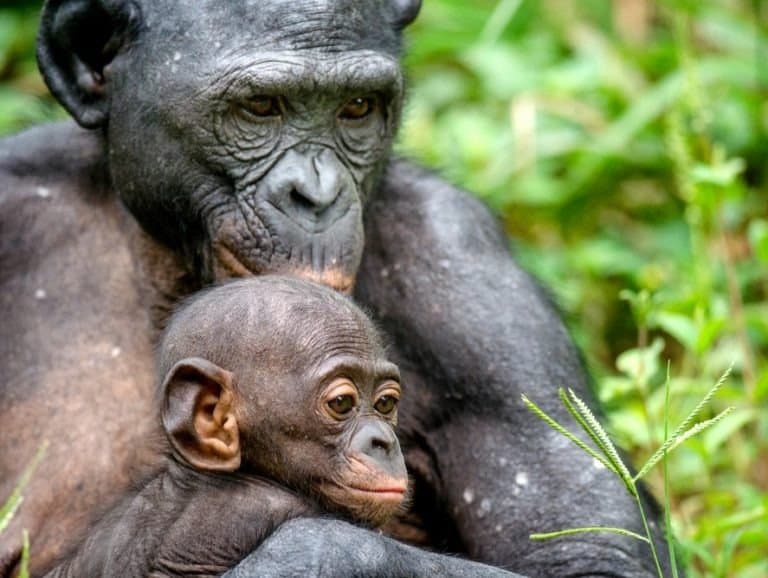
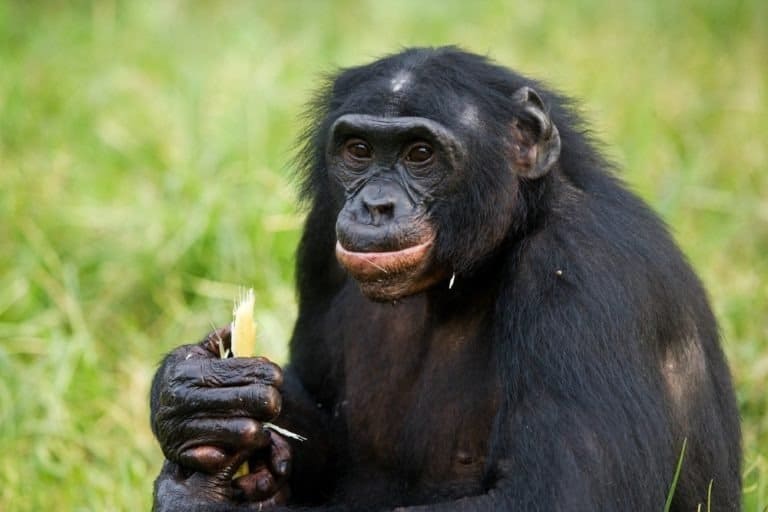










Bonobos, first discovered in the 1920s, were originally referred to as the pygmy Chimpanzee.
In fact, these great apes were not classified as their own species, separate from the common chimpanzee, until 1954. While like the chimpanzee, this species has a flatter and smaller head, longer legs, and a slender body.
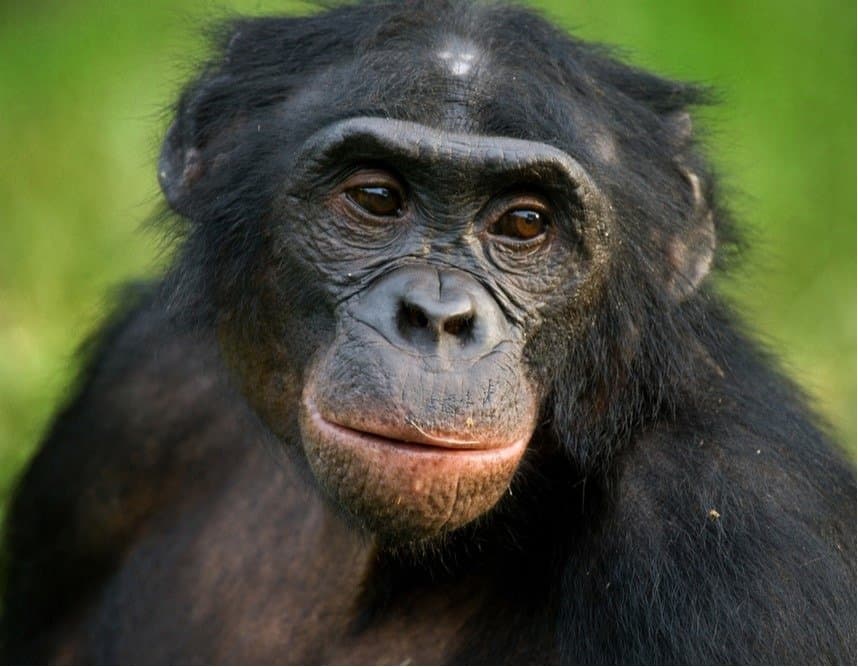
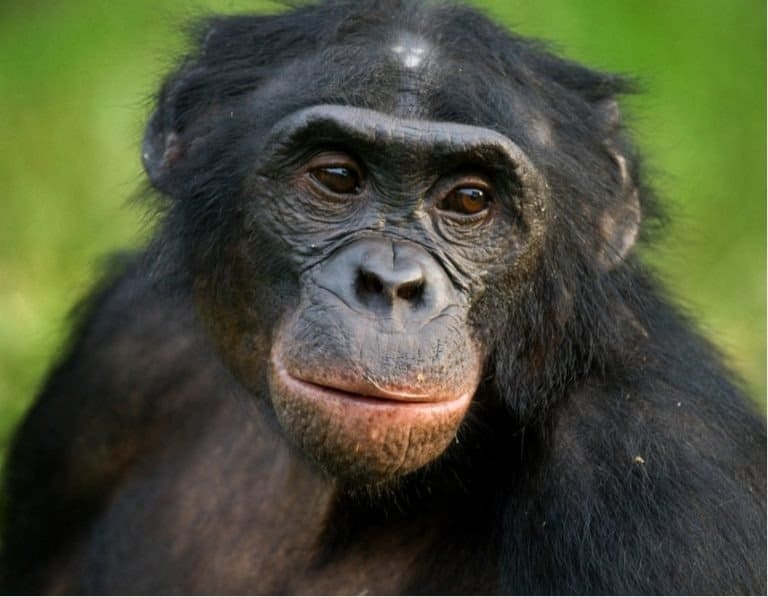
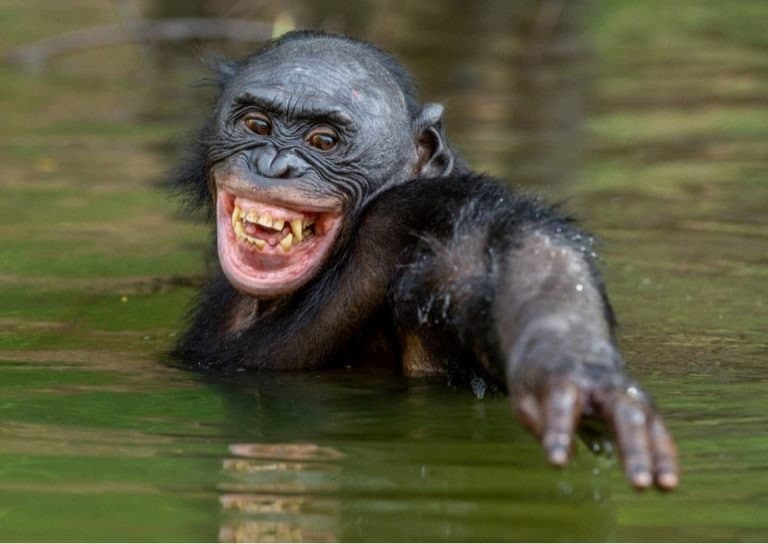
The bonobo is an animal that generally features dark brown or black fur and whiskers that hide its ears. The Bonobo has pink or red lips and 32 teeth. Its fur may turn silvery gray in older members of the colony. One of its most distinctive features is a tail tuft that the Bonobo keeps throughout its adult life.
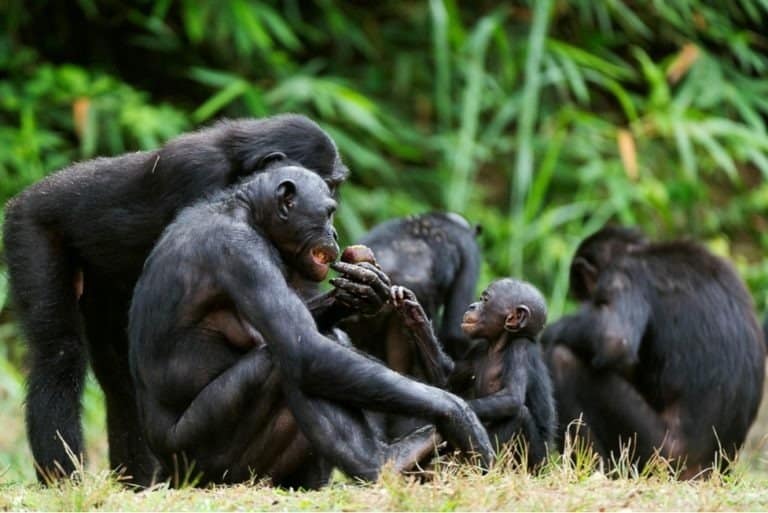
This species generally lives in a matriarchal society of up to 100 individual apes. Male offspring typically stay with their mothers throughout their lives. Female Bonobos reach sexual maturity around 12 years of age and will then seek out a mate to form their own subgroup within the colony.
Deforestation and poaching have severely impacted the Bonobo population in central Africa. As of 2020, only between 10,000 and 50.000 of these apes are known to exist in the wild. These numbers are expected to dwindle even further as humans destroy more and more of their natural habitat.
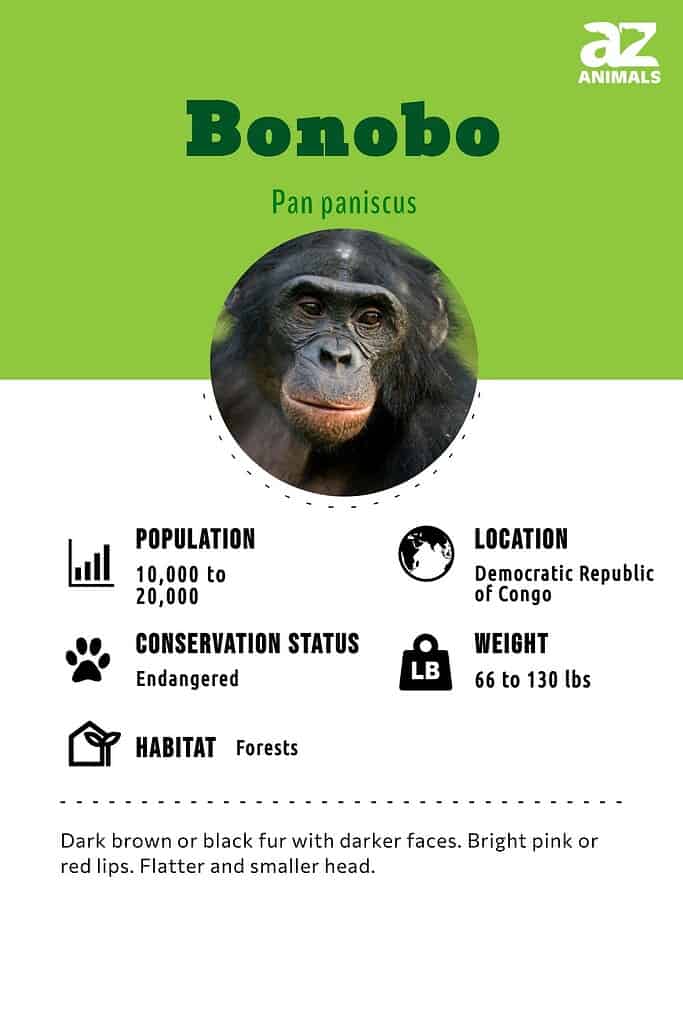
5 Incredible Bonobos Facts!
- Share 98.7% of their genome with humans, which makes them one of our closest living relatives.
- First discovered in 1929 and did not become a separate species until the 1950s.
- One of two species in the Pan genus along with the common Chimpanzee.
- Can jump up to 27.5 inches into the air, while the average human has a 16-to-24-inch vertical jump.
- Use the same sound or call to mean different things depending upon the context or situation.
Scientific Name
The Bonobo’s scientific name is Pan paniscus. It is one of only two living species in the Pan genus. The other species is the common Chimpanzee or Pan troglodytes.
Evolution And History
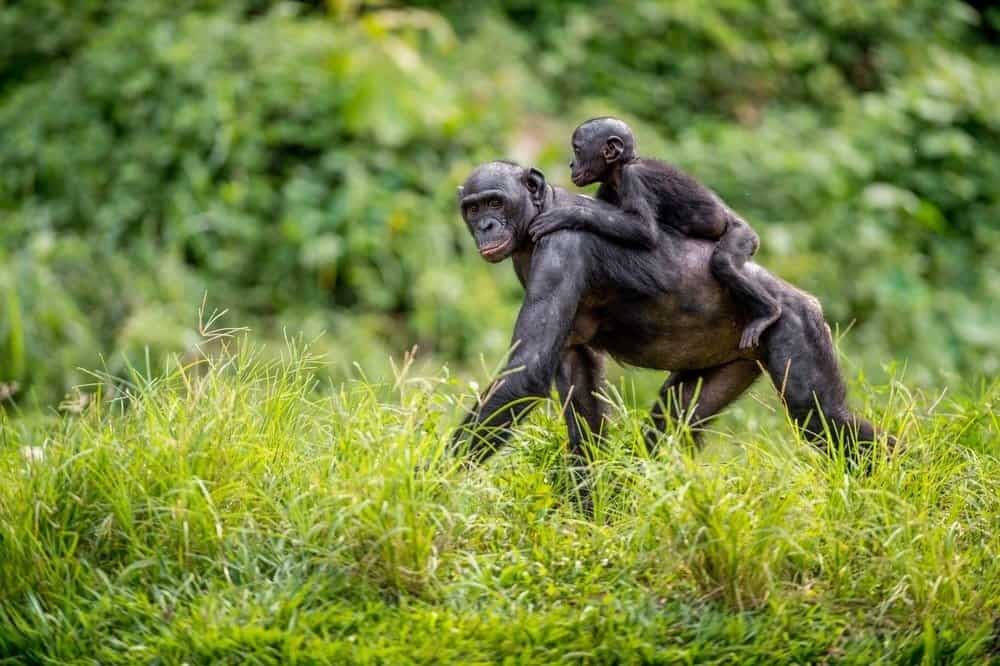
Originally thought to be a chimpanzee, the bonobo is a separate species.
©Sergey Uryadnikov/Shutterstock.com
The closest living relative of humans, the bonobo, along with the chimpanzee, both evolved from the same common ancestor of apes around 1 to 2 million years ago. It is speculated that due to the formation of the Congo River, where these great ape relatives reside, both of these primate species were separated, which created the 2 species.
The bonobo was originally thought to be a chimpanzee and was called a pygmy chimpanzee but they are actually very different based on numerous traits, characteristics, and appearances.
Appearance And Behavior

Bonobos are overall a peaceful group and show altruistic tendencies with others of the species.
©User: Kabir, CC BY-SA 2.5, via Wikimedia Commons – Original / License
Bonobos, or pygmy chimpanzees, are animals with dark brown or black fur with darker faces. Their lips are bright pink or red, which gives them a distinct look. The Bonobo’s head is generally flatter and smaller than other great apes.
They stand between 28 and 35 inches and can weigh anywhere between 65 and 85 pounds. They are known for their long legs and for the fact that they keep their tail tufts even as adults.
Bonobos overall act peacefully in the wild. They have been recorded as showing altruistic tendencies and a willingness to share food, shelter, and necessities with other Bonobos. They also display compassion and empathy for wounded members of their communities.
Bonobos are also highly intelligent. Their communication includes a series of sounds that other apes must translate based on their current surroundings. Indeed, the same sounds can mean many different things depending on the context. They also use hand gestures to convey meaning and there are examples of Bonobos using these signals to communicate with humans.
Unlike most great ape species, the Bonobos live in a matriarchal society where a select group of elder females has the final say on where the group travels, when they eat, and other important decisions. Despite the maternal-centric nature of their culture, each community does typically have one alpha male that protects the group, leads foraging parties, and helps to determine when, where, and what to eat.
This alpha male can and does eat with the elder females. However, the other males will wait to eat until the matriarchs are finished. Interestingly, a male Bonobo often derives his status based on his mother’s position and standing in the hierarchy. As a result, the son of an elder female could outrank a young female Bonobo.
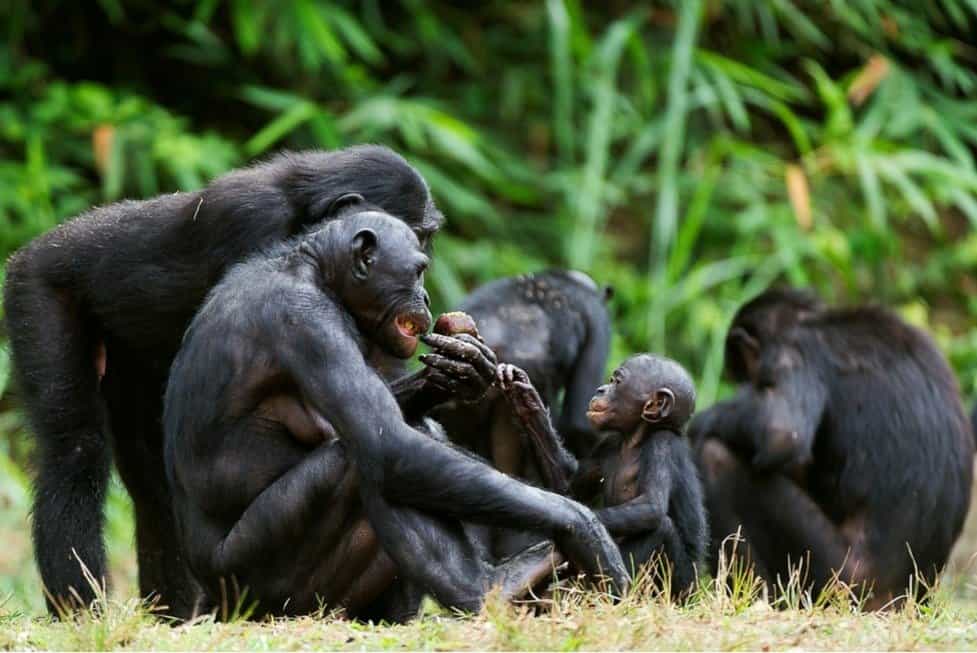
Bonobos live in a matriarchal society.
©Sergey Uryadnikov/Shutterstock.com
Bonobo Vs. Chimpanzee
Overall, Bonobos are remarkably like the common Chimpanzee. Both animals share 98.7% of their DNA with humans and they display some of the same social activities. For example, sexual activities are a critical component of the social interactions of both chimpanzees and Bonobos. Both monkeys use these activities to introduce themselves, reduce tension, and resolve conflict.
Despite these similarities, there are several physical and behavioral differences between the two species within the Pan genus. Full-grown male Chimpanzees are generally larger and bulkier than their Bonobo counterparts. Male chimps can grow as large as 154 pounds and stand up to 5.5 feet tall. Bonobos range in height between 28 and 35 inches and weigh between 65 and 85 pounds.
There are also significant behavior differences between the chimp and the Bonobo. Chimpanzees will actively go out in groups to hunt for meat. Bonobos subsist primarily on fruits, seeds, and other vegetation in their environment.
They will only eat meat when a small mammal, such as a rodent, is readily available. Even then, Bonobos do not use hunting parties. Instead, individual males may catch and bring back squirrels, small antelopes, or other vertebrates.
Chimpanzees have a much more rigid communal hierarchy than Bonobos do. In a group of chimps, there is one alpha male that leads everyone else. His offspring outrank other males and females in the group. Overall, the structure is very linear.
In contrast, Bonobos follow a matriarchy where males derive their position primarily from their mother’s status and relationships with the other elder females. Like chimps, they do have one alpha male that is responsible for protecting the group, but the elder females have significant input on where the community travels, what they eat, and when they eat.
The Bonobo alpha male generally tolerates other males well because he often does not know which juveniles are his direct offspring. Due to the promiscuous nature of this species, the mothers primarily raise the young and the males help to provide food for all infants and younger members of the community.
Habitat
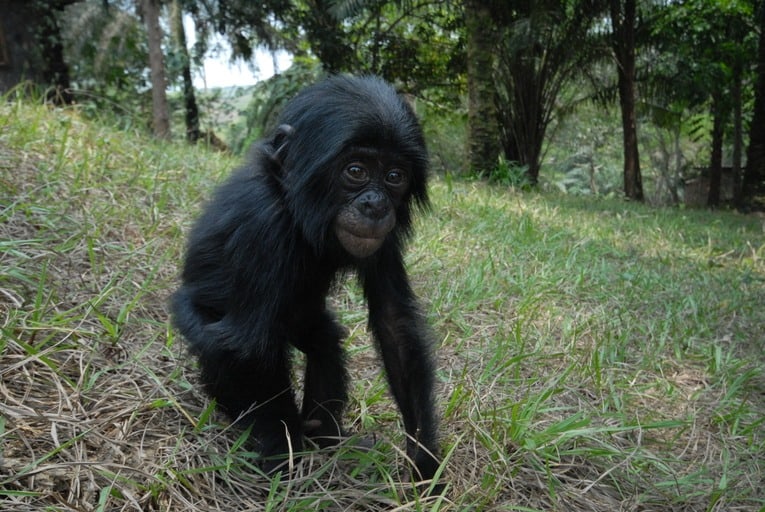
Bonobos are only found in the Democratic Republic of Congo.
©Pierre Fidenci / Creative Commons – Original
Unlike other ape species, Bonobos are mainly found in one area of central Africa. They call the jungle forests between the Congo and Kasai rivers home. As a result, they are native to the region known as the Democratic Republic of Congo.
Diet
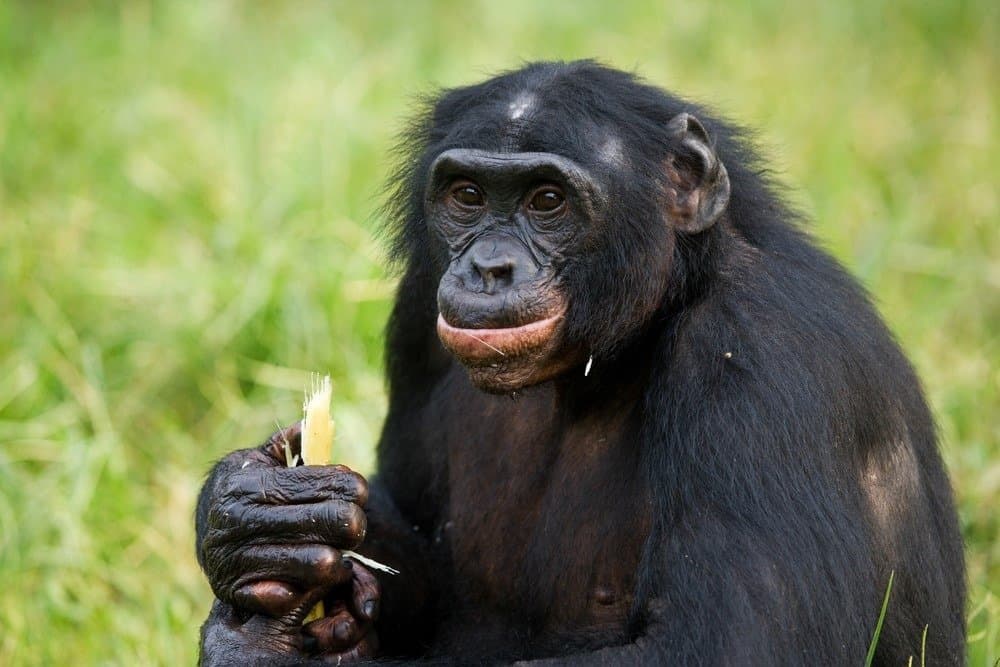
The bonobo has a diet that is primarily made of fruit and vegetation.
©GUDKOV ANDREY/Shutterstock.com
Bonobos subsist primarily on fruits. Figs, custard apples, berries, and other local African fruits make up about 60% of this primate’s diet. They have also been known to eat honey, eggs, seeds, and other vegetation found in the surrounding jungle.
Unlike Chimpanzees, Bonobos do not specifically go out hunting for meat. However, they do eat forest antelopes, called duikers, flying squirrels, and other rodents. On some occasions, Bonobos will eat smaller monkeys and there have been instances of cannibalism in captive Bonobo colonies.
Predators And Threats
Human poaching and deforestation activities are the single biggest threats to the Bonobo’s survival. While these monkeys have been known to spend time walking on all fours, they spend most of their time up in trees. Continued loss of its habitat as humans expand further into the jungle between the Congo and Kasai rivers in central Africa is likely to cause further declines in this great ape’s population.
Given that they are found only in one area between two rivers,
crocodiles are also a serious predator of the Bonobo species.
Reproduction, Babies, And Lifespan
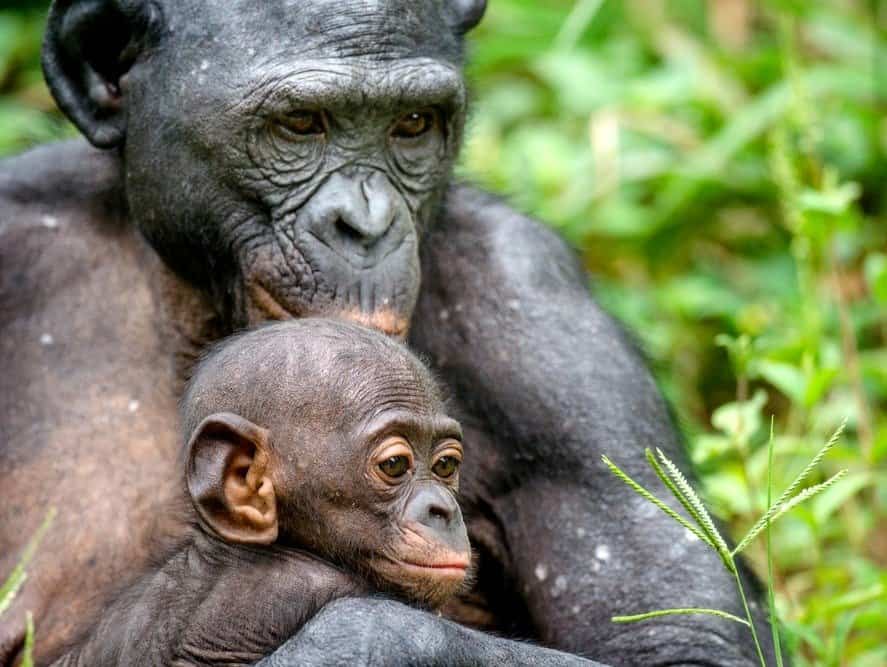
A baby bonobo will wean for 5 to 6 years.
©Sergey Uryadnikov/Shutterstock.com
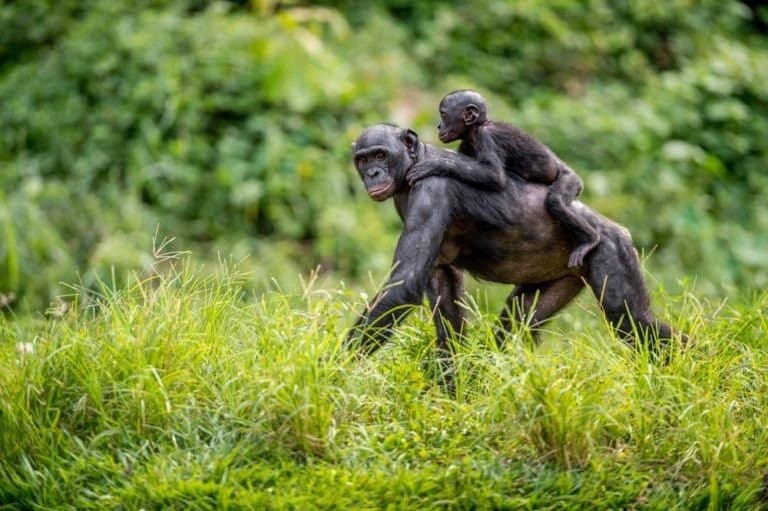
Female Bonobos reach sexual maturity at 12 years of age. At that time, they will leave their mother’s group and seek their own mates. Each female typically has one baby every four to five years. As a result, a single female can have between five and seven offspring during their lifetime.
The Bonobo’s gestation period is normally between 230 and 240 days, or eight months. Weaning typically takes 5 to 6 years for both male and female offspring. A mother’s male progeny will typically stay with them for their entire lives, which can be up to 40 years or more.
Population
The overall number of Bonobos in the wild is hard to estimate given the remote area in which this great ape lives. However, most experts place the total population between 10,000 and 20,000 worldwide. Outside of zoos, bonobos are only found in one forest region in Africa’s Democratic Republic of the Congo
Bonobos In The Zoo
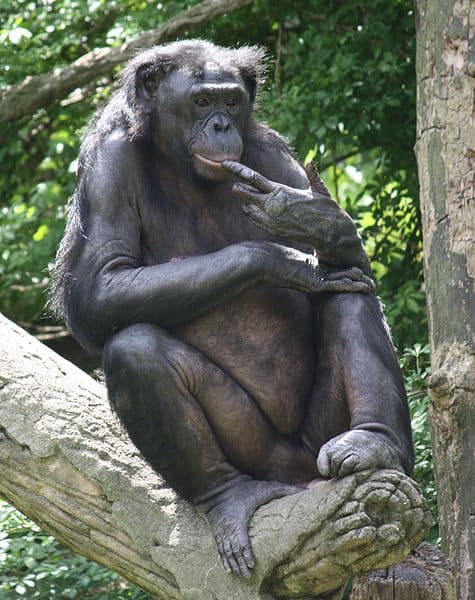
Bonobo (Pan paniscus) at Cincinnati Zoo
©Ltshears / Creative Commons – Original
While Bonobos are generally peaceful in the wild, their behavior changes when kept in captivity. Bonobo colonies in zoos are still matriarchal societies, but the female primates become much more food aggressive than they are in the wild.
In the wild, females are known to share their food and generally have no problem with asking male monkeys for food if they get to it before the matriarchs do. However, in a zoo setting, the matriarch will insist on eating first and will not allow male monkeys to take food until the females are finished. In fact, there have been instances of females maiming or otherwise mutilating males over food in captive groups.
Bonobo Pictures
View all of our Bonobo pictures in the gallery.

GUDKOV ANDREY/Shutterstock.com
How to say Bonobo in ...
Sources
- Wikipedia / Accessed December 23, 2020
- WWF / Accessed December 23, 2020
- Study / Accessed December 23, 2020
- Britannica / Accessed December 23, 2020