






B
Species Profile

Boxer Dog

Canis lupus familiaris

Square-jawed athlete, big-hearted clown
Eudyptula/Shutterstock.com

Boxer Dog Distribution

Click a location to explore more animals from that region

Origin Location

This map shows the native origin of the Boxer Dog. As a domesticated species, they are now found worldwide.

Loading map...

Found in 1 country

Size Comparison

Human 5'8"
Boxer Dog 1 ft 11 in

Boxer Dog stands at 34% of average human height.

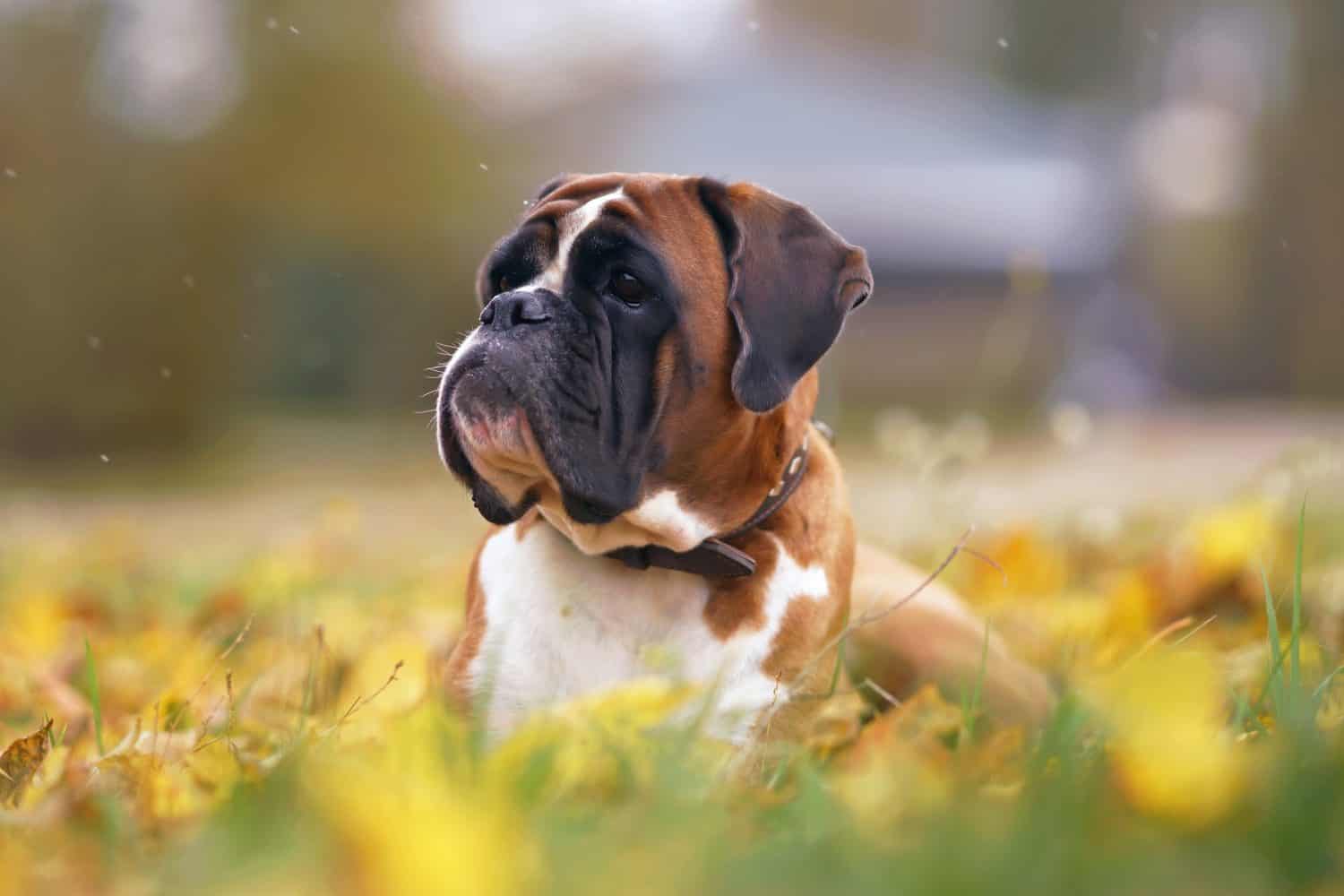
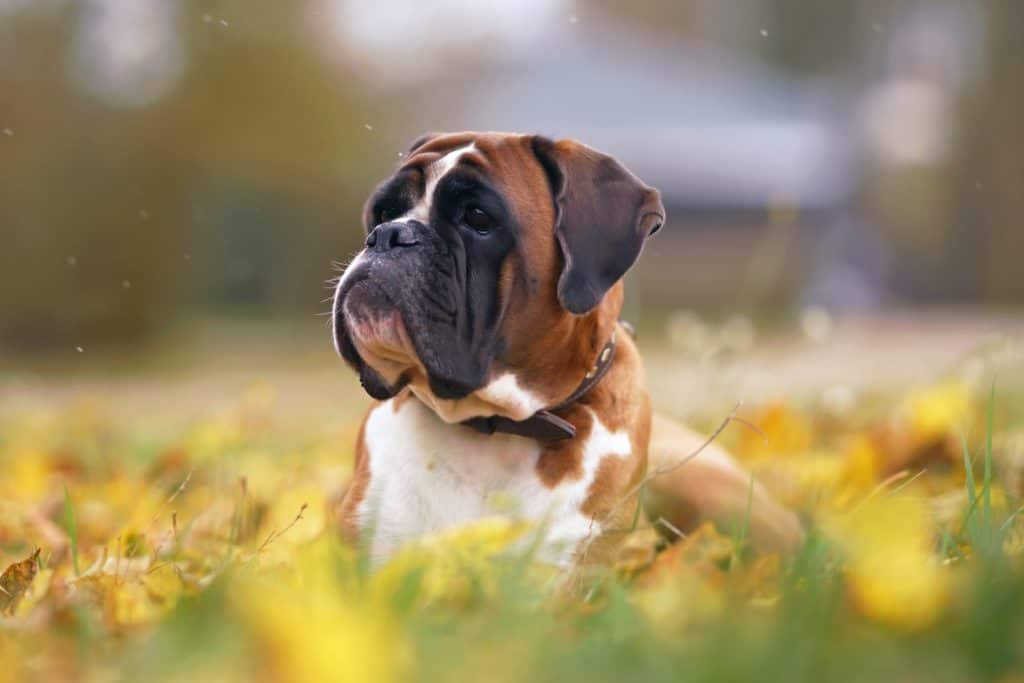
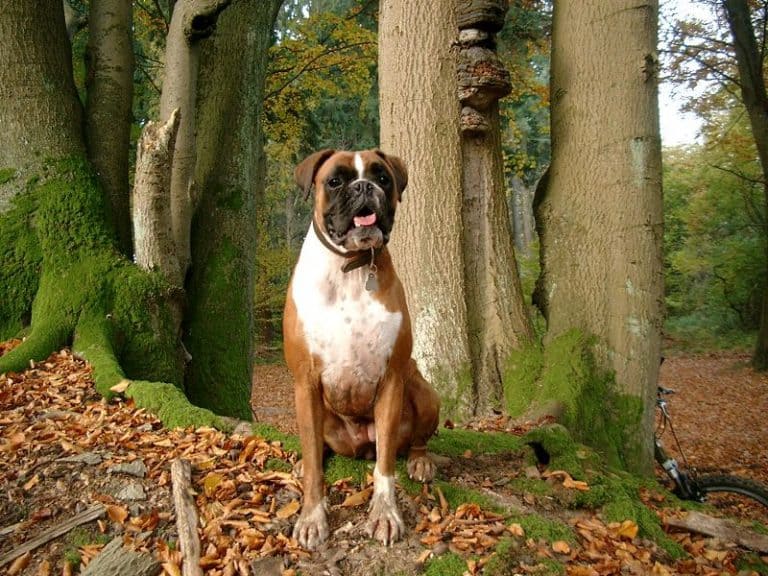
Adorable fawn and white Boxer dog with a brown leather collar posing outdoors lying down in a green grass with fallen yellow maple leaves in autumn

At a Glance

Domesticated
Also Known As Deutscher Boxer, Boxerhund, Bóxer, Bokser, Boxeur
Diet Omnivore
Activity Diurnal+
Lifespan 4 years
Weight 32 lbs
Status Not Evaluated
Did You Know?

The name "Boxer" likely comes from the breed's habit of using its front paws to spar during play.

Scientific Classification

The Boxer is a medium-to-large domestic dog breed developed in Germany, known for a muscular build, short coat, and characteristic square muzzle. As a domesticated breed, it falls under the domestic dog, typically treated as Canis lupus familiaris (often regarded as a form of the gray wolf, Canis lupus).

Kingdom
Animalia
Phylum
Chordata
Class
Mammalia
Order
Carnivora
Family
Canidae
Genus
Canis
Species
Canis lupus

Distinguishing Features

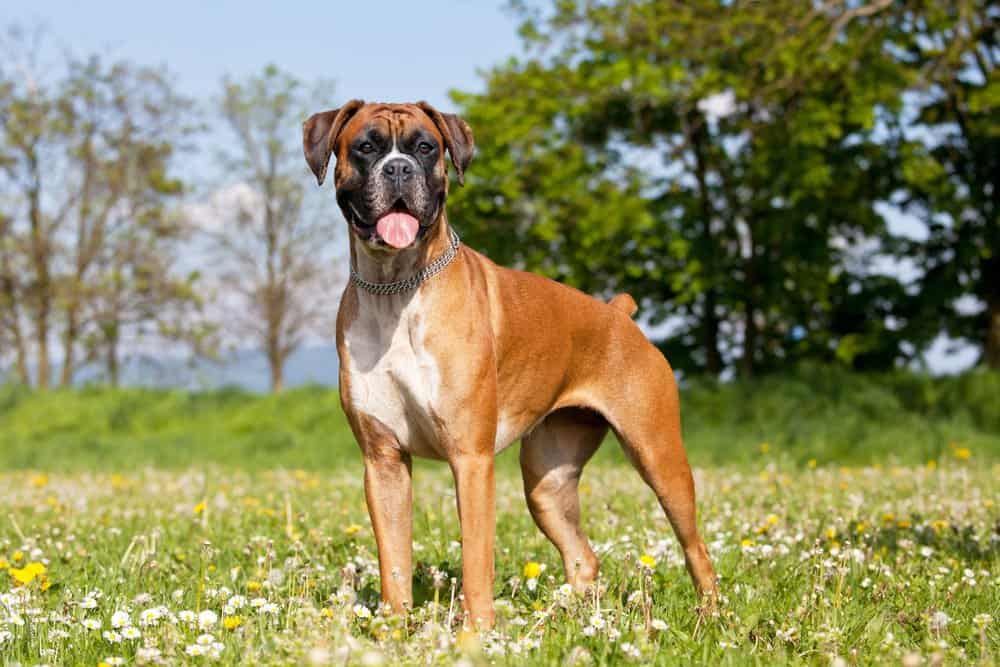
  • Medium-to-large, athletic, muscular build with deep chest
  • Short, smooth coat; common colors fawn and brindle, often with white markings
  • Broad, square head; relatively short muzzle (brachycephalic tendency)
  • Typically docked tail/cropped ears in some regions historically (practice varies/regulated)
  • Energetic temperament; often used historically as working/guard dogs and as companions

Physical Measurements

Males and females differ in size

Height
1 ft 12 in (1 ft 10 in – 2 ft 1 in)
1 ft 10 in (1 ft 9 in – 1 ft 11 in)
Length
3 ft 1 in (2 ft 7 in – 3 ft 5 in)
Weight
71 lbs (66 lbs – 79 lbs)
57 lbs (51 lbs – 64 lbs)
Tail Length
11 in (10 in – 1 ft 1 in)
9 in (7 in – 12 in)
Top Speed
34 mph
Short-distance sprinter

Appearance

Primary Colors
Secondary Colors
Skin Type Short, smooth, tight-fitting coat with minimal undercoat (single-coated); skin can be relatively sensitive and prone to irritation/allergies; facial wrinkles (if present) require cleanliness to avoid dermatitis.
Distinctive Features
  • Domesticated dog breed (Canis lupus familiaris) selectively bred in Germany from mastiff-type ancestors; markedly more compact and muscular than the wild gray wolf (Canis lupus), with a shorter back and highly human-directed temperament.
  • Square, broad head with a shortened muzzle (brachycephalic tendency compared with the base species), strong undershot bite common; expressive, dark eyes and pronounced stop.
  • Deep chest, powerful shoulders and hindquarters; athletic, springy gait; medium-to-large, muscular build.
  • Short, glossy coat that sheds but is easy to groom; low coat insulation compared with double-coated canids (reduced cold tolerance).
  • Typical presentation includes a black mask and fawn or brindle coat; white socks/chest blaze are common.
  • Breed-specific trait: energetic, playful, people-oriented; often "bouncy"/clownish behavior; can be protective and alert without being a true primitive/wild-type canid.
  • Health concern: brachycephalic-related airway/heat sensitivity (risk of overheating; exercise caution in hot/humid weather and avoid overexertion).
  • Health concern: cardiac disease predisposition (notably arrhythmogenic right ventricular cardiomyopathy/"Boxer cardiomyopathy" and aortic/subaortic stenosis) requiring veterinary screening in lines at risk.
  • Health concern: increased risk of certain cancers (e.g., mast cell tumors) in the breed; monitor skin lumps and seek prompt veterinary evaluation.
  • Health concern: hip dysplasia and degenerative joint issues can occur; maintain lean body condition and appropriate exercise.
  • Health concern: allergies/atopic dermatitis and recurrent skin/ear issues can occur; dietary trials and dermatologic care may be needed.
  • Care requirement: needs consistent daily exercise and mental stimulation; thrives with training, socialization, and interactive play.
  • Care requirement: short coat needs basic brushing; regular nail/ear/dental care; keep facial folds (if present) clean and dry.
  • Care requirement: temperature management-provide shade, water, and avoid intense activity during heat; in cold climates, may need a coat for longer outings.
  • Note on appearance practices: ear cropping and tail docking have been used historically in some regions but are restricted/banned in many places; natural ears are typically floppy and tail is long when left natural.

Sexual Dimorphism

Males are typically larger, heavier, and more heavily muscled with broader heads and thicker necks; females are usually slightly smaller with a more refined build while retaining the square, athletic outline.

  • Greater overall size and mass; deeper chest and thicker neck.
  • Broader, more blocky head with more pronounced musculature and jowls.
  • Often a more imposing, stockier silhouette.
  • Slightly smaller frame and lighter bone; still athletic and squarely built.
  • Head and neck typically a bit more refined with less pronounced jowls.
  • Often appears more streamlined while maintaining breed-typical musculature.

Did You Know?

The name "Boxer" likely comes from the breed's habit of using its front paws to spar during play.

Boxers were developed in Germany from the now-extinct bull-biter hunting/holding dog and early bulldog-type dogs.

They were among the early working dogs used for police and military tasks in the early 1900s.

Most Boxers are fawn or brindle, often with white markings; their short coat sheds but is low-maintenance.

The breed is famous for "kid-like" exuberance and often stays playful well into adulthood.

A traditional hallmark was the square silhouette-deep chest, strong back, and a distinctly broad head.

Unique Adaptations

  • Athletic, muscular build suited to sprinting, jumping, and strength-based tasks compared with the base species (gray wolf), reflecting selective breeding for work and companionship.
  • Short, sleek coat and tight skin reduce grooming needs but offer less protection from cold/heat than wild canids' dense seasonal coats.
  • Brachycephalic tendency (shorter muzzle than the wolf) contributes to the breed's distinct look but can reduce heat tolerance and airway efficiency in some individuals.
  • Strong human-oriented temperament: selection emphasized cooperation, responsiveness, and family bonding more than independent hunting seen in wild canids.
  • Deep chest and powerful forequarters support explosive movement; combined with high sociability, this makes structured exercise and training especially beneficial.

Interesting Behaviors

  • Play-sparring with the front paws ("boxing"), often paired with bouncy, springy movement.
  • Lean-and-nudge affection: many Boxers press their body against people or "check in" with a paw.
  • Zoomies and burst exercise: short, intense runs followed by relaxed lounging.
  • Face-to-face social focus: they tend to watch people closely and respond strongly to engagement and training games.
  • Protective alerting: many will position themselves between family and strangers while staying socially curious when well-socialized.
  • Vocal grumbles and "talking": expressive sounds (not just barking) during play or greeting.

Cultural Significance

Boxer (dog, Canis lupus familiaris) was made in Germany and set as a breed around 1900. Once used as a guard, messenger, and police and military dog, it later became a popular family pet known for humor, loyalty, athletic, and playful, protective ways.

Myths & Legends

German breed lore traces the Boxer to the now-extinct bull-biter, famed in historical accounts for holding large game-an origin story often told as the foundation of the Boxer's courage and jaw strength.

A common traditional anecdote in Boxer circles says the breed's name was earned in taverns and courtyards where dogs "boxed" with their front paws like little prizefighters, delighting onlookers.

Early 20th-century wartime stories describe Boxers serving as messenger and guard dogs, with popular retellings celebrating their steadfast return through danger to deliver notes or find handlers.

Longstanding show and kennel tradition recounts how the breed's square outline and proud stance were intentionally preserved as a hallmark, a point of pride repeated in club histories and judging lore.

Conservation Status

NE Not Evaluated

Has not yet been evaluated against the criteria.

Population Stable

Life Cycle

Birth 6 pups
Lifespan 4 years

Lifespan

In the Wild
1–8 years
In Captivity
8–13 years

Reproduction

Mating System Polygynandry
Social Structure Managed Domestic
Breeding Pattern Transient
Fertilization Managed Selective
Birth Type Internal_fertilization

Boxer (Canis lupus familiaris): Naturally can mate with multiple partners (polygynandry) and has internal fertilization. Breeding is usually controlled by people who pick mates, with short pairings. Health risks (heart disease, cancer, brachycephaly, heat sensitivity) affect breeding care.

Behavior & Ecology

Social Pack Group: 4
Activity Diurnal, Cathemeral
Diet Omnivore Meat-forward complete-and-balanced dog food (kibble or wet) with lean animal protein (often poultry or beef).

Temperament

Highly social, people-oriented companion/guardian; typically very affectionate and seeks frequent contact and interaction.
Playful, exuberant, and often "clownish"; prolonged puppy-like behavior is common, distinguishing many Boxers from more reserved or sedate domestic-dog types.
Confident and alert; can be protective and will often place themselves between family and perceived threats-requires early socialization to prevent over-guarding or reactivity.
Boisterous energy and physicality; generally good with children when trained, but may inadvertently knock over small kids due to enthusiasm.
Trainable but can be impulsive; benefits from short, engaging sessions with consistent boundaries (reward-based methods work well).
Dog sociability varies: many are friendly, but some are selective (especially same-sex pairs) without careful management and gradual introductions.
Breed-linked care needs that shape behavior: short muzzle and athletic drive can create heat stress risk-avoid intense exercise in heat/humidity; provide cool-down breaks and water.
Boxers can have breathing problems and snoring, heart disease (including boxer cardiomyopathy, stenosis) lowering stamina, hip/cruciate issues, allergies causing irritability, and higher cancer risk. Regular checks and activity changes help.

Communication

Barking Alert/territorial, excitement, play solicitation
Growling Warning, resource guarding, rough play-context-dependent
Whining/whimpering Attention-seeking, frustration, separation distress
Grumbling/"talking" vocalizations Low rumbles during greeting or play; common in many Boxers
Panting/snorting; noisy breathing more common than in longer-muzzled dogs Can be normal for the breed but may signal airway compromise or overheating
Rich body language: play-bow, bouncy gait, exaggerated facial expressions Wrinkled brow
Leaning/pressing against people as affiliative contact; frequent pawing to solicit attention
Tail and whole-body wagging, "wiggle" greetings; may jump up without training
Mouthy play and gentle grabbing Needs early bite-inhibition training
Scent-based communication: urine marking and investigative sniffing; sniffing used to assess unfamiliar dogs/people
Eye contact and "checking in" with handlers; responds strongly to human tone and posture Domestication-linked shift vs. base wolf reliance on conspecific cues

Habitat

Biomes:
Temperate Forest Temperate Grassland Mediterranean Boreal Forest (Taiga) Tundra Alpine Desert Hot Desert Cold Savanna Wetland +4
Terrain:
Plains Hilly Plateau Valley Mountainous Coastal Island Riverine +2
Elevation: Up to 16404 ft 3 in

Ecological Role

Human-associated domestic omnivore: primarily a companion/guardian breed whose diet is provided by people; unlike the gray wolf's ecological role as a wild apex predator, the Boxer's impact is mostly indirect and dependent on human management (e.g., roaming can pressure local wildlife).

Companionship and social support to humans Property/household guarding and deterrence Assistance/working roles (e.g., service tasks, protection sports) Occasional pest deterrence when supervised Participation in human-managed ecosystems with generally low direct predation when responsibly contained

Diet Details

Main Prey:
Domestic livestock Animal by-products Opportunistic prey
Other Foods:
Cooked grains and starches Vegetables Fruits Fermentable fiber sources

Human Interaction

Domestication Status

Domesticated

Domestic dogs (Canis lupus familiaris) came from the gray wolf by long breeding for tame, social traits. The Boxer was developed in Germany late in the 1800s from bull-biting dogs and Bulldog influence, bred for a square, short muzzle, strong body, and trainable guarding work. Boxers are lively, use front paws to 'box', and face heart disease and some cancers.

Danger Level

Moderate
  • physical injury from size/strength and exuberance (knocking down children/elderly, jumping/mouthing during play)
  • bite risk typical of large dogs, increased if poorly socialized, untrained, or mishandled; guarding behavior can escalate without proper management
  • risk to humans indirectly from breed health traits: brachycephalic heat intolerance can cause emergencies during exertion/heat (owner may be injured during panicked handling or collapses in public settings)
  • liability risk in restricted housing/insurance contexts if incidents occur

As a Pet

Suitable as Pet

Legality: Boxers are usually legal to own, but they can be banned or limited by local breed-specific laws, landlord/HOA rules, or insurance policies. Check with local authorities, housing rules, and insurance companies.

Care Level: Moderate

Purchase Cost: $100 - $3,000
Lifetime Cost: $20,000 - $45,000

Economic Value

Uses:
Companion animal (family pet) Working/utility roles (guard, police/military historically; limited today) Service/therapy prospects (individual-dependent) Competitive activities (conformation, obedience, agility, protection sports) Breeding (registered lines, stud services) Pet industry spending (food, training, veterinary, insurance, grooming)
Products:
  • puppies (registered/non-registered)
  • stud services and breeding fees
  • training services (basic manners, advanced obedience, sport training)
  • veterinary services (preventive care; breed-associated cardiac/oncology/orthopedic care)
  • pet insurance policies (often sought due to higher medical risk)
  • equipment (crates, harnesses, chew enrichment, cooling/heat management gear)

Relationships

Ecological Equivalents 5

Animals that fill a similar ecological role in their ecosystem

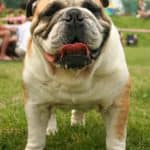
Bulldog
Bulldog Canis lupus familiaris English Bulldog. Occupies a similar human-associated niche as a companion/guardian-type dog and shares brachycephalic anatomy (though Boxers are generally more athletic). Boxer-specific care implications: higher risk of heat stress and exercise intolerance in hot, humid conditions, and a need for controlled, fitness-oriented activity to support a muscular build.
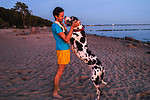
Great Dane
Great Dane Canis lupus familiaris Historically overlapped in roles as large, people-oriented guardian and estate dogs. Both are short-coated and benefit from structured training and joint-friendly conditioning. Boxer-specific distinctions: typically more compact, with higher energy and play drive, and more prone to certain cardiac conditions.
Doberman Pinscher
Doberman Pinscher Canis lupus familiaris Occupies a similar modern niche as an alert, trainable companion and protector. Boxer-specific distinctions include a more clownish, playful temperament; care often emphasizes early socialization, consistent positive training, and monitoring for breed-linked heart disease.
Belgian Malinois
Belgian Malinois Canis lupus familiaris Overlaps as an active, trainable working/utility dog requiring mental and physical enrichment. Boxer-specific distinctions: Boxers are generally less endurance-focused but still need daily exercise and engagement to prevent boredom-related behaviors.
American Pit Bull Terrier
American Pit Bull Terrier Canis lupus familiaris Similar muscular build and affinity for close human companionship. Both can be powerful jumpers and pullers, requiring leash manners and impulse control. Boxer-specific care notes: the Boxer's short muzzle and heat sensitivity warrant extra caution during intense play or exercise.

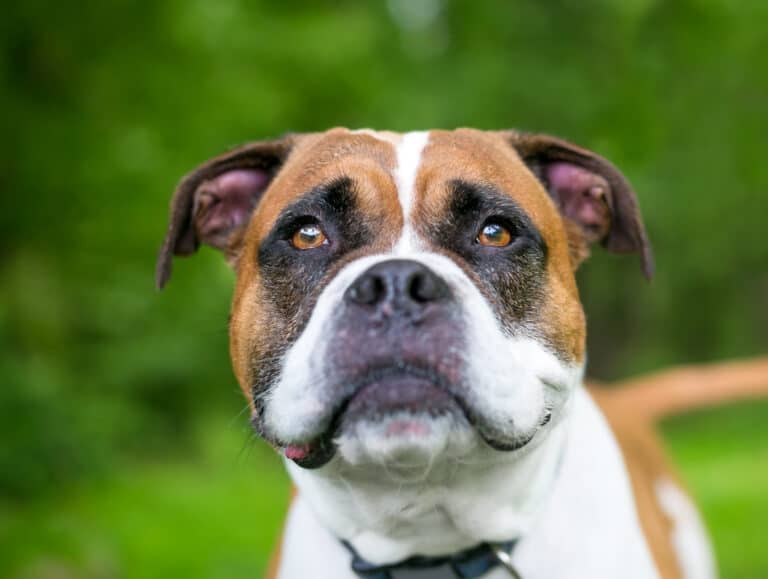
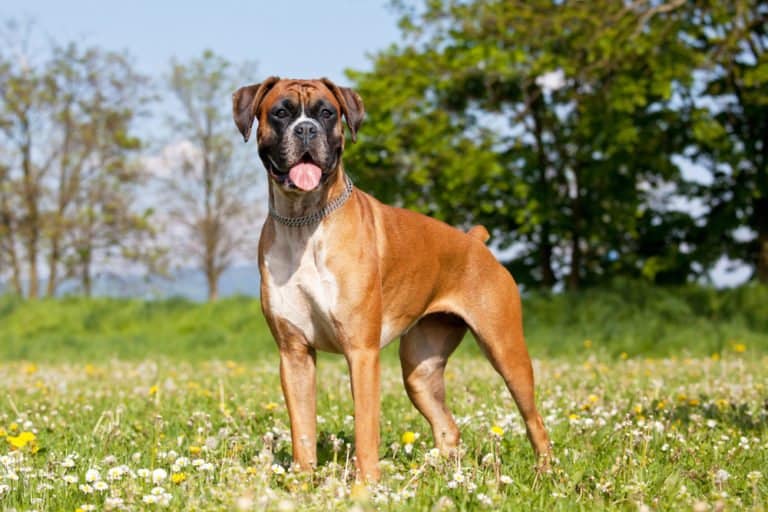
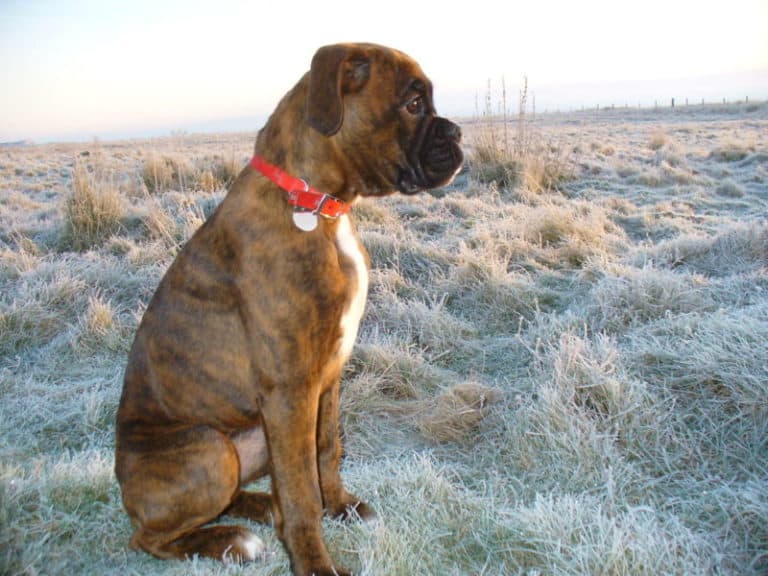
Boxers are medium to large dogs. They have short coats that are either fawn, white, or brindled in color. Some Boxers also have white markings on their coat. Their jaws are quite strong, which helps them hold on to prey.

Boxers were bred in Germany from Old English Bulldogs and Bullenbeissers (which are now extinct). The Bullenbeissers and Old English Bulldogs helped give the Boxer the distinct appearance we see today. In 1894, Friedrich Robert, Elard Konig, and R. Hopner founded the first Boxer Club in Germany.

Boxers are an intelligent breed that can be trained relatively easily. Historically, they have been used as military dogs, police dogs, and service dogs.

The Boxer is a very active and energetic dog breed. However, when they are given enough exercise, they can also be very gentle and loving, making them a great addition to a family. They were registered as a breed by the American Kennel Club in 1904. According to the American Kennel Club, Boxers were the seventh most popular dog breed in 2013.

3 Pros and Cons of Owning a Boxer

ProsCons
Playful: Boxers love to play. They would make great companion pets for older children.Not ideal for families with small children: Boxers can get pretty excited easily and may jump around playfully. This could cause an accidental injury to a smaller child.
Intelligent: Boxers are very intelligent dogs. This makes them relatively easy to train compared to some other breeds.Not great with dogs of the same sex: Boxers don’t always get along well with other dogs of the same sex.
Easy to Groom: Boxers don’t shed very much, and their short hair is easy to maintain by brushing it just a few times each week.High activity needs: Boxers need plenty of opportunities for exercise. This is not a good breed to get if you won’t be able to meet these needs.
Boxer Dog in grass

Boxers originated in Germany in the late 19th and early 20th centuries.

History and Origins

The Boxer’s history can be traced back to the war dogs of the Assyrian empire 2,500 years ago. However, the modern version of the Boxer originated in Germany in the late 19th and early 20th centuries. German dog fanciers selectively bred down a heavier German breed, known as the Bullenbeisser (“bull biter”), to create the Boxer we know today.

During the medieval period, German noblemen used the Bullenbeisser to help them hunt large animals like bears, bison, and wild boar on their estates. However, with the changing political climate in Germany during the early 1800s, these estates were broken up, and the hunts stopped. By 1865, the Bullenbeisser was no longer needed.

Through careful breeding with a smaller mastiff-type breed from England, the Boxer dog was brought back to life in the late 1800s. This new version of the dog was more refined and sleek than its predecessor. The name “Boxer” comes from its habit of playfully punching with its front paws, like a boxer in a ring.

Throughout the years, Boxers have been employed in a variety of roles, including those of a police dog, athlete, cattle herder, war soldier (in both WWI and WWII), protector, guard dog, and guide dog for the visually impaired. The American Kennel Club recorded its first Boxer in 1904, although their popularity in the USA really began to take off in the 1950s following the success of a Westminster-winning Boxer named Bang Away, who became a national celebrity. Since then, Boxers have regularly been listed in the top 10 most beloved breeds in America.
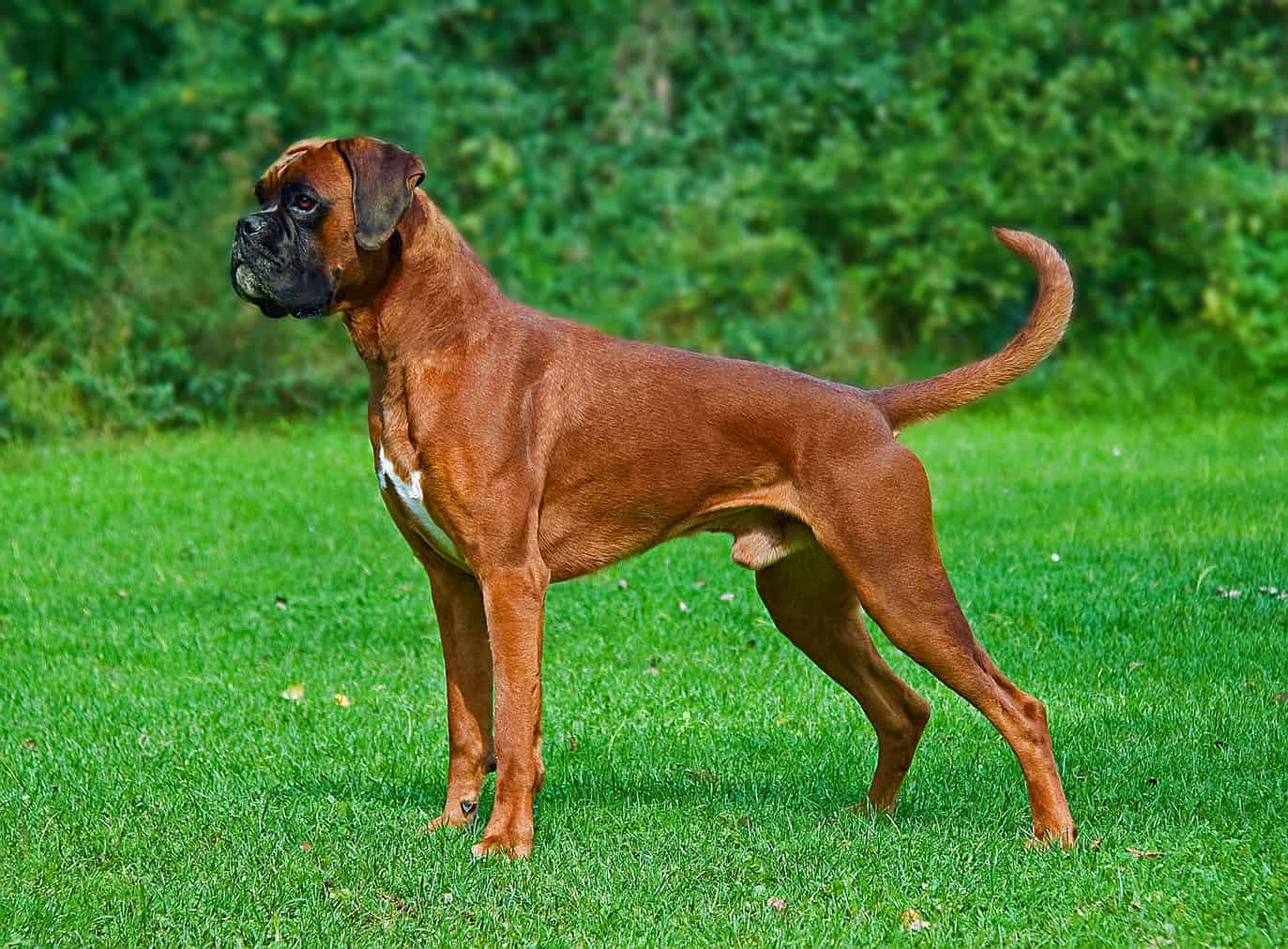
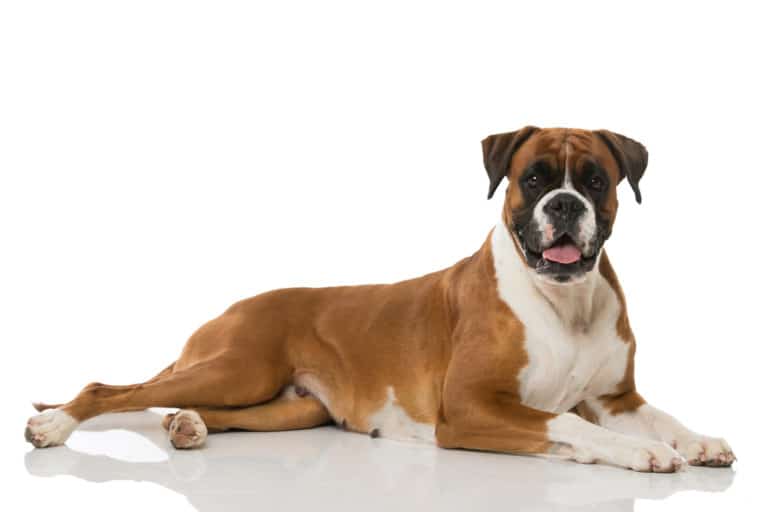
Boxer

Boxers are in the top 10 most popular dogs in America.

Size and Weight

Boxers are medium- to large-sized breeds. Males are larger than females and typically weigh between 65 and 80 pounds and are 23 to 25 inches tall. Females weigh between 50 and 65 pounds and are 21.5 to 23.5 inches tall. At two months of age, a Boxer puppy will weigh somewhere around 20 pounds. By the time a puppy is six months old, they generally weigh between 38 and 48 pounds. Boxers won’t be fully grown until they are at least 18 months old, but some dogs may not finish growing until they are 24 months old.
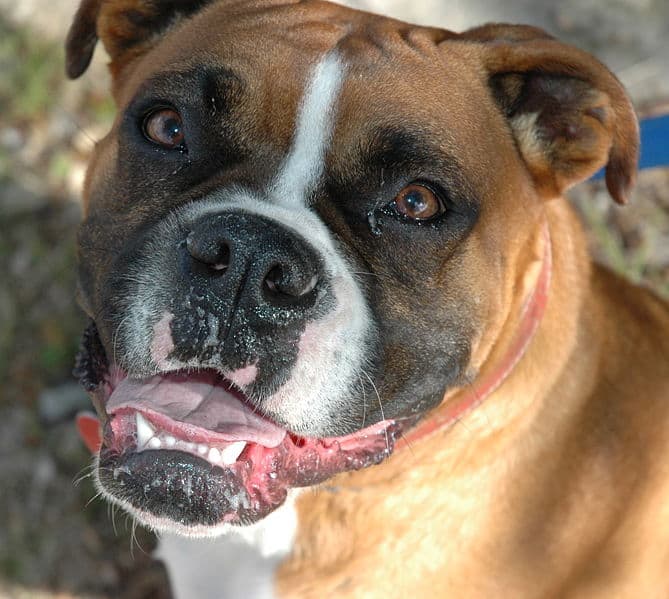
Boxers typically weigh between 50-80 pounds.

Common Health Issues

If you plan on bringing a Boxer home, there are a few common health concerns you should be aware of. One problem to be aware of is degenerative myelopathy. This is a condition that causes problems with a dog’s nervous system and spinal cord. Unfortunately, there is no treatment for this condition, and it will eventually lead to either full or partial paralysis of a Boxer’s lower limbs. If you notice that your dog is having difficulty walking or other symptoms, be sure to schedule an appointment with their vet right away.

Cardiomyopathy is another condition that Boxers may suffer from. Boxers are more at risk for this disorder than other dog breeds because of their genes. Boxers with Cardiomyopathy will have an irregular heartbeat and may faint. Their hearts are not able to effectively pump blood to all the different parts of their body. You may begin to notice symptoms of this disease when your dog is about two years old.

As large dogs, Boxers may also suffer from bloat. Bloat is a gastric disorder that causes the dog’s gastrointestinal system to swell. This prevents them from being able to digest their food and can be very serious if not treated immediately. Bloat often occurs after a dog eats a large meal and then is very active, so you should feed your dog smaller meals and hold off on exercising right after they have eaten.
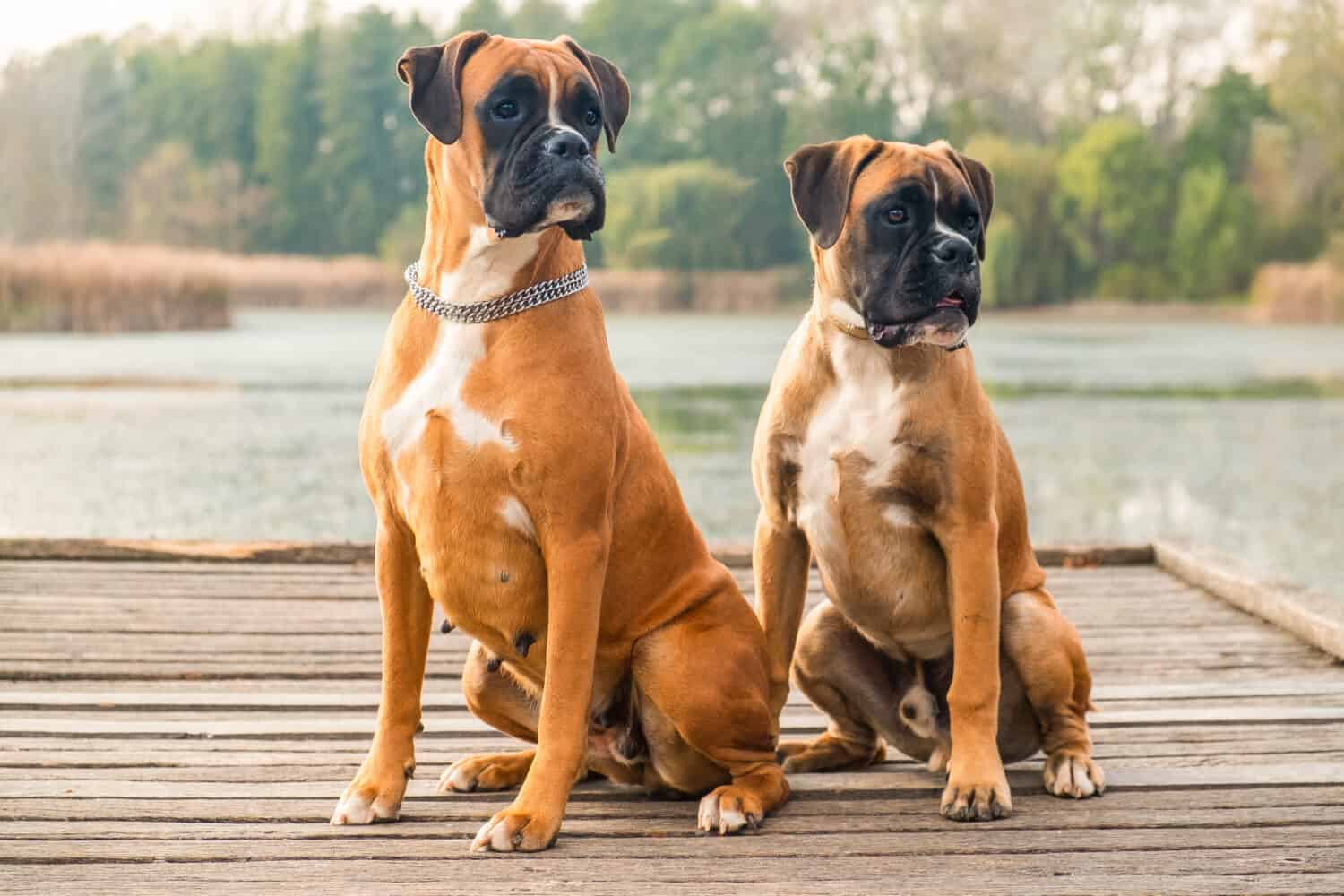
Boxers are prone to Degenerative myelopathy.

Temperament

Boxers have a very fun-loving temperament. They are intelligent dogs who exhibit both playful and gentle traits. These characteristics make the Boxer a great family dog, especially for families with older children.

Boxers are very active and do require a good amount of exercise, but when their activity needs are met, they aren’t very likely to engage in destructive behaviors or get into too much trouble. Boxers also exhibit protective traits and try to watch out for the members of their families.
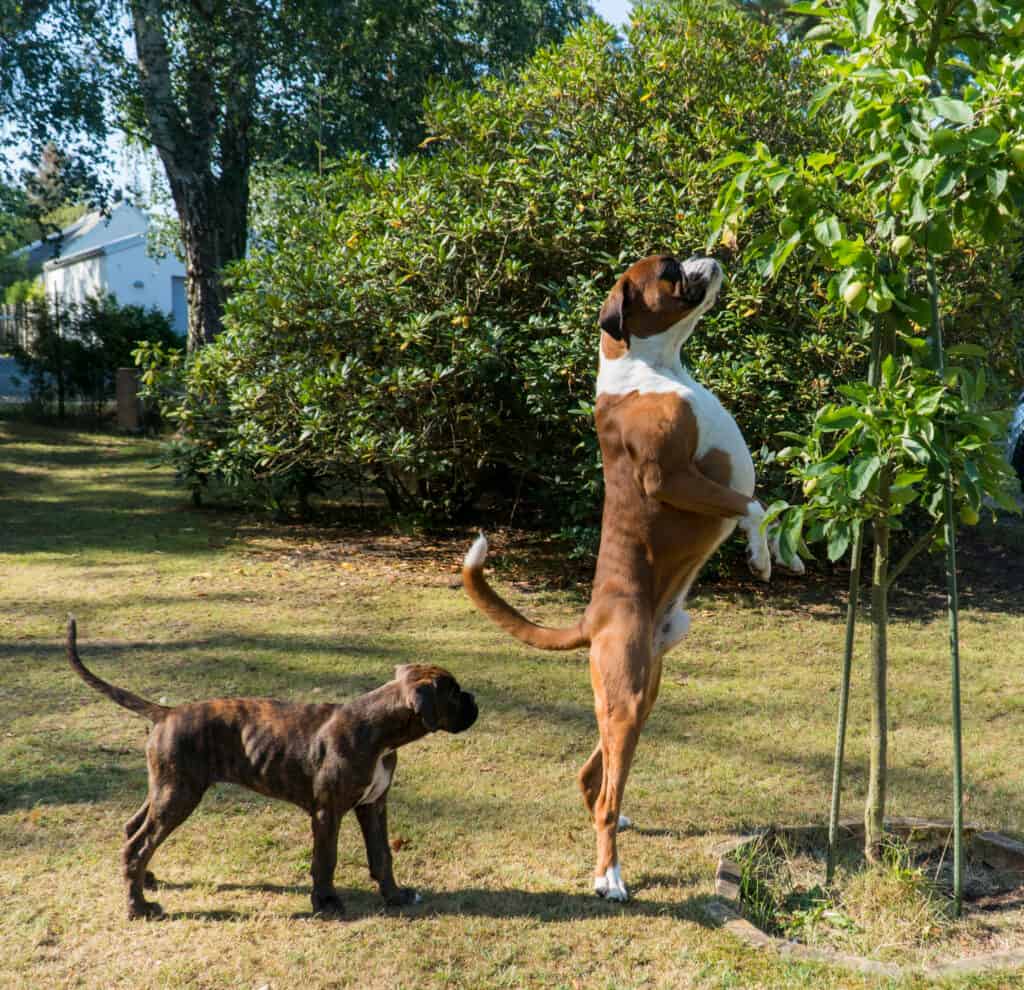
boxer on hind legs

Boxers are fun-loving dogs who love to play silly and goofy games.

How to Take Care of a Boxer

Boxers are a very unique dog breed and, as such, will require a unique care plan. You’ll want to keep the temperament, nutritional needs, common health concerns, and other factors in mind when you plan for how you’ll care for your new Boxer.

The Best Dog Food

When selecting food for your Boxer, it is important to choose a high-quality option that will meet their nutritional needs. You will want to be sure to portion out their food and give them the correct amount each day. Boxers should not be left to eat freely since they will overeat. Because of this, you will also want to break up their food each day into two or three servings. The right amount of food for your Boxer will vary based on his weight, age, activity level, and health concerns. You can always consult your veterinarian if you’re not sure how much they should be eating.

Your Boxer puppy will need to eat frequent, smaller meals throughout the day. This will prevent him from overeating or suffering from bloat. Young puppies should be given a mix of puppy food and water at least four times a day. As they get older, you should reduce the amount of water in the mixture so that eventually, they are eating straight puppy food (by the time they are about 7 weeks old). At eight weeks, Boxer puppies should be completely weaned from their mother and should eat about two cups of food each day. Since Boxer puppies are so active and are growing so quickly, they may eat up to twice as much as an adult boxer will.

Maintenance and Grooming

Boxers are much easier to maintain and groom than many other dog breeds. They have a short coat that doesn’t shed too much. You should try to brush your dog using a hound glove or curry brush a few times a week to keep him looking good.

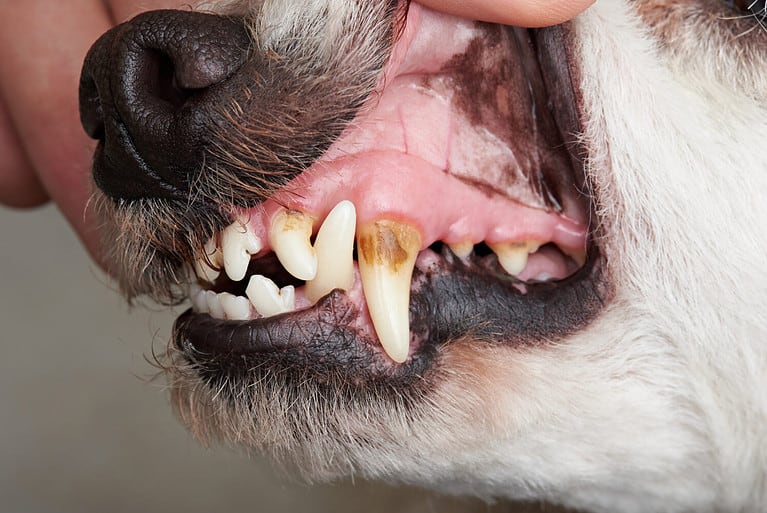
It will also be important to brush his teeth regularly to keep tartar from building up. Brushing once a day is ideal. You will also want to trim your Boxer’s nails about once a month to keep them from getting too long and making it uncomfortable for him to walk.
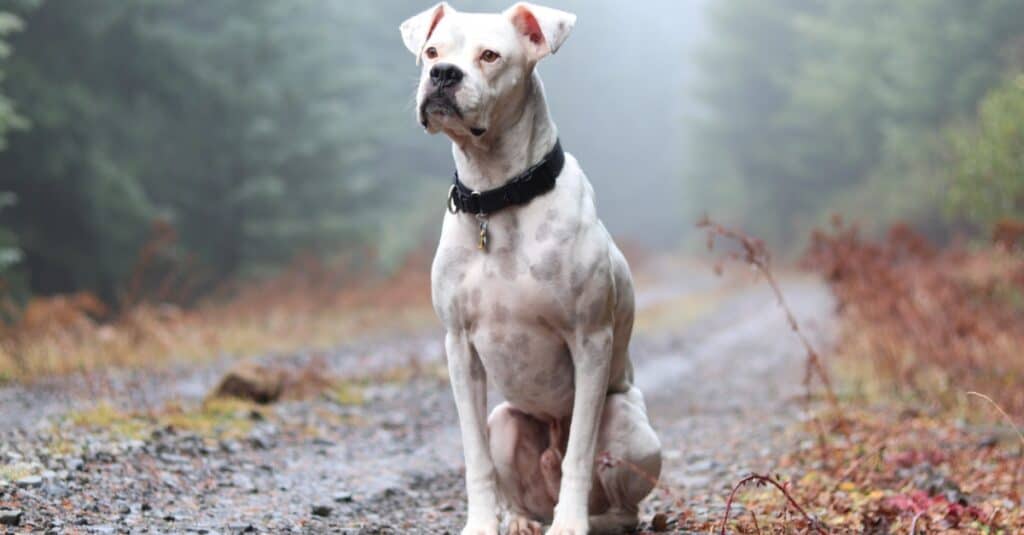
White boxer sitting outside on a path

Boxers don’t have high-maintenance grooming needs.

Training

Since Boxers are such an energetic breed, it will be important to begin training them from a young age. Look for opportunities to socialize your new dog and sign them up for puppy obedience training classes shortly after bringing them home. In general, Boxers can be relatively easy to train. They are very intelligent and can do well with herding, agility, and other canine sports.

However, Boxers may become bored with repetition. They are also not very accepting of other dogs of the same sex. These two characteristics could make it a little more challenging to train your dog.
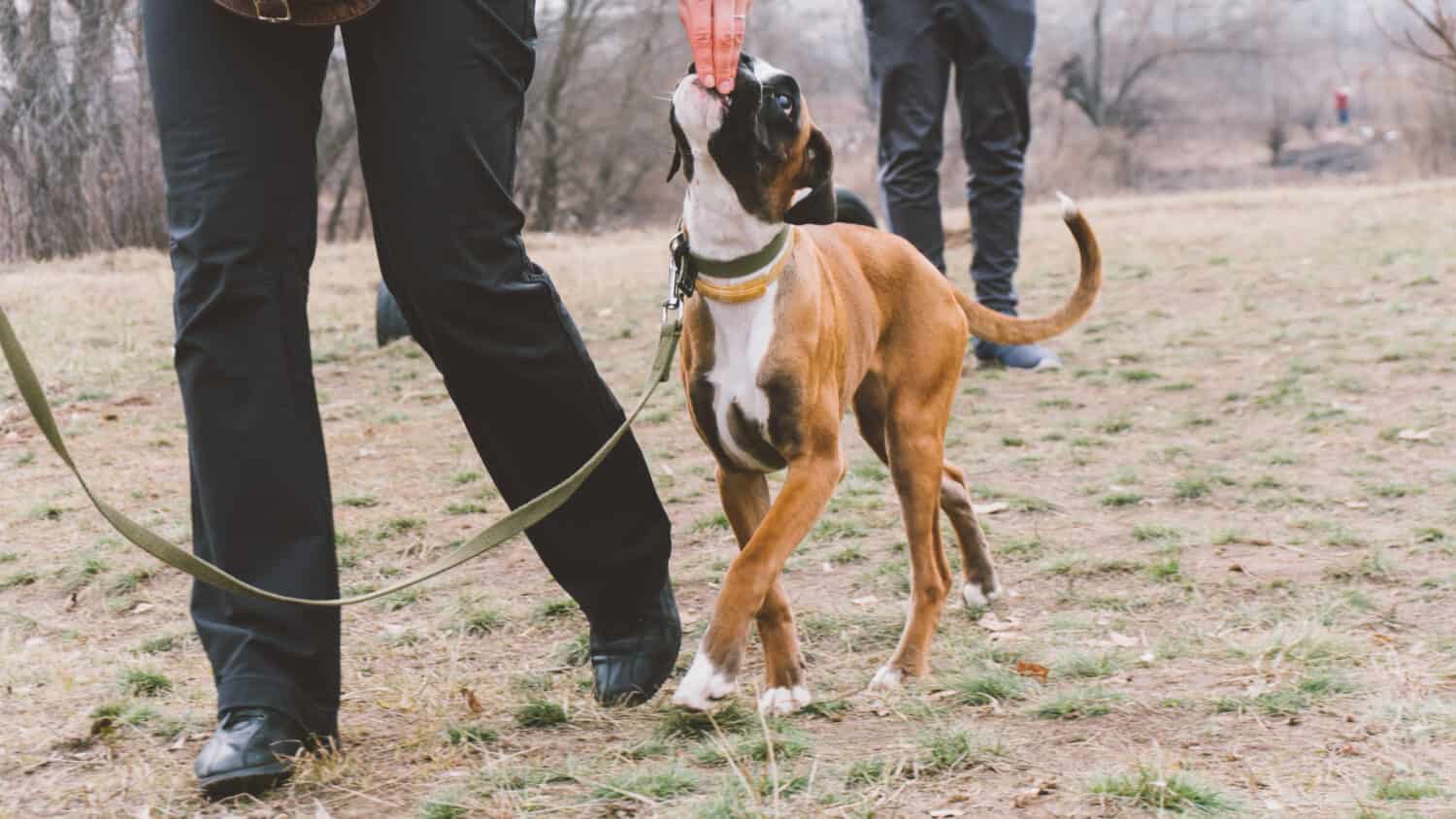
training dog breed boxer. Dog training in the city. Close-up

Boxers get bored with repetition, so be creative in training them.

Exercise

It will be important to make sure that your Boxer gets plenty of exercise every day. They like to run and jump and may try to chase small animals, so it will be important to keep your Boxer on a leash if you go for a walk. In addition to taking your Boxer for walks, letting him run around in a fenced-in yard is another good way to give him the exercise he needs.
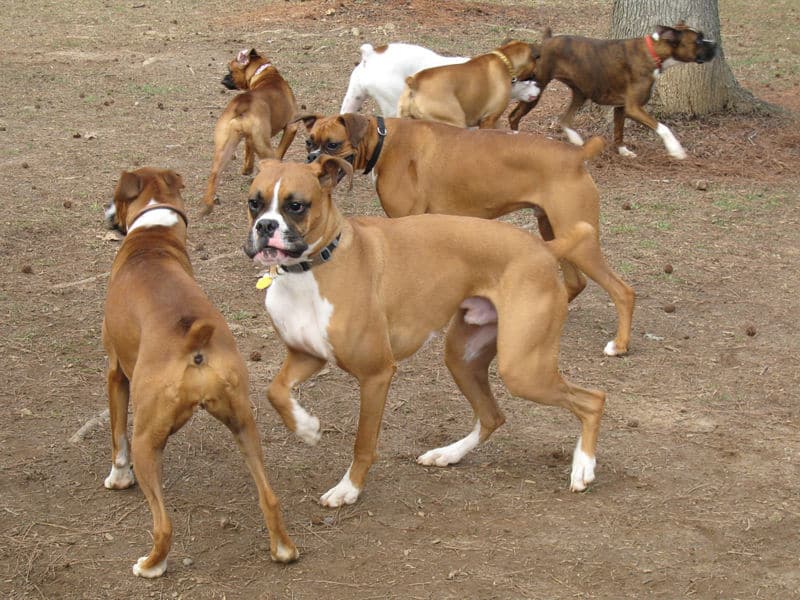
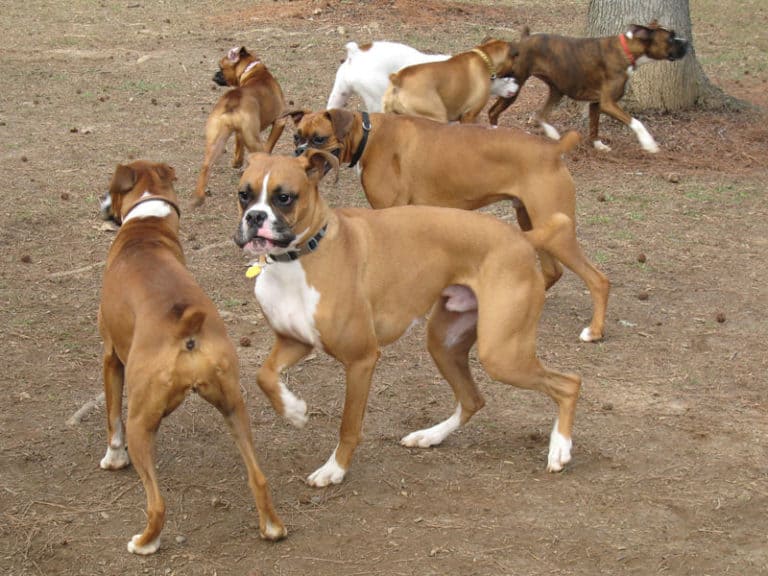
A group of Boxers playing

Boxers love to exercise by playing with other dogs.

Puppies

If you are going to be bringing home a Boxer puppy, be sure to puppy-proof your home before doing so. This will prevent an accidental injury for your new pup and can help make sure that something that is special to you doesn’t get destroyed. If your Boxer puppy hasn’t been potty-trained, you’ll want to get started with that right away. Be sure to set up a consistent schedule for your dog and look for signs that they are about to go so you can take them outside.

Boxer puppies will need to eat more frequently than adult Boxers, so be sure to plan for this and make sure you will be able to accommodate this schedule. Since they’ll be eating more frequently, you’ll want to be sure to get your Boxer out to use the bathroom more frequently as well.

Some other important things to keep in mind when caring for a Boxer puppy include getting them to the veterinarian for a check-up and vaccinations once you bring them home, making sure you have purchased all the necessary supplies and food you’ll need for your new dog, and finding plenty of time to play with them and meet their activity needs.
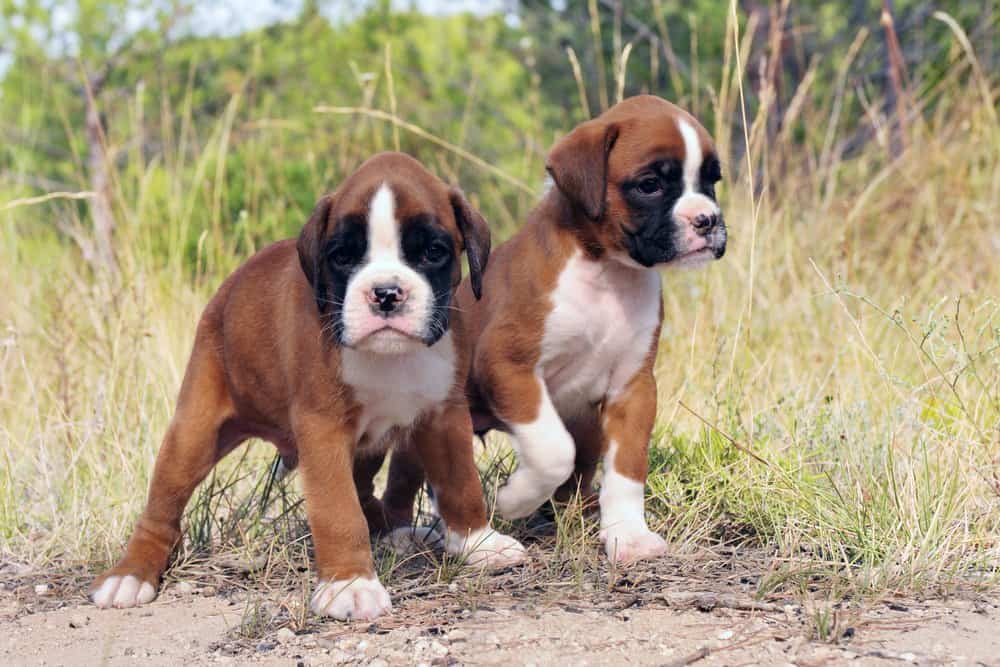
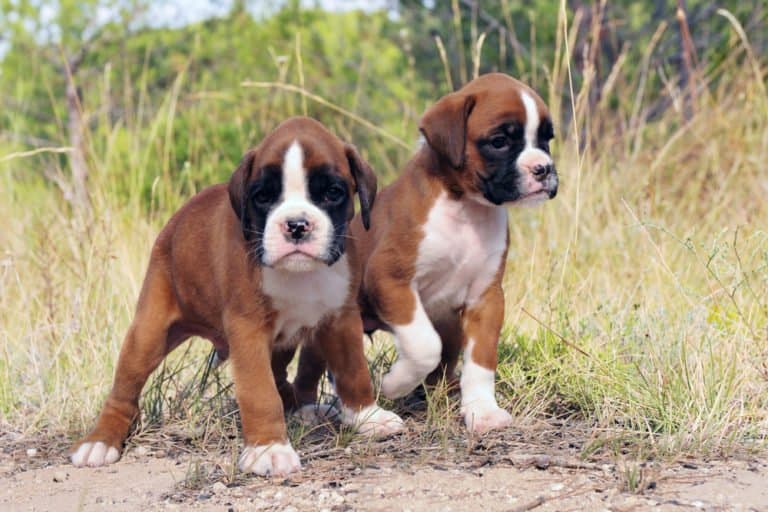
Boxer Dog puppies

Puppy-proof your home before bringing home a boxer dog.

With Children

Boxers are very patient and loving dogs. They can make a great addition to a family with young children. However, because they are so energetic and like to leap, they may inadvertently injure a small child (or an older adult), so they are best suited for homes where the children are a little older. Regardless of the age of the child, it is always a good idea to supervise children around Boxers and other dogs to prevent any accidental injuries.
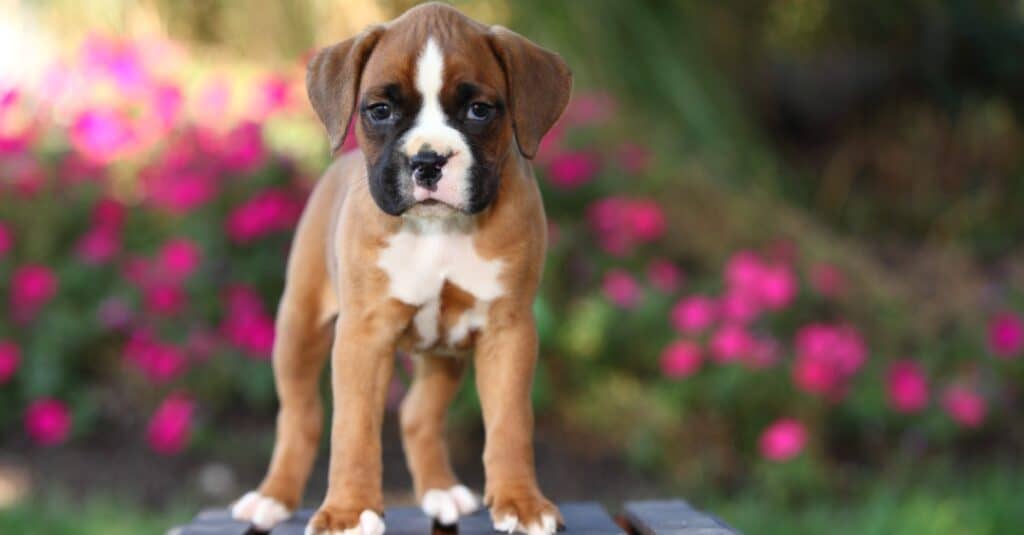
Boxer puppy standing on a table outside

Boxers are patient and loyal to children and make great family pets.

Dogs similar to the Boxer

Bulldogs, Dogo Argentinos, and American Staffordshire Terriers are three breeds that are similar to the Boxer.

  • Bulldog: Bulldogs and boxers are both medium- to large-breed dogs. Boxers are typically a few pounds heavier, with an average weight of 65 pounds for males. The average weight of a male Bulldog is only 54 pounds. Boxers and Bulldogs often have similar coloring. They can both be white, brindle, or fawn-colored. A key difference between these breeds is that Boxers are much more playful than Bulldogs.
  • Dogo Argentino: The Dogo Argentino is a larger dog than the Boxer. They have an average weight of 93.5 pounds, while boxers only have an average weight of 65 pounds. Both breeds have short coats that are easy to groom. They both can make a good watchdog as well.
  • American Staffordshire Terrier: American Staffordshire Terriers and Boxers are both relatively intelligent dogs who enjoy playing. American Staffordshire Terriers weigh about the same amount as a Boxer, but they are a few inches shorter. The average height of a male boxer is 23.5 inches, while a male Staffordshire Terrier only has an average height of 18 inches.
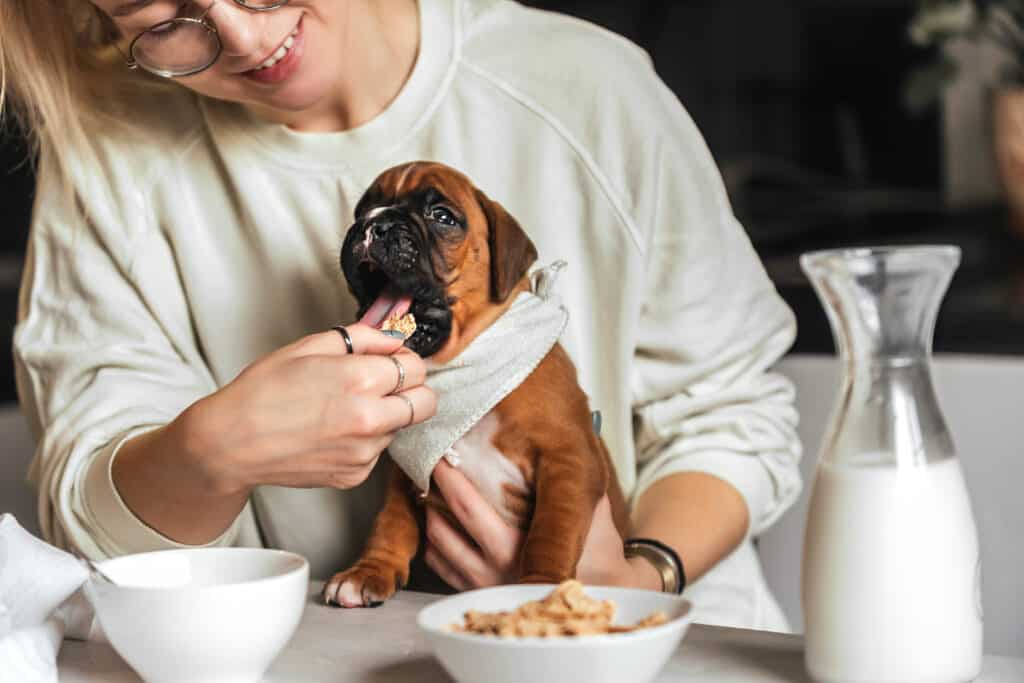
Woman and dog eating breakfast at the table.

Teach children to be gentle with new puppies as they grow.

Famous Boxers

As a very popular dog breed, there are plenty of boxers who have famous owners. Here are a few:

  • Buckley and Brennan are Justin Timberlake’s Boxers.
  • Rocky used to be Kim Kardashian’s Boxer before she broke up with Reggie Bush.
  • Harvey, Baby, and George were Humphrey Bogart and Lauren Bacall’s Boxers.
  • Roxy and Bear are Jennifer Lopez’s Boxers.
View all 453 animals that start with B

Sources

  1. David Burnie, Dorling Kindersley Animal, The Definitive Visual Guide To The World's Wildlife / Accessed November 10, 2008
  2. Tom Jackson, Lorenz Books The World Encyclopedia Of Animals / Accessed November 10, 2008
  3. David Burnie, Kingfisher The Kingfisher Animal Encyclopedia / Accessed November 10, 2008
  4. David Burnie, Dorling Kindersley Illustrated Encyclopedia Of Animals / Accessed November 10, 2008
  5. Dorling Kindersley Dorling Kindersley Encyclopedia Of Animals / Accessed November 10, 2008
  6. American Kennel Club / Accessed November 15, 2020
  7. Wikipedia / Accessed November 15, 2020
  8. Countryside Veterinary Clinic / Accessed November 15, 2020
  9. Trudog / Accessed November 15, 2020
Heather Hall

About the Author

Heather Hall

Heather Hall is a writer at A-Z Animals, where her primary focus is on plants and animals. Heather has been writing and editing since 2012 and holds a Bachelor of Science in Horticulture. As a resident of the Pacific Northwest, Heather enjoys hiking, gardening, and trail running through the mountains with her dogs.

Thank you for reading! Have some feedback for us?


Boxer Dog FAQs (Frequently Asked Questions)

The average cost of buying a Boxer puppy from a breeder is just under $900, but they could cost anywhere from $500 to $1,500 a year. If you adopt a Boxer from a rescue organization or a shelter, it will likely cost a couple of hundred dollars for the paperwork and vaccinations.

In addition to the cost of purchasing or adopting your new Boxer, you will also want to plan for the additional expenses of owning the dog. Your first year as a dog owner could cost $2,000 or more when you factor in medical expenses, food, toys, supplies, and everything else your dog will need. You should budget to spend around $1,000 to $1,500 for every other year you own your dog, but this amount may vary.