





















B
Species Profile

Brazilian Terrier

Canis lupus familiaris

Brazil's bold little watchdog
fvolu/Shutterstock.com

Brazilian Terrier Distribution

Click a location to explore more animals from that region

Origin Location

This map shows the native origin of the Brazilian Terrier. As a domesticated species, they are now found worldwide.

Loading map...

Found in 1 country

Size Comparison

Human 5'8"
Brazilian Terrier 1 ft 3 in

Brazilian Terrier stands at 21% of average human height.

Brazilian Terrier standing in a park

At a Glance

Domesticated
Also Known As Terrier Brasileiro, Paulistinha
Diet Omnivore
Activity Diurnal+
Lifespan 6 years
Weight 10 lbs
Status Not Evaluated
Did You Know?

Its traditional nickname is often translated as "Little Fox of Sao Paulo," referencing the breed's association with Sao Paulo, Brazil.

Scientific Classification

The Brazilian Terrier is a small-to-medium domestic dog breed developed in Brazil, grouped among terrier-type dogs and kept primarily as an active companion and watchdog.

Kingdom
Animalia
Phylum
Chordata
Class
Mammalia
Order
Carnivora
Family
Canidae
Genus
Canis
Species
Canis lupus familiaris

Distinguishing Features

  • Small-to-medium, athletic terrier-type build
  • Typically short, smooth coat; often tricolor or bicolor patterns
  • High energy, alert temperament typical of terrier breeds
  • Domestic dog morphology (no consistent wild-type diagnostic traits)

Physical Measurements

Males and females differ in size

Height
1 ft 3 in (1 ft 2 in – 1 ft 4 in)
1 ft 2 in (1 ft 1 in – 1 ft 3 in)
Length
1 ft 12 in (1 ft 10 in – 2 ft 2 in)
Weight
19 lbs (15 lbs – 22 lbs)
18 lbs (13 lbs – 22 lbs)
Tail Length
9 in (7 in – 10 in)
8 in (7 in – 9 in)
Top Speed
25 mph
Quick runner; no proven speed

Appearance

Primary Colors
Secondary Colors
Skin Type Brazilian Terrier (Canis lupus familiaris) has a short, smooth, close-lying coat with little undercoat and minimal feathering. Skin is easy to check but can be irritated by allergens or parasites; use flea/tick control and gentle baths.
Distinctive Features
  • Domestic dog (Canis lupus familiaris) breed developed in Brazil; selected for active companion and watchdog roles rather than any wild ecology.
  • Small-to-medium, athletic, square-to-slightly-rectangular terrier conformation; built for agility, quick turns, and alert posture.
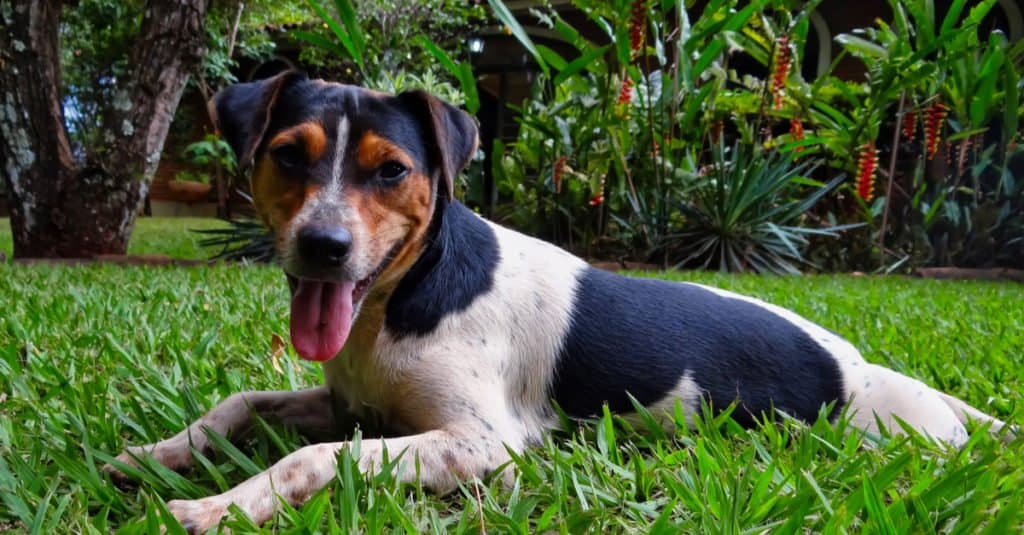
  • Short, smooth coat with the breed-typical high-contrast white base and black/tan markings; overall appearance is more "clean-lined" and lightly coated than many companion breeds.
  • Head tends to be wedge-shaped with a lively, intelligent expression; ears are typically semi-erect with tips folding forward (a common terrier look).
  • Tail is traditionally docked in some countries where permitted; when left natural, it is a normally proportioned tail carried gaily (upward), rather than a breed-typical naturally short tail.
  • Temperament traits that distinguish it from a generic domestic dog profile: high energy, strong prey/chase drive, quick reactivity (watchdog alertness), and a need for structured training and mental work.
  • Care requirements (breed-typical): daily exercise plus enrichment (fetch, scent games, agility-style play), early socialization to curb excessive barking/reactivity, consistent reward-based training, and routine dental care (small/medium dogs often accumulate tartar).
  • Health concerns include patellar luxation (kneecap instability), dental disease and plaque, allergic skin problems, and occasional ear irritation or infections. Regular vet checks, weight control, and joint-friendly exercise reduce risk.

Sexual Dimorphism

Sexual dimorphism is generally mild, typical of many small-to-medium Canis lupus familiaris breeds: males tend to be slightly larger and more robust through the head/neck and chest, while females are often a bit finer-boned and slightly smaller.

  • Slightly greater overall size and muscle mass
  • Broader head/neck and deeper chest on average
  • Slightly smaller frame and finer bone structure
  • Often a more refined head and lighter build

Did You Know?

Its traditional nickname is often translated as "Little Fox of Sao Paulo," referencing the breed's association with Sao Paulo, Brazil.

Despite "fox" in the nickname, it's a terrier-type dog developed mainly for companionship, watchdogging, and farmyard pest control.

It's one of the few internationally recognized dog breeds developed in Brazil (recognized by the FCI).

Like many terriers, it's typically bold, quick to investigate movement/sounds, and strongly motivated by chase games.

Its short, smooth coat is low-maintenance compared with many long-coated companion breeds.

Breed type reflects terrier diversity within Canis lupus familiaris: selective breeding can emphasize alertness, agility, and vermin drive without changing the species.

Unique Adaptations

  • Terrier-type build: compact, athletic proportions that favor quick turns and bursts of speed for games or pest control.
  • Short, smooth coat: generally easy grooming and quicker drying in humid/rainy conditions (common in parts of Brazil).
  • Behavioral selection for vigilance: a temperament shaped for noticing changes in the environment-useful for watchdog duties.
  • Efficient "work-toy" motivation: many respond strongly to play rewards (tug/ball), making them well-suited to positive-reinforcement training.
  • General domestic-dog adaptability: as Canis lupus familiaris, it can thrive in apartments if given daily exercise and mental work-unlike wild canids with strict ecological niches.

Interesting Behaviors

  • High alert-bark tendency: quick vocal alarms at new sounds, visitors, or movement around the home.
  • "Terrier search mode": intense sniffing, patrolling edges of yards/rooms, and checking gaps/under furniture.
  • Chase-and-grab play style: strong interest in fast toys, balls, and flirt-pole games-echoing traditional vermin work.
  • Digging and "den-making": some individuals dig or scratch bedding/sofas, a common terrier-type behavior.
  • Rapid learning with opinions: excels with short, upbeat sessions; can become stubborn if training is repetitive or inconsistent.
  • People-focused watchdog routine: often shadows family members and positions itself to monitor doors/windows.

Cultural Significance

The Brazilian Terrier (Canis lupus familiaris) is a modern Brazilian breed linked to Sao Paulo, called the "Little Fox of Sao Paulo." Kept on farms to warn families and catch rats, today it is an active companion and watchdog and shows how people bred dogs for local life.

Myths & Legends

Returned-from-Europe origin tale: a commonly repeated story says Brazilian youths studying in Europe came home with small fox-terrier-type dogs, which then mixed with local dogs and gradually became the Brazilian Terrier type.

Sailors-and-ports anecdote: another traditional account ties the breed's beginnings to terrier-like dogs arriving in Brazilian ports on European ships and spreading inland as practical household ratters.

Nickname lore: The Brazilian Terrier, called the 'Little Fox of Sao Paulo' from its old Brazilian name, has a lively, alert terrier nature, and the name does not mean it is related to real foxes.

Coffee-farm ratter stories: older rural anecdotes describe small, bold terriers kept around storerooms and barns to alert at strangers and reduce rodents-stories that helped cement the breed's watchdog-and-vermin reputation.

Conservation Status

NE Not Evaluated

Has not yet been evaluated against the criteria.

Population Stable

Life Cycle

Birth 4 pups
Lifespan 6 years

Lifespan

In the Wild
3–10 years
In Captivity
10–14 years

Reproduction

Mating System Polygynandry
Social Structure Managed Domestic
Breeding Pattern Serial
Fertilization Managed Selective
Birth Type Internal_fertilization

Brazilian Terrier (Canis lupus familiaris): breeding is human-managed. Breeders arrange matings by pedigree, health, and temperament. Dogs may have multiple mates across cycles (serial breeding). No lifelong pair bonds; pregnancy about 63 days.

Behavior & Ecology

Social Pack Group: 3
Activity Diurnal, Crepuscular
Diet Omnivore High-protein, meat-based complete dog food (kibble or wet) with meat/fish as the first ingredient; many individuals show strong preference for poultry or beef flavors.

Temperament

High-energy, bold, and inquisitive; more tenacious and quick-reacting than many baseline domestic-dog companion types, reflecting terrier heritage.
Affectionate with its household 'family' and often people-friendly, but typically an alert watchdog; may bark readily at novel sounds/approaches if not trained with a 'quiet' cue.
Playful and athletic with strong chase/prey drive; may pursue small animals and moving objects-secure fencing, recall training, and safe off-leash management are important.
Trainable and smart but can be independent; benefits from short, varied sessions using positive reinforcement, clear boundaries, and ample mental work (scent games, agility-style tasks).
Brazilian Terriers are active companion watchdogs, with daily bursts of energy and alertness. Some are very social, some like only known playmates, and some are sensitive to noise and bark a lot.
Care requirements: needs consistent daily exercise plus problem-solving enrichment; without outlets may develop nuisance barking, destructiveness, or impulsive nipping during play.
Common health issues in small-to-medium terriers include patellar luxation, dental crowding and periodontal disease, skin allergies, and possible hip or elbow problems in active dogs. Regular vet checks, weight control, and dental care help.

Communication

Frequent alert barking (watchdog signaling), including rapid 'alarm' barks at doors/noises
Excited yips and play barks during high-arousal games
Whining/whimpering for attention, anticipation, or mild distress
Growls during boundary-setting or rough play Interpret with body language and context
Terrier-forward body posture (upright stance, focused stare) to signal attention/intent; may 'freeze' briefly before chasing
Tail and ear carriage changes to convey arousal, confidence, or uncertainty
Play bows, bouncing approach, and rapid direction changes to solicit play
Scent investigation and marking behaviors on walks; heavy use of olfaction for environmental 'updates'
Mouthing/pawing to initiate interaction; benefits from teaching alternate behaviors Sit, touch, toy fetch
Proximity-seeking and shadowing favored people as an affiliative signal; may pace/door-check when in watchdog mode

Habitat

Biomes:
Tropical Rainforest Tropical Dry Forest Savanna Desert Hot Desert Cold Mediterranean Temperate Grassland Temperate Forest Temperate Rainforest Boreal Forest (Taiga) Tundra Alpine Freshwater Marine Wetland +9
Terrain:
Plains Hilly Coastal
Elevation: Up to 16404 ft 3 in

Ecological Role

Human-associated omnivore and mesopredator analogue; primarily a companion/watchdog that can also function as local pest-control in household/yard environments.

Rodent and nuisance-insect suppression around homes/farms (where allowed) Deterrence/alerting behavior that reduces human-wildlife conflict and improves property security Nutrient cycling via consumption of human-provided foods and household waste when mismanaged (underscores importance of responsible feeding) Social/working role: companionship, training/sport participation, and human well-being support

Diet Details

Main Prey:
Small rodents Small birds and eggs Lizards and geckos Large insects and other invertebrates
Other Foods:
Cooked starchy plants Vegetables Fruit Grass

Human Interaction

Domestication Status

Domesticated

Canis lupus familiaris — the fully domesticated dog shaped by long human breeding for companionship and work. The Brazilian Terrier (Terrier Brasileiro) was developed in Brazil in the early to mid 20th century from Fox Terrier/Jack Russell–type lines. Small, hardy, agile and alert; a companion, watchdog and pest dog with a strong chase instinct, quick learning but sometimes stubborn.

Danger Level

Low
  • Bite risk increases with poor socialization, fear, pain, or rough handling; terrier reactivity can lead to nips, especially around strangers entering the home.
  • High chase/prey drive may cause darting into streets or leash pulling, posing indirect injury risk to handlers (falls/strains).
  • Potential dog-dog conflict if under-exercised or inadequately introduced, which can escalate in multi-dog settings.
  • Zoonotic risks common to domestic dogs if preventive care is neglected (e.g., parasites; rabies risk in unvaccinated animals).
  • Noise/alert barking can create neighborhood conflict; management and training reduce this.

As a Pet

Suitable as Pet

Legality: Brazilian Terrier (Canis lupus familiaris) is usually legal where dogs are allowed, but must follow local rules (licenses, leashes, shots, noise). Some places may have extra or breed or size rules.

Care Level: Moderate

Purchase Cost: $600 - $1,800
Lifetime Cost: $15,000 - $40,000

Economic Value

Uses:
Companion animal/pet services economy Watchdog role (non-specialized security) Canine sports and training services Breeding/showing (where recognized) Veterinary care and preventive medicine
Products:
  • Puppy sales/adoption fees
  • Veterinary services (vaccines, spay/neuter, dentistry, injury care)
  • Training classes and behavior services
  • Pet insurance and microchipping/registration
  • Food, treats, toys (durable chews/enrichment items)
  • Grooming basics (nail trims, bathing supplies)
  • Equipment (leash/harness, secure fencing/containment)

Relationships

Ecological Equivalents 6

Animals that fill a similar ecological role in their ecosystem

Jack Russell Terrier
Jack Russell Terrier Canis lupus familiaris Small, high-energy terrier from Brazil. Short-coated and athletic; bred to chase pests and serve as an active companion and watchdog. Very alert and quick to bark and chase; needs daily exercise and training.
Smooth Fox Terrier
Smooth Fox Terrier Canis lupus familiaris Both breeds are similar in size and share terrier rat-catching and watchdog roles. The Brazilian Terrier is an agile, short-coated companion dog that functions more as an all-around household watchdog than a show dog. Grooming needs are low: weekly brushing and basic nail and ear care.
Rat Terrier
Rat Terrier Canis lupus familiaris Serve as small-to-medium farm and house ratters and active companions. Keep lean to protect joints; screen for patellar luxation and dental disease; provide consistent training and socialization to manage a strong hunting instinct and protectiveness.
Domestic cat
Domestic cat Felis catus Shares a household pest-control niche around human settlements (rodents, small reptiles); domestic cats perform this role more independently. Brazilian Terriers may pursue the same prey items but require supervision, leash control, and recall training due to a chase instinct.
Crab-eating fox
Crab-eating fox Cerdocyon thous Native to Brazil, this canid often uses human-modified landscapes and forages opportunistically. Although not domesticated, it occurs broadly along habitat edges and adjacent to settlements. This overlap highlights why Brazilian Terriers should be vaccinated and receive parasite protection when in rural or peri-urban areas where wild canids circulate pathogens.
Hoary fox Lycalopex vetulus Small South American canid associated with open habitats; overlaps in potential exposure contexts (ticks, fleas, intestinal parasites) in parts of Brazil. Relevant for Brazilian Terrier care: consistent ectoparasite control and avoidance of unsupervised roaming reduce disease and wildlife-conflict risks.

In the late 19th century, it was common for Brazilian students to complete their education in the UK. Experts speculate that this is how Jack Russell Terriers first came to be imported into the country. These Jack Russells were mated with Miniature Pinschers, Fox Terriers, and Chihuahuas, creating mixed puppies with distinctive triangular faces and tri-color coats.

Once grown, these mixed puppies became working dogs on coffee and rubber plantations, where they proved themselves outstanding rodent hunters. In 2007, the Fédération Cynologique Internationale (FCI) recognized these terriers as a distinctive breed dubbed the Brazilian Terrier.

3 Pros and Cons of Owning a Brazilian Terrier

ProsCons
They’re friendly and playful: Once they get to know you, they understand the ground rules. These dogs are an excellent companion choice for senior citizens living alone, as well as for families. Their engaging personalities make them a good choice for first-time dog owners, too.They bark a lot: They are barkers, particularly when they’re bored. While this makes them excellent watchdogs, it does limit their ability to live in apartment-sized living spaces or accompany you on “Take Your Dog to Work” days. If you live in an urban setting, a Brazilian Terrier might not be the right choice for a canine companion.
They’re highly intelligent: They are extremely smart and can be stubborn. So firmness and consistency must be important parts of any training regimen. Training satisfies their need for mental stimulation, so the earlier you begin training and socializing them, the happier they will be. Brazilian Terriers do especially well with canine agility and obedience sports training.They were bred to hunt: If your other household pets include rabbits, hamsters, gerbils, or guinea pigs, Brazilian Terriers are not the dog for you. On Brazilian plantations where this breed was first developed, these dogs were bred to hunt small prey. Even with training, this drive may be difficult to contain.
They’re easily groomed: They have short, smooth coats, which means their grooming can easily be accomplished at home. Brush them occasionally, scrub their teeth at least once a day, bathe them once a week, and they’ll do fine.They can trigger allergies: They are not hypoallergenic. They are medium shedders, and their shedding can trigger allergic reactions in individuals who are sensitive to dogs.
Brazilian Terrier laying in the grass

Some owners find Brazilian Terriers to be more open to cooperative behaviors, possibly due to their history of working in groups on plantations, but individual trainability can vary between dogs.

History and Origins

The historical background of the Brazilian terrier is uncertain. It is believed that several types of terriers were transported to Brazil from Europe in the 1800s and may have been the original ancestor of the breed. The original dogs could have included Fox, Parson, and Jack Russell terriers.

Others theorize that the breed came from Spanish dogs that were brought to Brazil during the Iberian Union. They think the original dogs could have included Ratonero Valenciano and Ratonero Bodeguero Andaluz.

Brazilian Terrier standing in a park

Brazilian Terriers love to play — and so do children. With a Brazilian Terrier, your child will have a playmate who never gets tired. Like all dogs, though, it’s best not to leave them untended with children.

Size and Weight

Male Brazilian Terriers vary from 14 to 16 inches in height. Females are slightly smaller at 13 to 15 inches. The optimal weight for either sex is between 15 and 22 pounds. Most Brazilian Terrier puppies reach their adult size by 12 months of age.

Common Health Issues

Brazilian Terriers have been selectively bred in Brazil for specific traits, but as a relatively young breed, they are generally considered hardy and robust, with fewer hereditary health issues reported compared to some older breeds.

Be sure that your pet gets plenty of exercise and that they maintain a healthy weight. Ultimately, this will help to ensure they live a long life. It is not uncommon to find Brazilian Terriers who are 15 years old or older.

Temperament and Behavior

While a Brazilian Terrier’s personality is not typically described as “laid-back,” you’ll find this canine can be quite easy-going when its needs for exercise are met.

These dogs work and play well with others, and while they like to bark, their behavior is seldom aggressive. However, they bark to attract the attention of their pack members (you and your family) when they’re feeling neglected. Common Brazilian Terrier traits include intelligence, friendliness, assertiveness, and fearlessness.

Brazilian Terrier running on the beach

Brazilian Terriers like to run, chase, and play spirited games of fetch.

How To Take Care of a Brazilian Terrier

As long as you factor in their need for exercise, Brazilian Terriers are relatively low-maintenance. They are not prone to hereditary illnesses that may necessitate frequent trips to the vet.

Since puppies are curious and assertive, it’s smart to begin leash training and obedience as early as possible so there’s no question in your Brazilian Terrier puppy’s mind that you are the boss.

The Best Dog Food

Since they are relatively small dogs, the Brazilian Terrier has a high metabolism. Therefore, it’s important to feed your Brazilian Terrier a diet that’s specifically formulated for small dogs; this food typically has a higher concentration of high-energy fats than other types of dog food.

Conversely, Brazilian Terrier puppies should be on a small dog puppy diet which contains more nutrients as well as calories per bite to fill their smaller tummies. Feed your dog twice a day, and make sure he or she always has access to fresh water. This is a remarkably healthy breed that will likely live a long and healthy life eating any quality dog food.

Maintenance and Grooming

Under normal circumstances, you will not have to visit a groomer at all if a Brazilian Terrier becomes your animal companion. They’re not hypoallergenic, so they will shed enough to require regular brushing and maybe follow-up vacuuming. However, your carpets are unlikely to become coated in dog hair. Unless they roll in mud or some other offensive substance when you exercise them, they won’t need a bath more often than once every few months.

Like all dogs, you should brush their teeth at least once a day and clip their nails regularly. Seasonal flea and tick treatments are also recommended since, optimally, your dog will be spending a lot of time outside.

Training

Start obedience training early with your Brazilian Terrier so that it doesn’t develop any misconceptions about who the leader of the pack is. Some owners find Brazilian Terriers to be more open to cooperative behaviors, possibly due to their history of working in groups on plantations, but individual trainability can vary between dogs. These dogs do well with circuit training.

Brazilian Terrier

Brazilian Terriers are relatively low-maintenance. They are not prone to hereditary illnesses that may necessitate frequent trips to the vet.

Exercise

In order to live happily with a Brazilian Terrier, you must commit to exercising your dog regularly. A slow walk around the block will not suffice: This dog requires at least one period of vigorous exercise every day. These dogs like to run, chase, and play spirited games of fetch.

While their temperaments are nowhere as high-strung as Jack Russell Terriers, Brazilian Terriers can turn snappish and aggressive. Therefore, be sure they get adequate exercise.

Puppies

Unneutered Brazilian Terrier females go into heat approximately every six months. Gestations last 60 to 64 days. Litter sizes typically range from four to six puppies. Surprisingly, at eight weeks of age, your Brazilian Terrier puppy is old enough for simple five-to-ten-minute training sessions.

Make sure to end training sessions on a high note with plenty of praise and a treat because your Brazilian Terrier puppy wants to please.

Brazilian Terrier Puppy

Brazilian Terrier puppies should be maintained on a small dog puppy diet which contains more nutrients as well as calories per bite to fill their smaller tummies.

With Children

Kids and Brazilian Terriers both like to romp, so they’re a natural team. Therefore, as long as your child knows better than to pull ears or tails, it’s a match made in heaven. Still, if your child is younger than five, it’s best to chaperone his or her interactions with this family pet. Brazilian Terriers were bred to be hunting dogs, so they do have a well-developed prey drive.

Similar Dogs

Dog breeds similar to the Brazilian terrier include the Jack Russell Terrier, the Fox Terrier, and the Portuguese Podengo.

  • Jack Russell Terriers: Jack Russell Terriers are lively, clever, and tenacious little dogs that were bred to go underground. Their coats, which can be either smooth or rough, are short and come in a variety of colors, including white, white and tan, or tricolor white, black, and tan.
  • Fox Terriers: Fox Terriers were first bred in 18th century Britain to flush foxes out of hiding places during hunts. Their bodies are compact and muscular to facilitate speed and agility. Smooth Fox Terriers have short, predominantly white coats, while Wire-Haired Fox Terriers have a bristly double coat. They are perfect companions for anyone who lives an active lifestyle because they are friendly, energetic, and have remarkable staying power.
  • Chihuahuas: Never tell a Chihuahua she’s a small dog; she just won’t believe you. These feisty descendants of the royal dogs of pre-Columbian Mexico may deign to share rulership of your home with you, but they’ll never give up the throne. They’re small dogs that seldom weigh more than six pounds, which makes them ideal for apartment living. Their coats come in a variety of colors, patterns, and textures. Chihuahuas are very intelligent and respond well to firm, consistent, and affectionate training.
View all 453 animals that start with B

Sources

  1. Wisdom Panel / Accessed February 16, 2021
  2. Animals Adda / Accessed February 16, 2021
  3. Dogzone / Accessed February 16, 2021
  4. Small Dog Place / Accessed February 16, 2021
Heather Hall

About the Author

Heather Hall

Heather Hall is a writer at A-Z Animals, where her primary focus is on plants and animals. Heather has been writing and editing since 2012 and holds a Bachelor of Science in Horticulture. As a resident of the Pacific Northwest, Heather enjoys hiking, gardening, and trail running through the mountains with her dogs.

Thank you for reading! Have some feedback for us?


Brazilian Terrier FAQs (Frequently Asked Questions)

You can expect to spend around $800 if you’re buying a Brazilian Terrier puppy from a reputable breeder. Your initial visit to the vet for things like vaccinations, microchipping and neutering will probably set you back an additional $250. Don’t forget the other items your new puppy will need like food bowls, crates, leashes, bedding and toys! These will vary in cost, depending upon where you purchase them.

Monthly food costs for your Brazilian Terrier will run around $75 a month, and you can expect to incur costs of around $600 a year for ongoing vet bills, licenses and training.