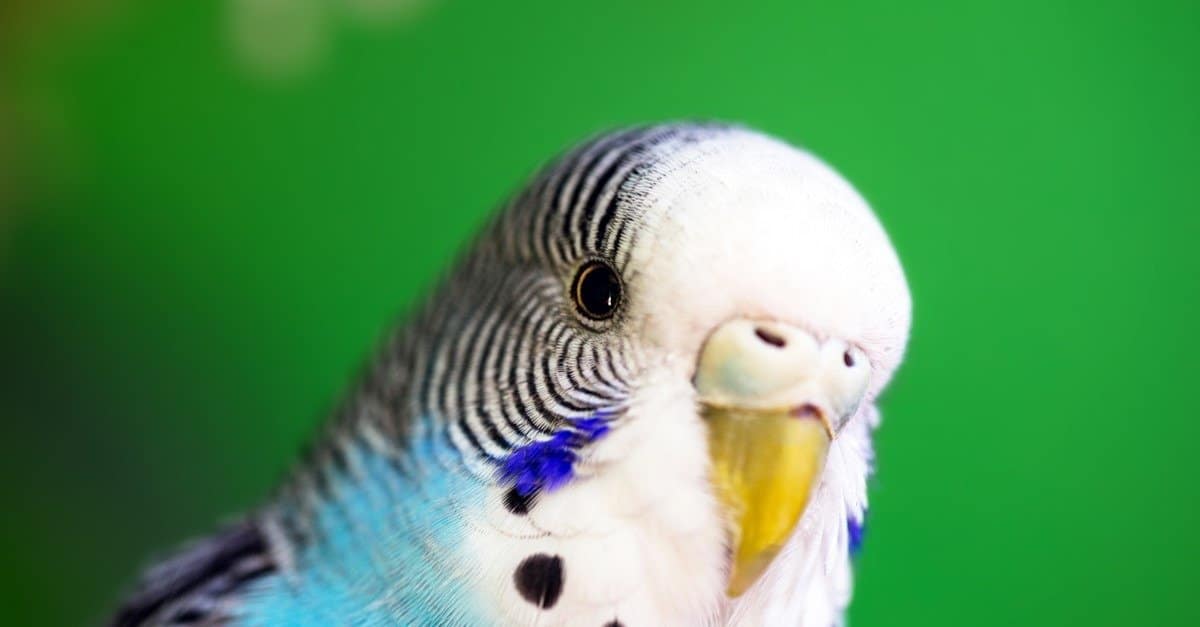
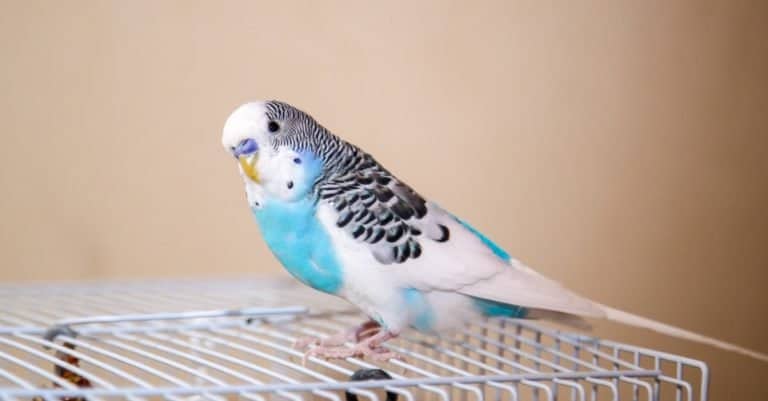
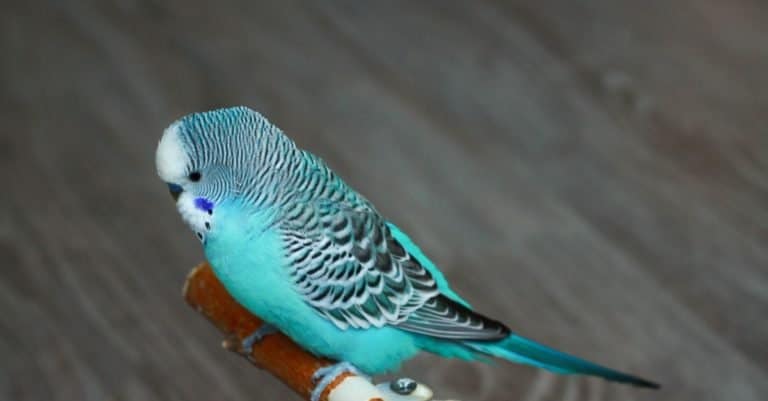
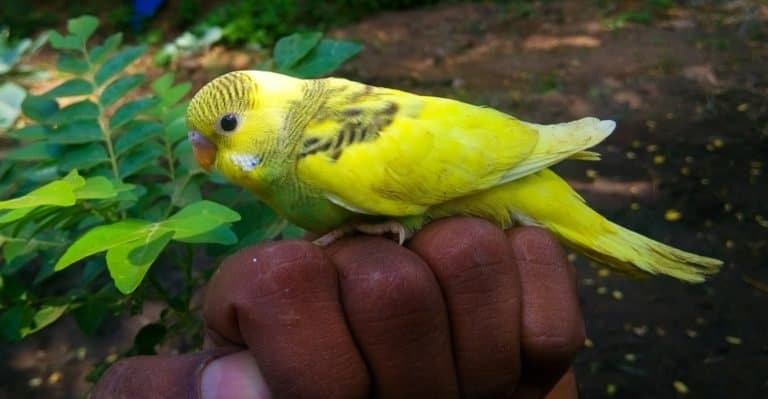
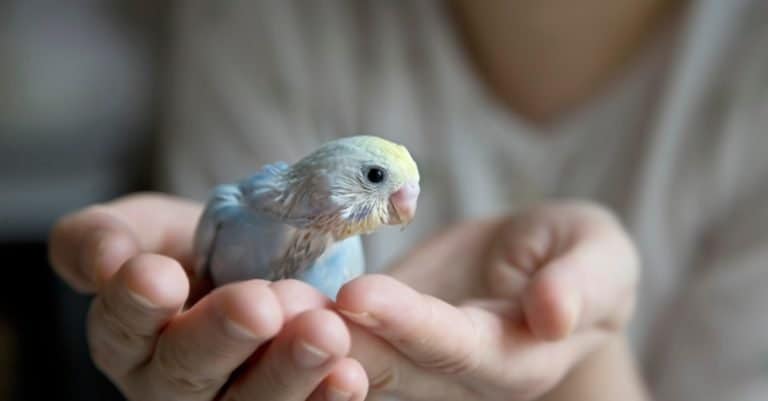

Native to Australia, Budgerigars are stunning nomadic parrots, marked with green and yellow coloration on their chests and backs. Black feather patterns also decorate their backs. Males have a blue cere (the area above the beak), while females have a brown or tan cere.
Budgerigars spend the majority of their time in trees and typically nest in natural cavities such as tree hollows, rather than building intricate nests. Budgerigars are highly social among themselves and can live with humans as well. Males and females will pair up and live together in loose colonies in both the northern and southern territories. In the wild, these birds typically live 4 to 6 years, with much longer lifespans only possible in captivity.
Budgerigars are rather easy to domesticate and make good pets. They become extremely attached to their owners and will be able to recognize you even if you change your hairstyle or your clothes. Budgerigars can pick up on a large vocabulary and enjoy talking with humans. One budgerigar, Puck, holds the world record for the largest vocabulary of any bird, having learned 1,728 words.
4 Amazing Budgerigar Facts
- Budgies are ranked as one of the most popular pets, following dogs and cats.
- The name Budgerigar translates as “good to eat” in the native dialect of the Australian Aborigine.
- They have over 1,000 possible color combinations of green, yellow, blue, and many shades in between.
- Wild Budgerigar birds are easily domesticated and easily mimic human speech.
Where to Find Them
Budgerigar birds are native to Australia, and they migrate north and south throughout the country in the wild. These birds are also highly social, making them popular pets throughout the world.
Budgies also populate North America, South America, Europe, and Africa due to their status as one of the most common pet birds. In fact, there are reportedly up to five million of these little birds in the world today.
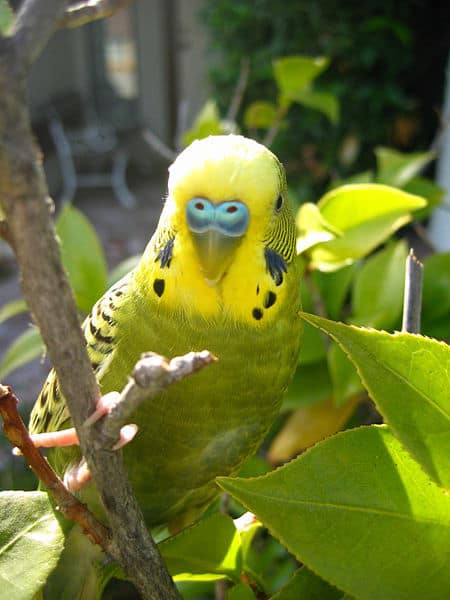
Budgerigar birds are native to Australia, and they migrate north and south throughout the country in the wild.
©Penubag – Public Domain
Scientific name
Only one bird species goes by the common name Budgerigar or Budgie. They are the sole species in the Melopsittacus genus. This creature’s full scientific name is Melopsittacus undulatus.
History and Evolution
While the parrot family has ancient origins dating back around 50 million years, budgerigars themselves have likely been present in Australia for less than 5 million years. Females are attracted to very chatty and thus intelligent males as opposed to quieter ones. Smarter budgies were also able to find food and water over those that weren’t as smart.
The name Budgerigar might have come from a mispronounced Aboriginal name for the colorful birds. Another line of thinking is that it comes from a combination of Aussie slang terms for “good bird” or “good food”.
Size and Appearance
Budgies are smaller than many other parrot varieties. They normally only weigh between 1 and 1.5 ounces. They are often only seven inches tall and have a total wingspan of 12 inches.
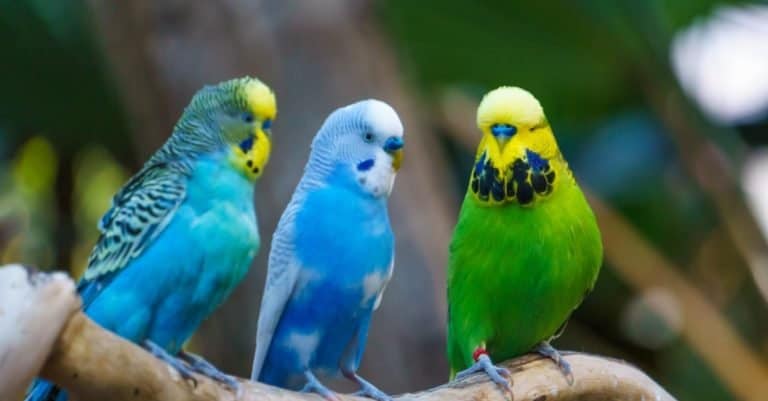
Although Budgies can come in one of a thousand different color combinations, yellow and green are the most common colors. Hints of blue as well as black often mark their heads and backs. The tail feathers can extend up to 4.5 inches.
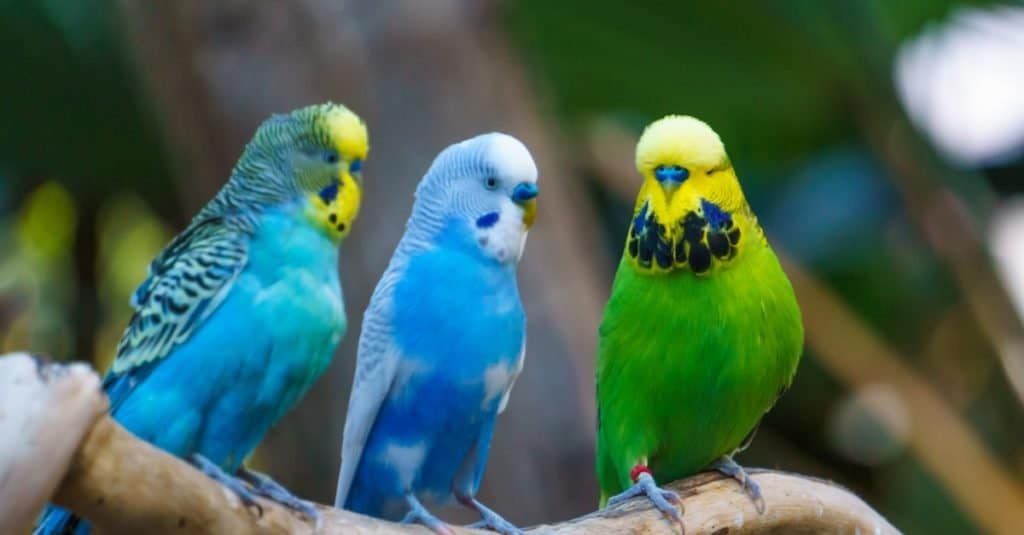
Budgies are often only seven inches tall and have a total wingspan of 12 inches.
©Dorota Photography/Shutterstock.com
Parakeet vs. Budgie
Depending upon where you look for information, some people will tell you that parakeets and budgies are the same. Essentially, this fact is true. However, the term “parakeets” refers to any number of small bird species with long tail feathers.
By some counts, there are nearly 400 individual parrot and parakeet species all over the Earth. Budgerigars are one species of bird that makes its home in Australia. The distinction between what these birds are called depends upon location. Australia, Europe, Africa, and the rest of the world call these small, brightly colored avians “budgerigars,” while in the US, these same birds are referred to as “parakeets.”
Budgies typically have a lifespan between five and ten years in captivity, but some of these birds have lived 15 years or more. Other parakeet species, such as the monk parakeet, can live up to 20 years or more.
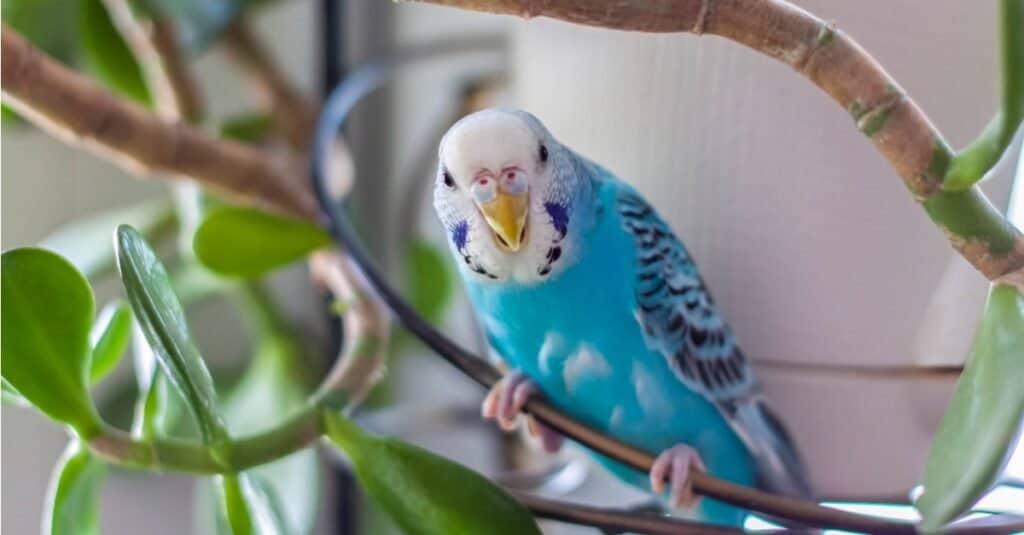
Budgies typically have a lifespan between five and ten years in captivity, but some of these birds have lived 15 years or more
©iStock.com/Alina Lebed
Behavior
Budgies are social creatures, preferring to pair up in the wild and will even live in small colonies of a few hundred when not migrating. In captivity, these birds are playful and have a knack for mimicking speech and sounds. They are outgoing and love talking with their humans.
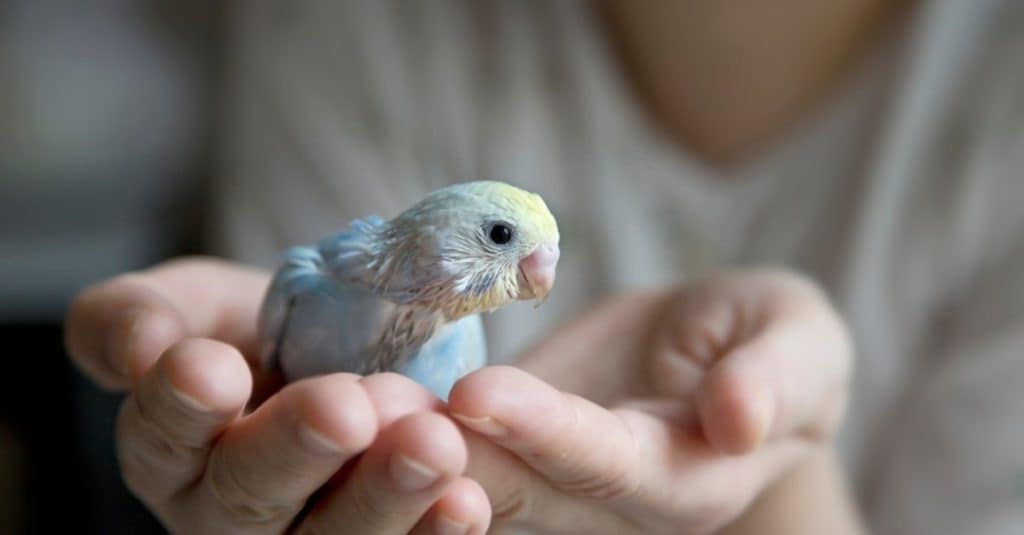
Budgerigars are outgoing and love talking with their humans.
©starry sky/Shutterstock.com
Nests
Out in nature, budgerigars prefer to live in tree holes or other crevices large and flat enough to lay their eggs. However, as pets, these birds will be happy with a flat box or floor filled with a soft material. Clean wood shavings or bits of shredded paper will do nicely for your pet budgie.
Diet
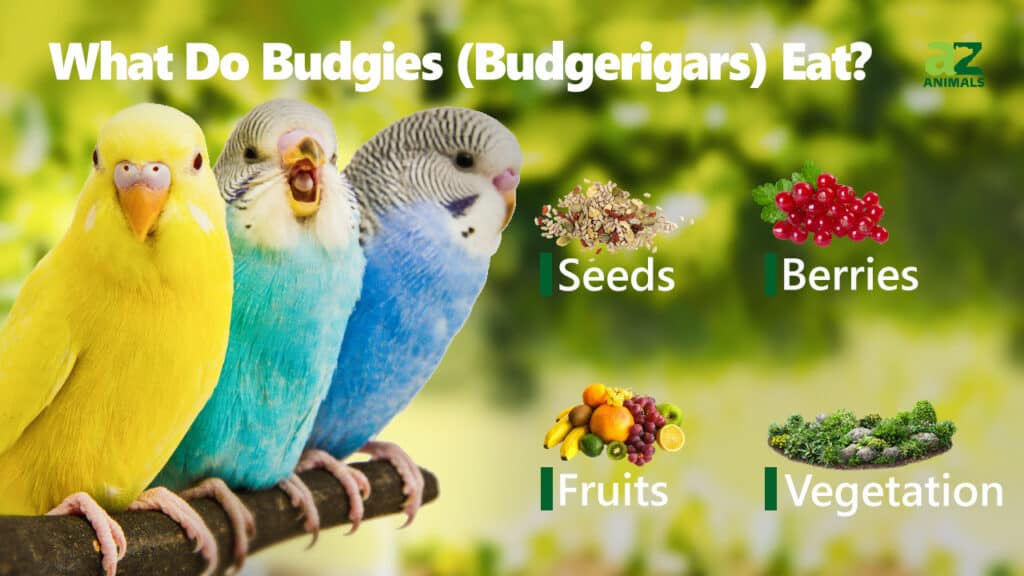
Budgerigars rely on grass seeds for most of their nutrition. They also root around on the ground for fruits and vegetation. Berries are also a popular snack, but too much fruit may make a budgie sick.
Predators and Threats
The overall budgie population is on the rise. Easily and cheaply kept as pets, habitat destruction and other risks that would be of concern for other wild creatures are not a major concern for these birds. However, larger birds such as hawks and falcons do prey on the budgie. Feral cats, rats, and other rodents sometimes raid budgie nests for eggs or hunt the birds themselves.
Reproduction, Babies, and Lifespan
Female budgies reach adulthood at around eight months of age. In the wild, these birds will pair up to mate and raise offspring. Females normally lay between four to six eggs in a single clutch. The eggs can take up to 20 days to incubate prior to the chicks hatching. Sometimes, it takes another week to 10 days for all the eggs to hatch.
Chicks are born blind and without down or other feathers. Their mothers are responsible for keeping them warm constantly over the first 10 days or so until their eyes open. They will then begin to grow down and feathers, but it will be another four or five weeks before these younglings can leave the nest.
Between six and eight weeks, fledglings begin to learn to fly and begin attempting to leave the nest. Age for flight varies depending on the number of chicks in the brood and the age of each chick. For example, chicks born with no other nest-mates often learn to fly sooner than birds from larger clutches. “Only children” benefit from their parents’ extra attention.
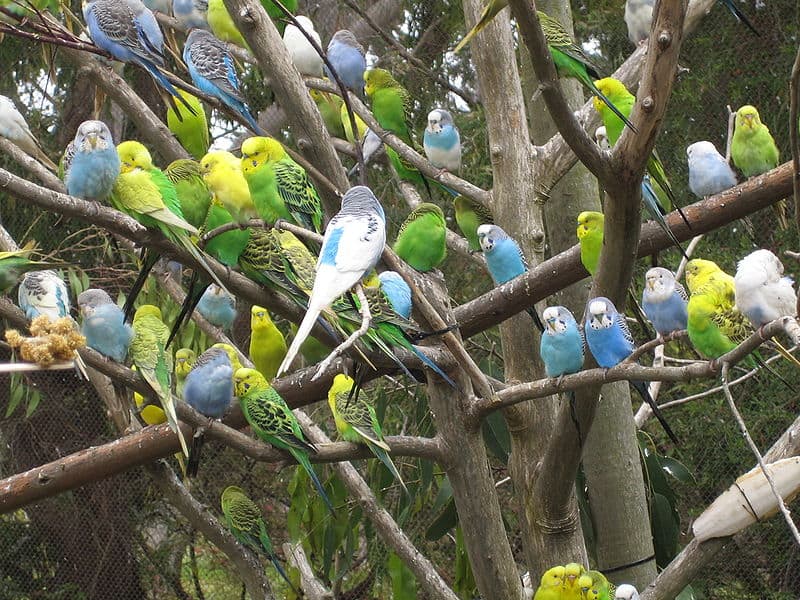
Age for flight varies depending on the number of Budgerigar chicks in the brood and the age of each chick.
©anna saccheri / Creative Commons – Original
Breeding
Breeding in the wild takes place anywhere between June and September in Northern Australia and between August and January in the South. Although budgerigars are opportunistic breeders, they do show affection to their flock mates by preening or feeding one another. Populations in some areas have increased as a result of increased water. Nests are generally made in holes in trees, fence posts, or fallen logs. Four to six eggs are laid at a time.
Population
The budgerigar’s conservation status is labeled as least concern as far as its risk of becoming endangered. They reproduce easily and frequently, both in the wild and in captivity. As a result, the total worldwide budgie population is estimated at more than 5,000,000 birds and growing.
Budgerigar Pictures
View all of our Budgerigar pictures in the gallery.

RHJPhtotoandilustration/Shutterstock.com
How to say Budgerigar in ...
Sources
- Wikipedia / Accessed December 28, 2020
- Pet Place / Accessed December 28, 2020
- Wikihow / Accessed December 28, 2020
- Bush Heritage / Accessed December 28, 2020
- Tail Feathers / Accessed December 28, 2020
- World Birds / Accessed December 28, 2020
- The Royal Society / Accessed December 28, 2020
- Australia / Accessed December 28, 2020