

C
Species Profile

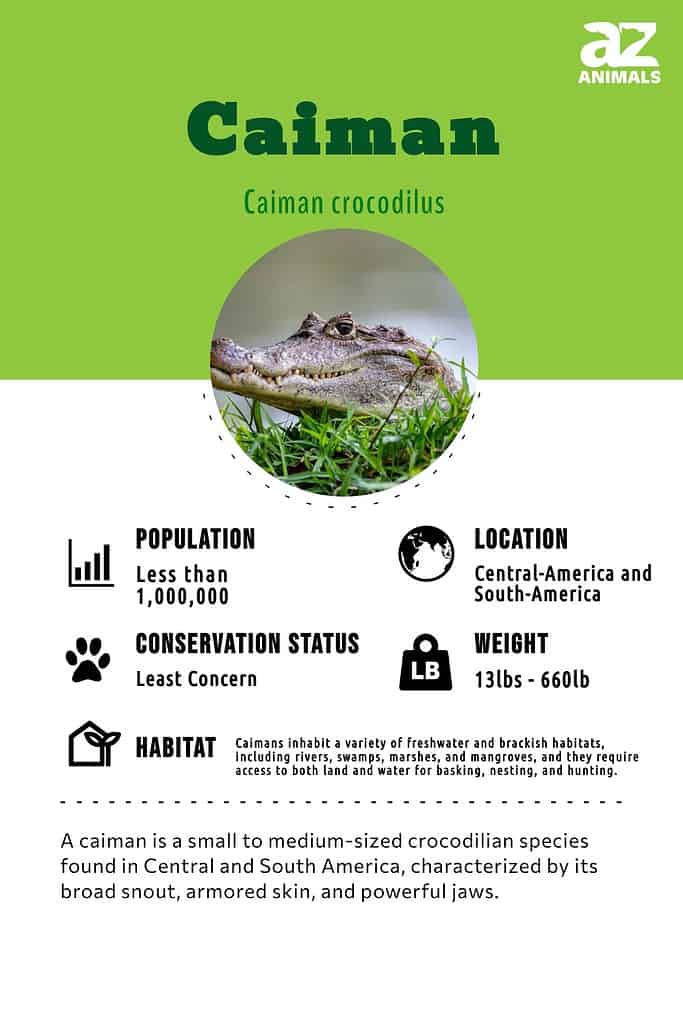
Caiman

Alligatoridae (caimans: subfamily Caimaninae)

Freshwater armor, silent power
Robert Lawton / Creative Commons

At a Glance

Family Overview This page covers the Caiman family as a group. Stats below are general traits shared across the family.
Also Known As Gator, Cayman, Caimán, Jacaré, Yacaré
Diet Omnivore
Activity Cathemeral+
Lifespan 30 years
Weight 500 lbs
Status Not Evaluated
Did You Know?

Size spans about 1.2-5 m, from dwarf caimans (Paleosuchus) to the largest alligators and black caimans (Alligator, Melanosuchus).

Scientific Classification

Family Overview "Caiman" is not a single species but represents an entire family containing multiple species.

Caimans are New World crocodilians (alligatorids) primarily from Central and South America. They are semi-aquatic predators/scavengers occupying rivers, flooded forests, marshes, and lakes, and they play important roles in freshwater food webs.

Kingdom
Animalia
Phylum
Chordata
Class
Reptilia
Order
Crocodylia
Family
Alligatoridae

Distinguishing Features

  • Armored body with dorsal osteoderms (bony scutes)
  • Broad, typically alligator-like snout shape compared with true crocodiles (varies by species)
  • Eyes and nostrils positioned high on the head for low-profile surfacing
  • Powerful tail for swimming; strong bite adapted to fish, invertebrates, and vertebrate prey

Physical Measurements

Males and females differ in size

Length
♂ 9 ft 2 in (3 ft 11 in – 16 ft 5 in)
♀ 6 ft 11 in (3 ft 7 in – 9 ft 2 in)
Weight
♂ 176 lbs (13 lbs – 1,001 lbs)
♀ 121 lbs (13 lbs – 201 lbs)
Tail Length
♂ 4 ft 7 in (1 ft 12 in – 9 ft 2 in)
♀ 3 ft 3 in (1 ft 10 in – 6 ft 7 in)
Top Speed
22 mph
Short land bursts 15–35 km/h

Appearance

Primary Colors
Secondary Colors
Skin Type Alligatoridae skin is thick, tough, and scaly, reinforced by bony osteoderms (dorsal armor). Belly scales vary; some caimans have very strong belly plates. Raised scutes and keels protect in water and shore habitats.
Distinctive Features
  • Sizes in the family range from about 1.2–1.6 m long in dwarf caimans (Paleosuchus) to 4.5–5.0 m in large species (Melanosuchus niger). Weights go from a few kilograms to 300–400+ kg.
  • Lifespan range across species: commonly ~25-50+ years in the wild (varies with hunting pressure and habitat quality); in captivity, many can reach ~50-70+ years, with longevity varying by species and husbandry.
  • Head and snout: generally broader, more U-shaped snouts than many true crocodiles (though snout breadth varies by genus and ecology).
  • Jaw/tooth presentation: when the mouth is closed, the upper jaw typically overlaps the lower so the enlarged 4th lower-jaw tooth is not prominently visible externally (a common alligatorid trait).
  • Cranial ornamentation variation: some caimans show pronounced bony ridges between/around the eyes (e.g., the 'spectacled' ridge in Caiman crocodilus), while others have smoother head profiles.
  • Armor and build differences: dwarf caimans (Paleosuchus) tend to be more heavily armored and compact-bodied for small streams/forested habitats; larger taxa (e.g., Melanosuchus, some Caiman) are more open-water/river-lake oriented with robust heads and powerful tails.
  • Tail and locomotion: laterally compressed, muscular tail for propulsion; limbs strong for short terrestrial movement between water bodies, nesting sites, and refuges.
  • Alligatoridae (caimans: Caimaninae) are semi-aquatic predators/scavengers in freshwater rivers and wetlands. Young eat invertebrates and small fish; adults eat fish to mammals. Some are generalists; others specialize (Paleosuchus, Melanosuchus).
  • They build nests on land near water, using mounds or holes; egg number and nesting times vary by region. Females often guard nests and help hatchlings reach water; some groups tolerate young in nursery areas.
  • They help control freshwater food webs and act as scavengers, eating many aquatic and shoreline animals and moving nutrients by nest and shore disturbance; they can be mesopredators or apex predators.
  • Conservation status of caimans differs by species and region; threats include habitat change, hunting and illegal trade, and human conflict, so some species are common while others are vulnerable.

Sexual Dimorphism

Sexual dimorphism is generally present and primarily size-based across alligatorids/caimans: males typically grow larger and more robust than females, with proportionally broader heads and thicker necks/tails. The degree of dimorphism varies by species and population, and becomes more pronounced with age as growth rates diverge.

♂
  • Typically larger maximum total length and mass; in large-river/lake species, mature males may be dramatically heavier than females.
  • Broader, more massive skull and jaws; thicker neck and tail base in mature individuals.
  • More frequent engagement in territorial displays/contests in many species (intensity varies by habitat density and population structure).
♀
  • Smaller average adult size; proportionally narrower head in many species (variation occurs).
  • Often the primary nest guard and hatchling attendant; extent and duration of post-hatching care varies among species/populations.
  • Body condition may fluctuate strongly with reproductive cycle (egg production, nesting, guarding).

Did You Know?

Size spans about 1.2-5 m, from dwarf caimans (Paleosuchus) to the largest alligators and black caimans (Alligator, Melanosuchus).

Typical adult masses range from single-digit kg in the smallest caimans to hundreds of kg in the largest individuals; body build varies from stocky alligators to more lightly built caimans.

Most live mostly in freshwater (rivers, marshes, flooded forests, lakes); compared with "true crocodiles" many alligatorids have less salt tolerance and are less often in marine habitats.

Many species build mound nests from vegetation/soil, and maternal care (guarding nests and escorting hatchlings) is common across the family.

Diet shifts with size: juveniles take insects/crustaceans; larger adults add fish, turtles, birds, and mammals-some species also scavenge heavily.

Caiman diversity is high in Central/South America, with key lineages including Caiman (e.g., spectacled/broad-snouted/yacaré), Melanosuchus (black caiman), and Paleosuchus (dwarf caimans).

Family lifespans commonly run ~30-60+ years; some individuals (notably large alligators in managed care) can exceed ~70 years.

Unique Adaptations

  • Broad, often U-shaped snouts (especially in alligators) suited to powerful crushing bites; many caimans have proportionally narrower snouts, reflecting diverse prey use.
  • Heavy osteoderms (bony scutes) forming body armor; dwarf caimans are especially robustly armored for life in tight forest streams and against predators.
  • Secondary bony palate and a throat valve that allow them to hold prey underwater with the mouth open while keeping water out of the airway.
  • Highly sensitive facial integumentary sensory organs (pressure receptors) that detect water ripples-useful for hunting in murky freshwater.
  • Eye adaptations for semi-aquatic life: a nictitating membrane (clear "third eyelid") and a reflective layer that improves low-light vision.
  • Cranial ornamentation in some caimans: ridges and bony features (notably around the eyes/snout in certain species) that can aid species recognition and display.

Interesting Behaviors

  • Ambush hunting: many alligatorids float with eyes/nostrils above water, striking rapidly from concealment; timing and prey choice vary by habitat and body size.
  • Seasonal congregation: in dry seasons, caimans often concentrate in remaining channels/pools, increasing social interactions and competition.
  • Vocal communication: hatchlings chirp from within the nest; adults of several species bellow/roar during breeding, with intensity and display styles differing among taxa.
  • Nest building and guarding: females typically construct and defend nests; some species show prolonged attendance and move hatchlings to nursery areas.
  • Opportunistic feeding: many species switch between active hunting and scavenging; generalists (e.g., spectacled caiman) thrive in a wide range of disturbed and natural habitats.
  • Ecosystem engineering (variable by species): large individuals can create/maintain "gator/caiman holes" or channels that retain water and provide refuges for fish and other wildlife during droughts.
  • Thermoregulation routines: basking, open-mouth gaping, and shuttling between sun and water help manage body temperature in cool mornings or hot afternoons.

Cultural Significance

Alligatorids (alligators and caimans) shape wetland jobs and culture: hides support controlled leather trade; live animals bring nature tourism and help wetland protection. In the Americas and China (Chinese alligator, lower Yangtze wetlands) they feature in stories as water beings—dangerous and protective.

Myths & Legends

Ancient Chinese tradition refers to the Chinese alligator as an "earth dragon," a river-dwelling creature linked in folklore to water, thunder, and drumming; some classical references describe drums made from its hide.

In Aztec creation tradition, a primordial crocodilian monster was associated with the forming of the earth, with its body imagined as the basis of the world's surface.

Maya iconography and stories include a celestial crocodilian motif (often described as a cosmic or earth caiman) associated with the world's foundation and the watery underworld.

Across parts of the U.S. Southeast, alligators appear in Native American oral traditions and animal tales as formidable river beings-sometimes outwitted by smaller tricksters (like Rabbit), sometimes treated as guardians of watery places.

The names tell a colonial times story: "alligator" comes from a Spanish phrase meaning "the lizard," while "caiman" comes from Indigenous Caribbean and South American languages, showing long human contact with wetlands.

Conservation Status

NE Not Evaluated (family-level; species are assessed individually, ranging from Least Concern to Critically Endangered)

Has not yet been evaluated against the criteria.

Population Unknown

Protected Under

  • CITES: Alligatoridae species/populations are listed under Appendix I and/or Appendix II depending on the taxon and country/population (international commercial trade is prohibited for Appendix I and strictly regulated for Appendix II).
  • National wildlife protection laws and regulated harvest programs exist in multiple range states; where well-enforced (e.g., managed alligator/caiman programs), some populations have stabilized or recovered.
  • Protected areas (wetland reserves, national parks, indigenous/community conserved areas) are important for maintaining core nesting and refuge habitats, but effectiveness varies with enforcement and landscape connectivity.
  • Conservation landscape across the family: most caimans and the American alligator are currently assessed as Least Concern with regionally variable pressures, while the Chinese alligator (Alligator sinensis) is Critically Endangered; threats are dominated by wetland loss/alteration, illegal take, and escalating human pressures, with climate and pollution as growing cross-cutting risks.

You might be looking for:

Spectacled caiman

38%

Caiman crocodilus

The most widespread and commonly referenced ‘caiman’; variable, often with a bony ridge between the eyes (‘spectacles’).

Yacaré caiman

18%

Caiman yacare

Common South American caiman of the Paraguay–Paraná basin; heavily associated with the Pantanal region.

Broad-snouted caiman

12%

Caiman latirostris

Short, broad snout; found in eastern South America in marshes, swamps, and slow waters.

Black caiman

12%

Melanosuchus niger

Largest caiman species; dark coloration; major Amazon/Orinoco predator.

Cuvier’s dwarf caiman

10%

Paleosuchus palpebrosus

Small, armored caiman of forested waterways; notably terrestrial for a crocodilian.

Schneider’s smooth-fronted caiman

10%

Paleosuchus trigonatus

Dwarf caiman with a relatively smooth head profile; associated with fast-flowing forest streams.

Life Cycle

Birth 30 hatchlings
Lifespan 30 years

Lifespan

In the Wild
15–60 years
In Captivity
20–80 years

Reproduction

Mating System Polygynandry
Social Structure Solitary
Breeding Pattern Seasonal
Fertilization Internal Fertilization
Birth Type Internal_fertilization

Alligatoridae (alligators and caimans) are semi-aquatic, egg-laying crocodylians. Males and females often mate with more than one partner in a seasonal, solitary system. Fertilization is internal; females build nests, guard eggs, and help young; sex depends on nest temperature.

Behavior & Ecology

Social Congregation Group: 2
Activity Cathemeral, Crepuscular, Nocturnal, Diurnal
Diet Omnivore Fish (and other abundant local aquatic prey)
Seasonal Hibernates

Temperament

Alligatorids (including caimans, Caimaninae) range from about 1.2 to 1.5 m up to 4 to 5.8+ m long; mass from under 10 kg to several hundred kg; wild lifespan about 20–50+ years, some 60–70+.
Generally wary and avoidance-oriented toward large animals/humans when not habituated, but capable of boldness where hunted less or food is available; responses range from retreat/submergence to threat displays and charges when cornered.
Alligators and caimans change how they defend territory by sex and season: adult males are more territorial during breeding; females guard nests and hatchlings. They get along more at shared refuges, but fighting rises with crowding.
Opportunistic predatory/scavenging behavior is typical; feeding can be solitary or occur in loose aggregations where prey is concentrated. Cannibalism and intra-guild predation can occur, especially when size differences are large and resources are scarce.
Thermoregulatory behavior strongly shapes apparent sociality: basking and access to warm/cool microhabitats can create temporary clusters without stable group cohesion.

Communication

Low-frequency bellows/roars (notably adult males) used in courtship, spacing, and dominance contexts
Grunts, growls, and hisses during close-range interactions, threat, or handling
Subadult/juvenile chirps and distress calls
Hatchling and embryo calls that coordinate hatching and elicit maternal excavation/guarding responses
Water-surface displays (head slaps, tail thrashes, splashing) used in territorial and courtship signaling
Postural/visual signals (head elevation, jaw gaping, body arching, inflated posture) to communicate threat or dominance
Vibration/infrasound transmission through water and body posture (e.g., 'water dance' rippling) during mating/territorial display
Chemical cues from musk/cloacal glands and scent-marking at frequently used sites Likely variable among species and habitats
Tactile contact in courtship, aggression, and maternal interactions Nudging/escorting of young

Habitat

Biomes:
Freshwater Wetland Tropical Rainforest Tropical Dry Forest Savanna Temperate Forest Temperate Grassland Marine +2
Terrain:
Riverine Coastal Plains Valley Muddy Sandy Island +1
Elevation: Up to 3280 ft 10 in

Ecological Role

Freshwater mesopredators to apex predators (depending on ecosystem) that also function as habitat modifiers in wetlands

Regulate prey populations (fish, crustaceans, amphibians, birds, mammals) and stabilize food webs Remove carrion and recycle nutrients via scavenging Create/maintain refugia (e.g., wallows/"alligator holes" in some systems) that concentrate water and provide dry-season habitat for other species Influence community structure through predation pressure and fear effects Potentially disperse seeds in areas where fruit is consumed (variable and generally secondary to carnivory)

Diet Details

Main Prey:
Fish Crustaceans Insects and other aquatic invertebrates Mollusks Amphibians Reptiles Birds Mammals Carrion +3
Other Foods:
Fallen fruit Seeds Aquatic vegetation and algae

Human Interaction

Domestication Status

Wild

Alligatoridae (alligators and caimans, including Caimaninae) are wild animals; none are truly domesticated. People keep them in zoos, rescues, and farms for skins and sometimes meat, but this is care in captivity, not domestication. Farming, illegal hunting, escapes, and bad private care cause welfare problems and feral populations outside native ranges.

Danger Level

High
  • Bites causing severe laceration/crush injury; risk increases sharply with animal size and habituation to people/feeding
  • Drowning risk during attacks in water
  • Nest/young defense: females may charge or bite when people approach nests or hatchlings
  • Food-conditioning from intentional or accidental feeding increases boldness and conflict
  • Injury during handling/capture (even small caimans can inflict serious hand/face wounds)
  • Secondary risks: zoonotic pathogens (e.g., Salmonella), and injuries from improper enclosure design/escape incidents

As a Pet

Not Suitable as Pet

Legality: Alligatoridae (including caimans) are often illegal or tightly restricted as pets. Many places need wildlife or exotic permits, secure facilities and inspections; some ban certain sizes or species. CITES controls international trade.

Care Level: Expert Only

Purchase Cost: $50 - $1,500
Lifetime Cost: $15,000 - $150,000

Economic Value

Uses:
Leather/skins industry (regulated ranching/farming and limited legal harvest in some regions) Meat and by-products (limited; more common in farmed contexts) Ecotourism and education (wildlife viewing, parks, zoos) Ecosystem services (predation/scavenging roles supporting freshwater food webs) Research and conservation programs (habitat protection, reintroductions, monitoring) Human-wildlife conflict management (nuisance response, translocation, control where permitted)
Products:
  • Skins/leather goods (e.g., boots, belts, handbags)
  • Meat (local markets; farmed supply where legal)
  • By-products (e.g., oils/fats in some markets; teeth/skulls as curios-often regulated)
  • Tourism services (guided trips, park fees, zoo exhibits)

Relationships

Predators 9

Human
Human Homo sapiens
Jaguar
Jaguar Panthera onca
Puma
Puma Puma concolor
Green anaconda
Green anaconda Eunectes murinus
Orinoco crocodile
Orinoco crocodile Crocodylus intermedius
American crocodile Crocodylus acutus
Giant otter
Giant otter Pteronura brasiliensis
Large wading birds Ciconiidae/Ardeidae
Large predatory fish Serrasalmidae/Pimelodidae

Related Species 8

American alligator
American alligator Alligator mississippiensis Shared Family
Chinese alligator
Chinese alligator Alligator sinensis Shared Family
Spectacled caiman Caiman crocodilus Shared Family
Yacare caiman Caiman yacare Shared Family
Broad-snouted caiman Caiman latirostris Shared Family
Black caiman Melanosuchus niger Shared Family
Cuvier's dwarf caiman Paleosuchus palpebrosus Shared Family
Schneider's dwarf caiman Paleosuchus trigonatus Shared Family

Ecological Equivalents 5

Animals that fill a similar ecological role in their ecosystem

American crocodile Crocodylus acutus Occupies overlapping aquatic predator and scavenger niches in parts of the Neotropics and coastal zones. Exhibits similar ambush hunting, nesting, and trophic roles, but is typically more salt-tolerant than most alligatorids.
Orinoco crocodile
Orinoco crocodile Crocodylus intermedius Large riverine ambush predator in northern South America. Overlaps with caiman communities in some river systems and competes for prey and for basking and nesting areas where ranges meet.
Morelet's crocodile Crocodylus moreletii Freshwater crocodile of Mesoamerica; uses similar habitats (marshes, lakes, slow rivers) and has a broadly similar prey base (fish, birds, mammals).
Gharial
Gharial Gavialis gangeticus Ecological analogue as a large aquatic reptile predator in river systems, primarily piscivorous. Differs strongly in snout shape and diet specialization.
Giant otter
Giant otter Pteronura brasiliensis Shares river and floodplain habitats and relies heavily on fish; can overlap with caimans and interact antagonistically through competition and occasional predation on caiman juveniles.

Types of Caiman

8

Explore 8 recognized types of caiman

American alligator
American alligator Alligator mississippiensis
Chinese alligator
Chinese alligator Alligator sinensis
Spectacled caiman Caiman crocodilus
Yacare Caiman Caiman yacare
Broad-snouted caiman Caiman latirostris
Black caiman Melanosuchus niger
Cuvier's dwarf caiman Paleosuchus palpebrosus
Schneider's dwarf caiman Paleosuchus trigonatus

The semi-aquatic reptiles known as caimans are indigenous to Central and South America. These crocodilian species, which are related to both alligators and crocodiles, live in a variety of aquatic settings, including brackish coastal regions as well as freshwater rivers and swamps.

Caimans are renowned for their powerful, nimble bodies, razor-sharp fangs, and excellent hunting skills, and they are significant-top predators in their particular habitats.

The traits, habits, and conservation status of caimans, as well as their interaction with people, will all be covered on this page.

Classification and Evolution
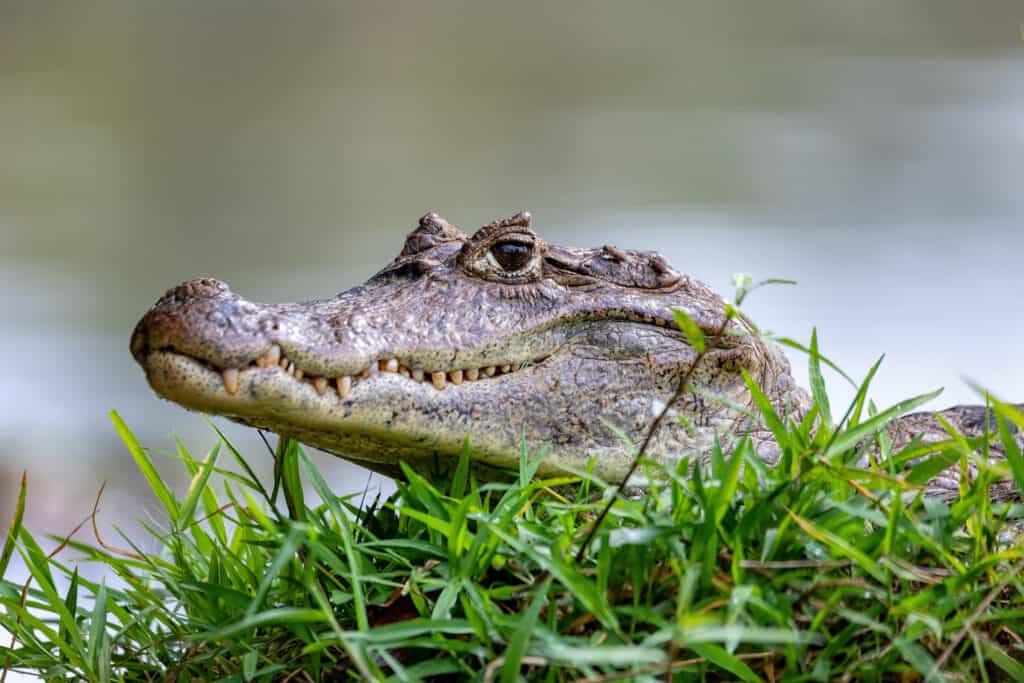
Spectacled caiman

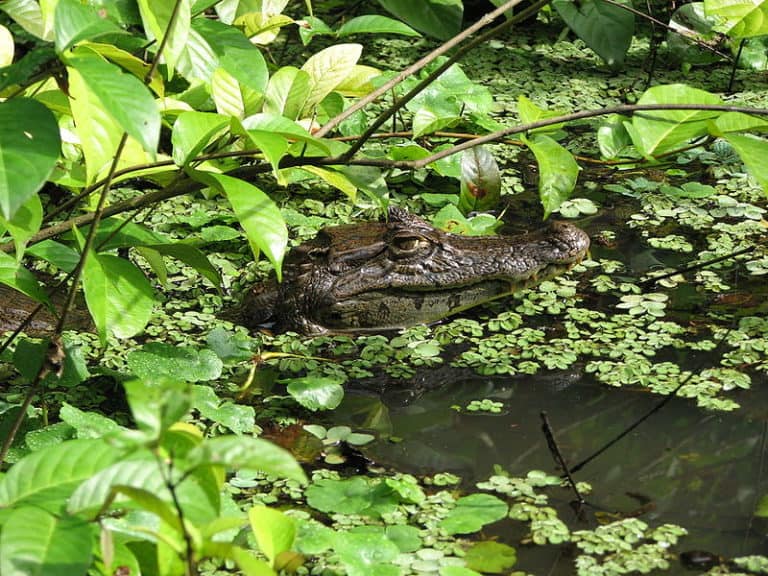
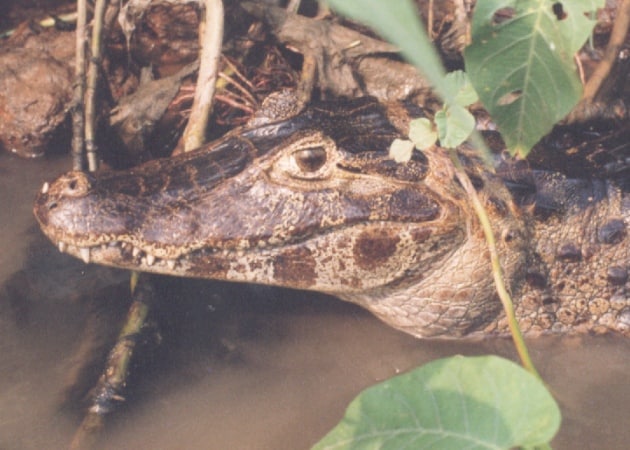
Spectacled caiman (Caiman crocodilus) or Common Caiman, a crocodilian reptile found in Refugio de Vida Silvestre Cano Negro, Costa Rica wildlife

There are six species of caiman found in a variety of wetland habitats throughout Central and South America.

Caimans are animals that are most closely related to alligators with which they share a number of similar characteristics. Like other crocodilians (a group of reptiles that includes crocodiles, alligators, caimans, and gharials), caimans are one of the longest-surviving species on the planet and has evolved very little over the past 200 million years.

They have no close living relatives and belong to a group of reptiles called archosaurs (which included dinosaurs), whereas other reptile species belong to a different group. Despite the fact that the dinosaurs became extinct 65 million years ago, caimans along with the other members of the crocodilian group are still going strong.

Additionally, there are three different types of Caiman:

  • Spectacled caiman
  • Yacare caiman
  • Broad-snouted caiman

Anatomy and Appearance
Caiman

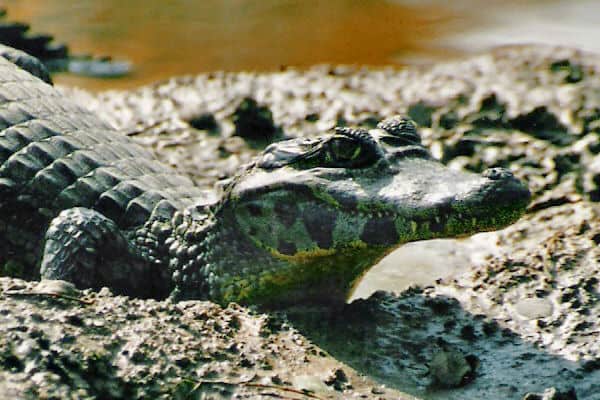
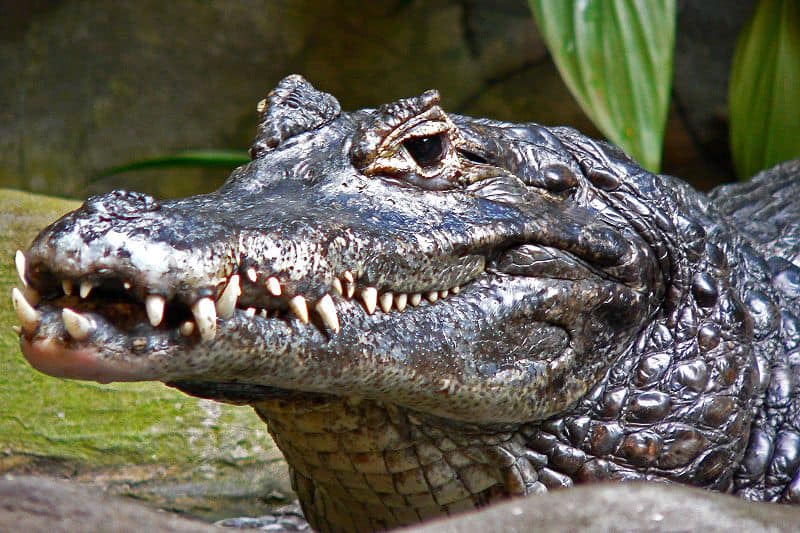
Caimans are animals that have wide, slightly flattened bodies and long vertically flattened, muscular tail that propels them through the water with immense power. Like other crocodilians, their nostrils and eyes are located on the top of their snout and head which means that they can still both breathe and see whilst being almost fully submerged and hidden in the water. Caimans (like alligators) have wide, flat heads with a rounded snout that allows them to prey on larger animal species with ease.

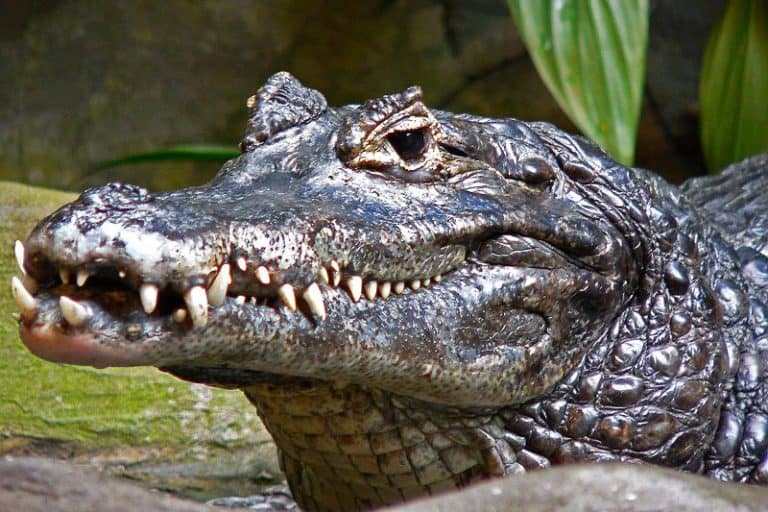
Their strong jaws contain a row of cone-shaped teeth, that when snapped shut drives them into their prey. Caimans cannot chew so swallow smaller prey whole. With larger animals, they use their sharp teeth and powerful bodies to tear at the flesh and are known to store larger prey species in underwater larders until they begin to decay and are therefore easier to consume. Caimans range in size from 1.5m long to 6m long depending on the species.

Black caimans are the largest caiman species and have dark grey to black colored, plated skin. Other caiman species range from a dull olive to grey or brown in color with a lighter underside. All have webbed feet with five toes on their front feet and four on their hind feet.

Distribution and Habitat
Yacare Caiman

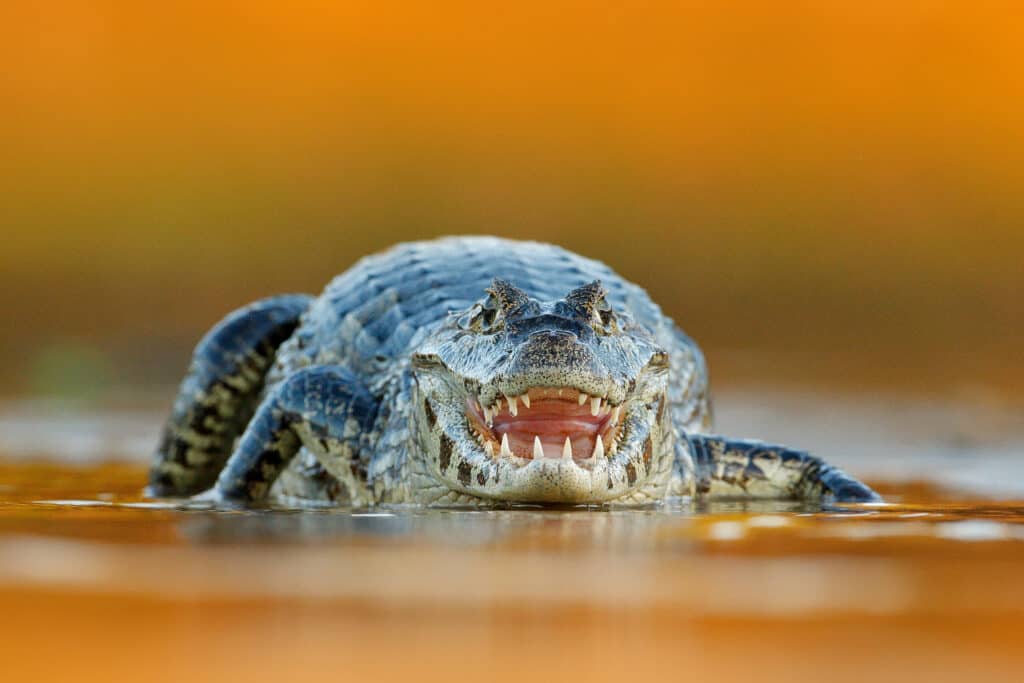
The yacare caiman is endemic to Argentina, Bolivia, Brazil, and Paraguay.

Caimans are found inhabiting a wide range of wetland habitats throughout Central and South America, the exact locations and habitat preferences are dependent on the species. Spectacled caimans (also known as the common caiman) are the most common and widespread species and have also been introduced into areas outside of their natural range including Puerto Rico and Cuba. They are found inhabiting rivers, lakes, and swampland.

They prefer stiller waters compared to black caimans that are larger in size and can therefore withstand stronger currents. Crucially, this difference in habitat preference also means that in areas where the range of the larger black caiman overlaps those of smaller species, there is less competition for territory between species as they occupy different habitat niches. Due to the fact that spectacled caimans prefer stiller waters, they are known to also reside in man-made waterways like canals and reservoirs.

Behavior and Lifestyle

Caimans spend most of the daytime hours resting in the water or basking on river banks in the sun and are mostly active at night. Although all caiman species are semiaquatic, some spend more time on land than others. Spectacled caimans rarely leave the safety of the water whereas black caimans often leave the water under the cover of darkness to hunt for larger prey species on land.

Males are highly territorial and quickly establish dominant hierarchies, with more dominant male caimans gaining access to more preferable territories and they also mate with more females. Spectacled caimans rely so heavily on their watery habitats that during periods of drought, they will burrow into the mud. Here they are able to enter a dormant state to avoid desiccation (extreme dryness).

Reproduction and Life Cycles

Caimans become sexually mature when they are between four and ten years old, depending on the species. The timing of the breeding season is also species dependent: spectacled caimans breed during the wet season in May and June, whereas black caimans breed during the dry season.

Females build nest mounds from either vegetation or mud that can be up to 1.5 meters in height. Between 30 and 65 eggs are then laid in a conical hole made at the top of the mound which hatch after around three months. Female caimans guard their nests during this time, with spectacled caiman females known to lay eggs in the same nest which they then guard together.

When they hear the hatchlings calling, the female caimans then help their young to the water by carrying them in their mouths. Female caimans remain with their young for up to a year to protect them from predators. Juvenile caimans are lighter in color than adults but these markings fade as the caiman ages, they live together in large groups called creches.

Diet and Prey

Caimans are formidable predators that hunt and consume a wide variety of animal matter. Due to their largely aquatic lifestyle, fish (such as catfish and piranha), crustaceans, and other small-sized aquatic animals make up the bulk of their diet. They are also known to hunt birds (particularly waterfowl) along with amphibians and small mammals. Capybaras and wild pigs are an important food source for many caiman populations, while large black caimans venture onto land during the night to hunt for larger prey including humans.

Caimans use a variety of techniques in order to hunt prey species but most commonly remain close to the river banks and lie in wait for mammals to come to the water to drink or to cross to the other side. They are also known to glide up to the prey, silently drifting through the water with just their eyes and nostrils exposed in the hope that they can sneak up on waterfowl without being seen.

Predators and Threats

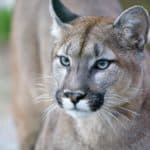
Due to their large size and formidable nature, adult caimans have very few predators within their natural environments. Large big cats such as jaguars are the most common and successful predators of caimans. The small size of young caimans, however, means that they are easier targets to be preyed upon by other animal species.

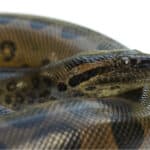
Along with wild cats, birds of prey, snakes, and omnivorous mammals such as wild pigs, are all known to prey on the more vulnerable juveniles. Caimans are also threatened by habitat degradation throughout much of their natural range in the form of deforestation and water pollution. They have also been the subjects of hunting for their skin and for their meat.

Interesting Facts and Features
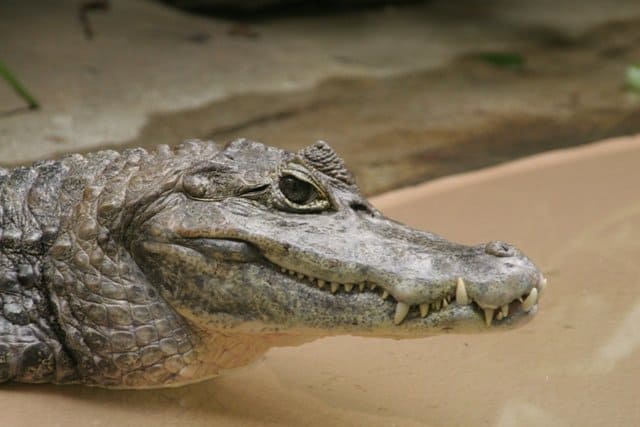
A close-up of a Caiman (Caiman Crocodilus).

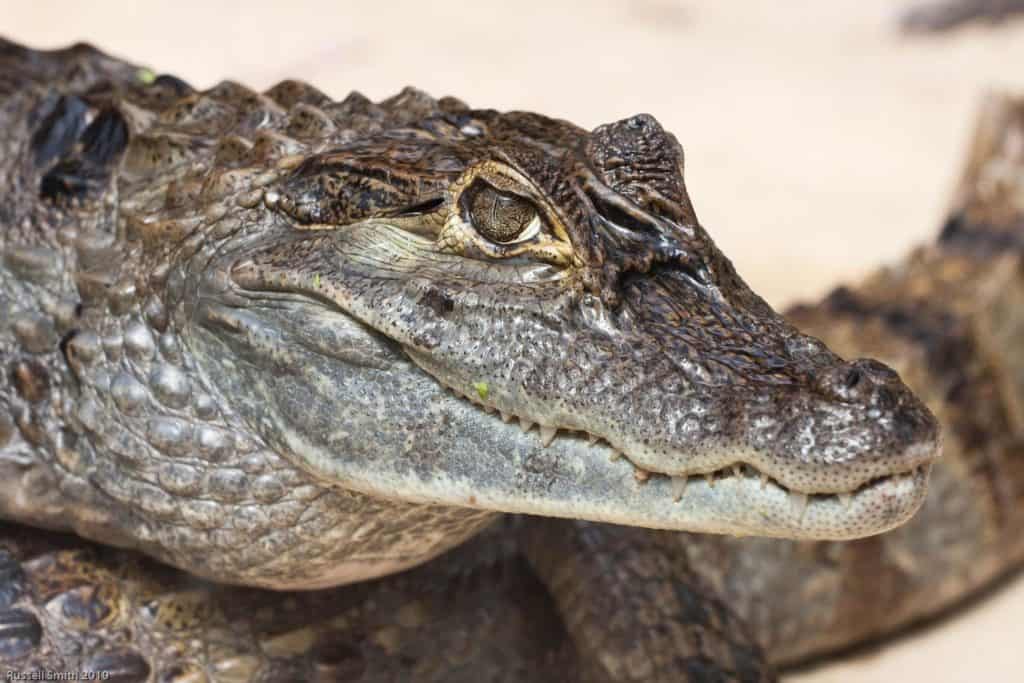
Unlike mammals that have just two sets of teeth that last them for their whole lives, caimans continuously shed and replace their teeth in order to keep them razor-sharp. The new set of teeth grows beneath the existing one, pushing the old tooth out when the new one is fully developed. Due to their semi-aquatic lifestyle, caimans have a number of fascinating adaptations that help them to survive more successfully in the water.

Like other crocodilian species, caimans have a third transparent eyelid which helps to protect their eyes when they are in the water without compromising their sight. They also have flaps over the external parts of their ears and nose that are close to prevent water from entering them and a special flap at the back of their throat. This allows caimans to catch fish whilst swimming with their open mouths but prevents water from entering their lungs.

Relationship with Humans

Caimans have been hunted by people for their tough skins that are most commonly used in the production of clothing, primarily shoes and to make bags. They are also hunted locally for meat which is an important protein source for some populations.

In more recent years, they have been heavily affected by habitat loss to make way for growing human settlements and also to clear land for agriculture. Black caimans are particularly feared by local people, as their large-sized, powerful bodies have meant that they are capable of hunting people within their range.

Conservation Status and Life Today

Today caimans are listed by the IUCN as animals that are of Least Concern of becoming extinct in the near future. Despite enormous population declines (the black caiman population is thought to have diminished by 99% over the past 100 years), they are still thriving in certain regions. Interestingly, the demise of larger crocodilian species throughout Central and South America has led to the extension of their range in some areas.

View all 392 animals that start with C
How to say Caiman in ...
Danish
Kaiman
German
Echte Kaimane
English
Caiman
Esperanto
Kajmano
Spanish
Caiman
Finnish
Kaimaanit
French
Caïman
Hebrew
קיימן
Dutch
Kaaimannen
Polish
Kajmany
Turkish
Kayman

Sources

  1. David Burnie, Dorling Kindersley (2011) Animal, The Definitive Visual Guide To The World's Wildlife / Accessed April 23, 2018
  2. Tom Jackson, Lorenz Books (2007) The World Encyclopedia Of Animals / Accessed April 23, 2018
  3. David Burnie, Kingfisher (2011) The Kingfisher Animal Encyclopedia / Accessed April 23, 2018
  4. Richard Mackay, University of California Press (2009) The Atlas Of Endangered Species / Accessed April 23, 2018
  5. David Burnie, Dorling Kindersley (2008) Illustrated Encyclopedia Of Animals / Accessed April 23, 2018
  6. Dorling Kindersley (2006) Dorling Kindersley Encyclopedia Of Animals / Accessed April 23, 2018
Rebecca Bales

About the Author

Rebecca Bales

Rebecca is an experienced Professional Freelancer with nearly a decade of expertise in writing SEO Content, Digital Illustrations, and Graphic Design. When not engrossed in her creative endeavors, Rebecca dedicates her time to cycling and filming her nature adventures. When not focused on her passion for creating and crafting optimized materials, she harbors a deep fascination and love for cats, jumping spiders, and pet rats.
Connect:

Thank you for reading! Have some feedback for us?


Caiman FAQs (Frequently Asked Questions)

Caimans are Carnivores, meaning they eat other animals.