










“A small cat that can run up to 50 miles per hour”
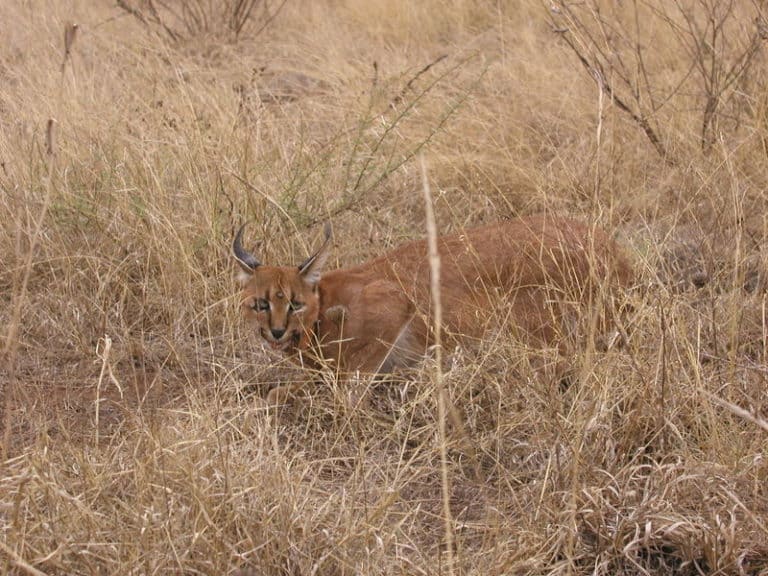
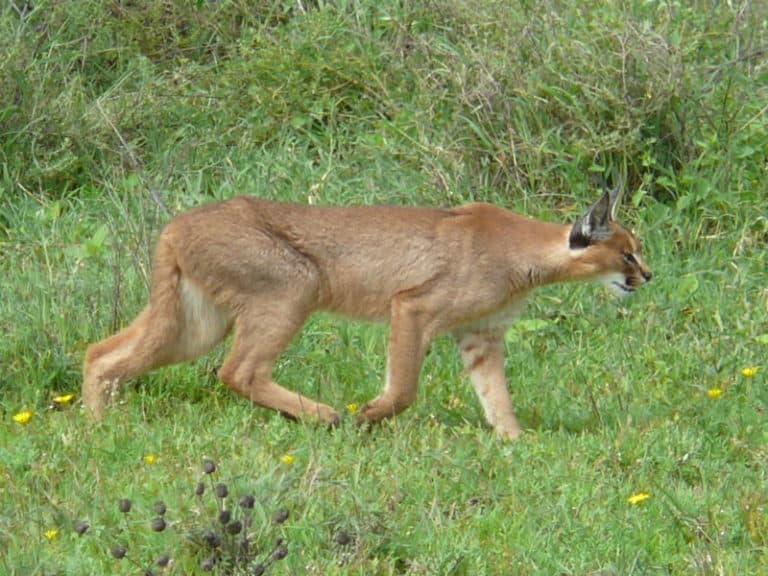
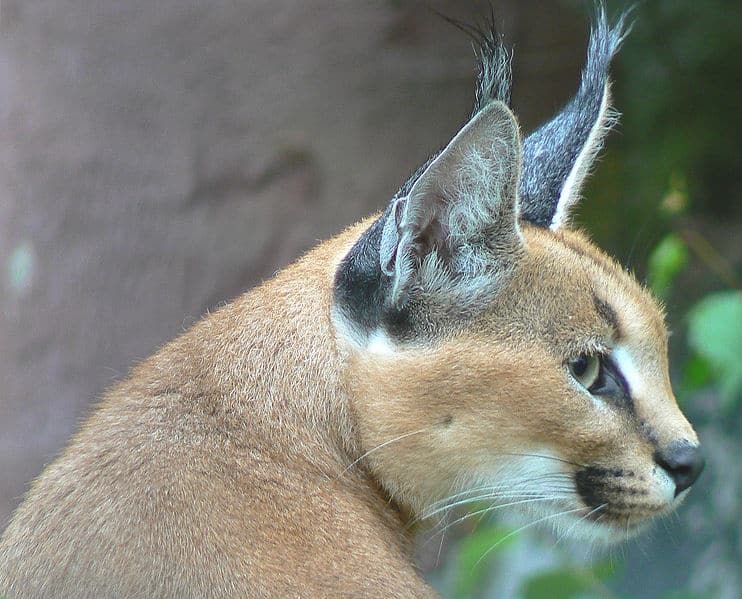
Caracals can be found in many places including Africa, the Middle East and India. The serval and the African golden cat are its closest family members. A caracal’s black, tufted ears give it a look different from most cats in the wild. A caracal’s speed and ability to leap into the air make it an excellent hunter.
Amazing Caracal Facts!
• A cat with speed: A caracal can run at speeds of up to 50mph! No wonder it’s also known as a gazelle cat.
• A skillful hunter: A caracal can leap into the air to catch a bird as it’s taking off.
• Extremely sensitive hearing: A caracal has 20 muscles in each of its ears helping it to track down prey.
Scientific Name
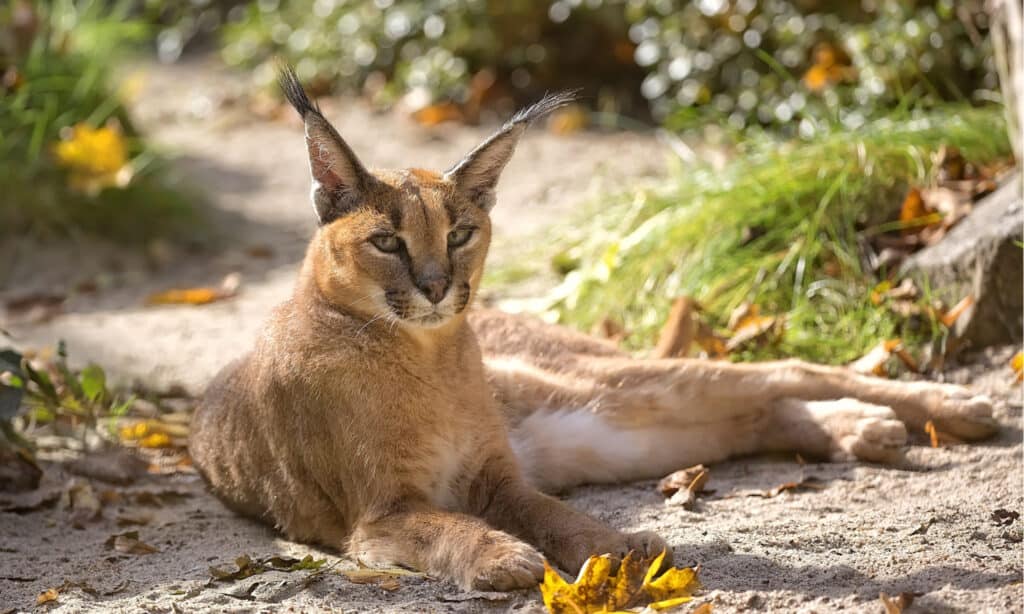
The word caracal comes from the Turkish word for ‘black ear’
©Janusz Pienkowski/Shutterstock.com
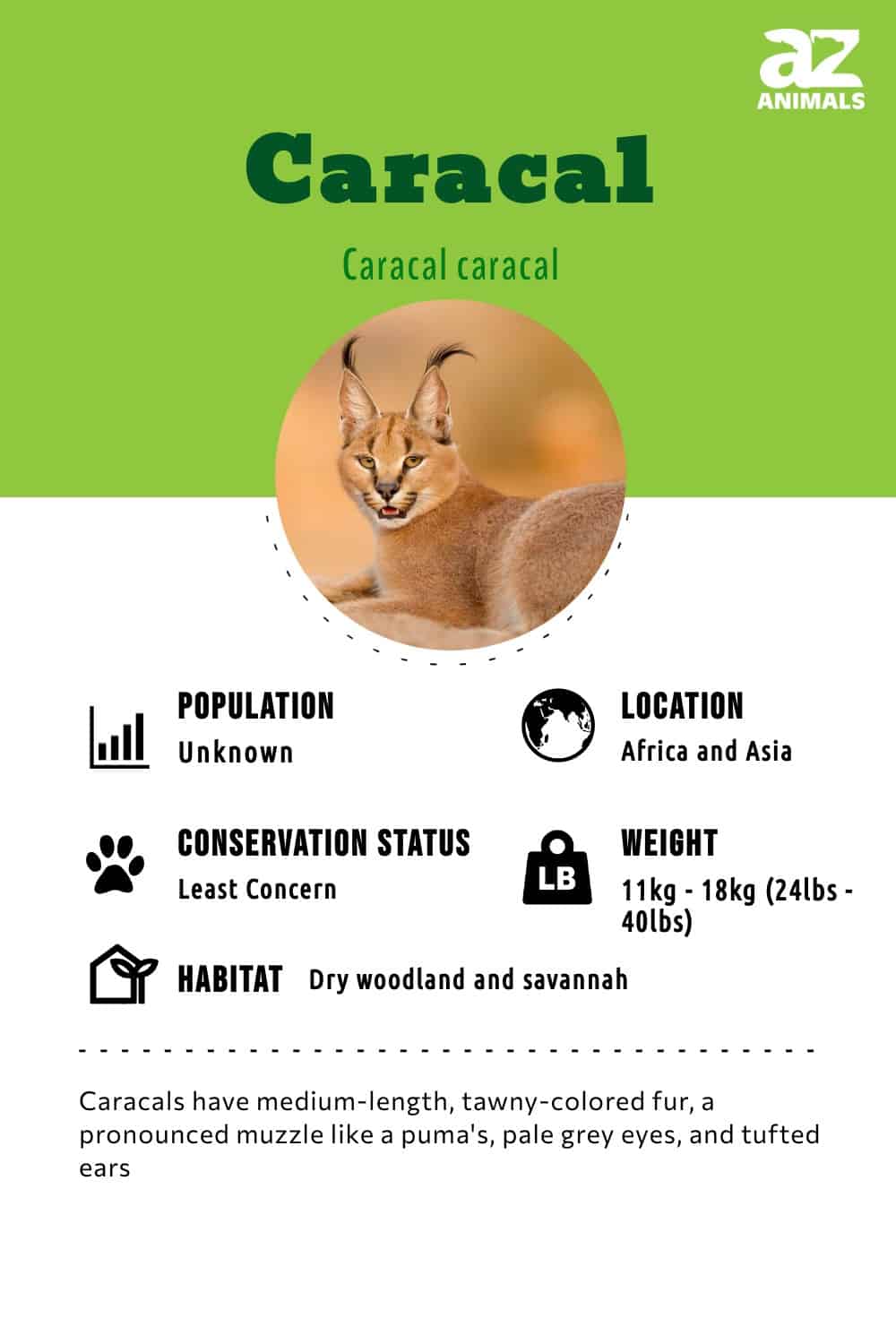
Caracal is the common name of this cat while Felis caracal is its scientific name. This cat belongs to the Felidae family and is a member of the Mammalia class. The name caracal comes from a Turkish word, karakulak. Karakulak means black ear.
Evolution
Between 7 – 12 million years ago, the evolutionary branch known as the caracal lineage broke away. By about 6 – 9 million years ago, the ancestor of the wild feline had made its way to Africa. Between about 1 – 3 million years ago, the species Caracal caracal and Caracal aurata, or the caracal and the African golden cat had diverged into separate evolutionary pathways.
Appearance & Behavior
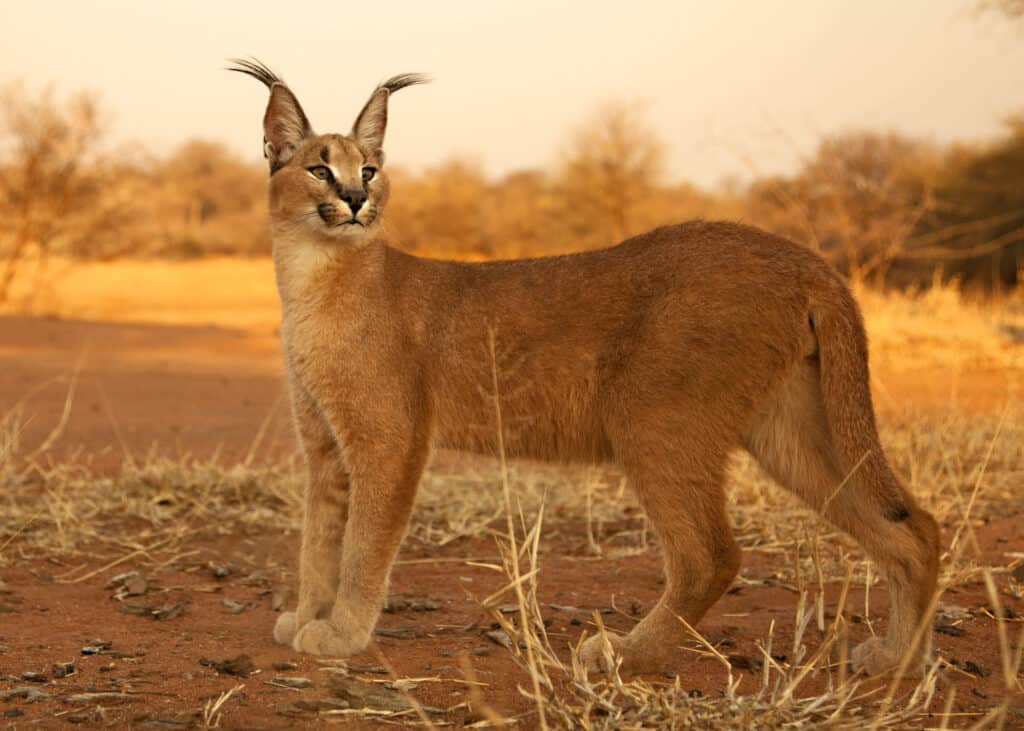
Caracals are about as tall as a border collie and as heavy as two bowling balls
©iStock.com/MarieHolding
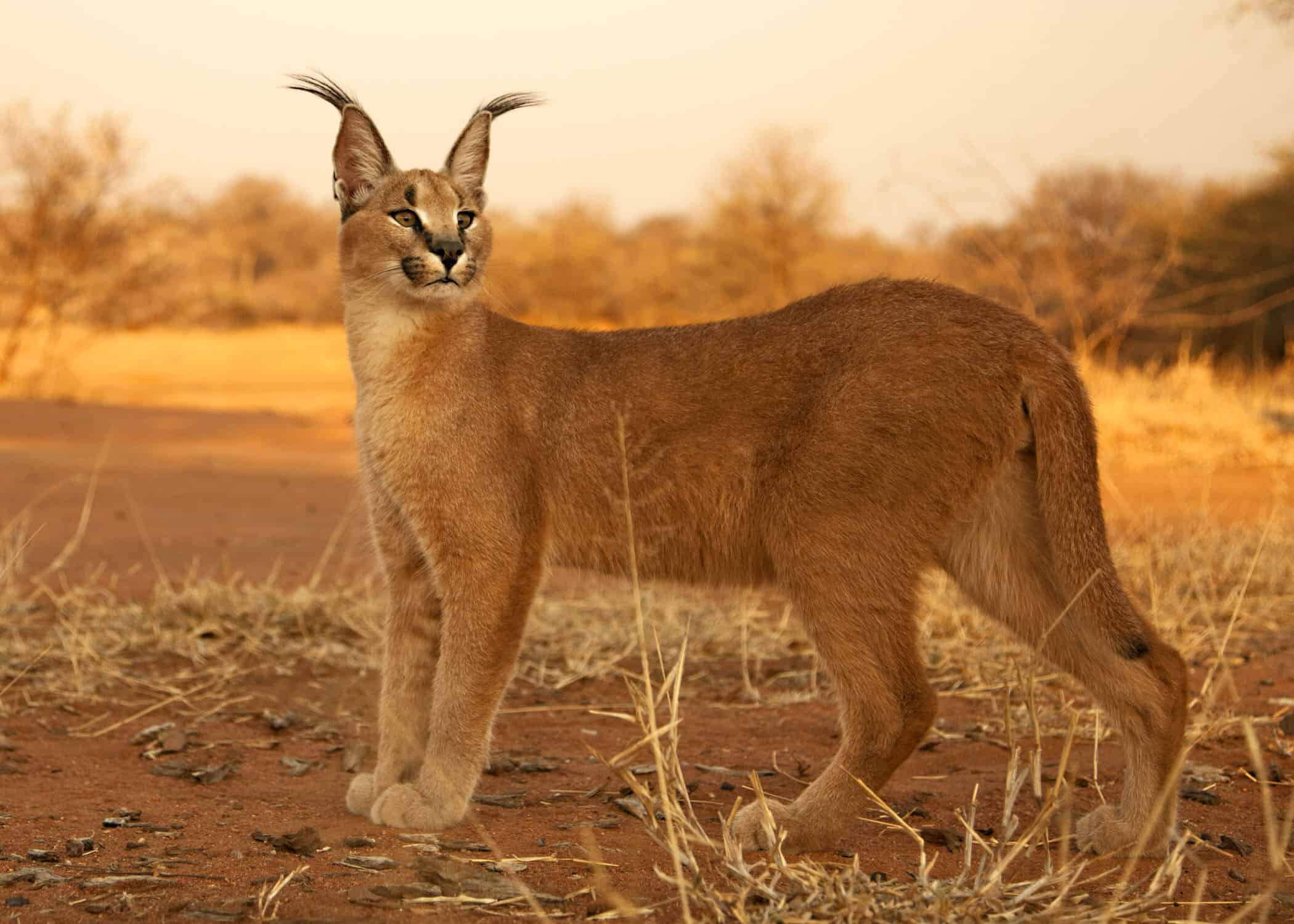
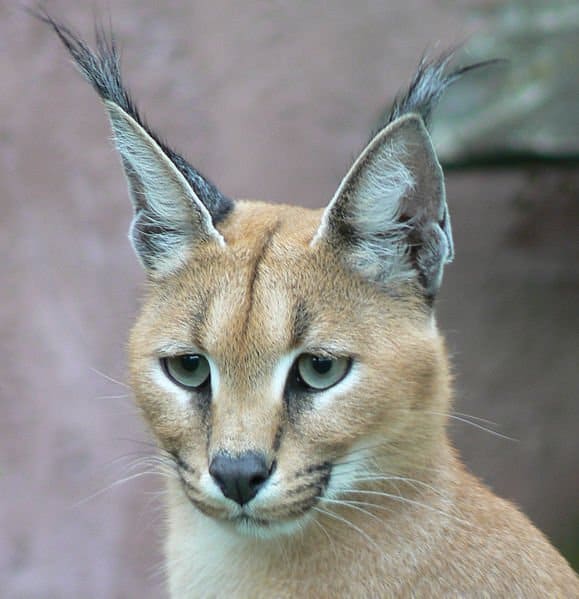
A caracal has a sleek coat of reddish gold short hair and a line of white fur around each of its eyes. This cat’s ears stand straight up and are topped off by long black tufts of hair. No one is sure why caracal ears have tufts of hair on them. But, some scientists believe that caracals communicate with one another by twitching their ears.
A caracal’s tail is about 8 to 13 inches long. In other words, the average caracal’s tail is about as long as the ruler you use in school. A caracal’s tail helps it to turn and stay on course when chasing a bird, rabbit or other prey. Think of a caracal’s tail like a rudder on a boat.
An adult caracal can weigh from 20 to 40 pounds. To give you a better idea, a 30-pound caracal weighs as much as two bowling balls! A caracal is about 24 to 42 inches long and 18 inches tall from its shoulder. That makes it about as tall as a Border Collie.
Caracals are closely related to servals. They are about the same size but live in different types of places. Servals like to hunt in humid, wet areas while caracals stay in dry, desert environments.
A caracal has long, strong legs. When hunting, its legs work like coiled springs as it leaps into the air to grab a bird as it flies away.
Caracals have sharp claws that help them to grab onto trees and climb up into the branches. They also use their claws to hunt and capture prey. Caracals mark their territory by clawing trees and releasing scent from between their toes.
Unlike lions that live in prides, caracals live alone most of the time. They are aggressive cats and are quick to defend their territory from other animals.
Habitat
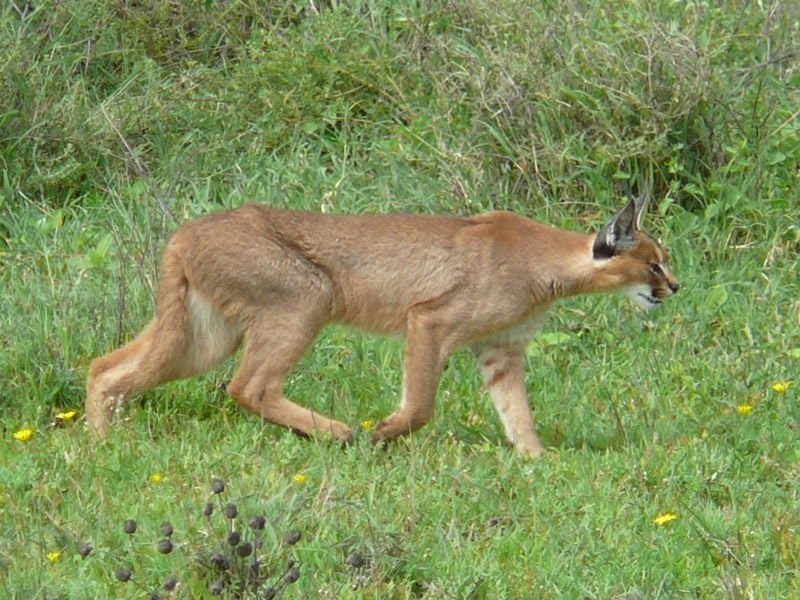
Most caracals live in sub-Saharan Africa as well as in parts of the Middle East. They make their home in dry environments such as savannas, woodlands, and even in areas with mountains.
There is not much water to be found in savannas. However, caracals don’t need much water to survive. These wild cats have adapted to the lack of water by getting the fluid they need from their prey. Also, caracals have adapted to the hot climate of their environment by sleeping during the day to conserve energy and hunting at night when it’s cooler. They sleep in burrows, rock crevices, dense bush, or even on a branch in a tree. These cats have stiff hairs on the pads of their feet along with other types of hair allowing them to walk comfortably on the sandy ground of a savanna. Sometimes these cats can cover as many as 12 miles as they search their territory for prey.
Because caracals live alone and make very little sound when they move, they remain hidden most of the time. They blend in with their environment making it easy to grab prey as well as spot possible threats.
Diet

Caracals have been known to hunt impala
©Lillac/Shutterstock.com
What does a caracal eat? Like other cats in the wild, a caracal is a carnivore. Its speed allows it to catch and eat many types of animals including rabbits, birds, snakes, lizards and, sometimes, insects. Sometimes a caracal will go onto a farmer’s land to catch sheep, goats or other livestock to eat. Caracals eat whatever they can catch. A caracal can eat a dove one night and a young impala the next. An impala is a type of antelope. A young impala weighs around 80 pounds which equals the weight of about 13 bricks!
Caracals avoid eating the stiff, wiry hair on the animals they catch. They use their claws to remove this hair before eating their meal. They can eat feathers with no problem and can even eat rotten meat if they’re really hungry!
Predators & Threats
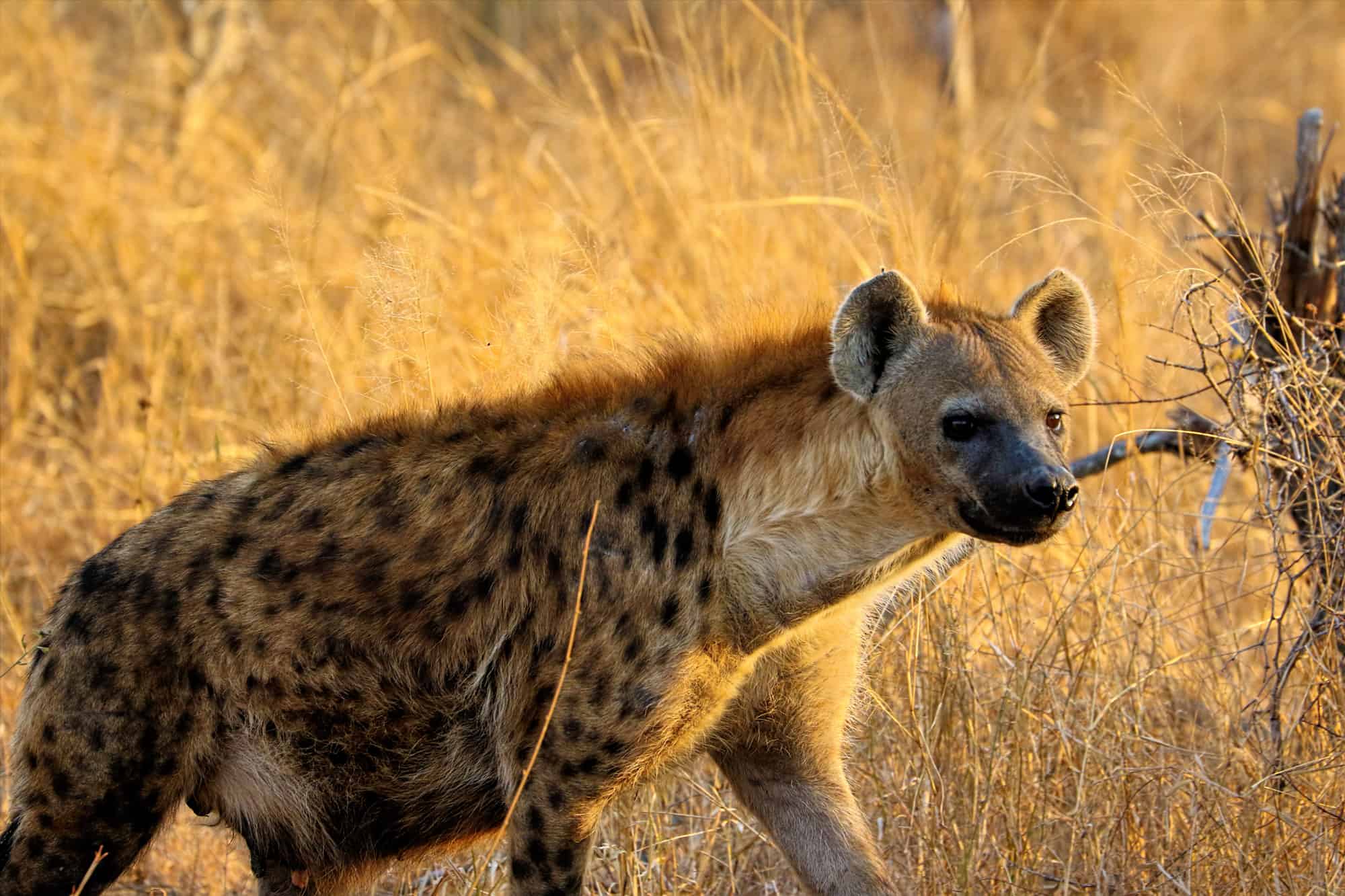
Hyenas occasionally hunt caracals
©iStock.com/mlschach
Lions and hyenas are the two main predators of caracals. These three animals all hunt on the savanna, so they are likely to cross paths at some point. A caracal’s speed is its most valuable defense against these animals. Also, it’s coat can help it to blend in with the colorless vegetation and sand in its environment. Sometimes it will lay on the ground to avoid being seen by predators.
Humans are also a threat to caracals. Many farmers kill caracals when these cats try to steal livestock. Plus, more people are clearing land and moving into their territory forcing out the prey of caracals. This puts these cats at risk for starving. They are also hunted for their skins by individuals who are looking for trophies.
The conservation status of the caracal in South Africa is recorded as: Least Concern. This means the population is not considered to be under threat at this time.
Reproduction, Babies, and Lifespan

Reproduction
Caracals keep to themselves until it’s time to mate. One of the most unique caracal sounds is a mating call that sounds sort of like a cough. Several male caracals may fight or compete for the attention of one female caracal. Eventually, the female chooses a male out of the group. After mating, the male leaves the female caracal so she can raise the babies on her own.
Babies
A caracal carries her babies, called kits, for about 69 to 81 days. She finds an old den or burrow where she can give birth away from predators and other threats. Caracals can have from 1 to 6 kits in a litter, but most have just 2. Each kit weighs about 7 to 9 ounces at birth. A caracal kit is about the size of a pet hamster. The serval and the golden cat (close relatives of the caracal) have kits of about the same size.
Kits are born with their eyes closed. This is true with domesticated kittens as well. It takes about 6 to 10 days for a kit’s eyes to completely open. They are able to squirm around but can’t see where they’re going. The kits stop nursing and start to eat meat at 10 weeks old. Kits learn hunting skills from their mother and stay with her until they are about 10 months old. A female caracal only gives birth to one litter per year because it takes most of a year to raise one litter of kits.
Lifespan
The average lifespan for both male and female caracals is 12 years old in the wild. However, caracals kept in the zoo can live up to 17 years. Caracals live longer in a zoo environment because they are not threatened by predators, receive food on a regular basis and get medical care when they need it.
As a caracal ages in the wild, it can become ill from untreated skin infections and infections due to injuries. Also, like domestic cats, a caracal can get rabies from another animal and die. If a caracal happens to wander near a road, it’s at risk for getting hit by a vehicle just as a domesticated cat is at risk if it wanders away from home.
Population
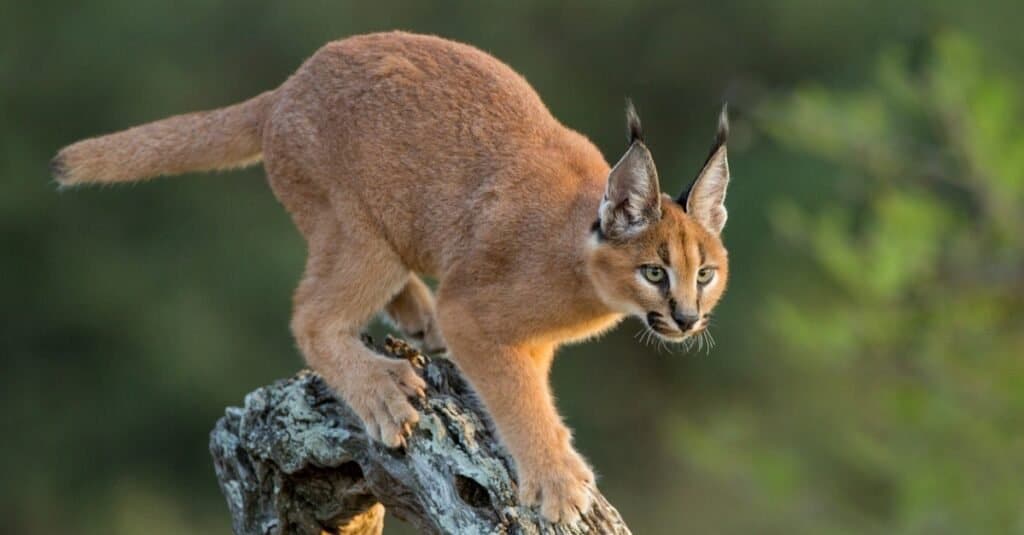
Caracal populations are on the rise in South Africa, although they are threatened in North Africa
©iStock.com/StuPorts
The exact population of caracals in the world is not known. But, there is some data on these small cats:
• Caracal populations are growing in South Africa and Namibia where there is plenty of prey available for them.
• It’s believed that the highest number of caracals live in the mountains of the Eastern Cape in South Africa.
• In North Africa, the caracal population seems to be decreasing possibly due to hunters. The conservation status of caracals in North Africa is: Threatened.
• The caracal population in Asia is decreasing likely due to farmers killing them when they try to hunt their livestock.
Caracal Pictures
View all of our Caracal pictures in the gallery.

How to say Caracal in ...
Sources
- David Burnie, Dorling Kindersley (2011) Animal, The Definitive Visual Guide To The World's Wildlife / Accessed December 30, 2008
- Tom Jackson, Lorenz Books (2007) The World Encyclopedia Of Animals / Accessed December 30, 2008
- David Burnie, Kingfisher (2011) The Kingfisher Animal Encyclopedia / Accessed December 30, 2008
- Richard Mackay, University of California Press (2009) The Atlas Of Endangered Species / Accessed December 30, 2008
- David Burnie, Dorling Kindersley (2008) Illustrated Encyclopedia Of Animals / Accessed December 30, 2008
- Dorling Kindersley (2006) Dorling Kindersley Encyclopedia Of Animals / Accessed December 30, 2008
- David W. Macdonald, Oxford University Press (2010) The Encyclopedia Of Mammals / Accessed December 30, 2008