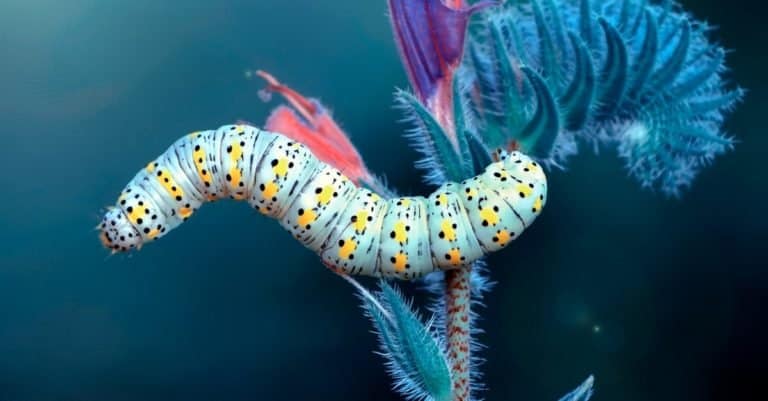
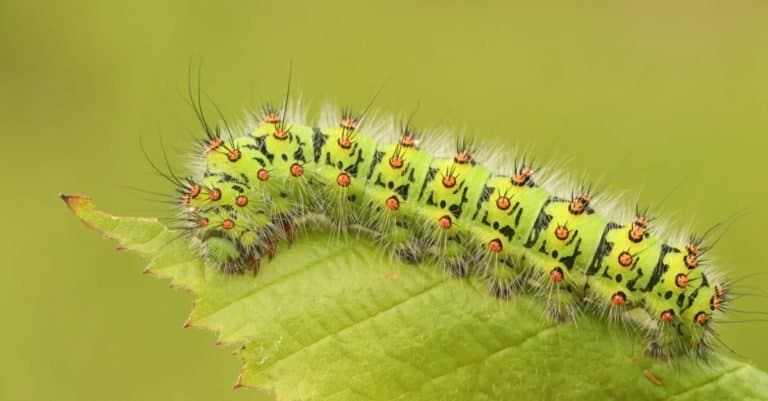
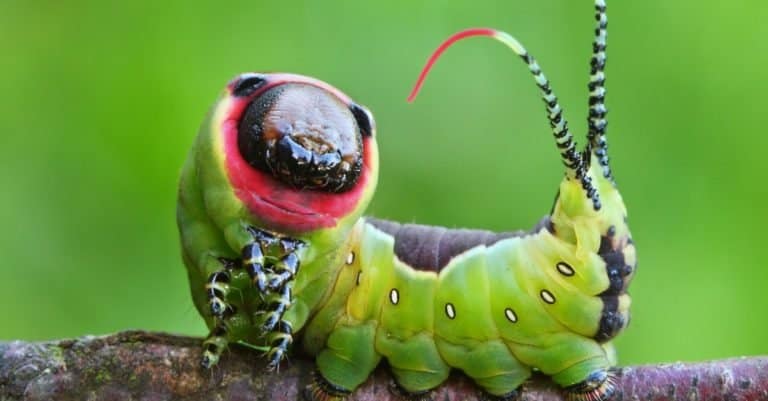
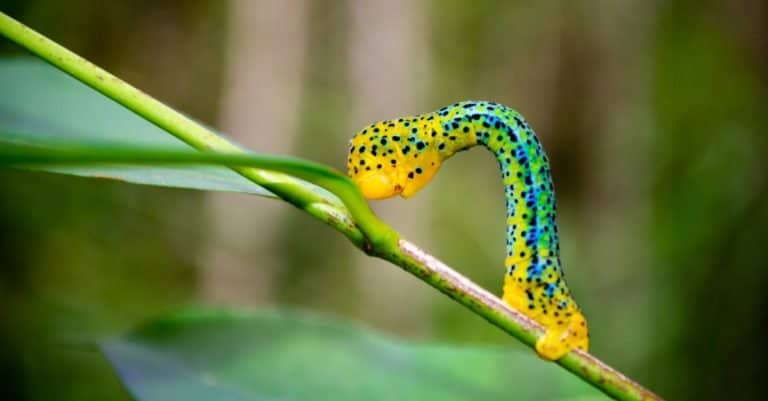
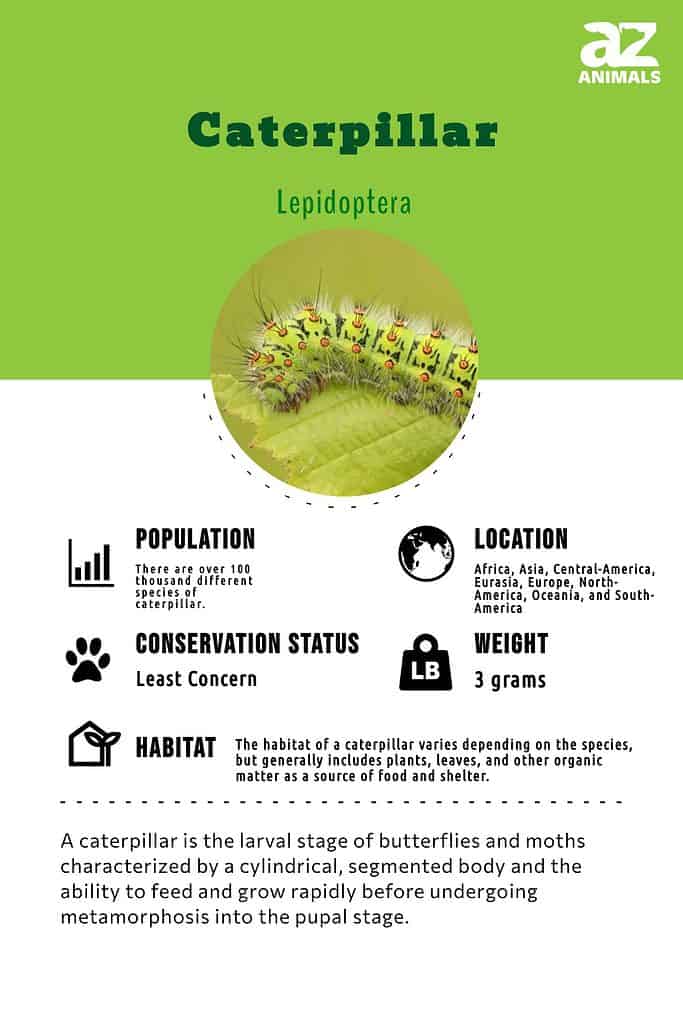
It is estimated that there are over 20,000 species of caterpillars in this animal group, and there may be many more left to be discovered.
The only job of the caterpillar is to eat, and it may increase its size by more than 1,000 times before metamorphosizing into a moth or butterfly. As the insect grows, most species will shed their skins four times. They have over 4,000 muscles in their bodies.
Different species metamorphosis at unique rates ranging from 1-to-11 months.
5 Incredible Caterpillar Facts!
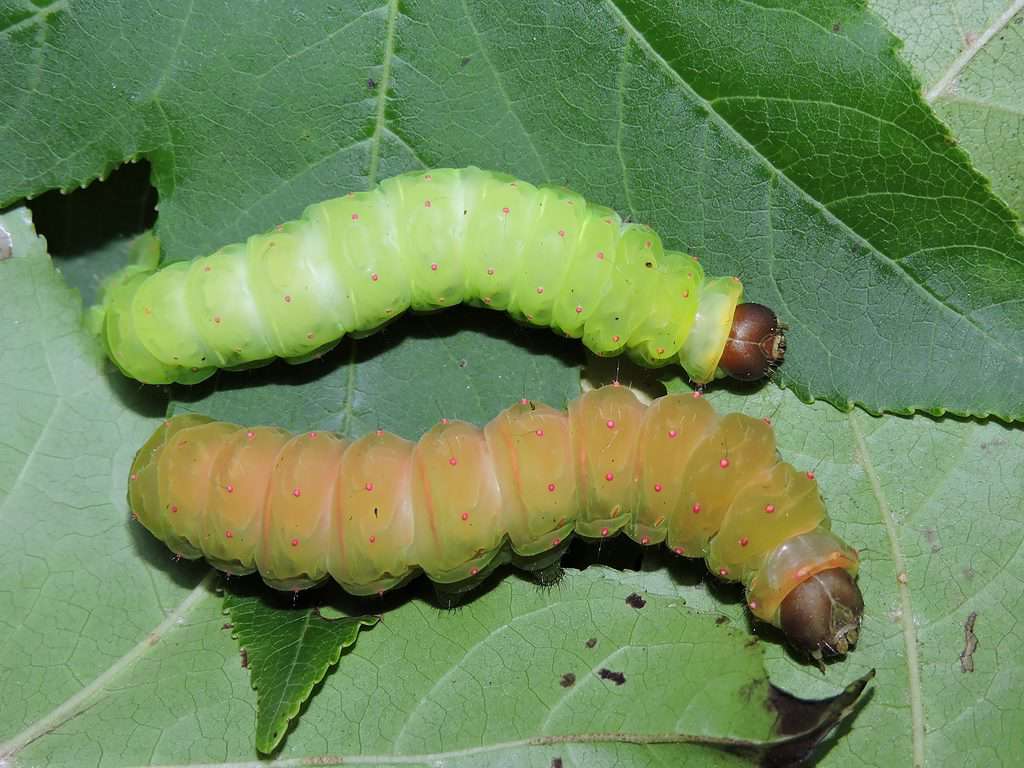
Some of these insects that turn into moths can sting, but butterfly caterpillars cannot sting.
©TamiG/Shutterstock.com
- There are more than 20,000 species in the world. Biologists believe that they will discover many more of these animals, with many of them being discovered in remote areas.
- Some of these insects that turn into moths can sting, but butterfly caterpillars cannot sting.
- The vast majority of them eat plants, but a few will eat insects and other caterpillars.
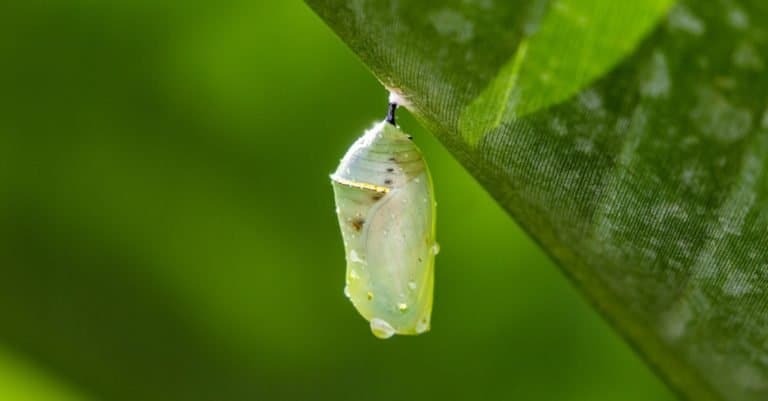
- They may spin a single pupa, or they may spin a cocoon around themselves before spinning an additional pupa around the cocoon.
- The caterpillar stage can last from 1-to-11 months, depending on the species. The largest caterpillars in the world can reach up to 6 inches in length!
You can check out more incredible facts about caterpillars.
Species, Types, and Scientific Names
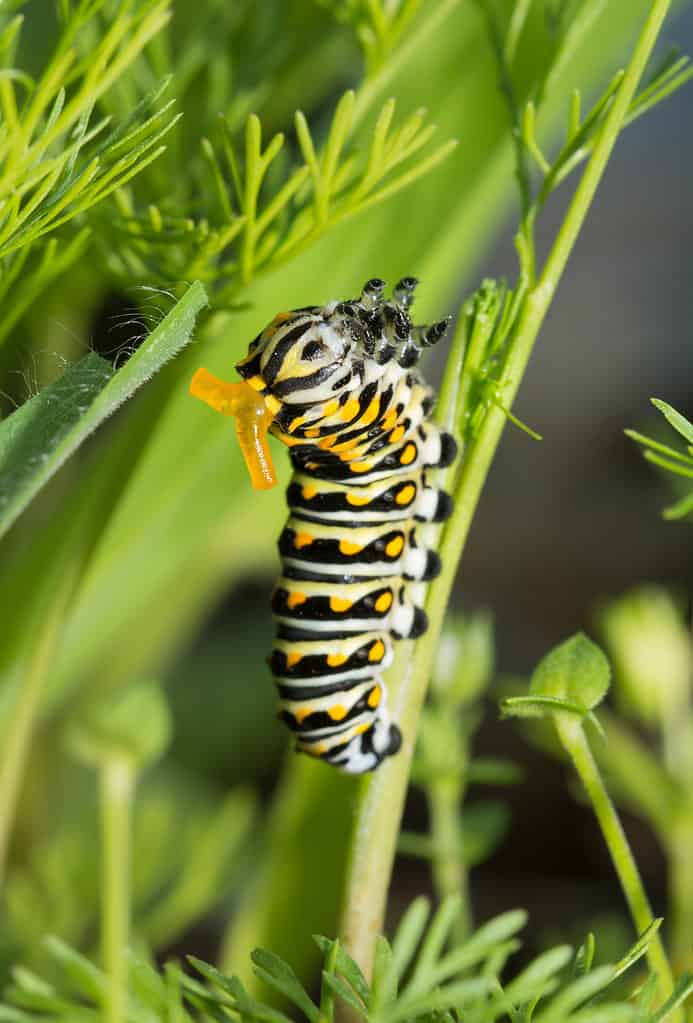
Caterpillars are the larval stage of members of the order Lepidoptera. Caterpillars belong to the same classification as the butterfly that they become butterflies.
©Sari ONeal/Shutterstock.com
Caterpillars are the larval stage of members of the order Lepidoptera. Caterpillars belong to the same classification as the butterfly that they become butterflies. This scientific name comes from the Ancient Greek language. The first part of the scientific name lepís means scale while the second part of the scientific name pterón means wing.
There are about 180,000 species in this order that biologists have placed into 126 family and 46 superfamily classifications. Only about 10% of them may still be alive. Most butterflies are in the Papilionoidea superfamily, which can be divided into several classifications, including:
- Hesperiidae – These are skipper butterflies.
- Papilionidae – There are more than 550 species in this family, including some of the world’s largest butterflies.
- Pieridae – Most members of this group which includes more than 1,100 species, develop into yellow or orange butterflies, and they usually live in the tropics in Africa and Asia.
- Riodinidae – More than 1,500 species in this family where the butterfly will have metallic-looking marks on its wings.
- Lycaenidae – There are over 6,000 members of this family, with most having blue wings and black on them.
- Nymphalidae- There are more than 6,000 members of this group who live worldwide. This is the largest group of butterflies, and it is divided into 13 superfamilies.
In general, the classification of caterpillar species is based on morphological behavioral, and molecular characteristics, and species are grouped into families and superfamilies. Other high-level taxonomic categories are based on their similarities and evolutionary relationships.
With that said, here are the most common species of the caterpillar:
- Monarch butterfly
- Isabella tiger moth
- Pine processionary
- Monema flavescens
- Oak processionary
- Domestic silk moth
- Tea tussock moth
- Convolvulus hawk-moth
- Pale tussock
- Southern flannel moth
- Old world swallowtail
- Goat moth
- Lymantria dispar
- Five-spotted hawk moth
- Large white
- Luna Moth
- Fox moth
- Elephant Hawk-moth
- Fall webworm moth
- Theretra oldenlandiae
- Knotgrass
- Black Swallowtail
- Regal moth
- Tobacco hornworm
- Oleander hawk-moth
- African death’s head hawkmoth
- Yellow woolly bear
- Painted lady
- Indian fritillary
- Spicebush Swallowtail
- Lime hawk-moth
- Cabbage white
- Gulf fritillary
- Garden tiger moth
- Eastern tiger swallowtail
- Cabbage looper
- Fall armyworm
- Sycamore
- Peacock butterfly
- Tobacco cutworm
- Privet hawk moth
- Angle shades
- Hickory tussock moth
- Box tree moth
- Hummingbird hawk-moth
- Ruby tiger
- Rusty tussock moth
- Large yellow underwing
- White-lined sphinx
- Mourning cloak
- White-marked tussock moth
Evolution and Origins
The evolution and origin of caterpillars can be traced back to the early ages of insect evolution, approximately 300 million years ago. Caterpillars are the larval stage of butterflies and moths, belonging to the order Lepidoptera.
Over time, through the process of natural selection and adaptation, caterpillars have evolved various physical and behavioral adaptations that have allowed them to survive and thrive in their environments, such as the ability to camouflage, spin silk, and feed on a variety of plant matter.
Additionally, the relationship between caterpillars and the plants they feed on has also evolved, leading to a mutualistic relationship in which the caterpillar obtains food and shelter, while the plant benefits from the fertilization and pollination provided by the adult butterfly or moth.
Appearance
In order to identify what type of caterpillar you are looking at, you need to pay attention to several different factors, including:
- Size
- Color, such as green or black
- Type of hair covering if any
- Markings, such as stripes or spots
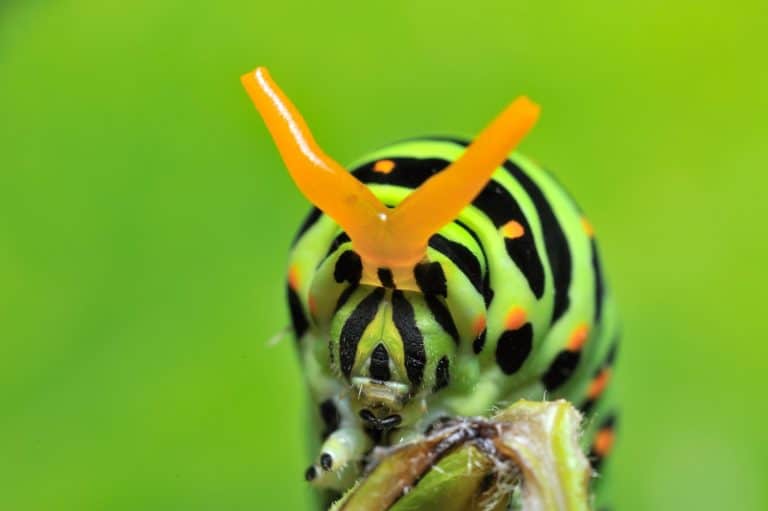
- Presence of horns
- Pairs of legs or prolegs
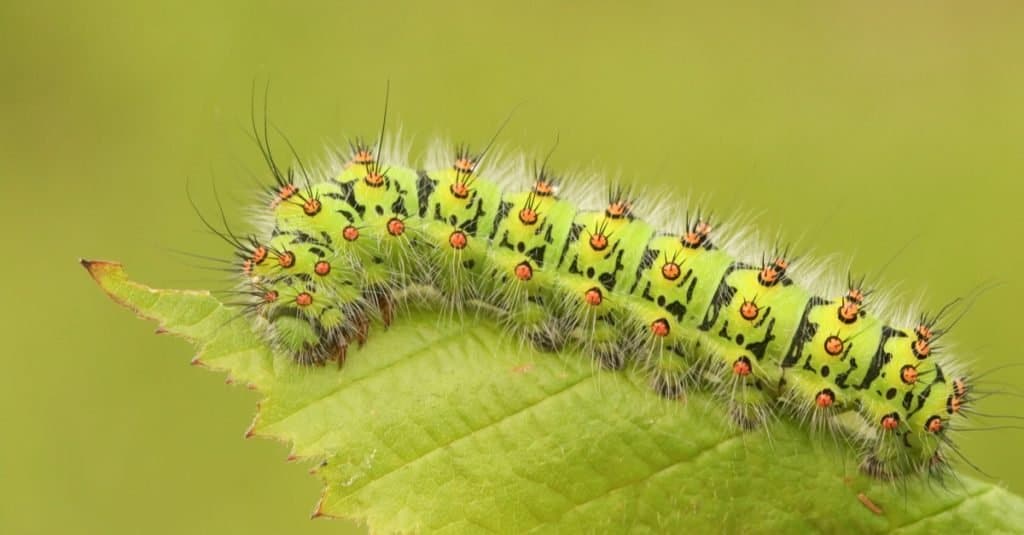
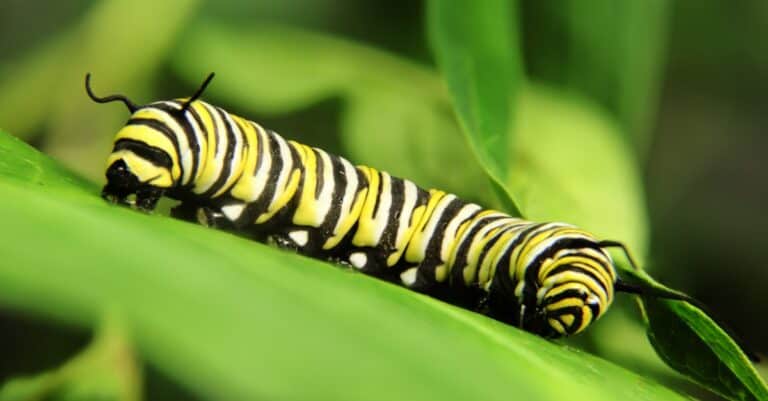
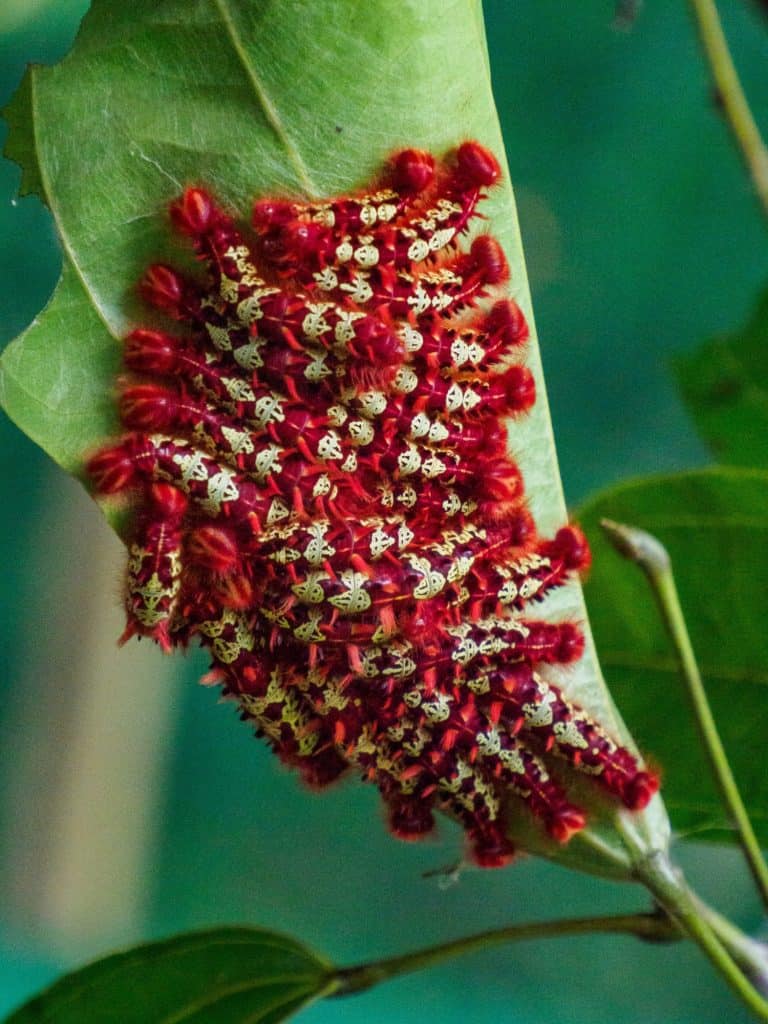
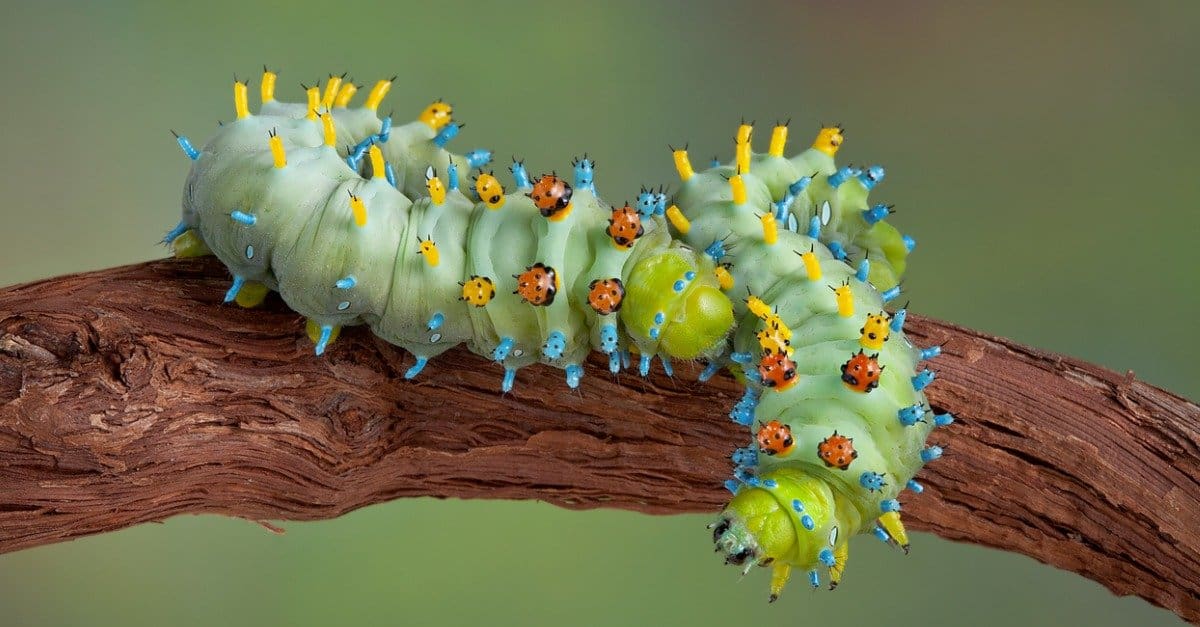
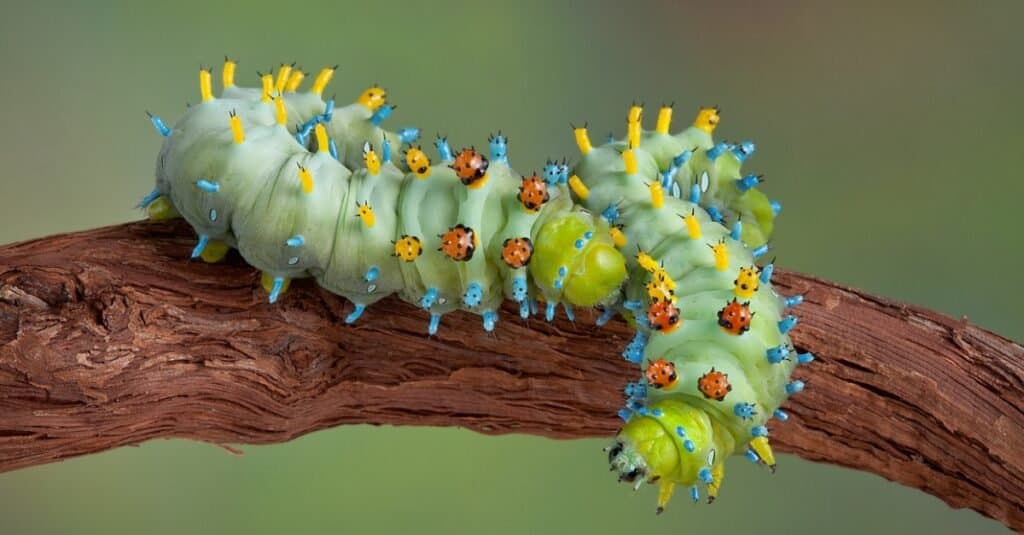
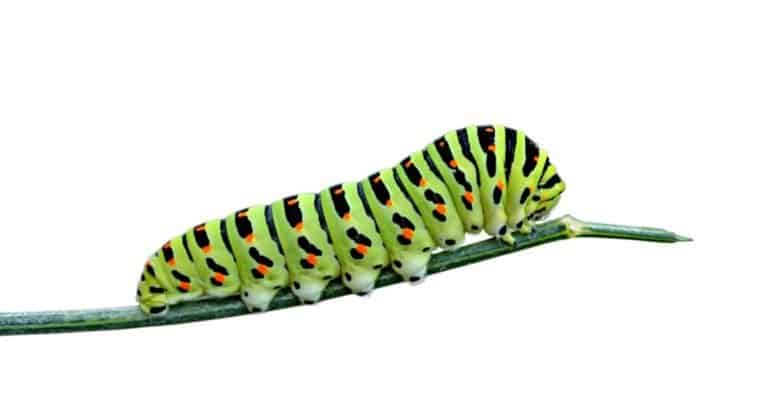
Caterpillars are characterized by size, color, hair covering, strips, spots, and horns.
©Sandra Standbridge/Shutterstock.com
Habitat
©Jay Ondreicka/Shutterstock.com
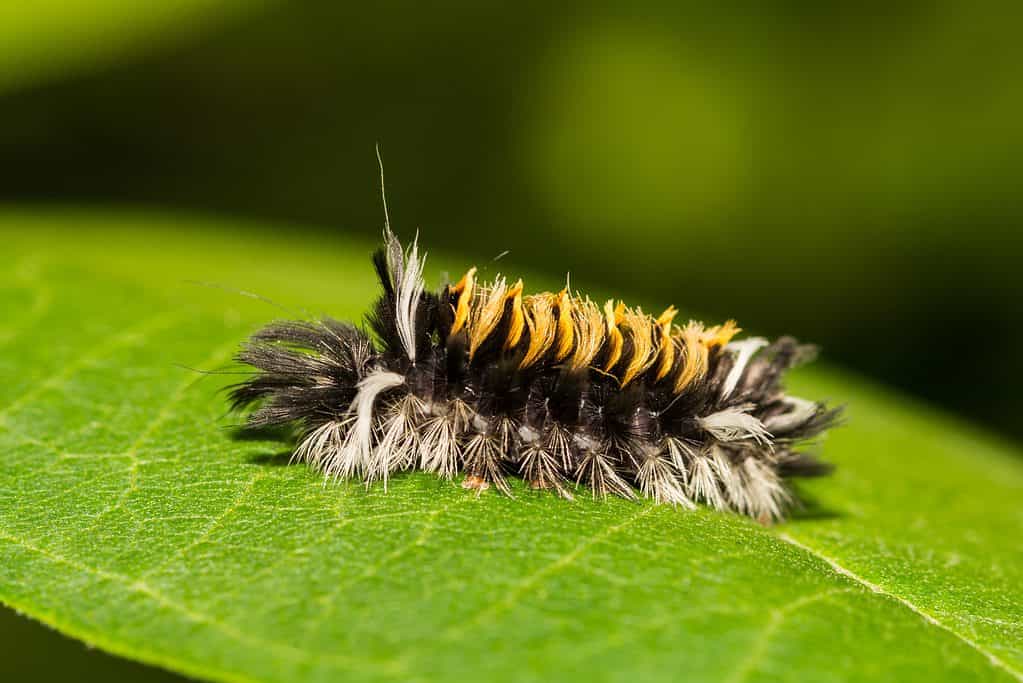
These insects can be found almost anywhere that there are plants for them to eat. Some species have particular habitats while others live in many different areas. Butterflies often live under leaves, in shrubs, and in grasses.
The habitat of a caterpillar can vary depending on the species. However, in general, caterpillars are found in a variety of environments where they have access to food, shelter, and suitable temperatures for their development.
Most caterpillars are herbivores and feed on leaves, stems, and other parts of plants. Therefore, they are typically found in areas with abundant vegetation, such as forests, meadows, fields, and gardens. Some caterpillars are generalists and can feed on a wide range of plant species, while others are specialists and feed on only one or a few specific plant species.
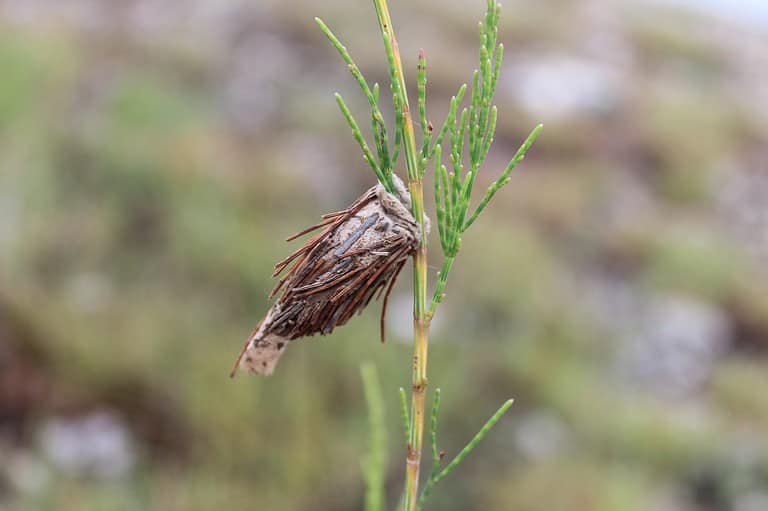
In addition to access to food, caterpillars also require shelter from predators and environmental stressors, such as extreme temperatures and drying winds. Many caterpillars spin silk cocoons or find shelter in crevices, leaf litter, or other natural structures. Some species burrow into the soil or form shelters using leaves or other materials.
Caterpillars are also dependent on temperature for their development. Some species can tolerate a wide range of temperatures, while others have very specific temperature requirements. For example, some tropical caterpillars only develop at high temperatures, while others only develop at cooler temperatures.
In conclusion, the habitat of a caterpillar depends on several factors, including access to food, shelter, and suitable temperatures for its development. Caterpillars are found in a variety of environments, from forests and meadows to gardens and agricultural land, where they feed on plants and seek protection from predators and environmental stressors.
Diet
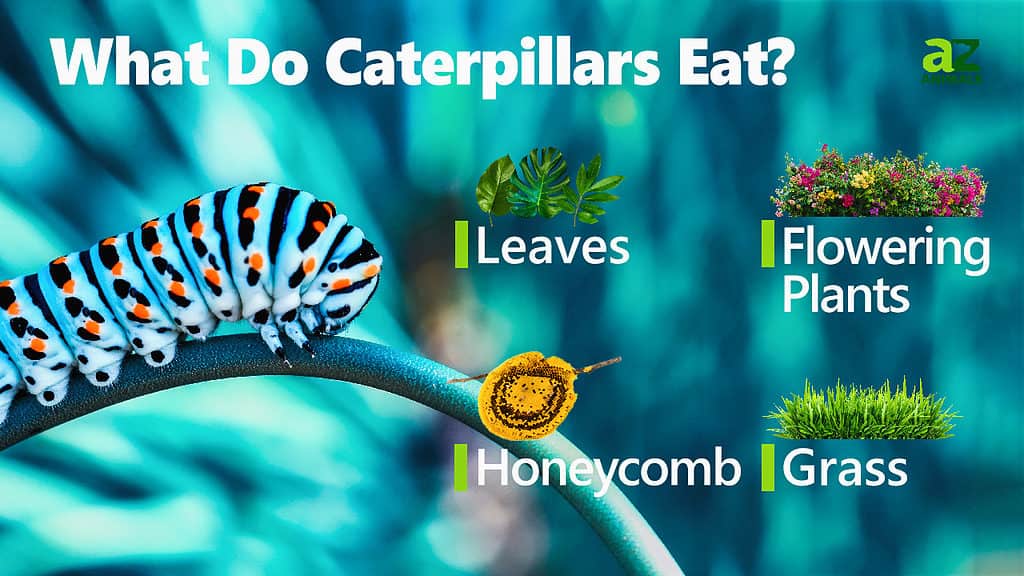
Most butterflies eat plants. Most prefer the leaves but will eat the seeds and petals if they are hungry enough. Some caterpillars also eat insects and even other caterpillars.
The Transformation
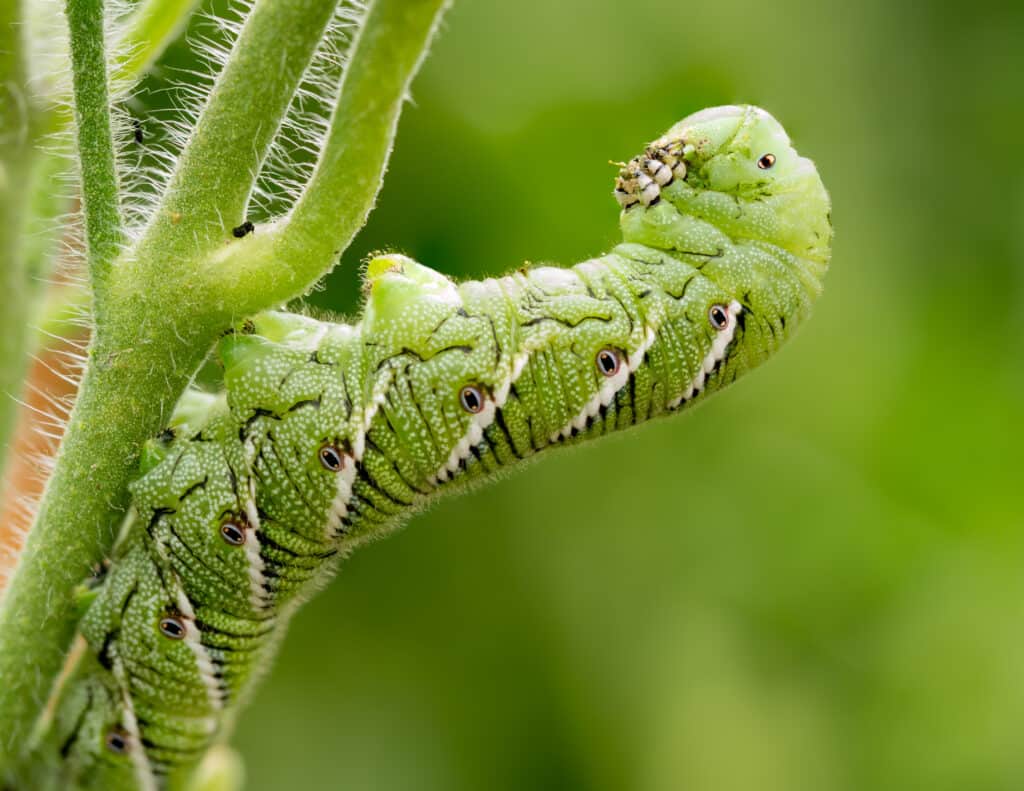
Tomato hornworm
©J Gillispie/Shutterstock.com
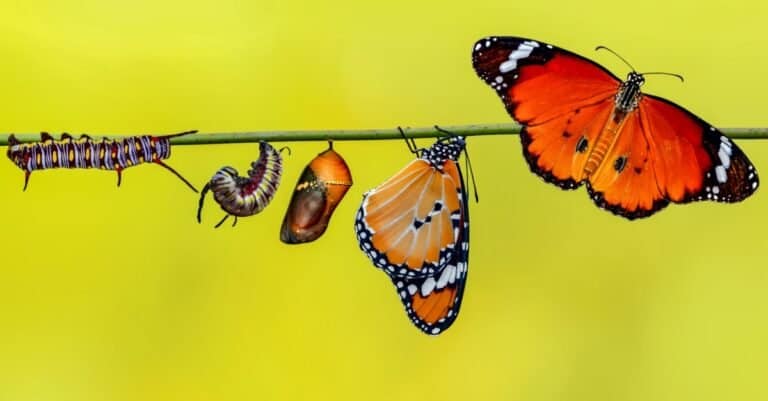
A caterpillar is ready to become a butterfly the moment it comes out of its cocoon. First, it eats a bunch of food until it reaches a predetermined size. That process can last from one-to-11 months. Then, its body releases the molting hormone ecdysone.
Each time the hormone is released, the caterpillar’s body still contains juvenile hormones. Therefore, it remains a caterpillar. Each time the ecdysone hormone in the caterpillar’s body becomes stronger while juvenile hormones become less. Most caterpillars go through this process four times.
As the process is taking place, imaginal discs have started to emerge from the caterpillar’s body. After the juvenile hormone level drops below a certain threshold and the ecdysone hormone rises above a particular level, the caterpillar forms a chrysalis. The developing imaginal discs grow quickly into a sock shape. Each imaginal disc becomes a part of the butterfly’s body, and most of the caterpillar is transformed into the butterfly.
One more burst of ecdysone hormone occurs, and the adult butterfly emerges.
Prevention
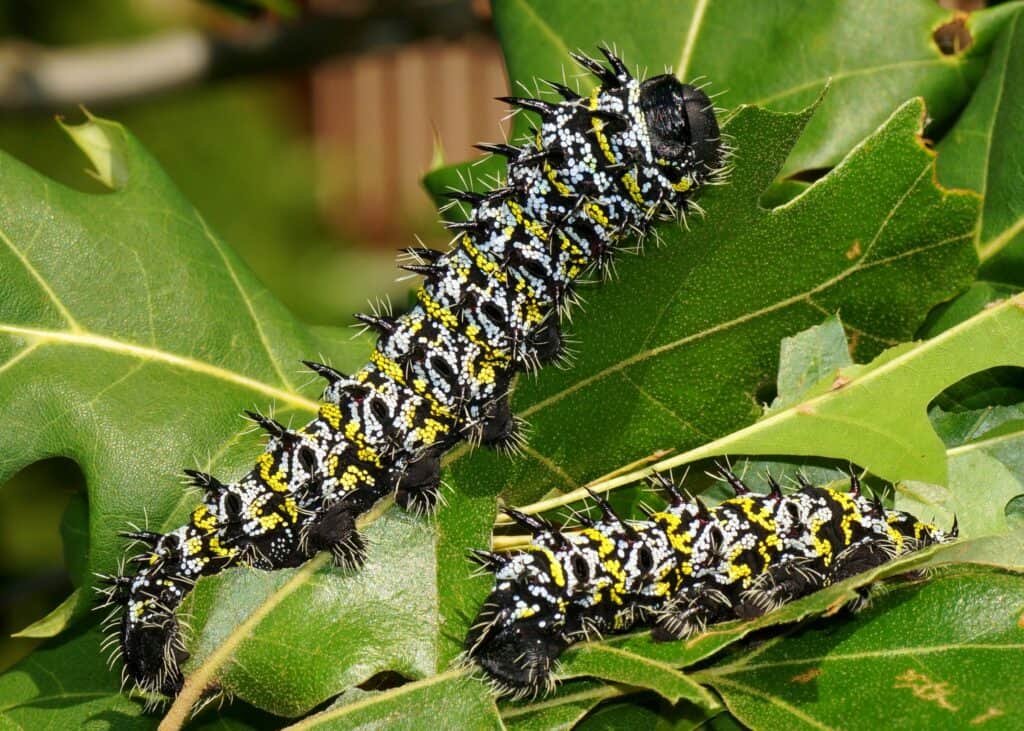
The moth’s larva, referred to as “mopane worm”, feeds primarily on mopane tree leaves.
©Matt Jeppson/Shutterstock.com
It is important to remember that not all of these insects are harmful, but they may harm plants in farm fields or your garden. If you notice them in an area where you want to get rid of them, then there are at least four methods that you may want to try.
First, you can hand-pick them off your plants. This method is most effective if you have a small area and catch caterpillars in the area when there are only a few. Sometimes, spraying the area with water is an effective way to encourage caterpillars to move on.
Secondly, if the insect has built a nest, you can use a stick or other object to knock down the nest and tear it apart. You need to destroy the nests so that the eggs inside them do not turn into more caterpillars. Since caterpillars usually return to the nest at night, this method works best when done in the evening or early morning.
Third, you can use Bacillus thuringiensis to kill them. Bacillus thuringiensis is a soil bacterium that destroys the stomach of caterpillars.
Another option is to make a deterrent at home. Take a little molasses and mix it with water and dish soap. Spray it where you see these insects. They do not like the taste, and they will move on to another area.
Caterpillar Pictures
View all of our Caterpillar pictures in the gallery.

Darkdiamond67/Shutterstock.com
Sources
- Discover Wildlife / Accessed June 8, 2021
- Wildlife Insight / Accessed June 8, 2021
- The Caterpillar Lab / Accessed June 8, 2021
- Woodland Trust / Accessed June 8, 2021
- Wikipedia / Accessed June 8, 2021
- Leafy Place / Accessed June 8, 2021
- Center for Urban Agriculture / Accessed June 8, 2021