

C
Species Profile

Cesky Fousek

Canis lupus familiaris

Bohemia's bearded all-terrain gundog
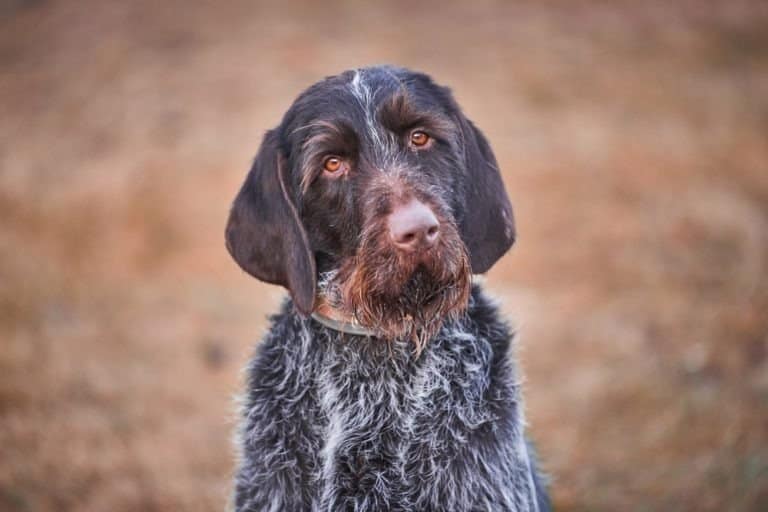
Jan Danek jdm.foto/Shutterstock.com

Cesky Fousek Distribution

Click a location to explore more animals from that region

Origin Location

This map shows the native origin of the Cesky Fousek. As a domesticated species, they are now found worldwide.

Loading map...

Found in 1 country

Size Comparison

Human 5'8"
Cesky Fousek 2 ft

Cesky Fousek stands at 36% of average human height.

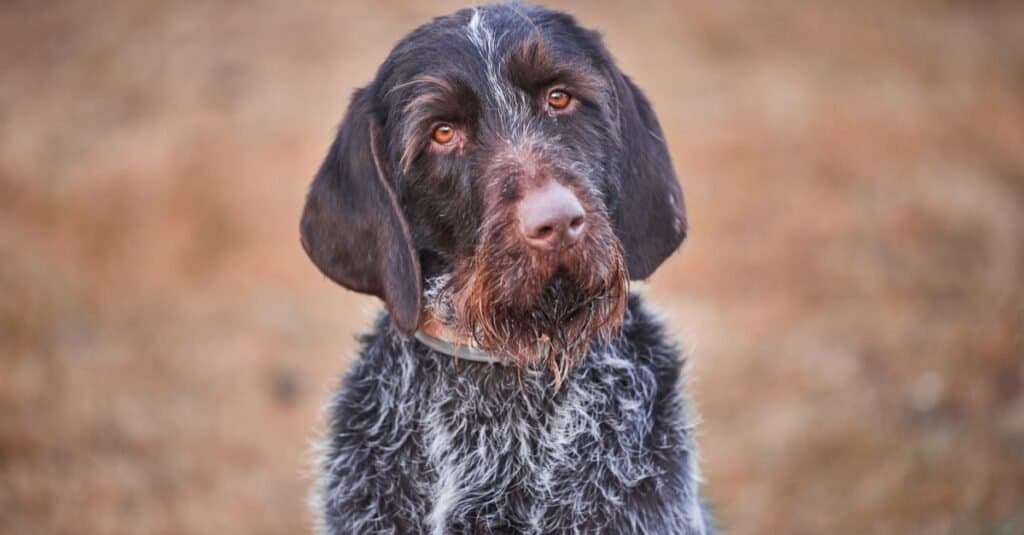
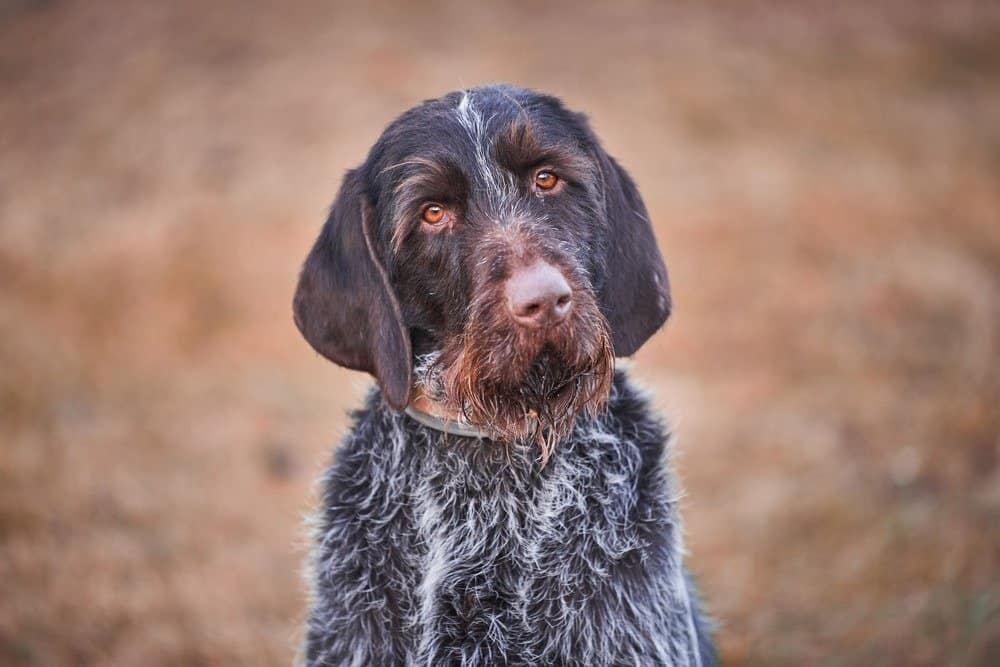
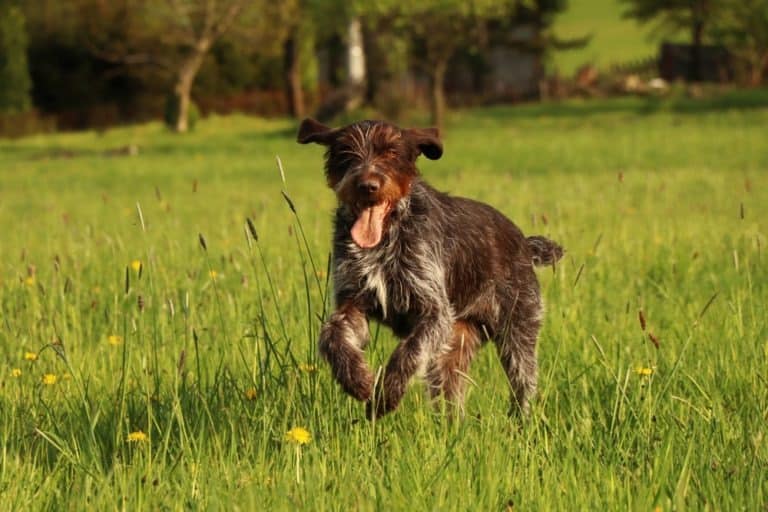
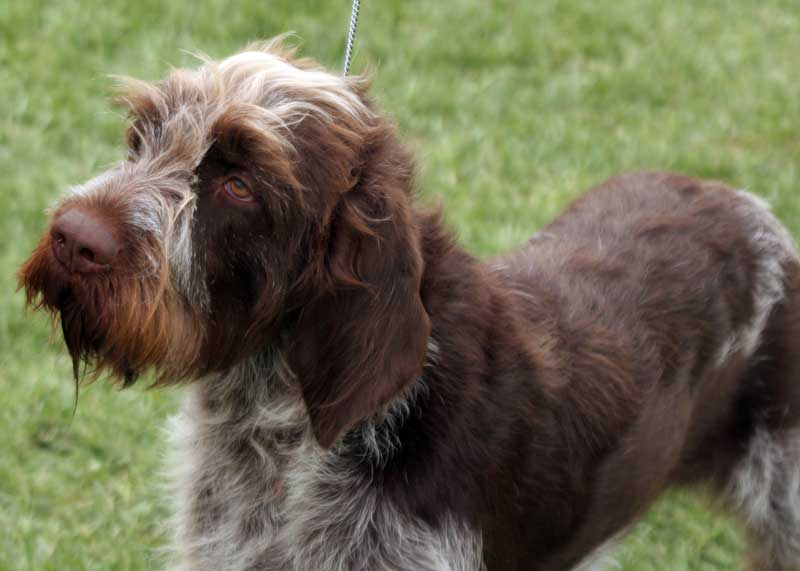
Cesky Fousek, close-up of face

At a Glance

Domesticated
Also Known As dog, domestic dog, domestic canine, pooch, pup, puppy, mutt, man's best friend
Diet Omnivore
Activity Diurnal+
Lifespan 5 years
Weight 34 lbs
Status Not Evaluated
Did You Know?

The breed's name refers to its moustache/beard-like facial furnishings, a hallmark of its wirehaired look.

Scientific Classification

The Český fousek is a Czech wirehaired pointing dog breed developed as a versatile hunting companion, typically used for pointing and retrieving in varied terrain and weather.

Kingdom
Animalia
Phylum
Chordata
Class
Mammalia
Order
Carnivora
Family
Canidae
Genus
Canis
Species
Canis lupus familiaris

Distinguishing Features

  • Wirehaired/wiry coat with characteristic facial furnishings (beard/mustache)
  • Versatile gundog behavior: pointing and retrieving
  • Athletic, medium-to-large build suited for endurance work
  • Often liver/roan or related earthy coat tones (breed-standard dependent)

Did You Know?

The breed's name refers to its moustache/beard-like facial furnishings, a hallmark of its wirehaired look.

Bred as an all-around hunting dog in Bohemia (today's Czech Republic), expected to work field, forest, and water.

Known for "soft mouth" retrieving-carrying game gently, a prized trait for hunters.

Its harsh, weather-resistant coat helps it work in brambles and cold, wet conditions better than many short-coated pointing breeds.

The breed's versatility emphasizes pointing, tracking wounded game, and retrieving-often in one day's work.

Historically tied to Central European hunting culture where one dog was expected to do many jobs rather than specialize.

Unique Adaptations

  • Wirehaired double coat (harsh outer hair with insulating undercoat) that sheds water and offers abrasion protection in thorny cover.
  • Facial furnishings (beard/eyebrows) that help shield muzzle/eyes from brush and debris during dense-cover work.
  • Athletic, all-day endurance build suited to mixed terrain-fields, forests, and marsh edges.
  • Versatile gundog instincts (point + retrieve + track) shaped by selective breeding for a single, multipurpose hunting companion.
  • Typically strong nose and persistence, useful in both upland bird work and recovery of wounded game under difficult conditions.

Interesting Behaviors

  • Field "quartering": naturally works back-and-forth in front of the hunter to find scent, then freezes into a steady point.
  • Water enthusiasm: many show strong willingness to enter cold water for retrieves when introduced properly.
  • Scent-trailing focus: can switch from air-scenting birds to ground-scent tracking, especially on wounded game.
  • Biddable teamwork: tends to check in with its handler and hunt as a cooperative partner rather than ranging extremely wide.
  • Expressive "beard" body language: facial furnishings and eyebrows make their alert/curious expressions especially readable.

Cultural Significance

The Cesky Fousek is closely associated with Czech/Bohemian hunting traditions, where practical 'one dog for many tasks' gundogs were valued. Its bearded wirehaired look became a recognizable emblem of Central European versatile hunting dogs, reflecting a regional preference for hardy, weatherproof companions able to work across fields, woods, and water.

Myths & Legends

Canis lupus familiaris, the 'bearded Bohemian pointer,' Czech hunters tell campfire tales of a dog that can point quail at dawn, track a hare by noon, and swim icy ponds for ducks.

In Central Europe, stories say the Czech Wirehaired Pointing Griffon's big moustache and beard stand for wisdom and being serious. The breed's name comes from a Czech word that means "moustache."

Czech sporting stories call the Czech Wirehaired Pointing Griffon a national hunting companion. Breeders, proud to save it, rebuilt the breed after it almost vanished in the early 20th century.

In rural tales, a versatile gundog was called the "guardian of the larder" for not guarding but reliably bringing back game. Villagers often praised hardworking Bohemian Wire‑haired Pointing Griffons for this.

Conservation Status

NE Not Evaluated

Has not yet been evaluated against the criteria.

Population Stable

Life Cycle

Birth 7 pups
Lifespan 5 years

Lifespan

In the Wild
3–8 years
In Captivity
11–15 years

Reproduction

Mating System Polygyny
Social Structure Managed Domestic
Breeding Pattern Serial
Fertilization Managed Selective
Birth Type Internal_fertilization

Bohemian Wirehaired Pointing Griffon (Canis lupus familiaris) breeding is managed by people and selective. Breeders choose mates; stud males often sire many females across seasons. Pair bonds are short. Mating is internal. Care is by the mother and people, not pack helpers.

Behavior & Ecology

Social Pack Group: 3
Activity Diurnal, Crepuscular
Diet Omnivore animal-protein-forward meals (e.g., lean game meat or poultry-based diets)

Temperament

The Czech (Bohemian) Wirehaired Pointing Griffon is bred for pointing and retrieving in cold, wet cover. It has strong drive, endurance, keeps working, yet stays trainable and steady with a handler.
Social style: generally people-oriented and cooperative; often friendly with familiar dogs when well-socialized, but may be reserved with strangers and can be mildly protective/alerting in the home (more watchful than overtly aggressive).
Trainability: typically intelligent and handler-focused; responds best to consistent, reward-based training. Harsh corrections can reduce initiative or create avoidance, especially in sensitive individuals.
Arousal/energy: high activity needs; without daily aerobic exercise and structured mental work (retrieving drills, scent games, field training), may develop nuisance behaviors (barking, pacing, chewing).
Prey drive & chase: pronounced interest in birds and moving wildlife; reliable recall and safe off-leash management are important. Early introduction to household cats/small pets improves coexistence but does not eliminate chase instinct.
HUBS (group-wide patterns with variation): as a hunting-pointing group, individuals commonly show strong ranging, scenting, and "check-in" behavior with the handler; variation exists by line and training-some are softer/closer-working, others are more independent and wide-ranging.
Care requirements (behavior-linked): needs regular opportunities to run, track, and retrieve; benefits from structured work 5-7 days/week. Wire coat typically needs routine brushing and occasional hand-stripping/trimming; after fieldwork, burr/seed checks are important.
Health issues affecting activity: hip and elbow dysplasia (may reduce running/jumping), ear irritation or infections in active outdoor dogs, and occasional eye problems (eyelid shape). Watch weight and fitness to protect joints.

Communication

Alert barking Often when strangers approach or during high arousal
Whining/whimpering to solicit attention, access, or when anticipating work
Low growls as distance-increasing signals during discomfort Resource guarding or pain-related
Occasional howling/baying-like vocalizations in excited individuals Less common than in hounds
Classic pointing posture (rigid body, lifted forelimb, fixed stare) as a breed-typical signal during scent detection
Retrieval presentation (bringing to hand, holding, or offering the object) to initiate interaction/work
Body language: tail carriage, ear set, weight shift, and freezing to communicate arousal/uncertainty
Muzzle licking, pawing, and leaning as affiliative/contact-seeking behaviors with handlers
Scent marking and ground sniffing as social/territorial information exchange; intensified during novel outdoor contexts
Eye contact and frequent "check-ins" with handler during ranging work Reinforced by training

Habitat

Biomes:
Temperate Forest Temperate Grassland Wetland Freshwater Boreal Forest (Taiga) Tundra Alpine Mediterranean Desert Hot Desert Cold Savanna Tropical Dry Forest Tropical Rainforest Marine +8
Terrain:
Plains Hilly Valley Riverine Coastal Rocky Sandy +1
Elevation: Up to 16404 ft 3 in

Ecological Role

Human-associated mesopredator and hunting assistant (domesticated gundog); ecological impact is primarily mediated through human management.

assists humans in locating and retrieving harvested game, reducing waste can deter or reduce some pest wildlife presence around farms/homesteads via scent/territoriality serves as a controlled predator substitute in managed hunting contexts (selection and retrieval rather than free-ranging predation) companionship and working-dog roles that support human livelihoods in rural landscapes

Diet Details

Other Foods:
Grass Berries fallen fruit Roots, tubers and plant matter Human-provided plant foods

Human Interaction

Domestication Status

Domesticated

Canis lupus familiaris (domestic dog) came from gray wolves and was shaped by people over thousands of years for tame behavior, trainability, and work. Dogs act as companions, hunters, herders, guards, sled and service animals. The Czech Wirehaired Pointing Griffon is a hardy, wire-coated gundog for cold, wet terrain that points and retrieves.

Danger Level

Low
  • Bite risk exists if poorly socialized, mishandled, in pain, or if a high-drive dog is pushed beyond threshold (any dog can bite).
  • Higher likelihood of chasing/knocking over small children or vulnerable adults due to athleticism and prey drive if under-exercised or untrained.
  • Resource guarding or conflict with unfamiliar dogs/people can occur without early socialization and consistent training.
  • Zoonotic/parasite risk (ticks, fleas, intestinal parasites) if preventative care is neglected.

As a Pet

Suitable as Pet

Legality: Generally legal to own as a pet in most jurisdictions; typically not subject to breed-specific bans. Standard requirements may include licensing, leash laws, vaccination (e.g., rabies), and in some places hunting/working use regulations for training in the field.

Care Level: Experienced

Purchase Cost: $800 - $2,200
Lifetime Cost: $17,000 - $45,000

Economic Value

Uses:
Companion animal market Sporting and hunting dog work Field trials and dog sports Breeding and stud services Training/boarding/veterinary services ecosystem
Products:
  • Hunting support (pointing, tracking, retrieving on land and water)
  • Puppy sales and breeding contracts
  • Stud fees and semen services (where practiced/legal)
  • Professional training (gun-dog/obedience)
  • Participation in trials/tests that support local sporting economies

Cesky Fousek Varieties

1

Explore 1 recognized types of cesky fousek

Bohemian Wirehaired Pointing Griffon Canis lupus familiaris Variety

Likely originating in the Middle Ages from the Kingdom of Bohemia (now part of the Czech Republic), the Cesky Fousek was bred as an expert gundog to find and retrieve hunting game. The more precise term “pointing dog” comes from the way it points its muzzle in the appropriate direction of the game. Combined with a unique pattern of white, brown, and orange coloration, it has an almost old, wise appearance.

This breed also goes by the names Bohemian wirehaired pointing Griffon and rough-coated Bohemian pointer. One important caveat is that this breed may be very hard to find in certain parts of the country. This breed is not well-known outside of the Czech Republic, and only began to appear in the United States in the 20th century. Depending on where you live, you may need to travel far to find specialized breeders.

Origin of the Breed

The Cesky Fousek dates back to the 13th century and is believed to be the oldest wirehair in existence. It was the most popular pointing dog in the region of Bohemia (now part of the Czech Republic) until the First World War. After the chaos and destruction of that war, the dog was almost extinct. Thanks to dedicated breeders, the Cesky Fousek was regenerated and is now a respected and versatile gun dog, particularly in Central Europe.

3 Pros and Cons of Owning a Cesky Fousek

Pros!Cons!
Highly active
This breed will easily satisfy owners who love to exercise with their dogs.
Destructive behavior
If left alone, the Cesky Fousek can easily become bored and anxious, leading it to engage in destructive behavior. It can become lost and purposeless without some kind of guidance from its owner. It is not a good idea to leave it alone for long periods.
Loyal and obedient
The Cesky Fousek adapts easily to intense training. Sports, tricks, hunting, and other tasks all come naturally to it.
Destructive behavior
If left alone, the Cesky Fousek can easily become bored and anxious, leading it to engage in destructive behavior. It can become lost and purposeless without some kind of guidance from its owner. It is not a good idea to leave it alone for long stretches of time.
Easy-going and affectionate
The Cesky Fousek has little of the stubbornness that afflicts some breeds of dogs. It is laid back and friendly, always ready to engage with its owner. It gets along reasonably well with children and other animals.
Prone to some health problems
This includes cancer, ear infections, and hip conditions.
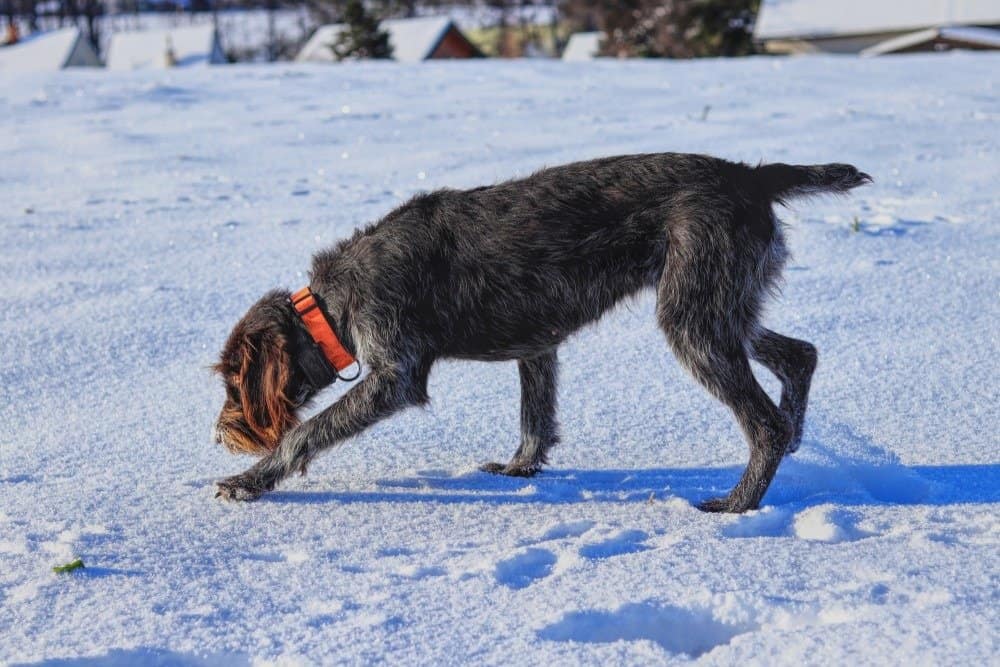
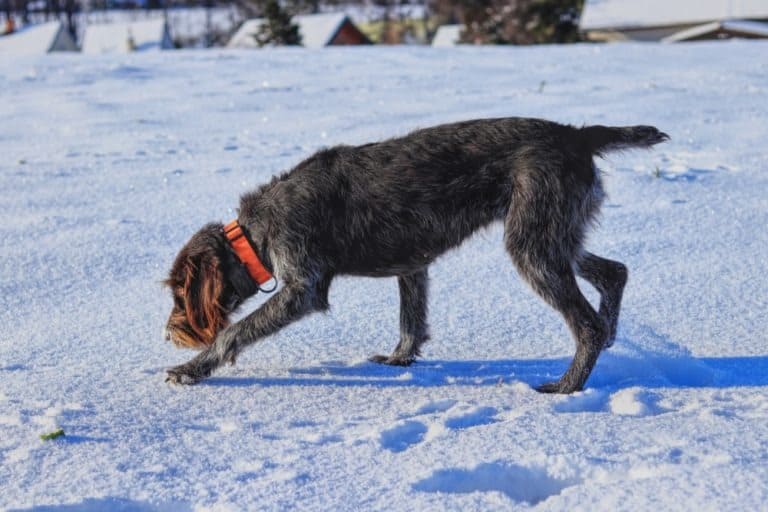
Cesky Fousek looking for tracks in the snow

The Cesky Fousek dates back to the 13th century and is believed to be the oldest wirehair in existence.

Size and Weight

The Cesky Fousek is a muscular medium- to large-sized dog breed. Males weigh quite a bit more than females.

Common Health Issues

The Cesky Fousek is prone to many common health issues that afflict other dog breeds, including cancer, ear infections, and hair loss. This breed also has a tendency to inherit hip dysplasia, a genetic disorder that arises from the abnormal development of the hip socket. In its worst form, this condition can cause lameness and arthritis that follow the dog throughout its entire life. Because this condition arises early in the dog’s development, you should make sure the breeders, store, or adoption agency has screened for potential health issues as a puppy.

It is also a good idea to have regular physical examinations and ear examinations. If you can afford it, then you might want to think about getting semi-regular tests to catch issues early on. To sum up this breed’s most common health problems:

  • Cancer
  • Hip Dysplasia
  • Ear Infections
  • Alopecia (bald spots)
Types of Pointer Dogs

The Cesky Fousek is believed to be an ancient dog, first setting its roots centuries ago in the time of the Kingdom of Bohemia.

Temperament and Behavior

The Cesky Fousek has a warm and friendly personality that’s eager to please. Its behavior combines intelligence with obedience, toughness, and tenacity with a gentle and playful side. Through training, exercise, and playtime, there are endless ways to interact positively with this breed. This dog’s personality and behavior, honed over centuries of selective breeding, are also ideal for hunting trips.

No matter the conditions, it is in its element when tracking down game. These trips also serve as a good way to strengthen the bond between dog and owner. For all these reasons, the Cesky Fousek is a good rural dog. But as long as you have enough open space to exercise in, even urban dwellers may come to love this affable dog. Just make sure that it has plenty to occupy its wandering and energetic mind.

How to Take Care of a Cesky Fousek

The Cesky Fousek requires a good deal of care and attention to maximize both the dog’s happiness and your enjoyment as an owner. Regular health checkups and screenings from the time it’s a puppy are good ideas. Over time, you may come to develop a very deep bond with the breed. You should treat it as a companion and partner as much as a pet.

The Best Dog Food for Cesky Fousek Dogs

The Cesky Fousek requires about 4 cups of high-quality dog food a day to support its very active lifestyle. You can also hand out treats regularly to encourage good behavior and assist with training. This breed burns through energy very quickly, but you should nevertheless watch out for signs of weight gain. Opt for a high-protein food that fuels their active lifestyle and builds lean muscle while nourishing their whole body, from nose to tail.

Maintenance and Grooming

The Cesky Fousek is a moderate shedder that requires regular brushing about once or twice every week. A normal comb or pin brush should be sufficient to remove loose hair and dirt. Unless the dog is particularly dirty, it is not necessary to give it regular baths; regular cleaning with a cloth will suffice. Other important grooming tasks include weekly teeth brushing, regular nail trimmings, and frequent ear cleaning to lower the risk of infection. If the dog gets wet on one of its many adventures outside, then you should dry it as thoroughly as possible to prevent it from catching a chill.
Training is so important to the Cesky Fousek that it serves as an important means of strengthening the bond with its owner.

Training

The Cesky Fousek responds to training with the obedient air of a loyal companion. With a bit of guidance, this breed can be taught to perform any tricks or tasks that the owner desires. The Cesky Fousek fortunately has little of the stubborn streak that characterizes many other dog breeds, so you should not struggle to teach it what you want. Although primarily bred to assist its owner with hunting, the Cesky Fousek is also agile and fast enough to participate in some athletic or sports competitions. Training is so important to this breed that it serves as an important means of strengthening the bond with its owner.

Exercise

The Cesky Fousek is a high-energy breed that may require as much as an hour of exercise a day. Otherwise, it may engage in destructive behavior to work off its excess energy. So, before buying, you should make sure that you have access to plenty of open space for the dog to run and play. If you don’t have a yard or nearby open space, then you should be prepared to take it on frequent trips to the park. It should ideally get about 20 miles of exercise every week. Because it was bred as a hunting dog, the Cesky Fousek takes very well to fetch and ball games. It’s also an excellent swimmer that can easily traverse pools or bodies of water without a problem.
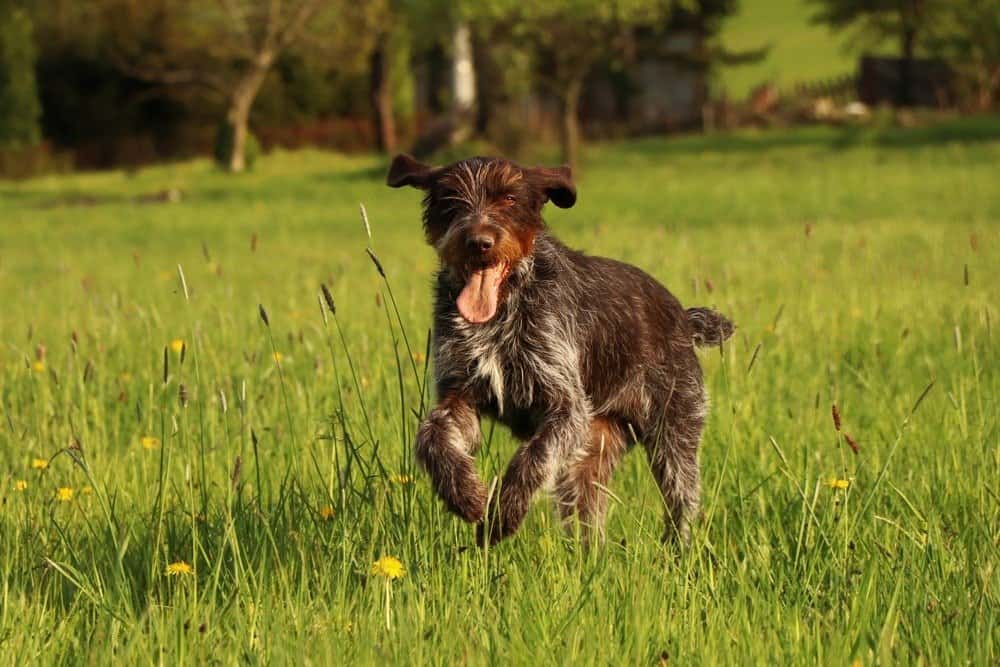
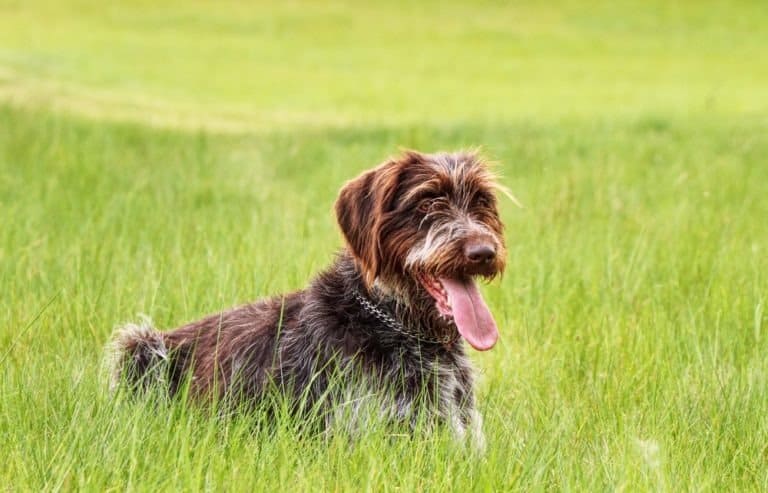
Cesky Fousek, hunting dog need plenty of daily exercise to keep him sharp and fit.

The Cesky Fousek is a high-energy breed that may require as much as an hour of exercise a day.

Puppies

The Cesky Fousek puppies are very responsive puppies that can be trained and socialized easily from an early age. As long as you attend to its needs and make the extra effort to screen for adverse health conditions, the puppy should be set for a long and successful life.
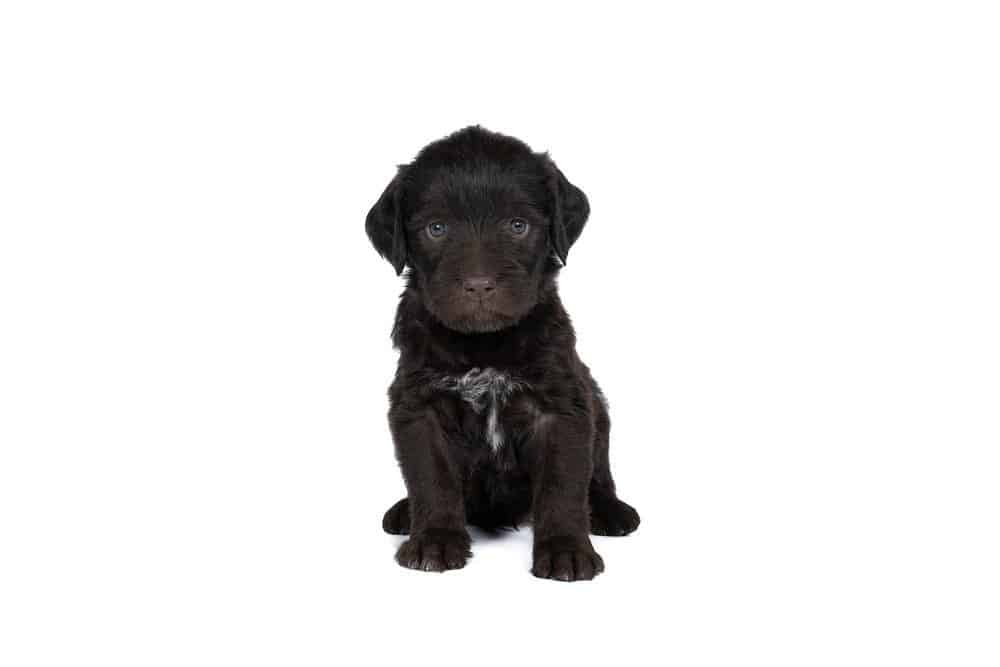
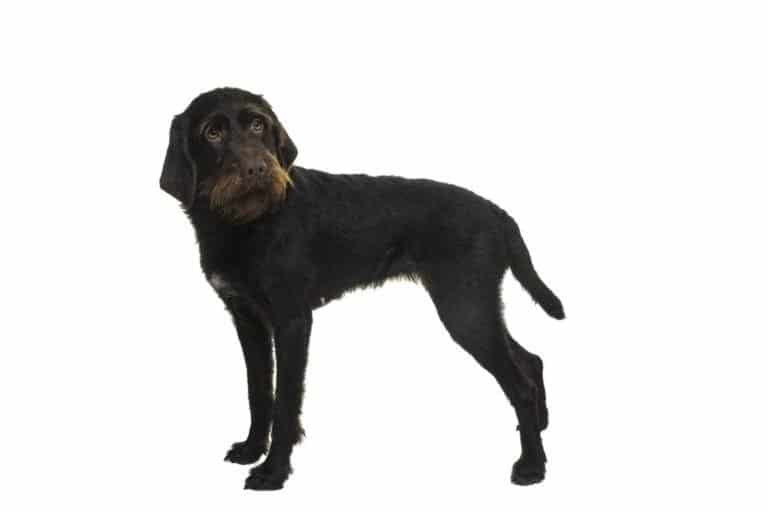
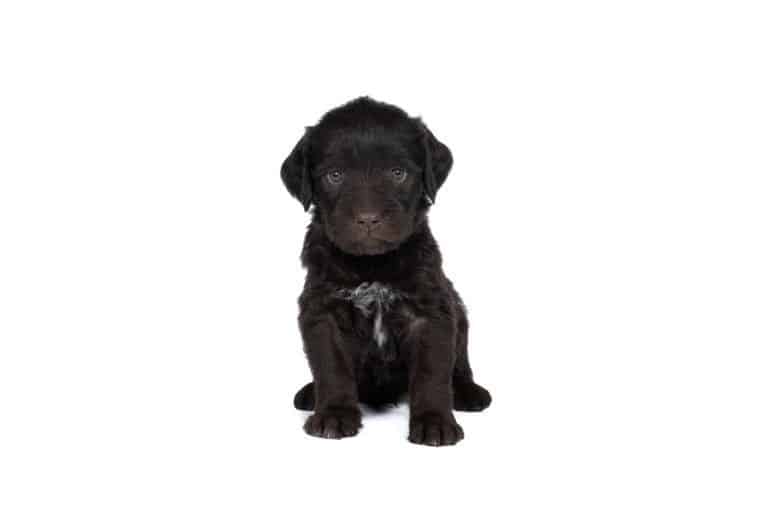
Cesky Fousek puppy on white background

Cesky Fousek puppies are eager and easy to train.

Cesky Fouseks and Children

Due to its level-headed and friendly nature, the Cesky Fousek works very well as a family pet. It is simultaneously well-behaved and very protective of its owner. However, you should be aware that the breed’s energetic behavior may be a problem around younger children. It is therefore a good idea to have a responsible caretaker or supervisor around at all times to provide the dog company and companionship.

Breeds Similar to the Cesky Fousek

The Cesky Fousek is very similar to the German wirehaired pointer and the French wirehaired pointing Griffon. However, these are relatively rare and specialized breeds. If you are looking for more mainstream hunting dogs similar to the Cesky Fousek, then you should check out these breeds instead:

  • Irish Setter — Adorned in a fiery red and orange coat of fur, the Irish setter is a fellow gundog with a gregarious and good-natured personality. This incredibly athletic breed has a lean, wiry appearance with big droopy ears and long, elegant fur. It has a staunch reputation as a good work dog and an affectionate companion.
  • Labrador Retriever — This friendly and spirited retriever is one of the most popular dog breeds in the United States. It requires lots of exercise and training to really satisfy this breed. It is therefore not for owners who want a low-maintenance dog. But for those who have the time and inclination to take care of it, the Labrador retriever is a loving and playful dog.
  • Golden Retriever — This incredibly popular dog breed has many of the same attributes and characteristics as the Labrador retriever. It is loyal, playful, friendly, athletic, and obedient. It is also a medium to a high-maintenance dog that requires plenty of attention and exercise. But the golden retriever will delight children and adults alike.
View all 392 animals that start with C

Sources

  1. David Burnie, Dorling Kindersley (2011) Animal, The Definitive Visual Guide To The World's Wildlife / Accessed December 1, 2008
  2. Tom Jackson, Lorenz Books (2007) The World Encyclopedia Of Animals / Accessed December 1, 2008
  3. David Burnie, Kingfisher (2011) The Kingfisher Animal Encyclopedia / Accessed December 1, 2008
  4. David Burnie, Dorling Kindersley (2008) Illustrated Encyclopedia Of Animals / Accessed December 1, 2008
  5. Dorling Kindersley (2006) Dorling Kindersley Encyclopedia Of Animals / Accessed December 1, 2008
  6. Wag! / Accessed October 30, 2020
  7. Gundog / Accessed October 30, 2020
Lisha Pace

About the Author

Lisha Pace

After a career of working to provide opportunities for local communities to experience and create art, I am enjoying having time to write about two of my favorite things - nature and animals. Half of my life is spent outdoors, usually with my husband and sweet little fourteen year old dog. We love to take walks by the lake and take photos of the animals we meet including: otters, ospreys, Canadian geese, ducks and nesting bald eagles. I also enjoy reading, discovering books to add to my library, collecting and playing vinyl, and listening to my son's music.

Thank you for reading! Have some feedback for us?


Cesky Fousek FAQs (Frequently Asked Questions)

The Cesky Fousek originated from what is now the modern Czech Republic. The name itself translates roughly to mean Czech fousy (meaning whiskers or rough hair).