C
Species Profile

Coral

Anthozoa

Tiny polyps, massive oceans
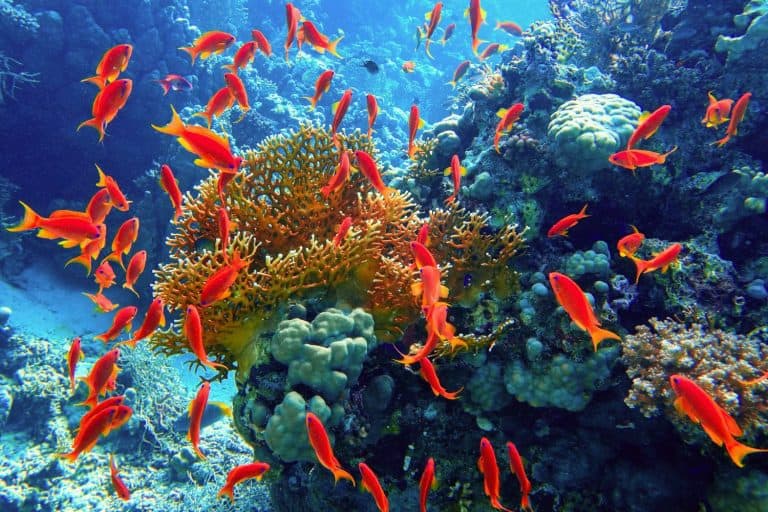
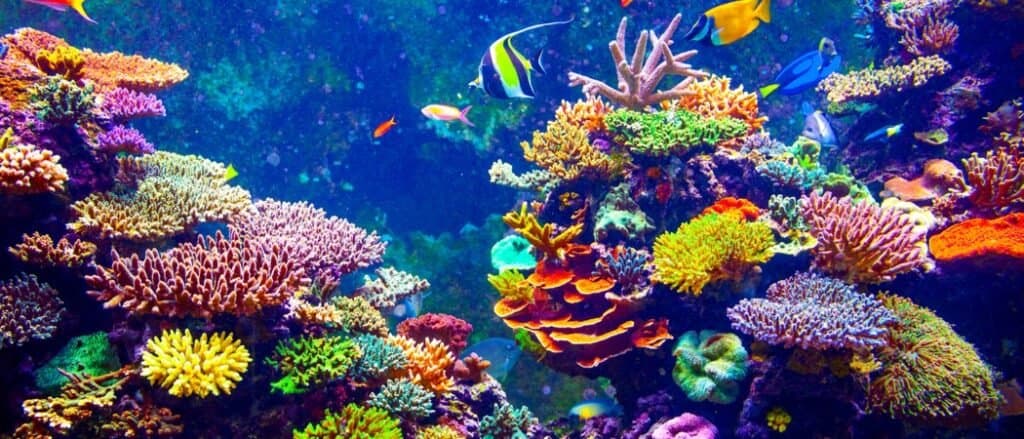
Volodymyr Goinyk/Shutterstock.com

Coral Distribution

Click a location to explore more animals from that region

This map shows coastal regions where Coral are found.

Loading map...

Size Comparison

Human 5'8"
Coral 12 in

Coral stands at 17% of average human height.

Coral

At a Glance

Class Overview This page covers the Coral class as a group. Stats below are general traits shared across the class.
Also Known As Sea coral, Stony coral, Hard coral, Soft coral, Reef coral, Reef-building coral, Gorgonian, Sea fan
Diet Omnivore
Activity Diurnal+
Lifespan 50 years
Weight 20000 lbs
Status Not Evaluated
Did You Know?

Size range is extreme: polyps can be ~1-2 mm across in some species, while solitary "mushroom corals" can reach ~50 cm; colonies may span meters and weigh tons.

Scientific Classification

Class Overview "Coral" is not a single species but represents an entire class containing multiple species.

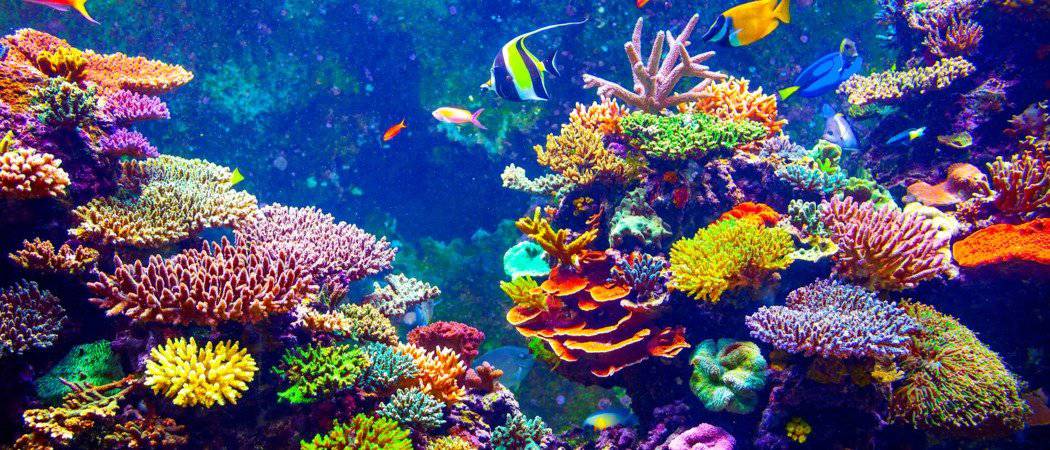
Corals are colonial (and sometimes solitary) cnidarian animals that live as polyps, often forming symbioses with photosynthetic dinoflagellates (zooxanthellae) and, in many groups, building reefs via calcium carbonate skeletons.

Kingdom
Animalia
Phylum
Cnidaria
Class
Anthozoa

Distinguishing Features

  • Polyp body plan with tentacles bearing stinging cells (cnidocytes)
  • Often colonial growth forms; many species secrete calcium carbonate skeletons (especially Scleractinia)
  • Frequent symbiosis with zooxanthellae driving high productivity in sunlit waters
  • Major ecosystem engineers forming reef habitats

Physical Measurements

Height
12 in (0 in – 26 ft 3 in)
Length
1 ft 8 in (0 in – 32 ft 10 in)
Weight
2 lbs (0 lbs – 22.0 tons)
Top Speed
0 mph
Mostly still, about 0 km/h
Venomous

Appearance

Primary Colors
Secondary Colors
Skin Type Coral living tissue is soft, flexible polyp or colony skin with two layers (epidermis and gastrodermis) and cnidocytes, often mucus-covered. Some make calcium‑carbonate skeletons; others are soft or skeletonless (Anthozoa).
Distinctive Features
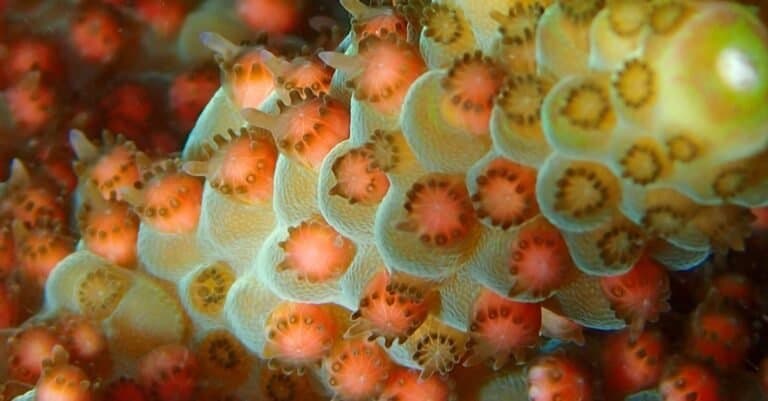
  • Body plan: radial symmetry with polyp anatomy (mouth/anus opening surrounded by tentacles); many are colonial with numerous interconnected polyps sharing tissue, while others are solitary (diversity across the class is high).
  • Cnidocytes/nematocysts on tentacles are the defining capture/defense feature; feeding commonly involves tentacle extension to capture zooplankton, suspended particles, or small nekton, plus mucus-assisted particle trapping in some taxa.
  • Anthozoa polyps are tiny, a few millimeters (0.1–0.3 cm). Some solitary anemones have oral discs up to 1 m. Tentacles range millimeters to 10–15 cm; colonies from centimeters to meters.
  • Corals have different skeleton types: reef-building scleractinians that make CaCO3 skeletons, and many non-reef groups—soft corals, gorgonians, sea pens, and some deep-sea stony corals.
  • Many shallow-water stony corals and some anthozoans host photosynthetic dinoflagellates (zooxanthellae) for energy; others, often deep-sea or murky-water species, are azooxanthellate and feed on other organisms.
  • Bleaching (variable susceptibility): stress (especially elevated temperature, high light/UV, poor water quality, disease, and ocean acidification) can disrupt symbiosis, causing tissue paling/whitening; outcomes range from recovery to mortality depending on duration/intensity and species traits.
  • Ecological role: major habitat-formers-provide complex 3D structure, nursery areas, and refuges; influence local hydrodynamics and sediment capture; support diverse microbial and invertebrate communities.
  • Mostly sessile (stay attached). Many extend their polyps at night to feed; some feed by day depending on predators, water flow, and symbionts. They reproduce by broadcast spawning, brooding, or asexually via budding, fragmentation, or fission.

Did You Know?

Size range is extreme: polyps can be ~1-2 mm across in some species, while solitary "mushroom corals" can reach ~50 cm; colonies may span meters and weigh tons.

Corals are animals, not plants: they catch prey with tentacles armed with cnidocytes (stinging cells).

Reef-building (stony) corals are major carbonate "cement mixers," slowly turning seawater minerals into limestone skeletons that become reefs over time.

Many corals glow: fluorescent proteins can produce vivid greens, reds, and oranges, especially under blue light.

Reproduction varies widely: some species broadcast-spawn in synchronized mass events, while others brood larvae internally before release.

Coral lifespans range from short-lived species lasting years to decades, while some massive and deep-sea/"precious" corals can persist for centuries to millennia.

Corals occur far beyond warm shallows: anthozoan corals include tropical reef species and cold-water corals living in darkness at hundreds to thousands of meters depth.

Unique Adaptations

  • Cnidocytes (stinging cells): hallmark of cnidarians, used for prey capture and defense; potency and deployment differ widely across anthozoan groups.
  • Symbiosis with dinoflagellates (zooxanthellae): in many shallow-water corals, symbionts provide much of the host's energy; stress can disrupt the partnership, causing bleaching (often triggered by heat, intense light, poor water quality, disease, and compounded by ocean acidification).
  • Calcification vs. flexibility: reef-building stony corals deposit calcium carbonate skeletons; soft corals and many gorgonians rely more on flexible tissues and embedded skeletal elements (sclerites) for support.
  • Polyp retractability: many species can withdraw polyps into skeletons or tissues, reducing damage from predators, sediment, and strong light.
  • Skeletal micro-architecture: growth forms (branching, plating, massive, encrusting) are adaptive responses to waves, light, and sediment-so the same class includes both delicate fans and boulder-like forms.
  • Chemical defenses: numerous corals produce bioactive compounds that deter predators, inhibit competitors, or reduce fouling; profiles vary strongly among lineages.
  • Long-lived, slow-growth strategies: many deep-sea and precious corals grow slowly in low-food, cold environments, enabling lifespans from centuries to (in some groups) millennia.

Interesting Behaviors

  • Colonial life with division of labor: many species form colonies of genetically identical polyps connected by tissue, sharing nutrients and coordinating growth; others remain solitary throughout life.
  • Day-night rhythms: in many zooxanthellate (symbiont-bearing) corals, polyps retract by day and extend tentacles at night to feed-though patterns vary by species and habitat.
  • Mixed feeding strategies: common combinations include plankton capture, absorbing dissolved organic matter, and receiving photosynthate ("sugars") from symbiotic dinoflagellates; deep-water corals are entirely heterotrophic.
  • Mass spawning and chemical timing: many reef corals release eggs and sperm in coordinated windows linked to season, temperature, and lunar cycles; other corals brood and release ready-to-settle larvae.
  • Asexual propagation: budding, fission, and fragmentation can rapidly expand colonies; broken fragments of some species can reattach and grow, aiding recovery after storms.
  • Mucus production: many corals shed mucus sheets that remove sediments and microbes; mucus also traps particles that can be ingested, coupling cleaning with feeding.
  • Competitive interactions: corals may overtop neighbors, deploy long sweeper tentacles, or use digestive filaments/chemical defenses-especially common in crowded reef settings.
  • Habitat engineering: as colonies grow and die, their skeletons create complex 3-D structure that shelters fish and invertebrates and alters local currents and sedimentation.

Cultural Significance

Corals (Anthozoa) shaped human culture as material and symbol. Corallium rubrum was carved into jewelry and traded since long ago. Red coral is used in South Asian astrology (Mars). East Asian art valued coral. Today reefs stand for biodiversity, shore protection, fisheries support, and clear signs of climate change.

Myths & Legends

Greek and Roman tradition (notably in Ovid's *Metamorphoses*) tells that when Perseus set Medusa's head on the shore, sea plants were turned to stone-becoming coral.

In ancient Mediterranean folklore recorded by writers like Pliny the Elder, coral was worn as a protective charm, especially for children, to ward off danger and the evil eye.

Chinese courtly lore and sea-palace imagery describe coral as a wondrous "submarine tree," associated with the Dragon King's underwater realm and presented as an auspicious treasure.

In Hindu astrological tradition, red coral is a sacred gemstone linked to the planet Mars and worn in rituals intended to strengthen auspicious influences.

Across parts of Europe and North Africa, traditions around "precious coral" treated it as a potent talisman-an ocean-born material thought to protect travelers and bring good fortune.

Conservation Status

NE Not Evaluated at the class (Anthozoa) level; across the many thousands of anthozoan species, IUCN species-level assessments span from Least Concern (LC) through Critically Endangered (CR), with many species Data Deficient (DD) or not yet assessed. Overall, reef-building shallow-water corals include a high proportion of threatened taxa and have undergone major recent declines, while some deep-sea and non-reef anthozoans show more variable status and trends. Diversity note (ranges/generalizations across the class): body form ranges from tiny solitary polyps (~millimeters) to very large anemones with oral discs approaching ~1 m; colonies range from small patches to multi-meter massive colonies. Lifespans range from years/decades in some fast-growing or short-lived species to centuries-millennia in long-lived taxa (e.g., some black corals and deep-sea gorgonians). Ecology varies widely: many are sessile benthic predators using tentacles/nematocysts; many tropical shallow-water corals form obligate or facultative symbioses with photosynthetic dinoflagellates (Symbiodiniaceae), whereas many deep-sea species are non-photosymbiotic; reproduction commonly includes both sexual (broadcast spawning or brooding) and asexual modes, with dispersal and resilience differing strongly among taxa. Notable highly at-risk corals at the species level include several Caribbean reef-builders (e.g., Acropora palmata, A. cervicornis; Dendrogyra cylindrus) and other regionally imperiled reef taxa.

Has not yet been evaluated against the criteria.

Population Decreasing

Protected Under

  • CITES Appendix II covers all stony corals (Order Scleractinia) and is widely used to regulate international trade in coral specimens and products (implementation/enforcement vary).
  • Marine Protected Areas (MPAs), no-take zones, and reef sanctuary regulations exist in many countries and can reduce local stressors (e.g., fishing pressure, anchor damage), though coverage and effectiveness are uneven.
  • National threatened-species laws apply to some individual coral species in certain jurisdictions (e.g., listings under the U.S. Endangered Species Act for several coral species).
  • Regional conventions and fisheries/coastal-zone regulations (varies by ocean basin and country) can offer habitat-level protections but are not uniform across Anthozoa.

You might be looking for:

Stony corals (hard corals)

50%

Order Scleractinia

Primary reef-building corals with calcium carbonate skeletons; include many tropical reef framework species.

Soft corals, sea fans, sea pens

30%

Order Alcyonacea (incl. Octocorallia)

Corals without massive stony skeletons; often flexible colonies (sea fans) or upright forms (sea pens).

Fire corals

20%

Genus Millepora (Class Hydrozoa)

Hydrozoans that look coral-like and contribute to reefs but are not true anthozoan corals.

Life Cycle

Birth 1000 larvas
Lifespan 50 years

Lifespan

In the Wild
1–4000 years
In Captivity
1–100 years

Reproduction

Mating System Hermaphroditism
Social Structure Aggregation Group
Breeding Pattern Not Applicable
Fertilization Broadcast Spawning
Birth Type Broadcast_spawning

Among corals (Anthozoa), many are hermaphrodites though some have separate sexes. They usually do not form pair bonds. Many spawn eggs and sperm into the water, but brooding and internal fertilization also occur. Colonies share resources but do not care for young.

Behavior & Ecology

Social Colony Group: 10000
Activity Diurnal, Nocturnal, Crepuscular, Cathemeral
Diet Omnivore Zooplankton (especially copepods and other small crustaceans), supplemented in many species by symbiont-derived photosynthate

Temperament

Sessile and generally non-social in the vertebrate sense; interactions are mostly through growth, space competition, and reproduction rather than coordinated group movement.
Often strongly competitive/territorial at the colony boundary: many can deploy stinging tentacles, sweeper tentacles, or mesenterial filaments; some use allelopathic chemicals to inhibit or damage neighbors (varies greatly among taxa).
Feeding tendency varies: many extend tentacles mainly at night/low light to capture zooplankton, while symbiotic, photosynthetic forms rely heavily on daytime energy from dinoflagellate symbionts; many species do both (mixotrophy).
Stress sensitivity is common but variable: temperature, light, sedimentation, and water chemistry can shift behavior (polyp retraction/extension), reduce feeding, and in symbiotic forms trigger bleaching; tolerance ranges widely across the class.
Reproductive behavior includes both asexual budding/fragmentation (common in colonial forms) and sexual reproduction; many species participate in highly synchronized mass-spawning events, while others brood larvae or spawn over longer seasons (strong regional and taxonomic variation).

Communication

None No acoustic/vocal communication known in Anthozoa
Chemical signaling and recognition via dissolved cues and mucus: mediates settlement/larval behavior, aggression at contact zones, allorecognition Fusion vs rejection) in some groups, and responses to injury or neighbors (highly variable among lineages
Tactile/physical interaction: direct contact triggers nematocyst discharge, tissue swelling/retraction, sweeper tentacle deployment, and boundary formation; growth over/around neighbors is a major 'interaction channel'.
Light-mediated and circadian/seasonal entrainment: polyp expansion/contraction and spawning often track photoperiod, lunar cycles, and temperature; symbiotic taxa show strong light-linked daily rhythms.
Gamete/larval signaling at the population level: synchronous spawning releases large quantities of gametes/chemical cues into the water column, facilitating fertilization; larval settlement is guided by chemical cues from crustose coralline algae and microbial biofilms Varies by species/ecosystem
Neural-net coordination within an individual polyp and across connected polyps in a colony: enables rapid localized responses (retraction, feeding, mucus production) without centralized control.

Habitat

Coral Reef Coastal Rocky Shore Seabed/Benthic Deep Sea Cliff/Rocky Outcrop Cave Kelp Forest Mangrove Estuary Open Ocean +5
Biomes:
Terrain:
Coastal Island Rocky Sandy Muddy Volcanic Karst +1
Elevation: Up to 19685 ft 1 in

Ecological Role

Foundation and suspension-feeding cnidarians that range from major reef builders (many scleractinians) to soft-corals/sea anemones that structure benthic habitats; collectively they couple pelagic production to benthic food webs via prey capture and (in many taxa) photosymbiosis.

Reef and habitat construction (in many hard corals) that creates complex nursery and refuge habitat for fishes and invertebrates Energy and nutrient transfer from the water column to the benthos via plankton capture, mucus production, and particle trapping Primary production subsidy in symbiotic taxa, supporting high biomass in otherwise nutrient-poor waters Nutrient cycling and retention (e.g., recycling of nitrogen and phosphorus within the coral holobiont; particle and DOM processing) Coastal protection via wave attenuation and shoreline stabilization where reef frameworks develop Support of biodiversity by providing living space, shelter, and feeding surfaces for diverse reef- and hard-bottom communities

Diet Details

Main Prey:
Zooplankton planktonic larvae Small benthic invertebrates Microzooplankton Small fish
Other Foods:
Photosynthate Phytoplankton and other suspended microalgae Dissolved organic matter and particulate organic matter/marine snow Coral-associated microbial resources

Human Interaction

Domestication Status

Wild

Corals (Class Anthozoa, including Scleractinia, Octocorallia, zoanthids, anemones, black corals) are wild marine animals, not domesticated. Humans grow many reef and soft corals by fragging and mariculture for aquaria and restoration, but this is growing wild stock in captivity. Wild collection still happens but is more regulated.

Danger Level

High
  • Stings/skin irritation from nematocysts in many anthozoans (often mild but can be painful; risk varies widely among taxa and individuals)
  • Severe toxin risk from some zoanthids (palytoxin exposure via handling, aerosols/steam when cutting or boiling rock, or accidental ingestion); rare but potentially life-threatening
  • Allergic reactions or secondary infections from cuts/abrasions incurred while handling reef rock/coral structures
  • Diving hazards around reefs (abrasions, entanglement, and compounded risk with surf/shore conditions), though these are indirect rather than active aggression
  • Eye/respiratory irritation from aquarium chemicals and particulates when fragging/handling (not universal, but a known risk in the hobby)

As a Pet

Suitable as Pet

Legality: Rules vary by country and state and by coral type. Many reef and stony corals (and live rock organisms) are under CITES or local collection/import laws; some areas ban wild collection and need farm-raised corals.

Care Level: Expert Only

Purchase Cost: $10 - $2,000
Lifetime Cost: $2,000 - $30,000

Economic Value

Uses:
Ecosystem services (coastal protection, habitat formation, biodiversity support) Tourism and recreation (reef diving/snorkeling) Fisheries support (nursery habitat for many commercial species) Aquarium trade (wild collection, mariculture, captive propagation) Biomedical and biotech research (bioactive compounds, biomineralization research) Jewelry/curio trade (notably some black corals and coral skeleton products; often regulated) Conservation and restoration industry (nurseries, outplanting, monitoring)
Products:
  • Aquacultured/captive-propagated coral fragments for reef aquaria
  • Wild-collected ornamental corals/colonies where permitted
  • Reef tourism experiences and associated local services
  • Fisheries yield supported indirectly by reef habitat
  • Bioactive chemical leads (e.g., compounds investigated for pharmaceuticals)
  • Coral skeleton/curio materials (historically significant; increasingly restricted)
  • Restoration services (coral gardening, reef rehabilitation projects)

Relationships

Predators 8

Crown-of-thorns sea star Acanthaster
Corallivorous butterflyfish Chaetodon spp.
Parrotfishes
Parrotfishes Scaridae
Filefishes Monacanthidae
Coral-eating snails Drupella spp., Coralliophila spp.
Bearded fireworm
Bearded fireworm Hermodice carunculata
Triggerfish
Triggerfish Balistidae
Crabs and amphipods Decapoda / Amphipoda

Related Species 7

Staghorn coral Acropora Shared Genus
Finger/reef-building corals Porites Shared Genus
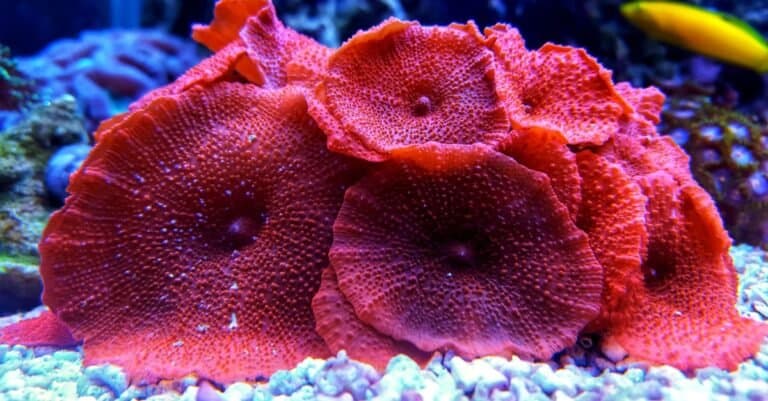
Mushroom corals Shared Genus
Sea fans Gorgonia Shared Genus
Sea anemones
Sea anemones Actiniaria Shared Order
Black corals Antipatharia Shared Order
Zoanthids Zoantharia Shared Order

Ecological Equivalents 5

Animals that fill a similar ecological role in their ecosystem

Hydrocorals Millepora spp. Cnidarians that can form reef-like calcium carbonate structures and occupy similar shallow, wave-exposed reef habitats; often mistaken for true corals but are outside Anthozoa.
Coralline algae Corallinophycidae Encrusting calcifiers that cement reef framework and compete for space and light; perform a similar role in reef building and stabilization, though they are photosynthetic algae rather than animals.
Reef sponges Porifera Major space competitors and habitat formers on reefs. Some are bioeroders (e.g., Cliona) and strongly influence coral reef structure and health.
Bryozoans Bryozoa Sessile, colonial filter-feeders that form rigid or branching structures and compete for hard substrate; analogous colonial growth forms.
Tubeworm reefs Serpulidae; Siboglinidae Structure-forming, sessile invertebrates that create biogenic habitat and alter local flow and food-capture conditions, performing a similar engineering role in some settings.

Types of Coral

15

Explore 15 recognized types of coral

Staghorn coral Acropora cervicornis
Elkhorn coral Acropora palmata
Lobed star coral Orbicella annularis
Great star coral Orbicella faveolata
Mountainous star coral Orbicella franksi
Boulder star coral Montastraea cavernosa
Mustard hill coral Porites astreoides
Boulder coral (massive Porites) Porites lobata
Pillar coral Dendrogyra cylindrus
Orange cup coral (azooxanthellate) Tubastraea coccinea
Mushroom coral Fungia fungites
Common sea fan Gorgonia ventalina
Jewel anemone Corynactis californica
Zoanthid Zoanthus sociatus
Sea pen Pennatula phosphorea

“There are more than 6000 species of coral in the world’s oceans.”

Corals look much like plants but are actually saltwater-dwelling invertebrate marine organisms. They have external or internal skeletons classified as stony-hard, horny, or soft. Of the 6000 or more species in the world today, about 3000 are stony corals. Another 1200 are horny gorgonians and about 800 are soft corals.

Coral animals are made up of a central polyp with a skeleton growing around it. Each individual coral polyp body is shaped like a tube with one end attaching itself to a hard surface, rooting where it will stay for the rest of its life. These hard surfaces can include rocks, the ocean floor, or debris like shipwrecks.

Multiple polyps of some types of coral form immobile colonies with many bodies working together for survival and reproduction. These colonies in turn make up carpets of polyps called reefs. Other types of coral grow individually like mushrooms in a wide range of sizes.

5 Incredible Coral Facts!
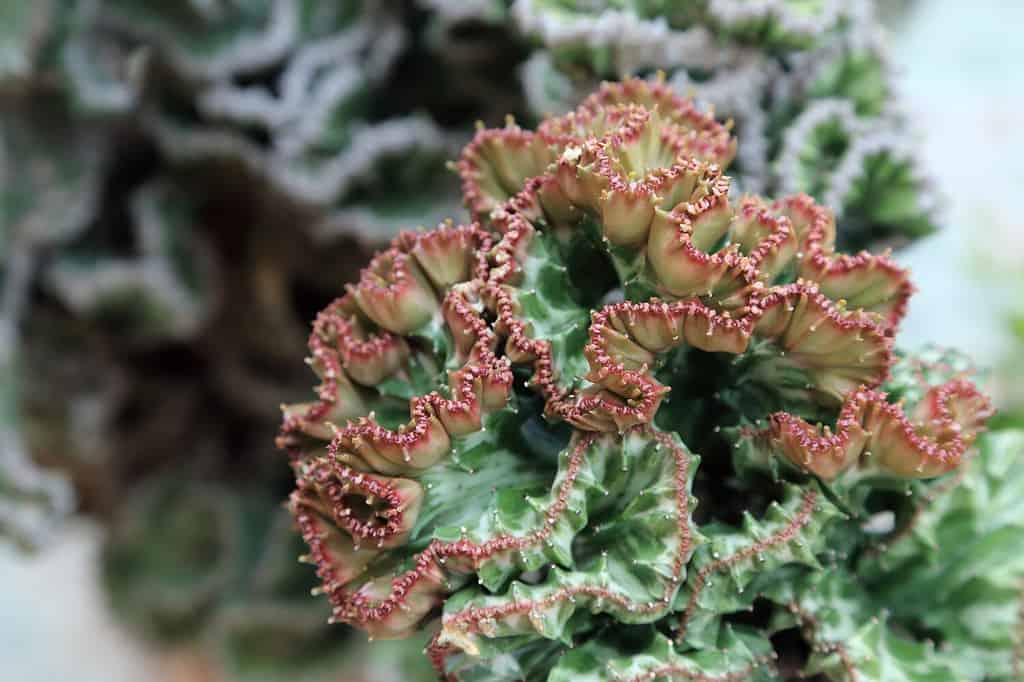
Crested Euphorbia, Coral Cactus succulent, kind of tropical plant.
  • Coral are animals that look like plants growing on the ocean floor and other hard surfaces
  • They are among the slowest-growing creatures on the planet.
  • Reefs create underwater ecosystems for a wide variety of plant and animal life.
  • These animals filter the ocean’s water and help keep it clean.
  • The Great Barrier Reef, a coral reef in Australia, is so large that it is visible from outer space.

Read more interesting facts about corals here.

Scientific Name
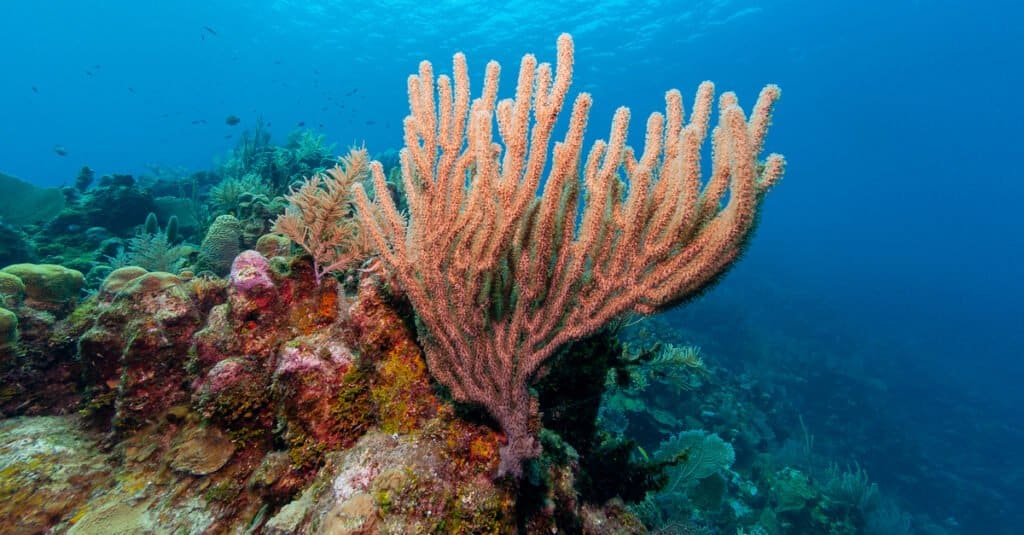
Animals That Look Like Plants - Coral

Coral kills its prey by using the nematocysts, or venomous thread, on their tentacles.

Coral has discovered hundreds of years ago but has been long misunderstood. In fact, scientists believed them to be minerals or plants until the 18th century. It was at that time that William Herschel viewed some of these organisms under a microscope, finding that they had the cell structures of animals.

The name “coral” is a French term widely used since the 11th century when a commentator named Rashi called the plant-like creatures a “tree that grows underwater.”

Evolution and Origins

Coral reefs originated during the Cambrian period, roughly 535 million years ago, although it’s difficult to find fossils from this time. However, during the Ordovician period, which was approximately 100 million years later, there was an abundance of fossils from widespread Heliolitida, rugose, and tabulate corals. In the Paleozoic era, these corals frequently had numerous symbiotic organisms living within them.

It can be inferred that scleractinian corals, which rely on symbionts, likely descended from soft-bodied ancestors that existed during the Paleozoic era. Present-day Scleractinia that live in shallow waters and depend on symbiotic relationships seem to have originated separately from non-symbiotic, solitary predecessors.

Corals, which were first seen as single entities in fossils over 400 million years ago, are incredibly old creatures that transformed into modern forms capable of constructing reefs in the last 25 million years. These coral reefs are exceptional structures (for example, they’re the largest biological structures on earth) and complex systems.

Different Types

Here are list of coral species and animal species that need coral reefs to survive:

  • Staghorn coral
  • Elkhorn coral
  • Galaxea fascicularis
  • Organ pipe coral
  • Open brain coral
  • Porites porites
  • Plerogyra sinuosa
  • Nemenzophyllia turbida
  • Agaricia tenuifolia
  • Stichodactyla haddoni
  • Heteractis magnifica
  • Condylactis gigantea
  • Bubble-tip anemone
  • Red lionfish
  • Agaricia agaricites
  • Caribbean reef shark
  • Acropora clathrata
  • Lophelia pertusa
  • Orange cup coral
  • Acropora tenuis
  • Porites lutea
  • Dipsastraea speciosa
  • Acropora millepora
  • Alcyonium glomeratum
  • Eusmilia
  • Blue tang
  • Montastraea cavernosa
  • Leaf plate montipora
  • Blue ring angelfish
  • Montipora digitata
  • Gorgonia flabellum
  • Siderastrea siderea
  • Stylophora pistillata
  • Diploastrea heliopora
  • Octopus cyanea
  • Orbicella franksi
  • Grey reef shark
  • Yellow-edged moray
  • Bigeye trevally
  • Variegated lizardfish
  • Blacktip Reef Shark
  • Common bluestripe snapper
  • Banded pipefish
  • Yellow tang
  • Moorish idol
  • Moon jelly
  • Harlequin tuskfish
  • Bartlett’s anthias
  • Mandarinfish
  • Hymenocera picta
  • Pillar coral

Appearance and Behavior

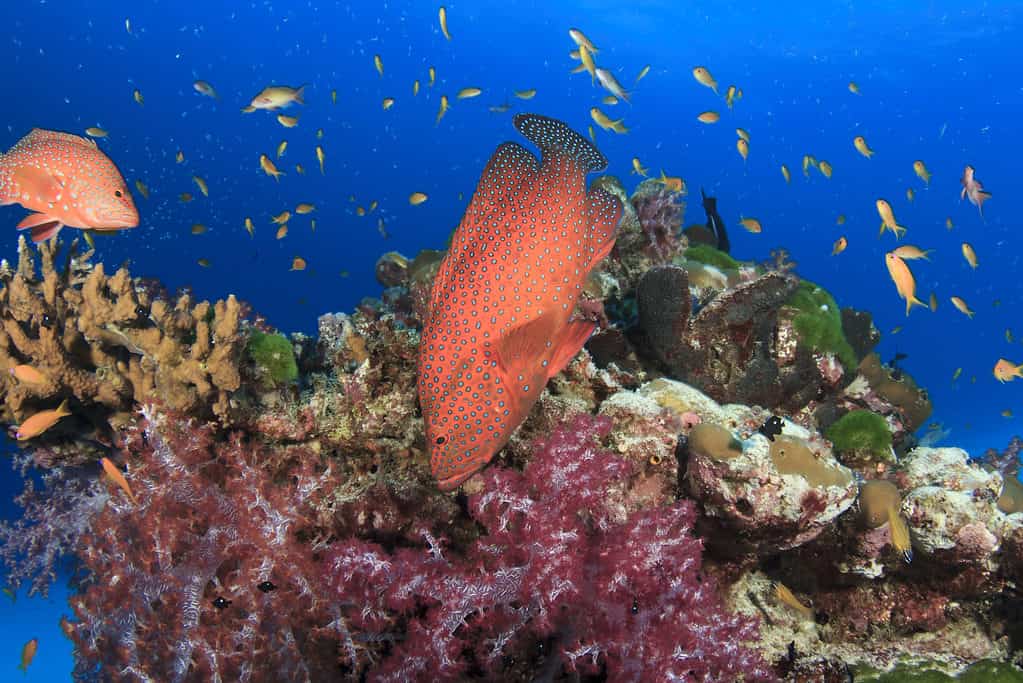
red grouper coral reef

red grouper coral reef

The primary types of coral are soft, horny, and hard. But within these types are more than 6000 species categorized as Octocorallia and Hexacorallia. The soft and horny corals are Octocorallia. The hard coral is Hexacorallia.

Coral behavior is limited because they are sessile creatures, never moving from one spot. In this one location, they live their lives with activity limited to survival and reproduction.

Soft and Horny Coral
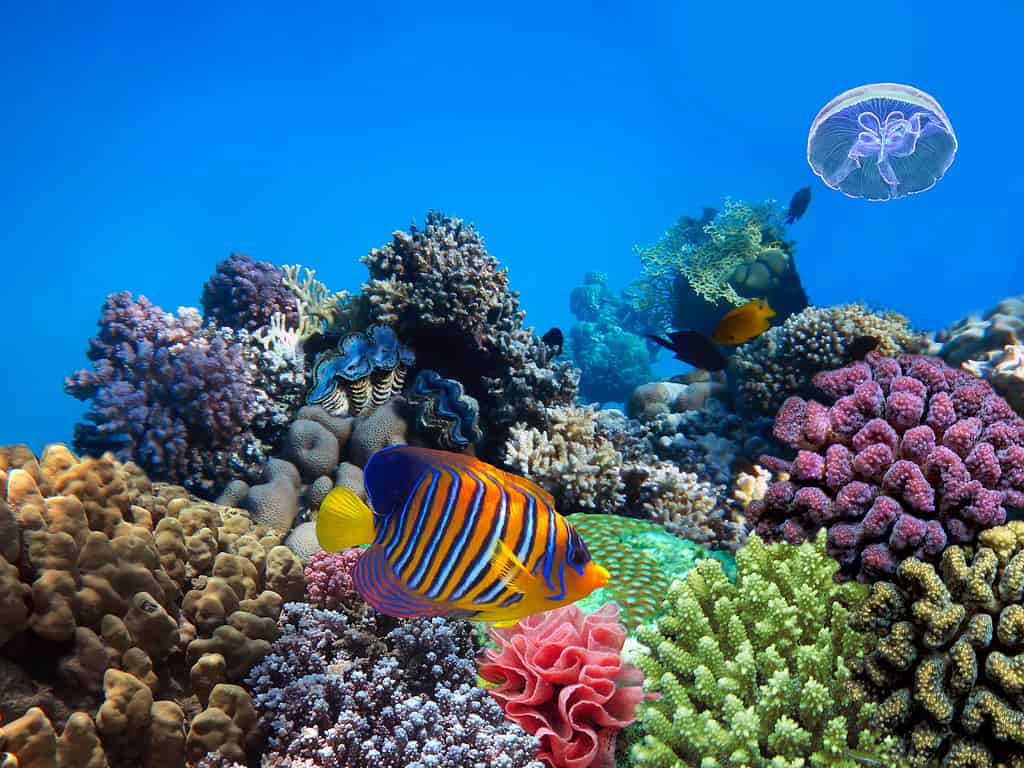
Soft and hard corals in the Red Sea

Soft and hard corals in the Red Sea

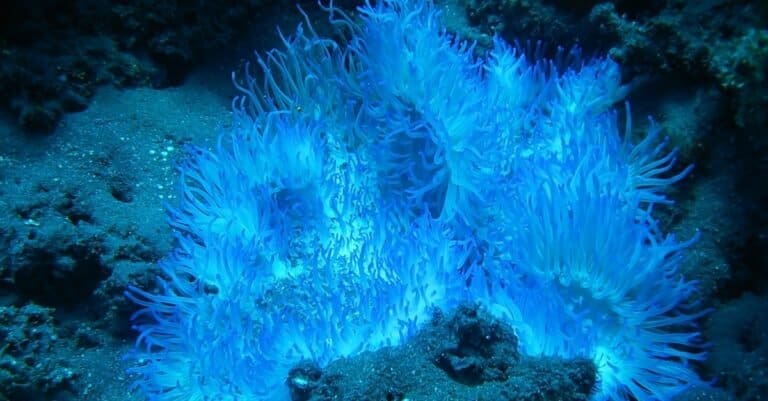
Octocorallia coral grows in colonies, looking much like plants or tiny trees. Each polyp has eight tentacles that move in the water like feathers. In the center of the polyp is a digestive cavity divided into eight sections. Six of these sections take water in through the action of tiny hair-like cilia. The two remaining sections do not have cilia and push water out of the polyp, and back into the surrounding water.

Octocorallia has internal skeletons surrounded by a fleshy rind. These skeletons are different shapes according to the type of coral. Soft coral has needlelike skeleton structures with a woody consistency. Others have skeleton-like plates.

Still, other soft corals have the shape of fingers, thanks to their finger-like skeletal structure. Horny corals look very different from soft corals, featuring skeletons shaped like ribbons or branches that can extend for up to 10 feet long. Blue coral grows in lumps up to 6.5 feet in diameter.

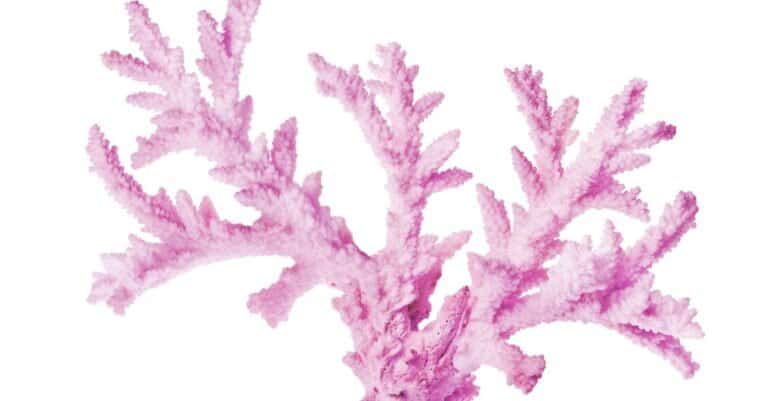
Soft coral can feature a wide range of colors, from whites, pinks, and reds to purples, blues, and yellows.

Stony Hard Coral

Stony hard corals also have eight inner chambers in the polyps. But they have simple tentacles, not the feather-like ones of the Octocorallia. Stony, black, and thorny corals of the Hexacorallia order also have external skeletons and can live in shallow tidal areas or up to 20,000 feet under the waves. Some of these corals are solitary and others make up colonies. Colonial polyps measure from 0.04 inches to 1.2 inches in diameter.

The solitary forms of this stony hard order grow to a diameter of up to 10 inches, just about the size of a dinner plate. Despite having white skeletons, these corals can vary widely in color. Stony corals are typically colored according to the algae living on them, from yellow or brown to olive greens.
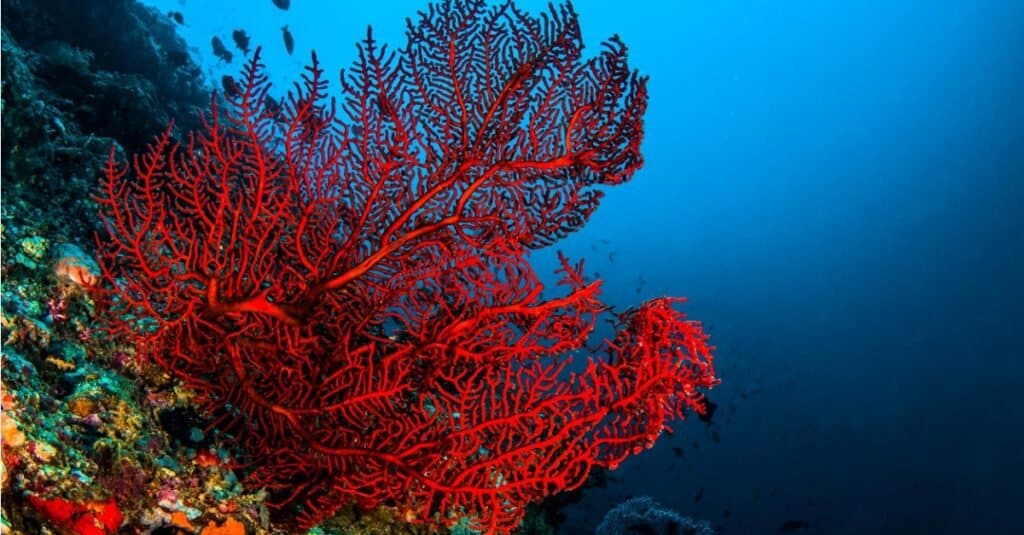
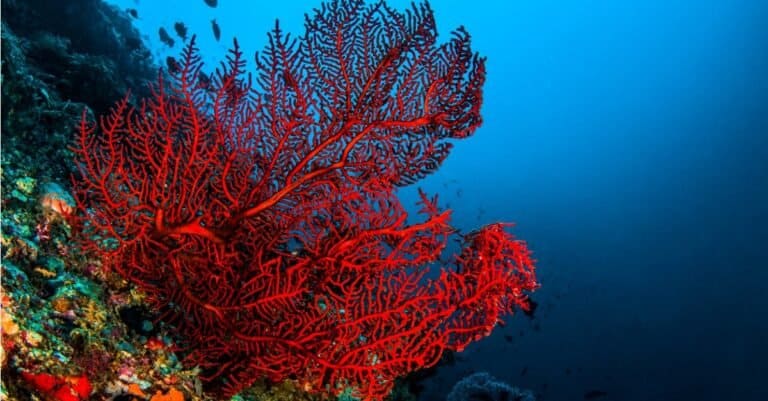
An red octocoral in Komodo.

An red octocoral in Komodo.

Habitat

Coral lives in oceans around the world, primarily in waters from 68 to 90 degrees Fahrenheit. These animals require a specific ratio of salt to water to survive. This means they cannot live in freshwater or where rivers drain into the ocean. They also do not live in lakes with higher salinity than the ocean, such as the Great Salt Lake of Utah.

Besides the right amount of salt in the water and a stable temperature range, coral has other needs from their habitat. These include direct sunlight, needing the sun’s rays to cut through the water to feed the algae that, in turn, provides oxygen for the coral. This means that most species live at depths of less than 165 feet. For the sun to penetrate the water, the water must also be clear and not clouded by plankton or sediment. Coral polyps are also highly sensitive to pollution, climate change, and disruption by humans.

Coral reefs are vital to human survival even though they only live on about one percent of the ocean floor. These animals have existed for 500 million years, serving the distinct purpose of sheltering and feeding about 25% of marine life.

They also help filter the oceans to keep this habitat healthy for fish and other species, prevent coastal erosion, and provide a buffer from storm surges. Because of these roles they play, coral reefs are worth about $30 billion per year to the human economy.

Diet
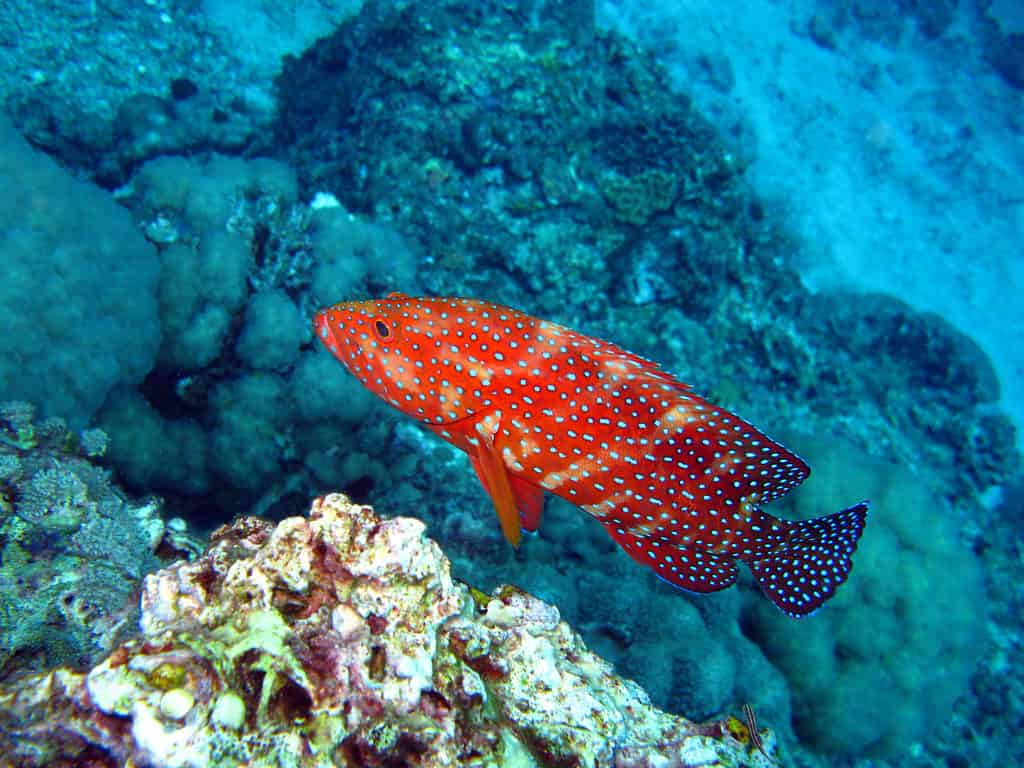
coral trout

Coral trouts are hermaphrodites–they can change genders when external circumstances require it.

Coral receives their energy from tiny algae called zooxanthellae. This alga lives inside the coral’s polyps where it uses sunlight and the process of photosynthesis to make sugar. The coral polyp receives this sugar energy made by the algae. At the same time, the algae provide oxygen for the coral. The animal releases carbon dioxide during respiration, providing this to the plant living within it.

Besides receiving energy and oxygen from algae, coral also feeds on zooplankton. These are tiny creatures floating in the ocean’s currents. Using their long tentacles, coral reaches out to the water around them, catching the zooplankton as it floats past. The tentacles sting the creatures that are then pulled into the coral polyp’s mouth for digestion.

Unfortunately, many sea creatures consider coral a tasty treat. The inner, fleshy polyps are eaten by fish, barnacles, snails, crabs, starfish, and marine worms.

Predators and Threats
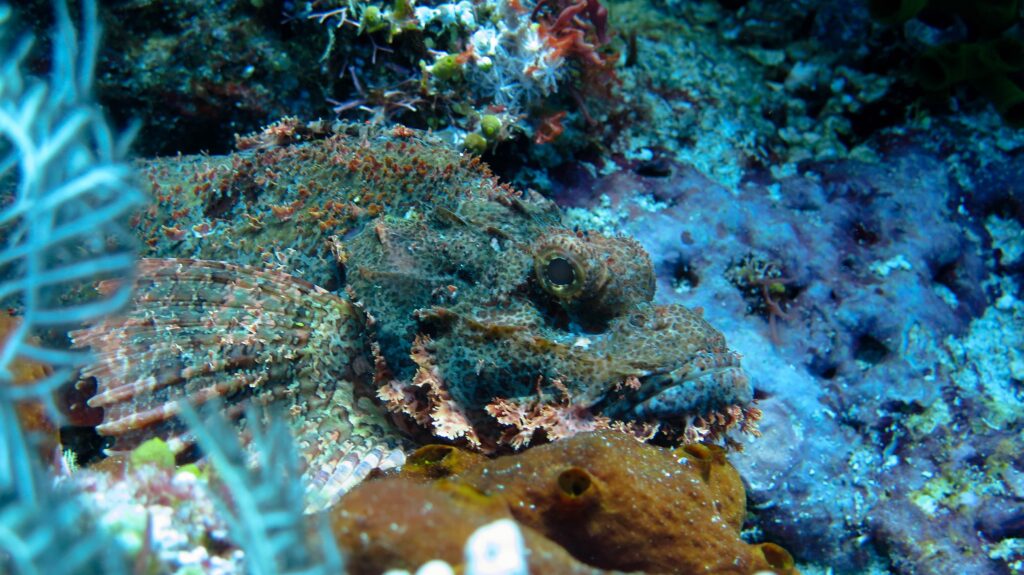
tasseled scorpionfish

Tasseled Scorpionfish are extremely well camouflaged and blend in with the coral reefs and the rocky bottom of the sea.

Some of the biggest threats to coral are the weather, tides, UV rays of the sun, high temperatures, and pollution. All of these threats relate to climate change.

Coral reefs frequently suffer damage from major weather events like hurricanes and cyclones. These storms break and flatten the animals’ colonies. Low tides also leave them exposed to direct sunlight which can overheat and dehydrate coral.

They are also threatened by other marine life that feeds on them. Coral is often part of the diets of fish, barnacles, snails, crabs, starfish, marine worms, and other sea creatures. Humans are one of their biggest threats, because of commercial fishing activities, climate change, and direct, damaging contact with coral reefs.

In stressful conditions, coral can expel the algae that grow within their polyps and provides them with oxygen, the zooxanthellae. As a result of this action, the coral bleaches and often die.

Since coral plays a major role in the ocean’s habitat and for humans, there are many organizations working to save coral reefs. Of over 6000 types of coral, two are currently considered critically endangered and possibly extinct. These include Wellington’s solitary coral of Ecuador and Millepora boschmai of Panama. After major storms hit Ecuador, it is believed there are only two colonies of Wellington’s solitary coral remaining. The IUCN reports that about one-third of the reef, corals are facing extinction from climate change.

Reproduction, Babies, and Lifespan

Each of the unique species of coral has its own reproductive methods. Some are hermaphrodites, like star corals and brain corals. This means one animal reproduces on its own without needing a mate, producing all of its own sperm and eggs. Other types produce colonies of only one sex, being gonochoric. Examples of gonochoric corals include boulders and elkhorn. These corals either produce solely sperm or eggs.

For reproduction, the coral forms larvae by either fertilizing within its polyp or in the water outside of the polyp. To fertilize an egg within a polyp, sperm is released by another polyp into the egg holder’s mouth. The mother polyp holds the merged sperm and egg in its body where they form a larva and mature. Upon maturity, the larva is released into the water.

To fertilize an egg in the water, some species release large numbers of eggs. Nearby polyps release large quantities of sperm into the water for a process of fertilization called coral spawning. For many types of coral, this event happens only one night per year.

Coral larvae naturally move toward the light. They swim to the water’s surface and stay there for as long as weeks. Larvae that survive eventually make their way back to the floor of the ocean where they root to a hard surface. Once attached, the larva transforms into a coral polyp and starts cloning itself to create more polyps for a colony.

Some species of coral can live for more than 4,000 years. The lifespan depends on many factors such as species. Coral polyps essentially clone themselves to form colonies, so there is much debate among scientists about how to determine age.

Population

Coral reefs are found in more than 100 countries and on one percent of the ocean’s floor. Populations of these animals are most threatened by climate change and related factors like pollution. While scientists agree that most coral reefs and species are threatened, there are more than 6000 species to track. Most of these species that have been researched are listed as being in decline.

Zoo and Aquariums

Zoos and public aquariums play a major role in coral research and conservation. Some of the most noteworthy zoos and aquariums with coral reefs in the United States include:

Some aquariums and zoos have free live feeds available for anyone to watch their coral reefs from a computer or smartphone. These aquariums include:

If seeing coral reefs is not enough for you, you can dive into many of the world’s most colorful coral reefs in tourist destinations like the Florida Keys, Australia, Guatemala, Belize, and South Africa. You can even grow your own coral reef in your home aquarium.

View all 392 animals that start with C
How to say Coral in ...
Czech
Korálnatci
German
Blumentiere
English
Corals
Spanish
Anthozoa
Finnish
Korallieläimet
French
Anthozoaire
Hebrew
אלמוגים
Italian
Anthozoa
Japanese
花虫綱
Dutch
Bloemdier
Polish
Koralowce
Portuguese
Anthozoa
Swedish
Koralldjur
Turkish
Mercanlar
Chinese
珊瑚纲

Sources

  1. Wikipedia / Accessed September 12, 2021
  2. Britannica / Accessed September 12, 2021
  3. Animal World / Accessed September 12, 2021
  4. Marine Insight / Accessed September 12, 2021
  5. Coral Reef Alliance / Accessed September 12, 2021
  6. Florida Keys National Marine Sanctuary / Accessed September 12, 2021
  7. NOAA / Accessed September 12, 2021
  8. Nature / Accessed September 12, 2021
  9. Our World in Data / Accessed September 12, 2021
  10. Science Friday / Accessed September 12, 2021
  11. Super Reefs / Accessed September 12, 2021
Rebecca Bales

About the Author

Rebecca Bales

Rebecca is an experienced Professional Freelancer with nearly a decade of expertise in writing SEO Content, Digital Illustrations, and Graphic Design. When not engrossed in her creative endeavors, Rebecca dedicates her time to cycling and filming her nature adventures. When not focused on her passion for creating and crafting optimized materials, she harbors a deep fascination and love for cats, jumping spiders, and pet rats.
Connect:

Thank you for reading! Have some feedback for us?


Coral FAQs (Frequently Asked Questions)

Corals belong to the Kingdom Animalia.