E
Species Profile

Electric Eel

Electrophorus electricus

Lightning hunter of the Amazon
tristan tan/Shutterstock.com

Electric Eel Distribution

Click a location to explore more animals from that region

This map shows coastal regions where Electric Eel are found.

Loading map...
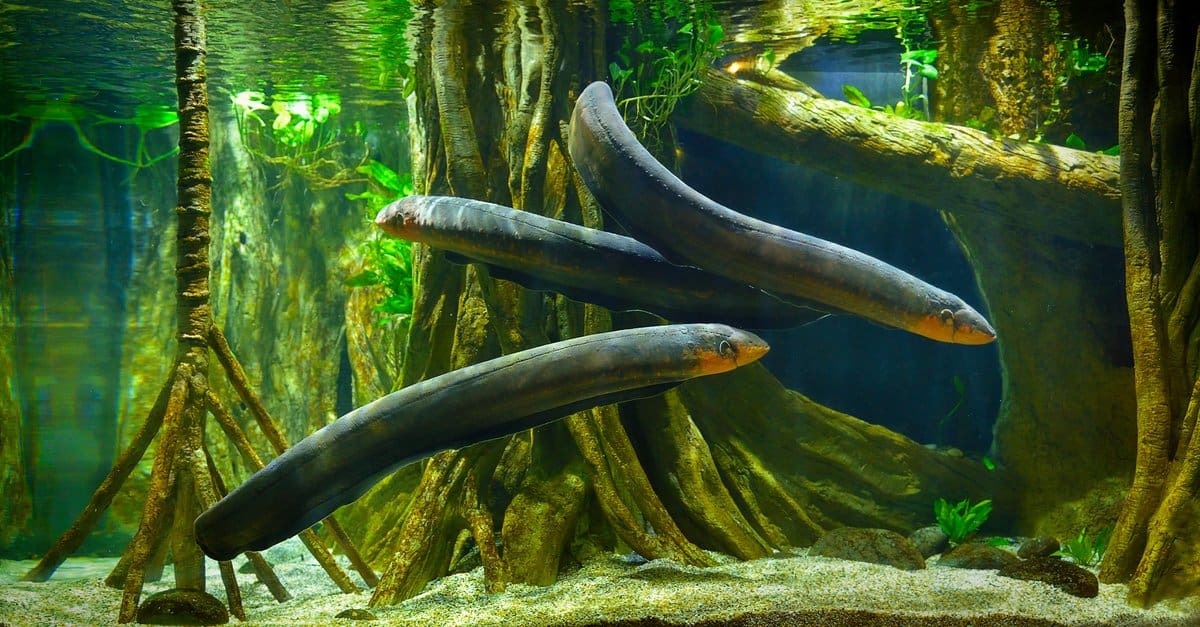
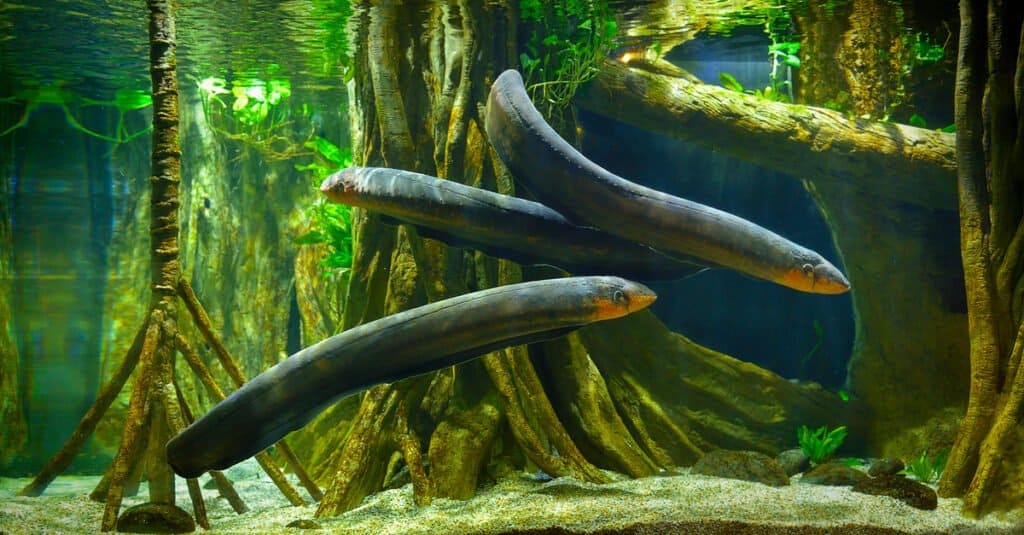
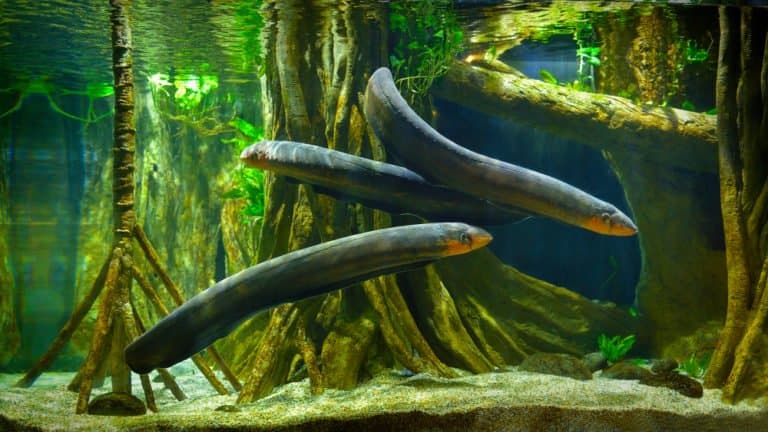
Three Electric Eels

At a Glance

Wild Species
Also Known As anguila eléctrica, enguia elétrica, anguille électrique, Zitteraal, anguilla elettrica, elektrische paling
Diet Carnivore
Activity Nocturnal+
Lifespan 10 years
Weight 20 lbs
Status Least Concern
Did You Know?

Not a true eel: it's a gymnotiform knifefish (Order Gymnotiformes), related to other weakly electric knifefishes-not Anguilliformes eels.

Scientific Classification

The electric eel is a South American freshwater knifefish capable of generating strong electric discharges for predation, defense, and navigation. Despite its name, it is not a true eel (order Anguilliformes) but a gymnotiform fish.

Kingdom
Animalia
Phylum
Chordata
Class
Actinopterygii
Order
Gymnotiformes
Family
Electrophoridae
Genus
Electrophorus
Species
electricus

Distinguishing Features

  • Elongate, eel-like body but taxonomically a knifefish (Gymnotiformes)
  • Generates powerful electric organ discharges (plus weaker fields for electrolocation/communication)
  • Air-breathing capability; frequently surfaces to gulp air
  • Reduced/absent dorsal fin with long anal fin used for undulating propulsion

Physical Measurements

Length
3 ft 11 in (2 ft 7 in – 8 ft 2 in)
Weight
13 lbs (4 lbs – 44 lbs)

Appearance

Primary Colors
Secondary Colors
Skin Type Scaleless, thick mucous-coated skin (typical gymnotiform condition) with a smooth, leathery appearance; skin overlays large electric organs occupying most of the posterior body.
Distinctive Features
  • Not a true eel (order Anguilliformes): this species is a Gymnotiformes 'knifefish' (Actinopterygii) with an elongate body and a very long anal fin used for propulsion via undulating waves while the trunk stays relatively stiff.
  • Adult size (species-specific context): large, heavy-bodied freshwater knifefish; historical maximum sizes reported for 'Electrophorus electricus' pre-2019 may include other Electrophorus species (de Santana et al., 2019).
  • Fin morphology: no dorsal fin; caudal fin extremely reduced/absent; pelvic fins absent; locomotion dominated by the long anal fin running much of the body length (classic knifefish silhouette).
  • Head/mouth: blunt head with terminal mouth; small eyes (vision secondary to electrosensory navigation in often-turbid waters).
  • Air-breathing: obligate air-breather that surfaces regularly to gulp air using a highly vascularized buccal cavity; a large fraction of oxygen uptake comes from air rather than gills (commonly reported ~80% in Electrophorus).
  • Electric organs (weak vs strong discharges): three major electric organs (Main, Hunter's, Sachs') spanning much of the body; produces weak, low-voltage electric organ discharges for electrolocation/communication and controlled high-voltage pulses for predation/defense.
  • Peak output (species-level, where available): maximum high-voltage discharge reported for Electrophorus electricus is ~650 V (de Santana et al., 2019, Nature Communications), delivered in brief, controlled volleys rather than continuously.
  • Electric eel (Electrophorus electricus) is usually an ambush predator that gives high-voltage shocks to make prey muscles twitch and can curl its body to focus the electric field onto prey.
  • Ecology context: South American freshwater (often slow-moving, vegetated, low-oxygen habitats); elongated, scaleless, mucous-coated body and air-breathing suit hypoxic waters.

Did You Know?

Not a true eel: it's a gymnotiform knifefish (Order Gymnotiformes), related to other weakly electric knifefishes-not Anguilliformes eels.

Electrophorus electricus is one of three recognized electric-eel species; it is native mainly to the Guiana Shield drainages (de Santana et al., 2019).

Peak discharge voltage for E. electricus has been measured up to ~650 V (de Santana et al., 2019); its relatives can differ (e.g., E. voltai up to ~860 V).

About ~80% of its oxygen uptake can come from air, using a highly vascularized mouth cavity-so it must surface frequently to gulp air (classic physiology syntheses; e.g., Graham, 1997).

It has separate electric organs with different roles: weak, low-voltage output for electrolocation/communication and powerful, high-voltage output for predation and defense.

Its body is essentially an "electric generator": thousands of electrocytes (often cited ~5,000-6,000) stack in series; each cell contributes only a small voltage, but together they add up.

It can amplify shocks by curling its body so the head and tail bracket prey-concentrating the electric field (Catania, 2016).

Unique Adaptations

  • Three major electric organs (classically: Main, Hunter's, and Sachs') specialized for different outputs-strong high-voltage discharges vs. weak sensing/communication signals.
  • Electrocyte "battery stack": electrocytes are arranged largely in series along much of the body length, producing high voltage; insulating tissues help route current outward through the water.
  • Dense electrosensory system: skin receptors and neural circuits tuned to self-generated EODs enable active sensing in turbid environments (a hallmark of gymnotiform knifefishes).
  • Air-breathing mouth lining: a highly vascularized oral cavity supports major aerial oxygen uptake (often reported up to ~80%), enabling survival in hypoxic waters.
  • Fin and body plan for stealth: elongated body with reduced/absent dorsal and pelvic fins and a long anal fin improves maneuverability and quiet, controlled approaches.

Interesting Behaviors

  • Anal-fin undulation locomotion: it "sculls" with a long anal fin for precise forward/backward movement and hovering-ideal for ambush in vegetation.
  • Electrolocation patrol: emits weak electric organ discharges (EODs) to sense distortions caused by nearby objects and animals in murky water (shared trait of Gymnotiformes).
  • High-voltage attack sequence: delivers rapid volleys of strong pulses during strikes; can also produce closely spaced pulse patterns that interfere with prey muscle control (experimentally described in Catania, 2014).
  • Field-focusing posture: curls into a loop around prey to increase current density through the target (Catania, 2016).
  • Out-of-water "jolt" behavior: can press its chin against a threat and rise partially out of the water to maintain contact and deliver stronger, more direct shocks (Catania, 2015, Science).
  • Obligate air-breathing routine: regularly surfaces to gulp air, allowing it to live in warm, oxygen-poor floodplain habitats where many fishes struggle.

Cultural Significance

Electric eel, Electrophorus electricus, is an icon of South American rivers and a global symbol of bioelectricity. Its shocks helped shape early ideas about electricity, nerves, and muscles. Humboldt's horse story sparked European interest in "animal electricity."

Myths & Legends

Humboldt's early-1800s tale of driving horses into a marsh where Electrophorus electricus shocked them, then tired eels were collected for study, became a near-myth about wild power versus human curiosity.

In Amazon villages, people call Electrophorus electricus "thunder in the water." They say its shock is like lightning and warn it can strike unseen under dark rivers, a hidden storm-like power.

Folk medicinal shocking: ethnographic reports from parts of the Amazon describe people intentionally provoking mild shocks as a traditional remedy for pain or fatigue-an idea of electricity as a transferable vitality.

In 18th- and 19th-century Europe, public shows and writings called the electric eel (Electrophorus electricus) a 'living Leyden jar', saying it stored electricity and was like bottled lightning in an animal.

Conservation Status

LC Least Concern

Widespread and abundant in the wild.

Population Unknown

Life Cycle

Birth 3000 frys
Lifespan 10 years

Lifespan

In the Wild
5–15 years
In Captivity
10–20 years

Reproduction

Mating System Polygyny
Social Structure Solitary
Breeding Pattern Transient
Fertilization Substrate Spawning
Birth Type Substrate_spawning

Electric eel (Electrophorus electricus) is mostly solitary except to spawn. Males build a shallow saliva or foam nest in vegetation during the rainy season. Females lay eggs that males fertilize and guard. Spawning is brief; about 10,000 eggs reported but numbers vary.

Behavior & Ecology

Social None (no stable named group) Group: 1
Activity Nocturnal, Crepuscular
Diet Carnivore Live fish (teleosts)

Temperament

Solitary, ambush-oriented predator; tends to avoid contact but can be strongly defensive when threatened.
Can show territoriality/space-use exclusivity around preferred cover and air-breathing access points in hypoxic waters (air-breathing is obligate in this species; summarized in FishBase).
High aggression only in defensive/predatory contexts: uses high-voltage discharges for defense and prey capture; documented behaviors include high-voltage volleys and close-range strikes (e.g., Catania 2014, PNAS, on defensive/predatory high-voltage usage in Electrophorus).

Communication

No confirmed acoustic/vocal repertoire reported for the species in standard references; behavior is dominated by electrical signaling rather than sound FishBase; gymnotiform literature
Low-voltage electric organ discharges (weak EODs) used for active electrolocation and electrocommunication (pulse-timing/rate changes convey information); foundational gymnotiform signal biology summarized by Hopkins 1974 (Annu. Rev. Ecol. Syst.) and subsequent electrosensory literature.
High-voltage electrical discharges used primarily for predation and defense; in Electrophorus, individual discharges can be delivered in rapid volleys and are behaviorally modulated Catania 2014, PNAS
Tactile/near-field interactions: close-body orientation, contact at the nest during reproduction/parental phase Reported in natural-history summaries; FishBase
Likely chemical/environmental cue use for habitat and reproductive context Common in freshwater fishes), but electrical signaling is the best-supported modality for this species (Hopkins 1974; FishBase

Habitat

Biomes:
Freshwater Wetland Tropical Rainforest Savanna
Terrain:
Riverine Plains Valley Muddy
Elevation: Up to 984 ft 3 in

Ecological Role

Upper-level freshwater predator (often functioning as a mesopredator to apex predator, depending on local community composition) in Amazon/Orinoco floodplain and river-channel systems.

Regulates prey fish and aquatic vertebrate populations, influencing community structure and trophic dynamics Links energy flow from diverse prey (fish/invertebrates/amphibians) to higher trophic levels; juveniles and adults occupy different trophic niches through ontogenetic diet shifts Creates predation risk effects (behavioral shaping of prey habitat use/activity) amplified by electrogenic hunting strategy

Diet Details

Main Prey:
Teleost fishes Crustaceans Aquatic insect larvae and other aquatic invertebrates Amphibians Small mammals and birds

Human Interaction

Domestication Status

Wild

Electric eel (Electrophorus electricus) is wild-caught and not domesticated. It is kept in public aquariums and used in research because of its electric organs. E. electricus can reach ~650 V; peak current in the genus is about 1 ampere. Related E. voltai reaches ~860 V. They leap and must surface to breathe.

Danger Level

High
  • Painful high-voltage electric shocks; for Electrophorus electricus, reported maximum output up to ~650 V (de Santana et al., 2019).
  • Involuntary muscle contraction and loss of motor control during shock exposure (can cause falls on land or loss of swimming ability in water).
  • Drowning risk if shocked while wading/swimming or handling in tanks/boats-loss of muscle control can prevent surfacing.
  • Potential secondary medical risk in susceptible individuals (e.g., arrhythmia risk in people with cardiac disease or implanted devices), though documented fatalities are uncommon and risk depends on exposure conditions.
  • Escalated defensive response and increased effective shock delivery during close contact; "leaping" behavior shown experimentally to increase delivered voltage during defense (Catania, 2016).
  • Handling/containment hazard in captivity: netting or grabbing can trigger repeated high-voltage volleys; safe handling generally requires rigid barriers, insulated tools, and protocols to avoid direct contact.

As a Pet

Not Suitable as Pet

Legality: Legal rules for electric eel (Electrophorus electricus) vary by country and state. Often banned or needing permits as a dangerous animal that can give shocks and needs large, secure tanks. Check local wildlife and invasive species rules.

Care Level: Expert Only

Purchase Cost: $200 - $1,500
Lifetime Cost: $10,000 - $50,000

Economic Value

Uses:
Public aquarium exhibition/education Biomedical and electrophysiology research model Specialty aquarium trade (limited) Bioinspired engineering/technology (indirect value)
Products:
  • ticketed exhibit value for zoos/aquariums
  • research specimens and data (bioelectricity, ion channels, neurophysiology)
  • educational programming/media content featuring high-voltage predation/defense
  • specialist live-animal sales (rare compared with common ornamental fishes)

Relationships

Predators 5

Black caiman Melanosuchus niger
Spectacled caiman Caiman crocodilus
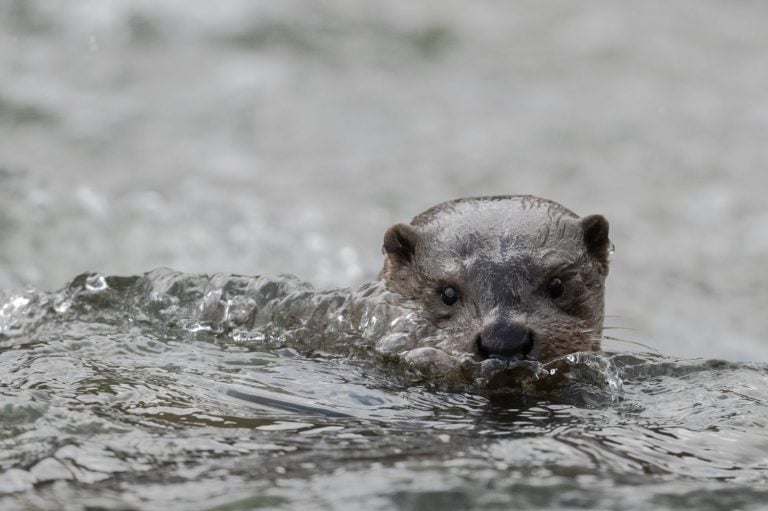
Giant otter
Giant otter Pteronura brasiliensis
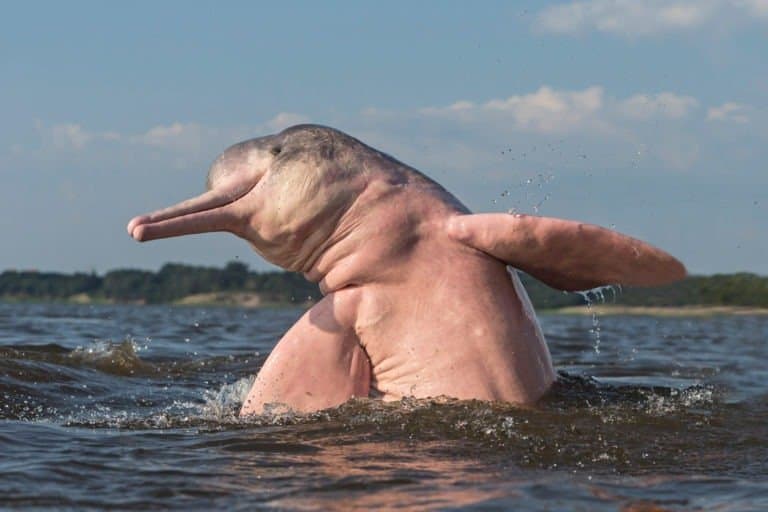
Amazon river dolphin
Amazon river dolphin Inia geoffrensis
Piraíba Brachyplatystoma filamentosum

Related Species 2

Volta's electric eel Electrophorus voltai Shared Genus
Varí's electric eel Electrophorus varii Shared Genus

Ecological Equivalents 4

Animals that fill a similar ecological role in their ecosystem

Electric catfish
Electric catfish Malapterurus electricus Convergent electric predation and defense: generates strong electric organ discharges to stun prey and deter predators in freshwater; functions as an ecological analogue in Africa to South American gymnotiforms despite a distant phylogenetic relationship (Siluriformes vs. Gymnotiformes).
Marbled electric ray Torpedo marmorata Convergent high-voltage electrogenesis used for prey capture and defense; marine elasmobranch analogue of Electrophorus' strong-discharge strategy (Torpediniformes vs. Gymnotiformes).
Banded knifefish Gymnotus carapo Same order (Gymnotiformes). A nocturnal freshwater predator that uses weak electric fields for electrolocation. Unlike Electrophorus electricus, it primarily generates weak electric organ discharges (EODs) from the Sachs' organ rather than the strong, stunning discharges from the main and Hunter's organs.
European eel Anguilla anguilla Ecological/functional look-alike: an elongate, 'eel-shaped' freshwater predator. Often confused by common name and not closely related to the species it resembles (true eels are Anguilliformes), but occupies a superficially similar predatory role in aquatic food webs.

Known as the “numb fish” in some parts of the world, the electric eel isn’t a true eel. This freshwater fish resides predominantly in the Amazon. The bony body of the fish keeps it from offering much meat in eclectic dishes, but their exclusivity creates high demand.

Along the bottom of its body, the eel has multiple organs to set off each electric shock when it needs to attack in the water.
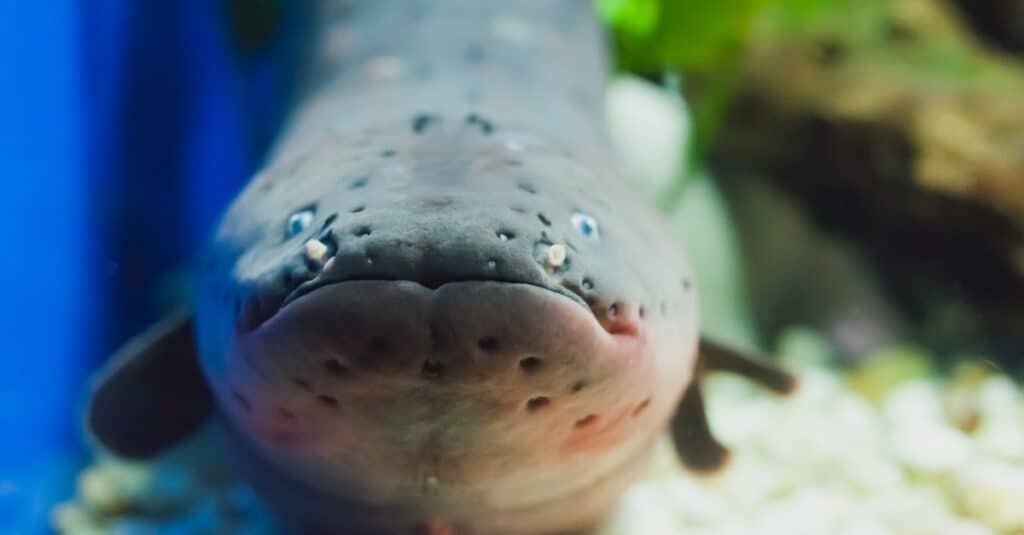
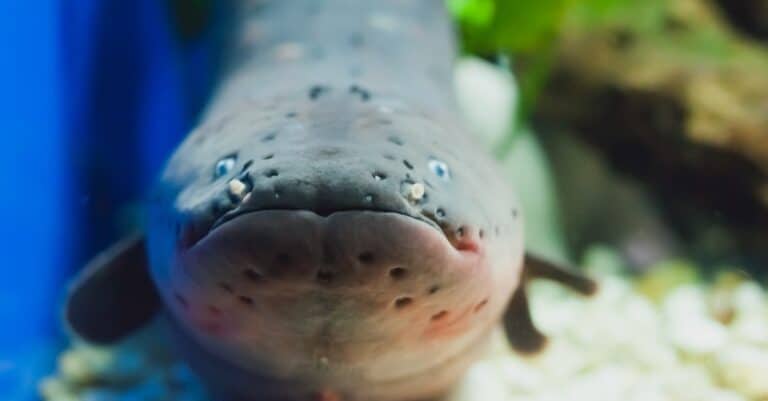
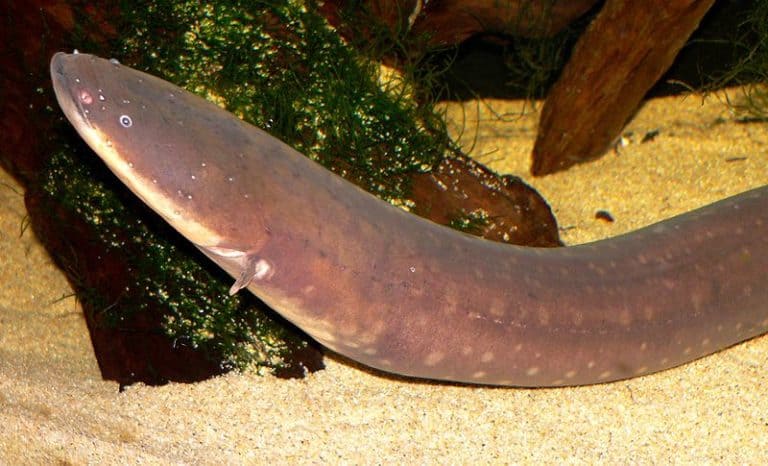
Electric Eel Close-Up

Electric Eels have horrible eyesight

Classification and Scientific name

The scientific name of this species is Electrophorus electricus. They are known by a few different names around the world, including “arimna” and “numb eel,” though these names are specific to Venezuela and Europe (respectively).

From the order of Gymnotiformes, the electric eel is part of the Gymnotidae family in the Actinopterygii class. Currently, there are three species of electric eels.

The scientific name is relatively straightforward in its meaning. “Electrophorus” comes from the Greek words ήλεκτρον (“electron”) and ϕέρω (“phero”), literally translating to “electricity bearer.” “Electricus” is a Latin word that comes from the word “amber,” due to the substance that gets rubbed together to cause electrostatic energy.
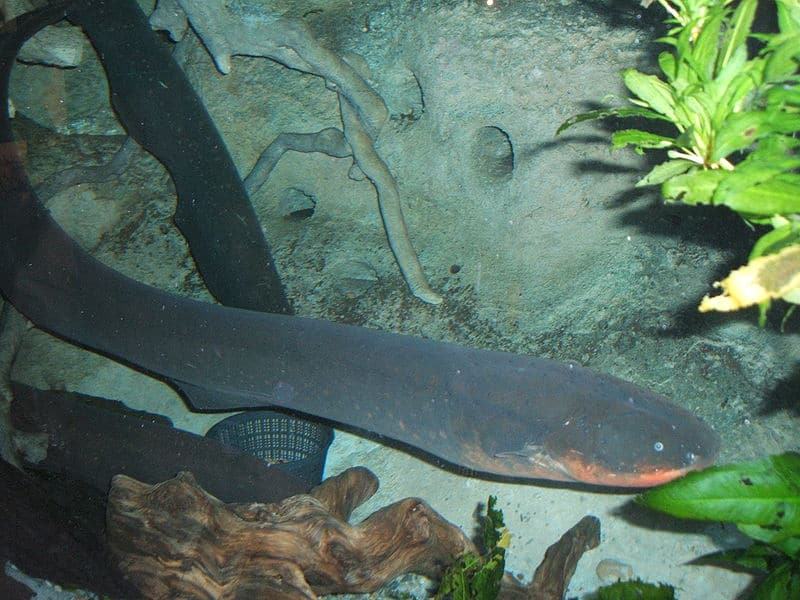
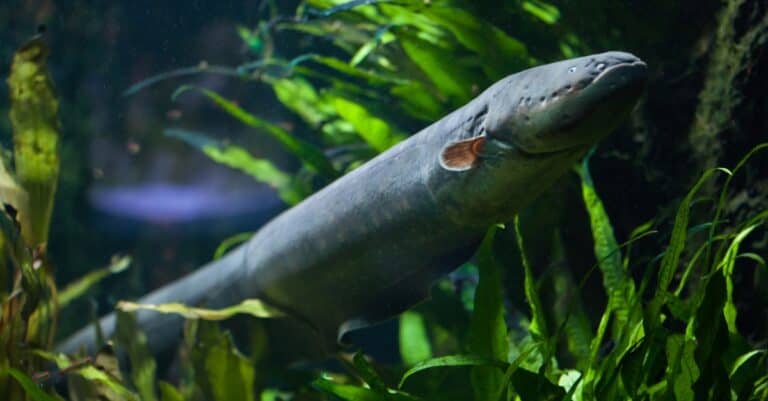
Electric eel (Electrophorus electricus), at the New England Aquarium.

Evolution and Origins

Somewhere between 100 and 200 million years ago, fish began to change. Evolution took advantage of fish genetics to develop electric organs. All fish have duplicate versions of the sodium channel gene that produce tiny muscle switches. For electric eels to be able to evolve electric organs, electric fish turned off one duplicate of the gene in muscles.

Different Types of Electric Eels

There are three main species of electric eel:

  • The electric eel (Electrophorus electricus)
  • Vari’s electric eel (E. varii)
  • Volta’s electric eel (E. voltai)

Appearance

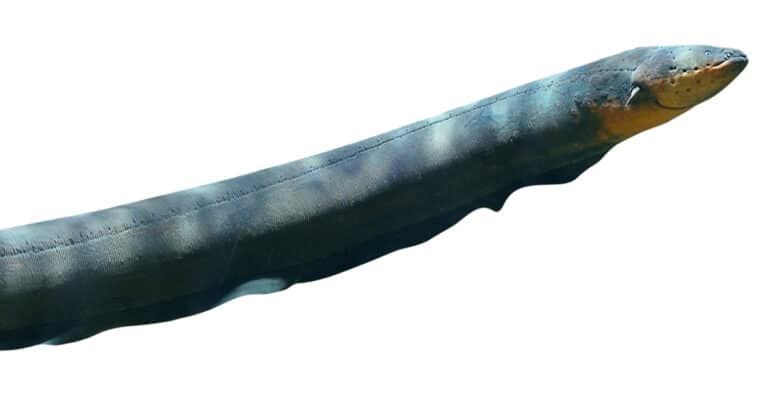
Typically growing to a length of 8 feet or more, the electric eel varies in size, eventually reaching about 45 pounds. Found in warm and murky waters, this fish has scaleless skin, making it smooth and almost slimy with a snake-like figure. Their back and sides feature dark gray, which is why they hide so well in darker waters. Their belly is typically yellow to orange.

The organs that set off the electric shock — the main electrical organ, Hunter’s organ, and the Sachs’ organ — are responsible for producing 1+ amps. Each attack releases 1+ amps, which is why there are no consistent predators. After all, one or two amps alone are enough to induce a severely painful shock.
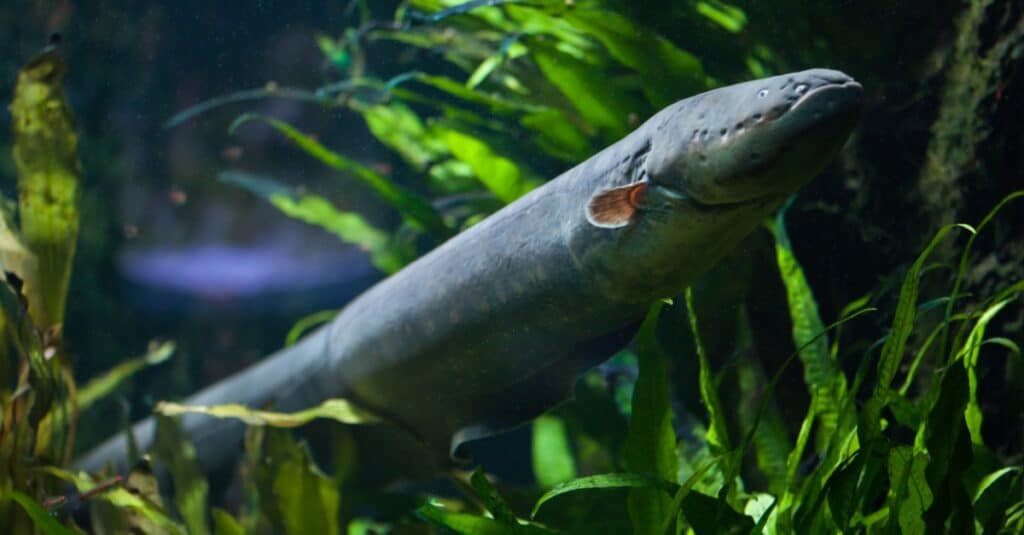
Electric Eel

The Electric Eel is found in freshwater and uses its electric current to attack its prey.

Distribution, Population, and Habitat

Where to Find Electric Eels and How to Catch Them
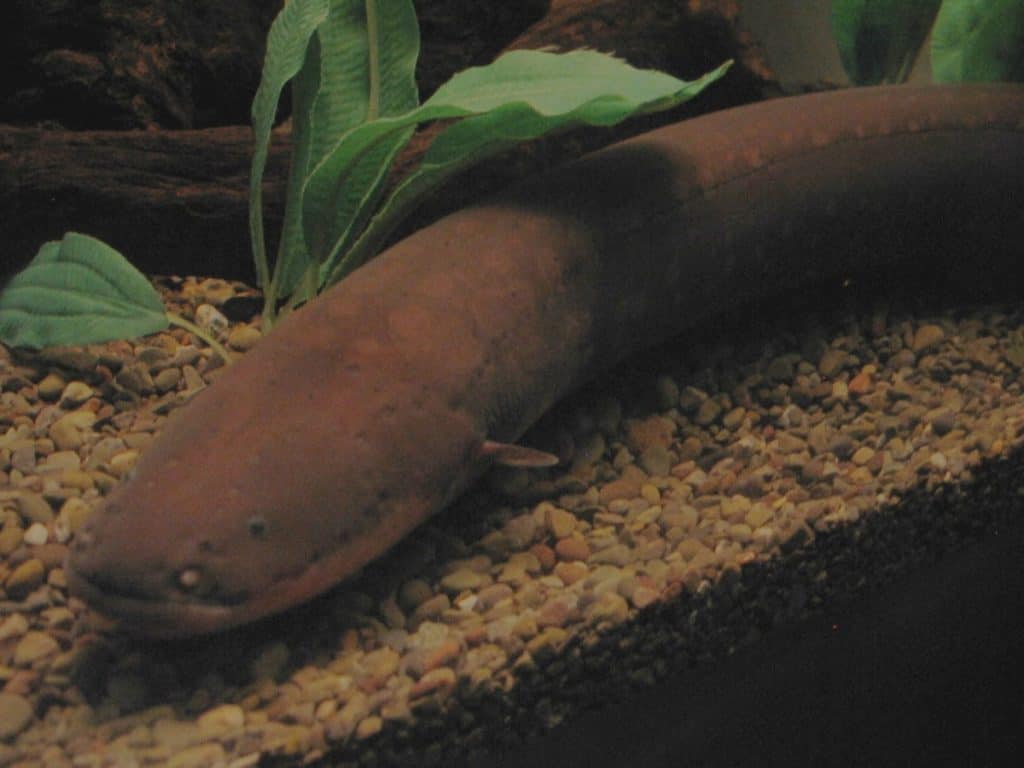
The natural habitat of the electric eel is exclusively freshwater areas.

The natural habitat of the electric eel is exclusively freshwater areas, even though they prefer murky pools. These habitats are easily found in South America, though they are primarily found in the middle and lower Amazon and Orinoco river basins. Though they can live in many water depths, they reach the surface to breathe the air because of the anoxic waters.

Currently, the electric eel is not endangered, so no conservation efforts are being made. Locals are encouraged to stay away from them and not capture them, to protect the area from infestations.

Predators and Prey

This species is carnivorous, going after other animals as their prey. They hunt in the waters they live in, using the electric current along the length of their underside to attack their target.

What eats electric eels?
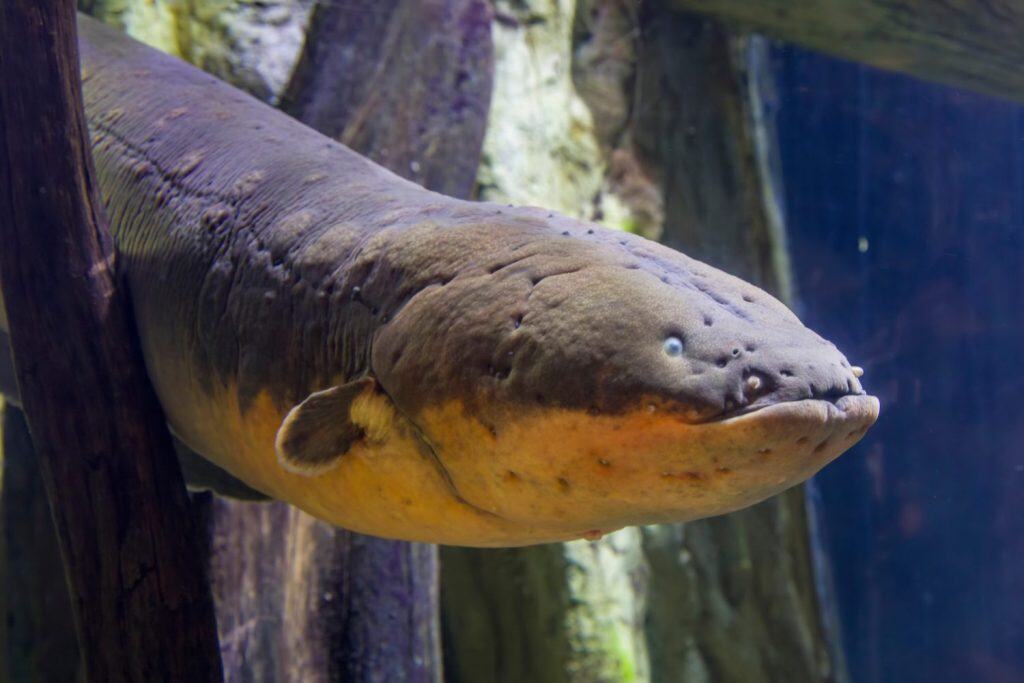
The electric eel (Electrophorus electricus) is a South American electric fish. It has three pairs of abdominal organs that produce electricity. it is not an eel, but rather a knifefish.

Apart from being fished by humans, electric eels have no known predators.

Apart from being fished by humans, electric eels have no known predators. They are too dangerous for other species to go after, regardless of water levels. If the water is shallow, there’s a chance that large land mammals will go after them, but this threat is often deterred with a shock.

What do electric eels eat?

Electric eels have quite a selection available to them in South America. Their preferred diet includes amphibians, fish, and crustaceans. When they are still young, they’ll primarily indulge in crabs, shrimp, and other invertebrates.

Reproduction and Lifespan
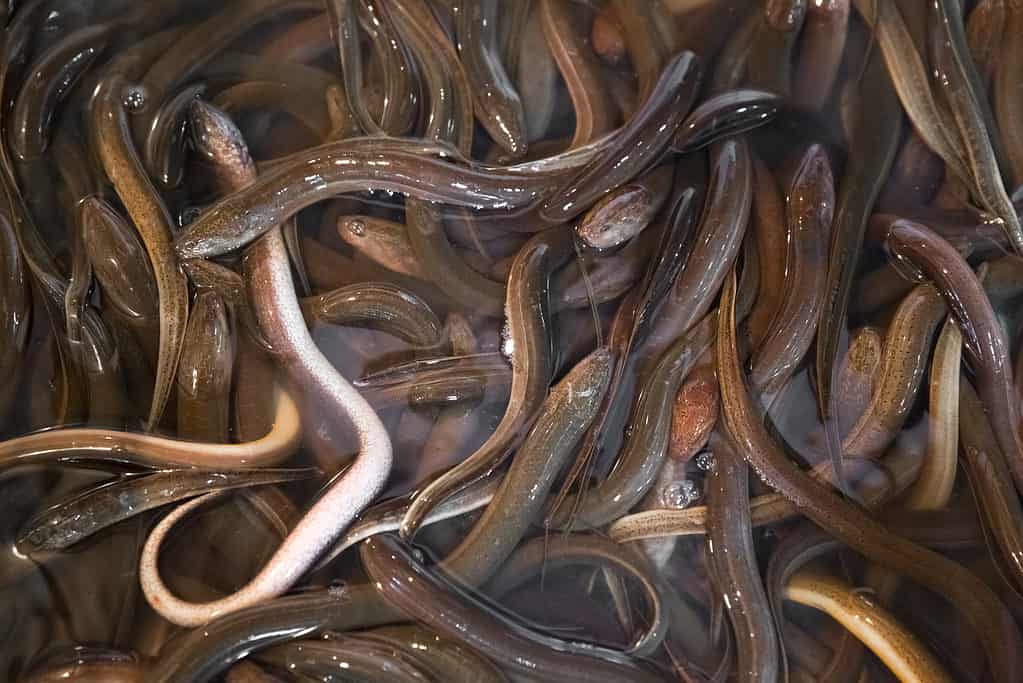
Bunch of eels in fish market in Shanghai, China

Baby eels at a fish market in China

As popular as the electric eel might be, so much of its life is still a mystery. Scientists still don’t know much about the breeding process, though males and females work together for their brood. During a dry season, the female lays her eggs in the nest made by the male. These nests are made with the saliva of the male. Males fertilize the eggs, which can add up to 1,700 eggs each year laid by the female. The eggs slowly hatch, floating to the surface of the water after they become larvae.

The average lifespan of an electric eel is anywhere from 12 to 22 years, though females generally live longer.

Fishing and cooking
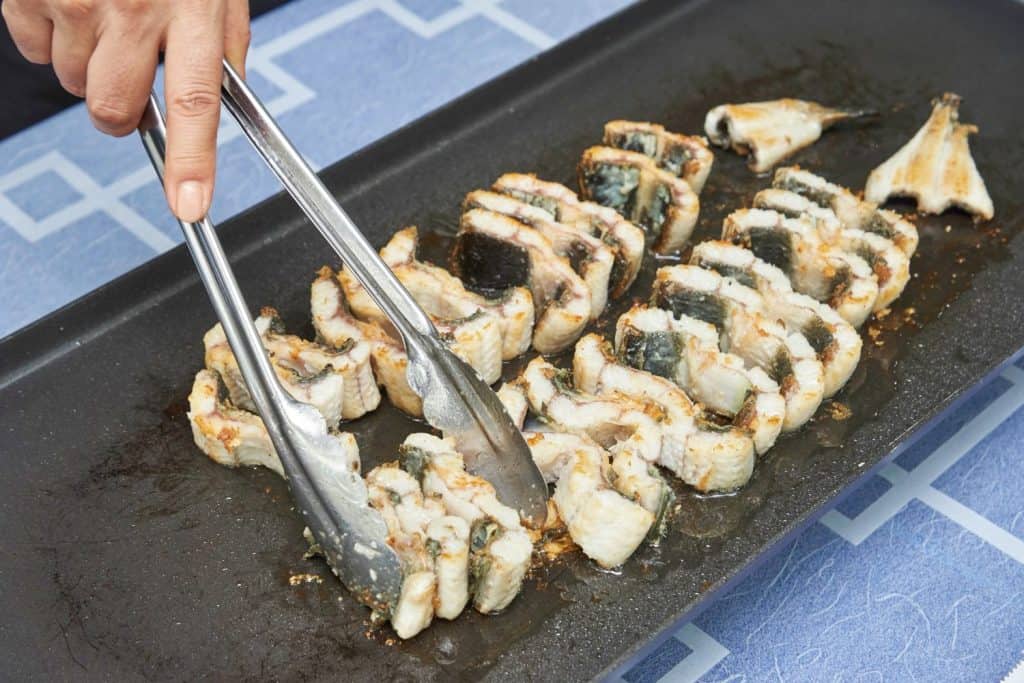
Freshwater Eel Japonica Electric Grilled

While most eels count as a delicacy that is worth the work, electric eels are much bonier.

Catching any type of eel is best done at sea because it means that they’ve reached their best size and fat content. Collecting electric eels can be difficult, but most anglers use equipment like baited long lines, spears, and baited traps commercially. Personal preference plays a role.

While most eels count as a delicacy that is worth the work, electric eels are much bonier. Their body featured little meat, but there are still many recipes online to show you how to sauté, bake, and cook the fish in other ways.

Population

This species tends to flourish throughout the regions where they are found, but researchers have found it difficult to determine their exact population. They are not legally allowed to be collected without a permit relating to scientific research, and locals cannot keep electric eels due to their risk to both populations of humans and fish if released.

View all 185 animals that start with E

Sources

  1. Smithsonian's National Zoo and Conservation Biology Institute / Accessed October 17, 2021
  2. Kidadl / Accessed October 17, 2021
  3. National Aquarium / Accessed October 17, 2021
  4. Wikipedia / Accessed October 17, 2021

  5. Science Focus / Accessed October 17, 2021
  6. National Geographic / Accessed October 17, 2021
  7. Daily Mail / Accessed October 17, 2021
  8. FAO / Accessed October 17, 2021
  9. Wikipedia / Accessed October 17, 2021
Rebecca Bales

About the Author

Rebecca Bales

Rebecca is an experienced Professional Freelancer with nearly a decade of expertise in writing SEO Content, Digital Illustrations, and Graphic Design. When not engrossed in her creative endeavors, Rebecca dedicates her time to cycling and filming her nature adventures. When not focused on her passion for creating and crafting optimized materials, she harbors a deep fascination and love for cats, jumping spiders, and pet rats.
Connect:

Thank you for reading! Have some feedback for us?


Electric Eel FAQs (Frequently Asked Questions)

Electric Eels typically lay 20,000 eggs.