

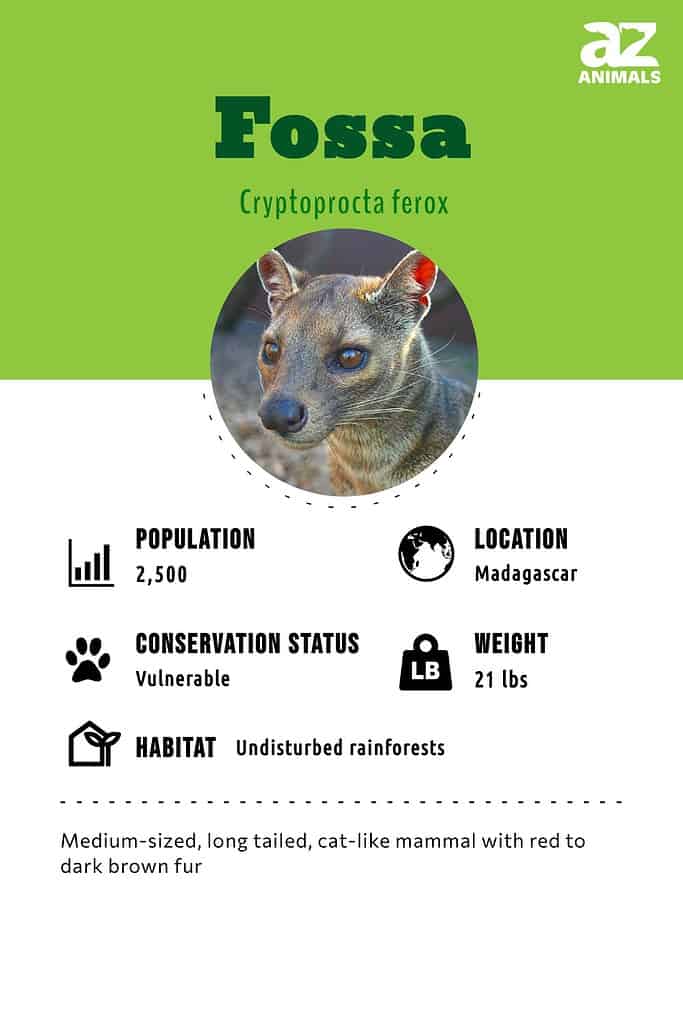
F
Species Profile

Fossa

Cryptoprocta ferox

Madagascar's lemur-hunting acrobat

Fossa Distribution

Click a location to explore more animals from that region

Endemic Species
Loading map...

Found in 1 country

Size Comparison

Human 5'8"
Fossa 1 ft 2 in

Fossa stands at 20% of average human height.

At a Glance

Wild Species
Also Known As Fosa, Foosa, Malagasy civet
Diet Carnivore
Activity Cathemeral
Lifespan 12 years
Weight 9 lbs
Status Vulnerable
Did You Know?

Endemic to Madagascar and the largest native carnivoran there (Family Eupleridae).

Scientific Classification

The fossa is Madagascar’s largest native carnivoran, a highly agile predator with catlike and mongoose-like traits, best known for hunting lemurs.

Kingdom
Animalia
Phylum
Chordata
Class
Mammalia
Order
Carnivora
Family
Eupleridae
Genus
Cryptoprocta
Species
Cryptoprocta ferox

Distinguishing Features

  • Long, muscular body with a long tail aiding balance
  • Semi-retractile claws and flexible ankles enabling head-first descent of trees
  • Generalist carnivore; notable lemur predation
  • Endemic Malagasy euplerid (not a cat despite superficial resemblance)

Physical Measurements

Males and females differ in size

Height
1 ft 2 in (12 in – 1 ft 4 in)
Length
4 ft 7 in (4 ft 3 in – 4 ft 11 in)
4 ft 8 in (4 ft 5 in – 4 ft 11 in)
Weight
16 lbs (14 lbs – 19 lbs)
14 lbs (12 lbs – 15 lbs)
Tail Length
2 ft 2 in (1 ft 12 in – 2 ft 4 in)
2 ft 3 in (2 ft 2 in – 2 ft 4 in)
Top Speed
25 mph
About 40 km/h

Appearance

Primary Colors
Secondary Colors
Skin Type Fur (short, dense pelage) over typical mammalian skin; semi-retractile claws on all feet.
Distinctive Features
  • Madagascar-endemic euplerid (Family Eupleridae) with a catlike overall silhouette but not a true cat (Felidae).
  • Head-body length typically ~70-80 cm; tail length commonly ~70-90 cm (tail roughly equals or exceeds head-body length); shoulder height about ~35 cm (Nowak 1999; Goodman & Benstead 2003).
  • Adult mass shows sex differences: males commonly ~6.2-8.6 kg; females ~5.5-6.8 kg (Nowak 1999; Goodman & Benstead 2003).
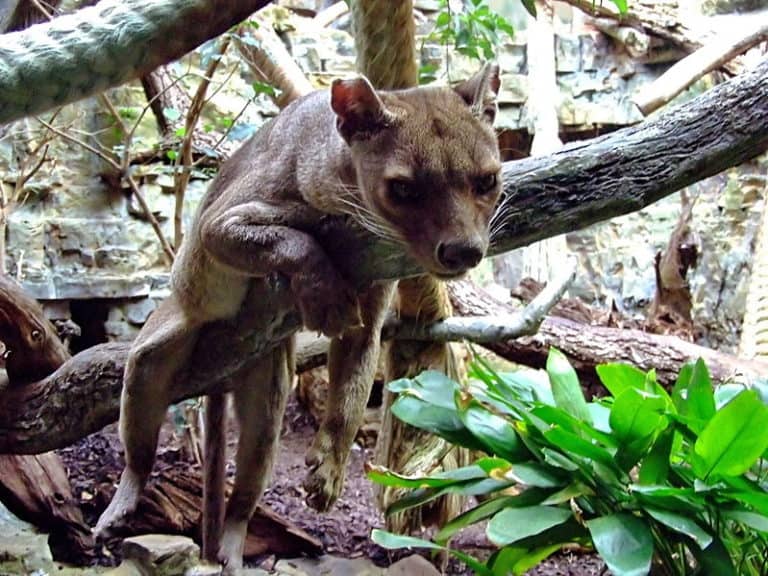
  • Very long, muscular tail used for balance during rapid arboreal pursuits and leaps while hunting, especially of lemurs.
  • Highly flexible ankles (notably capable of rotating to aid head-first descent) and supple joints supporting exceptional arboreal agility.
  • Semi-retractile claws and strong, grasping feet for climbing and seizing prey; robust forelimbs and powerful hindlimbs for leaping.
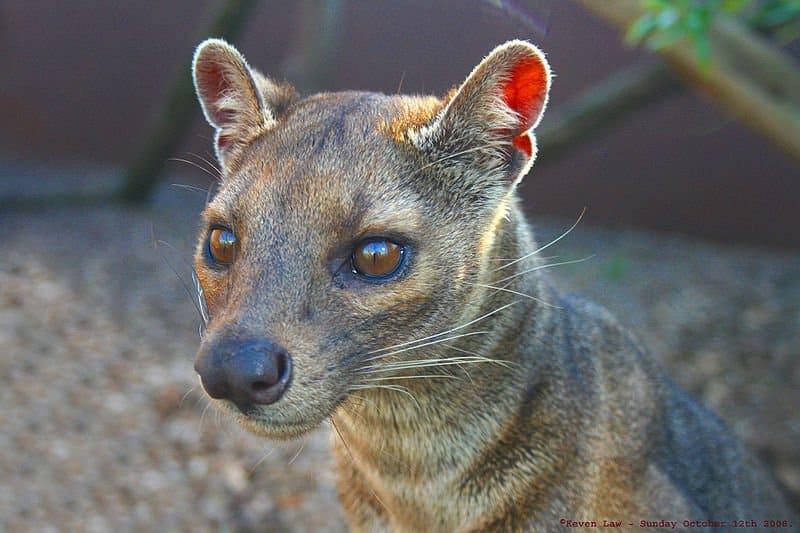
  • Elongate muzzle with prominent vibrissae (whiskers) and well-developed carnassials typical of a mammalian carnivore.
  • Behavioral appearance context: largely solitary; active both day and night depending on conditions; a key predator of lemurs, often hunting in trees as well as on the ground (Goodman & Benstead 2003).
  • Longevity: reported to reach ~15-20 years in captivity (zoological records summarized in standard mammal references such as Nowak 1999).

Sexual Dimorphism

Sexual size dimorphism is present (males larger/heavier on average). Additionally, juvenile females exhibit temporary masculinization of external genitalia (enlarged clitoris with orange secretion), which diminishes as they mature-an unusual euplerid trait described in the scientific literature (e.g., Hawkins et al. 2002; Goodman & Benstead 2003).

  • Larger average body mass and more robust build (commonly ~6.2-8.6 kg vs. females ~5.5-6.8 kg).
  • Typically broader head/neck musculature, especially in fully mature adults.
  • Smaller average body mass and slightly more gracile build.
  • Juveniles may show transient masculinized external genitalia (enlarged clitoris) that regresses with maturity (Hawkins et al. 2002).

Did You Know?

Endemic to Madagascar and the largest native carnivoran there (Family Eupleridae).

Adult size: head-body length ~61-80 cm; tail ~55-65 cm; total length commonly ~1.2-1.4 m (species accounts in Goodman & Benstead eds., Malagasy natural history references).

Adults typically weigh ~5-9 kg (males heavier on average), with occasional larger reports in some populations (Goodman & Benstead references; zoo/species dossiers).

Extraordinary ankle flexibility lets it descend tree trunks headfirst-rare among cat-like predators.

Reproduction includes 'mating trees': a receptive female may mate with several males over multiple days; copulations can last for hours (documented field observations; e.g., Hawkins & Racey studies).

Young females often show temporary masculinization (an enlarged clitoris that can resemble a penis), which diminishes with age-an unusual trait among carnivorans (reported in anatomical/field literature on euplerids).

Longevity: recorded up to ~20 years in captivity; wild lifespan is shorter and less well documented (zoo records/species databases).

Unique Adaptations

  • Highly mobile ankle joints that can rotate to aid gripping and controlled, headfirst descent on vertical surfaces-key for canopy pursuit.
  • Long tail (often nearly the length of the head-body) used as a counterbalance during fast arboreal turns and leaps.
  • Semi-retractile claws and strong forelimb flexors for climbing and holding struggling prey.
  • A long, low body with cat-like agility but mongoose-like ancestry (Eupleridae evolved from an African herpestid-like ancestor, then radiated in Madagascar).
  • Robust jaws and carnassial teeth suited to cutting flesh; capable of subduing relatively large prey such as medium-sized lemurs.
  • Coat coloration (typically tawny to reddish-brown) that blends with dry-forest and rainforest shadows, aiding ambush.

Interesting Behaviors

  • Arboreal-and-terrestrial hunting: stalks and sprints on the ground, but also chases lemurs through the canopy, using powerful leaps and gripping climbs.
  • Headfirst descent: routinely runs down vertical trunks to pursue prey or escape threats, enabled by highly flexible ankles.
  • Cathemeral activity: may be active day or night depending on habitat, prey, and human disturbance (reported in multiple field studies).
  • Scent-marking and communication: uses anal-gland secretions and urine marking along trails and prominent features to advertise presence and reproductive status.
  • Solitary spacing with overlap: adults are usually solitary; male and female home ranges overlap, with males overlapping multiple females (e.g., Kirindy Forest telemetry work).
  • Seasonal breeding: mating typically peaks in the austral spring (roughly Sept-Dec), aligning births with favorable conditions.
  • Opportunistic diet beyond lemurs: takes small mammals, birds, reptiles, and carrion; raids poultry near villages where habitat edges meet forest.

Cultural Significance

Known as the fossa (Cryptoprocta ferox), this powerful forest predator of Madagascar is linked to poultry losses near villages and sometimes killed. It is a flagship for conservation and ecotourism of Madagascar's endemic carnivorans (Eupleridae) and seen as a native top predator balancing lemurs and other wildlife.

Myths & Legends

In Malagasy tales, the fossa (Cryptoprocta ferox) is a sly night raider — a smart forest thief that sneaks off with chickens, a warning story to lock up livestock at dusk.

In parts of Madagascar, local taboos and omens link certain wild animals to danger; the fossa (Cryptoprocta ferox) is often avoided or treated with special fear in forest stories.

Folktale motifs from Madagascar that contrast "village safety" with "forest mystery" often place the fosa among the quintessential forest beings-an unseen watcher whose sudden appearance signals that one has strayed too far from familiar paths.

Historical travel and colonial-era natural history anecdotes describe Malagasy guides warning outsiders about the fosa's boldness and strength, reinforcing a long-standing reputation as the island's most formidable land predator.

In parts of Madagascar, the fossa (Cryptoprocta ferox) is seen as a secretive, clever hunter blamed for taking chickens, which shaped local stories and made people fear or dislike the animal.

Conservation Status

VU Vulnerable

Facing a high risk of extinction in the wild.

Population Decreasing

Protected Under

  • CITES Appendix II (international trade regulated).
  • Occurs in multiple Malagasy protected areas (e.g., Masoala, Ranomafana, Kirindy/Menabe region reserves, among others); legal protection exists in Madagascar but enforcement is variable, and persecution can still occur near protected-area edges.

Life Cycle

Birth 2 pups
Lifespan 12 years

Lifespan

In the Wild
8–15 years
In Captivity
15–20 years

Reproduction

Mating System Polygynandry
Social Structure Aggregation Group
Breeding Pattern Seasonal
Fertilization Internal Fertilization
Birth Type Internal_fertilization

Behavior & Ecology

Social No stable group name (solitary); temporary breeding aggregation at a traditional mating tree Group: 1
Activity Cathemeral
Diet Carnivore lemurs (especially medium-sized arboreal lemurs such as sportive lemurs and sifakas)

Temperament

Predatory and highly agile (arboreal and terrestrial), with frequent climbing and rapid pursuit/ambush of prey including lemurs (Goodman & Benstead, 2003)
Generally avoids conspecifics outside breeding; spatially wide-ranging and potentially territorial/space-defending via scent marking (Hawkins & Racey, 2005)
Seasonally tolerant of close proximity at mating sites, with intense male-male competition and mate guarding during the female's receptive period (Hawkins & Racey, 2009)

Communication

Low growls and snarls during agonistic encounters
Hisses/spits in threat contexts
Reproductive calls at mating sites Females vocalize to advertise receptivity; males vocalize during competition/close approach) (Hawkins & Racey, 2009
Scent marking using anal gland secretions and urine on prominent substrates/trails; increased marking around mating sites and in ranging areas Goodman & Benstead, 2003; Hawkins & Racey, 2005
Visual postures (arching, piloerection, tail/ear positioning) and close-range tactile interactions primarily during mating and mother-offspring contact

Habitat

Biomes:
Tropical Rainforest Tropical Dry Forest
Terrain:
Island Mountainous Hilly Plateau Valley Riverine
Elevation: Up to 6561 ft 8 in

Ecological Role

Madagascar's largest native carnivoran; functions as an apex predator in many forest systems (or top mesopredator where human impacts/introduced carnivores alter predator guilds).

Top-down regulation of lemur and other small- to medium-sized vertebrate populations Helps maintain prey-community structure (reducing overabundance of particular prey species) Contributes to energy/nutrient cycling via consumption of whole prey and occasional carrion use

Diet Details

Main Prey:
Lemurs Tenrecs Native rodents Birds Reptiles Amphibians Large terrestrial and arboreal insects +1

Human Interaction

Domestication Status

Wild

Cryptoprocta ferox (fossa) is a fully wild Malagasy carnivore with no domestication history and is only kept in conservation programs and zoos. Adults are about 70–90 cm long and weigh about 5–12 kg. Lifespan ~15 years wild, ~20 in captivity. Humans interact through attacking poultry, habitat loss, hunting, and ecotourism; fossas are a flagship but often cause conflict.

Danger Level

Moderate
  • Bites and deep lacerations if cornered/handled (powerful jaws, sharp canines, and strong forelimbs/claws); risk is highest during capture attempts or if an animal is trapped.
  • Zoonotic disease risk typical of wild carnivorans if contact occurs (e.g., bacterial infections from bites; rabies risk depends on local epidemiology and exposure context).
  • Rare direct aggression in normal circumstances-fossas are generally solitary and avoidant of people; most incidents are defensive.

As a Pet

Not Suitable as Pet

Legality: Keeping a fossa (Cryptoprocta ferox) as a pet is usually illegal or very hard. Madagascar protects it and international trade is CITES-controlled, limited to zoos or conservation. Laws vary but often ban private ownership.

Care Level: Expert Only

Purchase Cost:
Lifetime Cost: $100,000 - $300,000

Economic Value

Uses:
Ecotourism / wildlife viewing (flagship predator) Zoological conservation breeding and public education Scientific research value (behavioral ecology, conservation biology) Human-wildlife conflict costs (poultry depredation, mitigation)
Products:
  • non-consumptive economic value via protected-area tourism
  • education/outreach value in accredited zoos
  • ecosystem service value as an apex/mesopredator influencing prey populations
  • negative economic impact in rural settings through poultry losses

Relationships

Related Species 8

Giant fossa Cryptoprocta spelea Shared Genus
Falanouc Eupleres goudotii Shared Family
Ring-tailed mongoose Galidia elegans Shared Family
Narrow-striped mongoose Mungotictis decemlineata Shared Family
Malagasy civet Fossa fossana Shared Family
Brown-tailed mongoose Salanoia concolor Shared Family
Broad-striped Malagasy mongoose Galidictis fasciata Shared Family
Grandidier's mongoose Galidictis grandidieri Shared Family

Ecological Equivalents 6

Animals that fill a similar ecological role in their ecosystem

Malagasy civet Fossa fossana Endemic Malagasy euplerid mesocarnivore occupying a forest predator/scavenger niche; overlaps in habitat and diet (small vertebrates), but is much smaller and more terrestrial than Cryptoprocta ferox (adult fossa typically ~70–80 cm head–body with ~65–70 cm tail; males commonly ~6–9 kg).
Clouded leopard
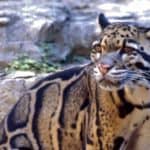
Clouded leopard Neofelis nebulosa Functionally similar: an exceptionally arboreal/scanorial forest carnivore capable of hunting in trees. Like the fossa, it has high climbing agility and preys heavily on arboreal mammals (the fossa is a key lemur predator).
Margay
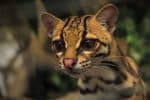
Margay Leopardus wiedii Arboreal hunting specialist in forests. An ecological analogue that combines catlike climbing with predation on tree‑dwelling mammals and birds — a hunting mode comparable to the fossa's frequent pursuit and capture of lemurs in the canopy.
Tayra Eira barbara Medium-sized, highly agile Neotropical mustelid mesocarnivore that forages on both the ground and in trees and takes a broad prey spectrum (small vertebrates and birds). Parallels the fossa's generalist carnivory and climbing proficiency.
Binturong
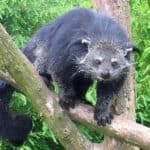
Binturong Arctictis binturong Large-bodied, arboreal Southeast Asian viverrid that occupies a forest canopy mesopredator niche. Although more omnivorous, it is comparable in size and is a prehensile-tailed, arboreal carnivoran with nocturnal to cathemeral activity patterns, paralleling the fossa's tree use and temporal activity.
Domestic cat
Domestic cat Felis catus Domestic and feral cats are introduced mesopredators on Madagascar that can overlap in prey size (small mammals, birds, reptiles) and activity periods. They are not close ecological equivalents for hunting adult lemurs, but are relevant niche-overlap competitors and predators of smaller native fauna in the same landscapes.

Classification And Evolution

The Fossa is a medium-sized, carnivorous animal that is located entirely on the island of Madagascar. The Fossa belongs to the group of Malagasy Carnivores, which are thought to have descended from ancestors that were Mongoose-like, that arrived in Madagascar from Africa almost 24 million years ago. Not only is it one of the most ancient of the eight species found on the island but it is also the largest. Due to its cat-like appearance, until recently, it was believed to be a primitive species of feline. Unfortunately, like various numbers of the unique animal species found in Madagascar, the Fossa is incredibly rare and due to the loss of natural habitat is now considered to be endangered.

Anatomy And Appearance
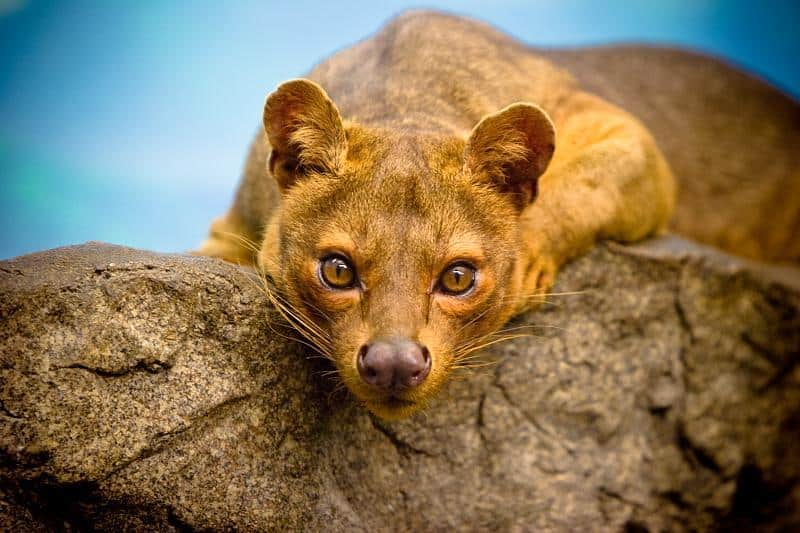
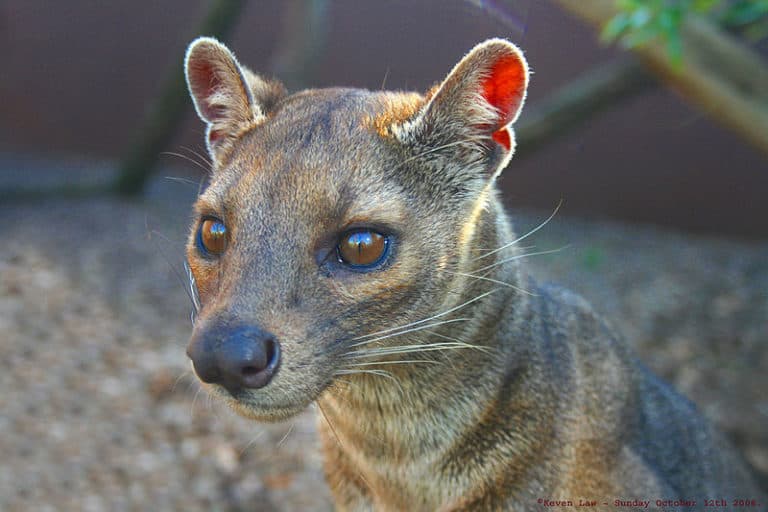
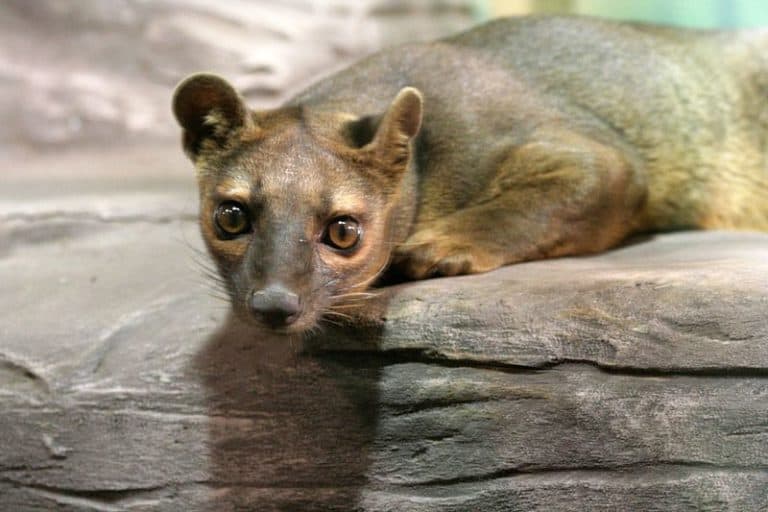
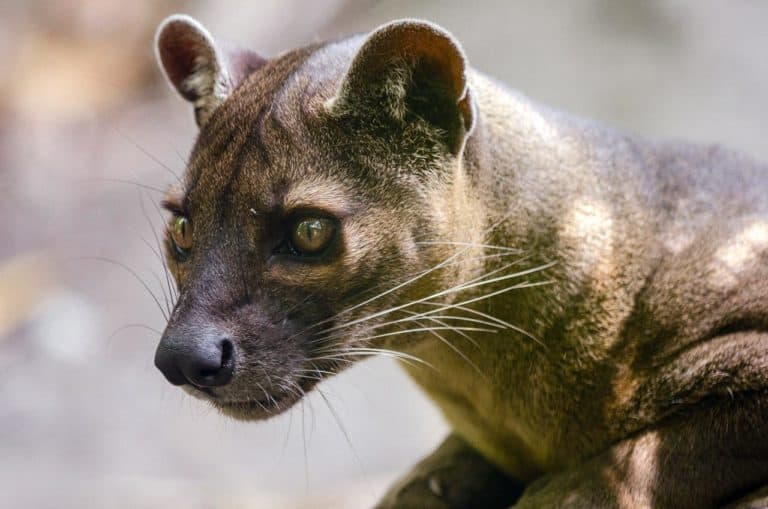
The Fossa is the largest land predator on the island of Madagascar and some individuals of the species can grow to nearly 7 feet in length from their nose to the tip of their long and slim tails. The Fossa’s tail is around the same length as its body and plays a vital role in aiding them to balance as it leaps through the trees. The Fossa is an animal with short but dense red to dark brown fur, a small cat-like head, a dog-like snout, large forward-facing eyes, and small, rounded ears. In spite of being related to Mongooses, the Fossa has quite a number of feline features including curved, retractable claws and slightly webbed feet which both help when it is moving about amongst the branches.

Distribution And Habitat

The Fossa (Cryptoprocta ferox) is only found in Madagascar.

Like the majority of plant and animal species found in Madagascar, the Fossa is an animal that is found nowhere else in the world. They rely on forested areas that are dense where there is an ample food source as well as plenty of space where they can establish a large territory. Historically, Fossas would normally have been found in the woodland and forested areas across the island from coastal lowlands to mountainous regions, but due to extensive deforestation throughout Madagascar they are now restricted to a tiny portion of their once vast natural range. Growing human populations have also severely affected Madagascar’s Fossa numbers as they are often hunted by farmers who fear for their livestock.

Behavior And Lifestyle
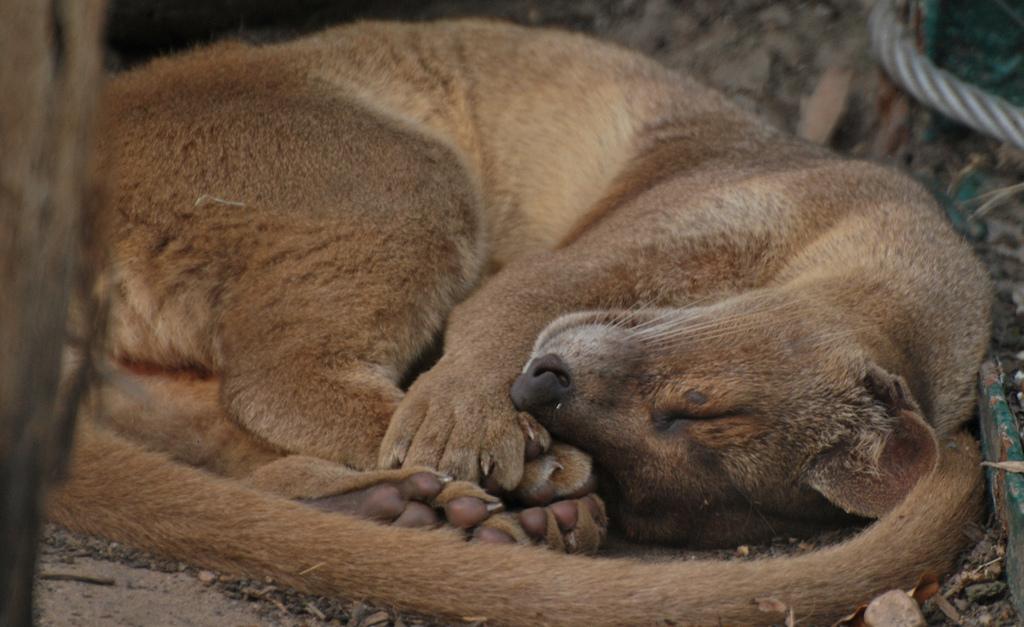
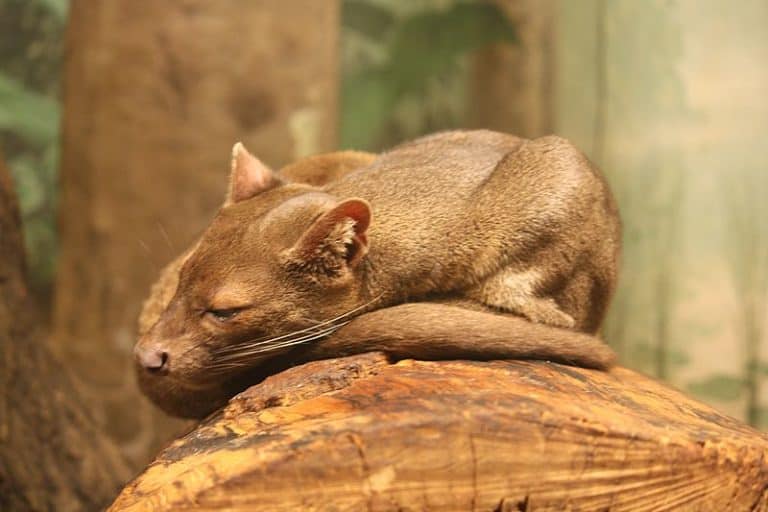
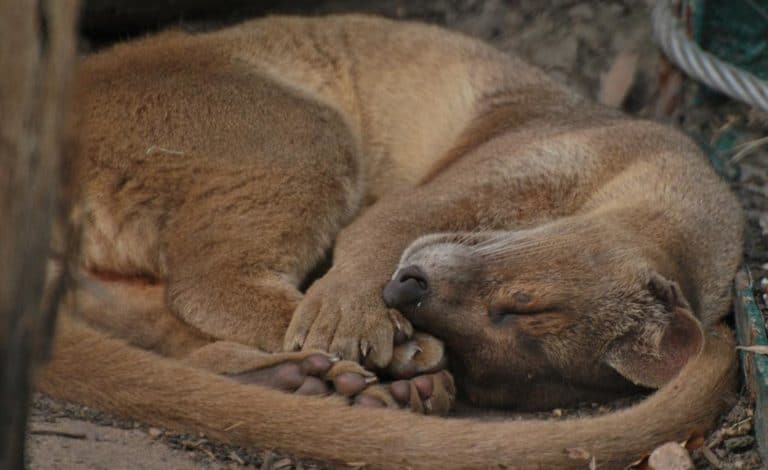
The Fossa is a nocturnal mammal, preferring to be alone, that patrols territories as large as 1.55 square miles and marks its presence with scent released from its large anal gland. The vast majority of the fossa’s life is spent high in the trees but is known to move about and hunt on the ground as well. They are incredibly agile at both climbing and leaping, which is largely aided by their long and slender tail and the fact that they move about on the flat soles of their feet means that they have more balance and stability when landing precariously on branches. Although the Fossa is largely nocturnal, they are known to also hunt during the day, especially when they lack food, but prefer to spend the daylight hours resting in a hollow tree, cave, or an abandoned termite mound.

Reproduction And Life Cycles

Fossas only unite to reproduce as they are solitary creatures.

Fossas, similar to other solitary carnivores, come together only to mate. Their breeding season is generally in September and October. With a gestation period that lasts around three months, the female will give birth to normally two cubs. The cubs are are very underdeveloped at birth and don’t open their eyes until they are between two and three weeks old. The young are cared for by their mother and begin to eat solid foods around 12 weeks old, although it takes another month until they are weaned. It takes almost two years for young fossas to grow to their adult size and another two years until they are able to reproduce. They can live for up to 17 years although many reach much younger ages.

Diet And Prey

The largest carnivorous mammal on Madagascar, the fossa survives by eating other animals in the surrounding area and has evolved to be the perfect hunter of Lemurs, a favorite staple of their diet. More than half of the Fossa’s nourishment is comprised of them. They will also eat lizards, birds, rodents, frogs, and reptiles to supplement their diet along with small domestic animals like pigs and poultry. By hunting at night, the dark coat of the Fossa is perfectly camouflaged into the thick surrounding forest so they are able to stalk their prey quietly in the trees before leaping powerfully to capture it. The retractable claws of the Fossa mean that they are always at their sharpest for catching prey as they are not being dulled by being constantly walked on.

Predators And Threats
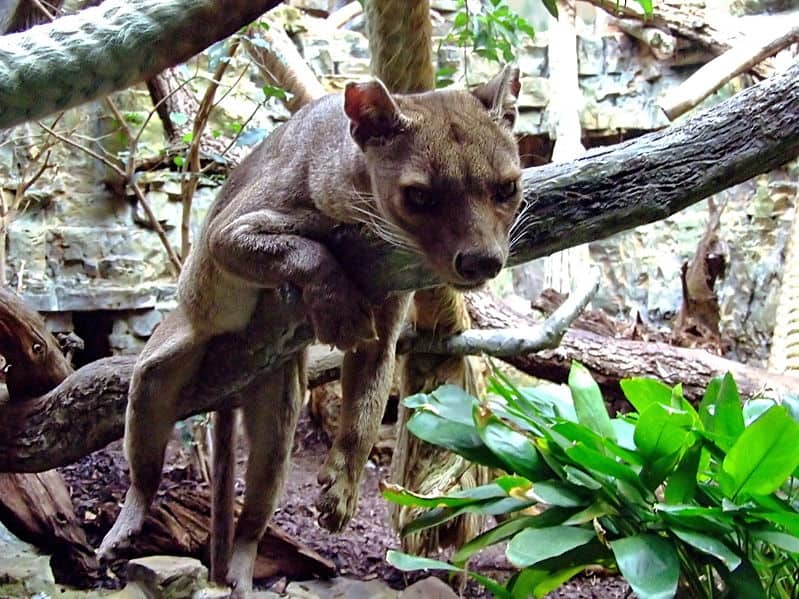
Because the Fossa is the largest natural predator in Madagascar, it has no predators itself (with perhaps the rare exception of being grabbed by a stray Crocodile). Humans pose the biggest threat to the Fossa for they have not only hunted them in order to protect their livestock but they have also completely obliterated 90% of the Fossa’s once vast natural range. Deforestation due to logging for rare tropical timber and for clearing of land for agriculture has led to extensive declines in the wild population numbers. Coupled with the fact that Fossas require large solitary home ranges and are relatively slow at developing, it is thought that their numbers will most likely continue to drop.

Interesting Facts And Features

The Fossa usually measures around 3 feet long with the same length tail on top of that but, more recently, fossils of the now-extinct Giant Fossa have been uncovered in the jungles of Madagascar, with the biggest Giant Fossa fossil measuring nearly 20 feet in length and thought to have weighed around 37.5 lbs! As the Fossa is well known for its dominant and fierce approach to hunting, it is extremely rare that its intended prey will successfully escape. The Fossa is unbelievably fast and incredible agile in the tree tops so once a meal has been spotted, it is very accomplished at catching it.

Relationship With Humans

When early explorers first arrived on Madagascar, most of the incredible variety of unique fauna and flora, that they would have seen is most likely no longer in existence. Since their first arrival, humans have been exploiting one of the world’s largest islands leaving just 10% of the tropical forest cover. Land clearance for agriculture for uses for palm oil plantations and deforestation of the unique tropical trees has led to drastic declines in the population of a multitude of species, including the unique Fossa.

Conservation Status And Life Today

The Fossa is currently listed by the IUCN as being an Endangered species and at risk of becoming extinct in the near future in its natural environment. There are national parks and reserves that exist on the island, but they aren’t large enough to ensure that the Fossa population can survive as each individual requires a significantly large amount of territory and there is too much competition. It is estimated that there are less than 2,500 Fossas left in the wild of Madagascar.

View all 170 animals that start with F
How to say Fossa in ...
Catalan
Civeta de Madagascar
German
Fanaloka
English
Malagasy Civet
Spanish
Fossa fossana
Finnish
Fanaloka
French
Civette malgache
Croatian
Madagaskarska cibetka
Hungarian
Fanaloka
Italian
Fossa fossana
Japanese
マダガスカルジャコウネコ
Dutch
Fanaloka
Polish
Fanaloka
Swedish
Fanaloka
Chinese
馬島靈貓

Sources

  1. David Burnie, Dorling Kindersley (2011) Animal, The Definitive Visual Guide To The World's Wildlife / Accessed May 8, 2009
  2. Tom Jackson, Lorenz Books (2007) The World Encyclopedia Of Animals / Accessed May 8, 2009
  3. David Burnie, Kingfisher (2011) The Kingfisher Animal Encyclopedia / Accessed May 8, 2009
  4. Richard Mackay, University of California Press (2009) The Atlas Of Endangered Species / Accessed May 8, 2009
  5. David Burnie, Dorling Kindersley (2008) Illustrated Encyclopedia Of Animals / Accessed May 8, 2009
  6. Dorling Kindersley (2006) Dorling Kindersley Encyclopedia Of Animals / Accessed May 8, 2009
  7. David W. Macdonald, Oxford University Press (2010) The Encyclopedia Of Mammals / Accessed May 8, 2009
  8. Fossa Facts / Accessed May 8, 2009
  9. Fossa Information / Accessed May 8, 2009
  10. Fossa Conservation / Accessed May 8, 2009
A-Z Animals Staff

About the Author

A-Z Animals Staff

AZ Animals is a growing team of animals experts, researchers, farmers, conservationists, writers, editors, and -- of course -- pet owners who have come together to help you better understand the animal kingdom and how we interact.
Connect:

Thank you for reading! Have some feedback for us?


Fossa FAQs (Frequently Asked Questions)

Fossas are Carnivores, meaning they eat other animals.