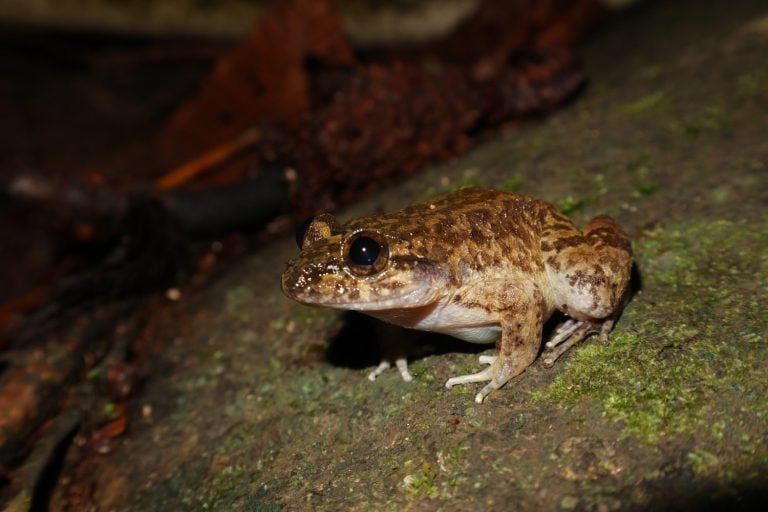


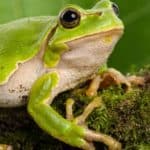
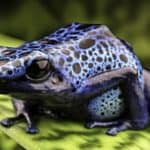
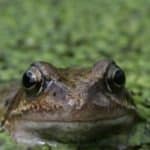
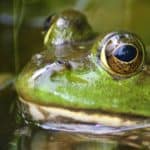
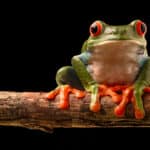
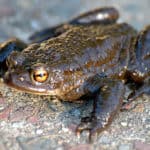
The frog is the most common and populous of the three major orders of amphibians – and the only one that lacks a tail.
The first true frogs evolved in the early Jurassic Period some 200 million years ago. Since then, they have spread out and diversified to almost every single major ecosystem on the planet. Because frogs are so important for the environment, the recent trend toward declining populations and malformations in their anatomy are worrying signs for the entire planetary ecosystem.
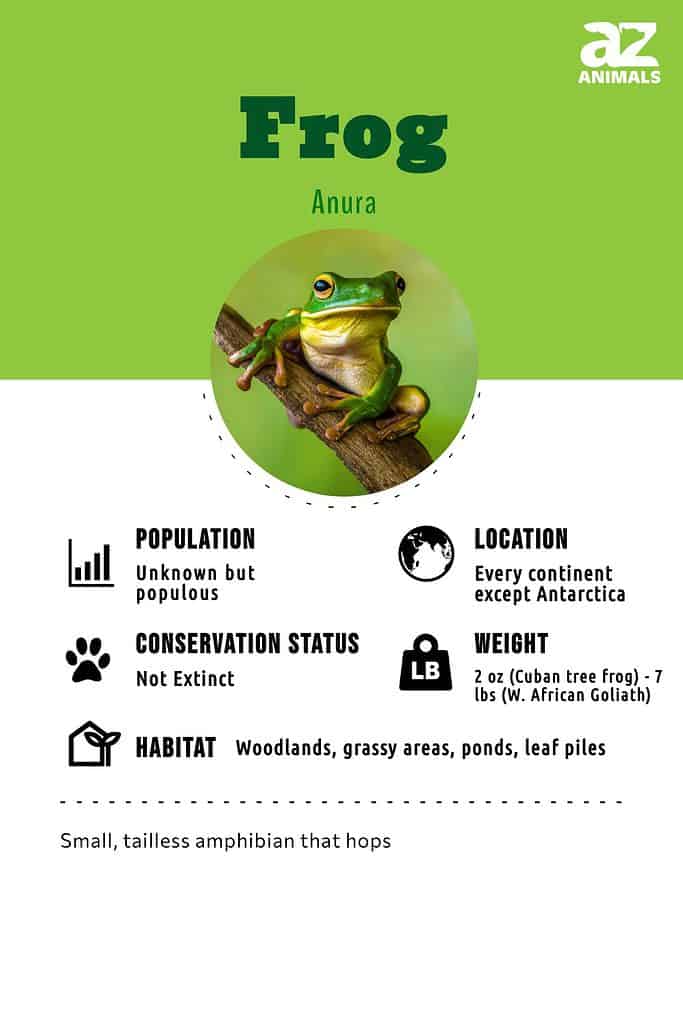
5 Incredible Frog Facts!
- Frogs shed their entire skin about once a week. This dead skin makes a tasty meal for the frog.
- Albino frogs are very rare in the wild. One exception is the albino African clawed frog, which is caught and sold as a pet. These albino frogs have an all-white appearance.
- Some species can live more than 20 years in captivity.
- The frog’s eyes have a wide angle of view and excellent night vision.
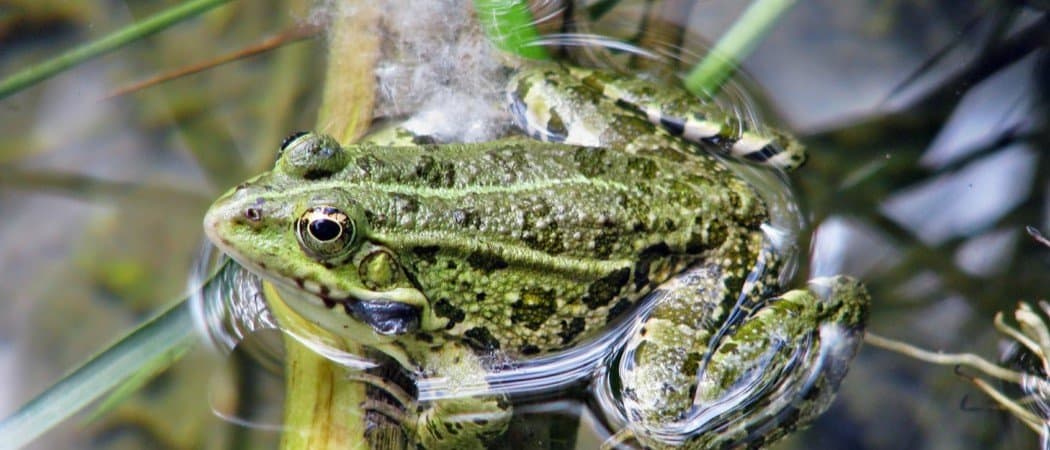
- The European edible frog is a fertile hybrid between two different species: the pool frog and the marsh frog. The edible frog cannot produce viable offspring with each other though.
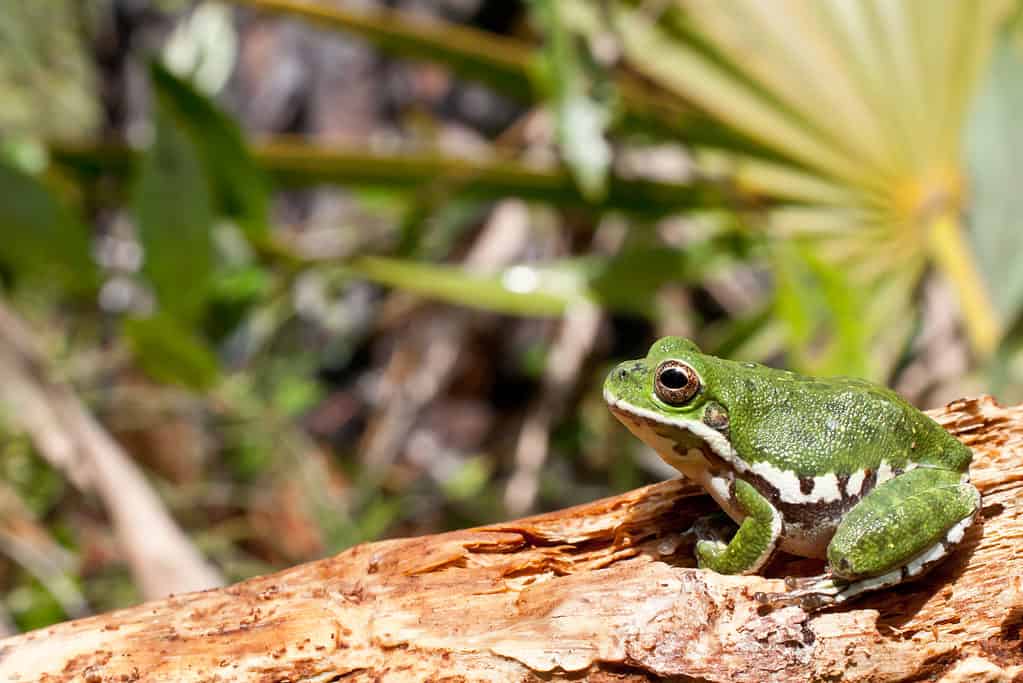
Barking tree frogs are the largest native tree frogs in the United States.
©iStock.com/JasonOndreicka
Scientific Name
Every single species of this amphibian on the planet belongs to the order of Anura. The biological name of Anura is derived from the combination of two Greek words meaning without (“an”) and animal tail (“ura”). There are more than 7,000 recognized species of these amphibians spread out across some 31 diverse families. Almost 90% of all amphibians exist within this classification.
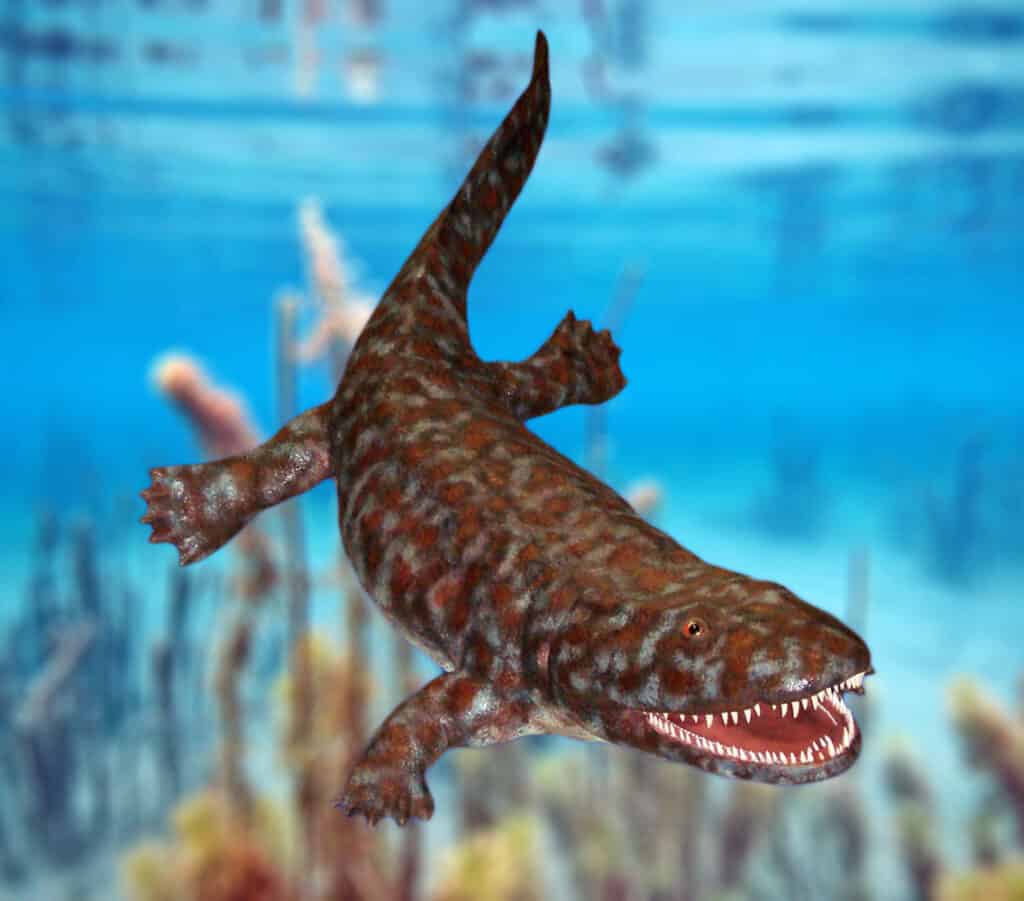
Ichthyostega, the prehistoric predecessor to the frog, lived 370 million years ago.
©Dr. Günter Bechly, CC BY-SA 3.0 <https://creativecommons.org/licenses/by-sa/3.0>, via Wikimedia Commons – Original / License
Evolution
The prehistoric predecessor to the frog, Ichthyostega, a four-legged fish, lived 370 million years ago. Frogs are believed to have split from other amphibians approximately 265 years ago – evolving into the modern frogs of today.
Appearance
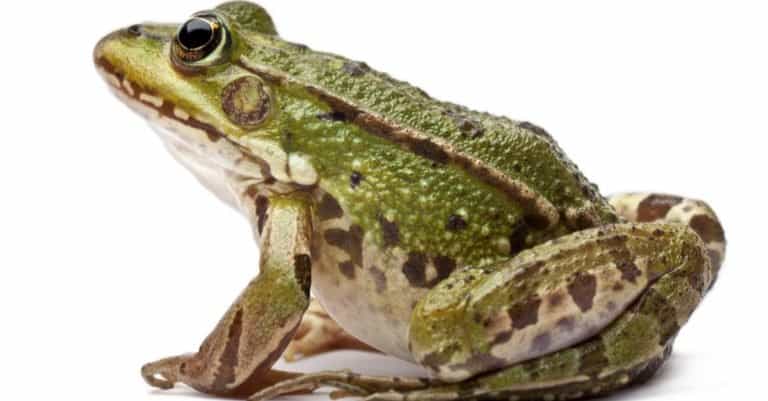
These animals are characterized by a kind of hunched body, webbed toes, big, bulging eyes, and moist skin. The enormously long legs enable some of them to leap great distances, 20 times or more their body length. Most frogs also have a big visible eardrum on their heads called a tympanum that transmits sound waves to the protected inner ear.
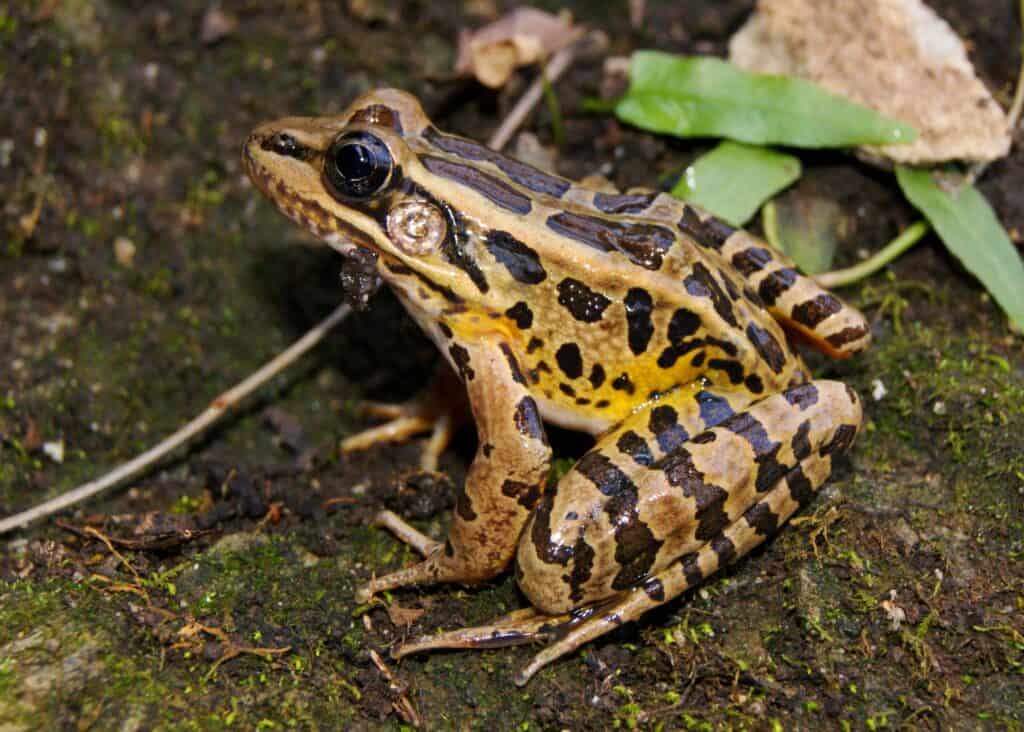
The Pickerel frog is the only poisonous frog native to the United States.
©Matt Jeppson/Shutterstock.com
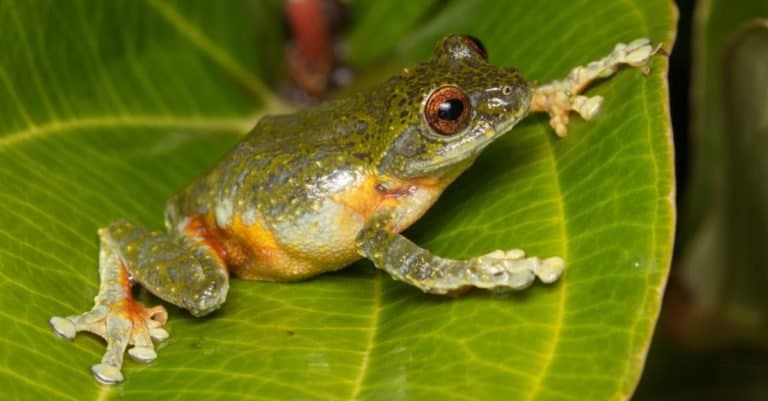
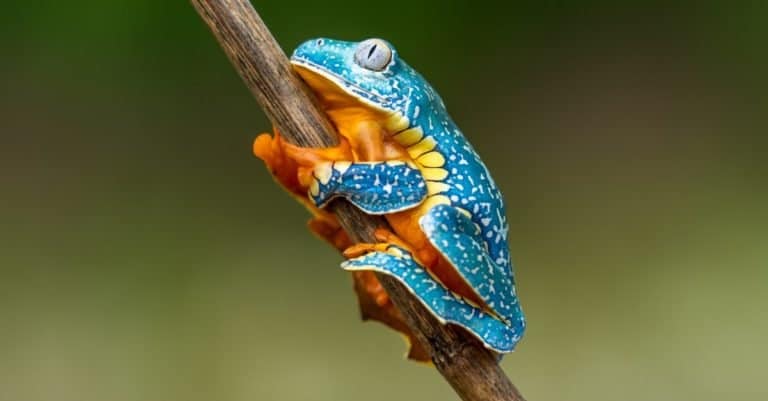
These common traits should not obscure a great deal of diversity in this family. Many unique adaptations help the animal survive in the wild. The glass frog has translucent skin through which you can see its organs to blend in with the environment. The tree frogs have discs on their fingers and toes that enable them to climb up surfaces. The flying frog can glide some 40 to 50 feet from the trees to the ground with the expanded webbing between its toes and fingers. Burrowing frogs often have claws or spade-like structures on their back feet that enable them to dig through the dirt. The leopard frogs have spotted patterns like the big cat for which it’s named.
The largest species in the world, the goliath frog, grows up to a foot long and weighs around 7 pounds. The smallest species in the world is only about 0.3 inches long. But between these two extremes, most of them measure no more than a few inches in size. One type of frog, the Titicaca water frog, is a giant frog endemic to Lake Titicaca.
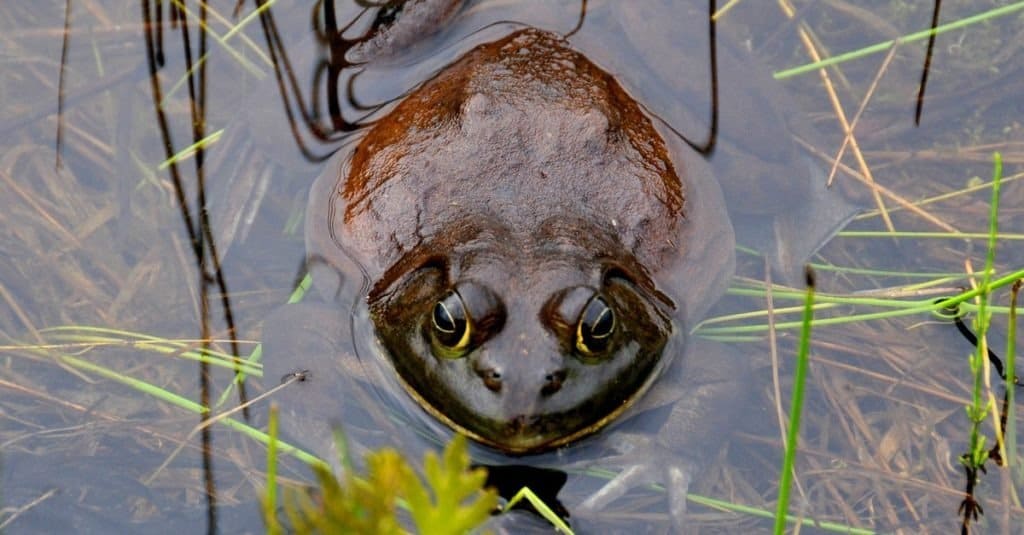
The West African Goliath is the largest frog in the world
©meunierd/Shutterstock.com
Like most land animals, an adult has a set of lungs to breathe (the only real exception is species that have no lungs) and draws oxygen down through its airway passages. But the animal also has porous skin through which it can absorb gasses and water directly. This means it can breathe underwater through its skin. But this also makes the skin very sensitive to dangerous chemicals and pollution that seep into the environment.
Frog Eyes: What Makes them Unique
Frogs have unique eyes that have several adaptations that serve them well. For starters, the position of their eyes gives frogs nearly a 360-degree range of sight. Also, frogs have perhaps the best night vision of any animal on the planet! However, frog eyes aren’t perfect. One drawback is they’re generally very far-sighted and can’t see close-up details very well.
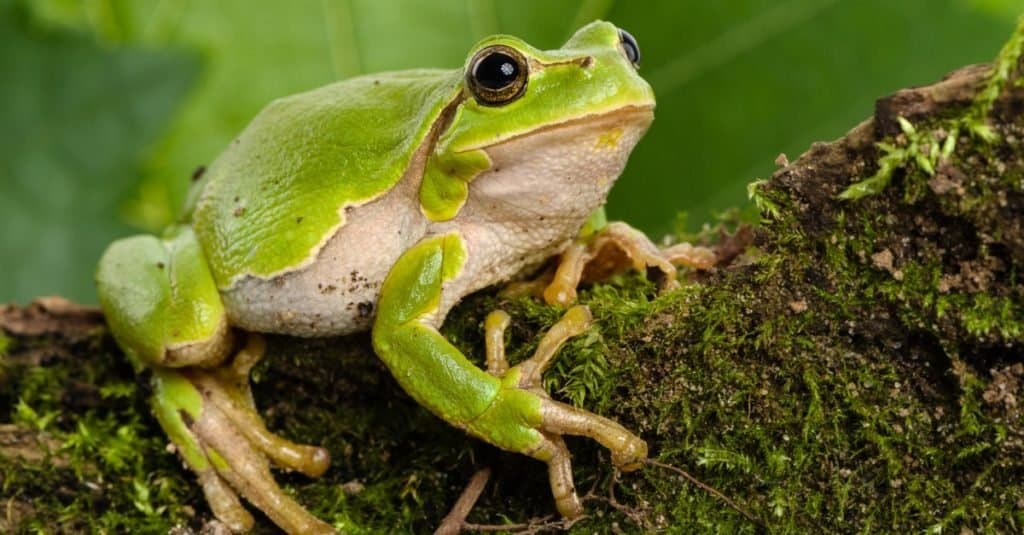
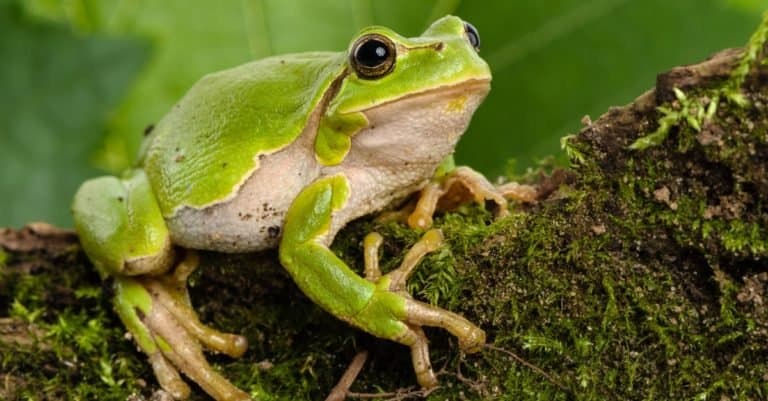
European green tree frog, Hyla Arborea, sitting on a moss-covered branch.
©Manuel Findeis/Shutterstock.com
Toads vs. Frogs
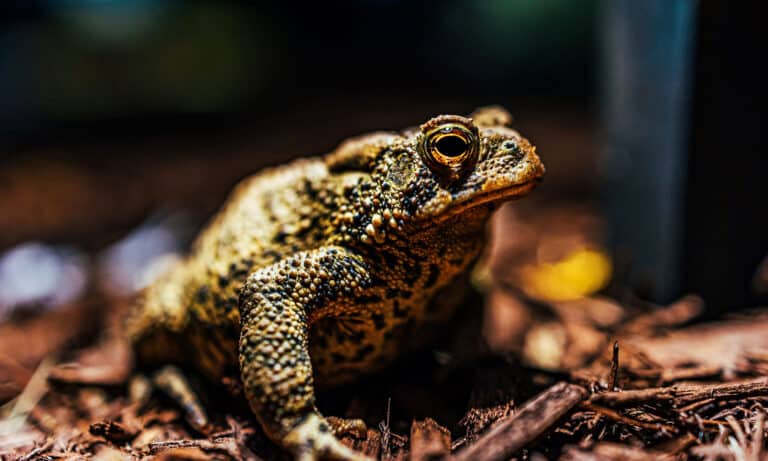
From a taxonomical perspective, both toads and frogs belong to the same classification, but several anatomical differences distinguish a toad from other frog species. The main differences are that toads have warty skin, shorter legs, and a broader snout. Their skin can tolerate drier conditions, which means they are capable of living father from any source of water.
Behavior
These animals, as a rule, do not have any real social organizations or hierarchies. With few exceptions, these animals mostly hunt and sleep on their own. When they do come together in the breeding season, a group of frogs is called an army. The mating call is the only real means of communication. Each call is loud, conspicuous, and largely unique to the species. Males only make this sound out of necessity, because it has the tendency to attract predators as well.
As a cold-blooded amphibian, the animal cannot maintain its internal body temperature. Instead, it needs to constantly change its behavior in response to daily or seasonal fluctuations in temperature, moving into the sun or shade as necessary. In northern climates, most frog species hibernate for the winter by hiding out somewhere and slowing down their metabolisms. The North American wood frog has actually evolved the ability to survive becoming frozen. As its body begins to shut down, the water in the frog’s cells is replaced with glucose and urea to prevent the body tissue from degrading. When the weather warms once again, the metabolism picks up as normal.
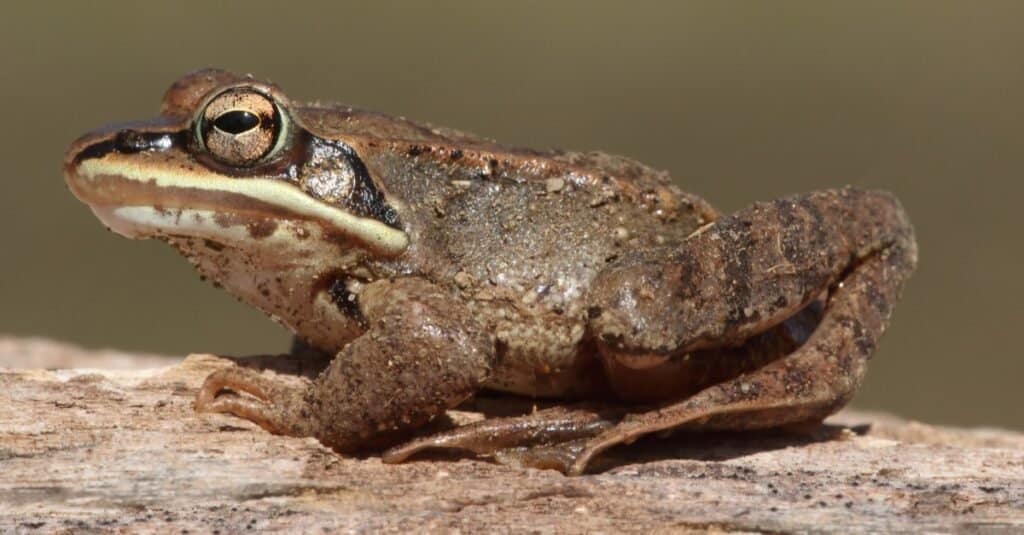
The wood frog lives farther north than any other North American amphibian. Glucose in the frog’s cells protects its body from damage caused by freezing, although nearly a third of the body fluids can be frozen without killing it.
©Steve Byland/Shutterstock.com
Because they’re so small and vulnerable, these animals have evolved a variety of different defenses to survive. Camouflage is the most common and evolutionary inexpensive defensive mechanism (hence why most species are green or brown in color). A few species like the edible frogs actually have the ability to blend in with the background. The long legs and leaping ability also help many get away from predators. For some species of frogs, poison is its most potent weapon. There are about 170 different species of poison dart frogs, most of which reside in tropical ecosystems. They exhibit bright and garish colors to warn predators that the frog has evolved some of the most potent poisons on the planet. A single gram of toxin from the golden poison dart frog can kill up to 100,000 people. Some species are not toxic but have evolved bright colors to fool predators into believing it’s poisonous.
And as you’ve probably known if you’ve been outside in a less-urban setting at night, frogs are nocturnal.
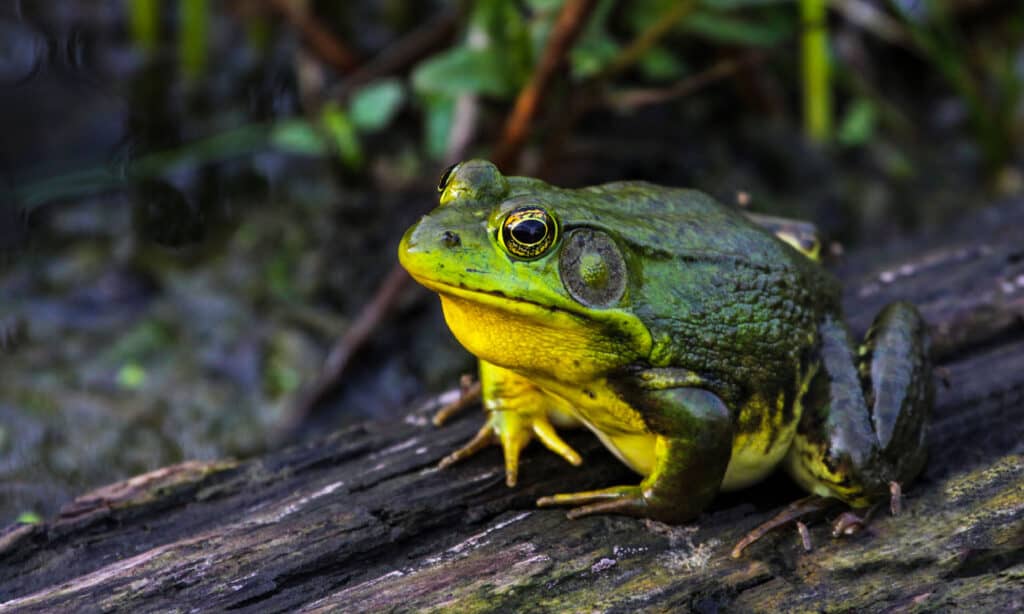
Most species of frogs, like this American bullfrog, live on the ground near a source of fresh water.
©iStock.com/187715314
Habitat
These animals can be found in almost every single continent and region of the planet outside of Antarctica. The greatest diversity of species occurs in the tropics, while many more can be found in temperate regions. Most species tend to live on the ground near the source of freshwater (though a few species can live in brackish/slightly salty water). Some can also burrow underground or inhabit trees.
Removing frogs from a habitat
If frogs take up residence in a garden or yard there are a number of ways to humanely remove them. Frogs can be relocated, or repellents such as vinegar, lemon juice, coffee grounds, and baking soda are effective at keeping frogs away from gardens. Frogs prefer areas that are warm, moist, and have plant growth. Another way to keep frogs out of yards and in their natural habitats is lawn maintenance, trimming shrubs, and improving drainage.
Hunting skills
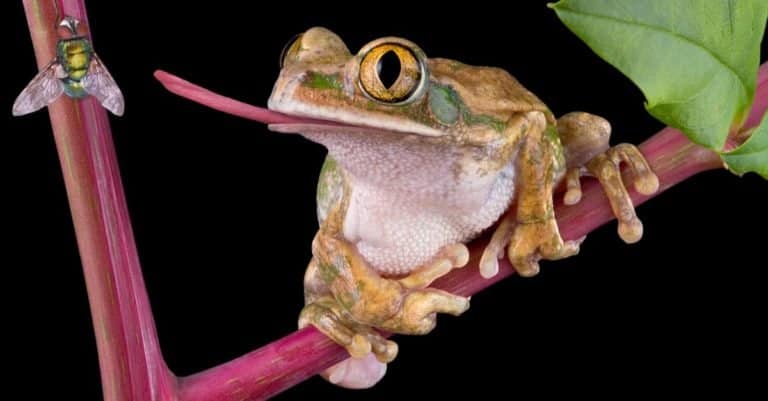
When out hunting, an adult usually lies in wait for prey, though some engage in deliberate pursuit. The frog’s long tongue and night vision are its greatest assets. While the teeth on the upper jaw hold the prey temporarily in place, the frog pushes its eyeballs on top of the mouth to force food down the throat.
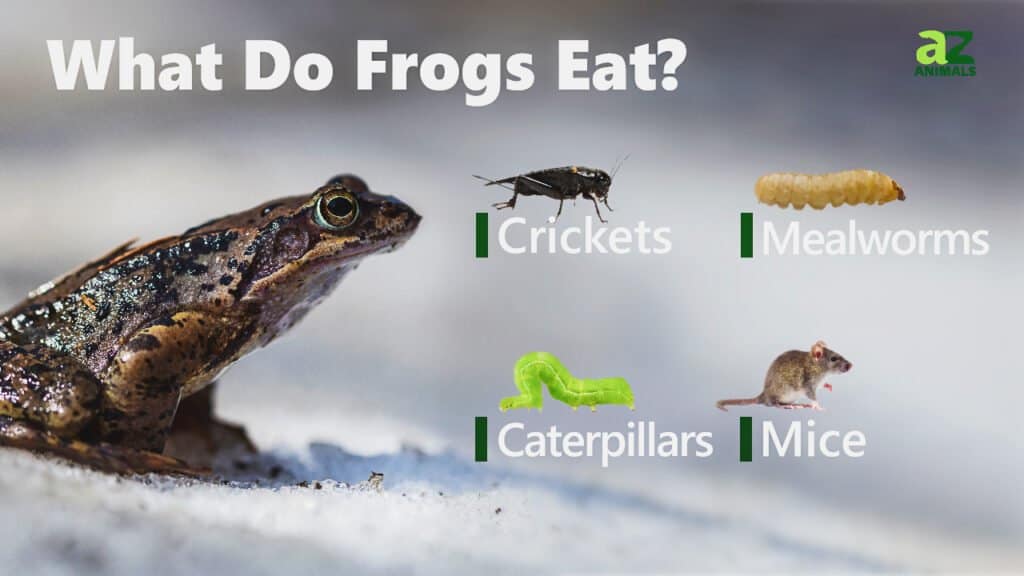
What do frogs eat?
The frog’s diet changes drastically between the tadpole phase and the adult phase. After first hatching, most tadpoles tend to eat plankton and other tiny organic matter; though a few species are carnivorous hunters that consume insects, fish, and other tadpoles (even if it means cannibalizing members of their own species). As it undergoes a massive transformation between the tadpole and adult phases, the diet also transitions to an exclusively carnivorous diet consisting of insects, arthropods, or worms. The largest species, such as the African bullfrog, also consume rodents, reptiles, and other frogs.
Predators and Threats
Frogs are so common as prey in the wild that many of them never end up surviving beyond the tadpole stage. But they also face many other threats such as habitat loss, pollution, and disease. These problems are all exacerbated by climate change.
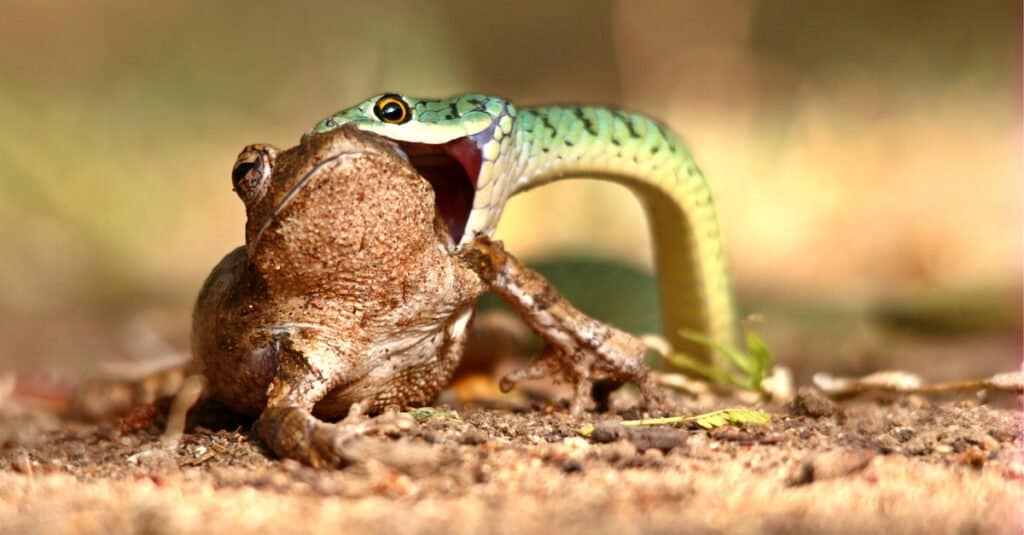
Frogs are prey for almost any carnivorous mammal, bird, or reptile.
©Tallies/Shutterstock.com
What eats the frog?
Frogs are preyed upon by almost any kind of carnivorous mammal, bird, or reptile. They are even cannibalized by other frogs.
Reproduction, Babies, and Lifespan
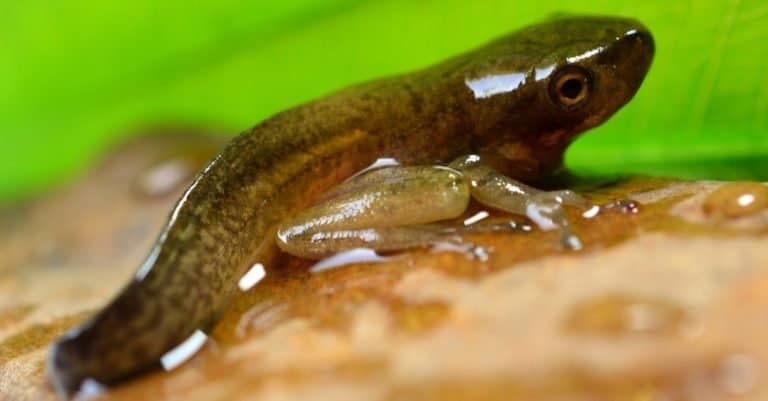
Like all amphibians, frogs have a complex life cycle in which it undergoes a complete transformation between their juvenile and adult stage within the first two months to three years of their life. The juvenile form, also known as a tadpole, is adapted entirely for an aquatic lifestyle. It has an oval body, gills for respiration, a long tail, a cartilage-based skeleton, and no limbs at all.
After undergoing its metamorphosis, the animal’s entire appearance and internal organ structure completely change. As it loses the tail and develops a pair of lungs, the frog is able to leave the water for a completely new life on the land. Only a few tropical species skip the tadpole stage entirely and hatch as young, undeveloped froglets.
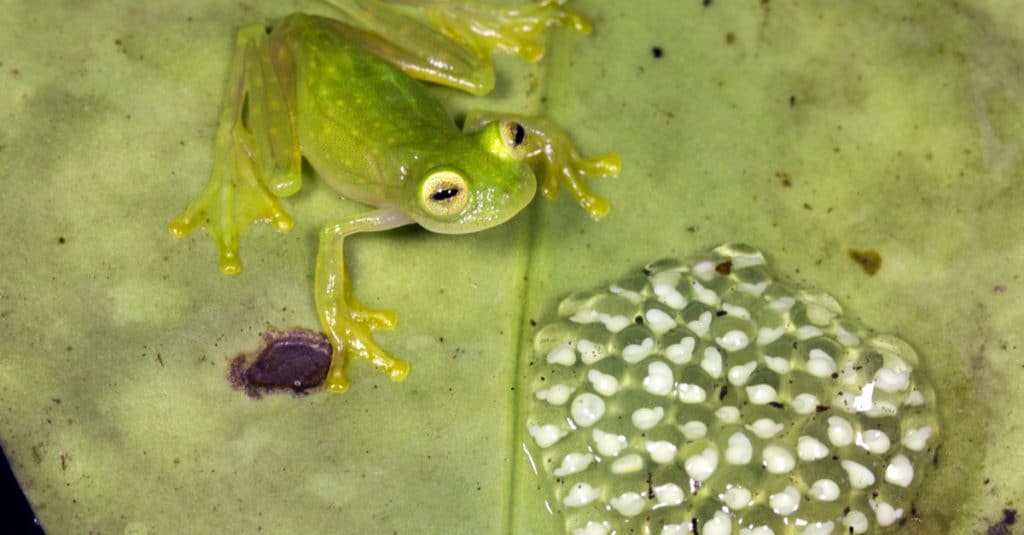
Male glass frogs guard their eggs.
©Dr Morley Read/Shutterstock.com
At the start of the breeding season, the male makes a loud croaking sound in order to attract a mate. Some species have specialized vocal sacs around the throat or cheeks that amplify the sound and let it carry much further than it normally would. Once he’s attracted a suitable mate, the male grabs the female from behind and fertilizes the eggs right as they’re ejected from her body.
When it comes to reproductive strategy, frogs seem to prefer quantity. Hundreds of thousands of eggs are strung together or float in clusters along freshwater pools or ponds. Most species invest little time or resources into parental care, but there are some exceptions. Among those that do invest time into parental care, one popular strategy is to keep the tadpoles in the mouth or stomach to protect them (the frog temporarily suspends the production of any harmful acids or chemicals that could kill the young). The aptly named marsupial frog has a small pouch with which it protects the young. And the Suriname toad will actually grow a temporary membrane on the back that encases the eggs until they’re fully formed.
Population
The total number of frog populations is unknown. They are still abundant around the world, but since the 1950s, many frog populations have been in decline, and around a third of species are now threatened with extinction. According to the US Geological Survey, it’s estimated that the United States is losing approximately 4% of its amphibian population every single year. They are declining even in areas where they’re protected by national law, which suggests a problem with the entire ecosystem.
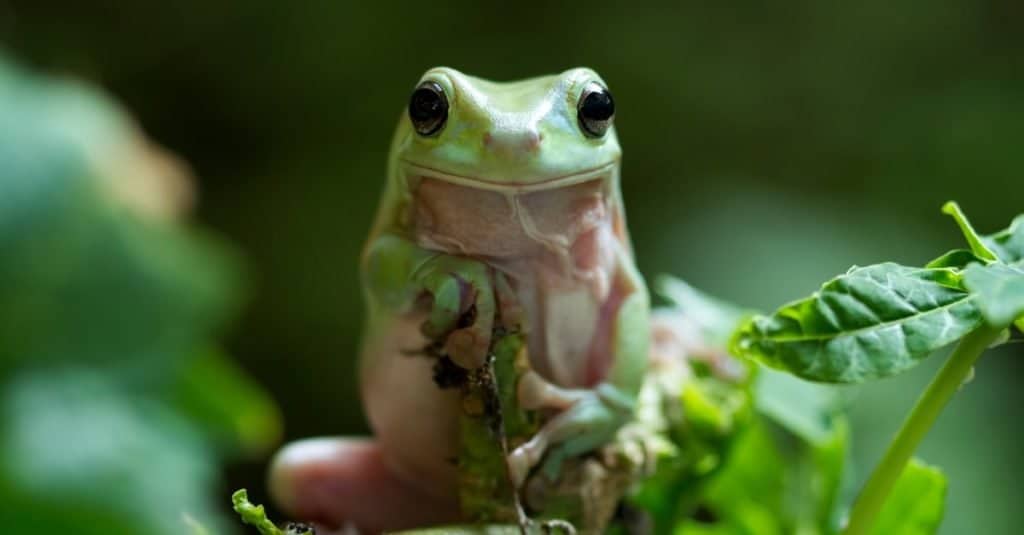
The Australian green tree frog is one species that can be kept as an exotic pet.
©Kurit afshen/Shutterstock.com
Frogs as Pets
Frogs are a popular pet amphibian, but with over 7,000 species there is an incredible variety to choose from. When choosing a pet frog consider the following factors:
- While smaller frogs may thrive in a 20-gallon enclosure, larger frogs may require more than 100 gallons, which can become quite large.
- Frogs are ectotherms that rely on their environment to stay warm. That means their enclosures often need heating lamps, under-tank heaters, and other devices to keep pet frogs comfortable.
- Most of these amphibians also require moist conditions to survive. That means you’ll also likely need a water filter and space for frogs to stay moist.
- Keep in mind that frogs can be a commitment. Some species can live up to 20 years when well-cared for in captivity.
Ready to get a pet frog? Don’t miss out on our complete guide to naming pet frogs!
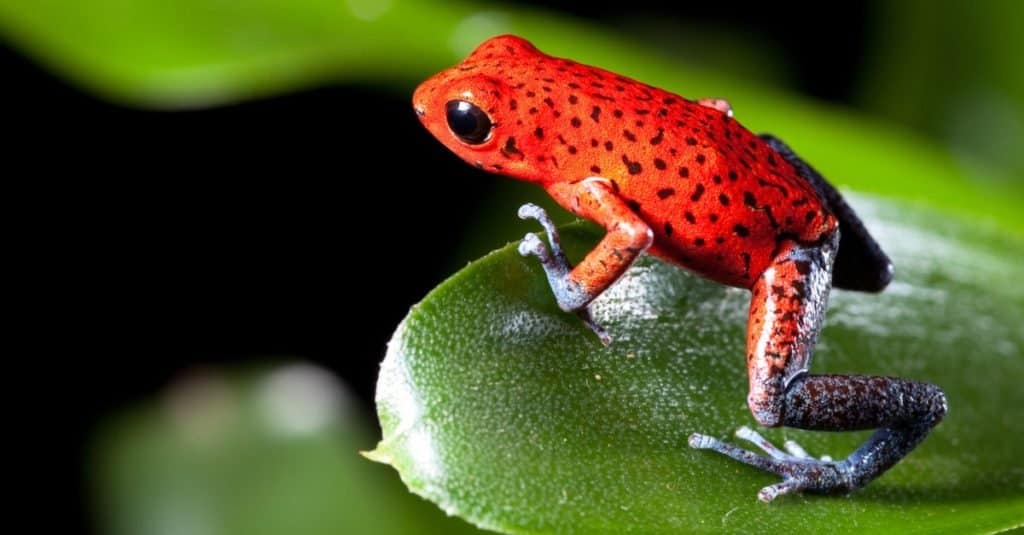
Red strawberry poison dart frog on a big leaf. These frogs are commonly known as poison arrow or poison dart frogs because native Indian tribes reportedly rubbed their arrow tips on the frogs’ backs before hunting.
©Dirk Ercken/Shutterstock.com
Frogs in the Zoo
These amphibians can be found in zoos all over the world. Because of their unique beauty, poison dart frogs are a particularly popular attraction at the San Diego Zoo, the Smithsonian’s National Zoo, the Louisville Zoo, the Cincinnati Zoo and Botanical Gardens, and much more.
Species
There are around 7,000 species of frogs worldwide. Some of these include:
- Wood – Lithobates sylvaticus. These little frogs freeze during the winter! They produce an antifreeze substance that prevents ice from freezing within their cells.
- Gray Tree – Hyla Versicolor. With highly adapted toe tips that make climbing easy – these large frogs can also change color based on temperature and activity.
- Desert Rain – Breviceps macrops. Able to survive without water, the Desert Rain frog has short legs that make it unable to hop. These frogs hatch from eggs without going through the tadpole stage.
- African Bull– Pyxicephalus adspersus. This big frog can grow to the size of a dinner plate! It is the second-largest frog on the planet!
- Green – Lithobates clamitans. Green frogs can be found all over North America and are known for their four distinct loud vocalizations.
- Goliath – Conraua goliath. This giant frog lives in equatorial Guinea and Cameroon in West Africa. They are the world’s largest frog!
- Darwin’s – Rhinoderma darwinii. Discovered in Argentina by Charles Darwin, these leaf-shaped frogs are incubated in the male frog’s vocal sac.
- Bull– Lithobates catesbeianus. This big water frog is famous for its loud, deep mating call that sounds like a bellowing bull.
- Edible – Pelophylax ll. esculentus. Known for its large, delicious legs, the European Edible frog is a favorite delicacy of the French.
What Is a Group of Frogs Called?
A group of frogs is called an army, colony, or congregation. Frogs are known to congregate near water sources and travel in large numbers. When threatened by a predator, frogs will produce a loud croaking sound. The sound warns other frogs of potential danger and seems quite fitting for a group called an army!
Read more about frogs…
Frog Pictures
View all of our Frog pictures in the gallery.

Alen thien/Shutterstock.com
Sources
- Britannica / Accessed February 17, 2021
- Smithsonian Magazine / Accessed February 17, 2021
- Woodland Trust / Accessed February 17, 2021
- USGS / Accessed February 17, 2021