



G
Species Profile

Great White Shark

Carcharodon carcharias

Warm-blooded hunter of the seas
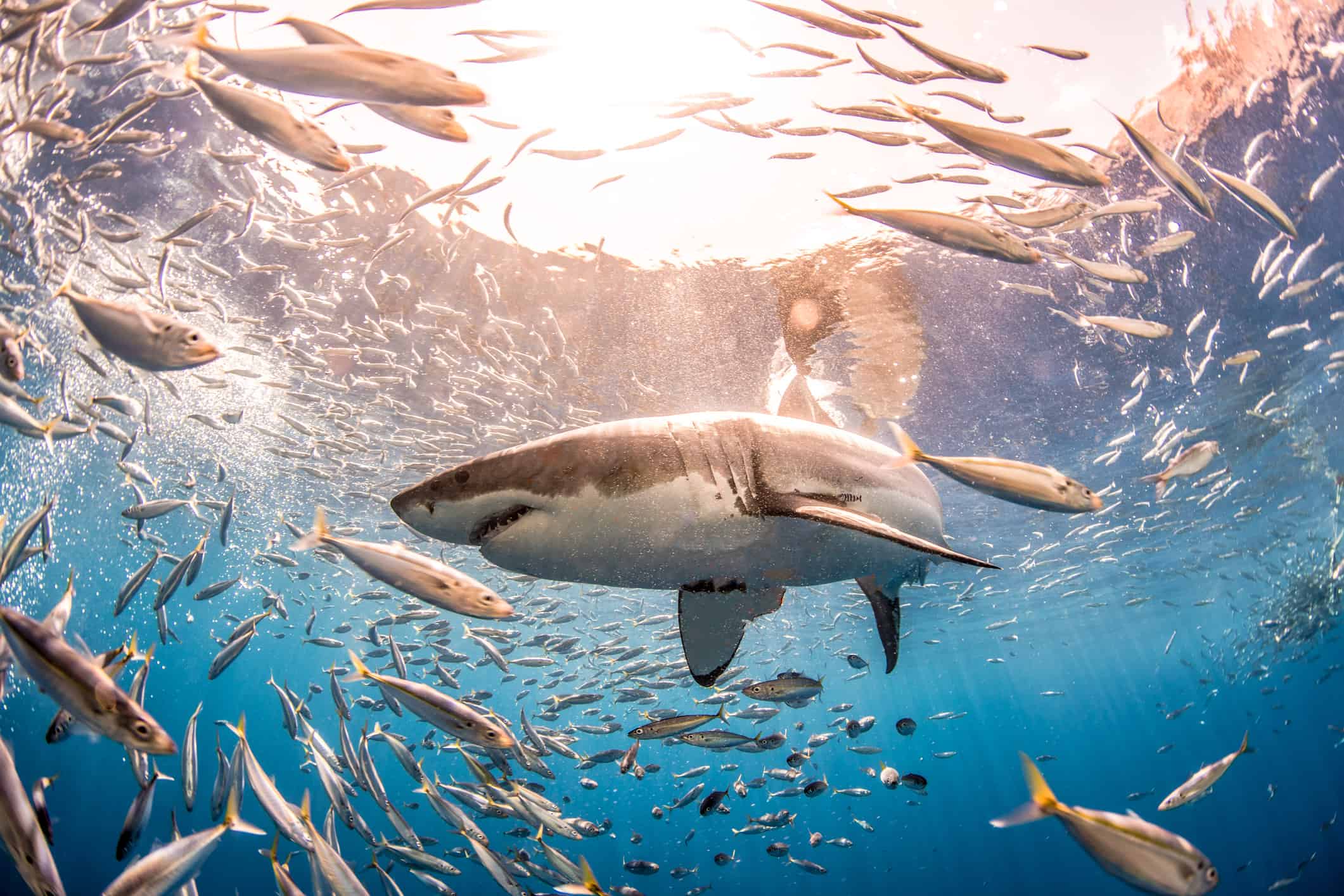
Howard Chen/iStock via Getty Images

Great White Shark Distribution

Click a location to explore more animals from that region

This map shows coastal regions where Great White Shark are found.

Loading map...
Great White Shark

At a Glance

Wild Species
Also Known As Great white, White shark, White pointer
Diet Carnivore
Activity Cathemeral+
Lifespan 40 years
Weight 2000 lbs
Status Vulnerable
Did You Know?

Size: commonly 3.4-4.8 m total length (TL); large females can reach at least ~6.0 m TL (Compagno, 2001; Francis, 1996; Rigby et al., IUCN).

Scientific Classification

A large lamnid shark and apex predator found in temperate and some subtropical coastal and offshore waters worldwide; known for robust body, conical snout, and large triangular serrated teeth.

Kingdom
Animalia
Phylum
Chordata
Class
Chondrichthyes
Order
Lamniformes
Family
Lamnidae
Genus
Carcharodon
Species
carcharias

Distinguishing Features

  • Large, heavy-bodied lamnid shark; adults commonly ~3.5–5 m (larger reported)
  • Countershaded coloration: gray to brown dorsally, white ventrally
  • Large triangular, serrated upper teeth adapted for cutting
  • Powerful tail (lunate caudal fin) and partially warm-bodied physiology typical of lamnids
  • Frequent association with pinniped prey in some regions; breaching behavior documented

Physical Measurements

Males and females differ in size

Length
13 ft 9 in (11 ft 2 in – 18 ft 1 in)
16 ft 5 in (15 ft 1 in – 20 ft)
Weight
1,433 lbs (772 lbs – 2.0 tons)
1.2 tons (1,499 lbs – 2.1 tons)
Top Speed
25 mph
Burst speed about 40 km/h

Appearance

Primary Colors
Secondary Colors
Skin Type Thick, tough skin covered in placoid scales (dermal denticles) giving a sandpaper-like texture; denticles reduce drag and protect against abrasion/parasites (Chondrichthyes trait; well-developed in Lamnidae).
Distinctive Features
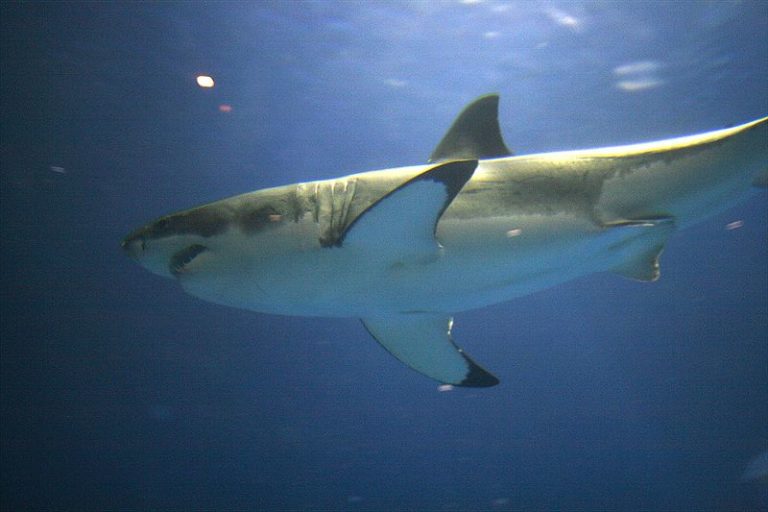
  • Robust, torpedo-shaped lamnid body; conical snout; large first dorsal fin and stiff pectoral fins; strong crescent caudal fin with prominent caudal keels on the tail stalk (key lamnid ID characters).
  • Very large, triangular, laterally flattened teeth with coarse serrations; upper teeth especially broad-adapted for cutting pinniped and cetacean tissue (diagnostic for Carcharodon carcharias).
  • Five large gill slits; eyes relatively small and dark; countershaded coloration often with a sharp gray/white boundary that can appear patchy along the flank.
  • Typical adult total length commonly ~3.4-4.9 m; maximum reported total length up to ~6.4 m in major references (note that extreme sizes are rare and some historical claims are unverified).
  • Longevity is now estimated to be substantially higher than earlier vertebral-ring estimates: radiocarbon dating suggests a maximum lifespan on the order of ~70 years, with late maturity (Hamady et al., 2014, PLOS ONE).
  • Found worldwide in temperate and some subtropical coastal and offshore waters. Hotspots: South Africa (Western and Eastern Cape), southern Australia, New Zealand, northeastern Pacific (California, Baja/Guadalupe), northwestern Atlantic, and the Mediterranean.
  • Apex predator that ambushes prey (often from below), targets pinnipeds at seal colonies, eats large fishes and elasmobranchs, scavenges cetacean carcasses, and makes long migrations with seasonal residency shown by tagging.
  • IUCN lists the great white as Vulnerable; it is also on CITES Appendix II and protected or managed by many countries. Bites on people are rare, often to check or from mistaken identity.

Sexual Dimorphism

Sexual dimorphism is present primarily in size and reproductive anatomy: females attain larger maximum sizes and mature at larger lengths/older ages than males; males have external claspers.

  • External claspers on pelvic fins (diagnostic for mature males).
  • Smaller average and maximum size than females; maturity occurs at smaller total length (radiocarbon-based ageing indicates males mature earlier than females; Hamady et al., 2014).
  • Females generally larger-bodied and heavier at comparable ages; attain larger maximum total lengths than males.
  • Maturity occurs at larger total length and later age than males (Hamady et al., 2014).

Did You Know?

Size: commonly 3.4-4.8 m total length (TL); large females can reach at least ~6.0 m TL (Compagno, 2001; Francis, 1996; Rigby et al., IUCN).

Longevity: radiocarbon dating of vertebrae suggests males can live ~70 years, far longer than earlier estimates (Hamady et al., 2014).

Body heat: great whites are regionally endothermic-core swimming muscles can be ~10-14°C warmer than surrounding water (Carey et al., 1982).

Newborns are big: pups are about 1.2-1.5 m TL at birth; litters reported at 2-10 pups (Mollet et al., 2000; Compagno, 2001).

Deep-diving traveler: satellite-tagged individuals routinely "yo-yo" dive and can exceed 1,000 m, with records around ~1,200 m (Weng et al., 2007).

Transoceanic commute: one tagged female ("Nicole") traveled ~11,000 km from South Africa to Australia and returned, demonstrating basin-scale movements (Bonfil et al., 2005).

Unique Adaptations

  • Regional endothermy (retia mirabilia heat exchangers) warms red swimming muscle and viscera, boosting burst power and cruising efficiency in cool temperate waters-key to its success in California, South Africa, southern Australia/NZ, and the NW Atlantic (Carey et al., 1982).
  • Serrated, triangular teeth designed for cutting: broad upper teeth with coarse serrations efficiently slice blubber and flesh; teeth are continuously replaced from multiple tooth rows-critical for a predator that tackles large, struggling prey (Compagno, 2001).
  • High-performance lamnid physiology: large gill surface area, stiff semi-lunate tail, and streamlined body support sustained cruising and rapid acceleration typical of Lamnidae.
  • Electrosensory hunting: ampullae of Lorenzini detect weak bioelectric fields from prey; especially useful in low visibility or when prey is partially concealed.
  • Countershading camouflage: dark dorsal surface and pale belly reduce detectability from above and below-important for ambush approaches under seals or fishes.
  • Large, oil-rich liver aids buoyancy and energy storage, supporting long migrations and periods between large meals (general lamnid anatomy; Compagno, 2001).

Interesting Behaviors

  • Ambush breaching at pinniped colonies: in places like Seal Island (False Bay, South Africa), great whites attack Cape fur seals from below at high speed and may breach fully out of the water-an energy-intensive tactic used when success rates justify it (field studies summarized in Compagno, 2001; regional observational literature).
  • Seasonal aggregation and site fidelity: individuals repeatedly return to specific hotspots tied to prey pulses (e.g., South Africa: False Bay/Gansbaai; Australia: Neptune Islands; NE Pacific: Farallones/central California; Mexico: Guadalupe; NW Atlantic: Cape Cod; Mediterranean pockets), often with consistent timing across years (tagging/photographic ID programs; Domeier & Nasby-Lucas, 2013).
  • Long-range migrations with navigation across open ocean: NE Pacific sharks can move between coastal feeding areas and offshore "shared offshore foraging/migratory zones," showing directed travel rather than random wandering (Weng et al., 2007; Domeier & Nasby-Lucas, 2013).
  • "Spy-hopping" and surface investigation: raises head above water to visually inspect objects-reported in seal-hunting contexts and around boats/cages, consistent with using multiple senses before committing to a bite (behavioral observations in hotspots).
  • Scavenging on large carcasses: will feed on dead whales and other marine mammals, and may remain nearby for days, indicating opportunistic energy maximization (documented by coastal observation networks).
  • Ontogenetic diet shift: juveniles focus more on fishes and rays; larger subadults/adults increasingly target marine mammals where available, reflecting changing energetic needs and hunting capacity (diet studies synthesized in Compagno, 2001; regional stomach content/isotope work).

Cultural Significance

The great white shark (Carcharodon carcharias) is a famous ocean predator that shapes public views, supports cage‑diving tourism (South Africa, Australia, Mexico), drives tagging research, is listed Vulnerable (IUCN; CITES Appendix II; CMS), and is often linked to unprovoked bites.

Myths & Legends

Hawaiian tradition includes powerful shark spirits that can act as family guardian spirits, appearing to protect relatives at sea and demanding respect and proper ritual behavior.

In Hawaiian mythology, a shark deity is associated with the ocean and navigation; stories connect him to Pele's family, reflecting the shark's role as a formidable sea being rather than a mere animal.

In Maori and Polynesian stories, powerful water guardian monsters live in coastal passages and river mouths. Some are huge shark-like beings that make people follow sacred rules and punish rude travelers.

Seafaring lore from the 18th-19th centuries in temperate waters (including the Cape and southern oceans) circulated "man-eater" tales of great white-like sharks following ships and taking victims overboard-stories that fed into later maritime cautionary narratives.

In modern culture, the 20th-century "man-eating" Great white shark (Carcharodon carcharias) idea, made famous by books and films about a giant shark attacking a beach town, shaped how people picture the species.

Conservation Status

VU Vulnerable

Facing a high risk of extinction in the wild.

Population Unknown

Protected Under

  • CITES Appendix II (international trade regulated; great white shark listed)
  • CMS (Convention on Migratory Species) Appendix II (international cooperation encouraged)
  • Examples of national/subnational protections exist in multiple range states (e.g., full protection in Australia under the EPBC Act; protections in parts of the USA such as California state waters; protection measures in South Africa and several Mediterranean/European jurisdictions)

Life Cycle

Birth 6 pups
Lifespan 40 years

Lifespan

In the Wild
30–70 years
In Captivity
3–198 years

Reproduction

Mating System Promiscuity
Social Structure Solitary
Breeding Pattern Transient
Fertilization Internal Fertilization
Birth Type Internal_fertilization

Great white shark (Carcharodon carcharias) are male and female sharks with internal fertilization via claspers. They give birth to 2–10 pups by aplacental viviparity with oophagy, born ~1.2–1.5 m. Live ~70 years, mature late (males ~26, females ~33), likely promiscuous, no parental care.

Behavior & Ecology

Social Aggregation Group: 1
Activity Cathemeral, Crepuscular, Diurnal
Diet Carnivore Energy-rich marine mammals-especially pinnipeds (seals and sea lions), which dominate the diet of larger/older individuals in many temperate coastal systems.
Seasonal Migratory 6,835 mi

Temperament

Apex-predatory, risk-assessing and often cautious around novel objects (frequent investigative approaches and non-lethal sampling bites reported in field observations).
At feeding sites, can be strongly dominance-structured (size-based priority of access); agonistic encounters usually rely on threat displays rather than prolonged fighting (Klimley 1994; Martin 2003).
Highly site-faithful seasonally to some feeding areas (e.g., Guadalupe Island; Domeier & Nasby-Lucas 2013) yet capable of long-range migrations (e.g., coastal California to the 'White Shark Café'; Jorgensen et al. 2010).
Longevity commonly reported ~30+ years; validated ages from vertebral band-pair analyses indicate maximum longevity on the order of ~70 years (Hamady et al. 2014, PLOS ONE).

Communication

No known intentional vocalizations; like other sharks, lacks specialized sound-producing organs and is generally considered non-vocal.
Ritualized agonistic body language Notably 'pectoral fin depression', arched back, lateral display, jaw gaping) used to mediate access to prey and reduce escalation (described at seal colonies; Klimley 1994; Martin 2003
Tactile communication via bumps/ramming and controlled biting in competitive contexts; actual damaging combat appears uncommon relative to display.
Chemical cues/olfaction for long-range detection and potential social information at feeding events Blood/odor plumes
Hydrodynamic/mechanosensory signaling via the lateral line Detecting movements/struggles of prey and nearby sharks
Electroreception (ampullae of Lorenzini) for close-range targeting; may also contribute to spacing/orientation around conspecifics at close distances.
Spatial/behavioral 'rules' at hubs: individuals often maintain separation distances; arrival timing and dominance affect who approaches the prey first, with variation by site, season, size/sex composition, and prey type Documented at pinniped rookeries and island aggregation sites

Habitat

Coastal Open Ocean Deep Sea Seabed/Benthic Kelp Forest Rocky Shore Beach Estuary +2
Biomes:
Terrain:
Coastal Island Rocky Sandy
Elevation: Up to 4199 ft 6 in

Ecological Role

Apex predator (and top-down regulator) in temperate/subtropical marine food webs; also an important scavenger at large-carcass events.

Top-down regulation of marine mammal and large-fish populations, influencing abundance, age structure, and distribution Selective removal of vulnerable individuals (injured/sick/naïve), potentially increasing prey population fitness Behavior-mediated trophic effects (risk effects) that can alter prey habitat use and foraging, reshaping community interactions Carrion utilization (e.g., whale falls) that accelerates nutrient/energy redistribution across pelagic-coastal systems

Diet Details

Main Prey:
Pinnipeds Small cetaceans Bony fishes Elasmobranchs Sea turtle Seabirds Marine mammal carrion +1

Human Interaction

Domestication Status

Wild

Great white shark (Carcharodon carcharias) has no domestication history. It is a wild top predator. Aquarium attempts were rare and short; many failed from stress, not eating, or injuries. One shark stayed 198 days at Monterey Bay Aquarium and was released healthy. Lamnid sharks are fast, migrate far, and are hard to keep, so domestication is absent.

Danger Level

High
  • Bite injuries to swimmers/surfers/divers, typically attributed to investigatory biting and/or mistaken identity; injuries can be catastrophic due to large body mass and serrated dentition.
  • Highest number of documented unprovoked shark bites among species in the International Shark Attack File (ISAF) summary statistics (counts vary by ISAF release year; consult the current ISAF species tables for exact totals).
  • Secondary risks during human encounters: capsizing/sudden impacts to small craft during close approaches, and trauma from collision with a moving animal (especially around baited ecotourism vessels).

As a Pet

Not Suitable as Pet

Legality: Great white shark (Carcharodon carcharias) is not legal or practical as a pet. Capture and possession are banned or tightly regulated; listed on CITES Appendix II and CMS Appendix II. Only permitted public aquaria/research may hold them.

Care Level: Expert Only

Purchase Cost:
Lifetime Cost:

Economic Value

Uses:
Ecotourism (cage-diving/boat-based viewing) Fisheries interactions (bycatch; historical targeted take in some regions) Scientific research (tagging, telemetry, physiology, conservation biology) Media/branding value (documentaries, cultural iconography) Public-safety and coastal management (risk monitoring, beach management programs)
Products:
  • ecotourism services (licensed shark-viewing and cage-diving operations)
  • research outputs (telemetry datasets, conservation assessments, scientific publications)
  • educational/media content (documentaries, outreach programming)

Relationships

Ecological Equivalents 5

Animals that fill a similar ecological role in their ecosystem

Tiger shark
Tiger shark Galeocerdo cuvier Large-bodied, upper-trophic-level coastal and offshore predator that overlaps with great white shark habitat in many warm-temperate to subtropical regions. Both species are generalist macropredators capable of taking large vertebrate prey (including marine mammals) and scavenging carrion.
Bull shark
Bull shark Carcharhinus leucas Coastal apex/near-apex predator with frequent nearshore overlap in surf zones, bays, and estuaries. Both species can attack large bony fishes and marine mammals and use shallow-water ambush and attack strategies in turbid or structurally complex habitats.
Shortfin mako shark
Shortfin mako shark Isurus oxyrinchus Ecologically similar high-performance lamnid predator. Shares regional endothermy (elevated internal temperatures relative to ambient) and pelagic foraging on fast schooling fishes and small cetaceans, with overlapping distribution in offshore temperate waters and along migratory corridors.
Porbeagle Lamna nasus Temperate lamnid occupying similar thermal regimes. Both use regional endothermy and target mid-to-large fishes and occasionally marine mammals, with overlap in cooler temperate shelves and offshore waters, especially in the North Atlantic.
Killer whale
Killer whale Orcinus orca Shares the top-predator role in temperate coastal and offshore ecosystems and targets similar prey (pinnipeds, cetaceans). Additionally, killer whales are among the few predators documented killing great white sharks, indicating direct trophic interaction and potential competitive displacement in some regions.

Evolution

Sharks have lived on the earth longer than almost any other animal — 450 million years — surviving mass extinctions and every other environmental hazard. 3,000 species have lived over a period of nearly half a billion years — making them an evolutionary success story.

Silurian Period: 450 Million Years Ago

Sharks began developing as a unique species while the world’s oceans were filled with a variety of fish. The Acanthodian was the earliest known ancestor of the modern shark. This fish looked like a shark and was the first fish to develop the cartilaginous skeletal structure that sharks have today.
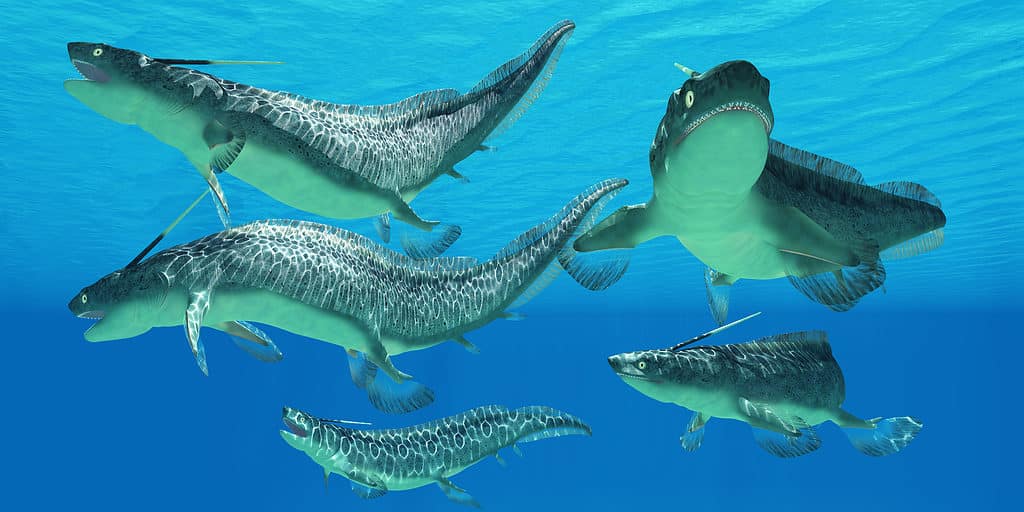
Xenacanthus

Very few complete fossils have been found of Xenacanthus and most information about the animal has been found through teeth and spine samples.

Early Devonian Era

The very first, fully developed shark came on the scene 50 million years after the Silurian era. The Leonodus Shark and the Antarctilamna were two eel-like early sharks in the now-extinct genus Xenacanthus.

Late Devonian Era

The first modern-looking shark, the Cladoselache, broke off from its eel-like cousins. With a six-foot-long, streamlined body, gill slits, and dorsal fins, this shark lacked the pointed nose and flexible jaw of the modern shark.

The Carboniferous Era

Around 360 million years ago, sharks ruled the oceans and split into many subspecies, including rays, skates, and chimaeras. There were 45 different families of sharks during this time, including: Stethacanthus and the unicorn shark, Falcatus.

Jurassic Era

12 new families of sharks appeared around 200 million years ago during the Jurassic period. Sharks began developing protruding, flexible jaws to enable them to attack larger prey, and tail fins for faster swimming. Their mouths began to form under their snouts, and they were able to go deeper to reach more prey. The Hybodus or horned shark lived during this time.
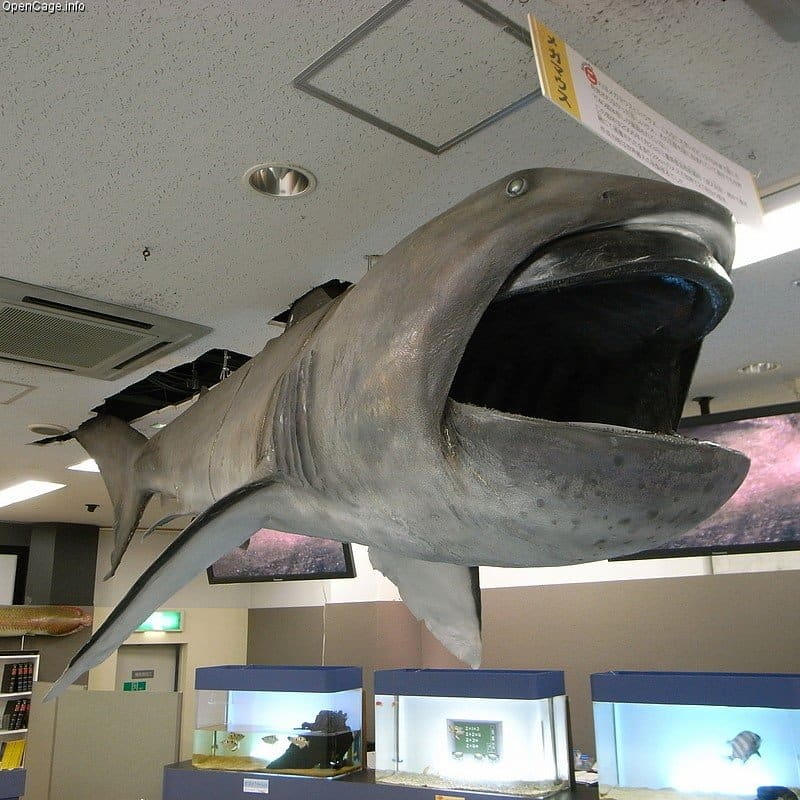
Biggest Shark: Megamouth

Megamouth shark, Megachasma pelagios, at Toba Aquarium, Japan

Cretaceous Period

During this era, 145 – 65 million years ago, sharks evolved that are still in existence today. The Goblin shark, Frilled shark, Whale shark, Basking shark, and Megamouth shark hunted the seas. Lamnidae Sharks or white sharks evolved — the ancestors of great whites, mako, and bull sharks.

Early Cenozoic Era

60 million years ago, during the early Cenozoic period, the Megalodon was the king of sharks. It was the biggest ocean predator ever to exist, 65 feet long and weighing over 30 tons. Megalodon was so fierce and huge with its 7-inch-long teeth that it preyed on whales. Its cousin, the Otodus, at 39 feet, was also a major predator of that era.
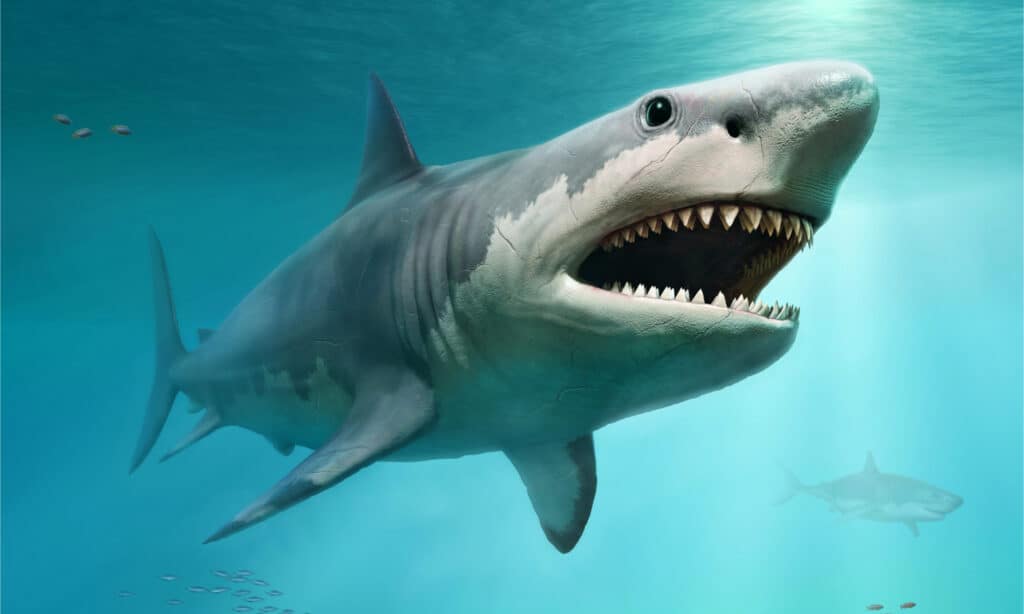
3D rendering of a Megaladon swimming in the ocean

Megalodon weighed as much as 30 large great whites, reached up to 60 feet in length, and ate 2,500 pounds of food each day!

Scientists have believed that the great white evolved from Megalodon, Otodus megalodon, one of the largest sharks to have ever lived. Megalodon vanished from the fossil record around 3.6 million years ago. Why? Some scientists have started to theorize, after analyzing numerous fossils, that the great white actually may have helped to drive Megalodon to extinction. Great whites evolved about 4 million years ago, meaning that they lived among Megalodons for approximately 400,000 years. They weren’t as big — but maybe they were better hunters.
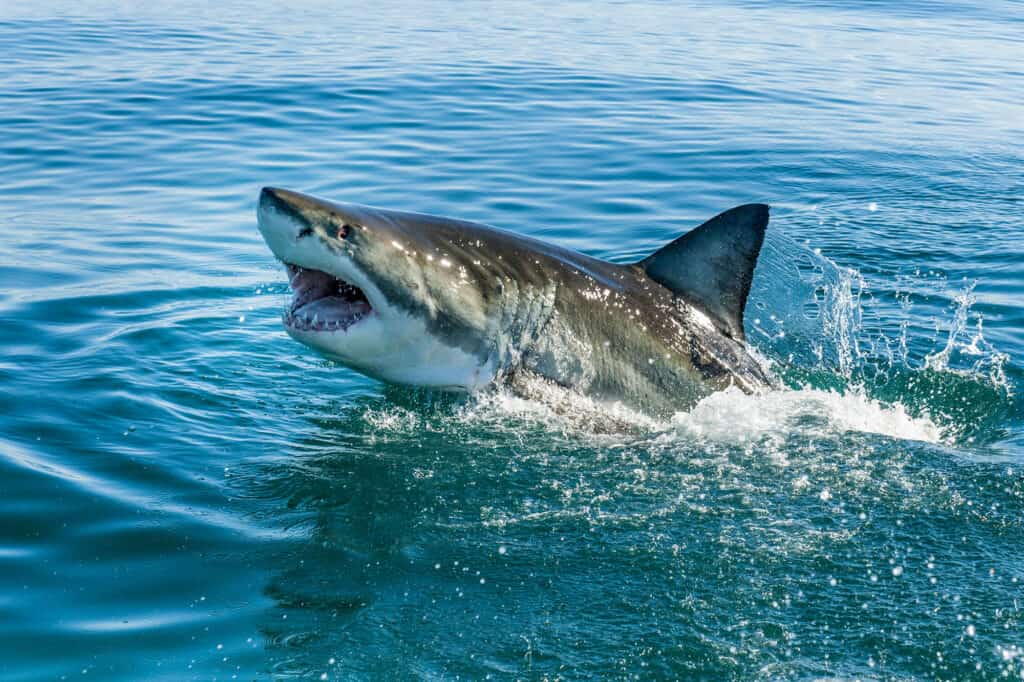
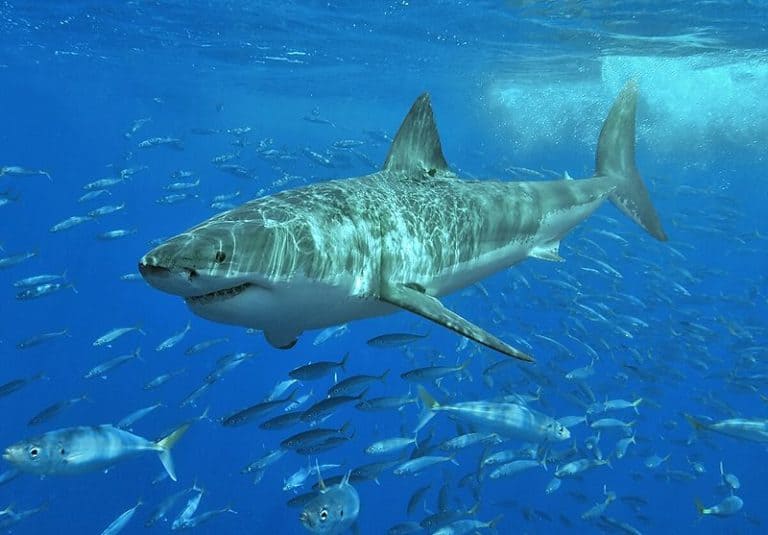
Great white shark

The Great White Shark is perhaps the deadliest predator in the world.

Classification

The great white shark, Carcharodon carcharias, is a large shark mainly inhabiting temperate and tropical coastal waters worldwide. They are the largest predatory fish species in the world, known to grow to lengths of 8 meters or more and weigh over 2 tons (4,000 pounds).

Great white sharks are huge, powerful predators that have developed a fearsome reputation as one of the most prolific “man-eaters” on the planet, with up to half of the annual shark attacks on humans reportedly caused by them. Also known as white sharks and white pointer sharks, great white sharks have been one of the most ruthless ocean predatory fish for nearly 20 million years.

Still, despite their high-profile reputation, they are much less common compared to other widely distributed shark species. Although surprisingly little is still known about their biology and population sizes, it is widely agreed within the scientific community that great white shark population numbers are decreasing worldwide as they are threatened by both hunting and habitat loss throughout much of their natural range.

Anatomy and Appearance

Like almost all shark species, great white sharks have a highly distinctive appearance with large, torpedo-shaped bodies and a pointed snout. They have very tough skin that is covered in tiny teeth called denticles, which are slate-gray to black on the top of their bodies, which helps them to remain camouflaged on the rocky, coastal sea floors where they are most commonly found. The underside of the great white shark is white and is what has led to its name.

Great white sharks have powerful, crescent-shaped tail fins that help to propel them through the water at a tremendous speed and are aided by their pectoral (side) fins that are held out in fixed wings to prevent the great white shark from sinking. The large and highly characteristic dorsal (back) fin of the great white shark is used to help them steer through the water, diving, as well as helping them to balance.

One of the most characteristic features of the great white shark is its jaw. Its mouth is filled with up to 300 serrated, triangular teeth arranged in rows and replaced continuously throughout its life. Each tooth can grow to around 2.36 inches in length, giving great white sharks a formidable bite when attacking their prey.
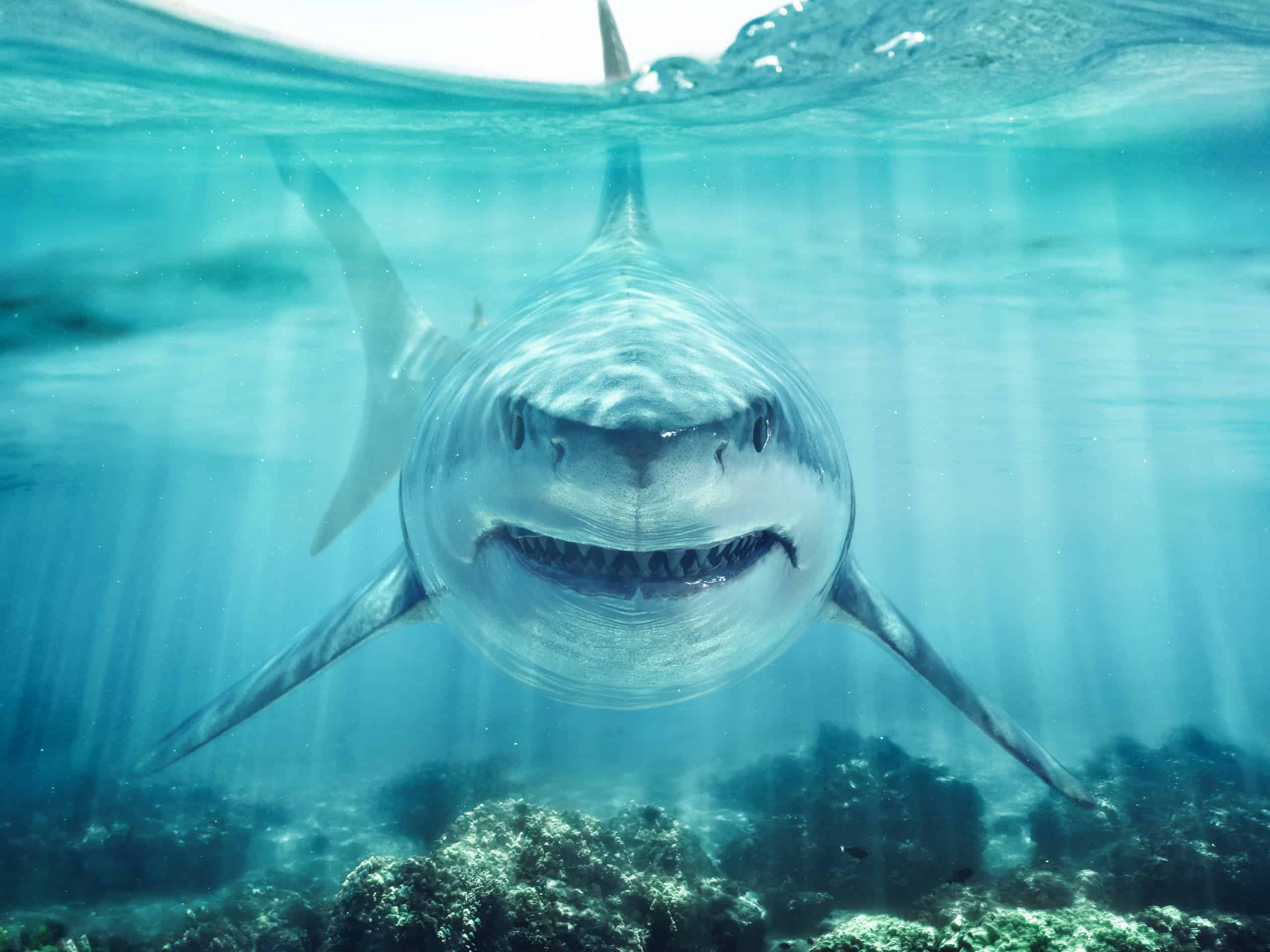
great white shark

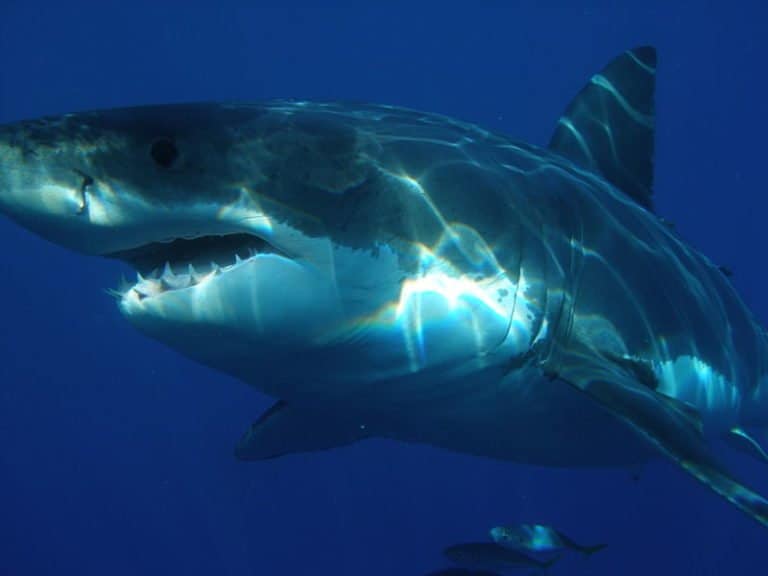
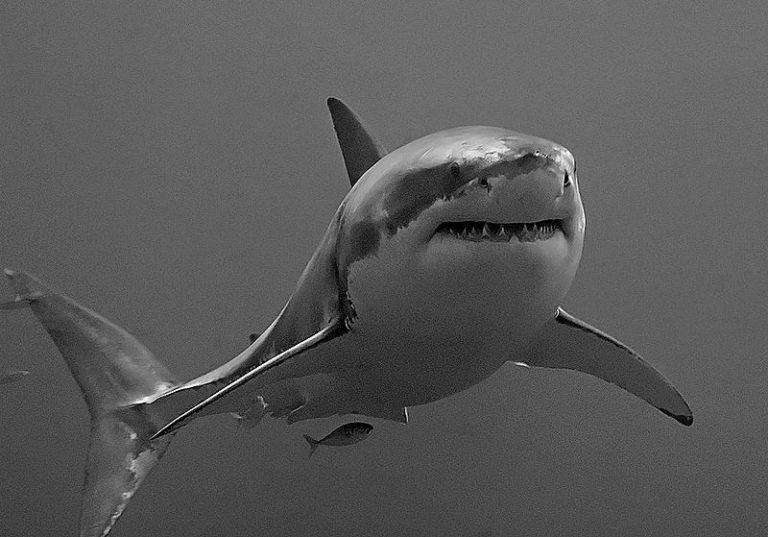
Face-to-face with a great white shark!

Distribution and Habitat

Great white sharks are widely distributed around the world but are most commonly found in temperate and tropical coastal regions, cooler waters, and the open ocean. Despite this, they are most commonly seen in South Africa (where there are the biggest population numbers), Australia, California, and the northeast of the United States. They are also known to range into cooler regions and visit tropical islands, including Hawaii and Seychelles, in areas within a greater expanse of open water.

Great white sharks swim either below the surface or off the ocean floor, depending on the region and their feeding habits. Their coastal dwelling nature is largely attributed to their prey species. Still, they are also known to travel vast distances through the ocean from South Africa to Australia and from the Californian coast to Hawaii in the deep Pacific.
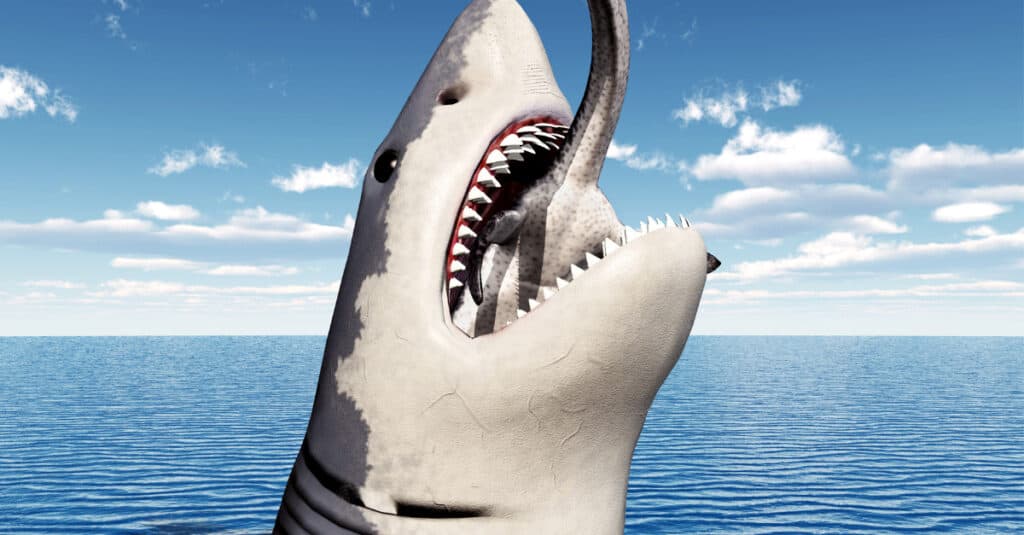
Great White Shark Teeth- Great White Shark Eating

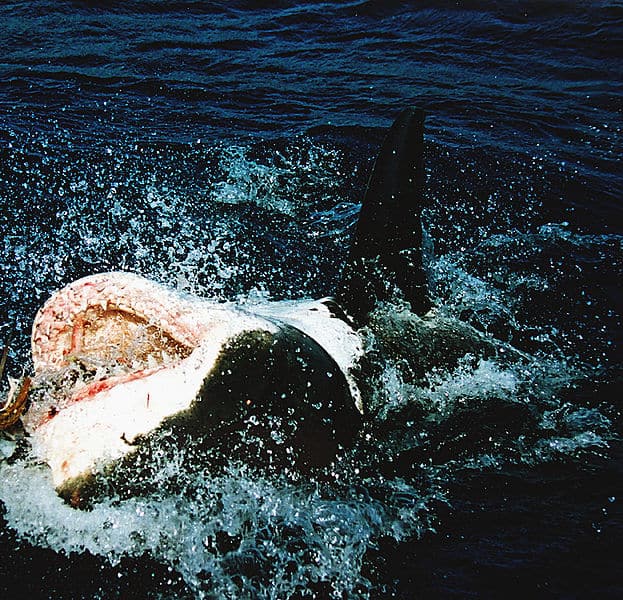
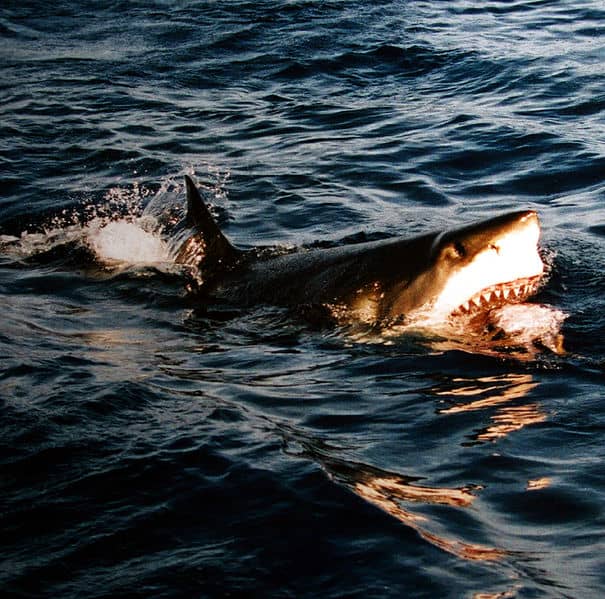
Great white sharks have even been commonly seen leaping out of the water (breaching), similar to whales when they are attacking their prey from underneath.

Behavior and Lifestyle

Great White Sharks are largely solitary animals that only tend to come together to mate, but have been seen in pairs or small groups around large carcasses. They are highly adaptable and powerful predators that rely less on their eyesight and more on other senses to detect their prey.

When in the open oceans, Great White Sharks must swim constantly, or they will drown. Seawater is forced into their mouths and over their gills during swimming, where oxygen is taken in. Great White Sharks swim in an “s” shape to move through the water more efficiently. They can travel vast distances by flexing their body and moving their incredibly strong tail fins from side to side. Powerful and sudden movements of their tail fins enable Great White Sharks to make high-speed dashes when chasing fast-moving prey. They have even been commonly seen leaping out (breaching) of the water, similar to whales when they are attacking their prey from underneath.

You can check out some incredible facts about great white sharks.

Reproduction and Life Cycles

Like many other shark species, female Great White Sharks give birth to live young rather than laying eggs. The female Great White Sharks (bigger than the males) are thought to reach their reproductive stage at around age 17. After an estimated incubation period of between 12 and 18 months, the female gives birth to between 4 and 14 pups, roughly 3.94 feet long (or more). Great White Shark young hatch inside the uterus and are thought to gain nourishment from eating unfertilized eggs and other embryos until they have developed enough to be born.

Female Great White Sharks are thought to have a new litter every 2 or 3 years, normally in warm coastal regions where the young have safe nursery grounds to grow. However, habitat degradation and human interference to keep Great White Sharks away from regions where people commonly surf and swim threaten many of these areas.
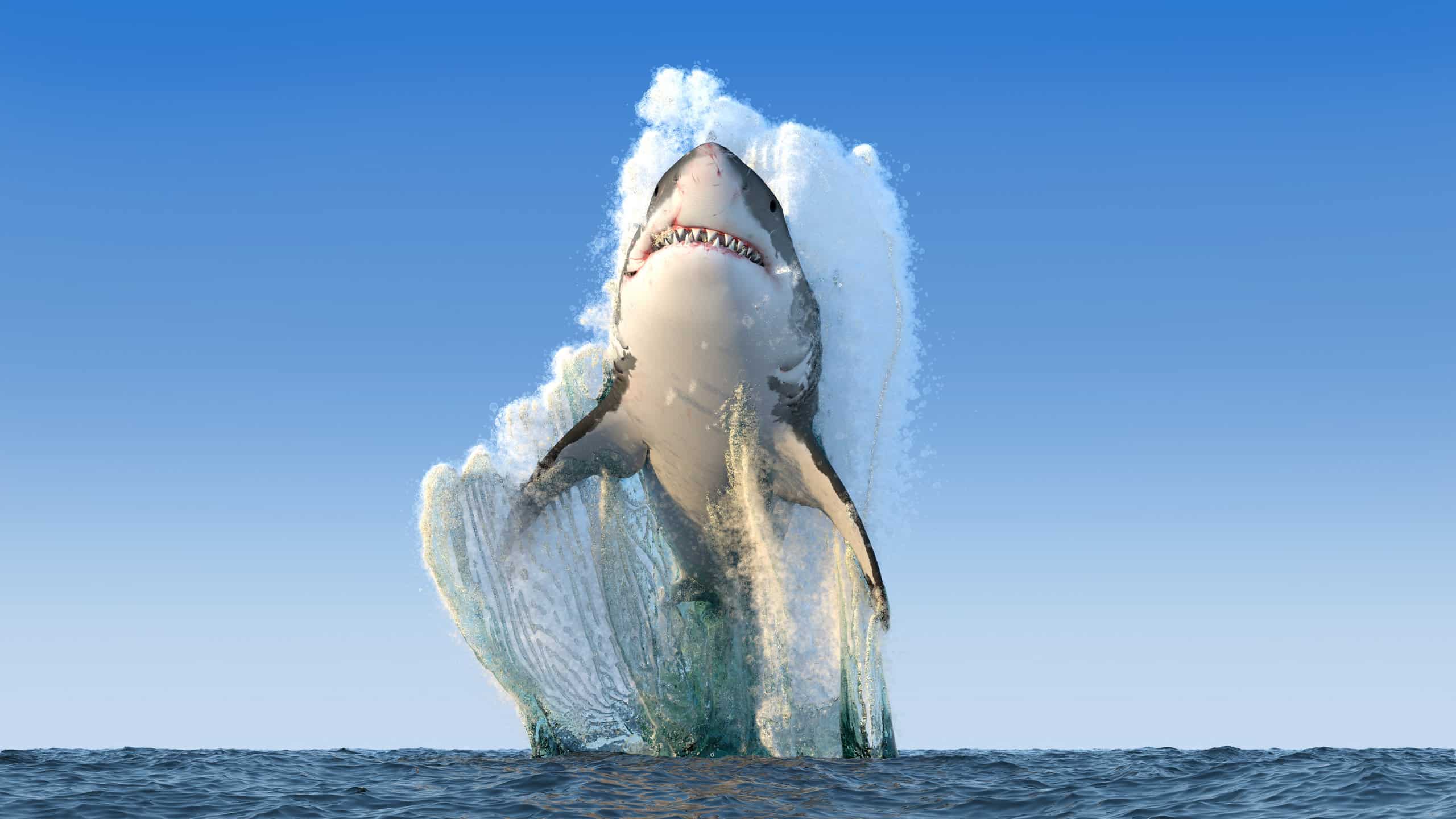
great white shark leaping out of water

A massive great white shark leaping into the air in a grand display.

Diet and Prey

Great White Sharks are fearsome carnivores that primarily hunt large marine mammals for nutrition. Seals, sea lions, porpoises, dolphins, and smaller whales are among their most commonly hunted prey species worldwide. Great White Sharks have poor eyesight compared to their other senses and use their sense of smell and ability to detect vibrations caused by animals in the water to detect their prey. Once located, Great White Sharks fiercely attack with great speed and force before retreating and leaving their wounded prey to weaken before returning to feed once it is safe to do so.

Although largely solitary, Great White Sharks can be seen in pairs or small groups to feed on a large whale carcass. In these circumstances, larger and more dominant individuals feed first with varying swimming display patterns thought to contribute to establishing their dominance hierarchy.

Predators and Threats

The Great White Shark is the largest predatory fish in the ocean and one of the most formidable aquatic hunters in the world, so naturally, very few animals would prey upon fully grown Great White Sharks. However, the smaller and more vulnerable juveniles are threatened by large ocean predators, including Killer Whales and other shark species.

The biggest threats to the global population of Great White Sharks are those caused by people. Great Whites are hunted for their jaws, teeth, and fins by fishermen and trophy hunters, and are also sometimes accidentally caught in nets fishing for other species such as Tuna. Beaches meshed to protect swimmers from shark attacks and habitat degradation throughout their natural range have also contributed to the global decline in population numbers.
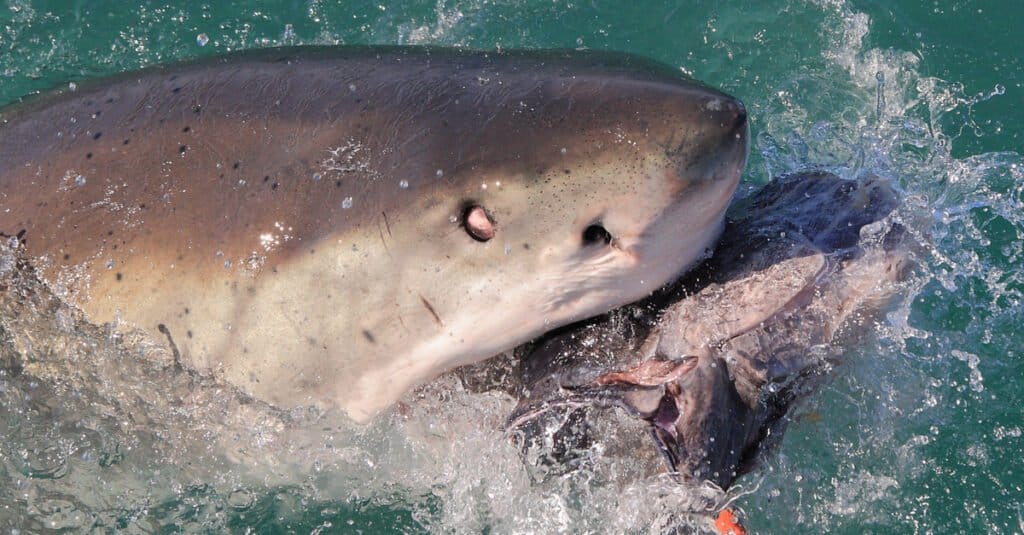
Shark Eyelid - Great white with eyes rolled back while hunting

After a particularly big feast, a Great White Shark may not feed properly again for up to 3 months.

Interesting Facts and Features

Great White Sharks have an exceptional sense of smell, which they use to detect prey. Amazingly, they are known to be able to sniff out blood in the water from one-third of a mile. Along with other shark species, Great White Sharks have special organs known as lateral lines (rib-like lines on the sides of their body), which can detect the tiny electromagnetic field generated by other animals in the water, which they use to find prey.

Hunting larger prey species means that feeding for Great White Sharks can be done more efficiently than if they fed on smaller fish and birds. Great White Sharks are thought to consume an average of 11 tonnes of food every year and, after a particularly big feast, may not feed properly again for up to 3 months. In some situations, Great White Sharks have been known to swim along baring their teeth, which is thought to both serve to warn off competitors for food and rival sharks that may be intruding on their personal space. The Great White Shark is also one of the biggest fish in the world.
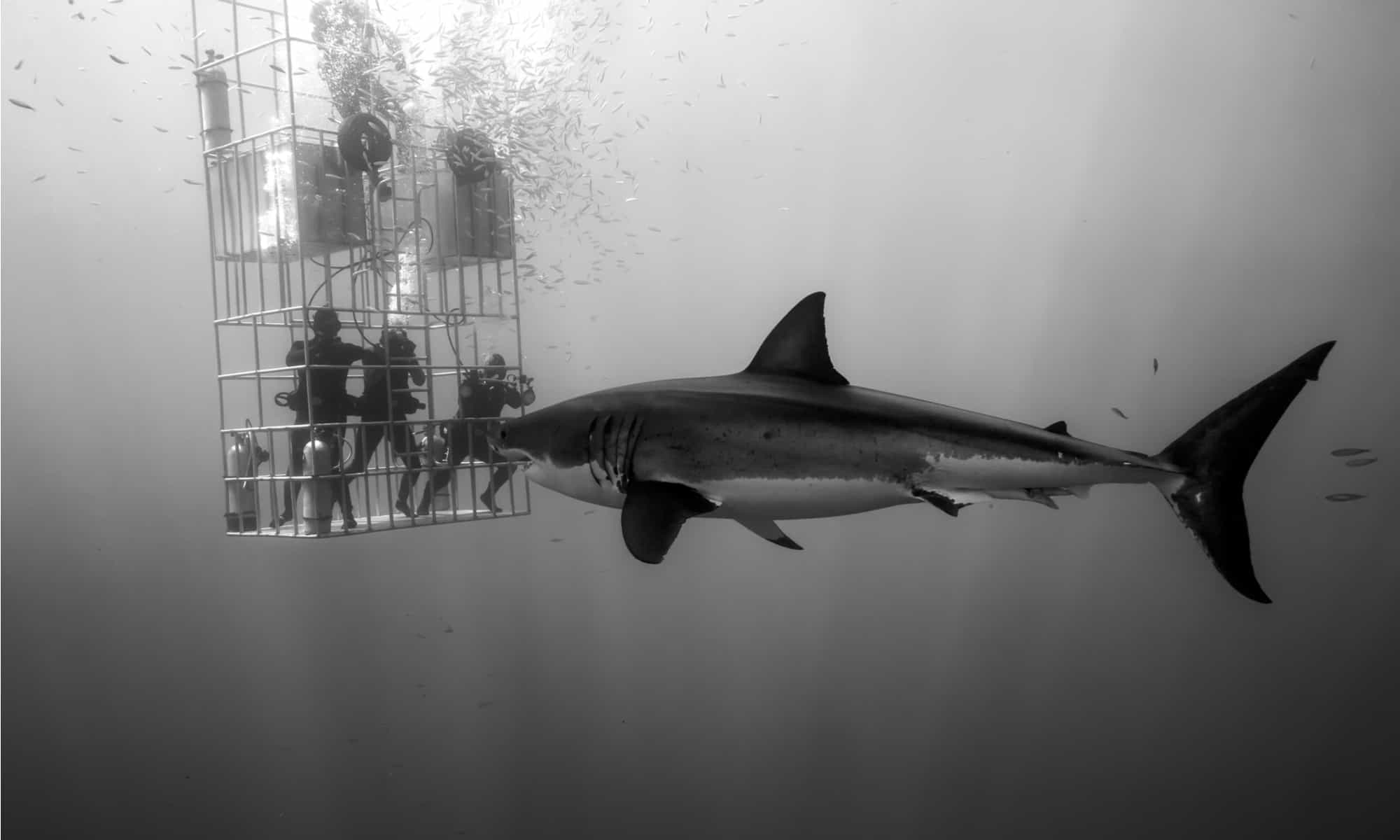
A huge great white shark investigates 3 divers in a shark cage as sun rays penetrate the clear, cool waters of Guadalupe Island, Mexico.

Great white sharks have developed a bad reputation among predatory fish.

Relationship with Humans

Humans have a long-established negative relationship with Great White Sharks all around the world, as they are responsible for the majority of all shark attacks on people. Although such attacks are widely documented in the news, fatalities from Great White Shark attacks are thought to be less common than those caused by lightning strikes or bee stings.

Due to how Great White Sharks hunt (known as sample biting, where they first attack their prey to wound it before returning to eat), it is widely believed that people are not considered a desirable meal for them. In such instances, returns are incredibly rare. The high-profile nature of these attacks, though, has led to Great White Sharks developing a reputation of being fierce man-hunters when they have mistaken a person swimming or surfing for a seal on the surface of the water. Great White Sharks have also been known to bite or repeatedly bash small boats with their snouts, and can cause enough damage to make them sink.
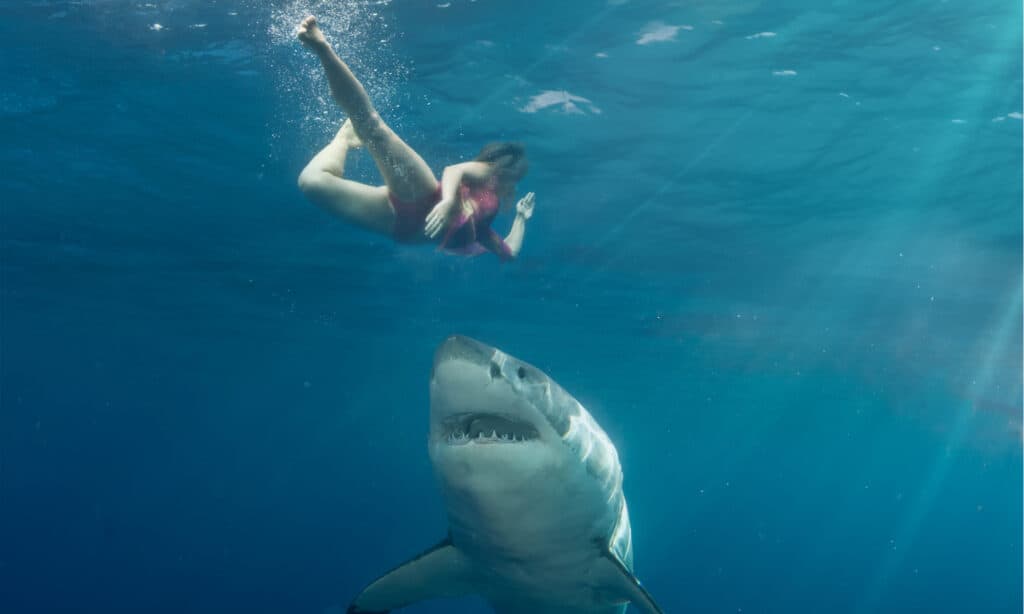
Great White Shark attack swimmer

Great White Sharks are the most aggressive sharks worldwide.

While attack levels are below many other animals worldwide, Great White Sharks are the most aggressive sharks worldwide, having recorded 351 attacks on humans and 59 fatalities since 1958.

Conservation Status and Life Today

Although little is known about the exact global population numbers of Great White Sharks, particularly in regions where they are less common, their numbers are thought to have declined rapidly over recent years. The IUCN now lists great White Sharks as an animal that is Vulnerable in their native environments, and they are also more heavily protected in certain areas. Hunting, habitat degradation, and campaigns to kill Great White Sharks after a high-profile attack documented in the media have led to their population declines, along with the capture of them to be exhibited in aquariums worldwide.

View all 261 animals that start with G

Sources

  1. David Burnie, Dorling Kindersley Animal, The Definitive Visual Guide To The World's Wildlife / Accessed November 28, 2008
  2. Tom Jackson, Lorenz Books (2007) The World Encyclopedia Of Animals / Accessed November 28, 2008
  3. David Burnie, Kingfisher The Kingfisher Animal Encyclopedia / Accessed November 28, 2008
  4. Richard Mackay, University of California Press The Atlas Of Endangered Species / Accessed November 28, 2008
  5. David Burnie, Dorling Kindersley (2008) Illustrated Encyclopedia Of Animals / Accessed November 28, 2008
  6. Dorling Kindersley (2006) Dorling Kindersley Encyclopedia Of Animals / Accessed November 28, 2008
  7. National Geographic / Published November 15, 2017 / Accessed November 15, 2017
  8. IUCN Red List / Published September 2, 2020 / Accessed November 15, 2017
Lisha Pace

About the Author

Lisha Pace

After a career of working to provide opportunities for local communities to experience and create art, I am enjoying having time to write about two of my favorite things - nature and animals. Half of my life is spent outdoors, usually with my husband and sweet little fourteen year old dog. We love to take walks by the lake and take photos of the animals we meet including: otters, ospreys, Canadian geese, ducks and nesting bald eagles. I also enjoy reading, discovering books to add to my library, collecting and playing vinyl, and listening to my son's music.

Thank you for reading! Have some feedback for us?


Great White Shark FAQs (Frequently Asked Questions)

Great White Sharks live in temperate, coastal waters and open oceans.