

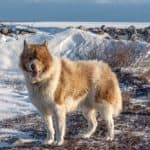
G
Species Profile

Greenland Dog

Canis lupus familiaris

Born to haul. Built for polar miles.
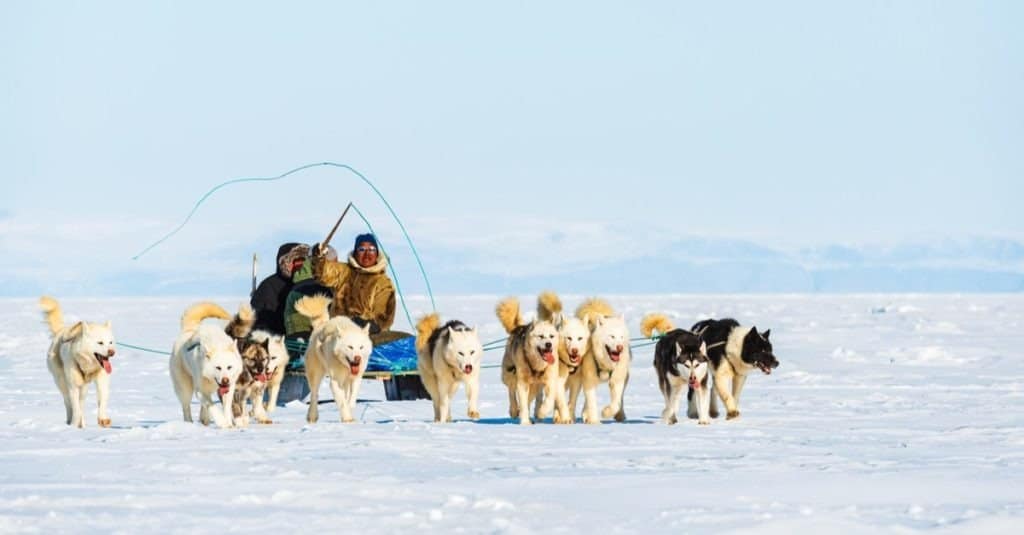
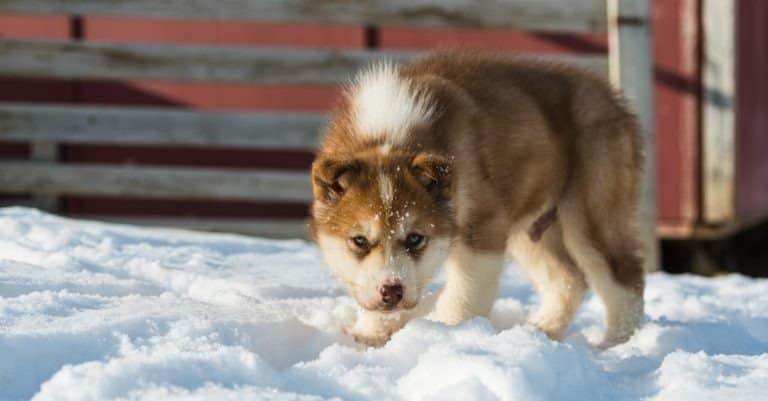
Kedardome/Shutterstock.com

Greenland Dog Distribution

Click a location to explore more animals from that region

Origin Location

This map shows the native origin of the Greenland Dog. As a domesticated species, they are now found worldwide.

Loading map...

Found in 1 country

Size Comparison

Human 5'8"
Greenland Dog 2 ft

Greenland Dog stands at 36% of average human height.

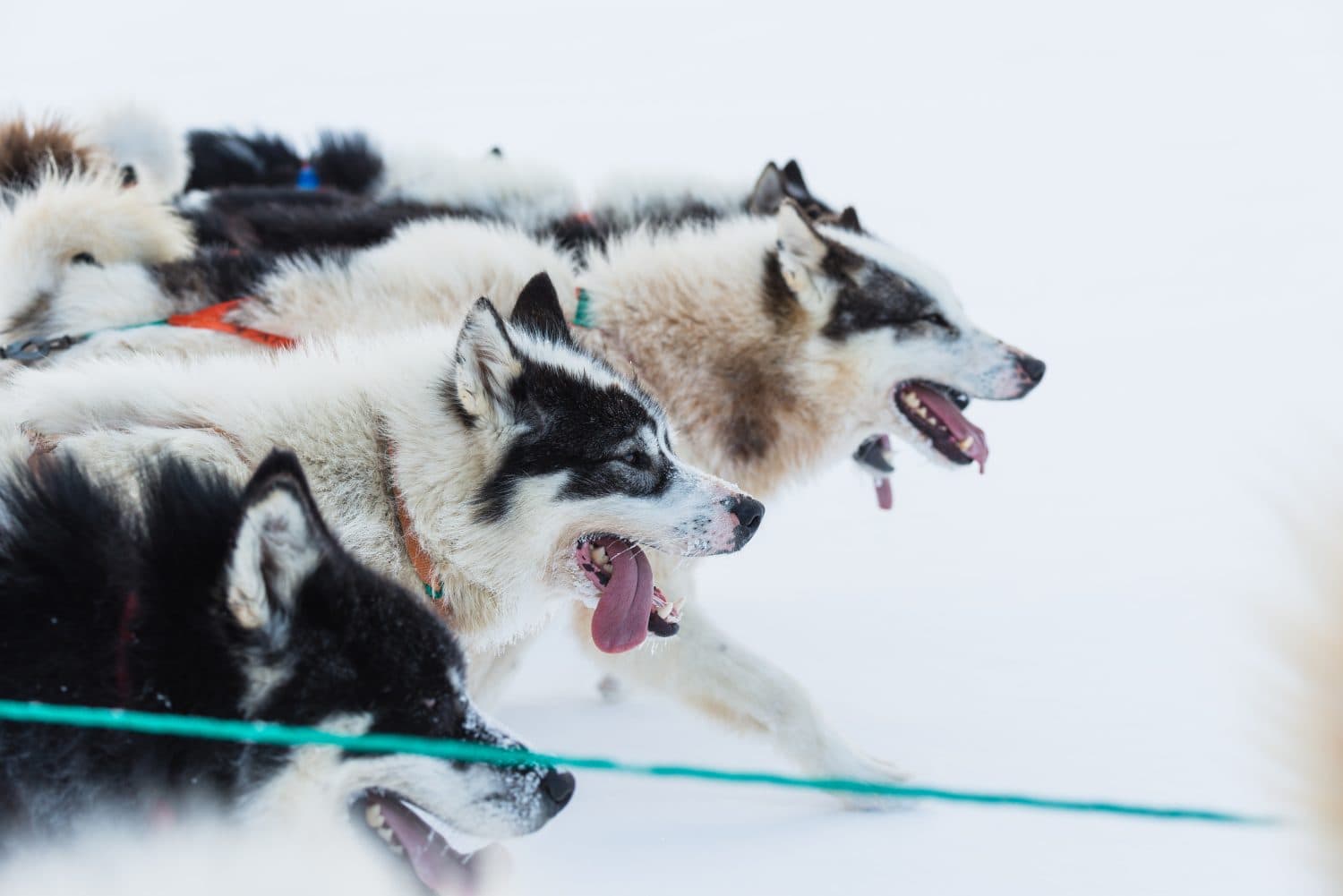
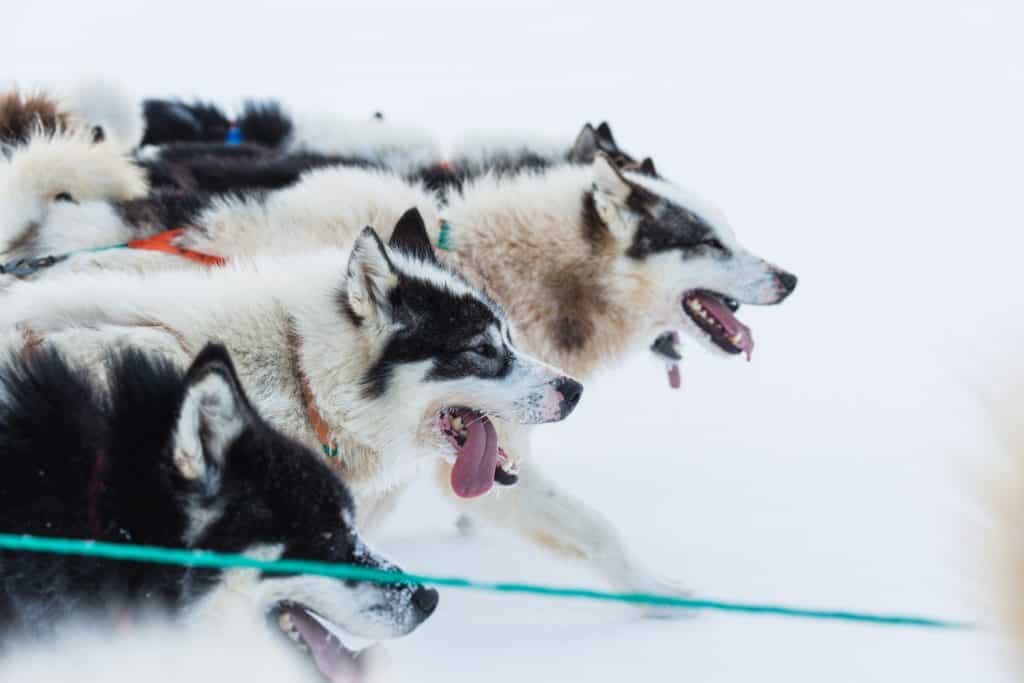
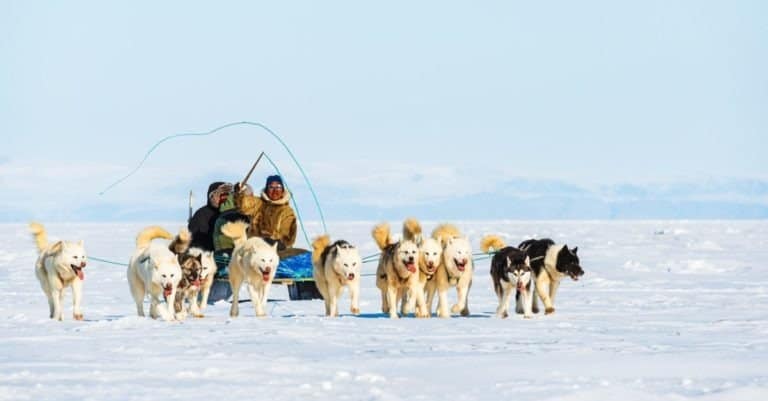
Husky dogs running on frozen sea pulling a sledge

At a Glance

Domesticated
Also Known As Greenlandic Dog, Grønlandshund, Qimmiq, Eskimo dog, Greenland sled dog
Diet Omnivore
Activity Cathemeral+
Lifespan 13 years
Weight 48 lbs
Status Not Evaluated
Did You Know?

Greenland Dogs are among the oldest Arctic sled-dog landraces, shaped by centuries of Inuit working use.

Scientific Classification

The Greenland Dog is an Arctic domestic dog breed developed for hauling sleds and working in extreme polar conditions; it is a robust spitz-type sled dog historically used by Inuit and polar expeditions.

Kingdom
Animalia
Phylum
Chordata
Class
Mammalia
Order
Carnivora
Family
Canidae
Genus
Canis
Species
Canis lupus

Distinguishing Features

  • Large, powerful Arctic spitz-type sled dog built for endurance and cold tolerance
  • Dense double coat and heavily furred tail carried over the back
  • Erect, triangular ears; wedge-shaped head; strong legs and feet adapted to snow/ice travel
  • Typically used in teams for hauling rather than as a single-dog pulling breed

Physical Measurements

Males and females differ in size

Height
2 ft 2 in (1 ft 12 in – 2 ft 4 in)
1 ft 10 in (1 ft 9 in – 1 ft 12 in)
Length
4 ft 1 in (3 ft 7 in – 4 ft 7 in)
Weight
75 lbs (66 lbs – 88 lbs)
64 lbs (55 lbs – 75 lbs)
Tail Length
1 ft 4 in (1 ft 2 in – 1 ft 6 in)
1 ft 1 in (11 in – 1 ft 3 in)
Top Speed
31 mph

Appearance

Primary Colors
Secondary Colors
Skin Type Thick, cold-adapted mammalian skin with strong pigmentation around nose/lips/eye rims; protected by a very dense double coat (harsh, weather-shedding guard hairs over a heavy insulating undercoat). Paw pads are tough and well-cushioned for snow/ice traction.
Distinctive Features
  • Spitz-type sled dog with a dense double coat for Arctic cold, erect triangular ears, and a bushy tail typically carried curled over the back.
  • Arctic spitz-type build: compact, powerful, and endurance-oriented; deep chest and strong loin for sustained pulling over long distances.
  • Extremely dense double coat with heavy seasonal shedding ("blow coat"); coat is designed to trap insulating air and shed snow/ice, making the breed markedly cold-hardy but often heat-sensitive in warm climates.
  • Head is wedge-shaped with a relatively broad skull and strong muzzle; small-to-medium, erect triangular ears reduce heat loss and frostbite risk.
  • Tail is thick and carried curled over the back, functioning as a nose/face cover when resting in extreme cold.
  • Feet are robust with thick pads and tight toes for snow travel; nails and foot structure support traction and durability on ice and hard-packed snow.
  • Compared with wolves, Canis lupus familiaris (Greenland Dog) has more varied coat colors and patterns, is less afraid of people, and is a sled dog: independent, persistent, and often less eager to obey.
  • A more primitive, expedition-style sled dog: heavier-boned and more used to hard work than a typical Siberian Husky, yet less bulky and more built for endurance than many Alaskan Malamute lines. Individuals vary.
  • Behavioral working traits that affect care: high stamina and drive; can be dog-assertive in teams, strong prey drive, and prone to roaming-requires secure fencing, structured training, and significant daily exercise/mental work.
  • Care requirements: cold-weather coat needs routine brushing year-round and intensive grooming during shedding seasons; avoid frequent bathing that strips oils; ensure cool resting areas, shade, and hydration in warm climates.
  • Generally hardy, Greenland Dogs can get hip and elbow dysplasia, eye problems (cataracts or progressive retinal atrophy), hypothyroidism, bloat in deep chests, pad and shoulder wear, and frostbite to ears/paws.

Sexual Dimorphism

Males and females share the same cold-adapted, spitz-type outline, but males are typically larger and more powerfully built with more pronounced head/neck muscling; females are usually slightly lighter and more refined while retaining working strength.

  • Larger overall size and heavier bone; broader head and thicker neck/ruff.
  • More pronounced musculature through shoulders and forequarters, reflecting pulling power.
  • Slightly smaller frame with a more refined head while maintaining a strong, athletic working build.
  • Often a bit lighter in forequarter mass, which may translate to quicker maneuvering in harness (individual variation).

Did You Know?

Greenland Dogs are among the oldest Arctic sled-dog landraces, shaped by centuries of Inuit working use.

They're built for traction: broad, snow-resistant paws and tough foot pads help on ice and crusted snow.

Many teams traditionally run in a "fan hitch" (dogs spread out), useful on uneven sea ice and in deep snow.

They have a dense double coat and can sleep outdoors in severe cold by curling and using their tail as a face cover.

Historically, Greenland Dogs contributed to polar exploration logistics-moving supplies where machines failed.

Compared with many pet breeds, they tend to mature into strong, work-driven adults that need daily purpose and exercise.

Unique Adaptations

  • Cold-adapted morphology: compact, muscular frame; small, well-furred ears; and a thick double coat reduce heat loss in Arctic winds.
  • Efficient endurance engine: bred for steady, economical pulling over long distances rather than short sprint speed.
  • Snow-and-ice foot function: robust pads, strong nails, and wide paws aid grip and reduce sinking in soft snow.
  • Tail-as-muff behavior enabled by plume tail: many curl up and cover nose/muzzle to warm inhaled air during rest.
  • Spitz-type coat shedding cycle: heavy seasonal molts help transition between winter insulation and summer cooling.
  • Behavioral adaptation to team travel: tolerance of close quarters, routine, and repetitive long-haul work in harsh conditions.

Interesting Behaviors

  • Strong pack orientation: they often do best with clear hierarchy, consistent rules, and experienced handling.
  • High work drive: they may "self-start" pulling and lean into harness pressure; many are calmer after real load-bearing exercise.
  • Vocal communication: howls and chorus-like calling are common, especially in groups-useful for cohesion in teams.
  • Prey drive: chasing small animals can be intense; secure fencing and leash/line management are important.
  • Cold-weather preference: many are more comfortable and energetic in winter and may overheat in warm climates.
  • Resource intensity: some individuals guard food/space, reflecting competitive feeding in kennel/team settings-early training helps.
  • Digging and denning: they may dig into snow/ground to rest out of wind or to cool down in milder weather.

Cultural Significance

The Greenland Dog (Canis lupus familiaris) is a working dog central to Greenlandic Inuit sled culture. It helped hunting, travel, hauling, and linked communities across sea ice and tundra, and aided polar expeditions.

Myths & Legends

Greenland Dog (Canis lupus familiaris) are shown in Greenlandic Inuit stories as important travel and survival companions. Their senses, strength, and endurance guide people through storms, darkness, and sea ice.

In Arctic exploration stories, sled dogs—often Greenland Dogs (Canis lupus familiaris)—are steady partners who found routes in whiteouts, handled very cold weather, and humans relied on them.

Greenlandic culture sees the Greenland Dog team as a sign of strength and northern identity. It appears in community stories and memories about hunting trips, winter crossings, and life on the ice.

Greenland Dogs (Canis lupus familiaris) are often said to have saved people from freezing by keeping them moving and helping evacuations, turning them into legends in many Arctic travel stories.

Conservation Status

NE Not Evaluated

Has not yet been evaluated against the criteria.

Population Stable

Life Cycle

Birth 6 pups
Lifespan 13 years

Lifespan

In the Wild
12–14 years
In Captivity
10–14 years

Reproduction

Mating System Polygynandry
Social Structure Managed Domestic
Breeding Pattern Transient
Fertilization Managed Selective
Birth Type Managed_selective

The Greenland Dog (Canis lupus familiaris) breeds by internal fertilization. Populations are often polygynandrous, but in practice people use human-managed selective breeding. No lasting pair bonds; breeding centers on the female's heat and can be seasonal.

Behavior & Ecology

Social Pack Group: 10
Activity Cathemeral, Diurnal, Crepuscular
Diet Omnivore High-fat meat and fish (traditionally seal blubber and fish; in modern care, energy-dense meat/fish-based rations).

Temperament

Greenland Dog (Canis lupus familiaris) has high stamina and a strong drive to pull and haul, keeps going in harsh conditions, and is bred for human transport work rather than hunting or guarding.
Independent, strong-willed, and less handler-oriented than many companion breeds; can show lower reliability off-leash and may make decisions without seeking human cues (a common polar sled-dog trait).
High prey drive and chase tendency (species-typical canid predatory sequence) often expressed strongly; careful management around small animals is frequently required.
Dog-social in team contexts but not universally tolerant: can show same-sex rivalry, resource guarding, and conflict if under-exercised or poorly socialized; best outcomes with structured routines and experienced handling.
Generally not a specialized guard breed: may be alert and vocal but is often more focused on movement/opportunity than territorial protection; some individuals are aloof with strangers rather than overtly defensive.
Needs a lot of daily exercise and mental work (pulling, long runs, hiking, skijoring), secure fencing and enrichment to avoid frustration. Thick double coat needs brushing; tolerates cold, hates heat.
Greenland Dogs can face hip dysplasia, bloat (gastric dilatation-volvulus) in deep‑chested dogs, and sometimes eye and skin problems. Responsible breeding, health checks, weight control, and exercise help them live longer and stay fit for work.
Most Greenland Dogs are high-energy, independent, and have strong dog-to-dog working instincts. Differences depend on line (working vs show/pet), early socializing, and having regular draft work or living only as pets.

Communication

Howling Often group-evoked; can spread through kennel teams
Barking Alerting/excitement; may increase with confinement or insufficient work
Whining/whimpering Anticipation, frustration, appeasement
Growling Warning during conflict/resource tension
Sled-dog "talking"/yodel-like vocalizations Arousal and social contact; individual variation
Species-typical canid body language: ear position, tail carriage, facial tension/relaxed mouth, play bows, and posture shifts used to negotiate rank and intent within teams.
Scent communication: urine marking, ground scratching, and investigation of scent trails; more prominent in intact animals and in multi-dog housing.
Physical contact: shoulder checks, muzzle touches, and controlled mouthing in play; in working teams, proximity and movement synchronization serve as social coordination signals.
Human-directed signals shaped by domestication: attention shifts, nudging, pawing, and leash/line pressure responses; Greenland Dogs may rely less on sustained eye contact than highly handler-focused breeds.
Conflict management signals common in group housing: avoidance, freezing, stare, lip lift; handlers often manage spacing, feeding order, and harnessing routine to reduce escalation Noting variation by individual temperament and sex

Habitat

Biomes:
Tundra Marine Boreal Forest (Taiga) Alpine Temperate Forest Temperate Grassland Desert Hot Desert Cold Tropical Rainforest Savanna +4
Terrain:
Coastal Island Mountainous Rocky Plains
Elevation: Up to 16404 ft 3 in

Ecological Role

Human-associated Arctic working dog functioning as an opportunistic mesopredator/scavenger supported by people rather than a self-sustaining apex predator.

supports human subsistence and transport (sled hauling) reducing reliance on mechanized travel assists hunting logistics in Arctic communities/expeditions scavenges/culls available animal remains around camps (can reduce waste)

Diet Details

Main Prey:
fish Seal and other marine mammals Caribou Muskox Hare Ptarmigan and other ground-nesting birds Small rodents Carrion and offal +2
Other Foods:
Berries Grasses and sedges Kelp Chewed plant matter

Human Interaction

Domestication Status

Domesticated

Domestic dog (Canis lupus familiaris) came from gray wolves and was shaped by humans. The Greenland Dog is an ancient Arctic spitz sled dog bred in Greenland for hauling, transport, hunting, and polar exploration. It keeps primitive working traits—high endurance, pack drive, prey drive, and independence—and is mainly used for work in harsh polar environments.

Danger Level

Moderate
  • Bite or injury risk increases with inexperienced handling, poor socialization, or kennel/pack-management errors (the breed can be very pack-oriented and physically powerful).
  • High prey drive and chase instincts can create hazardous situations (bolting, pulling strength, conflicts with small animals), indirectly endangering handlers.
  • Resource guarding or inter-dog aggression can occur, especially in multi-dog teams/kennels; humans can be injured when intervening.
  • Environmental mismatch risk: heat stress/overheating in warm climates can lead to emergencies that require careful management.
  • Zoonotic disease risk typical of domestic dogs (e.g., rabies where present, parasites) if preventive care is neglected.

As a Pet

Not Suitable as Pet

Legality: Greenland Dogs are usually legal as pets in most places. Rules may limit ownership: local dangerous-dog laws (often based on behavior), housing or kennel rules, and import rules (vaccines, microchip, quarantine). Check local rules.

Care Level: Expert Only

Purchase Cost: $800 - $2,500
Lifetime Cost: $20,000 - $60,000

Economic Value

Uses:
Transportation and hauling (sled work) Recreation and sport (mushing, racing, skijoring) Tourism and guiding (sled tours, Arctic experiences) Cultural heritage value (Inuit working-dog traditions) Breeding and conservation of working lines Expedition support and logistics in polar regions
Products:
  • Sled-hauling services and kennel operations
  • Tourism experiences (guided sled trips)
  • Working or sport prospect dogs/puppies from proven lines
  • Participation in races and events
  • Educational/cultural programming related to Arctic travel and history

Relationships

Ecological Equivalents 5

Animals that fill a similar ecological role in their ecosystem

Canadian Eskimo Dog
Canadian Eskimo Dog Canis lupus familiaris Closest functional analogue among sled breeds. Indigenous Arctic working dog selected for heavy hauling, endurance, and cold tolerance; overlaps strongly in temperament (hardy, independent, high prey drive) and in management needs.
Alaskan Malamute
Alaskan Malamute Canis lupus familiaris Similar niche as a freight/hauling spitz-type sled dog. Generally more people-oriented and commonly kept as a companion, compared with the Greenland Dog's more traditional, work-first selection and higher tendency toward dog-directed dominance.
Siberian Husky
Siberian Husky Canis lupus familiaris Shares sledding ecology—running in cold environments—but differs in specialization: Siberian Huskies are typically selected for speed and endurance with lighter loads, while Greenland Dogs are built for power, toughness, and sustained work in harsher polar conditions.
Samoyed
Samoyed Canis lupus familiaris Cold-adapted spitz working dog historically used for traction and camp life. Compared with Greenland Dogs, Samoyeds are typically more social and companionable and often require less intensive management of prey drive and dog-to-dog hierarchy.
Gray Wolf
Gray Wolf Canis lupus arctos Occupies a comparable Arctic/subarctic predator–scavenger niche. Provides a species-level context for what distinguishes the Greenland Dog: the dog reflects intensified human-directed selection for tractability in harness, cooperative pulling, and reliable performance under extreme cold, rather than selection for wild hunting efficiency.

The Greenland Dog is an ancient Arctic breed developed to thrive in extreme cold and demanding conditions. Closely related to the Canadian Eskimo Dog, it is known for its strength, stamina, and remarkable ability to pull heavy sleds over long distances. Once essential to survival in the Arctic, the breed now faces new challenges as climate change and modern life reduce its traditional role.

History and Origin

The Spitz-type dog and the rare, genetically distinct husky have a strong, powerful body and thick fur. Although it is identical to the Canadian Eskimo Dog, it is lighter and taller, and is the only breed in Greenland that has been successfully maintained with restrictions for safeguarding its purity. Both were brought from Siberia to North America by the Thule people 1,000 years ago, while the Greenland Dog arrived in Greenland with the Inuit people 4,000 to 5,000 years ago.

These dogs are well known for their amazing endurance to pull loaded sleds for miles upon end, day after day! They can do this by drawing more energy from fat and protein, more quickly and efficiently than most other animals, as opposed to the need to pull much energy from fast-burning glycogen. This also allows the Greenland Dogs to be prepared to run the next day and the day after that.

Today, although several projects preserve the breed’s sledding culture, knowledge, and use, and it remains a companion dog in many parts of the world, its population is decreasing due to climate change.

3 Pros and Cons of Ownership

ProsCons
They are loyal, affectionate, and sociable. Once they are bonded with their owners, they make extremely devoted pets. When socialized from a young age, they love people and can do well in a busy household or in a group with other dogs.They are stubborn. Not a good choice for first-time dog owners since they need an assertive and experienced dog handler. They are intelligent and easy to train, but need consistency from a strong leader.
They are good guard dogs and watchdogs. They are alert and will bark when something is amiss.They are very energetic and prone to wanderlust. This breed is not suitable for apartments, and they need well-fenced backyards to play and spend time alone in.
They require minimal grooming. Their fur is low-maintenance, although it is not hypoallergenic.They can act out and have howling frenzies. As average to high barkers, they can bark if they are not entertained or exercised enough. They can also act out in destructive ways if they do not have a variety of tasks.
Musher and his dogs on a tourist dog sledge trip

When socialized from a young age, Greenland Dogs love people and can do well in a busy household or in a group with other dogs.

Size and Weight

The Greenland Dog is a medium to large size long hair dog with an average size for males of between 23 and 27 inches and females of 20 to 24 inches. Males weigh between 75 and 105 pounds lbs fully grown, and females between 60 and 91 pounds fully grown. Puppies weigh 9 lbs on average at 8 weeks of age and are typically fully grown at 18, reaching full weight at 24 months.
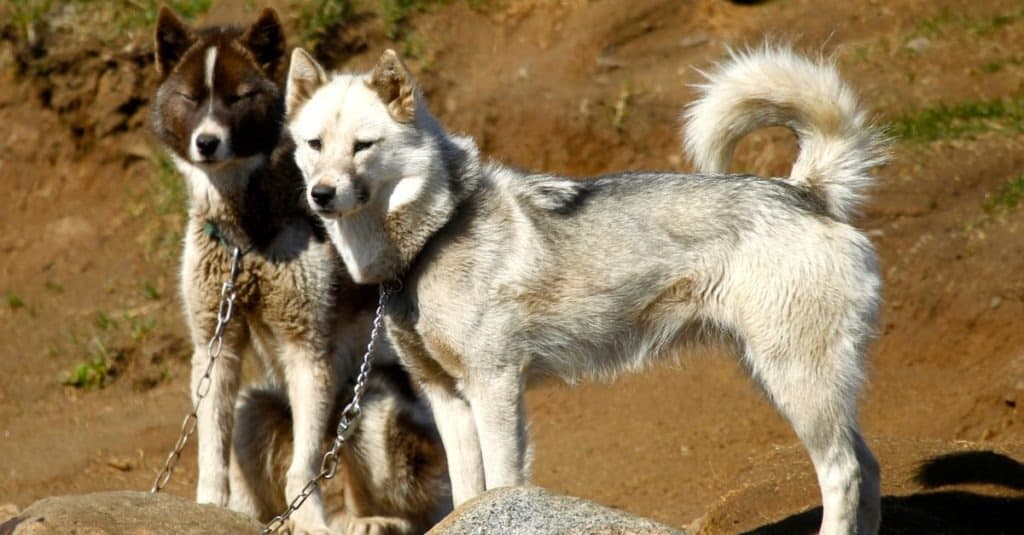
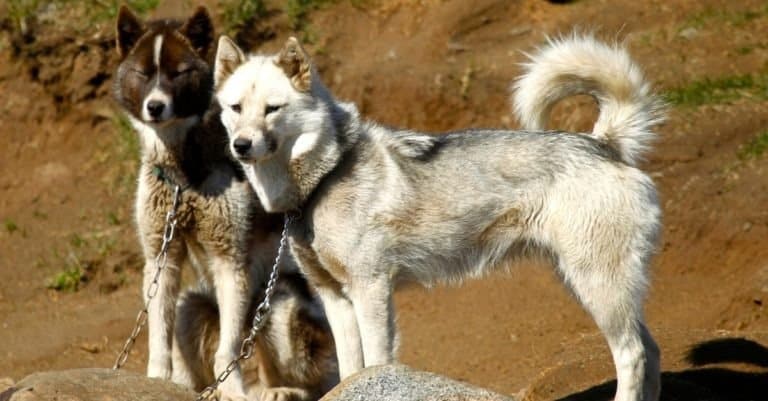
Greenland dogs in Kulusuk village in Greenland

Greenland Dog males weigh up to 105 lbs fully grown, and females weigh up to 91 lbs fully grown.

Health Issues

This is an ancient breed and predominantly healthy, meaning most dogs live full lives without any serious issues. However, some have been known to experience specific issues such as glaucoma, lens luxation, gastric torsion (bloat), and joint dysplasia of the hips and elbows. Dysplasia occurs when the bone loosens from the joint socket, with signs of discomfort being pain and lameness in one or both rear legs.

Additionally, gastric (torsion) bloat is a potentially fatal condition that causes bloating. Greenland dogs can also experience other musculoskeletal issues, as well as working injuries, if they are out in the field.

The best way to greatly reduce the chances of such issues is to buy from a reputable breeder. So, ensure your breeder is trustworthy by having done health checks on both parent dogs and avoiding breeding dogs with severe health issues.
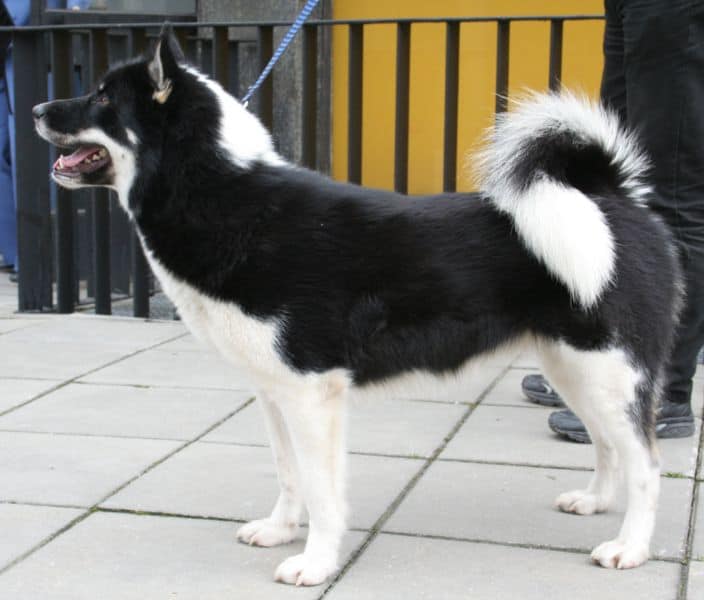
The Greenland Dog is an ancient breed and predominantly healthy, meaning most dogs live full lives without any serious issues.

Temperament

These dogs are famous for their traits of independence, high energy, and stubbornness. Their boisterous behavior and demanding yet sociable personality make them a good choice for active singles and active families with houses and backyards, especially those with additional dogs. They are also intelligent, trainable, and one of the most energetic breeds.

Because of this, the breed needs socialization and training from an early age in order to minimize destructive behavior and encourage positive traits. Their personality finds fulfillment with exercise junkies or highly active people who can give them plenty of space and exercise.
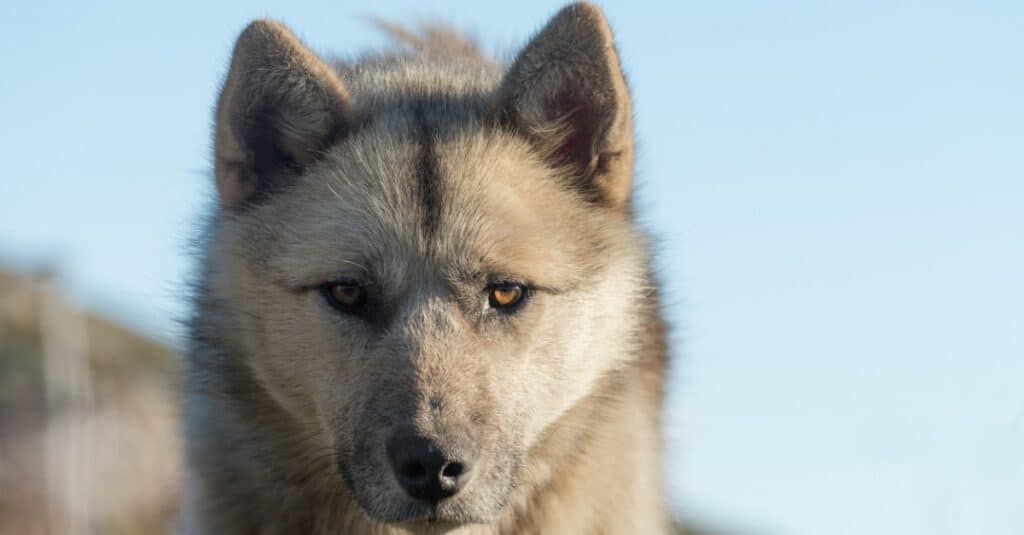
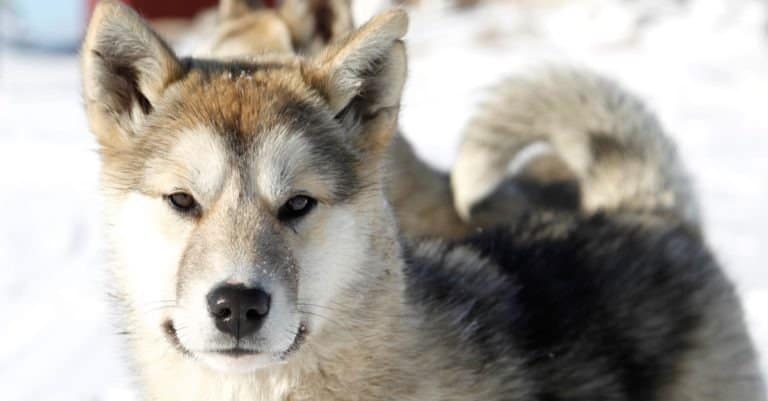
close up of a Greenland dog

The Greenland dog was used to pull sleds and hunt bears and seals.

How To Take Care of One

Experienced and active pet owners looking for how to care for Greenland dogs, specifically puppies, must consider unique factors related to their care. Whether it’s known or working issues like glaucoma or hip dysplasia, or care related to their energy and lifestyle needs, these dogs have breed-specific factors that are important to think about.

The Best Dog Food for Them

Greenland dogs, especially puppies, have unique health considerations due to their specific breed and large size. Therefore, new owners should consider the following factors when choosing food for their pets.

Greenland dog puppy food: Due to their size and genetic makeup, Greenland dogs need a well-balanced, healthy diet of 6 to 8% of the puppy’s weight in 3 to 4 meals for up to 6 months. You can choose from raw, homemade, or dry kibble options. When considering wet or dry food for puppies, consider a brand that satisfies all of their nutritional needs and includes at least 25% protein along with essential fatty acids, calcium, and other vitamins and minerals. Dog food that focuses on meat first and includes vegetables and starches is a good choice. One-third meat (or fish), one-third vegetables, and one-third rice are best. If their diet is lacking in vitamins, calcium, and other minerals, consider adding powder or tablet food supplements to meals.

Greenland dog adult dog food: When the puppy reaches 90% of its final weight, it’s ready to change to an adult diet of 2 meals a day. Smaller, more frequent meals instead of one big meal can reduce the risk of gastric torsion (bloat), a potentially fatal condition in large breeds. Similar to puppy dog food considerations, pet owners should consider feeding their Greenland dogs food that contains one-third each of meat (or fish), vegetables, and starches.

Maintenance And Grooming

Although the Greenland Dog has long, thick fur, it is not prone to shedding. It is also resistant to dirt. Like other dogs, Greenland dogs need flea and tick treatment, but as far as grooming goes, it only requires brushing 2 to 3 times a week and a bath every 3 to 4 months.

Training

This is a Spitz-type breed used for working, specifically for hunting, pulling, and sledding, as well as racing. It has been used to hunt seals, whales, and polar bears. Whether they are alone with an owner or in a pack, they need a strong alpha leader who is consistent, patient, and not overly demanding. It is intelligent and easily trainable but stubborn, so you will need to stick to the rules and put a lot of time and energy into training. 3 to 4 months of age is an appropriate starting point.
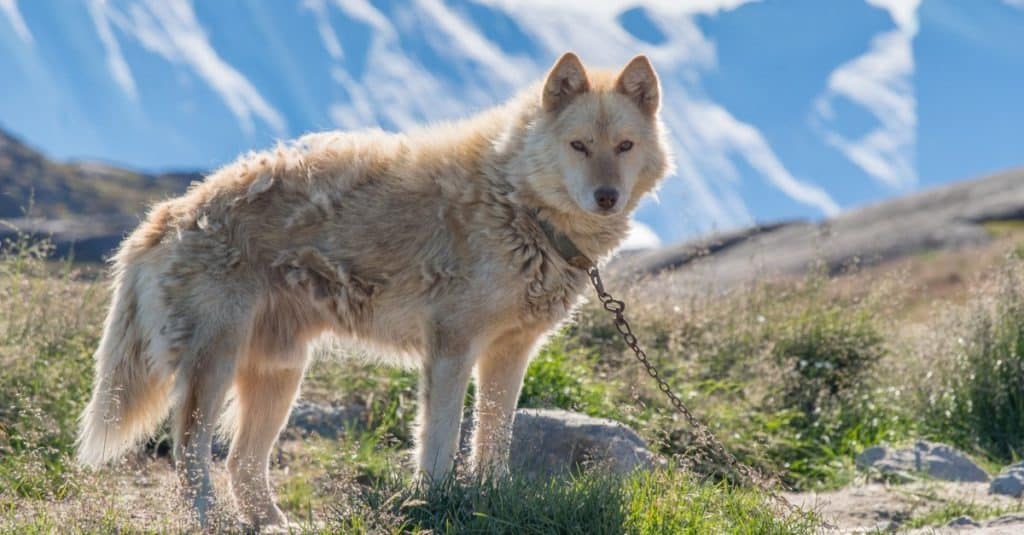
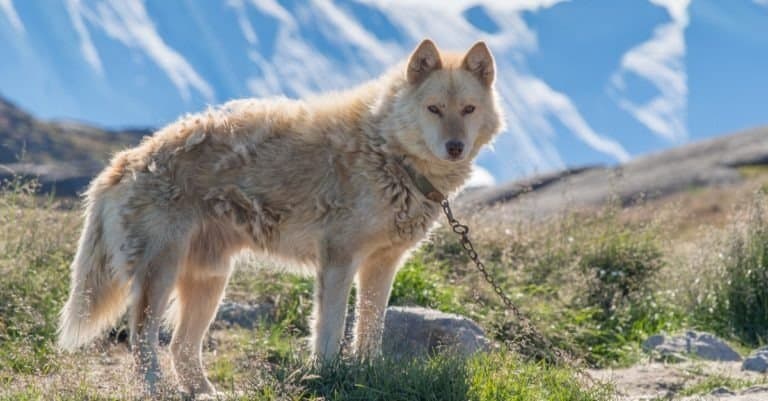
A pale Greenland husky working dog stands chained to rock

Whether they are alone with an owner or in a pack, Greenland Dogs need a strong alpha leader who is consistent, patient, and not overly demanding.

Exercise

Greenland dogs have some of the highest energy levels of any breed. In fact, they need over 2 hours of activity a day. However, it is not enough to just walk for 2 hours. They need a variety of tasks to do. Puzzles are a great option along with toys, a house, and a backyard to play and run around in. Owners with multiple dogs, other pets, or an active household can also provide more company and entertainment.

Puppies

Greenland dog puppies need socialization and training starting at 3 to 4 months of age. They need meals 3 to 4 times a day, up to 6 months or when they reach 90% of their final weight, at which point they can have an adult dog diet of 2 meals a day.
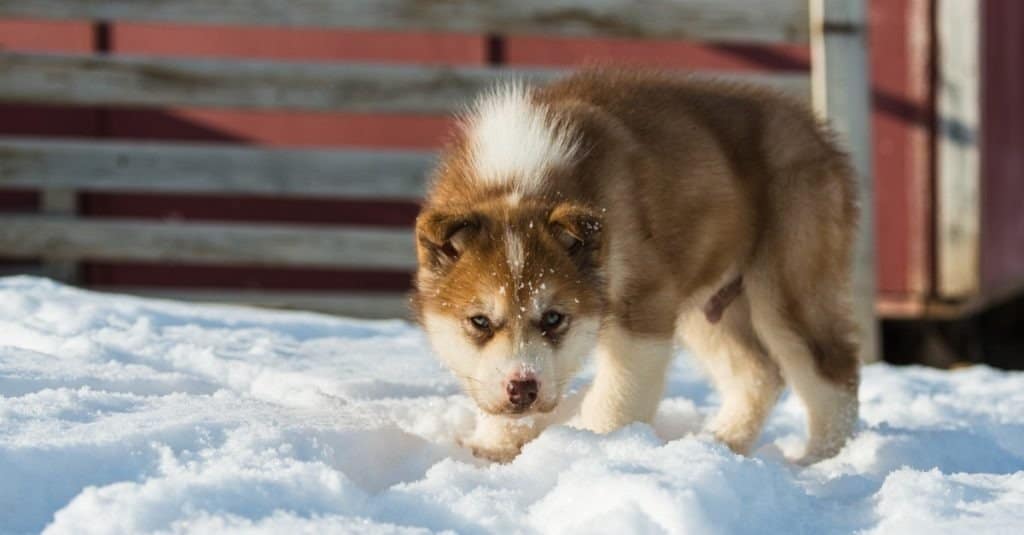
Cute Greenland dog puppy, Greenland

Greenland dog puppies need socialization and training starting at 3 to 4 months of age.

With Children

Greenland dogs tend to do well with children, provided they have been socialized and trained from an early age. They have a low tendency of biting and mouthing and need the same training against such behavior as any other breed, and like other breeds, will bite and mouth the most during puppyhood.

Similar Dogs

Greenland dogs are genetically identical to Canadian Eskimo dogs and are considered the same breed, with the only difference being their country of habitat. Their closest genetic relatives are the Arctic dog breeds. Inuit dogs share a common female ancestor by way of maternal mitochondrial DNA sequence haplotype A31. Similar-looking but genetically distinct breeds are the Siberian Husky, Alaskan Husky, and Malamute. The latter is related to Chukotka sled dogs from Siberia and is different from the Canadian Eskimo Dog and the Greenland Dog. That’s because the Malamute and the Siberian Husky maintained their genetic lineage from Siberia, and both contributed greatly to the Alaskan Husky.

Greenland dogs are a rare and genetically distinct husky dog. They are also a spitz-type breed, meaning they have pointed, triangular ears, strong jaws, long muzzles, feathered, long tails that curl over their backs, and thick, often-white fur. Spitz-type dogs look similar to wolves since they descended from wild dogs being bred with wolves.

Dogs similar to the Greenland Dog are the Finnish Spitz, the Samoyed, and the German Shepherd.

  • Finnish Spitz: Another Spitz-type dog used to cold climates, it is known for barking a lot.
  • Samoyed: Bred in Siberia to herd reindeer, pull sleds, and hunt, they shed more than Greenland dogs, and their fur is totally white.
  • German Shepherd: With a similar temperament and size of the Greenland Dog, they shed more than Greenland dogs.

Famous Examples

Greenland dogs are a decreasing icon of Greenland due to climate change and the reduced need for sled dogs as snowmobiles and modernization have replaced traditional sledding.

However, there is a famous Greenland Dog in history. Polaris was the lead dog on explorer Admiral Peary’s 1909 expedition to reach the North Pole. It was the sled dogs that accompanied Admiral Peary that helped him reach the North Pole, as he noted. Polaris went with him to the United States and sired puppies. It is said that the Chinook breed started by crossing a Greenland Dog named Ningo, who was the granddaughter of Polaris, with a Saint Bernard.

View all 261 animals that start with G

Sources

  1. Wikipedia / Accessed January 29, 2021
  2. Cute Pomsky / Accessed January 29, 2021
  3. Doggie Designer / Accessed January 29, 2021
  4. Ruff Champ / Accessed January 29, 2021
  5. Dog Learn / Accessed January 29, 2021
  6. Primitive Dogs / Accessed January 29, 2021
  7. Animal Corner / Accessed January 29, 2021
  8. Dogell / Accessed January 29, 2021
  9. Pet Guide / Accessed January 29, 2021
  10. Soft Schools / Accessed January 29, 2021
  11. Wag Walking / Accessed January 29, 2021
  12. Dog Breeds List / Accessed January 29, 2021
  13. 101 Dog Breeds / Accessed January 29, 2021
  14. Dog Breed Info / Accessed January 29, 2021
  15. Animals Breeds / Accessed January 29, 2021
  16. Dog Temperament / Accessed January 29, 2021
  17. Doggy Dog World / Accessed January 29, 2021
  18. Bark Post / Accessed January 29, 2021
Heather Ross

About the Author

Heather Ross

Heather Ross is a secondary English teacher and mother of 2 humans, 2 tuxedo cats, and a golden doodle. In between taking the kids to soccer practice and grading papers, she enjoys reading and writing about all the animals!

Thank you for reading! Have some feedback for us?


Greenland Dog FAQs (Frequently Asked Questions)

Greenland dogs are omnivores and their diets are mainly carnivorous, with some vegetables and starches.