G
Species Profile

Grouse

Phasianidae (grouse: subfamily Tetraoninae)

Masters of the lek and the snow
Gerry / Creative Commons

Grouse Distribution

Click a location to explore more animals from that region

Loading map...

Size Comparison

Human 5'8"
Grouse 1 ft 4 in

Grouse stands at 23% of average human height.

At a Glance

Family Overview This page covers the Grouse family as a group. Stats below are general traits shared across the family.
Also Known As Ptarmigan, Capercaillie, Wood grouse, Blackcock, Game bird
Diet Omnivore
Activity Diurnal+
Lifespan 3 years
Weight 6.5 lbs
Status Least Concern
Did You Know?

Grouse vary hugely in size: ~30-100 cm long and about ~0.3-6.5 kg from the smallest ptarmigan to the largest capercaillie.

Scientific Classification

Family Overview "Grouse" is not a single species but represents an entire family containing multiple species.

Grouse are stout-bodied, ground-dwelling galliform birds adapted to cold and temperate regions of the Northern Hemisphere, many with elaborate male courtship displays (often on leks) and strong seasonal diets shifting from insects (chicks) to buds, leaves, and catkins (adults).

Kingdom
Animalia
Phylum
Chordata
Class
Aves
Order
Galliformes
Family
Phasianidae

Distinguishing Features

  • Ground-nesting gamebirds with cryptic plumage and strong, rounded wings for explosive takeoff
  • Many species show pronounced sexual dimorphism and specialized courtship displays (leks, drumming, strutting)
  • Cold-climate adaptations in some (e.g., feathered legs/toes; seasonal white plumage in ptarmigans)
  • Primarily herbivorous adults; chicks rely heavily on insects early in life

Physical Measurements

Males and females differ in size

Height
1 ft 4 in (8 in – 2 ft 6 in)
Length
1 ft 10 in (12 in – 2 ft 11 in)
1 ft 6 in (12 in – 2 ft 6 in)
Weight
4 lbs (1 lbs – 14 lbs)
2 lbs (1 lbs – 6 lbs)
Tail Length
7 in (3 in – 1 ft 1 in)
5 in (2 in – 12 in)
Top Speed
50 mph
Takeoff speed 50–80 km/h

Appearance

Primary Colors
Secondary Colors
Skin Type Grouse have feathered bodies with outer feathers and soft down. Many have leg and toe feathers. Little bare skin shows, often colored eyebrow combs and small facial patches, especially in breeding males.
Distinctive Features
  • Measurements (range across the grouse/ptarmigan lineage within Phasianidae): total length ~30-90 cm; wingspan ~45-125+ cm; mass commonly ~0.3-6.5 kg (smallest forest grouse and ptarmigans at the low end; capercaillie at the high end).
  • Lifespan (range across species and conditions): many individuals live ~1-3 years in the wild due to high juvenile mortality; typical adult lifespans often ~3-6 years; recorded maxima commonly ~8-13+ years (and sometimes longer in captivity).
  • Stout-bodied, round-chested profile with relatively small head and short, strong bill; built for burst flight and ground foraging rather than sustained long-distance flight.
  • Tail often used as a display structure: from modest, rounded tails to strongly fanned tails and lyre-shaped or recurved outer feathers in some lekking species.
  • Insulation and cold adaptation are common: dense plumage; frequent leg/toe feathering; ptarmigans often exhibit seasonal plumage changes aligned with snow cover.
  • Breeding-display ornaments in many species: inflatable throat/neck sacs, elongated neck "ruffs," specialized wing/tail feathers, and conspicuous red eyebrow combs; exact structures vary widely among genera.
  • Grouse (Tetraoninae) are ground-dwelling, ground-nesting birds; chicks need insects, adults eat buds, leaves, heather or conifer needles. Courtship varies from leks to pairings. Habitats: forests, tundra, heath, sagebrush. Threats: habitat loss, climate change, disturbance, hunting.

Sexual Dimorphism

Sexual dimorphism in grouse is often strong but varies. In lekking species males are larger, showy, with display parts and red combs. In ptarmigans and some forest grouse differences are subtle.

  • Typically larger body size and heavier mass in many species (degree varies; strongest in large forest grouse such as capercaillie).
  • More conspicuous breeding plumage and/or higher-contrast markings (e.g., glossy black areas, crisp white patches, bold tail patterns).
  • More developed bare red eyebrow combs/wattles; may become enlarged and brighter during the breeding season.
  • Specialized display feathers and structures in many species (tail fans/lyres, neck ruffs, inflatable sacs); acoustic displays (drumming, wing-claps, bubbling calls) are common in some groups though display style varies by habitat and lineage.
  • Generally smaller and more uniformly cryptic, with heavier mottling/barring in browns/tans/creams to camouflage on ground nests.
  • Reduced or less conspicuous facial combs and fewer ornamental feathers; overall plumage typically prioritizes concealment year-round.
  • Brooding and chick-rearing are primarily female roles across the group; plumage and posture support camouflage during incubation (with variation among species).

Did You Know?

Grouse vary hugely in size: ~30-100 cm long and about ~0.3-6.5 kg from the smallest ptarmigan to the largest capercaillie.

Lifespan is typically short in the wild (often ~1-5 years due to high predation), but some individuals can reach roughly ~8-13 years in favorable conditions/captivity.

Many species use dramatic breeding displays-drumming, booming, tail-fanning-often at communal display grounds (leks), though some (notably several ptarmigan) tend to be more pair-based and territorial.

Chicks rely heavily on insects for rapid growth, while adults shift seasonally toward plant foods like leaves, buds, catkins, berries-and in winter some can subsist on tough conifer needles.

Several grouse have feathered legs and toes; many also grow seasonal "toe combs" (pectinations) that function like traction and snowshoes on ice and powder.

Ptarmigan are famous for seasonal camouflage, molting from mottled browns to snowy whites; other grouse (like red grouse) stay darker year-round, matching heath and moorland.

Habitat specialization is extreme across the group: sagebrush seas, boreal conifer forest, alpine tundra, peatland heaths-so habitat change and disturbance can hit populations hard.

Unique Adaptations

  • Feathered legs and (in many) feathered toes help conserve heat and protect against snow and ice.
  • Seasonal toe "combs" (pectinations) on the sides of toes increase surface area and grip-useful for walking on snow and for traction on icy branches.
  • Cold-weather nostril/face feathering in some species helps warm inhaled air and reduces heat loss in frigid winds.
  • Enhanced hindgut fermentation (notably enlarged ceca and specialized gut microbes) supports digestion of fibrous, chemically defended plants like conifer needles and woody buds.
  • Seasonal molts and color change (especially in ptarmigan) provide camouflage across snow, rock, and vegetation cycles.
  • Broad, rounded wings and powerful burst flight enable rapid escape from predators, but many species trade long-distance flight efficiency for short explosive takeoff.
  • Display-specialized anatomy in some open-country species (e.g., expandable air sacs and resonant vocalizations) improves long-range communication in windy habitats.
  • Physiological tolerance of high latitude/altitude environments: many can cope with low temperatures and seasonal food bottlenecks via behavioral thermoregulation and flexible diets.

Interesting Behaviors

  • Lek breeding in many species: males gather at traditional sites to display, spar, and advertise, while females choose mates; lek size and intensity vary widely by species and habitat.
  • Acoustic courtship: some forest grouse "drum" by beating wings to make low-frequency thumps that travel through dense woods; others produce pops, whistles, or air-sac booms.
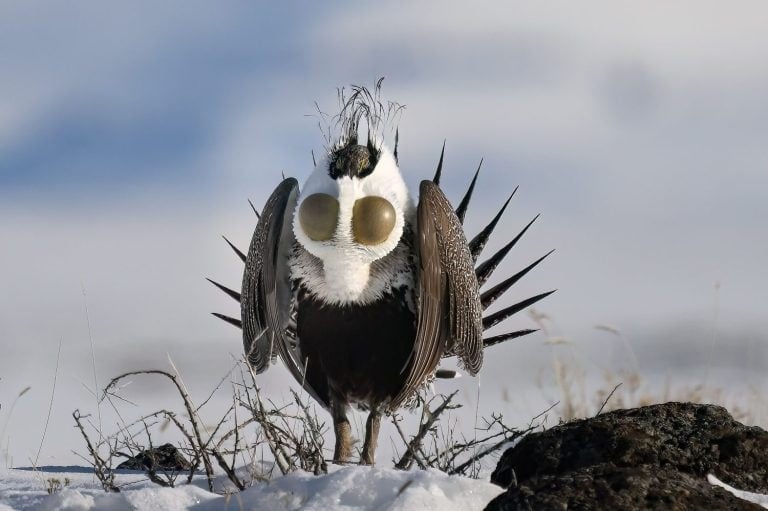
  • Inflatable ornamentation: prairie and sage-associated grouse can inflate throat/neck sacs and flash contrasting plumage patches to amplify signals across open landscapes.
  • Ground-nesting and brood-leading: nests are usually simple scrapes on the ground; hens lead chicks through insect-rich foraging areas soon after hatching.
  • Snow-roosting: in cold regions, grouse may dive into soft snow to roost in insulated burrows, reducing heat loss and wind exposure.
  • Seasonal movement patterns vary: some are relatively sedentary forest residents, while others shift elevationally or wander to track food and snow conditions.
  • Predator-avoidance by stillness and camouflage: many rely on freeze-and-hide tactics, flushing explosively only when threats are close.
  • "Grit" and selective feeding: individuals often seek small stones to aid gizzard grinding and may target particular buds/catkins at peak nutrition windows.

Cultural Significance

Grouse (Phasianidae: Tetraoninae) are key gamebirds across the Northern Hemisphere. They shape hunting, local economies, and land management (e.g., red grouse moor/heath, sage-grouse sagebrush). Indigenous people use ptarmigan for meat and feathers and rely on them for seasonal knowledge. Protecting tundra, boreal forest, heath, and sagebrush helps many species.

Myths & Legends

In Inuit and other Arctic stories, ptarmigan are often shown as winter providers; tales tie their seasonal color change to the seasons turning and animals needing to survive in snow and from predators.

In Finnish and Karelian forest tradition, the capercaillie is woven into hunting lore and folk poetry, where respectful conduct and spoken charms toward forest spirits were believed to influence a hunter's luck.

In Sami cultural tradition, ptarmigan have long been valued as an important seasonal resource in tundra and mountain birch habitats; knowledge about when and where ptarmigan appear is embedded in place-based storytelling and seasonal calendars.

In the Scottish Highlands, red grouse are tightly bound to folklore-rich sporting culture; the opening of the season ("The Glorious Twelfth") functions as a traditional date-marker in rural social history and local storytelling.

In parts of the Great Basin, sage-grouse are linked to sagebrush lands. Their feathers and dances are used in ceremonies and ceremonial clothes, and they are now symbols of sagebrush steppe conservation.

Conservation Status

LC Not Evaluated (IUCN Red List categories are assigned per assessed taxon, typically at the species level; grouse species range from Least Concern to Endangered depending on the species and population).

Widespread and abundant in the wild.

Population Unknown

Protected Under

  • EU Birds Directive (2009/147/EC) - protection framework varies by species and country
  • Canada Species at Risk Act (SARA) - applies to listed grouse taxa (e.g., sage-grouse in Canada)
  • U.S. Endangered Species Act - applies to listed grouse taxa (e.g., Gunnison sage-grouse)
  • National and subnational hunting regulations and game management frameworks (closed seasons/quotas vary by species and jurisdiction)
  • Protected areas, habitat reserves, and landscape-level conservation agreements used in parts of North America and Eurasia

You might be looking for:

Ruffed Grouse

18%

Bonasa umbellus

Forest grouse of North America; males display with a drumming sound.

Greater Sage-Grouse

16%

Centrocercus urophasianus

Large sagebrush-steppe grouse of western North America; famous lek displays.

Western Capercaillie

12%

Tetrao urogallus

Very large Eurasian woodland grouse, associated with conifer forests.

Willow Ptarmigan

12%

Lagopus lagopus

Arctic/subarctic grouse with seasonal plumage change (white in winter).

Black Grouse

10%

Lyrurus tetrix

Eurasian grouse; males have distinctive lyre-shaped tail and lekking behavior.

Life Cycle

Birth 9 chicks
Lifespan 3 years

Lifespan

In the Wild
1–14 years
In Captivity
5–18 years

Reproduction

Mating System Polygyny
Social Structure Lek Breeding
Breeding Pattern Seasonal
Fertilization Internal Fertilization
Birth Type Internal_fertilization

Grouse (Tetraoninae, Phasianidae) breed seasonally. Most are polygynous, often lekking (prairie‑ and sage‑grouse); a few (ptarmigan, some forest grouse) form seasonal monogamous pairs. Fertilization is internal via cloaca; females nest on ground and raise chicks.

Behavior & Ecology

Social Flock Group: 12
Activity Diurnal, Crepuscular, Matutinal, Vespertine
Diet Omnivore Willow and birch buds/catkins (a widespread winter staple across many grouse)

Temperament

Wary and vigilant, relying on stillness and camouflage
Seasonally territorial (often strongest in displaying/breeding males)
Site-faithful to traditional display, roost, and wintering areas in many species, but variable
Generally non-aggressive outside breeding season, with seasonal tolerance increasing in flocks
Risk-sensitive: tendency to flush explosively when threatened, though some species freeze first
Strongly seasonal behavior tied to snow cover, food availability, and breeding timing

Communication

lek/display calls (booms, hoots, coos, cackles, gobbles), varying markedly among species
non-vocal mechanical sounds produced during display (e.g., wing-drumming/wing-beats), in some species functioning as primary signals
alarm calls and contact calls (short clucks/whines) used by hens and broods
low-intensity murmurs/soft calls at close range within flocks or family groups
highly visual courtship displays (strutting, tail fanning, neck/air-sac inflation, head/crest postures, feather erection), often species-specific
use of display arenas/lek sites and spatial positioning as signals of dominance and mating access
rapid flush flights and conspicuous takeoff noise as anti-predator signaling and startling displays
ground-based sign and behavior (scrapes, dust-bathing sites, roost depressions) that concentrate individuals and indirectly structure social interactions

Habitat

Biomes:
Temperate Forest Temperate Rainforest Boreal Forest (Taiga) Tundra Alpine Temperate Grassland Desert Cold Wetland +2
Terrain:
Mountainous Hilly Plateau Plains Valley Rocky Riverine Island Sandy +3
Elevation: Up to 18044 ft 8 in

Ecological Role

Primarily plant-consuming ground birds with a seasonal invertebrate component (especially in juveniles), functioning as important herbivores/seed-and-berry consumers and as key prey for northern predators.

Seed dispersal (especially of berry-producing shrubs) Potential fungal spore dispersal via consumption of mushrooms Vegetation shaping through browsing on buds/shoots/needles (can influence shrub and understory composition) Invertebrate population suppression during chick-rearing periods (localized/seasonal) Nutrient cycling via droppings and redistribution of nutrients across foraging areas Foundational prey base supporting raptors and mammalian carnivores in cold/temperate ecosystems

Diet Details

Main Prey:
Insects Caterpillars and other insect larvae Spiders and small arthropods Small invertebrates
Other Foods:
Buds, twigs, and catkins Leaves and shoots Conifer needles and buds Berries and other soft fruits Seeds and grain-like items Flowers and green vegetation Fungi +1

Human Interaction

Domestication Status

Wild

Grouse (subfamily Tetraoninae, family Phasianidae) have not been domesticated. They are wild game birds, hunted for food and sport and managed by hunting rules and habitat work, not by selective breeding for farms. Limited captive rearing is done for conservation, research, or reintroduction, not true domestication.

Danger Level

Low
  • Occasional aggressive defensive behavior by displaying/territorial males in breeding season (pecking/wing strikes causing minor injury)
  • Zoonotic and food-safety risks typical of wild birds (e.g., Salmonella/Campylobacter) if handled or processed improperly
  • Potential exposure to ectoparasites (ticks/mites) when handling birds or moving through habitat
  • Lead exposure risk where lead ammunition is used and contaminated meat is consumed (a human health concern tied to harvest practices rather than the birds themselves)

As a Pet

Not Suitable as Pet

Legality: Laws vary by country, state, and species. Many grouse are protected; private keeping is often banned or needs wildlife permits (rehabilitation, education, research, or licensed breeding). Transport, release, and breeding are usually regulated.

Care Level: Expert Only

Purchase Cost: Up to $2,000
Lifetime Cost: $2,000 - $20,000

Economic Value

Uses:
Subsistence and recreational hunting Wildlife tourism (viewing/photography, lek observation where permitted) Conservation funding and habitat management employment Cultural and traditional value (foods, ceremonies, local heritage)
Products:
  • meat (wild harvest where legal)
  • feathers/skins (legal harvest and traditional use in some regions)
  • guided hunts and associated services (licenses, lodging, outfitting)
  • taxidermy/educational specimens (where legally obtained)
  • habitat management outputs (e.g., forestry prescriptions intended to support grouse and other wildlife)

Relationships

Related Species 6

Common Pheasant Phasianus colchicus Shared Family
Red Junglefowl Gallus gallus Shared Family
Indian Peafowl
Indian Peafowl Pavo cristatus Shared Family
Chukar Alectoris chukar Shared Family
Grey Partridge Perdix perdix Shared Family
Koklass Pheasant Pucrasia macrolopha Shared Family

Types of Grouse

17

Explore 17 recognized types of grouse

Ruffed Grouse Bonasa umbellus
Spruce Grouse Canachites canadensis
Siberian Grouse Falcipennis falcipennis
Hazel Grouse Tetrastes bonasia
Chinese Grouse Tetrastes sewerzowi
Sharp-tailed Grouse Tympanuchus phasianellus
Greater Prairie-Chicken
Greater Prairie-Chicken Tympanuchus cupido
Lesser Prairie-Chicken Tympanuchus pallidicinctus
Greater Sage-Grouse Centrocercus urophasianus
Gunnison Sage-Grouse Centrocercus minimus
Black Grouse Lyrurus tetrix
Caucasian Grouse Lyrurus mlokosiewiczi
Western Capercaillie Tetrao urogallus
Black-billed Capercaillie Tetrao parvirostris
Willow Ptarmigan Lagopus lagopus
Rock Ptarmigan Lagopus muta
White-tailed Ptarmigan Lagopus leucura

A bird species with feathers on nostrils, legs, and feet!

Grouse are medium-sized, stocky birds that live in the Northern Hemisphere. Their feathers closely resemble their habitat. This plumage provides them with camouflage and helps them survive. Grouse are birds that are closely related to chickens, turkeys, and pheasants. About eight million of these upland game birds are hunted each year for food or sport in their grassy and forested habitat.
 

Top Grouse Facts

  • Grouse are birds with feathers on their nostrils, legs, and feet
  • The female hen weighs about half as much as the male cock
  • About eight million grouse are killed in legal hunts each year
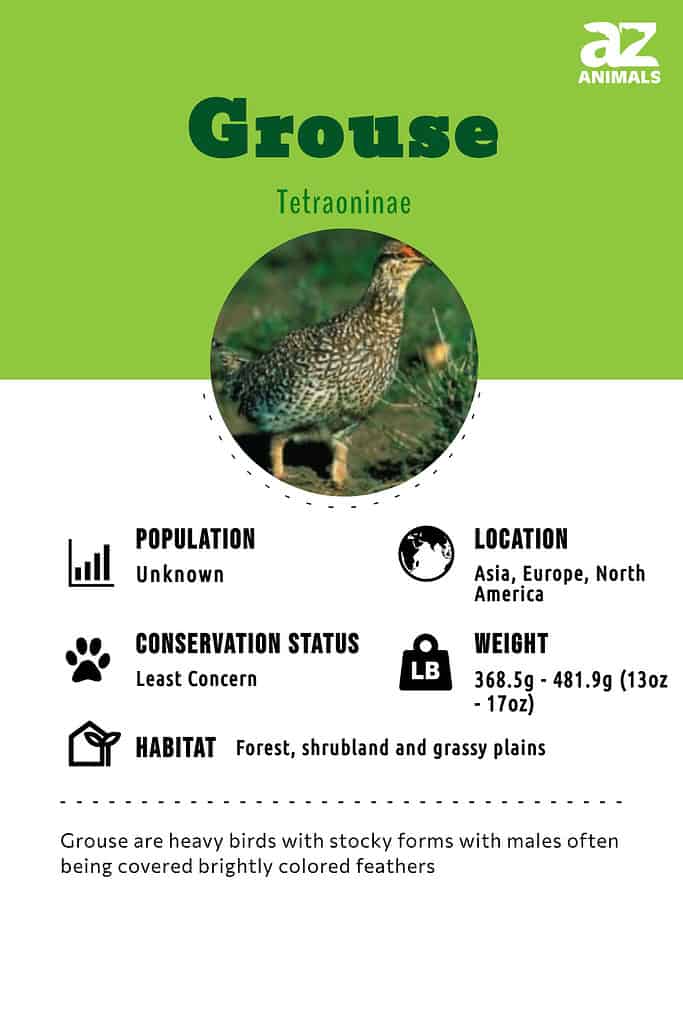
Pictorial summary of the grouse

Scientific Name

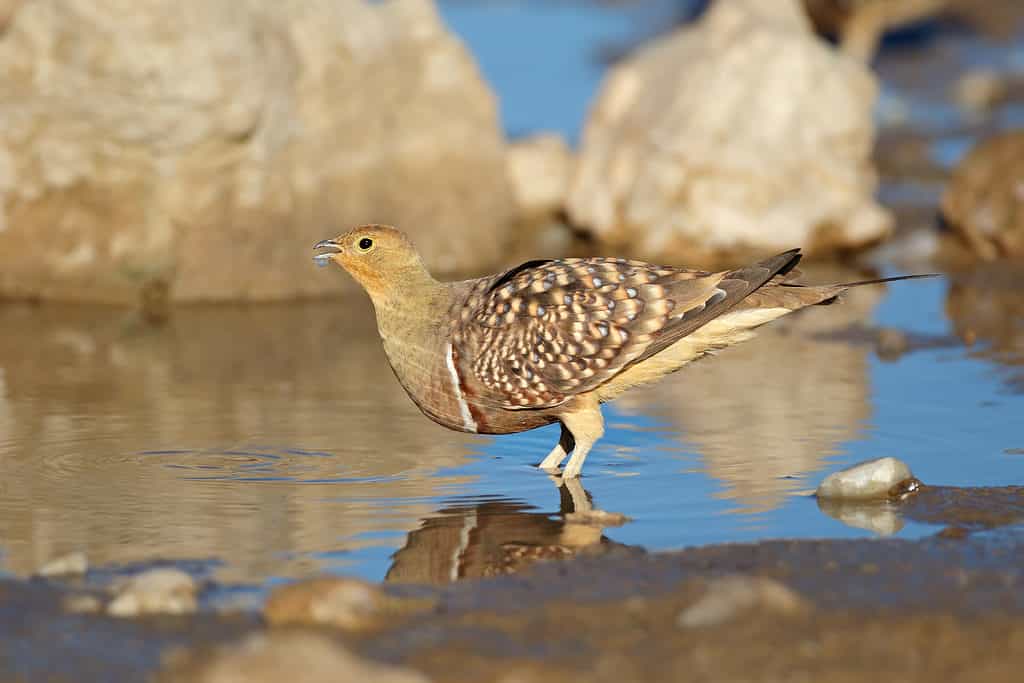
Namaqua sandgrouse (Pterocles namaqua) drinking water, Kalahari desert, South Africa

Grouse are capable of gliding in the air for short distances

Grouse are part of the order Galliformes and the family Phasianidae. The bird’s scientific name is Tetraoninae. This name comes from the Latin word tetrao-, meaning “a kind of gamebird” and -idae, from the ancient Greek term for “appearance.”

There are about 10 species of grouse in the United States and Canada. These include the blue grouse, spruce grouse, ruffed grouse, sharp-tailed grouse, and sage grouse. Also included are the greater and lesser prairie chickens, willow ptarmigan, rock ptarmigan, and white-tailed ptarmigan.
 

Evolution
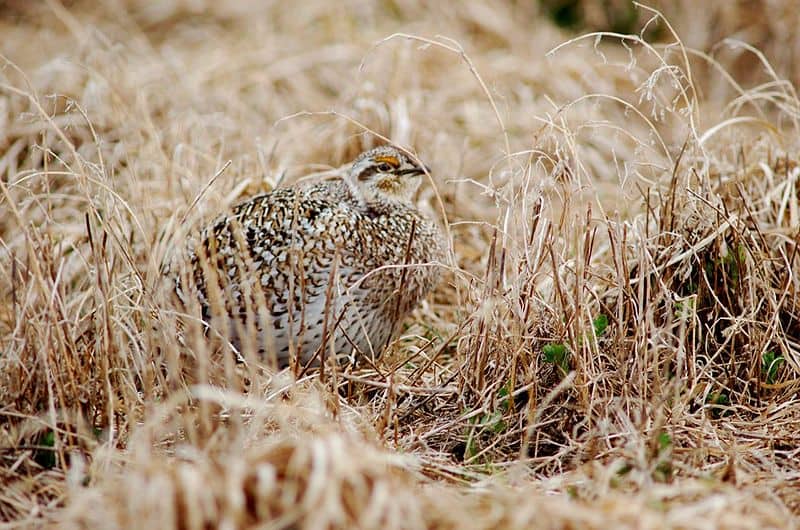
Grouse are also related to waterfowl and share an ancestry which dates back several millions of years

As Galliformes, i.e., corpulent, terrestrial birds, often hunted as game or reared for their eggs and meat, grouses are related to turkeys, quail, pheasants, hens, peafowl, etc. They also form part of the clade Galloanserae. As a result, they share a common ancestor with waterfowl or Anseriformes making them the relatives of ducks, geese, and swans. Experts assert that the earliest Galloanserae were already present and waddling about by the Cretaceous about 66 – 145 million years ago. Some experts extend that period to the Mesozoic (between 66 – 252 million years ago).

Like their semi-aquatic relatives, they were able to survive the cataclysm which brought the Mesozoic Period to an end by taking refuge in the water and burrows. (The arboreal Enantiornithes were not so lucky and became extinct).

The earliest ancestor of the Phasianidae, the Galliforme subgroup grouses, partridges, and pheasants form a part of,  appeared during the Oligocene 30 million years ago. 

Types

Some of the most popular grouse species include:

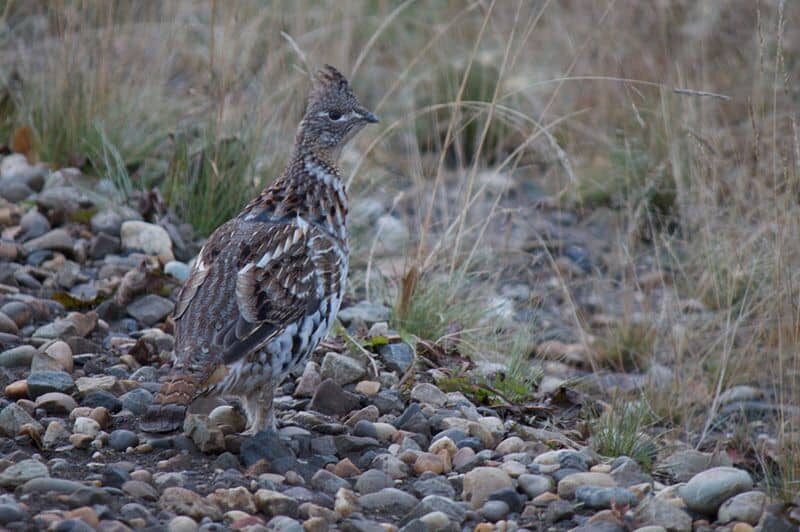
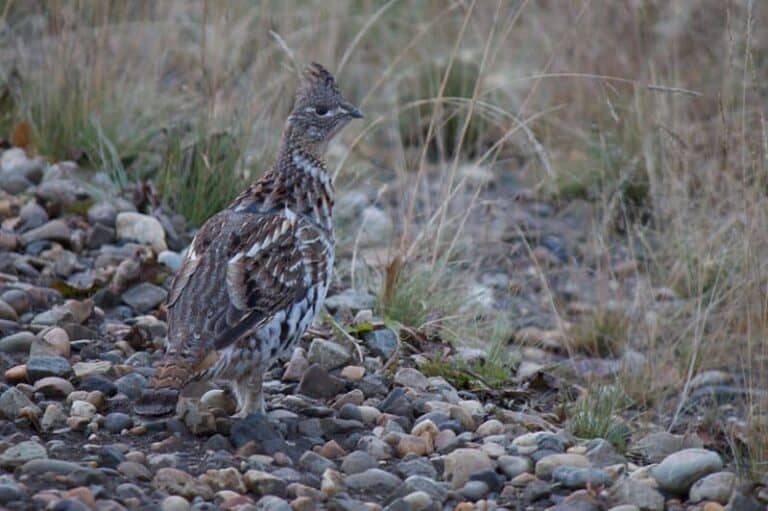
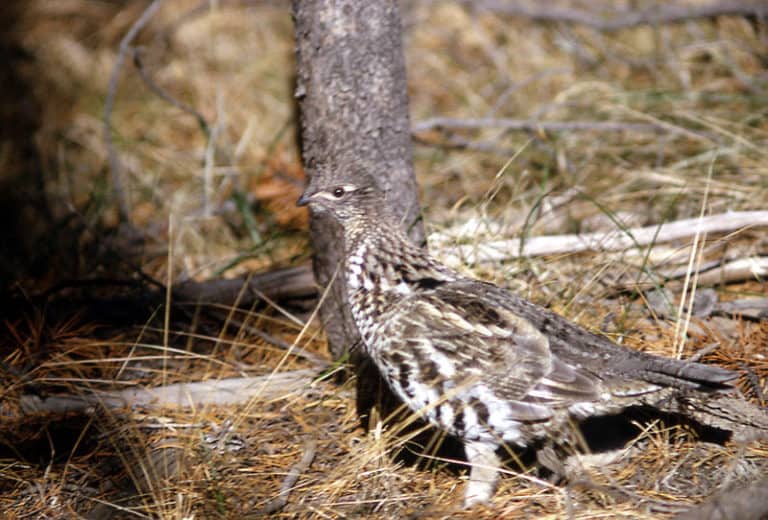
  • Ruffed grouse (Bonasa umbellus): These sturdy avians are capable of reaching 1.65 pounds in weight and 20 inches in length. They have the widest distribution of any game bird in North America and can be found from the Appalachian Mountains to Canada.
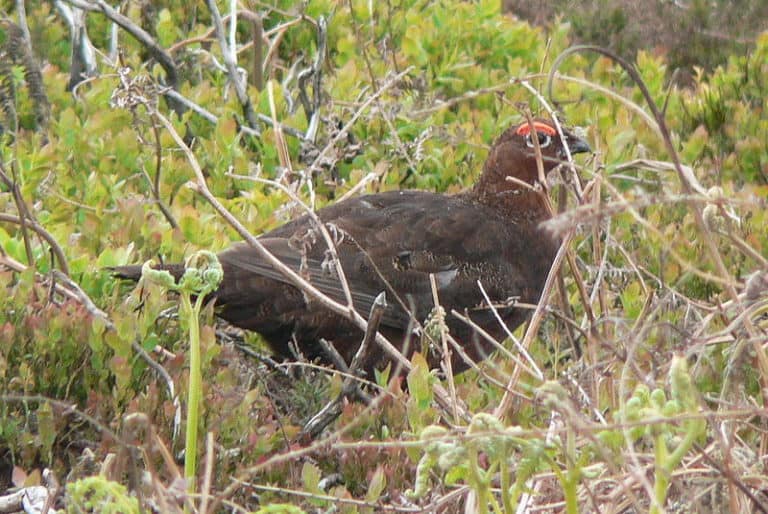
  • Red grouse (Lagopus lagopus scotica): This species can be found in Great Britain and can be recognized by its reddish-brown plumage. It lays pale brown eggs covered in speckles which are white and dark brown.
  • Black grouse (Lyrurus tetrix): This species can also be found in Great Britain. It also lives in Eastern Europe and Scandinavia. It is capable of growing to two feet in length and weighing 2.76 pounds.
  • Hazel grouse (Tetrastes bonasia): Rather small-sized, this grouse can be recognized by its delicately patterned plumage. It is capable of growing to 15 inches in length and has a range which covers Central and Western Europe, extending as far as Japan.
  • Spruce grouse (Canachites canadensis): This species can be found in Idaho, Wyoming, and Alaska. It is also found in Canada. It is capable of growing to 17 inches and weighing 23 ounces.

Appearance and Behavior
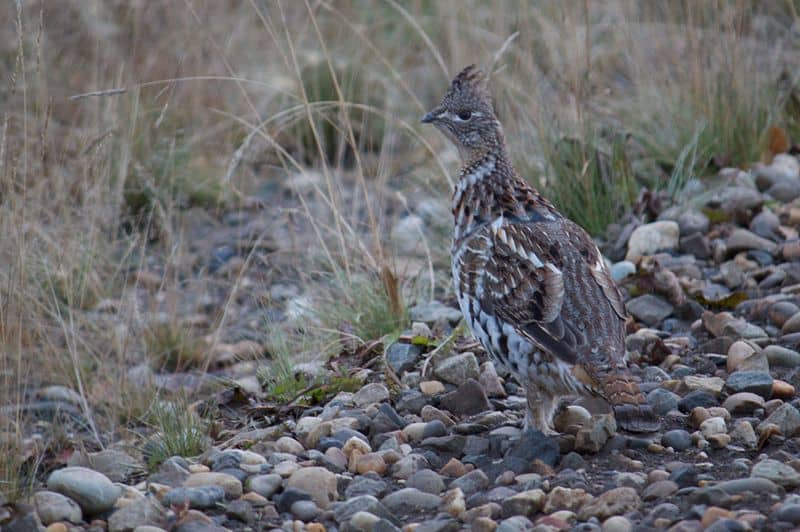
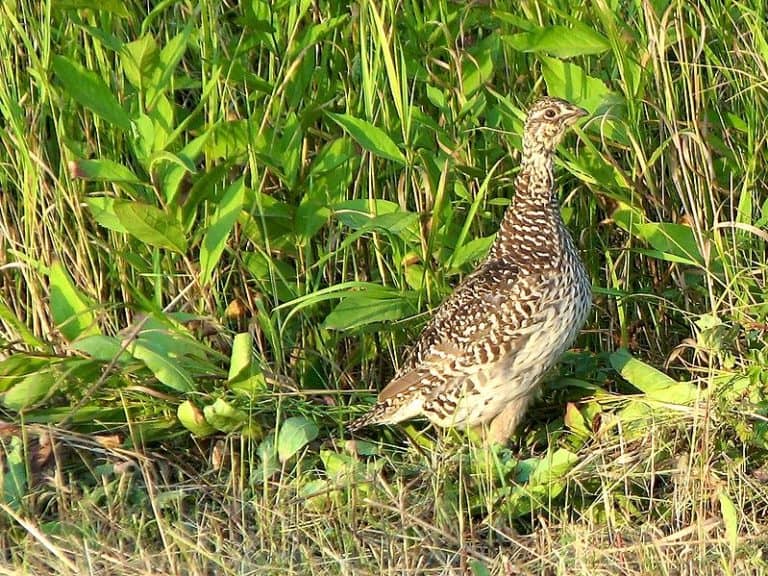
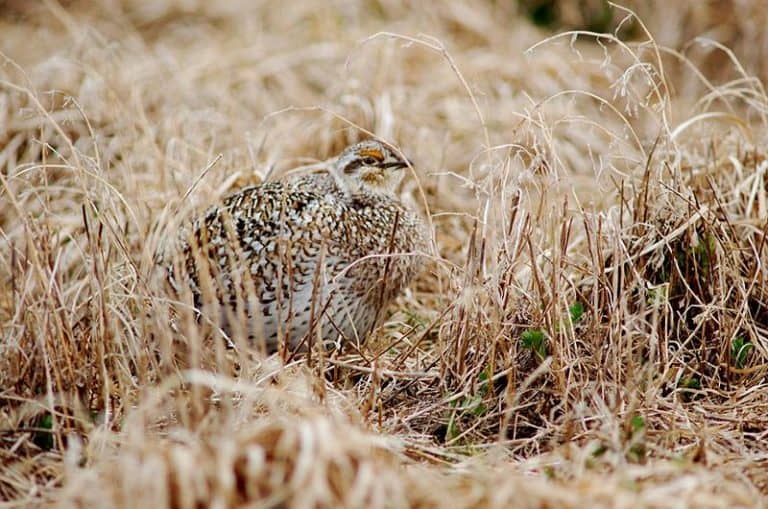
Grouse standing in the grass
Grouse’s nostrils, legs, and toes are covered in feathers to keep them warm during colder months

Grouse are plump birds that primarily thrive on the ground, where they nest in tall grasses and other ground cover. They can glide in the air for short distances when alarmed and to get away from predators. Their brown, gray, and red feathers protect the birds from the weather and disguise them in their surroundings. Feathers grow over their nostrils, legs, and toes to help them stay warm and travel over snow. The birds also have thick necks, long legs, and short, hooked beaks.

Most grouse grow only to as many as 30 centimeters in height. But the wood grouse of Europe and Asia can grow as large as 100 centimeters. The biggest North American grouse is the sage grouse, often growing to 62 to 70 centimeters. This is smaller than geese and about the same size as a chicken. Males are usually twice as large as females in adulthood.

Forest grouse live mostly alone and with their chicks. A hen’s nest of eggs or group of chicks is called a clutch. Prairie grouse are more social and do not mind meeting each other in their habitat. In fall and winter, arctic and tundra-dwelling grouse form flocks of up to 100 birds. Most males mate with multiple females, except for the willow grouse which takes only one mate at a time.

Habitat
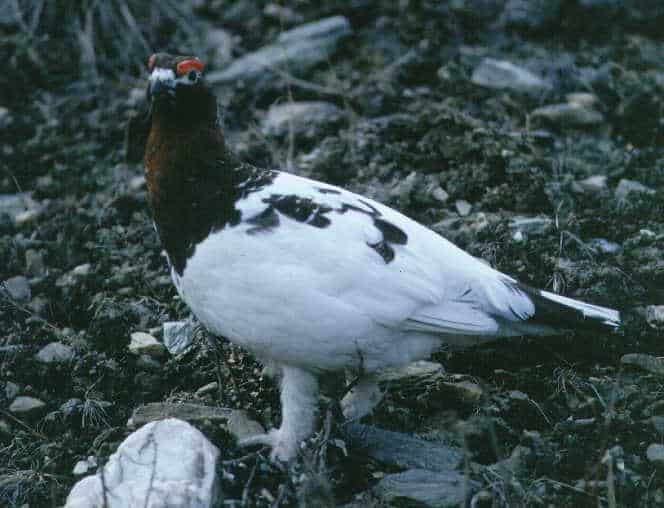
Grouse are adaptable and can be found in Asia, Europe, and North America

One or more types of grouse live in most types of habitat in North America. In the United States, they inhabit everywhere from the subarctic regions of Alaska to the prairies of Texas. Grouse live in tundra, heathlands, grasslands, temperate forest, and boreal forest. Some species of grouse also live in Europe and Asia. This bird family is also referred to as upland gamebirds, as they do not dwell in the watery habitats of wetland game birds, such as ducks and geese.

Depending on where they live, grouse usually either nest in tall grasses or on the floor of forests. Grouse living in snowy regions dive and burrow under the snow to live. Their body heat helps them create a nicely packed, igloo-like shelter that stays warmer than the outside air.

Male grouse typically maintain a territory of between 10 and 50 acres. They do not want other males around. Female grouse wander on about 100 acres. Females do not mind other grouse on the same land.

Grouse are mostly non-migratory. This means they live in one habitat year-round. But the ptarmigan or snow grouse migrates to northwestern states or lower elevations during winter from their warm-season arctic habitat.

Grouse are widely hunted for their meat. In North America and Europe, it is a common practice for hunting groups to farm grouse by giving the birds land to thrive. These semi-protected habitats provide space for hunters to track and “flush out” individual mature birds during a hunt.
 

Diet
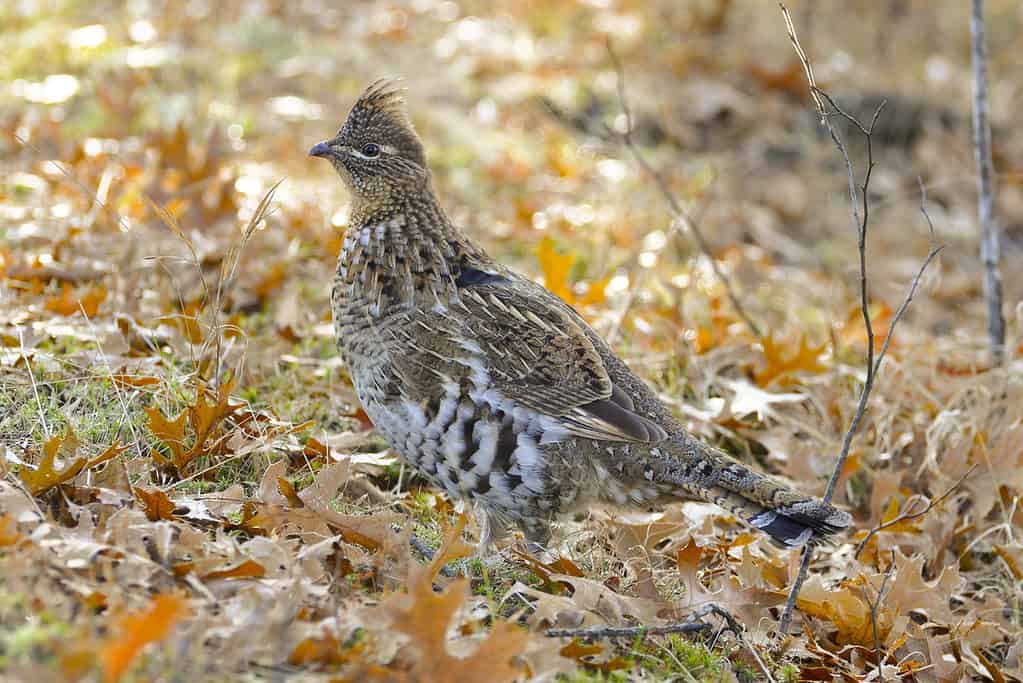
ruffed grouse

Grouse enjoy an omnivorous diet which may include sagebrush, insects, seeds, nuts, berries, and fruit

Grouse are omnivores. They eat mostly vegetation but sometimes feed on insects, spiders, worms, lizards, snakes, eggs, snails, or small rodents. Their preferred foods are grasses, fruits, berries, nuts, shoots, flowers, and seeds foraged from the forest floor or other habitat grounds. They also love winter grapes, wintergreen, apples, and clover.

Some species of grouse enjoy eating evergreen tree needles. Many forests give them an endless supply of these needles that other creatures ignore. The sage grouse only eats sagebrush in winter and shelters beneath it. In warm months, sage is a major part of their diet, too.

Grouse purposefully eat sand or other grit at times. This helps them digest some of the rough plants they eat.
 

Predators & Threats
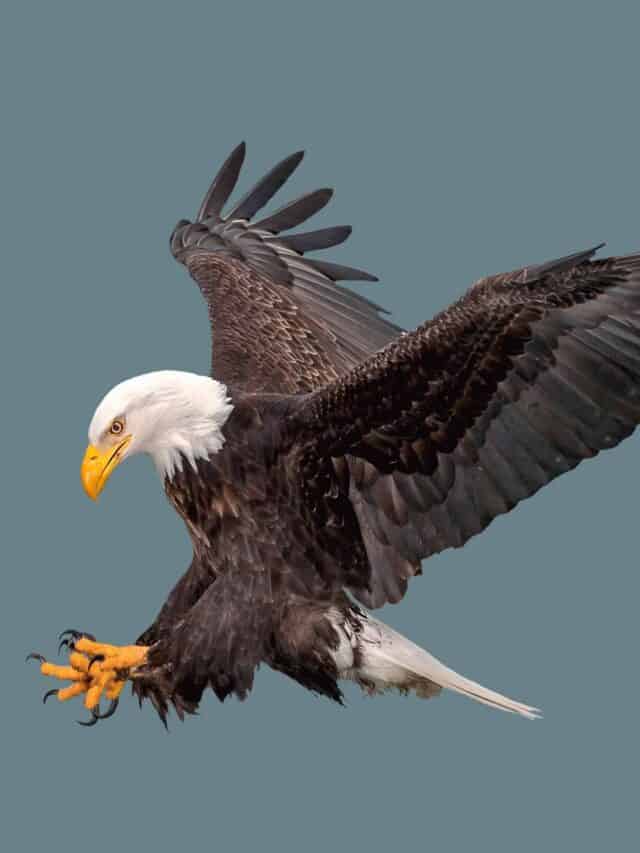
bald eagle in flight
Bald eagles and other birds of prey are known to hunt grouse

Grouse thrive in harsh winters where many other birds do not. They also have plump, meaty bodies that make a great meal for humans and animals. This makes the birds attractive to many four-legged predators. These include foxes, wolves, wildcats, and lynx. Large birds of prey also eat grouse and snakes eat their eggs.

Humans hunt about eight million grouse each year in America, alone. Luckily, many of these hunts take place on lands where farmers hatch grouse to add more to the population. In the wild, grouse have large clutches, meaning many eggs and chicks are hatched by each mother. This helps keep hunters from causing the birds to go extinct.

Global warming and habitat loss are the biggest threats to grouse. Global warming causes temperature changes that affect these birds. Early spring weather, extreme heat, and heavy rain can kill hatchlings and entire populations. Early spring causes problems with the plant cycle, making their food supply run out early.

Habitat loss happens when people build cities where forests, prairies, or grasslands once existed. This pushes the birds out of their natural lands and to less suitable places where they cannot thrive. Farming and forest fires also take away their habitat.

Scientists are working on ways to help grouse keep their habitat. One of the biggest ways to help them is in how we preserve forests and regrow trees.
 

Reproduction, Babies, and Lifespan
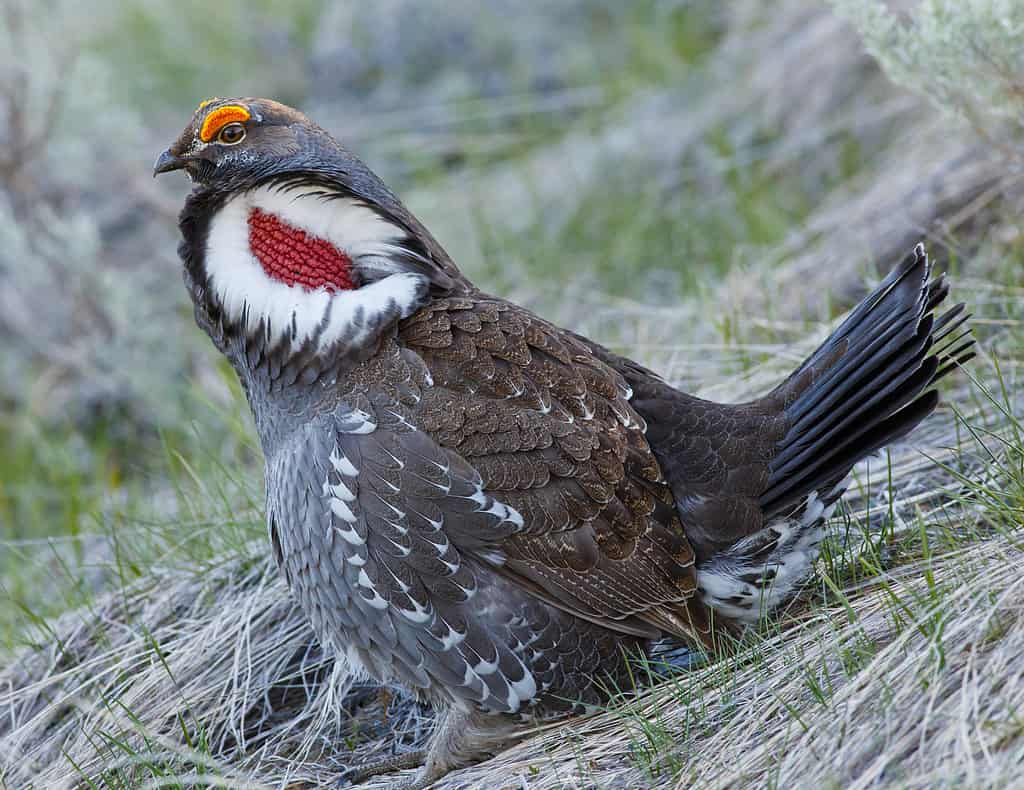
Mating may involve violence between males competing for females

Male grouse of all species except one mate with multiple females at once. It is only the willow grouse that has one mate per season. To compete for their mates, male grouse perform courtship displays at dawn and dusk each spring. They dance and strut, fluff their feathers, and drum their wings on fallen logs. Male sage grouse and prairie chickens inflate a brightly colored neck air sac to show off for females, too. Sometimes the males fight to compete for females.

Females build their nests in the ground. They find a natural dip in the ground’s surface sheltered by groundcover like grasses or sagebrush. They line this nest with plant materials, such as leaves and twigs.

About a week after mating, female grouse starts laying eggs that look like smaller chicken eggs. She lays only one for each day or two. She can replace lost or broken eggs with new ones. When she is done, she has a clutch of between five to 12 eggs. If all goes well, each of these hatch 21 to 28 days later.

Chicks leave the nest right after hatching. The mother grouse stands guard over her brood. The mother protects the young from predators and other threats. She takes them to good places for foraging for food, where the chicks must find their own plant or insect meals. Male willow grouse help their mates protect their babies. But for other species, the males do not take care of the young.

By the time the chicks are two weeks old, they have wings and can fly in little bursts. But they stay in the nest and around their mother until they reach adult size and weight in autumn. That is at about 12 weeks of age.

Grouse can first mate when they are a few years old. Most North American grouse live for seven or eight years in the wild. Some live as long as 11 years. But cold weather and disease can kill as many as three in every four young grouse each year.
 

Population
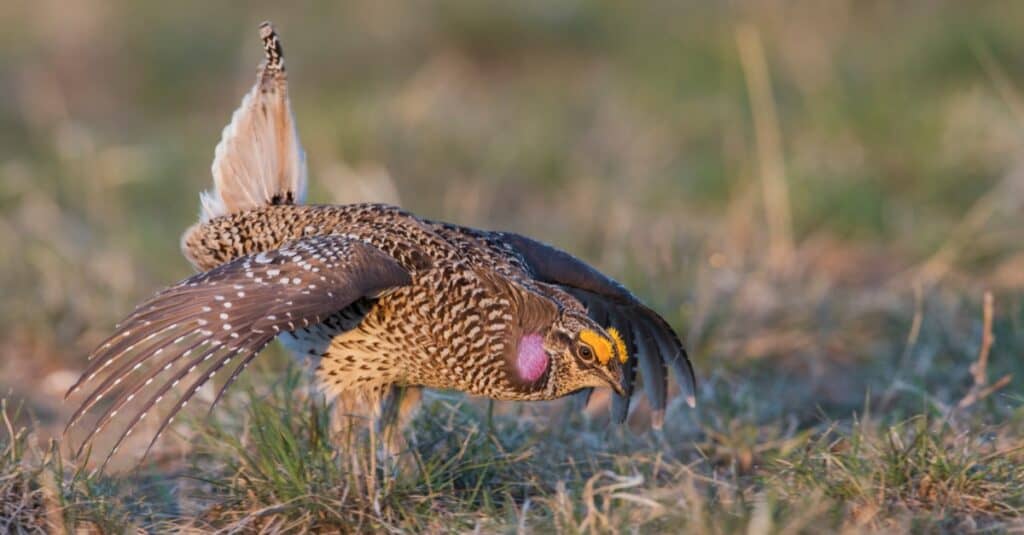
Animals That Dance

Global grouse populations fluctuate on a yearly basis

From season to season and year to year, the number of grouse living in the world varies widely. Harsh winters, unfavorable seasons, or disease, can cause the population to decrease by thousands. After each hunting season, there are millions of fewer birds than just in the months before. But grouse bounce back well. They have many eggs in their clutch and can nest a second time during mating season if the first set of eggs is lost.

In North America, there are about 15 grouse per mile of land. The sage grouse is most vulnerable to habitat loss in America. There are only eight million sage grouse in the U.S. today. While it is not listed as endangered, the sage grouse is a “near threatened” species. In 2019, an order by the Trump administration opened up sage grouse habitat in the western United States to oil drilling. This action threatens the habitat of millions of Sage Grouse, and many scientists expect the drilling to cause the sage grouse to go extinct.

Full List of Grouse Species

There are over 20 species of grouse:

  • Black-billed capercaillie
  • Western capercaillie
  • Black grouse
  • Caucasian grouse
  • Chinese grouse
  • Columbian sharp-tailed grouse
  • Dusky grouse
  • Franklin’s grouse
  • Greater sage-grouse
  • Gunnison grouse
  • Hazel grouse
  • Ruffed grouse 
  • Sharp-tailed grouse
  • Siberian grouse
  • Sooty grouse
  • Spruce grouse 
  • Greater prairie chicken
  • Lesser prairie chicken
  • Rock ptarmigan
  • White-tailed ptarmigan
  • Willow ptarmigan
  • Ocellated turkey
  • Wild turkey


View all 261 animals that start with G

Sources

  1. David Burnie, Dorling Kindersley (2011) Animal, The Definitive Visual Guide To The World's Wildlife / Accessed February 1, 2010
  2. Tom Jackson, Lorenz Books (2007) The World Encyclopedia Of Animals / Accessed February 1, 2010
  3. David Burnie, Kingfisher (2011) The Kingfisher Animal Encyclopedia / Accessed February 1, 2010
  4. Richard Mackay, University of California Press (2009) The Atlas Of Endangered Species / Accessed February 1, 2010
  5. David Burnie, Dorling Kindersley (2008) Illustrated Encyclopedia Of Animals / Accessed February 1, 2010
  6. Dorling Kindersley (2006) Dorling Kindersley Encyclopedia Of Animals / Accessed February 1, 2010
  7. Christopher Perrins, Oxford University Press (2009) The Encyclopedia Of Birds / Accessed February 1, 2010
A-Z Animals Staff

About the Author

A-Z Animals Staff

AZ Animals is a growing team of animals experts, researchers, farmers, conservationists, writers, editors, and -- of course -- pet owners who have come together to help you better understand the animal kingdom and how we interact.
Connect:

Thank you for reading! Have some feedback for us?


Grouse FAQs (Frequently Asked Questions)

The grouse is an omnivore. They prefer to eat plants. But grouse will eat insects, spiders, small frogs, rodents, snails, lizards, snakes, eggs and worms Grouse really enjoy eating wild grapes, berries, clover, flowers and plant buds. The sage grouse prefers eating sagebrush. In winter, that grouse only eats that specific plant.