






H
Species Profile

Hammerhead Shark

Sphyrnidae

Built like a hammer, tuned like a radar
Jsegalexplore/Shutterstock.com

Hammerhead Shark Distribution

Click a location to explore more animals from that region

This map shows coastal regions where Hammerhead Shark are found.

Loading map...
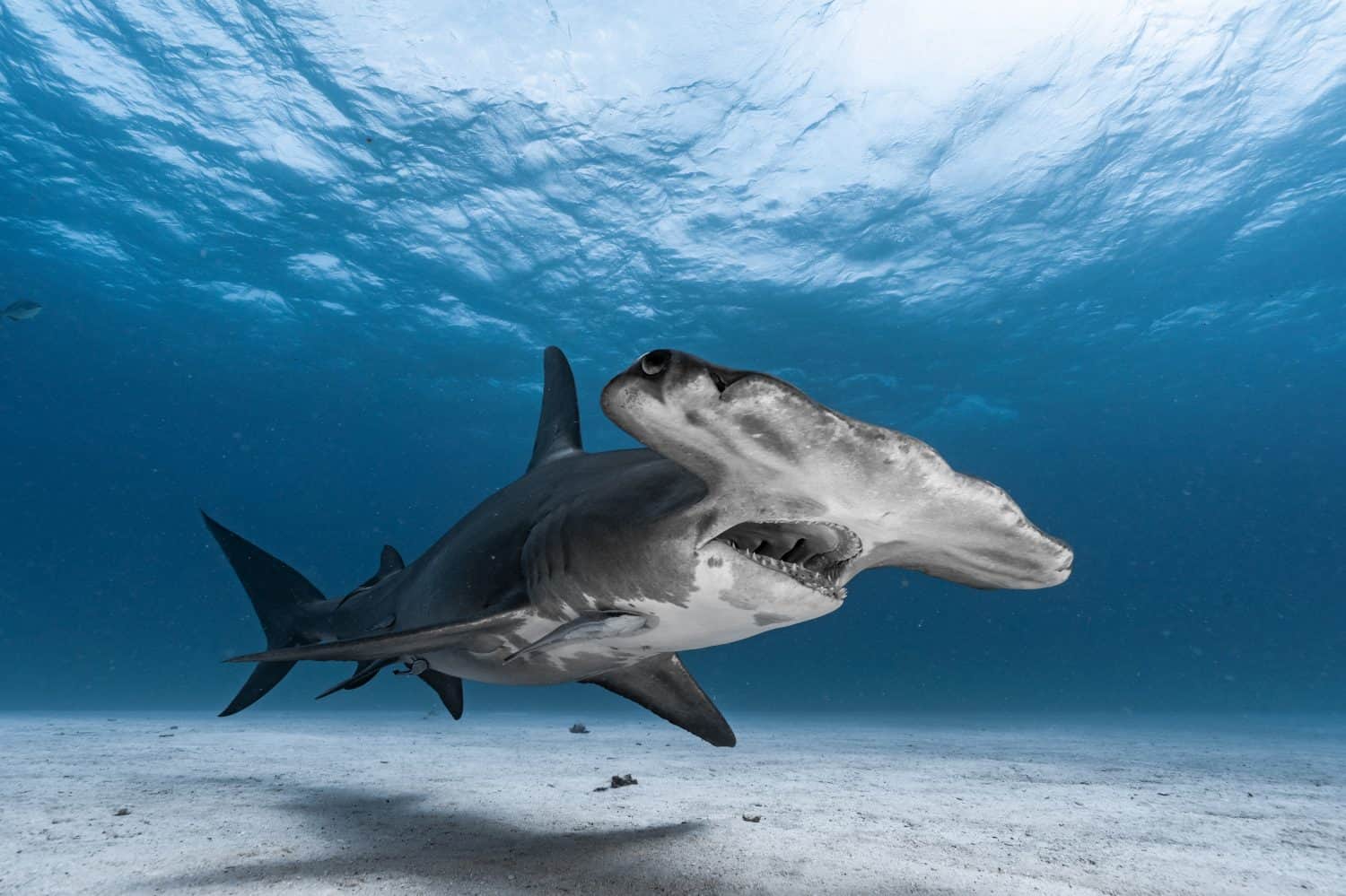
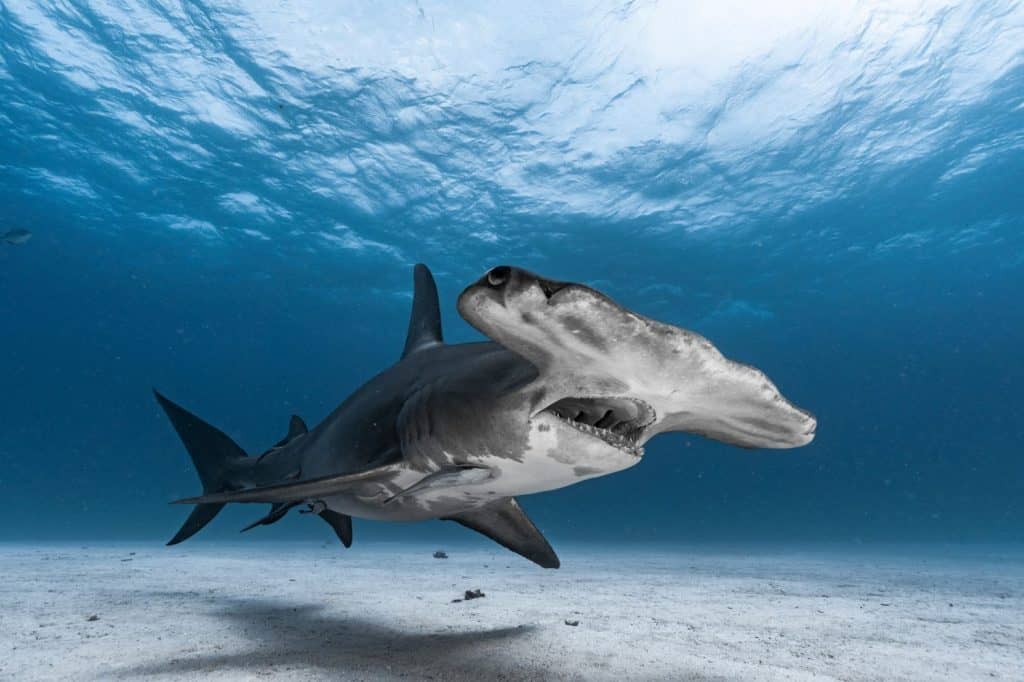
Great Hammerhead Shark up close in the Bahamas

At a Glance

Family Overview This page covers the Hammerhead Shark family as a group. Stats below are general traits shared across the family.
Also Known As Shovelhead, Tiburón martillo, Tubarão-martelo, Requin-marteau, Hammerhai, Squalo martello
Diet Carnivore
Activity Diurnal+
Lifespan 20 years
Weight 450 lbs
Status Endangered
Did You Know?

The "hammer" (cephalofoil) spreads electroreceptors over a wider area, helping detect prey hidden under sand.

Scientific Classification

Family Overview "Hammerhead Shark" is not a single species but represents an entire family containing multiple species.

Hammerhead sharks (family Sphyrnidae) are requiem-shark relatives characterized by a laterally expanded head (cephalofoil) that enhances sensory perception (electroreception, vision, olfaction) and maneuverability. They are marine predators ranging from small coastal species to large pelagic hunters.

Kingdom
Animalia
Phylum
Chordata
Class
Chondrichthyes
Order
Carcharhiniformes
Family
Sphyrnidae

Distinguishing Features

  • Distinctive hammer- or bonnet-shaped head (cephalofoil)
  • Eyes positioned at lateral ends of the cephalofoil (wide field of view)
  • Enhanced electroreception across the expanded head for detecting prey (e.g., rays buried in sand)
  • Typical requiem-shark body plan (two dorsal fins, anal fin present) within order Carcharhiniformes

Physical Measurements

Males and females differ in size

Length
8 ft 10 in (2 ft 11 in – 20 ft)
8 ft 2 in (2 ft 11 in – 20 ft)
Weight
198 lbs (7 lbs – 992 lbs)
176 lbs (7 lbs – 992 lbs)
Top Speed
25 mph
Short bursts 20–40 km/h

Appearance

Primary Colors
Secondary Colors
Skin Type Tough, abrasive skin with densely packed placoid scales (dermal denticles) typical of requiem-shark relatives; reduces drag and offers protection from abrasion and prey.
Distinctive Features
  • Hammerhead sharks (Sphyrnidae) range from about 0.9–1.5 m to 5.5–6.1 m long at maturity, and weigh from a few kilograms up to about 450 kg.
  • Lifespan in hammerhead species ranges from about 12 years in small, fast-growing coastal species to around 30-35+ years in larger, slow-growing species; estimates vary because long-term age data are limited.
  • The cephalofoil (hammer) is a wide head with far-apart eyes that improves vision and turning, increases area with ampullae of Lorenzini to find buried prey, and spreads the nostrils.
  • Body form: streamlined, requiem-shark-like build with two dorsal fins, an anal fin, and a strong, heterocercal tail; fin shapes and cephalofoil proportions vary widely across genera/species (from relatively narrow to very broad 'wings').
  • Most hammerheads tend to eat many kinds of prey: bony fish, cephalopods, and crustaceans. Larger species often eat rays, skates, and other sharks. Their diet and focus on rays vary by species and region.
  • Habitat breadth: includes shallow coastal/estuarine systems, continental shelves, reefs, and pelagic/offshore waters; some species are strongly coastal and others undertake long-range oceanic movements. Many use nearshore nurseries; tolerance to low salinity varies by species.
  • Many hammerhead species are more active at dusk and night, migrate seasonally, and return to feeding or nursery sites. Juveniles often school; others are solitary. Larger species dive deep and form offshore groups.
  • Human risk context: interactions are uncommon relative to human ocean use; risk varies by species, size, and circumstances. Most encounters do not result in injury, and responsible water-use practices reduce risk.
  • Large hammerheads (Sphyrnidae) face heavy longline and gillnet bycatch and are caught for fins. Slow growth and mature late raise risk of disappearing; protections and fin rules vary by species and region.

Sexual Dimorphism

Sexual dimorphism is present but generally subtle in external appearance; it is most consistent in reproductive anatomy and size-at-age rather than dramatic color or pattern differences. The degree of size dimorphism varies by species.

  • Claspers present on the pelvic fins (external reproductive organs), visible in mature males.
  • Often reach sexual maturity at smaller total lengths than females in many species (species-specific).
  • Females are commonly larger-bodied than males in many species, likely linked to reproductive investment (carrying developing pups).
  • Often mature at larger sizes and may have greater girth/abdomen distension when gravid (pregnant), especially in late gestation.

Did You Know?

The "hammer" (cephalofoil) spreads electroreceptors over a wider area, helping detect prey hidden under sand.

Across the family, adults range from ~0.9-1.5 m (smallest) up to ~5-6.1 m (largest) in length.

Body mass spans roughly a few kilograms in the smallest species to hundreds of kilograms (up to ~450 kg reported) in the largest.

All hammerheads are live-bearing (viviparous) with a yolk-sac placenta-pups are born as miniature sharks.

Some species form large daytime schools, while others are more solitary-behavior varies strongly by species and region.

Hammerheads occur in warm-temperate to tropical seas worldwide, using habitats from shallow estuaries and reefs to open ocean.

Several of the largest hammerheads are globally threatened due to bycatch and the shark-fin trade, while smaller species may face more localized pressures.

Unique Adaptations

  • Cephalofoil sensory platform: the widened head increases separation between sensory organs (eyes/nostrils) and spreads the ampullae of Lorenzini, improving prey detection and directional sensing.
  • Improved maneuvering: the cephalofoil functions like a hydrodynamic control surface, aiding tight turns and stability while swimming.
  • Enhanced binocular coverage: laterally placed eyes can provide broad visual coverage; the exact visual overlap varies by head shape among species.
  • Electroreception tuned for hidden prey: hammerheads are notably effective at finding prey buried in sand/mud, a common feeding niche for several family members.
  • Requiem-shark-style reproduction: viviparity with a placenta-like connection supports relatively developed pups at birth; litter sizes vary widely across species (single digits to several dozen).

Interesting Behaviors

  • Schooling vs. solitude: many scalloped hammerheads form large aggregations (often near seamounts/islands), while larger species like great hammerheads are frequently encountered alone-both patterns occur within the family.
  • Coastal nursery use: multiple species give birth in shallow, sheltered areas (bays, estuaries, mangrove edges) where pups can reduce predation risk.
  • Long-distance movements: several hammerheads migrate seasonally along coasts or across oceanic corridors; the extent varies from local to transoceanic depending on species and population.
  • Specialized hunting: many hammerheads actively search for benthic prey (especially rays and skates), often pinning prey with the head while biting.
  • Vertical habitat shifts: in some regions, hammerheads spend time deeper during parts of the day and come shallower at other times; patterns vary with temperature, prey, and life stage.
  • Site fidelity: certain populations show repeat use of the same coastal areas or offshore features year after year, especially around aggregation sites.

Cultural Significance

Hammerhead Sharks (Sphyrnidae) are well-known and used as icons for ocean life, conservation, and tourism at aggregation sites. In parts of Oceania they are seen as guardian sea beings and used as symbols in media and aquariums to teach about sharks and sustainable fishing.

Myths & Legends

In Hawaiian stories, family guardian spirits can appear as sharks to protect or guide relatives. Where hammerheads (Sphyrnidae) are common, people may see them as respected guardian sharks.

In Fijian mythology, a powerful shark god or guardian is said to test and protect voyagers and coastal communities-part of a wider Pacific tradition that treats sharks as spiritual beings rather than merely animals.

Some Polynesian voyaging lore treats sharks as omens or guides at sea, with appearances of distinctive sharks interpreted as meaningful signs during travel and fishing.

The scientific name "Sphyrna" traces to Greek for "hammer," reflecting a long tradition of naming animals for striking forms-an enduring linguistic origin story tied directly to the family's signature head shape.

Japanese folklore includes stories of a "shark-man" as a sea-being in traditional tales; while not hammerhead-specific, it reflects a broader cultural theme of sharks as powerful, mysterious creatures of the ocean.

Conservation Status

EN Varies by species (IUCN Red List assesses hammerhead sharks primarily at the species level; different hammerhead species span multiple categories, from Least Concern to Critically Endangered).

Facing a very high risk of extinction in the wild.

Population Decreasing

Protected Under

  • CITES Appendix II listings for several hammerhead species (trade regulated; implementation varies by country).
  • CMS (Convention on Migratory Species) listings for some migratory hammerhead species (international cooperation framework).
  • Regional/national measures in many jurisdictions (e.g., shark finning prohibitions, landing requirements, protected areas, species-specific retention bans), with variable coverage and enforcement across the family's range.

You might be looking for:

Great Hammerhead

28%

Sphyrna mokarran

Largest hammerhead; tall sickle-shaped first dorsal fin; wide "hammer" (cephalofoil).

View Profile

Scalloped Hammerhead

26%

Sphyrna lewini

Cephalofoil front margin scalloped/indented; often forms large schools; common in public awareness and conservation news.

Smooth Hammerhead

16%

Sphyrna zygaena

Cephalofoil smoother (less scalloped) than scalloped hammerhead; more temperate distribution.

View Profile

Bonnethead

15%

Sphyrna tiburo

Smallest common hammerhead; shovel/bonnet-shaped head; coastal in the western Atlantic and eastern Pacific.

View Profile

Winghead Shark

10%

Eusphyra blochii

Extremely wide cephalofoil; sometimes discussed with hammerheads but typically placed within Sphyrnidae as genus Eusphyra.

Life Cycle

Birth 15 pups
Lifespan 20 years

Lifespan

In the Wild
10–45 years
In Captivity
1–15 years

Reproduction

Mating System Polygynandry
Social Structure Transient
Breeding Pattern Transient
Fertilization Internal Fertilization
Birth Type Internal_fertilization

Hammerhead sharks (Sphyrnidae) are mostly polygynandrous: males and females mate with multiple partners. Mating is brief and when they meet, often during seasonal groups. They mate internally and females can store sperm, leading to mixed paternity.

Behavior & Ecology

Social School Group: 10
Activity Diurnal, Nocturnal, Crepuscular, Cathemeral
Diet Carnivore Rays (particularly stingrays), which are a frequent and sometimes strongly preferred prey across multiple sphyrnid species; however, reliance varies by species and habitat.
Seasonal Migratory 1,864 mi

Temperament

Temperament varies across the family: many species are generally wary and avoidant; larger species can be more assertive around food or when constrained/handled, but most interactions are investigative rather than overtly aggressive.
Social tolerance is variable: strongly schooling species show higher tolerance of close conspecific proximity, while more solitary species maintain greater spacing except during mating, prey pulses, or seasonal aggregation.
At family level, coastal hammerhead species use shallow, structured habitats and nurseries. Pelagic or coastal-pelagic species gather at offshore features like seamounts, with daily and seasonal movements; staying vs migration varies by species and population.
Measurements (across Sphyrnidae): total length ranges from ~1 m (small coastal hammerheads) to ~6 m (largest species); body mass spans from a few kg to several hundred kg depending on species and sex.
Lifespan (across Sphyrnidae): approximately ~10 to >40 years, varying by species, growth rate, and environment; many mature late relative to teleost fishes and show slow population turnover.

Communication

No confirmed intentional vocalizations; hammerheads are generally considered non-vocal Any sounds are typically incidental water movement or contact
Chemical cues (olfaction) for locating prey, detecting conspecific presence, and possibly reproductive condition.
Electroreception via the ampullae of Lorenzini (enhanced by the cephalofoil) for prey detection and close-range assessment; may also aid in navigation/orientation.
Visual signaling and assessment (approach angles, spacing, following), especially in clear water aggregations.
Tactile interactions during courtship/mating (e.g., biting/holding typical of many sharks) and contact in dense schools.
Hydrodynamic/mechanosensory cues detected by the lateral line Tracking movement of prey and nearby conspecifics
Posture/movement displays (changes in swimming speed, directional choices, and avoidance/approach behaviors) that function as de facto signals in social spacing and conflict avoidance.

Habitat

Open Ocean Coastal Seabed/Benthic Coral Reef Rocky Shore Kelp Forest Estuary Mangrove Deep Sea +3
Biomes:
Terrain:
Coastal Island Sandy Muddy Rocky Riverine
Elevation: Up to 3280 ft 10 in

Ecological Role

Predominantly mesopredators to apex predators in coastal shelf, reef-adjacent, and pelagic ecosystems, linking benthic and pelagic food webs through varied foraging modes (benthic ray-focused hunting vs. pelagic fish/squid predation).

Regulate prey populations (e.g., schooling fishes, cephalopods, rays), helping stabilize community structure Influence spatial behavior of prey (risk effects), potentially shaping habitat use on reefs, flats, and shelf ecosystems Maintain food-web connectivity between benthic and open-water compartments through flexible hunting habitats Support ecosystem resilience by preventing overabundance of mid-level consumers (trophic balancing)

Diet Details

Main Prey:
Bony fishes Rays and skates Small sharks and other elasmobranchs Cephalopods Crustaceans Benthic invertebrates

Human Interaction

Domestication Status

Wild

Hammerhead sharks (family Sphyrnidae) are not domesticated and have no history of breeding by people for use. People interact with them through fishing (targeted and bycatch), research and tagging, ecotourism diving, and public aquariums. Many species have declined from fishing and fin trade; several are regulated under CITES Appendix II.

Danger Level

Moderate
  • Large-bodied hammerhead species can inflict severe bite injuries if a close interaction escalates, especially when spearfishing/baiting or when sharks are hooked/handled
  • Most species are not commonly implicated in unprovoked attacks; risk varies strongly by species, size, and context (e.g., near fisheries activity)
  • Handling entanglement/bycatch poses injury risk to fishers and responders (thrashing, teeth/dermal denticles, hooks/gear)
  • Diving interactions are typically low-risk when conducted responsibly, but provisioning/chumming and harassment can increase incident potential

As a Pet

Not Suitable as Pet

Legality: Hammerhead sharks (Sphyrnidae) are mostly illegal or tightly limited as private pets. Laws, welfare rules, and CITES make owning, selling, or moving them restricted; only permitted aquariums or research centers keep them.

Care Level: Expert Only

Purchase Cost: Up to $20,000
Lifetime Cost: $100,000 - $1,000,000

Economic Value

Uses:
Commercial fisheries (target and bycatch) International wildlife trade regulation/compliance (CITES for many species) Recreational fishing (limited/region-specific; often regulated) Ecotourism (dive tourism, shark watching) Public aquaria and education Scientific research (tagging, physiology, sensory biology)
Products:
  • Meat (regional markets; variable demand)
  • Fins (historically high-value; heavily regulated/controversial)
  • Skin/leather (limited use)
  • Bycatch landings and incidental mortality (economic and ecological impact)
  • Non-consumptive value via tourism (site-dependent)

Types of Hammerhead Shark

10

Explore 10 recognized types of hammerhead shark

Great hammerhead Sphyrna mokarran
Scalloped hammerhead Sphyrna lewini
Smooth hammerhead Sphyrna zygaena
Bonnethead
Bonnethead Sphyrna tiburo
Scalloped bonnethead Sphyrna corona
Scoophead Sphyrna media
Smalleye hammerhead Sphyrna tudes
Whitefin hammerhead Sphyrna couardi
Carolina hammerhead Sphyrna gilberti
Winghead shark Eusphyra blochii

Hammerhead sharks are best known for their long, rectangular heads. These distinctive heads serve multiple purposes, including granting the sharks 360-degree vision as well as better hunting abilities. Hammerhead sharks populate coastal areas and the edges of continental plates.

4 Hammerhead Shark Facts
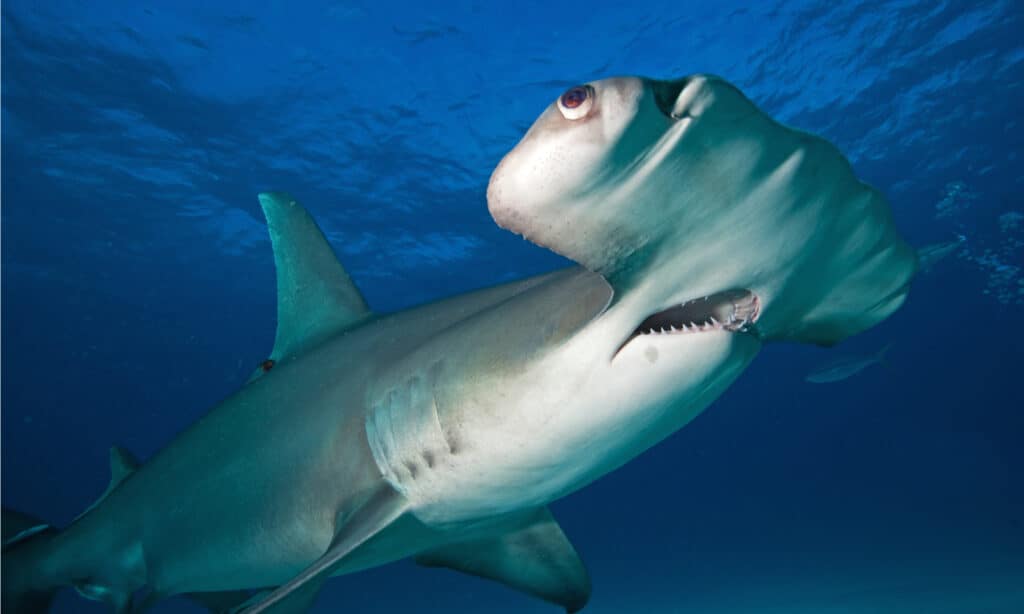
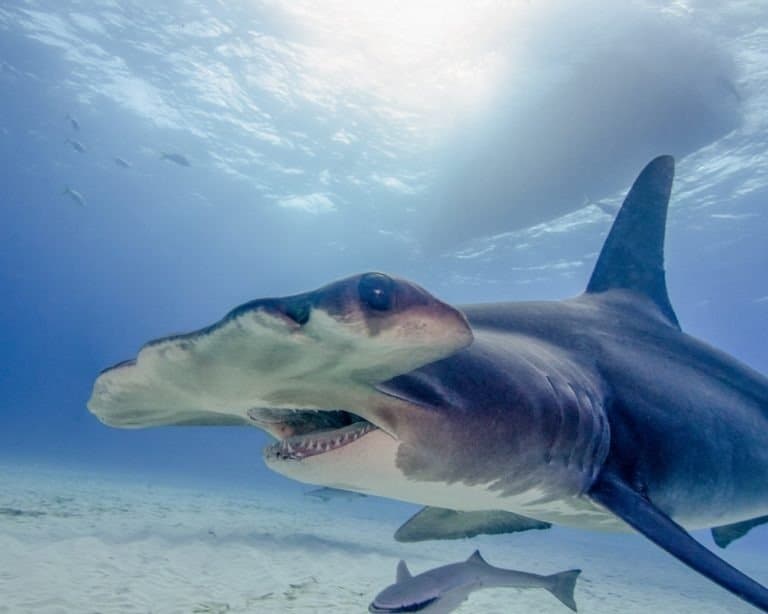
The eyes of Great Hammerhead Sharks sit on the edge of their mallet-shaped heads, they have excellent eyesight and a 360 view of their surroundings, making them skilled hunters.

Hammerhead sharks are found in warm coastal waters.

  • Lovers of warmth: Hammerheads are fish that prefer warm coastal waters.
  • Efficient swimmers: Hammerhead sharks tend to swim at an angle to decrease drag and increase their swimming efficiency.
  • Going green: One species of hammerhead, the bonnethead shark, is actually omnivorous, as it eats seagrass.
  • Better hunters: The long heads of the hammerhead shark allow the sharks to spread out their special sensory organs, giving them a hunting advantage over other sharks.

Classification and Scientific Name

These sharks are in the class Chondrichthyes, or cartilaginous fishes. Their order is Carcharhiniformes, which has two dorsal fins, five-gill slits, and is the largest order of sharks.
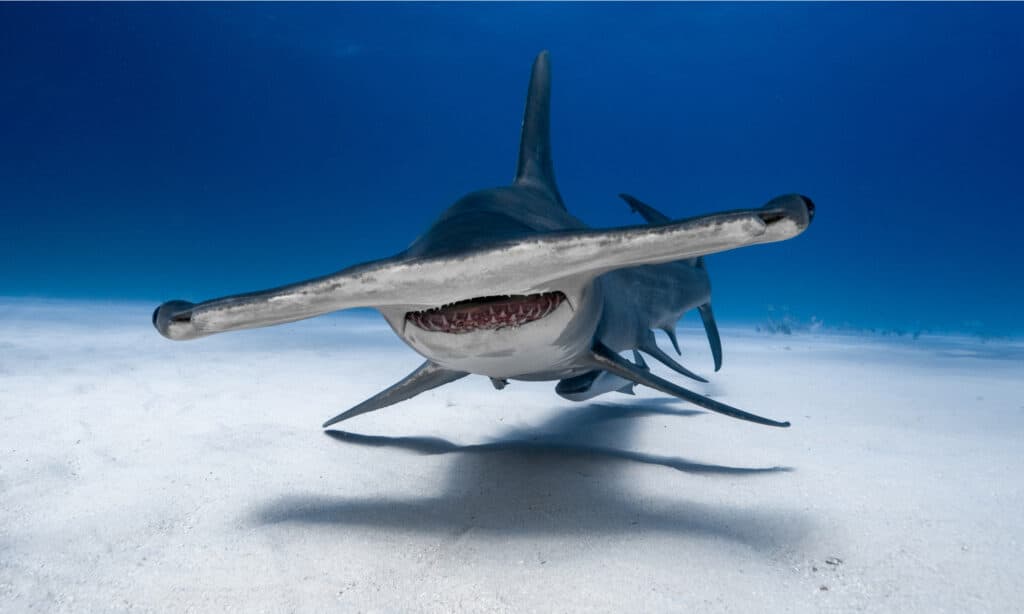
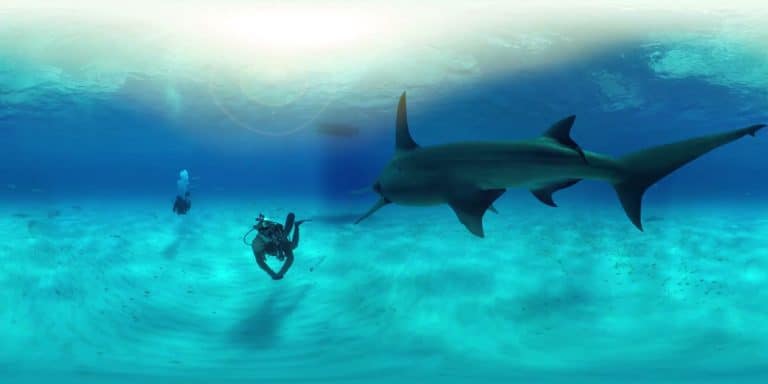
Great Hammerhead in the Bahamas. They are aggressive hunters and will attack if threatened.

These sharks are in the class Chondrichthyes, or cartilaginous fishes. Their order is Carcharhiniformes. The family scientific name for hammerhead sharks, Sphyrna, is the Greek word for “hammer.”

The family Sphyrnidae is the hammerheads, which include the genus Sphyrna and the genus Eusphyrna. Sphyrna includes the nine species of true hammerheads, and Eusphyrna includes only one species, the winghead shark.

The scientific name for hammerhead sharks, Sphyrna, is the Greek word for “hammer.”

Evolution and Origins

Hammerhead sharks first appeared in oceans close to 20 million years ago. They were actually as big as some contemporary hammerhead sharks today. In modern times, there are about 530 species of sharks, and at least 9 species of hammerhead sharks alive as of 2025.

It is acceptable to believe that hammerheads evolved from a single carcharhinid ancestor with a normal-shaped head. It is believed that the shape of the hammer has evolved over millions of years.

Additionally, a recent study suggests that the hammerhead shark evolved its hammer-shaped snout to boost the animal’s vision and hunting process. Although argued in the past, most believe that having eyes so wide apart actually helps vision rather than hinders it.

Shark Species

There are nine species of true hammerhead sharks, with most of them being smaller sharks and a few, such as the great hammerhead shark, being large enough to pose a threat to humans.

These are the nine different species of hammerhead shark:

  • Winghead Shark
  • Scalloped Bonnethead
  • Whitefin Hammerhead
  • Scalloped Hammerhead
  • Scoophead
  • Great Hammerhead
  • Bonnethead
  • Smalleye Hammerhead
  • Carolina hammerhead

Some are named after the shape of their heads, such as the bonnethead shark. Some, such as the scalloped hammerhead, are named after features on their heads. The scalloped hammerhead features a row of ridges along the front of its face.

The winghead shark is an ancient breed of hammerhead, as its head is significantly larger in proportion to the rest of its body.

Appearance
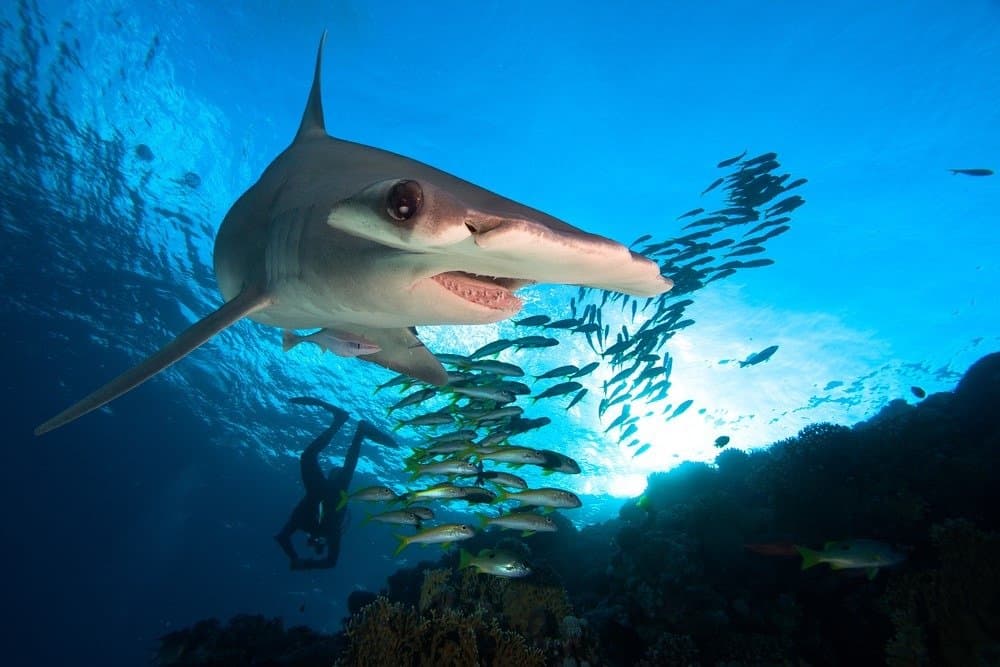
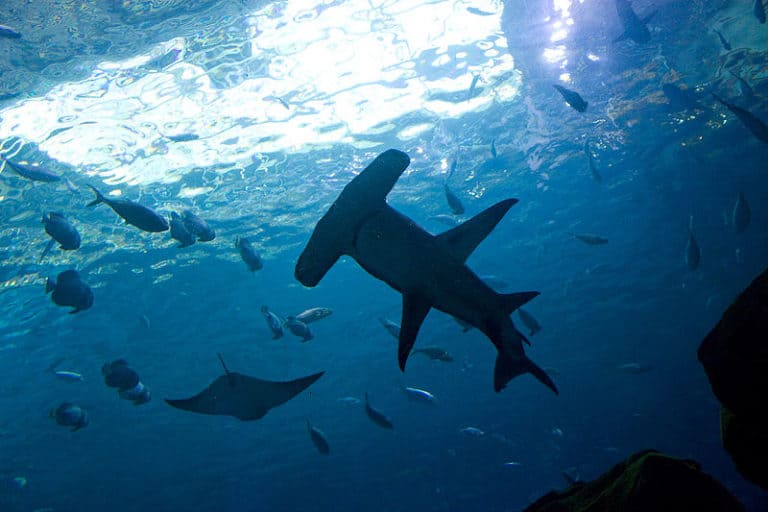
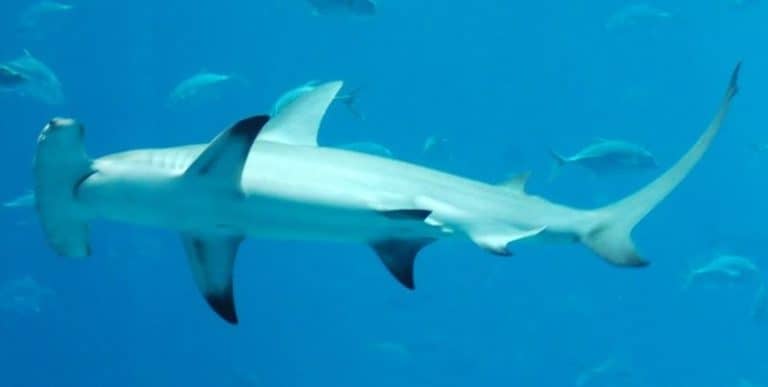
Hammerhead shark and school of fish

A hammerhead shark and a school of fish.

Hammerheads are fish that are grey-green to olive in coloration, and they have bright white bellies. These bellies allow them to disguise themselves against the brightness of the ocean surface while hunting prey. Hammerheads have small mouths in proportion to their heads. Their teeth are serrated and tiny. Their eyes sit at the edges of their face, granting them a wide field of view. They have 5 gill slits.

The unique head of these sharks serves purposes beyond great vision. Like most sharks, hammerheads use sensory organs in their face to detect the electrical impulses given off by other creatures. These organs aid in locating and catching prey.

The hammerhead shark family has increased detection abilities because their sensory organs are spread throughout their heads. This spread allows them to find food, such as stingrays, on the sandy ocean floor.

These sharks can be as small as 2.95 feet and as long as 20 feet. They have tall, pointed dorsal fins. Some species have a notch on the end of their tails.

Distribution, Population, and Habitat

Black Sea coast, Georgia.

These unique sharks live along the coastline and the continental plates. They prefer warm bodies of water and are only found in the ocean.

These unique sharks live along the coastline and the continental plates. They prefer warm bodies of water and are only found in the ocean. These sharks migrate when the seasons change; they move to the poles during the summer and to the equator during the winter. Populations of these sharks are dense around Hawaii, Costa Rica, and Eastern and Southern Africa.

Some species form schools of hundreds of individuals by day. These schools are primarily female hammerheads. By night, most species are solitary hunters.

Populations of most species of hammerhead sharks have been in decline, with some species listed as threatened while others are critically endangered.

Predators and Prey
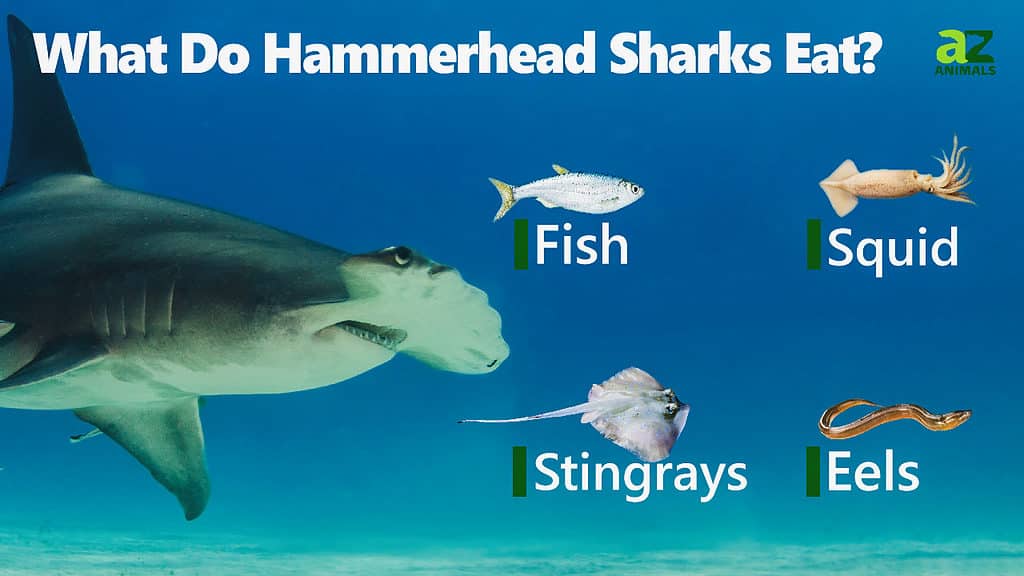
Hammerheads tend to be carnivorous creatures. They will feed on fish, crustaceans, and cephalopods. However, these sharks have also been spotted eating seagrass on occasion.

Hammerheads tend to be carnivorous creatures. They will feed on fish, crustaceans, and cephalopods. A particular favorite of hammerheads is stingrays. They will use their enhanced sensory abilities to find them buried in the sand and then pin them down using their heads.

Hammerheads prefer to hunt in shallow waters, and some species even venture into bays and brackish waters to find prey. A 2005 study examined the stomach contents of 556 hammerhead sharks and found their most common prey were small squids, fish, and their stomachs even included moray eel.

If the sharks are unable to find food, they have been known to eat their own young. They are considered to be better predators than other species of sharks.

Adult hammerhead sharks have few natural predators, but large sharks and orcas have been known to prey on them, and juveniles are more vulnerable to predation. Humans are the biggest threat to these species, as they are fished deliberately for their fins or occasionally accidentally caught in fishing nets.

Reproduction and Lifespan
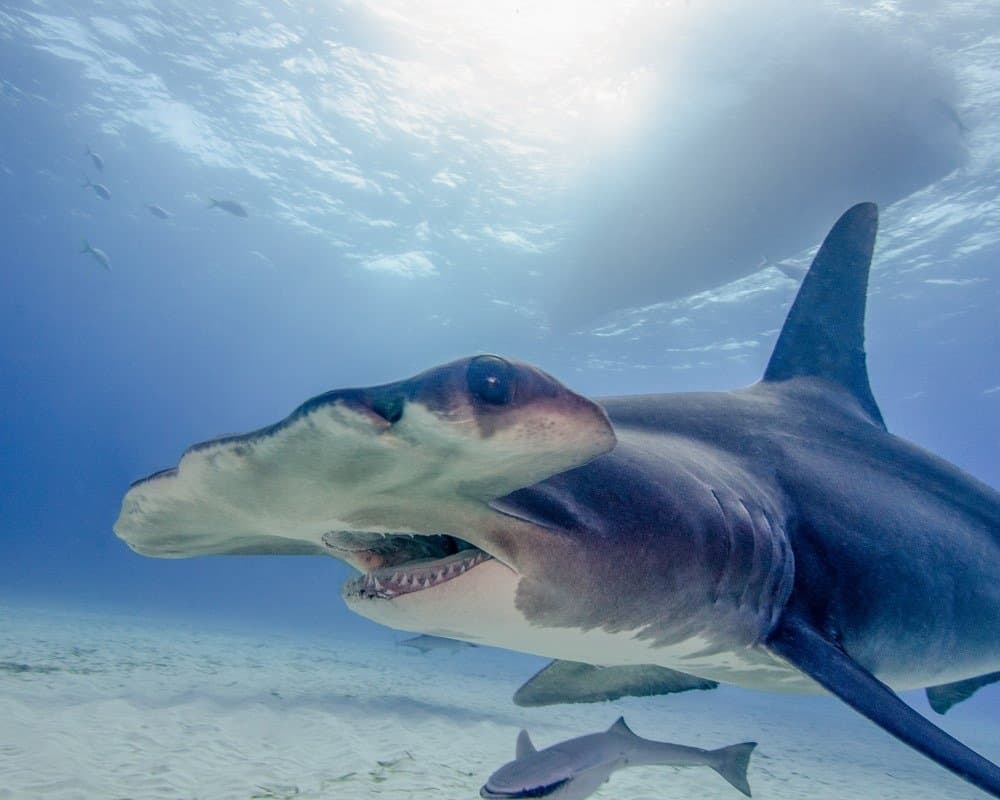
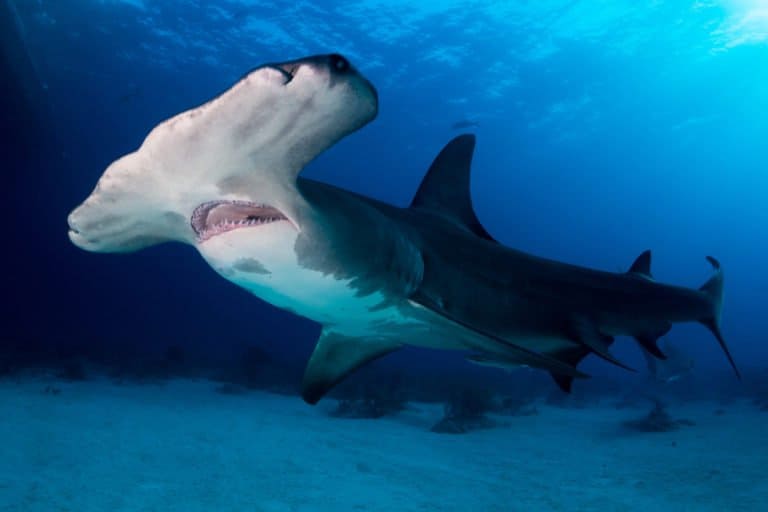
Great Hammerhead Shark in the Bahamas

Great Hammerhead Shark in the Bahamas.

These sharks reproduce in the spring and summer months. Their breeding season is annual, unlike other species of shark. The male bites the female viciously until she allows him to mate with her. However, she can chase him away if she is not interested in him.

This process can take hours until the female decides to submit to a mate. These sharks have thick skin, which means the mating rituals aren’t painful, though older females often have scars from the bites.

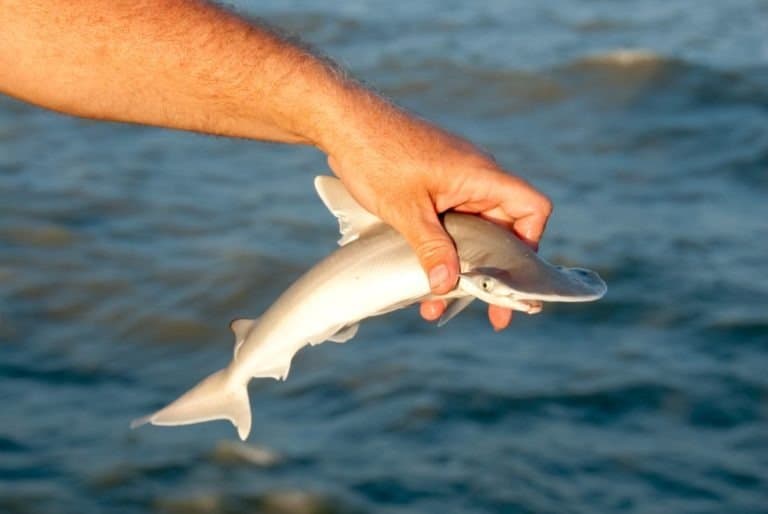
Hammerheads fertilize their eggs internally, making for a safe environment for the young to develop. Females give birth to live young after a 10 to 12-month gestation period. Pups are born in shallower waters and left to fend for themselves. They swim to deeper waters once they are older.

Fishing and Cooking

baby hammerhead shark school

Hammerhead sharks are one of many species of sharks that suffer from the shark finning industry.

These sharks are one of many species of sharks that suffer from the shark finning industry. Shark finning is when sharks are harvested for their fins and then tossed back to sea, often while still alive. Shark fins are illegally used in medicinal remedies, as well as in shark fin soup. These sharks are also prized as sport fish.

Millions of sharks are finned every year, and hammerhead populations suffer enormously from this. However, since they reproduce once a year, hammerheads can replenish their populations faster than other species of shark can. Most sharks are slow to breed and reproduce, so their numbers simply cannot keep up with the population decline caused by shark finning.

View all 287 animals that start with H

Sources

  1. Australian Marine Conservation Society / Accessed November 28, 2020
  2. Britannica / Accessed November 28, 2020
  3. Sharks World / Accessed November 28, 2020
  4. National Geographic / Accessed November 28, 2020
  5. Animal Corner / Accessed November 28, 2020
  6. Planet Shark Divers / Accessed November 28, 2020
  7. NOAA Fisheries / Accessed November 28, 2020
  8. Fish Base / Accessed November 28, 2020
  9. Reference / Accessed November 28, 2020
Rebecca Bales

About the Author

Rebecca Bales

Rebecca is an experienced Professional Freelancer with nearly a decade of expertise in writing SEO Content, Digital Illustrations, and Graphic Design. When not engrossed in her creative endeavors, Rebecca dedicates her time to cycling and filming her nature adventures. When not focused on her passion for creating and crafting optimized materials, she harbors a deep fascination and love for cats, jumping spiders, and pet rats.
Connect:

Thank you for reading! Have some feedback for us?


Hammerhead Shark FAQs (Frequently Asked Questions)

Only one species of hammerhead shark, the great hammerhead shark, is big enough to pose a real threat to an adult human. Even so, very few hammerhead shark attacks have ever been recorded.