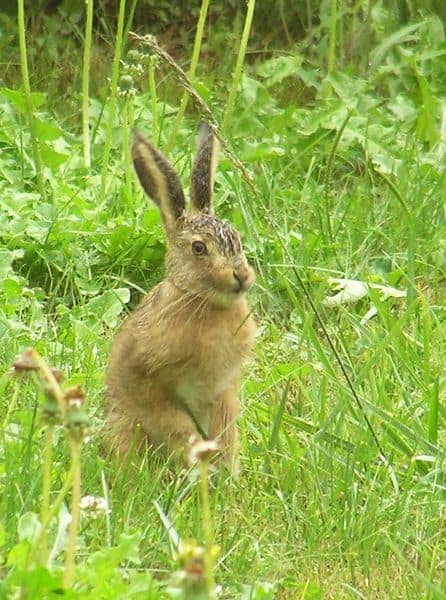
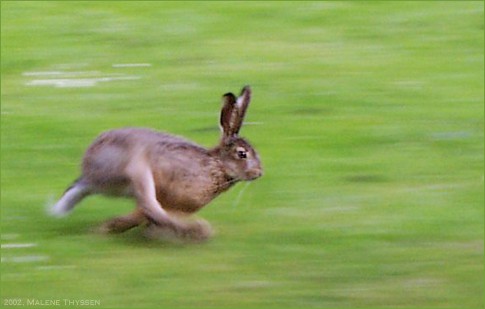

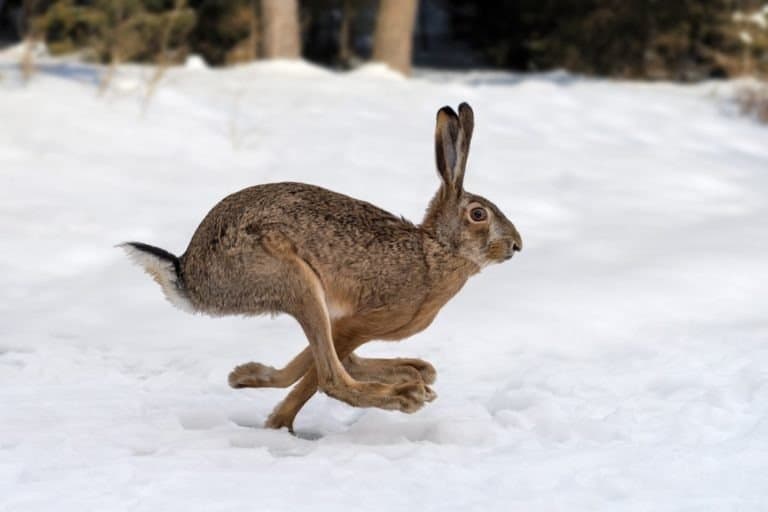






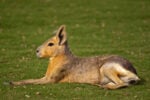
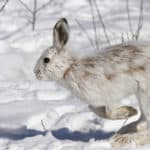
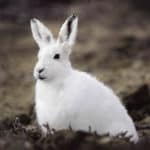
The hare is one of the fastest land mammals in the world.
This speed is absolutely critical to its survival. Lacking any other formidable defenses at its disposal, the hare is a small and timid animal that can outrun predators with incredible bursts of speed and endurance. The hare is a very common sight, but many fall victim to ferocious predators or human hunters before they can die of natural causes.
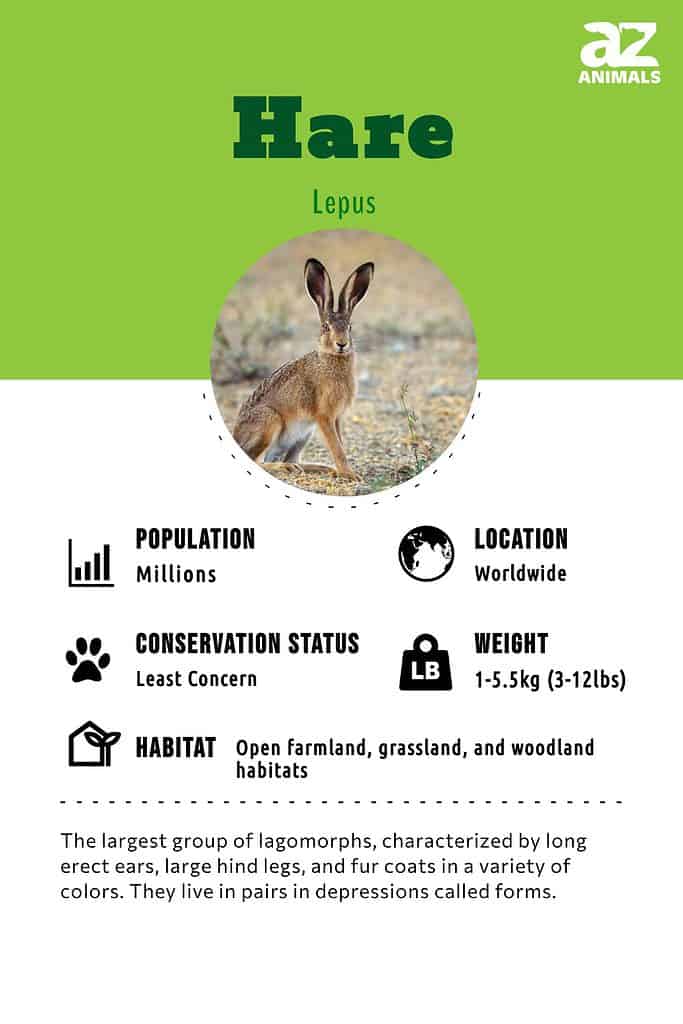
3 Hare Facts
- The hare is an animal that has been featured prominently in the mythology and folklore of human societies around the world. The legend of the White Hare, in which the spirit of a woman takes the form of a hare and haunts the earth at night, is a central pillar of some British folklore. These animals are also a common motif in literature and art, including Alice’s Adventures in Wonderland. In some traditions, it is depicted as a trickster.
- The hare is a nocturnal animal that spends the night awake and the day sleeping.
- The hare’s front teeth never stop growing throughout its life. The animal must grind the teeth down by chewing on grass.
Scientific Name
The hare is not a single species, but rather an entire genus known as Lepus (which is the Latin name for the hare). As you might already know, genus is the level of scientific classification directly above species. There are approximately 30 species within the genus Lepus. There is quite a bit of popular confusion between the terms hare, jackrabbit, and rabbit. Hare and jackrabbit are interchangeable terms that describe the same thing, but the term rabbit applies to a different genus of animals entirely. More confusingly, five species of rabbits are actually called hares, including the endangered hispid hare of Nepal and the red rock hares of Africa.
Hare vs. Rabbit
Hares and rabbits are both animals that belong to the same family of Leporidae and the order of Lagomorpha (although they were once considered rodents). The main differences are the hare’s larger ears, more solitary lifestyle, and the tendency to bear young above ground rather than in burrows. Because of the young lack protection, they must be ready to fend for themselves immediately after birth. Another difference is that with their longer muscle fibers, hares are better suited for long-distance running.
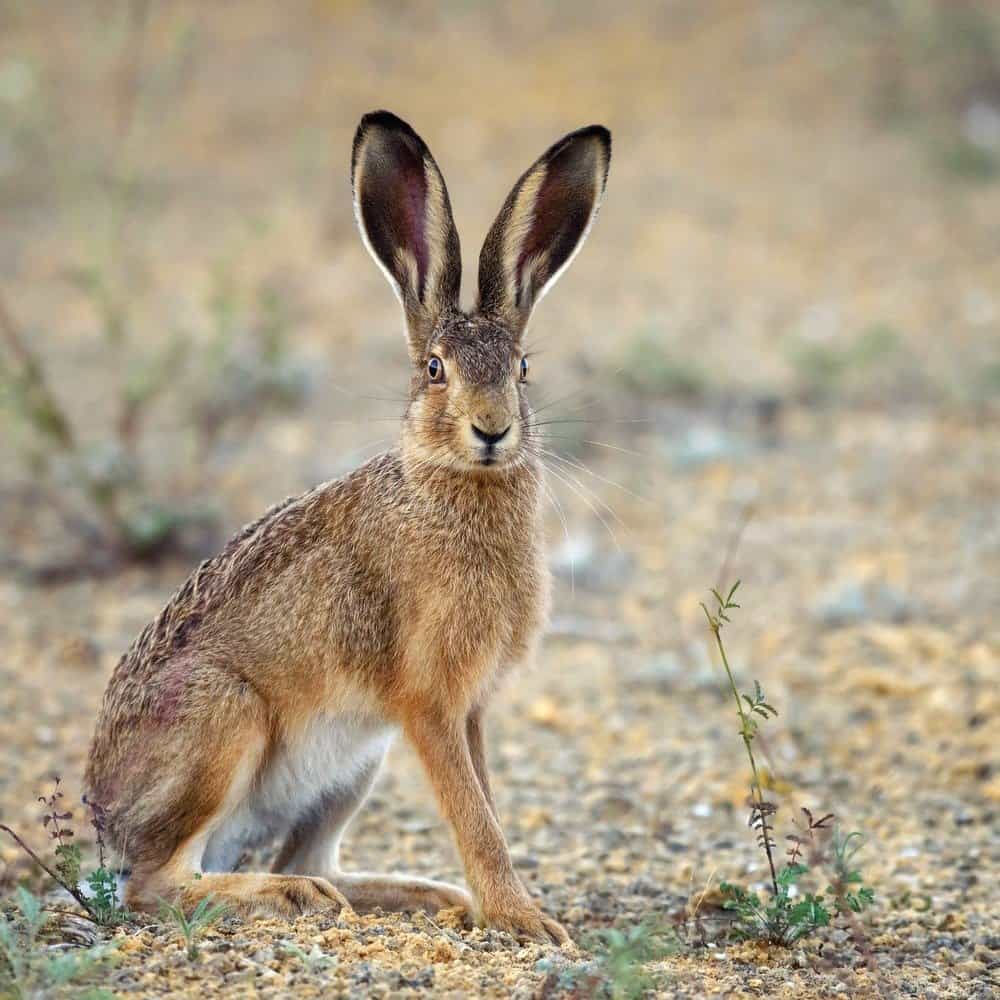
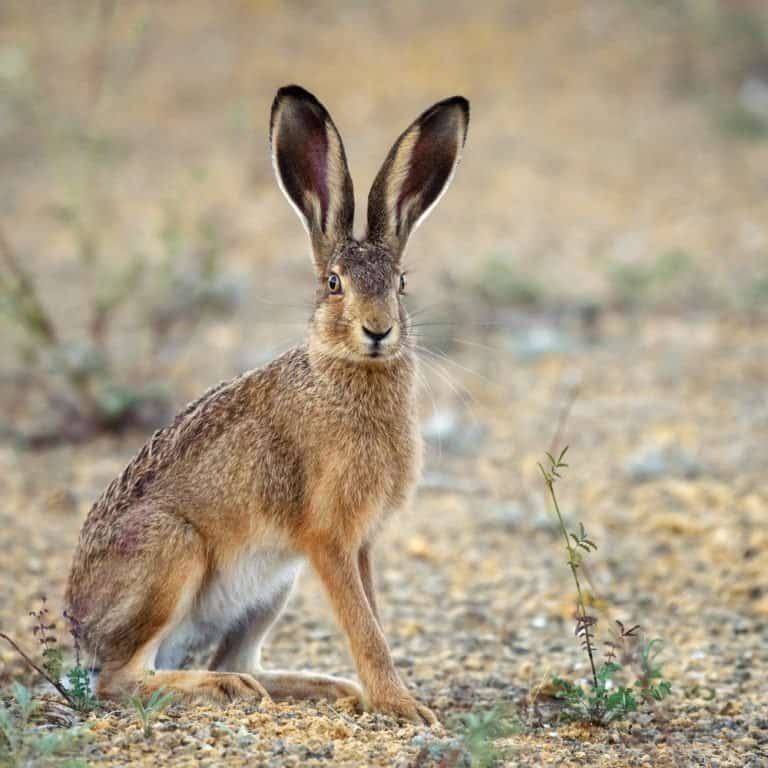
These animals have a rather distinctive appearance characterized by their extremely long ears, long hind legs, short snout, big eyes, and stout body. They are typically adorned with white, black, gray, tan, or reddish-orange colors to blend in with the surroundings. Some species turn white during the winter months or remain white all year long as a form of camouflage in the snow. In order to change color, these hares molt in the spring.
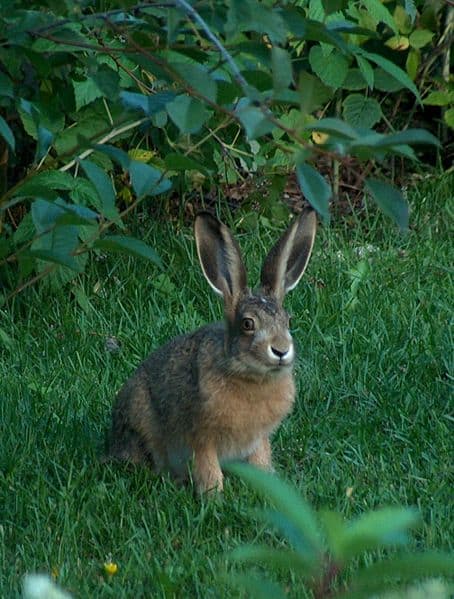
Hares differ from rabbits in that they have larger ears, a more solitary lifestyle, and bear young above ground rather than in burrows.
©Anneli Salo / Creative Commons – Original
Evolution
Hares and rabbits are believed to be descended from a ground dwelling ancestor dubbed Hsiuannania. This creature was native to China and lived during the Paleocene Era in China. This animals was discovered in a few teeth and jaw bone artifacts, but they can definitely be placed as originating in Asia.
Types of Hares
There are about 40 species of hares in the world. They are divided into three different genera: Lepus, Caprolagus, and Pronolagus. Below are 32 types of hares:
- Abyssinian Hare – Native to East Africa. Silvery gray with black patches.
- African Savanna Hare – Native to Africa. Grayish-brown with reddish-brown markings.
- Alaskan Hare – Native to Alaska. Does not burrow.
- Antelope Jackrabbit – Native to Arizona and Mexico. One of largest breeds with huge ears.
- Arctic Hare – Native to Arctic Circle. They have thick coats and burrow to stay warm.
- Black Jackrabbit
- Black-tailed Jackrabbit
- Broom Hare
- Burmese Hare
- Cape Hare – Native to Africa, India, and Arabia.
- Chinese Hare – Native to China, Taiwan, and Vietnam.
- Corsican Hare
- Desert Hare – Native to United States and Mexico. Habitat is desert regions. Huge ears help them stay cool in the heat.
- Ethiopian Hare – Native to Ethiopia.
- Ethiopian Highland Hare – Native to Ethiopian Highlands.
- European Hare – Native to Europe and parts of Asia. Most common species in Europe. Habitat is open areas.
- Granada Hare – Native to Iberian Peninsula.
- Hainan Hare – Native to Hainan Island, China. Weighs up to 3.3lbs, colorful coat.
- Indian Hare – Native to India with seven sub-species. Status: Least Concern.
- Japanese Hare – Native to Japan. Habitat is mountains and hills, forests and brushes.
- Korean Hare
- Manchurian Hare – Native to China and Russia.
- Mountain Hare – Native to Russian and Northern Europe. Large in size with a coat that changes seasonally.
- Scrub Hare
- Snowshoe Hare – Native to North Merica. Coat changes colors with the seasons.
- Tehuantepec Jackrabbit
- Tolai Hare
- White-sided Jackrabbit – Native to North America and Mexico.
- White-tailed Jackrabbit – Native to North America and Canada.
- Wooly Hare – Native to China, India, and Nepal.
- Yarkand Hare – Native to Tarim Basin, China. Straight coat with grayish-black stripes. Status: Endangered.
- Yunnan Hare
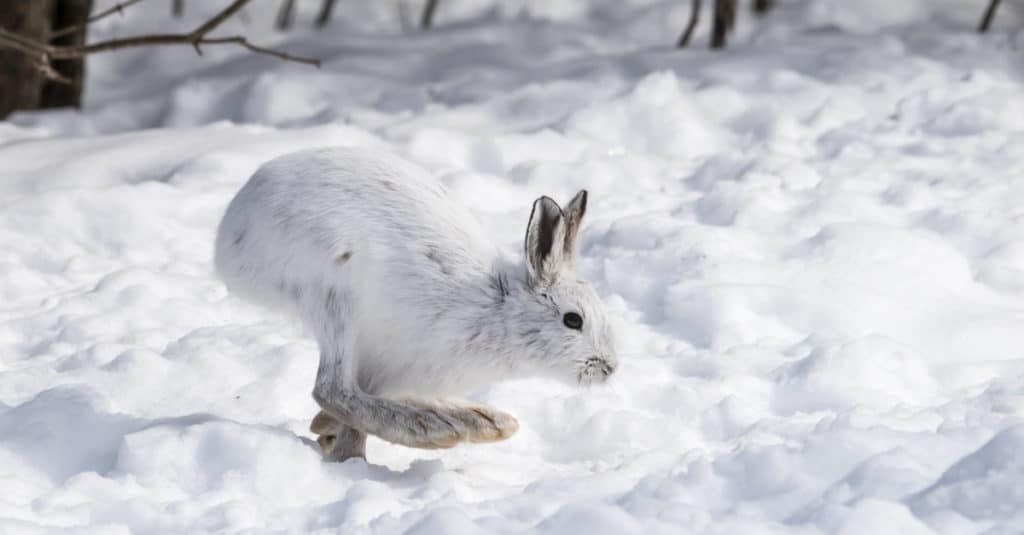
The Snowshoe Hare is one of the 40+ species of hares.
©FotoRequest/Shutterstock.com
Appearance and Behavior
Hares are the physically largest animals in the order of Lagomorphs. They are even larger than the closely related rabbits and the pikas. Measuring about 16 to 28 inches from head to tail, they are a little larger than the typical house cat. The body is complemented with 6-inch feet and 8-inch ears. The heaviest species is the arctic hare at around 11 pounds. The male is known as a jack, while the female is called a jill. Both are fairly similar in size and appearance, though females do tend to be a little larger, which is uncommon for a mammal.
These solitary animals tend to form in small pairs or family units called a drove. The only time they will congregate among other hares is to find an appropriate mate. Unlike rabbits, they tend to live exclusively above ground. If they need to seek out safety, then they will usually hide in grasses or shrubs.
Although they may not look it, hares are physically remarkable creatures with a finely developed sense of hearing, smell, and vision. Their wide angle of view allows them to detect predators coming from anywhere around them except for a small blind spot in front of their noses. They also produce pheromones from scent glands, which might play a role in mating. Some species are capable of short bursts of speed between 40 and 50 MPH and more consistent speeds of around 30 MPH. Thanks to their powerful hind limbs, they can leap 10 feet in the air. They are also excellent swimmers that can traverse rivers and large bodies of water without a problem.
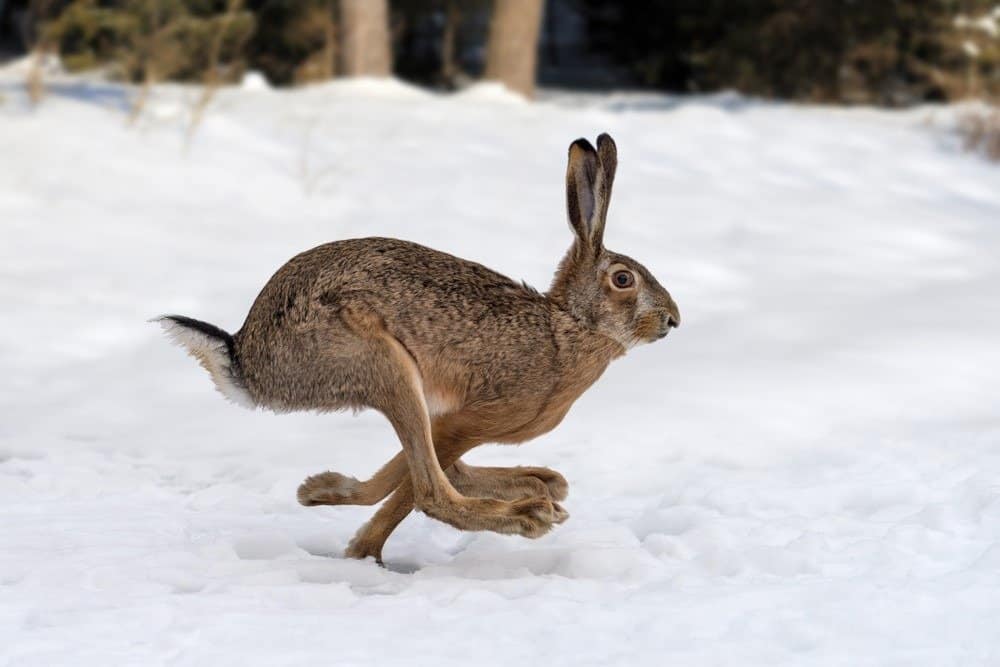
In the order of Lagomorphs, hares are the physically largest group of animals.
©Volodymyr Burdiak/Shutterstock.com
Long Ears
The hare has impressively huge ears. In relation to body size, they are perhaps the largest among all living mammals. It is believed that they have long ears for two different reasons. First, the ears allow them to hear sound from almost any direction. Second, the ears serve to dissipate body heat and keep the hare cool, especially during the warmer months of the year. This is essential for the animal’s survival since these animals cannot sweat or pant to work off heat. In fact, when light shines through the ear, you can sometimes see the dense patchwork of blood vessels inside of it that will swell in the heat to lower body temperatures.
Habitat
These animals occur naturally throughout Europe, Asia, Africa, and North America. Because of the large number of habitats to which this genus has adapted, each species inhabits a different geographical range. The snowshoe hare is a well-known species that occurs from Alaska to the mountainous regions of California and Nevada. The African hare, as the name implies, inhabits much of Africa. The arctic hare is one of the few species adapted for the frigid extremes of northern Canada and Greenland.
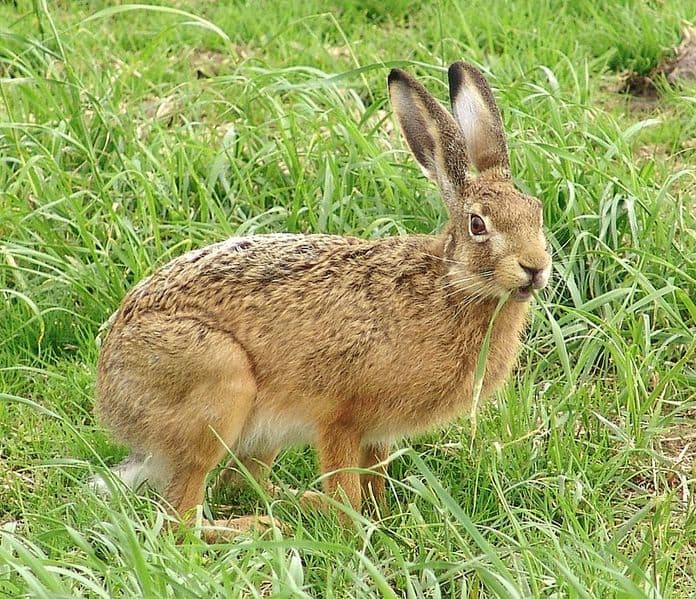
The European hare — which inhabits Europe, the Middle East, and as far east as Siberia — is perhaps the most common species of hares in the world. In recent centuries, it has been introduced into Australia, New Zealand, South America, and parts of North America as hunting game. But after spreading out of control, the species is now considered a pest in many parts of the world, as it consumes crops and outcompetes local species.
Wherever it’s found, these animals prefer to inhabit open plains such as meadows, grasslands, deserts, tundra, and savannas. Although this sometimes exposes them to predators, their remarkable speed often allows them to get away even in relatively flatlands. If they need to hide, then hares will conceal themselves in the grass, shrubs, or hollows. Only a few species live in more forested regions.
Diet
Hares are herbivorous animals that mostly consume grasses in the wild. This is supplemented with nuts, fruits, vegetables, and fungi. Composed of tough cellulose, grass is extremely difficult to digest. Because these animals lack the multi-chambered stomach of cattle, deer, and other ruminants, it is believed that they have evolved to eat their own droppings, which contain many undigested nutrients. This gives them a second chance to digest whatever nutrients remain in the food.

Predators and Threats
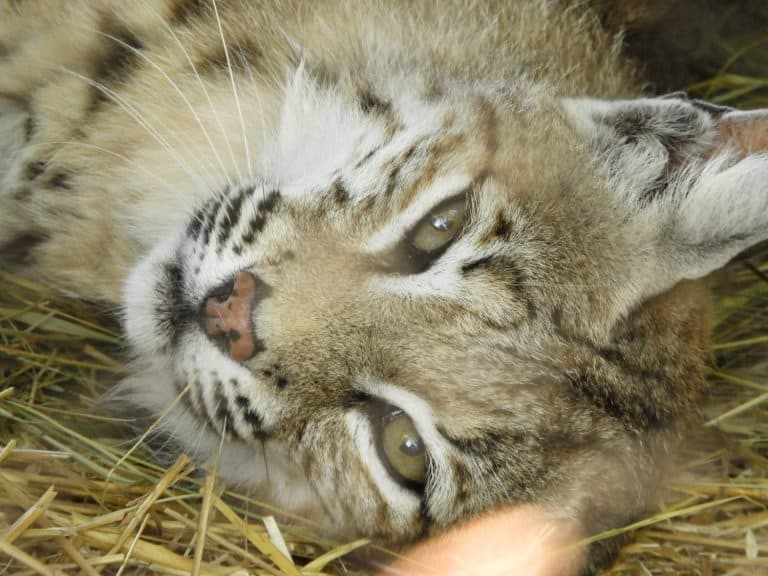
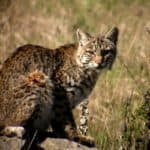
Hares are the natural prey of many large cats, birds, and reptiles around the world. The snowshoe hare is the most common prey animal of the powerful lynx. This species goes through an unusual boom/bust cycle in which numbers crash from overhunting and then slowly begin to recover. This cycle takes place over a regular eight to 11-year time span. Meanwhile, both the brown hare and the European hare are the prey of the fox. Other common predators include bobcats, hawks, eagles, snowy owls, wolves, coyotes, bears, and even weasels.
The hare has traditionally been a common source of food for people, and they are still among the most hunted animals today. Most of this hunting is responsibly done. However, an even greater threat is habitat loss and fragmentation, which has caused numbers to decline around the world.
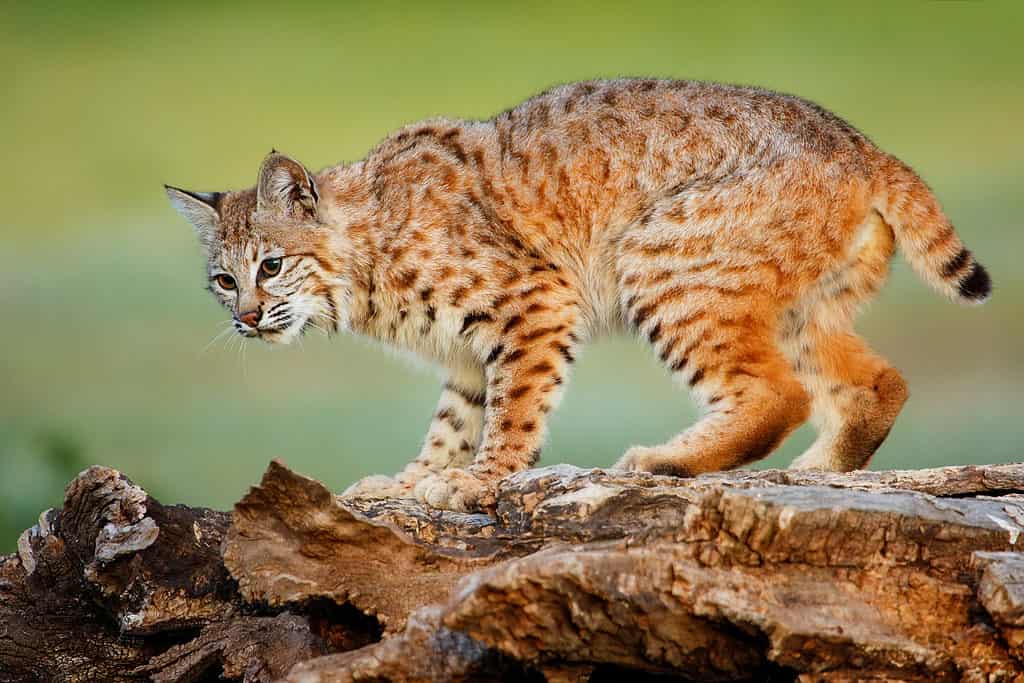
The bobcat is a common predator of hares.
©Don Mammoser/Shutterstock.com
Reproduction, Babies, and Lifespan
The hare’s breeding season is quite competitive and feisty. Males will fight each other for access to females, while the female will force the male to chase her as a test of his stamina and determination. This also serves the purpose of helping the animal to stay fit. If the female is not ready to mate at all, then she may box the male right across the face with a stern punch. The hare’s breeding season varies quite a bit by species. Some species can breed at any time throughout the year, while others only breed during the spring and summer months.
Both hares and rabbits have a reputation for a prolific rate of reproduction. The female can typically produce one to eight children in a single litter (rarely up to 15) with up to three litters per year. The amount of young usually depends on the abundance of food. The mother will typically carry the children for around 40 days. Hidden in large grasses or depressions, the young hares, also known as leverets, are born with their eyes open and their fur completely grown. They are able to begin hopping within minutes of emerging from the womb. This is because they won’t have the protection of a larger group. The mother herself only visits the children once every day for very short periods, usually to nurse them.
Weaning usually begins around 10 days of life and lasts up to 23 days. Although they are functionally independent soon after birth, sexual maturity takes about one to two years in most species of hares. The typical lifespan is between four and eight years in the wild. If a hare avoids disease and predation, then the maximum possible lifespan is around 12 years.
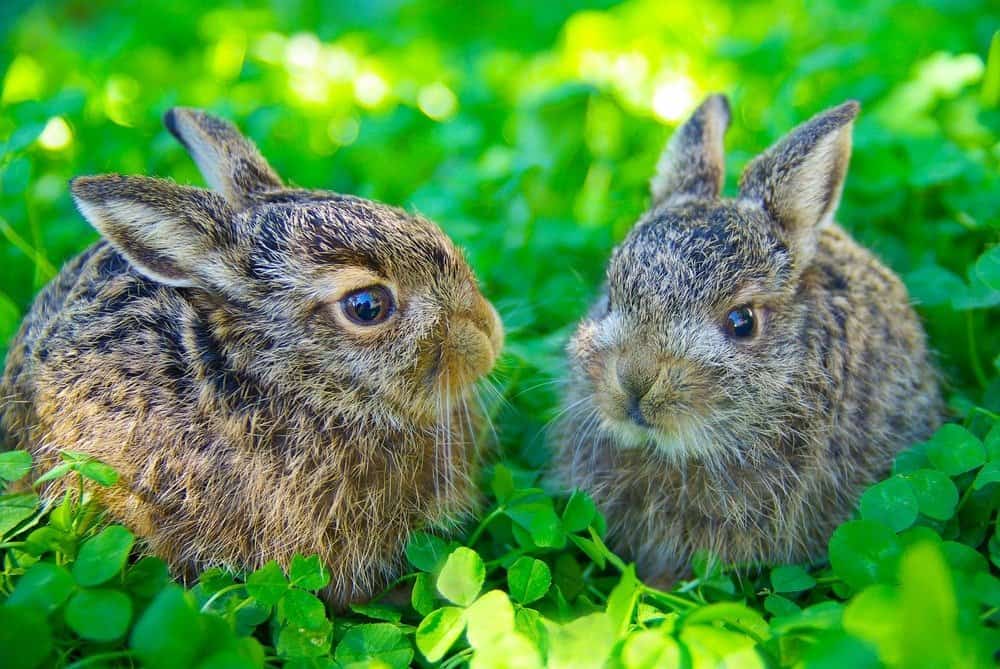
Young hares, also known as leverets, are born with their eyes open and their fur completely grown.
©Liga Gabrane/Shutterstock.com
Population
The majority of hare species appear to be in relatively good health. According to the IUCN Red List, which tracks the conservation status of many animals, most hare species are currently classified as least concern. A few species, like the Corsican hare, the white-sided jackrabbit, and the black jackrabbit, are vulnerable. The Hainan hare of Hainan, China, and the Tehuantepec jackrabbit of Mexico are both endangered to extinction. Exact population figures are not available, but some species appear to be declining from agriculture and other habitat loss.
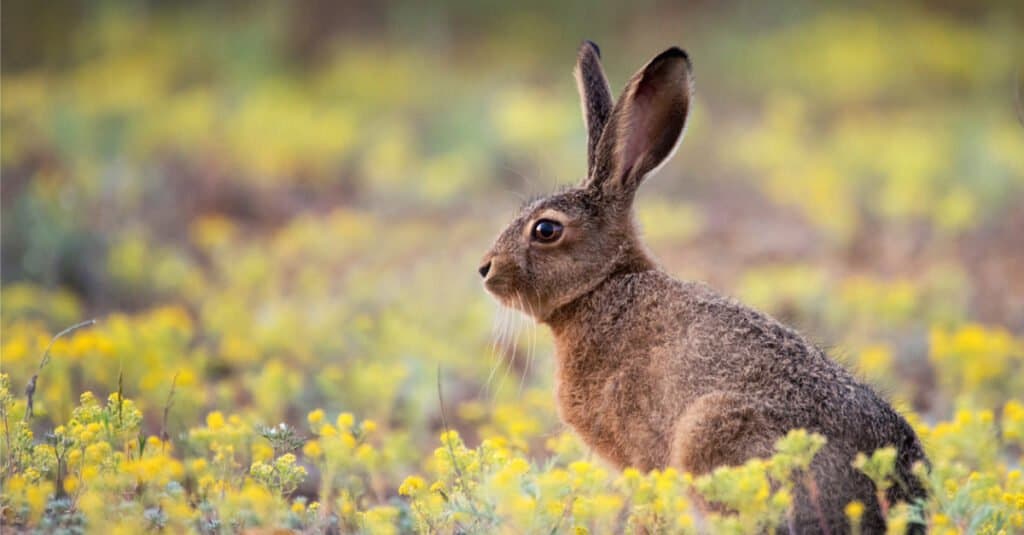
The IUCN Red List classifies the hare as a species of least concern.
©iStock.com/MriyaWildlife
Human Consumption
Hare meat and blood have both been used across the globe through centuries as a source of protein. Hare are available everywhere and their numbers are plenty, which is why hunting activities are unregulated compared to other game. They have also been used for sport hunting activities, in America, many European countries and the UK.
Hare meat is not seen as a great survival food due to its low fat content compared to beef, lamb/goat, turkey and even chicken. However, the leanness does make it a healthy choice as it is a great source of protein. Here are some nutritional facts (Per 100g) about hare meat, which produces 173 calories when consumed:
- Protein: 33g of protein can be found in 100g meat, fulfilling 66% of daily requirement for an average human body.
- Fats: Only contains 3.5g fat and 1.1g of saturated fat.
- Cholesterol: 123mg can be found in 100g meat.
- Vitamins: good source for Vitamin B.
- Minerals: contains iron, Potassium and Sodium.
How to Cook Hare
Typically hare are cooked over a spit, grilled, roasted or fried for making sandwiches or eating with sauce. Here are a few popular recipes from around the globe:
Hare Stew
All around the world, especially in Europe hare meat is slow cooked with various vegetables such as onions, tomatoes, potatoes, carrots, celery, garlic and sprinkled with regional sauce and spices.
- In Italy agrodolce sauce is used to make the stew, which is a sweet tasting sauce made with wine, raisin and pine nuts, sugar, vinegar and bitter chocolate.
- In Germany, UK, France, wine and hare blood is used for making the gravy or sauce thick.
- Other ingredients, such as dry white wine, sour cream, bacon, eggs, garlic, mushroom are also used regionally to create delicious dishes.
Other Uses
Jugging Hare: The blood of hare is collected in a process called Jugging. The blood is then used to cook the rabbit meat and to thicken the gravy or sauce. The hare is first skinned and the entrails are removed, then the hare is hung upside down so all the blood accumulates in the chest cavity. The hare can be hung for long period of time for collecting the blood. Which is why it is mixed with red wine to prevent coagulation and refrigerated.
Their pelts have been and are still used for creating winter wear by the native population living in Americas, Europe, and the Polar regions.
Hare in Mythology and Folklore Around the Globe
Hare have been seen in may cultures and folklore as bringers of prosperity, fertility and abundance. They are also seen as a representation of moon deities, resurrections and rebirth. Here are some facts you would find interesting:
Celtic Mythology: The Celts saw Hares as connectors to the Otherworld and it was forbidden to eat them. There are many stories in Celtic mythology about shapeshifting hare that turn into people.
Native American: Many native Americans saw the hare as demiurge, probably due to their proclivity to multiply so swiftly, and worshipped them.
Egyptian: Egyptians saw the hare as a representation of procreation and immortality.
Africa: African natives see the hare as a trickster who survives through the use of great wit.
Greek: In Greek mythology hare are associated with Eros and Aphrodite, and they were seen as a romantic gift to be given to partners and potential love interests.
East Asia: In Japan, Vietnam Thailand, Sri Lanka, Korea, Cambodia and India, the hare is seen as a Moon deity. The Chinese see the hare as a companion to moon goddess Chang’e.
The Asian festival of Mid-Autumn festivals are a celebration of the Moon deities and has risen through the the legends of the moon goddess.
Another great example of celebration of the hare is the Easter Bunny who represents the starting of spring, which is essentially a celebration of fertility, rebirth and reproduction.
Hare Pictures
View all of our Hare pictures in the gallery.

MOdmate - Public Domain
Sources
- David Burnie, Dorling Kindersley (2011) Animal, The Definitive Visual Guide To The World's Wildlife / Accessed November 7, 2008
- Tom Jackson, Lorenz Books (2007) The World Encyclopedia Of Animals / Accessed November 7, 2008
- David Burnie, Kingfisher (2011) The Kingfisher Animal Encyclopedia / Accessed November 7, 2008
- Richard Mackay, University of California Press (2009) The Atlas Of Endangered Species / Accessed November 7, 2008
- David Burnie, Dorling Kindersley (2008) Illustrated Encyclopedia Of Animals / Accessed November 7, 2008
- Dorling Kindersley (2006) Dorling Kindersley Encyclopedia Of Animals / Accessed November 7, 2008
- David W. Macdonald, Oxford University Press (2010) The Encyclopedia Of Mammals / Accessed November 7, 2008
- Britannica / Accessed November 1, 2020
- National Geographic / Accessed November 1, 2020