
H
Species Profile

Hedgehog

Erinaceidae

Spines, snuffles, and survival
Coatesy/Shutterstock.com

Hedgehog Distribution

Click a location to explore more animals from that region

Invasive Species
Loading map...

Size Comparison

Human 5'8"
Hedgehog 3 in

Hedgehog stands at 5% of average human height.

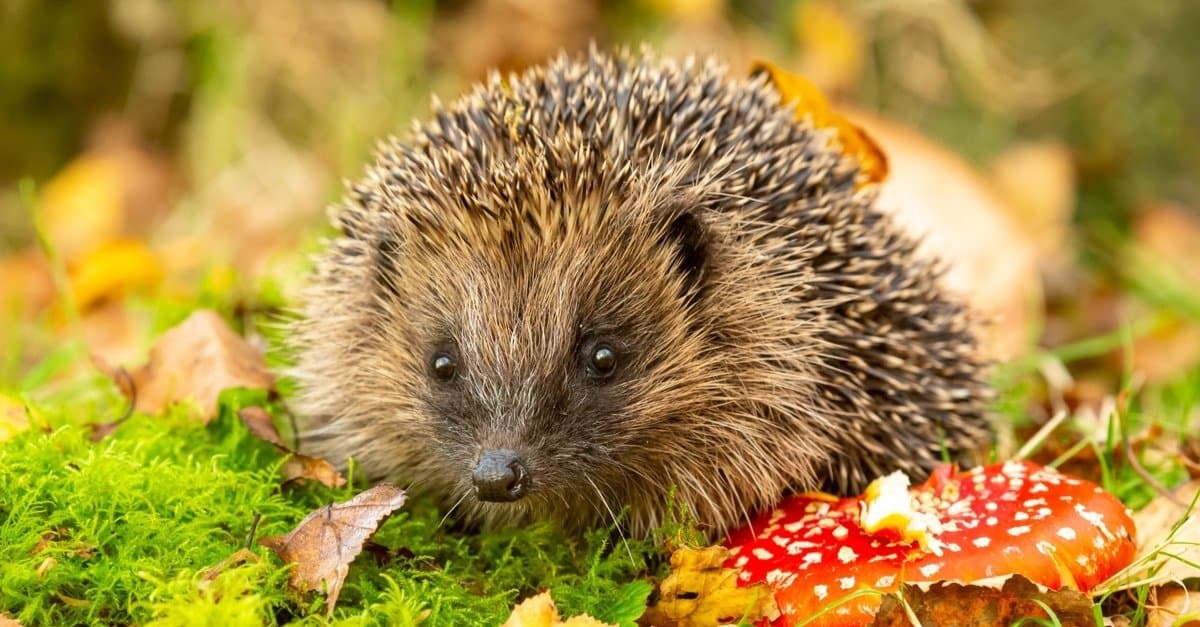
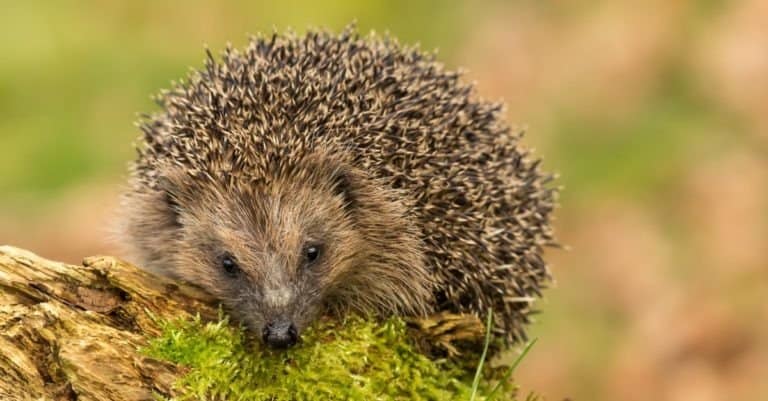
Hedgehog, (Erinaceus europaeus) wild, native, European hedgehog with red Fly Agaric toadstool, and green moss.

At a Glance

Family Overview This page covers the Hedgehog family as a group. Stats below are general traits shared across the family.
Also Known As Hedge-pig, Urchin, Furze-pig, Garden porcupine
Activity Nocturnal+
Lifespan 5 years
Weight 1.2 lbs
Status Least Concern
Did You Know?

Erinaceidae includes both true hedgehogs (spiny, often curl into a ball) and gymnures/moonrats (furred, no spines, strong musky odor).

Scientific Classification

Family Overview "Hedgehog" is not a single species but represents an entire family containing multiple species.

Hedgehogs (family Erinaceidae) are small insectivorous mammals best known for their coat of stiff spines (in true hedgehogs) and their defensive curling behavior. The family also includes gymnures (moonrats), which lack spines but are close relatives.

Kingdom
Animalia
Phylum
Chordata
Class
Mammalia
Order
Eulipotyphla
Family
Erinaceidae

Distinguishing Features

  • Stiff keratin spines in true hedgehogs (vs. soft hair in gymnures)
  • Ability to roll into a tight ball using specialized musculature (true hedgehogs)
  • Short legs, pointed snout; strong sense of smell; insectivorous/omnivorous diet
  • Nocturnal or crepuscular activity in many species
  • Belongs to order Eulipotyphla (with shrews, moles, solenodons) rather than Rodentia

Physical Measurements

Males and females differ in size

Height
4 in (2 in – 6 in)
4 in (2 in – 6 in)
Length
9 in (5 in – 12 in)
12 in (6 in – 1 ft 1 in)
Weight
2 lbs (0 lbs – 4 lbs)
Tail Length
1 in (0 in – 1 in)
2 in (0 in – 2 in)
Top Speed
6 mph
Erinaceidae approximate top speed

Appearance

Primary Colors
Secondary Colors
Skin Type Erinaceidae fall into two kinds: hedgehogs have stiff spines on back and sides with fur on face and belly; gymnures have normal fur, no spines, and more visible nose/ear skin. Long snouts, small eyes/ears.
Distinctive Features
  • Major family split in appearance: true hedgehogs (spines + defensive curling) versus gymnures/moonrats (no spines; rely more on fleeing, hiding, biting, and strong scent/musk in some species).
  • Body size range across the family (smallest to largest members; approximate, varies by species): head-body length ~10-45 cm; tail length usually short in true hedgehogs but longer/more evident in gymnures; mass roughly ~0.045-1.4 kg.
  • Wild hedgehogs (Erinaceidae) usually live about 2–5 years, often cut short by predators, road deaths, or harsh seasons. Some reach 6–10+ years; in captivity many live 6–10, sometimes 12–16 years.
  • Head shape: pointed/elongate snout with strong olfaction; small teeth adapted for invertebrates; jaw/teeth structure supports insectivory with opportunistic omnivory.
  • Locomotion/ecology generalization: mostly terrestrial, low-slung mammals; many are good diggers and forage in leaf litter/soil. Gymnures tend to be more elongate-bodied and can appear more shrew-like in movement compared with the compact, rounder true hedgehogs.
  • Hedgehogs eat mostly invertebrates—beetles, larvae, earthworms, snails—but also fruits, fungi, carrion, eggs, and small vertebrates. How much plant versus animal food they eat varies by species, habitat, and season.
  • Activity patterns: commonly nocturnal/crepuscular; some local or seasonal shifts occur (e.g., more crepuscular activity in cooler or wetter conditions).
  • Seasonal strategies vary by region: several temperate true hedgehogs hibernate (or enter prolonged torpor) during cold seasons; some arid-region species may aestivate/enter torpor in heat or drought; tropical gymnures typically do not hibernate.
  • True hedgehogs raise spines and curl into a tight ball (curling varies by species). Gymnures have no spines and hide, run away fast, or use a strong smell from scent glands.
  • Vocal/behavioral traits: snuffling, huffing, and clicking vocalizations are common during foraging or defense; solitary tendencies are typical, but home ranges can overlap and brief social interactions occur during breeding.
  • Some Erinaceidae (hedgehogs) often use gardens, parks, field edges, and hedgerows to find food. Main risks: road deaths, habitat loss/fragmentation, pesticides, entanglement, drains/netting. Gymnures are more forest specialists.
  • Geographic breadth and diversity: family members occur across Europe, Africa, and Asia, spanning temperate woodlands/grasslands, Mediterranean habitats, savannas, deserts, and tropical forests-resulting in substantial variation in coat density, coloration, and seasonal physiology.

Sexual Dimorphism

Sexual dimorphism exists but is generally subtle across Erinaceidae. Many species show overlap between sexes, with differences often more detectable by measurements, genital spacing, or breeding-condition traits rather than obvious coloration changes. Degree and direction of size dimorphism varies among species and populations.

  • Often slightly larger or heavier on average in some species (not consistent across all erinaceids).
  • More obvious external genitalia and greater anogenital distance (a common field distinction).
  • During breeding season, may show increased roaming, more frequent scent-marking, and higher rates of fighting/scarring in some populations.
  • Often slightly smaller on average in some species (not consistent across all erinaceids).
  • Teats become more apparent during lactation; nursing females may show temporary changes in body condition.
  • Behavioral differences primarily tied to nesting and rearing young (nest building/selection and reduced ranging while caring for juveniles).

Did You Know?

Erinaceidae includes both true hedgehogs (spiny, often curl into a ball) and gymnures/moonrats (furred, no spines, strong musky odor).

Smallest-to-largest spans roughly ~10-45 cm head-body length; tails range from almost none (many hedgehogs) to long, ratlike tails in gymnures.

Body mass varies widely across the family Erinaceidae, from about ~0.05 kg in the smallest gymnures (for example, the short-tailed gymnure) to about ~2.0 kg in the largest gymnures/moonrats (for example, the moonrat).

Many hedgehogs perform "self-anointing": they chew a novel-smelling substance and spread frothy saliva onto their spines.

Temperate hedgehogs can enter prolonged hibernation; many tropical/desert relatives instead use shorter torpor or remain active year-round.

Across the family, hearing and smell are usually more important than vision-night foraging is common, but activity patterns vary by habitat and climate.

Several species thrive near people (gardens, farms, parks), yet road traffic and habitat fragmentation are major risks in many regions.

Unique Adaptations

  • Spines (in true hedgehogs) are modified hairs stiffened with keratin; specialized skin muscles help erect them and aid the tight "ball" posture.
  • A powerful circular body muscle and flexible spine allow curling behavior-an effective defense against many predators (not shared by gymnures).
  • Robust snouts and jaw musculature support probing soil/leaf litter and crushing hard-bodied prey like beetles.
  • Physiological flexibility for torpor/hibernation in multiple species reduces energy needs when food is scarce or temperatures drop.
  • Self-anointing (in many hedgehogs) may help camouflage scent or deter parasites/predators, though its function likely varies across contexts.
  • In gymnures (e.g., moonrats), strong-smelling scent glands and musky secretions provide chemical defense and communication.
  • Low, ground-hugging bodies and strong digging/foraging limbs suit dense undergrowth, leaf litter, and burrow-like retreats.

Interesting Behaviors

  • Nocturnal/crepuscular foraging is common across hedgehogs and gymnures, but some populations shift activity with temperature, rainfall, or human disturbance.
  • Solitary lifestyles predominate; individuals often maintain overlapping home ranges and communicate via scent marking, vocalizations (snuffles, huffs, squeals), and trails.
  • Diet is opportunistic: many hedgehogs are insect-heavy omnivores (beetles, caterpillars, earthworms, plus some fruit/eggs), while gymnures often take more fruit and small vertebrates-exact mix varies by species and season.
  • Defensive tactics differ within the family: true hedgehogs can raise spines and curl into a tight ball; gymnures cannot curl and instead rely more on biting, fleeing, and strong scent.
  • Seasonal strategies vary: some temperate hedgehogs hibernate for weeks to months; arid-zone species may use short torpor during cold snaps or drought-related food shortages.
  • Courtship can be noisy and persistent, with males following females for extended periods; breeding timing varies from strongly seasonal in temperate zones to more flexible in the tropics.
  • Human-adjacent behavior is diverse: many hedgehogs exploit garden invertebrates and shelter in hedges/woodpiles, while some species avoid dense development entirely.

Cultural Significance

Hedgehogs (Erinaceidae) appear in Old World rural stories and art (Mediterranean, Egypt), medieval bestiaries, and modern conservation messages. Seen as garden pest-eaters, night visitors, and symbols of self-protection, they inspire citizen science and road-safety efforts.

Myths & Legends

Ancient Egyptian amulets and images: hedgehog motifs were used in antiquity, associated with protection and (in some interpretations) renewal, and small hedgehog figures appear among household and funerary objects.

European bestiary tradition: medieval bestiaries repeated the tale of a hedgehog harvesting grapes or fruit by rolling onto fallen produce so it sticks to its spines, then carrying it back to the den.

Milk-stealing folklore: in parts of Europe, hedgehogs were long rumored to sneak into byres to steal milk from cows-an enduring rural belief recorded in historical writings.

"The Hare and the Hedgehog" (Low German/Grimm tradition): a well-known European folktale in which a hedgehog outwits a hare in a race through clever teamwork, making the hedgehog a symbol of cunning over speed.

Pliny and classical lore: Greco-Roman natural history texts circulated stories of hedgehogs' fruit-gathering habits and their keen sense for finding food, shaping later European folklore about the animal.

Protective folk uses: in several European folk traditions, hedgehog spines (or representations of them) were kept as protective charms-reflecting the animal's "armed" body as a symbol against harm.

Conservation Status

LC Least Concern

Widespread and abundant in the wild.

Population Unknown

Protected Under

  • Protection varies widely by country and species; many populations occur within protected areas across Africa, Europe, and Asia, while others persist mainly in human-dominated landscapes.
  • Some species receive national legal protection in parts of their ranges (e.g., portions of Europe provide legal safeguards for hedgehogs and/or restrict harmful control methods).
  • The European hedgehog (Erinaceus europaeus) is listed on Appendix III of the Bern Convention (protected fauna), reflecting a level of coordinated conservation concern in Europe.
  • Several highly threatened, range-restricted gymnures rely on remaining forest reserves/protected areas; effectiveness depends on enforcement and habitat integrity.

You might be looking for:

European Hedgehog

35%

Erinaceus europaeus

Common hedgehog of western and central Europe; familiar garden species in many areas.

African Pygmy Hedgehog (Four-toed Hedgehog)

25%

Atelerix albiventris

Small African species widely kept as an exotic pet; often what people mean by “pet hedgehog”.

Amur Hedgehog

12%

Erinaceus amurensis

East Asian hedgehog (Russia/China/Korea); sometimes treated as the eastern counterpart to the European hedgehog.

Long-eared Hedgehog

10%

Hemiechinus auritus

Desert/steppe hedgehog with conspicuously long ears; ranges from the Middle East into Central Asia.

Moonrat (Gymnure)

8%

Echinosorex gymnura

A gymnure (non-spiny relative) in the same family; SE Asia; shows that Erinaceidae includes more than spiny hedgehogs.

Life Cycle

Birth 4 pups
Lifespan 5 years

Lifespan

In the Wild
2–10 years
In Captivity
3–16 years

Reproduction

Mating System Promiscuity
Social Structure Solitary
Breeding Pattern Transient
Fertilization Internal Fertilization
Birth Type Internal_fertilization

Erinaceidae (hedgehogs and gymnures) are mainly solitary and promiscuous: males roam and both sexes may mate with multiple partners. Fertilization is internal, associations are brief, mothers care for young, and cooperative breeding is rare. Patterns vary by species; gymnures are less well studied.

Behavior & Ecology

Social Prickle Group: 1
Activity Nocturnal, Crepuscular, Cathemeral
Diet Insectivore Invertebrates from leaf litter and soil-especially beetles and other insect larvae (with earthworms also commonly taken where abundant).
Seasonal Hibernates

Temperament

Generally wary and avoidance-oriented with low baseline sociability
Strongly defensive when threatened (freezing, hissing/snorting; in spined hedgehogs, spine erection and curling)
Often tolerant of brief proximity outside breeding in resource-rich or shelter-limited settings, but can show aggression during mating encounters
Gymnures (moonrats) and some populations may appear bolder or more exploratory than heavily spined hedgehogs, reflecting ecological variation

Communication

snuffles/snorts during investigation and arousal
huffs/puffs and hisses as warnings
grunts/growls during close encounters, courtship, or handling
squeals/screams when distressed or in intense conflicts
soft contact sounds between mother and young Species- and context-dependent
olfactory communication via urine/feces and gland secretions; scent trails and marking at shelters/paths
tactile cues during courtship (following, nudging) and mother-young interactions
visual/behavioral displays: posture changes, head tucking; in spined hedgehogs, spine erection and curling into a ball as a deterrent
self-anointing/anointing behavior in many spined hedgehogs (applying frothy saliva mixed with novel odors), likely serving chemical communication/defense functions; expression varies among species and individuals

Habitat

Biomes:
Tropical Rainforest Tropical Dry Forest Savanna Desert Hot Desert Cold Mediterranean Temperate Grassland Temperate Forest Temperate Rainforest Boreal Forest (Taiga) Alpine Wetland +6
Terrain:
Plains Hilly Plateau Valley Mountainous Coastal Island Riverine Rocky Sandy +4
Elevation: Up to 11482 ft 11 in

Ecological Role

Small-bodied, primarily insectivorous mesopredators and leaf-litter/soil foragers; opportunistic omnivory occurs across the family, with notable variation between spiny hedgehogs and gymnures and among habitats.

regulation of invertebrate populations (including many herbivorous and detritivorous insects) food-web support as prey for larger carnivores and raptors soil and leaf-litter disturbance during foraging that can aid decomposition processes and nutrient cycling occasional seed movement/limited seed dispersal via consumption of fallen fruit (generally minor and variable)

Diet Details

Main Prey:
Beetles Caterpillars and other insect larvae Earwig Crickets and grasshoppers Ants and termites Flies and other soft-bodied insects Earthworms Slugs and snails Spider Centipedes and millipedes Small soil and leaf-litter invertebrates Small vertebrates Eggs and carrion +7
Other Foods:
Fallen fruit Melons and soft fruits Fungi Plant matter Seeds and grains

Human Interaction

Domestication Status

Semi domesticated

Hedgehogs (Erinaceidae) are not truly domesticated. A few true hedgehog lines in the pet trade are captive-bred and more used to people, best called semi-domesticated. Most erinaceids, especially gymnures, stay wild, are regulated, or do poorly as pets. People also study, rehabilitate, conserve, or sometimes control them as invasives.

Danger Level

Low
  • painful pricks from spines (true hedgehogs), especially during handling
  • bites and scratches (more likely when stressed, improperly handled, or in species not suited to captivity)
  • zoonotic risk: Salmonella and other enteric bacteria can be carried; hygiene is important after handling and cleaning
  • external parasites (fleas, mites, ticks) and associated secondary infections if animals are wild-caught or poorly managed
  • allergic reactions/asthma triggers in some people (dander, bedding dust)
  • indirect risks in some regions: invasive populations can affect local ecosystems, prompting control measures and human-wildlife conflict

As a Pet

Suitable as Pet

Legality: Laws vary by country and region. Many wild Erinaceidae are protected and need permits. Some captive-bred true hedgehogs are legal in parts of North America, Europe, Asia; others ban them for rabies or invasive-species risk. Check local rules and permits.

Care Level: Moderate

Purchase Cost: $75 - $600
Lifetime Cost: $1,200 - $7,000

Economic Value

Uses:
Companion animal/pet trade (limited to certain captive-bred true hedgehogs) Wildlife rehabilitation and conservation programs Research and education (husbandry, physiology, ecology, zoonoses) Pest-control services (incidental/limited; mostly through insect consumption) Cultural/folklore and ecotourism value Negative economic impacts in some areas (invasive populations, predation on native fauna, roadkill cleanup, disease management)
Products:
  • captive-bred pets (where legal)
  • veterinary and specialty husbandry services (exotic pet care)
  • educational outreach animals (occasionally, captive-bred true hedgehogs)
  • conservation outputs (monitoring data, rescue/rehab outcomes)

Relationships

Related Species 4

Shrews
Shrews Soricidae Shared Order
Moles and desmans
Moles and desmans Talpidae Shared Family
Solenodons Solenodontidae Shared Order
Tenrecs and otter shrews Afrosoricida Shared Order

Ecological Equivalents 4

Animals that fill a similar ecological role in their ecosystem

Tenrecs
Tenrecs Tenrecidae Convergent ecology with many Erinaceidae — both groups are nocturnal or crepuscular insectivores that forage on the ground in leaf litter and use cover. Some tenrec species have also evolved spines independently.
Shrews Soricidae Overlap in diet (invertebrates) and microhabitats (leaf litter and understory). Shrews are generally more active, have higher metabolic rates, and lack the hedgehog-style spiny defense.
Small mongooses Herpestidae In some regions, small mongooses exploit similar prey bases (insects, reptiles, eggs) and hunt in comparable terrestrial habitats. Unlike hedgehogs, they are primarily predators rather than armored foragers.
Echidnas Tachyglossidae Strong functional similarity in defenses (spines) and invertebrate diet, but only partial niche overlap and very distant ancestry (monotremes vs. placental mammals).

Types of Hedgehog

25

Explore 25 recognized types of hedgehog

European hedgehog Erinaceus europaeus
Northern white-breasted hedgehog Erinaceus roumanicus
Southern white-breasted hedgehog Erinaceus concolor
Amur hedgehog Erinaceus amurensis
African pygmy (four-toed) hedgehog Atelerix albiventris
Algerian hedgehog Atelerix algirus
Southern African hedgehog Atelerix frontalis
Somali hedgehog Atelerix sclateri
Long-eared hedgehog Hemiechinus auritus
Indian long-eared hedgehog Hemiechinus collaris
Desert hedgehog Paraechinus aethiopicus
Brandt's hedgehog Paraechinus hypomelas
Indian hedgehog Paraechinus micropus
Madras hedgehog Paraechinus nudiventris
Daurian hedgehog Mesechinus dauuricus
Hugh's hedgehog Mesechinus hughi
Wang's hedgehog Mesechinus wangi
Moonrat (greater gymnure) Echinosorex gymnura
Lesser gymnure Hylomys suillus
Large-eared gymnure Hylomys megalotis
Dwarf gymnure Hylomys parvus
Hainan gymnure Neohylomys hainanensis
Shrew gymnure Neotetracus sinensis
Mindanao gymnure Podogymnura truei
Dinagat gymnure Podogymnura aureospinula

Hedgehogs are commonly described as an animal with spikes.

Their unique and descriptive name is due to the way that they forage for food with rather unique methods. For individuals that are willing to take them on as pets, they can be incredibly useful in the elimination of irritating garden insects and other pests.

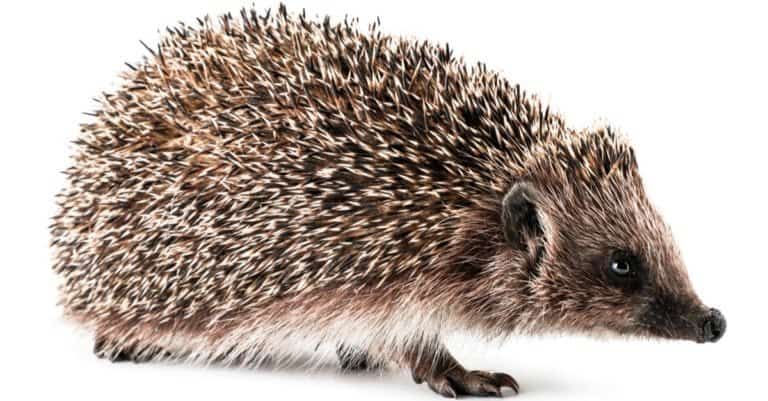
The most notable feature of the hedgehog is its coat, which is comprised of stiff yet sharp spines. When in danger, they defend themselves by rolling into a ball, causing their spines to protrude and act as a defense against possible threats of danger.

Nocturnal in nature, hedgehogs are animals that are known to sleep throughout the day and wake up and start searching for food at night. They also hibernate in cold climate areas. There are 17 different species of hedgehogs that have some very interesting facts about them.
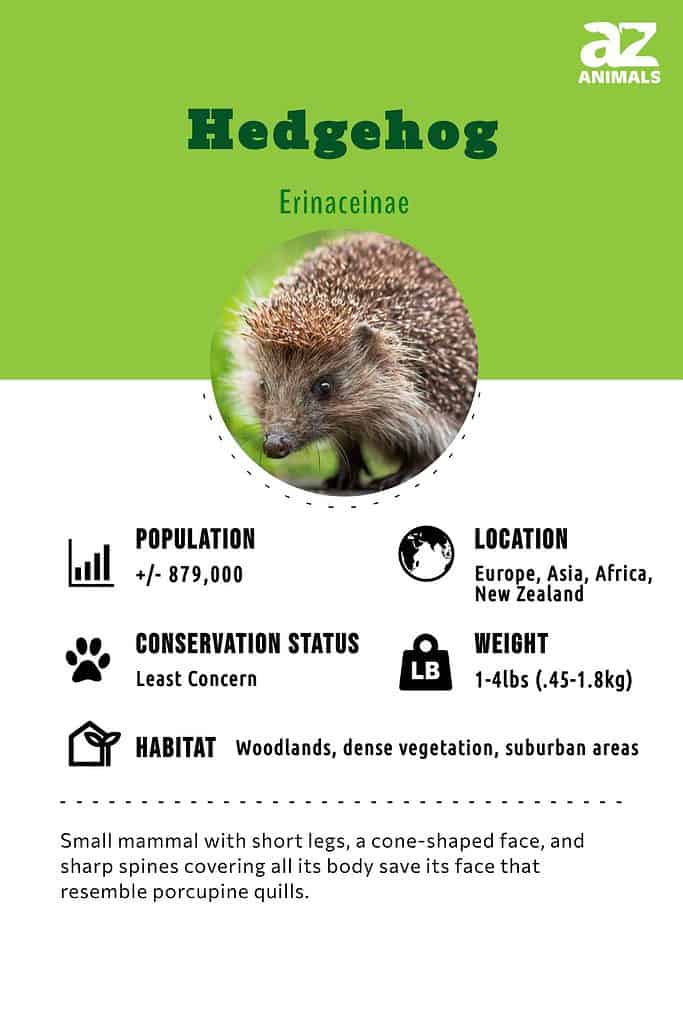
Incredible Hedgehog Facts!

  • Hedgehogs curl up into a prickly ball when they sense danger or are attacked.
  • They hibernate in areas within their natural environment.
  • Their coat is made up of sharp spines, which they expose as a defense mechanism.
  • These animals sleep throughout the day, waking up to search for food during the night.
  • They help in eliminating common garden pests by eating them and are hence considered very useful pets.
  • While hedgehogs may look like great pets, they are illegal to own in many states.

You can check out more incredible facts about hedgehogs.

Scientific Name

These animals with spikes go by the scientific name Erinaceinae. They belong to the kingdom Animalia and phylum Chordata. Their class is called Mammalia and the order is called Eulipotyphla. The family, Erinaceidae, covers both the hedgehog and the closely-related moonrat.

Erinaceinae is a combination of “Erinaceus” and the suffix “-inae.” Erinaceus is a genus that hedgehogs are included under, coming from the Latin word that simply means “hedgehog.” The root of the word – khḗr – is linked to the Greek word for hedgehog, paired with the root “ǵʰer,” which means “to be bristly.”
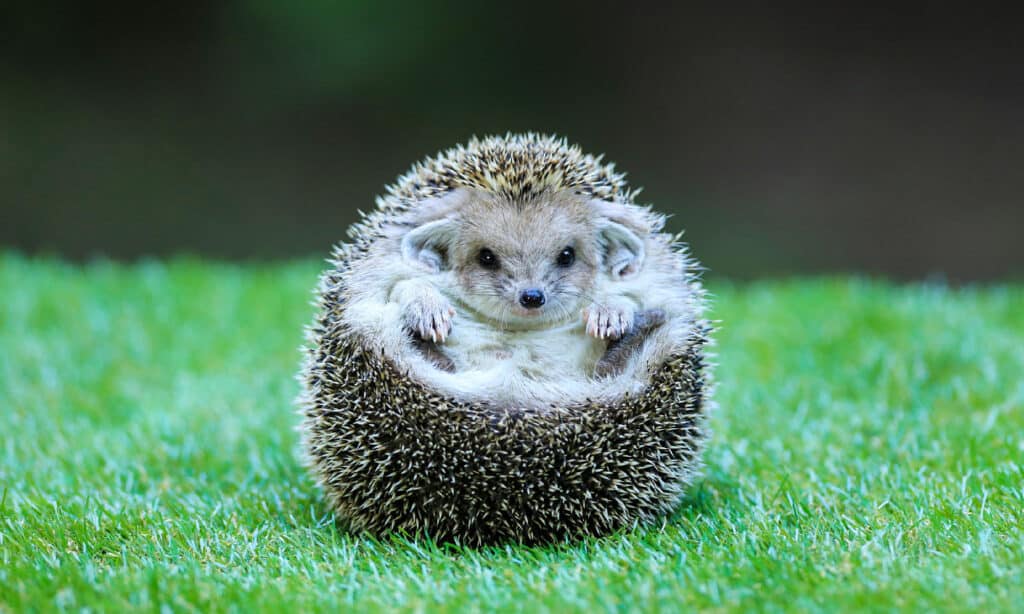
Cute, Hedgehog, Animal, Animal Wildlife, Close-up

The hedgehog is closely related to shrews, moles, and moonrats.

Evolution

Scientists believe that hedgehogs were on the earth 15 million years ago, making them some of the oldest mammals still existent on the planet.  They seem to share some characteristics with hogs, and one now-extinct species of hedgehog is the Mediterranean hedgehog, was the size of a pig. They do share distant ancestry with shrews.

Like some prehistoric animals, the hedgehog’s senses are based around smell rather than eyesight. They could have survived where other mammals perished due to their practice of hibernation, broad diet, and protective spines.

Types of Hedgehogs

Worldwide, there are 17 species of hedgehogs concentrated in Europe (especially Great Britain), Asia, Africa, and New Zealand. The types include:

  • European Hedgehog – Native to Western Europe. Other names: West European hedgehog, common hedgehog. Largest and heaviest of the species, with most of its body covered by up to 6,000 brown and white spines.
  • Four-toed Hedgehog – Native to Central and East Africa. Other names: African pygmy hedgehog. Found in savannah and cropland habitats. Known for its four toes, where others have five.
  • Long-eared Hedgehog – Native to Central Asia and Arabia. Lives in burrows, and notable for its prominent ears.
  • Southern African Hedgehog – Native to multiple countries in Africa. Dark brown with white spines that have dark brown tips.
  • Desert Hedgehog – Native to desert habitats in Africa and Arabia. One of smaller species with longer spines than others for extra protection and a dark muzzle.
  • North African Hedgehog – Native to Algeria, Libya, Malta, Morocco, Spain, and Tunisia. Similar to the European hedgehog, but,it has a longer snout and legs than other species, making it a fast runner.
  • Southern White-breasted Hedgehog – Native to Eastern Europe and Southeast Asia. Other names: white-bellied hedgehog or white-chested hedgehog. Builds grass nests rather than dens.
  • Indian Long-eared Hedgehog – Native to India and Pakistan. It has well developed senses because of its large ears, eyes and whiskers. Nocturnal animal that lives in burrows.
  • Somali Hedgehog – Native to Somalia and Somaliland. Inhabits savannah grasslands.
  • Indian Hedgehog – Native to India and Pakistan. Similar to Indian Hedgehog but smaller ears and known for a masked face similar to a raccoon. Inhabits desert areas.
  • Brandt’s Hedgehog – Native to Middle East and Central Asia. Named for first being described by Johann Friedrich von Brandt, a director of the Zoological Department at the St Petersburg Academy of Sciences. Has large ears and is a fast runner.
  • Northern White-breasted Hedgehog – Native to areas of Western and Eastern Europe.
  • Amur Hedgehog – Native to Amur Oblast and Primorye in Russia, Manchuria in China, and the Korean Peninsula. Other names: Manchurian hedgehog.
  • Hugh’s Hedgehog – Native to Central China and Manchuria. Other names: central Chinese hedgehog. Habitats are forests, shrublands, and dry steppes.
  • Daurian Hedgehog – Native to Russian and Mongolia. Listed as protected in Russia. Lives in dens and inhabits forests, shrublands, and dry steppes.
  • Bare-bellied Hedgehog – Native to India. Other names: Madras hedgehog. It’s endemic to dry arid areas and scrubby jungles.
  • Lesser Hedgehog Tenrec – Native to Madagascar. Inhabits subtropical or tropical dry forests, shrubland, and dry savannas.
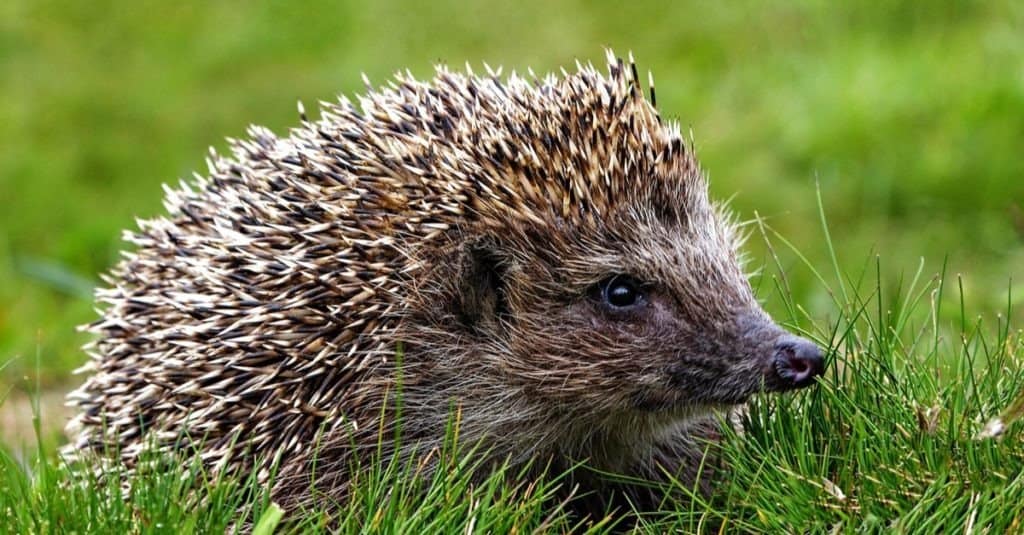
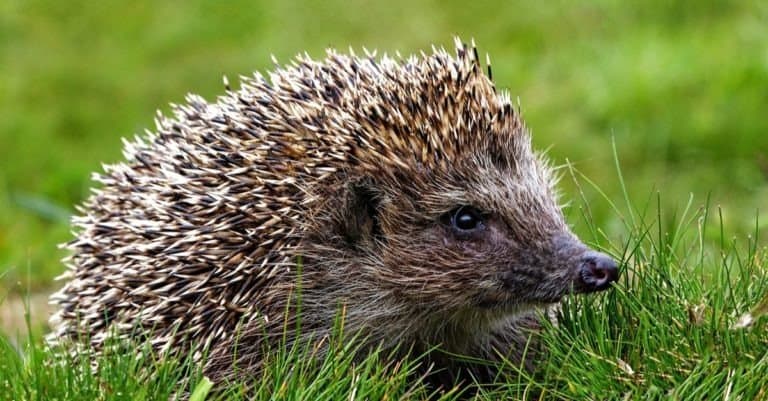
Native European adult hedgehog in green grass.

Hedgehogs inhabit parts of Europe, Asia, Africa, and New Zealand.

Appearance

Identified as small mammals, hedgehogs have cone-shaped faces. They have short legs, and their entire body (apart from their face) has sharp spines that can hurt anyone around them. As closely as they resemble porcupines, the two mammals are not closely related. The spines are strongly attached to the skin, making it nearly impossible for them to be removed without immense force.

The quills of these animals can easily penetrate the surface of any mammal’s skin, including humans. With this puncture, bacteria and other germs can quickly spread, putting attackers at risk for further damage beyond the initial puncture.

Some of the bacteria associated with this wound can cause problems like rashes, fevers, and pain in the stomach. Anyone that has regular contact with these animals should wash their hands well, reducing the risk of spreading disease.

Individuals that regularly handle hedgehogs are at low risk of accidentally puncturing the skin since their weight is evenly distributed. The only time that this wound becomes risky is when the animal feels unsafe, naturally defending itself against danger.
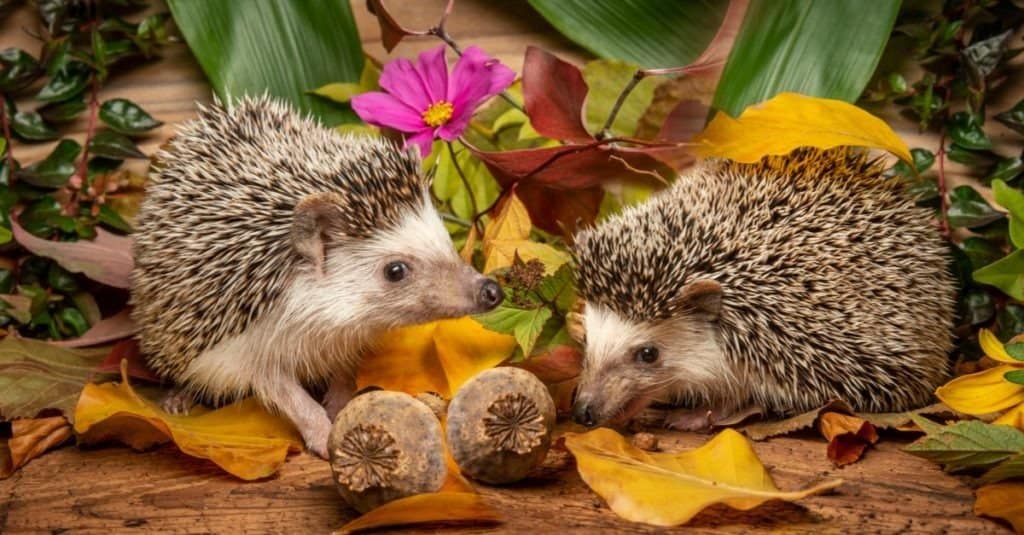
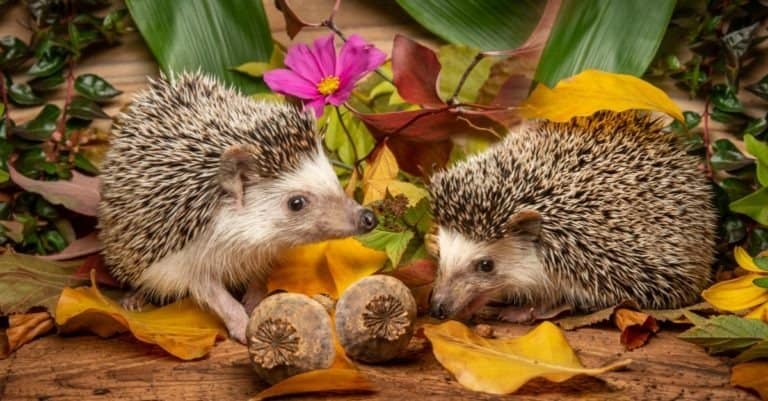
Four-toed Hedgehog on a funny autumnal picture

Hedgehogs have cone-shaped faces, short legs, and their bodies (apart from their faces) have sharp spines.

Behavior

In their natural setting, hedgehogs are usually solitary animals. They are nocturnal, taking the night to hunt down and forage food while sleeping during the day. When sleeping on summer and spring days, they make nests for themselves as a home. The diet of the animal is made up of insects and other invertebrates, though they are not very high on the food chain.

Hedgehogs, upon sensing danger, roll themselves into a sharp pricky ball. They are known to anoint themselves by licking any new scent that they like, licking their quills to have the new scent on themselves.

Even though these animals are often kept as pets, they might not enjoy being petted right away. You will have to earn the trust of a hedgehog so that it begins to relax and enjoy when you touch it. Learn more about the most interesting non-traditional pets here.

This animal with spikes is not usually aggressive, leaving its quills to defend it if it needs it. Hedgehogs will make hissing noises and sometimes bite at a threat, but they don’t seek out animals and humans to attack. There is a strikingly low risk of being harmed by a hedgehog since they are more defensive than aggressive.

When hedgehogs are relaxed, their quills are not that sharp. Even in their most tense moments, it is highly unlikely that a hedgehog would draw any blood from humans, though abrasions can occur.
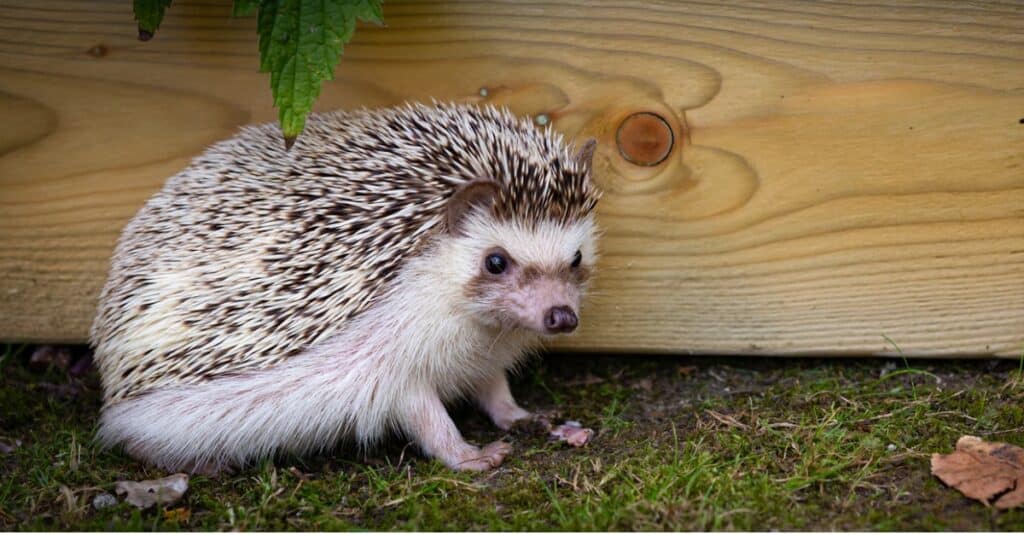
animals that estivate: four-toed hedgehog

When hedgehogs are relaxed, their quills are not very sharp.

Habitat

There are a variety of places around the world where these animals find comfort in living, and they will build a nest when they find the place that they want to stay. They usually find their comfortable habitat in very wet and extremely dense pine forests.

Mostly, hedgehogs can be found in Britain. Besides that, they are also scattered in upland areas including the sides of the mountains and the moorlands. They also love residing on the edge of woodlands.

Sources suggest that wild hedgehogs are originally from Africa, Europe, Asia, and New Zealand. Though they have become increasingly popular in the United States as well, they don’t naturally exist in the wild. Much of their presence in the country is due to being bred as a pet.
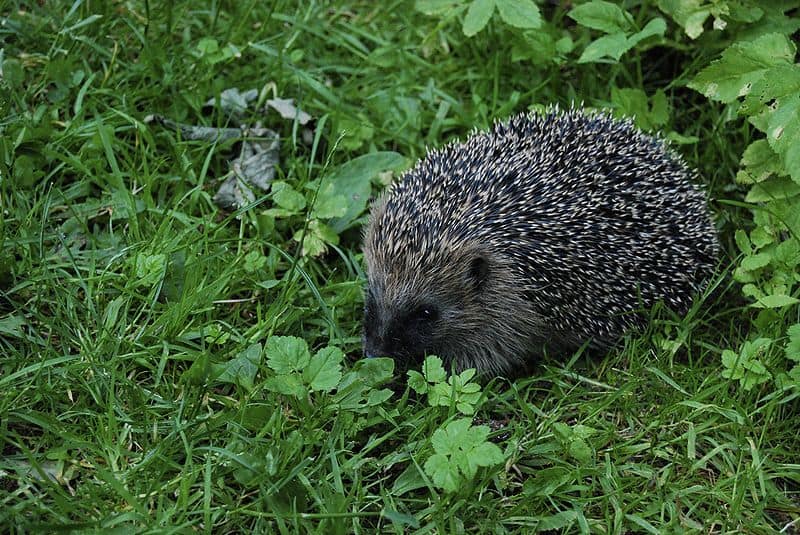
Hedgehogs can be found in Britain, and also in upland areas including the sides of the mountains and the moorlands.

Diet

These animals are nocturnal and eat only at night. As a pet, hedgehogs should only be fed high-quality hedgehog food, which can be found in specialty pet food stores. Some owners prefer to shop for the natural foods that they would get in the wild.

In the wild, they eat a variety of things like several insects. They eat almost all invertebrates, frogs, carrion, rodents, baby birds, eggs of birds, and also fallen fruits from the trees in the dense forests.

Hedgehogs have a natural aversion to milk, making them lactose intolerant.
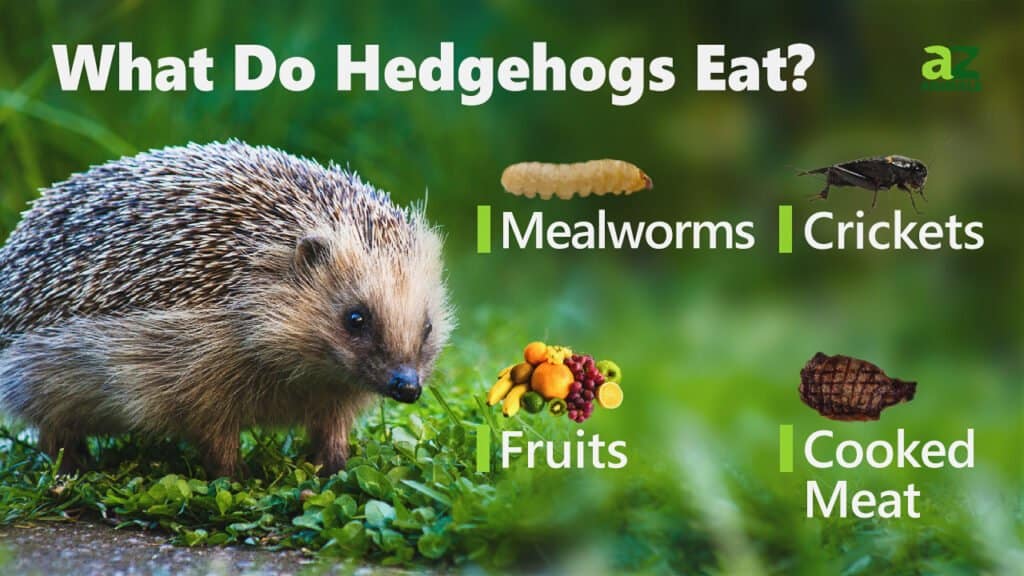
Hedgehogs thrive on a diet of mealworms, crickets, fruits, and cooked meat.

Predators and Threats

Like all other animals, hedgehogs also make an important part of the ecosystem and act as food to several living creatures. Most predators of the hedgehog are naturally carnivorous. However, when they hunt, hedgehogs will only seek out small mammals and insects.

One of the main threats that hedgehogs consistently face has been that of humans. Humans are primarily responsible for the deforestation of their habitats, as well as the way that they put these animals up for sale in pet shops.

What Eats Hedgehogs?

Hedgehogs don’t rank very high on the food chain, making them sources of nutrients for owls, wild dogs, mongooses, and mustelids. They also can be the prey of wolves and foxes, leaving them exposed during their sleeping hours.
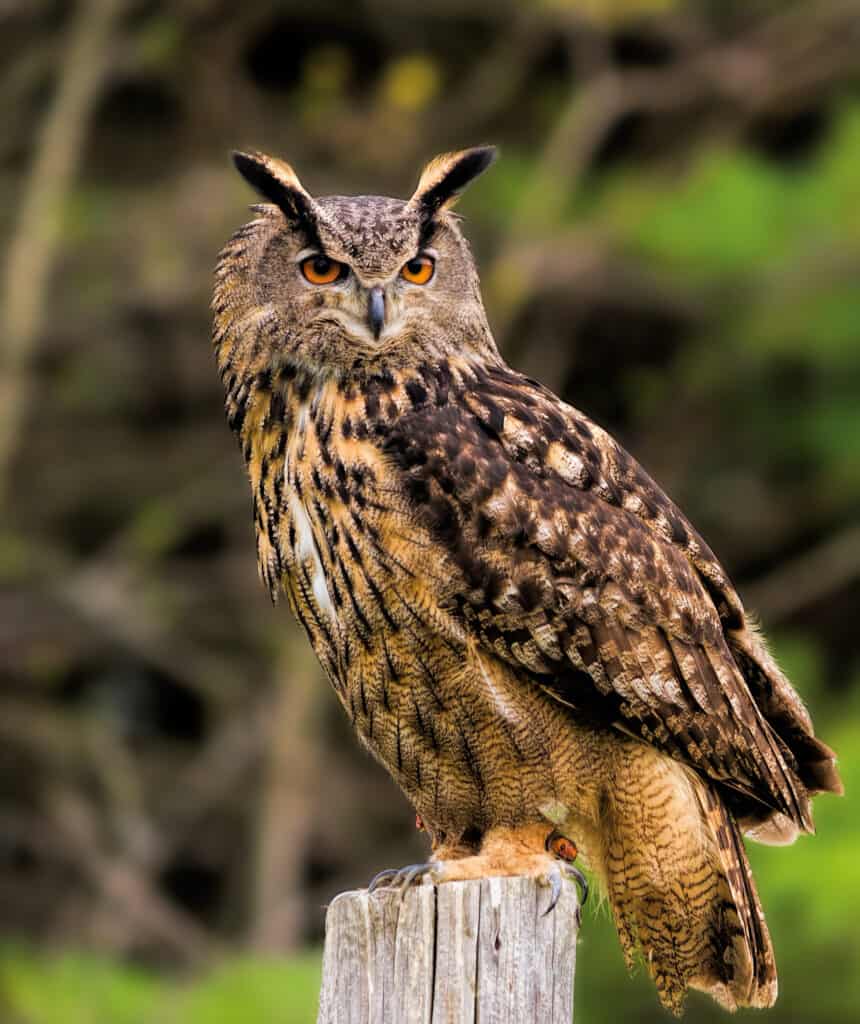
a Eurasian eagle owl, center frame, perched on a cylindrical, wooden fence post. The owl is medium-dark brown , flecked with lighter and darker markings. The bird's body is facing left; its face is looking straight ahead. It has distinct tufted ears that are black. Natural out-of-focus background of green and dark brown.

Owls are one of the predators of hedgehogs.

What Do Hedgehogs Eat?

As far as their own nutrients, berries and similar plants are necessary to their diet, providing tons of nutrients in a small amount at once. When hedgehogs hunt, they look for small invertebrates and insects, like beetles, caterpillars, earthworms, and slugs.

Some pet owner websites will recommend attracting lost hedgehogs with wet dog food or cat food, though foods with fish should be avoided.

Reproduction, Babies, and Lifespan

Hedgehogs are usually solitary animals and are known to come together only for mating. During mating, the hedgehog female will produce an egg, which must be fertilized by a male. In an effort to get the attention of the female, the male will put up a show of circling, puffing, and snorting in a rhythm. It can breed throughout the year with no particular cycle.

When a female becomes pregnant, their gestation will typically last for no more than 40 days. Though it can be difficult to tell if a pet hedgehog is pregnant, owners should look out for frequent feeds and slight weight gain.
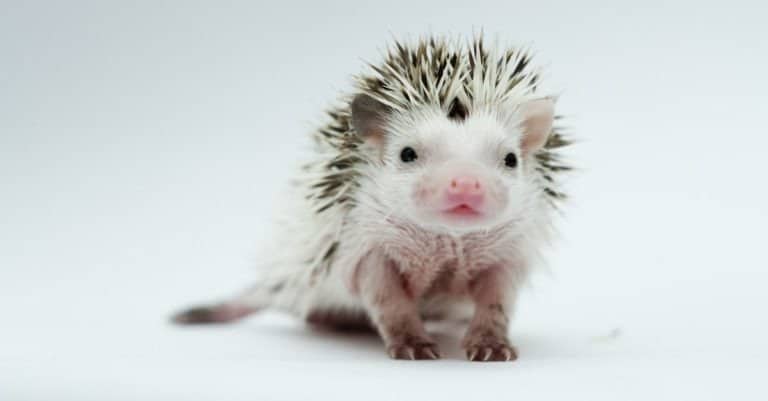
Each year, the hedgehog babies are born into groups that are called litters. These groups can comprise up to 11 babies, which are commonly known as hoglets. The hoglets will remain with their mothers for 4-7 weeks, during which time the mother will protect their young.

As a rule of thumb, never disturb a hedgehog nest. Mothers will sense the disruption and will notice a new smell on both the nest and their own young. If they do not recognize the scent, they will sometimes eat the young.
If the hoglets survive their childhood, they will depart on their own after a brief time. Hedgehogs usually have a lifespan of two to five years, but some hedgehogs can live up to 7 years.
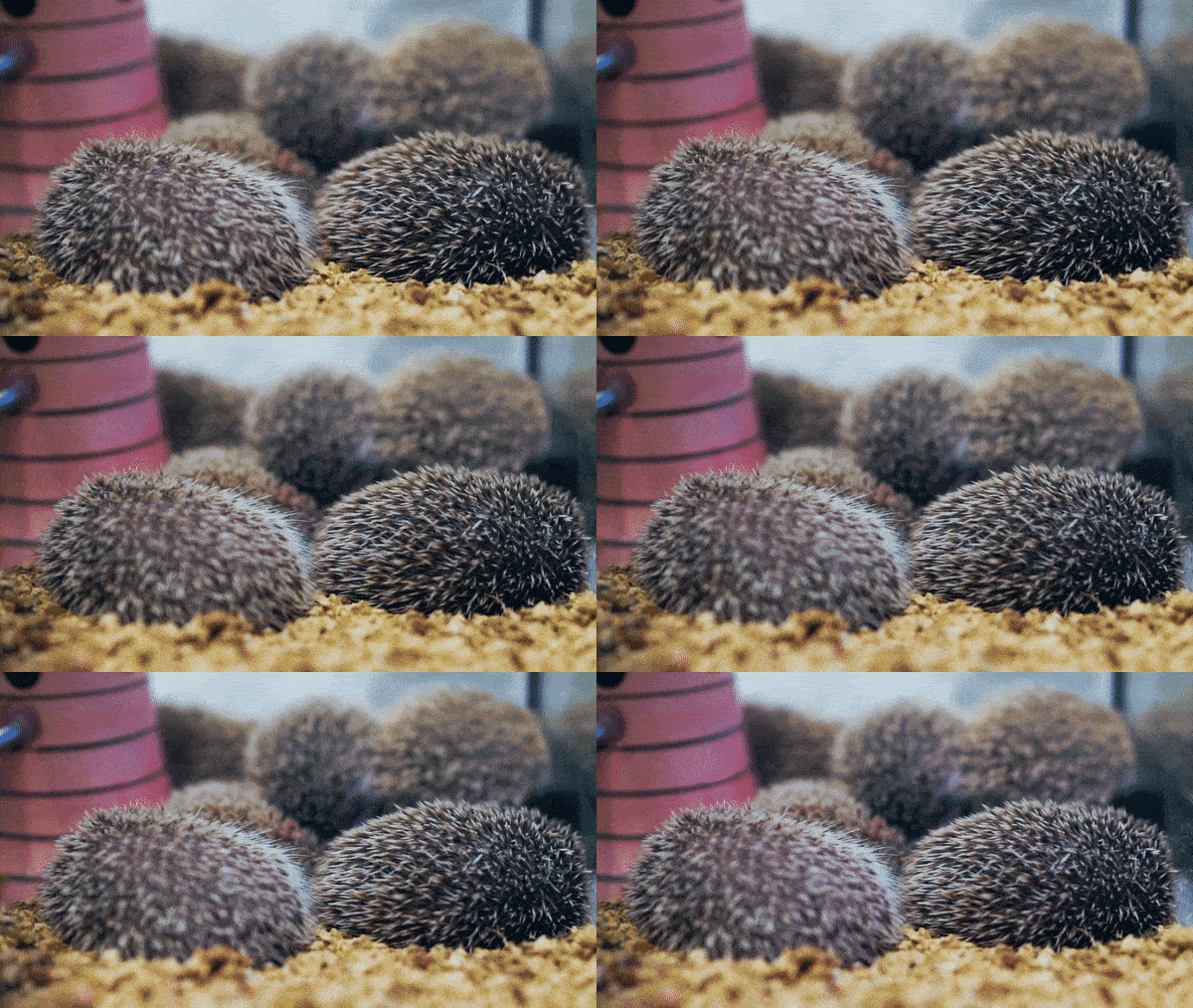
Hedgehog babies are born into groups called litters, comprised of up to 11 babies commonly known as hoglets.

In the Zoo

Hedgehogs are commonly kept in zoos, though they are occasionally kept in homes as pets as well. They are usually fed quality hedgehog food in captivity, which can be purchased from specialty shops. The females and males are kept together so that they can naturally mate, rather than being artificially inseminated.

It is often said that hedgehogs can be kept in cages, provided that they are escape-proof. The cages of the hedgehogs should be as large as possible so that these animals cannot destroy them easily. As a protective measure, the base of the cage should also be very solid so that the hedgehog does not get hurt.

In some areas, it is illegal to keep hedgehogs as a pet. Some states that do not allow hedgehogs to be kept privately include California, Georgia, and Hawaii. It is also illegal within the city limits of New York City, Omaha (Nebraska), and Washington D.C. It is also against the law to bring hedgehogs out of Africa, according to reports from PETA.

It is estimated that, around the world, there are 17 different species. Though they were once in the millions, their total population dropped below one million in 2019.

View all 287 animals that start with H

Sources

  1. National Geographic / Accessed December 27, 2020
  2. Be Chewy / Accessed December 27, 2020
  3. Better Planet Education / Accessed December 27, 2020
  4. Hedgehog Street / Accessed December 27, 2020
  5. DW / Accessed December 27, 2020
  6. Hedgehog World / Accessed December 27, 2020
  7. Wikipedia / Accessed December 27, 2020
  8. Pet MD / Accessed December 27, 2020
  9. RSPCA / Accessed December 27, 2020
Abby Parks

About the Author

Abby Parks

Abby Parks has authored a fiction novel, theatrical plays, short stories, poems, and song lyrics. She's recorded two albums of her original songs, and is a multi-instrumentalist. She has managed a website for folk music and written articles on singer-songwriters, folk bands, and other things music-oriented. She's also a radio DJ for a folk music show. As well as having been a pet parent to rabbits, birds, dogs, and cats, Abby loves seeking sightings of animals in the wild and has witnessed some more exotic ones such as Puffins in the Farne Islands, Southern Pudu on the island of Chiloe (Chile), Penguins in the wild, and countless wild animals in the Rocky Mountains (Big Horn Sheep, Mountain Goats, Moose, Elk, Marmots, Beavers).
Connect:

Thank you for reading! Have some feedback for us?


Hedgehog FAQs (Frequently Asked Questions)

Hedgehogs are Omnivores, meaning they eat both plants and other animals.