H
Species Profile

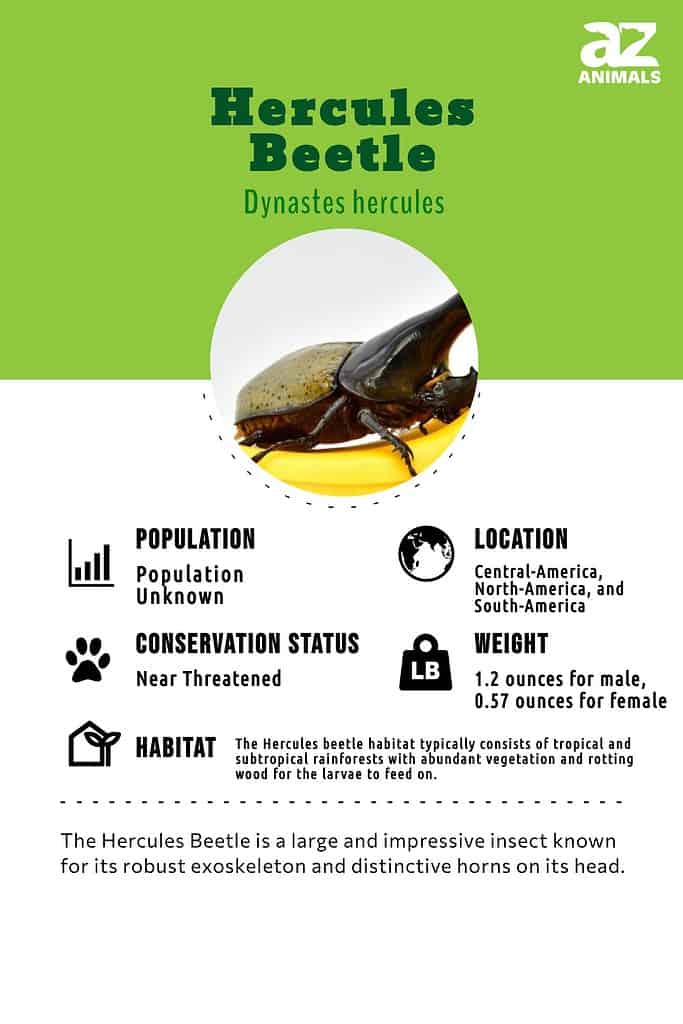
Hercules Beetle

Dynastes hercules

Horns, heft, and rainforest heroics
fukushima_insectarium/Shutterstock.com

Hercules Beetle Distribution

Click a location to explore more animals from that region

Loading map...
Hercules beetle in South America

At a Glance

Wild Species
Also Known As Rhinoceros beetle, Dynastine beetle, Giant rhinoceros beetle
Activity Nocturnal+
Lifespan 1.5 years
Weight 0.11 lbs
Status Not Evaluated
Did You Know?

Adult males can reach ~17.1 cm total length (including horns); females are typically ~5-8 cm (widely reported in taxonomic/field references for Dynastes hercules).

Scientific Classification

Dynastes hercules is one of the largest and most iconic rhinoceros beetles, famous for the pronounced horn(s) of males used in contests for mates and resources.

Kingdom
Animalia
Phylum
Arthropoda
Class
Insecta
Order
Coleoptera
Family
Scarabaeidae
Genus
Dynastes
Species
Dynastes hercules

Distinguishing Features

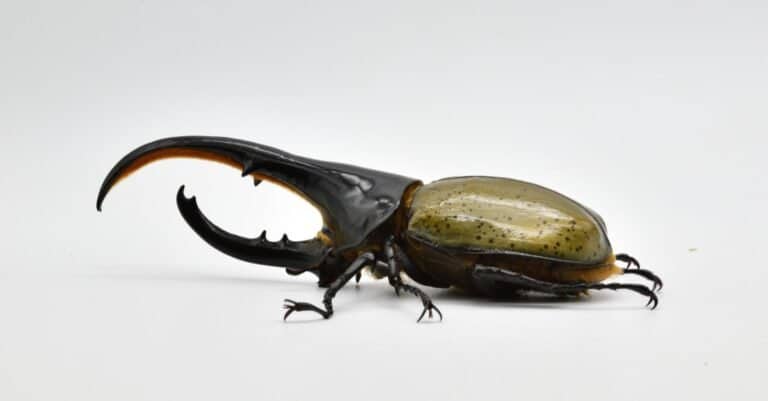
  • Males have a long pronotal horn and a head horn forming a pincer-like structure; females lack the long horns
  • Large, robust scarab body; coloration often varies from olive/greenish to darker tones depending on humidity and individual variation
  • Larvae are large white grubs developing in rotting wood; adults are strong fliers

Physical Measurements

Males and females differ in size

Length
6 in (4 in – 7 in)
3 in (2 in – 3 in)
Weight
0 lbs (0 lbs – 0 lbs)

Appearance

Primary Colors
Secondary Colors
Skin Type Hard chitinous exoskeleton (glossy elytra; robust, heavily sclerotized pronotum/head). Elytra are smooth to lightly textured; ventral surfaces and legs often show short setae.
Distinctive Features
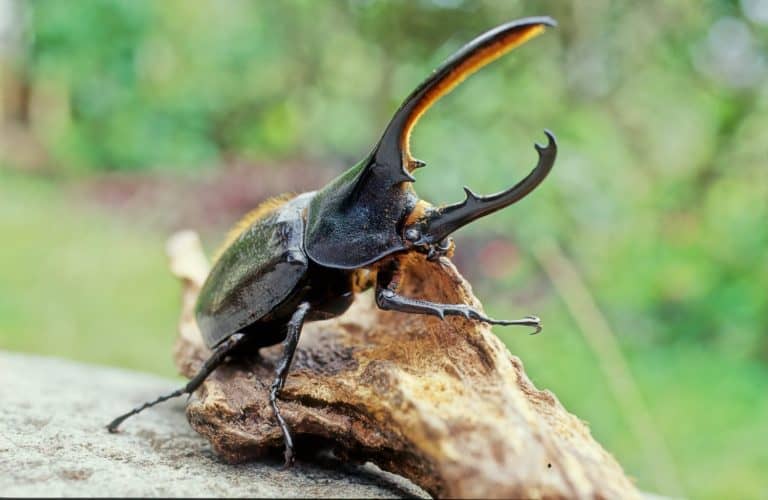
  • Very large rhinoceros beetle with extreme male weaponry: a long forward-projecting pronotal horn opposing a cephalic (head) horn, forming a pincer-like trap for lifting/throwing rivals.
  • Adult size varies a lot. Male length is often given including the long pronotal horn (about 17 cm), but body length without the horn is much shorter. Females are smaller and lack horns.
  • Elytra show black spotting on a pale background; coloration can darken markedly at higher humidity (reversible change in appearance reported for this species).
  • Adapted for forest life cycle: larvae are large, C-shaped white grubs developing in decaying wood/rotting logs; adults are strong fliers and typically nocturnal, visiting fermenting fruit and tree sap.
  • Geographic range centered in Central America and northern South America (with multiple regional forms/subspecies reported across the region), consistent with tropical lowland to montane forest habitats.

Sexual Dimorphism

Strong sexual dimorphism: males develop enlarged, opposing horns used in male-male contests for access to females/resources; females lack these horns and are generally smaller and more compact-bodied. Males also tend to have proportionally broader pronotum and more exaggerated weaponry scaling with body size (major vs minor males).

  • Pronounced pronotal horn and a smaller head horn forming a clamp; horn length and curvature vary with nutrition/larval conditions and can dominate "total length" measurements.
  • Often cited male total length (including horn) ranges approximately 5-17.1 cm; note that comparisons depend on whether horn is included and on population/subspecies variation.
  • Behavioral correlate of morphology: males grapple and attempt to pry/lift opponents with the horns during contests (weapon function closely tied to mating competition).
  • No horns (or only minimal tubercles), with a smoother, more compact head/pronotum profile.
  • Typically smaller than males; commonly cited female length approximately 5-8 cm (reported ranges vary by source and population).
  • More robust digging posture and body form associated with oviposition; retains the same general elytral spotting pattern but with less extreme forebody exaggeration.

Did You Know?

Adult males can reach ~17.1 cm total length (including horns); females are typically ~5-8 cm (widely reported in taxonomic/field references for Dynastes hercules).

Males have two horns (a long pronotal horn and a shorter head horn); females are hornless-an extreme case of sexual dimorphism.

The elytra can shift from olive/khaki with black spots to much darker when humid/wet due to a hygrochromic (moisture-sensitive) microstructure in the cuticle (e.g., Vigneron and coauthors' optical-structure studies).

Larvae develop inside decaying wood and can become exceptionally massive for an insect-often reported up to ~0.1 kg before pupation in captive-rearing/entomological records.

Development is long for a beetle: commonly ~12-24 months from egg to adult, with three larval instars; the pupal stage often lasts ~30-60 days (ranges reported across rearing studies/records).

Adults are mostly nocturnal and frequently come to lights; they feed on fermenting fruit and tree sap rather than chewing fresh leaves.

Male-male fights are usually decided by leverage: a male tries to wedge the rival between the horns and flip or throw him off a feeding or mating site.

Unique Adaptations

  • Dual-horn lever system (male): the long pronotal horn and opposing head horn form a clamp optimized for lifting/prying-effective for dislodging rivals without needing to bite or sting.
  • Hygrochromic elytra: the elytral cuticle contains a porous microstructure; when pores fill with water (high humidity), the refractive index changes and the beetle darkens-an optical, not pigment-only, effect documented in materials/biophotonics studies of D. hercules.
  • Powerful flight with protected hindwings: like other scarabs, it unfolds large membranous hindwings from beneath hardened elytra, enabling heavy-bodied flight between forest patches.
  • Rot-wood larval specialization: large, muscular larvae with robust mandibles and a gut adapted to microbe-rich decaying wood allow growth to very large body size before metamorphosis.
  • Extreme sexual dimorphism and condition dependence: horn size scales strongly with male body condition (nutrition during the larval stage), producing "major" and smaller "minor" males seen in many Dynastes populations.

Interesting Behaviors

  • Male contest behavior at sap flows or fruiting trees: opponents square off, hook horns, then attempt to pry-lift and toss the rival from the resource (classic rhinoceros-beetle tournament behavior).
  • Nocturnal activity pattern: adults are most active after dusk; many observations note strong attraction to artificial lights, which can concentrate beetles near human settlements at forest edges.
  • Sap and fruit feeding: adults commonly lap/chew soft, fermenting fruit (e.g., fallen banana/mango in captivity) and drink exuding tree sap; they may aggregate where sugars are abundant.
  • Oviposition choice by females: eggs are placed in or near well-rotted logs/wood-mold where larvae can tunnel and feed continuously on decomposing lignocellulose.
  • Defensive postures and gripping: when handled, adults brace and lock onto bark using strong tarsal claws; they may also produce faint rasping/stridulatory sounds typical of many scarabs when disturbed.

Cultural Significance

Named for the Greek hero Hercules, the Hercules beetle (Dynastes hercules) is a global symbol of insect strength. It appears in museums, school collections, hobby shows, stamps, and public materials across its range and the Neotropics.

Myths & Legends

The beetle's modern name ties it to the mythic hero Hercules (Heracles), famed for superhuman strength-an association that helped popularize the insect in 19th-20th century natural history writing and later popular culture.

In Caribbean and northern South American nature stories, the Hercules beetle (Dynastes hercules) is told as a forest strongman whose horns settle fights like tiny jousts, a tale used by guides and in eco-tourism.

Collecting-era anecdotes (late 1800s-early 1900s) describe "giant horned beetles" from the American tropics as marvels brought back by explorers; these stories helped build the beetle's legendary status in museums and cabinet-collection culture.

Conservation Status

NE Not Evaluated

Has not yet been evaluated against the criteria.

Population Unknown

Life Cycle

Birth 80 larvas
Lifespan 2 years

Lifespan

In the Wild
1–2 years
In Captivity
1–2 years

Reproduction

Mating System Polygyny
Social Structure Aggregation Group
Breeding Pattern Transient
Fertilization Internal Fertilization
Birth Type Internal_fertilization

Dynastes hercules are beetles with separate sexes that mate sexually. Males use horns to fight for females and resources; mating is polygynous at short food gatherings. No long-term bonds or parental care. Adults live ~3–6 months; life cycle ~1.5–2 years.

Behavior & Ecology

Social None (solitary; temporary congregations at resources) Group: 1
Activity Nocturnal, Crepuscular
Diet Detritivore fermenting fallen fruit (soft, overripe fruit pulp)
Seasonal Hibernates

Temperament

Primarily non-social and avoidance-oriented outside of mating/feeding sites
Male-male aggression is context-dependent (resource- and mate-guarding); contests involve pushing/lifting with horns to eject rivals rather than prolonged biting
Generally tolerant/neutral toward conspecifics when not competing for a focal resource; interactions are brief
When threatened by predators/handling, defensive behavior is typically vigorous struggling and stridulation; biting can occur but is not the primary defensive strategy

Communication

Stridulatory squeak/hiss-like sound produced by friction between body parts (stridulation), commonly elicited during disturbance/handling in Dynastinae, including Dynastes hercules as reported in natural history accounts
Chemical communication: sex- and aggregation-related cues are inferred for mate location in nocturnal scarabs; close-range recognition likely involves cuticular hydrocarbons and contact chemoreception Well-established across Scarabaeidae; species-specific pheromone chemistry for D. hercules is less consistently quantified in accessible primary literature
Tactile signaling during mating: antennal and leg contact; mounting and positional adjustments provide close-range coordination
Ritualized physical contests: horn-to-body leverage and pushing serve as a functional signal of fighting ability and dominance at the resource (mate/food) site
Possible substrate-borne vibrational cues during movement/stridulation at feeding sites Reported broadly in beetles; not always experimentally separated from airborne stridulation in Dynastes

Habitat

Biomes:
Tropical Rainforest Tropical Dry Forest
Terrain:
Mountainous Hilly Valley Coastal Island Riverine
Elevation: Up to 5577 ft 5 in

Ecological Role

Saproxylic decomposer/detritivore in Neotropical forests (larvae) and fruit/sap consumer (adults)

accelerates decomposition of dead wood and plant detritus, contributing to nutrient cycling in tropical forest soils helps break down coarse woody debris, increasing microbial access and soil organic matter formation adult use of fallen fruit can contribute to fruit breakdown and potentially minor seed dispersal/redistribution via movement among fruiting/rotting patches

Diet Details

Other Foods:
Rotting logs Leaf litter and plant detritus Fallen fruit Tree sap

Human Interaction

Domestication Status

Wild

Dynastes hercules has no domestication history. People keep and breed it in captivity as pets or for education, science, and specimen trade. It is not bred by humans over generations to make a new form. In some parts of Asia other rhinoceros beetles are used for fights; D. hercules is usually shown for size and horn shape.

Danger Level

Low
  • Cannot sting or envenomate; primary hazards are minor: pinching pressure from legs/tarsi and claws causing small cuts/scratches during handling.
  • Possible skin/respiratory allergy or irritation in sensitive individuals from insect frass/substrate molds common in humid beetle-rearing setups.
  • Indirect risk: accidental release in suitable climates could contribute to non-native establishment concerns; responsible containment is part of safe human interaction.

As a Pet

Suitable as Pet

Legality: Generally legal to own where non-native insects aren't banned, but rules vary. Dynastes hercules is not CITES-listed. Imports and interstate moves may need USDA-APHIS or customs permits. Check local laws first.

Care Level: Experienced

Purchase Cost: $40 - $250
Lifetime Cost: $150 - $600

Economic Value

Uses:
Invertebrate pet trade (live larvae/adults, captive-bred lines) Science and education (behavior, sexual selection, biomechanics of horns) Museum and teaching collections (pinned/curated specimens) Public display and ecotourism (iconic 'giant rhinoceros beetle')
Products:
  • live specimens (larvae, pupae, adults; often sold as captive-bred)
  • rearing supplies (fermented hardwood substrate/'beetle flake soil', decayed wood)
  • prepared specimens (framed or pinned adults for educational display)

Relationships

Predators 7

Coati
Coati Nasua nasua
White-nosed coati Nasua narica
Tayra Eira barbara
Common opossum Didelphis marsupialis
Gold tegu Tupinambis teguixin
Army ants Eciton spp.
Tiphia wasps Tiphia spp.

Related Species 8

Eastern Hercules beetle Dynastes tityus Shared Genus
Grant's rhinoceros beetle Dynastes grantii Shared Genus
Neptune beetle Dynastes neptunus Shared Genus
Maya rhinoceros beetle Dynastes maya Shared Genus
Mexican rhinoceros beetle Dynastes hyllus Shared Genus
Elephant beetle
Elephant beetle Megasoma elephas Shared Family
Actaeon beetle Megasoma actaeon Shared Family
Ox beetle
Ox beetle Strategus aloeus Shared Family

Ecological Equivalents 5

Animals that fill a similar ecological role in their ecosystem

“The Hercules Beetle is the world’s longest beetle!”

The Hercules beetle is one of the world’s largest insects, and it is not just large. The males have long horns that grow from their heads and the middle of their bodies. They come together to resemble pincers or a claw.

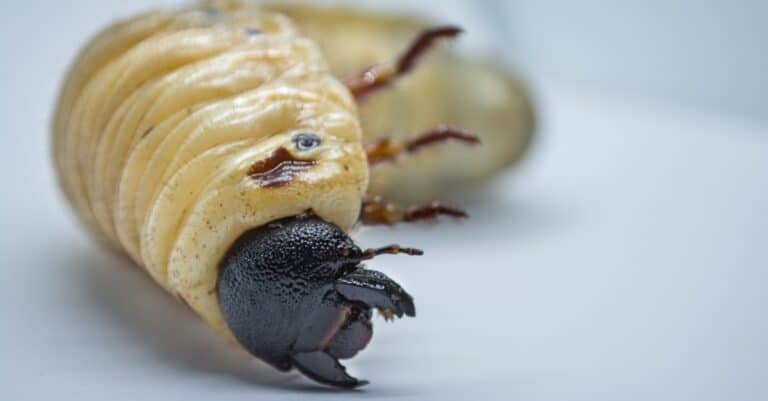
The larva, which is curved, white, or yellow with a black head, may even be bigger than the adult, but they lose some weight during the ordeal of pupation. The Hercules beetle also flies, though clumsily. It’s one of the biggest flying insects as well.

5 Incredible Hercules Beetle Facts!
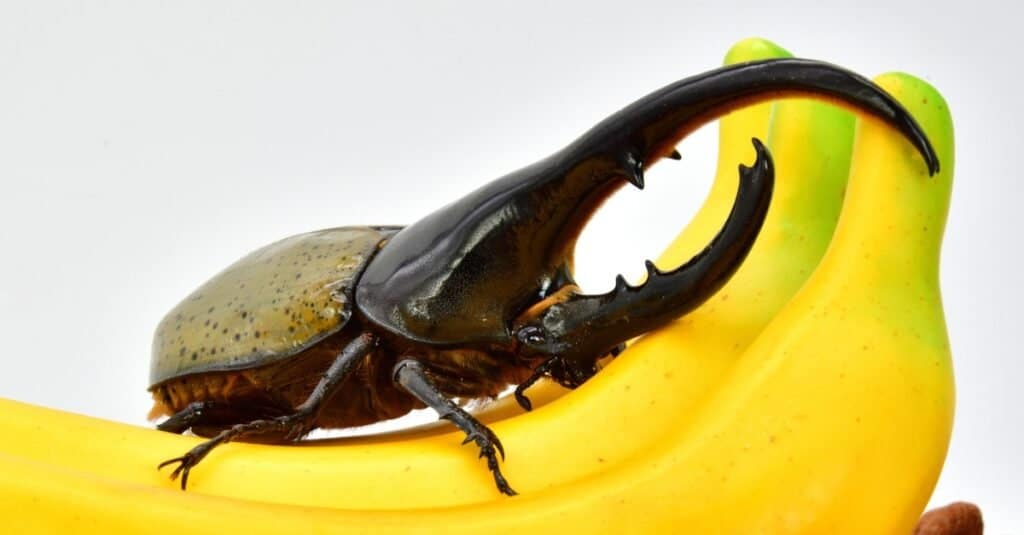
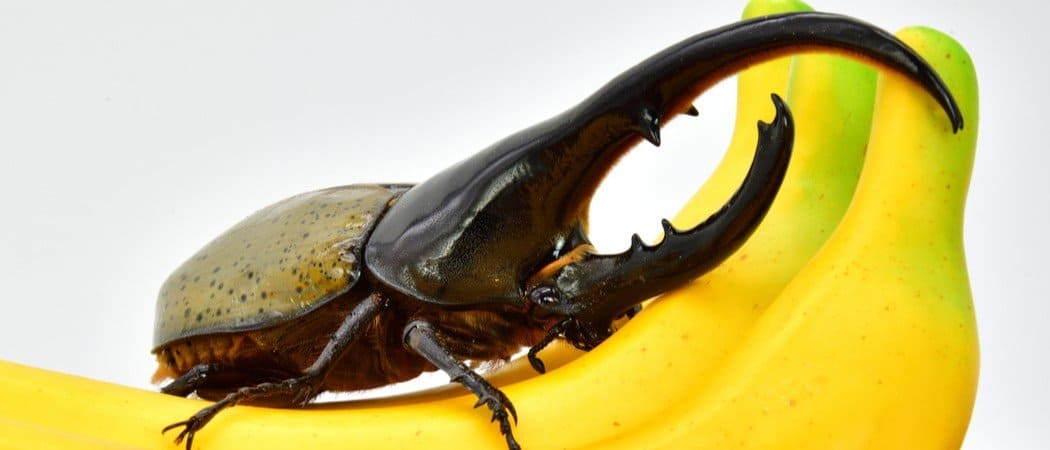
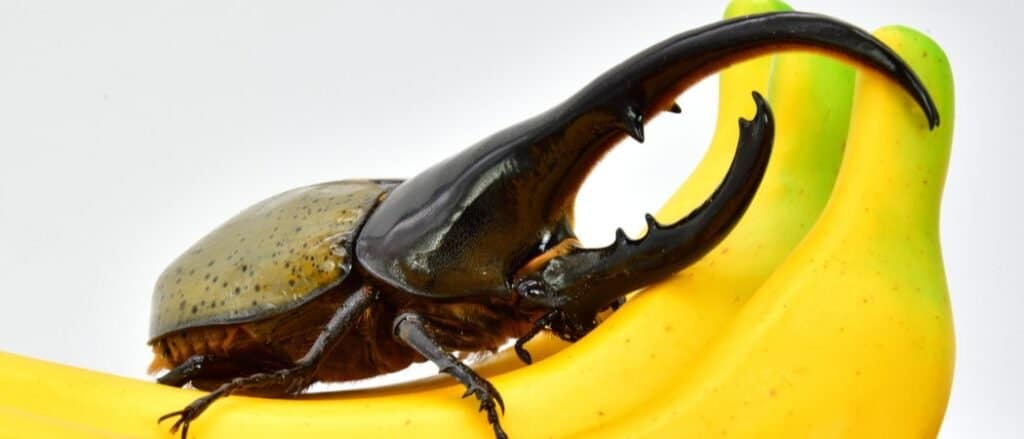
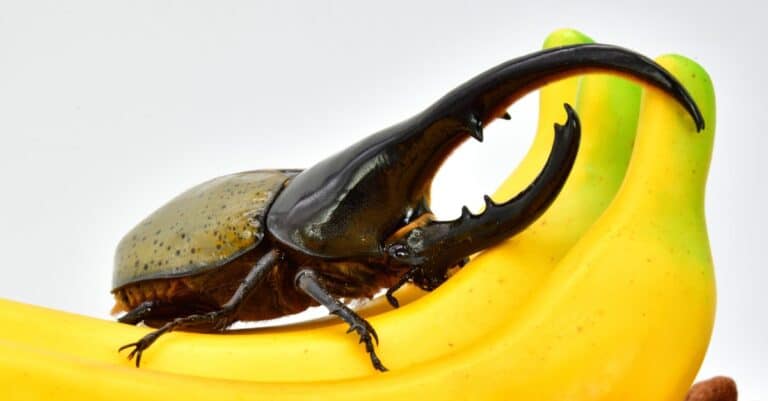
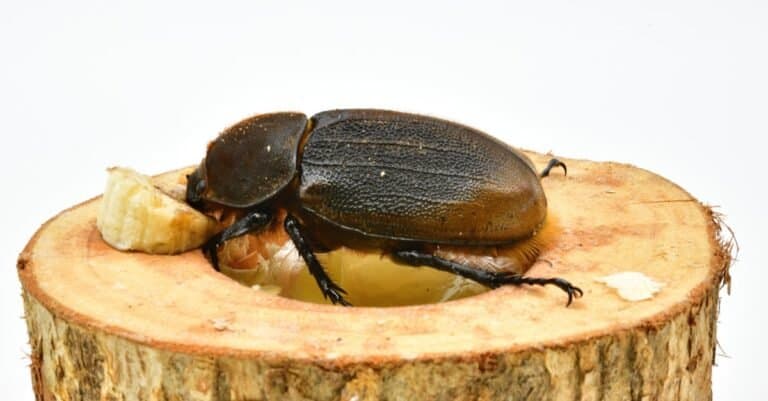
Hercules beetle sitting on bananas.

Hercules beetle sitting on bananas.

Here are some more facts about this amazing insect:

  • The Hercules beetle spends most of its life as a larva. It can take a larva, or grub two years to turn into an adult, while a captive adult only has a lifespan of three to six months. However, some people claim that a well-cared-for Hercules beetle can have a lifespan of as much as a year.
  • Only the males have trademark horns. They use them to fight other males during the breeding season.
  • The larva of a Hercules beetle can grow 4.5 inches long and weigh over 3.5 ounces. They are good sources of protein and are often eaten. People season them, wrap them in banana leaves then roast them over a fire.
  • The beetle is a type of dynasty scarab, which means it is big and has a robust body, clubbed antennae, and horns. The colors of their carapaces can have a metallic glint to them. Relatives of the Hercules beetle include the eastern Hercules beetle, which is not a subspecies but an entirely different species found in the eastern United States. The eastern Hercules beetle, Dynastes tityus is smaller than Dynastes hercules, and its horns are not as spectacular.
  • The color of the hard front wings of the beetle, or the elytra changes color with the humidity. If it’s dry, the elytra are yellow or green, but when humidity is high they turn black.

Species, Types, and Scientific Names

The Hercules beetle is a type of scarab beetle, and its scientific name is Dynastes hercules. Dynastes is Greek for “master, lord or ruler,” and hercules comes from the Greek demigod of the same name who was known for his immense strength. There are at least 10 subspecies, though biologists don’t agree on all of them. They are:

  • Dynastes hercules hercules
  • D. hercules ecuatorianus
  • D. hercules lichyi
  • D. hercules morishimai
  • D. hercules occidentalis
  • D. hercules paschoali
  • D. hercules reidi
  • D. hercules septentrionalis
  • D. hercules takakuwai
  • D. hercules trinidadensis

Because of its horns, the Hercules beetle is also classified as a type of rhinoceros beetle.

Evolution and Origins

The process of evolution involves a number of unavoidable changes that lead to the emergence of new species (populations of various creatures), their environmental adaptation, and eventual extinction. Every species or organism has its roots in the biological evolution process.

The Hercules Beetle’s huge horns most likely evolved as a result of sexual selection, which is such a powerful driving factor. Females selectively bred for larger and larger horns over time because they gave sexual preference to males that could push aside rival males!

The Lesser Antilles, Central America, and South America are home to the Hercules beetle (Dynastes hercules), a species of rhinoceros beetle. It is one of the biggest flying insects on the planet and the longest type of beetle that is still alive.

Appearance
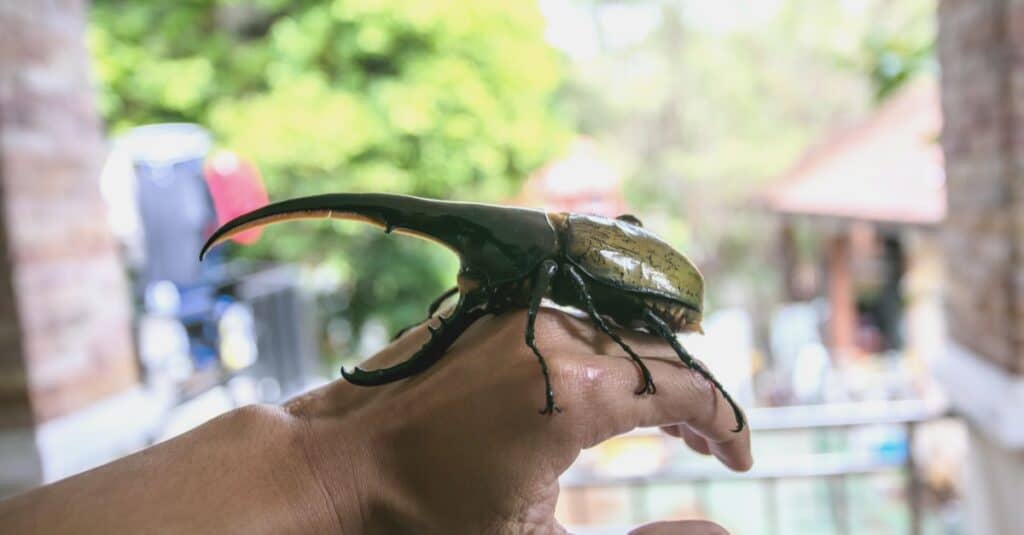
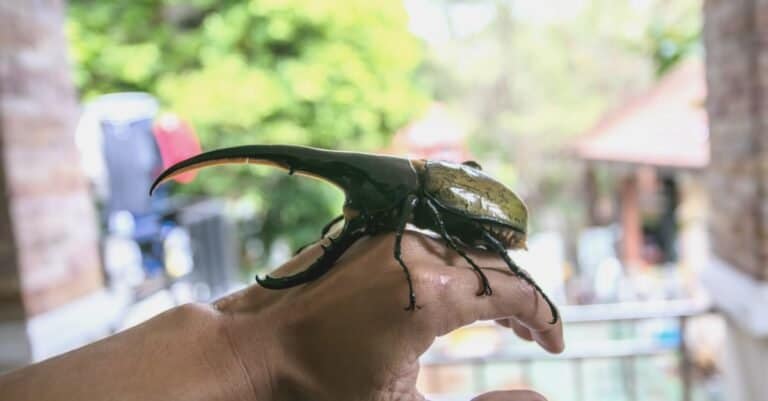
A large male Hercules beetle (Dynastes hercules), beetle on a person's hand.

The claw-like horns on the male beetle, which may be as long as its body, give off an identifiable appearance.

The appearance of the male beetle is unmistakable, with its claw-like horns that may be as long as its body. The horn that comes from the animal’s body is longer ta the one that comes from its head and both have teeth. The hornless female looks like a regular scarab beetle, with a heavy body. Her elytra are mostly brown or black and the rest of her body is black. Sometimes the elytra have a metallic sheen that is a distinguishing trait of scarab beetles.

Hercules beetles mate in the rainy season of their native country, which is in midsummer to early winter. Males famously fight to mate with females using their horns and can not only damage each other but damage the female they are fighting over. In the wild, the winner probably simply pushes the loser off of a tree limb.

The female is gravid for about a month before she lays as many as 100 eggs. She’ll deposit them either on the ground or in rotting wood. It takes around 27 days for the eggs to hatch. When they do, the larvae eat rotting wood and molt three times until they are of tremendous size. Then, they pupate and stay in that stage for around 32 days before the adult ecloses.

Though this dynasty scarab is native to Central America, South America, and islands in the Caribbean such as Trinidad and Tobago it is sold around the world as a pet, often for very high prices. It is especially popular for terraria in Japan and is considered a good luck charm.

The Hercules beetle can fly, though not very efficiently. It is sometimes seen flying around street lights, as it is nocturnal. The beetle makes a huffing sound if it’s picked up or bothered and also emits a bad-smelling odor.
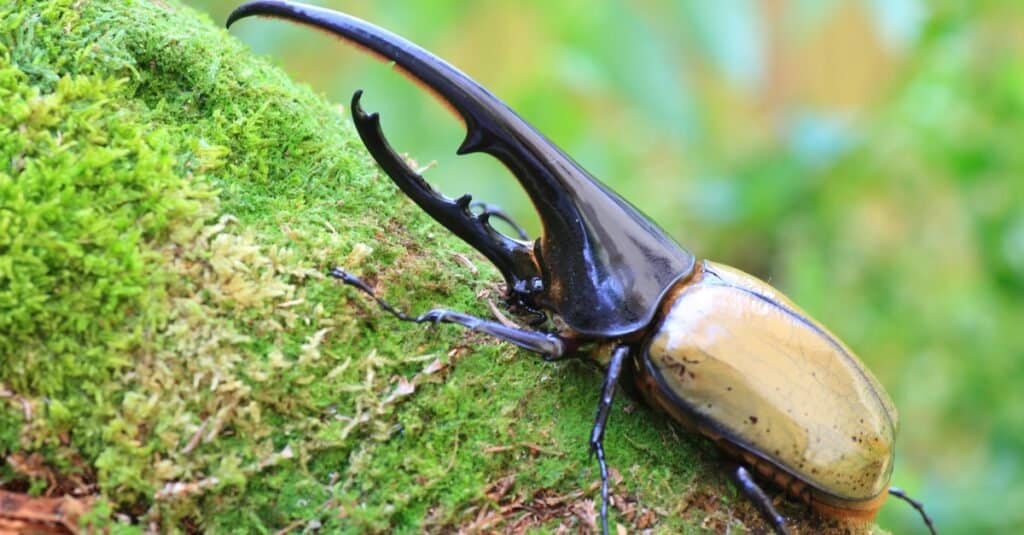
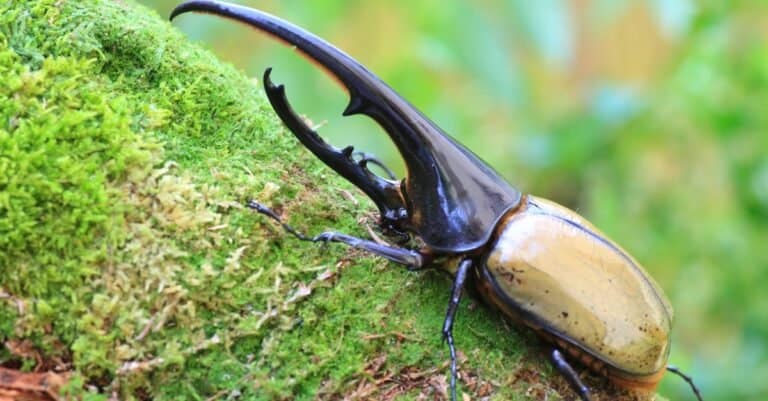
Hercules beetle (Dynastes hercules) on a moss-covered branch in Ecuador.

Hercules beetle (Dynastes hercules) on a moss-covered branch in Ecuador.

Habitat

These beetles are naturally found in rainforests, whether they are in the mountains or in the lowlands. The huge grubs of these rhinoceros-type beetles live in the rotting wood that they eat, while the adults hide under leaf litter and inside logs.

Life Cycle
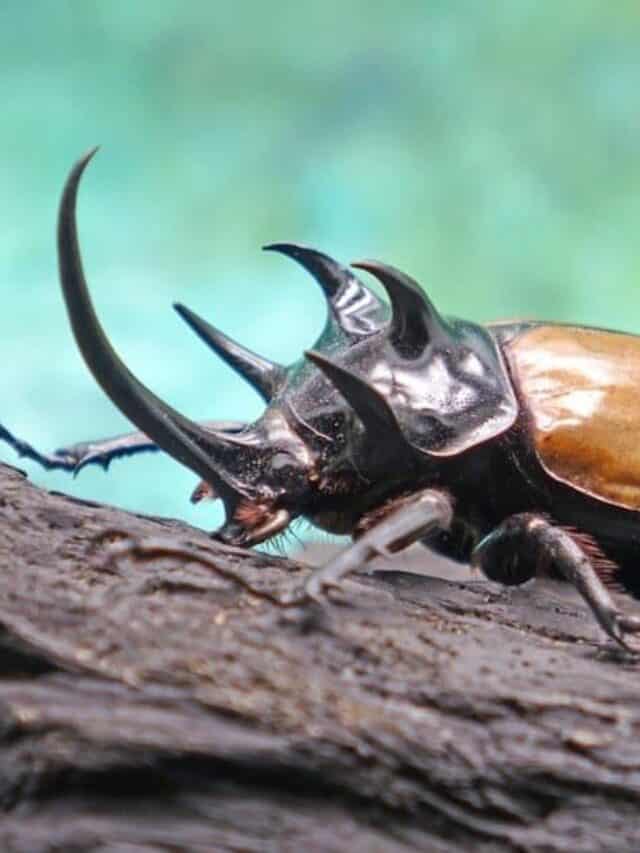
The Five-horned rhinoceros beetle (Eupatorus graciliconis) known as Hercules beetles , Unicorn or Horn beetles , in tropical forest.
The Five-horned rhinoceros beetle (Eupatorus graciliconis) is known as the Hercules beetle, Unicorn, or Horn beetle, in tropical forests.

Although there is not much-documented information about the life cycle of a Hercules beetle in the world. A lot of knowledge has been gained through observations of captive-bred populations of these interesting creatures.

The mating season for adult beetles occurs during the rainy seasons (July through December). Females have an average gestation period of about 30 days from copulation to egg-laying. These beetles may lay up to 100 eggs on the ground or within deadwood. The eggs have an incubation period of about 27 days before they begin to hatch.

Once hatched, the larva may last up to two years! They will also go through three different stages of metamorphosis known as instars. The larvae are yellow with a back head and they can grow up to 11 cm in size. After the third stage, the pupal stage begins and lasts about 30 to 32 days. The Hercules beetle will then transition into adulthood and will live for three to six months in captivity.

Diet

Like other rhinoceros beetles, Hercules beetles eat fruit, especially fruit that has fallen from the tree and rotted a bit, which makes it easier for the insect’s chewing mouthparts to handle. Where they live, the fruits are often mangos and other tropical fruit. They’ll also eat rotting wood like their larvae and other rotting plant material. In captivity, Hercules beetles are often fed fresh fruit such as grapes as well as high-protein beetle jelly.

View all 287 animals that start with H

Sources

  1. Star Advertiser / Accessed July 24, 2021
  2. Animal Diversity Web / Accessed July 24, 2021
  3. Wikipedia / Accessed July 24, 2021
Rebecca Bales

About the Author

Rebecca Bales

Rebecca is an experienced Professional Freelancer with nearly a decade of expertise in writing SEO Content, Digital Illustrations, and Graphic Design. When not engrossed in her creative endeavors, Rebecca dedicates her time to cycling and filming her nature adventures. When not focused on her passion for creating and crafting optimized materials, she harbors a deep fascination and love for cats, jumping spiders, and pet rats.
Connect:

Thank you for reading! Have some feedback for us?


Hercules Beetle FAQs (Frequently Asked Questions)

Hercules Beetles are Omnivores, meaning they eat both plants and other animals.