




I
Species Profile

Ibizan Hound

Canis lupus familiaris

Big ears. Fast legs. Rabbit radar.
DragoNika/Shutterstock.com

Ibizan Hound Distribution

Click a location to explore more animals from that region

Origin Location

This map shows the native origin of the Ibizan Hound. As a domesticated species, they are now found worldwide.

Loading map...

Found in 1 country

Size Comparison

Human 5'8"
Ibizan Hound 2 ft 2 in

Ibizan Hound stands at 38% of average human height.

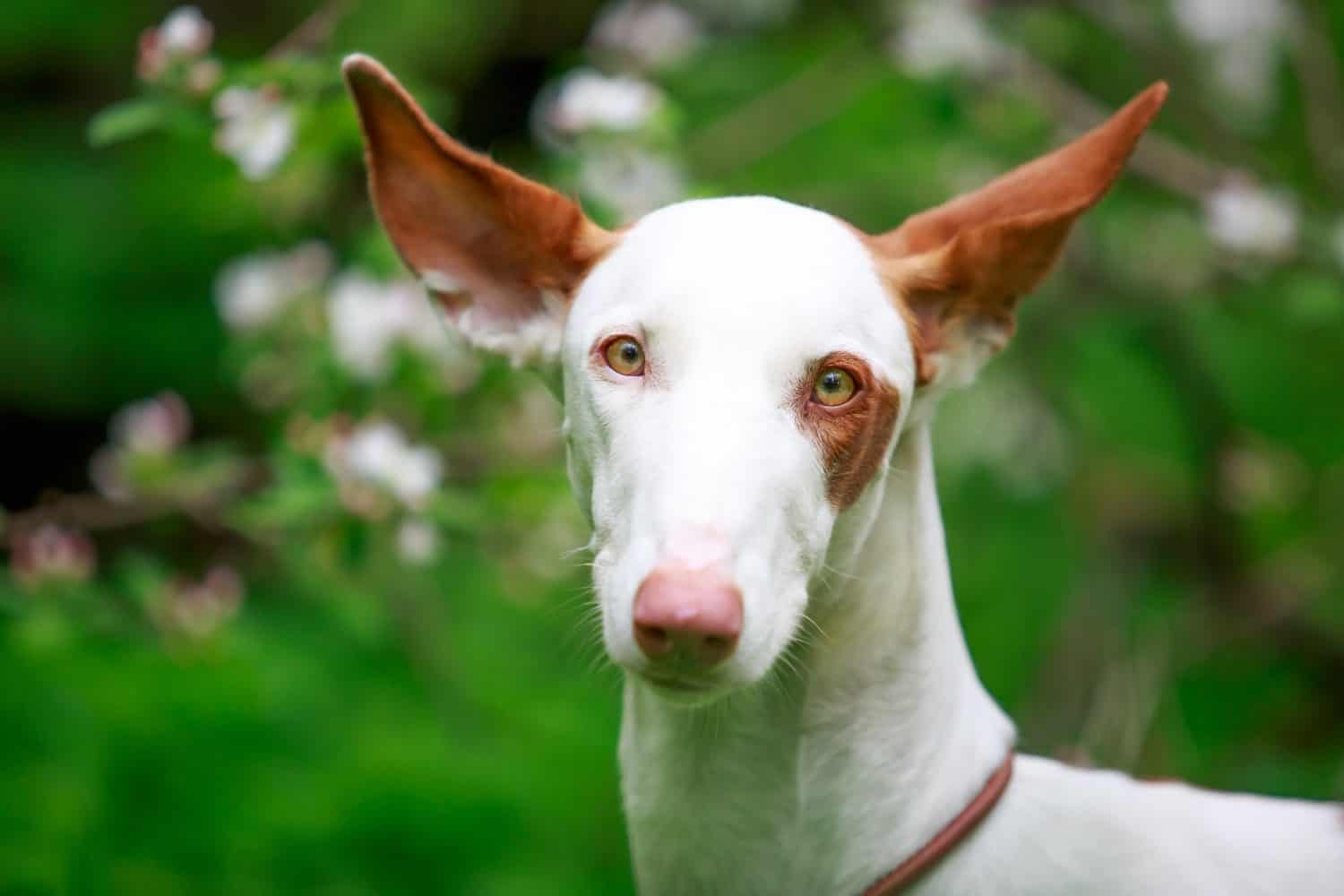
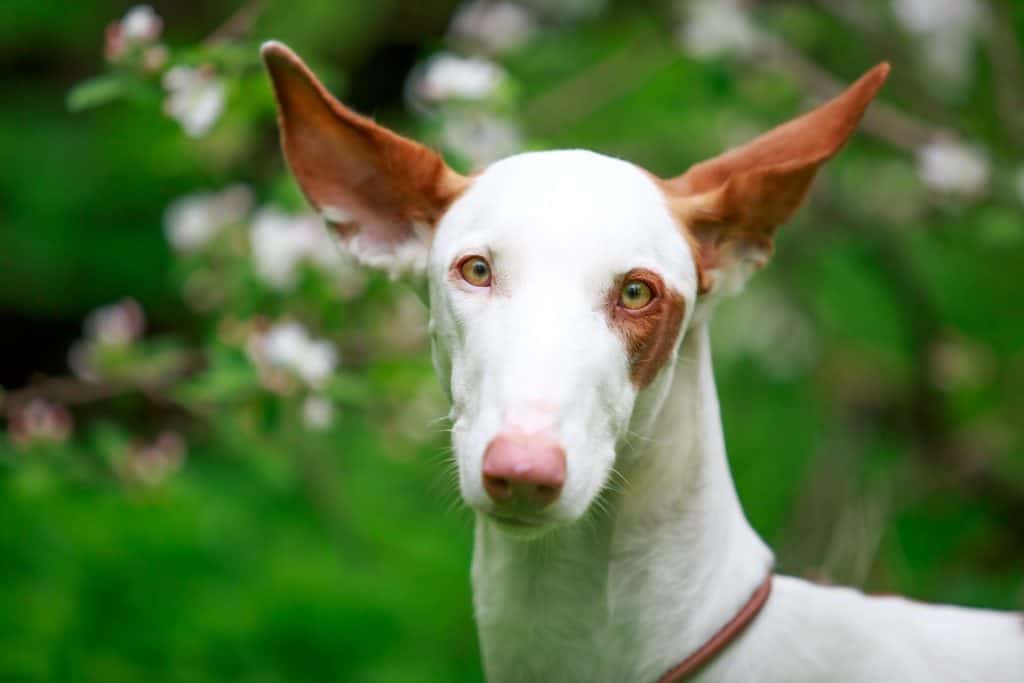
dog with apple-tree blossoms

At a Glance

Domesticated
Also Known As Podenco Ibicenco, Ibizan Podenco, Podenco de Ibiza, Ibiza Hound, Podenco Eivissenc
Diet Omnivore
Activity Diurnal+
Lifespan 12 years
Weight 30 lbs
Status Not Evaluated
Did You Know?

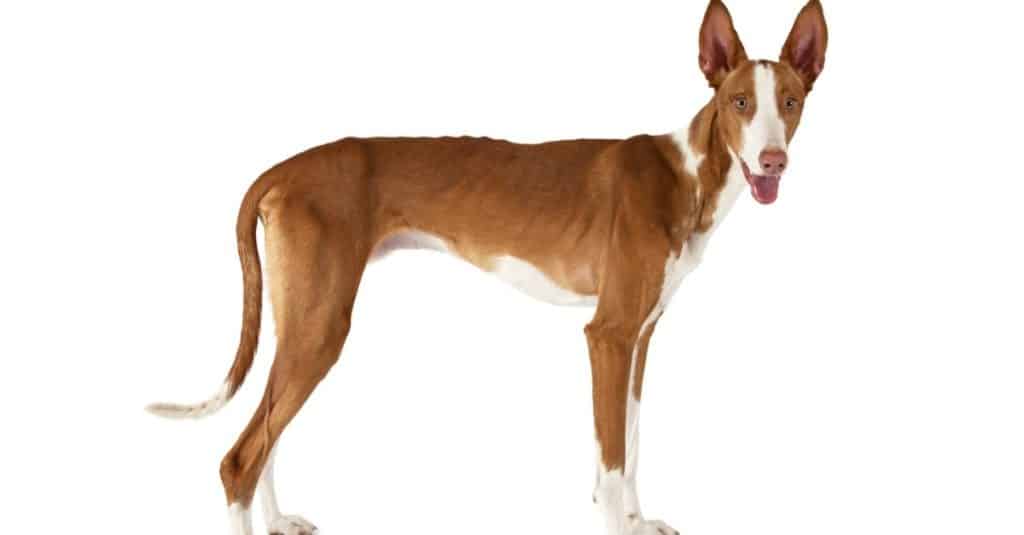
Though a sighthound type, it's famed for hunting rabbits using sight, scent, and hearing together.

Scientific Classification

The Ibizan Hound is a lithe, athletic sighthound breed developed for hunting rabbits using sight, scent, and hearing; it is known for its large upright ears, slender frame, and agile jumping ability.

Kingdom
Animalia
Phylum
Chordata
Class
Mammalia
Order
Carnivora
Family
Canidae
Genus
Canis
Species
Canis lupus

Distinguishing Features

  • Very large, erect, triangular ears
  • Lean sighthound silhouette with deep chest and tucked abdomen
  • Often red, white, or red-and-white coat; can be smooth, wire, or long-haired varieties depending on registry
  • Exceptional agility/jumping ability; traditionally hunts rabbits
  • Uses a combination of sight and scent more than many other sighthounds

Physical Measurements

Males and females differ in size

Height
2 ft 3 in (2 ft 2 in – 2 ft 4 in)
2 ft 1 in (1 ft 12 in – 2 ft 2 in)
Length
4 ft 5 in (3 ft 11 in – 4 ft 11 in)
Weight
57 lbs (51 lbs – 64 lbs)
45 lbs (40 lbs – 51 lbs)
Tail Length
1 ft 4 in (1 ft 2 in – 1 ft 6 in)
Top Speed
37 mph
Top speed 55–60 km/h

Appearance

Primary Colors
Secondary Colors
Skin Type Ibizan Hound (Canis lupus familiaris) skin is thin and tight over a very lean body. Coat may be short and smooth or wire, with little undercoat, so it is more sensitive to cold and scraping.
Distinctive Features
  • Domestic dog sighthound/podenco-type; compared with the domestic dog's wide variability, the Ibizan Hound is strongly standardized toward an extremely lean, leggy, aerodynamic hunting build.
  • Mediterranean/Spanish origin (Ibiza/Balearic Islands); developed specifically for rabbit hunting using sight, scent, and hearing.
  • Key identifiers: very large upright 'bat' ears; long, narrow head and muzzle; amber/clear eyes; long neck; deep chest with pronounced tuck-up; long legs and hare-like feet.
  • Notable athleticism: exceptional agility and vertical jumping/climbing ability; requires secure, tall fencing and careful supervision in open areas.
  • Behavioral tendencies: high prey drive (especially toward small animals), fast visual trigger response, and strong chase instinct; best managed with leash/fenced exercise and reliable recall training expectations.
  • Temperament/care: typically sensitive and responsive-does best with positive reinforcement, consistent routines, and early socialization; can be reserved with strangers and may be quieter indoors when adequately exercised.
  • Exercise needs: high daily activity (running/sprinting opportunities, lure coursing-type play, structured walks) plus mental enrichment to prevent boredom-related behaviors.
  • Grooming needs: low-shedding/low-odor for many individuals; smooth coat needs minimal brushing, wire coat may benefit from occasional stripping/hand-plucking; routine nail and dental care important due to athletic feet and lean jaw structure.
  • Common breed-leaning health concerns (not exhaustive): idiopathic seizures/epilepsy reported in the breed; allergic skin disease/atopy in some lines; autoimmune thyroiditis/hypothyroidism can occur; typical sighthound considerations include leanness-related sensitivity to certain anesthetic protocols-veterinary planning advised.
  • Cold/heat considerations: lean body and low undercoat can mean chill sensitivity (may need a coat in cold weather); as with all athletic dogs, avoid intense exertion in high heat and provide hydration/rest.

Sexual Dimorphism

Sexual dimorphism is present but moderate: males are typically taller/heavier with more bone and broader head/chest; females are usually finer-boned and more narrow through the body while maintaining the same overall sighthound outline.

  • Slightly larger overall frame; more robust forechest and shoulder breadth.
  • Broader skull and more substantial neck musculature.
  • Heavier bone and thicker tail base (on average).
  • More refined head and lighter bone; narrower chest and waistline.
  • Often a slightly more delicate overall silhouette while retaining the same long-legged proportions.
  • Typically lighter overall body mass at comparable height.

Did You Know?

Though a sighthound type, it's famed for hunting rabbits using sight, scent, and hearing together.

Its hallmark ears are large, upright, and highly mobile-built for pinpointing sound in scrubby terrain.

Ibizan Hounds are notable jumpers and climbers; many can clear surprisingly tall fences.

The breed comes in red, white, or red-and-white, with both smooth and wire coat varieties.

Historically, they worked in packs with hunters on the Balearic Islands, coursing rabbits over rocky ground.

It's closely related in "podenco" type to other Mediterranean hunting dogs, reflecting a shared regional tradition.

Unique Adaptations

  • Lean, deep-chested build optimized for fast acceleration and efficient oxygen intake during sprint work (a sighthound hallmark within Canis lupus familiaris).
  • Long legs, flexible spine, and strong rear drive support quick turns and explosive jumps on rocky Mediterranean landscapes.
  • Large upright pinnae increase sound capture, complementing vision-based hunting with precise auditory tracking.
  • Short, tight coat (or harsh wire coat) suits hot, dry climates and thorny scrub; minimal bulk aids heat dissipation.
  • High visual acuity and motion sensitivity typical of sighthounds, tuned for detecting small, fast prey at distance.

Interesting Behaviors

  • Stalking-and-sprint hunting style: freezes, fixes gaze, then bursts into a rapid chase typical of sighthounds.
  • Air-scenting and listening while moving: head lifts, ears swivel, and the dog "checks" wind and sound before committing.
  • Vertical athleticism: springy leaps from standstill to see over brush or change direction in uneven terrain.
  • "Soft mouth" carry is sometimes seen with game-focused lines-careful, controlled holds rather than crushing.
  • Independent problem-solving: will test barriers and routes when motivated by prey or curiosity.
  • Play often mimics hunting: rapid zigzags, pounces, and sudden stops like rabbit coursing practice.

Cultural Significance

On the Balearic Islands, especially Ibiza, the Ibizan Hound (Podenco Ibicenco, Canis lupus familiaris) is a symbol of rural hunting. Fast, sharp-eared dogs hunted small game in scrub and terraces, helped with food and pest control, and link to Iberian island hunting heritage and local dog types.

Myths & Legends

On Ibiza and nearby islands, people say the Ibizan Hound looks like ancient Mediterranean dogs, linked to Egyptian jackal and hound images in old art, though it actually grew from local hunting needs.

Hunters' tales on the Balearics describe exceptional podencos that could "hear rabbits under stone" and lead a team silently through prickly scrub-celebrated in anecdotes as near-magical fieldcraft passed down with particular bloodlines.

Mediterranean rabbit hunters often say the Ibizan Hound (podenco) is "born knowing the hill" — top dogs seem to read wind, rock, and cover by instinct, a gift of the islands, not just training.

Naming lore around "podenco" in Iberian culture is often treated as shorthand for an old, enduring hunting-dog lineage of the coasts and islands, with each region's podenco carrying the spirit and methods of its homeland.

Conservation Status

NE Not Evaluated

Has not yet been evaluated against the criteria.

Population Stable

Life Cycle

Birth 6 pups
Lifespan 12 years

Lifespan

In the Wild
11–14 years
In Captivity
11–14 years

Reproduction

Mating System Polygyny
Social Structure Managed Domestic
Breeding Pattern Not Applicable
Fertilization Managed Selective
Birth Type Managed_selective

Ibizan Hounds do not form pair bonds; breeders control mating. Registered programs often use a few popular males across many females (polygyny). Natural mating is common but pairs are chosen for health, traits, and to limit inbreeding.

Behavior & Ecology

Social Pack Group: 4
Activity Diurnal, Crepuscular, Cathemeral
Diet Omnivore Rabbit or other lean, high-protein meat-based meals (often highly motivating for this rabbit-hunting sighthound).

Temperament

Affectionate with family; often gentle indoors after sufficient exercise
Reserved-to-polite with strangers; warms up with calm, non-invasive approaches
High prey drive; strong chase response to small animals and sudden motion (breed-defining hunting trait)
Play style: fast, chase-oriented, with springy jumping; may body-check less than some breeds but can overwhelm slower dogs
Independent problem-solver; responds best to positive reinforcement and short, varied sessions (less repetition tolerance than many dogs)
Sensitive to harsh handling; stress may show as avoidance, freezing, or sudden zoomies
HUBS: common breed pattern is "calm house, explosive field"-variation exists by line and socialization
Potential reactivity triggers: movement near fences/windows, leash frustration, novel loud sounds; generally improves with structured exposure and decompression
Breed-/type-related health/care concerns that affect behavior: possible sensitivity to anesthesia (sighthound type), risk of bloat in deep-chested dogs, seizure disorders reported in the breed, thyroid disease/allergies in some lines-routine vet screening supports stable behavior
Needs daily high-energy runs or lure-coursing. Need secure tall fencing (at least 1.8 m) because they jump well. Off-leash only in safe enclosed areas. Sensitive to cold; use coats and limit winter outdoor time.

Communication

Generally moderate vocal; many are quieter than some breeds until aroused
Alarm barking when something novel approaches home territory
Whines/whimpers for anticipation Leash, food, outings
High-pitched yips/squeals during intense play or chase Arousal-related
Occasional howls or "talking" sounds, especially with separation or excitement
Highly expressive ear carriage (large upright ears): rapid swiveling signals attention shifts; pinned-back ears often indicate uncertainty/stress
Sighthound gaze and head orientation: sustained visual tracking is a key communicative/behavioral cue tied to prey drive
Body posture and stillness: sudden freeze/stalk posture precedes chase; important early warning for handlers
Play bows followed by explosive sprinting; social play is often distance-increasing rather than wrestling
Scent marking (urine marking) and ground sniffing used for social information despite being a sighthound that also hunts by scent/hearing
Leaning/close contact with trusted humans; choosing proximity as affiliation
Jumping/climbing behaviors (breed-typical athleticism) used to investigate and to seek vantage points; manage with enrichment and safe obstacles rather than punishment

Habitat

Biomes:
Mediterranean Temperate Grassland Temperate Forest Desert Hot Desert Cold Boreal Forest (Taiga) Tundra Alpine Wetland Freshwater Marine +5
Terrain:
Island Coastal Rocky Sandy
Elevation: Up to 16404 ft 3 in

Ecological Role

Domestic/managed omnivorous canid; in working context functions as a small-game hunter (notably rabbit), while as a companion animal it occupies a human-supported niche.

Small-game/pest regulation in traditional hunting settings (especially rabbits) Cultural/working-dog role supporting human subsistence and sport hunting As a domestic predator, can influence local wildlife pressure-requires responsible containment/leash use to prevent unintended predation

Diet Details

Main Prey:
European rabbit Hares Small rodents Ground birds and quail Lizards and other small vertebrates
Other Foods:
Berries and other fruits Vegetable matter Grasses and plant matter

Human Interaction

Domestication Status

Domesticated

Domestic dogs (Canis lupus familiaris) have long lived and worked with people. The Ibizan Hound is a landrace sighthound from Spain's Balearic Islands (Ibiza), bred for rabbit hunting in rough ground. It uses sight, scent, and hearing, jumps high, has a lean, upright-eared build, and serves as hunter, sport dog, show dog, pet, or rescue.

Danger Level

Low
  • Low typical human-directed aggression; most risks are incidental (knocking over small children due to speed/zoomies).
  • High prey drive can lead to chasing behavior that may cause accidents if off-leash; can result in bites if a person attempts to physically grab/interfere with a dog in full chase or during high arousal.
  • Potential for fear-based defensive snapping if poorly socialized or handled harshly; generally mitigated by early socialization and reward-based training.

As a Pet

Suitable as Pet

Legality: Ibizan Hound: Generally legal to own as a pet in the United States and most places; rarely banned by breed laws. Local rules (licenses, leashes) apply; some areas may require extra rules or secure containment due to high prey drive.

Care Level: Experienced

Purchase Cost: Up to $3,000
Lifetime Cost: $18,000 - $45,000

Economic Value

Uses:
Companion animal Hunting and field utility (rabbit hunting) Canine sports and events (lure coursing/agility) Conformation/show and breeding Rescue and rehoming services
Products:
  • puppies from breeders (pet/show/sport prospects)
  • stud services and breeding-related services
  • training services (recall/prey-drive management, sports training)
  • sport entry fees and club memberships (lure coursing/agility)
  • specialized containment and gear (secure fencing, martingale collars, muzzles where required)
  • veterinary services (preventive care, dentistry, emergency care for injuries/bloat risk)
  • pet insurance policies

Relationships

Ecological Equivalents 8

Animals that fill a similar ecological role in their ecosystem

Pharaoh Hound
Pharaoh Hound Canis lupus familiaris Mediterranean sighthound-type rabbit hunter. Similar build and hunting style (high prey drive, speed and visual pursuit, endurance) and functionally similar to podenco/other primitive hound lineages.
Podenco Canario
Podenco Canario Canis lupus familiaris Island-developed rabbit-hunting hound. Similar niche: coursing and flushing rabbits; athletic, heat-tolerant, and often uses multiple senses while hunting.
Portuguese Podengo
Portuguese Podengo Canis lupus familiaris Traditional Iberian small-game hunter. Shares the role of rabbit hunting, agility over rough terrain, and independent problem-solving characteristic of primitive hunting breeds.
Greyhound
Greyhound Canis lupus familiaris Classic sighthound coursing specialist. Shares high-speed pursuit, lean morphology, and high exercise needs, though typically engages in less multi-sensory hunting than Ibizan Hounds.
Whippet
Whippet Canis lupus familiaris Smaller sighthound with similar prey drive and sprinting/coursing behavior. Comparable care needs regarding safe off-leash management and controlled high-intensity exercise.
Coyote
Coyote Canis latrans Opportunistic small-game predator that frequently targets rabbits and hares. Parallels the Ibizan Hound's functional niche of small-prey pursuit, though as a wild generalist.
Red fox
Red fox Vulpes vulpes Common rabbit predator in many regions; shares a small-game hunting niche and reliance on hearing and scent, serving as a wild canid analogue for rabbit-focused hunting.
Domestic dog
Domestic dog Canis lupus familiaris Ibizan Hound (Canis lupus familiaris): an athletic sighthound bred for rabbit hunting. Lean, long-legged, with large upright ears; capable of high jumps. Independent with a strong prey drive. Requires daily exercise, secure fencing, and careful veterinary care.

Quick Take

  • Owners must secure perimeters against a 6-foot vertical leap to prevent high-energy escape attempts.
  • The 2 to 5-year window presents a severe risk for developing autoimmune thyroiditis.
  • Scientific DNA analysis contradicts ancient myths by labeling the breed a modern re-creation.
  • Expert hunters prioritize all-female packs to ensure superior hunting results in rugged terrain.

The Phoenician traders brought hounds to the island of Ibiza from Egypt to assist with catching food. Ibizans can make an exceptional family pet. They are friendly, silly, and family-oriented.

Ibizans may be wire-haired or smooth-haired. Some believe there to be a longhaired type, but this is most likely a variant of the wirehaired. Wire-haired Ibizans are less common than their smooth-haired counterparts. The coat of an Ibizan is red and white with light tan noses, ears, rims around the eyes, and pads on the feet. The breed has a very athletic-looking build and easily recognizable upright ears. They have long necks and long, narrower heads.

An infographic titled 'The Ibizan Hound: Ancient Looks, Modern Reality' featuring illustrations of the breed, a DNA strand, and icons representing its 6-foot jumping ability and health risks.
For centuries, we believed they walked with Pharaohs—but science just revealed a startling truth about this 6-foot-leaping 'ancient' breed. © A-Z Animals

Owning an Ibizan Hound: 3 Pros and Cons

ProsCons
Great family dog: Ibizans make a great family dog. They are gentle, playful, and silly.High-energy: Ibizans have a lot of energy and need lots of vigorous exercise each day.
Easy to groom: An Ibizan’s coat is easy to groom and will only need to be brushed about once a week.Escape artists: Ibizans have been known to jump over fences or gates, so you’ll need to make sure your dog is properly secured and safe in your space.
Good with dogs: Ibizans are generally good with other dog breeds.High prey drive: Ibizans have a high prey drive and may try to chase smaller animals. They are not a good choice for homes with cats.
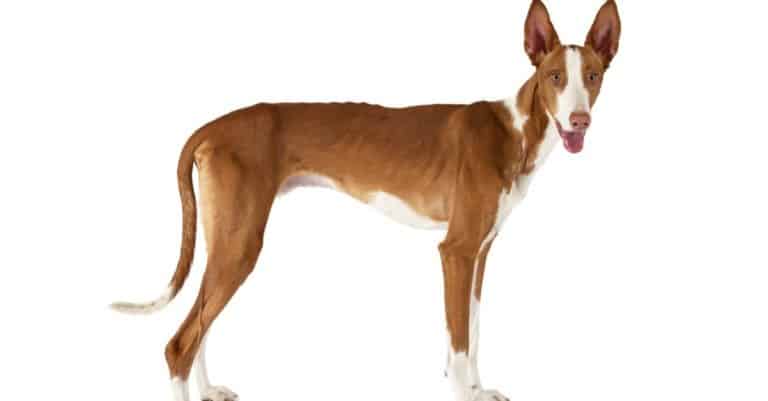
One year old Ibizan Hound dog standing in front of white background

Ibizans make great family dogs as they have a gentle, playful, and silly temperament.

History and Evolution

Due to the Ibizan Hound’s strong resemblance, particularly seen in their upright ears and long, narrow face shape, to the ancient Egyptian depictions of Anubis, who was the god of funerary rites and the underworld, it was believed that this breed’s lineage could be traced back thousands of years.

However, DNA analysis of 85 breeds, including the Ibizan Hound, conducted by scientists at the Fred Hutchinson Cancer Research Center in Seattle and reported in 2004, has shown that the Ibizan and related Pharaoh Hound are not ancient breeds but instead more modern re-creations likely produced by breeders.

The Ibizan Hound takes its name from the Spanish island where it’s thought Phoenician traders brought the breed in the 8th or 9th century B.C. Due to the breed’s agility and very strong prey drive, people in the Catalan-speaking region of Spain and in France traditionally used these dogs to hunt small game, including rabbits. Ibizan Hounds are able to hunt in all types of environments and work by scent, sound, and sight. Females are thought to be superior hunters and are often grouped in a pack by hunters. These days, Ibizan Hounds are often used in competitive lure coursing and agility events due to their ability to jump high and far.

The first Ibizan Hounds to come to the United States were Hannibal and Certera, brought to Rhode Island by Colonel and Mrs. Consuelo Seoane in 1956. Their litter of eight puppies, combined with other imports, was the foundation of the breed in the U.S., which was recognized by the American Kennel Club in 1979.

Size and Weight

The Ibizan Hound is a large-breed dog. Males weigh about 50 pounds and are between 23.5 and 27.5 inches tall. Females generally weigh around 45 pounds and are between 22.5 and 26 inches tall.
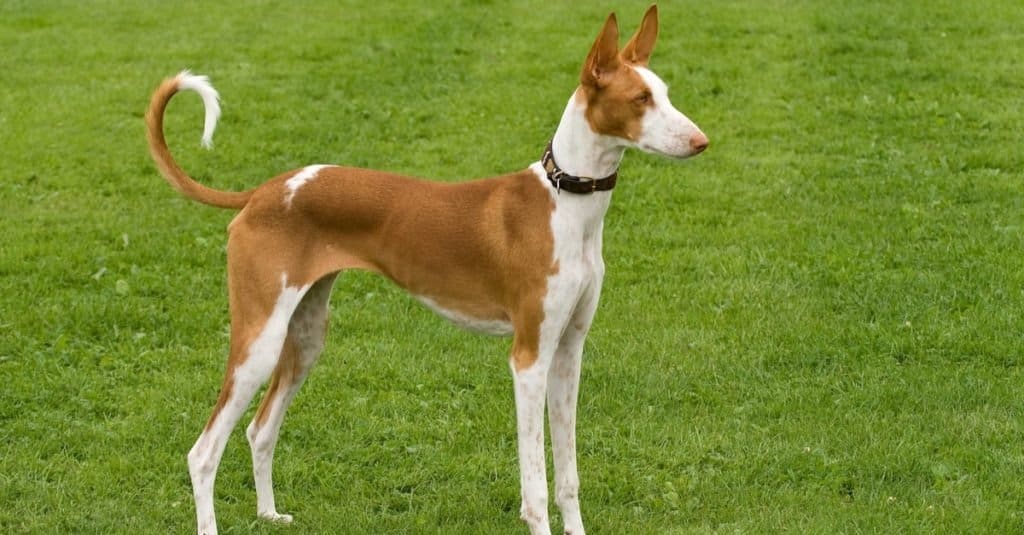
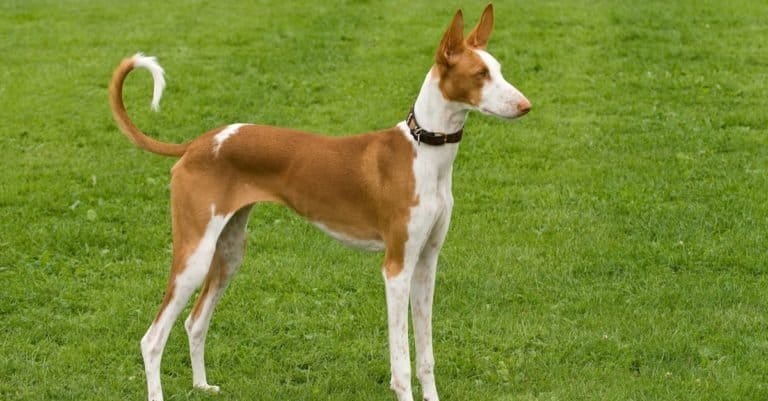
Ibizan Hound standing posed to perfection

The Ibizan Hound has an athletic-looking build and is easily recognizable due to its upright ears.

Common Health Issues

Learning about some of the common health issues Ibizans face is important if you are looking to bring one of these dogs home to your family. Not all Ibizans will suffer from all, or any, of these conditions, but when you know what to look for, it can help you catch a potential problem early before it evolves into a bigger problem.

Some Ibizans may develop autoimmune thyroiditis, which can lead to hypothyroidism. Most dogs that are going to develop this problem will do so between the ages of 2 and 5. Hypothyroidism can cause a dog to be very lethargic and weak, gain weight, become intolerant of the cold, and develop a dull and dry coat.

Ibizans may also develop hip dysplasia, which is a genetic condition. Hip dysplasia occurs when a dog’s joints don’t form properly, and the bones begin to rub against one another. This can be very painful and may require surgery.

You should also be on the lookout for signs of bloat in your dog. Bloat is when a dog’s stomach becomes enlarged and filled with air, food, or fluid. The stomach twists, and the dog is unable to relieve any gas. It can cause them to have trouble breathing. If you suspect your dog has bloat, formally known as gastric dilation-volvulus, seek medical attention right away, as this is a life-threatening problem.
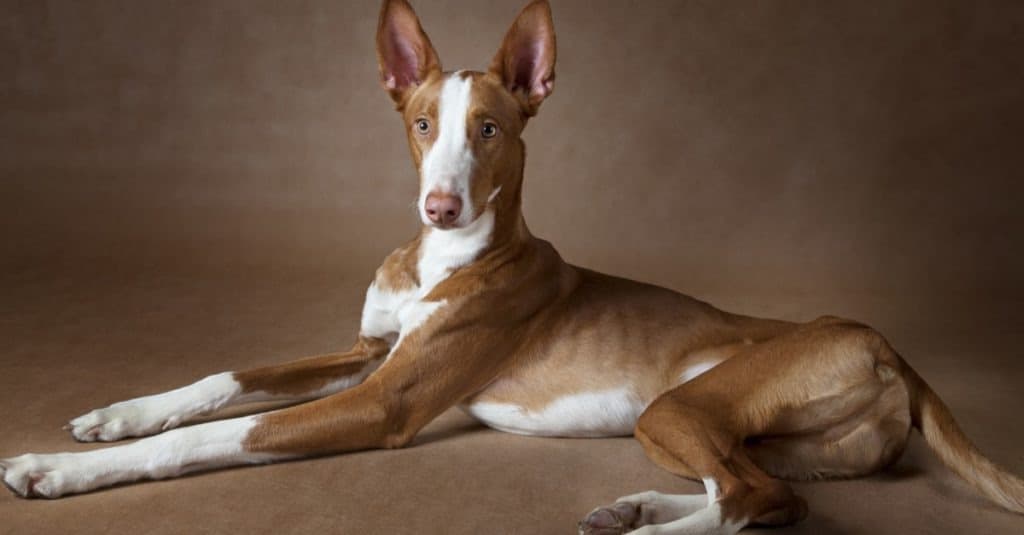
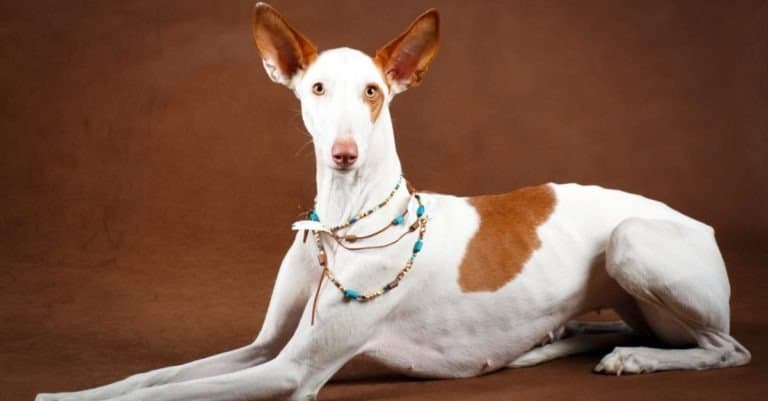
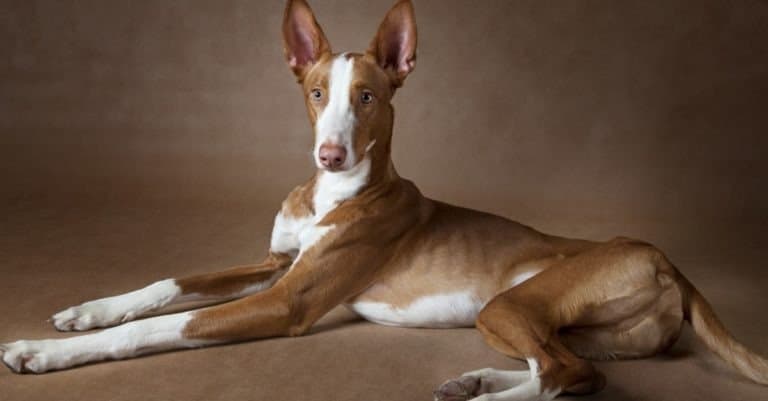
One year old Ibizan Hound dog lying in front of brown background

The Ibizan Hound can suffer from several health issues, including bloat and hip dysplasia.

Temperament and Behavior

Ibizan Hounds have a very even-tempered personality. They are very family-oriented and enjoy spending time with and entertaining the people in their families. This breed is very intelligent and is good at solving problems.

Overall, Ibizan Hounds respond well to positive training methods, but they have a bit of a personality mix and can exhibit stubborn or independent traits and behaviors as well. Ibizan Hounds are a very active breed and require regular exercise. However, they can also be good house pets, as long as their activity needs are met. The prey drive for an Ibizan Hound is very high, so it is always important to keep him on a leash when you go for a walk and make sure your backyard has a high and secure fence.
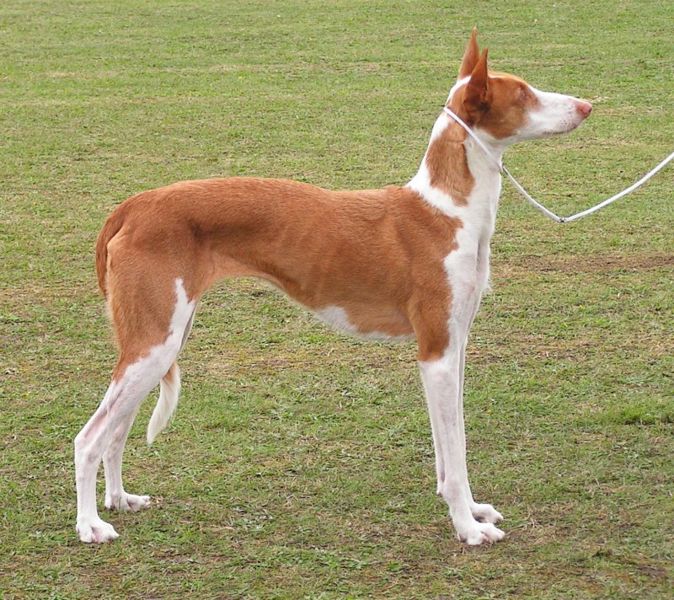
Ibizan Hounds have a high prey drive, so it’s vital to keep these dogs on a leash when walking.

How to Take Care of an Ibizan Hound

Keep reading to learn more about caring for your Ibizan. It is important to keep this breed’s dietary needs, exercise requirements, temperament, health issues, and more in mind as you decide what is best for your dog.

The Best Dog Food

Most Ibizans will need between 2 and 3 cups of high-quality dog food from a respected manufacturer. The exact amount that is right for each dog will vary based on their activity level, age, weight, metabolism, health concerns, and other factors. An Ibizan should eat twice a day, so split the recommended amount of food into two daily servings.

Some owners feed their Ibizan kibble, others choose a raw or home-cooked diet, and still others choose some mix of the three. The choice is up to you, but you can contact your vet if you’re looking for guidance or suggestions. Monitor the timing and portions of their food to reduce the chances of life-threatening bloat.

Ibizan puppies should be fed a high-quality puppy formula. Your dog’s vet will also be a good resource if you’re not sure which type of food is best for them. Keep in mind that young puppies have small stomachs, so they won’t be able to eat as much food at one time. For this reason, you’ll need to split their food into three or four servings throughout the day. Once a puppy is six months old, just two servings of food should be sufficient each day.
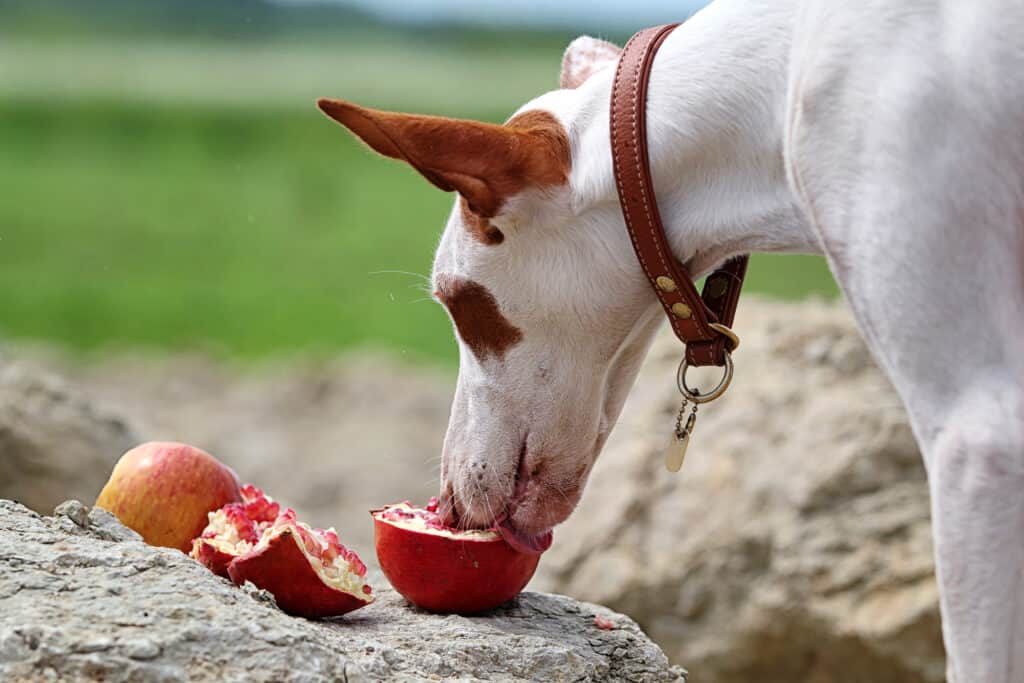
dog eating pomegranite

An Ibizan should eat twice a day and be monitored to reduce the life-threatening chances of bloat.

Maintenance and Grooming

Ibizans may have a wire-haired or smooth-haired coat. You’ll want to brush and bathe your Ibizan periodically when it looks or smells like it needs it. This goes for both wire-haired and short-haired dogs.

In addition to brushing and bathing your Ibizan, they’ll also need to have their teeth brushed regularly and their nails clipped to prevent them from getting too long and painful to walk on.
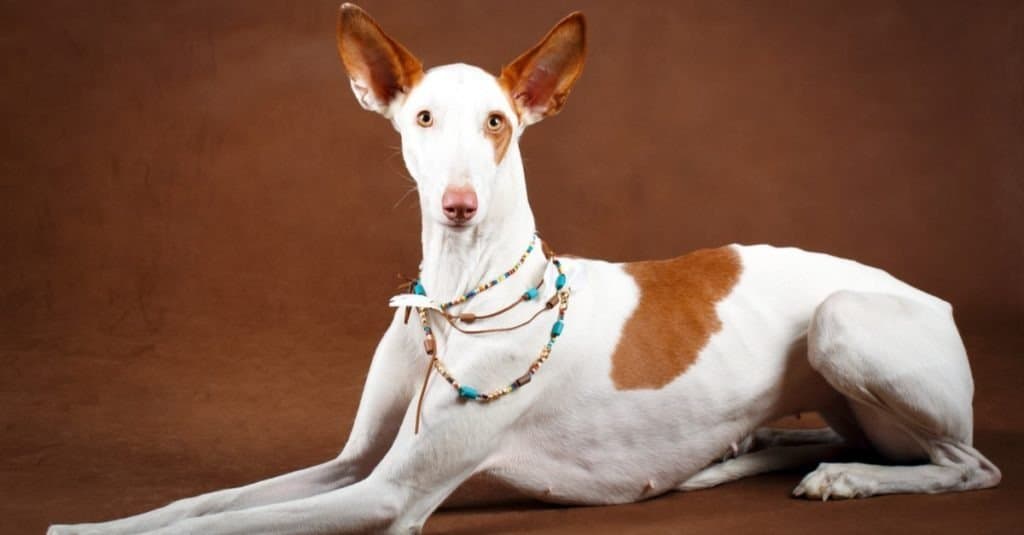
Ibizan Hound lying down

Ibizan Hounds have either a wire-haired or straight-haired coat that needs periodic grooming.

Training

Positive reinforcement training methods work best for Ibizans. Keep your training sessions shorter and interesting to keep your dog’s attention. While the breed is quite intelligent, they also get bored very easily. You should also crate train your Ibizan since housetraining can be a challenge with the breed.

Exercise

Ibizans need a lot of physical activity; they are a very athletic breed. They have been known to jump up to five or six feet into the air, so you’ll also want to ensure you have a fenced-in backyard. Each day, your dog will need to take a few long walks and/or engage in a game with you or another member of the family in the backyard.
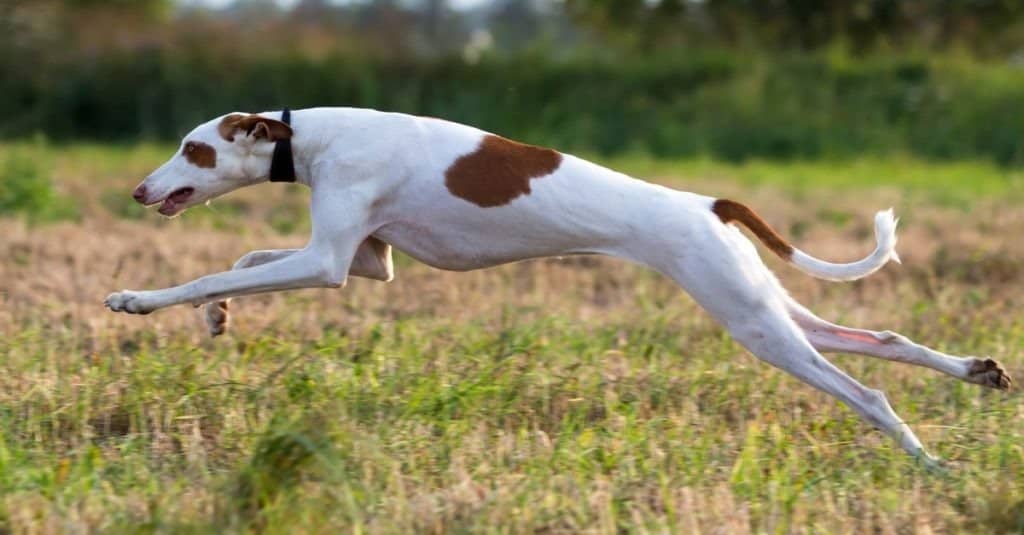
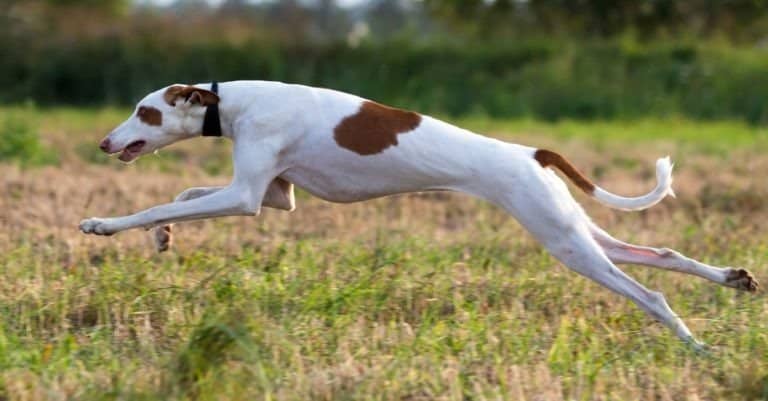
Ibizan Hound dog coursing run in field

Ibizan Hounds require a lot of vigorous exercise every day.

Puppies

Once you bring an Ibizan puppy home, you’ll want to start the process of socialization as soon as possible. This will help them get used to lots of different people, pets, and places, and can help them adjust to different situations in the future. You will also want to begin potty training and training your new dog to get them used to your routines and expectations.

Before purchasing a puppy from a breeder, ask for health clearances for the parents to help decrease the chances that your dog will inherit a genetic condition such as hip or elbow dysplasia, von Willebrand’s disease, hypothyroidism, or eye diseases.
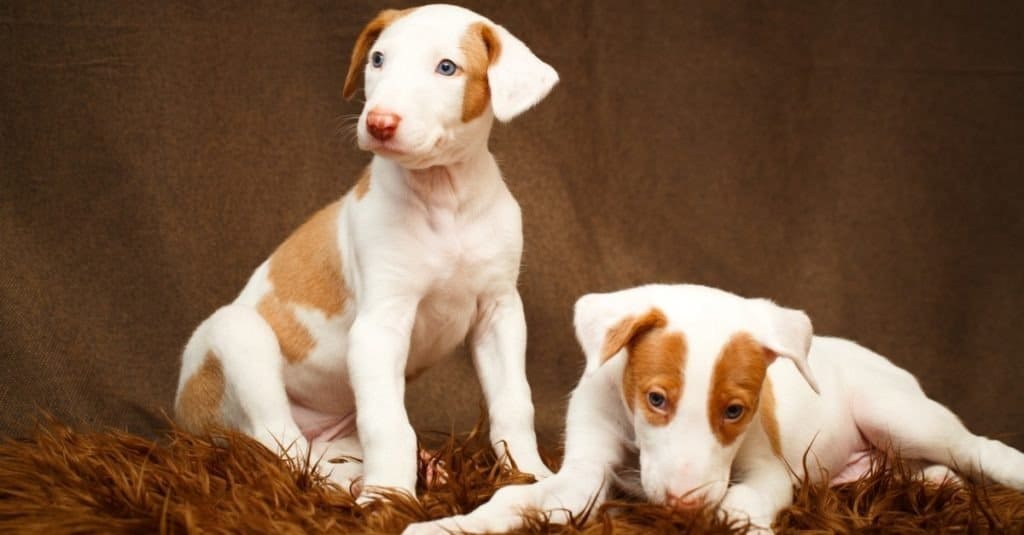
Ibizan Hound puppies

It’s best to start the process of socialization as soon as possible after you bring an Ibizan puppy home.

Ibizan Hound and Children

Ibizan Hounds do very well around children. They can be very silly and playful with children, but also know how to be gentle and loving. They may chase younger children, so this breed may do best in homes with slightly older children who have learned appropriate ways to interact with a dog.

Dogs Similar to Ibizan Hounds

Basenjis, Greyhounds, and Whippets are three breeds that are similar to an Ibizan.

  • Basenji: Basenjis and Ibizans are both hunting dogs that are a mix of playful and easy to train. Ibizans are larger dogs. The average weight of a male Ibizan is 48.5 pounds, while the average weight of a male Basenji is 24 pounds.
  • Greyhound: Greyhounds and Ibizans are both very affectionate dogs who can make excellent family pets. Ibizans have a lot more energy and a greater need for exercise than Greyhounds.
  • Whippet: Whippets are another hunting dog, like the Ibizan. Both dogs have a high prey drive and are likely to chase small animals they see. Ibizans and Whippets are both affectionate breeds, but barking tendencies can vary by individual dog rather than breed.
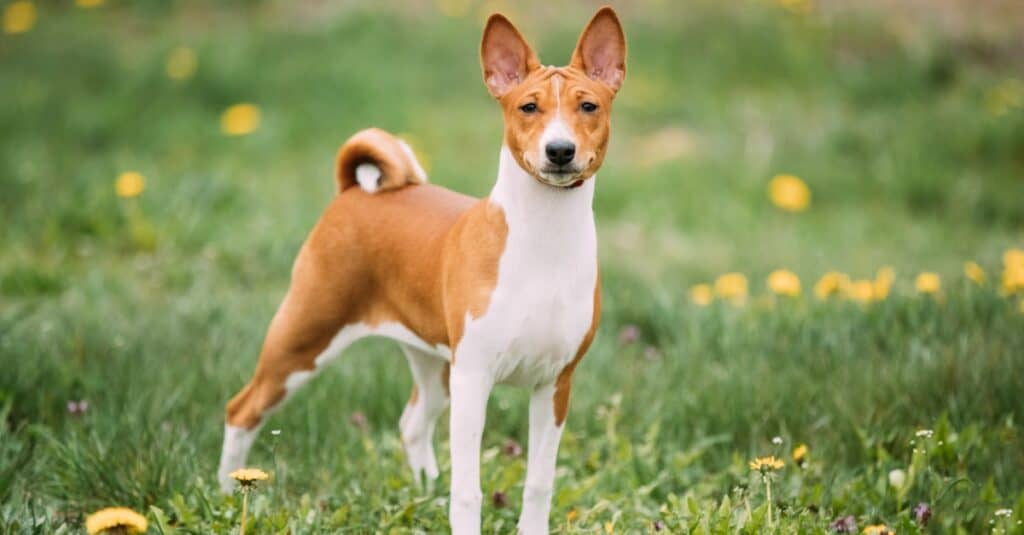
Basenji standing in the field

The Basenji is a similar breed to the Ibizan Hound but is smaller in size.

View all 59 animals that start with I

Sources

  1. American Kennel Club / Accessed January 30, 2021
  2. Dogtime / Accessed January 30, 2021
  3. Wikipedia / Accessed January 30, 2021
  4. Petfinder / Accessed January 30, 2021
  5. Active Dog Sports / Accessed January 30, 2021
  6. Terrific Pets / Accessed January 30, 2021
  7. Ibizan Hound Club / Accessed January 30, 2021
Catherine Gin

About the Author

Catherine Gin

Catherine Gin has more than 15 years of experience working as an editor for digital, print and social media. She grew up in Australia with an alphabet of interesting animals, from echidnas and funnel-web spiders to kookaburras and quokkas, as well as beautiful native plants including bottlebrushes and gum trees. Being based in the U.S. for a decade has expanded Catherine's knowledge of flora and fauna, and she and her husband hope to have a hobby farm and vegetable garden in future.

Thank you for reading! Have some feedback for us?


Ibizan Hound FAQs (Frequently Asked Questions)

Ibizan Hounds are intelligent, active, and engaging by nature!