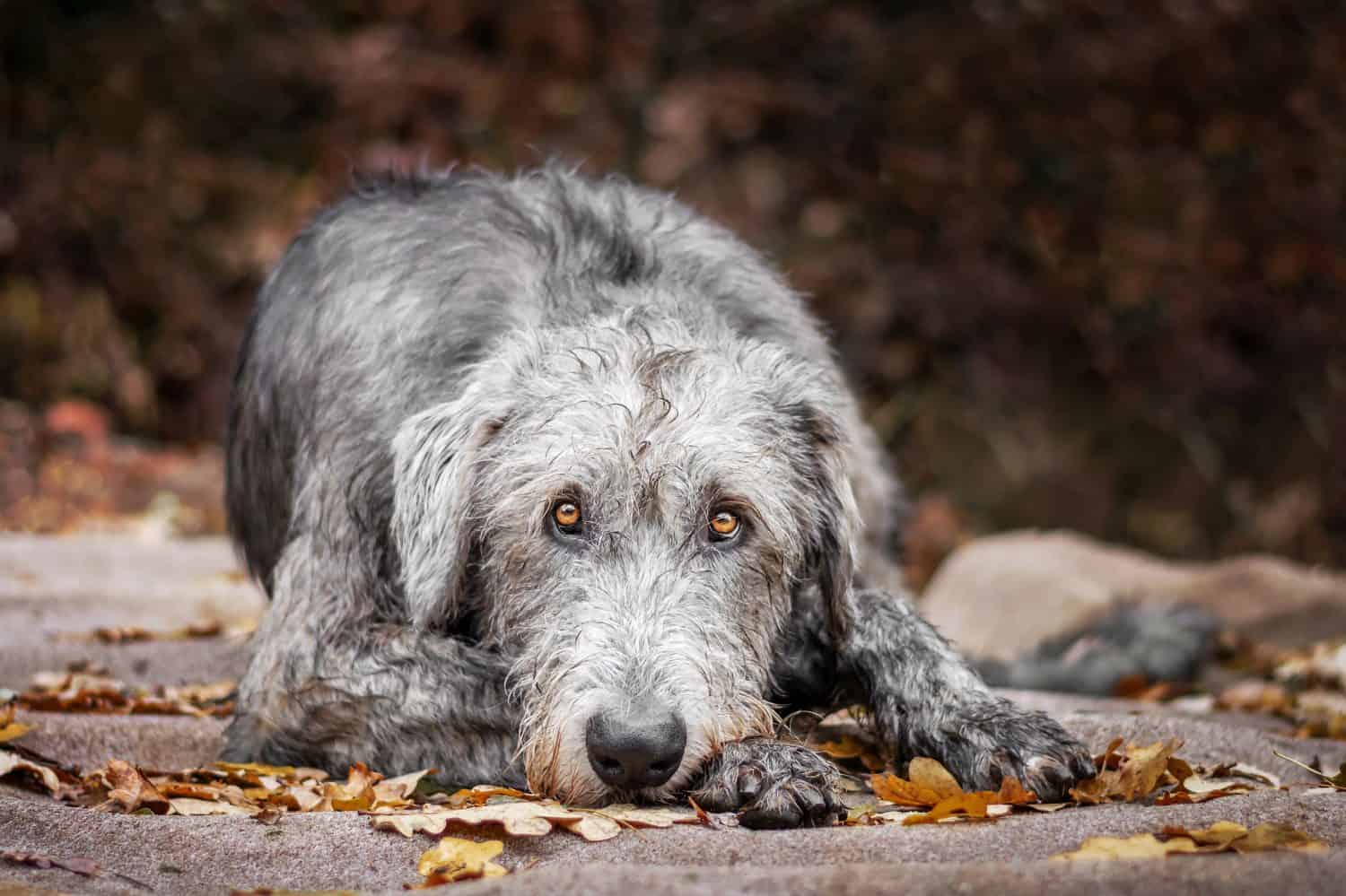
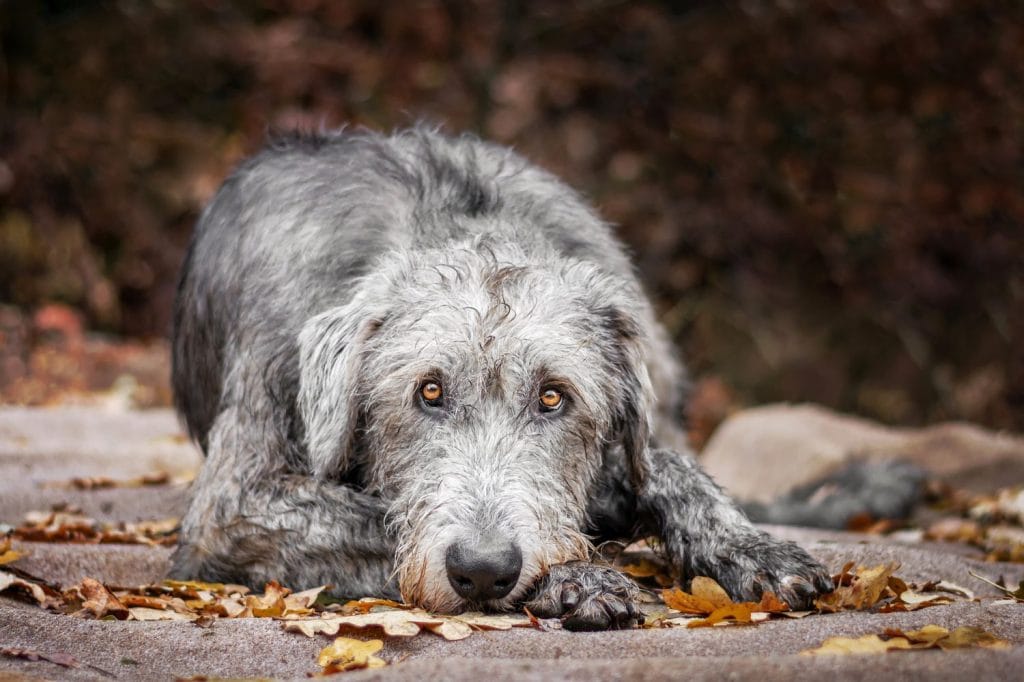



The Irish Wolfhound is one of the world’s tallest dog breeds and has a history closely tied to Ireland’s ancient hunting and warfare traditions. Originally developed to track large game and later valued by nobles for their calm strength, these dogs nearly vanished after wolves disappeared from Ireland. Careful 19th-century preservation efforts saved the breed, which today is known for its gentle temperament and impressive stature.
Evolution and History
Romans in the 4th century referred to very large dogs among the Gaels (ancient Irish). However, zooarchaeologists say that no dogs of Irish Wolfhound size are known before 1200 AD. That might be because the large Irish dogs didn’t get their massive size until they were crossbred with coursing hounds, known for their size and hunting abilities, from the Middle East in the Middle Ages.
Then, Irish clans used this breed in battle because, despite their gentle nature, the dogs were fierce fighters. Throughout the 16th, 17th, and 18th centuries, Irish Wolfhounds were commended in literature for their docility and strength. Usually owned only by the aristocracy, they were often given as prized gifts to visiting royalty and dignitaries. During the 1700s, though, Irish farmers and hunters chose this breed to help them control the rampant wolf population in the countryside; hence their name.
Unfortunately, these ancestral Irish wolfhounds did their job too well. By the 1860s, the wolves in Ireland had gone extinct, and this dog breed had nearly disappeared. At that time, George Graham, a British army captain, searched Ireland for any remaining Irish wolfhounds and made it his goal to do what he could to protect the breed. He is still well-revered for this work.
Somewhere in their history, the breed had both short-legged and long-legged types, but today’s Irish Wolfhound is among the tallest of all breeds of dog. Irish wolfhounds are sighthounds, which means they are able to use their keen eyesight and fast speed to hunt. They are known for their very dignified, calm, and courageous temperament.
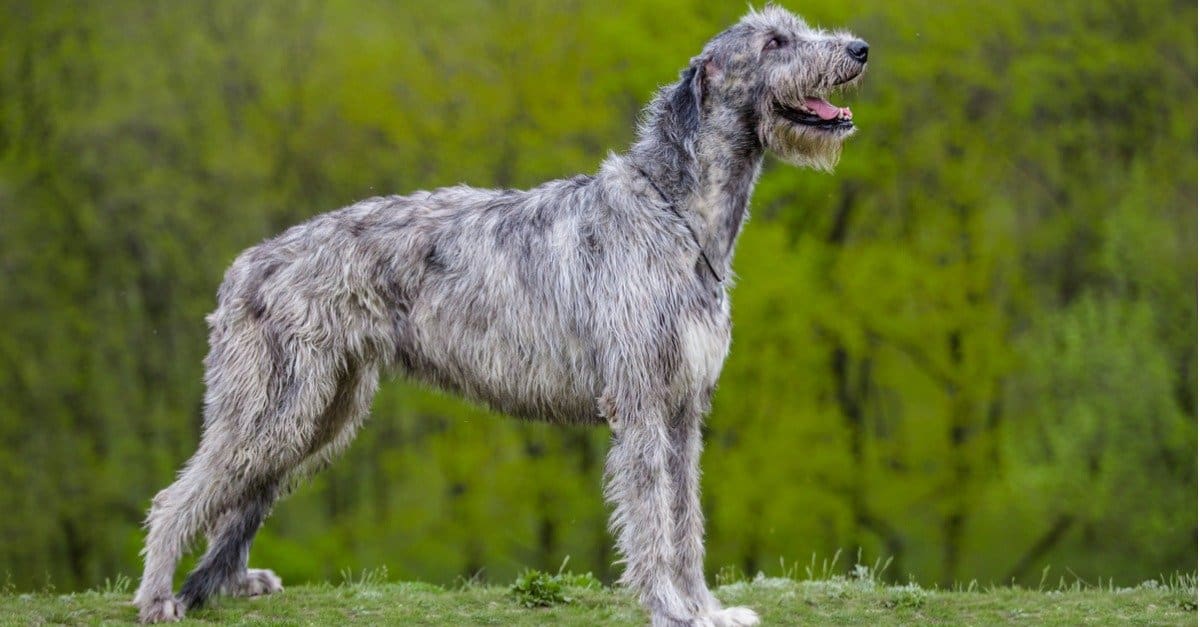
This breed was so good at doing its job that no wolves remained in Ireland by the 18th century.
©iStock.com/Ashva
3 Pros and Cons of Ownership
| Pros | Cons |
|---|---|
| Calm These dogs have a very calm and gentle temperament, making them a good pet for the whole family. | Expensive Taking care of this breed can be expensive. Since they are so large, be prepared to spend more money on food, medication, and pet supplies. |
| Quiet This dog breed does not bark very often, so you won’t need to worry about being disturbed by constant barking anytime anyone walks by your house. | Shorter lifespan On average, these dogs only live between 6 and 10 years. This is a short amount of time compared to other breeds and won’t give you as much time to enjoy your furry friend. |
| Easy to groom These dogs don’t shed a lot. Their coats need to be brushed only about once a week. | Not great for very young children The large size of this breed is a reason to think carefully before bringing one around babies and toddlers. They could accidentally injure or scare young children. |
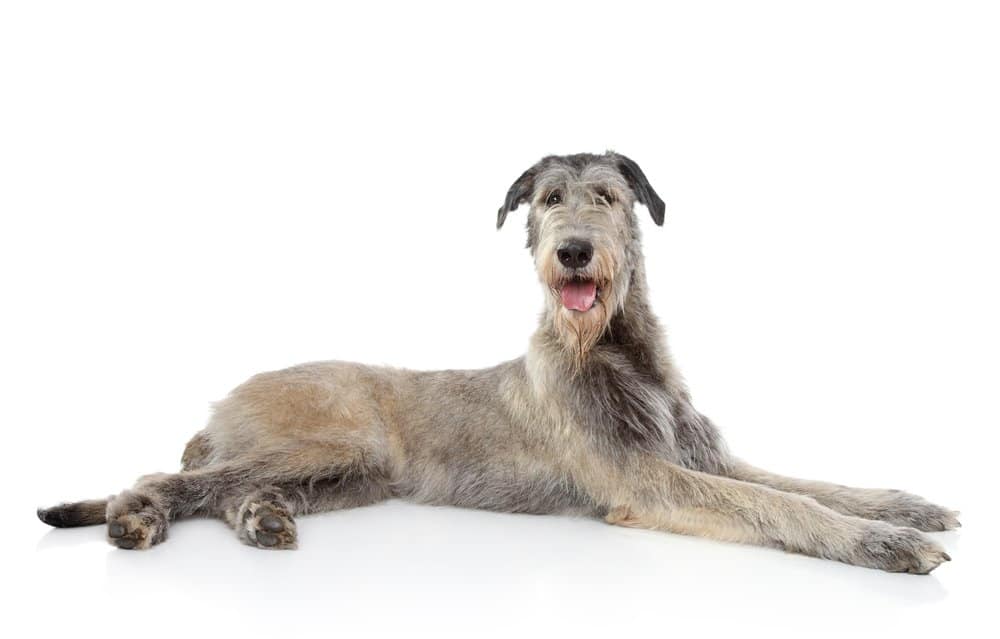
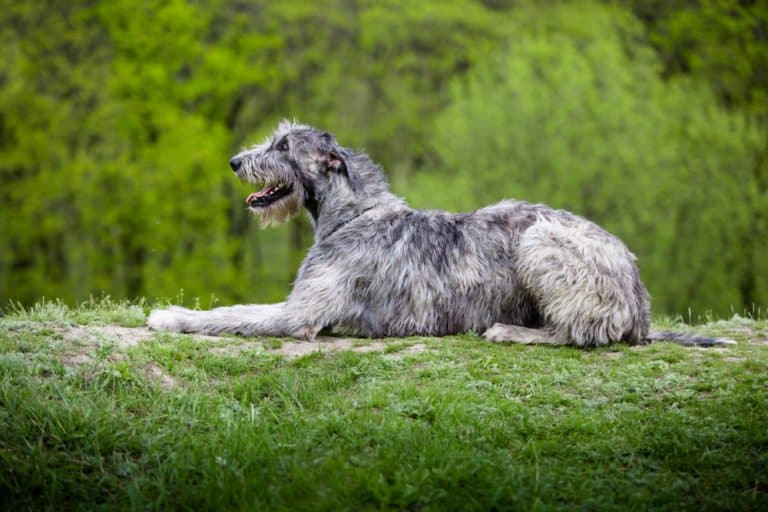
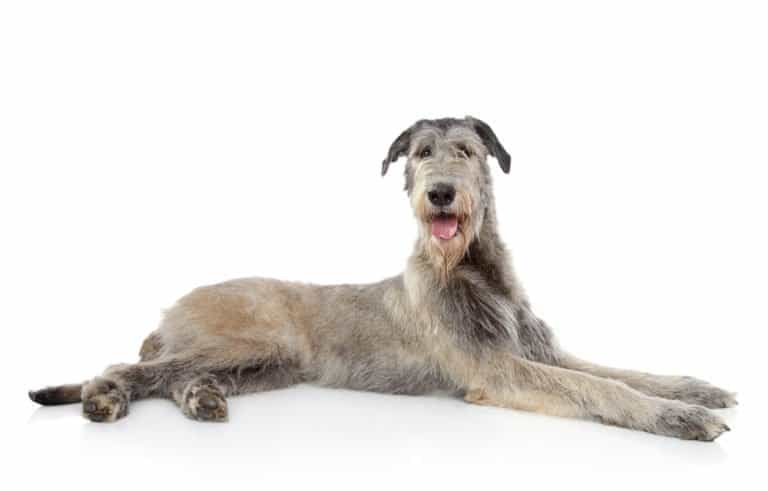
Possibly the tallest breed of dog, the Irish Wolfhound typically weighs between 130 and 160 pounds.
©Jagodka/Shutterstock.com
Size and Weight
Irish wolfhounds are large dogs and possibly the tallest breed of dog. Males are at least 32 inches tall, but normally closer to 36 inches, and females are at least 30 inches tall, but typically closer to 33 inches. A fully grown male weighs as much as 160 pounds, and a fully grown female weighs up to 130 pounds. A 2-month-old puppy typically weighs around 24 pounds. By 6 months, male puppies are nearly 100 pounds, and female puppies are around 90 pounds. They are fully grown by the time they are three years old.
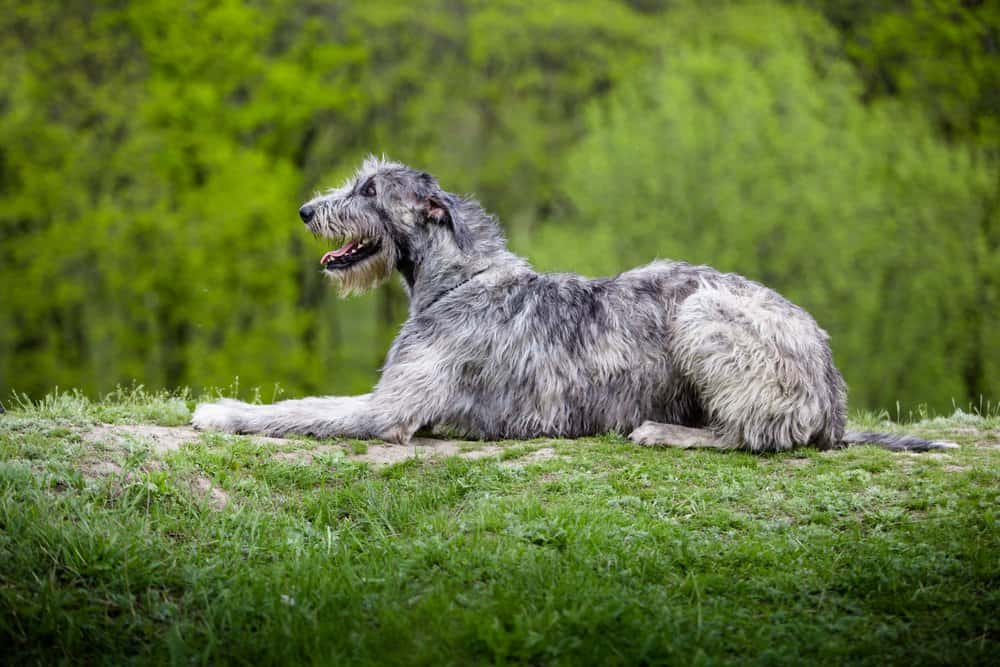
Irish Wolfhound owners need to be aware of the breed’s susceptibility to certain diseases to care for a dog properly.
©Viktoriia Bondarenko/Shutterstock.com
Common Health Issues
If you are considering adopting one of these dogs, there are a few common health issues you should be aware of. It is also important to note that they may not ‘complain’ when something is bothering them, which can make it more challenging to determine that something is wrong.
Irish wolfhounds may develop cancer. Osteosarcoma is a bone tumor most often found in the limbs, but it can also be found in the bones in a dog’s spine, ribcage, or even skull. Some Irish wolfhounds also develop heart disease. This can include dilated cardiomyopathy. Oftentimes, your vet will be able to treat this disease.
This breed can also be impacted by gastrointestinal issues known as bloat or torsion, which would need to be treated immediately. Pneumonia is another health concern to be on the lookout for. Finally, before bringing home an Irish wolfhound puppy, make sure they have been screened for a liver shunt, which is a developmental disorder.
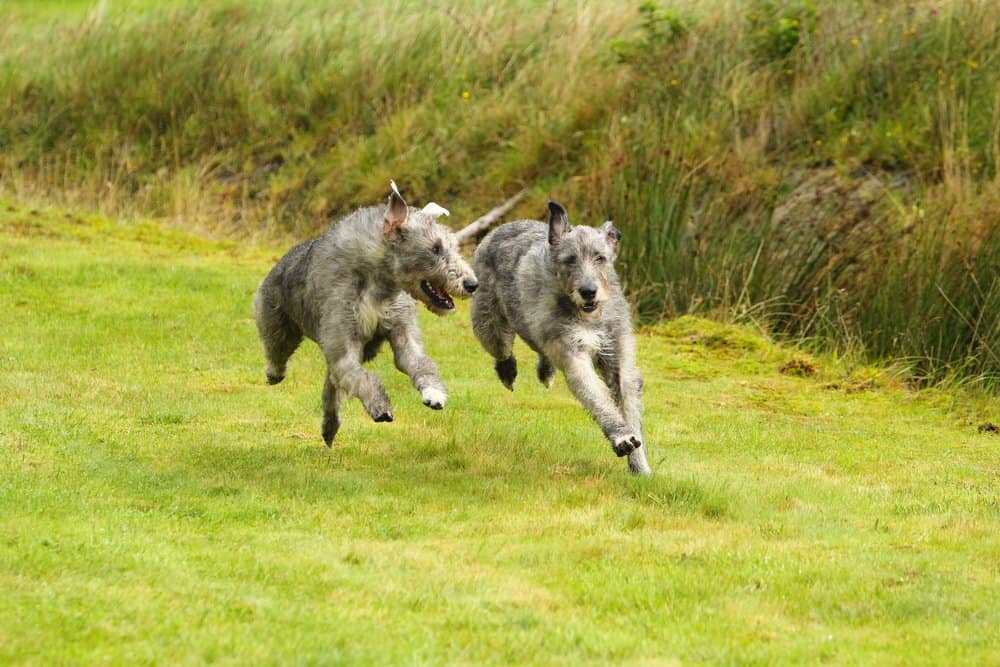
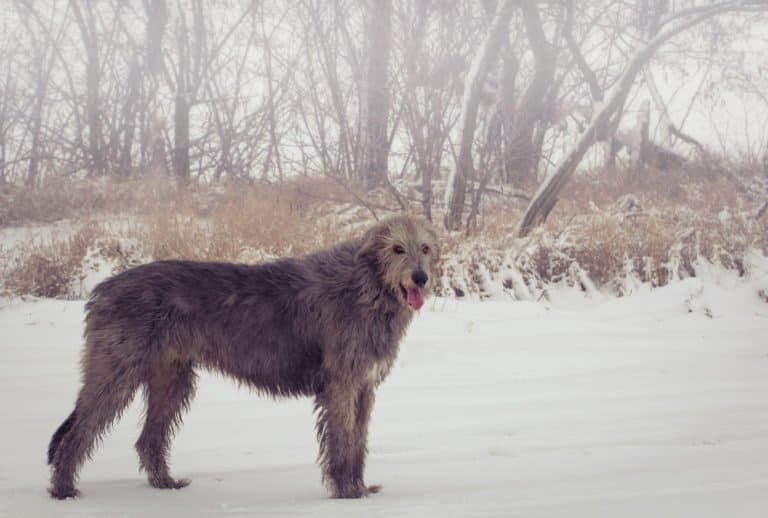
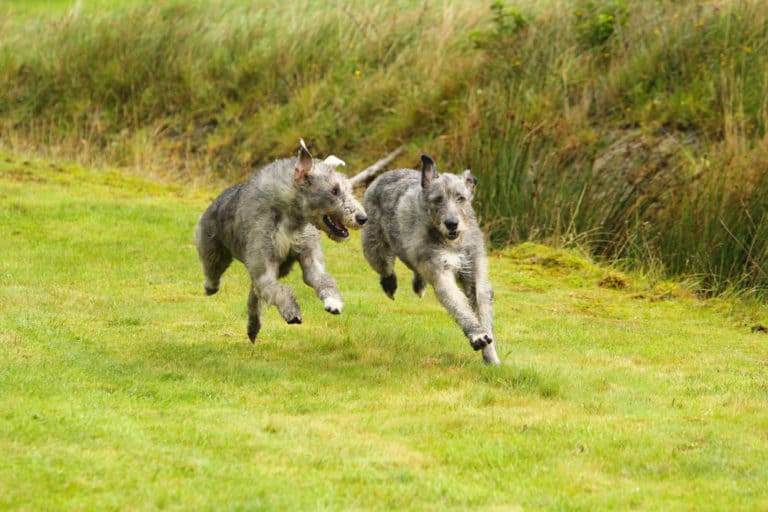
Normally calm and well-behaved, Irish Wolfhounds, bred as hunters, might go on the chase when outside.
©Barbora Bridges/Shutterstock.com
Temperament
These dogs are known for their courageous behavior. However, they also do not have an aggressive personality, making them a good dog to have around children. They are also very calm dogs. This trait also makes them a good family pet. However, if you are going to have an Irish wolfhound around small children, you’ll still want to be sure to closely supervise simply because of how large these dogs are.
Another one of the traits that defines this breed is its easygoing nature. While they will typically listen to what you are asking them to do, it may take some time. While an Irish wolfhound will be well-behaved inside, it is always a good idea to be extra aware when you are outside with them. They are hunters by nature, so they may spot an animal and try to chase it.
Care
If you bring home one of these dogs, there will be a few key things you’ll want to consider when planning their care. Being aware of their health needs, dietary and nutritional needs, and other aspects of the care they’ll need will set you up for success with your new furry friend.
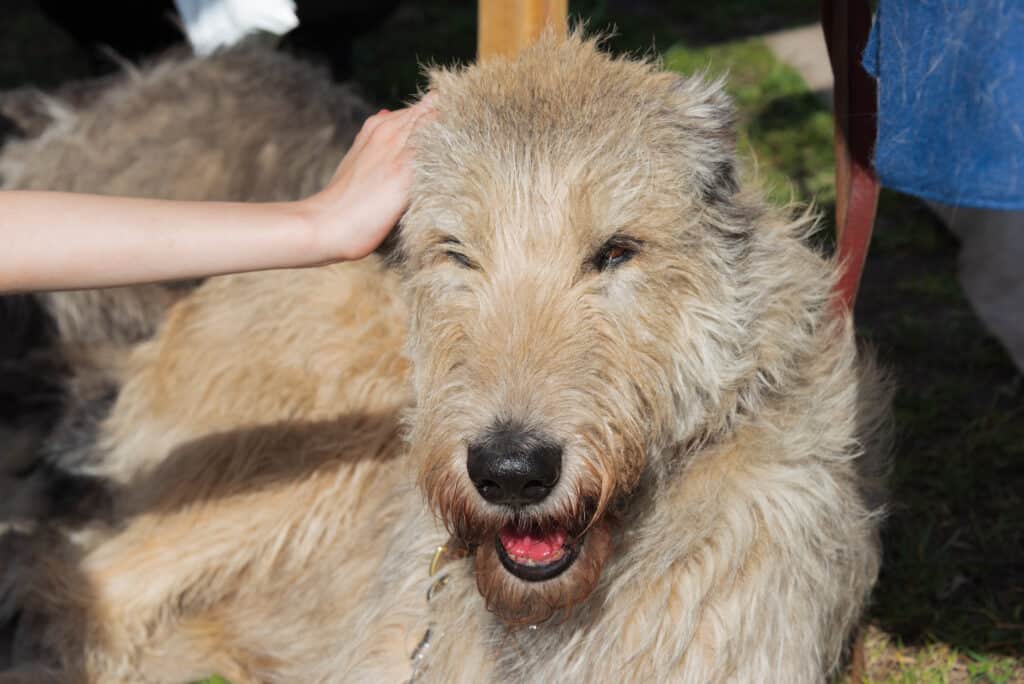
Like all pets, caring for an Irish Wolfhound involves being concerned about dietary and nutritional needs.
©iStock.com/Shumoff
The Best Dog Food
Since they are very large dogs, be prepared for them to eat a lot of food. For both puppies and adults, it is best to feed them numerous small meals throughout the day, rather than a few large meals. Puppies can overeat if you give them too much food at any one meal, which could cause them to get sick.
When selecting food for your puppy, you want to choose natural foods that are very low in calcium and have few to no added supplements. Raw diets or high-quality kibbles will be your best bet for your Irish wolfhound puppies.
Unlike puppies, adult Irish wolfhounds are able to self-regulate. This means that they only eat when they’re hungry and won’t overeat. Once your puppy is an adult, you could choose to continue feeding them small meals throughout the day, or you could switch to free feeding and let your dog eat when he’s hungry.
When selecting food for your fully grown Irish wolfhound, you’ll also want to look for quality foods. A raw diet or adult kibble made with high-quality ingredients can also work for an adult Irish wolfhound. When creating your dog’s diet, you should try to include about 25% protein and 15% fat. Keep this breed’s vulnerability to heart disease, like dilated cardiomyopathy, in mind.
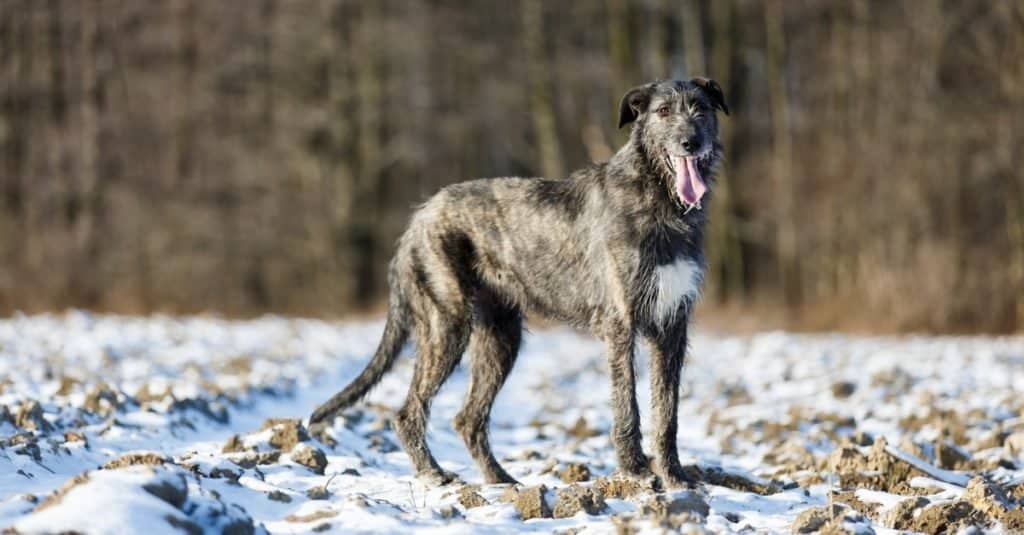
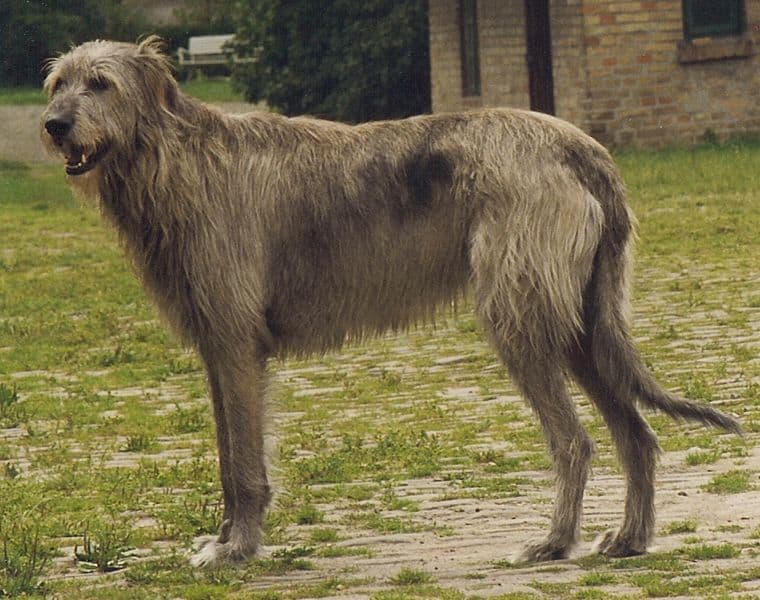
Irish Wolfhounds do not shed a lot, but they can look scraggly if not brushed frequently.
©Canon Boy/Shutterstock.com
Maintenance and Grooming
This breed is relatively easy to take care of as far as grooming goes. Irish Wolfhounds have a double coat that consists of a harsh, wiry outer coat covering a soft undercoat. Their hair does not get matted. However, you will want to brush them a few times a week and pull out dead hairs about two times each year. Without doing this, your dog will look pretty scraggly.
Unlike some other breeds that shed heavily, Irish Wolfhounds shed moderately throughout the year, and regular brushing can help manage loose hair.. You will want to keep an eye on their beard and clean it regularly since it will get dirty when the dog eats.
Training
Irish wolfhounds are relatively easy to train. They respond best to positive reinforcement. When choosing a training method, you’ll want to look for one that centers around positively reinforcing your dog. You may find that your Irish wolfhound puppy is clumsier and doesn’t listen as well, but after they are a year old, this shouldn’t be a problem anymore.
Exercise
Irish wolfhounds need between 20 and 40 minutes of exercise each day. When your dog is still a puppy, it is important to make sure that they don’t get too much exercise to damage their growing bones, ligaments, and joints, which are still softer.
It is also very important to avoid exercising your dog right around the time they eat. Since Irish wolfhounds are at risk of bloat, giving them exercise right before or after a meal can be dangerous.
Puppies
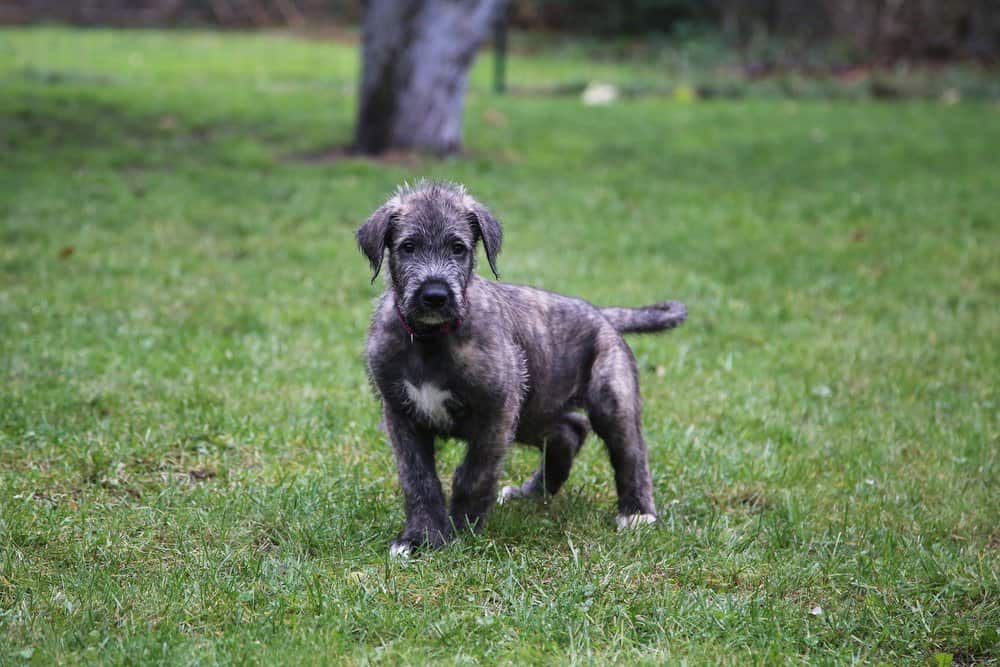
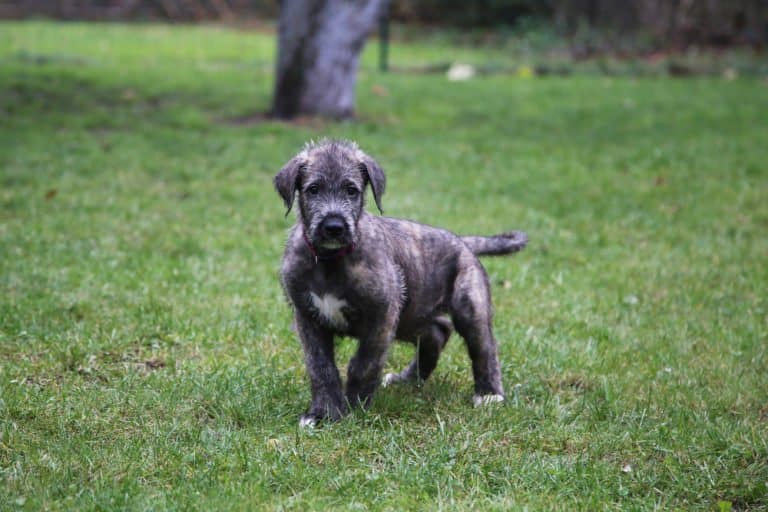
Irish wolfhound puppies are slow to mature.
©Jolanta Beinarovica/Shutterstock.com
There are a few things you’ll want to keep in mind if you are thinking about adopting a puppy. First, remember that these dogs are very large dogs, so the small puppy you bring home will be growing very quickly. They are slow to mature, so be prepared to deal with puppy behaviors, from a large dog, for quite some time.
You’ll definitely want to be prepared to sign your puppy up for a training class. If they aren’t well-trained, they can cause a lot of damage simply due to their large size, even if they aren’t trying to get into trouble.
When raising an Irish wolfhound puppy, it is also important to be aware that their joints and bones still have a lot of developing to do. Because of this, you want to be careful to limit how much exercise they get and take care to prevent stressing their joints.
Interaction with Children
This breed can make a great family dog. However, due to their large size, they would be best suited for a home with older children. These dogs could accidentally knock down or scare babies or toddlers.
This dog breed is very gentle and loving with children. It will still be important to make sure your children know how to appropriately touch the dog and how to safely play with them. As with other dog breeds, supervising your child when they are near your Irish wolfhound will be important to ensure everyone’s safety.
Similar Dogs
Greyhounds, Great Danes, and bloodhounds are three dog breeds that are similar to an Irish wolfhound.
- Great Dane: Great Danes and Irish wolfhounds are two of the largest dog breeds. There is sometimes debate about which breed is the largest. In general, Great Danes weigh more than Irish wolfhounds, but an Irish wolfhound is taller than a Great Dane.
- Greyhound: Greyhounds and Irish wolfhounds are both very large dogs. Additionally, both of these dogs are sighthounds, which means they are able to spot the prey very well.
- Bloodhound: Irish wolfhounds are also similar to bloodhounds, like an Irish bloodhound. Both of these dogs were bred to be hunting dogs and are quite large in size. However, an Irish wolfhound weighs more and is taller than an Irish bloodhound.
- Scottish Deerhound: A Scottish deerhound is another breed that is very similar to the Irish wolfhound. These dogs can be hard to distinguish from Irish wolfhounds because of their large size and similar coloring. However, Irish wolfhounds are taller and more muscular than Scottish deerhounds. They also have a longer and slightly curved tail, whereas a Scottish deerhound has a tail that tapers and nearly touches the ground.
Famous Irish Wolfhounds
As one of the largest, if not the largest, dog breeds, there are a few ‘famous’ Irish wolfhounds you might like to know about:
- Liam Hemsworth’s dog Dora: Dora is a Golden Doodle-Irish wolfhound mix that Liam rescued in 2015 when she was only 6 months old.
- John F. Kennedy: When he was president, John F. Kennedy had an Irish wolfhound named Wolf. Wolf was a gift from Father Thomas Kennedy, a priest in Ireland.
Irish WolfHound Pictures
View all of our Irish WolfHound pictures in the gallery.

Viktoriia Bondarenko/Shutterstock.com
Sources
- American Kennel Club / Accessed September 10, 2018
- Pet Helpful / Accessed September 10, 2018
- Pernille Monberg / Accessed September 10, 2018
- Irish Wolfhound Club of America / Accessed September 10, 2018
- Irish Wolfhound Club of America / Accessed September 10, 2018
- Feeding My Dog Breed / Accessed September 10, 2018
- Vet Specialists / Accessed September 10, 2018
- Petful / Accessed September 10, 2018
- Dogtime / Accessed September 10, 2018
- Your Purebred Puppy / Accessed September 10, 2018
- Bubbly Pet / Accessed September 10, 2018