





Quick Take
- Adult Killer Whales must consume 300 pounds of food daily to meet strict biological requirements.
- The Data Deficient classification creates inconsistent numbering that hinders global conservation and endangerment tracking.
- Ironically, Killer Whales are actually high-functioning members of the Delphinidae family rather than true whales.
- Surviving bottleneck events was necessary to create the skewed gene pool observed in specific pod cultures.
Killer whales are the biggest members of the dolphin family. They are easy to recognize due to their black back and white underside. Orca is another name for them. These animals are carnivores, eating a diet of fish and seals, and are considered apex predators. They can adapt to both cold and warm water habitats.

5 Incredible Killer Whale Facts
- Female orcas are known to live 10 to 20 years longer than males.
- Orcas use echolocation to hunt in the ocean.
- Newborns can dive and swim.
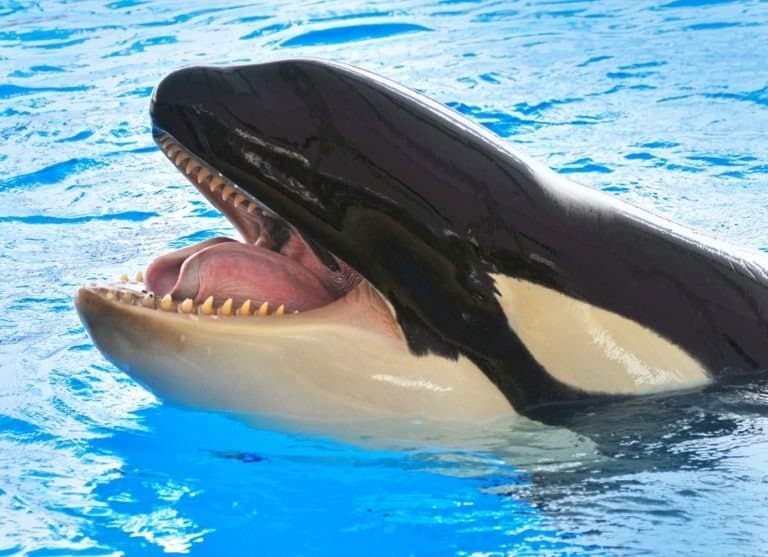
- Each of an adult’s teeth is 4 inches long.
- These animals have no animal predators.
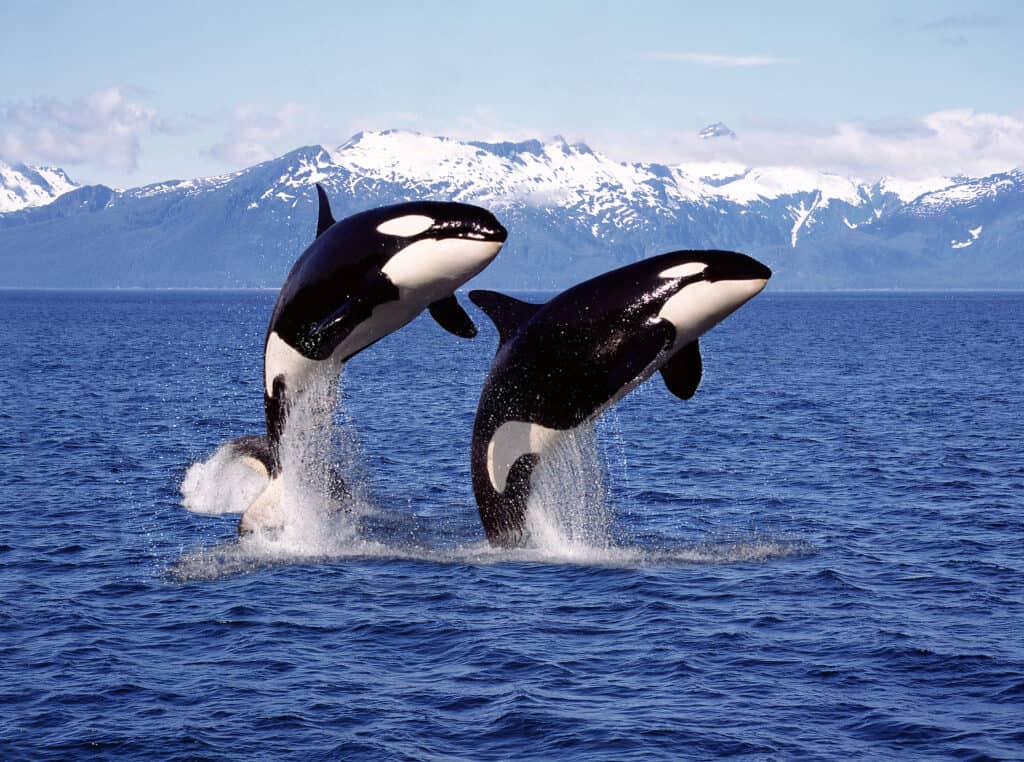
Killer whales are actually members of the dolphin family.
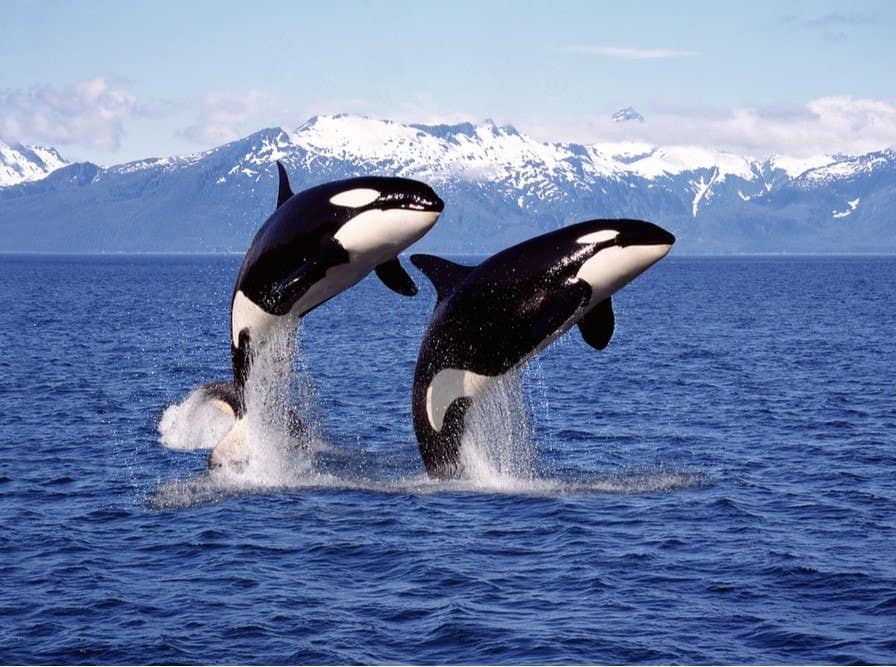
©slowmotiongli/Shutterstock.com
History and Evolution
A few hundred thousand years ago, the different ecotypes of orca began to diverge from their common ancestor into their different ecotypes. As these large aquatic creatures moved to other parts of the globe, they began to evolve into closer versions of what they are today. That includes developing separate genomes, “languages”, and even pod cultures! This actually happened fairly quickly when you look at evolution as a whole and was probably prompted by the different environments and ecology that the orca moved into. Another major factor could have been what’s called bottleneck events, where a small sample size of a pod survives a situation, leading to a potentially skewed gene pool with uncharacteristic traits to pass on.
The population of different types of orca can be difficult to determine, resulting in inconsistent numbers for consideration of endangerment. Some of these are on the verge of extinction, and some are flourishing because they dwell in different environments. As they are apex predators, the main factor is whether or not their lifestyle has been altered due to human involvement.
Classification and Scientific Name
Orcinus orca is the scientific name of a killer whale. The word Orcinus is Latin, meaning kingdom of the dead. This refers to this animal’s reputation for eating a variety of sea life. This animal is also called an orca. It belongs to the Delphinidae family and is in the Mammalia class.
10 Types of Killer Whales
As more research comes out about the killer whale, Marine biologists have added new types of orca. While their territory may overlap somewhat, they do not appear to mix company and breed with different ecotypes. There are some differences in diet, habitat, behavior, and even genetics.
Northern Hemisphere Killer Whales
- Resident Killer Whales: The Resident Killer Whale type almost strictly eats fish, including lots of salmon, mackerel, cod, and halibut. The species of fish eaten depends on where in the Northern Pacific Ocean the orca community is located. Offspring will spend their whole lives with their mothers and live in fairly large groups.
- Bigg’s (Transient) Killer Whales: The Bigg’s or Transient Killer Whale type has a diet that is mammal-focused, like seals and whales. They also live in smaller family groups that travel over large distances.
- Offshore Killer Whales: The Offshore Killer Whale ecotype is less well-known because it ventures very far from land. These are the smallest of the northern group and sometimes feed on fish and sharks. Because of this, their teeth are more worn than those of other orca types. The Offshore orca roams in large communities.
- North Atlantic Type 1: The North Atlantic Type 1 ecotype is still being studied. They seem not to have a narrow diet and have been found to use a “carousel” hunting approach to herd schools of fish and stun them with tail slaps. They are relatively small in size and have worn teeth because of their fish-heavy diet.
- North Atlantic Type 2: The North Atlantic Type 2 ecotype is larger than the Type 1 and preys upon other mammals rather than fish. Because of this, their teeth are less worn and sharper. These are rarely found orca but do stand out because of their notable “eye patches”.
Southern Hemisphere Killer Whales
- Type A: The Type A or “Antarctic” ecotype is a larger version of the orca that feeds mostly on whales. They follow minke whales in the southern waters. They have a normal-sized, white “eye patch”.
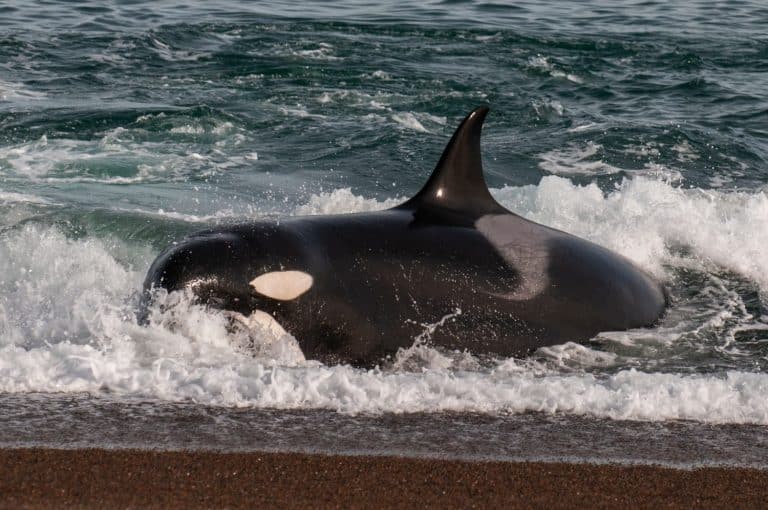
- Type B Large: The Type B Large or “pack ice” is not as large as the Type A and has a diet that mainly consists of seals. They have a specialized hunting approach called “wave-washing” to knock their prey off patches of ice. These killer whales have a brown coloration with touches of yellow to the normally white markings of other orcas.
- Type B Small: The Type B Small or Gerlache orca is similar to the Type B in size and appearance, just smaller. They are found near the Gerlache Strait and feed mainly on seals and penguins.
- Type C: The Type C or Ross Sea orca only reaches about 20 feet long and is the smallest of the types. They are found near the Ross Sea. These orcas have a slanted “eye patch” and also bear the yellowish coloration. They are found in larger groups and appear to have fish within their diet.
- Type D: The Type D or Sub-Antarctic ecotype has a differing look with the smallest “eye patch, short dorsal fin, and more curved head. Researchers believe fish are within their diet. They were discovered from photographs of a beaching event that occurred in New Zealand in 1955.
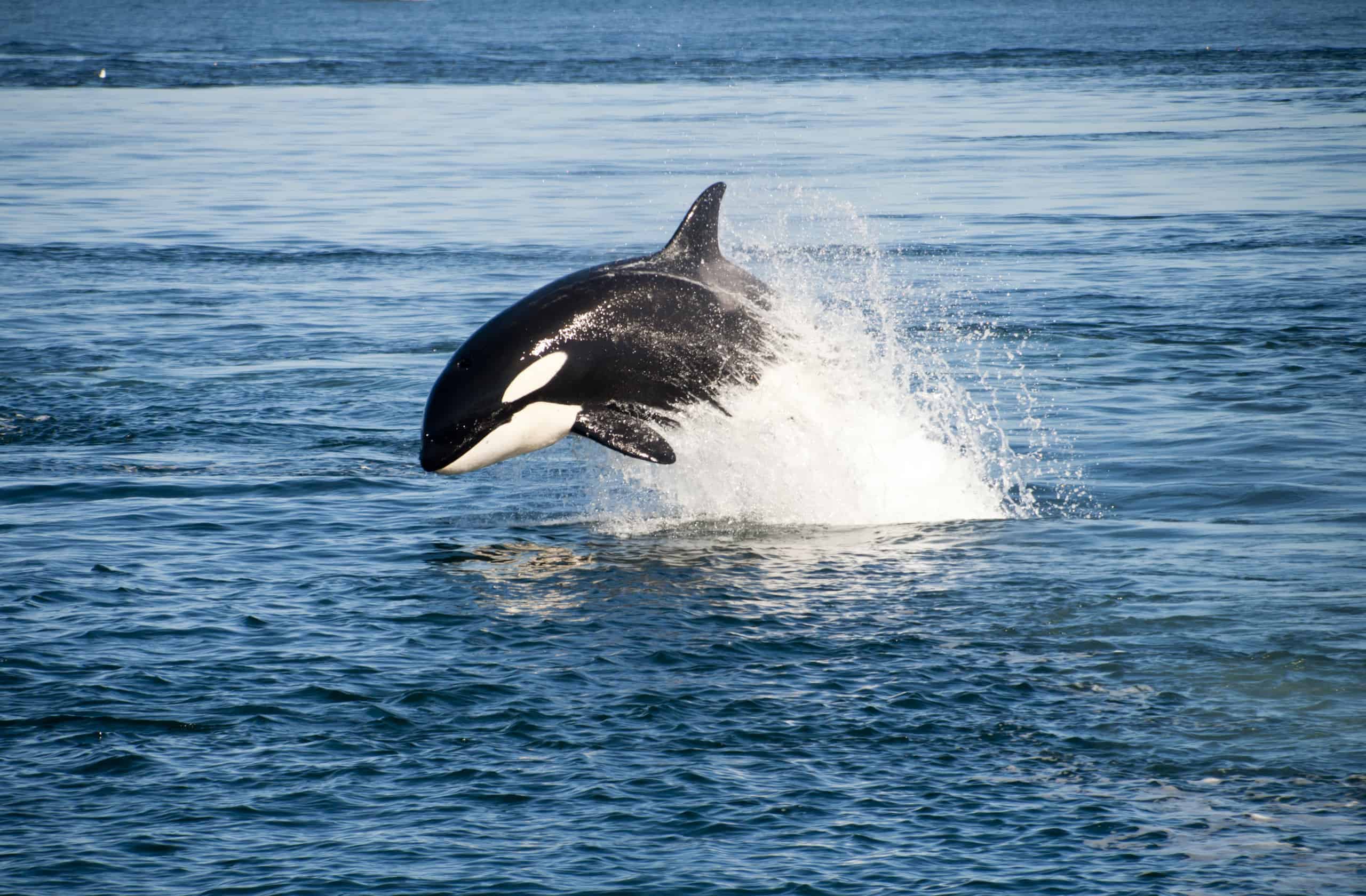
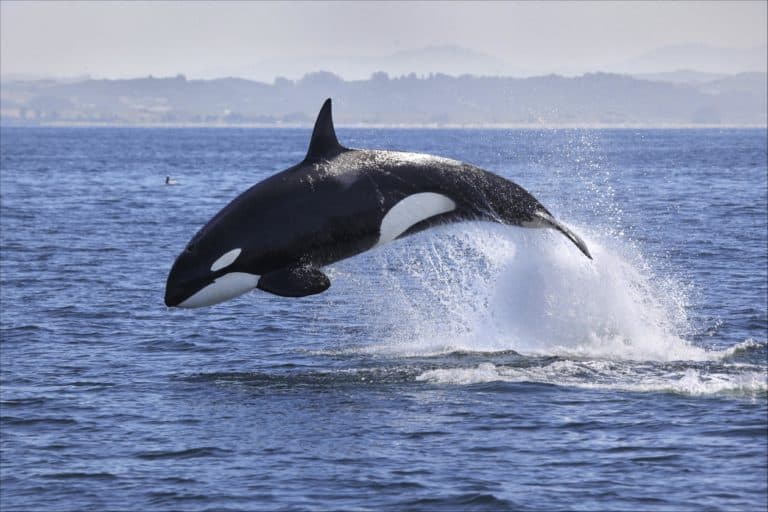
Killer whales live in oceans all over the world. They are especially plentiful in the cold waters of the Arctic, Antarctic, and around Norway.
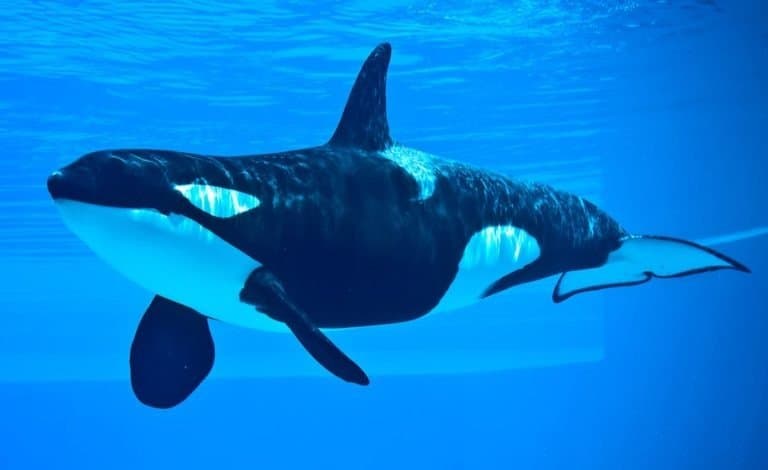
©qingqing/Shutterstock.com
Appearance and Behavior
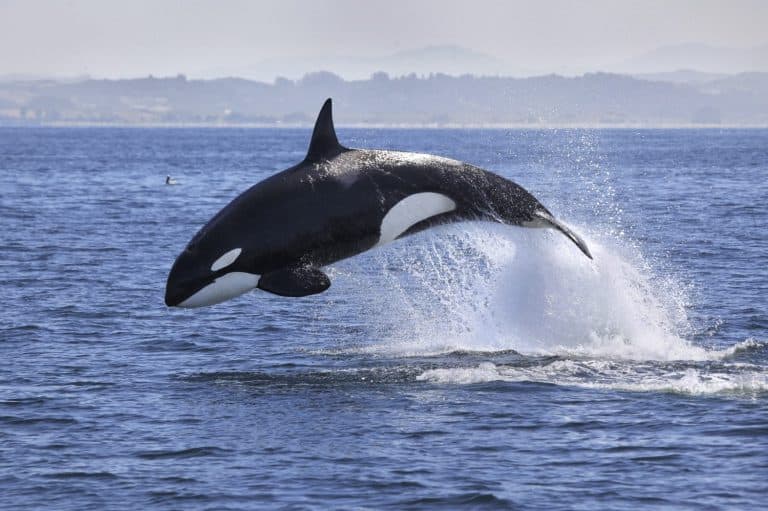
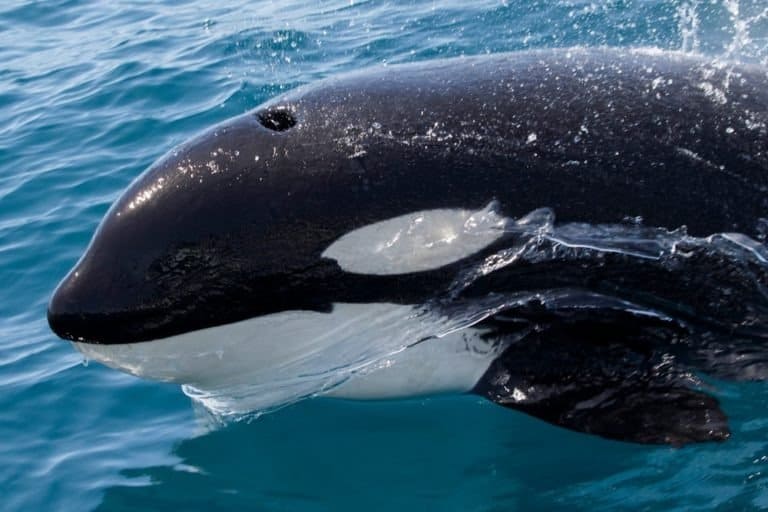
Orcas have a smooth black back, including a large dorsal fin, while their underside is bright white. These animals have a white eyespot located just behind each of their eyes. They have teeth that can be as long as 4 inches. If you cut a bowling pin into four equal parts, the animal’s 4-inch tooth would equal one of those parts.
In terms of size, the orca can measure from 23 to 32 feet in length. A 23-foot-long orca equals 2/3 the length of a telephone pole. It’s difficult to grasp the size of these animals until you see one with your own eyes!
They can weigh up to 6 tons. Imagine 3 adult giraffes standing on a gigantic scale. Their total weight would equal the weight of one 6-ton orca.
These animals share some features with the pygmy killer whale. The scientific name of the pygmy killer whale is Feresa attenuata. It’s another member of the Delphinidae family. In terms of size, the pygmy species is much smaller than the orca.
The pygmy species grows to be 8.5 feet long and weighs up to 500 pounds. That’s the length of a newborn killer whale. In addition, the pygmy killer whale hunts squid and fish while the orca eats larger prey. Furthermore, the pygmy species is rarely seen, whereas the killer whale is observed in various locations.
The dorsal fin (the one on the animal’s back) can measure as long as six feet. Six feet is the length of a full-size bed! The tail fin is called a fluke and helps it to move through the water with speed. Its dorsal fin provides balance as the animal swims. Alternatively, its pectoral (side) fins help the orca to steer as well as stop.
The largest killer whale on record measured 32 feet long.
Its long, sleek body travels through the ocean kind of like a submarine. These animals can travel up to 35 mph. This helps them to hunt and capture fish, seals, and other sea life.
These animals have lungs that need to take in and let out oxygen. The blowhole of a killer whale serves as its nose. Its blowhole is located on the top of its head. So, when the animal needs to take in or let out a breath, it simply raises the top of its head above the water’s surface. The longest amount of time these animals can stay underwater without taking a breath is about 15 minutes. But most can hold their breath for about 10 minutes or so.
Killer whales are social animals and travel in groups called pods. They jump and dive, swimming in circles around one another. The size of a pod differs with each type of killer whale. For instance, resident orcas travel in pods ranging from 5 to 50 members. Transient killer whale pods usually contain 7 or fewer members. Offshore killer whales may have over 100 members in a pod or fewer than 20.
Orcas have a unique way of communicating. They use whistles and clicks to talk with other orcas around them. What do the whistles and clicks mean? You would have to be a killer whale to know the answer to that question.
These animals are not aggressive unless they are in pursuit of prey. On the contrary, they are known to be curious, playful animals that sometimes try to interact with humans sailing nearby.
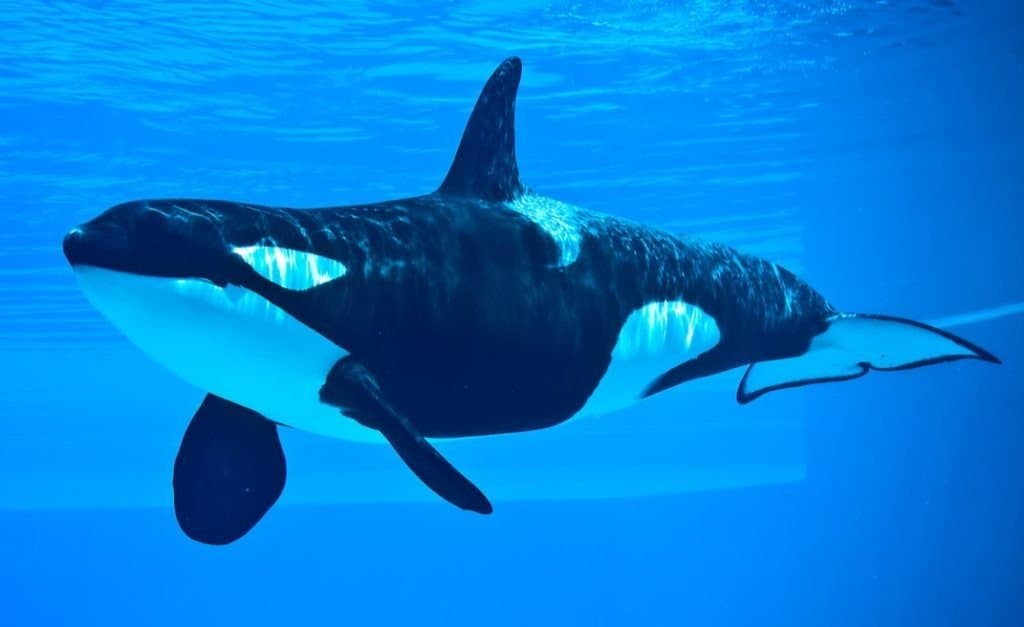
Orcas have a smooth black back, including a large dorsal fin, while their underside is bright white.
©Miles Away Photography/Shutterstock.com
Habitat
These animals live in oceans all over the world. They are especially plentiful in the cold waters of the Arctic, Antarctic, and around Norway. A large number of orcas are found in the North Pacific Ocean from California all the way to Russia.
Orcas that live in the Pacific Northeast region are known as residents. Alternatively, transient killer whales swim up and down the coast of southeast Alaska and British Columbia. Offshore killer whales stay way out in the ocean.
These animals can live in both cold and warm water habitats.
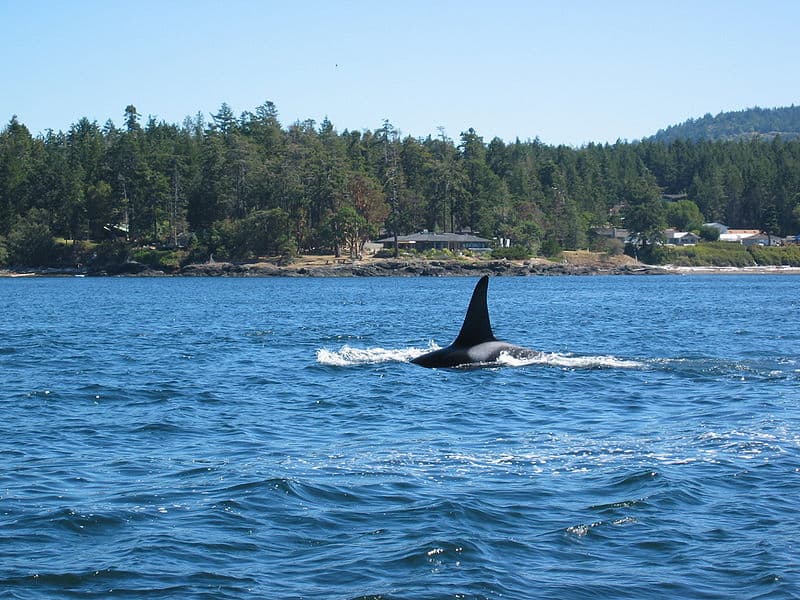
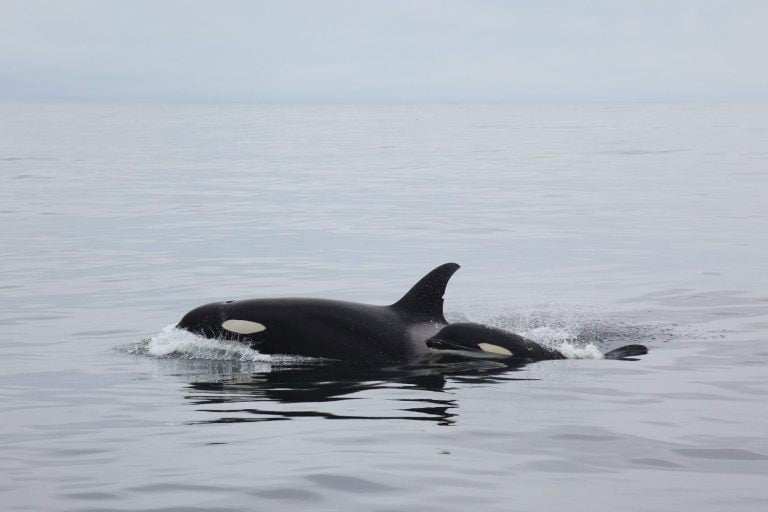
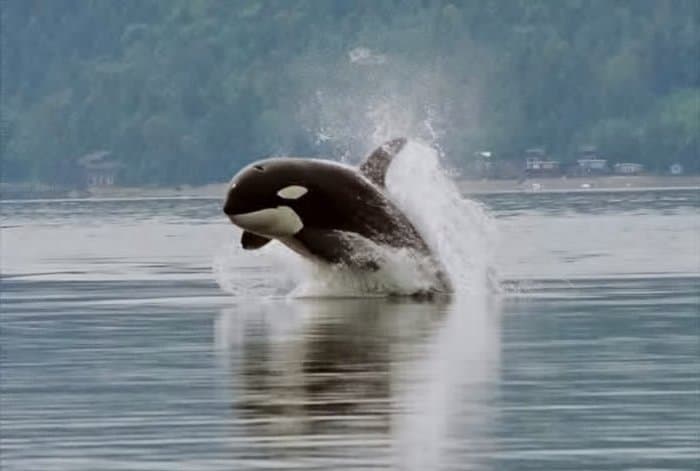
Orcas can be found in the North Pacific Ocean, from California to Russia. This one is near Victoria, British Columbia.
©Kevstan / Creative Commons – Original
Diet
This animal has a carnivorous diet. But the type of meat it eats depends on whether it’s a resident, transient, or offshore orca. These three types of killer whales occupy different habitats. This means they have different types of prey available to them.
What eats killer whales?
There are no animals that eat these animals. However, they are hunted by humans.
What do killer whales eat?
Resident killer whales eat fish. Salmon is a favorite item in their diet. Transient killer whales eat larger prey, including sea lions, harbor seals, porpoises, grey whales, or Minke whales. Sometimes a transient killer whale will push itself onto shore to grab a seal or sea lion, then slide back into the ocean. The diet of offshore killer whales includes blue sharks, salmon sharks, and dogfish.
One of the most interesting facts about these animals is that an adult can consume up to 300 pounds of food per day. Three hundred pounds of food is equal to the size of one adult pig.
These animals hunt with the help of echolocation. This is something they have in common with dolphins. Orcas make a high-frequency clicking sound that goes out into the water around them. When the sound hits an object, it bounces back to the animal. An orca can determine whether the object is prey by the type of echoing sound that bounces back at them. A bat uses the same type of hunting method as it flies through the air.
Predators and Threats
Though these animals don’t have any animal predators, it does face some threats.
Water pollution is a threat to their habitat. Also, orcas are sometimes killed by commercial fishermen because they eat much of the prey that the fishermen are trying to catch. Tourism poses another threat to orcas. Boats with tourists on them can disrupt the environment and its activities.
Respiratory disorders, heart disease, Hodgkin’s disease, and tumors are some examples of ailments that affect these animals. They can also become stranded on a beach and die.
The IUCN Red List has given the orca the conservation status of Data Deficient.
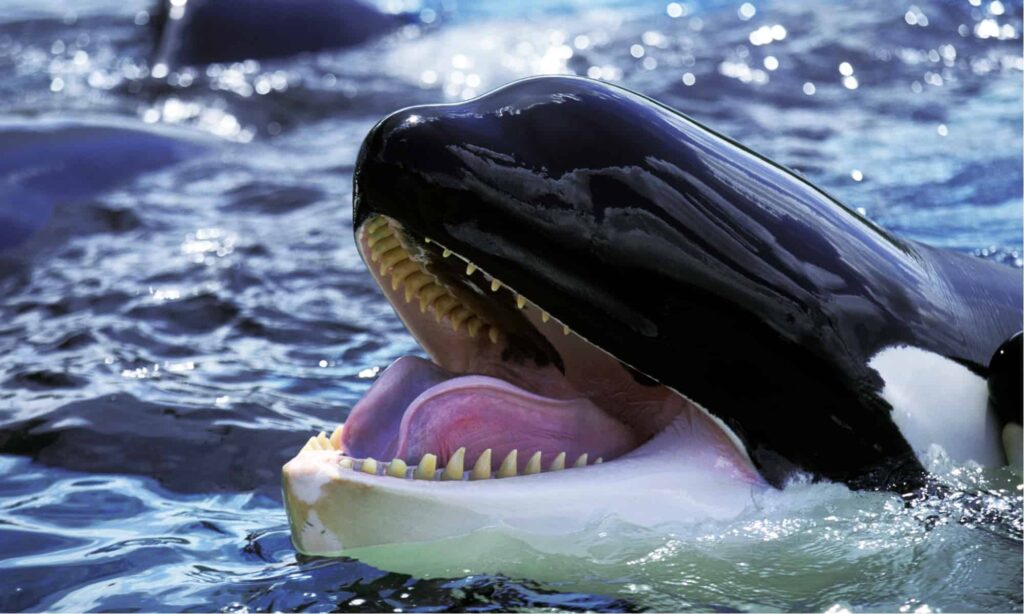
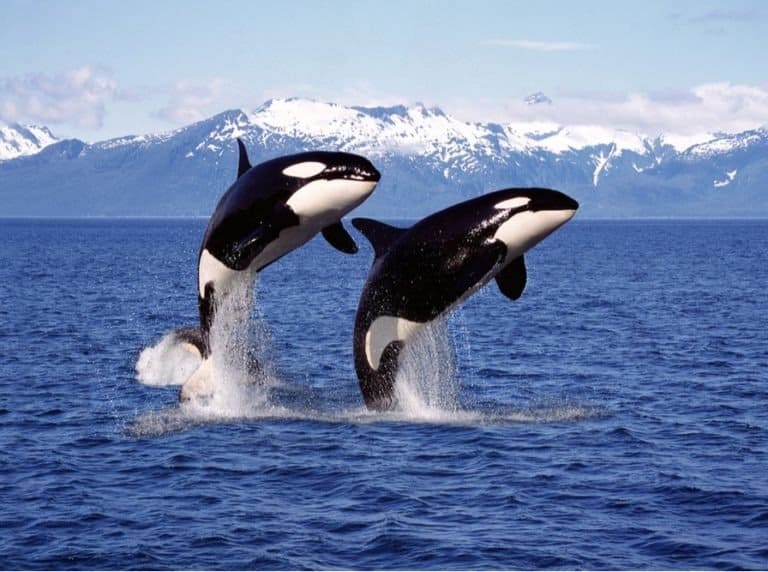
Killer whales do not have any natural predators.
©slowmotiongli/Shutterstock.com
Reproduction, Babies, and Lifespan
Breeding can take place at any time throughout the year. These animals have multiple partners. Female killer whales give birth every 3 to 10 years. The gestation period of a killer whale ranges from 15 to 18 months. This is similar to another member of the Delphinidae family, the pilot whale. The gestation period of a pilot whale is 12 to 16 months.
The female gives live birth to just one baby, also called a calf. A newborn calf is from 8 to 8.5 feet long and weighs from 265 to 353 pounds. Once a calf is born, its eyes are open, and it begins swimming right alongside its mother. The calf nurses from its mother for about one year. After that, a calf is weaned by its mother eating the prey that she hunts. An orca calf stays with its mother until it’s an adult. In fact, some of them never leave their mothers. They simply become a member of the same pod that travels together.
Males live to be 40 to 50 years old. Females can live for 60 years or even longer. Females reach sexual maturity at 14 or 15 years old.
For many years, marine biologists observed the activities of a female killer whale living in the Salish Sea. They estimated her to be at least 100 years old. Her name was Granny.
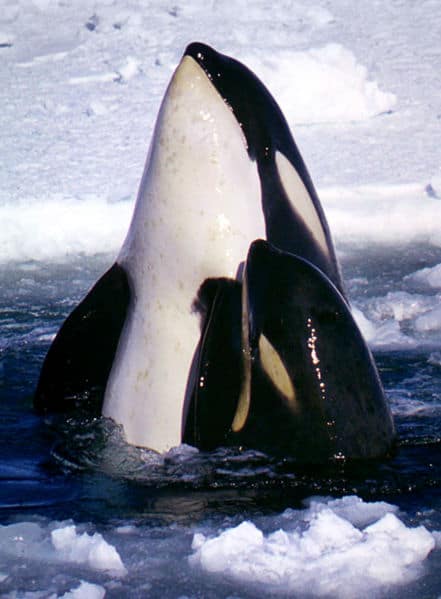
An orca calf stays with its mother until it’s an adult.
©Robert Pitman – Public Domain
Population
Though the conservation status of these animals is Data Deficient, there are some estimates of their population. The NOAA Fisheries estimates their worldwide population at 50,000 and up to many more. There are around 2,500 orcas in the eastern North Pacific Ocean region. The population is thought to be struggling and may even be in decline.
In the Zoo
You can see orcas in aquariums such as:
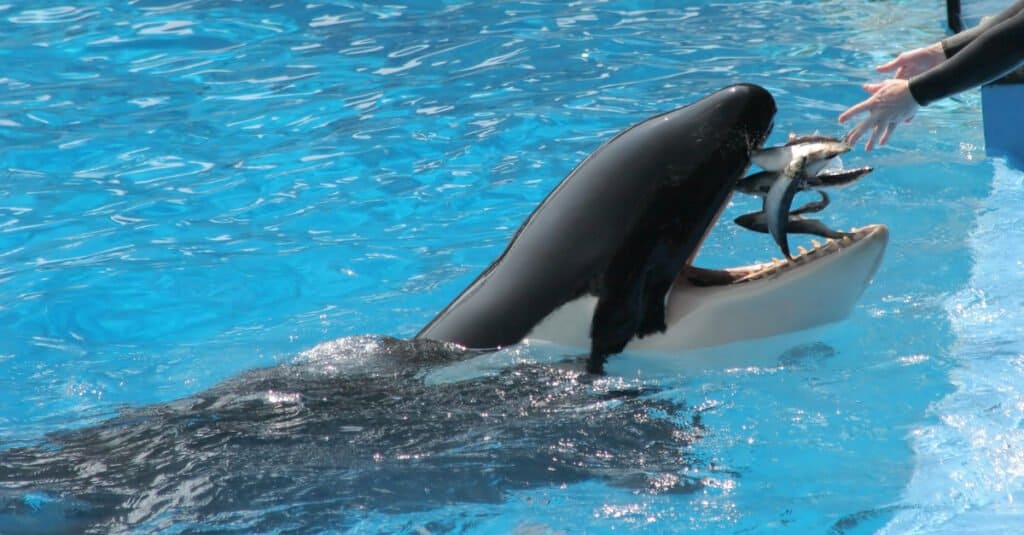
Visiting the different SeaWorlds in America is a great way to see live killer whales.
©Lori Skelton/Shutterstock.com
Killer Whale Pictures
View all of our Killer Whale pictures in the gallery.

slowmotiongli/Shutterstock.com
Sources
- NOAA Fisheries / Accessed December 23, 2020
- Nature Mapping Foundation / Accessed December 23, 2020
- Wikipedia / Accessed December 23, 2020