






L
Species Profile

Lemming

Cricetidae

Small rodents, huge tundra impact
AnnaSmirnova/Shutterstock.com

Lemming Distribution

Click a location to explore more animals from that region

Loading map...
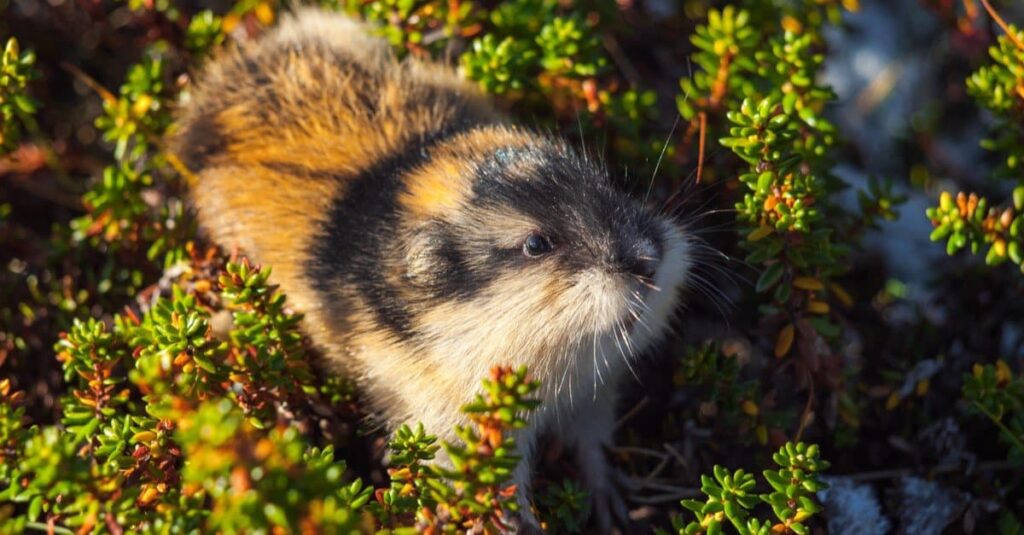
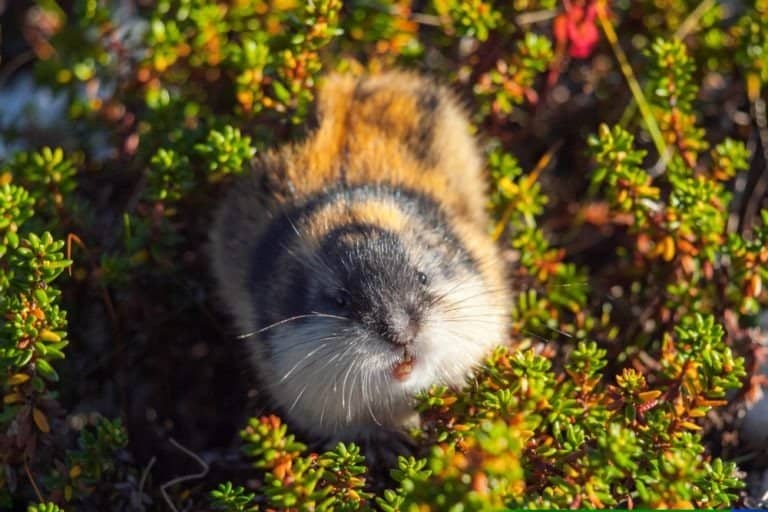
Wild Norwegian lemming sitting and looking at you.

At a Glance

Family Overview This page covers the Lemming family as a group. Stats below are general traits shared across the family.
Diet Herbivore
Activity Nocturnal+
Lifespan 2 years
Weight 0.2 lbs
Status Not Evaluated
Did You Know?

"Lemming" isn't one species-it's a common-name group within the Cricetidae (mostly the arvicoline voles & lemmings).

Scientific Classification

Family Overview "Lemming" is not a single species but represents an entire family containing multiple species.

Lemmings are small, stout-bodied rodents best known from Arctic and subarctic regions, famous for population cycles (“lemming years”) and their importance as prey for tundra predators. Taxonomically, “lemming” is a common-name grouping within Cricetidae, especially the arvicoline rodents (voles and lemmings).

Kingdom
Animalia
Phylum
Chordata
Class
Mammalia
Order
Rodentia
Family
Cricetidae

Distinguishing Features

  • Small cricetid rodents with compact bodies, short tails, and dense fur
  • Many species are adapted to cold climates; some show seasonal coat changes
  • Often key herbivores and foundational prey in northern ecosystems
  • Known for multi-year boom–bust population cycles in parts of their range

Physical Measurements

Males and females differ in size

Height
2 in (1 in – 7 in)
Length
6 in (4 in – 7 in)
6 in (3 in – 7 in)
Weight
0 lbs (0 lbs – 0 lbs)
Tail Length
1 in (0 in – 1 in)
1 in (0 in – 1 in)
Top Speed
9 mph
running

Appearance

Primary Colors
Secondary Colors
Skin Type Dense insulating fur (often with heavy underfur); small ears and short tail reduce heat loss; feet may be furred and claws adapted for digging through vegetation, soil, or snowpack.
Distinctive Features
  • Common-name group, not a single taxon: "lemmings" are mainly arvicoline cricetids (voles/lemmings) within Cricetidae; the family also includes many non-lemming rodents.
  • Size range across lemming species: head-body ~7-20 cm; tail typically short ~1-6 cm; mass ~0.02-0.2 kg (smallest to largest forms).
  • Lifespan range: often ~0.5-2 years in the wild; up to ~3-5 years in captivity depending on species and conditions.
  • Body form: stout-bodied with short legs, blunt snout, small ears, and reduced tail; continuously growing incisors for grazing and gnawing.
  • Cold-climate adaptations: very dense pelage, seasonal molts in some Arctic species, and extensive use of subnivean (under-snow) tunnels and nests.
  • Ecology: primarily herbivorous (grasses, sedges, mosses, forbs); diets and microhabitats vary by species and region.
  • Behavior: generally crepuscular/nocturnal tendencies and high activity year-round; many construct runways and burrow/nest systems; degree of territoriality and sociality varies.
  • Population dynamics: many Arctic/subarctic lemmings show multi-year population cycles ("lemming years"); cycle strength and periodicity vary geographically and among species.
  • Food-web role: often key prey supporting tundra predators (e.g., foxes, owls, ermines); predator reproduction can track lemming abundance.
  • Myth avoidance: no evidence-based "mass suicide" behavior; dispersal and mortality during peaks can be misinterpreted as such.
  • Habitat range: Arctic and subarctic tundra, alpine meadows, and boreal edges depending on species; reliance on snowpack quality can affect winter survival and reproduction.

Sexual Dimorphism

Sexual dimorphism is usually subtle: males often average slightly larger and may have more pronounced scent-gland signaling. Degree of size difference varies among species and is often season- and population-dependent.

  • Slightly larger average body mass and head-body length in many species.
  • Often stronger scent-marking and more visible gland activity during breeding season.
  • Slightly smaller average size in many species.
  • Nipples/teat rows become evident during lactation; reproductive condition strongly seasonal in many populations.

Did You Know?

"Lemming" isn't one species-it's a common-name group within the Cricetidae (mostly the arvicoline voles & lemmings).

Across lemmings, adults are typically ~8-18 cm head-body length, with short tails ~1-4.5 cm; mass commonly ~0.02-0.12 kg (varies by species/season).

Many Arctic lemming populations show multi-year boom-bust cycles ("lemming years"), though cycle strength and timing vary by region and species.

Under snow (the subnivean zone), lemmings can feed and travel all winter in insulated tunnel networks.

Their population highs can strongly influence breeding success of predators like snowy owls, rough-legged hawks, ermines, and Arctic foxes.

Some species shift coat color seasonally (notably many collared lemmings), improving camouflage against snow and predators.

Lemmings can reproduce rapidly when conditions allow, but lifespans are short-often only months in the wild; maxima can reach ~2 years (occasionally longer in captivity).

Unique Adaptations

  • Cold-climate insulation: dense fur and compact, stout bodies reduce heat loss; some species add seasonal camouflage (white winter coats).
  • Snowpack dependence: behavioral adaptation to use the subnivean layer as thermal shelter and protection from many predators.
  • Digging specializations: strong forelimbs and claws for burrowing and maintaining tunnels in soil, vegetation mats, or snow.
  • High reproductive potential: early maturity and multiple litters in favorable conditions support rapid rebounds after crashes (timing and litter size vary among species).
  • Physiological tolerance: ability to remain active in long, cold winters with limited plant quality, aided by constant foraging and nesting behavior.

Interesting Behaviors

  • Population "irruptions": during peak years, densities can rise dramatically; movements may increase as animals disperse to find food and space (often misinterpreted as intentional mass marches).
  • Subnivean living: many spend much of winter active beneath snowpack, using runways and nesting chambers that buffer extreme cold and wind.
  • Predator-driven dynamics: predator numbers and breeding (e.g., owls and foxes) often track lemming availability; the strength of this link varies among ecosystems.
  • Flexible diets: mostly herbivorous-grasses, sedges, mosses, dwarf shrubs, and bark; proportions vary by habitat (tundra vs. bog vs. boreal forest).
  • Burrowing and runway building: create surface and snow-tunnel networks that connect feeding patches and nests.
  • Seasonal activity shifts: activity and space use often change between summer surface foraging and winter under-snow foraging; degree varies by species and local snow conditions.

Cultural Significance

Lemmings loom large in northern ecology and in global language: "lemming" became a metaphor for unthinking crowd behavior, rooted in popular misinterpretations of dispersal/migration during peak years. Ecologically, they're often treated as keystone prey in tundra food webs because their abundance can shape predator breeding and broader community dynamics.

Myths & Legends

Scandinavian tradition and medieval natural histories told of lemmings "falling from the sky" (appearing after storms), a folk explanation for their sudden mass appearances in some years.

Northern European folk accounts also described lemmings as driven onward in great host-like movements until they reached the sea-an enduring narrative linked to dramatic dispersal events during peak years.

The 1958 Disney film White Wilderness pushed the false "lemming suicide" tale, making lemmings (Cricetidae) into a dramatic myth that became a lasting part of 20th century pop culture.

Conservation Status

NE Not Evaluated (family-level). IUCN assesses Cricetidae at the species/subspecies level; across the family, statuses span from Least Concern (many voles/lemmings) through Near Threatened/Vulnerable to Endangered/Critically Endangered in a few range-restricted or rapidly declining taxa (e.g., European hamster).

Has not yet been evaluated against the criteria.

Population Unknown

Protected Under

  • Protections are primarily species- and country-specific rather than family-wide (varies by jurisdiction).
  • U.S. Endangered Species Act (applies to certain threatened/endangered cricetid taxa within U.S. range).
  • Canada Species at Risk Act (applies to listed cricetid taxa in Canada).
  • EU Habitats Directive and national conservation laws (apply to selected European cricetid taxa, including highly threatened ones).

You might be looking for:

Norway lemming

26%

Lemmus lemmus

A well-known, cyclically abundant lemming of Scandinavia and the Kola Peninsula; often the ‘classic’ lemming in popular references.

Greenland (collared) lemming

22%

Dicrostonyx groenlandicus

Arctic North American collared lemming with seasonal coat changes; key prey species for many tundra predators.

Brown lemming

18%

Lemmus trimucronatus

Widespread in Arctic North America; one of the dominant lemmings across tundra habitats.

Steppe lemming

16%

Lagurus lagurus

A lemming-like arvicoline of Eurasian steppe/semi-desert; differs ecologically from tundra lemmings.

Wood lemming

12%

Myopus schisticolor

Boreal forest (taiga) lemming of northern Eurasia; notable for unusual population sex-ratio genetics reported in some studies.

Life Cycle

Birth 6 pups
Lifespan 2 years

Lifespan

In the Wild
0.5–7 years
In Captivity
1–3 years

Reproduction

Mating System Polygynandry
Social Structure Solitary
Breeding Pattern Transient
Fertilization Internal Fertilization
Birth Type Internal_fertilization

Across Cricetidae (including lemmings, voles, hamsters, and deer mice), mating is typically short-term with overlapping ranges and multiple mates for both sexes. Most species are solitary breeders; however, social monogamy occurs in some voles and related arvicolines.

Behavior & Ecology

Social Nesting group Group: 4
Activity Nocturnal, Crepuscular, Cathemeral, Diurnal
Diet Herbivore Green vegetation (grasses/sedges) and seeds (varies widely by species and habitat)

Temperament

Generally wary and quick to seek cover; boldness increases in high-density phases
Territoriality varies widely by species, season, and resource distribution
Aggression often peaks during breeding and dispersal; tolerance higher in shared winter nests
Strong nest/burrow fidelity is common, with flexible spacing when food is abundant

Communication

Audible squeaks and chirps during handling, conflict, mating, and mother-young contact
Ultrasonic calls (especially in many mice/voles) used in courtship and social arousal
Short alarm calls or distress calls in some species, often context-dependent
Scent marking via urine, feces, and gland secretions for territory and reproductive status
Tactile cues: nose-to-nose contact, grooming, and huddling within nests
Substrate-borne vibrations from movement in tunnels; used for close-range social cues
Occasional tooth chattering and threat postures during disputes

Habitat

Biomes:
Tundra Alpine Boreal Forest (Taiga) Temperate Forest Temperate Grassland Desert Hot Savanna Tropical Rainforest Wetland +3
Terrain:
Mountainous Hilly Plateau Plains Valley Coastal Island Riverine Rocky Sandy Muddy +5
Elevation: Up to 6561 ft 8 in

Ecological Role

Broad-spectrum small-mammal consumers and key prey base; impacts vegetation structure and nutrient flow, with especially strong herbivory effects in arvicoline lemmings/voles and ecosystem engineering in some larger/aquatic members.

primary/secondary consumer link in food webs (major prey for raptors, carnivores, and mesopredators) vegetation trimming and plant community shaping (grazing/browsing), sometimes with strong pulses during population peaks seed movement and occasional seed dispersal via caching/hoarding soil aeration and mixing through burrowing and runway formation nutrient cycling via concentrated feces/urine and carcass inputs habitat modification (e.g., burrow systems; in muskrats, lodge/channel effects in wetlands)

Diet Details

Main Prey:
Grasses Sedges Mosses Leaves and shoots Bark and twigs
Other Foods:
Grasses and sedges Forbs and leafy vegetation shoots and bark Seeds and grains Roots, bulbs, and tubers Fruits and berries Fungi +1

Human Interaction

Domestication Status

Wild

Most Cricetidae (voles, lemmings, hamsters, and many New World rats and mice) are wild. A small group—especially some hamsters like Syrian and dwarf hamsters—have long histories in captivity, selective breeding, and use as pets and lab animals (semi-domesticated to domesticated). Most lemmings stay wild and are kept only briefly for research or education.

Danger Level

Low
  • bites/scratches (usually minor, but wounds can become infected)
  • zoonotic disease exposure is possible when handling wild lemmings or contaminated materials; documented concerns for Arctic rodents include tularemia and some hantaviruses (risk varies by location and prevalence)
  • allergies/asthma triggers from rodent dander and urine in enclosed settings (mainly relevant for captive/indoor exposure)
  • nuisance or economic impacts during population booms (e.g., damage to vegetation, gardens, or crops; lemmings rarely cause structural property damage compared with commensal rats/mice)

As a Pet

Not Suitable as Pet

Legality: Lemmings are wild rodents; keeping them as pets may be illegal or require permits in many jurisdictions. Captive-bred lemmings are uncommon, so acquisition may involve additional restrictions. Always check local wildlife and exotic-pet regulations.

Care Level: Moderate

Purchase Cost: Up to $100
Lifetime Cost: $300 - $2,000

Economic Value

Uses:
Ecological importance (major prey for Arctic and subarctic predators) Scientific research and education (population cycles, Arctic ecology) Occasional agricultural/vegetation impacts during population peaks
Products:
  • research and monitoring data (population-cycle and Arctic ecology studies)

Relationships

Ecological Equivalents 4

Animals that fill a similar ecological role in their ecosystem

True mice and rats Muridae Often overlap with cricetids as small, fast-reproducing omnivorous or granivorous rodents that are staple prey for many predators, especially outside the Arctic, where murids occupy similar niches.
Pika
Pika Ochotona spp. In alpine and tundra systems, pikas can play a comparable role as small-bodied herbivores that experience high predation pressure and have a strong influence on vegetation and predator diets. They are lagomorphs, not rodents.
Jerboas and jumping mice Dipodoidea In steppe, desert, and grassland food webs, jerboas and jumping mice occupy a similar small-mammal prey-base niche for owls, foxes, and mustelids, even though their locomotion and habitat use differ.
Shrews Sorex spp. In many northern ecosystems, shrews co-occur with cricetid rodents as abundant small mammals that support predators. They overlap as small, ground-dwelling prey, although shrews are primarily insectivorous.

Types of Lemming

11

Explore 11 recognized types of lemming

Norwegian lemming Lemmus lemmus
Siberian lemming Lemmus sibiricus
Amur lemming Lemmus amurensis
North American brown lemming Lemmus trimucronatus
Greenland collared lemming Dicrostonyx groenlandicus
Northern collared lemming Dicrostonyx torquatus
Ungava collared lemming Dicrostonyx hudsonius
Richardson's collared lemming Dicrostonyx richardsoni
Nunatak collared lemming Dicrostonyx nunatakensis
Wood lemming Myopus schisticolor
Steppe lemming Lagurus lagurus

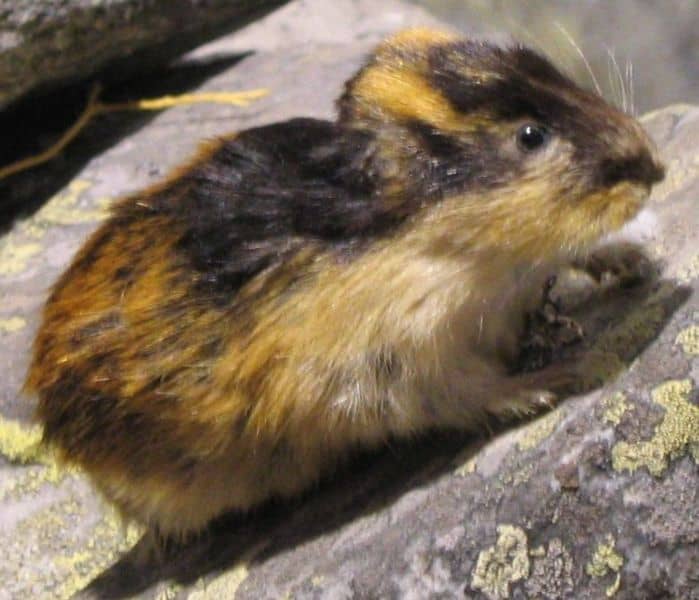
The lemming is a tiny rodent that is found in or near the Arctic Circle

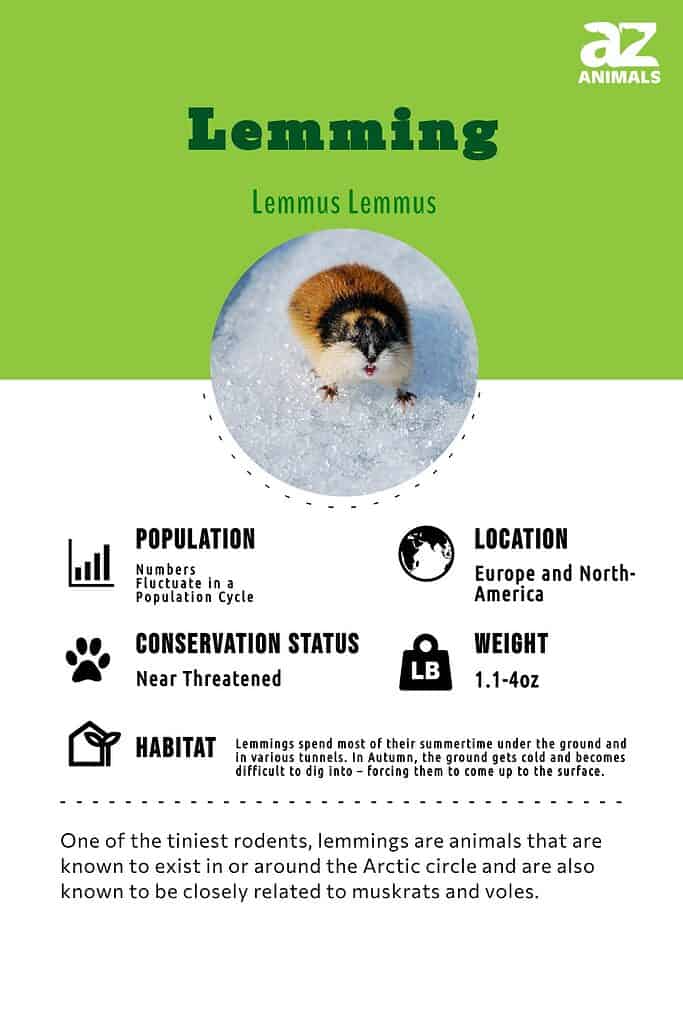
One of the tiniest rodents, lemmings are animals that are known to exist in or around the Arctic circle and are also known to be closely related to muskrats and voles.

They can also be found in the Tundra biomes. The smallest of them are as tiny as only 8 cm long. The largest of these species have known to be three times the smallest one. Interestingly, a popular legend says that these rodents commit mass suicide.

Lemmings have about six different subspecies that further have sub-subspecies, including true lemmings, collared lemmings, wood lemmings, bog lemmings, yellow steppe lemmings, and southern bog lemmings.

Incredible Lemming Facts!
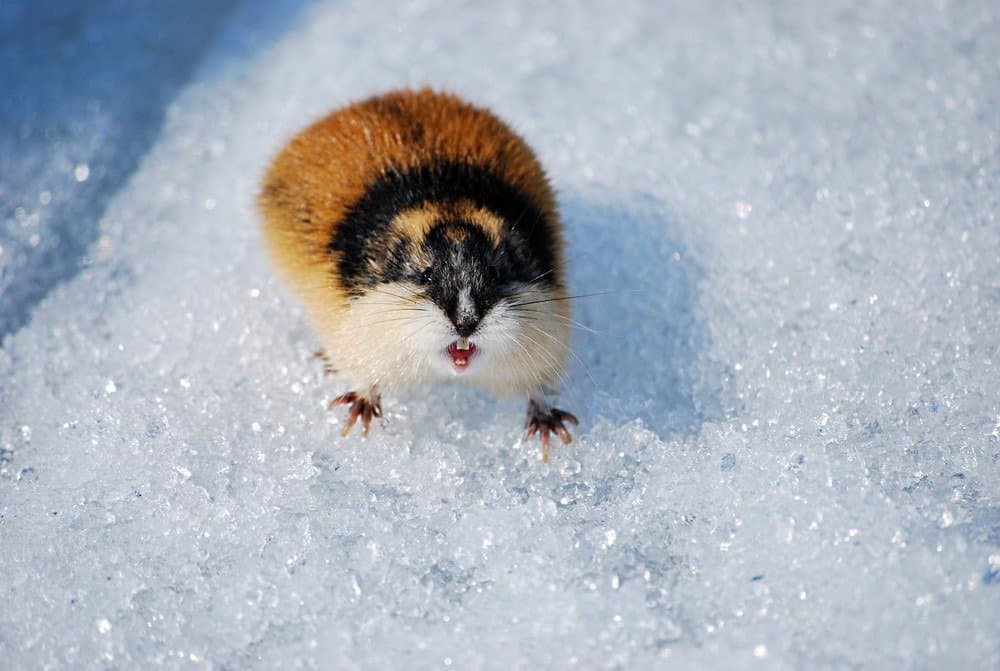
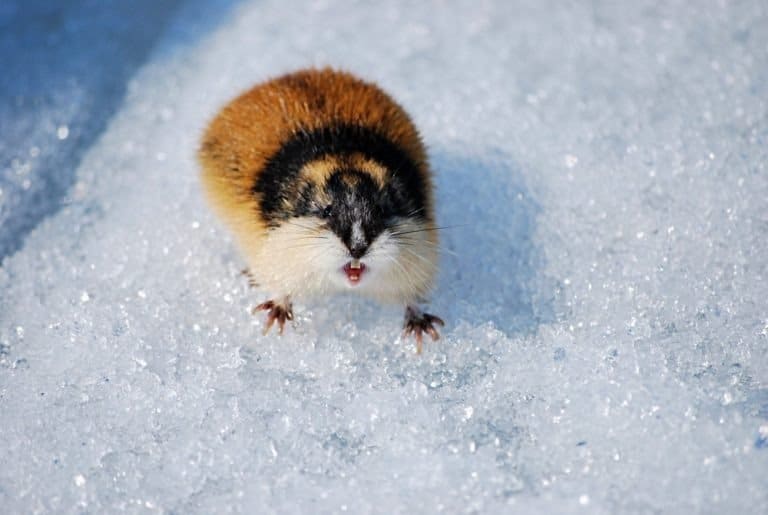
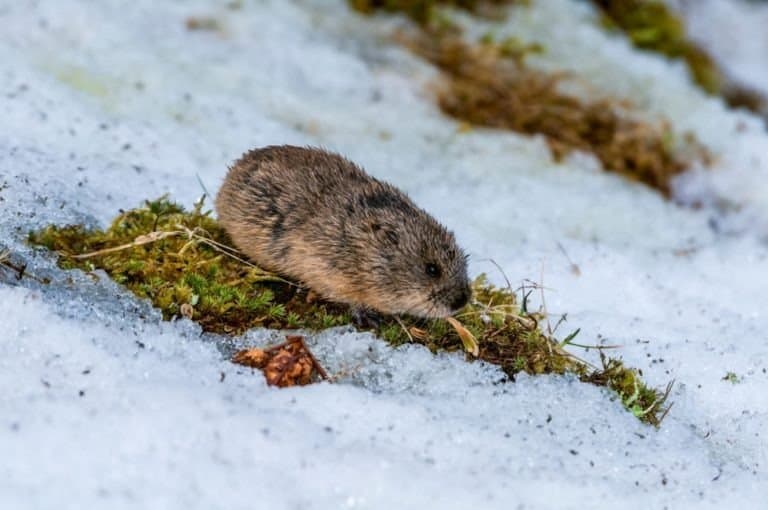
Angry lemming in the snow

There are many different types of lemming and they spent most of their lives alone.

  • Usually small in size, lemmings are animals that can very well reach 3-6 inches in length.
  • Lemmings can reproduce within less than a month of being born themselves
  • There are about 20 different types of lemmings
  • Lemmings do not hibernate at all
  • Most of their lives are spent alone. They come together only when they need to mate.

Different Types of Lemmings

Lemmings have about six or seven different subspecies that further have sub-sub species. These include:

  • True Lemmings
  • Norway Lemming
  • Collared Lemmings
  • Wood Lemmings
  • Bog Lemmings
  • Yellow Steppe Lemmings
  • Southern Bog Lemmings

Scientific Name

Dumbest Animals in the World: Norwegian Lemmings

Lemming belongs to the family ‘Cricetidae’ and goes by the scientific name ‘Lemmus lemmus.

Commonly known as a lemming, this small rodent belongs to the kingdom ‘Animalia‘ and class ‘Mammalia’. Lemming belongs to the family ‘Cricetidae’ and goes by the scientific name ‘Lemmus lemmus.

The word “lemming” is often used to describe someone who joins a mass movement without thinking about the consequences of anything.

Evolution and Origins

A study was released in 2014 suggesting new evidence that suggests the Norwegian lemming may have survived the last Ice Age in the far north because it was sealed off from the rest of the world by gigantic ice sheets. The conclusion was made by an international team of researchers.

Twenty thousand years ago, Fennoscandia was covered by a thick ice sheet. Due to this, plants and animals in the region were thought to come from populations that lived south or east of the ice sheet. The researchers then discovered that the population of lemmings was not similar enough to be a direct ancestor of the Norwegian lemming. This means that the only remaining explanation was that the Norway Lemming came from lemmings that survived the ice age.

Appearance and Behavior
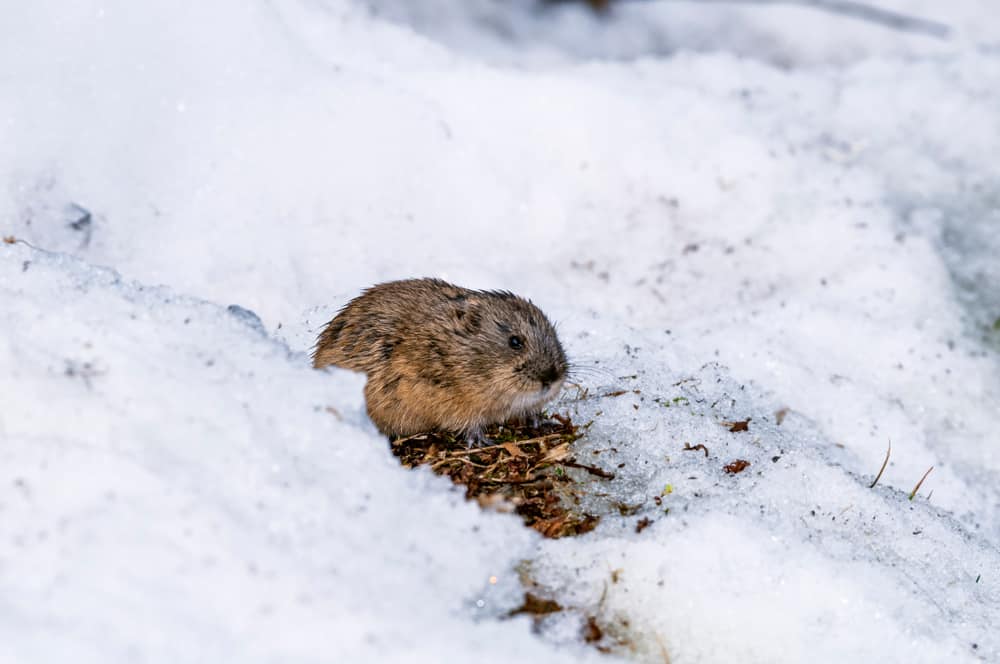
Lemmings are small animals, usually brown or grey, and can reproduce very early in life.

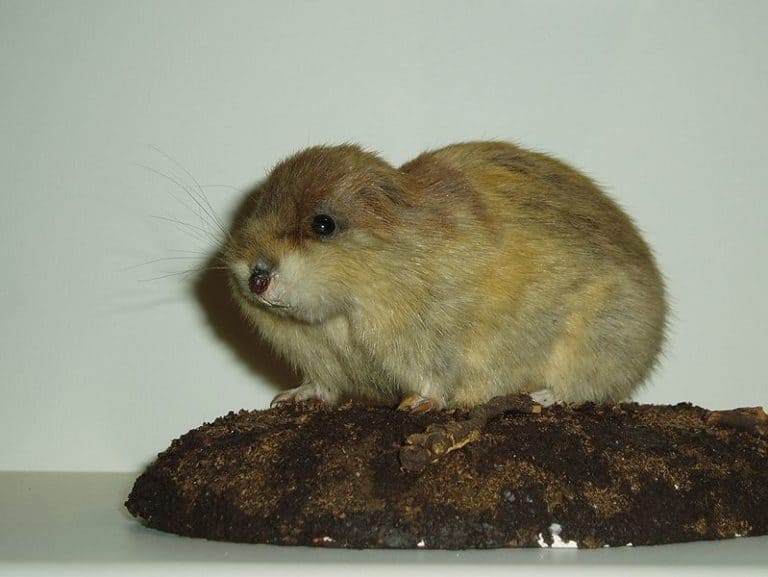
Lemmings are very small animals, usually, just three to six inches long and they weigh around 23–34 grams. They are usually round in shape. Their bodies are covered in thick fur, the color of which can carry from species to species.

However, it is mostly brown or grey.

These animals have stout bodies and their limbs, tails and ears are usually very tiny. The small ears help them to conserve their body’s heat. They also have very sharp teeth as well along with claws to help them tear out and feed on roots.

These rodents are impressive swimmers with their waterproof fur, but it may be difficult for them to swim when multiple animals reach the water at once. With all of the confusion and little extra room, some lemmings die of drowning.

Lemmings are usually solitary animals. However, they also spend some part of their day socializing with others in colonies with rodents similar to them. Usually, the only time when they come together only for migration purposes or when they have to mate.

Upon sensing danger, these animals turn very aggressive toward their predators – sometimes leading them into trouble with larger animals. It is also said that the thing about lemmings committing mass suicide is just a myth and does not happen.

These rodents spend most of their summertime under the ground and in various tunnels. However, around autumn, the ground gets cold and becomes difficult to dig into – forcing them to come up to the surface.
Living underground and in tunnels help them survive the harsh conditions and eliminates their need to hibernate. It also protects them from large wild animals, which usually prey on these tiny rodents.

Habitat
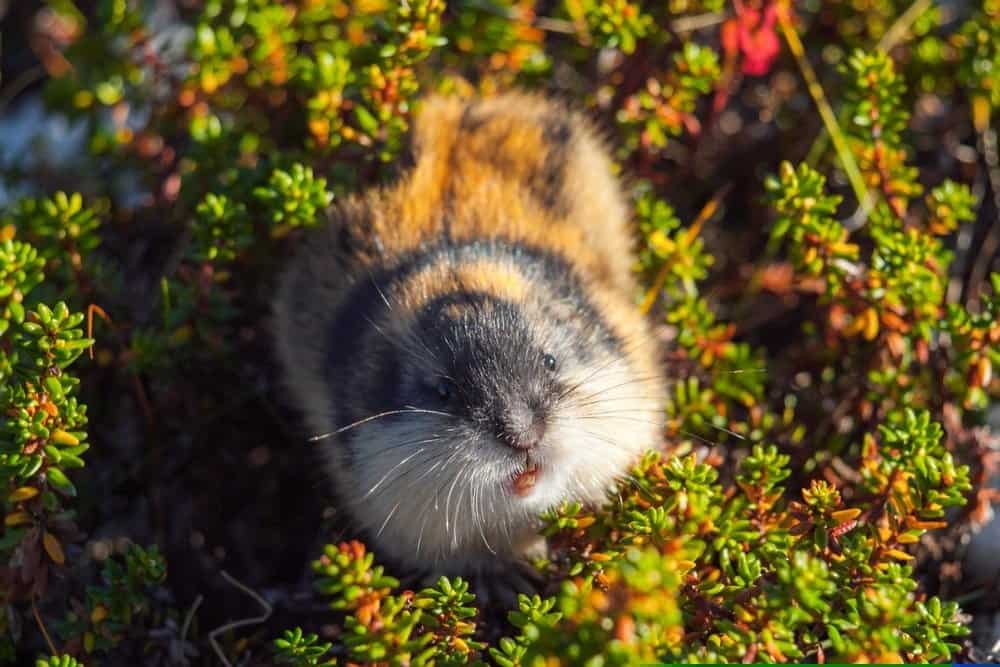
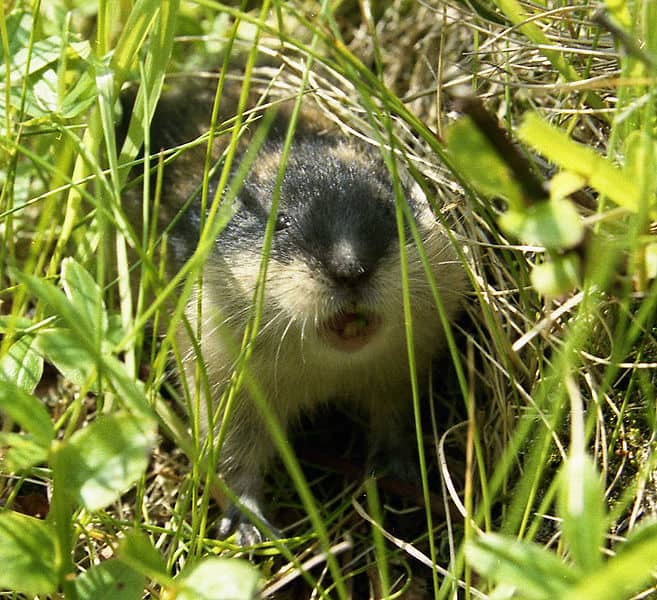
Wild Norwegian lemming sitting and looking at you.

Wild Norwegian lemming sitting and looking at you.

As said earlier, these rodents are usually found in the Arctic region and Tundra. They are commonly found in Alaska, northern Canada, Norway, Asia, and Europe. Sometimes, they can also be found in Taiga, which is another region with a cold atmosphere.

These rodents, especially in the summer months, live underground in tunnels. During autumn, they usually come to the surface as the weather starts getting cold because digging out food in cold becomes very difficult.
Their underground tunnel habitat helps them stay warm and also eliminates the need for them to hibernate. It also protects them from any possible predator that would usually prey on them above the ground.

Lemmings usually make up nests out of ox wool, grasses, and feathers as both a shelter and a way to stay warm. During the spring season, these rodents move further up and start living in mountain heaths and forests for the warm weather, returning to the Alpine zone during the autumn season.

Diet

Lemmings are known to be herbivorous.

These rodents are known to be herbivorous. Their diet comprises mainly grass and moss. In addition to that, especially during the colder months, these rodents usually find leaves, roots, bulbs, berries, and shoots to feed and survive on. Since these foods don’t offer many calories, lemmings spend six hours of their day eating these foods.

The majority of their diet will consist of leafy plants, but very little fruit. Lemmings cannot process glucose in sugar, even if it comes from a natural source. When kept in captivity as a pet, the owner should never substitute their food with pre-made assortments for other rodents, like hamsters and mice.

Their teeth, especially incisors, consistently keep growing, which means that they can bite and munch on the more solid things smoothly.

Predators and Threats
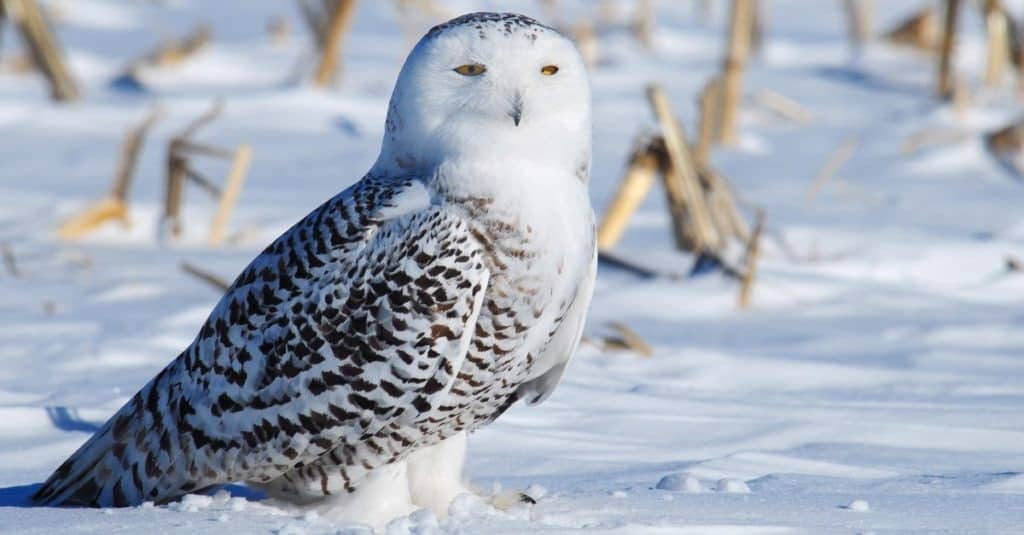
Snowy Owl on snow field

The Snowy Owl eats Lemmings.

Much like every other animal, lemmings are a vital part of the natural food chain, which means that some animals feed on them. Their small size is a major disadvantage since it makes them more likely to be a source of meat for any carnivorous animal.

Lemmings have a vast number of predators like wolverines and snowy owls, but almost any carnivore will consume a lemming as a small meal. These rodents are a major source of protein for these animals and are very important for the ecosystem. According to sources, whenever the lemming population decreases, there is usually a decline in the number of arctic foxes as well.

Meanwhile, there is no threat to the population of these animals generally as they are found very commonly and the IUCN has declared the species as “least concerned.” Without much of a threat from humans, there are no broadly publicized conservation efforts. In fact, people in some parts of Europe even keep them as pets.

Reproduction, Babies, and Lifespan

Lemmings are known to fast mature and the maturity usually sets in around 5 to 6 weeks of their age. They start reproducing as early as within one month of being born and are known to be enthusiastic breeders. Most lemmings follow the same mating rituals. However, the southern bog is known to be a little different and very little is currently known about its reproductive process.

In the course of their lifetime, each lemming can produce 8 litters of 6 each. The gestation period is about 20 days. Meanwhile, these animals usually live for only about two years.

The mother usually gives birth to the babies in burros which helps them survive the cold conditions of the Arctic. She also feeds them until they are mature enough to start venturing out and looking for food themselves.

Population

The lemming population varies from area to area and also from time to time. In some places, they might be nearing extinction, while in some other places, the population is booming. Likewise, some years are great for the lemming populations and some are not. In some areas, there might be as many as 3000 lemmings per one million square feet.

However, there is hardly any extinction threat to the overall lemmings population. The IUCN has put the species under the ‘least concerned’ category.

In the Zoo

Lemmings are solitary creatures but are usually not kept in zoos. If too many of these rodents are kept together for a longer period of time, they might turn hostile toward each other and they usually come together only for migration purposes.

As stated above, while not in captivity in zoos, lemmings are often kept as pets in Europe, though they are a less common pet in the United States. To keep them healthy, pet owners provide them with much of the same diet that they have in the wild, offering about a cup a day of leafy greens. They require a terrarium as their home since the wired cages for other rodents are too easy to escape.

View all 131 animals that start with L

Sources

  1. David Burnie, Dorling Kindersley (2011) Animal, The Definitive Visual Guide To The World's Wildlife / Accessed May 11, 2009
  2. Tom Jackson, Lorenz Books (2007) The World Encyclopedia Of Animals / Accessed May 11, 2009
  3. David Burnie, Kingfisher (2011) The Kingfisher Animal Encyclopedia / Accessed May 11, 2009
  4. Richard Mackay, University of California Press (2009) The Atlas Of Endangered Species / Accessed May 11, 2009
  5. David Burnie, Dorling Kindersley (2008) Illustrated Encyclopedia Of Animals / Accessed May 11, 2009
  6. Dorling Kindersley (2006) Dorling Kindersley Encyclopedia Of Animals / Accessed May 11, 2009
  7. David W. Macdonald, Oxford University Press (2010) The Encyclopedia Of Mammals / Accessed May 11, 2009
  8. Soft Schools / Accessed November 2, 2020
Rebecca Bales

About the Author

Rebecca Bales

Rebecca is an experienced Professional Freelancer with nearly a decade of expertise in writing SEO Content, Digital Illustrations, and Graphic Design. When not engrossed in her creative endeavors, Rebecca dedicates her time to cycling and filming her nature adventures. When not focused on her passion for creating and crafting optimized materials, she harbors a deep fascination and love for cats, jumping spiders, and pet rats.
Connect:

Thank you for reading! Have some feedback for us?


Lemming FAQs (Frequently Asked Questions)

Lemmings are herbivores. Their diet primarily includes grass and moss.