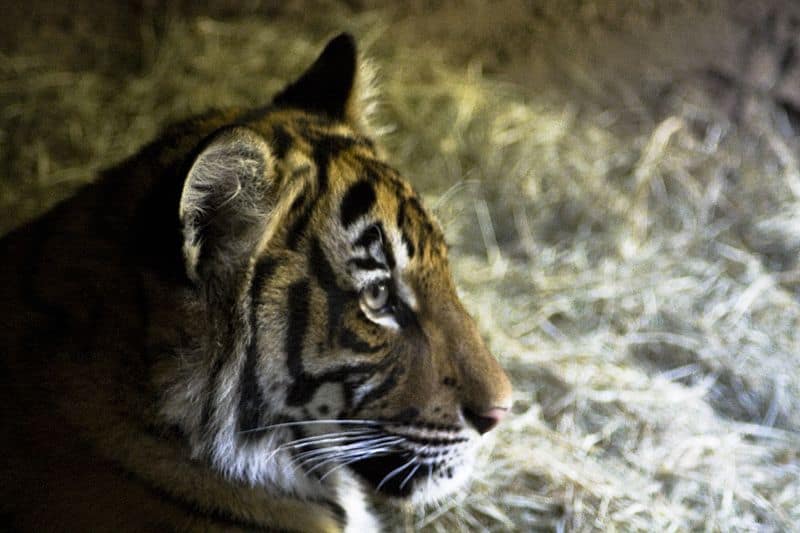
![(Panthera tigris jacksoni) [This is a Species Survival Plan® (SSP) species] The three female cubs (2 shown here) were born April 28, 2008](https://a-z-animals.com/media/animals/images/original/malayan_tiger1-768x576.jpg)
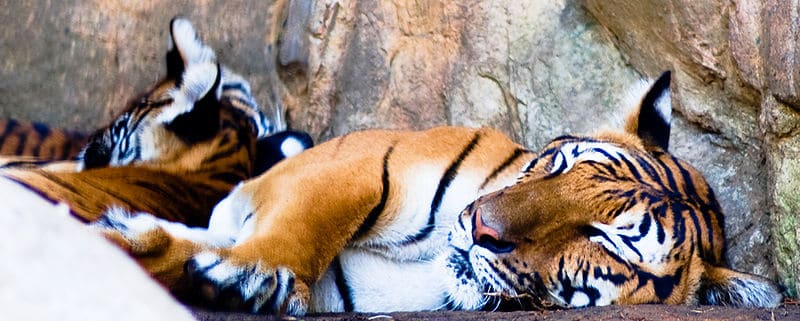
![(Panthera tigris jacksoni) [This is a Species Survival Plan® (SSP) species] Yes, this is a panorama using an OM-System Zuiko 600mm lens. (2 frames)](https://a-z-animals.com/media/animals/images/original/malayan_tiger3-768x308.jpg)


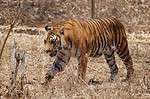
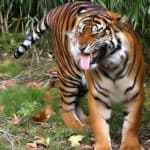
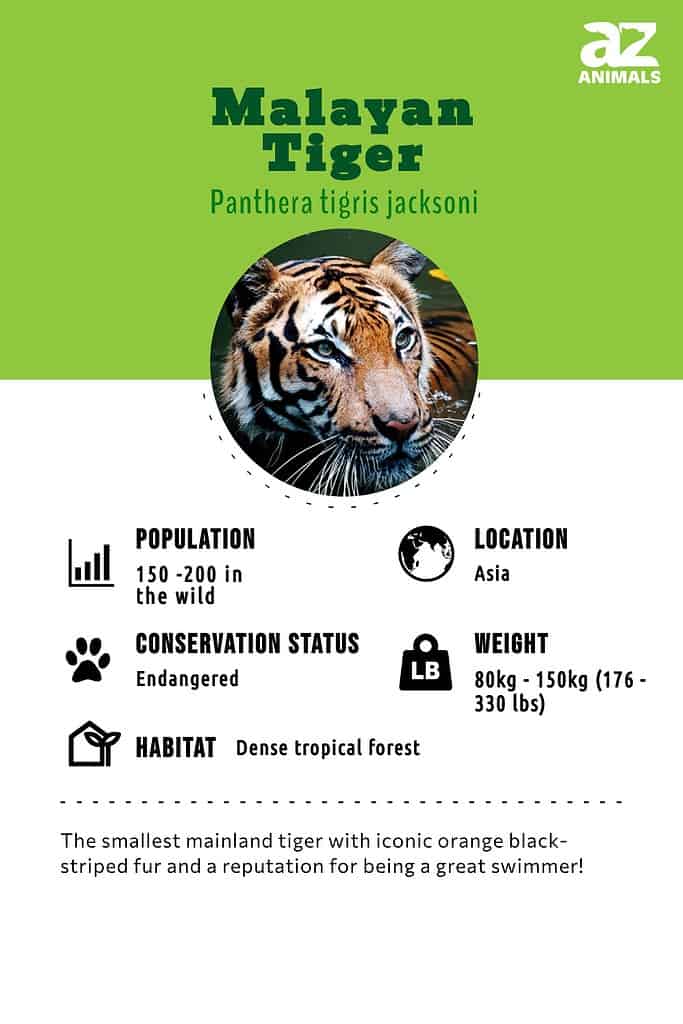
Malayan tigers can reach running speeds of up to 40 mph and this critically endangered species is also known to be a great swimmer!
As their name suggests, Malayan tigers live in Malaysia located in southeast Asia. They are the smallest subspecies of mainland tigers. Malayan tigers live alone except during breeding season. They’re carnivores who eat deer, cattle, wild boar, and sun bears. These tigers can live for 15 to 20 years in their natural habitat.
5 Malayan Tiger Facts
- Malayan tigers are great swimmers and are even known to cross rivers when necessary.
- Every Malayan tiger has a pattern of stripes that is completely unique to that individual.
- These tigers sleep most of the day and hunt at night.
- Malayan tigers talk to one another by making chuffing (puffing) sounds as well as roaring and growling.
- The male Malayan tiger is very territorial and will fight with other males who enter the area.
Scientific Name
The scientific name of the Malayan tiger is Panthera tigris jacksoni, named for a British man named Peter Jackson who was a notable tiger conservationist. This big cat belongs to the Felidae family and its class is Mammalia. The Malaysian people’s word for tiger is ‘harimau,’ or ‘rimau’ for short. They also refer to this tiger as “Pak Belang” which translates to “Uncle Stripes” in English.
The Malayan tiger is one of six subspecies of tiger. The group includes the Siberian or Amur, Bengal, Sumatran, south China, and Indochinese tigers.
Evolution
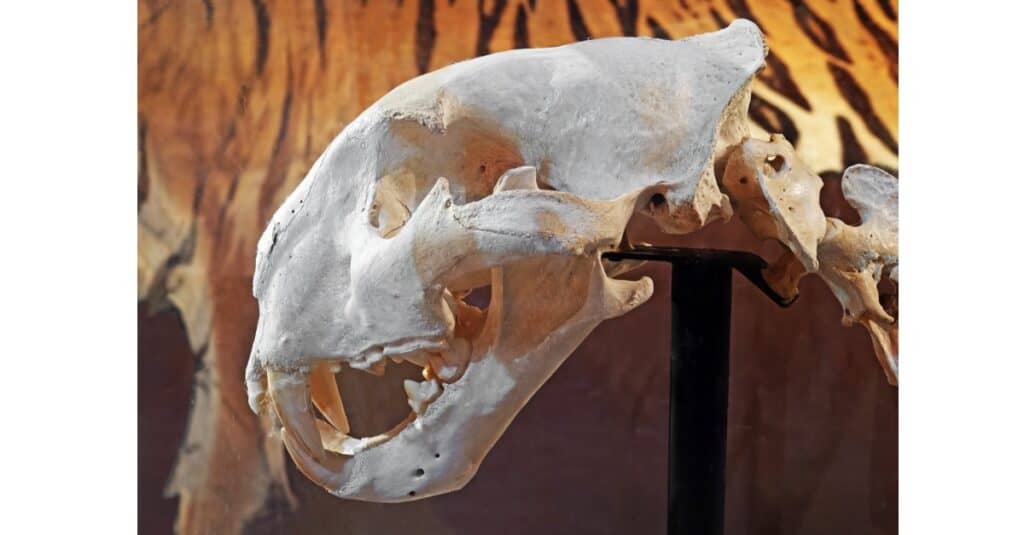
Tigers diverged from the other big cats 3.2 million years ago.
©iStock.com/it:Backiris
The earliest fossil record of a tiger was found in China and is believed to have lived two million years ago during the Pleistocene era. This evidence suggests that tigers originated in what is now China with Panthera zdanskyi, the Longdan tiger, being the most primitive tiger species. By the end of the Pleistocene, tigers had spread to the north of Asia, India, the bridge of Beringia, the island of Sakhalin, and Japan.
The genus, Panthera, made up of tigers, lions, leopards, and jaguars are all closely related to each other. In 2010, it was discovered that tigers are more closely related to the snow leopard – and that they diverged from the rest of the group 3.2 million years ago.
Appearance and Behavior
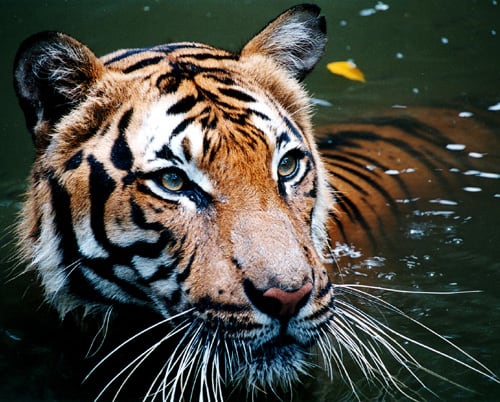
Malayan tigers are great swimmers.
©B_cool / Creative Commons – Original
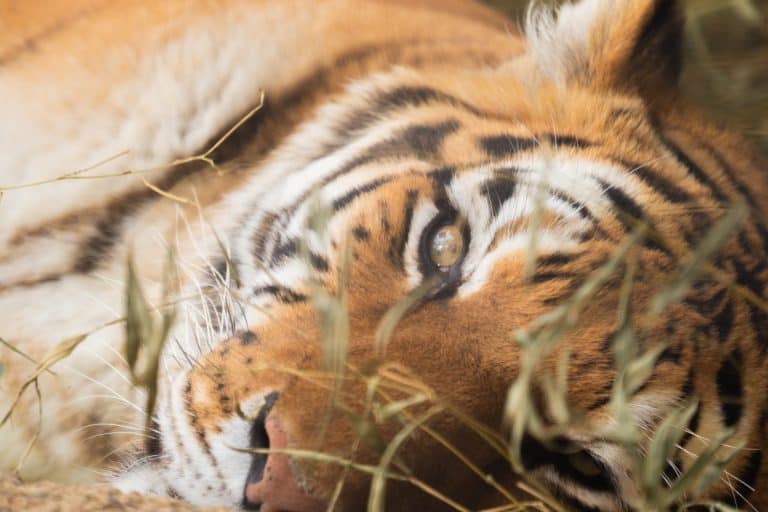
A Malayan tiger has orange fur on its back, tail, head, and face along with a pattern of black stripes. Its underside is white. This big cat also has long whiskers and piercing yellow eyes.
If your house cat has ever licked your arm, you know it has a rough surface on its tongue. Well, a Malayan tiger has this, too. Its tongue is covered with small flexible spikes called papillae. Papillae are there to scrape the fur or feathers off prey captured by the tiger. This is so the tiger doesn’t have to swallow fur or feathers as it enjoys a meal. Of course, the papillae on the tongue of a Malayan tiger are much sharper than the papillae on a house cat’s tongue. After all, a house cat only has to eat soft cat food from a bowl!
A male Malayan tiger grows to be around eight feet long from head to tail while females grow to be around seven feet long. That’s about as long as a king-sized bed! A male Malayan tiger weighs around 220 to 300 pounds while a female around 170 to 240 pounds. For reference, a 200-pound tiger weighs a little more than an adult kangaroo.
The Malayan tiger is actually the smallest subspecies of mainland tigers. Compare this tiger to the largest of the species, the Siberian tiger, which grows to be 10.5 feet long and weighs as much as 660 pounds.
The only predators of Malayan tigers are humans, though sometimes these tigers clash and injure one another in territorial fights. Male tigers mark their territory with urine or by clawing the trunks of trees in the area. They have a particular scent they leave behind with their claw marks. Other cats are meant to detect this scent and keep it away. Malayan tigers spend much of their time patrolling their territory making sure no other tigers come in.
Since this big cat doesn’t have any animal predators, it doesn’t need camouflage to hide. However, a Malayan tiger’s striped coat serves as camouflage when it’s stalking prey and needs to blend into the surroundings so it can make a surprise attack. This cat also tries to avoid being seen by sitting in tall grass or other types of dense vegetation.
Malayan tigers live alone unless they’re looking for a mate during the breeding season.
Habitat
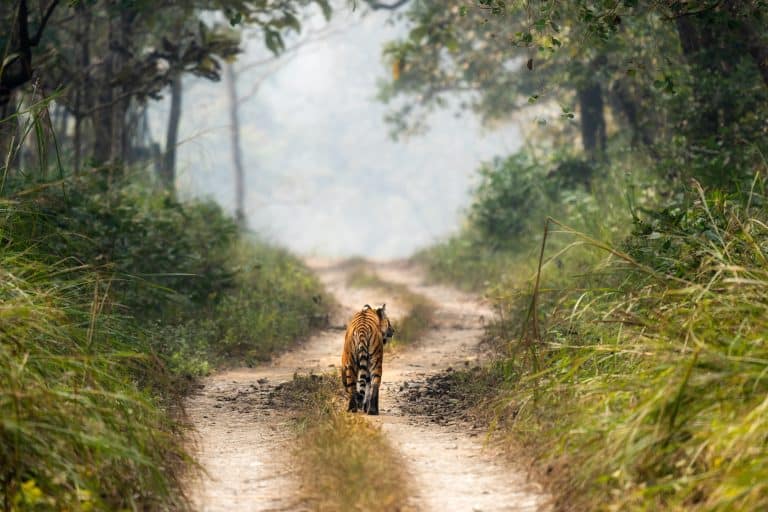
Malayan tigers live in Malaysia in southeast Asia. Specifically, they are found in Pahang, Kelantan, Perak, and Terengganu. They live in tropical forests because the dense trees in these forests make it easier for the tigers to stalk and capture prey.
When Malayan tigers aren’t sleeping or grooming themselves, they are swimming in rivers and streams in the area. These animals have webbed paws and strong legs that help them to stay afloat. They swim to stay cool as well as to travel to other areas to find prey.
Like cats of all sizes, Malayan tigers have eyes that allow a large amount of light in so they can hunt at night. In addition, sensory nerves in the whiskers of this tiger help it to navigate the dark forest at night.
Diet
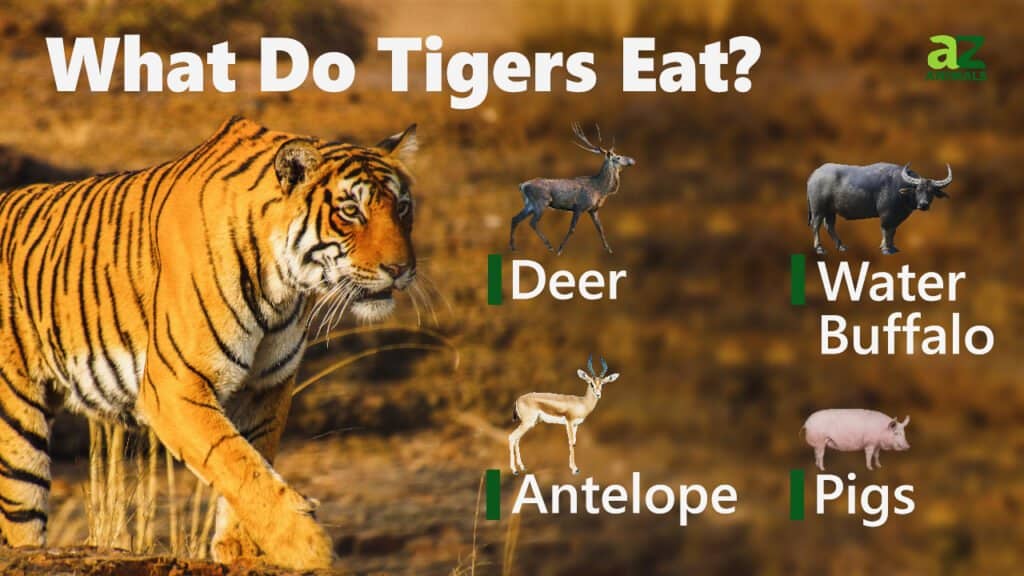
What do Malayan tigers eat? Like all tigers, Malayan tigers are carnivores. They eat a few types of Sambar and Barking deer, wild boar, bearded pigs, serow, and sun bears. The Malayan tiger, like most tigers, is likely to go after the older or weaker animals in a herd in order to make an easy capture.
These big cats have been known to go after young elephants. An adult elephant would be too large for a single Malayan tiger to capture, but a young elephant (known as a calf) would not be as much of a challenge. However, the adult elephants in a herd sometimes surround an elephant baby to protect it from tigers and other predators. They can kick at or stomp a tiger causing it serious injury or death.
Malayan tigers stalk their prey, then use short bursts of speed to capture them. Usually, the prey is dragged to a particular place to eat. These big cats can eat 88 pounds of meat at one time. A meal of 88 pounds is about equal to the weight of three bars of gold! However, a tiger may eat just one time per week.
Predators and Threats
Humans are the only predator of these tigers. Tigers are called primary predators because they are at the top of the animal food chain.
Though they are primary predators, these tigers do face various threats to their existence. This tiger has experienced a loss of habitat and poaching by humans. They are hunted by humans for their skins and various body parts are used to produce medicines. Sometimes they are killed by farmers when the tigers attack livestock. The official conservation status of this tiger according to the International Union for the Conservation of Nature (IUCN) is Critically Endangered.
Fortunately, conservation efforts are being made to protect these tigers. The WWF (World Wildlife Fund) in Malaysia has taken steps to monitor the population of this tiger and is increasing efforts to educate people about it. Zoos around the world are participating in breeding programs for the Malayan tiger as well, in order to increase the population.
Reproduction, Babies, and Lifespan
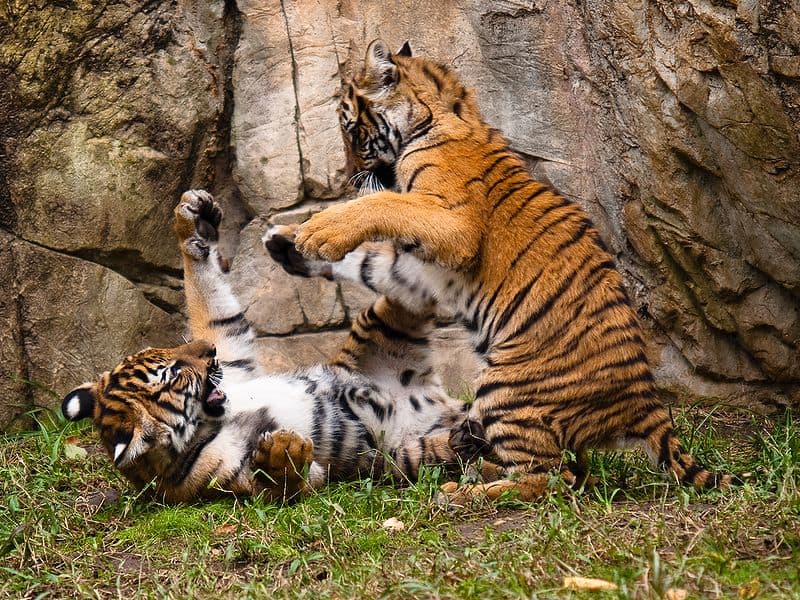
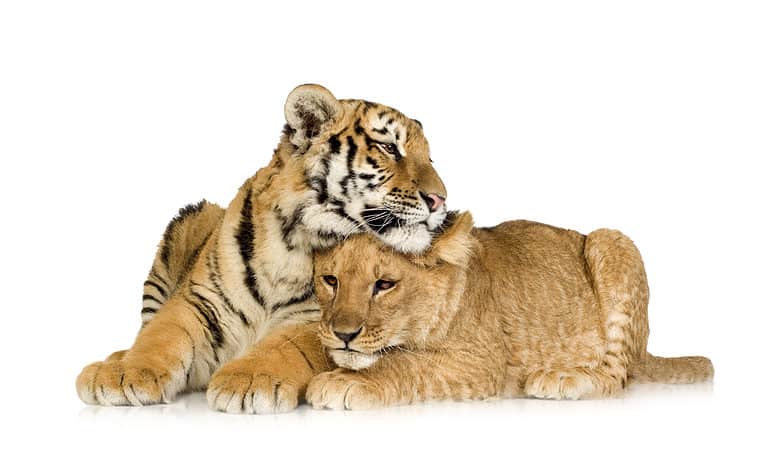
Malayan tigers are known to fight each other and also like to play when they are young.
©Malcolm, CC BY-SA 2.0, via Wikimedia Commons – Original / License
The breeding season of these tigers falls between November and March, though they mate year-round. The male tigers have a territory that usually contains a group of females he breeds with. A female tiger is pregnant for approximately 100 days. During that time, she looks for a den to have her babies in. She gives birth to between two to four babies per litter and is the only caregiver.
Baby tigers are called cubs. They’re born with their eyes closed, they can’t walk, and they have fur that’s very light in color. For the first two months of life, the cubs nurse from their mother. At one to two weeks, their eyes open and by three weeks old the cubs can move around.
At around three months old, the cubs begin to go out with their mother where they learn how to hunt and start eating meat. The cubs wrestle and play with one another to gain strength and learn how to stalk prey. Before they are four months old, a cub’s coat begins to turn orange and the black stripe design begins to take shape. Cubs stay with their mother until they are about one and a half years old.
Unfortunately, the death rate of tiger cubs is high. In fact, 50 percent of these cubs don’t survive until age two. The cubs are helpless at birth and can fall victim to attacks by other animals in the area or even by other adult tigers.
The lifespan of these tigers in the wild is 15 to 20 years. As these tigers get older, they can get injured while hunting and lose the ability to capture prey. This can lead to starvation.
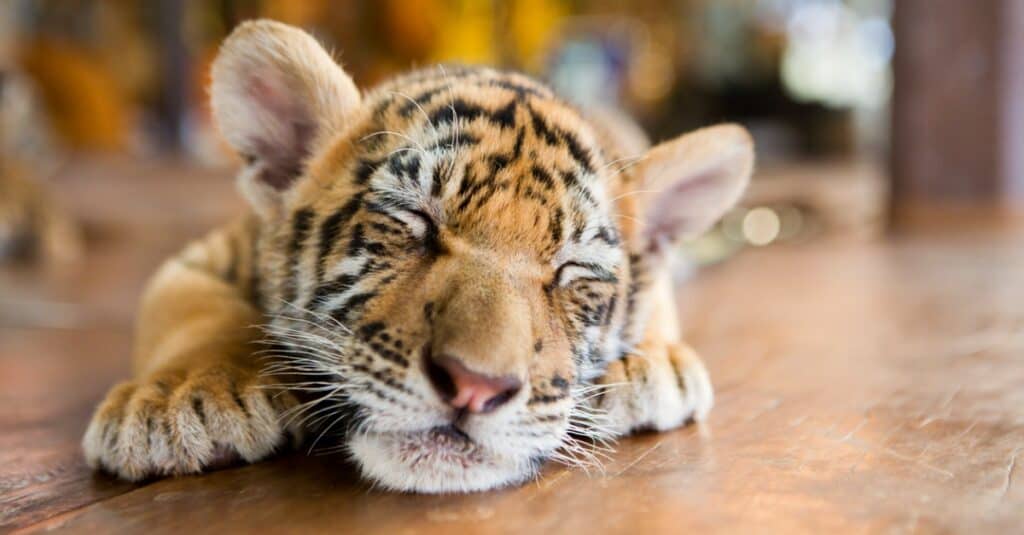
Only 50% of baby tigers survive to age two in the wild.
©iStock.com/Fly_dragonfly
Population
The official conservation status of Malayan tigers is Critically Endangered which means the population of this big cat is under threat and decreasing. In 2013, it was estimated that there were between 250 and 340 adult Malayan tigers in existence. There are likely to be fewer now due to the loss of habitat and poaching activity.
However, some efforts are being made to preserve this tiger’s population and increase its numbers. Zoos have breeding programs and other wildlife conservation groups are joining in to help this amazing animal.
Malayan Tiger Pictures
View all of our Malayan Tiger pictures in the gallery.

How to say Malayan Tiger in ...
Sources
- David Burnie, Dorling Kindersley (2011) Animal, The Definitive Visual Guide To The World's Wildlife / Accessed May 27, 2010
- Tom Jackson, Lorenz Books (2007) The World Encyclopedia Of Animals / Accessed May 27, 2010
- David Burnie, Kingfisher (2011) The Kingfisher Animal Encyclopedia / Accessed May 27, 2010
- Richard Mackay, University of California Press (2009) The Atlas Of Endangered Species / Accessed May 27, 2010
- David Burnie, Dorling Kindersley (2008) Illustrated Encyclopedia Of Animals / Accessed May 27, 2010
- Dorling Kindersley (2006) Dorling Kindersley Encyclopedia Of Animals / Accessed May 27, 2010
- David W. Macdonald, Oxford University Press (2010) The Encyclopedia Of Mammals / Accessed May 27, 2010