
M
Species Profile

Masked Palm Civet

Paguma larvata

Masked face, midnight fruit forager
teekayu/Shutterstock.com

Masked Palm Civet Distribution

Click a location to explore more animals from that region

Invasive Species
Loading map...
Masked palm civet under a tree

At a Glance

Wild Species
Also Known As Masked civet, Palm civet, Asian masked civet
Diet Omnivore
Activity Nocturnal+
Lifespan 8 years
Weight 6 lbs
Status Least Concern
Did You Know?

Size: head-body length 51-76 cm; tail 38-51 cm (field measurements reported in major mammal references, e.g., Nowak/HMW).

Scientific Classification

The masked palm civet (Paguma larvata) is a small viverrid (civet family) native to parts of South and East Asia. It is an agile, largely nocturnal omnivore that forages in forests and also readily uses human-modified landscapes.

Kingdom
Animalia
Phylum
Chordata
Class
Mammalia
Order
Carnivora
Family
Viverridae
Genus
Paguma
Species
larvata

Distinguishing Features

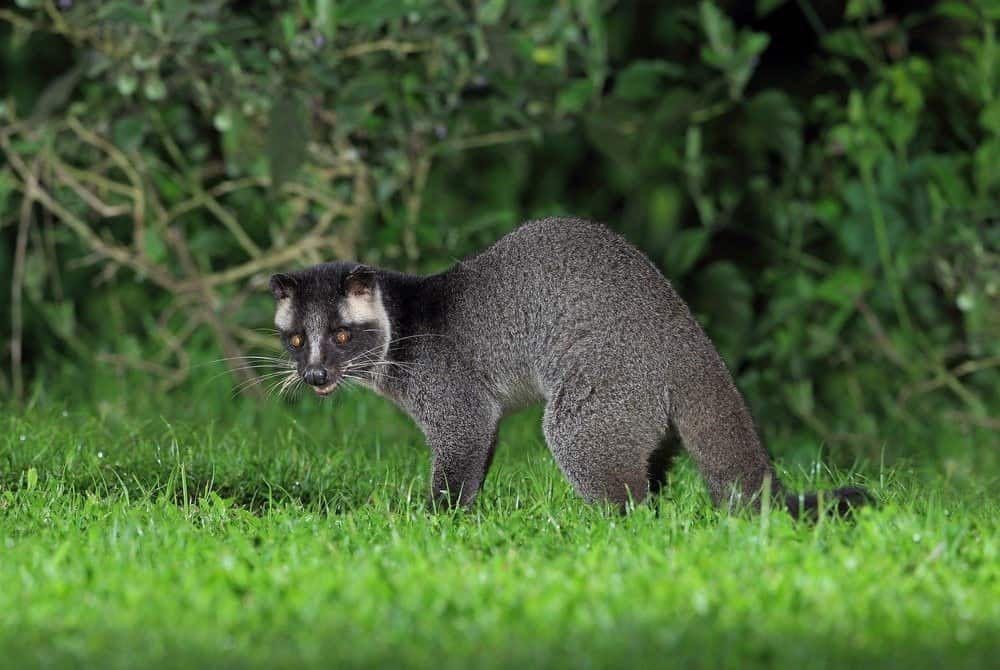
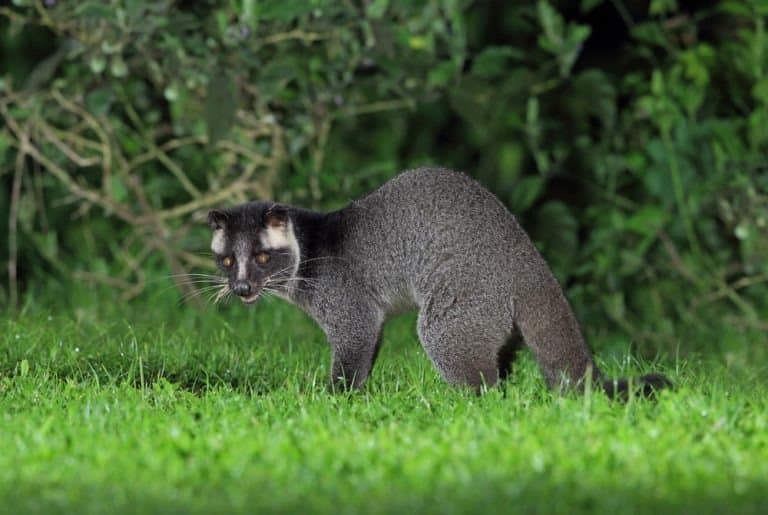
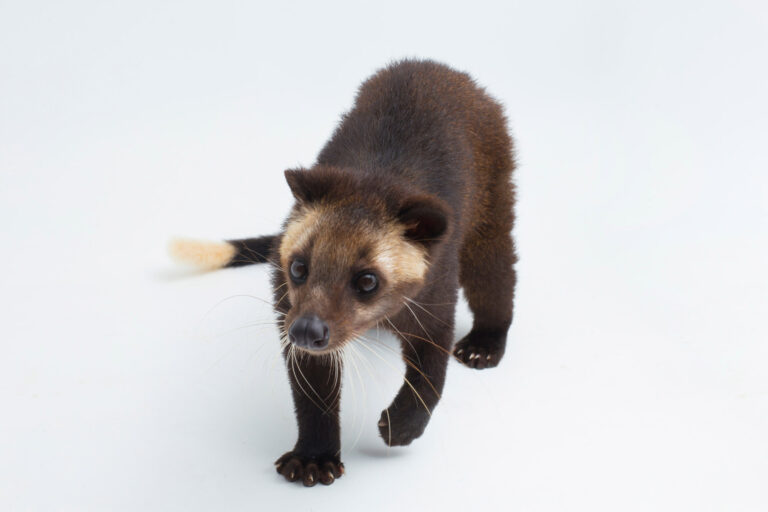
  • Distinct dark facial ‘mask’ with contrasting pale/whitish face
  • Slender civet-like body with relatively short legs
  • Long tail aiding balance when climbing
  • Omnivorous diet (fruits plus small animals/invertebrates), contributing to seed dispersal

Physical Measurements

Length
3 ft 8 in (2 ft 11 in – 4 ft 6 in)
Weight
9 lbs (6 lbs – 13 lbs)
Tail Length
1 ft 8 in (1 ft 4 in – 1 ft 12 in)
Top Speed
15 mph
running

Appearance

Primary Colors
Secondary Colors
Skin Type Dense, soft fur over mammalian skin; well-developed perianal scent glands typical of Viverridae.
Distinctive Features
  • Head-body length 51-76 cm; tail length 38-51 cm (Nowak, Walker's Mammals of the World).
  • Body mass commonly ~3-6 kg (reported ranges vary by region/sex; Nowak; ADW).
  • Nocturnal and largely solitary; active climber (arboreal/scanorial) using strong, semi-retractile claws typical of viverrids (not felids).
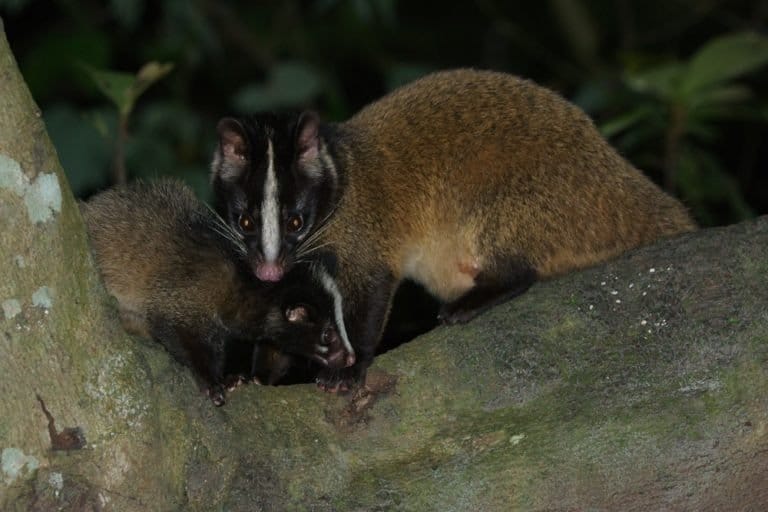
  • Facial 'mask' is key field mark: white muzzle/forehead stripes contrasting with black eye patches.
  • Long, bushy tail often nearly as long as body; used for balance during climbing and roof/branch travel.
  • Omnivorous with strong fruit component; frequently disperses seeds via feces, especially in forest-edge and secondary habitats (field diet studies summarized in regional mammal handbooks).
  • Often uses human-modified landscapes (orchards, villages, farm edges), reflecting commensal tendencies in parts of its range.
  • Anal scent glands produce strong secretions used for territorial marking and communication (Viverridae trait).

Sexual Dimorphism

Sexual dimorphism is subtle. Males average slightly larger/heavier with broader heads and necks, while females are typically smaller and more lightly built; both sexes share the same facial mask pattern and overall coloration.

♂
  • Slightly higher average body mass and more robust build.
  • Broader head/neck and more prominent canines on average.
♀
  • Slightly smaller average body mass and slimmer head/neck profile.
  • Mammary nipples evident when lactating; otherwise similar appearance to males.

Did You Know?

Size: head-body length 51-76 cm; tail 38-51 cm (field measurements reported in major mammal references, e.g., Nowak/HMW).

Adult mass commonly ~3-6 kg (reported ranges vary by region/sex in field guides and mammal handbooks).

Reproduction: gestation about 60-70 days; litters usually 2-4 young (viverrid reproductive biology references).

Diet is strongly omnivorous-fruit can be a major component seasonally, alongside insects, small vertebrates, and human foods near settlements.

Key field mark: the contrasting white facial mask and dark eye-stripes, plus a long tail and cat-like but non-feline body plan.

Viverridae (civets) are Carnivora but not true cats (Felidae): they typically have more generalized teeth and prominent scent glands for marking.

Often thrives in human-modified landscapes (orchards, village edges), making it one of the more commonly encountered wild civets in parts of East/Southeast Asia.

Unique Adaptations

  • High climbing agility: A long tail aids balance, and flexible limb joints support rapid movement on branches and steep surfaces.
  • Semi-retractile claws (viverrid trait): Provide grip for climbing while still allowing quiet ground travel compared with fully non-retractile claws.
  • Generalist dentition and gut function for omnivory: Well-suited to mixed diets-soft fruits plus animal prey-helping it persist across habitats.
  • Powerful scent glands: Chemical signaling is a major adaptation for nocturnal, low-visibility communication in dense vegetation.
  • Facial mask pattern: High-contrast markings aid rapid recognition in low light and are a reliable field identifier across much of its range.

Interesting Behaviors

  • Nocturnal foraging: Most activity is at night, moving quietly through understory and canopy while searching for ripe fruit, insects, and small prey.
  • Scanorial/arboreal climbing: Uses trees for travel, feeding, and resting; readily climbs into fruiting trees and structures near farms.
  • Solitary lifestyle: Typically encountered alone outside of breeding and mother-young periods, with individuals using scent to communicate occupancy.
  • Scent-marking: Like many viverrids, uses strong-smelling gland secretions and fecal/urine marks to advertise territory and reproductive status.
  • Human-commensal habits: Frequently raids cultivated fruit and may forage around refuse or livestock feed in rural areas, increasing conflict and contact with people.
  • Opportunistic hunting: Will take small vertebrates (e.g., rodents, birds/eggs) when encountered, switching flexibly with seasonal fruit availability.

Cultural Significance

In South and East Asia, the masked palm civet (Paguma larvata) is a common village-edge carnivore—admired for agility but seen as an orchard pest. Called "civet" in markets, it is sometimes kept or sold for meat and often seen near farms.

Myths & Legends

Famous Chinese folktale and opera 'The civet-cat swaps the prince' uses the Masked Palm Civet (Paguma larvata) in a court trick where a baby heir is swapped, becoming a symbol of tricks and disguise.

The species name larvata is Latin for 'masked.' People often call Paguma larvata a night-roaming animal with a face covering, giving it local nicknames like 'masked' or 'flower-faced' civet.

In rural fruit-growing regions, local anecdotes and oral traditions commonly portray civets as clever nighttime 'fruit thieves' that slip through trees unseen-stories repeated to warn children not to leave ripe fruit unattended after dusk.

Conservation Status

LC Least Concern

Widespread and abundant in the wild.

Population Decreasing

Protected Under

  • Protected and/or harvest regulated under national wildlife laws in multiple range states (scope and enforcement vary by country and province/state).
  • Occurs in numerous protected areas across its range, where hunting and trade controls are typically stronger than in unprotected lands.

Life Cycle

Birth 2 kits
Lifespan 8 years

Lifespan

In the Wild
5–12 years
In Captivity
10–20 years

Reproduction

Mating System Polygyny
Social Structure Solitary
Breeding Pattern Transient
Fertilization Internal Fertilization
Birth Type Internal_fertilization

Masked palm civets are mainly solitary; males likely range over multiple females and mating occurs during brief encounters without pair bonds. Females rear litters alone after ~56-60 days gestation, typically producing 1-4 young (often 2-3).

Behavior & Ecology

Social None (solitary) Group: 1
Activity Nocturnal, Crepuscular, Cathemeral
Diet Omnivore Ripe fruit-particularly figs (Ficus spp.), which are repeatedly reported as a major, frequently consumed resource across much of the species' range in field diet studies.

Temperament

HUBS: predominantly solitary, nocturnal omnivore; activity may shift cathemeral near people (IUCN; Lekagul & McNeely 1977).
Shy, evasive, and wary in forests; quickly retreats to canopy when disturbed (Nowak 2005).
Territorial/spacing behavior expressed via scent-marked routes and latrine use (Viverridae accounts: Macdonald 1992).
Highly adaptable and tolerant of human-modified habitats; frequent near villages and farms (IUCN).

Communication

hisses and spits during threat or close encounters Nowak 2005
growls/raspy snarls in aggression Macdonald 1992
loud screams/shrieks when alarmed or in intense conflict Lekagul & McNeely 1977
scent marking using perineal/anal gland secretions on substrates Macdonald 1992
urine marking along travel routes and at prominent objects Nowak 2005
fecal deposition at repeated latrine sites for signaling presence Viverridae accounts: Macdonald 1992
visual postures Arched back, piloerection) during threats; close-range signaling (Nowak 2005

Habitat

Biomes:
Tropical Rainforest Tropical Dry Forest Temperate Forest Temperate Rainforest
Terrain:
Mountainous Hilly Plateau Plains Valley Coastal Island Riverine Karst Rocky +4
Elevation: Up to 8858 ft 3 in

Ecological Role

Omnivorous mesocarnivore and major frugivore/seed-disperser in forest edges and secondary forests; also a predator of invertebrates and small vertebrates, with increased scavenging/commensal feeding in disturbed landscapes.

Seed dispersal (endozoochory) for many fleshy-fruited plants, aiding forest regeneration and connectivity between fragments Regulation of some insect and rodent populations via predation (localized pest-control service) Nutrient redistribution through movement between feeding and defecation sites, especially along edge habitats Carrion/refuse consumption in disturbed areas, contributing to organic matter turnover

Diet Details

Main Prey:
Insects Other invertebrates Small mammals Small birds and nestlings Bird eggs Reptiles Amphibians Carrion +2
Other Foods:
Ripe fruits Wild fruits and berries Cultivated fruits Nectar and flowers Plant material

Human Interaction

Domestication Status

Wild

The masked palm civet (Paguma larvata) is a wild, not domesticated, mammal sometimes caught or bred for trade and kept in farms or markets in the past in China. It forages near people, is hunted for meat, and can carry viruses (including coronaviruses), creating health and trade risks.

Danger Level

Moderate
  • Bites/scratches when cornered or handled (sharp dentition; defensive aggression possible during capture/keeping)
  • Zoonotic disease interface in markets/farms/settlements (notably coronavirus findings in civet-associated surveillance and outbreak investigations; also potential for rabies exposure where rabies is present, plus other wildlife-associated pathogens such as leptospiral bacteria depending on local ecology)
  • Food safety risks where hunted/handled as bushmeat (field dressing, butchering, and market handling increase exposure risk)

As a Pet

Not Suitable as Pet

Legality: Masked Palm Civet (Paguma larvata) is often banned or allowed only with permits in many countries and states. Import rules, wildlife laws, and unclear trade source make private ownership illegal or restricted.

Care Level: Expert Only

Purchase Cost: $300 - $2,500
Lifetime Cost: $15,000 - $50,000

Economic Value

Uses:
Wildlife trade (live animal) Bushmeat/food Fur/pelts (limited/local) Traditional medicine (reported in some markets) Pest control/ecosystem services (indirect value as omnivorous predator/seed disperser) Public health relevance (surveillance/management costs and biosecurity)
Products:
  • live individuals for exotic pet/display trade
  • meat (local consumption/market sale)
  • skins/pelts (localized use)
  • parts sold in some traditional medicine markets (regionally variable)

Relationships

Related Species 7

Asian palm civet
Asian palm civet Paradoxurus hermaphroditus Shared Family
Small-toothed palm civet Arctogalidia trivirgata Shared Family
Binturong
Binturong Arctictis binturong Shared Family
Small Indian civet Viverricula indica Shared Family
Large Indian civet Viverra zibetha Shared Family
Malay civet
Malay civet Viverra tangalunga Shared Family
Owston's civet Chrotogale owstoni Shared Family

Ecological Equivalents 5

Animals that fill a similar ecological role in their ecosystem

“Masked palm civets can spray a foul-smelling scent at predators to drive them away”

Masked palm civets are arboreal spending most of their time in trees. They are omnivores eating both small animals and fruit. These mammals live in the south and Southeast-Asia. These civets live to be around 10 years old in the wild and can live up to 20 years in captivity. They sleep all day and hunt at night.

5 Incredible Masked Palm Civet Facts!

  • They make their nests and sleep in the uppermost level of a tree
  • They are solitary mammals
  • They are able to spray a stinky scent that can deter predators
  • These mammals are excellent at climbing trees
  • They are omnivores

Masked Palm Civet Scientific Name

The scientific name of a masked palm civet is Paguma larvata. It also goes by the name gem-faced civet or the Himalayan civet. In Malaysia, they are known as Musang. In order to have the correct pronunciation of civet, remember that the c sounds like an s. Its pronunciation is easy when you know that civet rhymes with the word visit.

This animal belongs to the Viverridae family and the class Mammalia. There are at least 13 subspecies of masked palm civet. Some of the civets in this family include:

Masked Palm Civet Appearance and Behavior

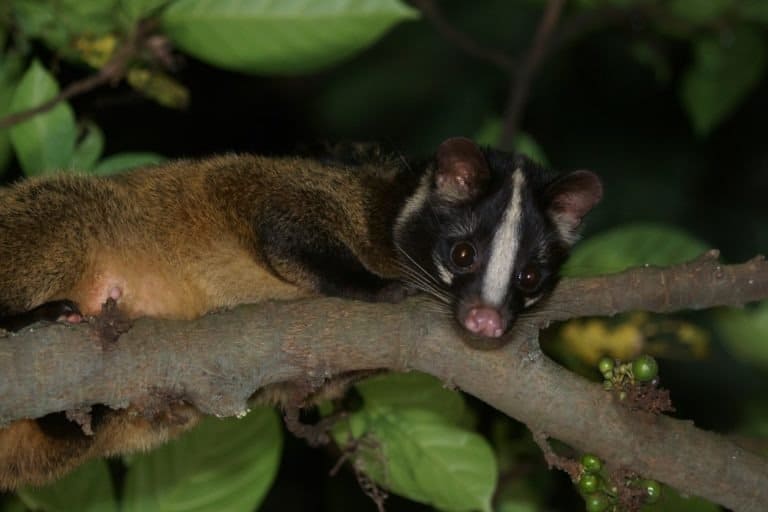
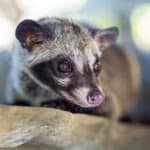
This mammal has a coat of short gray hair as well as black hair on its face. A white stripe of fur begins on its nose, runs between its eyes and up its forehead. Its dark eyes are highlighted by the white fur around them. This mammal’s long tail is thick and covered with gray fur. Its rounded ears are about an inch long making a masked palm civet look like a cross between a cat and a raccoon. But, when it comes to close relatives, this mammal is more closely related to a mongoose than it is to a cat.

The length of these civets ranges from 20 to 30 inches with a tail that adds on an extra 20 to 25 inches. They usually weigh from 8 to 11 pounds. The heaviest this mammal can get is 13 pounds. If you laid 14 golf tees on the ground end to end, you’d have the same length as a 30-inch-long masked palm civet. An 11-pound gem-faced civet weighs as much as the average housecat.

These civets are able to spray predators with a stinky scent from glands in their body. This is similar to what a skunk does to protect itself from predators. Scientists believe that the white design on this animal’s face serves as a signal to its predators that it can be dangerous.

Masked palm civets are fast climbers. This is another way they can get away from predators or other threats.

This mammal is solitary and tries to stay out of sight. But, like any animal, it can be aggressive if it feels threatened.
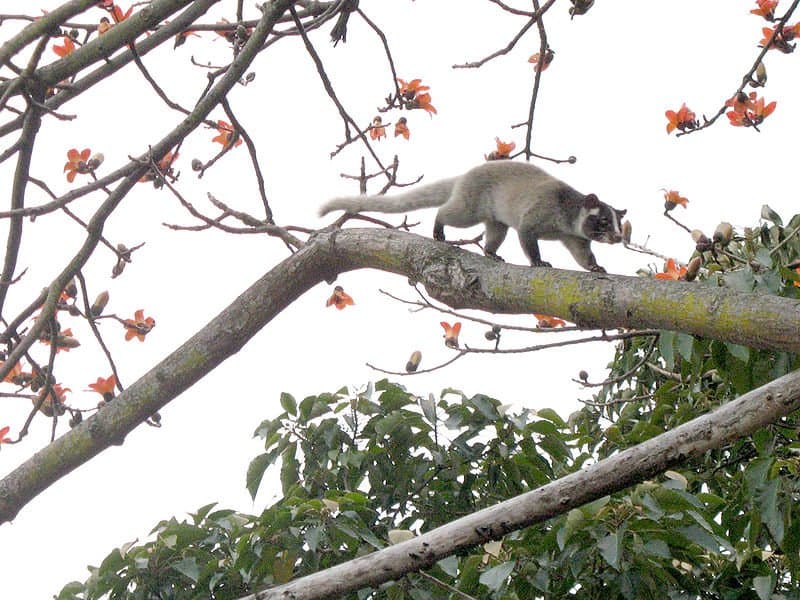
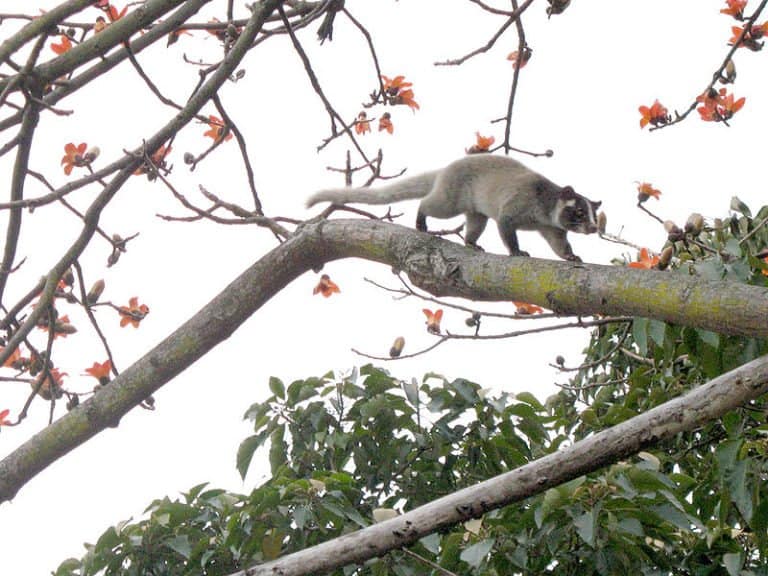
Masked Palm Civet in a tree

Masked Palm Civet Habitat

These civets live in southern and Southeast-Asia. They are found in several countries including Bangladesh, Bhutan, Brunei, Cambodia, China, India, Malaysia, Myanmar, Pakistan, and Vietnam.

There have been some sightings of masked palm civets in Singapore. They make their way into urban areas building nests in the attics of homes in and around Singapore.

They live in tropical and temperate climates. These animals spend 80 percent of their time in trees so it’s no surprise they are found in tropical moist forests, tropical dry forests, temperate broadleaf forests and grasslands.

This animal uses its tail to hang onto branches as it climbs high into trees for pieces of fruit or to make a nest or bed. It is nocturnal so its eyes are designed to see clearly in the dark.

Masked Palm Civet Diet

What do these civets eat? These mammals eat fruit, leaves, rodents, frogs, insects, and small birds. Like most animals, they eat the prey that’s most plentiful in their environment.

These civets play an important part in the ecosystem. They eat a lot of fruit. After digesting the fruit, they drop the seeds throughout the area via their fecal matter. This is called seed dispersal. These seeds grow into new types of vegetation.

Masked Palm Civet Predators and Threats

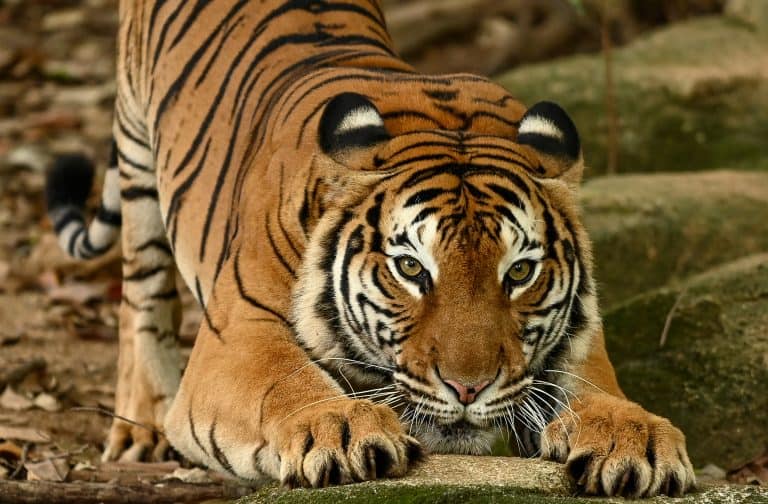
Tigers, hawks, crocodiles, and leopards are all predators of the gem-faced civet. Humans are also a threat to these animals. They are hunted for their meat. This civet meat is eaten in Vietnam, southern China, and other places.

In addition, they are losing their habitat due to deforestation.

The official conservation status of the masked palm civet is Least Concern with a decreasing population.

Masked Palm Civet Reproduction, Babies and Threats

The breeding season of these civets falls in the spring as well as in late autumn. These animals have multiple partners. The gestation period of a female is 75 to 90 days and she can have 2 litters of babies per year. A female masked palm civet is likely to have her babies in a hollowed-out tree. A litter contains from 1 to 4 babies, also called pups. Each pup weighs around 3 ounces. They are born with their eyes closed and completely dependent on their mother.

A pup’s eyes open when it reaches about 10 days old. This is when the pups begin to walk. They are nursed by their mother for the first 6 weeks of life. By two months old, the pups are completely weaned and can capture their own prey.

A masked palm civet in the wild lives to be around 10 years old. In captivity, they can live to be up to 20 years old.

Though it’s not a common ailment, these civets have been connected with severe acute respiratory syndrome also known as SARS. In 2003, there were 6 cases of masked palm civets with SARS found at wild animal markets in Shenzhen, in southern China. Scientists aren’t sure how the civets contracted SARS. These mammals are known for having passed SARS to humans.

Masked Palm Civet Population

Though the exact number of these civets is unknown, they are listed as Least Concern by the IUCN Red List of Threatened Species. Their population is believed to be decreasing due to loss of habitat and poaching activity.

This animal enjoys protection under the law in Gansu, China as well as in Malaysia.

View all 330 animals that start with M

Sources

  1. David Burnie, Dorling Kindersley (2011) Animal, The Definitive Visual Guide To The World's Wildlife / Accessed August 10, 2010
  2. Tom Jackson, Lorenz Books (2007) The World Encyclopedia Of Animals / Accessed August 10, 2010
  3. David Burnie, Kingfisher (2011) The Kingfisher Animal Encyclopedia / Accessed August 10, 2010
  4. Richard Mackay, University of California Press (2009) The Atlas Of Endangered Species / Accessed August 10, 2010
  5. David Burnie, Dorling Kindersley (2008) Illustrated Encyclopedia Of Animals / Accessed August 10, 2010
  6. Dorling Kindersley (2006) Dorling Kindersley Encyclopedia Of Animals / Accessed August 10, 2010
  7. David W. Macdonald, Oxford University Press (2010) The Encyclopedia Of Mammals / Accessed August 10, 2010
  8. Animalia / Accessed November 26, 2020
  9. Thai National Parks / Accessed November 26, 2020
  10. Animal Diversity Web / Accessed November 26, 2020
A-Z Animals Staff

About the Author

A-Z Animals Staff

AZ Animals is a growing team of animals experts, researchers, farmers, conservationists, writers, editors, and -- of course -- pet owners who have come together to help you better understand the animal kingdom and how we interact.
Connect:

Thank you for reading! Have some feedback for us?


Masked Palm Civet FAQs (Frequently Asked Questions)

Masked palm civets are omnivores eating plants and animals.