
M
Species Profile

Mountain Gorilla

Gorilla beringei beringei

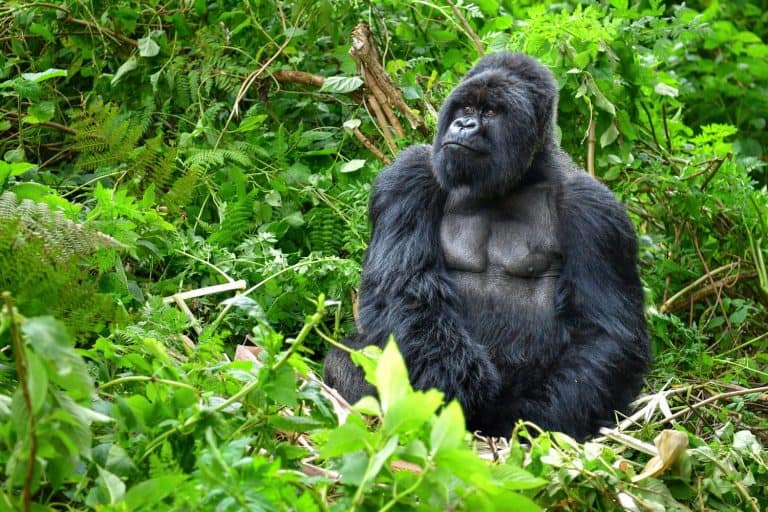
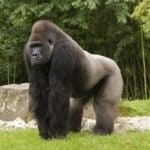
Highland giants, guarded by a silverback
Dylan Walters / Creative Commons

Mountain Gorilla Distribution

Click a location to explore more animals from that region

Endemic Species
Loading map...

Size Comparison

Human 5'8"
Mountain Gorilla 4 ft 11 in

Mountain Gorilla stands at 87% of average human height.

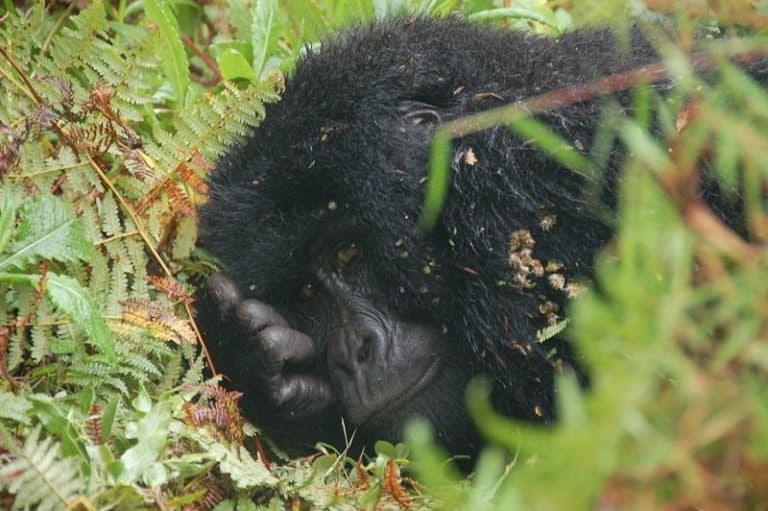
Mountain Gorilla resting

At a Glance

Wild Species
Also Known As Gorilla, Silverback, Ingagi
Diet Folivore
Activity Diurnal+
Lifespan 35 years
Weight 195 lbs
Status Endangered
Did You Know?

Only gorilla taxon restricted to the Albertine Rift's high-elevation forests (Virunga ~2,200-4,300 m; Bwindi ~1,160-2,607 m).

Scientific Classification

The Mountain Gorilla is a subspecies of the Eastern Gorilla, restricted to high-elevation forests in the Albertine Rift. It is a large-bodied great ape with a largely folivorous diet, living in cohesive social groups led by a dominant silverback.

Kingdom
Animalia
Phylum
Chordata
Class
Mammalia
Order
Primates
Family
Hominidae
Genus
Gorilla
Species
Gorilla beringei

Distinguishing Features

  • High-elevation (montane) distribution compared with other gorillas
  • Dense, long, dark fur adapted to cold, wet conditions
  • Robust body size; adult males develop a silver saddle (silverback)
  • Primarily folivorous diet; strong jaws and large molars adapted for tough vegetation
  • Stable social groups with a dominant silverback and strong group cohesion

Physical Measurements

Males and females differ in size

Height
♂ 5 ft 7 in (4 ft 11 in – 5 ft 11 in)
♀ 4 ft 1 in (3 ft 7 in – 4 ft 7 in)
Weight
♂ 430 lbs (300 lbs – 500 lbs)
♀ 187 lbs (154 lbs – 216 lbs)
Top Speed
25 mph
running

Appearance

Primary Colors
Secondary Colors
Skin Type Thick mammalian skin with mostly hairless black face, ears, palms, and soles; long, dense, shaggy guard hair on body adapted to cold montane climates.
Distinctive Features
  • Subspecies of the Eastern gorilla (Gorilla beringei beringei) restricted to the Albertine Rift (Virunga Massif and Bwindi).
  • Very long, dense, insulating fur relative to lowland gorillas; reduced hairlessness in cold, high-elevation habitats.
  • Adult male mean body mass reported ~195 kg; adult female mean body mass ~97 kg (Virunga populations).
  • Robust, barrel-chested build with exceptionally long forelimbs for knuckle-walking and climbing.
  • Large, domed cranium; pronounced sagittal/nuchal crests especially in mature males.
  • Broad, hairless black facial mask with individualized noseprint wrinkle patterns used for identification.
  • Large canines (especially in adult males) and powerful jaw musculature for folivory and display.
  • Dominant male typically shows clear silver saddle across back and hips; females and juveniles remain uniformly dark.
  • Hands and feet adapted for grasping and terrestrial locomotion: opposable thumb and big toe, thickened knuckle pads.
  • Common social structure is cohesive, silverback-led groups; chest-beating and vocalizations are key visual-acoustic displays.
  • High zoonotic disease susceptibility; close human contact is not safe (intensive protection required).

Sexual Dimorphism

Marked size and cranial dimorphism: adult males are roughly twice female mass and develop pronounced crests and canines. Mature males also acquire a gray-silver dorsal saddle ('silverback'), while females remain uniformly dark and more lightly built.

♂
  • Much larger body size and muscle mass; broad shoulders and chest
  • Gray-silver dorsal saddle in mature males (silverback)
  • More pronounced sagittal and nuchal crests; broader skull
  • Larger canines and more robust jaws
  • More extensive display behaviors (chest-beating, charging) used in dominance signaling
♀
  • Smaller, more gracile build with narrower shoulders and chest
  • Uniformly dark pelage without silver saddle
  • Less pronounced cranial crests and smaller canines
  • More subtle display behaviors; typically central in infant care

Did You Know?

Only gorilla taxon restricted to the Albertine Rift's high-elevation forests (Virunga ~2,200-4,300 m; Bwindi ~1,160-2,607 m).

Adult males commonly ~160-195 kg; adult females ~70-90 kg (field/captive morphometrics summarized in primatology references; e.g., Schaller 1963; Groves 2001).

Mountain gorillas are strongly folivorous; many study groups get most of their yearly feeding time from leaves, stems, and pith, with fruit often a small seasonal fraction (e.g., Watts 1984; Ganas et al. 2004).

They build a fresh night nest almost every day; nest counts are a standard way to estimate group size and distribution in surveys.

Group life centers on a dominant "silverback," who mediates conflicts, leads travel, and provides protection; multi-male groups also occur (Robbins 1995; Robbins et al. 2004).

Total mountain gorilla population was estimated at 1,063 individuals from the 2018 Virunga & Bwindi censuses-rare growth for a great ape, but still a small, intensively managed population (Hickey et al. 2018; Roy et al. 2021).

Because they share human respiratory pathogens easily, strict tourism rules (distance limits, health checks) are part of conservation-disease is a major risk in such a small population (e.g., Spelman et al. 2013).

Unique Adaptations

  • Cold montane living: long, dense pelage compared with lowland gorillas helps buffer cold and wet conditions typical of cloud-forest and bamboo zones.
  • Large-bodied, lowland-to-highland energy strategy: robust size and a highly fermentative gut suit a high-fiber, leaf/stem-heavy diet (folivory supported by field feeding ecology; Watts 1984).
  • Flexible foraging across vegetation zones: in the Virungas, groups use bamboo zones and other high-elevation montane forest habitats; in Bwindi, they exploit a diverse mid-elevation montane flora-showing local ecological specialization within the subspecies.
  • Powerful jaw/teeth suited to tough vegetation: gorillas have large molars and strong masticatory muscles for processing fibrous stems and pith-key to mountain gorilla diets in many seasons (general gorilla functional morphology; Schaller 1963; Groves 2001).

Interesting Behaviors

  • Silverback-led cohesion: groups typically travel, feed, and rest together; the silverback often breaks up aggression and coordinates movement (Robbins 1995).
  • Chest-beating displays: used in long-range signaling and social assessment; males also use hoots, roars, and vegetation slaps during displays (Schaller 1963).
  • Daily nesting: individuals construct day nests for resting and a separate night nest; nest sites provide key ecological and survey data (standard method in great-ape monitoring).
  • Gentle social bonds: extensive grooming, play among juveniles, and close mother-infant contact; infants ride ventrally then dorsally as they grow (Schaller 1963).
  • Dietary tracking of plant phenology: groups shift feeding effort among available herbs, leaves, and seasonal resources; travel distances can be relatively short when herbaceous foods are abundant (Watts 1984).
  • Male dispersal and group change: some males emigrate and may found new groups; takeovers can occur, sometimes increasing infanticide risk in great apes (documented for gorillas; Robbins et al. 2004).

Cultural Significance

Mountain gorillas (Gorilla beringei beringei) are national symbols and conservation flagships in Rwanda, Uganda, and the DRC. Rwanda's Gorilla Naming Ceremony links naming newborns to community pride, tourism, and protection. 1900s collecting and Karisoke research by Dian Fossey raised awareness and shaped protection and veterinary care for great apes.

Myths & Legends

'The Voyage of Hanno' (5th century BCE) tells of Carthaginian sailors meeting hairy, strong 'wild people.' Europeans linked this tale to gorillas, showing how the name started, not specific to mountain gorillas (Gorilla beringei beringei).

Albertine Rift traditions often call mountain gorillas (Gorilla beringei beringei) and other great apes "people of the forest," creating taboos and respect against killing them—a theme across Central African stories.

In conservation stories, famous mountain gorilla silverbacks like Digit and Titus became symbols in local and global tales about leadership, loss, and survival in the Virunga and Bwindi families.

Conservation Status

EN Endangered

Facing a very high risk of extinction in the wild.

Population Increasing

Protected Under

  • CITES Appendix I (Gorilla beringei)
  • Protected-area coverage: Virunga National Park (DRC), Volcanoes National Park (Rwanda), Mgahinga Gorilla National Park (Uganda)
  • National wildlife protection laws of the Democratic Republic of the Congo, Rwanda, and Uganda (strict protection of great apes and their habitats)

Life Cycle

Birth 1 infant
Lifespan 35 years

Lifespan

In the Wild
20–45 years

Reproduction

Mating System Polygyny
Social Structure Harem Based
Breeding Pattern Long Term
Fertilization Internal Fertilization
Birth Type Internal_fertilization

Stable one- or multi-male groups are led by a dominant silverback who mates with several females; females may transfer between groups. Copulation involves internal fertilization; gestation ≈257 days and interbirth intervals average ~4 years.

Behavior & Ecology

Social Troop Group: 10
Activity Diurnal, Matutinal, Vespertine
Diet Folivore Wild celery (Peucedanum linderi)

Temperament

Generally calm and tolerant within groups; low-intensity aggression dominates daily interactions.
Dominant silverback uses ritualized displays (charge, chest-beat) to deter threats and stabilize cohesion.
Females typically disperse; males may emigrate or remain as subordinate "blackbacks" in natal groups.
Typical group size ~10; observed range 2-65 in Virunga long-term monitoring (Robbins et al., 2004; Gray et al., 2013).
Daily activity budget centers on morning/evening feeding with midday resting; largely folivorous reduces feeding competition (Fossey, 1983; Robbins & McNeilage, 2003).
Home ranges are relatively small (~3-15 km2) and daily travel often ~0.5-2 km/day in montane habitat (Fossey, 1983; Watts, 1998).
Life history is slow: gestation ~8.5 months; interbirth interval commonly ~4 years in the wild (Watts, 1991; Robbins et al., 2006).
Longevity: typically ~35-40 years in the wild; individuals can exceed ~50 years in captivity (Fossey, 1983; Smithsonian/NZP records).

Communication

grunts Contact/foraging
belch vocalizations Contented feeding/rest
hoots Group coordination/alarm
barks Alarm/threat
roars High-arousal threat
screams Fear/aggression
whimpers/whines Distress/submission
chest beating Long-range display
ground slaps and vegetation thrashing Threat/intimidation
tactile grooming and resting contact Bond maintenance
embraces and muzzle-to-muzzle contact Reassurance/affiliation
facial expressions Play face, bared-teeth
gestures Reach, push, guide) and body postures (dominance/submission
spatial positioning and following behavior for cohesion and leadership cues

Habitat

Biomes:
Tropical Rainforest Alpine Wetland
Terrain:
Mountainous Volcanic Hilly Valley
Elevation: 3805 ft 9 in – 14107 ft 7 in

Ecological Role

Large-bodied primary consumer (folivore) and ecosystem engineer in Albertine Rift montane forests.

Strong top-down effects on understory vegetation via selective herbivory (shaping plant community structure and regeneration) Nutrient cycling through high-volume dung deposition and redistribution of nutrients along daily travel routes and nesting areas Seed dispersal for the limited set of fruiting plants consumed (generally minor compared with lowland gorillas but still present when fruit is eaten) Physical habitat modification (trail creation, localized trampling, and vegetation breakage) that influences microhabitats and access routes for other animals

Diet Details

Other Foods:
Herbaceous plant parts Wild celery Stinging nettle Bedstraw Thistles Bamboo shoots Vines and shrubs Roots Fruits +3

Human Interaction

Domestication Status

Wild

Mountain gorilla (Gorilla beringei beringei) has never been domesticated; it is a wild great-ape subspecies. Some groups in the Virunga Massif and Bwindi are used to people for research and controlled ecotourism. Habituation lets people get closer but is not domestication and raises disease and poaching risks.

Danger Level

Moderate
  • Physical injury from defensive or protective aggression (charges, bites) if humans approach too closely, surround individuals, or threaten infants; severe trauma is possible due to large body mass and canine teeth.
  • Zoonotic disease transmission in close-contact settings (especially respiratory pathogens) affecting both humans and gorillas; tourism/research interfaces are managed specifically to reduce this risk.
  • Indirect risk during law-enforcement encounters (e.g., armed poachers vs. rangers) in gorilla habitat rather than from gorillas themselves.

As a Pet

Not Suitable as Pet

Legality: Keeping a Mountain Gorilla (Gorilla beringei beringei) as a pet is illegal almost everywhere. CITES Appendix I bans trade; Rwanda, Uganda, DR Congo and most countries ban capture or private ownership. Possession is wildlife trafficking and a serious crime.

Care Level: Expert Only

Purchase Cost:
Lifetime Cost: $800,000 - $3,000,000

Economic Value

Uses:
Ecotourism and protected-area revenue Local employment and community revenue-sharing linked to parks Research and education value Ecosystem services and biodiversity conservation value Non-market cultural and national-heritage value Illegal wildlife trade (negative/illicit value; not a legitimate economic sector)
Products:
  • high-value gorilla tracking permits and associated tourism services (guiding, lodging, transport)
  • park fees supporting ranger salaries, veterinary interventions, and habitat protection
  • jobs and enterprise opportunities in buffer communities (porters, guides, crafts, hospitality)
  • scientific outputs (long-term datasets, publications) and conservation funding leverage

Relationships

Ecological Equivalents 5

Animals that fill a similar ecological role in their ecosystem

Grauer's gorilla Gorilla beringei graueri Closest ecological analog is the mountain gorilla: a large, mostly leaf-eating gorilla living in tight family groups led by a silverback. Grauer's gorilla lives at lower elevations and eats more fruit. Mountain gorillas (Gorilla beringei beringei) occur in Albertine Rift forests at 2,200–4,300 m.
Chimpanzee
Chimpanzee Pan troglodytes Occurs in the same Albertine Rift forests and uses similar nests; eats more fruit, sometimes hunts, and forms changing (fission–fusion) groups, unlike gorillas' steadier family groups.
Angolan colobus Colobus angolensis Tree-dwelling folivore in the same montane forests, feeding on leaves and young shoots. It uses hindgut fermentation (unlike gorillas), is much smaller, and lives in the canopy while gorillas are mostly on the ground.
L'Hoest's monkey Allochrocebus lhoesti A common Albertine Rift forest primate that lives on the ground and under the forest canopy, sharing travel routes, some plant foods, predators, and human threats; therefore it is a useful community ecological relative even when diets differ.
Gelada Theropithecus gelada Convergent analogue (not sympatric): another high-elevation, large-bodied primate with a heavy reliance on herbaceous vegetation. Useful for comparing primate adaptations to cold, high-altitude conditions and energetics, though geladas are primarily grass-eaters in Afro-alpine grasslands rather than forest folivores (comparative primate ecology).

Big yet gentle, fierce yet compassionate, the mountain gorilla is an interesting contrast of extremes.

Deep within the cloud forests of central Africa, one of humanity’s closest living relatives lives peacefully among the trees. The mountain gorilla is a highly intelligent animal with a rich emotional and social life threatened by human encroachment and climate change. These giants of the forest offer insight into human evolution and astonish us with their ability to communicate – even learning sign language and developing large vocabularies when taught.
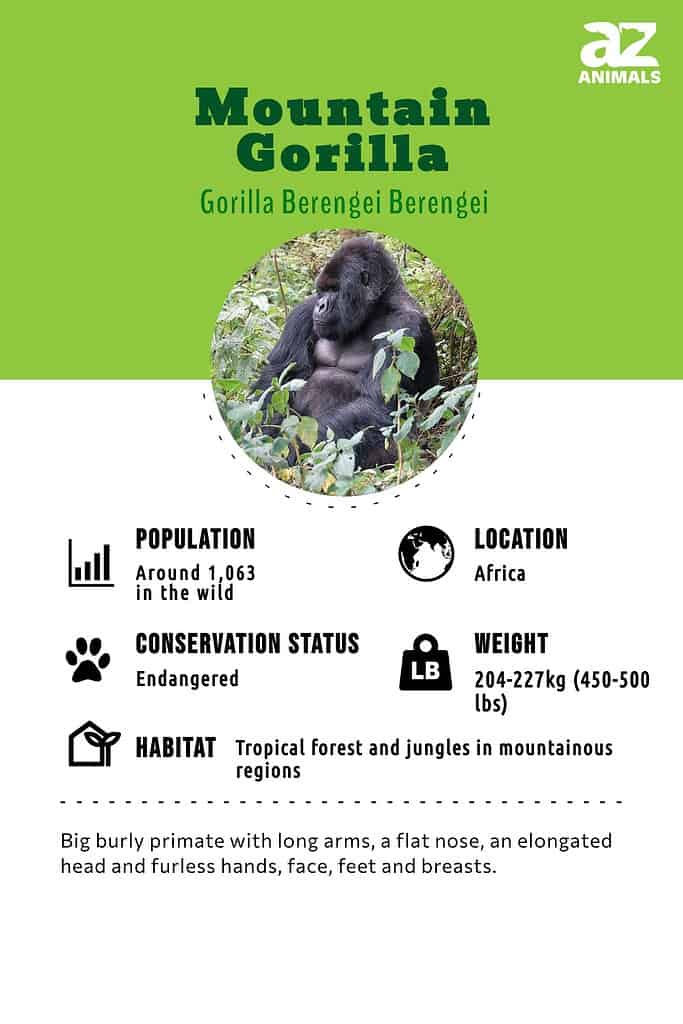
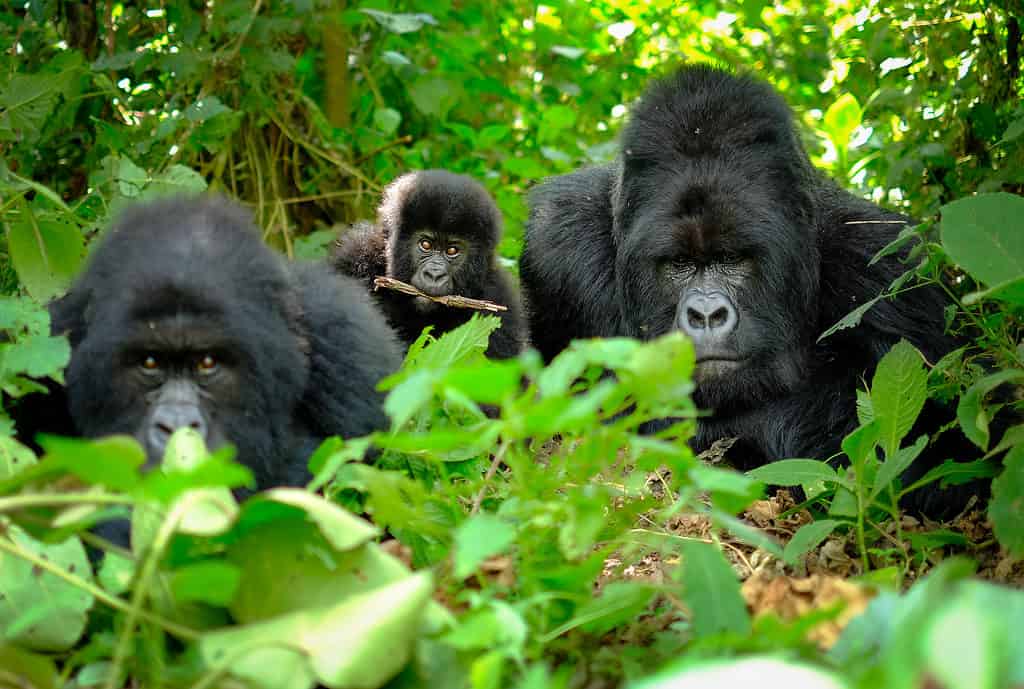
Family of gorillas

Gorillas are the biggest primates on earth and share 98.4% of their DNA with humans.

Facts About Mountain Gorillas

  • Based on one metric of genome size, gorillas share around 98.4 percent of the same DNA as humans. This is only slightly lower than the 98.7 percent similarities between chimpanzees and humans.
  • Individual mountain gorillas can be identified by the shape and patterns of their nose, just as humans can be identified by their fingerprints. No two gorillas share the exact same patterns.
  • Due to the silver streak of hair along the backs of adult mountain gorillas, they are also commonly known as silverbacks.
  • Baby mountain gorillas cling to their mother for the first two or three years of its life.
  • Scent is an important aspect of gorilla communication. Smells can signal nearby threats from predators or the reproductive availability of females.

Scientific Name and Species
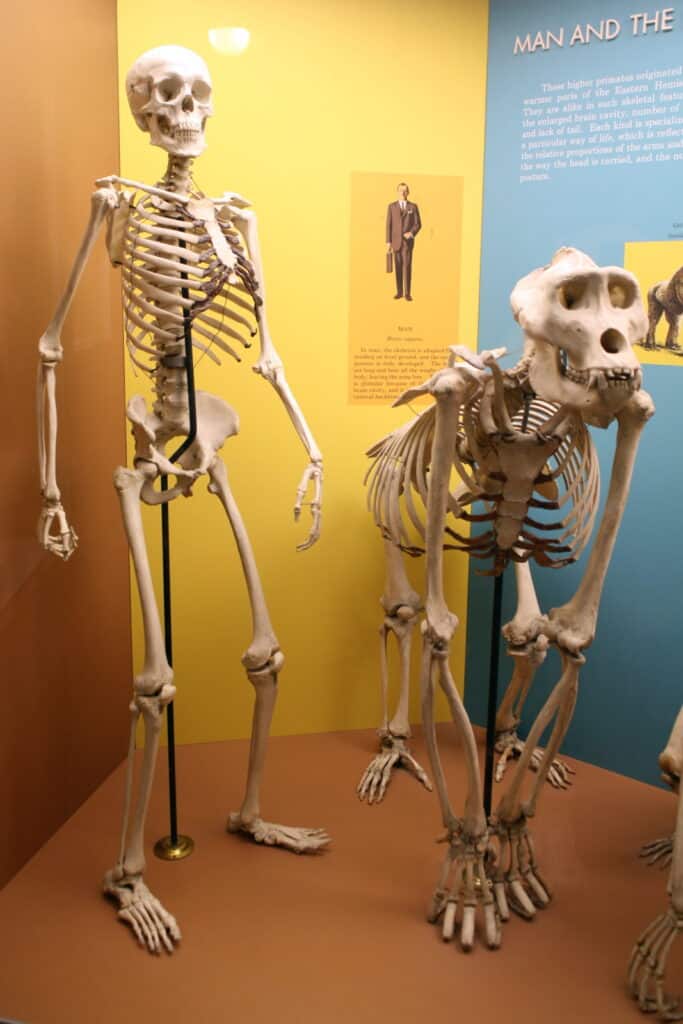
Not the left, a human Skelton, on the right a gorilla Skelton. Three walls (L-r, brown,yellow,blue) are behind the display which appears to be in a museum. On the yellow wall is a poster with a photograph of a male presenting human in a business suit (jacket, trousers,tie) carrying a brief case in his right hand,, with indecipherable verbiage underneath. The blue wall has raised white letters that spell MAN AND THE - rest out of frame. A paragraph of white letters below with information regarding the display.

Skeletons of humans and gorillas illustrate commonalities between the two species.

The scientific name of the mountain gorilla is Gorilla beringei beringei. It is actually one of two subspecies of the eastern gorilla — the other being the eastern lowland gorilla or Grauer’s gorilla. Although the same species, they are separated by geographical preferences and tend not to interbreed.

The closest related living species is the western gorilla. It was once classified as a third subspecies within the eastern gorilla group, but genetic analysis revealed enough of a difference to justify a separate species designation.


The mountain gorilla belongs to the same family, Hominidae, as the chimpanzees, orangutans, and humans, making it a somewhat distant cousin to us. Although it is difficult to give an exact date, the common ancestors of humans and gorillas appeared to have split around nine to ten million years ago. This is the approximate time when the gorilla and human evolutionary lineages diverged.

Evolution
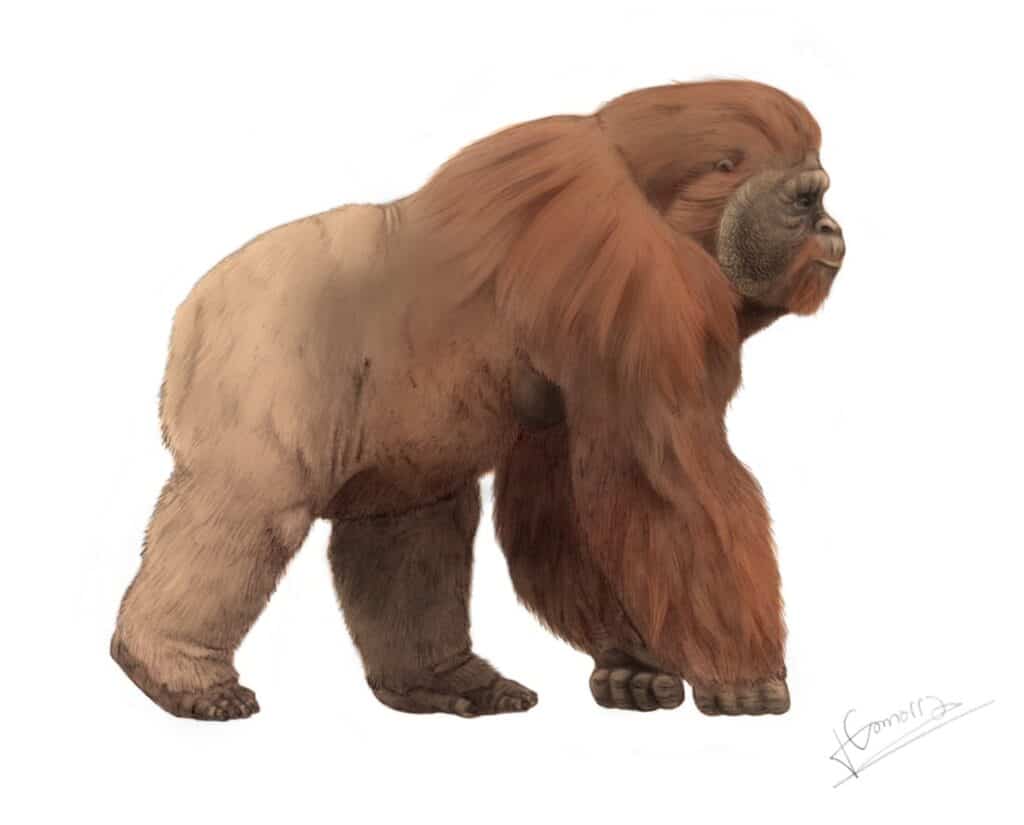
Gigantopithecus

Gigantopithecus was a genus of great apes that grew up to 3 meters high.

According to fossil records, the apes of Hominidae appeared in Africa about 25 million years ago. The gibbon was the first ape to diverge around 18 million years ago. Gibbons and the great apes were already different animals than monkeys – primates that had kept their long tails.

The next ape to diverge was the orangutan around 14 million years ago. Apes were numerous in Africa during the late Miocene, 11 million years ago. The Gigantopithecus was a genus of great apes that grew up to 3 meters high. Many believe Gigantopithecus to be the ancestor of gorillas but it has not been proven. At this point, humans, Chimpanzees, and gorillas shared a common lineage that did not include orangutans.

Gorillas diverged from the other hominids about 11 – 7 million years ago. As other great apes became extinct – gorillas became the largest primate on earth.

Appearance
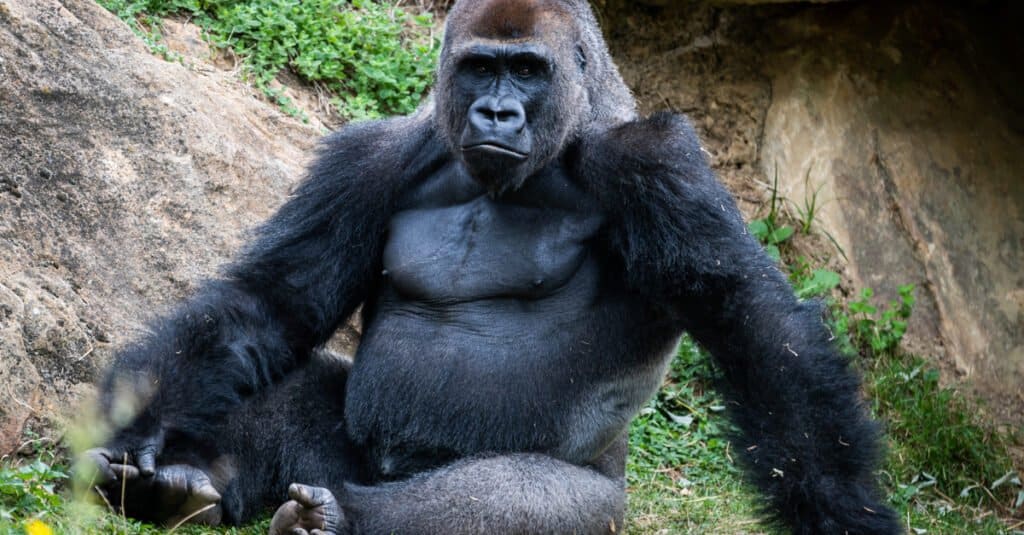
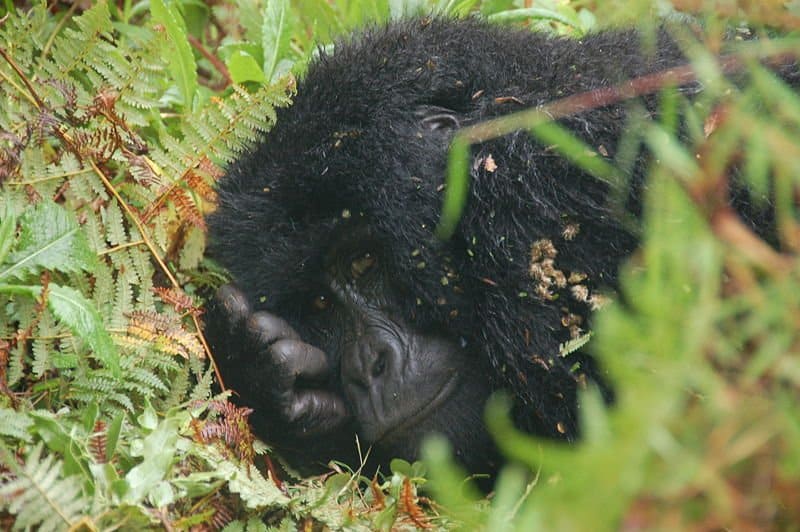
Gorilla bite force - gorilla resting

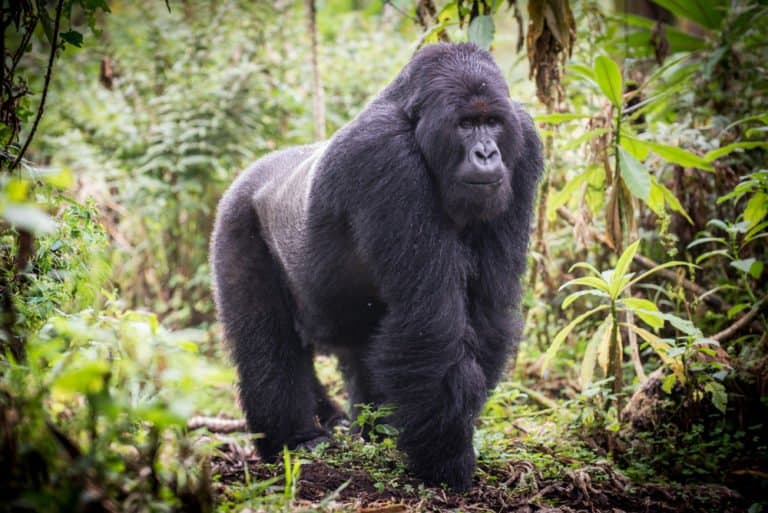
Mountain gorillas can grow to six feet tall and weigh up to 500 pounds.

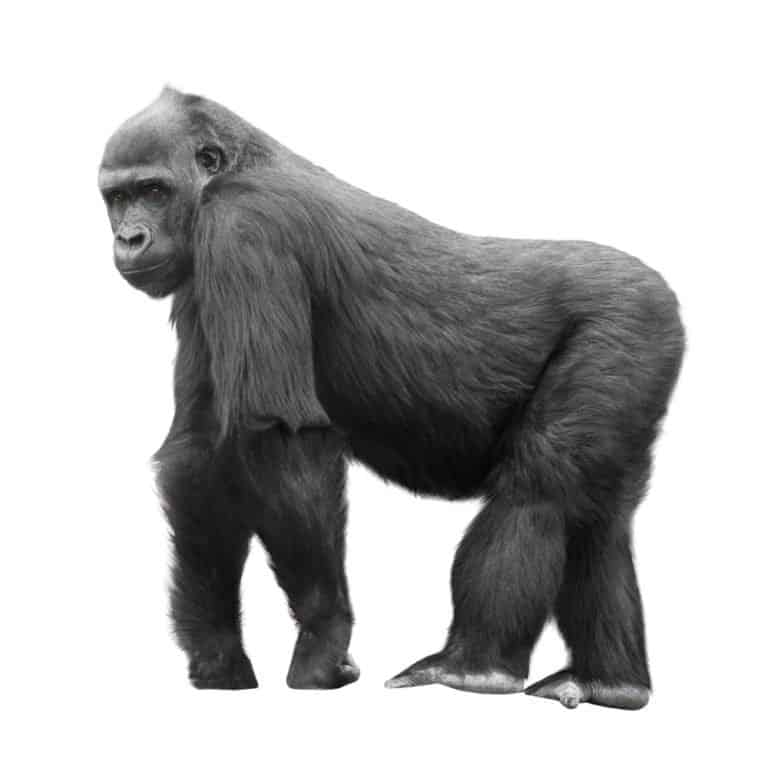
The mountain gorilla is a big, burly primate with long arms, a flat nose, an elongated, almost cone-shaped head, and a big, swollen belly. Its hair is almost completely black or brownish in color, but older males also have a silver or white streak running along the back. The feet, hands, face, and breasts are completely bald.

Compared to the closely related eastern lowland subspecies, the mountain gorilla has longer hair, shorter arms, and a bigger physique. This enables them to live in colder conditions that sometimes drop below freezing at night.

The typical mountain gorilla is around four to six feet tall when standing on its two legs. This is about the size of a typical person. However, due to their massive bulk, they can weigh 300 to 500 pounds. A male gorilla is typically larger than a female and weighs up to twice as much. Altogether, the mountain gorilla is the second-largest primate in the world, behind only the closely related eastern lowland gorilla.

Behavior
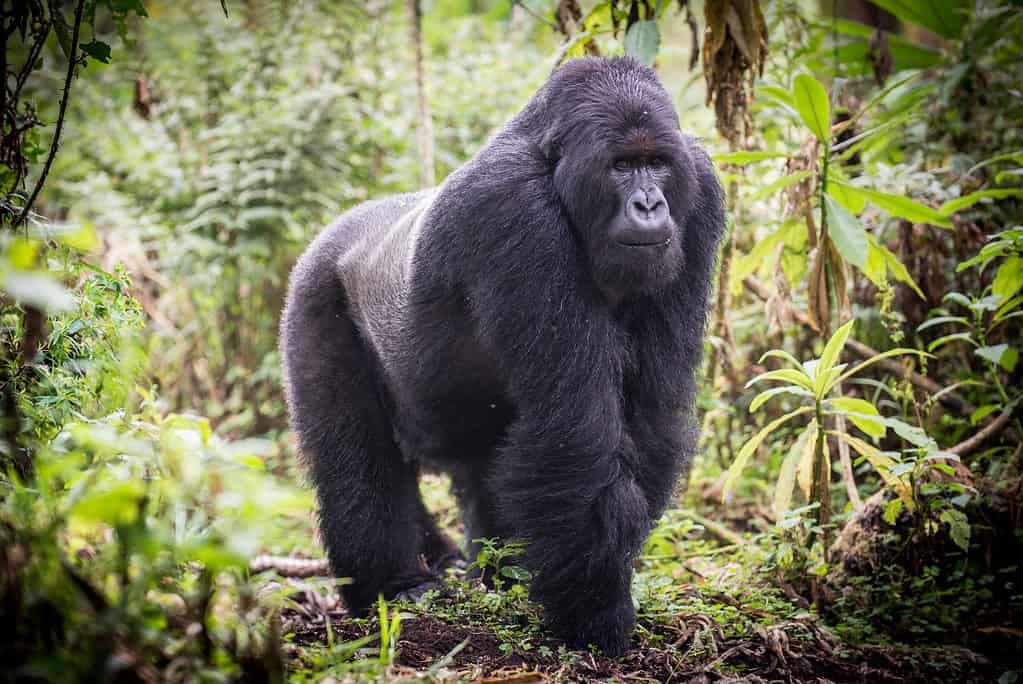
Gorillas travel by knuckle-walking but are also capable of walking on two legs for a short time.

The mountain gorilla has a unique method of locomotion known as knuckle-walking. This means that it walks around on all four limbs with its knuckles curled up on the ground. However, it is also capable of walking on two legs for a limited time. Its hands are very dexterous and capable of grasping, tearing, and pulling with precision only exceeded by human beings.

Like other great apes, the mountain gorilla is considered to be one of the most intelligent creatures on the planet. It is believed that they are capable of self-reflection, tool use, and careful planning. Intense studies of captive gorillas such as the well-known ‘Koko’ have revealed that individuals can understand and deploy sign language with some proficiency. They are also highly social creatures that can laugh, grieve, and develop strong attachments to others. Their social behavior is complex and sophisticated. Grooming is an important aspect of social bonding. Not only does it keep the gorillas free of dirt and parasites, but it also reinforces important relationships within the larger group.

Gorillas live in small groups called a troop that can sometimes exceed 20 individuals. These groups are composed of a single dominant male, a number of females, and young offspring. The dominant male is an older adult who provides organization and protection to all of the members. He has nearly exclusive breeding rights with the females. This breeding configuration is known as a harem. Sometimes a few younger males (usually the son or brothers of the leader) may accompany the group, but they are subservient to the dominant male. Subservient males are more likely to disperse from the troop if they cannot achieve reproductive success. They may go off on their own or form temporary all-male bachelor groups.

Gorillas have a rather calm and mellow personality most of the time, but if they perceive a threat, then the males can become quite aggressive by pounding the chest and making a terrifying roar. To convey their complex desires and emotions, mountain gorillas have around 25 different types of vocalizations, expressing everything from alarm to curiosity. And just like humans, body posture and eye contact help to facilitate communication.

The gorilla is a largely terrestrial creature that sticks to the land, but it does have a limited ability to climb into trees that will support its weight. Due to their smaller size, young gorillas are somewhat adept tree climbers. Both adults and children can sleep in nests on the ground or in the trees. The mountain gorilla is most active during the day and sleeps at night. It also has intermittent breaks during the day for rest and playtime. Altogether, the entire range of a single group can encompass up to 16 square miles.
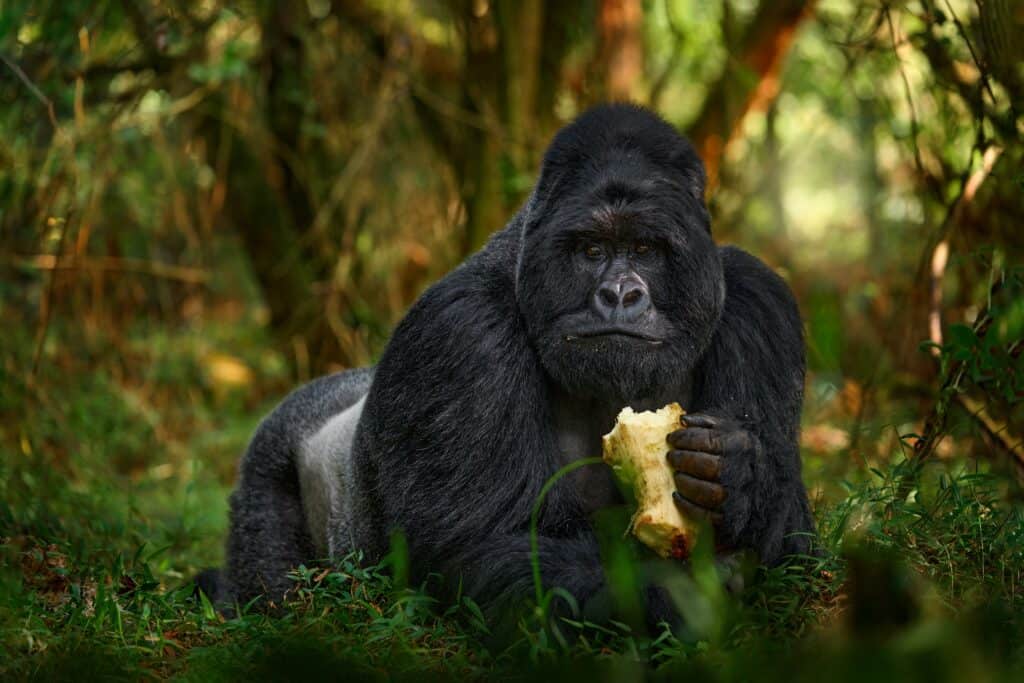
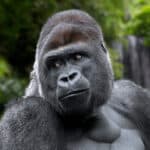
Gorilla - wildlife forest portrait

Mountain gorillas prefer mountain forest habitats between 8,000 and 13,000 feet up.

Habitat

The mountain gorilla inhabits a very narrow range within central Africa. The main population centers are found in the Mgahinga Gorilla National Park and the Bwindi Impenetrable National Park in Uganda, as well as the Volcanoes National Park in Rwanda, and the Virunga National Park in the Democratic Republic of Congo. As the name implies, the subspecies prefer the forested regions of mountain habitats between 8,000 and 13,000 feet up. Their most common habitats include the rain forest, bamboo forest, subalpine grasslands, and mixed forests.

Diet
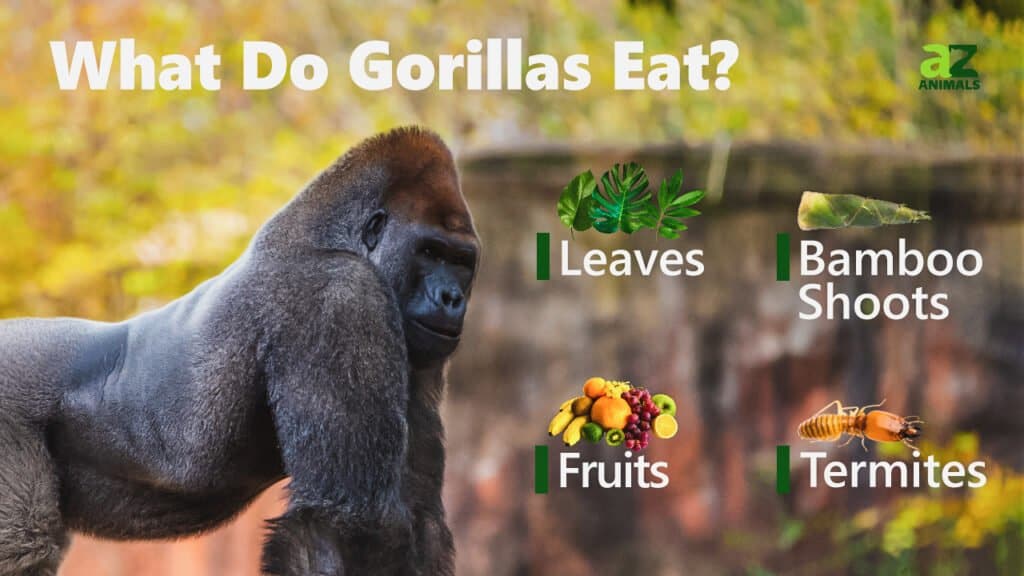
What Do Gorillas Eat
Gorillas eat leaves, bamboo shoots, fruits, and termites.

Mountain gorillas feast on several different tasty vegetation, including roots, fruit, flowers, leaves, and tree bark. Although largely herbivorous, they have been known to eat insects if no other food options are around. The exact dietary composition depends on the variety of local plants and trees available.

The gorillas spend around a quarter of their day munching on up to 75 pounds of food. With their long intestines and unique molars, they are specially adapted for eating and breaking down plant matter. Gorillas also play an important part in dispersing seeds around the environment.

Predators and Threats
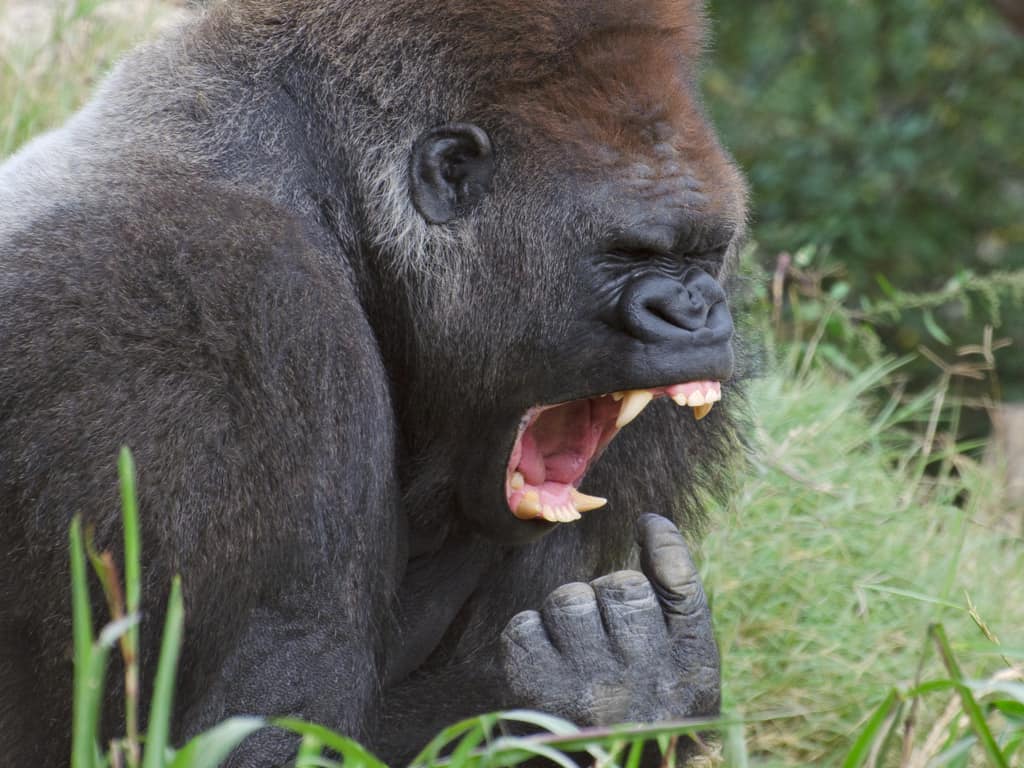
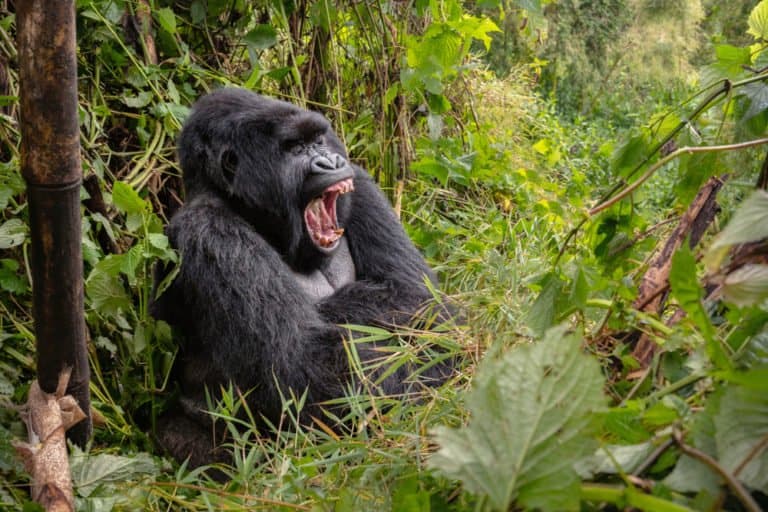
Gorilla - Gorilla Howling and Showing Teeth

With few natural predators in the wild – humans are the greatest threat to the mountain gorilla.

Mountain gorillas, living under the protection of the troop, have few natural predators in the wild. Lone gorillas face the possibility of becoming prey for animals such as leopards and crocodiles if they become separated from the group.

With few natural predators, the greatest threat to their survival has been human activity, including warfare, illegal hunting, and habitat loss from mining, agriculture, and industry. A type of agricultural practice known as slash and burn, in which farmers clear land by burning away the vegetation, is particularly detrimental to the mountain gorilla’s habitat. And because humans and gorillas are so similar, it is not uncommon for diseases to make the leap between species during moments of close contact. Climate change will further exacerbate the threat of a changing environment to which the gorilla will need to adapt.

Due to the fragile social organization of the mountain gorillas, the death of the leading male can have a profound effect on the group and unravel the entire social structure. If there is no suitable replacement for a leader immediately available, then the group may split apart permanently.

Reproduction, Babies, and Lifespan
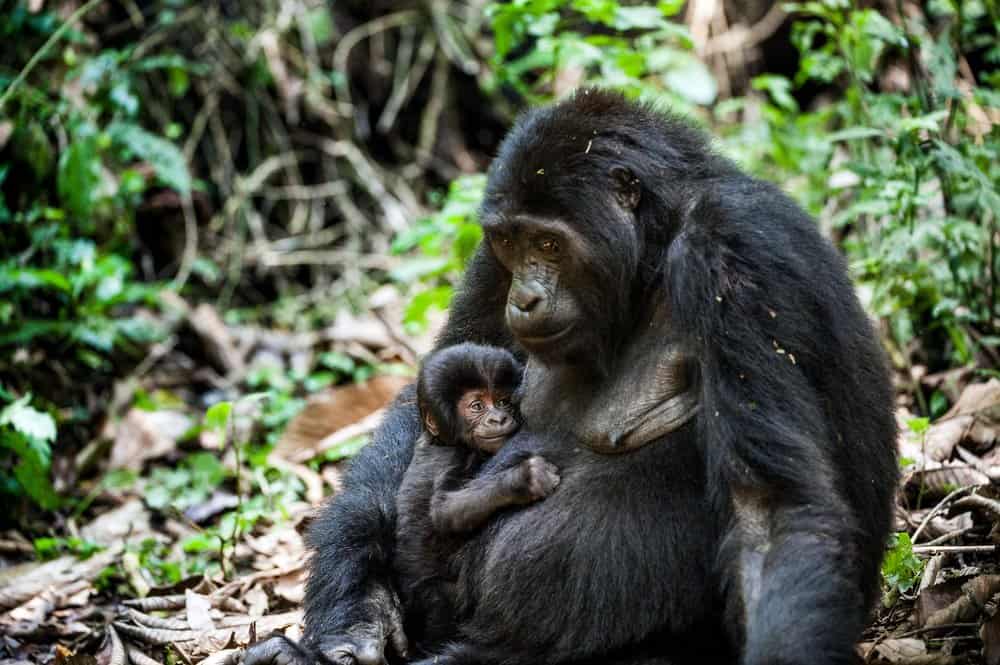
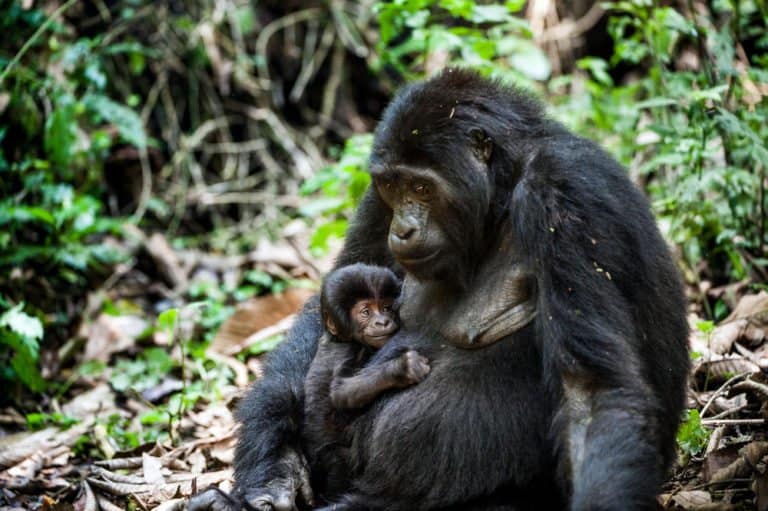
Mountain Gorilla (Gorilla beringei beringei) - mountain gorilla with baby in forest

Female mountain gorillas can only give birth once every few years.

Gorilla reproduction shares many aspects in common with human reproduction. Females have the same nine-month gestation period. They tend to only give birth to a single infant at a time. And they can mate all year round rather than one specific season. However, unlike humans, gorillas can only give birth once every several years due to the longer development times of the offspring and the stress on the mother’s body.

Compared to a more mature gorilla, the newborn is surprisingly minuscule. It only weighs about four pounds out of the womb. From the moment of its birth, a newborn is almost inseparable from its mother, to whom it will cling for the first two or three years of its life. That is also about how long it takes to fully wean the child as well.

For most of its remaining adolescence, a gorilla will begin to learn valuable communication and social skills through frequent playtime such as chasing and wrestling. Nursing and caretaking are the primary responsibility of the mother, but the entire troop shares an interest in raising the child.

Male gorillas start out their adult lives with pure black hair. This characteristic has earned them the name blackbacks. However, they tend to develop a silver streak of hair on their back and hips at around 12 years old. These males are known as silverbacks. They are very protective of their own reproductive success. If a female and her infant join a new group, then the dominant male may kill the child in order to induce the female to breed again, so he can start producing his own children.

It typically takes at least a decade before an individual will reach full sexual maturity. In total, the mountain gorilla can live around 35 years in the wild, but lifespans up to 50 years old have been documented.
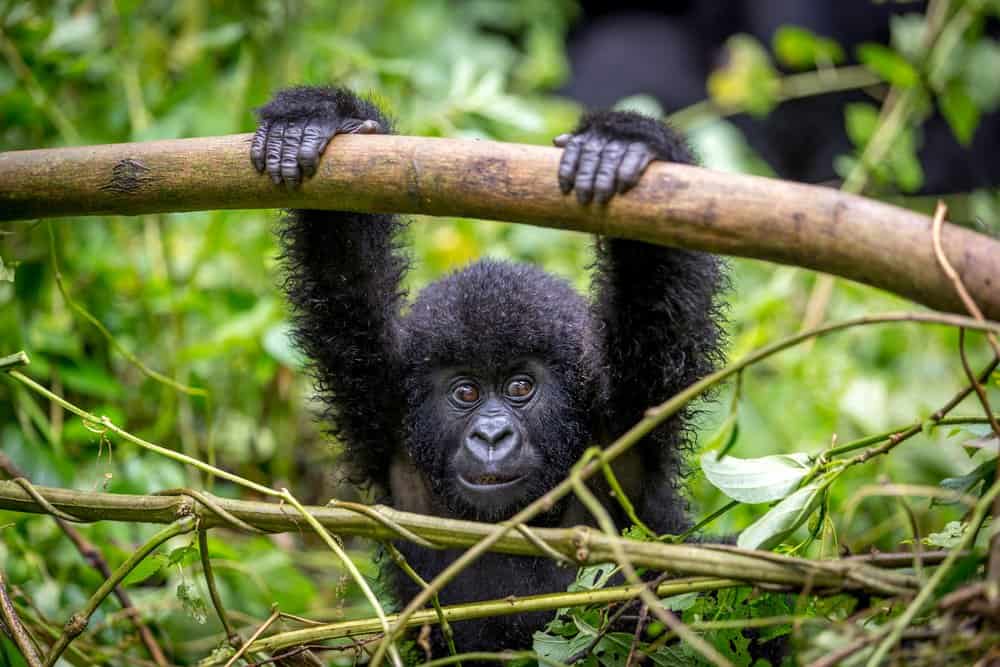
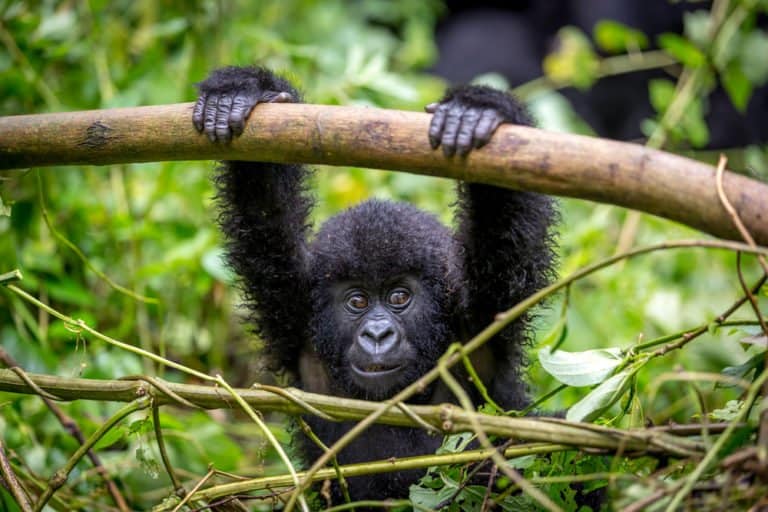
Mountain Gorilla (Gorilla beringei beringei) - baby mountain gorilla on branch

Mountain gorillas weigh around four pounds at birth and are totally dependent on their mothers.

Population

Mountain gorillas were once somewhat widespread across the mountains of central Africa, but population numbers have fallen precipitously since the 20th century. There are approximately a thousand mountain gorillas left in the world (and around 5,000 total members of the eastern gorilla species). Half of them live in the forests of the Virunga.

Thanks to careful conservation efforts, mountain gorilla numbers have shown signs of improving after the numbers fell to critically endangered levels. The International Union for the Conservation of Nature (IUCN) Red List now lists them as just endangered. However, they remain at constant risk of losing ground to the encroaching threats. Learn more about the most endangered species in the world here.

A more stable political climate in the region would dramatically improve the prospects for the long-term survival of the subspecies — and so would attempts to stop human encroachment and poaching in the region. African governments have begun to take a more active role in the preservation of their native species, giving them hope for a possible future.
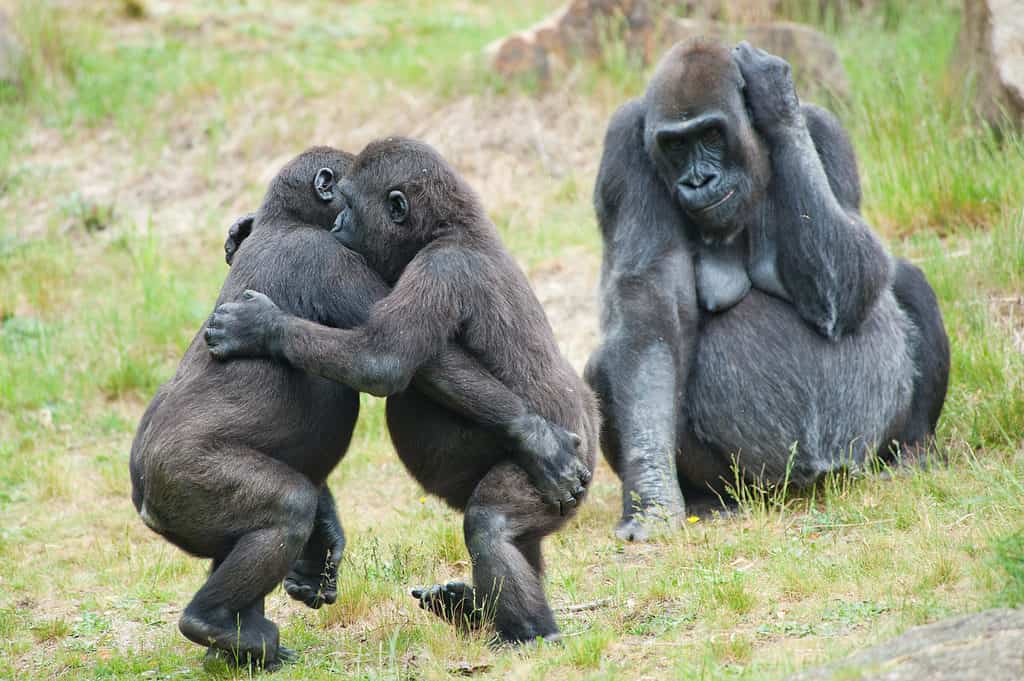
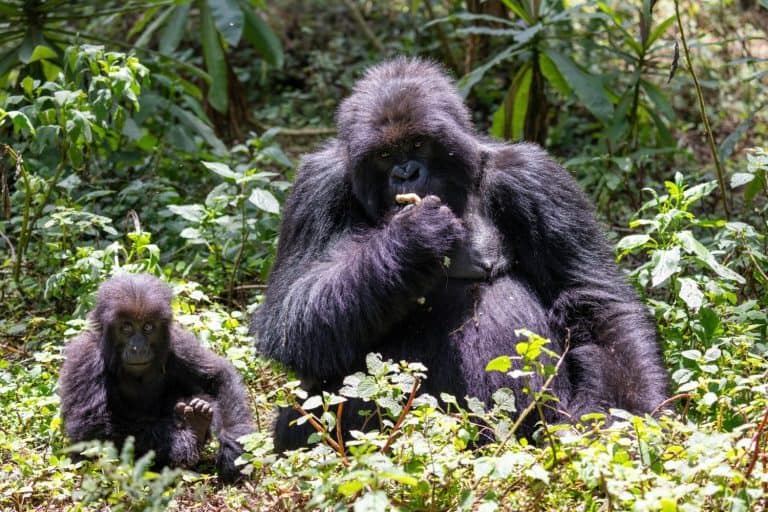
Two baby gorillas

Gorillas live in extended family groups and remain in their mother’s care for at least three years.

View all 330 animals that start with M

Sources

  1. David Burnie, Dorling Kindersley (2011) Animal, The Definitive Visual Guide To The World's Wildlife / Accessed February 4, 2009
  2. Tom Jackson, Lorenz Books (2007) The World Encyclopedia Of Animals / Accessed February 4, 2009
  3. David Burnie, Kingfisher (2011) The Kingfisher Animal Encyclopedia / Accessed February 4, 2009
  4. Richard Mackay, University of California Press (2009) The Atlas Of Endangered Species / Accessed February 4, 2009
  5. David Burnie, Dorling Kindersley (2008) Illustrated Encyclopedia Of Animals / Accessed February 4, 2009
  6. Dorling Kindersley (2006) Dorling Kindersley Encyclopedia Of Animals / Accessed February 4, 2009
  7. David W. Macdonald, Oxford University Press (2010) The Encyclopedia Of Mammals / Accessed February 4, 2009
Lisha Pace

About the Author

Lisha Pace

After a career of working to provide opportunities for local communities to experience and create art, I am enjoying having time to write about two of my favorite things - nature and animals. Half of my life is spent outdoors, usually with my husband and sweet little fourteen year old dog. We love to take walks by the lake and take photos of the animals we meet including: otters, ospreys, Canadian geese, ducks and nesting bald eagles. I also enjoy reading, discovering books to add to my library, collecting and playing vinyl, and listening to my son's music.

Thank you for reading! Have some feedback for us?


Mountain Gorilla FAQs (Frequently Asked Questions)

Mountain gorillas are specifically adapted for the colder and highly elevated mountain regions of Africa.