
N
Species Profile

Nurse Shark

Ginglymostoma cirratum

The reef's gentle vacuum hunter
Divepic/ via Getty Images

Nurse Shark Distribution

Click a location to explore more animals from that region

This map shows coastal regions where Nurse Shark are found.

Loading map...
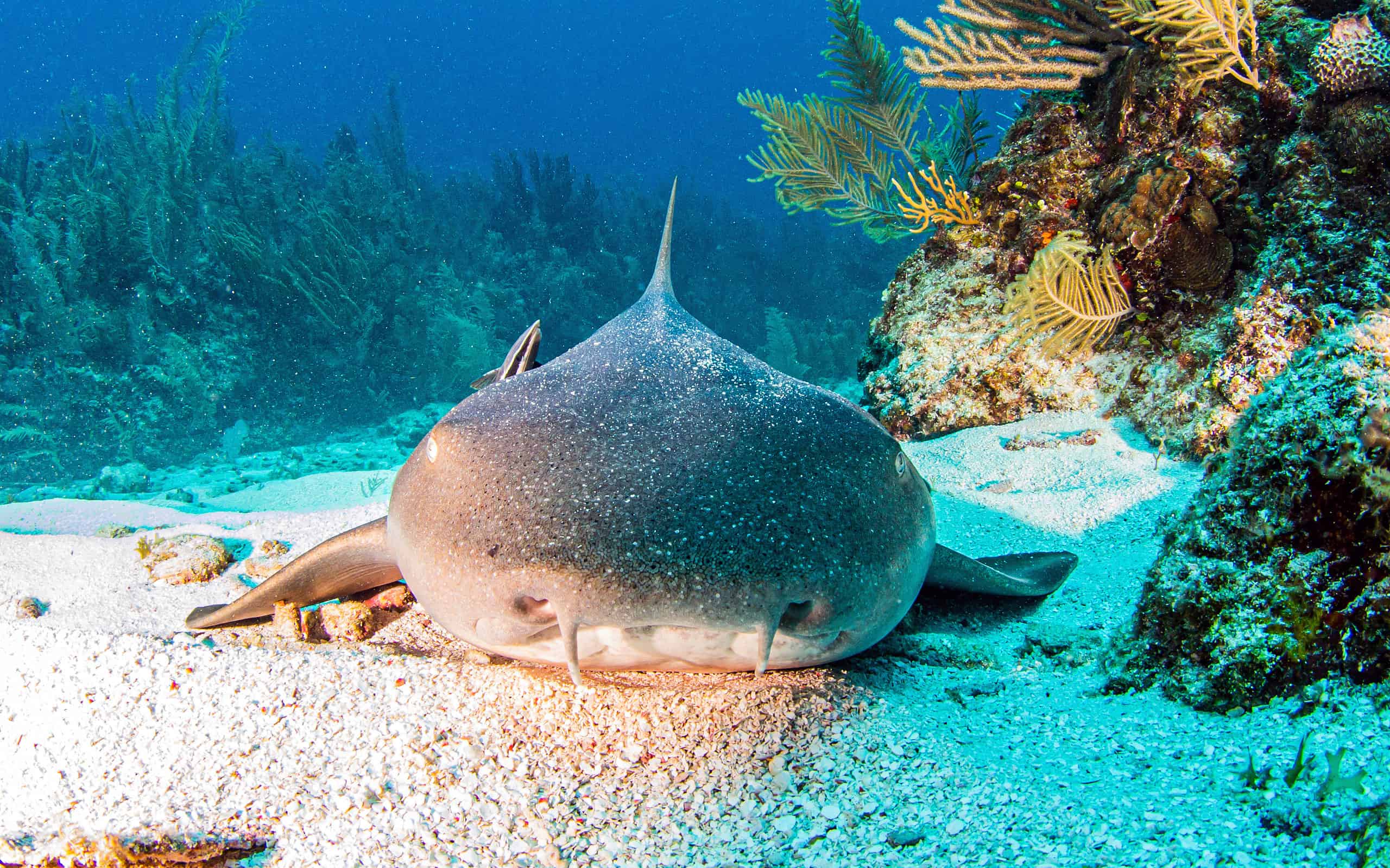
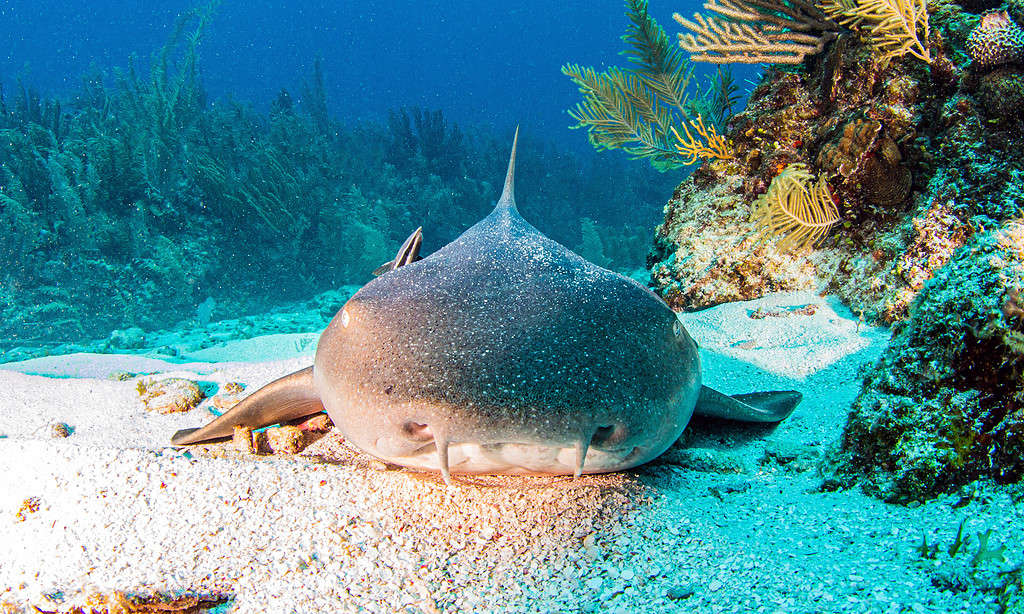
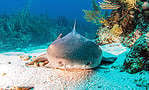
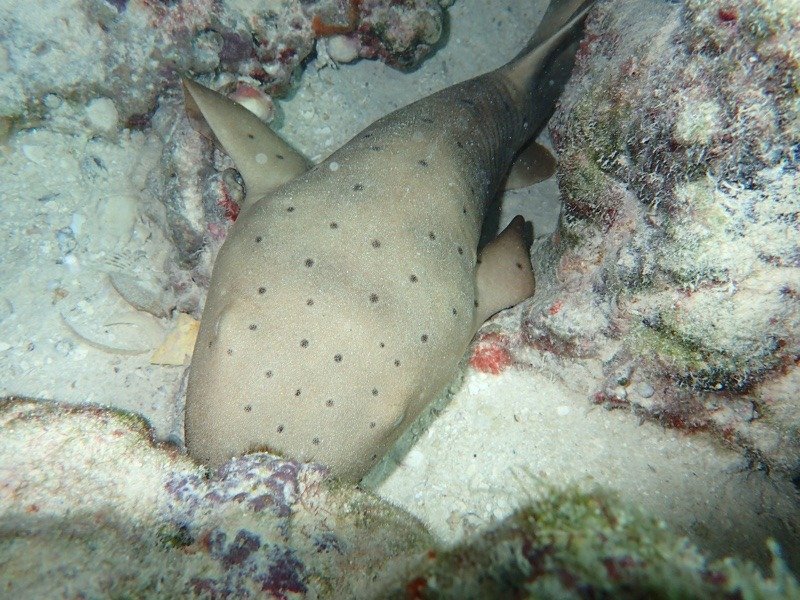
Picture shows a nurse shark during a scuba dive at Belize

At a Glance

Wild Species
Also Known As Tawny nurse shark, Atlantic nurse shark, Caribbean nurse shark, tiburón nodriza, requin nourrice
Diet Carnivore
Activity Nocturnal+
Lifespan 25 years
Weight 110 lbs
Status Vulnerable
Did You Know?

Size: commonly ~2.1-2.7 m TL; maximum reported 3.08 m TL (Florida Museum/FishBase).

Scientific Classification

A large, bottom-associated carpet shark of the western Atlantic and eastern Pacific, known for its docile demeanor, suction-feeding, and habit of resting in groups during the day.

Kingdom
Animalia
Phylum
Chordata
Class
Chondrichthyes
Order
Orectolobiformes
Family
Ginglymostomatidae
Genus
Ginglymostoma
Species
Ginglymostoma cirratum

Distinguishing Features

  • Broad, rounded head with small mouth set well forward and conspicuous nasal barbels
  • Two similarly sized dorsal fins set far back on the body (carpet-shark silhouette)
  • Bottom-resting behavior; often seen piled in groups under ledges/overhangs
  • Suction-feeding on benthic prey (crustaceans, mollusks, small fishes)

Physical Measurements

Males and females differ in size

Length
8 ft 2 in (6 ft 7 in – 9 ft 10 in)
8 ft 2 in (7 ft 7 in – 10 ft 1 in)
Weight
154 lbs (88 lbs – 243 lbs)
198 lbs (110 lbs – 243 lbs)
Top Speed
3 mph
burst swimming

Appearance

Primary Colors
Secondary Colors
Skin Type Thick, tough skin with abrasive dermal denticles (sandpaper-like), typical of carpet sharks.
Distinctive Features
  • Broad, blunt head with small eyes and well-developed spiracles behind the eyes.
  • Distinct nasal barbels at the nostrils; a key nurse-shark identifier.
  • Subterminal mouth with suction-feeding adaptations; can generate strong suction to extract prey.
  • Two dorsal fins similar in size set far back on the body; large pectoral fins for bottom-resting.
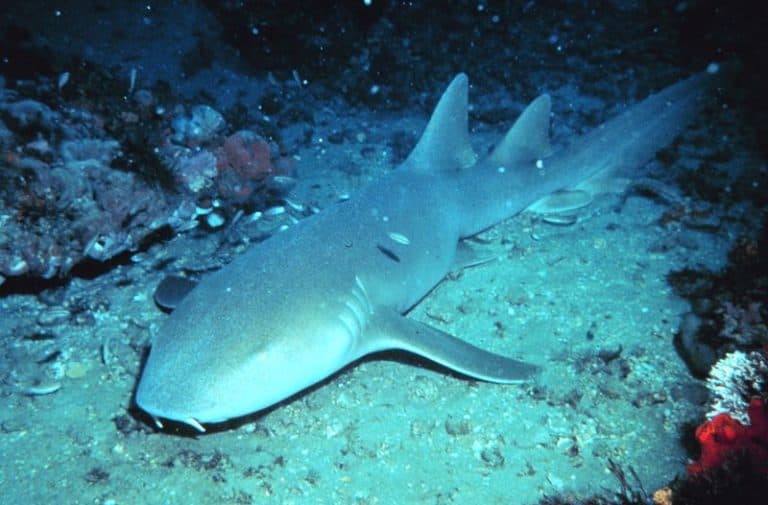
  • Bottom-associated: commonly rests motionless on sand/reef ledges, sometimes in daytime groups.
  • Western Atlantic emphasis: common around Florida, Bahamas, Caribbean, and Gulf of Mexico reefs and flats.
  • Maximum reported total length about 3.08 m; more commonly ~2.1-2.7 m adults.
  • Generally docile disposition; may bite defensively if harassed or handled.
  • Often confused with the 'grey nurse shark'/sand tiger (Carcharias taurus): nurse sharks have barbels and a broader head; sand tigers lack barbels and show prominent protruding fang-like teeth.

Sexual Dimorphism

Females tend to reach larger total lengths and body mass than males. Males have paired claspers on the pelvic fins, visible externally and used during mating; otherwise coloration and patterning are similar.

  • Paired claspers on pelvic fins (external reproductive organs).
  • Typically smaller average maximum size than females.
  • Typically larger-bodied and longer than males at maturity.
  • No claspers; pelvic fins lack elongate clasper structures.

Did You Know?

Size: commonly ~2.1-2.7 m TL; maximum reported 3.08 m TL (Florida Museum/FishBase).

Newborns are ~27-30 cm TL, and a litter can contain ~20-30 pups (reports up to ~40).

They can "walk" along the bottom using their pectoral fins-handy for probing reef crevices.

Unlike many sharks, they often pile up in daytime resting groups under ledges and in caves.

Their small mouth and throat can create strong suction, letting them vacuum prey from holes where teeth can't reach first.

They breathe efficiently while stationary using spiracles (openings behind the eyes), ideal for a sit-and-wait, bottom life.

People often confuse them with the "grey nurse shark" (Carcharias taurus): nurse sharks have barbels and a rounded snout; grey nurse lacks barbels and shows long, needle-like teeth even with mouth closed.

Unique Adaptations

  • Sensory barbels (a hallmark of many carpet sharks, Order Orectolobiformes): enhance prey detection on the seafloor and in reef structure.
  • Spiracles for respiration while resting: allows water intake without constant forward swimming, supporting long periods of stillness.
  • Powerful suction and pharyngeal (throat) musculature: specialized for extracting prey from holes-ecologically different from fast-chasing predatory sharks.
  • Bottom-associated body plan: broad head, rounded snout, and relatively small eyes suit close-range hunting and navigation in complex reef terrain.
  • Tough skin and robust build: helps withstand abrasion from coral/rocks in caves and under ledges where they spend much of the day.
  • Carpet-shark kinship traits: shares the order with very different specialists (e.g., wobbegongs and the whale shark), illustrating how bottom-living "carpet" ancestry can diversify into ambush hunters and plankton-filtering giants.

Interesting Behaviors

  • Daytime "sleeping"/resting: individuals commonly rest motionless under reef ledges, in caves, and under docks; multiple sharks may rest in contact or stacked in groups.
  • Nocturnal foraging: activity increases at night, when they patrol reef edges, seagrass, and sandy flats searching for hidden prey.
  • Suction-feeding: they flare the buccal cavity and rapidly expand the throat to generate suction; prey can be pulled from crevices before the jaws clamp down.
  • Bottom-probing with barbels: the paired barbels on the snout are used to locate prey (crustaceans, mollusks, small fishes) by touch/chemoreception in low visibility.
  • Site fidelity: in places like Florida and the Bahamas, individuals often return to the same resting sites repeatedly, making them predictable for divers and researchers.
  • Mating behavior: males grasp a female's pectoral fin to position for copulation (typical for many sharks); nurse sharks are ovoviviparous (pups develop in eggs that hatch internally).
  • Defensive biting if handled: generally non-aggressive, but can deliver a tenacious bite when provoked or grabbed-an important safety note for fishers and snorkelers.

Cultural Significance

Nurse Shark (Ginglymostoma cirratum) in the western Atlantic (Florida, Keys, Bahamas, Caribbean) is a slow, reef shark used in ecotourism and aquariums. It was fished for meat and leather. Though calm, it can bite if bothered.

Myths & Legends

Name-lore among sailors and fishers: the term "nurse shark" is commonly linked in popular tradition to its sucking/"nursing" way of feeding-an old seafaring explanation for why it seems to 'vacuum' prey from holes.

Caribbean dive lore often treats resting nurse sharks as 'guardians of the ledge'-a repeated storytelling motif on reefs where the same individuals occupy the same caves and undercuts day after day.

Early Caribbean and Florida naturalists called nurse sharks (Ginglymostoma cirratum) “sleeping sharks” of shallow reefs, giving local tales that they can be approached while resting—though touching may cause a bite.

Coastal tales sometimes call Ginglymostoma cirratum 'scary-toothed' by mixing it up with the grey nurse shark (Carcharias taurus). Grey nurses show big teeth and swim open water; nurse sharks rest on the bottom.

Conservation Status

VU Vulnerable

Facing a high risk of extinction in the wild.

Population Decreasing

Protected Under

  • Florida Administrative Code 68B-44 (Prohibited species; harvest of nurse shark prohibited in Florida state waters)
  • The Bahamas Shark Sanctuary - Protection of Sharks Regulations (2011) (national protection from commercial shark fishing)
  • Belize Fisheries (Shark Protection) Regulations (2011) (national protections restricting shark fishing/possession, applicable to nurse shark)

Life Cycle

Birth 25 pups
Lifespan 25 years

Lifespan

In the Wild
15–30 years
In Captivity
20–35 years

Reproduction

Mating System Promiscuity
Social Structure Aggregation Group
Breeding Pattern Transient
Fertilization Internal Fertilization
Birth Type Internal_fertilization

Seasonal shallow-water mating involves several males pursuing and biting a female's pectoral fin while one male inserts claspers (internal fertilization). After ~5-6 months gestation (e.g., Castro 2009), females bear ~20-30 pups (~27-30 cm TL) and provide no postnatal care.

Behavior & Ecology

Social Shoal Group: 10
Activity Nocturnal, Diurnal
Diet Carnivore Benthic crustaceans-especially spiny lobster (Panulirus argus) where available

Temperament

Generally docile and non-territorial; bites to humans usually involve provocation/handling (NOAA).
Strong site fidelity to preferred day-rest sites; individuals repeatedly return to same shelters (Carrier et al.).
Daytime: prolonged inactive resting, sometimes piled in contact; night: active benthic foraging and suction-feeding.
Mating can be vigorous: multiple males pursue one female; males grasp pectoral fins/flanks (Pratt & Carrier).
Large-bodied: commonly ~2.1-3.1 m total length; reported maximum ~4.3 m; longevity ≥25 years (Compagno; NOAA).

Communication

No confirmed vocalizations; interactions are predominantly silent and contact/chemical mediated.
Chemical cues/pheromones likely important in mate location and reproductive behavior Pratt & Carrier
Tactile signaling common in courtship: close following, body contact, and biting to secure positioning.
Body posture/spacing cues in aggregations: parallel resting, piling, and subtle displacement without overt aggression.
Hydrodynamic/electrosensory detection (lateral line + ampullae) supports close-range tracking during foraging and interactions.

Habitat

Coastal Coral Reef Rocky Shore Mangrove Estuary Seabed/Benthic
Biomes:
Terrain:
Coastal Island Rocky Sandy Muddy
Elevation: Up to 426 ft 6 in

Ecological Role

Nocturnal benthic mesopredator in tropical/subtropical coastal ecosystems (reefs, seagrass, lagoons, sandy flats)

Regulates benthic prey communities (crustaceans, mollusks, small demersal fishes), influencing reef/seagrass food-web structure Transfers energy across habitats via nightly movements between daytime refuges and feeding grounds Contributes to carrion removal when scavenging occurs, accelerating nutrient recycling Serves as prey (especially juveniles) for larger sharks, supporting higher trophic levels

Diet Details

Main Prey:
Benthic and demersal teleost fishes Elasmobranchs Spiny lobster Crabs and hermit crabs Shrimp and other decapod crustaceans Cephalopods Bivalves and gastropods Echinoderms +2

Human Interaction

Domestication Status

Wild

Nurse shark (Ginglymostoma cirratum) is a wild, non-domesticated species with no history of breeding for people. Humans mostly meet them through coastal fisheries and past hunting for meat, leather, and oil; ecotourism (snorkel/dives); aquarium display and research; and occasional harmful handling. They often tolerate close approach but can bite if grabbed.

Danger Level

Moderate
  • Defensive bite when provoked/handled (common scenario: divers grabbing the tail/fins, attempting to ride/pose, or removing hooks); the species can clamp down and may be difficult to dislodge due to jaw/teeth morphology and suction-feeding mechanics.
  • Hooking/line interactions: bites during dehooking or when a hooked shark is restrained at the surface.
  • Injury/infection risk from lacerations and punctures in marine settings (secondary infection is a key medical concern).
  • Low risk of unprovoked predatory attack; most documented serious incidents are associated with close contact or harassment (general pattern summarized by incident databases such as the International Shark Attack File and by regional management agencies).

As a Pet

Not Suitable as Pet

Legality: Laws vary by place. Nurse Shark (Ginglymostoma cirratum) is not CITES-listed, but many regions require permits or ban possession (sanctuaries, state rules). Usually only licensed public aquariums keep them. Check local laws.

Care Level: Expert Only

Purchase Cost: $200 - $1,500
Lifetime Cost: $50,000 - $300,000

Economic Value

Uses:
Ecotourism (diving/snorkeling encounters) Public aquarium display Scientific research (behavior, movement ecology, reproduction) Fisheries (historical/limited directed catch; contemporary bycatch in some areas)
Products:
  • Tourism services (guided dives, shark-viewing operations)
  • Educational/display value (aquaria)
  • Meat (where legally landed; generally low-value compared with many pelagic sharks)
  • Leather products from skin (historical/limited)
  • Liver oil (historical/limited)

Relationships

Related Species 3

Pacific nurse shark Ginglymostoma unami Shared Genus
Tawny nurse shark
Tawny nurse shark Nebrius ferrugineus Shared Family
Shorttail nurse shark Pseudoginglymostoma brevicaudatum Shared Family

Ecological Equivalents 4

Animals that fill a similar ecological role in their ecosystem

Grey nurse shark
Grey nurse shark Carcharias taurus A coastal, benthopelagic predator that often rests in or near reefs and caves during the day and forages more actively at night. Overlaps in habitat use (near-reef/cave association), though it feeds by ram capture rather than by suction.
Zebra shark
Zebra shark Stegostoma tigrinum Large, bottom-associated orectolobiform that spends substantial time resting on the seabed and forages on benthic invertebrates and small fishes. Exhibits convergent 'carpet shark' ecology and nocturnal benthic hunting.
Spotted wobbegong Orectolobus maculatus Bottom-oriented carpet shark that uses reef structure for daytime shelter and ambushes benthic fishes and invertebrates. Similar sit-and-wait/resting lifestyle, but relies more on ambush and camouflage than on suction-feeding.
Port Jackson shark Heterodontus portusjacksoni Nocturnal, bottom-dwelling shark that shelters by day and feeds on hard-shelled benthic invertebrates. Exhibits a similar diel pattern (daytime sheltering, nighttime foraging) and occupies a similar benthic niche, despite belonging to a different order and typically being much smaller.

Sometimes called the couch potatoes of the sea, nurse sharks are large, peaceful fish. They slowly drift along the bottom of the ocean in shallow water, sucking up food as they go. They hunt alone at night but return to the same comfortable resting place during the day to doze. Although their habitat is alongside humans, these fish are rarely harmful; they will only bite if startled or provoked. These gentle sharks are quite comfortable in zoo aquariums and can live up to 25 years in captivity.

5 Nurse Shark facts

  • Unlike many other shark species, the nurse shark uses the buccal pumping method to breathe. This involves the use of their oral muscles to pull water into their mouths to oxygenate their gills. It allows them to stay still and even sleep.
  • These sharks don’t pose any threat to humans unless they are disturbed. In fact, many people swim right by these sharks without ever knowing they were there.
  • When a school of nurse sharks finds a comfortable resting place, they return there each day after hunting. They do not migrate, as do many other fish species.
  • They use their pectoral fin to “walk” across the ocean floor. Females sometimes bury their pectoral fins in the sand to avoid the mating advances of males.
  • Rather than chasing prey and catching it with chomping teeth, this species swims above the ocean floor and sucks up food like a vacuum cleaner. After sucking their food into their mouths, they use rows of serrated teeth to crush it before swallowing.

Scientific name

The nurse shark is in the Ginglymostomatidae family and the Chondrichthyes class. Its scientific name, Ginglymostoma cirratum, is a mix of Greek and Latin and means “curled, hinged mouth.” This name is rather fitting because this shark always looks like he’s puckering up. Since they prefer to hover over the ocean floor, scientists believe its name came from the Old English word “hurse.” This means sea-floor shark.

Evolution Of the Species
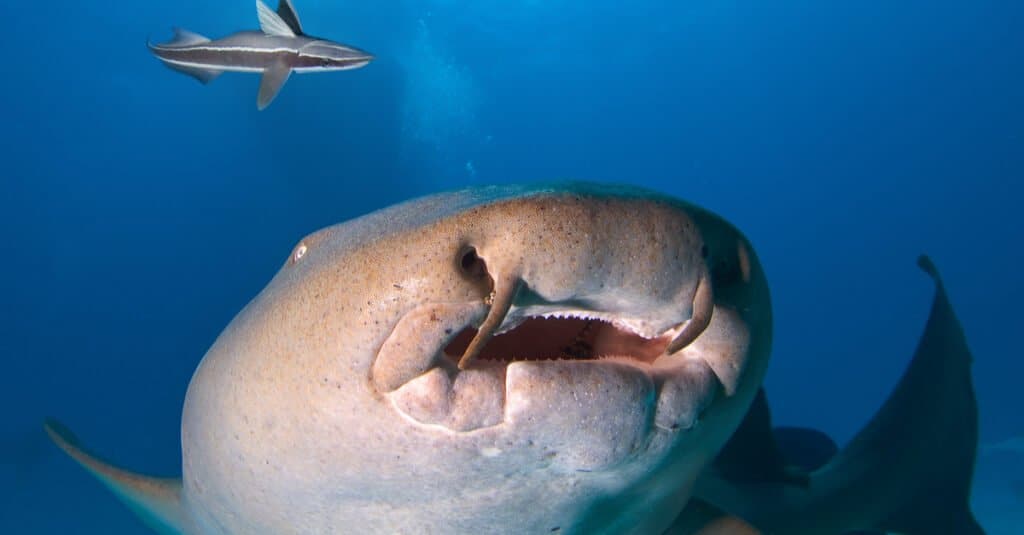
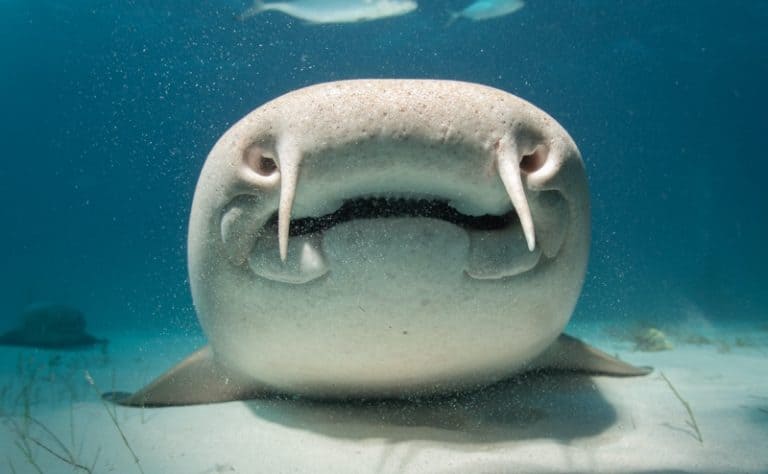
Nurse Shark Teeth - Nurse shark

Nurse Shark is believed to have evolved from a group of spiny fish called Acanthodian.

All sharks evolved from the Acanthodian, a group of spiny fish. These fish were first around over 400 million years ago, during the Paleozoic era. This group of fish then divided into the two main groups of fish that we now have today. These include cartilaginous fish (Chondrichthyes), of which sharks are part, and bony fish (Osteichthyes), which include salmon.

Types Of Nurse Sharks

The following nurse sharks should not be confused with the grey nurse shark, which is a different species (Carcharias taurus).

  • Tawny nurse shark (Nebrius ferrugineus)
  • Shorttail nurse shark (Pseudoginglymostoma brevicaudatum)
  • Atlantic nurse shark (G. cirratum)

Appearance
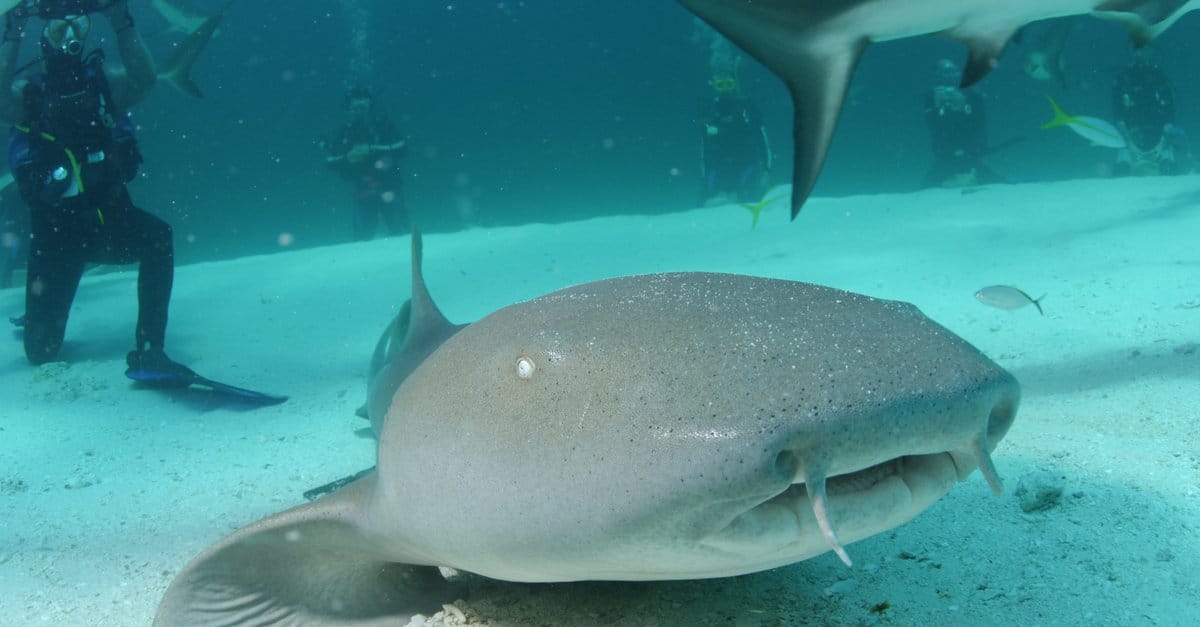
Nurse Shark Teeth - Nurse Shark

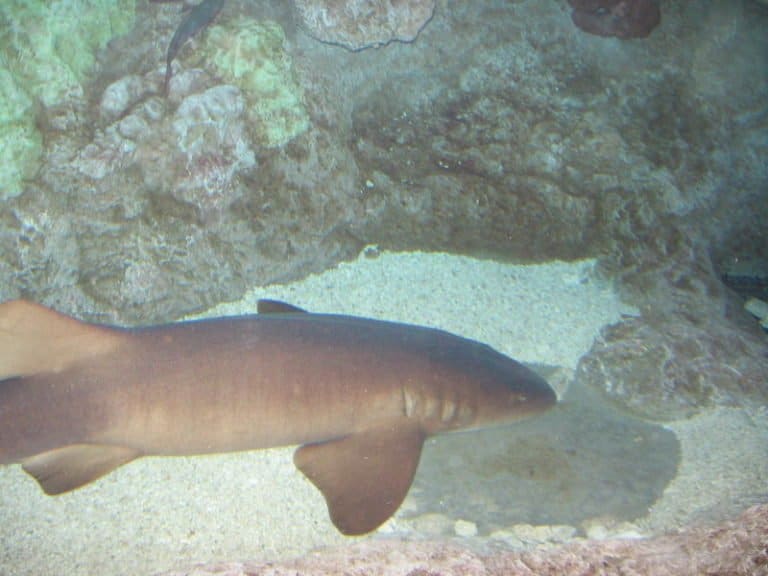
With a wide body and a short snout, the nurse shark looks different than its more dangerous cousins.

The nurse shark has a wide body and a short snout with a small, rectangular mouth. They have two sensory organs called barbels that grow down from their upper lip. These barbels help them find small fish and crabs hiding in the sand.

This species of shark looks a bit different than many of its more dangerous cousins. Their thick skin is smoother than that of most other sharks, and their dorsal fin is round rather than sharp. Their color sets them apart from the others as well — they are tawny brown rather than grey.

These sharks grow to about 7.5 to 9 feet long and weigh between 150 and 300 pounds. The largest nurse shark on record is 14 feet long, more than two times longer than the average man’s height. They also have long tails, which can make up about a quarter of their total length.

Behavior

The nurse shark is a solitary, nocturnal hunter. However, during the day, it will probably be resting in a pile of other similarly sized sharks. These sharks don’t migrate; when they finish hunting for the night, they return to their favorite area to rest.

Habitat
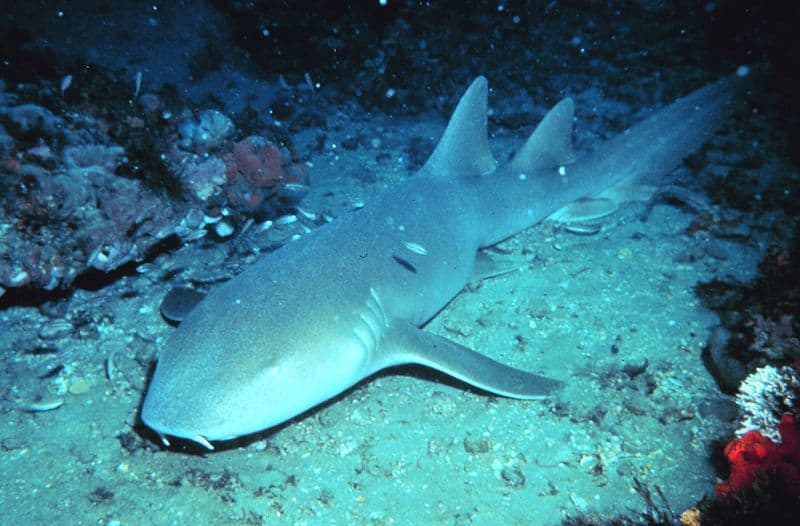
Nurse shark

Nurse sharks prefer warm, shallow waters and live close to human activity.

Nurse sharks like warm, shallow water and live all across the eastern part of the Pacific Ocean and the western part of the Atlantic Ocean. They live close to human activity and, while they are not usually aggressive, can bite in self-defense if humans encroach on their territory.

Population

The abundance of nurse shark populations worldwide was estimated using an analysis of distance sampling. Their current numbers range from 3,858 to 14,375. However, their numbers are low in certain areas due to previous overfishing for their skin and oil. Although nurse sharks are not routinely hunted on a global scale, they are still regionally targeted for their fins, meat, and skin. The species is listed as Vulnerable by the IUCN, and populations are declining in some areas. The IUCN Red List globally assesses the nurse shark as Vulnerable.

Diet

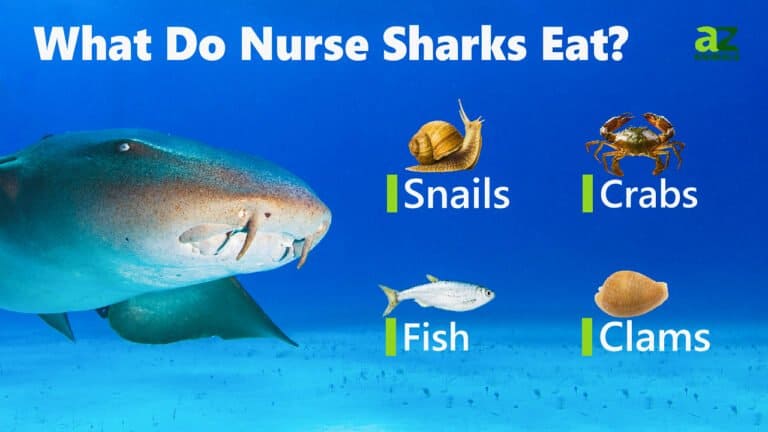
A nurse shark’s mouth possesses rows of tiny, serrated teeth that can crush hard-shelled crustaceans and snails. Small fish, shellfish, shrimp, and squid are some of the nurse shark’s favorite foods, though they will also eat algae and coral from time to time. Since they hunt at night, they eat fish that are resting.

Predators And Threats

The nurse shark doesn’t have any specific predators, but it can make an easy meal for larger fish such as tiger sharks or lemon sharks. The nurse shark is classified as Vulnerable by the IUCN, meaning it is considered a threatened species.

Reproduction, Babies, And Lifespan
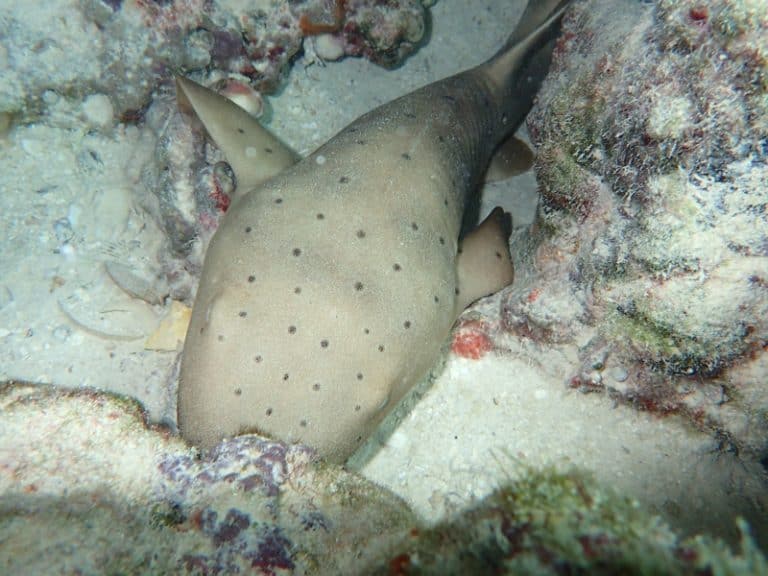
baby nurse shark on the ocean floor

Baby nurse sharks are roughly 8 to 12 inches in length at birth.

When a nurse shark wants to mate, the male will bite the female’s pectoral fin to hold her in place for the mating process. This species is unique in its reproductive process compared to other sharks because more than one male can fertilize the same litter.

This species of shark is ovoviviparous, meaning that the female carries the fertilized eggs inside her to incubate. When the six-month incubation period comes to an end, she gives birth to a litter of about 25 live pups. These pups are roughly 8 to 12 inches in length when they are born. After giving birth, it takes the female 18 months to produce eggs and go through the reproductive cycle again.

In Zoos

Nurse sharks do well in captivity, possibly because they are less active than other shark species. Since they don’t need to stay swimming to breathe, they are less bothered by smaller living spaces than their more active cousins. The average lifespan for a nurse shark in captivity is up to 25 years.

You can find them at Point Defiance Zoo & Aquarium in Tacoma, Washington; Omaha’s Henry Doorly’s Zoo & Aquarium in Omaha, Nebraska; and the National Aquarium in Baltimore, Maryland, to name just a few.

View all 98 animals that start with N

Sources

  1. Mark Mancini for Mental Floss / Accessed September 10, 2018
  2. Aquaviews / Accessed September 10, 2018
  3. How Stuff Works / Accessed September 10, 2018
  4. Wikipedia / Accessed September 10, 2018
Melissa Bauernfeind

About the Author

Melissa Bauernfeind

Melissa Bauernfeind was born in NYC and got her degree in Journalism from Boston University. She lived in San Diego for 10 years and is now back in NYC. She loves adventure and traveling the world with her husband but always misses her favorite little man, "P", half Chihuahua/half Jack Russell, all trouble. She got dive-certified so she could dive with the Great White Sharks someday and is hoping to swim with the Orcas as well.
Connect:

Thank you for reading! Have some feedback for us?


Nurse Shark FAQs (Frequently Asked Questions)

Swimming with nurse sharks is relatively safe, but that doesn’t mean there’s no risk involved at all. Even though these slow-moving sharks are docile, you must remember that they are still wild animals and may attack if they feel threatened.