



Classification and Evolution
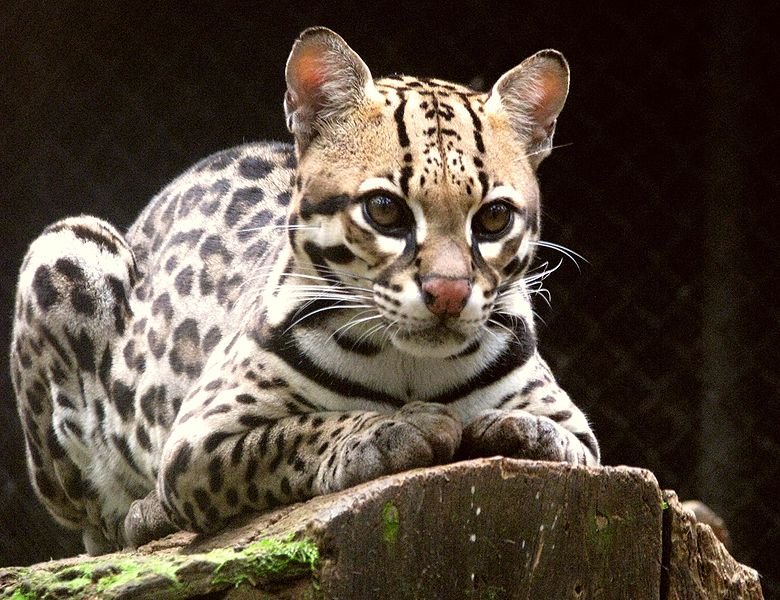
Ocelots have become a major success story for conservation efforts.
©Ana_Cotta, CC BY 2.0, via Wikimedia Commons – Original / License
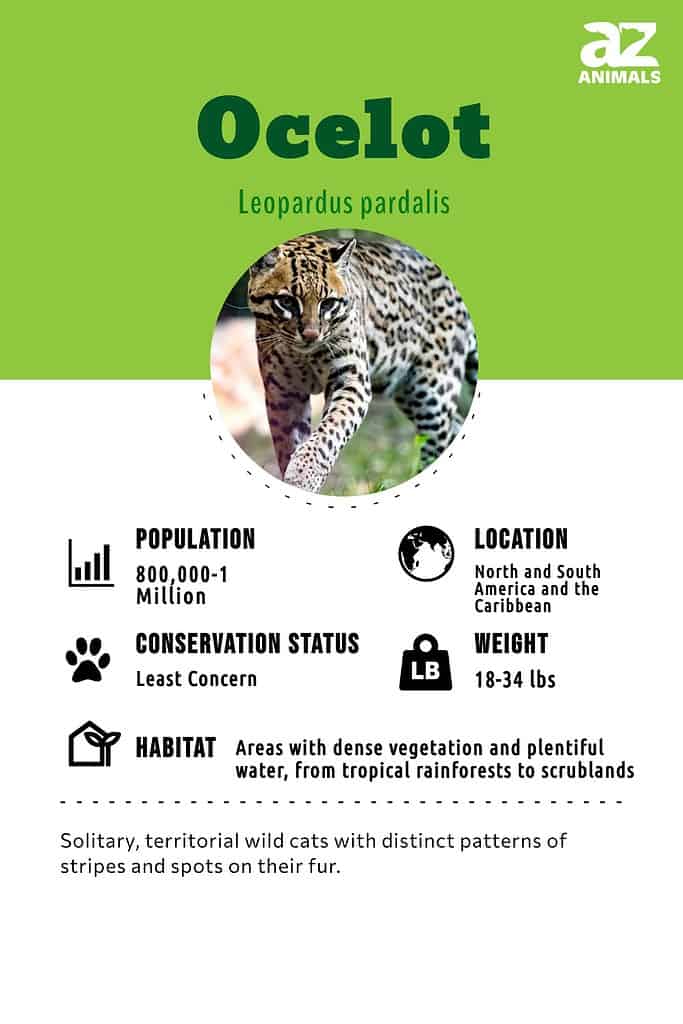
The Ocelot is a medium-sized small cat that is native to the jungles of South America. The Ocelot is also known as the Painted Leopard due to the beautifully distinctive markings on its fur as it displays dark rosettes, along with spots and stripes. Similar in coloration to the much smaller but closely related Margay, the Ocelot is an animal that was nearly driven to extinction in the 20th century as they were commonly hunted for their fur. Today, however, national protection throughout much of their natural range has meant that the Ocelot population has been able to recover somewhat. The Ocelot is a strong and agile animal that can not only climb and run well but they are also good swimmers as they are not afraid of water like numerous other cat species.
Anatomy and Appearance
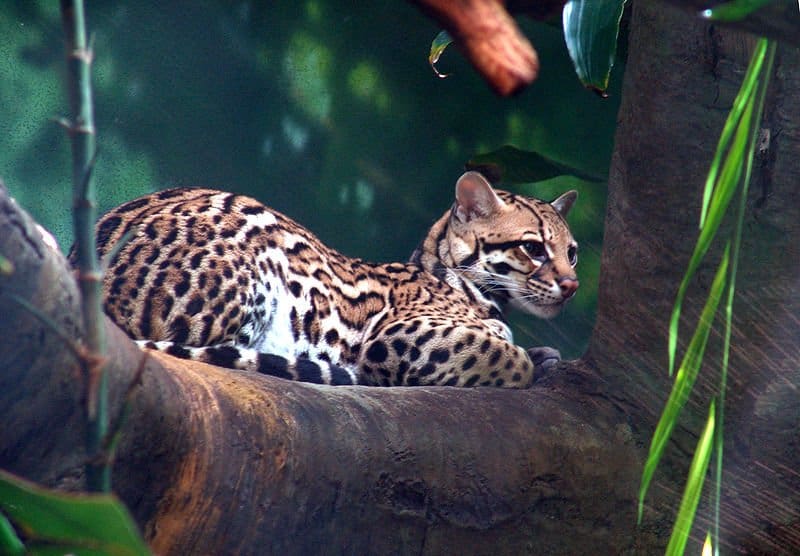
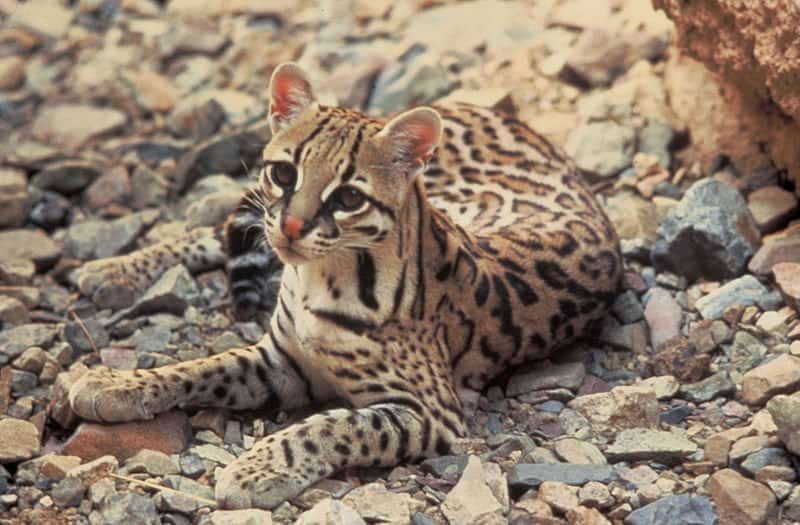
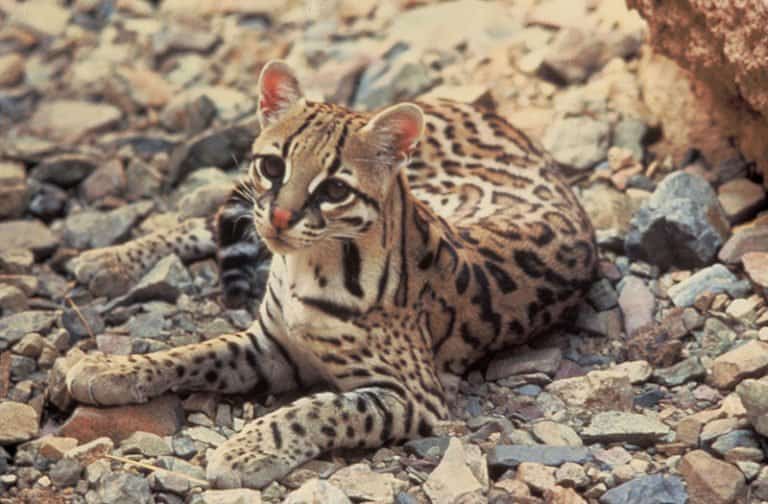
Ocelots are also known as “painted leopards” for their intricate, beautiful patterns.
©Danleo, CC BY-SA 3.0, via Wikimedia Commons – Original / License
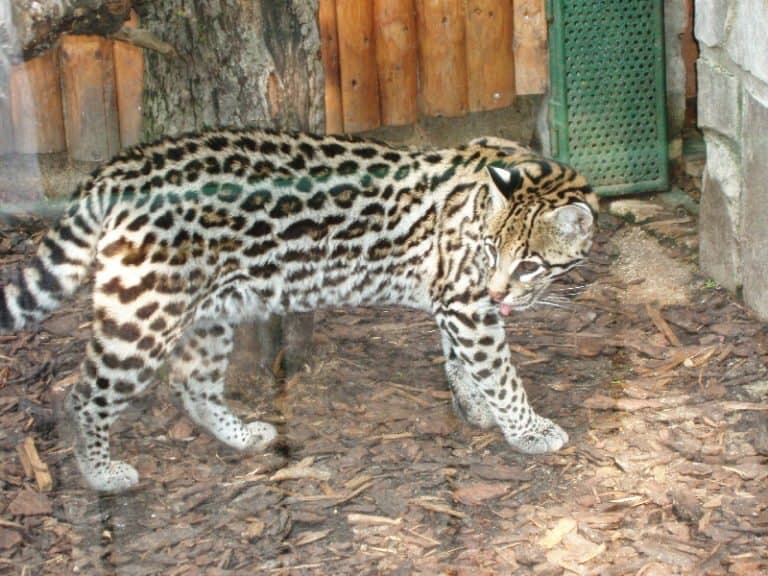
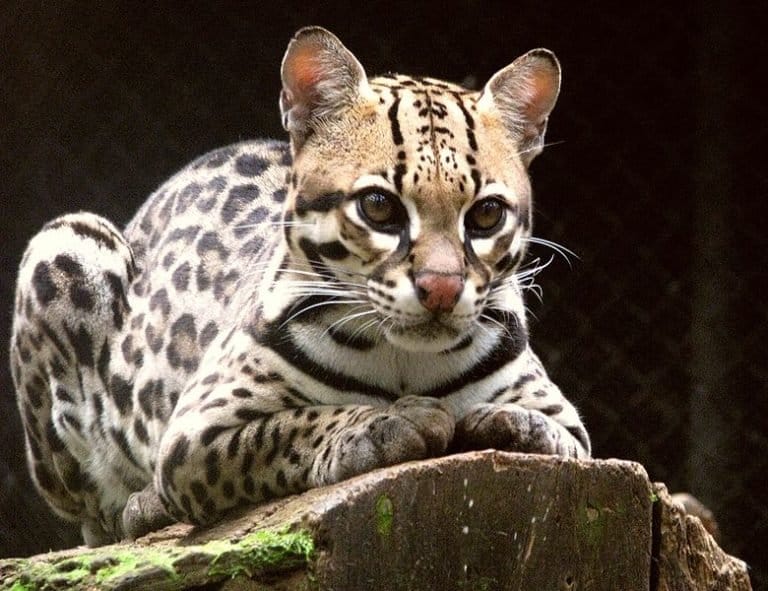
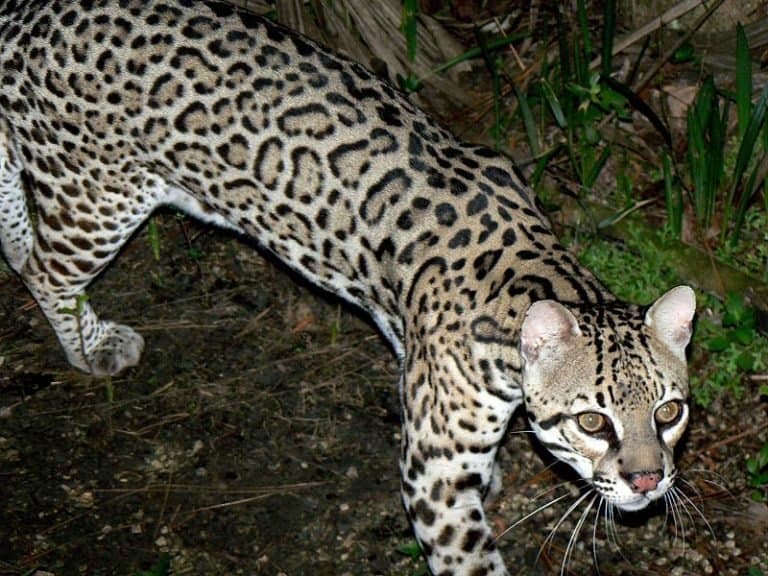
The Ocelot is an animal with short and thick, velvety fur that is usually tawny-yellow to reddish-grey in color and marked with black chain-like rosettes on its back and sides. There are dark spots on their legs and stripes on their head and face which are distinctive to the individual. They have a long tail that is generally marked with dark rings and large paws in relation to their body size. Like all feline species (with the exception of Cheetahs) the Ocelot can retract its claws into protective pockets that prevent them from becoming blunt whilst the Ocelot is walking about. Males tend to be substantially larger than females and can grow up to a meter in length with a tail half their body size on top of that. The Ocelot has sharply pointed front teeth which are used for biting down on its prey and blade-like teeth in each cheek that are used for tearing up food.
Distribution and Habitat
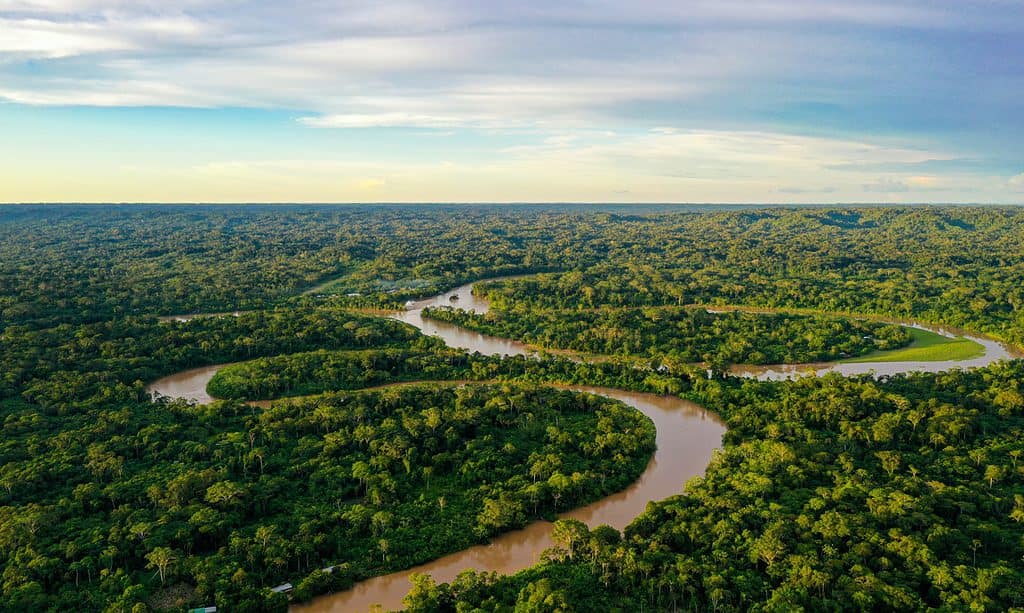
The Amazon Rainforest is home to more ocelots than anywhere else in the world.
©iStock.com/JarnoVerdonk
The Ocelot is found throughout the South American tropics but is most common in the dense jungles of the Amazon Basin. They are, however, fairly widespread and inhabit a variety of different habitats from southern Texas to northern Argentina. The Ocelot is an incredibly adaptable animal that can be found in a variety of habitats including tropical forests, grasslands, mangrove forests, and marshes providing that there is plenty of dense vegetation. Although the Ocelot is usually found below 1,200 meters above sea level, they are also known to inhabit the high slopes of the Andes Mountains and have been found at heights up to 3,800 meters. As strong swimmers, they are also sometimes found in seasonally flooded forests and have been reported as living close to Human settlements.
Behaviour and Lifestyle
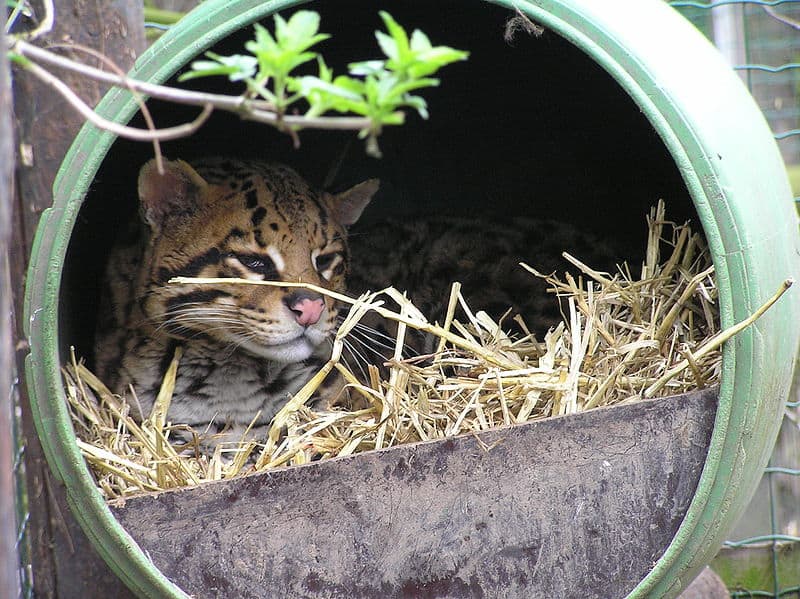
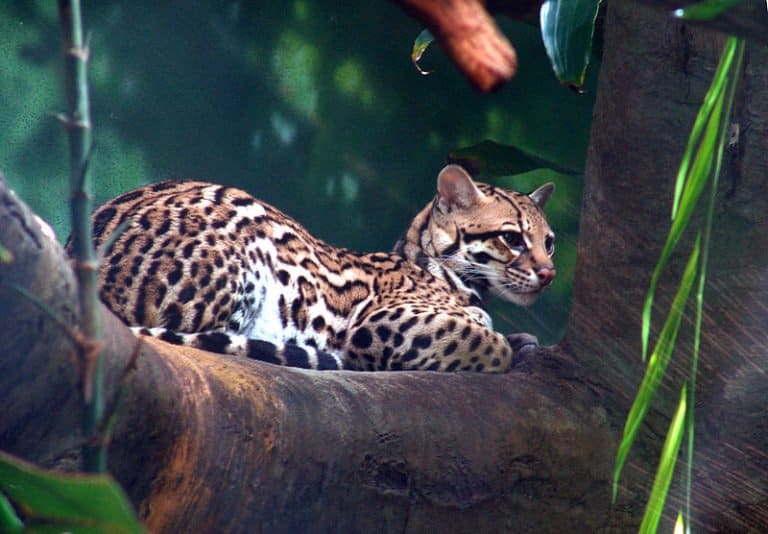
Though they may be incredibly cute, ocelots are still fierce predators.
©Chordata, CC BY-SA 3.0, via Wikimedia Commons – Original / License
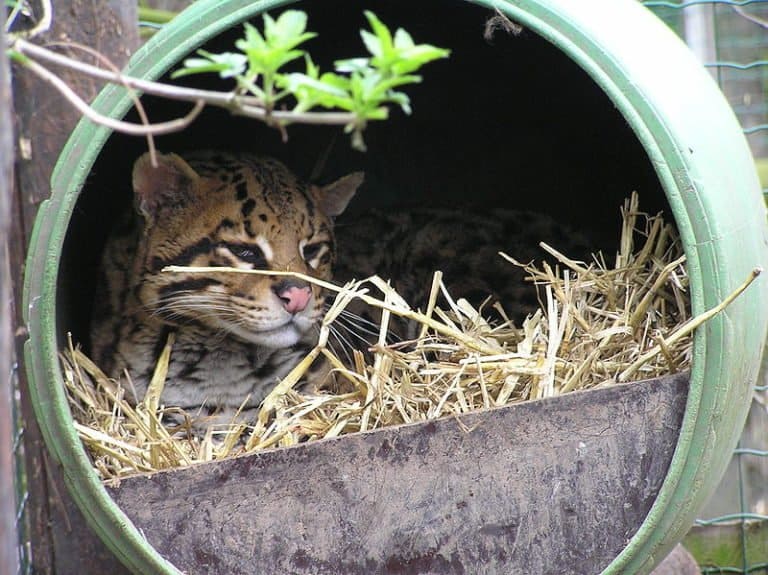
The Ocelot is a solitary animal that occupies a home range that can be up to 30 square kilometers depending on the surrounding environment. Males tend to patrol territories that are often double the size of the females’, and that overlap the home ranges of a number of females (with which the male has breeding rights). The Ocelot is a nocturnal animal that spends its days sleeping either in thick vegetation or on a high and leafy branch. They have excellent sight, touch, and hearing which all help them when hunting at night, and they communicate with one another using soft meows which turn into loud yowls when looking for a mate. The Ocelot is an incredibly secretive animal that is very rare in some parts of its natural range and one that relies heavily on dense vegetation, only venturing into open areas during the night.
You can check out incredible facts about ocelots.
Reproduction and Life Cycles
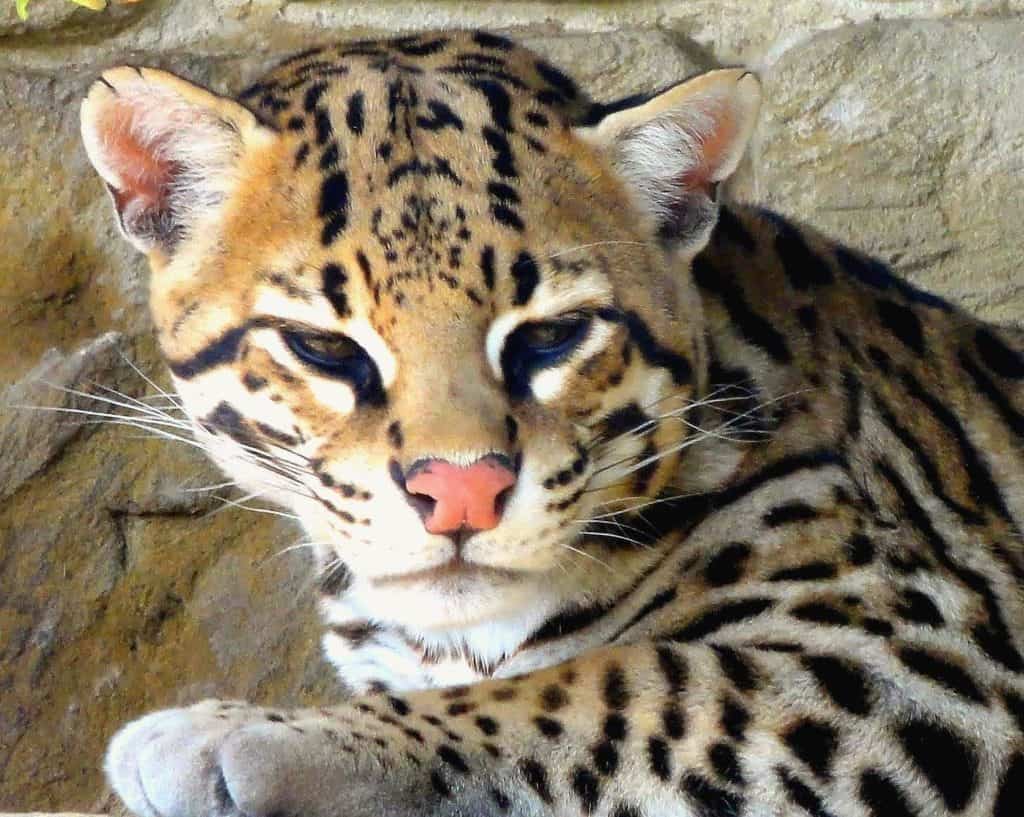
Ocelot kittens are born blind like housecats.
In the heart of the tropics, Ocelots are known to breed all year round but at the most northern and southern ends of its natural range, the breeding season tends to occur towards the end of the summer. After mating, the female Ocelot will find a crevice in the rocks, a hollow tree, or will nest in a dense and thorny thicket in order for her to have some privacy and protection whilst she is preparing to give birth. After about 85 days in the womb, the female Ocelot will give birth to up to 3 kittens, which are born without the ability to see and have a thin, dark coat of fur as opposed to their recognizable stripes and spots. Within about one month, the Ocelot kittens will be able to see their surroundings and their fur will have become thicker and more vibrant. Although Ocelot kittens are fully grown by the time they are a year old and are capable of becoming independent, they will often be tolerated in their mother’s home range for a couple of years before they leave to establish a territory of their own.
Diet and Prey
The Ocelot is a carnivore, meaning they that hunt for food under the shade of night and they do so by stalking their prey primarily on the forest floor from the safety of dense foliage. Although small rodents make up a large portion of their diet, they are known to hunt a variety of small animals including rabbits, birds, fish, crabs, lizards and snakes, and will even hunt small deer on occasion. The Ocelot is also known to eat monkeys, turtles, armadillos, and anteaters. Ocelots have been known to cause problems by killing domestic birds when their typical food sources are unavailable. However, the Ocelot happily preys upon numerous different invasive species, so they are nevertheless a vital part of their local ecosystems and their diverse taste also helps them to more easily adapt to changing habitats.
Predators and Threats
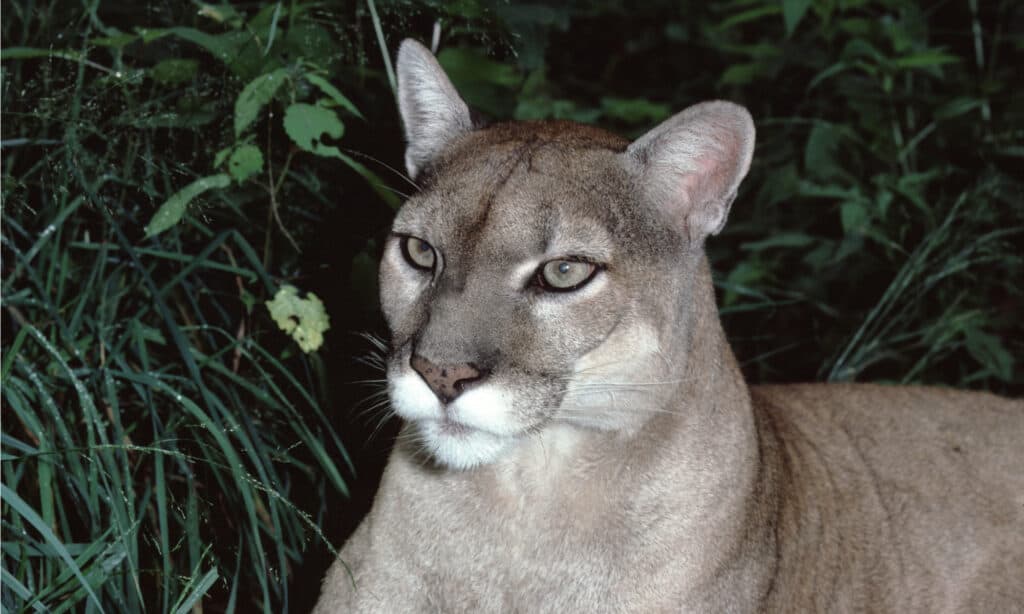
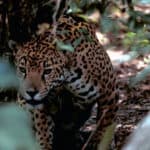
Pumas are one of ocelot’s staunchest opponents in the wild.
©Liz Weber/Shutterstock.com
Not only is the Ocelot an important predator in its environment but they are also preyed upon by a number of large carnivores. Other felines including Jaguars and Pumas prey on the smaller Ocelot, along with Birds of Prey such as the Harpy Eagle and the world’s biggest snake, the Anaconda. The unique and distinctive fur of the Ocelot though actually provides it with some camouflage in the dense vegetation surrounding it but it is also this fur that has led to enormous population declines throughout much of its historical range. Hunted for their fur (known as pelts) particularly from the 1960s to the 1980s, the Ocelot nearly became extinct in the wild along with the fact that they were also captured and kept as exotic pets. Since the Ocelot became a protected species though in many countries, numbers have risen but they are now threatened by deforestation of their habitats.
Ocelot Interesting Facts and Features
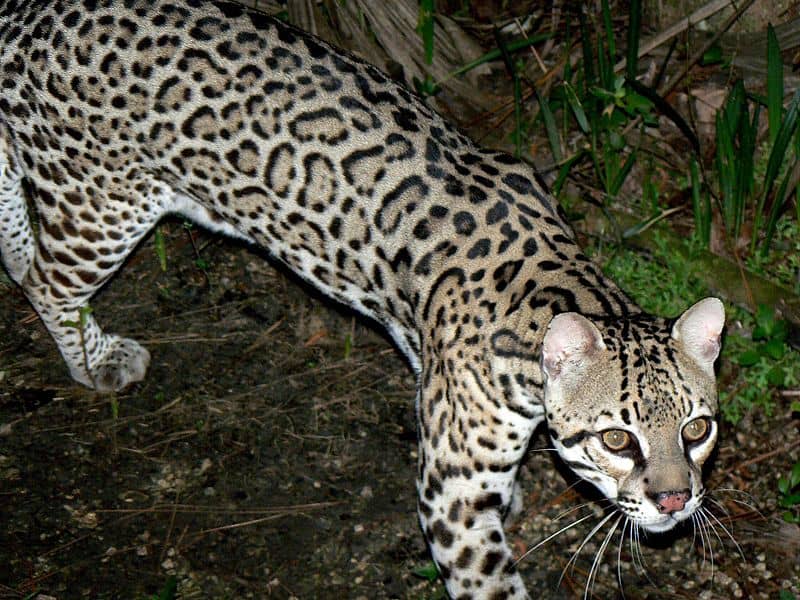
Many people have tried domesticating the ocelot.
©RawheaD Rex, CC BY-SA 2.0, via Wikimedia Commons – Original / License
In a similar way to many other species of smaller wildcats, the Ocelot has been kept as a pet by many people throughout history. The most famous of these was the abstract artist Salvador Dali who was known to travel frequently with his domesticated Ocelot. It was even thought that Mr. Dali actually took his pet Ocelot on an ocean liner! The Ocelot is also thought to have been worshipped by ancient Peruvian cultures (in a similar way to the Ancient Egyptians worshipping cats), and these cultures would often depict the beautiful Ocelot in their artwork. The Ocelot is thought to be active for at least 12 hours a day and can travel distances of up to seven miles in that time, with males generally covering twice the distance of their female counterparts.
Relationship with Humans
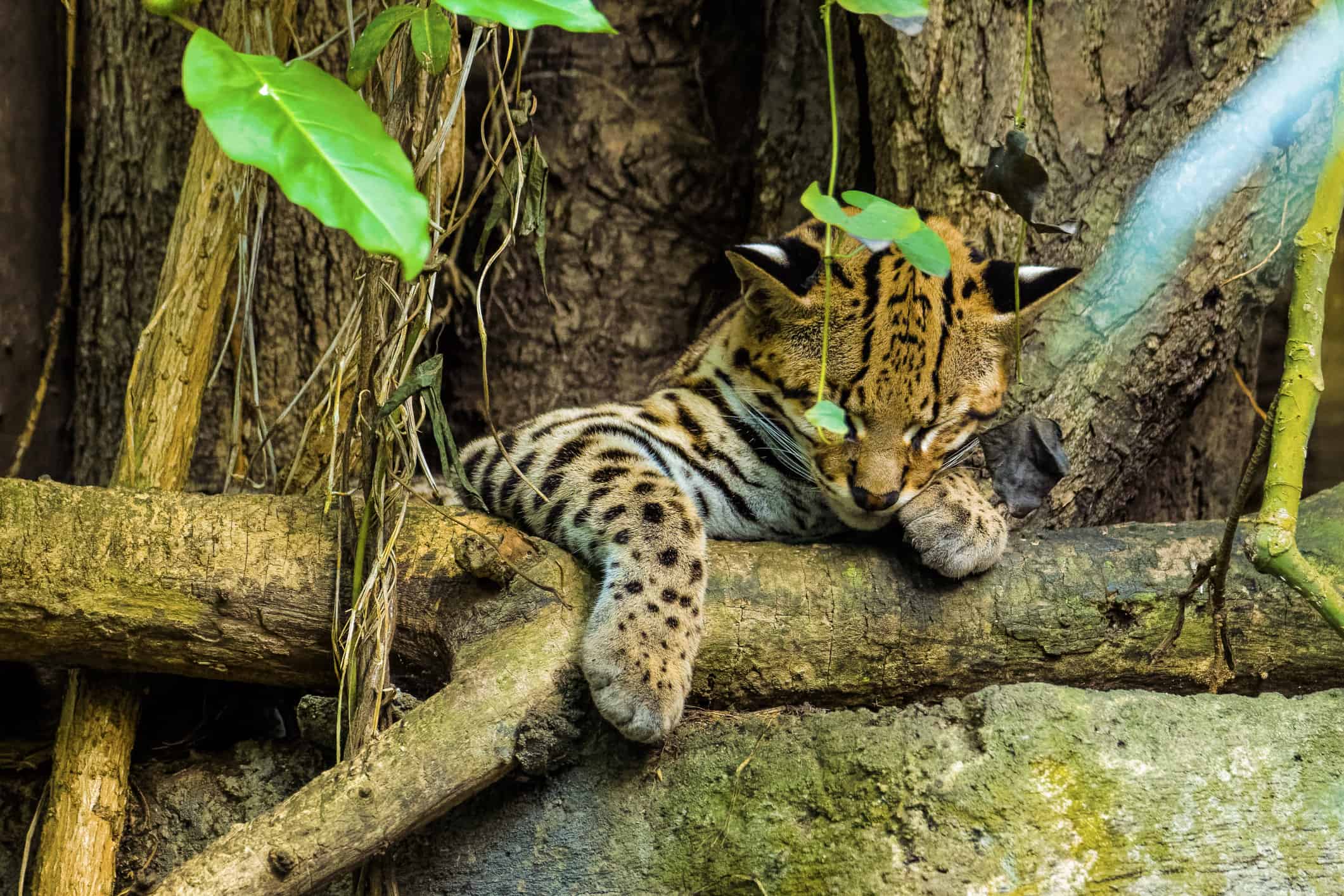
Ocelots are protected species in most parts of the world.
©Thorsten Spoerlein/ via Getty Images
The Ocelot was seen as a sacred animal by ancient cultures but its beautifully patterned and soft fur quickly attracted the attention of hunters. Ocelot population numbers were severely depleted throughout their natural range particularly during the 1960s and 1970s when they were thought to be so extensively hunted, that up to 200,000 skins were being traded each year and were selling for around 40,000 US dollars. Despite being wild and dominant predators, the Ocelot has also been captured to sell into the exotic pet trade which fortunately ceased after the Ocelot was listed on the Endangered Species List. Despite the fact that the Ocelot is now protected in most countries throughout its natural range and numbers have increased, populations particularly in certain areas are being severely affected by growing Human activity, primarily from deforestation and growing settlements.
Conservation Status and Life Today
Today, the Ocelot is listed by the IUCN as being a species that is of Least Concern of becoming extinct in their natural environment in the near future. Although some populations are small and unstable, the Ocelot is widespread but the general population trend is now decreasing. This is mainly due to habitat loss as vast areas particularity in the Amazon, are subject to drastic deforestation and no longer provide the dense cover and adequate food supply that the Ocelot needs to survive.
Types of Ocelot
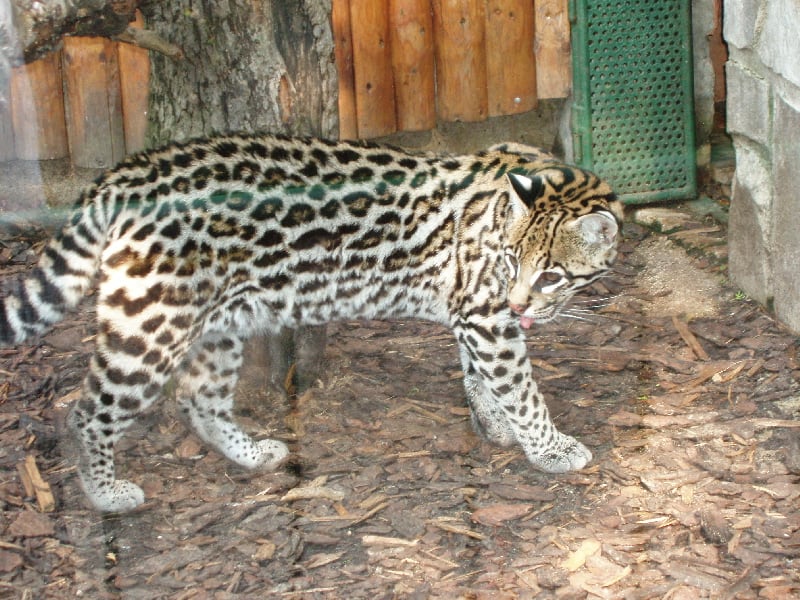
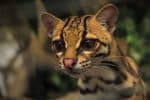
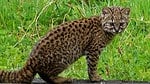
Ocelots are only divided into 2 subspecies today.
©Lady Rowena / CC BY-SA 3.0, from Wikimedia Commons, the free media repository – Original / License
Taxonomists initially believed ocelots to be divided into up to 9 different subspecies. These included:
- Leopardus pardalis pardalis
- Leopardus pardalis aequatorialis
- Leopardus pardalis albescens
- Leopardus pardalis melanurus
- Leopardus pardalis mitis
- Leopardus pardalis pseudopardalis
- Leopardus pardalis pusaeus
- Leopardus pardalis sonoriensis
- Leopardus pardalis steinbachi
But today only the Leopardus pardalis pardalis and Leopardus pardalis mitis are generally recognized as distinct subgroups of ocelots, the former being critically endangered and native to Arizona and Mexico, while the latter is much more populous and inhabits much of South America and some islands of the Caribbean.
Ocelot Pictures
View all of our Ocelot pictures in the gallery.

How to say Ocelot in ...
Sources
- David Burnie, Dorling Kindersley (2011) Animal, The Definitive Visual Guide To The World's Wildlife / Accessed May 11, 2009
- Tom Jackson, Lorenz Books (2007) The World Encyclopedia Of Animals / Accessed May 11, 2009
- David Burnie, Kingfisher (2011) The Kingfisher Animal Encyclopedia / Accessed May 11, 2009
- Richard Mackay, University of California Press (2009) The Atlas Of Endangered Species / Accessed May 11, 2009
- David Burnie, Dorling Kindersley (2008) Illustrated Encyclopedia Of Animals / Accessed May 11, 2009
- Dorling Kindersley (2006) Dorling Kindersley Encyclopedia Of Animals / Accessed May 11, 2009
- David W. Macdonald, Oxford University Press (2010) The Encyclopedia Of Mammals / Accessed May 11, 2009
- Ocelot Facts / Accessed May 11, 2009
- Ocelot Information / Accessed May 11, 2009
- Ocelot Conservation / Accessed May 11, 2009