





With their distinctive stocky build and unique bills, pelicans are birds that have been a symbol of popular culture since medieval times, appearing in art and on coats of arms. These waterfowl are known for the massive amounts of fish they consume, often eating as much as four pounds per day. One of the lesser-known facts about the pelican bird involves the high altitudes at which they can fly.
An Incredible Bird: Pelican Facts!
- The beak pouch can hold as much as three gallons of water, which is more than three times what this animal’s stomach can hold.
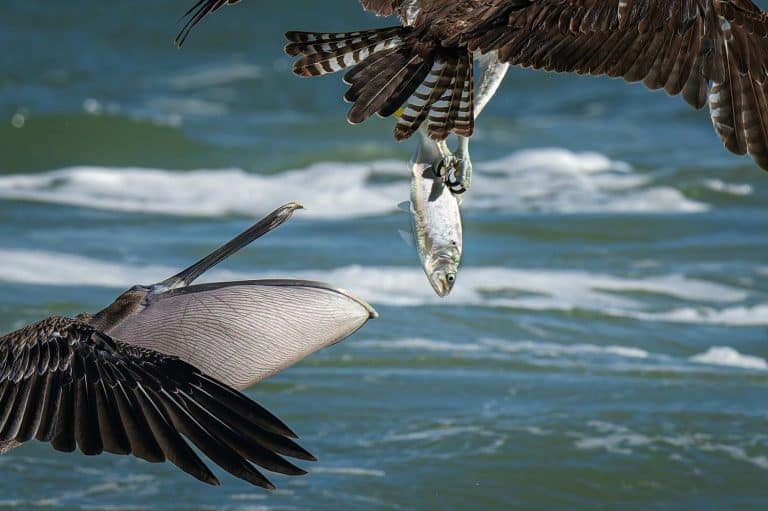
- ‘The brown pelican and the closely related Peruvian pelican are the only pelican species that dive-bomb into the water to catch fish, often swooping down from a height of 60 or 70 feet.
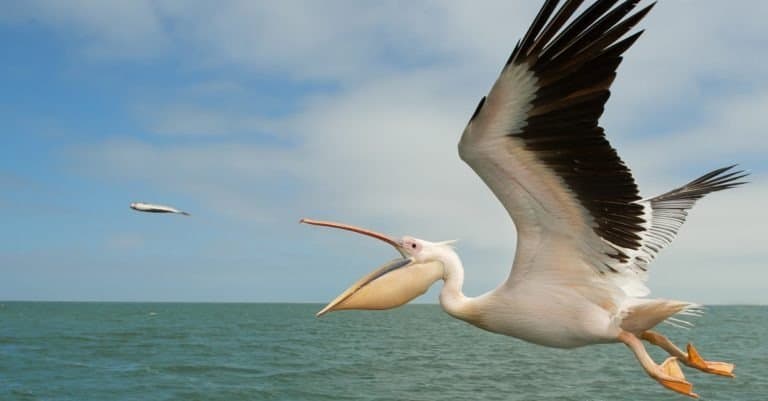
- Although they are heavy birds, pelicans fly easily thanks to their lightweight, hollow bones and efficient respiratory system, which allow them to soar at high altitudes, sometimes reaching several thousand feet when gliding on warm currents.
- Pelican birds often hunt cooperatively by splashing the water’s surface with their wings to move fish into shallow water where they can scoop them up with their beaks.
- Pelican birds played a popular role in medieval and Renaissance Christian art, primarily due to a myth that these animals stabbed themselves in the breast to feed their chicks.
Classification and Scientific Name
Pelicans belong to the genus Pelecanus in the family Pelecanidae and the order Pelecaniformes. The two best-known types have white feathers, the North American white pelican (Pelecanus erythrorhynchos) and the European white pelican (P. onocrotalus).
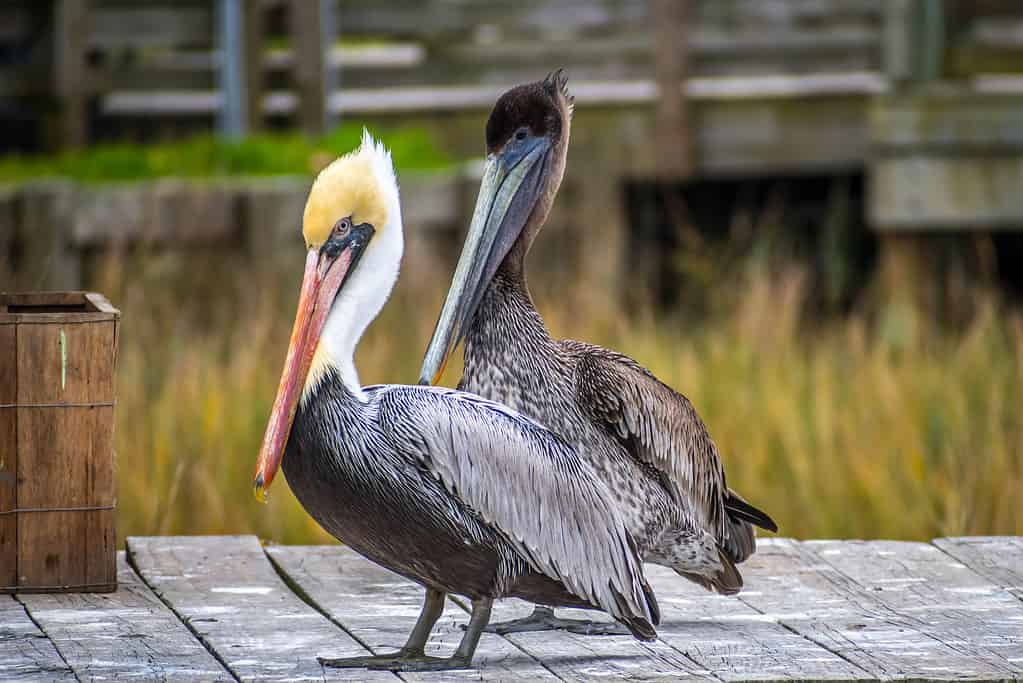
Brown pelicans strolling around the boardwalk on the Atlantic coast.
©Cheri Alguire/iStock via Getty Images
Types
There are 8 main pelican species:
- American white pelican (Pelecanus erythrorhynchos): Recognisable by its brilliant white plumage, this bird is rather portly and has the distinction of being North America’s longest bird. It is also known for its rather impressive wing span, which can reach 10 feet, which is longer than any other North American bird with the exception of the California condor.
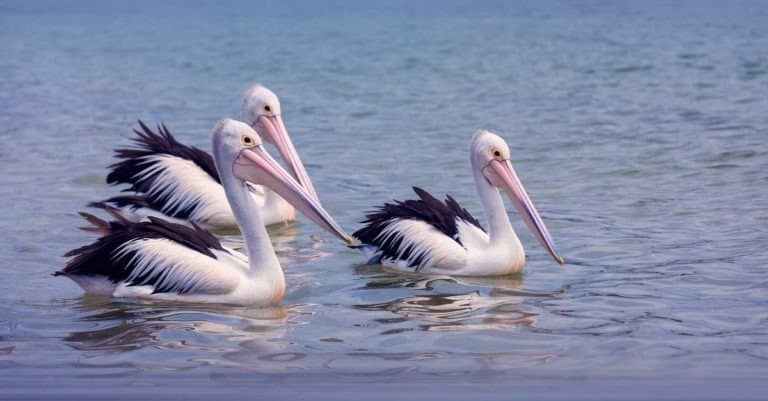
- Australian pelican (Pelecanus conspicillatus): This bird’s distinguishing features include a large pink bill (the largest of any species on the planet), pristine white feathers, and dark wings. In spite of its name, it can also be found in Fiji, Indonesia, and New Zealand.
- Brown pelican (Pelecanus occidentalis): The smallest species of pelican, this bird nevertheless enjoys a certain measure of status as the state bird of Louisiana and the national bird of Barbados. Its wingspan can reach over 7 feet, while its feathers are generally darker in contrast to the gleaming white possessed by its cousins.
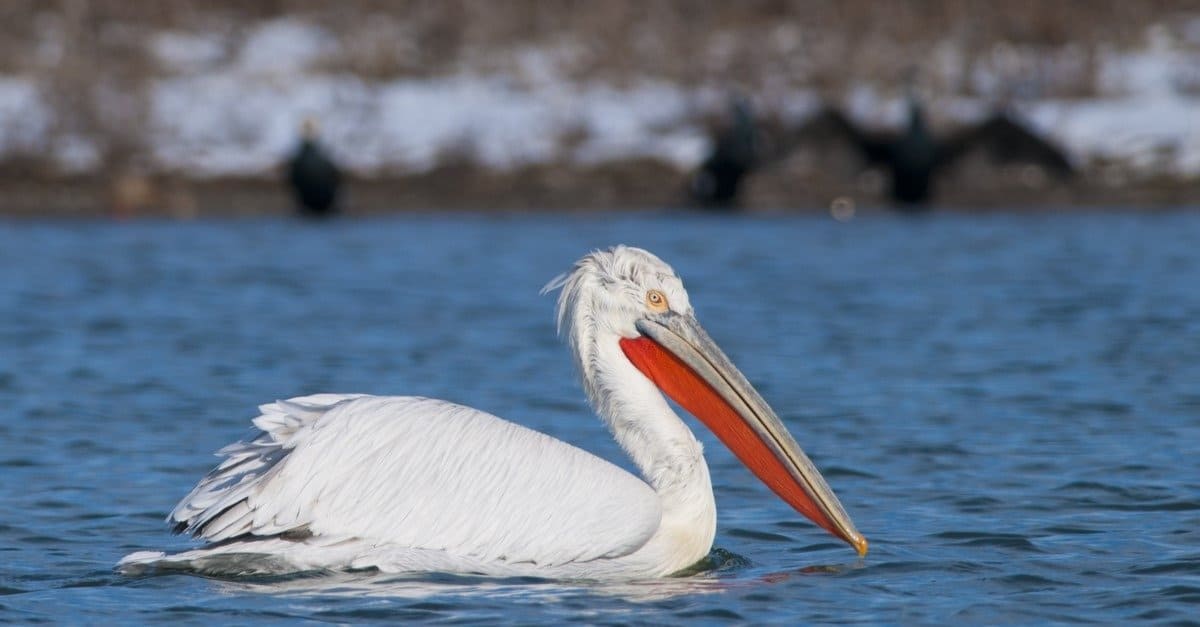
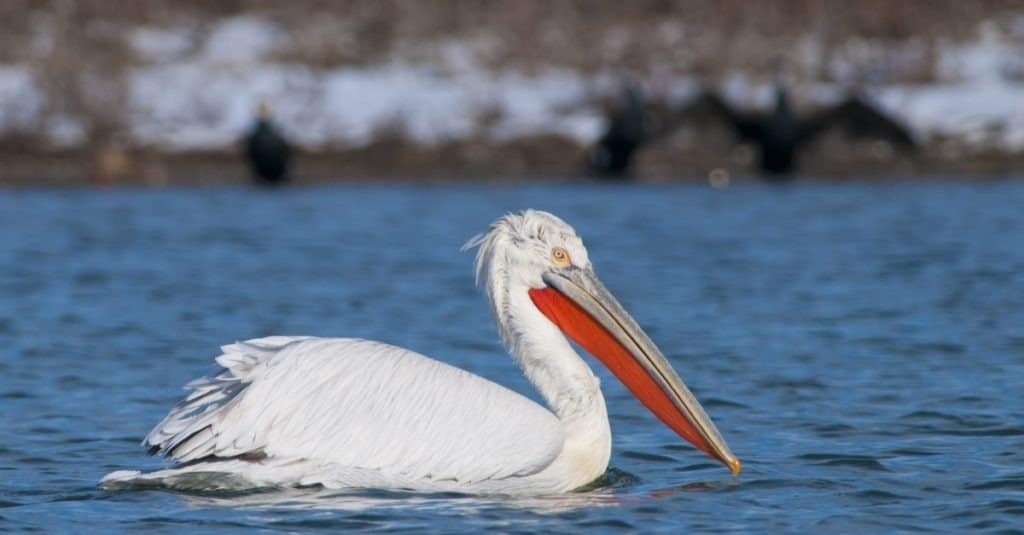
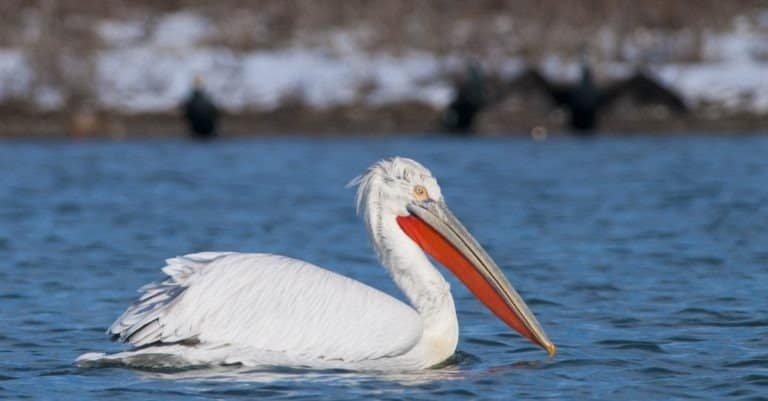
- Dalmatian pelican (Pelecanus crispus)
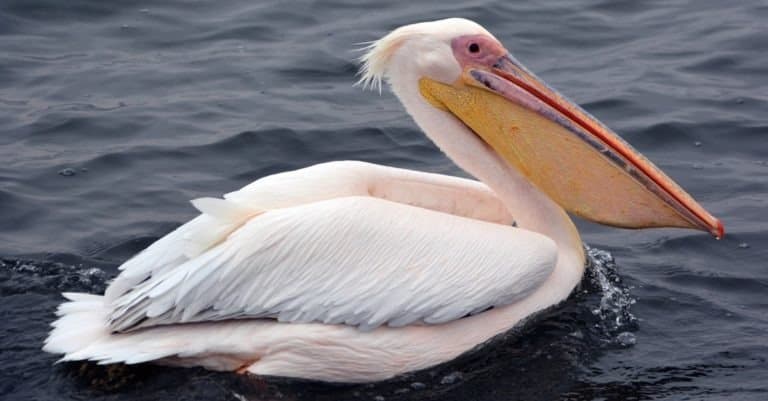
- Great white pelican (Pelecanus onocrotalus)
- Peruvian pelican (Pelecanus thagus)
- Pink-backed pelican (Pelecanus rufescens)
- Spot-billed pelican (Pelecanus philippensis)
Evolution
The evolutionary history of pelicans seems to be shrouded in mystery. However, experts generally agree that their ancestors diverged from other waterbirds tens of millions of years ago, with fossil evidence suggesting pelicans have existed since at least the late Eocene.
Fourteen million years later, by the Eocene period, the ancestors of hamerkops, herons, ibises, pelicans, and spoonbills had separated once more. By the early Miocene period, 33 million years after the second divergence, this evolutionary branch had divided into eight main species that exist today.
Appearance
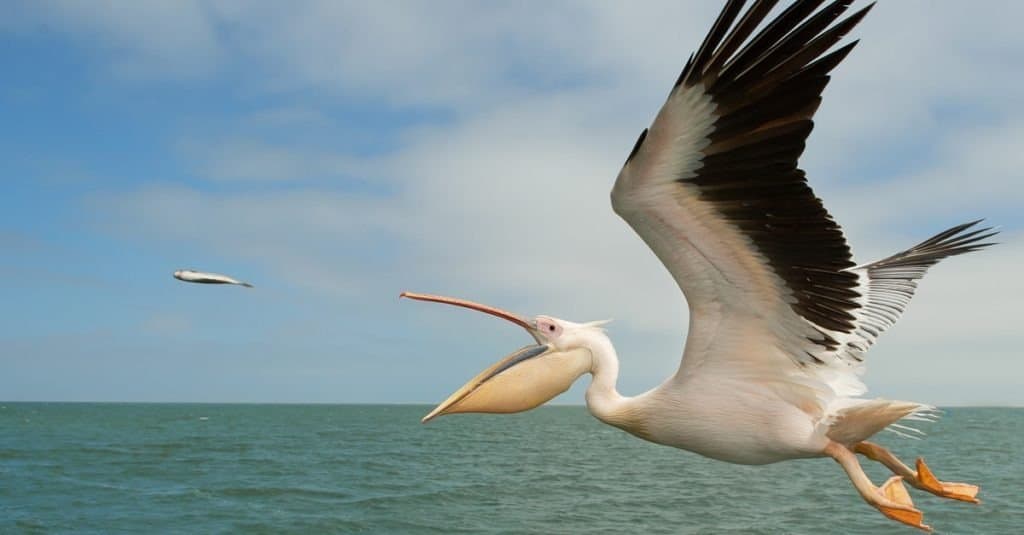
A pelican’s beak can hold thrice the capacity of its stomach
©MZPHOTO.CZ/Shutterstock.com
Easily recognized by their large body sitting on short legs and a long wingspan, these birds are also characterized by their webbed feet, long necks, and, most notably, their unique beak and accompanying large pouch. Their tails are short and square, while their wings are long and broad, making them suitable for gliding on air currents. Most of them have light-colored plumage, except for brown and Peruvian pelicans, the latter of which have bright feathers.
All pelicans become brightly colored around their bills, pouches, and facial skin during the breeding season. Most also develop a knob on the upper part of their bills, which falls off annually when breeding season has finished. The largest species is the Dalmatian pelican, weighing 22 to 26 pounds, while the smallest is the brown pelican at only eight to ten pounds.
Beak
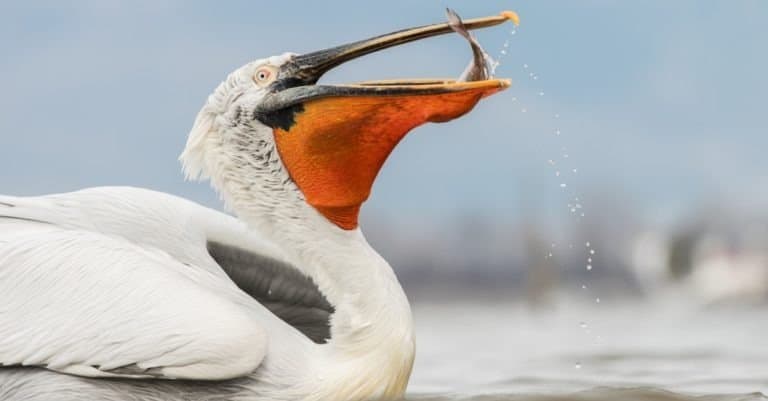
These birds have the largest beaks of any bird. In some species, the beak can reach up to 18 inches long. The large pouch, called a gular, underneath the beak, is the pelican’s most unique feature. These birds use their unique anatomy primarily to scoop up fish and then drain out the water that comes with their catch, but some birds also use their beak pouch as a way to cool themselves by swinging it back and forth on warm days. The upper part of the beak also has a downward hook, which these birds also use for catching fish. Male Australian pelicans have the longest bills of any species, measuring 1.6 feet long.
Behavior
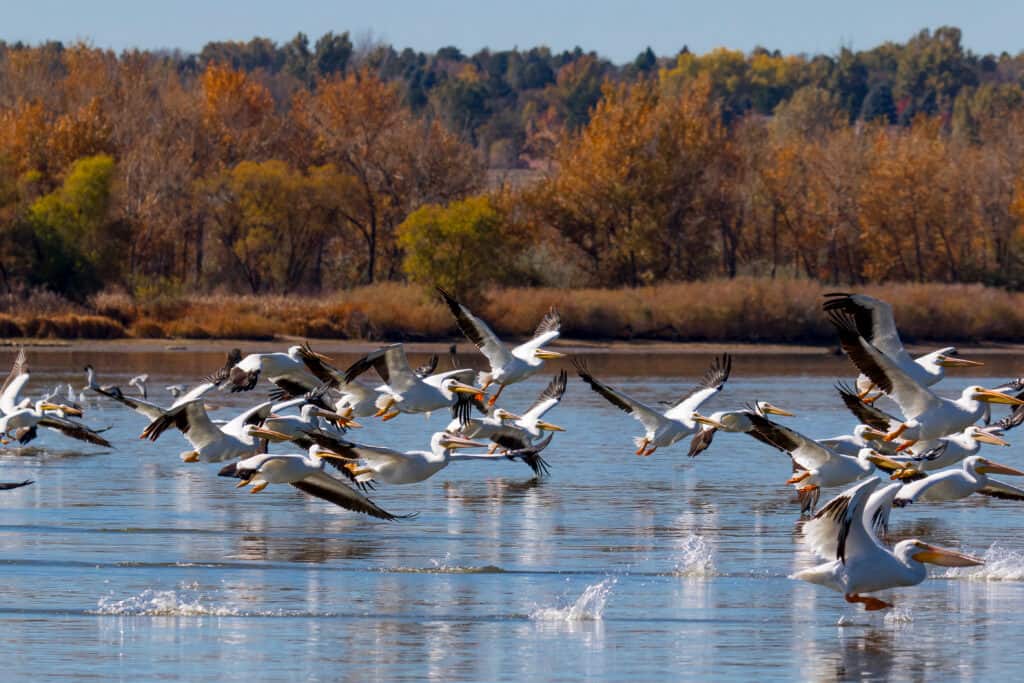
Pelicans are gregarious by nature; however, they are also territorial.
©Images by Dr. Alan Lipkin/Shutterstock.com
These birds are extremely social birds, living in colonies of several hundred individuals. Groups of these birds are known by many different names, including brief, pod, pouch, squadron, and scoop. They like to be around other bird species, too, including cormorants or flamingos. Depending on the species, they built nests in trees, bushes, or on the ground. When they are not eating, they spend their time sleeping, sunbathing, or preening. At dusk, the birds will settle down to sleep with their heads resting back on their shoulders, eyes closed, and feathers ruffled against the cold.
You’ll often see pelican birds migrating in flocks, either in a V formation or a single line. Both sexes remain grouped throughout the year along with their young. Generally, they only become vocal when in their breeding colony, grunting to express excitement. Adults rely on visual displays using their wings and beaks to communicate. Among the more interesting facts is that chicks are generally quite vocal before they leave the nest. They hiss through gaping bills to express displeasure. Some birds will also clap their beaks while looking up or gape, bow, and wag their heads to defend their territory.
Habitat
These birds live on all continents except Antarctica, usually in warm climates near coastal or inland waters such as lakes and rivers, although their range can extend to temperate climate types with defined seasons. They like to congregate on islands whenever possible.
Diet
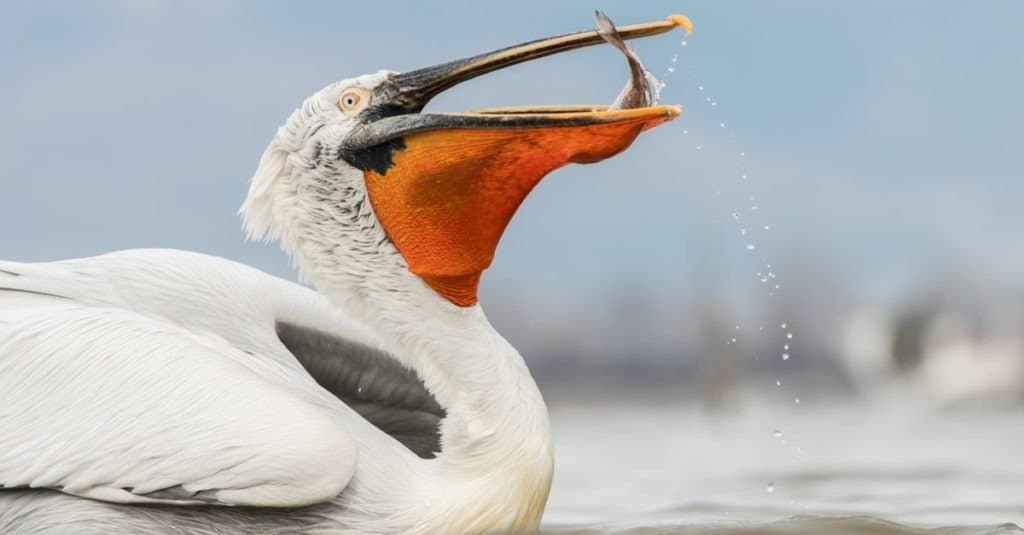
Pelicans have a penchant for seafood and meaty fare.
©JaklZdenek/Shutterstock.com
These birds are carnivores, eating a diet primarily of fish. Their favorites are carp, shiners, mullet, and minnows, although preferred fish vary by species. They will also eat amphibians, crustaceans, insects, other birds, and even small mammals. They eat in groups or by themselves, although Dalmatian and pink-backed pelicans prefer to eat alone. Brown and Peruvian pelicans spot their prey at great heights and then dive into the water to retrieve their catch.
Predators and Threats
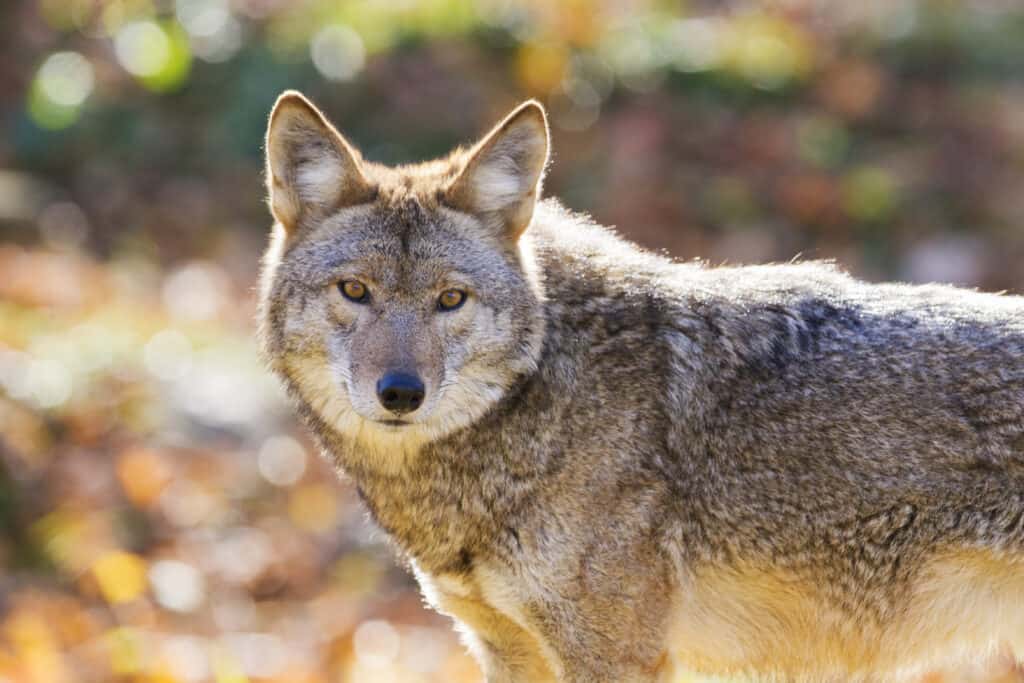
Coyotes constitute a threat to these birds, known for their unique beaks.
©Mircea Costina/Shutterstock.com
Because of their large size, these birds have few predators. Wild dogs and coyotes can be counted among their predators, along with cats. However, the greatest threat to their existence comes from humans. The use of the insecticide DDT in the 20th century caused their eggshells to thin, almost wiping out brown pelicans. As more people moved to coastal areas, development intruded on pelican nesting areas. After DDT was banned in 1972, the brown pelican population rebounded. They are no longer considered endangered but are listed as of least concern.
Dalmatian pelicans, native to parts of eastern Europe around the Mediterranean and some parts of western Asia, also face human threats as their wetland habitat is shrinking. Recent conservation efforts have helped steady their numbers.
Many different species in heavily populated areas have become dependent on people feeding them, which encourages them to stop hunting. Pelicans that beg food from humans don’t receive the necessary nutrients and run the risk of succumbing to disease. Others tend to hunt in areas where commercial fishermen have cast their nets and hooks. The birds become entangled in them, with some fishermen only cutting them free, not removing the netting or the hook, thus endangering the birds’ lives. Oil spills, water pollution, and chemical dumps also threaten pelicans.
Reproduction, Babies, and Lifespan
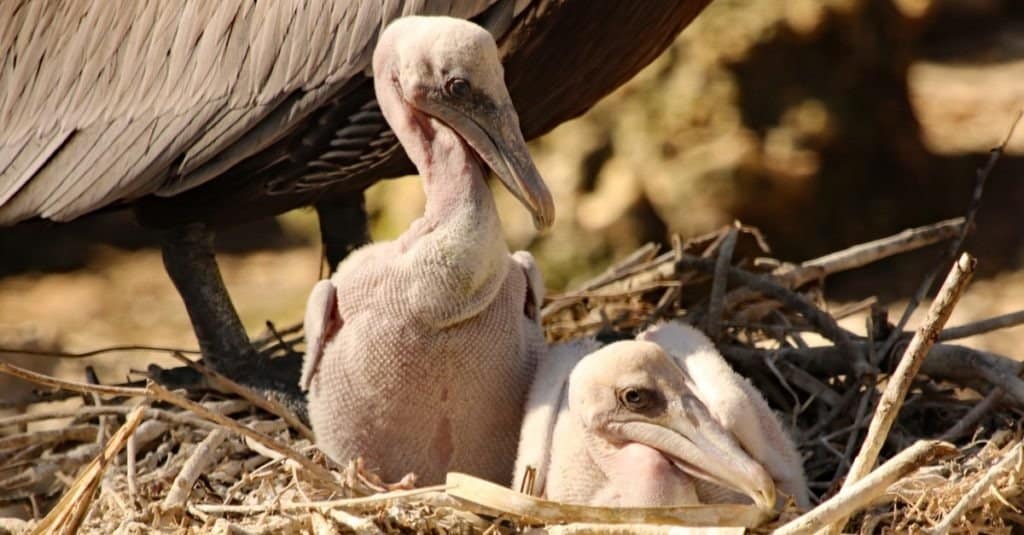
Pelican chicks are fed by both parents before learning to fend for themselves.
©Julie rubacha/Shutterstock.com
These birds are monogamous for a single season. Males use various tactics to attract females when mating. Some pelican species only mate seasonally, while others can mate all year long. Males in some species change the color of their pouch and neck feathers during courtship to attract females. Both sexes are involved in building nests that usually consist of feathers, leaves, and sticks. Ground-nesting species have a complicated courtship ritual that consists of several males chasing after one female. Tree-nesting species have a simpler courtship where males advertise for females.
Copulation occurs at the nest, three to 10 days before egg-laying. Both males and females are in charge of building the nests, using feathers, leaves, and sticks. Females can lay anywhere from one to six eggs, depending upon the species, which take 30 to 36 days to incubate.
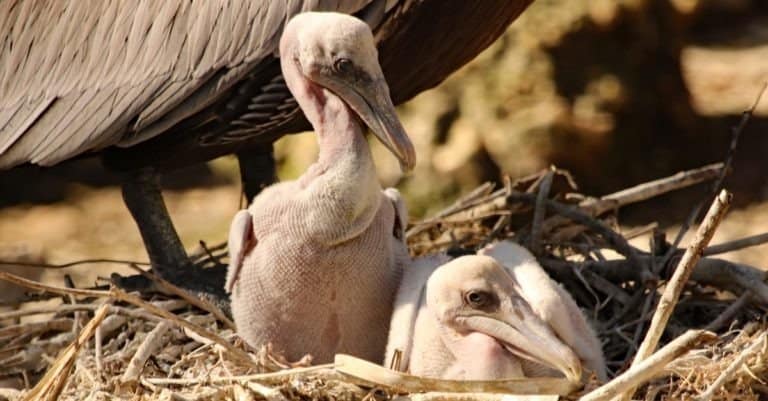
Both parents incubate the eggs by standing on top of them. Eggs hatch in the order laid, with the first chick usually being the largest. Hatchling chicks are naked and pink, eventually darkening to grey or black within 14 days, followed by a covering of white or grey down. Immature pelicans have feathers that are darker than those of their parents. Young pelicans feed by sticking their beaks into their parents’ gullets to retrieve regurgitated fish.
When chicks are about 25 days old, they begin to gather in pods with other young birds. Parents recognize and only feed their offspring. By two months, they begin to go further afield and occasionally swim, sometimes practicing communal feeding. By 12 weeks, they leave the nest, sometimes remaining with their parents, but are rarely fed by them. Pelican birds are sexually mature at three to four years of age.
Pelicans have a lifespan of 10 to 30 years in the wild; the oldest recorded wild animal of this genus lived to 43 years.
Population
The world population of brown pelicans has been estimated at approximately 300,000, while the Peruvian pelican population is 100,000-1,000,000. About 100,000 white pelicans live in North America, while Europe is home to as many as 10,000 breeding pairs. Australian pelicans are widespread, with an estimated 46,700 to 200,000 birds spread across the continent.
Birds in the Zoo: Where to find the Pelican
In zoos, the pelican bird share their habitat with cormorants, ducks, and other water birds. They reside in some of the most popular exhibits at the San Diego Zoo Safari Park, which is among the few zoos in North America to house great white, Dalmatian, and pink-backed pelicans.
Pelican Pictures
View all of our Pelican pictures in the gallery.

iliuta goean/Shutterstock.com
Sources
- Wikipedia / Accessed January 21, 2021
- All About Birds / Accessed January 21, 2021
- Audubon / Accessed January 21, 2021
- Classic Collection of North American Birds / Accessed January 21, 2021