
Classification, Evolution, and History
The platypus (also commonly known as the duck-billed platypus) is a small species of semi-aquatic mammal indigenous to the eastern coast of Australia. Known for its unique-looking appearance, the platypus belongs to a small group of mammals called monotremes, of which there are only a few species.
The platypus along with the short-nosed echidna and long-nosed echidna are the only mammals that are known to lay eggs instead of giving birth to live young, making them truly unique and leading to them not being recognized as true mammals for a long time. They do, however, possess and feed their young using their mammary glands – the essential characteristic from which the class Mammalia takes its name. When the first platypus specimen arrived in Britain in 1798, it was thought to be a hoax as the platypus looks like it is a mixture of a mammal and a bird.
There appears to be some evidence that, while platypuses now live in the freshwaters of Australia, they once lived in more locations, including South America! This was possible because of the geographical connection of Australia to South America via Antarctica millions of years ago.
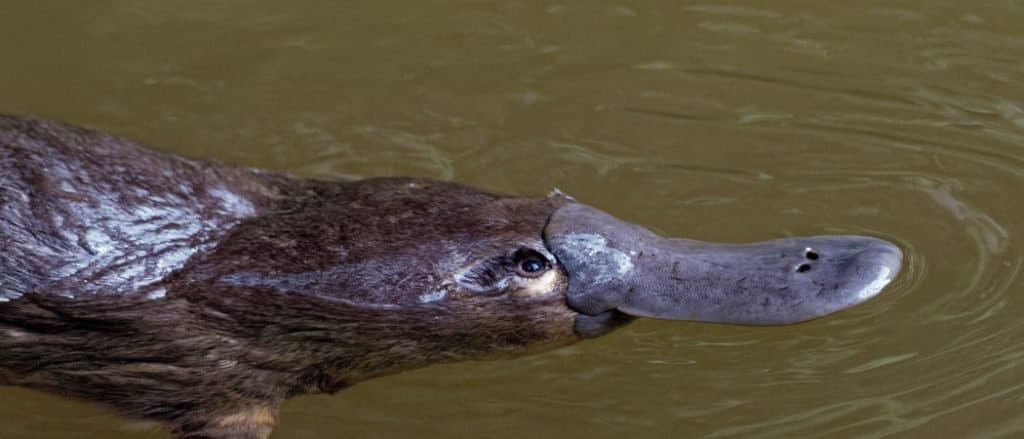
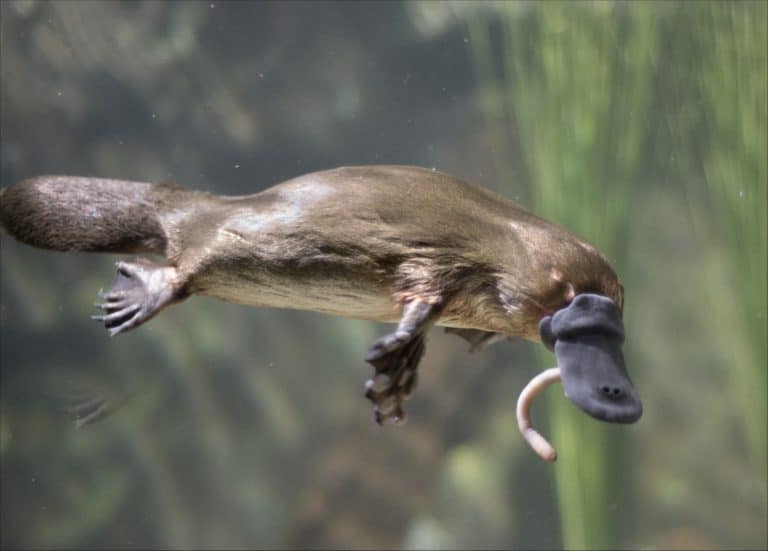
The platypus is one of the few species of monotremes and is easily identified by its ducklike nose.
©iStock.com/phototrip
Anatomy and Appearance
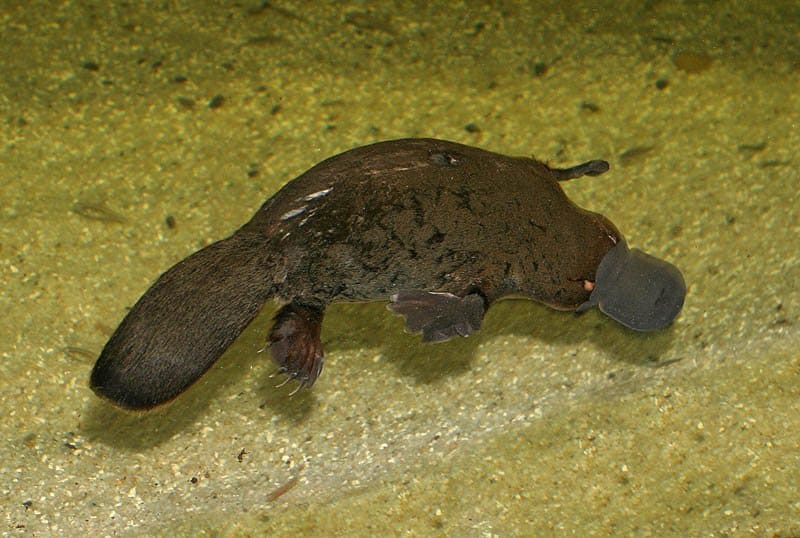
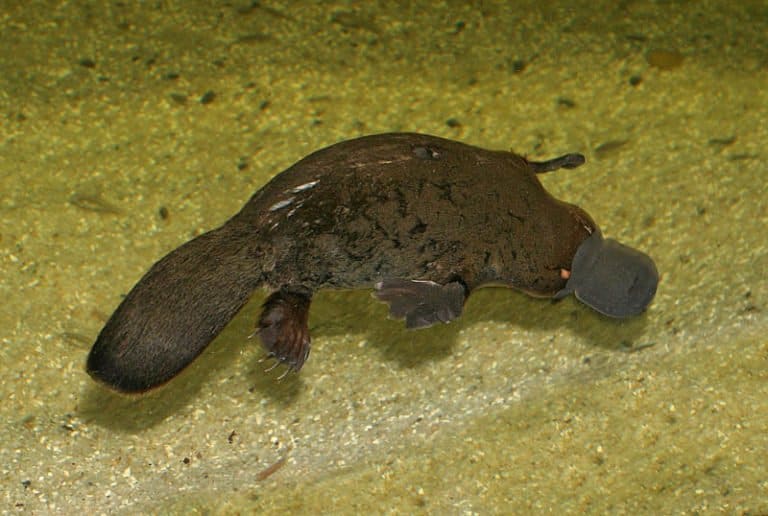
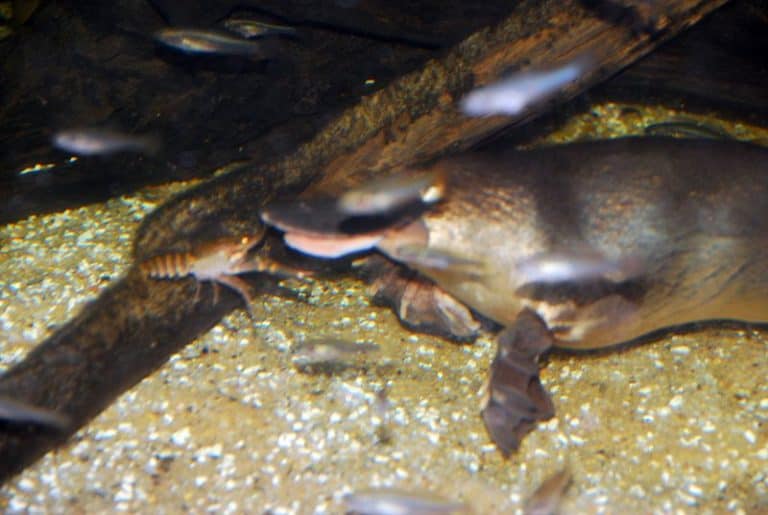
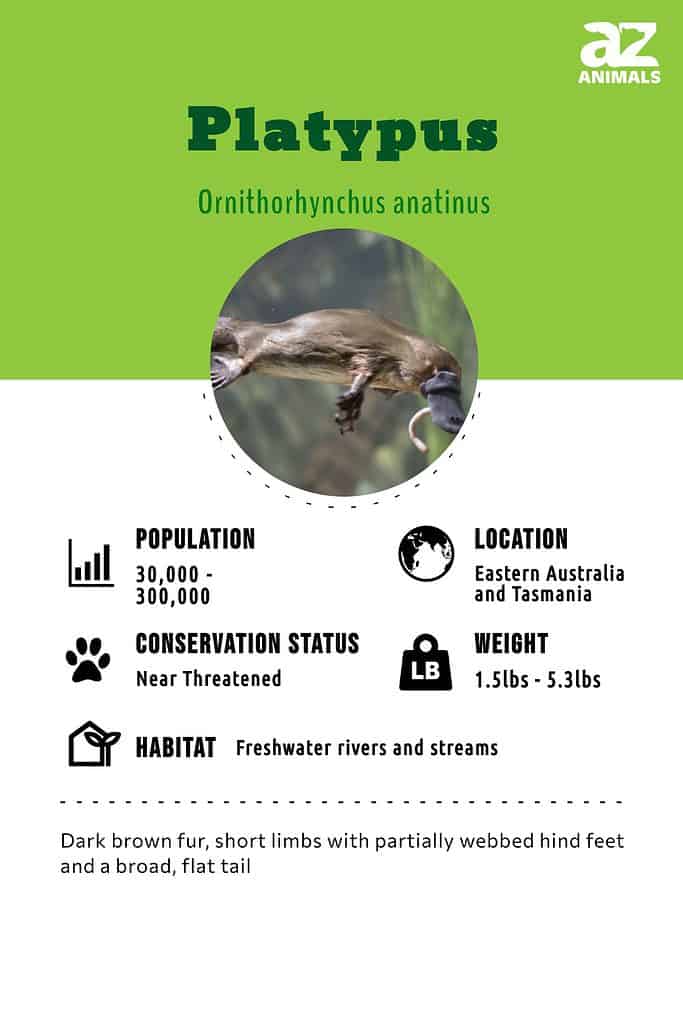
The platypus is an animal with a small, streamlined body that is covered in short and dense waterproof fur that varies in color from dark brown on its back with a light brown or silver underside and a plum-colored middle. They have short limbs with partially webbed hind feet and a broad, flat tail (which resembles the tail of a beaver) that are used as rudders when underwater. Their front feet are fully webbed and help to propel the platypus through the water and can be turned back when on land, exposing their large nails to aid them when walking or burrowing into the river banks. One of the platypus’s most distinctive and unusual features is the large, broad bill that looks like the beak of a duck. The bill of the platypus is soft and pliable and covered in a multitude of sensory receptors that help them to detect the small electrical signals emitted from their prey species. Their bills are very touch-sensitive and are often used to probe the mud on the riverbed for the small insect larvae on which they most commonly feed on. Males are larger in size than females and possess a poison spur on the ankle of each hind foot that is used to drive away rival males during the breeding season. Learn more about the most venomous mammals on earth here.
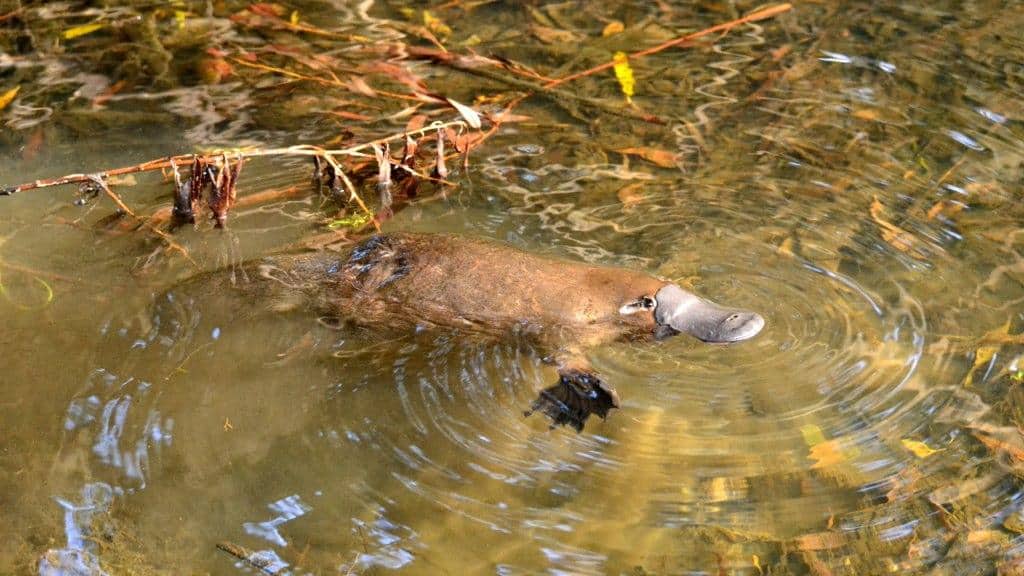
Platypuses have short limbs with partially webbed hind feet and a broad, flat tail.
©Klaus / Flickr – Original
Distribution and Habitat
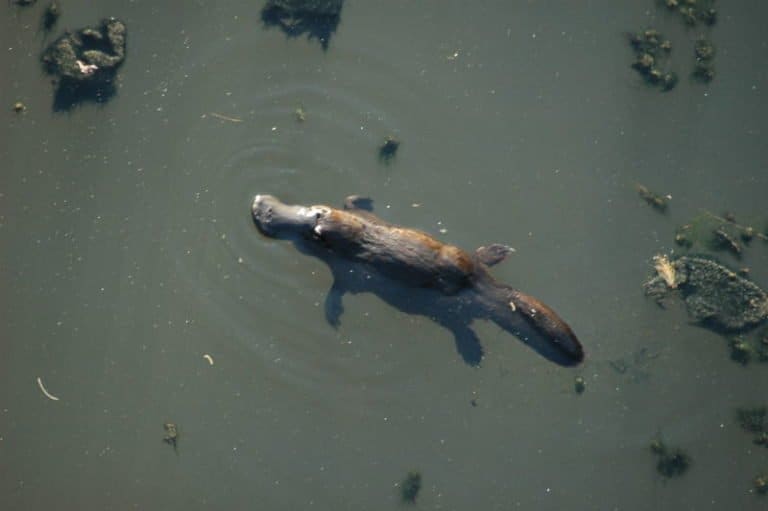
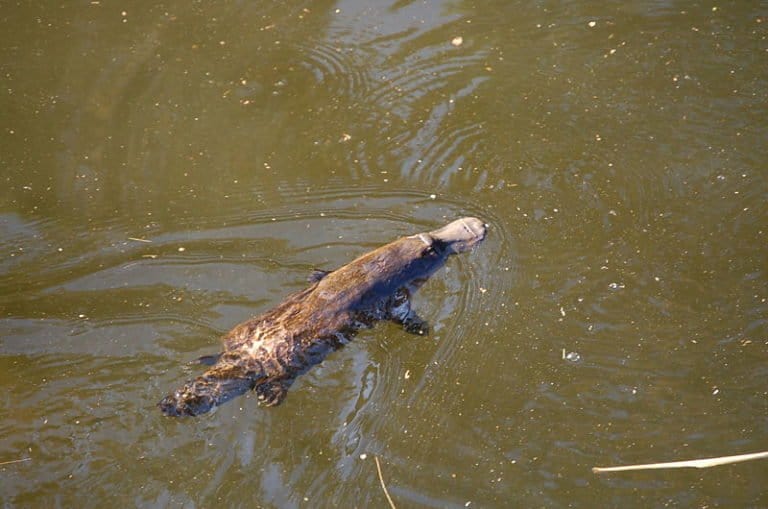
The platypus is an animal that is found on the east coast of Australia from Cooktown in Queensland in the north, all the way down to the island of Tasmania in the south and has also been introduced to Kangaroo Island in southern Australia. They inhabit streams and rivers, and some lakes that have suitable banks for burrowing in and a permanent source of water. They are highly suited to their semi-aquatic environment and possess the best physical characteristics for dealing with life both in and out of the water, with their dense fur helping to keep their warm bodies insulated even in the coldest of water. Their home ranges vary depending on the specific river system and can vary in size from less than a kilometer to more than 7 kilometers, and overlap those ranges of other individuals despite their solitary nature. The platypus is thought to be so successful as an animal species as they are able to survive in such a niche environment in the world’s driest continent.
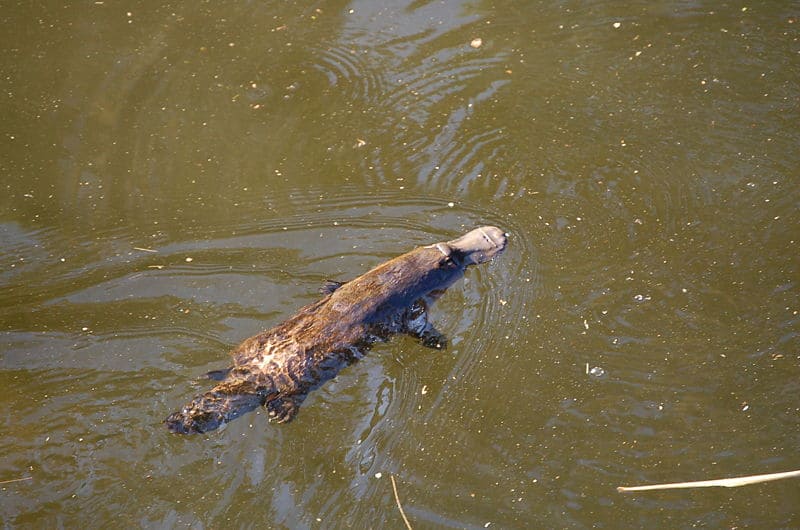
Platypuses inhabit streams, rivers, and some lakes that have suitable banks for burrowing in and are a permanent source of water.
©Stefan Heinrich / Creative Commons – Original
Behavior and Lifestyle
The platypus is a solitary animal that despite occupying overlapping home ranges, only comes together during the breeding season or when a mother is looking after her young. They are nocturnal hunters that are able to close their eyes, ears, and nostrils when diving down to the river bed in search of food. During the day, they rest in burrows that are dug into the river banks using their long, broad nails and powerful front legs. There are two different types of burrows used by the platypus; one for resting and one for incubating their eggs and nursing their young. Individual animals may use a number of resting burrows within their home range. Typically resting burrows are around 5 meters in length but incubation burrows can reach up to 30 meters long and can have more than one nesting chamber.
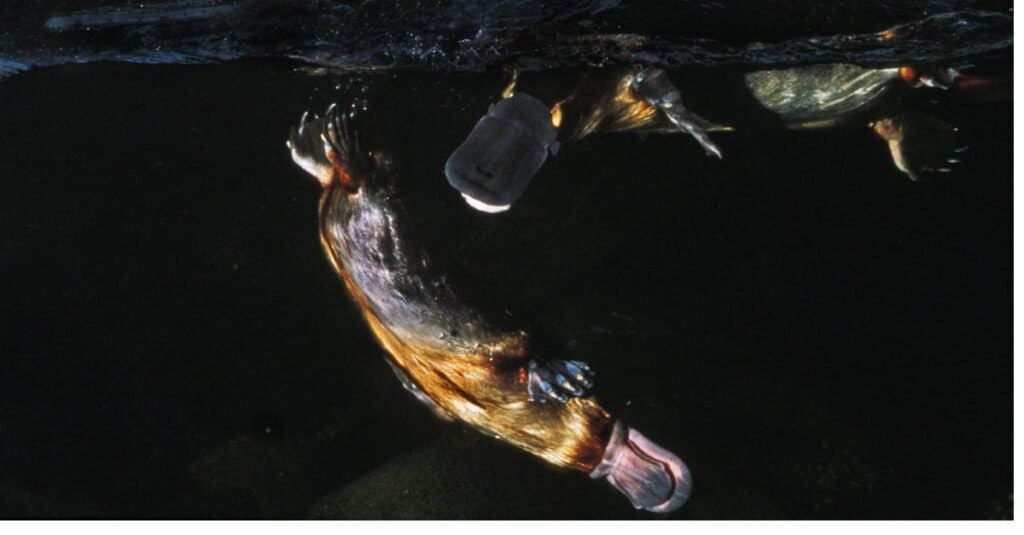
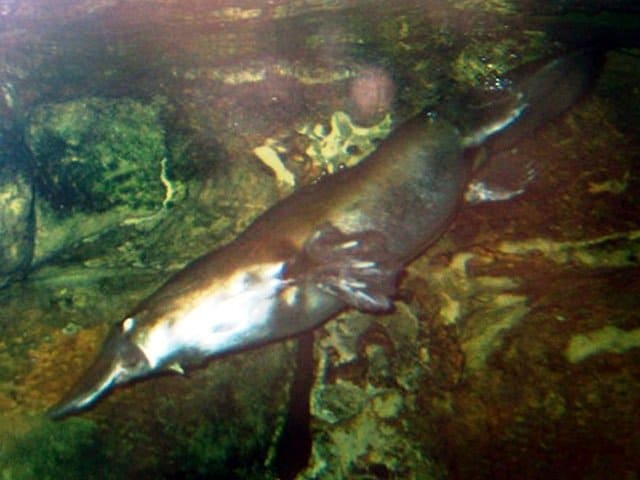
Normally solitary animals, platypuses only come together when breeding or when mothers are rearing their young.
©iStock.com/slowmotiongli
Reproduction and Life Cycles
Breeding takes place between late winter and early spring (July – October) in the water, with males using their poison spurs to deliver a painful dose of poison to their rivals. As part of their courtship ritual, females carry bundles of wet leaves to their incubation chamber at the end of their burrow and plug the tunnel with soil. After a gestation period of between two and three weeks, the female platypus lays between one and three small, spherical eggs that are only 1.5 cm in size and are soft and leathery. After an incubation period of around 10 days, the young hatch out in a very undeveloped state measuring barely 1 cm in length, blind, hairless, and having blunt buds for limbs. They are nursed by their mother in the incubation chamber for up to 5 months suckling on the milk on her fur that is secreted by her mammary glands. A young Platypus is lighter in color than older individuals and 85% of their adult size when they first become independent. Platypuses tend to live for around 10 years in the wild but can reach ages of 17 or more when in captivity.
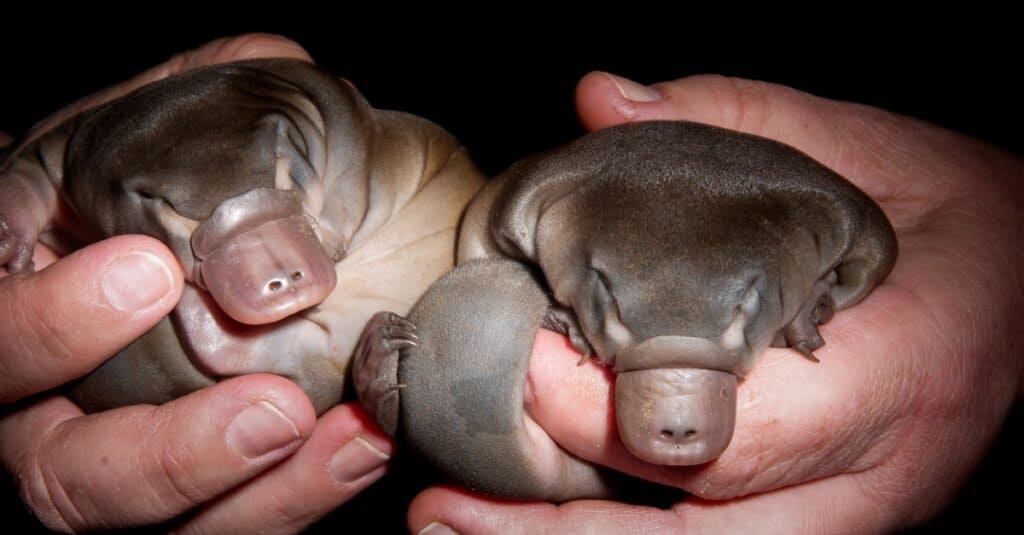
Platypuses hatch from soft, leathery eggs.
©iStock.com/IainStych
Diet and Prey
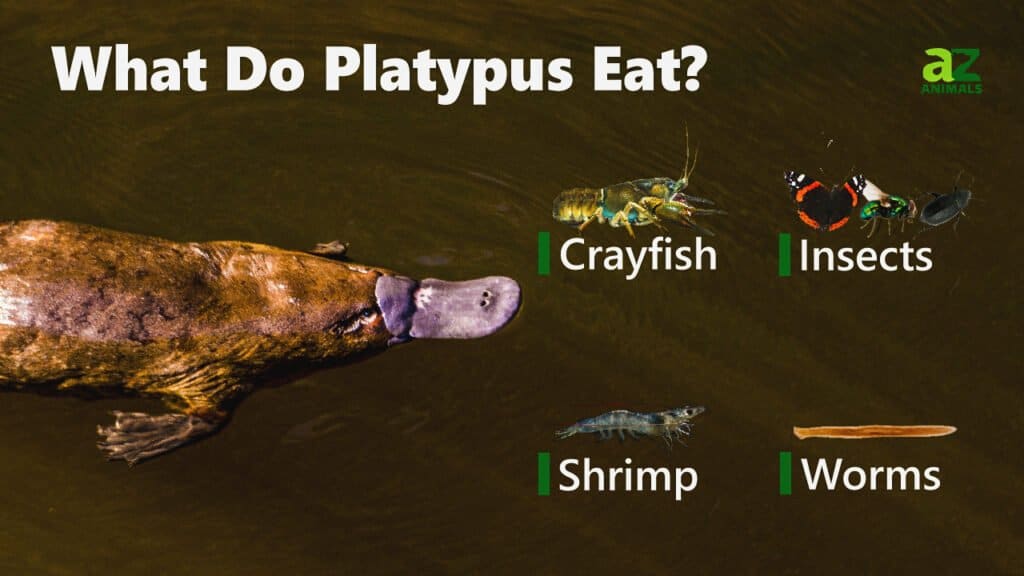
The platypus is a small, carnivorous mammal whose diet is almost solely comprised of bottom-dwelling aquatic creatures. Young insects (larvae) make up the majority of their diet along with small freshwater crustaceans, snails, tadpoles, and small fish. Due to the fact that their eyes, ears, and nostrils are closed when they are underwater, the platypus relies solely on its bill in order to find food. The small sensory receptors that cover it can detect the electrical signals created by the movement of creatures in the water and the fact that it is highly tactile means that they can also feel prey species when probing the mud on the river bed. When hunting the platypus stores food in cheek pouches located on the sides of the mouth that is then ground up using the horny ridges that the platypus has instead of teeth.
Predators and Threats
The platypus is a highly specialized animal that has evolved to survive and thrive in very specific environments and protects itself from predators when resting during the day by hiding in its river-bank burrows. However, their small size means that they are preyed upon by numerous animal species throughout their home ranges. Their most common predators include birds of prey such as hawks and eagles, large mammals including dingoes, dogs, cats, and Tasmanian devils, and reptiles such as snakes, monitor lizards, and crocodiles. Despite the fact that they are widespread and considered locally common in places, they were hunted to near extinction in the 18th century which has led to reductions and fragmentation of platypus populations in some areas. Due to their very specific evolution, they are also highly susceptible to changes in their natural habitats.
Platypus Interesting Facts and Features
The platypus is a species of monotreme, which is a small group of egg-laying mammals of which are they are only three species. Not considered true mammals by some scientists, monotremes are thought to be the most primitive group of mammals having evolved around 200 million years ago. However, despite having evolved before other mammal species, monotremes are by no means primitive and possess some highly developed features that are not found in any other group of mammals, such as the poisonous spur found on the hind ankles of males. Unlike other mammals, they do not have a birth canal and instead, their eggs travel through the same bodily opening as their urine and feces and terminate in a single bodily opening known as the cloaca. This is a feature that monotremes share with both birds and reptiles with the name monotreme actually meaning “one-holed animal”.
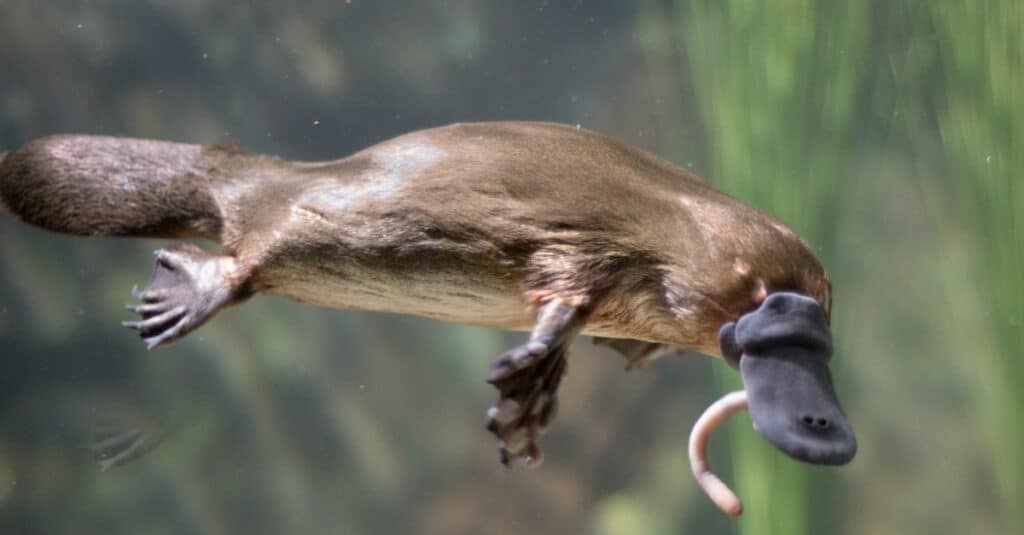
Platypuses have evolved to have features that are not found in any other group of mammals.
©iStock.com/JohnCarnemolla
Relationship with Humans
With the settlement of Europeans in the 18th century came a great change for platypus populations along Australia’s eastern coast. The platypus was hunted extensively for its soft, thick fur until it became banned in 1900 which allowed populations to begin to recover. Growing human settlements and changes to the freshwater conditions caused by pollution has had a negative impact on platypus populations particularly in certain areas, where they have suffered from habitat loss.
Conservation Status and Life Today
Until 2014, the platypus was considered to be an animal that was of Least Concern from extinction by the IUCN. However, due to the constant decline in their population numbers, they are considered to be a species that is now Near Threatened. With up to 300,000 adult individuals remaining in the wild, the platypus is becoming increasingly threatened throughout its natural range. A number of captive breeding programs have been established to try and boost platypus population numbers in certain areas.
Platypus Pictures
View all of our Platypus pictures in the gallery.

John Carnemolla/Shutterstock.com
How to say Platypus in ...
Sources
- David Burnie, Dorling Kindersley (2011) Animal, The Definitive Visual Guide To The World's Wildlife / Accessed November 10, 2008
- Tom Jackson, Lorenz Books (2007) The World Encyclopedia Of Animals / Accessed November 10, 2008
- David Burnie, Kingfisher (2011) The Kingfisher Animal Encyclopedia / Accessed November 10, 2008
- Richard Mackay, University of California Press (2009) The Atlas Of Endangered Species / Accessed November 10, 2008
- David Burnie, Dorling Kindersley (2008) Illustrated Encyclopedia Of Animals / Accessed November 10, 2008
- Dorling Kindersley (2006) Dorling Kindersley Encyclopedia Of Animals / Accessed November 10, 2008
- David W. Macdonald, Oxford University Press (2010) The Encyclopedia Of Mammals / Accessed November 10, 2008