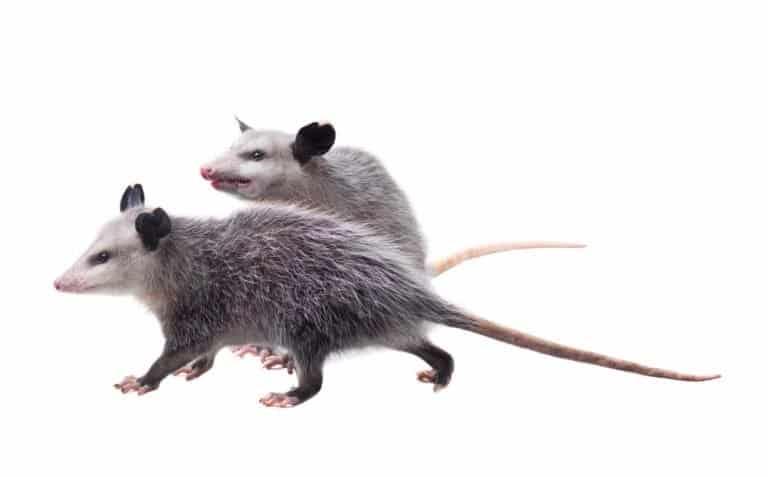
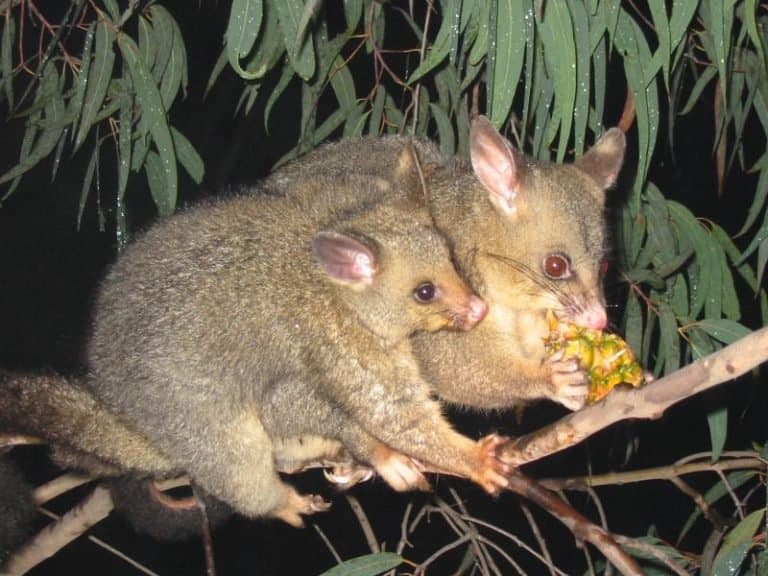
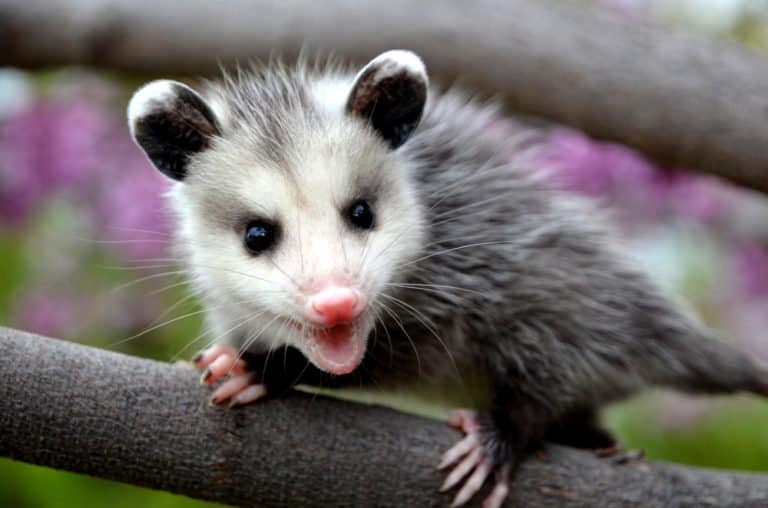
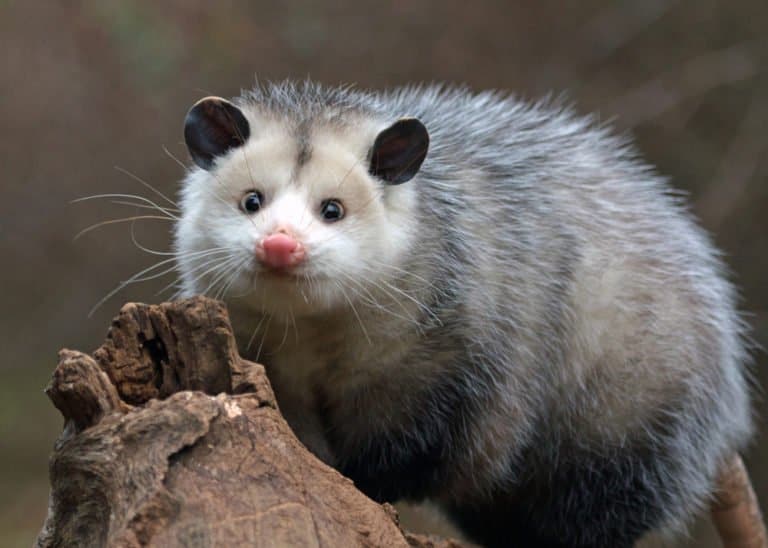
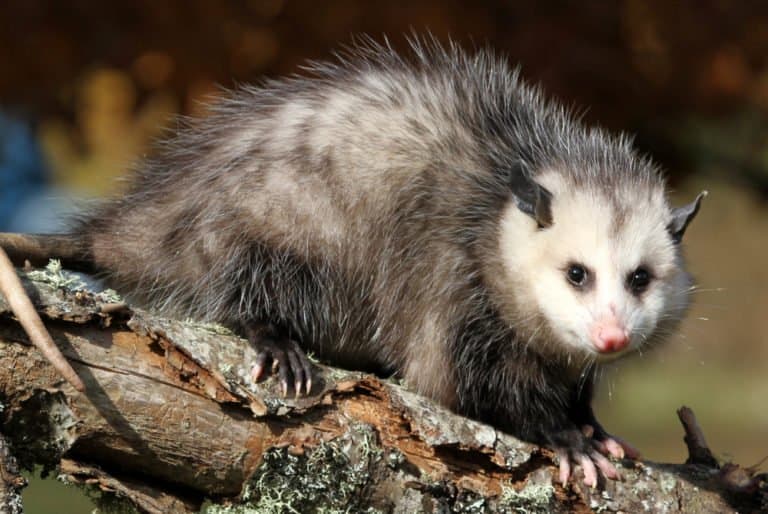

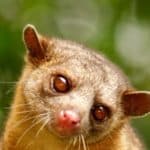
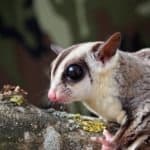
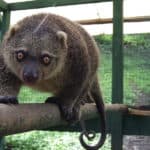
“The possum is one of the most common marsupials in Australia.“
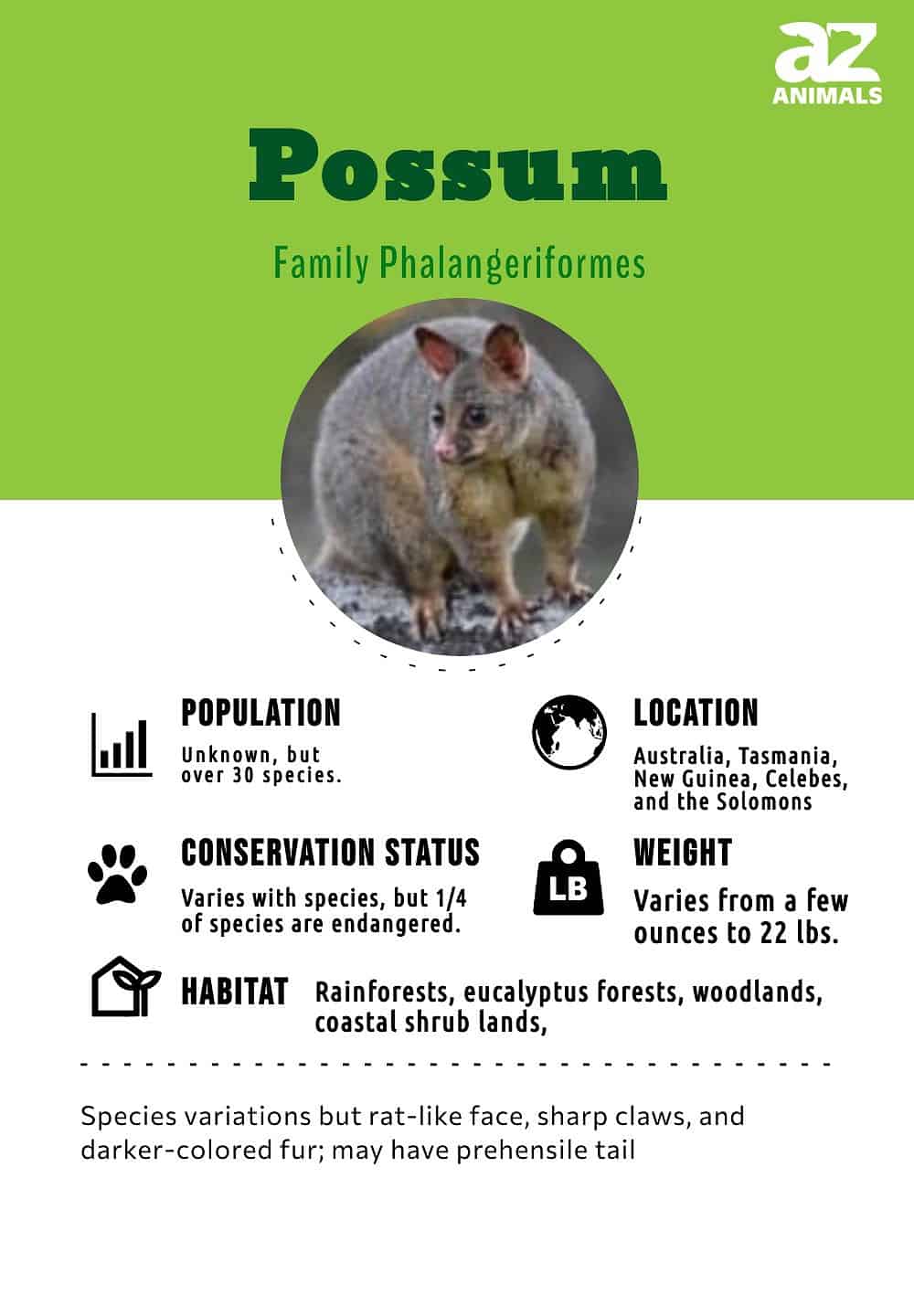
Possums are nocturnal animals that can agilely navigate tall trees . Sometimes they venture into human areas and can be heard at night on a roof. The words possums and opossums are often used interchangeably, but they actually mean different things. Opossum refers specifically to the American opossums. Possum, on the other hand, refers to the Australian variety with the scientific name of Phalangeriformes. They belong to different orders but are both examples of marsupials.
3 Facts
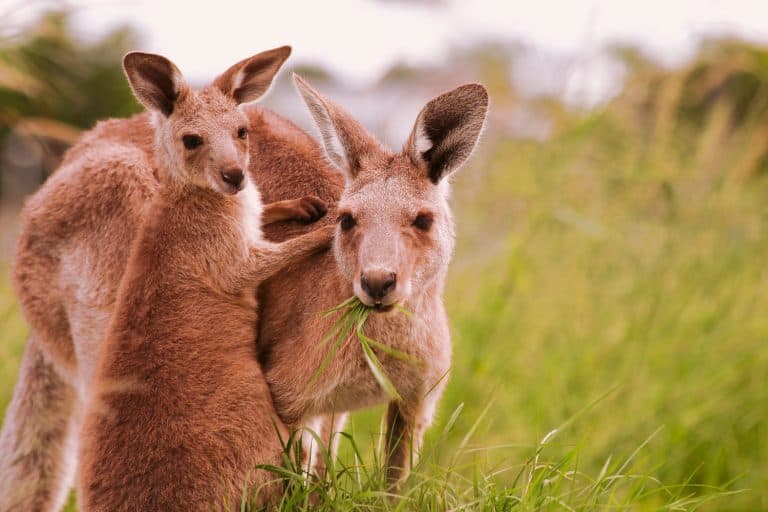
- The marsupial is an ancient lineage of mammals that split off from placental mammals over 100 million years ago. Modern possums, kangaroos, and koalas probably evolved from a common ancestor that lived some 20 to 30 million years ago.
- Males and female possums: These animals are known as jacks and jills, respectively, while a group is called a passel.
- In Australia and some of the nearby islands, the spread of towns and cities has made encounters much more common. Sometimes considered to be a pest, possums like to hide in dark areas such as attics, sheds, and garages, causing damage and destruction to gardens, farms, forests, and equipment. They represent almost no danger to humans on their own, but they can spread diseases by piercing the skin with their sharp claws. If you encounter some in or near your residence, then it is a good idea to avoid contact and let professionals remove them in a humane manner.
Appearance
These traits are generally shared among all possums, but there is still a huge amount of variation, particularly in regards to their size.
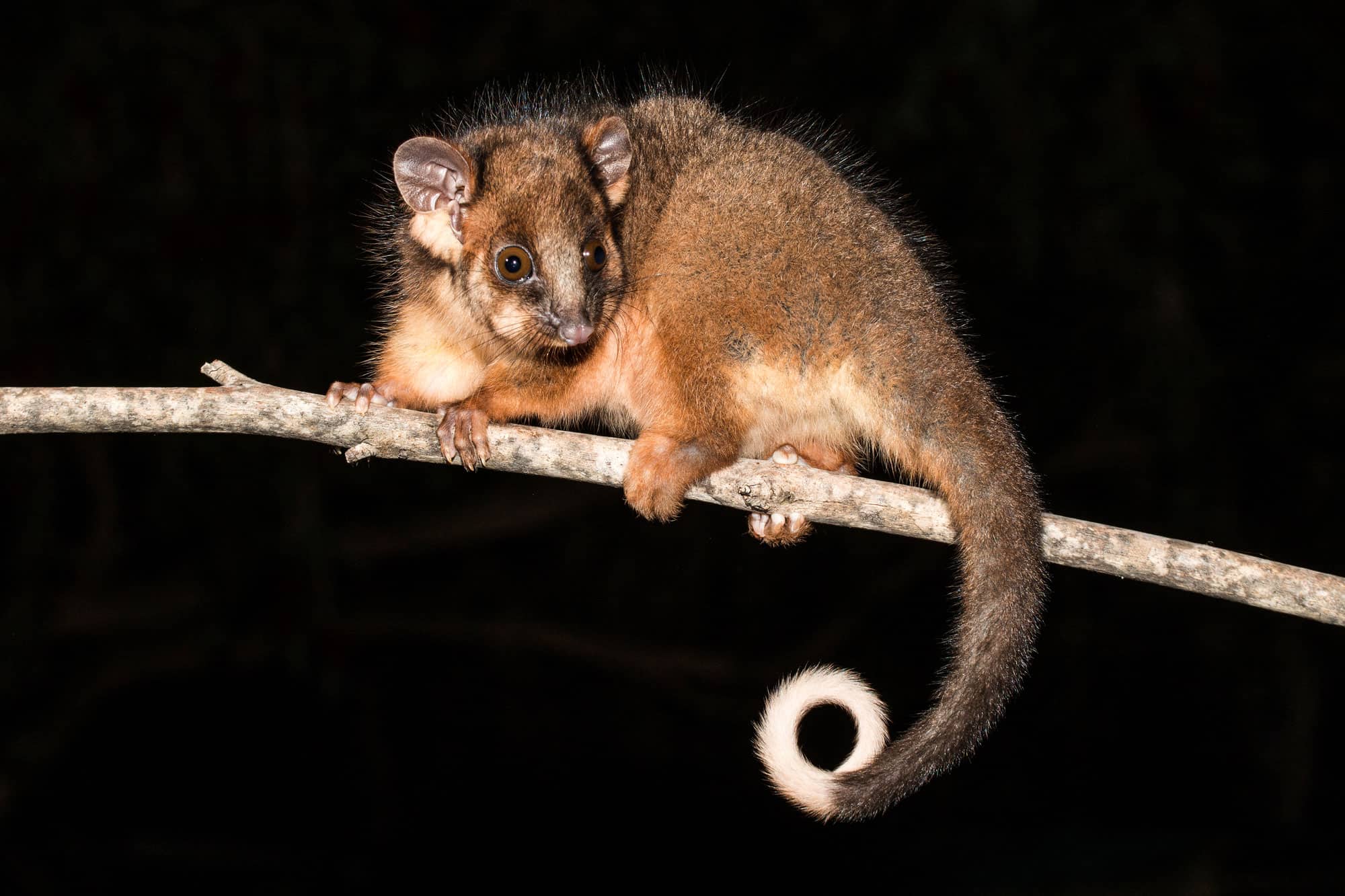
A common ringtail possum with the characteristic white tip on its tail.
©Ken Griffiths/Shutterstock.com
The smallest species is the Tasmanian pygmy possum, which measures less than three inches long and weighs less than a pencil. It resembles a mouse more than its cousins, especially with its soft, full fur and mostly hairless ears.
The largest species of possum are the two bear cuscuses (Talaud and Sulawesi), which weigh up to 22 pounds, or about the size of a beagle or spaniel. They also have a prehensile tail that is hairless. These possums have shorter facial features, including their fur and ears. Their fur tends to have a darker coloration of blacks and grays and even brown. The bear cuscus’s underside does get a little lighter in color.
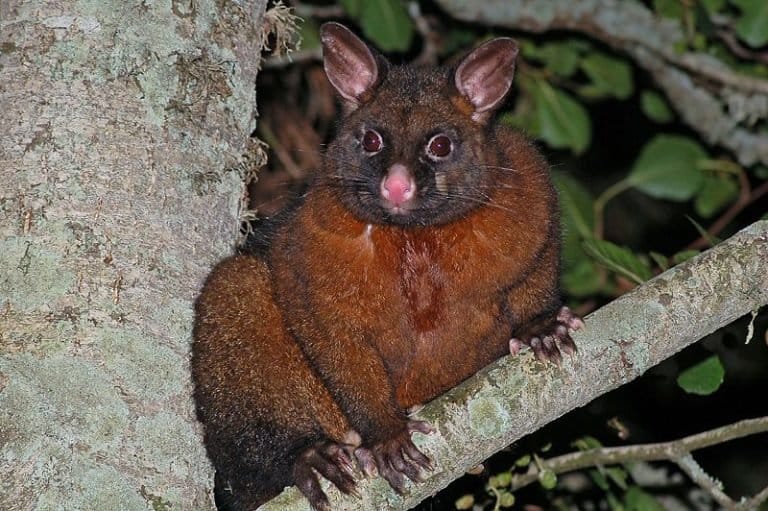
Possums, as animals, vary in other physical characteristics as well. The brush-tail possum has a very furry tail with a naked underside. It is able to use this prehensile tail to grasp tree and bush branches. It also has pointy ears. Notably, both sexes of the common brush-tail have scent glands in their chest which actually stains the fur a reddish color.
The ringtail possum (Pseudocheirus peregrinus), on the other hand, has a multi-colored tail. Uniquely, the last quarter of the tail ends in an interesting feature: white fur. It almost looks as though someone dipped the tail in white paint!
Scientific Name
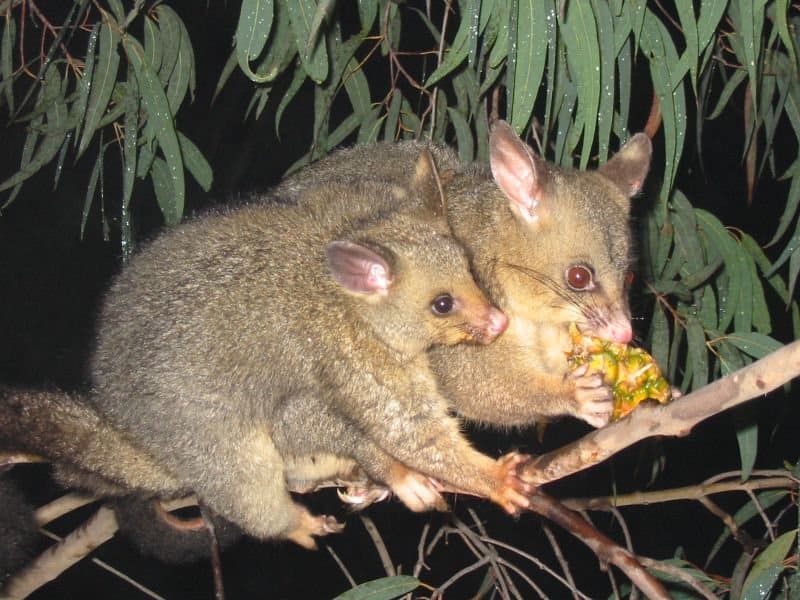
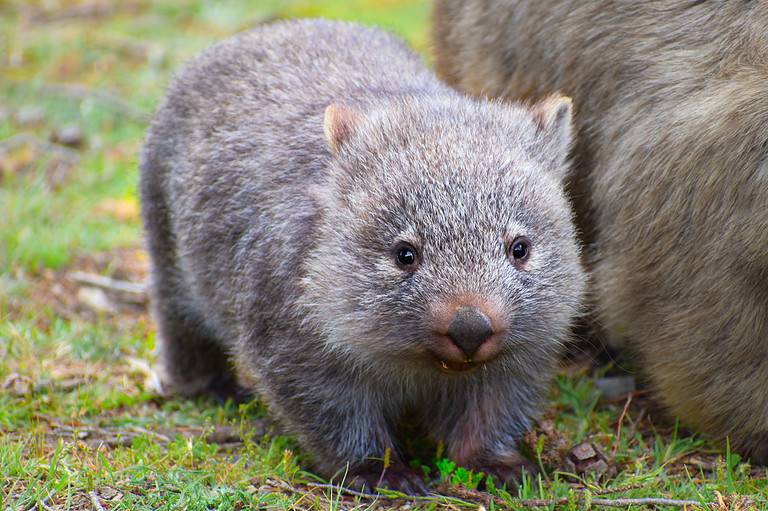
Possums belong to the marsupial order with kangaroos, wallabies, koalas, and wombats.
The scientific name of the possum family is Phalangeriformes, which derives from the Greek word phalanger, meaning spider’s web, in reference to the fused digits on the hind feet. As animals, Possums are divided further into several different families and genera. The family of Phalangeridae contains the majority of possums, including the well-known common brush-tail possums (Trichosurus vulpecula) and the cuscus. There are posibly over 30 different species of possums spread throughout the Pacific region. They belong to the marsupial order of Diprotodontia along with kangaroos, wallabies, koalas, and wombats.
The names of some of the possum species includes: Common Brushtail, Common Ringtail, Pgymy (with 5 subspecies), Honey, Mountain Brushtail, Northern Brushtail, Green Ringtail, Leadbeater’s, Scaly-tailed, Striped, Lemuroid Ringtail, Coppery Brushtail, Cinereus Ringtail, Rock Ringtail, Western Ringtail, Short-eared Brushtail, Daintree River Rintail, and Herbert River Ringtail.
Perhaps the most unique adaptation of all possums is the glider. As the name suggests, these species have evolved large skin flaps between their limbs that enable them to glide through the air. One species has been observed to travel as much as 65 feet at once. There are a number of different types of gliders as well: squirrel glider, sugar glider, Yellow-bellied glider, mahogany glider, greater glider, and feathertail glider.
The glider possum flaps are very similar to the flying squirrel’s (which is actually a rodent and a placental mammal, not a marsupial). This is an example of convergent evolution: two separate animals evolving similar traits for the exact same reasons. Most of the gliders occupy the genus of Petaurus, but the feather-tail glider, which has serrated toe pads for climbing smooth bark, occupies its own genus, appropriately named Acrobates.
Behavior
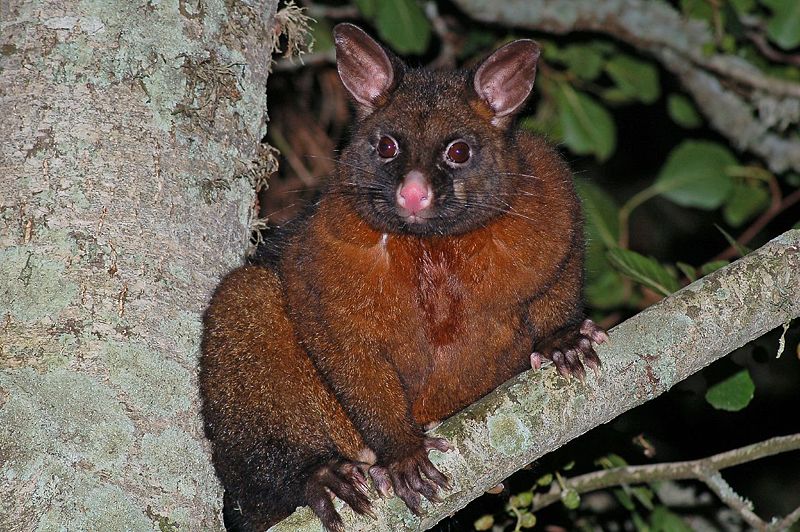
Possums have scent glands for defense and to mark their territory.
©Bryce McQuillan, CC BY-SA 2.0, via Wikimedia Commons – Original / License
Possums are animals that vary as much in their behavior as they do in their physical characteristics. The brush-tail possums are nocturnal and solitary creatures that come together only for the breeding season. As the most terrestrial and earthbound of all possums, they can live near human homes and gardens. The ring-tail possums, on the other hand, are highly social creatures that inhabit communal nests known as dreys. These groups usually consist of the male and female breeding pair and the offspring.
Possums are fairly docile, omnivorous animals that only act aggressively when threatened. Some of their defensive behavior includes playing dead, growling, bearing their teeth, or secreting a bad odor. When they aren’t hunting, possums spend most of the time grooming or sleeping. Possums communicate with each other (and with potential threats) through both sound and smell. Their suite of alarm calls, mating calls, and location calls include screeches, hisses, clicks, grunts, and howls. They also have scent glands on their chest to mark territory. Being marsupials, they are very different from rodents.
Habitat
The possum is native to the forests of Australia and the surrounding islands of Tasmania, New Guinea, Celebes, and the Solomons. Their most common habitats include rainforests, eucalyptus forests, woodlands, coastal shrub lands, and even human neighborhoods. The only thing they need is a relatively dense network of trees in which to reside for protection and food.
Diet
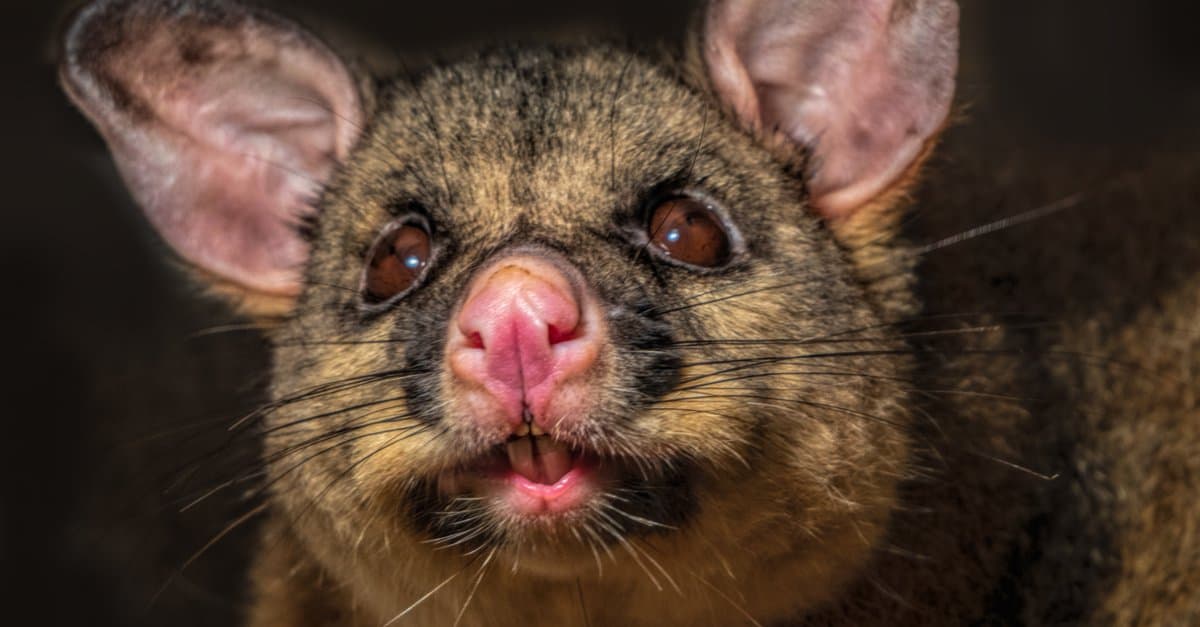
A brushtail possum showing its teeth. Its diet consists of insects, eggs, and a variety of different plant matter.
©Carolyn Smith1/Shutterstock.com
Possums are a type of animal that have evolved to favor an omnivore diet that includes insects, eggs, and a variety of different plant matter, some of which is poisonous to other animals. If given the opportunity, they will also scavenge on food left over by other animals and people. The exact dietary composition varies based on the availability of food from one location to another, so they can best be described as opportunistic. Some possum species have an enlarged cecum (a pouch in the intestines) to ferment and digest the highly fiber-based foods of their diet. The molar teeth have sharp tips to help them chew through the hard plant matter.
In addition to other food sources, possums eat chickens and other small animals.
Predators and Threats
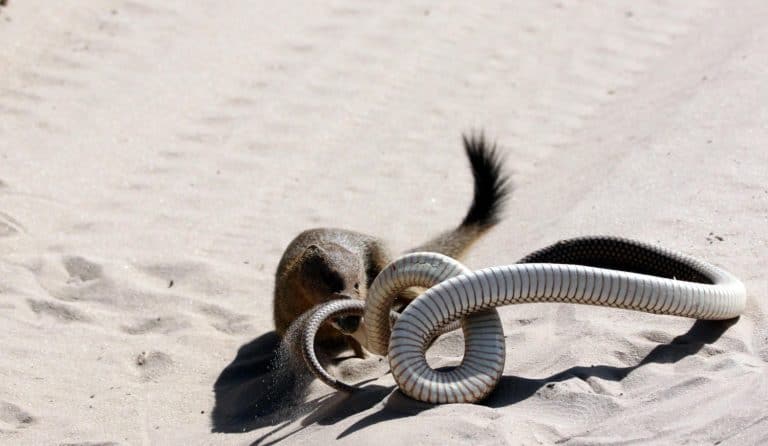
Possums are commonly preyed upon by snakes, cats, dogs, foxes, owls, tiger quolls, and other large predators. Tiger quolls and snakes are endemic to Australia, but many other species were introduced by European settlers and have driven numbers down. Possums have been hunted by humans for their fur, but the biggest threat to their existence is the destruction of habitat from both fires and human activity. As was demonstrated by the destructive nature of the 2019 to 2020 bushfires, these incidences are greatly exacerbated by climate change.
Reproduction, Babies, and Lifespan
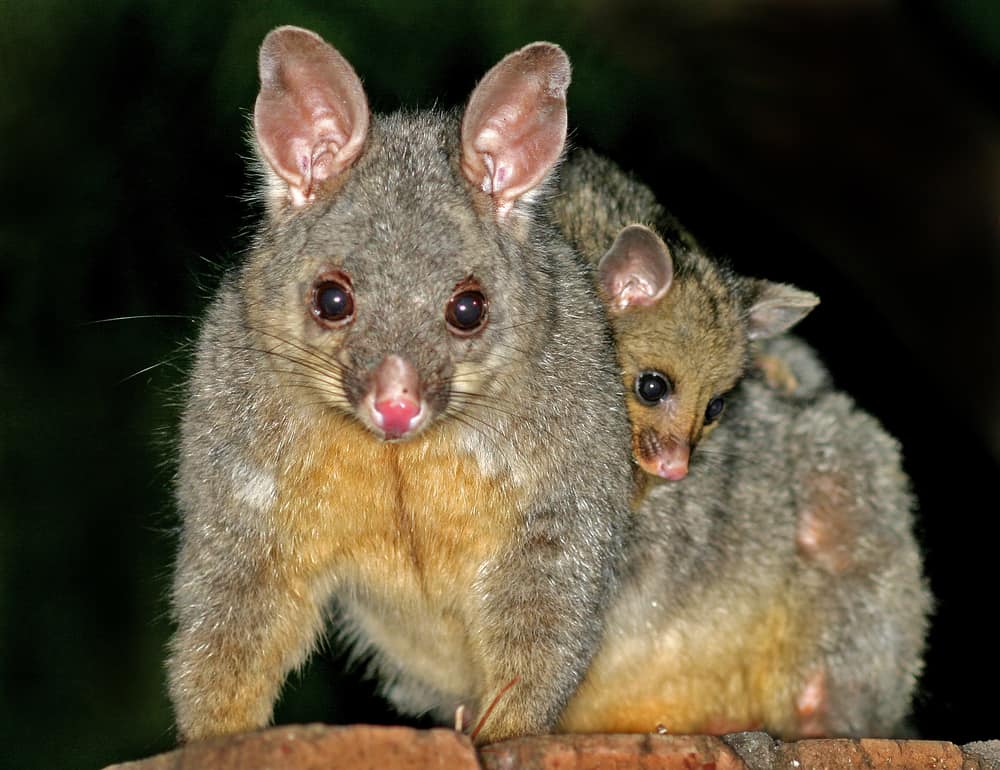
The mother possum is responsible for the majority of parenting duties, even carrying a baby on her back when it is too big for her pouch.
©Stuart Elflett/Shutterstock.com
Reproduction varies from monogamy (a single mate) to polygamy (multiple mates) and almost everything in between. Only the mountain brush-tail possum has the ability to change its mating system on a whim based on how much food is available in the environment. Males court females with their loud calls and may sire several groups of young throughout the entire mating season.
Once the pair copulates, the female produces one or two (rarely three) viable offspring, typically around the middle months of the year. Some species produce up to 10 offspring, but most of the babies quickly die off, leaving only a few behind. To maximize the chances of survival, the mother finds a comfortable hiding place in tree hollows or abandoned bird nests to carry her young. Only a few species actually construct nests from scratch.
As with many other types of animals, the mother is responsible for the majority of parenting duties, while the fathers contribute almost nothing to their survival. The common ring-tail possum is the only species in which the male also takes a prominent role in caring for the young.
The gestation period is usually quite short. Among the brush-tail possums, it lasts only for 16 or 17 days. The young joeys, as they’re called, crawl from the birth canal into the mother’s pouch for the purpose of feeding on her milk. At this stage, they are still blind and deaf and only measure a few centimeters large. The joeys are so dependent on the mother that their lips will actually fuse shut around the nipple to prevent it from losing contact for the first several weeks of life. Even as it becomes more independent, the joey will stay within the mother’s pouch for protection and security during the next few months. Once it finally becomes too big for the pouch, it will sometimes migrate to the mother’s back.
The possum usually reaches sexual maturity within the first year or two of life. Many fall victim to predators and diseases before they can die of natural causes, so the lifespan of some species is usually no more than 10 or 15 years in the wild. They can live even longer in captivity where they are safe from most threats.
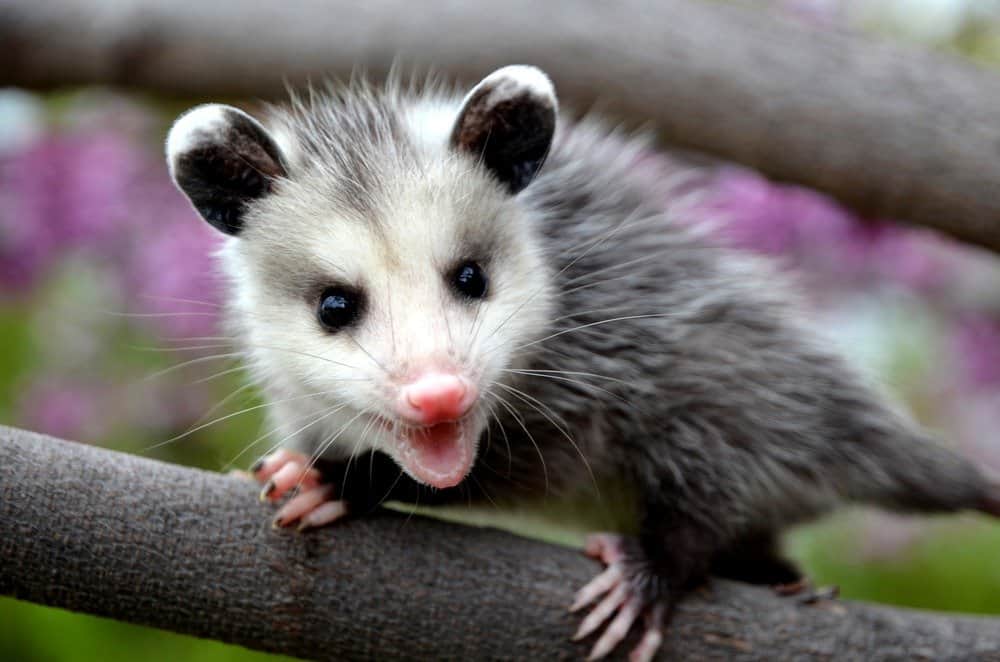
©rthoma/Shutterstock.com
Population
Population numbers are difficult to estimate, but the conservation status can vary quite drastically by species for this animal. According to the IUCN Red List, which is an independent organization that tracks the conservation status of many animals, possums can range between least concern and critically endangered. The brush-tail possum, which is widespread throughout the coastal regions of Australia, has integrated so well into human society that it is a common sight. On the other end of the spectrum, the western ring-tail possum and the fairy possum are both critically endangered. Many species are currently afforded protection by the government of Australia. It is illegal to hunt, trap, or kill many the possums for any reason. Nevertheless, it is estimated that a quarter of Australia’s 27 possum species are currently threatened with extinction.
In the Zoo
The San Diego Zoo, which is one of the few zoos in the United States that has Australian possums of any kind, has a long history with the eastern common ring-tail possums. The original three members (a male and two females) were brought to the zoo back in 1984. After several years without any possums, the zoo received more from the Healesville Sanctuary in Victoria, Australia, but they are not always on exhibit.
Possum Pictures
View all of our Possum pictures in the gallery.

IrinaK/Shutterstock.com
Sources
- National Geographic
- Britannica
- San Diego https://animals.sandiegozoo.org/animals/ringtail-possum Jump to top