Q
Species Profile

Quetzal

Pharomachrus mocinno

Jewel of the Mesoamerican cloud forest
Ondrej Prosicky/Shutterstock.com

Quetzal Distribution

Click a location to explore more animals from that region

Endemic Species
Loading map...
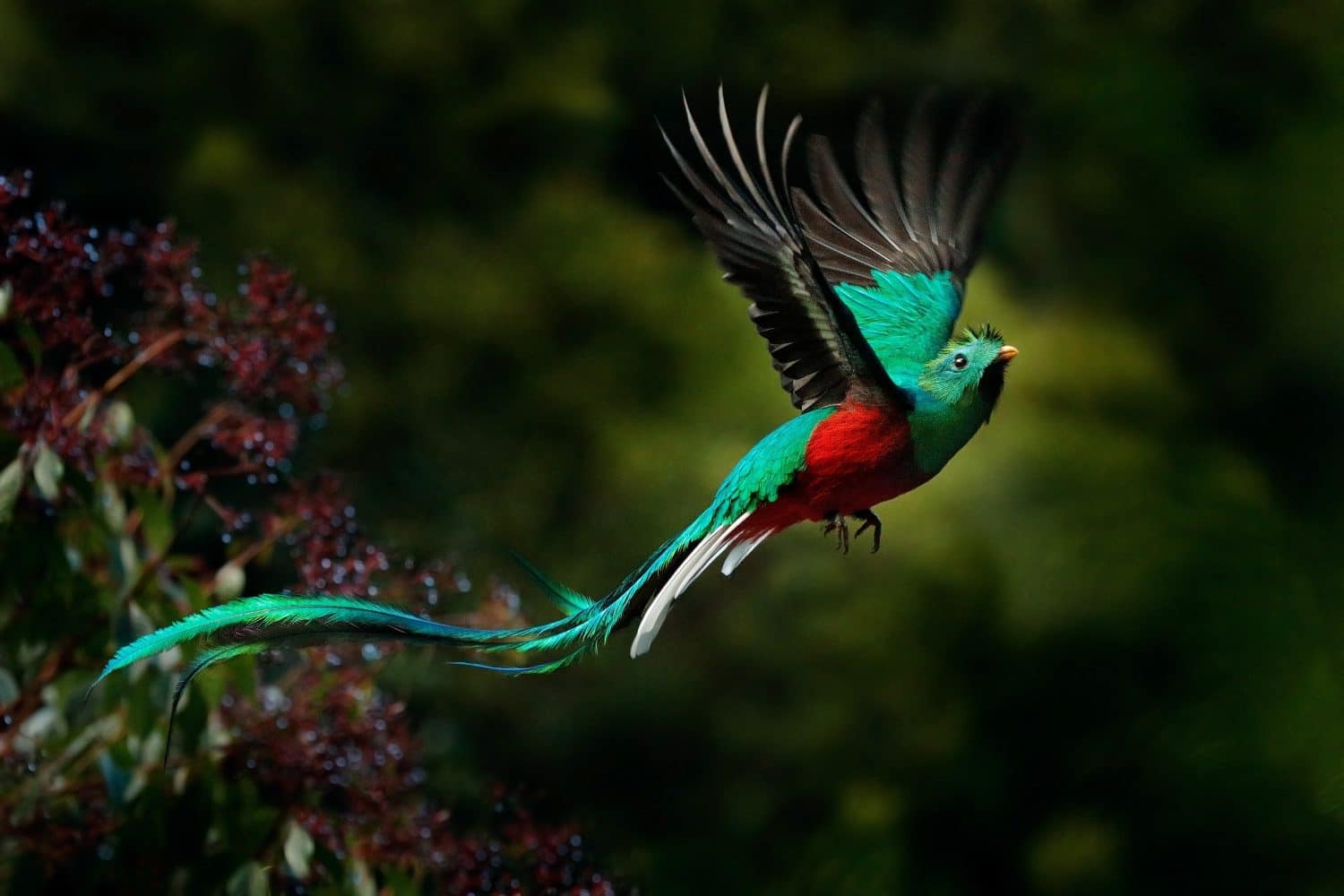
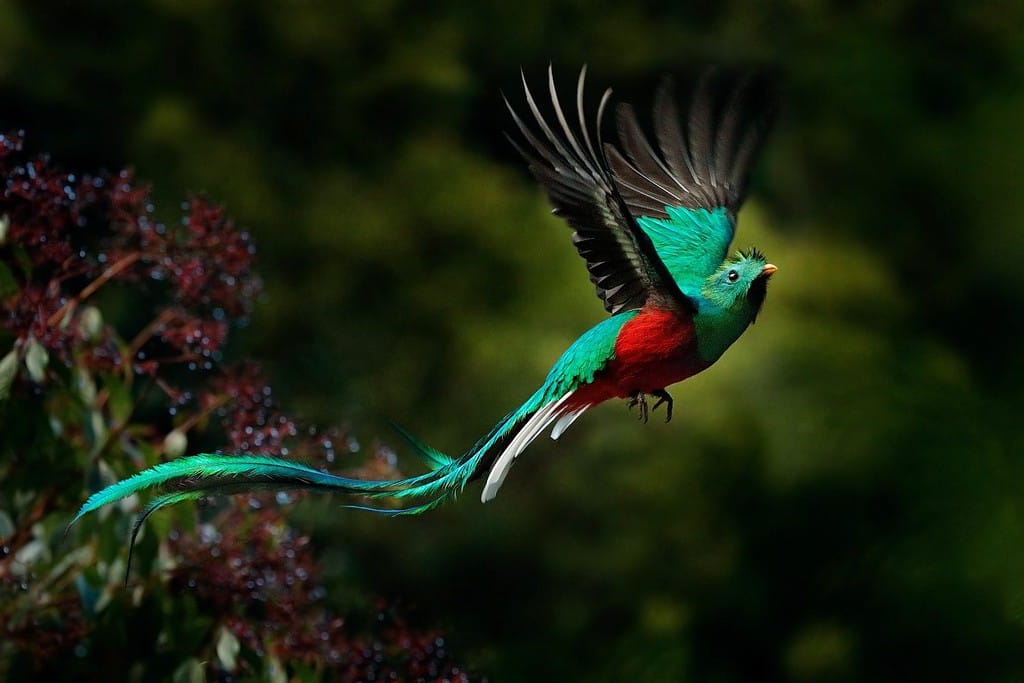
Flying Resplendent Quetzal, Pharomachrus mocinno, Savegre in Costa Rica, with green forest in background. Magnificent sacred green and red bird. Action flight moment with Resplendent Quetzal.

At a Glance

Wild Species
Also Known As Quetzal, Resplendent Trogon, Quetzal resplandeciente, Guatemalan quetzal
Diet Omnivore
Activity Diurnal+
Lifespan 7 years
Weight 0.24 lbs
Did You Know?

Adult size: body length ~36-40 cm; males can reach ~100 cm total length when long upper tail coverts are included (del Hoyo et al., HBW).

Scientific Classification

The Resplendent Quetzal is a striking trogon (order Trogoniformes) famous for the male’s brilliant green plumage and elongated upper tail coverts. It is strongly associated with Mesoamerican cloud forests and is a flagship species in Central American conservation and culture.

Kingdom
Animalia
Phylum
Chordata
Class
Aves
Order
Trogoniformes
Family
Trogonidae
Genus
Pharomachrus
Species
mocinno

Distinguishing Features

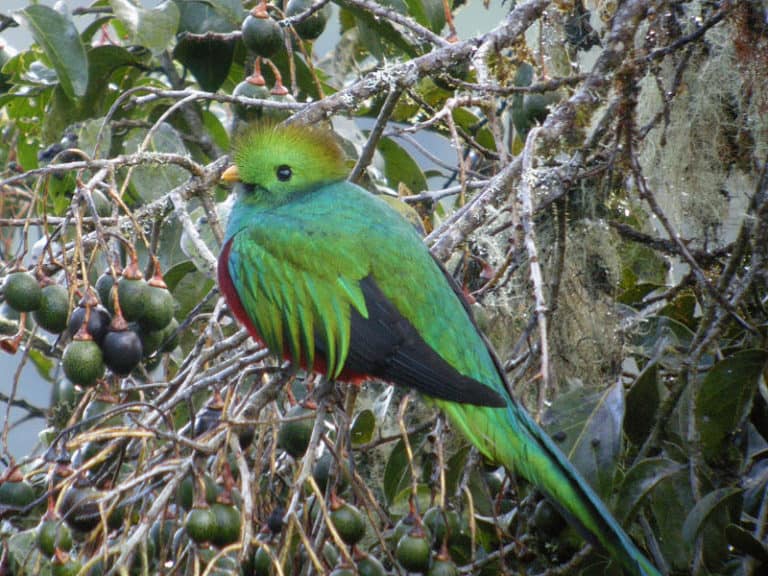
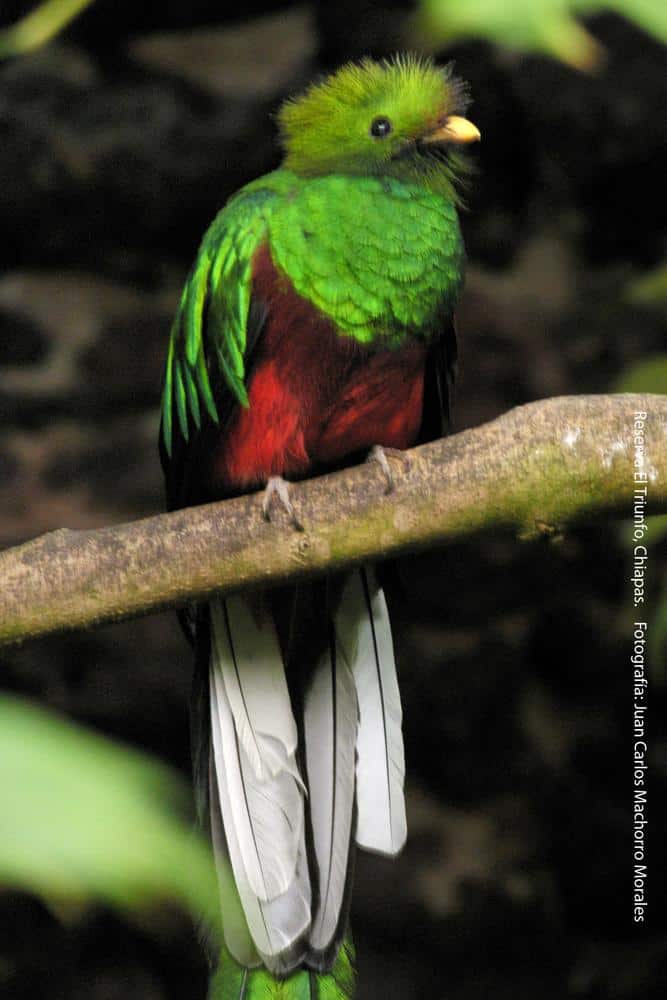
  • Brilliant iridescent green (often green-gold) upperparts; red breast in males
  • Male with very long green upper tail coverts (streamers) in breeding season
  • Member of trogons: stout body, short neck, strong bill; often perches quietly in forest canopy
  • Diet heavily fruit-based (notably wild avocados/laurels), plus insects and small prey

Physical Measurements

Males and females differ in size

Length
♂ 3 ft 3 in (2 ft 11 in – 3 ft 5 in)
♀ 1 ft 3 in (1 ft 2 in – 1 ft 4 in)
Weight
♂ 0 lbs (0 lbs – 1 lbs)
♀ 0 lbs (0 lbs – 0 lbs)
Tail Length
♂ 2 ft 2 in (1 ft 10 in – 2 ft 4 in)
♀ 7 in (6 in – 7 in)

Appearance

Primary Colors
Secondary Colors
Skin Type Feathered body plumage; legs and feet with thin scaly skin; keratin bill and claws.
Distinctive Features
  • Adult body length 36-40 cm (excluding elongated male upper tail coverts) (Birds of the World).
  • Adult mass: males 0.210-0.251 kg; females 0.175-0.232 kg (Birds of the World).
  • Male upper tail coverts commonly 60-100 cm, forming ribbon-like streamers over the tail (HBW/Birds of the World).
  • Heterodactyl feet (inner two toes backward, outer two forward), typical of trogons (Trogonidae) (HBW).
  • Cloud-forest specialist, most often in mature montane forest ~1,200-3,000 m; nests in natural/rotted tree cavities, often requiring old-growth structure (Birds of the World).
  • Fruit-heavy diet (notably Lauraceae/avocado relatives) plus arthropods; important seed disperser in Mesoamerican cloud forests (Birds of the World).
  • Geographic range: southern Mexico through northern Central America to western Panama, tied to humid montane forests (Birds of the World; IUCN range accounts).
  • Longevity data limited; compiled captive maximum reported as 20.0 years (AnAge database; record-based, not a wild-life expectancy).

Sexual Dimorphism

Males are far more ornate, with brilliant iridescent green plumage and extremely elongated upper tail coverts. Females are shorter-tailed and duller overall, with grayer/browner underparts and typically a darker bill.

♂
  • Brilliant iridescent green head, crest, mantle, and upperparts.
  • Very long upper tail coverts forming green streamers (often 60-100 cm).
  • Vivid red belly and undertail; sharp contrast with green dorsum.
  • Bill typically bright yellow to yellow-orange.
♀
  • Duller green upperparts with reduced iridescence.
  • Underparts more muted gray/brown with less saturated red.
  • Shorter tail without long streaming upper tail coverts.
  • Bill usually darker (dusky) compared with males.

Did You Know?

Adult size: body length ~36-40 cm; males can reach ~100 cm total length when long upper tail coverts are included (del Hoyo et al., HBW).

Mass is typically ~190-235 g (field-guide compilations: Stiles & Skutch; HBW).

Breeding is cavity-based: pairs excavate/expand nests in soft, rotten wood or old woodpecker holes and usually lay 2 eggs (Skutch; Stiles & Skutch).

Incubation lasts about 17-18 days, with both sexes sharing duties (Skutch).

Diet is fruit-heavy-especially Lauraceae ('wild avocados')-making the species an important seed disperser in mature cloud forests (e.g., Wheelwright 1983; HBW).

Altitudinal movements are common: birds often shift to lower elevations outside the main breeding season as fruit availability changes (Stiles & Skutch; regional studies in Costa Rica/Guatemala).

Sexual dimorphism is strong: males are iridescent green with elongated upper tail coverts; females are more subdued (gray/brown with green) and lack long streamers (HBW).

Unique Adaptations

  • Specialized frugivory for cloud forests: a fruit-dominant diet (notably Lauraceae) allows quetzals to act as long-distance dispersers of large seeds that many smaller birds cannot swallow (Wheelwright 1983).
  • Elongated upper tail coverts (males): decorative 'streamers' can extend well beyond the tail, producing a total length near ~1 m-an extreme example of sexual selection in a forest bird (HBW).
  • Trogon foot design (shared trait of Order Trogoniformes): heterodactyl arrangement (digits I-II back, III-IV forward) supports strong perching but relatively weak walking-fitting a sit-and-wait canopy lifestyle (ornithology texts; HBW).
  • Cavity-breeding reliance on soft wood: the ability to work decaying wood helps them nest where suitable cavities exist, but also ties them to intact, mature cloud-forest dynamics (Skutch; HBW).
  • Conspicuous iridescence in dim forests: structural green plumage is highly visible in filtered cloud-forest light, aiding long-distance signaling between canopy gaps and perches (general plumage optics; HBW descriptions).

Interesting Behaviors

  • Cavity nesting in mature forest: pairs rely on large, decaying trees or old cavities; they often choose soft, rotten wood they can enlarge with their bills-linking breeding success to old-growth structure (Skutch; HBW).
  • Shared incubation rhythm (typical of trogons): both sexes incubate; reports commonly note males taking daytime bouts and females more at night (Skutch).
  • Fruit 'pluck-and-perch' feeding: individuals often sally from a perch to pluck a fruit, then return to swallow it whole-well-suited to large-seeded Lauraceae fruits (Wheelwright 1983; HBW).
  • Seasonal elevational tracking of food: movements along mountain slopes follow peaks in fruiting, especially of Lauraceae and other cloud-forest trees (Stiles & Skutch; regional ecology studies).
  • Display and calling in breeding season: males use conspicuous perches, vocal advertising, and tail presentation; long tail coverts function in sexual signaling (HBW; Stiles & Skutch).

Cultural Significance

Resplendent Quetzal (Pharomachrus mocinno) is a key symbol of Mesoamerica. Honored by the Maya and Aztec, its brilliant feathers were used in royal dress. It is Guatemala's national bird, names the quetzal currency, and stands for cloud-forest conservation.

Myths & Legends

Maya and Aztec elite-feather traditions: quetzal tail feathers were prized for ceremonial headdresses and ritual regalia; the bird's beauty became a sign of sacred authority and high status in Mesoamerican tradition.

Feathered Serpent associations: in Mesoamerican mythology, the Feathered Serpent deity is linked with precious bird plumage; quetzal feathers and imagery became woven into sacred iconography tied to rulership, wind/sky, and divine power.

Guatemalan legend says a Resplendent Quetzal (Pharomachrus mocinno) was at K'iche' hero Tecun Uman's death; his blood stained its chest red, and its song waits until the land is free.

Freedom folklore: popular Central American stories describe the quetzal as a bird that cannot live in captivity, embodying liberty-an idea echoed in poetry, civic symbolism, and national emblems (cultural tradition rather than a biological claim).

Conservation Status

NT Near Threatened

Likely to qualify for a threatened category in the near future.

Population Decreasing

Protected Under

  • CITES Appendix I (international trade generally prohibited except under strict permit conditions)
  • Mexico: NOM-059-SEMARNAT-2010 (listed as Threatened)
  • Guatemala: protected wildlife regulations; national symbol (hunting/capture prohibited)
  • Costa Rica: Wildlife Conservation Law (No. 7317)

Life Cycle

Birth 2 chicks
Lifespan 7 years

Lifespan

In the Wild
3–12 years
In Captivity
5–20 years

Reproduction

Mating System Monogamy
Social Structure Socially Monogamous
Breeding Pattern Seasonal
Fertilization Internal Fertilization
Birth Type Internal_fertilization

Seasonally monogamous pairs excavate a rotten-tree nest and share incubation and chick care. Typical clutch is 1-2 eggs; incubation lasts ~17-18 days, and nestlings fledge about 21-26 days after hatching.

Behavior & Ecology

Social Pair Group: 2
Activity Diurnal, Matutinal, Vespertine
Diet Omnivore Lauraceae fruits ("wild avocados"), particularly Ocotea spp. (reported as a principal food across much of the range; classic diet studies emphasize strong selection for Lauraceae fruits).
Seasonal Migratory

Temperament

Generally shy and inconspicuous; avoids open areas and sustained human presence (Birds of the World: Pharomachrus mocinno).
Strongly territorial in breeding season; males use song and chases to repel rivals (Skutch 1944; Birds of the World).
Sociality is seasonally flexible-mostly solitary or in pairs, but more tolerant at rich fruit sources; aggregation is temporary (Birds of the World).

Communication

Series of clear, mellow whistles used for mate/territory advertisement; call often given from canopy perches Skutch 1944; Birds of the World
Softer contact notes between pair members near nest and during foraging Birds of the World
Visual courtship/territorial displays: prominent tail-coverts and body posturing; aerial chases between males Skutch 1944; Birds of the World
Nest-site signaling via repeated visits and coordinated cavity attendance by the pair during breeding Birds of the World

Habitat

Biomes:
Tropical Rainforest
Terrain:
Mountainous Hilly Valley Volcanic
Elevation: 2624 ft 8 in – 10498 ft 8 in

Ecological Role

Key cloud-forest frugivore and seed disperser (especially for Lauraceae), with secondary role as an insect predator.

Long-distance seed dispersal for large-seeded canopy trees (notably Lauraceae), supporting cloud-forest regeneration and plant gene flow Potential enhancement of recruitment for fruiting trees by moving seeds away from parent trees (reducing density-dependent mortality) Suppression of some herbivorous insects via predation, particularly during chick-rearing when insect provisioning increases Indicator/flagship function: dependence on intact montane cloud-forest fruiting phenology links its presence to ecosystem integrity

Diet Details

Other Foods:
Wild avocado-type fruits Lauraceae fruits Figs Cecropia infructescences Small berries

Human Interaction

Domestication Status

Wild

Resplendent Quetzal (Pharomachrus mocinno) is a wild cloud-forest bird never domesticated or bred by people. In Mesoamerica people once caught birds briefly to take long tail feathers for royal clothes, then released them. Today human ties are conservation, birdwatching, habitat loss from logging and farming. Keeping them in cages is rare and usually fails.

Danger Level

Low
  • Minimal direct physical risk; may peck/scratch if handled during research/rehabilitation.
  • Standard avian handling risks: potential exposure to zoonoses (e.g., Chlamydia psittaci is a general avian risk), mitigated by PPE and hygiene; no species-specific elevated zoonotic risk is documented.
  • Indirect risk to people is primarily from field hazards in cloud-forest terrain during ecotourism/research (steep trails, weather), not from the bird itself.

As a Pet

Not Suitable as Pet

Legality: Not suitable and generally illegal to keep as a pet. Pharomachrus mocinno is protected in range countries (e.g., Guatemala, Costa Rica) and listed on CITES Appendix I; trade or private ownership usually needs strict permits.

Care Level: Expert Only

Purchase Cost:
Lifetime Cost: $25,000 - $150,000

Economic Value

Uses:
Ecotourism/birdwatching flagship (cloud-forest reserves; guide services; local lodging) National/cultural symbolism (notably Guatemala; "quetzal" as a cultural symbol and currency name) Ecosystem services (seed dispersal of montane fruiting trees, especially Lauraceae) Conservation funding leverage (flagship/umbrella species used to justify protected areas and restoration)
Products:
  • ecotourism experiences (guided quetzal watching, reserve entrance fees, lodging/transport)
  • educational/media value (field guides, documentaries, conservation campaigns)
  • cultural goods (art, motifs, handicrafts inspired by quetzal imagery; non-consumptive)

Relationships

Predators 8

Ornate Hawk-Eagle Spizaetus ornatus
Black Hawk-Eagle Spizaetus tyrannus
Collared Forest Falcon Micrastur semitorquatus
Mottled Owl Strix virgata
Tayra Eira barbara
White-nosed Coati Nasua narica
Kinkajou
Kinkajou Potos flavus
Boa
Boa Boa imperator

Related Species 8

Crested Quetzal Pharomachrus antisianus Shared Genus
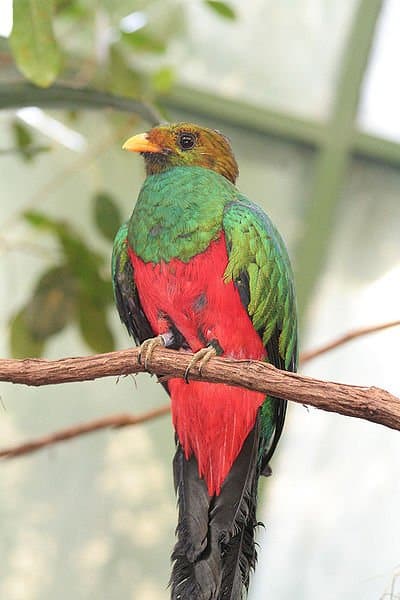
Golden-headed Quetzal Pharomachrus auriceps Shared Genus
White-tipped Quetzal Pharomachrus fulgidus Shared Genus
Pavonine Quetzal Pharomachrus pavoninus Shared Genus
Slaty-tailed Trogon Trogon massena Shared Family
Elegant Trogon Trogon elegans Shared Family
Gartered Trogon Trogon caligatus Shared Family
Eared Quetzal Euptilotis neoxenus Shared Family

Ecological Equivalents 6

Animals that fill a similar ecological role in their ecosystem

Three-wattled Bellbird Procnias tricarunculatus Large canopy frugivore in Central American montane forests. Overlaps seasonally in cloud-forest fruiting trees and functions as a long-distance seed disperser, like the Resplendent Quetzal, which is strongly tied to Lauraceae (wild avocados) (Wheelwright 1983).
Bare-necked Umbrellabird Cephalopterus glabricollis Cloud-forest frugivore that tracks patchy fruit resources along elevational gradients; ecologically similar to P. mocinno in its seasonal movements between breeding cloud forest and nonbreeding foraging areas where fruit is available.
Emerald Toucanet
Emerald Toucanet Aulacorhynchus prasinus Canopy- and edge-dwelling frugivore in the same montane forest belt; overlaps on fruiting trees and acts as a seed disperser, though toucanets use different nesting substrates (often tree cavities) and have a broader fruit diet than the quetzal's strong association with Lauraceae.
Black Guan Chamaepetes unicolor Large-bodied cloud-forest frugivore that relies on mature-forest fruiting phenology and contributes to dispersal of large-seeded fruits, paralleling quetzal-mediated dispersal of large, lipid-rich Lauraceae fruits (Wheelwright 1983).
Slaty-tailed Trogon Trogon massena Sympatric trogon that employs similar perch-and-sally foraging and cavity nesting. Overlaps in arthropod prey use, although Pharomachrus mocinno is typically more fruit-focused (particularly on Lauraceae) and is tied to cloud forest during the breeding season.
Highland Motmot Momotus aequatorialis Montane-forest bird with a mixed fruit and invertebrate diet, and cavity nesting in earthen banks or holes rather than rotten trunks. Overlaps in mid-elevation forest structure and prey types, feeding on large insects and small vertebrates.

The quetzal is a striking forest bird native to the tropical and cloud forests of Central America, where it lives high in cool, misty mountain canopies. Best known for the male’s shimmering plumage and long tail feathers, it has played an important ecological role as a fruit eater and seed disperser, as well as a cultural role in ancient Mesoamerican societies. Although visually spectacular, the quetzal is not a strong flyer and depends heavily on healthy, undisturbed forests for survival.

Four Amazing Facts

  • Quetzal is native to the tropical rainforests of Central America.
  • Widely considered to be one of the most beautiful birds in the world, quetzals are most known for the tail feathers of the males.
  • Quetzal birds were considered sacred by the Aztecs and Mayas.
  • Not known to be good flyers — Quetzal mostly hops between tree branches, making them easy prey.

Classification and Evolution
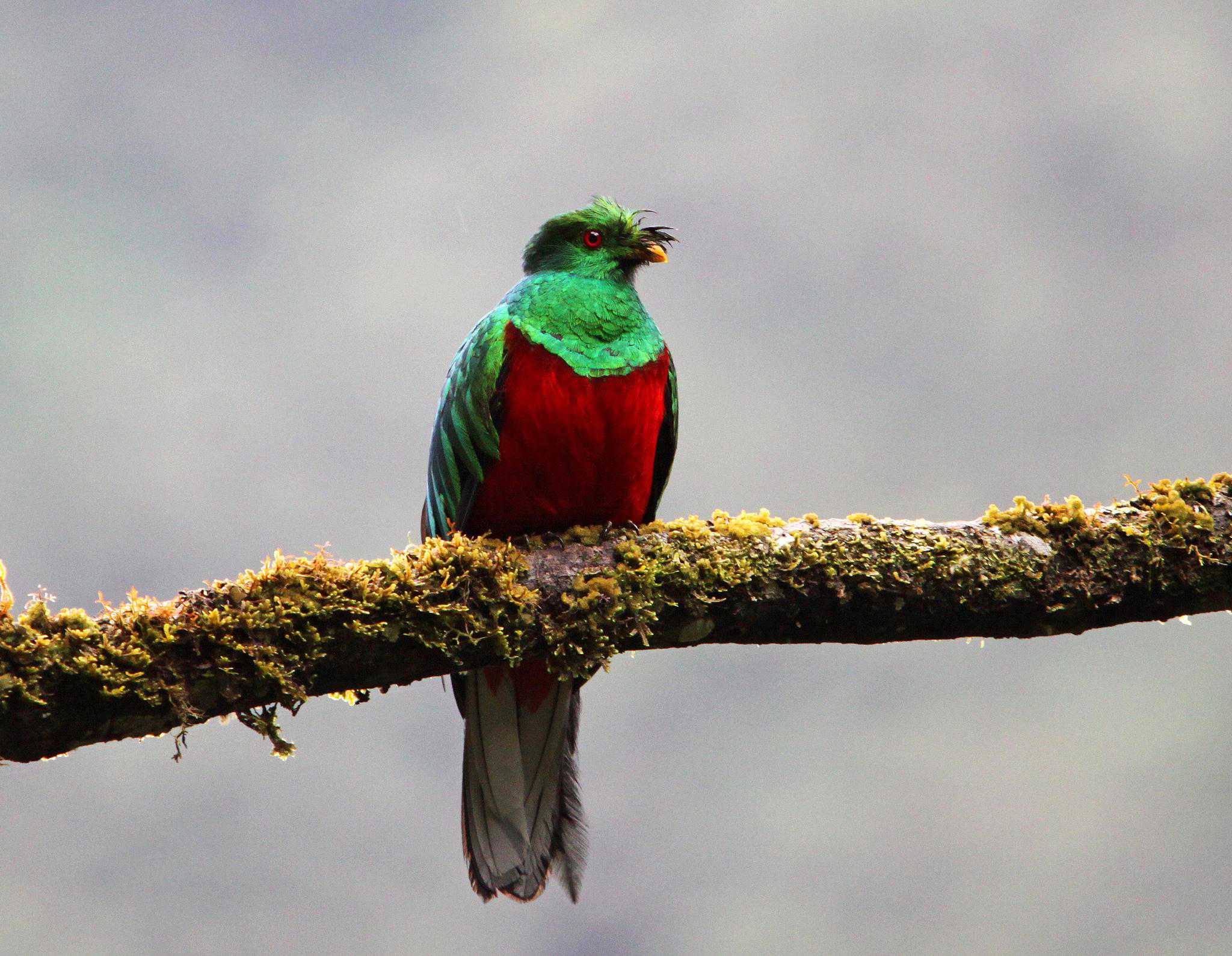
A Quetzal is a medium-sized bird found in Central America.

The Quetzal is a medium-sized bird that inhabits the moist, tropical rainforests of Central America, from southern Mexico to Panama.

There are five or six species of quetzal, including the Crested Quetzal (Pharomachrus antisianus), Golden-headed Quetzal (Pharomachrus auriceps), White-tipped Quetzal (Pharomachrus fulgidus), Pavonine Quetzal (Pharomachrus pavoninus), Eared Quetzal (Euptilotis neoxenus), and the most famous Resplendent Quetzal (Pharomachrus mocinno), all of which belong to the Trogon family of birds. The Pavonine Quetzal is native to South America, while the Eared Quetzal is found in Mexico and the southwestern United States.

The Quetzal is an immensely colorful bird with metallic plumage and is widely considered to be one of the most strikingly beautiful birds in the world. They are most well known for the long tail feathers of the males.

Anatomy and Appearance
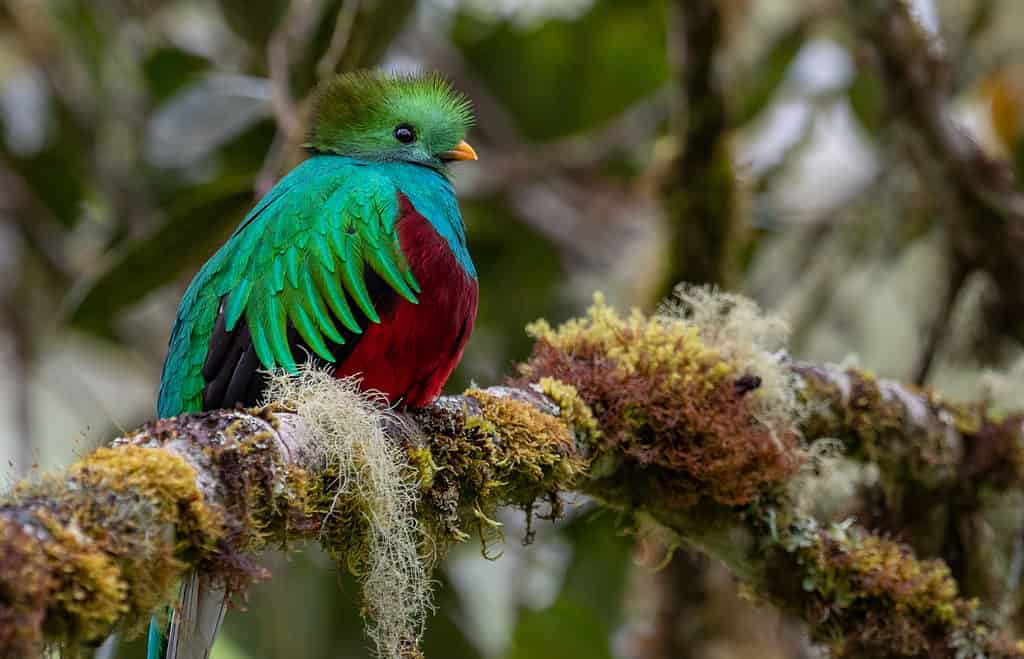
Resplendent quetzal

The Resplendent Quetzal is an important symbol in both Aztec and Mayan culture. The quetzal is associated with the snake god Quetzalcoatl and is seen as a symbol of goodness and light.

The Quetzal is an incredibly colorful bird with males displaying a bright metallic green or blue on most of their bodies, besides the deep red of the chest and belly. The male Quetzal bird also has a distinctive tuft of golden green feathers that form a crest on top of its head and immensely long twin tail feathers that can grow up to a meter in length.

Although females do not grow such an impressively long train, they are of similar coloration to their male counterparts, with their plumage not being quite as bright. The deep red of the chest is often much duller or even gray (as is the metallic green), and they have gray or bronze-colored heads edged with green.

As with other members of the Trogon family, the feet of the Quetzal are unique, with two toes facing forward and two back on each foot that aid the Quetzal when perching high in the trees.

Distribution and Habitat

The Quetzal bird is found throughout the mountainous rainforests of Central America, where they tend to prefer high mountain ranges at altitudes of between 4,000 and 10,000 feet. The Quetzal inhabits moist, tropical forests in cooler areas that contain dense vegetation, and that is incredibly moist.

Cloud forests are one of the most successful habitats for the Quetzal, where the high moisture levels cause there to be a great deal of fog in the forest. Quetzals live in holes in the trees close to the top of the canopy that they have either built themselves using their powerful beaks or ones that have been abandoned by Woodpeckers. The striking plumage of the Quetzal means that these birds are perfectly camouflaged amongst the abundance of vegetation surrounding them.

Behavior and Lifestyle

The Quetzal is thought to be a relatively inactive bird and is rarely seen on the forest floor, as the design of their feet makes them very weak for walking. The Quetzal perches high up in the tree canopy where their calls are nearly as distinctive as their appearance.

They make soft, deep noises that can be very loud, and they are known to use different calls depending on the situation. The Quetzal is most vocal when there is plenty of mist at dawn and dusk, and rarely calls during very sunny or windy days.

Although the calls of the males tend to be louder than those of the females, during the mating season, the sounds made are described as being “whining”. The Quetzal is also known to make whistle-like calls at dawn and dusk to stake its claim on its territory.

Reproduction and Life Cycles

Quetzal birds use their strong beaks to make holes in rotting trees so that they can nest. The female lays one to three eggs in the hole, which are incubated by both the female and the male alternately. However, because the male Quetzal has tail feathers that can grow up to 3ft long, they are often seen sticking out of the nest when he is sitting on the eggs.

Incubation lasts for up to three weeks, and when the chicks hatch, they are born with their eyes closed and are fed by their parents until they are strong enough to begin moving about. Quetzal chicks can usually fly by the time they are three weeks old, and once they are confident enough, they will flee the nest to find a territory of their own (although they are known to remain close to their father for their first few years).

Diet and Prey
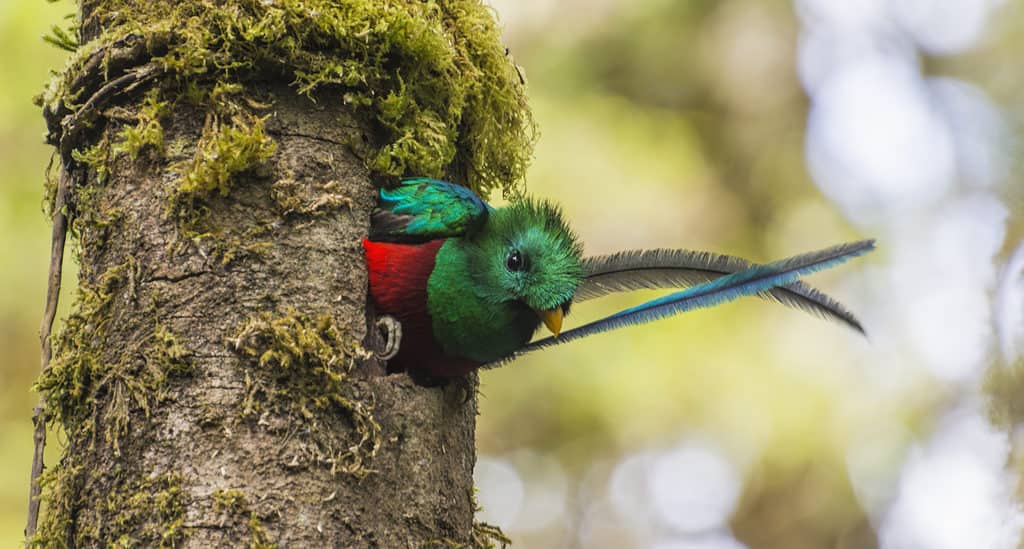
Resplendent quetzal

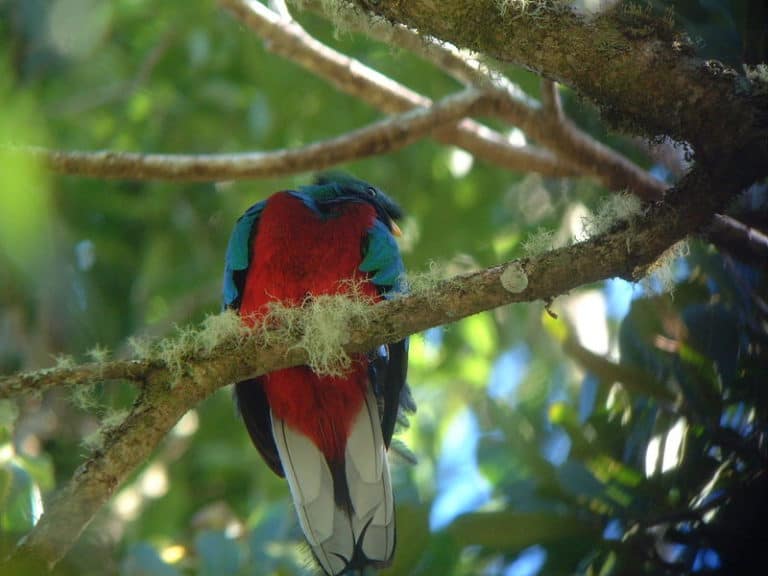
Resplendent quetzal poking out from its nest in a tree.

The Quetzal is an omnivorous animal that is a skilled hunter, swooping down and catching its prey before eating it, whilst still in the air. They have a predominantly fruit-based diet and particularly favor small avocado-like fruits that belong to the laurel family, and are known to gather in vast numbers around fruiting trees.

When fruits are scarce, the Quetzal also eats small animals, including Insects and lizards, along with frogs, snails, and larvae to provide it with the nutrition that its body needs. The Quetzal plays a vital role in maintaining its surrounding environment as the seeds from fruits and berries are spread throughout the forest in their droppings.

Predators and Threats

Even though the beautifully colored feathers of the Quetzal provide this bird with good camouflage in the forest, they are not particularly strong flyers and instead rely more on hopping between the branches.

The Quetzal is therefore relatively easy prey for other tree-dwelling animals and is preyed upon by mammals such as the Kinkajou, along with squirrels and birds of prey, including hawks and owls.

The biggest threat, however, to the existing Quetzal population is the loss of habitat as human settlements and agriculture encroach more and more and their native habitats. The Quetzal is also commonly captured to be kept in captivity as a tourist attraction, although few survive in these conditions.

Interesting Facts and Features

Although the male Quetzal is most distinctively known for its incredibly long tail feathers, they do not begin to grow until they are at least three years old, with many Quetzal individuals not reaching sexual maturity until they are nearly six.

The Resplendent Quetzal is also commonly known as the Guatemalan Quetzal and is not only the nation’s national symbol, but the currency used in Guatemala is actually known as the “quetzal”. The Quetzal belongs to the ‘Trogon’ family of birds, which is the Greek word for “gnawing”, which is a distinctive trait of these birds.

Relationship with Humans
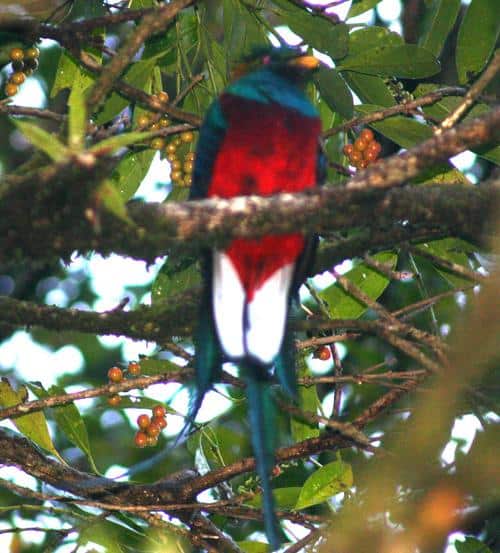
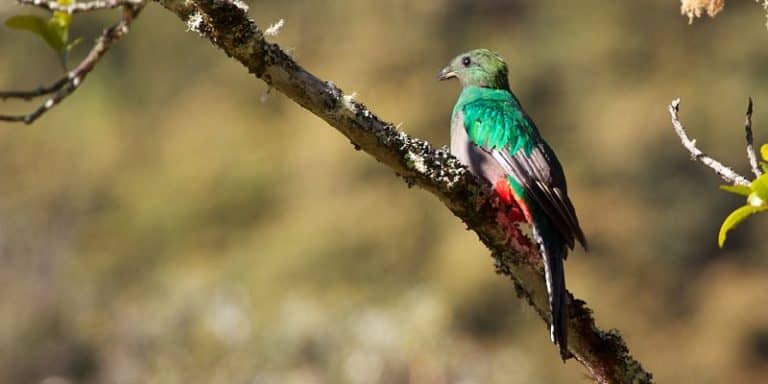
A Quetzal sitting in a tree.

The Quetzal was seen as a sacred animal to ancient native people, including the Aztecs and the Maya, and was often referred to as The Rare Jewel Bird of the World, along with regularly being depicted in native art.

The long, bright tail feathers of the males were also used in garments worn by royalty, in particular. Today, however, although the Quetzal is still a treasured species in many countries, including both Guatemala and Costa Rica, their numbers are declining due to both human interference in their natural habitats and the capture of them to be displayed in captivity.

Conservation Status and Life Today

The Quetzal is considered to be a species that is threatened in its surrounding environment, as population numbers in their distinctive habitats have been falling.

Although there are protected areas of forest where the Quetzal cannot be disturbed, they are becoming ever-popular tourist attractions both for bird watchers and animal institutions. The Quetzal, however, does not survive very successfully in a captive environment, meaning that they are captured in the wild on a fairly regular basis, leading to declining population numbers in certain parts of their natural range.

View all 9 animals that start with Q
How to say Quetzal in ...
Danish
Quetzal
German
Quetzal (Vogel)
English
Quetzal
Spanish
Quetzal
French
Quetzal
Croatian
Kvecali
Dutch
Quetzal (vogel)
English
Quetzal
Polish
Kwezal herbowy
Finnish
Ketsaalit

Sources

  1. David Burnie, Dorling Kindersley (2011) Animal, The Definitive Visual Guide To The World's Wildlife / Accessed August 4, 2011
  2. Tom Jackson, Lorenz Books (2007) The World Encyclopedia Of Animals / Accessed August 4, 2011
  3. David Burnie, Kingfisher (2011) The Kingfisher Animal Encyclopedia / Accessed August 4, 2011
  4. Richard Mackay, University of California Press (2009) The Atlas Of Endangered Species / Accessed August 4, 2011
  5. David Burnie, Dorling Kindersley (2008) Illustrated Encyclopedia Of Animals / Accessed August 4, 2011
  6. Dorling Kindersley (2006) Dorling Kindersley Encyclopedia Of Animals / Accessed August 4, 2011
  7. Christopher Perrins, Oxford University Press (2009) The Encyclopedia Of Birds / Accessed August 4, 2011
  8. National Geographic / Accessed August 4, 2011
  9. Encyclopedia / Accessed August 4, 2011
  10. Animal Diversity Web / Accessed August 4, 2011
  11. Rainforest Animals / Accessed August 4, 2011
Rebecca Bales

About the Author

Rebecca Bales

Rebecca is an experienced Professional Freelancer with nearly a decade of expertise in writing SEO Content, Digital Illustrations, and Graphic Design. When not engrossed in her creative endeavors, Rebecca dedicates her time to cycling and filming her nature adventures. When not focused on her passion for creating and crafting optimized materials, she harbors a deep fascination and love for cats, jumping spiders, and pet rats.
Connect:

Thank you for reading! Have some feedback for us?


Quetzal FAQs (Frequently Asked Questions)

Quetzals live in high and moist cloud forests.