





R
Species Profile

Rattlesnake

Crotalini

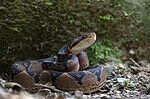
Hear the rattle, give it space.
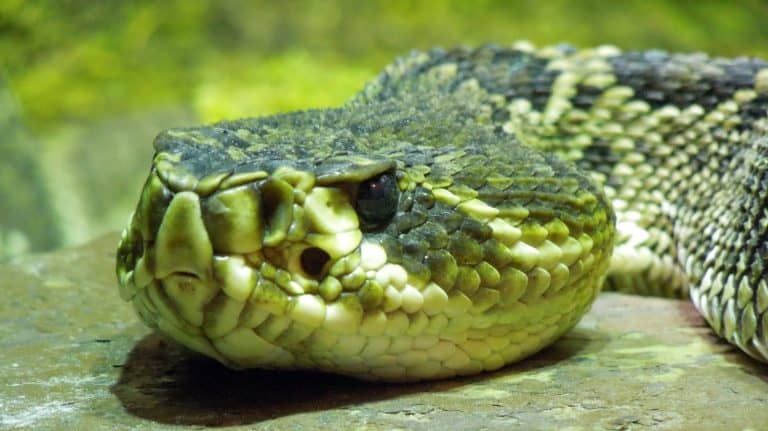
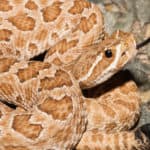
Tim Vickers - Public Domain

Rattlesnake Distribution

Click a location to explore more animals from that region

Loading map...

At a Glance

Genus Overview This page covers the Rattlesnake genus as a group. Stats below are general traits shared across the genus.
Also Known As rattler, pit viper, rattling viper, serpiente de cascabel, cascabel, cascavel
Diet Carnivore
Activity Nocturnal+
Lifespan 12 years
Weight 7 lbs
Status Not Evaluated
Did You Know?

"True rattlesnakes" are genus Crotalus; pygmy rattlesnakes and massasaugas are the separate genus Sistrurus.

Scientific Classification

Genus Overview "Rattlesnake" is not a single species but represents an entire genus containing multiple species.

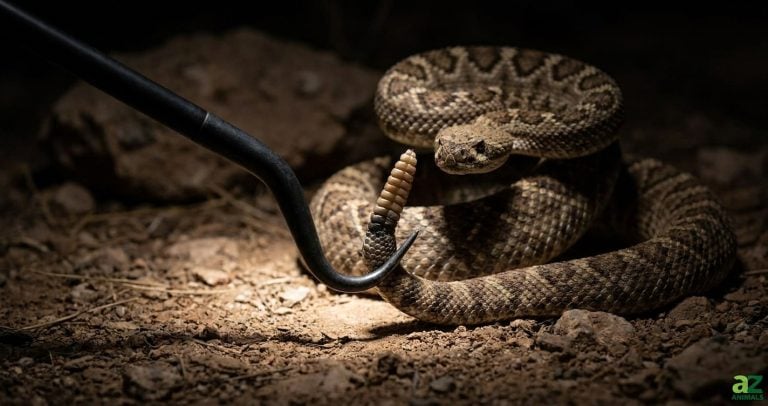
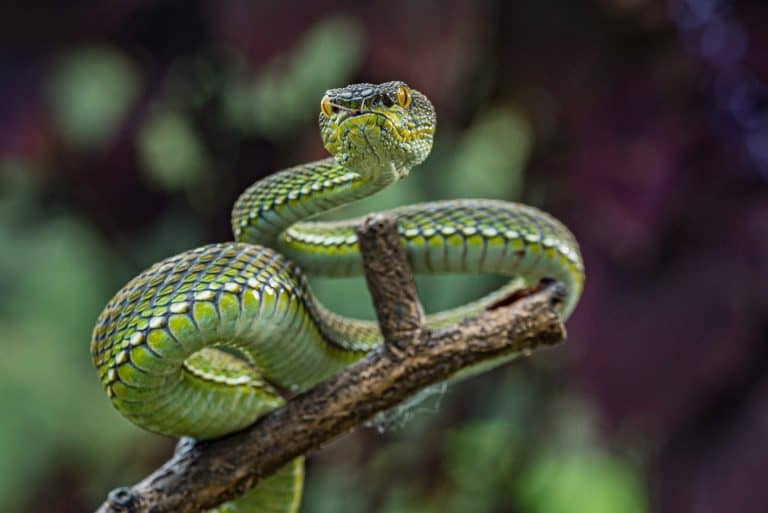
Rattlesnakes are venomous vipers best known for the keratin rattle at the tip of the tail used primarily as a warning signal. Most species referred to as rattlesnakes belong to the New World genus Crotalus (and, in broader common usage, also Sistrurus). They are pit vipers with heat-sensing facial pits that aid in detecting warm-blooded prey.

Kingdom
Animalia
Phylum
Chordata
Class
Reptilia
Order
Squamata
Family
Viperidae
Genus
Crotalus

Distinguishing Features

  • Tail rattle composed of interlocking keratin segments (buzzing warning display)
  • Heat-sensing loreal pits between eye and nostril (pit viper trait)
  • Solenglyphous fangs: long, hinged front fangs for venom delivery
  • Typically stout-bodied with triangular head (common viperid profile)

Physical Measurements

Males and females differ in size

Length
3 ft 7 in (1 ft 4 in – 8 ft 2 in)
2 ft 11 in (12 in – 7 ft 10 in)
Weight
3 lbs (0 lbs – 33 lbs)
3 lbs (0 lbs – 15 lbs)
Tail Length
6 in (1 in – 10 in)
3 in (1 in – 9 in)
Top Speed
3 mph
slithering
Venomous

Appearance

Primary Colors
Secondary Colors
Skin Type Dry keratin-covered scales with keeled dorsal scales in most species; head shields may be smooth or small. Tail ends in a keratin rattle; segments build up with molts but do not indicate age.
Distinctive Features
  • Keratin rattle at tail tip used mainly for warning/communication; defensive signaling is typical
  • Rattle segment count increases with shedding but is not a reliable age counter (segments can break)
  • Heat-sensing facial pit organs (pit viper trait) detect warm-bodied prey via infrared cues
  • Broad, triangular head with hinged front fangs; vertical pupils typical
  • Ambush predation common: coiled posture, strike-and-release often used with mammal prey
  • Venom effects vary across species/populations (primarily hemotoxic/cytotoxic; some neurotoxic components)
  • Ontogenetic shifts common: juveniles often take more lizards/invertebrates; adults more mammals
  • Geographic range spans southern Canada through much of the U.S., Mexico, and Central America into South America (notably via Crotalus durissus in many regions).
  • Habitat diversity is wide: deserts, grasslands, scrub, forests, rocky slopes, coastal dunes, and montane habitats
  • Seasonal activity varies by climate: diurnal in cooler seasons/places, crepuscular-nocturnal in hot periods
  • Some species den communally for winter; others remain active year-round in warm regions
  • Distinguished from Sistrurus (pygmy rattlesnakes/massasaugas): both have rattles, but Sistrurus are separate genus

Sexual Dimorphism

Often subtle: males tend to be slightly longer with proportionally longer, thicker tails (hemipenes base). Females may be more robust-bodied, especially when gravid; magnitude and direction of size differences vary among species and populations.

  • Longer tail relative to body length; thicker tail base
  • Often slightly greater average total length in many species (not universal)
  • May show proportionally larger heads in some populations
  • Often more robust trunk, especially during pregnancy
  • Shorter tail relative to body length
  • Reproductive output varies widely by species and female size

Did You Know?

"True rattlesnakes" are genus Crotalus; pygmy rattlesnakes and massasaugas are the separate genus Sistrurus.

The rattle is made of interlocking keratin segments added after molts-but segment count doesn't reliably equal age (segments can break off).

Across the genus, adults range roughly from ~40-60 cm in the smallest species to ~1.8-2.4 m in the largest.

Facial "pit organs" detect infrared radiation, helping a coiled snake accurately strike warm prey even in darkness.

Venom chemistry varies widely among Crotalus: many species are largely hemotoxic/tissue-damaging, while some lineages include strong neurotoxic components or potent hemorrhagins.

Many species reduce risk to themselves by "strike-and-release," then track envenomated prey using chemical cues.

The name Crotalus comes from Greek krotalon ("rattle"/"castanet"), referencing their signature tail instrument.

Unique Adaptations

  • Keratin rattle: a segmented, sound-producing warning device at the tail tip; effective at deterring large animals and preventing accidental trampling.
  • Infrared-sensing loreal pits: paired heat-detecting organs that enhance prey detection and strike accuracy, especially in low light.
  • Hinged front fangs (solenoglyphous system): long, folding fangs allow deep venom delivery while keeping the mouth compact when closed.
  • Highly variable venom systems across the genus: different toxin mixes suit different prey and ecological niches, and can vary even among populations.
  • Cryptic coloration and patterning (bands, blotches, diamonds) across species: optimized camouflage for habitats ranging from deserts to forests and highlands.
  • Efficient chemosensory tracking: tongue-flicking and the vomeronasal system help follow scent trails-useful for locating prey after a strike-and-release bite.

Interesting Behaviors

  • Ambush predation is common: many Crotalus sit motionless in cover or at rodent trails, then deliver a fast strike; some species also actively forage, especially juveniles.
  • Activity timing varies with climate and season: diurnal in cooler weather, shifting to crepuscular/nocturnal in hot periods; desert species often become night-active in summer.
  • Rattle use is context-dependent: it's primarily a warning/communication signal, and some individuals may remain silent to avoid drawing predators (or when relying on camouflage).
  • Thermoregulation behaviors include basking, shade-seeking, and using burrows/rock crevices; in colder regions many species brumate (overwinter) in dens-sometimes communally.
  • Diet is diverse across the genus: many species focus on small mammals, but others take birds, lizards, amphibians, or large arthropods; juveniles often eat more ectotherms than adults.
  • Reproduction is live-bearing (viviparous). Litter sizes and breeding frequency vary by species and environment; in some species females may remain near neonates briefly, while others depart soon after birth.
  • In some regions, seasonal movements occur between feeding areas and overwintering sites, with individuals showing repeated use of traditional dens or home ranges.

Cultural Significance

Crotalus rattlesnakes are visible across the Americas. Their rattle is a common warning symbol and the coiled snake was used in U.S. politics ('Don't Tread on Me'). Indigenous peoples link them to medicine, rain, protection, spirit world. They are in Latin American art and in talks about land care.

Myths & Legends

Hopi Snake Dance traditions (Arizona) feature ceremonial handling of snakes-often including rattlesnakes-as part of prayers and rituals associated with rain and renewal.

In many Native North American Horned Serpent stories, powerful snakes tied to water, storms, or the underworld are important; rattlesnakes are often seen as strong, spiritual snakes in these regional tales.

In Mexica (Aztec) mythology, Xiuhcoatl ("turquoise/fire serpent") is depicted as a fearsome serpent associated with the sun and war; serpent imagery in Mesoamerica commonly includes rattlesnake features in art and symbolism.

Early American Revolutionary-era symbolism used the rattlesnake as an emblem of vigilance and defense-famously echoed in the "Don't Tread on Me" motif that draws on the animal's warning signal and readiness to strike when threatened.

Frontier-era stories and sayings in North America often cast the rattlesnake as a guardian of rough country or as a test of caution for travelers-reflecting the animal's real presence in many settled landscapes.

Conservation Status

NE Not Evaluated

Has not yet been evaluated against the criteria.

Population Unknown

You might be looking for:

Sistrurus (pygmy rattlesnakes & massasaugas)

35%

Sistrurus

The other rattlesnake genus; generally smaller-bodied, includes massasaugas and pygmy rattlesnakes.

Western Diamondback Rattlesnake

22%

Crotalus atrox

Large, widespread rattlesnake of the southwestern United States and Mexico; a common species people mean by “rattlesnake.”

View Profile

Eastern Diamondback Rattlesnake

15%

Crotalus adamanteus

Largest rattlesnake species; native to the southeastern coastal plain of the United States.

View Profile

Timber Rattlesnake

12%

Crotalus horridus

Widespread in eastern North America; often referenced in general discussions about rattlesnakes.

View Profile

Mojave Rattlesnake

10%

Crotalus scutulatus

Noted for highly potent venom in some populations; southwestern U.S. and Mexico.

View Profile

Life Cycle

Birth 8 neonates
Lifespan 12 years

Lifespan

In the Wild
5–25 years
In Captivity
10–35 years

Reproduction

Mating System Polygynandry
Social Structure Solitary
Breeding Pattern Transient
Fertilization Internal Fertilization
Birth Type Internal_fertilization

Across Crotalus, adults are mostly solitary and form only brief mating associations, often seasonally near dens. Males actively search and may engage in ritual combat; both sexes can mate with multiple partners, and females may store sperm and show multiple paternity.

Behavior & Ecology

Social Den aggregation Group: 1
Activity Nocturnal, Crepuscular, Diurnal, Cathemeral
Diet Carnivore Small mammals-especially rodents-across much of the genus, though reliance varies strongly with species, body size, habitat, and age class.
Seasonal Hibernates 19 mi

Temperament

Generally cryptic and avoidance-oriented; relies on camouflage and remaining motionless
Defensive when threatened: coiling, head elevation, striking; intensity varies by species and context
Sit-and-wait ambush predator; some species show more active foraging, especially juveniles
Strong seasonal shifts in surface activity tied to temperature, prey availability, and reproduction
Male-male combat occurs in some species (e.g., ritualized wrestling) during breeding season
Site fidelity to hibernacula common in many species; dispersal distances vary widely

Communication

Rattle buzzing as an acoustic warning; rate and duration vary with threat level
Hissing/forceful exhalation during defensive displays
Chemical signaling via pheromones and scent trails; tongue-flicking and Jacobson's organ detection
Tactile courtship and alignment during mating; male chin-rubbing and body contact
Visual postures: coiling, tail elevation, body inflation; used in defense and assessment
Substrate vibration and tail twitching, sometimes without full rattle use
Thermosensory orientation (heat-sensing pits) aids targeting warm prey; not social but key sensory channel

Habitat

Biomes:
Desert Hot Desert Cold Mediterranean Temperate Grassland Temperate Forest Tropical Dry Forest Savanna Alpine Wetland Freshwater +4
Terrain:
Mountainous Hilly Plateau Plains Valley Coastal Island Riverine Volcanic Karst Rocky Sandy +6
Elevation: Up to 13779 ft 6 in

Ecological Role

Mid- to upper-level mesopredators that regulate small-vertebrate populations and connect trophic levels across many New World ecosystems.

population control of rodents and other small mammals (including potential agricultural and disease-vector species) shaping small-vertebrate community structure via predation pressure (size- and habitat-dependent) serving as prey for larger predators (raptors, mammals, larger snakes), supporting food webs nutrient transfer through predation and carcass utilization by scavengers after kills (indirectly)

Diet Details

Main Prey:
Small mammals Rabbits and hares Birds Lizards Snake Amphibians Invertebrates +1

Human Interaction

Domestication Status

Wild

Rattlesnakes (Crotalini) are wild, not domesticated. People mostly avoid them, remove or move them when they cause problems, or use their venom for research and antivenom. Some live in captivity in zoos, universities, or licensed venom labs, and a few by permitted private keepers, but this care is not domestication.

Danger Level

High
  • potentially life-threatening envenomation from defensive bites (severity varies by species, venom yield/composition, bite location, and victim factors)
  • significant tissue damage, coagulopathy/bleeding disorders, and secondary complications even with treatment
  • highest risk during close encounters: attempting to handle/kill/relocate snakes, accidental stepping/handling in tall grass/rocky areas, and occupational exposure (field work, ranching)
  • delayed access to antivenom and medical care can markedly increase morbidity and mortality
  • indirect risks: improper captive keeping leading to escape or bite incidents

As a Pet

Not Suitable as Pet

Legality: Keeping venomous snakes (including Crotalus) is highly regulated and often illegal. They may be banned or need special permits, secure cages, inspections, and proof of experience. Rules differ by country, state, and city.

Care Level: Expert Only

Purchase Cost: $50 - $1,500
Lifetime Cost: $2,000 - $20,000

Economic Value

Uses:
Public health/medicine Research and biotechnology Wildlife management and pest control services (ecosystem role) Ecotourism and education Leather and novelty trade (historical/limited and often regulated) Cultural significance and media
Products:
  • venom for antivenom production and biomedical research reagents
  • educational programming and exhibit value in accredited facilities
  • wildlife viewing/tourism (e.g., guided herping, nature tourism)
  • historical/limited use of skins for leather goods (where legal)

Relationships

Related Species 5

Massasaugas and pygmy rattlesnakes Sistrurus Shared Family
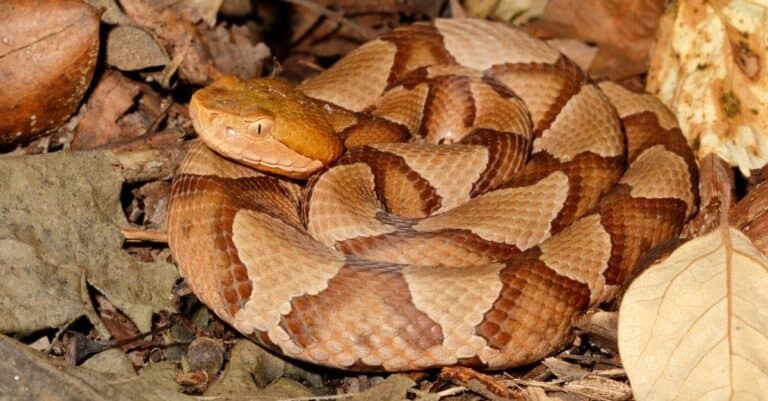
Copperheads and Cottonmouths Agkistrodon Shared Family
Lanceheads Bothrops Shared Family
Bushmasters
Bushmasters Lachesis Shared Family
Fer-de-lance group Bothrops Shared Family

Ecological Equivalents 5

Animals that fill a similar ecological role in their ecosystem

Copperheads and cottonmouths Agkistrodon contortrix and Agkistrodon piscivorus Occur sympatrically in parts of North America. Both are ambush-oriented pit vipers that use infrared heat-sensing pits and venom to subdue small vertebrate prey.
Massasaugas and pygmy rattlesnakes Sistrurus spp. They fill a very similar rattlesnake niche: warning rattle, ambush predation, and pit-viper sensory ecology. They often occur in overlapping regions and are smaller-bodied on average.
Lancehead Bothrops spp. In the Neotropics, they occupy analogous roles as sit-and-wait venomous predators of small mammals and amphibians in forests and disturbed habitats. Many share a similar strike-and-release feeding strategy.
True vipers Vipera spp. Old World ecological analogs: predominantly ambush vipers with stout bodies that use venom to prey on small mammals, but generally lacking heat‑sensing pits and rattles.
Large kingsnakes Lampropeltis spp. Non-venomous analogs that occupy overlapping trophic space by preying on small vertebrates; they are also important as specialized predators of snakes, including within rattlesnake habitats.

Types of Rattlesnake

31

Explore 31 recognized types of rattlesnake

Eastern Diamondback Rattlesnake
Eastern Diamondback Rattlesnake Crotalus adamanteus
Western Diamondback Rattlesnake
Western Diamondback Rattlesnake Crotalus atrox
Mexican West Coast Rattlesnake Crotalus basiliscus
Santa Catalina Island Rattlesnake Crotalus catalinensis
Sidewinder
Sidewinder Crotalus cerastes
Neotropical Rattlesnake Crotalus durissus
Baja California Rattlesnake Crotalus enyo
Timber Rattlesnake
Timber Rattlesnake Crotalus horridus
Rock Rattlesnake Crotalus lepidus
Black-tailed Rattlesnake
Black-tailed Rattlesnake Crotalus molossus
Speckled Rattlesnake Crotalus mitchellii
Western Rattlesnake
Western Rattlesnake Crotalus oreganus
Red Diamond Rattlesnake
Red Diamond Rattlesnake Crotalus ruber
Mojave Rattlesnake
Mojave Rattlesnake Crotalus scutulatus
Tiger Rattlesnake
Tiger Rattlesnake Crotalus tigris
Prairie Rattlesnake
Prairie Rattlesnake Crotalus viridis
Ridge-nosed Rattlesnake Crotalus willardi
Queretaran Dusky Rattlesnake Crotalus aquilus
Mexican Small-headed Rattlesnake Crotalus intermedius
Mexican Dusky Rattlesnake Crotalus triseriatus
Mexican Lance-headed Rattlesnake Crotalus polystictus
Twin-spotted Rattlesnake Crotalus pricei
Mexican Pygmy Rattlesnake Crotalus ravus
Long-tailed Rattlesnake Crotalus totonacus
Tzabcan Rattlesnake Crotalus tzabcan
Aruban Rattlesnake Crotalus unicolor
Central American Rattlesnake Crotalus simus
Oaxacan Dwarf Rattlesnake Crotalus pusillus
Mexican Pine Rattlesnake Crotalus culminatus
Dusky Pygmy-type rattlesnake (Mexico) Crotalus ehecatl
Smith's Rattlesnake Crotalus ericsmithi

Rattlesnakes are easily recognized venomous snakes with a rattle at the end of their tails. As members of the pit viper group, rattlesnakes use their powerful venom to subdue their victims. This venom stops blood clotting and destroys internal tissues, quickly disabling animals they bite. Humans can also die when antivenom is not available. The most dangerous snake in this family is the Mojave rattlesnake, one with a potent neurotoxin in its venom.
Twin spotted rattlesnakes are venomous from the day they are born

6 Rattlesnake Facts

  • Although their venom can seriously injure or kill humans, rattlesnakes prefer to avoid any human contact.
  • These snakes can control how much venom they use when they bite, and as much as 50% of bites are ”dry,” meaning there’s no venom.
  • Scientists believe that rattlesnakes evolved more recently than other snakes.
  • Rattlers also make a hissing sound like a cat to warn predators to stay away.
  • Rattlesnakes range in size from one foot long to over eight feet.
  • Their metabolism is pretty slow and they only need to eat every two to three weeks.

Scientific Name
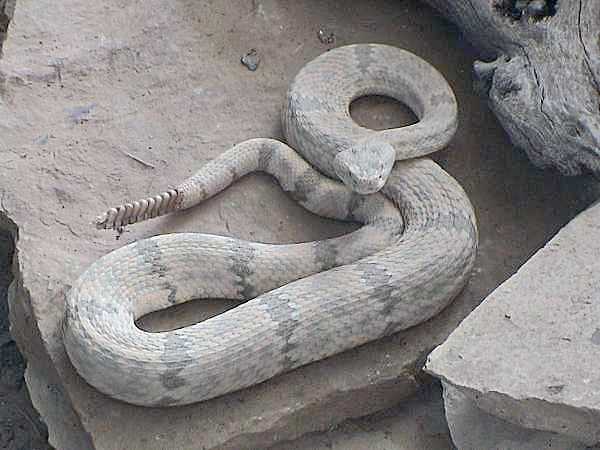
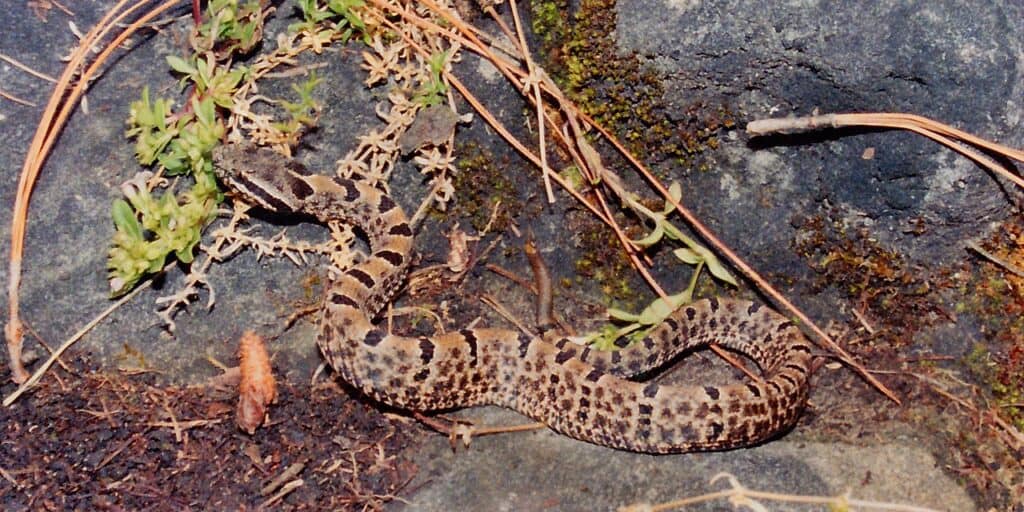
rock rattlesnake

The name “rattlesnake” comes from the Middle English verb “rattle,” a word formed from the sound of loose objects hitting each other.

Rattlesnakes are members of the Reptilia class and Viperidae family, specifically of the subfamily Crotalinae, the pit vipers. The name “rattlesnake” comes from the Middle English verb “rattle,” a word formed from the sound of loose objects hitting each other. The second half of the viper’s name is simply the Middle English word “snake,” meaning “serpent reptile.” The specific scientific name is Crotalus.

Evolution

In order to get a clear picture of the evolution of the rattlesnake, we must first look at how pit vipers, in general, evolved. Based on the oldest fossils of pit vipers that have been found, they can be placed in the Miocene Era. But Molecular phylogenies date Viperidae back further to the early Eocene Era around 56-48 million years ago. They originated in Africa, Asia, and Europe and later spread into North, Central, and South America.

Researchers believe there was an ancestral snake to modern rattlesnakes which existed around 22 million years ago. It had highly toxic venom composed of genes for toxins that could damage muscles, attack the nervous system, and poison the blood of its victims. Rattlesnakes came on the scene 12-14 million years ago but somehow shed certain neurotoxin genes, so that their venom became more specialized. For example, the venom of an Eastern or Western Diamondback rattlesnake damages muscles and blood vessels in its prey. On the other hand, the venom of the Mojave rattlesnake attacks the blood and nervous system.

So where did the rattle come from? One theory, based on the fact that some other snake species shake their tails to ward off predators, suggests that rattlesnakes developed the rattle as a more effective way to signal a warning to predators. Some scientists believe that some snakes selected a trait of retaining some extra skin at the end of their tails when they shed, which made noise when they shook it.

Types of Rattlesnakes

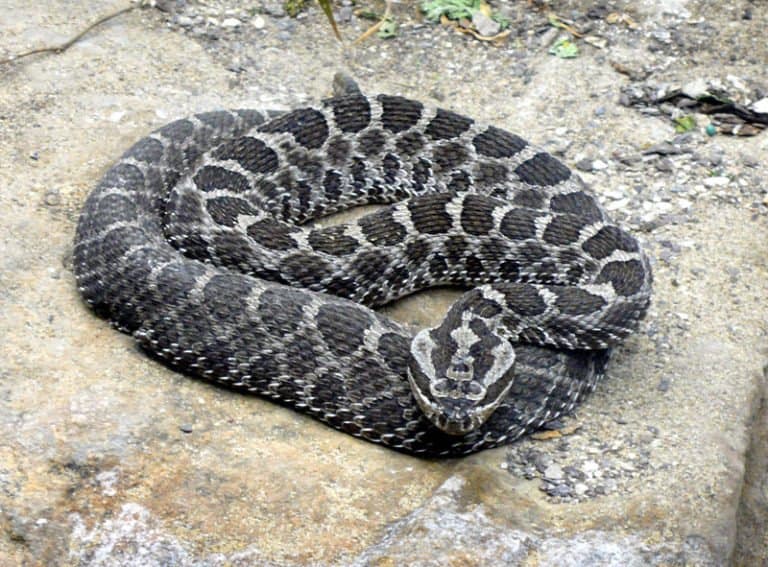
There are over 60 rattlesnake species; most of them fit within the genus Crotalus, the smaller Massasauga and pygmy rattlesnakes are in the genus Sistrurus.
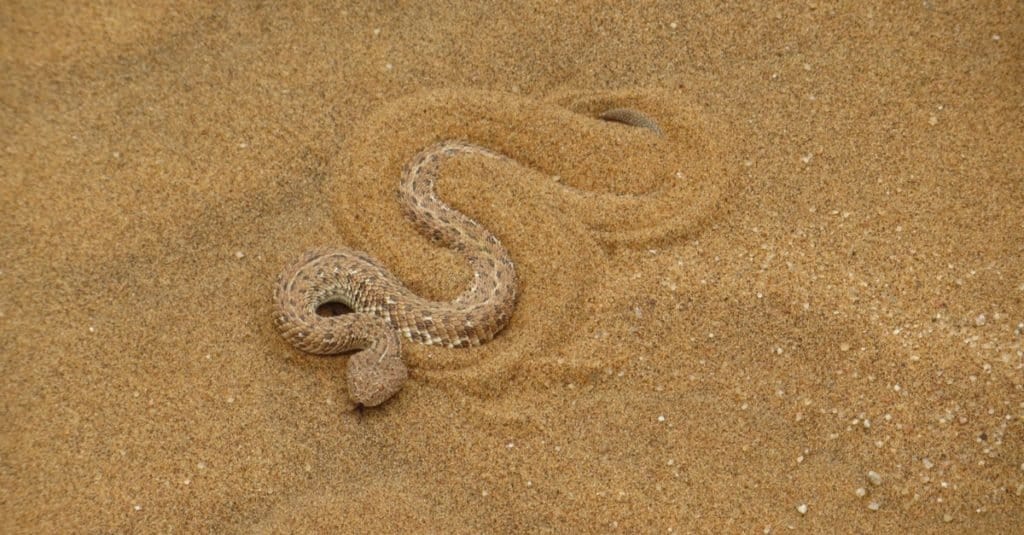
Amazing Desert Animals: Sidewinder

The sidewinder is a rattlesnake that’s adapted to life in desert habitats.

Crotalus genus rattlesnakes listed according to scientific name:

Sistrurus genus rattlesnakes:

  • Pygmy rattlesnake (S. miliarius)
  • Massasauga rattlesnake (S. catenatus)
  • Western massasauga rattlesnake (S. tergeminus)

Appearance & Behavior
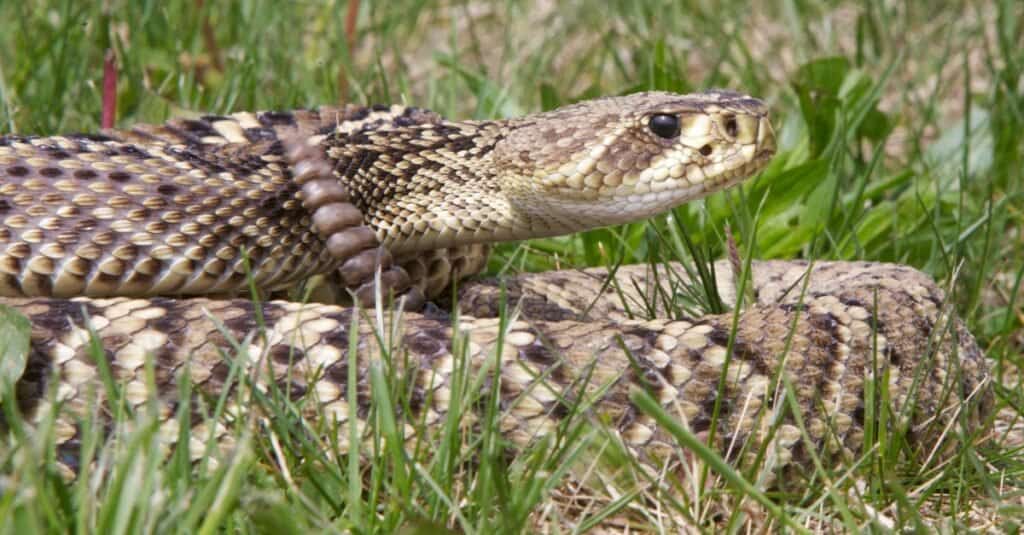
eastern diamondback rattlesnake curled up in grass

The eastern diamondback can grow up to eight feet long and can weigh as much as 10 pounds, as the largest in its species.

There are over 60 species of rattlesnakes several dozen subspecies. All of these are native to the Americas, from southern Canada to Argentina.

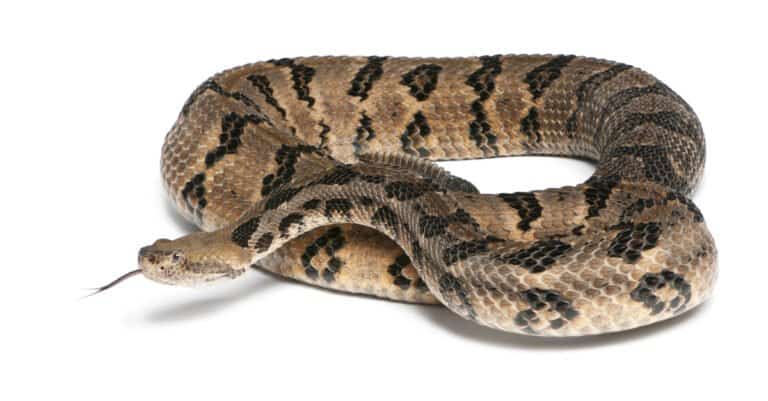
Among the largest rattlesnakes are those living in the Eastern half of the United States. The timber rattlesnake typically ranges from 2.5 to five feet long, although some are recorded at as much as seven feet in length. The eastern diamondback can grow up to eight feet in length and weighs as much as 30 pounds, as the largest in its species. One of the smallest rattlesnakes is the pygmy of Florida. The pygmy averages one to 1.5 feet in length, about the same length as a domestic cat.

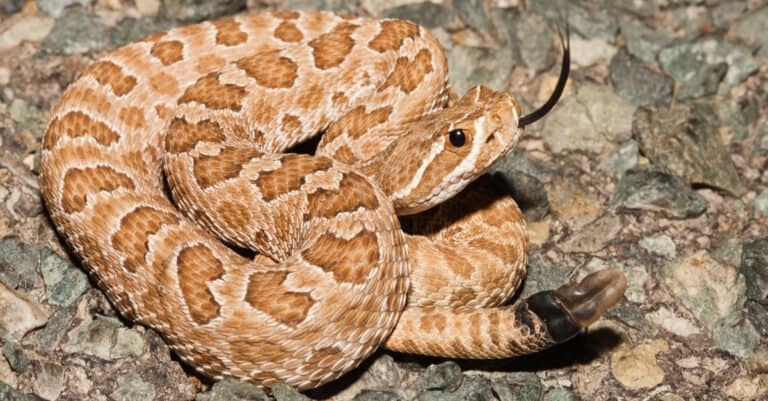
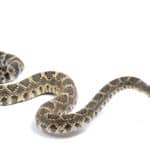
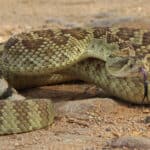
Rattlesnakes have thick bodies with heavily ridged scales. Their coloration varies according to their habitat. However, most have dark patterns of diamonds or other geometric shapes on a lighter-colored background.

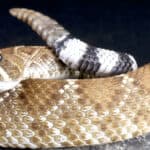
At the end of their tails, you can see a distinctive rattle made up of hollow keratin chambers. These chambers knock together when a rattlesnake shakes its tail, making a rattling noise. The rattle gains a new segment each time the snake sheds its skin, but rattles often break due to damage caused as part of daily living in its environment.

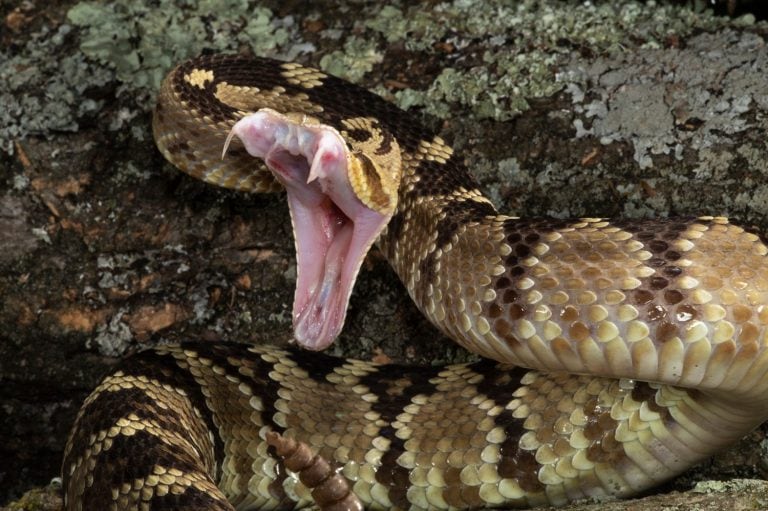
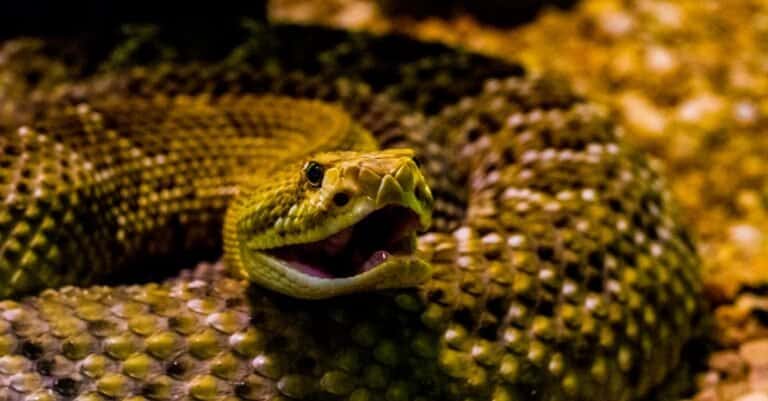
Besides their rattler and distinctive patterned design, rattlesnakes also have triangular heads and hinged fangs. Their eyes have cat-like vertical pupils.

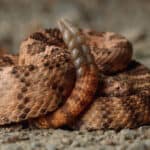
Rattlesnakes are not usually aggressive and most would rather flee than fight. They typically only attack humans when startled or provoked, but they don’t always rattle – sometimes there’s no time to rattle or the snake is young enough that they don’t have one. When they try to warn you away from them, their defensive display is dramatic and easy to see! Rattlesnakes hiss loudly, inflating their body to appear bigger while coiling their body and necks in preparation for a strike.
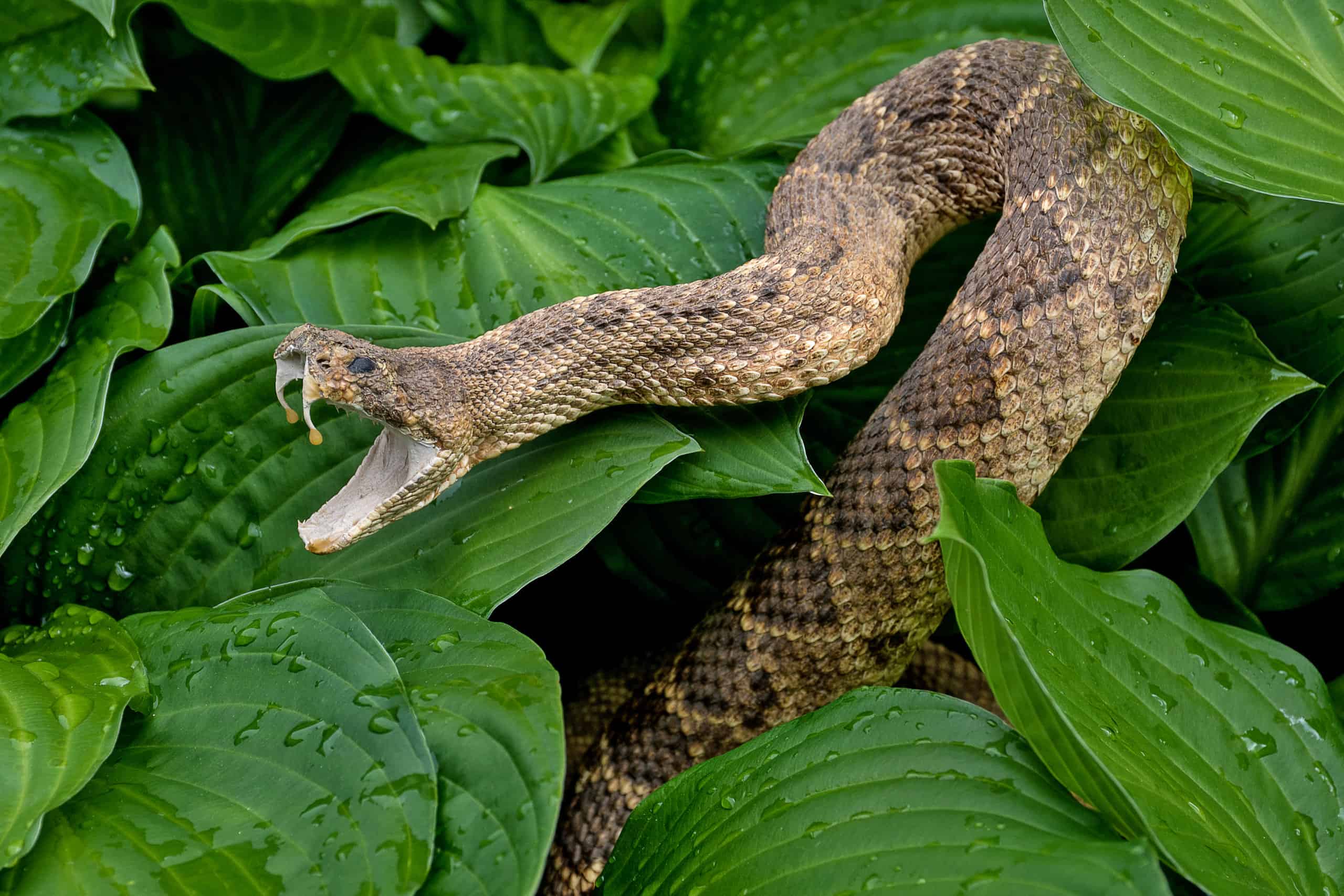
Rattlesnakes vs. Other Snake Species

Rattlesnakes are often confused with other snake species that live in the same habitats. Kingsnakes are often found in the same habitats as rattlesnakes but are nonvenomous. Kingsnakes hunt rattlesnakes and use constriction to disable rattlesnakes before they can attack with their venomous bites.

Habitat

Among all rattlesnake locations, the greatest concentration of these snakes is in the southwestern states of the U.S. and the northern part of Mexico. Arizona is home to the most types of rattlesnakes, with 13 calling that U.S. state home. There are several rattlesnake species in California too.

More rattlesnakes live in the Southwest’s desert sands and dry climate than elsewhere. But many subspecies thrive in other climates and environments. They do well in grassy regions, rocky hills, swamplands, meadows, brushy areas, and even as high as 11,000 feet above sea level.

Rattlesnakes live in dens within rocky crevices. During winter in colder climates, they hibernate in their dens. For snakes, this period of rest is called brumation.

Generations of the same snake family often re-use their dens, sometimes for longer than 100 years. When they leave the den during the daytime, the snakes sunbathe on warm rocks or out in the open. When the weather becomes extremely hot during summer, they sometimes shift their schedule for more nighttime activity.

The snakes’ body patterns and colors vary according to their environment. These colors and patterns serve as camouflage to protect them from predators.

Diet
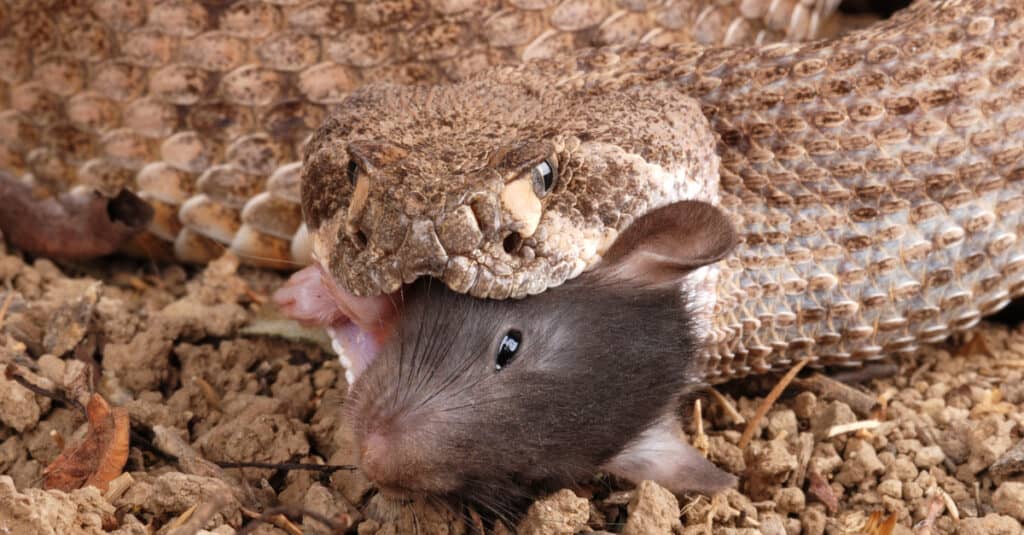
western diamondback eating mouse

Western diamondback rattlesnakes are vital to rodent control

Rattlesnakes eat a wide variety of small mammals. They prefer rats, mice, birds, rabbits, and other small creatures like lizards and frogs. When not tracking a meal, they lie in wait until attractive prey passes by closely enough. These snakes do not need more than one meal every few weeks in adulthood.

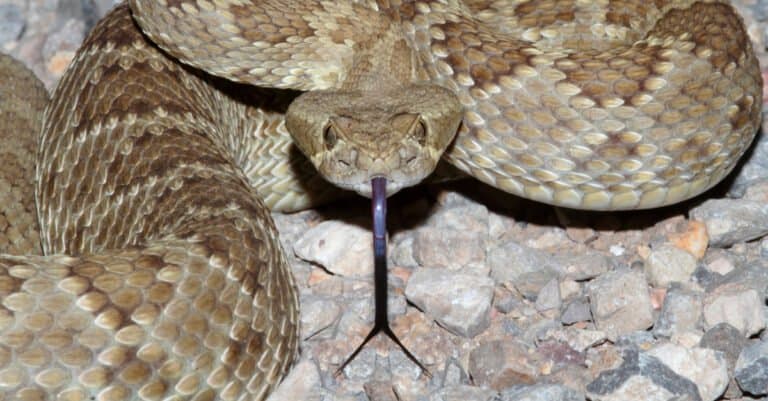
Finding prey is not difficult for a rattlesnake. They have very keen eyesight and a strong sense of smell using both their nostrils and their flicking tongues. They also have heat-sensing pits near the tip of their nose. These pits sense warm-blooded animals in the environment. Despite these well-developed senses that help them hunt for prey, rattlesnakes have terrible hearing. But they can sense vibrations in the ground, such as for a human or animal walking nearby.

To capture their prey, rattlesnakes strike fast and inject their venom into the animal using large fangs and powerful jaws. The venom almost immediately paralyzes the prey. It only takes half a second for the snake to strike and render its food immobile. Then, the snake swallows the food whole and retreats to its den or another safe and quiet place to digest its meal. Digestion takes several days and makes the rattler sluggish.

Although about 8,000 rattlesnakes bite humans each year, they do not attack humans as prey. Of those, only about five dies in a given year. Proper attention must be given to pets that fall victim to rattlesnake bites. 
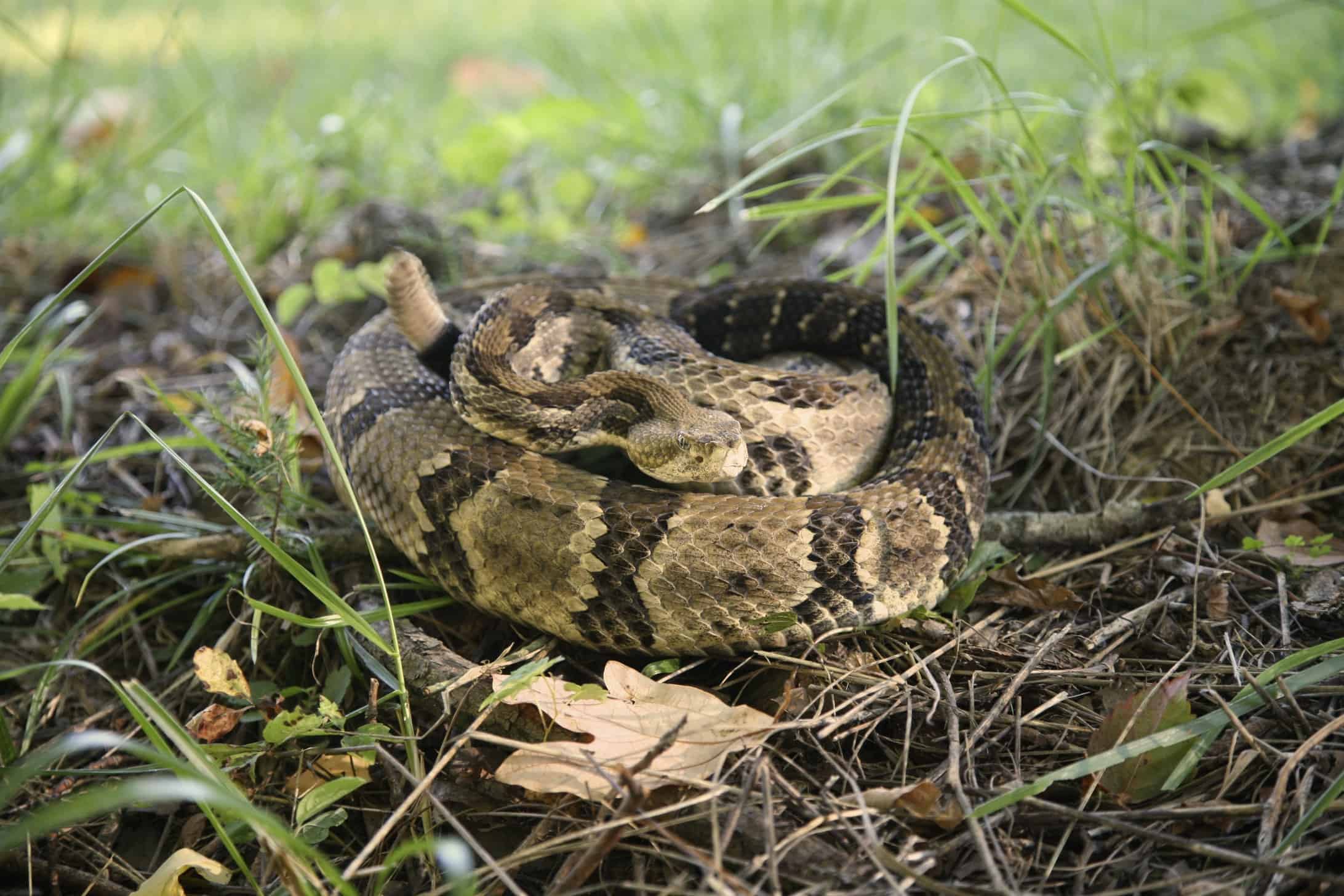
Predators & Threats

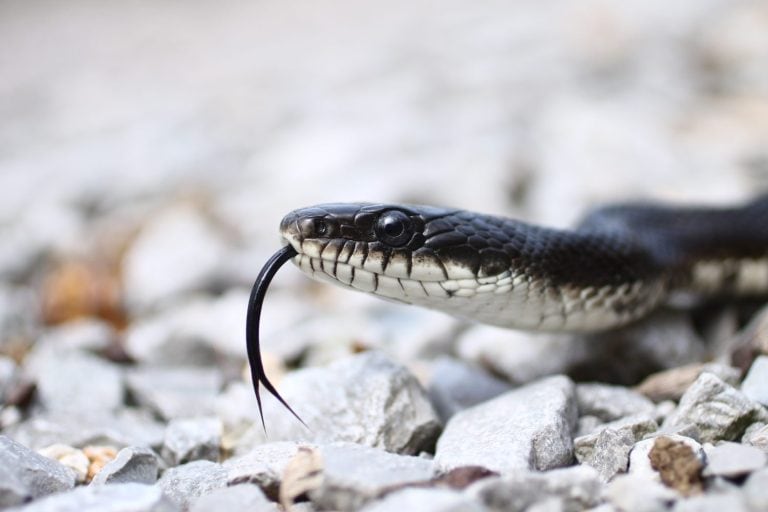
One of the biggest predators of rattlesnakes in the wild is the king snake. Black snakes also attack and eat rattlers. One popular belief is that bullsnakes will eat rattlesnakes, but this is purely a myth.

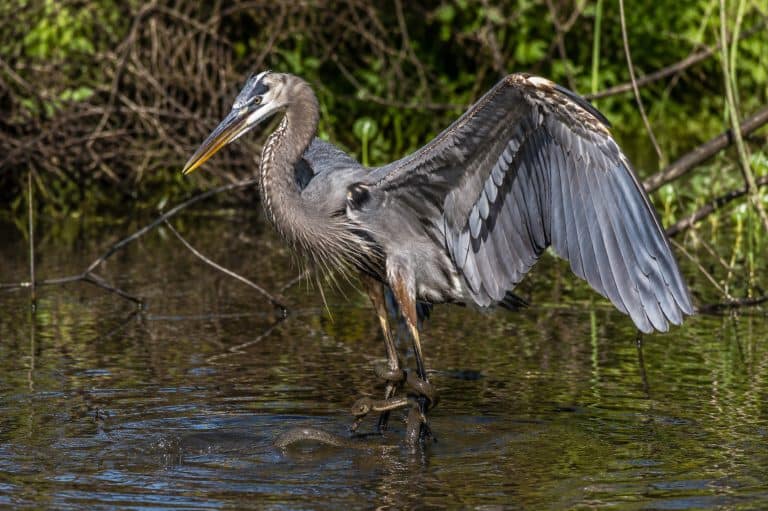
Owls, eagles, and hawks also prey upon rattlesnakes. Predatory birds can swoop down from overhead to grab a snake in their strong talons and carry it away. Wild cats, foxes, coyotes, and even turkeys also enjoy feasting on rattlesnake meat.

Big animals and humans tend to avoid rattlesnakes. The snakes’ telltale hiss and tail rattle give plenty of warning for the animals to move away. While hooved animals like bison do sometimes stomp on rattlesnakes, they prefer to avoid them. Rattlesnake venom is dangerous to people, and untreated bites can result in death, but most snakebite deaths occur because the individual failed to seek treatment. Some diners enjoy the taste of rattlesnake meat. Others use the reptiles’ skins to make boots, shoes, belts, handbags, and other material goods.

Another threat to the rattlesnake is urban development. Development by humans takes over the snake’s habitat and encroaches on their hunting grounds. One of the biggest killers of rattlesnakes is traffic. Many are run over by cars each year.

Several species of rattlesnakes are listed as endangered or vulnerable in the U.S. These include the timber rattlesnake and massasauga rattlesnakes.

How to Avoid Rattlesnakes in their Habitat

Rattlesnakes range from Canada to Argentina, so if you’re the outdoors type, you may encounter a rattlesnake across much of not only the United States but the Americas. If hiking, the best advice for avoiding rattlesnakes is to stay on trails. Most encounters where rattlesnakes bite occur because they’re startled. If you do come close to one, avoid sudden movements and back away. Rattlesnakes are not aggressive and will not pursue.

Reproduction, Babies, and Lifespan
When a baby rattlesnake starts shedding its skin, its rattle develops and grows longer with each skin shedding.

Female rattlesnakes only reproduce every one to three years. This mating usually takes place during summer or fall. But some species mate in spring or both spring and fall.

To find an appropriate mate, females secrete sex pheromones. This leaves a scent trail that the males follow using their advanced sense of smell. When the male locates the female, he follows her for several days. Throughout this time, he often touches or rubs her to make his intention known.

Sometimes males compete for females by fighting each other. The male snakes do a “combat dance” that involves wrapping their bodies around each other. Large males easily scare smaller males away.

Rattlesnakes do not lay eggs. Instead, the female produces eggs in her ovaries like humans. But they release multiple eggs in a continuous chain into their oviduct, a tube. The male sperm fertilizes these eggs. Fertilized eggs usually gestate in the female for 167 days. When the babies are at full term, the eggs hatch inside the female. Then, the female gives birth to about 10 to 20 live baby snakes.

Instead of a rattle, baby rattlesnakes are born with a “pre-button.” When the baby starts shedding its skin, their rattle develops and grows longer with each skin shedding. Rattlesnakes live in the wild for a range of 10 to 25 years.

Population

Rattlesnake populations are generally healthy across the United States and listed as “stable” in numbers. That is, for all sub-species except the timber rattlesnake. The timber rattler once lived in 31 states. Now, it is listed as endangered in Virginia, Connecticut, Ohio, Indiana, Massachusetts, New Hampshire, Minnesota, New Jersey and, Vermont. The snakes no longer exist in Maine and Rhode Island. Massachusetts counts only 200 timber rattlesnakes left in the state.

View all 181 animals that start with R

Sources

  1. David Burnie, Dorling Kindersley (2011) Animal, The Definitive Visual Guide To The World's Wildlife / Accessed November 10, 2008
  2. Tom Jackson, Lorenz Books (2007) The World Encyclopedia Of Animals / Accessed November 10, 2008
  3. David Burnie, Kingfisher (2011) The Kingfisher Animal Encyclopedia / Accessed November 10, 2008
  4. Richard Mackay, University of California Press (2009) The Atlas Of Endangered Species / Accessed November 10, 2008
  5. David Burnie, Dorling Kindersley (2008) Illustrated Encyclopedia Of Animals / Accessed November 10, 2008
  6. Dorling Kindersley (2006) Dorling Kindersley Encyclopedia Of Animals / Accessed November 10, 2008

Abby Parks

About the Author

Abby Parks

Abby Parks has authored a fiction novel, theatrical plays, short stories, poems, and song lyrics. She's recorded two albums of her original songs, and is a multi-instrumentalist. She has managed a website for folk music and written articles on singer-songwriters, folk bands, and other things music-oriented. She's also a radio DJ for a folk music show. As well as having been a pet parent to rabbits, birds, dogs, and cats, Abby loves seeking sightings of animals in the wild and has witnessed some more exotic ones such as Puffins in the Farne Islands, Southern Pudu on the island of Chiloe (Chile), Penguins in the wild, and countless wild animals in the Rocky Mountains (Big Horn Sheep, Mountain Goats, Moose, Elk, Marmots, Beavers).
Connect:

Thank you for reading! Have some feedback for us?


Rattlesnake FAQs (Frequently Asked Questions)

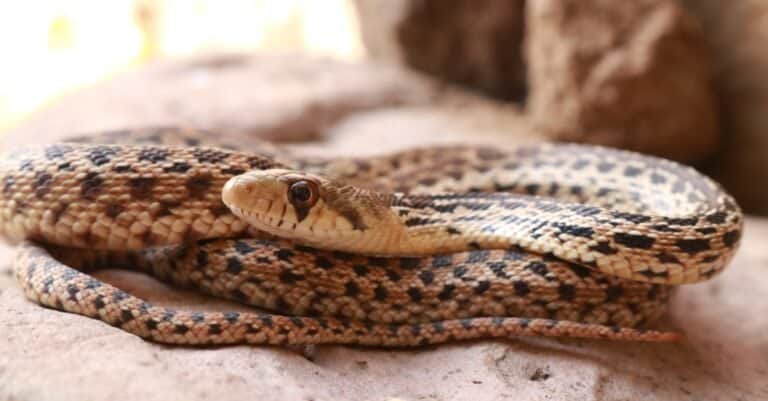
The main difference between a rattlesnake and a coachwhip snake is their appearance and the fact that rattlesnakes are venomous. Rattlesnakes are thicker than coachwhips and weigh more even though the two snakes can grow to about the same length.