




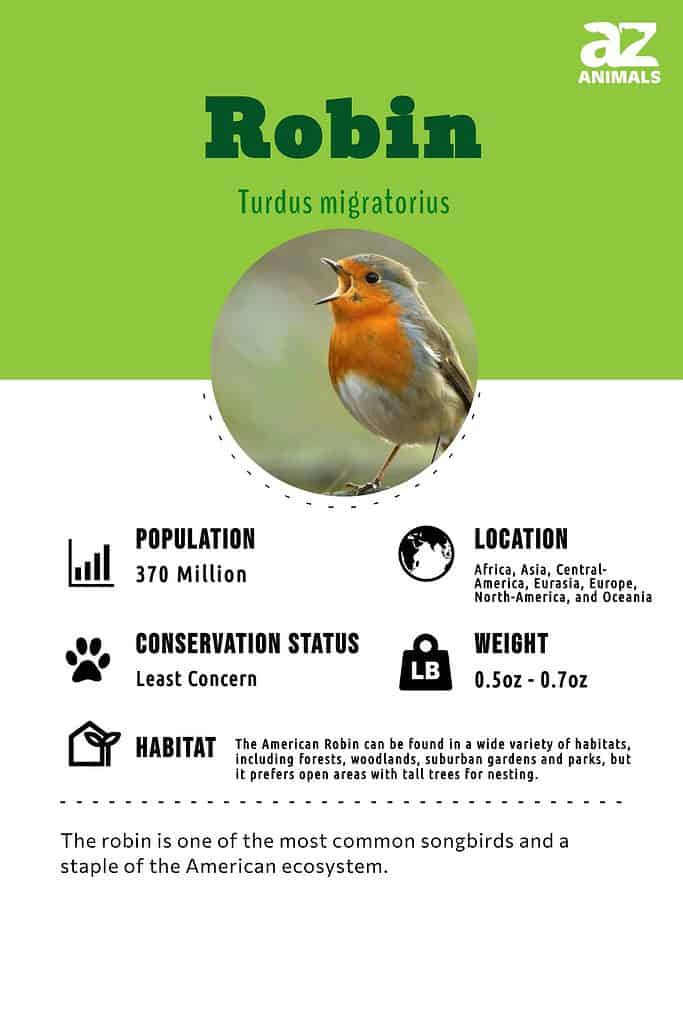
The robin is one of the most common songbirds and a staple of the American ecosystem.
Its rich and beautiful songs are often a harbinger of the arrival of spring. There are several different species of robin. The two most common are the American robin and the European robin. Unless otherwise indicated, this article will tend to discuss the American robin first.
An Amazing Bird: 4 Robin Facts!
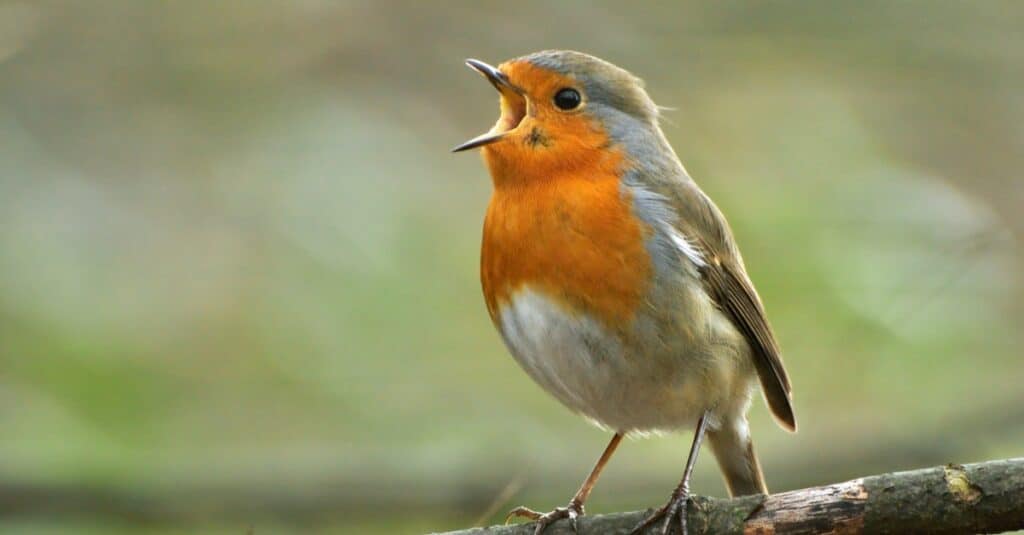
The American robin is among the first birds to lay its eggs in the spring.
©iStock.com/Wouter_Marck
- The brown-headed cowbird, a brood parasite, frequently lays its eggs in the robin’s nest and tricks the mother into raising its children in place of the robin’s own. But the bird is quite good at identifying and removing these undesirable eggs from its nest.
- The American robin is among the first birds to lay its eggs in the spring.
- There are some seven subspecies of American robin (the eastern, Newfoundland, Mexican, southern, western, northwestern, and San Lucas robin), each with a distinct range.
- Robins have the ability to become drunk from fermented berries.
Evolution and Origin
The American Robin (Turdus migratorius) is a migratory songbird of the true thrush genus and Turdidae, the wider thrush family. It is named after the European Robin because of its reddish-orange breast, though the two species are not closely related.
The American Robin is widely distributed throughout North America, from southern Canada to central Mexico, and is the state bird of Connecticut, Michigan, and Wisconsin. Its evolutionary origins and relationship to other species in the Turdidae family are not well understood, but it is believed to have evolved in North America and diverged from a common ancestor with other members of the genus Turdus.
Different Types of Robins
Lower Classifications of Robins:
- Fieldfare
- Song thrush
- Common blackbird
- Redwing
- American robin
- Mistle thrush
- Rufous-bellied thrush
- Austral thrush
- Black thrush
- Creamy-bellied thrush
- Glossy-black thrush
- Clay-colored thrush
- Great thrush
- Ring ouzel
- Chiguanco thrush
- Black-throated thrush
- Pale-breasted thrush
- Black-billed thrush
- White-necked thrush
- Dusky thrush
- Naumann’s thrush
- Eyebrowed thrush
- Red-throated thrush
- Japanese thrush
- Brown-headed thrush
- Pale thrush
- Cocoa thrush
- Grey-backed thrush
- Spectacled thrush
- Black-breasted thrush
- Red-legged thrush
- Olive thrush
- Island thrush
- Lawrence’s thrush
- African thrush
- Grey-winged blackbird
- Pale-eyed thrush
- Chinese thrush
- Rufous-backed robin
- White-collared blackbird
- Chestnut thrush
- Blacksmith thrush
- Kurrichane thrush
- White-throated thrush
- Izu thrush
- Tickell’s thrush
- Mountain thrush
- Grey-sided thrush
- La Selle thrush
- Black-hooded thrush
- White-eyed thrush
Where Do Robins Live?
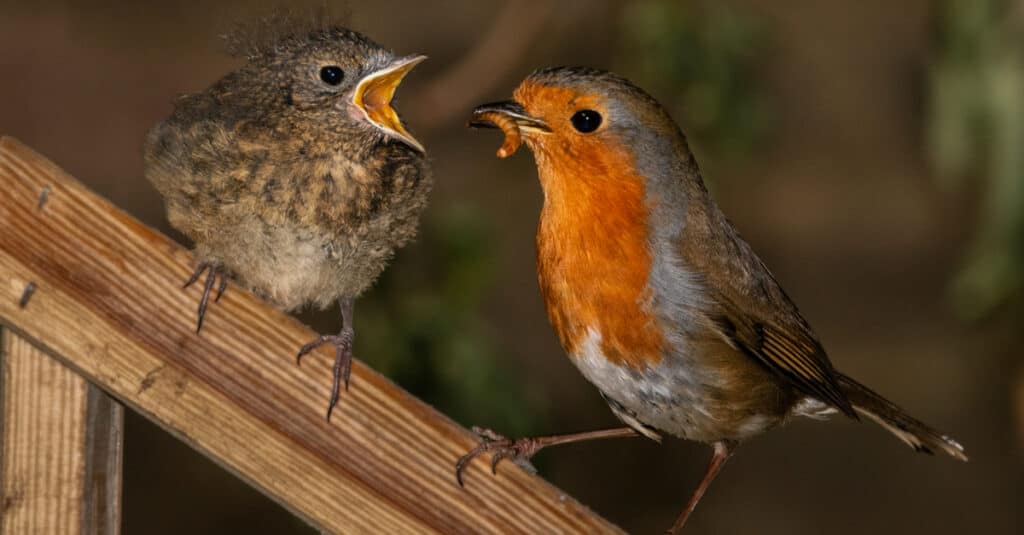
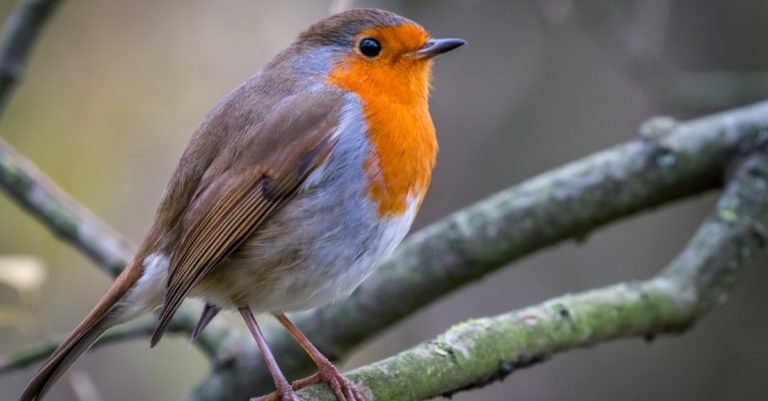
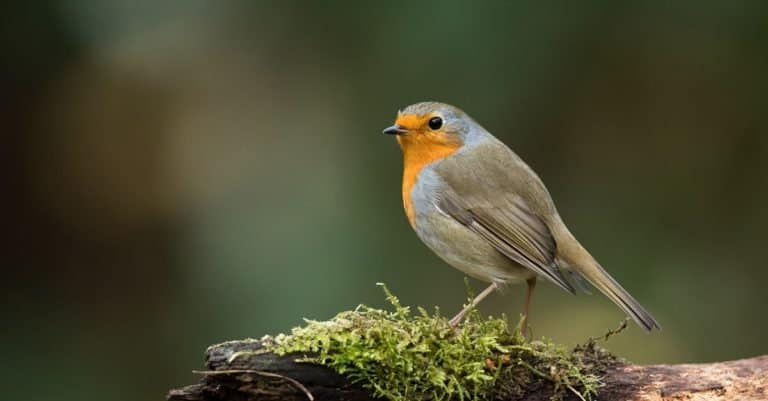
The European robin, by contrast, has a massive range across all of Europe and parts of Asia and North Africa.
©Aleksandra Krolikowska/Shutterstock.com
The American robin is a bird that is endemic to the entire North American continent. The European robin, by contrast, has a massive range across all of Europe and parts of Asia and North Africa. It inhabits almost any ecosystem, like woodlands, fields, and gardens, with short grass for foraging and some scattered trees for nesting.
Nests
These birds construct a cup-shaped nest out of coarse grass and twigs all woven together. Mud, moss, feathers, and finer grass line the interior to provide a soft cushion. The nest is usually located 5 to 15 feet above the ground in dense shrubs or trees. They have adapted very well to human habitats and sometimes construct a nest in garages, houses, and other buildings.
Scientific Name
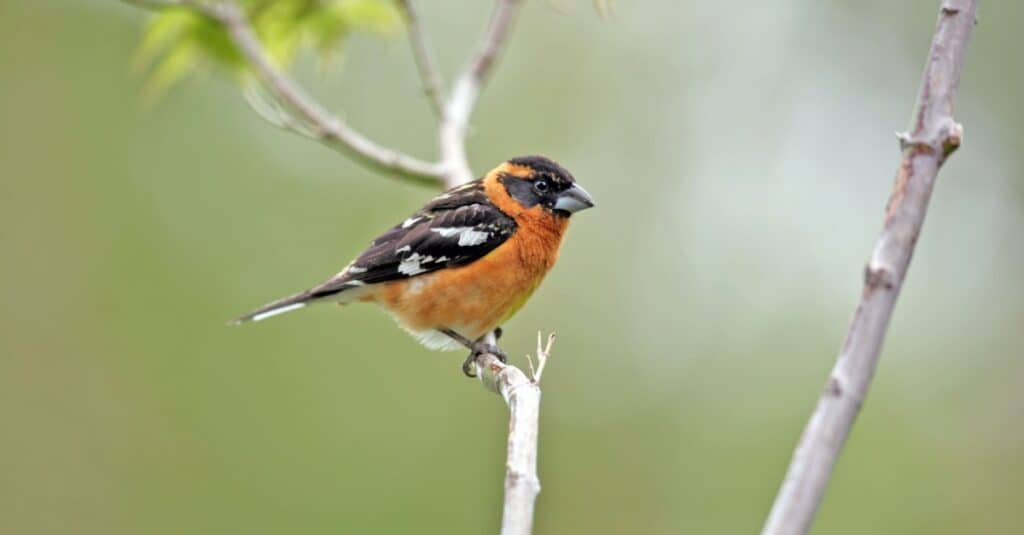
The scientific name of the American robin is Turdus migratorius.
©iStock.com/ltterry
The scientific name of the American robin is Turdus migratorius. Turdus is the Latin name for the thrush (to which it’s closely related), while migratorious is obviously the Latin name for migration.
A member of the thrush family Turdidae (along with bluebirds and solitaries), the American robin is only distantly related to the European robin, which belongs to the family of Old Word flycatchers known as Muscicapidae.
The scientific name of the European robin is Erithacus rubecula. Erithacus is the Ancient Greek term for the robin. Rubecula appears to be a Latin name derived from ruber for red.
Size, Appearance, and Behavior
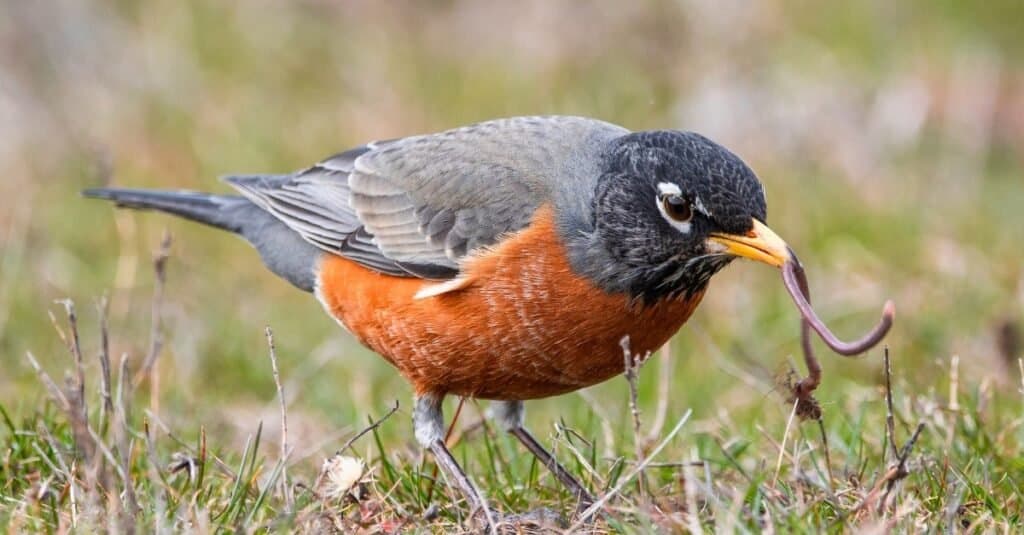
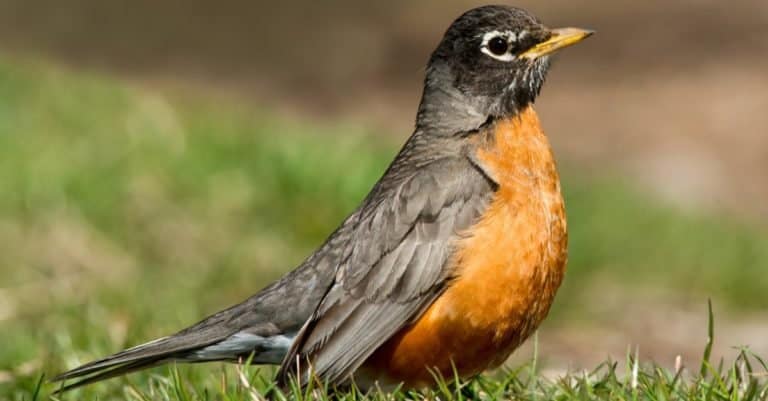
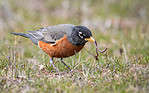
American robins feature long, round bodies and dark heads, grayish-brown streaky plumage above, and warm orange below.
©iStock.com/Mason Maron
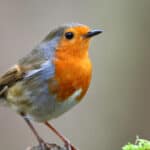
Although the American and European robins are only distantly related, the original American colonists named the American robin after its European counterpart due to the somewhat similar appearance, particularly the bright red or orange markings on the breast.
The main difference is that the American species have darker feathers around the back and an upright posture, while the European robin has light brown, gray, or white feathers and a more rounded body. The American robin is also the larger of the two. It measures up to 11 inches long with a wingspan of up to 16 inches. The European robin is about 5 inches long with an 8 to 9-inch wingspan.
The American robin is a social species that gather in large flocks at night and on their winter grounds. The flocks break up during the day to search for food. The bird is generally friendly toward other members of its species. The only time it becomes more territorial is in the breeding season.
As a songbird, they can often be heard chirping from a high perch to attract mates, warn of the presence of predators, and in general communicate with each other. Their song behavior appears to be changing in response to human society, however. The chirping now begins earlier in the day and operates at a higher pitch than in the past.
Migration Timing and Pattern
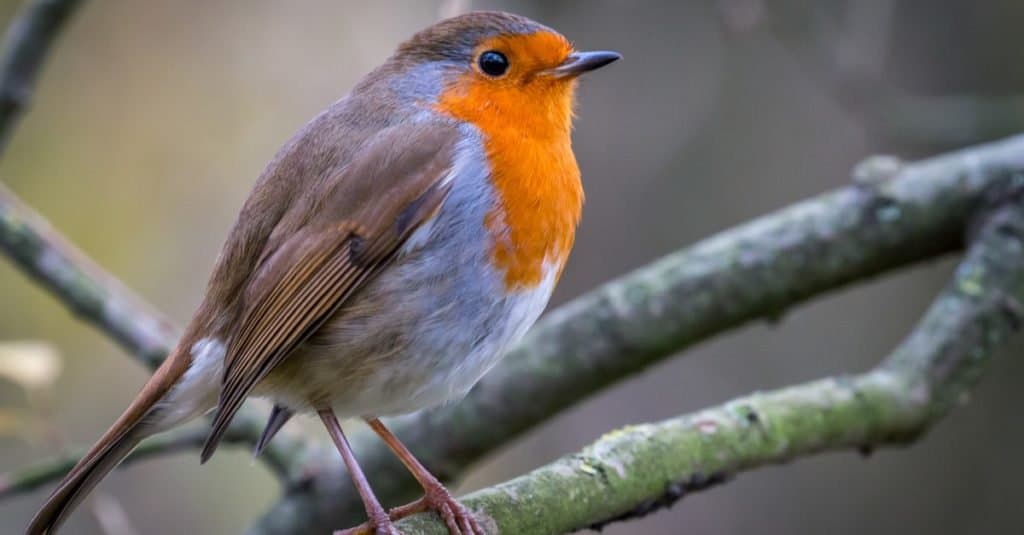
The American species completes a yearly migration in which it travels as far south as Mexico and Central America for the winter and then returns to the north for the spring.
©Anthony Smith Images/Shutterstock.com
The American species completes a yearly migration in which it travels as far south as Mexico and Central America for the winter and then returns to the north for the spring.
Those birds residing in Alaska and northern Canada for the breeding season have the farthest to travel in the winter, sometimes as far as 3,000 miles per trip, while those in the central and southern United States don’t travel too far from their breeding grounds.
The European bird, meanwhile, migrates to Southern Europe, North Africa, and even parts of Asia for the winter. The Scandinavian and Russian species migrate to the more temperate areas of Britain.
Diet
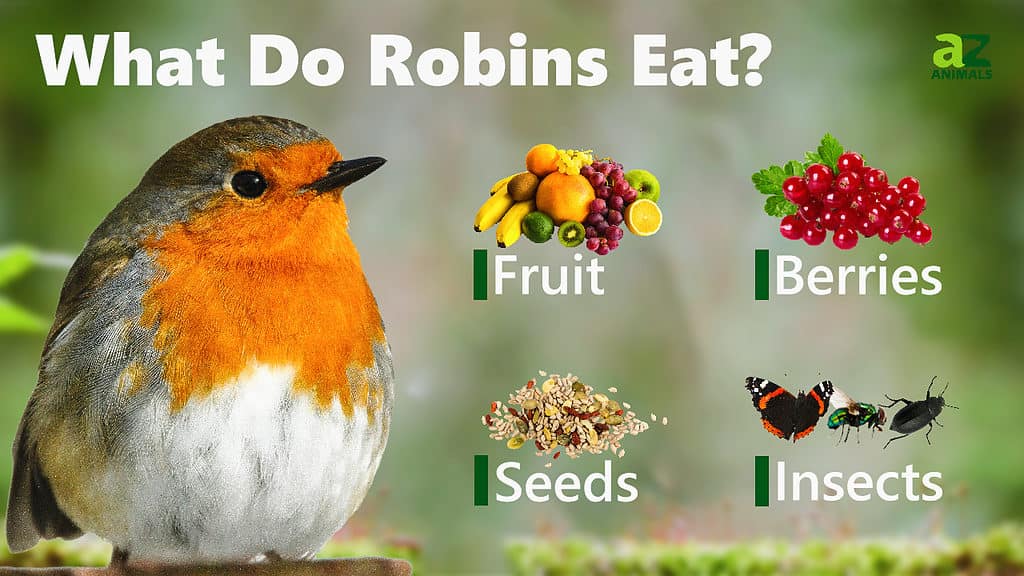
These birds play an important role in the ecosystem by keeping pests in check and dispersing undigested seeds throughout the environment.
What does the robin eat?
The bird’s diet consists of approximately 40% invertebrates (like grasshoppers, caterpillars, earthworms, and beetles) and 60% fruits and berries. It tends to eat animals in the spring and summer and fruit more toward the autumn and winter.
Predators, Threats, and Conservation Status
These birds fall victim in large numbers to predation and habitat loss. But according to the IUCN Red List, both the American and European robins are least concern, which means they require no special conservation efforts.
What eats the robin?
Adult birds are most often preyed upon by domesticated cats, large snakes, and hawks. Eggs are also consumed by squirrels, snakes, bluejays, crows, ravens, and grackles. Whenever they’re out foraging, the bird always keeps an eye on nearby members of the flock for the presence of predators. If they cannot get away easily, then they may mob small predators to chase them off.
The Bird’s Reproduction, Babies, and Lifespan
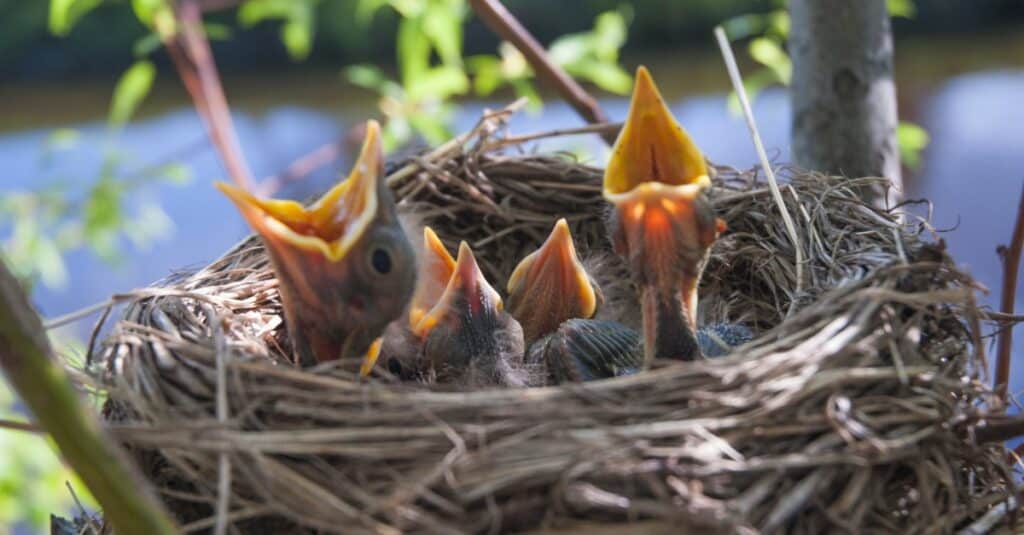
The bird’s breeding season begins shortly after returning from the winter grounds in the spring and lasts until around July.
©iStock.com/markhonosvitaly
The bird’s breeding season begins shortly after returning from the winter grounds in the spring and lasts until around July. These birds acquire a new mate every year and never form permanent or long-term bonds. This means the male must engage in an annual courtship process that involves a strutting display, singing, shaking, throat puffing, and fluffing their tail feathers.
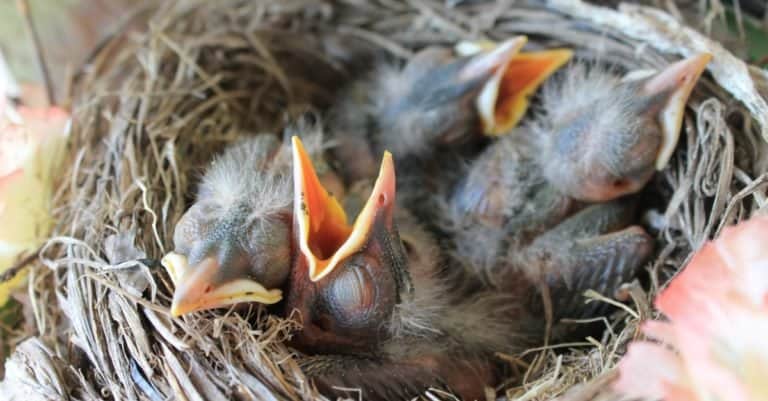
After finding and copulating with an appropriate mate, the female produces three to five light blue eggs per clutch and up to three clutches per season. The chicks emerge from the eggs after about two weeks of incubation.
They are undeveloped and almost completely reliant on their parents. After about two weeks of life, the young chicks develop their flight feathers relatively quickly, though, at this early stage, they differ from their adult counterparts with spots on the breast and paler color.
The chicks leave the nest right after the growth of their flight feathers. This quick development time is perhaps due to the upcoming autumn migratory route and due to the need to make way for a new clutch.
Most American robins only live about two years on average, and a quarter of them won’t even survive the first summer of their lives. If they do develop into adults, however, the survival prospects improve significantly. The oldest recorded robin lived about 14 years in the wild.
Population
It is estimated that the American species’ population stands at about 310 million. The IUCN Red List also estimates up to 200 million mature European robins in the wild. In the 20th century, they were badly affected by the pesticide DDT, but numbers quickly recovered after the DDT ban in 1972. Both species appear to be on the rise today.
Robin Pictures
View all of our Robin pictures in the gallery.

Trevor Charles Graham/Shutterstock.com
Sources
- Animal Diversity Web / Accessed January 19, 2021
- Audubon / Accessed January 19, 2021