


R
Species Profile

Rottweiler

Canis lupus familiaris

Built to guard, born to bond.
iStock.com/Jana Richter

Rottweiler Distribution

Click a location to explore more animals from that region

Origin Location

This map shows the native origin of the Rottweiler. As a domesticated species, they are now found worldwide.

Loading map...

Found in 1 country

Size Comparison

Human 5'8"
Rottweiler 2 ft 1 in

Rottweiler stands at 36% of average human height.

Strongest Dog Breed Bite - Rottweiler

At a Glance

Domesticated
Also Known As Rottie, Rott, Rotties, Metzgerhund, Butcher's dog
Diet Omnivore
Activity Diurnal+
Lifespan 9 years
Weight 60 lbs
Status Not Evaluated
Did You Know?

The breed name comes from Rottweil, a town in southern Germany historically known for cattle trade and butchers.

Scientific Classification

The Rottweiler is a large, robust domestic dog breed historically associated with droving and guarding, and today commonly used as a companion, guardian, and working dog.

Kingdom
Animalia
Phylum
Chordata
Class
Mammalia
Order
Carnivora
Family
Canidae
Genus
Canis
Species
Canis lupus

Distinguishing Features

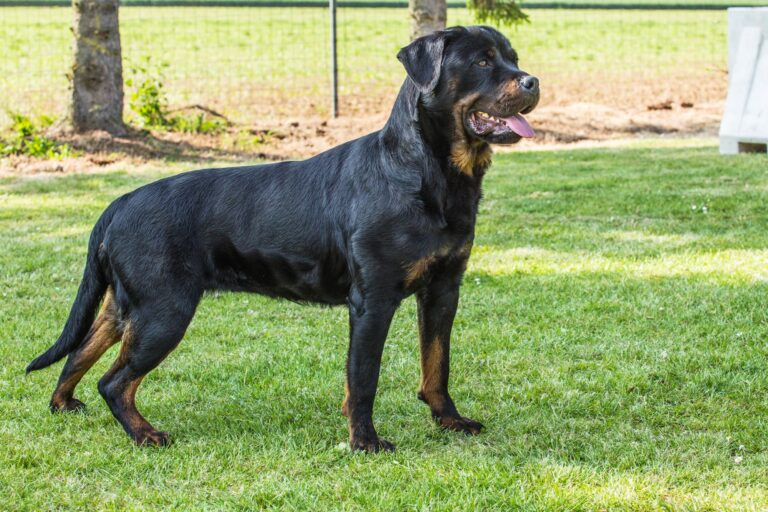
  • Large, muscular build with broad head and strong jaws
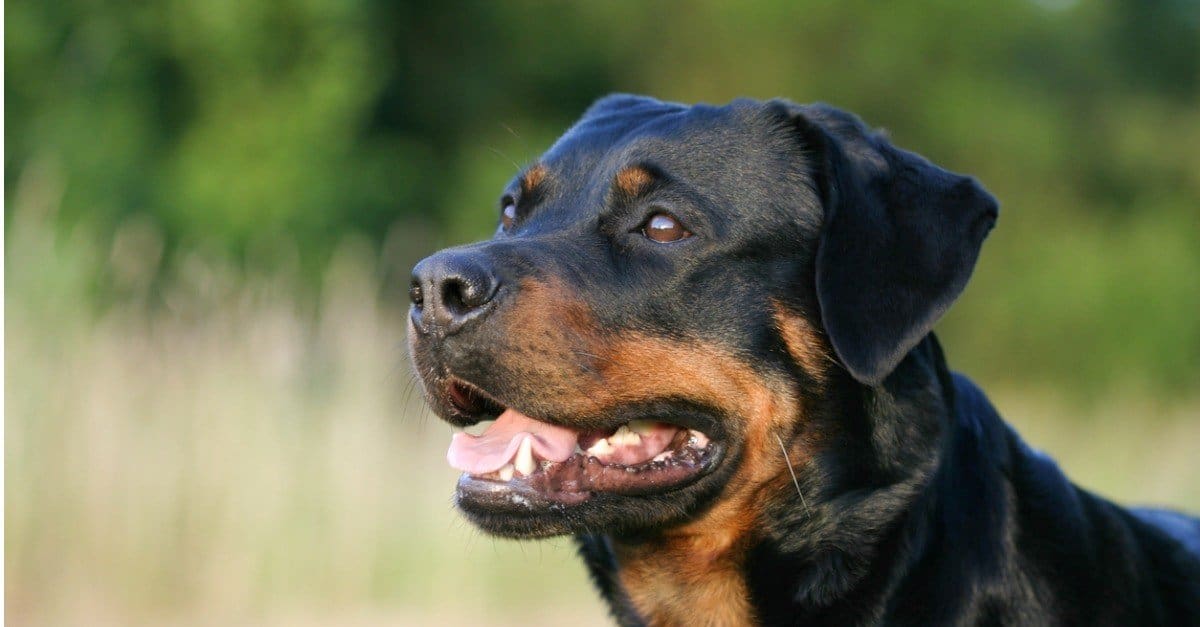
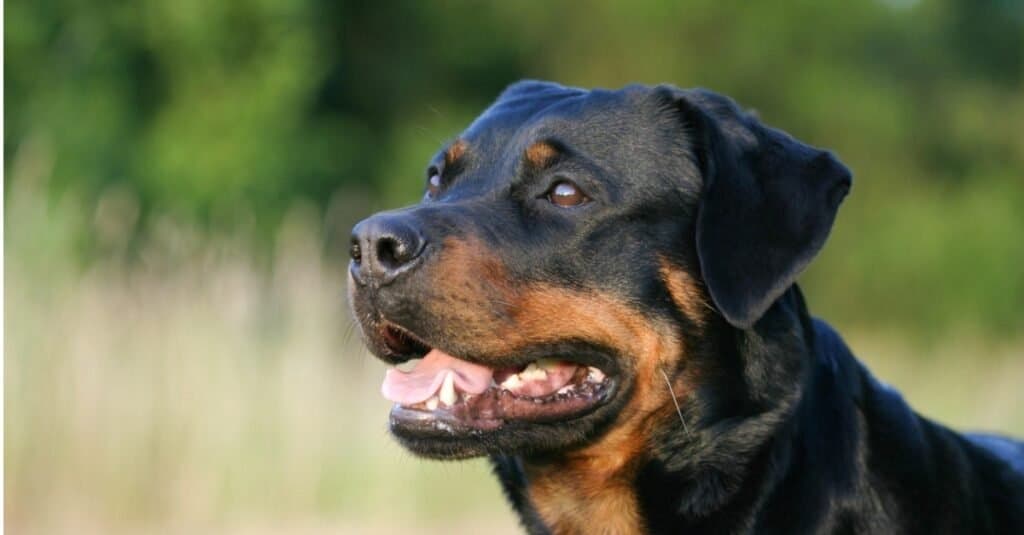
  • Short, dense coat typically black with rust/tan markings
  • Traditionally docked tail in some regions (now restricted/illegal in many countries)
  • Calm, confident demeanor; strong guarding/working drive when properly trained

Physical Measurements

Males and females differ in size

Height
2 ft 2 in (2 ft – 2 ft 3 in)
1 ft 11 in (1 ft 10 in – 2 ft 1 in)
Length
4 ft 5 in (3 ft 11 in – 4 ft 11 in)
3 ft 3 in (2 ft 11 in – 3 ft 7 in)
Weight
121 lbs (110 lbs – 132 lbs)
91 lbs (77 lbs – 106 lbs)
Tail Length
1 ft 2 in (12 in – 1 ft 4 in)
1 ft 1 in (11 in – 1 ft 3 in)
Top Speed
25 mph
running

Appearance

Primary Colors
Secondary Colors
Skin Type Mammalian skin with short, dense double coat; coarse guard hairs over undercoat.
Distinctive Features
  • Domestic dog breed (Canis lupus familiaris) selectively bred for droving and guarding; more robust and compact than typical free-ranging canids.
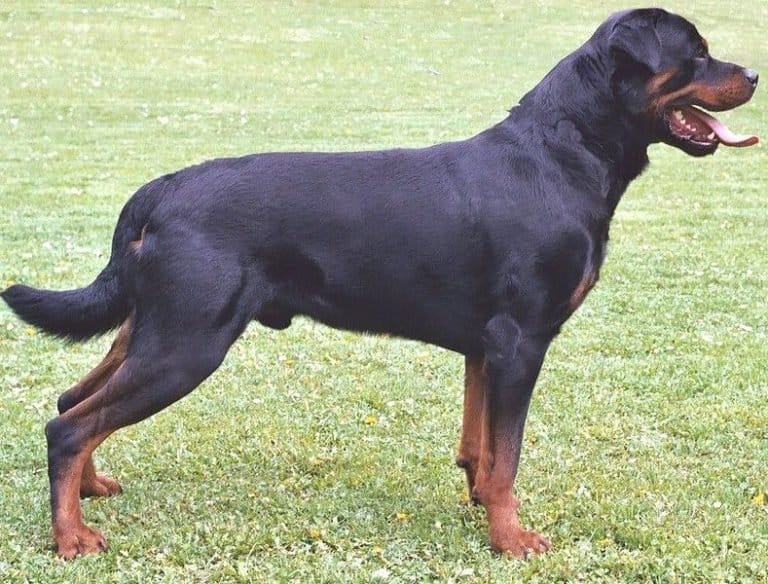
  • Large, muscular build with deep chest, strong neck, and broad back; powerful gait suited to working roles.
  • Broad, moderately long head with pronounced stop; strong jaws and scissor bite; alert, confident expression.
  • Coat is short, straight, and dense; sheds seasonally and benefits from weekly brushing.
  • Breed-typical black coat with well-demarcated tan points; minimal white is generally undesirable in breed standard.
  • Tail historically docked in some regions; natural tail is medium length and carried level (docking restricted/illegal in many places).
  • Temperament is strongly shaped by early socialization, training, and responsible handling; bred for steadiness and guardian work rather than indiscriminate aggression.
  • Common health concerns: hip/elbow dysplasia, cranial cruciate ligament disease, subaortic/aortic stenosis, osteosarcoma, obesity-related issues.
  • Care requirements: consistent training, early socialization, structured daily exercise, mental work (obedience/scent tasks), weight management, and joint-friendly conditioning; avoid overheating during intense activity.

Sexual Dimorphism

Males are typically larger, heavier-boned, and more blocky-headed with a broader chest. Females are generally smaller and more refined, often appearing slightly lighter-framed while retaining the same black-and-tan patterning.

  • Greater overall height and weight; thicker neck and heavier musculature.
  • Broader skull and more pronounced head width; more massive chest and forequarters.
  • Slightly smaller, more refined head and lighter bone structure.
  • Often narrower chest and less bulky overall silhouette, with similar coat and markings.

Did You Know?

The breed name comes from Rottweil, a town in southern Germany historically known for cattle trade and butchers.

Early "Rottweilers" guarded money pouches tied around butchers' waists on the road-an oft-told historical anecdote in breed lore.

Rottweilers descend from domesticated dogs (Canis lupus familiaris) shaped by human selection for strength, steadiness, and protective instincts rather than wild hunting.

Their classic coat pattern is a form of "tan-point" coloration: black base with defined rust markings on muzzle, chest, and legs.

They've served widely in working roles-guarding, droving, police/military work, search-and-rescue, and therapy-depending on temperament and training.

A well-bred Rottweiler is typically calm and confident at home, switching to alert vigilance when something is unusual.

Compared with many large breeds, they can excel in obedience and protection sports because they combine biddability with physical power.

Unique Adaptations

  • Selective breeding for power and endurance: robust bone, broad chest, and strong hindquarters suit pulling, guarding, and sustained work rather than sprint hunting.
  • Protective temperament potential: compared with the base species context (wolf ancestry filtered through domestication), Rottweilers often show heightened territorial/guardian tendencies shaped by human-directed selection.
  • Weather-tolerant double coat: a short, dense outer coat with undercoat (varying by individual/line) supports work in cool conditions, while still being relatively low-maintenance.
  • High pain tolerance and stoicism are often reported in working lines-useful for demanding tasks but can mask injury, so proactive health checks matter.
  • Strong bite mechanics typical of large canids: not "unique," but their head/neck musculature and determination make safe management, training, and supervision especially important.

Interesting Behaviors

  • Natural "watchdog positioning": many Rottweilers choose a spot with a wide view of doors/paths and quietly monitor activity.
  • Body-blocking and "leaning": they may lean into trusted people or gently place their body between family and a perceived concern-often a guarding-rooted behavior.
  • Mouth-oriented play: like many working dogs, they may carry, tug, or "hold" objects; channeling this into structured games reduces nuisance mouthing.
  • Droving-style movement: some individuals show instinct to follow and control motion (bikes, running kids, livestock), reflecting their herding/droving history.
  • Low-bark assessment: many are not constantly vocal; they may watch silently and then give a deeper warning bark when they decide it matters.
  • Ritualized greeting with known people: they can be reserved with strangers but affectionate with family, especially when early socialization is consistent.

Cultural Significance

Rottweiler (Canis lupus familiaris) came from Rottweil, Germany, where they moved cattle and guarded people, property, and money. Today they stand for strength and guarding, used in police work and as family dogs. Training and early socializing shape their reputation.

Myths & Legends

The "butcher's dog of Rottweil" stories: in 19th-century accounts, butchers traveling to markets relied on these dogs to drive cattle and deter thieves; the dog's presence became a moving legend of security on the road.

The money-pouch tale: traditional breed lore says butchers tied their earnings in a pouch on the dog's neck because few dared approach a vigilant Rottweiler-an enduring anecdote repeated in breed histories.

Near-extinction and revival lore: early 20th-century stories describe the breed's decline as rail transport replaced cattle droving, followed by enthusiasts and breed clubs preserving it for working ability and character.

Guardian-at-the-threshold superstition (modern folk belief): in some households, a Rottweiler's calm watch at doorways is treated as a sign the home is "protected," a contemporary cultural association tied to the breed's historic role.

Conservation Status

NE Not Evaluated

Has not yet been evaluated against the criteria.

Population Stable

Life Cycle

Birth 8 pups
Lifespan 9 years

Lifespan

In the Wild
8–10 years
In Captivity
7–12 years

Reproduction

Mating System Polygynandry
Social Structure Managed Domestic
Breeding Pattern Serial
Fertilization Managed Selective
Birth Type Internal_fertilization

Behavior & Ecology

Social Pack Group: 4
Activity Diurnal, Crepuscular, Cathemeral
Diet Omnivore Meaty, high-protein foods (often beef-based) and strong-smelling training treats

Temperament

Confident, steady, people-focused guardian; typically reserved with unfamiliar humans.
High territorial and protective motivation; distinguishes breed from base domestic-dog average.
Lower stranger-directed sociability than many breeds; requires structured, early socialization.
Strong handler attachment; thrives with clear rules, predictable routines, and task-based engagement.
Can be same-sex selective with other dogs; management and training reduce conflict risk.
High trainability with firm, fair methods; responds poorly to harsh or inconsistent handling.
Moderate prey/chase drive; varies by line and upbringing; recall training is important.
Generally calm, confident, and courageous; naturally protective and watchful, with strong loyalty to its family when properly socialized.
Well-socialized lines often show calm neutrality; under-socialized dogs may show reactivity or over-guarding.
Care requirement: daily mental work (obedience, scent games) reduces boredom-driven nuisance behaviors.
Exercise need: moderate-to-high; best as structured walks, pulling/weight work (age-appropriate), and training sessions.
Health concerns influencing behavior: hip/elbow dysplasia or osteoarthritis may cause irritability and touch sensitivity.
Health concerns: cranial cruciate ligament injury risk; manage weight and avoid repetitive high-impact jumping.
Health concerns: dilated cardiomyopathy/subaortic stenosis can reduce stamina; vet screening affects activity planning.
Heat sensitivity due to size/coat; adjust activity timing and provide cooling/rest.

Communication

deep bark/alert bark
low growl
rumbling grumble Often during play/attention seeking
whine/whimper
howl Occasional
snort/huff
intense watch/stare and body blocking to control access
forward-leaning posture and chest-out stance; may escalate if challenged
tail carriage and wag amplitude Dock status can limit visibility
lip licking/yawning/turning away as appeasement or stress signals
pawing, leaning, and close contact to solicit attention or reassurance
scent marking (urine) and ground sniffing to assess social context
mouthing/play-biting with inhibited pressure when well-socialized
resource guarding signals (freezing, head over object); requires management and training

Habitat

Biomes:
Temperate Forest Temperate Grassland Mediterranean Desert Hot Desert Cold Boreal Forest (Taiga) Tundra Alpine Savanna Tropical Dry Forest Wetland Freshwater +6
Terrain:
Mountainous Hilly Plateau Plains Valley Coastal Island Riverine +2
Elevation: Up to 14763 ft 9 in

Ecological Role

Domesticated omnivorous canid; in human-dominated ecosystems the Rottweiler functions primarily as a working/guardian companion rather than a natural predator, with limited direct predation compared to wild Canis lupus.

Property and livestock guarding/deterrence of intruders and predators Working roles (e.g., droving heritage, obedience/utility work, search-and-rescue/scent work in some lines) Human companionship and social support Potential indirect pest control when dogs deter or occasionally catch rodents

Diet Details

Main Prey:
Small mammals Birds Animal-based foods provided by humans
Other Foods:
Fruits Vegetables Grasses Starches

Human Interaction

Domestication Status

Domesticated

Domestic dogs (Canis lupus familiaris) began from gray wolves and were tamed by living near people and later bred for work like herding, guarding, and help. Rottweilers were bred for power and droving, linked to Roman mastiffs and Rottweil butchers. Today they are companions, guardians, sport and rescue dogs, often large and protective if poorly socialized.

Danger Level

Moderate
  • Severe injury potential due to size, strength, and bite force (risk increases with poor management)
  • Protective/territorial aggression if under-socialized, fearful, or reinforced for guarding without control
  • Higher risk of incidents with mishandling around resources (food/toys) or rough play, especially with children
  • Increased public-safety consequences from leash failures or inadequate confinement
  • Behavioral deterioration possible with chronic pain (e.g., hip/elbow dysplasia) or endocrine issues (e.g., hypothyroidism) affecting irritability

As a Pet

Suitable as Pet

Legality: Generally legal as a domestic dog. However, some municipalities/HOAs/insurers impose breed-specific legislation (BSL), restrictions (muzzling/leashing), higher liability insurance requirements, or outright bans. Verify local laws, housing rules, and insurance policies.

Care Level: Experienced

Purchase Cost: $500 - $3,000
Lifetime Cost: $20,000 - $55,000

Economic Value

Uses:
Companion animal ownership Working dog (guarding/property protection) Security and patrol applications (private sector) Sport/competition (obedience, IPO/IGP, agility, tracking, carting) Service/therapy work (selected lines/individuals) Breeding and stud services Veterinary and pet-service economy (training, grooming, boarding, insurance)
Products:
  • Trained protection/guard dog services (where legal)
  • Working-line puppies and pedigreed breeding stock
  • Stud services and semen sales (regulated/ethical contexts)
  • Training services for obedience/behavior management
  • Sport titles and event participation revenues

Relationships

Related Species 6

The Rottweiler is consistently ranked among the top 10 most popular dog breeds by the American Kennel Club and is considered the 9th most intelligent dog breed according to Stanley Coren’s rankings, and one of the most loyal breeds. Descended from the ancient Roman drover dog and related to the Italian Mastiff, the Rottweiler is thought to be one of the oldest dog breeds. It was developed in Rottweil, Germany, where a Roman army had settled in the 2nd century. It was used to herd cattle, for bear hunting, or for pulling small carts.

Through the Middle Ages and the Renaissance, the Rottweiler was employed by butchers to carry their money in a neck pouch when they went to market. Today, the working dog makes an excellent police, service, or guard dog, or family pet.
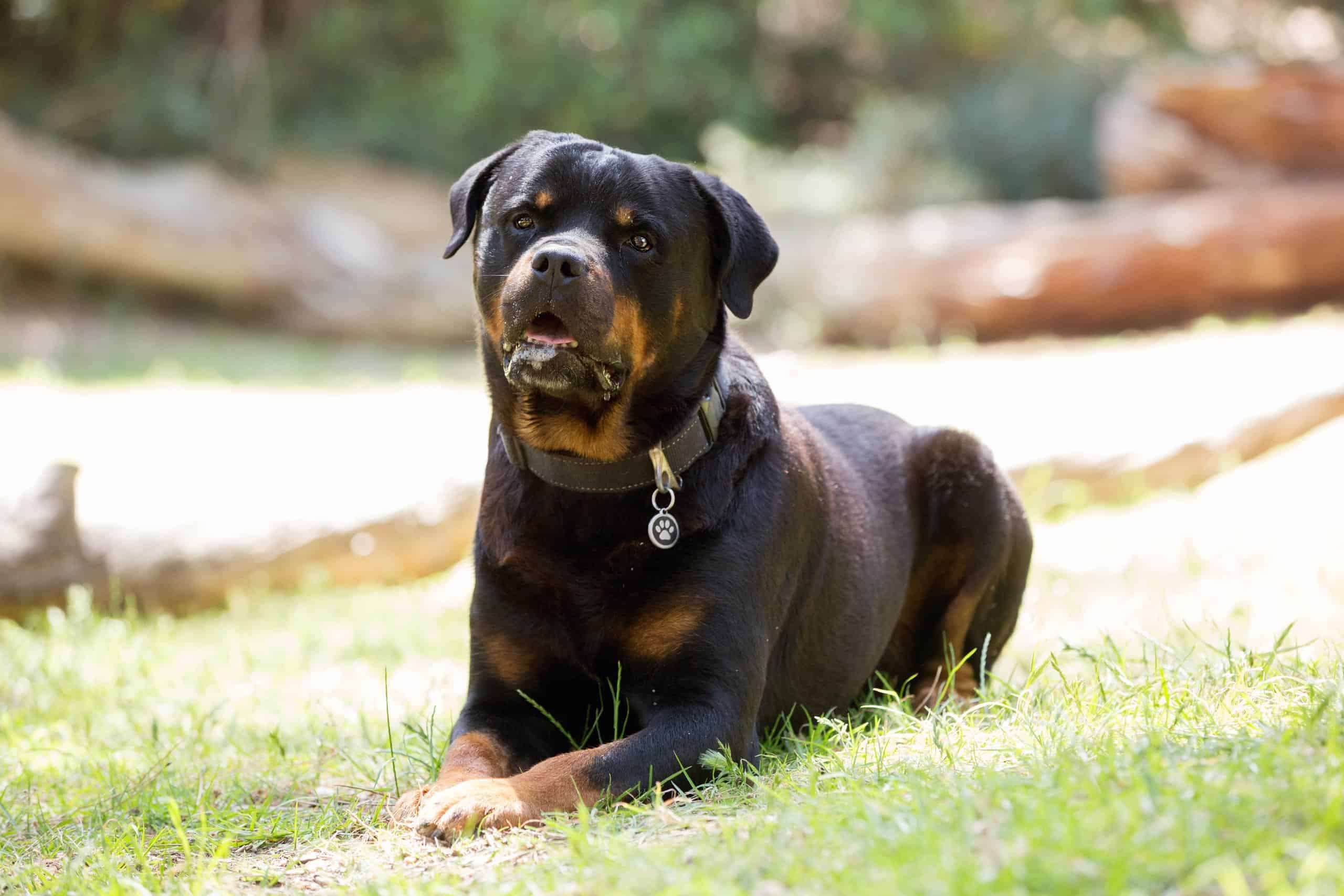
rottweiler sitting, drooling

Rotties possess many beneficial characteristics from their Rottweiler DNA.

3 Pros and Cons of Owning Rottweilers

Pros!Cons!
It’s a great guard-dog. This breed is famous for its protectiveness towards its family around strange people. It is also wary of strange dogs.It tends to chew. After the normal puppy teething phase, an adult Rottie can resort to chewing on furniture and other items in the house if it is bored or anxious
It’s very intelligent. This breed was tested and can learn a command after only 5 times. It is adaptable and can even go hunting, as long as the size of the game is appropriate — its strong bite can crush small game.It may have a shorter lifespan than other breeds. Compared to other dog breeds of similar size and weight, its lifespan is shorter. This is due to the prevalence of cancer in the breed. Otherwise, it would have a normal, healthy lifespan.
It’s adaptable. Although it’s used to being a strong working dog, the Rottie can easily get used to lounging around on the couch with family at home. Just remember to give it daily exercise and mental stimulation so it doesn’t resort to destructiveness.It’s more expensive. The Rottweiler is one of the oldest dog breeds, originating from Roman times. It is also one of the most expensive dog breeds, whether you are getting a pet or a show-quality dog. However, the more expensive the puppy and responsible the breeder, the stronger health-wise the dog will be.
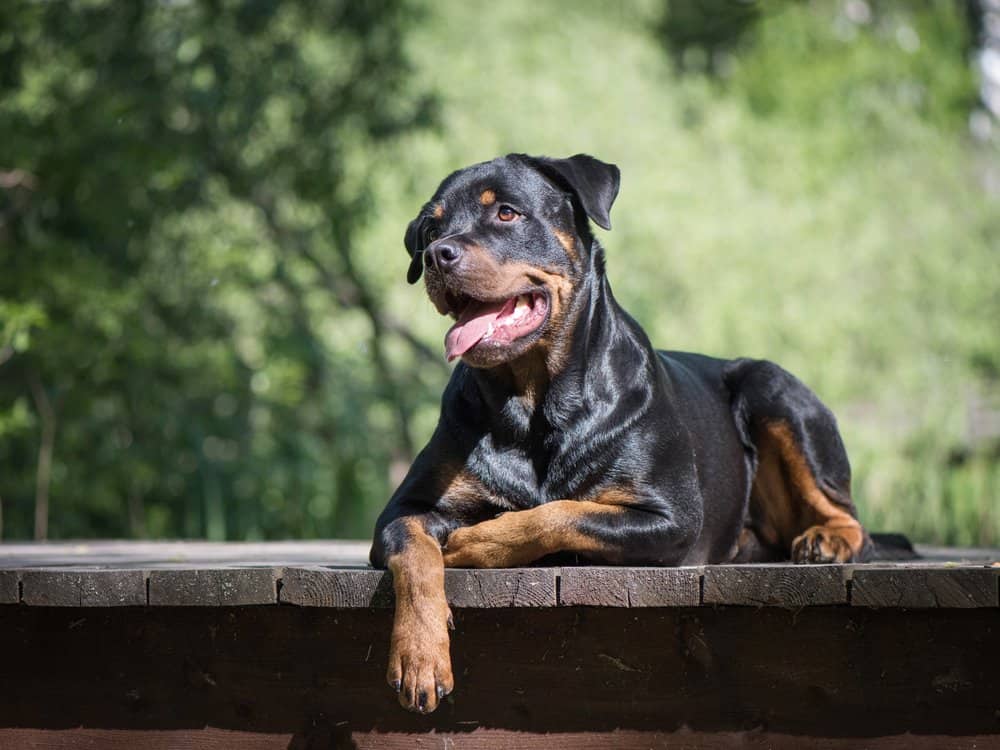
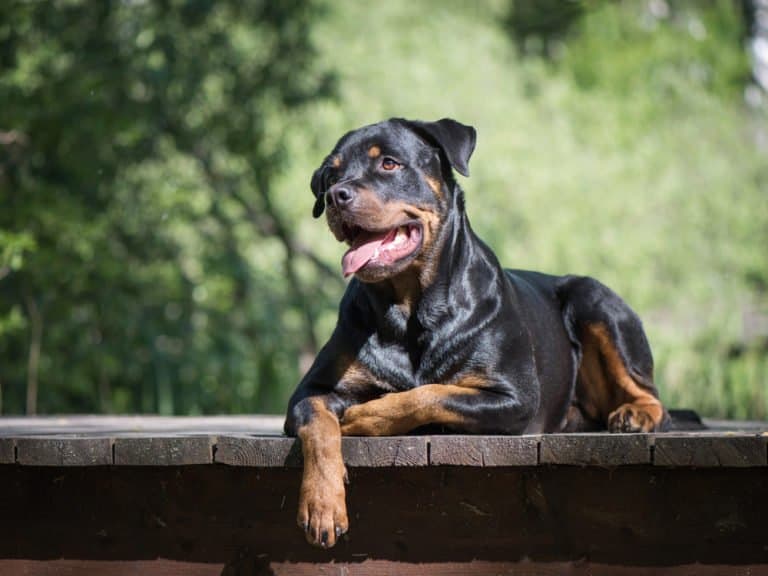
Rottweiler (Canis familiaris) - laying on deck

Although the Rotweiler can easily adapt to lying around all day, it must get some exercise and stimulation.

Rottweiler Size and Weight

The Rottweiler is a medium-large to large-sized short-haired dog with an average height of 25.5 inches for males and 23.5 inches for females. Males weigh about 121 lbs fully grown, while females weigh about 96 lbs fully grown. Rottweiler puppies weigh on average 13.5 lbs at 8 weeks of age and are considered adults between 24 to 36 months.
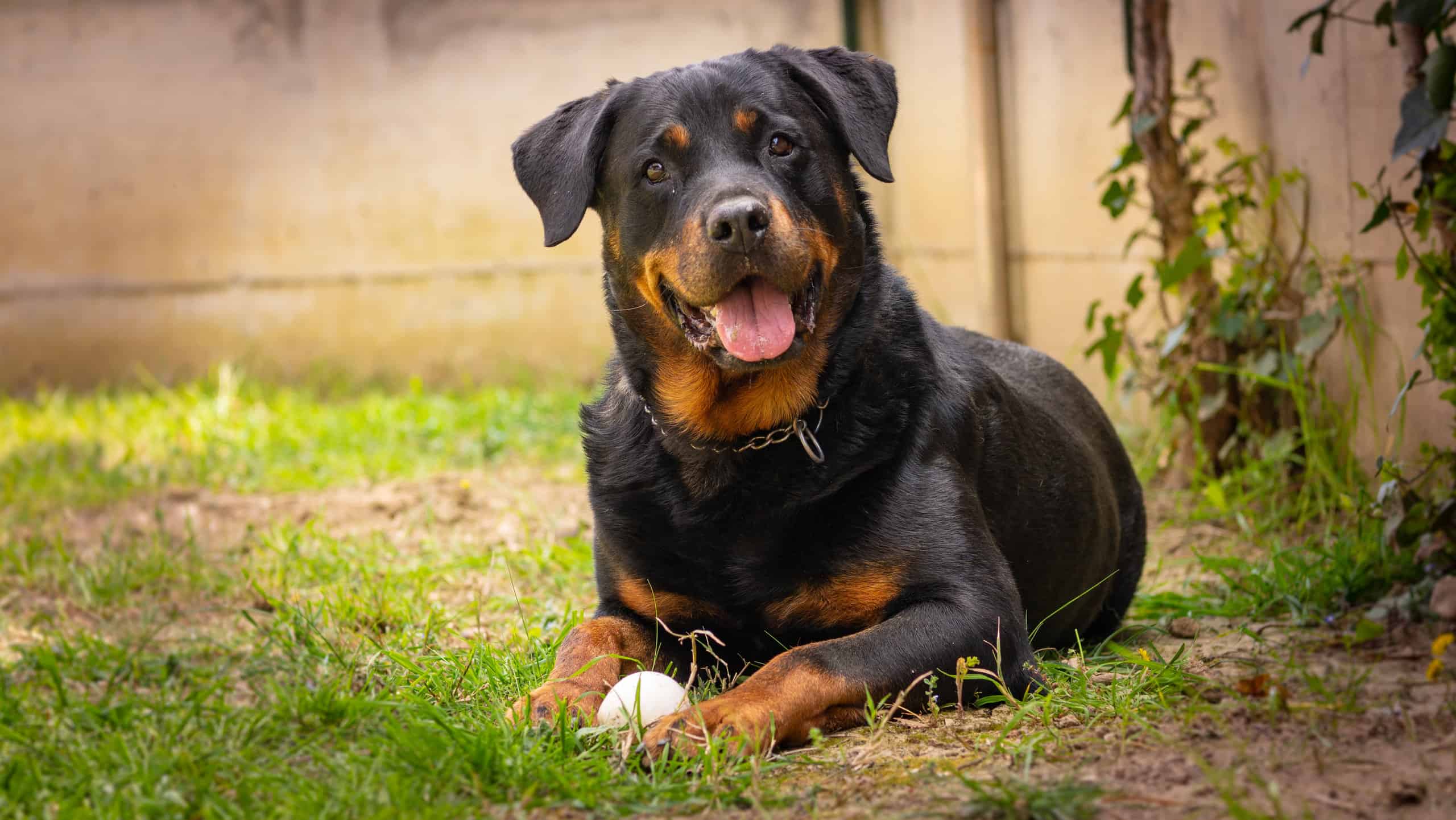
rottweiler

The Rotweiler is a medium-large to large-sized dog.

Rottweiler Common Health Issues

Purebred Rottweilers have some common health issues. The most common are eye issues such as Progressive Retinal Atrophy and Cataracts. A heart disease called aortic stenosis can result in abnormal heart rhythms and may lead to heart failure. Joint and bone issues such as hip dysplasia, elbow dysplasia, and osteochondritis dissecans are also unique to the breed. Finally, cancer complications were the cause of death of 43% in a group of Rottweilers in one recent study. The breed is prone to liver, spleen, and bone cancer, along with lymphoma.

Rottweiler Temperament

The Rottweiler is famous for having a loyal, affectionate, sensitive, and protective personality. Due to its calm and quiet temperament, it is a popular choice for families, including those with children. It is no more dangerous than any other dog breed, but its behavior can become rebellious if it is not trained or socialized properly.

This does not mean they cannot be trained, though. They are very intelligent and take to obedience training quickly. Traits of loyalty, adaptability, and eagerness to work with the instinct to hunt and herd are common to both males and females. However, a 2008 study found that confidence, sharpness, defense, and play drives were higher in males than in females.
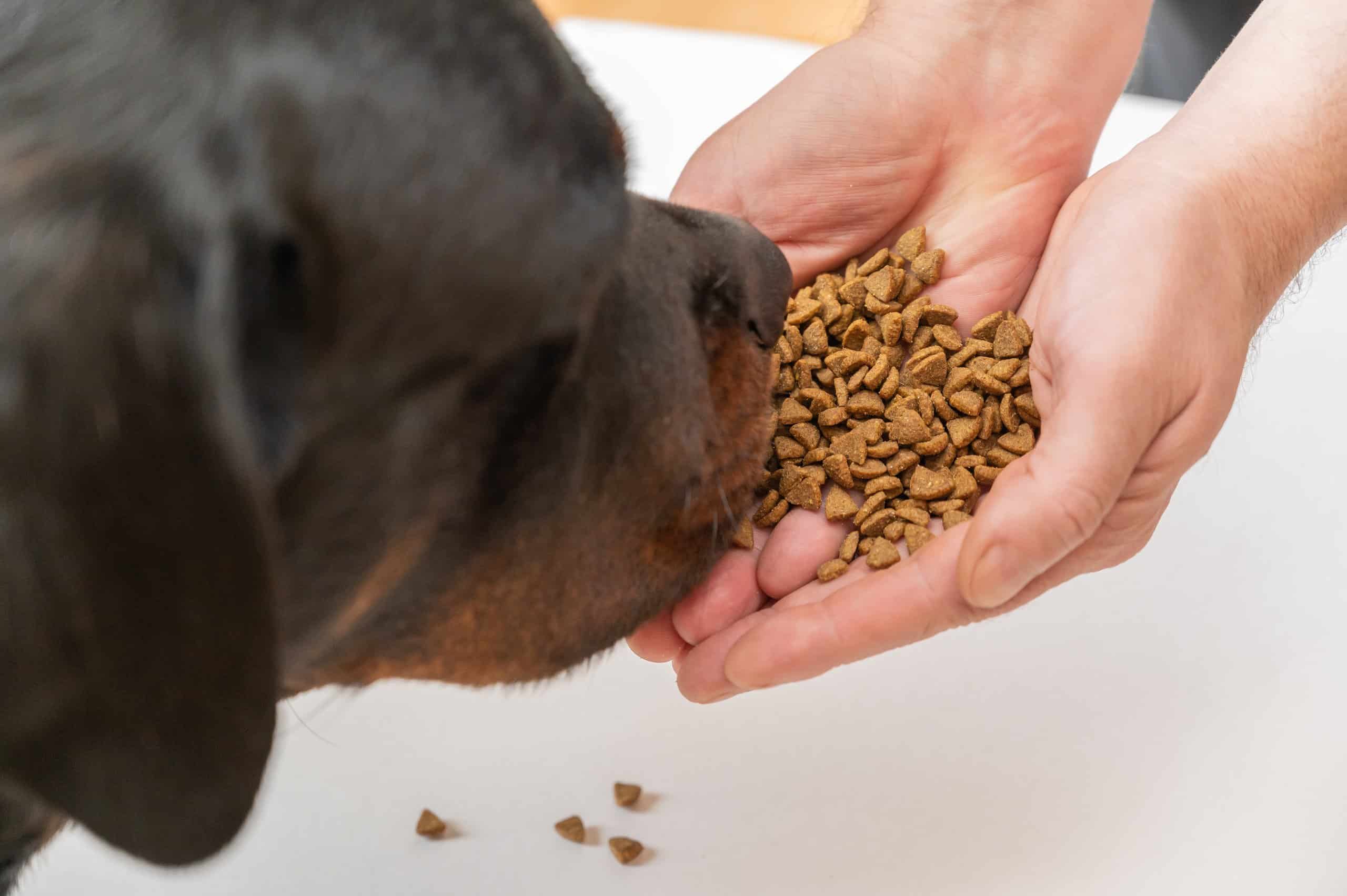
Rottweiler looking at food

Be sure to feed your Rottweiler a high-quality, protein-heavy diet and minimize the empty calories.

How To Take Care of Rottweilers

Rottweilers are not recommended for new or inexperienced dog owners. Regardless, they have unique needs, especially if they are puppies. Whether it’s teething, training, or health issues, Rottweilers have breed-specific issues that must be considered.

The Best Dog Food for Rottweilers

Rottweilers need nutritious food that gives them the energy they need without resulting in excess weight. As a result, they need a high-protein, meat-based diet. Since this breed can suffer from the heart disease aortic stenosis, owners should educate themselves about legume-free dog food, and discuss the health dangers of legumes with their vet.

Rottweiler puppy food: Rottweiler puppies need a lot of protein to develop muscles and build strength, as well as fulfill the high energy needs of their puppyhood. Their diet should contain 24 to 28% protein and 14 to 18% fat.

Rottweiler adult dog food: Like puppy food considerations, pet owners should feed their adult Rottweiler food that is high in protein and low in fat. It should contain 22 to 26% protein and 12 to 16% fat.
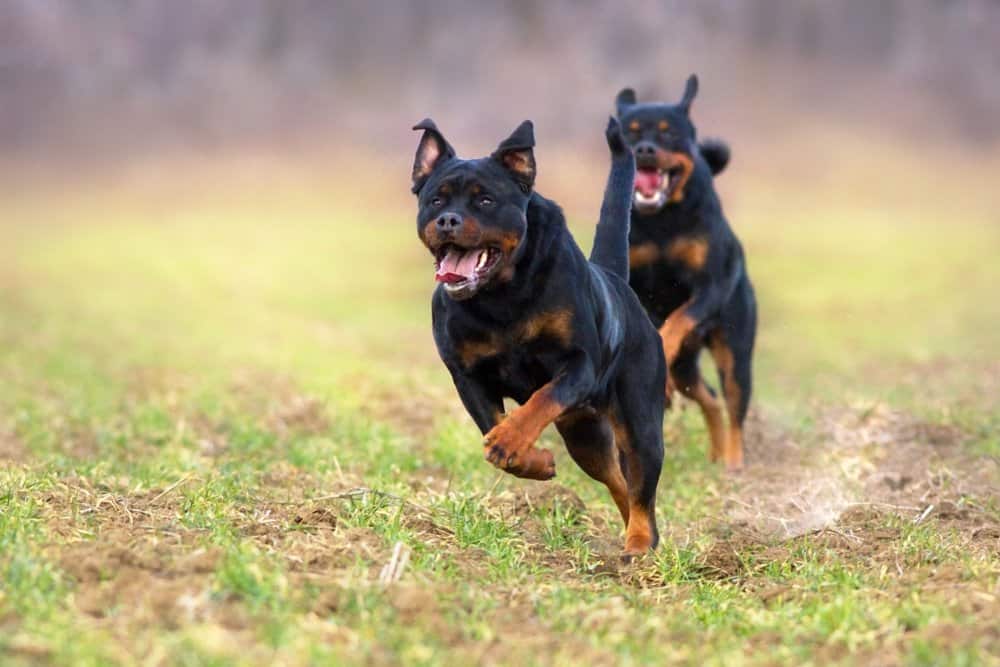
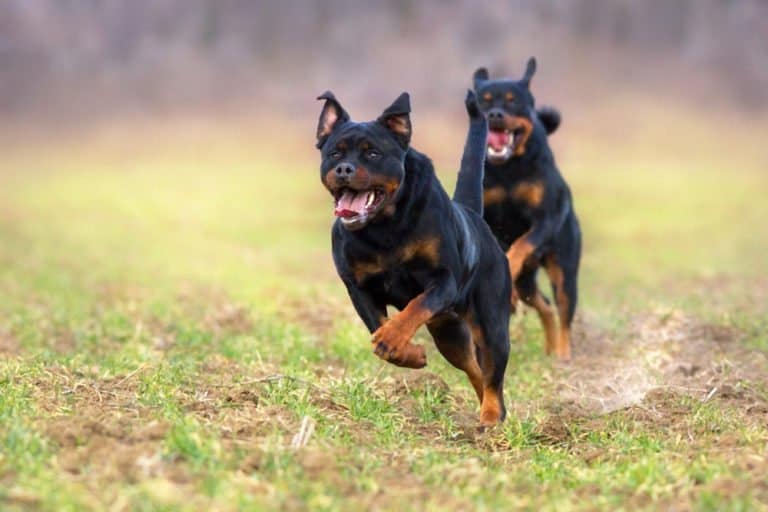
Rottweiler (Canis familiaris) - running through field

Rottweilers need obedience training early in life because of their large size.

Rottweiler Maintenance And Grooming

The German breed has a short-medium length, coarse, dense, and flat outer coat and an undercoat. The undercoat thickens as much as necessary according to the surrounding climate, and it also seasonally gets thicker during winter and thinner during summer. As a result, it changes its coat during spring and fall and so undergoes more shedding than usual and needs grooming more often. Some dogs living in hot climates do not have undercoats.

Fortunately, the breed is very easy to take care of. It only needs a monthly bath and grooming every 4 to 8 weeks, with a weekly coat brushing and more frequent brushing during the spring and fall.

Rottweiler Training

Due to its large size, the Rottweiler needs obedience training as early as possible — it’s a lot of dog to handle. You should start training your Rottweiler as early as 6 weeks but no later than 6 months of age. A strong handler can establish dominance as the pack leader and be patient enough to provide socialization and positive reinforcement for proper behavior around strangers and other dogs.

Rottweiler Exercise

The Rottweiler needs daily exercise, but it isn’t overly demanding. A short walk and a longer walk are fine. Indoors, it enjoys chewing toys and games or other mental stimulation.

Rottweiler Puppies

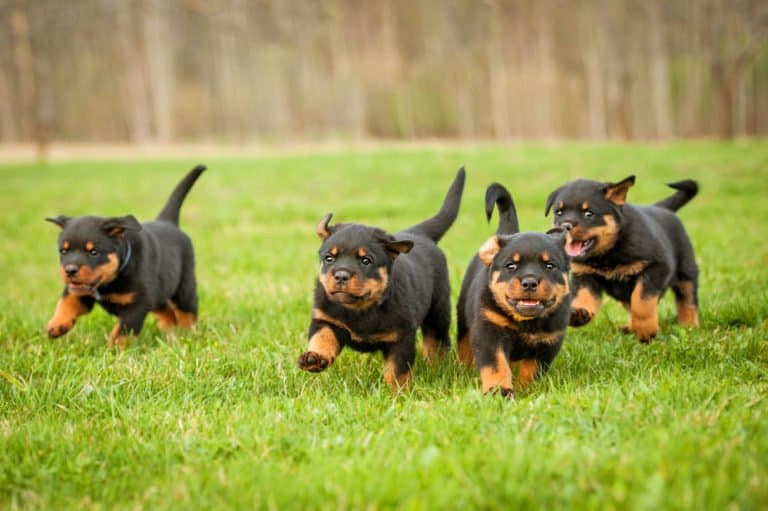
Rottweiler puppies are much like puppies of any other dog breed, and hence are energetic and playful. They go through teething between 6 weeks to 6 months of age, and during this time, they will chew on anything, so they need to get used to chew toys early on. Neediness may be apparent early on in puppyhood, along with separation anxiety.
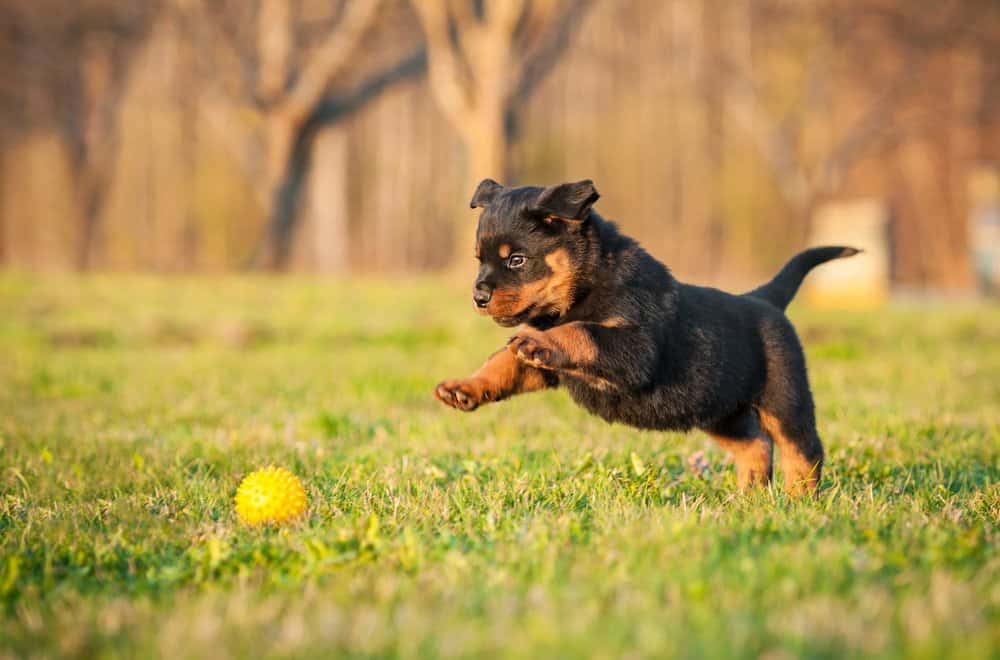
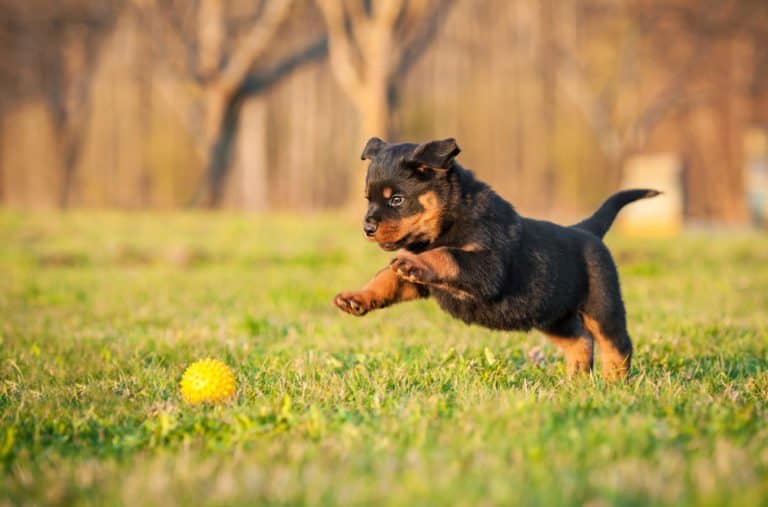
Rottweiler (Canis familiaris) - puppy chasing ball

Rotweiler puppies need a lot of stimulation and playtime.

Rottweilers And Children

Rottweilers are patient and gentle around children, and the longer they are around them, the more protective they become. Due to the rowdiness of young children, they should be supervised around a Rottweiler and taught to treat the dog gently.

Types

While you may see a headline that declares there are three types of Rottweiler — German, American, and Roman — upon closer examination, you will discover that there really aren’t three distinct types. An American Rottweiler is simply one that is born in the United States, where breeding regulations are looser than in Germany, so the dog might have a mix of other breeds and be only predominantly German.

The Roman Rottweiler, also known as the Gladiator or Colossal Rottweiler, is the product of breeders who mix German Rottweilers with larger dogs to make a bigger “Rottweiler.” This type is not recognized by the AKC or other kennel clubs responsible for maintaining breed standards. In other words, there is really only one type of Rottweiler, and that is German. The others are pretenders.

Dogs Similar to Rottweilers

Other dog breeds similar to the Rottweiler are the Labrador, Boxer, and Bullmastiff.

  • Labrador: Shares similarities in training but has different socialization needs. It’s also a more popular breed.
  • Boxer: A German breed like the Rottweiler, it is a little shorter, lives longer, and is easier to train.
  • Bullmastiff: Similar to the Rottweiler but from England, it is less expensive to own, not as playful, and not as intelligent.

Famous Rottweilers

A number of rotties have made it to television. The large dogs with their lovable and companionable demeanor and silly antics have endeared many fans. Movies like The Omen, Lethal Weapon 3, Entourage, Man’s Best Friend, and Half-Baked are just a few examples where their physical stature made them a favorite for silver screen roles.

View all 181 animals that start with R

Sources

  1. David Burnie, Dorling Kindersley Animal, The Definitive Visual Guide To The World's Wildlife / Accessed November 11, 2008
  2. Tom Jackson, Lorenz Books The World Encyclopedia Of Animals / Accessed November 11, 2008
  3. David Burnie, Kingfisher The Kingfisher Animal Encyclopedia / Accessed November 11, 2008
  4. David Burnie, Dorling Kindersley Illustrated Encyclopedia Of Animals / Accessed November 11, 2008
  5. Dorling Kindersley Dorling Kindersley Encyclopedia Of Animals / Accessed November 11, 2008
  6. Wikipedia / Accessed November 27, 2020
  7. Rottweilers Online / Accessed November 27, 2020
  8. The Smart Canine / Accessed November 27, 2020
  9. Rottweiler Pup Dog / Accessed November 27, 2020
  10. Dogs Health / Accessed November 27, 2020
  11. Your pure bred puppy / Accessed November 27, 2020
  12. Vetstreet / Accessed November 27, 2020
  13. Canine Journal / Accessed November 27, 2020
  14. Pet Educate / Accessed November 27, 2020
  15. Rottweiler Life / Accessed November 27, 2020

Thank you for reading! Have some feedback for us?


Rottweiler FAQs (Frequently Asked Questions)

The Rottweiler has a black coat with rich tan markings, a broad skull and muzzle, a strong neck, a deep chest, a curved tail, and a trotting gait. Although its tail was traditionally docked at the first or second joint, tail docking is banned in most countries, a fact that is stated in the FCI Country of Origin Breed Standard.