R
Species Profile

Royal Penguin

Eudyptes schlegeli

Macquarie's white-faced crested king
AndreAnita/Shutterstock.com

Royal Penguin Distribution

Click a location to explore more animals from that region

Endemic Species

This map shows coastal regions where Royal Penguin are found.

Loading map...

Found in 1 country

Size Comparison

Human 5'8"
Royal Penguin 2 ft 4 in

Royal Penguin stands at 41% of average human height.

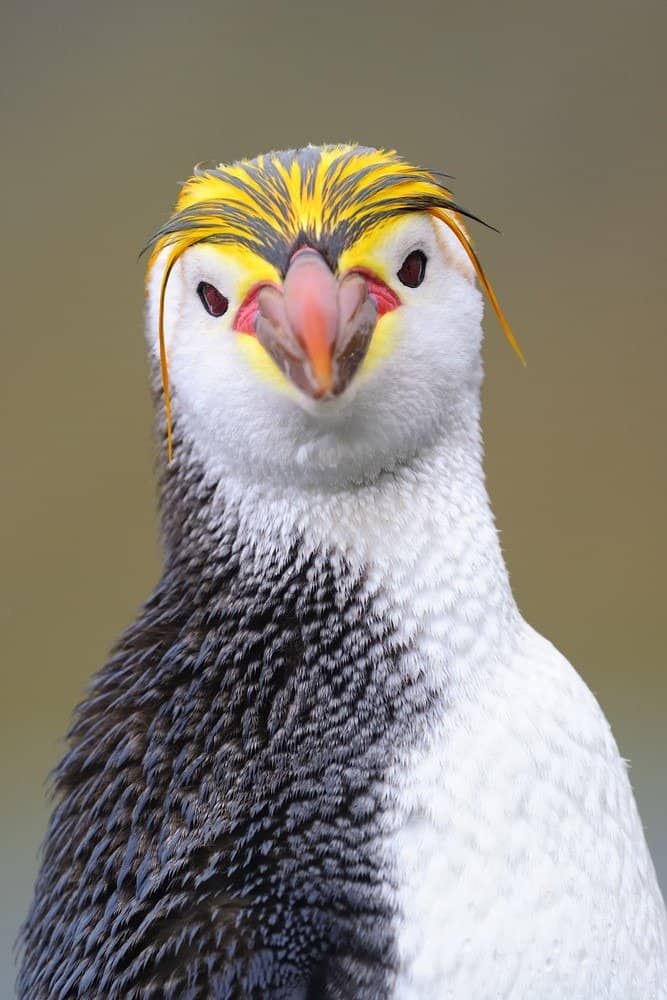
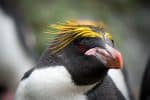
Portrait of a Royal Penguin.

At a Glance

Wild Species
Also Known As Schlegel's penguin
Diet Carnivore
Activity Diurnal+
Lifespan 15 years
Weight 8 lbs
Did You Know?

Breeding is essentially confined to Australia's subantarctic Macquarie Island and nearby islets-one of the most range-restricted penguins.

Scientific Classification

The royal penguin is a crested penguin (genus Eudyptes) and one of the large-bodied, brush-crested penguins. It is strongly associated with Macquarie Island, where the majority of the global breeding population nests in large colonies.

Kingdom
Animalia
Phylum
Chordata
Class
Aves
Order
Sphenisciformes
Family
Spheniscidae
Genus
Eudyptes
Species
Eudyptes schlegeli

Distinguishing Features

  • White or very pale face (notably paler than the macaroni penguin)
  • Yellow-orange crest plumes typical of Eudyptes crested penguins
  • Black upperparts and white underparts; robust, large Eudyptes build
  • Colonial breeder, often in dense, noisy rookeries

Physical Measurements

Height
2 ft 4 in (2 ft 2 in – 2 ft 6 in)
Length
2 ft 3 in (2 ft 2 in – 2 ft 5 in)
Weight
11 lbs (7 lbs – 14 lbs)
Top Speed
7 mph
swimming

Appearance

Primary Colors
Secondary Colors
Skin Type Dense waterproof feathers over thick subcutaneous fat; keratinous bill and claws; bare facial skin minimal compared with many birds.
Distinctive Features
  • White face and cheeks with a darker crown; contrasts strongly with Macaroni Penguin (E. chrysolophus) typically showing a black face.
  • Long, brush-like yellow crest plumes arising above the bill and extending past the eyes (typical Eudyptes crested-penguin trait).
  • Robust orange to reddish-orange bill; bill appears heavy relative to head (common in large-bodied brush-crested penguins).
  • Adult total length commonly reported ~65-76 cm (species accounts in major references such as HBW).
  • Adult mass typically reported ~3.0-6.5 kg, varying by season and breeding stage (summarized in standard penguin handbooks/species accounts).
  • Breeds in dense, noisy colonies; nests on open ground/vegetated slopes on Macquarie Island and nearby islets (global breeding range highly restricted).
  • Forages at sea as a pursuit diver, returning to colonies to feed chicks; streamlined body and stiff flippers adapted for marine hunting.
  • Conservation implication: extreme breeding-range restriction (Macquarie Island stronghold) makes colony appearance and site fidelity especially important for monitoring.

Sexual Dimorphism

Sexual dimorphism is subtle: males average slightly larger and heavier with longer, deeper bills. Plumage patterning and crest coloration are otherwise very similar, so sexing in the field is unreliable without measurements.

  • Slightly larger body size on average (typical Eudyptes pattern).
  • Bill typically longer/deeper and more robust when measured closely.
  • Slightly smaller and lighter on average.
  • Bill typically shorter/shallower than males when measured closely.

Did You Know?

Breeding is essentially confined to Australia's subantarctic Macquarie Island and nearby islets-one of the most range-restricted penguins.

It's a "brush-crested" penguin (genus Eudyptes): spiky yellow-orange head plumes used in social displays.

Like other Eudyptes penguins, it lays 2 eggs but typically raises only 1 chick; the first-laid (A) egg is much smaller and rarely survives.

Royal penguins form extremely dense colonies ("rookeries")-tens of thousands of birds packed onto beaches and tussock slopes.

At sea they are pursuit divers that primarily target swarming crustaceans and small fish around the Subantarctic Front near Macquarie.

They're often confused with macaroni penguins; the key field mark is the royal's mostly white face/chin versus the macaroni's dark face.

Taxonomists have long debated whether the royal is a full species or a macaroni penguin form-making it a classic case in seabird systematics.

Unique Adaptations

  • Brush-crested head plumes: conspicuous ornaments that function in recognition and mate/territory signaling within crowded colonies.
  • Streamlined, stiff flipper "wings" and dense bones for efficient pursuit diving in cold, rough subantarctic waters.
  • Countershading (dark back/white underside) that reduces visibility to predators and prey in the water column.
  • Highly insulating plumage: densely packed, waterproof feathers plus an underlayer of down trap air for thermal protection.
  • Supraorbital salt glands: excrete excess salt from seawater intake, allowing long foraging trips without fresh water.
  • Life-history tuned to boom-bust prey fields: flexible foraging ranges and rapid chick growth timed to seasonal peaks of marine productivity around Macquarie.

Interesting Behaviors

  • Colonial breeding in massive rookeries: adults commute between nest sites and the sea, creating well-worn "penguin highways" through vegetation and scree.
  • Crested-penguin courtship displays: head-swinging, bowing, braying calls, and mutual preening to reinforce pair bonds.
  • Two-egg strategy with egg-size dimorphism (typical of Eudyptes): the first-laid egg is substantially smaller; the second egg is usually the one incubated and reared.
  • Alternating incubation and guarding: mates take shifts; after hatching, one parent guards while the other forages, then chicks later form crèches for protection.
  • Aggressive neighbor interactions in tight colonies: bill-fencing, flipper strikes, and vocal threat displays help maintain small territories around nests.
  • Seasonal fasting: adults can go extended periods ashore (incubation/guard stage) relying on stored body reserves before returning to sea to feed.

Cultural Significance

The royal penguin (Eudyptes schlegeli) is a symbol of Australian subantarctic conservation on World Heritage Macquarie Island. Its large colonies are monitored for climate, prey and invasive species and used in public outreach. 'Royal' refers to its pale face and crests; the scientific name honors Hermann Schlegel.

Myths & Legends

Macquarie Island has no known Indigenous oral tradition centered on royal penguins (the island was uninhabited before historic-era sealing). As a result, the species' cultural stories are largely historical rather than folkloric.

19th-early 20th century sealer and expedition accounts describe "endless" crested penguin rookeries on Macquarie; these narratives became part of the island's cautionary history of wildlife exploitation and later protection.

The long 'royal vs. macaroni' debate — whether Eudyptes schlegeli is its own species or just a form of E. chrysolophus — is a common museum and field-station story about how species are defined.

Early natural-history writings sometimes treated the vast Macquarie rookeries as emblematic of the subantarctic's 'teeming edges of the world,' a recurring theme in exploration literature about the Southern Ocean.

Conservation Status

NT Near Threatened

Likely to qualify for a threatened category in the near future.

Population Decreasing

Protected Under

  • Macquarie Island Nature Reserve (Tasmania) and UNESCO World Heritage Area protections
  • Environment Protection and Biodiversity Conservation Act 1999 (Australia) - protected native/marine wildlife provisions
  • Tasmania Nature Conservation Act 2002 and associated reserve management regulations

Life Cycle

Birth 2 chicks
Lifespan 15 years

Lifespan

In the Wild
10–27 years
In Captivity
12–30 years

Reproduction

Mating System Monogamy
Social Structure Socially Monogamous
Breeding Pattern Seasonal
Fertilization Internal Fertilization
Birth Type Internal_fertilization

Royal penguins breed in dense Macquarie Island colonies and typically form a male-female pair for the breeding season, sharing incubation and chick provisioning. Mate and nest-site fidelity can recur across years, but partner changes occur; genetic monogamy is not well quantified.

Behavior & Ecology

Social Colony Group: 100000
Activity Diurnal, Cathemeral
Diet Carnivore Krill (euphausiid crustaceans), which commonly dominate diet samples during the breeding season at Macquarie Island.
Seasonal Migratory 1,056 mi

Temperament

Highly gregarious colonial breeder; frequent close-proximity interactions and tolerance outside immediate nest defense.
Strongly territorial at nest site; aggression includes bill jabbing, flipper strikes, and loud threat displays (Warham 1975; Marchant & Higgins 1990).
Seasonally synchronized breeding on Macquarie Island; most adults ashore in daylight but vocal activity continues at night (Marchant & Higgins 1990).
Biparental care with alternating incubation and chick-feeding trips; chick creching is typical in Eudyptes and reported for royal penguins (Marchant & Higgins 1990).
Generally non-aggressive away from nest; crowding leads to ritualized displays that reduce escalated fights (Warham 1975).

Communication

Loud braying/trumpeting advertisement calls for mate and territory recognition in dense colonies Marchant & Higgins 1990
Shorter contact calls between mates during nest relief; increases coordination during shift change Warham 1975
Chick begging calls High-pitched) during feeding; intensity increases with hunger (Marchant & Higgins 1990
Agonistic threat calls during nest disputes; often paired with bill-pointing and lunging Warham 1975
Visual displays: head-swinging, bowing, and upright "ecstatic" displays typical of Eudyptes courtship Warham 1975
Bill-fencing and mutual preening used in pair-bond maintenance and conflict resolution Marchant & Higgins 1990
Postural signals Flipper held out, forward-lean) communicate aggression and ownership at nest boundaries (Warham 1975
Individual recognition relies heavily on vocal signatures in crowded colonies where visual cues are limited Marchant & Higgins 1990

Habitat

Biomes:
Terrain:
Island Coastal Rocky Sandy
Elevation: Up to 656 ft 2 in

Ecological Role

Mid-upper trophic marine predator tightly linked to subantarctic pelagic food webs; major biotransporter of marine-derived nutrients to land at breeding colonies (notably Macquarie Island).

Regulation of pelagic prey populations (especially euphausiids and small mesopelagic fishes) Nutrient import and fertilization of terrestrial/coastal ecosystems via guano, eggshells, and carcasses (marine-to-land nutrient subsidy) Supports scavenger and decomposer communities at colonies (carcasses/eggs/chicks lost to predation or starvation) Acts as an indicator species for regional prey availability and oceanographic change in the subantarctic

Diet Details

Main Prey:
Euphausiid krill Myctophid Cephalopods Crustaceans and amphipods

Human Interaction

Domestication Status

Wild

Royal penguin (Eudyptes schlegeli) is wild and not domesticated. It breeds in huge colonies mainly on Macquarie Island. In the past, birds were hunted for oil and other products in the late 1800s–early 1900s. The island is now protected; human contact is mostly conservation, science, monitoring, and tightly controlled visits.

Danger Level

Low
  • Bites/pecks and flipper strikes when handled at close range (most likely during capture/processing for research, or if people approach nests/chicks)
  • Slip/trip hazards in dense colonies (guano, uneven terrain) during fieldwork
  • Zoonotic/pathogen exposure risk typical of wild seabirds (e.g., enteric bacteria such as Salmonella; and avian influenza surveillance concerns), primarily for researchers without PPE
  • Allergic reactions/asthma triggers from feathers/dander/guano in enclosed environments (more relevant to captive settings)

As a Pet

Not Suitable as Pet

Legality: Royal penguins (Eudyptes schlegeli) are not legal pets. In Australia, Macquarie Island birds and sites are strictly protected and need permits. International laws and CITES usually bar private keeping; only licensed zoos may have them.

Care Level: Expert Only

Purchase Cost:
Lifetime Cost: $500,000 - $2,000,000

Economic Value

Uses:
Ecotourism/heritage value (restricted subantarctic visitation) Scientific research value (climate/ocean monitoring indicator species; long-term colony monitoring) Education/exhibit value (primarily zoos/aquariums under permit) Historical commercial exploitation (penguin oil industry on subantarctic islands; now ended and illegal)
Products:
  • Non-consumptive value: wildlife viewing/expedition tourism (permits and biosecurity controls required)
  • Research outputs (population trends, foraging ecology, ocean-climate indicators)
  • Historical: oil rendered from penguins (19th-early 20th century; ceased under protection regimes)

Relationships

Predators 5

Leopard Seal
Leopard Seal Hydrurga leptonyx
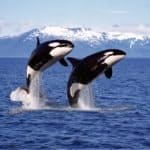
Killer Whale
Killer Whale Orcinus orca
Southern Giant Petrel Macronectes giganteus
Subantarctic Skua Stercorarius antarcticus
Kelp Gull Larus dominicanus

Related Species 8

Macaroni Penguin
Macaroni Penguin Eudyptes chrysolophus Shared Genus
Southern Rockhopper Penguin
Southern Rockhopper Penguin Eudyptes chrysocome Shared Genus
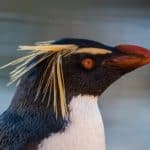
Fiordland Penguin Eudyptes pachyrhynchus Shared Genus
Snares Penguin Eudyptes robustus Shared Genus
Northern Rockhopper Penguin Eudyptes moseleyi Shared Genus
Erect-crested Penguin Eudyptes sclateri Shared Genus
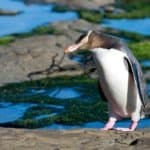
Yellow-eyed Penguin
Yellow-eyed Penguin Megadyptes antipodes Shared Family
King Penguin
King Penguin Aptenodytes patagonicus Shared Family

“A Single Event Could Wipe Out Royal Penguins”

Residents of the Antarctic and sub-Antarctic waters, the royal penguin remains “a riddle, wrapped in a mystery, inside an enigma.” After decades of study, researchers still aren’t 100 percent sure where the species jets to for about six months a year! They likely hang around Australian, Tasmanian, and New Zealand waters — and a smattering of evidence suggests so — but certainty on the matter continues to elude ornithologists.

We do know that these penguins only breed around Macquarie Island and don golden feather crowns. But most disconcertingly, one devastating event — like a vicious storm or oil spill — could wipe out royal penguins in a flash.
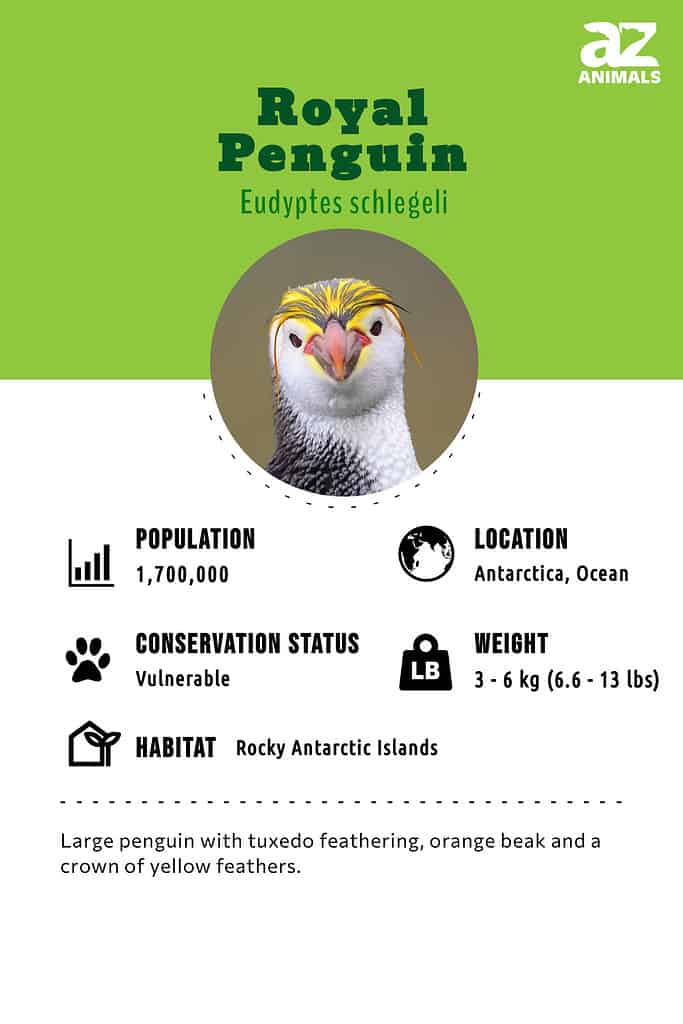
5 Fascinating Royal Penguin Facts

  • Scientists are still unsure where royal penguins spend the winter.
  • These Penguins only breed in and around Macquarie Island, a small spit of land halfway between Australia and Antarctica. The animal’s restricted breeding habitat is an alarming vulnerability.
  • These penguins regularly clear 150-foot dives.
  • Both male and female penguins share chick-rearing duties.
  • Royal penguins were ruthlessly exploited for their oil in the late-19th and early-20th centuries.

Scientific Name

Eudyptes schlegeli is this penguin’s scientific name. Eudyptes derives from the Greek and means “good diver.” Schlegeli is a pseudo-Latin honorific venerating zoologist Herman Schlegel, the first person to describe royal penguins.
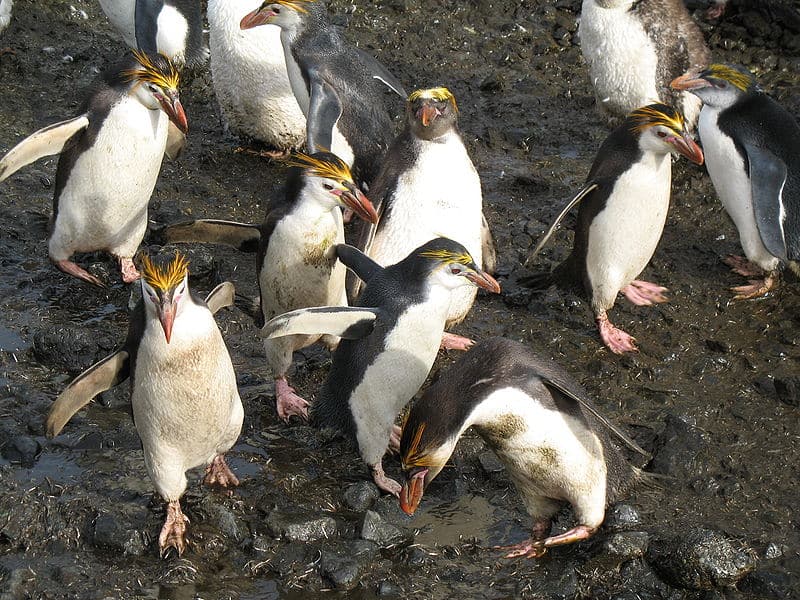
There is some debate over the Royal penguin’s status as a separate species.

Species

The Royal penguin is considered a separate penguin species – for now. Some scientists believe, based on DNA evidence, morphology, and behavior, that Royal penguins are a white-faced variant of Macaroni penguins.

Evolution

Fossil records indicate that royal penguins’ common ancestors lived as long as 40 million years ago and were around five feet tall. They are believed to have originated in Antarctica, which was covered in forests at that time and connected to what would become New Zealand, Australia, South America, and surrounding islands. These ancient ancestors of penguins had diverged from the ancestors of petrels and albatrosses around 71 million years ago.

The arrival of the ice age 35 million years ago brought brutal changes to the ancient ancestors of the penguin. The continents of Australia and South America drifted away from Antarctica while ocean currents encircled it. This cooling climate likely killed the older penguins – leaving them to compete with whales for the same prey.

While most of the ancient penguins became extinct, others, like the royal penguin, swam to warmer waters to found new lineages. Species like the emperor penguin stayed in Antarctica and evolved adaptations suited to live in the cold environment.
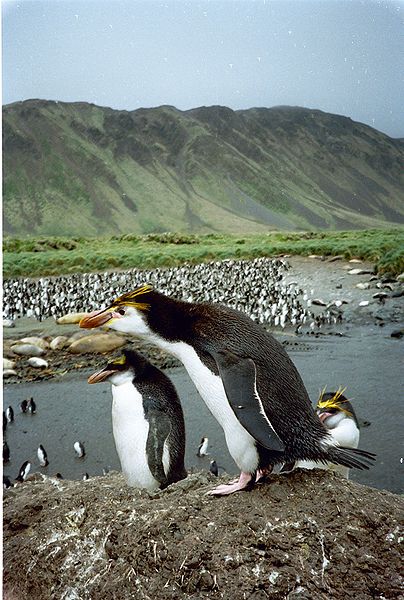
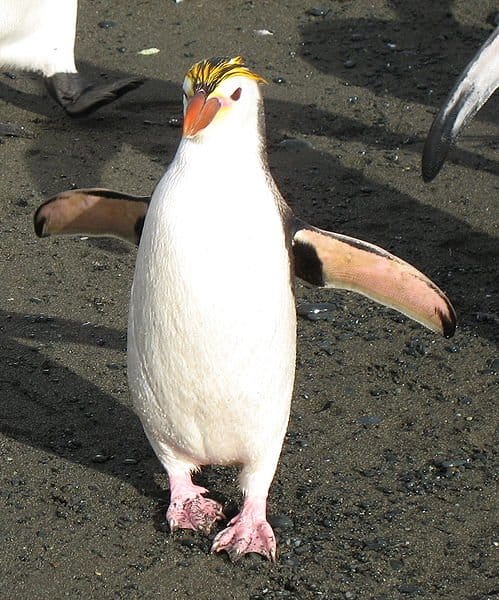
Royal Penguin standing on a rock

Royal Penguins look almost identical to macaroni penguins.

Appearance and Behavior

Royal penguins look nearly identical to macaroni penguins. The only difference is the former’s white chin compared to the latter’s black one. Because of the striking similarities, many scientists believe royal penguins are a macaroni penguin subspecies. But penguin taxonomy is hotly debated, and other researchers insist there’s enough genetic difference between the two animals to warrant distinct classifications.

The largest of the crested penguin species, royals stand about 26 to 30 inches tall, and tip the scales between 6.6 and 17.6 pounds, with males typically larger than females.

The species’ yellow head plumage, which resembles a royal crown, is its namesake. Young individuals, however, only sport a single row of gold feathers over each eye. They also have slender, long, bright-orange bills.

Solid divers, these penguins regularly make 50- to 150-foot plunges that last about two minutes.
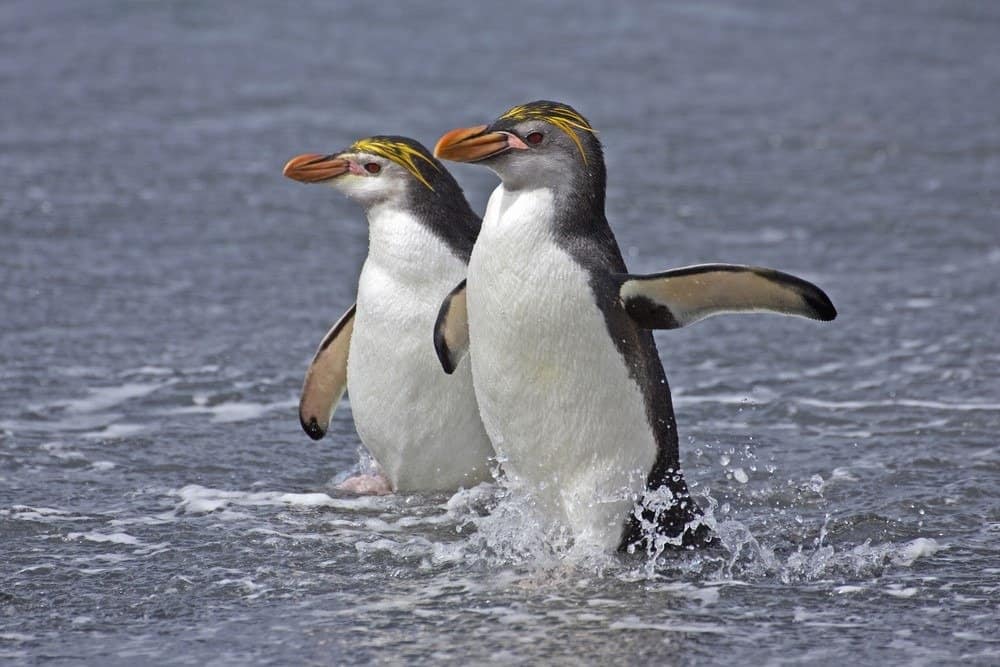
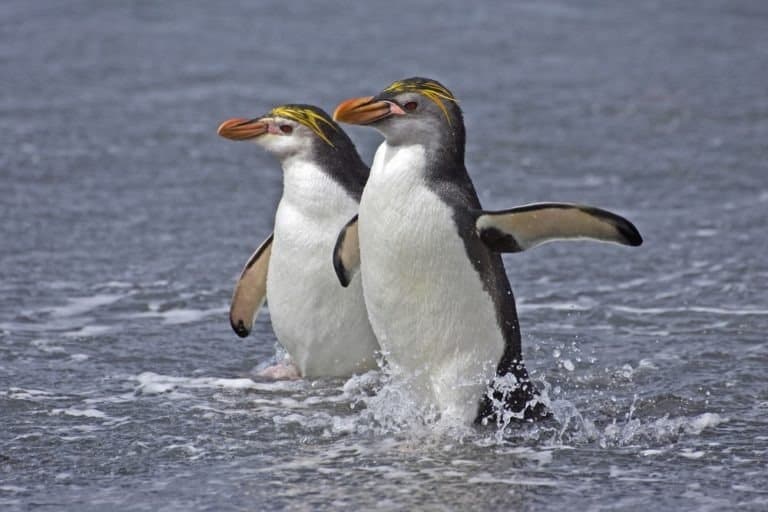
Two Royal Penguins in the water, Macquarie Islands, Australia

Royal Penguins travel to the Macquarie Islands in Australia for the breeding season.

Habitat

These penguins don’t travel far and wide to breed. Instead, they return to a trio of islands between the Antipodes and Antarctica year after year: Macquarie, Bishop, and Clerk. On their pebbly shores, these penguins build homes for the breeding season, making it home base from September through February.

Diet
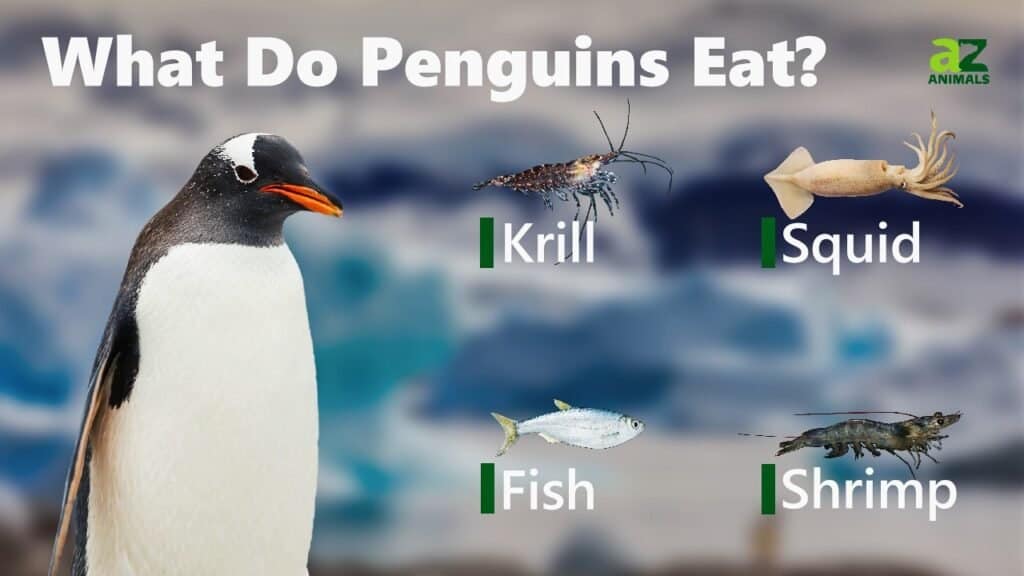
What Do Penguins Eat
Penguins primarily eat fish, with other seafood like crustaceans and krill added to the mix.

Royal penguins survive on a pescetarian diet of small fish, krill, crustaceans, and sometimes squid.

Predators and Threats

The International Union for the Conservation of Nature lists royal penguins as Near Threatened.

Natural Predators
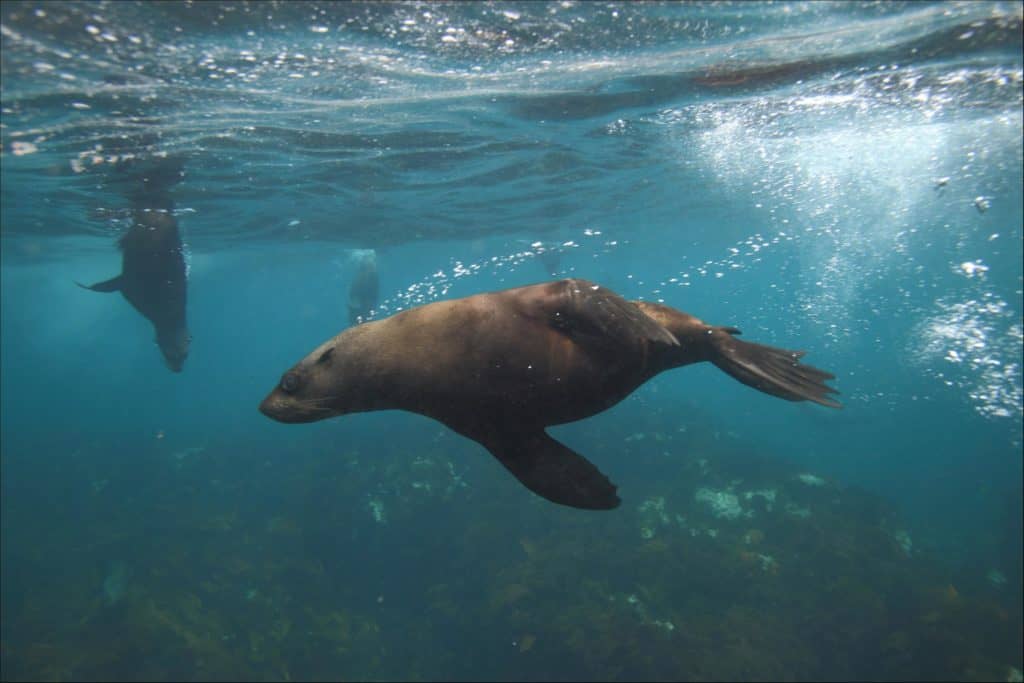
Fur seals prey on royal penguins.

Fur seals are royal penguins’ primary natural predators. Elephant seals occasionally crush penguins, and skua birds sometimes swipe up chicks and eggs.

Between 1870 and 1919, royal penguin hunting was big business Down Under. Rich in oil and fats, these penguins were slaughtered and pressed for their valuable resources. Tasmania issued penguin hunting licenses, and an estimated 150,000 were taken yearly.

Thankfully, officials destroyed the gruesome industry with various environmental protection laws, and these penguin populations flourished.
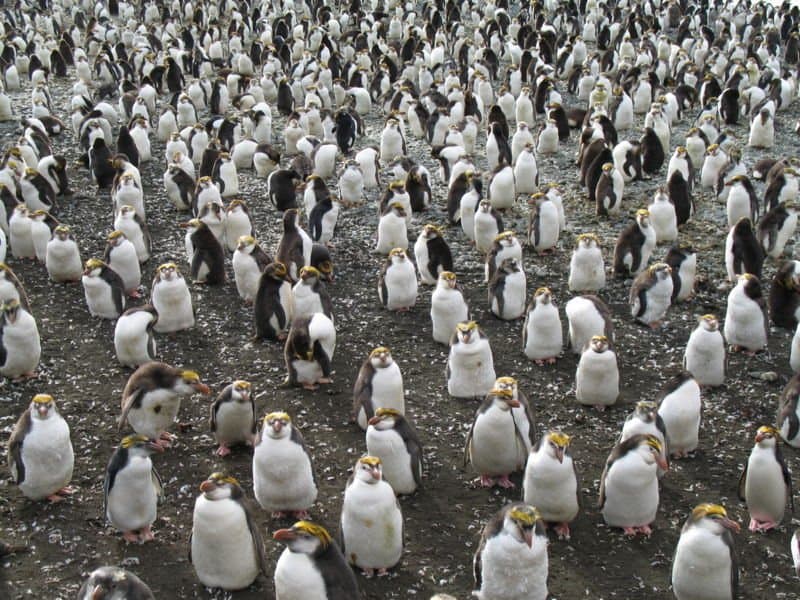
Royal Penguin colony

Royal penguins were slaughtered by the thousands for their oil and fats between 1870 and 1919.

But they’re not out of the proverbial woods.

Since Royal penguins only breed in one area, the species is exceptionally vulnerable to destructive weather and unforced commercial maritime errors, like oil spills. Since they’re so tightly packed, theoretically, a single catastrophic event could wipe out the entire population in one fell swoop.

As such, the threat of global warming casts a large shadow over royal penguins. Specifically, water temp fluctuations could drastically upend the marine ecosystem and diminish the food supply, leading to starvation and mass death.

Plastic pollution, habitat destruction, and nearby commercial fishing rigs — which inch closer to these penguin waters yearly — also pose serious threats.

Reproduction, Babies, and Lifespan
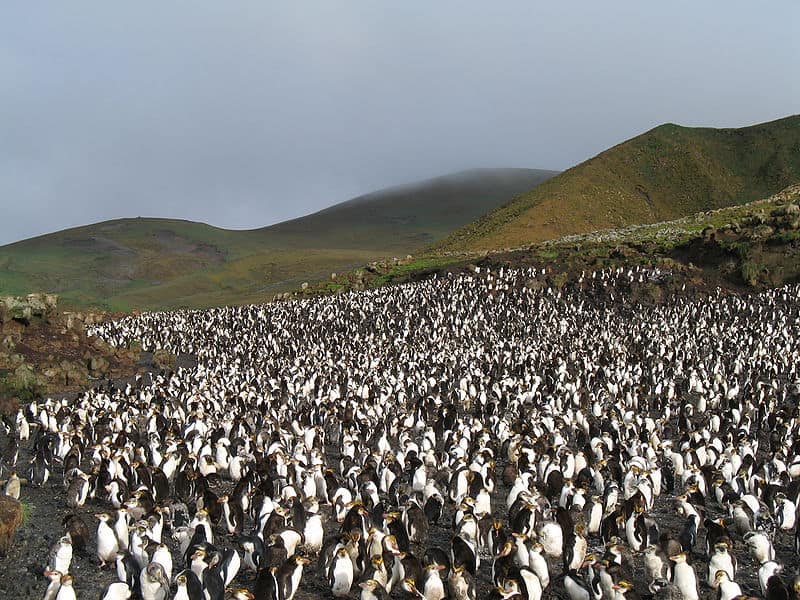
Royal Penguins gather to reproduce in only one location – the Macquarie Island cluster in Australia.

Reproduction

Royal penguins only reproduce in one region: the Macquarie Island cluster, which is carpeted in beaches and vegetative rocky slopes.

Every year, male royals come ashore in September — ahead of the ladies — to renovate and build breeding nests. Some choose to burrow in the slopes and sands; others construct rock and grass nests from the ground up.

Egg-laying starts in October when the females return and choose their monogamous seasonal mates. Unlike some other penguin species that isolate for mating, royals breed in huge colonies.

These penguins typically lay two eggs a few days apart. But for unknown reasons, parents almost always shove the first one, which is usually smaller, from the nest before hatching.

Both parents incubate the larger egg for about 35 to 40 days until hatching.
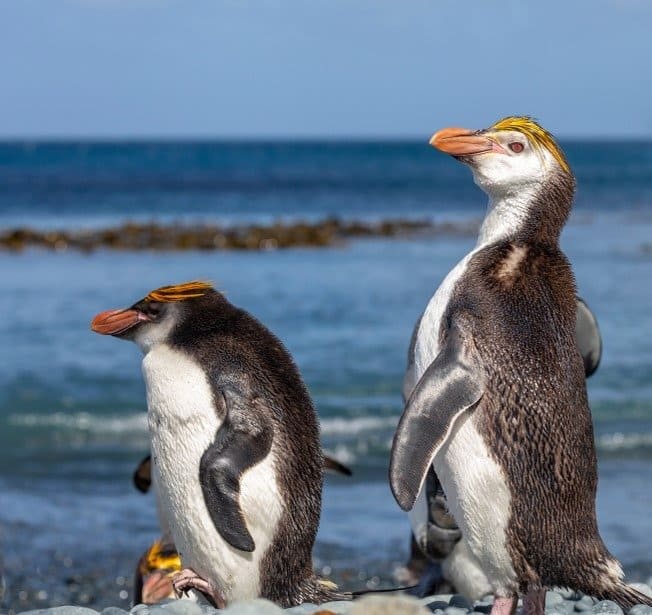
Adult and juvenile Royal Penguins

Penguin chicks graduate to creches after the hatchling stage to give their parents more time to hunt.

Babies

Once the hatchlings arrive, mother penguins immediately go sea foraging for about two weeks while the males stay back with the babies, keeping them warm and safe. When the ladies return and take over chick-rearing duties, the males head out.

When born, hatchlings have a brownish-gray and white down.

At a month old, the season’s hatchlings form nursery schools called crèches. These groupings have three purposes: protection, warmth, and socialization. It also gives penguin parents more time to forage.

After about two months, the chicks molt, grow waterproof feathers, and fledge the nest. Between seven and nine years old, the penguins reach sexual maturity.

Lifespan

Royal penguins in the wild typically live between 15 and 20 years.
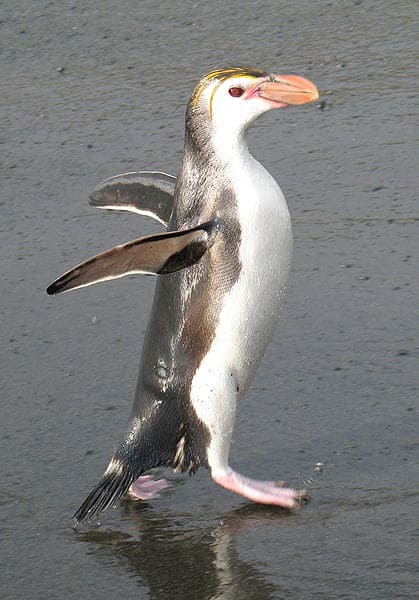
Royal Penguins are categorized as Near Threatened by the IUCN.

Population

Currently, the total wild royal penguin population is 850,000 pairs — about 1,700,000 individuals. The largest colony, of about 500,000 pairs, breeds around Hurd Point on Macquarie Island.

The IUCN categorizes these penguins as Near Threatened, meaning the species faces possible extinction in the future but is not in the weeds yet. However, all penguins became protected species in 1961 when the Antarctic Treaty of 1959 took effect.

At the Zoo

Due to the species’ regional breeding restrictions, not a single U.S. zoo has these penguins! Even zoos and aquariums in Australia and New Zealand stick to little penguins, Gentoos, and kings.

View all 181 animals that start with R

Sources

  1. David Burnie, Dorling Kindersley (2011) Animal, The Definitive Visual Guide To The World's Wildlife / Accessed August 3, 2010
  2. Tom Jackson, Lorenz Books (2007) The World Encyclopedia Of Animals / Accessed August 3, 2010
  3. David Burnie, Kingfisher (2011) The Kingfisher Animal Encyclopedia / Accessed August 3, 2010
  4. Richard Mackay, University of California Press (2009) The Atlas Of Endangered Species / Accessed August 3, 2010
  5. David Burnie, Dorling Kindersley (2008) Illustrated Encyclopedia Of Animals / Accessed August 3, 2010
  6. Dorling Kindersley (2006) Dorling Kindersley Encyclopedia Of Animals / Accessed August 3, 2010
  7. Christopher Perrins, Oxford University Press (2009) The Encyclopedia Of Birds / Accessed August 3, 2010
  8. Center for Biological Diversity / Accessed November 5, 2020
  9. Oceana / Accessed November 5, 2020
  10. Sea World Parks & Entertainment / Accessed November 5, 2020
Lisha Pace

About the Author

Lisha Pace

After a career of working to provide opportunities for local communities to experience and create art, I am enjoying having time to write about two of my favorite things - nature and animals. Half of my life is spent outdoors, usually with my husband and sweet little fourteen year old dog. We love to take walks by the lake and take photos of the animals we meet including: otters, ospreys, Canadian geese, ducks and nesting bald eagles. I also enjoy reading, discovering books to add to my library, collecting and playing vinyl, and listening to my son's music.

Thank you for reading! Have some feedback for us?


Royal Penguin FAQs (Frequently Asked Questions)

Technically, royal penguins are neither carnivores, herbivores, or omnivores. Instead, they’re piscivores — animals that only eat fish. However, since fish is flesh, they’re also considered carnivores.