S
Species Profile

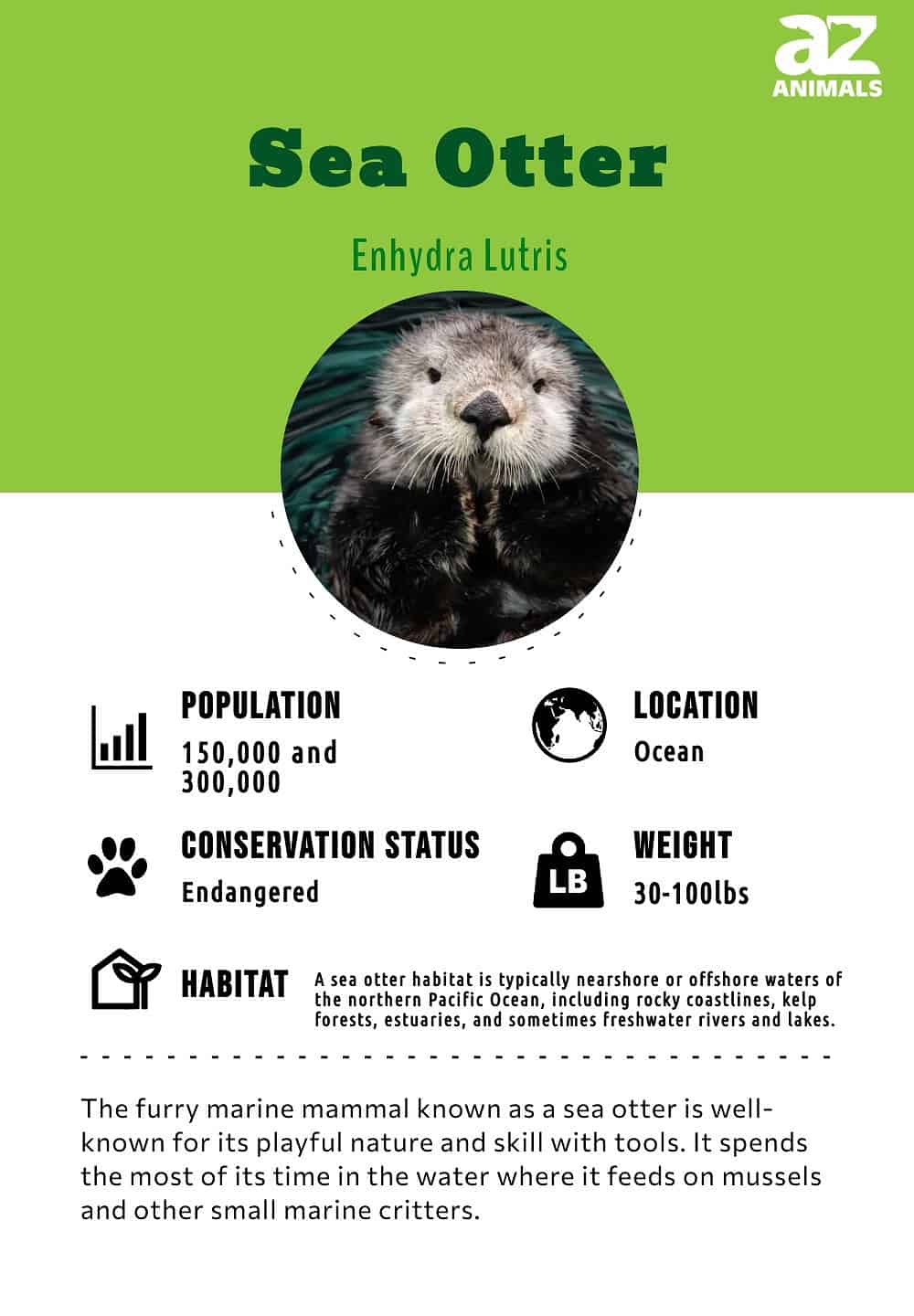
Sea Otter

Enhydra lutris

The kelp forest's furry keystone
nvphoto/Shutterstock.com

Sea Otter Distribution

Click a location to explore more animals from that region

This map shows coastal regions where Sea Otter are found.

Loading map...
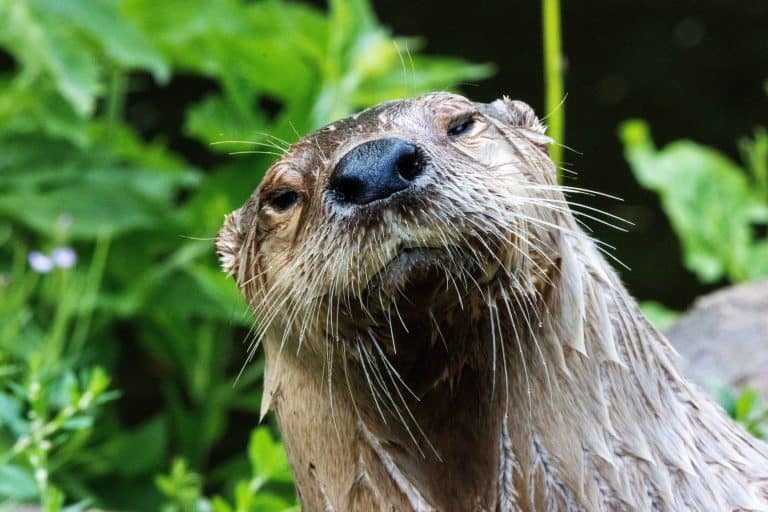
river otter vs sea otter

At a Glance

Wild Species
Also Known As Sea beaver, Nutria marina (Spanish), Loutre de mer (French), Morskaya vydra (Russian), Seeotter (German), Lontra-marinha (Portuguese)
Diet Carnivore
Activity Diurnal+
Lifespan 15 years
Weight 45 lbs
Status Endangered
Did You Know?

Sea otters have no blubber; insulation comes from the densest mammal fur-commonly cited at up to ~155,000 hairs per cm².

Scientific Classification

The Sea Otter (Enhydra lutris) is a marine mustelid native to the North Pacific, well known for dense fur, tool use (e.g., cracking shellfish), and its keystone role in kelp forest ecosystems by controlling sea urchins.

Kingdom
Animalia
Phylum
Chordata
Class
Mammalia
Order
Carnivora
Family
Mustelidae
Genus
Enhydra
Species
Enhydra lutris

Distinguishing Features

  • Exceptionally dense fur (primary insulation; lacks thick blubber compared with many marine mammals)
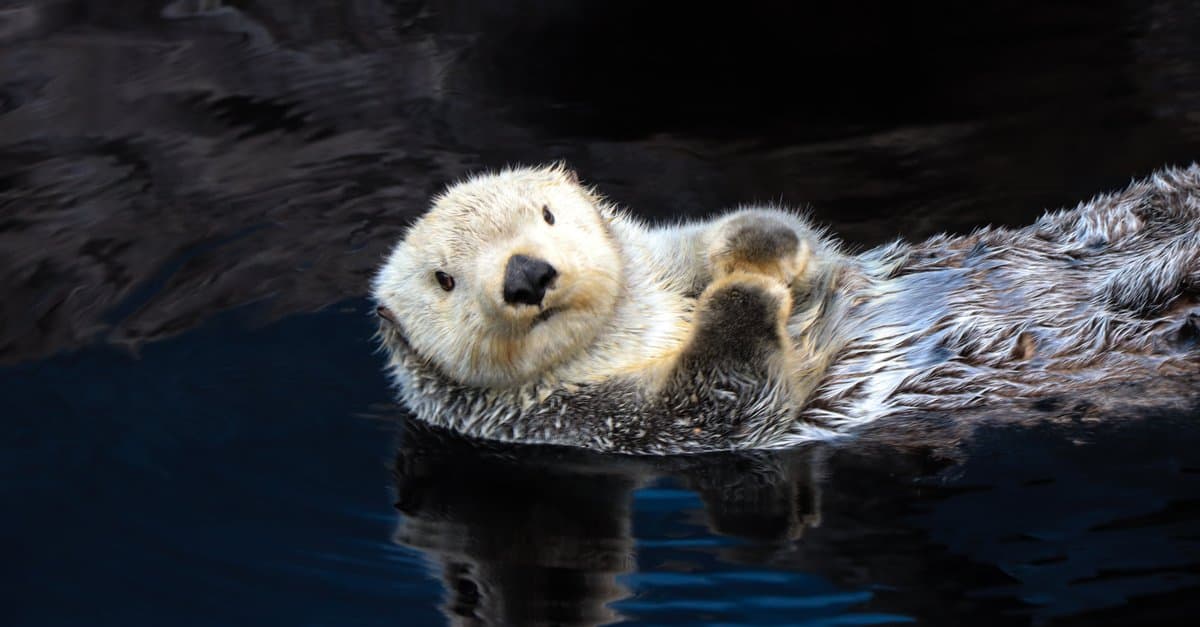
  • Often floats on its back at the surface while feeding/grooming
  • Frequent tool use (stones used as anvils/hammering to open hard-shelled prey)
  • Large hind flippers and strong, webbed feet adapted for swimming
  • Key predator of sea urchins, supporting kelp forest stability

Physical Measurements

Males and females differ in size

Length
4 ft 5 in (3 ft 11 in – 4 ft 11 in)
4 ft 1 in (3 ft 7 in – 4 ft 7 in)
Weight
66 lbs (49 lbs – 99 lbs)
46 lbs (31 lbs – 60 lbs)
Tail Length
12 in (10 in – 1 ft 1 in)
12 in (10 in – 1 ft 2 in)
Top Speed
6 mph
swimming

Appearance

Primary Colors
Secondary Colors
Skin Type Ultra-dense double-layer fur (no blubber layer); velvety underfur with longer guard hairs; requires frequent grooming to maintain insulation.
Distinctive Features
  • Densest mammalian fur: roughly 90,000-155,000 hairs per cm² for insulation.
  • Loose skin fold ("axillary pocket") under forelimb used to store prey and stones.
  • Large, webbed hind feet for propulsion; short tail; swims on back at surface.
  • Highly sensitive facial vibrissae (whiskers) used to detect benthic prey.
  • Forepaws are dexterous with flattened molars suited for crushing hard-shelled invertebrates.
  • Nearshore North Pacific specialist; often observed floating in kelp canopy while resting/foraging.
  • Frequent grooming behavior maintains trapped air layer in fur for thermal insulation.
  • Tool use: commonly uses stones as anvils/hammer to open shellfish at the surface.

Sexual Dimorphism

Males are larger and more robust than females. Adult males typically weigh ~22-45 kg and females ~14-33 kg; total length is commonly ~1.0-1.5 m overall, with males averaging longer and heavier.

  • Higher average body mass (~22-45 kg) and generally longer total length.
  • Broader head/neck and more robust forequarters on average.
  • Lower average body mass (~14-33 kg) and slightly shorter average length.
  • Often appear more slender; nursing females may show temporarily altered body condition.

Did You Know?

Sea otters have no blubber; insulation comes from the densest mammal fur-commonly cited at up to ~155,000 hairs per cm².

They often eat ~20-30% of their body mass per day to fuel a very high metabolic rate for a marine mammal.

Tool use is routine: many individuals carry a favorite stone and use it to crack hard-shelled prey at the surface.

Males are typically larger: about 22-45 kg; females about 14-33 kg. Total length is commonly ~1.0-1.5 m.

Dives for benthic prey are usually short (often ~1-2 min), but longer dives of several minutes are recorded; most foraging is in nearshore waters.

Pups are born with extra-buoyant "baby fur" that helps them float while mothers forage; mothers may wrap pups in kelp to keep them from drifting.

By reducing sea urchin grazing, sea otters can enable kelp forests to expand-an iconic example of a keystone predator effect in coastal ecosystems.

Unique Adaptations

  • Fur-based thermal system (no blubber): extremely dense underfur traps air; guard hairs help maintain the air layer, making grooming a survival behavior.
  • High oxygen stores for diving: large lungs and high blood oxygen capacity relative to body size support repeated shallow-to-moderate dives for seafloor prey.
  • Sensitive forepaws and whiskers: dexterous paws and highly developed vibrissae help locate, sort, and handle prey in low visibility on the seafloor.
  • Robust molars and jaws: adapted to crush hard-shelled invertebrates (e.g., clams, mussels, urchins) rather than slicing flesh like many carnivorans.
  • Tool use and "pocket" carry: loose skin under the forearm can function like a pocket to hold food and stones during repeated dives.
  • Nearshore specialization: behavior and body plan are tuned to kelp-forest and rocky-bottom habitats, where benthic invertebrates are abundant.

Interesting Behaviors

  • Surface "anvil" feeding: floating on the back, placing prey on the chest, and striking it with a rock (or against a rock) to open shells.
  • Prey-specific foraging specialization: individuals (and local populations) often focus on particular benthic invertebrates (e.g., urchins, clams, crabs, abalone), which can shape local food webs.
  • Intensive grooming cycles: frequent rolling, rubbing, and blowing air into the fur to maintain its insulating air layer; poorly groomed fur loses insulation quickly in cold water.
  • Kelp anchoring (rafting): individuals wrap kelp around their bodies to reduce drifting while resting or eating, especially in exposed coastal areas.
  • Maternal care on the surface: mothers carry and groom pups extensively; pups may be parked in kelp beds while mothers dive for food.
  • Vocal and tactile communication: mothers and pups use distinct calls; close contact and repeated grooming/handling strengthen the bond.
  • Seasonal and local movement along shore: typically nearshore and often within a small coastal home area, but capable of dispersal along coastlines when conditions change.

Cultural Significance

Sea otters (Enhydra lutris) have been important around the North Pacific. Indigenous coastal people used them for food, tools, and stories. In the 18th–19th centuries, otter pelts drove the fur trade and changed lives and colonization. Today they help kelp forests recover and are a symbol of coastal ecosystem health.

Myths & Legends

In parts of Southeast Alaska, Tlingit stories describe shapeshifting "land-otter people" that lure or transform humans near the shore-reflecting the otter's liminal place between land and sea.

Coastal Indigenous stories around the Gulf of Alaska and Aleutian Islands tell of sea otters (Enhydra lutris) as clever helpers or powerful sea spirits, teaching respect for marine life and careful harvesting.

North Pacific storytelling often treats otters as archetypes of play, cleverness, and family devotion-motifs echoed in regional tales where an otter's behavior (floating, diving, carrying objects) signals intelligence and spiritual potency.

During the maritime fur-trade era, people sometimes called the sea otter (Enhydra lutris) a "sea beaver." This name entered local stories and trade tales, showing how strange and prized its fur seemed.

Conservation Status

EN Endangered

Facing a very high risk of extinction in the wild.

Population Decreasing

Protected Under

  • CITES Appendix I
  • United States Marine Mammal Protection Act (1972)
  • United States Endangered Species Act (southern sea otter / California population)
  • Canada Species at Risk Act (SARA)
  • Russian Federation: Red Data Book and regional protective measures

Life Cycle

Birth 1 pup
Lifespan 15 years

Lifespan

In the Wild
10–23 years
In Captivity
15–28 years

Reproduction

Mating System Polygyny
Social Structure Solitary
Breeding Pattern Transient
Fertilization Internal Fertilization
Birth Type Internal_fertilization

Males defend aquatic territories and mate with multiple females that enter estrus within those areas. Pair bonds are brief (hours to days), copulation occurs in water, and males provide no parental care; females rear a single pup alone.

Behavior & Ecology

Social Raft Group: 20
Activity Diurnal, Crepuscular, Cathemeral
Diet Carnivore Sea urchins (Strongylocentrotus spp.), where available

Temperament

Generally social and tolerant in rafts; frequent proximity resting and occasional affiliative contact (Riedman & Estes 1990).
Adult males can be highly aggressive during mating; some defend mating territories (Riedman & Estes 1990).
Strong maternal investment; females maintain near-constant pup contact early in dependency (Kenyon 1969).
Rafting, kelp-anchored resting, and sex-segregation are common; raft size and composition vary by region and season (Riedman & Estes 1990).

Communication

Whistles and chirps used in close-range social contexts Riedman & Estes 1990
Low growls, grunts, and snorts during conflict or agitation Riedman & Estes 1990
High-intensity screams during extreme distress or aggressive interactions Riedman & Estes 1990
Pup distress calls elicit rapid maternal approach and retrieval Kenyon 1969
Tactile contact Touching, holding paws, mother carrying pup on chest) reinforces bonds (Riedman & Estes 1990
Visual signals via posture, head-raising, lunging, and water-splashing during disputes Riedman & Estes 1990
Chemical cues from scent glands/urination likely support individual and reproductive signaling Riedman & Estes 1990

Habitat

Coastal Kelp Forest Rocky Shore Beach Estuary Seabed/Benthic Open Ocean +1
Biomes:
Terrain:
Coastal Island Rocky Sandy Muddy
Elevation: Up to 16 ft 5 in

Ecological Role

Keystone predator in nearshore kelp forest and rocky reef ecosystems, strongly influencing community structure by suppressing herbivorous and shellfish populations (especially sea urchins).

Controls sea urchin grazing pressure, promoting kelp forest persistence and recovery Supports higher biodiversity by maintaining kelp habitat complexity Enhances coastal carbon sequestration indirectly by sustaining kelp biomass Trophic regulation of benthic invertebrate communities (crabs, bivalves, gastropods), influencing energy flow and nutrient cycling

Diet Details

Main Prey:
Sea urchin Bivalves Crabs Abalone Snails and other marine gastropods Sea stars Marine worms Cephalopods Occasional fish +3

Human Interaction

Domestication Status

Wild

Sea otters (Enhydra lutris) are not domesticated. People hunted them for pelts in the 18th–19th centuries and nearly wiped them out. Protection began with a 1911 North Pacific treaty and U.S. laws ending with the 1972 Marine Mammal Protection Act. Today interactions focus on conservation (monitoring, rescue, moving animals), limited Alaska Native harvests, research, and ecotourism.

Danger Level

Moderate
  • Bites and lacerations: Sea otters have strong jaws and can inflict serious puncture wounds if approached, handled, or habituated/food-conditioned; risks increase during mating or when animals are stressed (e.g., entanglement/stranding situations).
  • Zoonotic and wound infection risk: Any bite from a wild marine mammal carries infection risk (marine bacteria) and potential pathogen exposure; sea otters are also involved in well-documented coastal pathogen cycles (e.g., protozoal infections such as Toxoplasma gondii in some populations).
  • Human-wildlife conflict: Habituated otters may approach people/kayaks/boats; feeding or close approach increases aggression risk and is harmful/illegal in many jurisdictions.

As a Pet

Not Suitable as Pet

Legality: Keeping sea otters (Enhydra lutris) is illegal in range countries. In the U.S. they are protected by the Marine Mammal Protection Act; having one needs a federal permit for rehab, research, or public display. Canada and Russia/Japan have similar rules.

Care Level: Expert Only

Purchase Cost:
Lifetime Cost: $1,000,000 - $3,000,000

Economic Value

Uses:
Historical fur trade (pelts) Ecotourism and wildlife viewing Public education (aquariums/zoos under permit) Ecosystem services (kelp-forest stability via sea urchin predation) Fisheries interactions (competition with shellfish fisheries; indirect benefits via kelp habitat)
Products:
  • Historically: high-value pelts (dense fur often cited at up to ~155,000 hairs/cm^2 in marine mammal references).
  • Modern: non-consumptive value-tourism revenue from guided coastal wildlife viewing; institutional exhibit/education value in accredited facilities (permit-based).
  • Indirect economic value: supporting kelp forests by reducing sea urchin grazing pressure (classic keystone predator effect described in the ecological literature), benefiting coastal biodiversity and some fisheries through habitat enhancement.

Relationships

Related Species 7

Marine Otter
Marine Otter Lontra felina Shared Family
North American River Otter
North American River Otter Lontra canadensis Shared Family
Eurasian Otter Lutra lutra Shared Family
Giant Otter
Giant Otter Pteronura brasiliensis Shared Family
African Clawless Otter Aonyx capensis Shared Family
Spotted-necked Otter Hydrictis maculicollis Shared Family
European Badger Meles meles Shared Family

Ecological Equivalents 4

Animals that fill a similar ecological role in their ecosystem

Sunflower Sea Star Pycnopodia helianthoides Shares the key role of eating sea urchins in kelp systems, reducing urchin grazing and helping kelp survive — a classic keystone-predator effect in kelp-forest ecology.
California Sheephead Semicossyphus pulcher Occupies a similar urchin-predator niche on rocky reefs and kelp edges; can reduce urchin abundance and indirectly benefit kelp, partially overlapping the sea otter's ecosystem function in driving urchin-focused trophic cascades documented in kelp-forest ecology studies.
Walrus
Walrus Odobenus rosmarus Cold-water marine mammal specialized on benthic invertebrates (notably bivalves), using sensitive vibrissae and suction foraging tactics; overlaps with the sea otter's benthic invertebrate–feeding niche, though in different habitats and targeting different prey size classes.
Common Eider Somateria mollissima Diving predator of benthic mollusks, especially mussels, sharing a shellfish-focused foraging niche. Differs by being an avian diver rather than a marine mustelid.

The sea otter spends most of its life at sea.

These charming marine mammals are a contrast of extremes. Floating freely on its back, the sea otter seems like the very picture of serenity, but they are quite voracious predators and need to eat a lot to sustain their lifestyle.

They are also very good neighbors and yet highly aggressive when it comes to mates. The sea otters once roamed across large swaths of their Pacific territory, but because their fur is highly desired, they were hunted to the brink of extinction. Population numbers are only partially recovered from their low point.

An Amazing Animal: 3 Sea Otter Facts
otter

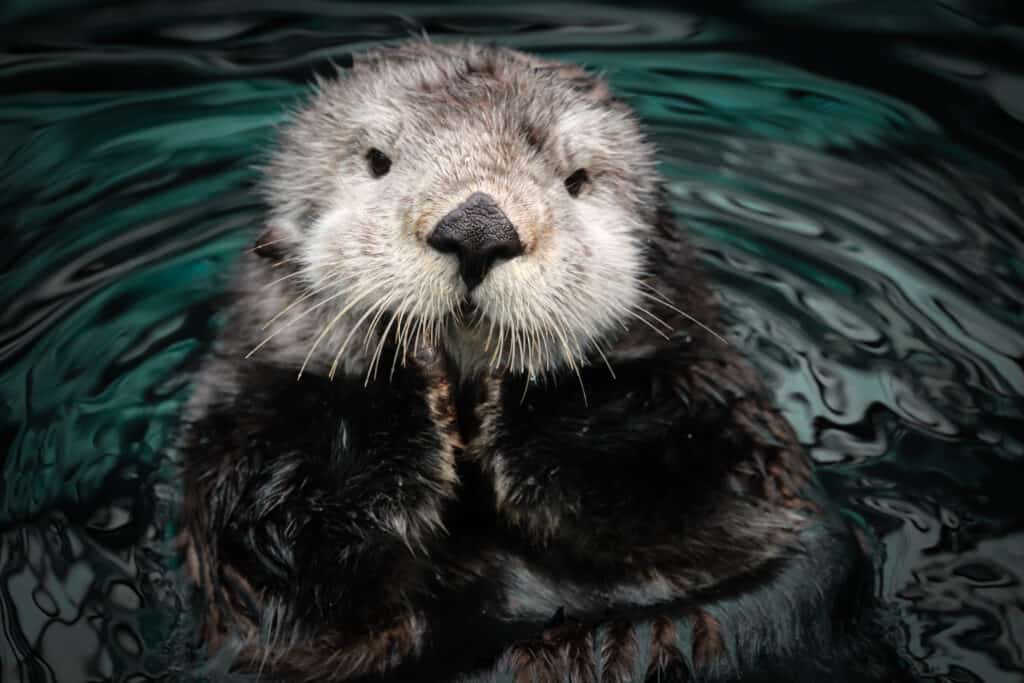
The sea otter uses its thick coat to stay warm rather than blubber.

Here is a list of three amazing sea otter facts:

  • Instead of blubber, the sea otter keeps itself warm with its dense coat. With almost a million strands of hair per square inch, the sea otter has the densest fur of any animal in the world.
  • The sea otter can stay underwater for about six or seven minutes at a time before it needs to resurface for breath.
  • The sea otter has little pockets under each forearm with which it can store food for later.

Scientific Name
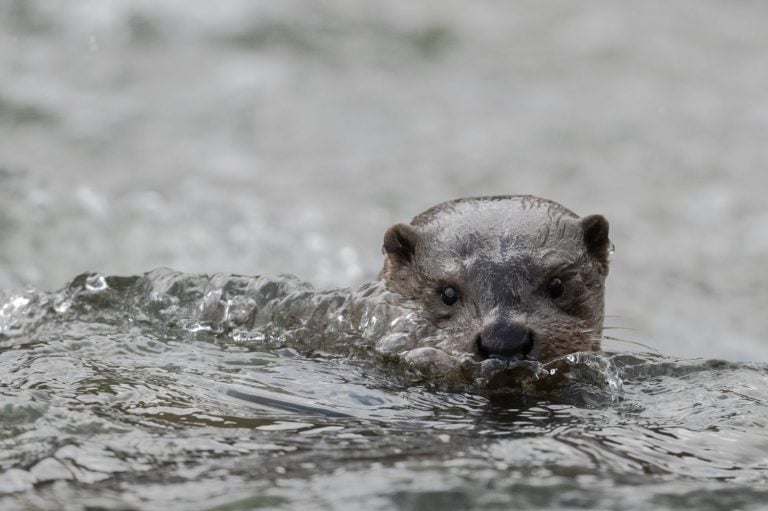
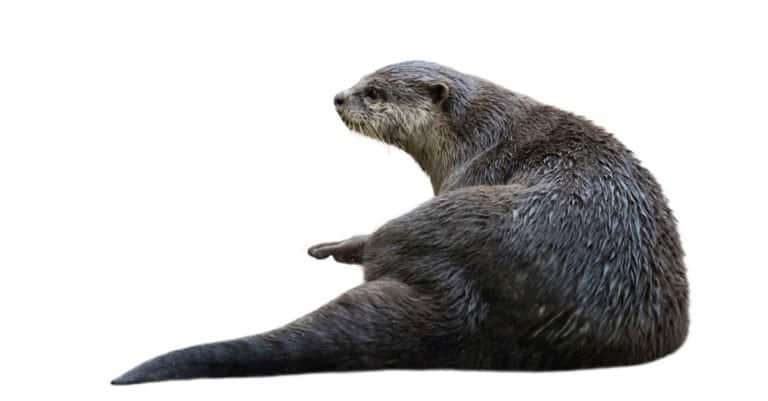
river otter vs sea otter

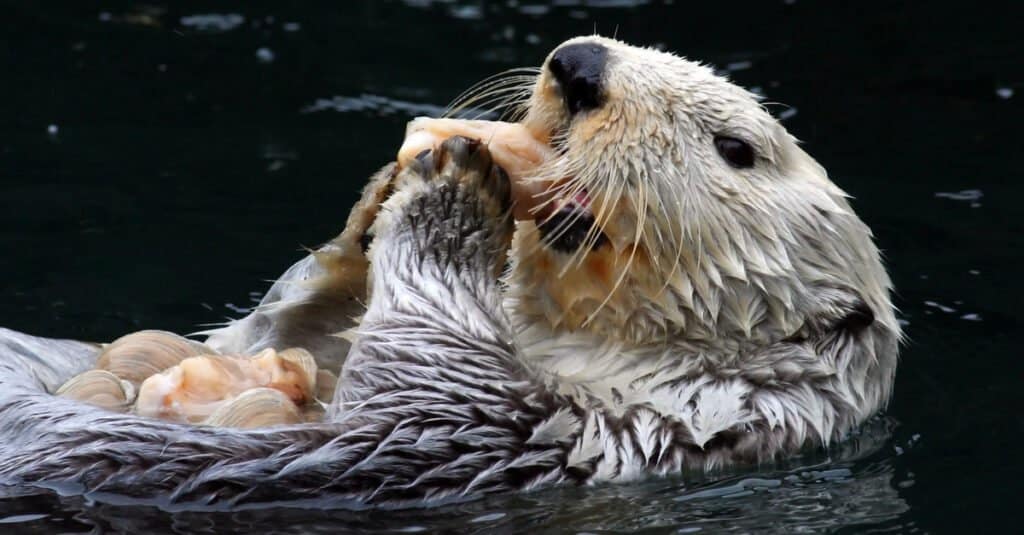
The clever otter employs objects such as stones to crack open mollusks and other food.

The scientific name of the sea otter is Enhydra lutris. Enhydra appears to come from an old Greek term that roughly translates to “in water.” The scientific name Lutris is simply the Latin word for otter. The sea otter is only one of 13 otter species, but it’s also the only living member of its genus. There are currently three recognized subspecies: the Asian sea otter, the northern sea otter, and the southern sea otter. They all occupy the same family, Mustelidae, as the weasels, badgers, wolverines, and minks.

Evolution and Origins

Many freshwater otter fossils originate from the Miocene (5 to 23 million years ago). In the late Miocene and early Pliocene eras, approximately five to seven million years ago, sea otters are thought to have descended from fish-eating, otter-like forebears.

Enhydra lutris, often known as sea otters, first appeared about 2 million years ago, probably somewhere in the far North Pacific Rim, close to Japan and Russia.

Sea otters have a variety of adaptations that enable them to live in their harsh sea environment. They have sensitive forepaws with retractable claws that help them groom, locate and catch prey underwater, and utilize tools.

They have long whiskers that let them detect vibrations in murky waters.

Different Types of Sea Otters

Sea otters are only known as one species (Enhydra lutris), although the Northern sea otter has 13 recognised subspecies (Enhydra lutris kenyoni).

The following subspecies are:

  • Enhydra lutris kenyoni
  • Enhydra lutris nereis
  • Enhydra lutris lutris
  • Enhydra lutris kodiacensis
  • Enhydra lutris nereis ssp. cinereus
  • Enhydra lutris ssp. Litoralis
  • Enhydra lutris ssp. nikini
  • Enhydra lutris ssp. kayi
  • Enhydra lutris ssp. nereis kenyoni
  • Enhydra lutris ssp. remanei
  • Enhydra lutris ssp. yezoensis
  • Enhydra lutris ssp. montereyensis
  • Enhydra lutris ssp. pusillus

A Beautiful Animal

Sea Otter

Because to its long length, short nose, flat tail, and small, beady eyes, the sea otter is simple to recognize.

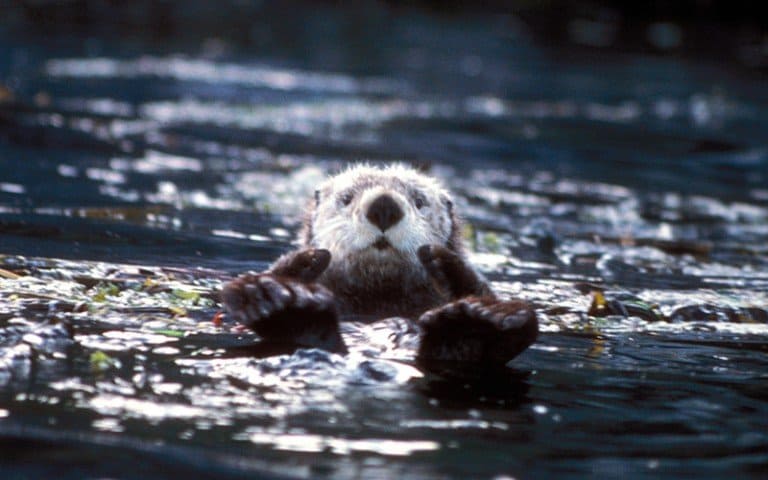
The sea otter is easy to identify from its long body, short snout, flat tail, and small beady eyes. The hind feet, which have evolved for an aquatic lifestyle, are very flat and fully webbed. Both the nostrils and ears are able to close when the otter dives underwater. This species has two layers of fur: a dark brown undercoat and a long, lightly colored overcoat.

This fur traps air right next to the skin to keep it warm and dry. This fur is shed and replaced gradually over the year instead of all at once. Its size is also surprisingly large. Measuring around 4 feet and up to 90 pounds in size, the sea otter is one of the largest members of its family – though also the smallest marine mammal in North America.

Behavior
sea otter

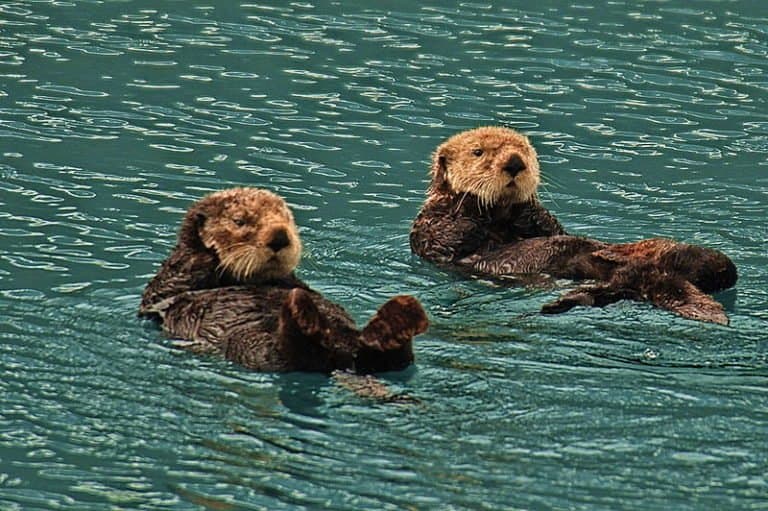
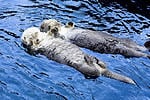
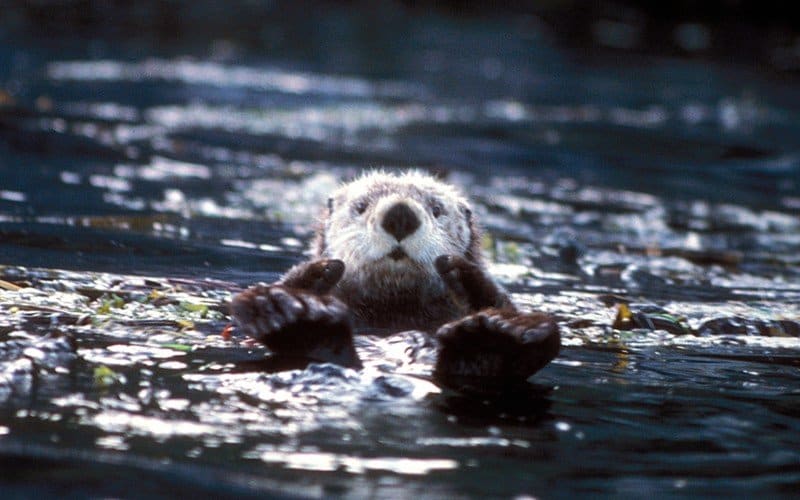
If you happen to pass by the otter’s habitat, you will probably observe it in its typical pose: lying comfortably on its back, occasionally tied to a large piece of seaweed, or holding hands with another otter to keep it from floating off.

The sea otter’s social life revolves around a loose organization of single-sex groups known as a pod or raft. Consisting of between 10 and 100 individuals (though sometimes more), the raft provides safety and respite for the otter in between hunting trips.

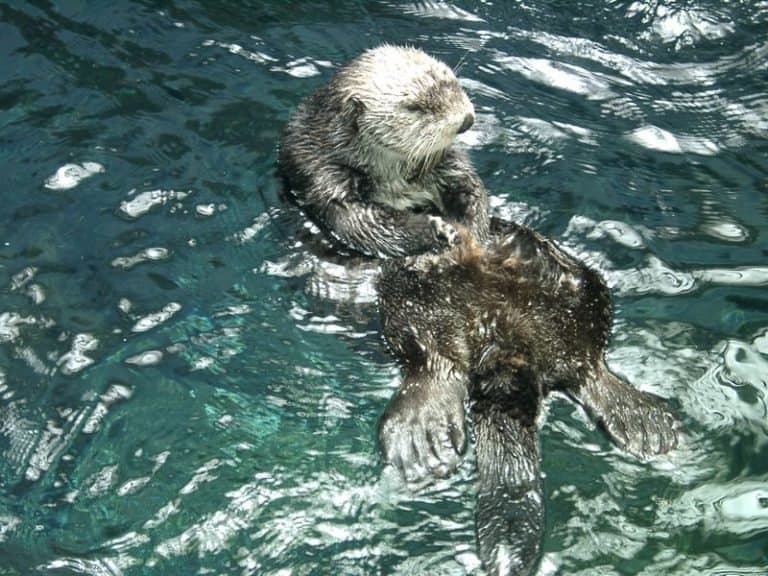
If you happen to pass by its habitat, you will often see the otter in its default pose, resting calmly on its back, sometimes tethered to large seaweed or holding hands with another otter to prevent it from floating away. Since dense fur is the key to its survival, the sea otter will spend plenty of time grooming the coat into excellent shape with its natural oils. It will work hard to untangle knots, remove loose hairs, and blow air into the fur.

The otter’s tolerance of its neighbors does not necessarily extend to the breeding months when it’s most likely to maintain and police its territory. The male territory often overlaps with the female territory but not with other males. Sea otters usually respect this social arrangement. A firm display of splashing and angry vocalizations is usually sufficient to deter most interlopers. Fighting is relatively rare.

The sea otter spends most of the daytime resting or grooming, but it most actively hunts between the dawn and dusk hours. It swims through the water at speeds of around 5 mph by moving its body up and down in undulating waves. The front limbs are tucked close to the body, while the hind limbs and tail provide all of the control.

The facts suggest that the sea otter is intelligent and clever. Lacking jaw strength, they will leverage their intelligence to crack open hard-shelled prey. While floating on the sea, the otter will place a rock on its stomach and smash the shell against the rock.

The excellent sense of touch, including the sensitive whiskers, is the main means of finding prey underwater. The sense of smell also helps them identify each other. Otters exhibit an array of different screams, growls, whines, snarls, and whistles to communicate. Pups communicate with their mothers by squealing.

The Animal’s Habitat

Each of the three sea otter subspecies has a distinct geographical range in the Pacific. The Asian sea otter occupies a narrow range of land from the Kuril Islands north of Japan to Russia’s Kamchatka Peninsula. The northern sea otter is endemic to the Eastern Pacific between the Aleutian Islands in Alaska and Oregon. The Southern sea otter is native to the coast of California. They are mostly found in temperate or cold coastal waters with plentiful forests of giant kelp beds. Shallow water no more than 100 feet deep is the otter’s preferred habitat because it means less time spent diving for food.

The Animal’s Predator and Prey

The sea otter plays an important role in the marine ecosystem by keeping the kelp forests from being overwhelmed by urchins and other prey. The otter, in turn, is an important source of nutrition for many predators higher up the food chain. It’s often referred to as a “keystone species.” Whenever it’s reintroduced into a habitat, the health of the ecosystem often improves.

What do sea otters eat?
What Do Sea Otters Eat
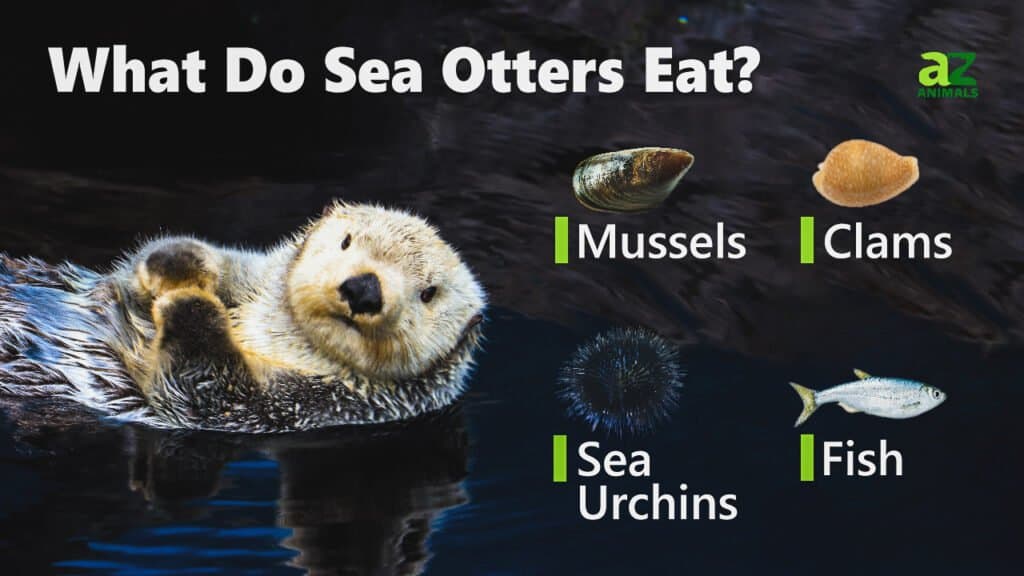
Sea otters eat mussels, clams, sea urchins, and fish.

The otter’s diet consists of clams, mussels, crabs, squid, octopuses, sea urchins, sea stars, and fish, most of which are hard-shelled and need to be cracked open first. Each individual otter has a favorite food in their diet, so to speak. It often becomes specialized in hunting one type of animal, depending on local food availability and the individual’s skills. Sea otters need to consume around a quarter of their body weight in food every single day to support their high metabolism and maintain a comfortable body temperature. They obtain most of their water from food, but they can also drink seawater as necessary.

What eats the sea otter?

The otter faces numerous predators in both sea and land, so it must always be vigilant for threats. Its greatest enemies are sea lions, killer whales, great white sharks, bears, and coyotes. Bald eagles are also known to prey on young otter pups.

Reproduction, Babies, and Lifespan
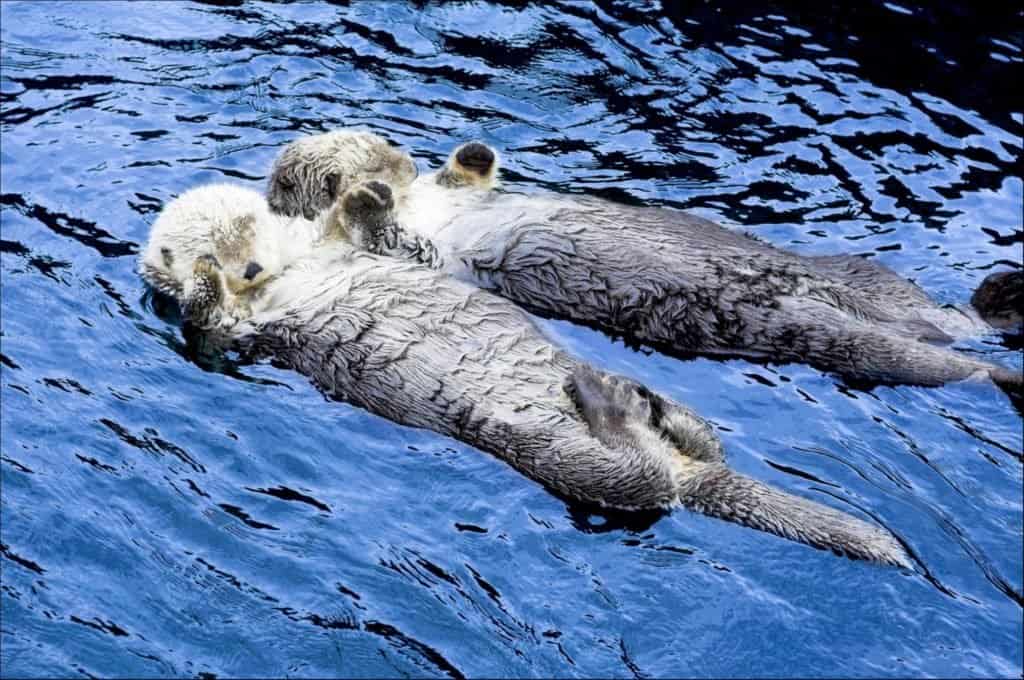
Although the sea otter can breed all year round, its breeding season is from spring to fall.

The sea otter has the ability to breed all year round, but the most active period is spring to autumn. Males will mate with multiple female partners that inhabit their territory. If they do not have an established territory, then they will venture out with other males in search of suitable mates.

The courtship period is an energetic but short three-day tryst that consists of both playful and aggressive behavior. If the female doesn’t like what the male is offering, then she will reject him by shoving him away. But if the female accepts the mate, then the male will actually latch onto her nose and head with his own jaws, which can lead to visible scarring, and then they’ll copulate for about 15 to 30 minutes.

The female does not necessarily become pregnant immediately. She has the ability to delay the implantation of the egg until more favorable environmental conditions arise and food becomes more abundant. This means the gestation period can last anywhere between four and 12 months. Only a single pup is born at a time. Twins only occur in about 2% of all pregnancies, but even then only one pup will survive the difficult juvenile phase.

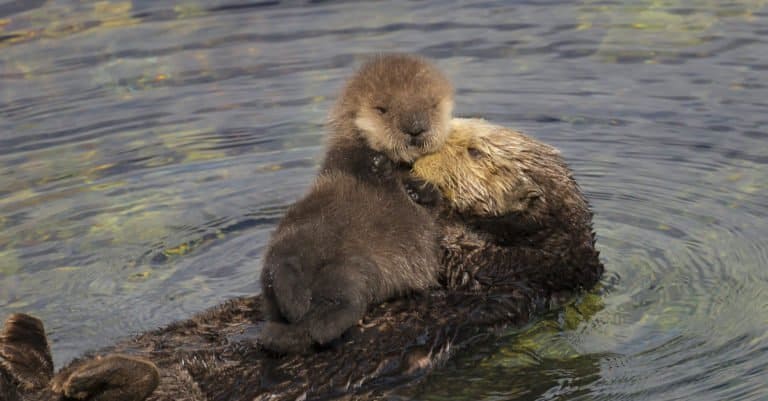
For the first five or six months of the pup’s life, the mother is solely responsible for all of its care, while the father provides no assistance. She carries the pup on her belly to nurse it, and when she goes out foraging, she wraps the pup in kelp to prevent it from floating away. When danger is present, she dives underwater with the baby in her mouth.

Sea otters have a relatively long development period. Females only tend to reach sexual maturity at about four years of age, while males take about five or six years. But it may be a few years after that before they finally produce their first litter. The life expectancy of a wild sea otter is around 23 years of age. Many of them end up dying early to predators or environmental contaminants.

Because of the longer development time, females only reproduce every two or three years. This also means there are a lot of males competing for relatively fewer sexually available females every year.

A Recovering Animal Population

The facts from archaeological digs suggest that the dense fur of the sea otter has made it a target of hunters for thousands of years. But it wasn’t until the introduction of large-scale industrial hunting in the 18th and 19th centuries that the sea otter was seriously threatened. The population eventually bottomed out at only 1,000 to 2,000 by the early 20th century.

Thanks to the protection of the 1975 Endangered Species Act and the diligent work of conservationists, sea otter numbers have begun to recover. Current population estimations of Californian sea otters place it at around 3,000, all of which descended from a small population of some 50 sea otters found off the coast of Big Sur in 1938.

Even though laws were put in place to protect it, the sea otter is still considered to be a threatened or endangered species. The greatest threats today are diseases, oil spills, and illegal hunting. It is also prone to drowning once caught in fishing nets. The 1989 Exxon Valdez oil spill had a particularly calamitous effect on the remaining Alaskan populations. By damaging the fur on which the otter relies for survival, the oil spill killed thousands and still affects the otter population decades later.

One of the challenges of sea otter conservation is to expand the range beyond its present limits to sustain consistent growth. Habitat degradation, pollution and contaminants, nutritional deficiencies, diseases, and great white shark attacks have all limited the potential growth of the sea otter population. A massive effort to clean up the oceans, improve the ecosystem, and limit the damage from climate change would go a long way toward improving population numbers.

Animals in the Zoo

The sea otter can be found at the Monterey Bay Aquarium in California, the Georgia Aquarium in Atlanta, the Shedd Aquarium in Chicago, the Seattle Aquarium, the Minnesota Zoo, and the Oregon Zoo. Outside of the United States, both the Vancouver Aquarium in Canada and the Birmingham Aquarium in the UK have sea otters on exhibit.

View all 390 animals that start with S

Sources

  1. Monterey Bay Aquarium
  2. Animal Diversity Web
  3. Seattle Aquarium
  4. IUCN Redlist
  5. https://www.seaotters.com/sea-otter-conservation/
Rebecca Bales

About the Author

Rebecca Bales

Rebecca is an experienced Professional Freelancer with nearly a decade of expertise in writing SEO Content, Digital Illustrations, and Graphic Design. When not engrossed in her creative endeavors, Rebecca dedicates her time to cycling and filming her nature adventures. When not focused on her passion for creating and crafting optimized materials, she harbors a deep fascination and love for cats, jumping spiders, and pet rats.
Connect:

Thank you for reading! Have some feedback for us?


Sea Otter FAQs (Frequently Asked Questions)

The sea otter’s diet is actually carnivorous.