S
Species Profile

Sea Squirt

Ascidiacea

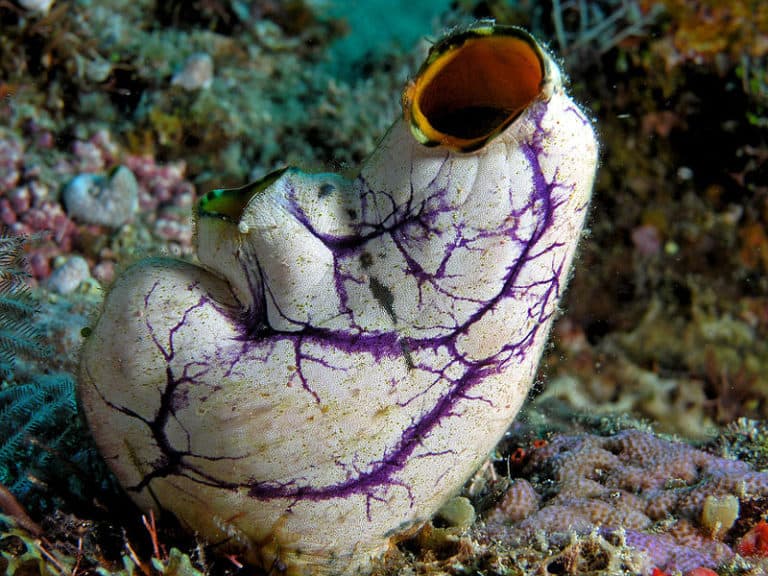
Tadpole larva, siphon-powered adult
Nick Hobgood / Creative Commons

Sea Squirt Distribution

Click a location to explore more animals from that region

Invasive Species

This map shows coastal regions where Sea Squirt are found.

Loading map...

Size Comparison

Human 5'8"
Sea Squirt 2 in

Sea Squirt stands at 2% of average human height.

Sea Squirt

At a Glance

Class Overview This page covers the Sea Squirt class as a group. Stats below are general traits shared across the class.
Also Known As Tunicates, Sea pineapple, Sea pork, Sea peach, Hoya, Vase tunicate
Diet Filter Feeder
Activity Cathemeral
Lifespan 1.5 years
Weight 5 lbs
Status Not Evaluated
Did You Know?

They're chordates: most species have larvae with a tail and notochord, then transform into sack-like adults.

Scientific Classification

Class Overview "Sea Squirt" is not a single species but represents an entire class containing multiple species.

Sea squirts are sessile (or occasionally free-living) marine tunicates that filter-feed by pumping water through an incurrent siphon and expelling it through an excurrent siphon. Despite their adult form, they are chordates: their larvae typically possess a notochord and tail before metamorphosing into the adult body plan.

Kingdom
Animalia
Phylum
Chordata
Class
Ascidiacea

Distinguishing Features

  • Tough outer covering (“tunic”) containing tunicin (a cellulose-like compound)
  • Two siphons used for filter-feeding and respiration (water in/out)
  • Larval stage with chordate traits (tail and notochord) followed by dramatic metamorphosis
  • Includes solitary and colonial forms; colonies may form sheets, lobes, or star-patterned systems

Physical Measurements

Height
2 in (0 in – 1 ft 8 in)
Length
2 in (0 in – 1 ft 8 in)
Weight
0 lbs (0 lbs – 11 lbs)
Top Speed
0 mph
larval swimming

Appearance

Primary Colors
Secondary Colors
Skin Type Outer tunic (tunicin-based) ranging from gelatinous and translucent to thick, leathery, or cartilaginous; surfaces may be smooth, wrinkled, warty, ridged, or spiny, and frequently accumulate fouling organisms.
Distinctive Features
  • Body size range across the class: tiny zooids ~0.1-0.2 cm; solitary individuals commonly a few cm; largest solitary forms can reach ~20-30+ cm; colonies can spread across tens of cm.
  • Two siphons typical (incurrent/oral and excurrent/atrial), often conspicuous as short tubes with lobed rims; in colonial forms, many zooids share common excurrent openings.
  • Filter-feeding by pumping water through a branchial basket; visible incurrent/excurrent jets may occur when disturbed.
  • Sessile benthic lifestyle dominates (attached to rocks, shells, seagrass, reefs, docks, ship hulls); some can detach or be displaced, but sustained free-living is uncommon.
  • Tunic may incorporate sand/shell fragments, giving a gritty appearance; many species are heavily encrusted by algae, bryozoans, hydroids, and barnacles.
  • Chordate hallmark in the life cycle: tadpole-like larvae with tail and notochord that metamorphose into the adult body plan.
  • Solitary vs colonial diversity is major: solitary forms resemble sacs or bulbs; colonial forms form mats, sheets, lobes, or branching masses with repeating zooid patterns.
  • Ecological variation: intertidal to deep water; many tolerate low oxygen and high turbidity, enabling dominance on artificial structures.
  • Fouling and invasiveness are common themes: several ascidians spread via shipping/aquaculture, forming dense carpets that outcompete native benthos.
  • Lifespan range across species: short-lived colonials may persist months; many solitary species live ~1-3 years; some robust, large-bodied taxa can persist for several years, occasionally approaching ~5-10+ years in stable habitats.

Did You Know?

They're chordates: most species have larvae with a tail and notochord, then transform into sack-like adults.

Adults pump seawater through an incurrent siphon and expel it through an excurrent siphon, filtering tiny food particles.

They wear a "tunic" (outer coat) containing tunicin, a cellulose-like material unusual among animals.

Ascidians span solitary individuals and colonies that bud clones and can carpet rocks, docks, and pilings.

Some species concentrate unusual chemicals (e.g., vanadium or acids) in their tissues-part of their defenses.

They're major players in marine biofouling and include globally invasive species that spread via ship hulls and aquaculture gear.

Several are key lab models (e.g., Ciona, Halocynthia) for studying development and the origins of chordates.

Unique Adaptations

  • Tunic (test) with tunicin: a flexible outer layer that can deter predators and withstand abrasion; composition and thickness vary from delicate to leathery across species.
  • Two-siphon body plan: a built-in flow-through system (incurrent/excurrent siphons) that supports efficient filter-feeding while anchored in place.
  • Dramatic metamorphosis: during transformation, many larval structures (including much of the tail/notochord) are resorbed as the adult gut and pharyngeal filter basket develop.
  • Colonial budding and partial fusion: many species clone themselves, share resources, and can replace damaged zooids; growth form diversity is a hallmark of the class.
  • Allorecognition in some colonial forms: colonies may fuse or reject contact based on genetic compatibility, shaping colony boundaries.
  • Chemical specialization: multiple species store strong acids or concentrate metals (notably vanadium) and produce bioactive compounds that deter predation and microbial growth.

Interesting Behaviors

  • Larval dispersal then "settle-and-switch": free-swimming larvae explore surfaces, attach head-first, then rapidly metamorphose into a sedentary filter-feeder; time in the plankton varies widely by species (often minutes to days).
  • Active filtration: many species continuously or intermittently pump water; pumping rate and feeding intensity shift with temperature, sediment load, and food availability.
  • Colonial life: in many lineages, colonies expand by asexual budding, share a common tunic, and can form sheets, ropes, or branching forms; colony geometry varies strongly among species and habitats.
  • Seasonal reproduction: many species time spawning to seasonal plankton blooms; some brood embryos/larvae, while others broadcast spawn-both strategies occur across the class.
  • Space competition: they often overgrow neighbors, form dense aggregations, and are frequent "winners" on man-made structures; outcomes depend on local predators, currents, and disturbance.
  • Predator avoidance: besides tough tunics and chemical defenses, many close siphons when disturbed and can eject jets of water ("squirt") as a startle response.

Cultural Significance

Sea squirts (ascidians) are eaten locally (Pyura, Microcosmus, Halocynthia), helping small fisheries and regional foods. They foul docks, ship hulls, and farm gear, raising control costs when invasive. Ciona and Halocynthia are model animals used to show how vertebrates began.

Myths & Legends

Aristotle and later Greco-Roman naturalists grouped sea squirts among "zoophytes" (plant-animals), a historical idea reflecting their plantlike stillness despite being animals.

In coastal food traditions, Chilean Pyura sea squirts and "sea fig" in the Mediterranean have long carried reputations as invigorating or aphrodisiac foods-culinary folklore tied to their strong flavor and rarity outside coastal markets.

In parts of the North Atlantic, sailors called ascidians 'sea pork' or 'sea fig.' People joked they were 'meat on the rocks' that looks like a plant or sponge but squirts water.

19th-century European zoology treated the discovery of tadpole-like ascidian larvae (with a notochord) as a dramatic "hidden identity" of sea squirts-an enduring scientific-origin story often retold as a revelation about vertebrate ancestry.

Conservation Status

NE Not Evaluated at the class (Ascidiacea) level; among described species, assessments range from NE/DD through LC, with a smaller number listed as threatened (VU-CR), often tied to restricted ranges and coastal habitat impacts.

Has not yet been evaluated against the criteria.

Population Unknown

Protected Under

  • Area-based protection through Marine Protected Areas and habitat conservation measures (jurisdiction-dependent)
  • General coastal water-quality and pollution-control regulations that indirectly benefit ascidian habitats (jurisdiction-dependent)

You might be looking for:

Sea vase / giant sea squirt

22%

Ciona intestinalis

A common solitary sea squirt used widely in research; tubular body with two siphons.

Sea grape

18%

Molgula manhattensis

Small, rounded solitary ascidian often found in harbors and on pilings.

Star tunicate

18%

Botryllus schlosseri

Colonial sea squirt forming star-shaped systems; common fouling organism.

Sea pork

12%

Aplidium stellatum

Colonial ascidian with firm, lobed masses; common on rocky coasts in parts of the Atlantic.

View Profile

Pacific transparent sea squirt

10%

Corella inflata

Solitary ascidian with a translucent tunic, common in parts of the northeastern Pacific.

Life Cycle

Birth 10000 larvas
Lifespan 2 years

Lifespan

In the Wild
0.1–15 years
In Captivity
0.1–5 years

Reproduction

Mating System Hermaphroditism
Social Structure Aggregation Group
Breeding Pattern Not Applicable
Fertilization Broadcast Spawning
Birth Type Broadcast_spawning

Across Ascidiacea, most species are simultaneous hermaphrodites that predominantly outcross; many release sperm (often before eggs) into the water for broadcast fertilization, with selfing reduced by incompatibility. Some lineages instead retain gametes for internal fertilization and brooding.

Behavior & Ecology

Social Colony Group: 100
Activity Cathemeral
Diet Filter Feeder Fine suspended plankton-especially phytoplankton (often diatoms) mixed with small zooplankton-sized particles

Temperament

Sessile and generally non-aggressive; interactions are passive and substrate-based rather than social.
Often tolerant of close neighbors, but space competition can cause overgrowth or localized tissue damage.
Highly reactive at the individual level (rapid siphon closure) to touch, shadows, or sediment pulses.
Colonial forms vary from cooperative within-colony resource sharing to strong allorecognition and rejection of non-kin.
Many species rely on chemical defenses; palatability and predator responses vary widely across the class.

Communication

Chemical cues in seawater for larval settlement, habitat selection, and biofilm-associated recruitment.
Spawning synchronization via environmental and chemical signals Temperature, photoperiod, conspecific gamete cues
Allorecognition signaling in colonial taxa: fusion with kin versus rejection/inflammatory boundary formation.
Mechanosensory and photic responsiveness: siphon closure and pumping modulation transmit disturbance indirectly to nearby individuals.
Tunic-borne chemical deterrents and metabolites can influence neighbor growth and fouling community composition.

Habitat

Coastal Rocky Shore Beach Estuary Mangrove Coral Reef Kelp Forest Seabed/Benthic Deep Sea Open Ocean Cliff/Rocky Outcrop Cave Urban Agricultural/Farmland +8
Biomes:
Terrain:
Coastal Island Rocky Sandy Muddy
Elevation: -314961 in

Ecological Role

Benthic suspension-feeding tunicates that strongly couple planktonic production to seafloor communities; they can be major space occupiers on hard substrates and important components of biofouling assemblages, with some species becoming invasive.

water filtration and clarification (removal of suspended particles) benthic-pelagic coupling (moving planktonic carbon/nutrients to the benthos) nutrient regeneration (excretion fueling local productivity) habitat/structure provision (colonial mats and surfaces for microbes and small invertebrates) food-web support (prey for specialized predators and scavengers)

Diet Details

Main Prey:
Zooplankton Microzooplankton
Other Foods:
phytoplankton Picophytoplankton/microalgae

Human Interaction

Domestication Status

Wild

Ascidians (sea squirts, class Ascidiacea) are not domesticated. Humans harvest some wild and farm a few edible species. They cause biofouling on boats and gear and some become invasive. They live on hard surfaces, are filter-feeders, and may be solitary or colonial. Sizes range from millimeters to over 30 cm; lifespans vary from months to years.

Danger Level

Low
  • Skin irritation or dermatitis in sensitive individuals when handling some species (tunic chemicals/mucus); minor cuts possible from encrusting communities on hard substrates
  • Some species produce bioactive chemicals; ingestion is only safe for traditionally consumed species and proper sourcing (contaminant/heavy-metal accumulation risk in polluted waters)
  • Indirect hazards: slippery fouled surfaces and economic/operational risks from heavy biofouling on docks, boats, and aquaculture equipment

As a Pet

Not Suitable as Pet

Legality: Generally legal to keep incidentally in marine aquaria, but collection/transport may be restricted by local wildlife regulations, protected-area rules, and invasive-species laws. Moving live ascidians between water bodies is often regulated or discouraged due to invasion and biosecurity risks.

Care Level: Expert Only

Purchase Cost: Up to $50
Lifetime Cost: $500 - $10,000

Economic Value

Uses:
Food and aquaculture (limited to some species/regions) Biomedical and biochemical research Biomaterials Biofouling and invasive-species management (economic losses and mitigation) Education and basic research (developmental biology, chordate origins)
Products:
  • edible tunicate meat in some cuisines (regional; only certain species are eaten)
  • cultured tunicates in localized aquaculture for food and/or biomass (not broadly across the class)
  • natural products with pharmaceutical relevance (e.g., tunicate-derived compounds inspiring anticancer/antiviral drugs)
  • tunicin/cellulose-like structural material (research and niche biomaterial interest)
  • research specimens for embryology, immunology, and chordate evolution studies
  • cost impacts: hull and infrastructure fouling, aquaculture gear overgrowth, and control services (cleaning, antifouling coatings, monitoring)

Relationships

Related Species 7

Vase tunicates Cionidae Shared Family
Stolidobranch sea squirts Styelidae Shared Family
Sea grapes/colonial tunicates Botryllinae Shared Family
Sea vases / sea tulips Molgulidae Shared Family
Encrusting colonial tunicates Didemnidae Shared Family
Salps and pyrosomes Thaliacea Shared Class
Larvaceans Appendicularia Shared Phylum

Ecological Equivalents 5

Animals that fill a similar ecological role in their ecosystem

Sponges Porifera Sessile, benthic filter-feeders that process large volumes of water and commonly compete for space on hard substrates.
Mussels and oysters Suspension-feeding marine invertebrates that attach to surfaces, often forming dense aggregations, and that can strongly overlap with ascidians in fouling communities.
Bryozoans Bryozoa Frequently form encrusting or branching colonies on similar substrates, sharing space-competition dynamics and plankton-capture feeding.
Barnacles
Barnacles Cirripedia Common co-occupants of intertidal and subtidal hard surfaces. Comparable ecological role in fouling assemblages and as sessile suspension-feeders.
Tube-building polychaete worms Polychaeta Sessile or sedentary benthic animals often living in dense reefs or mats; overlap in habitat engineering and space competition on reefs, pilings, and rocky bottoms.

Types of Sea Squirt

12

Explore 12 recognized types of sea squirt

Vase tunicate
Vase tunicate Ciona intestinalis
Ciona tunicate Ciona robusta
Golden star tunicate Botryllus schlosseri
Violet tunicate Botrylloides violaceus
Carpet sea squirt Didemnum vexillum
Club tunicate Styela clava
Pleated sea squirt Styela plicata
Sea grape / Manhattan tunicate Molgula manhattensis
Sea pineapple
Sea pineapple Halocynthia roretzi
Chilean sea squirt Pyura chilensis
Ascidian sea squirt Ascidia mentula
Lined sea squirt Microcosmus squamiger

The sea squirt is a highly evolved marine animal with a spine, although it looks like a plant.

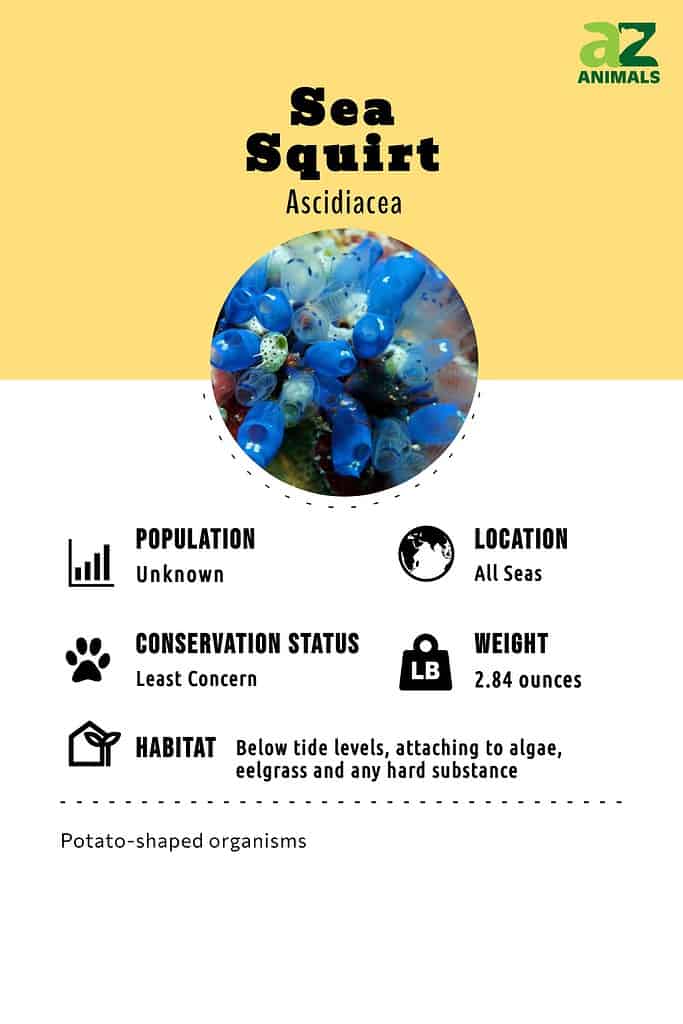
The sea squirt is a potato-shaped marine animal that also looks like a tube. Most sea squirts live underwater, permanently fixed to a hard surface. But some can move up to 1.5 cm per day. They can live on places like a ship’s hull, rock, back of a large crab, seashell, or the pilings of a pier. Sea squirts are animals that can live alone or in a colony.
 

5 Sea Squirt Facts

  • Sea squirts are animals that get their nutrition and oxygen from water that flows through their body.
  • The sea squirt diet consists of plankton and debris from dead sea life.
  • Sea squirts possess both male and female reproductive organs.
  • Larvae of the sea squirt are like tadpoles and swim freely.
  • Sea squirts often attach to ships and move to new areas of the ocean.
Scientific Name

Another name for the sea squirt is ascidian. These animals belong to the invertebrate class Ascidiacea, phylum Chordata and subphylum Urochordata, also called Tunicata. The first known use of the sea squirt term ascidian was in 1823. This name comes from the New Latin ascidia with Greek roots of askidion and askos, meaning wineskin or bladder. More than 3,000 species exist, living in saltwater environments around the globe. From its subphylum name Tunicata, sea squirts are also often called tunicates.

Evolution And History
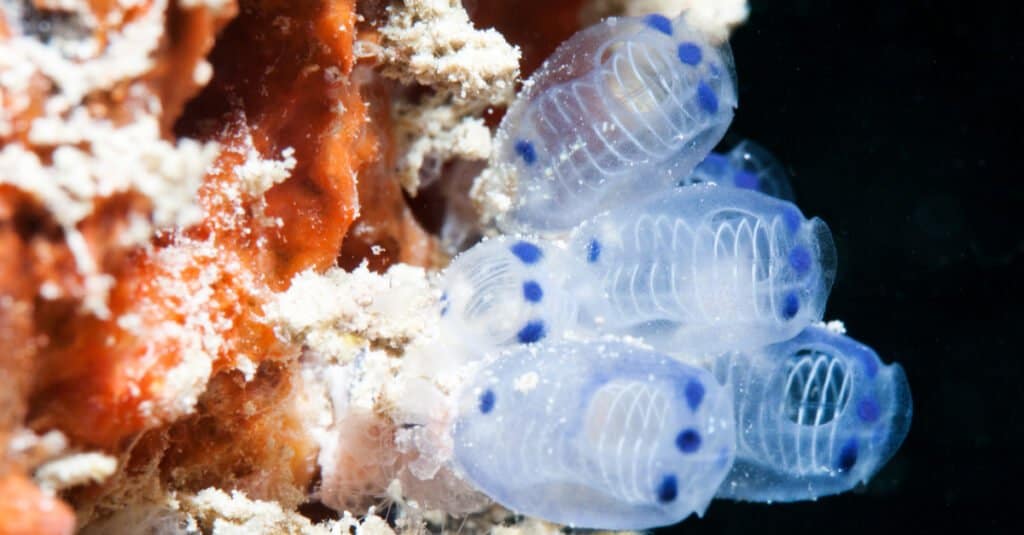
Animals That Don't Have a Brain - Sea squirt

The sea squirt has a very tiny brain in its larva stage.

Because the sea squirt is a soft-bodied animal, there is a severe lack of any fossil records or history for the species. There is some evidence that they were around during the Jurassic era but records dating back to older periods are dubious.

Types Of

More than 3,000 species exist, living in saltwater environments around the globe. From its subphylum name Tunicata, sea squirts are also often called tunicates. Some of the different sea squirts are:

  • Sea Vase
  • Botryllus schlosseri
  • Styela clava
  • Microcosmus squamiger
  • Polyandrocarpa zorritensis

Appearance

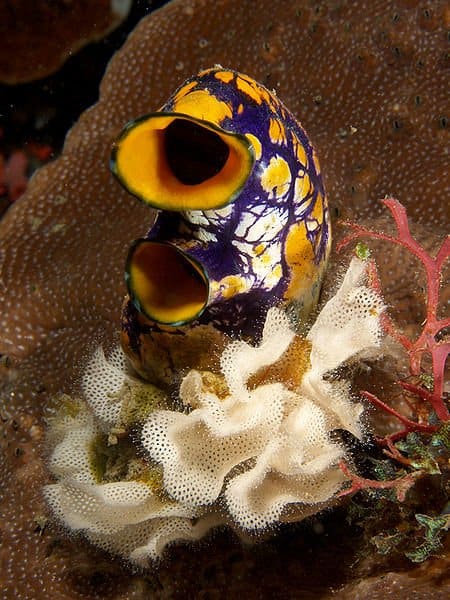
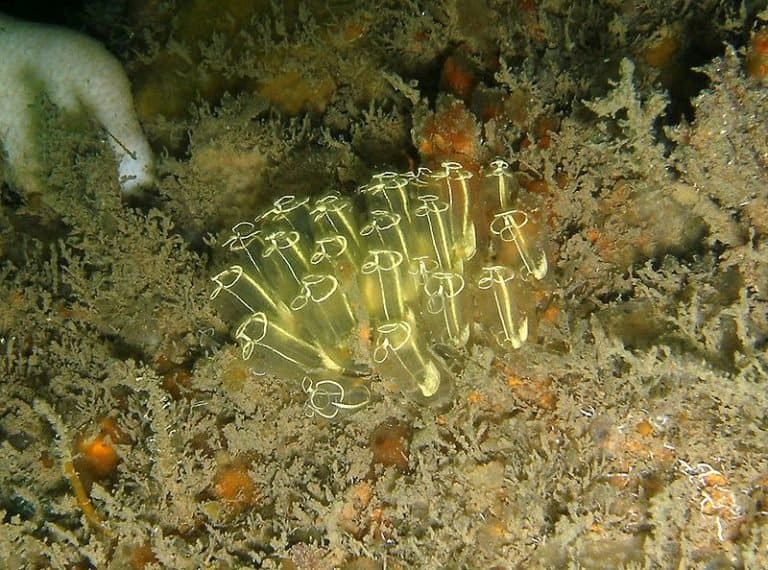
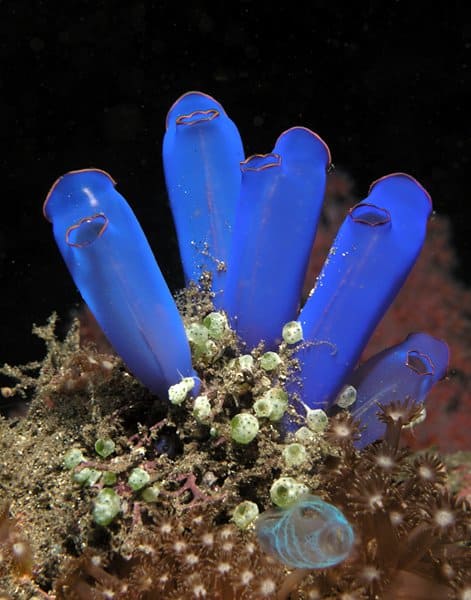
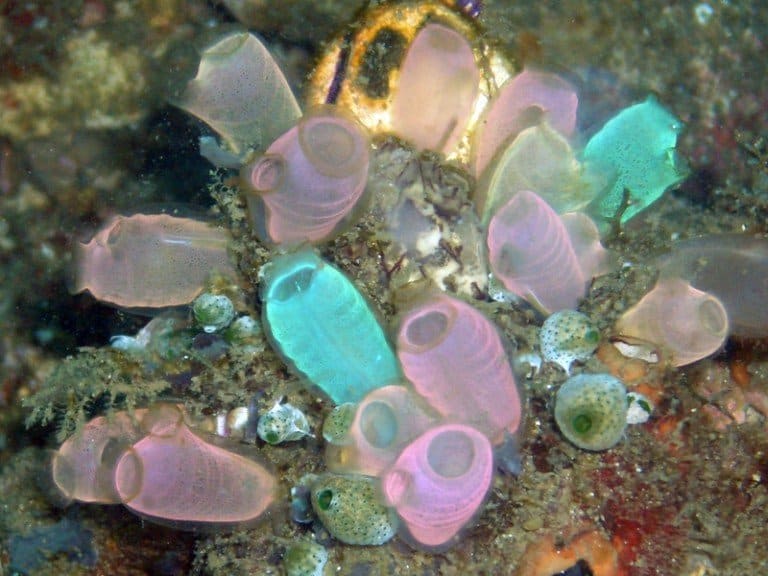
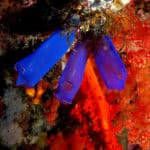
There are more than 3,000 types of these animals. They range in color from fleshy beiges, whites, and browns to deep blues, purples, yellows, pinks, and greens. Colors, shapes, and sizes vary according to the species, subspecies, and environment in which they live. Common shapes for ascidians include the more common tube shape, along with round, bell-shaped, and urn-shaped bodies. Their sizes range from 0.5 cm to 10 cm.

One of the more interesting sea squirts is the Polycarpa aurata, which looks like a purple and yellow animal’s heart. That is why people call it the ox heart ascidian. Another intriguing type is the skeleton panda sea squirt. It gets its name from white tissues that form the appearance of a spine and skull with eerie panda-like facial features.

Behavior
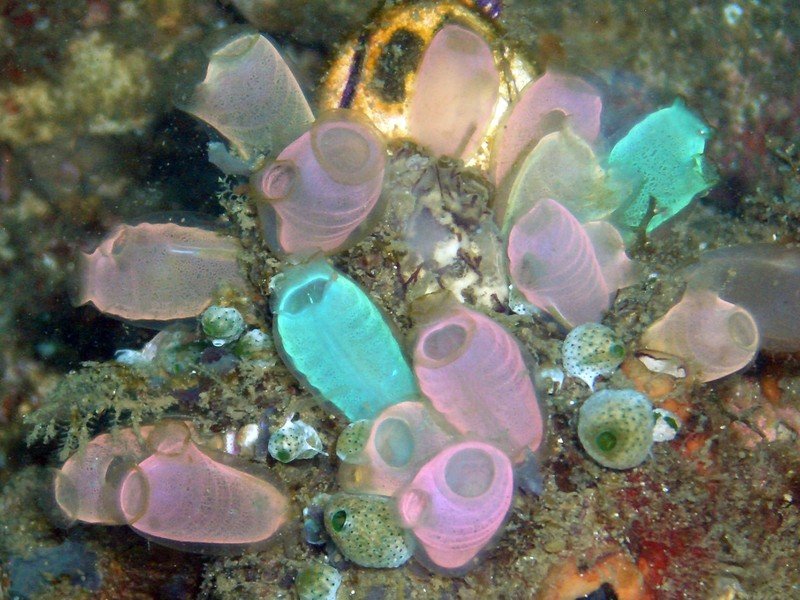
These animals can thrive in any depth of the sea. You can find them from shallow depths of intertidal zones to the deepest and darkest ocean waters. They live alone, attached to a hard surface, or in clumps or colonies. In a colony, each individual sea squirt is called a zooid. In some colonies, the zooid bodies fuse together to form one unit. Other colonies feature defined individuals independently flowing in the current.

One end of the tubal or rounded animal’s body attaches firmly to a solid surface. This attaching end features pits or ridges, sometimes with root-like tentacles that help the ascidian grip onto the base. The rest of the body features a smooth but thick leathery tunic made of cellulose, proteins, and calcium salts. But this tunic is not a dead shell. It is living tissue, often supplied with blood.

On the opposite end from the base of the sea squirt are two openings. These openings, called siphons, take in and push out water for nutrition and oxygen. The larger siphon works like a mouth, sucking water into the body and through the abdomen. After taking nutrients and oxygen from the water it takes in, the animal expels the water through the smaller siphon on the top of its body. If the animal is taken out of the water, it can violently push water from both siphons. This is why we call it a “sea squirt.”

Although you cannot see its organs from the outside of its body, the sea squirt has many parts similar to human bodies. These include the pharynx, heart, and reproductive organs. Their bodies also contain connective tissue cords that help them maintain their shape, muscle fibers, and epithelium. They also have nervous systems, digestive systems, and circulatory systems.

Habitat

These animals live in saltwater bodies all over the world. Most settle onto the substratum of the sea where they live, attaching to rocks and other hard debris or ground. Their colors, sizes, and shapes vary according to their subspecies and native origin. For example, the skeleton panda sea squirt has markings that look like a panda.

These animals easily attach to ships, then transfer from one body of water to another as the ship travels. This has led to non-native species invading different parts of the world over the past several hundred years. When attaching to the hulls of ships, docks, or shellfish like crabs and oysters, they cause economic problems. It costs both time and money to remove the tunicates from these surfaces. Their colonies also grow very rapidly and can smother native species, damaging the local environment.

Diet
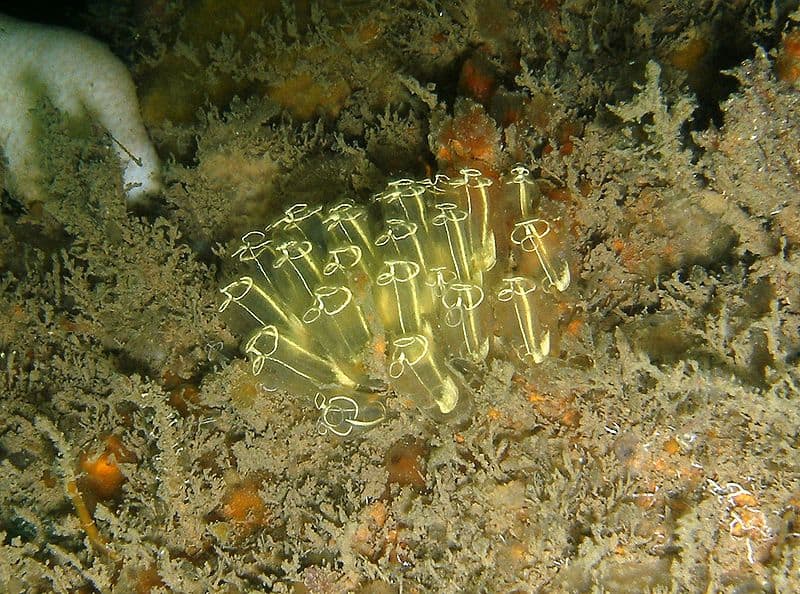
Sea Squirt

Sea Squirts get their food from the water it ingests through the larger of two siphons on the top of their bodies.

These animals get their food and oxygen from the water it takes in through the larger of two siphons, the holes on the top of their body. The water enters the siphon, then passes down the pharynx and through gill slits. If the ascidian lives in deep water, it thrives on plankton from the water. Near the shore, it takes in dead plant and animal debris as part of its diet. After processing the water it takes in for food and oxygen, the animal ejects its waste through the smaller siphon.

They also obtain some nutrients from algae that grow on their bodies. Some larger species of ascidians use tentacles to catch food particles floating past them in the water current. The largest sea squirts can even catch jellyfish and other sea animals as food.  

Sea Squirt Predators And Threats

These animals make easy prey for large fish, snails, crustaceans, and eels. Because tunicates spend their lives attached to one surface from a very early age, passing creatures can graze on them at will.

Humans also eat these animals. In Japan and Korea in 1994, 42,000 pounds of sea pineapple sea squirts made it to dining tables. This is the most popular type of ascidian ingested by humans, but other subspecies are also consumed.

These animals are not considered threatened or endangered according to the International Union for the Conservation of Nature (IUCN), making them of least concern in regard to conservation.

Reproduction, Babies, And Lifespan
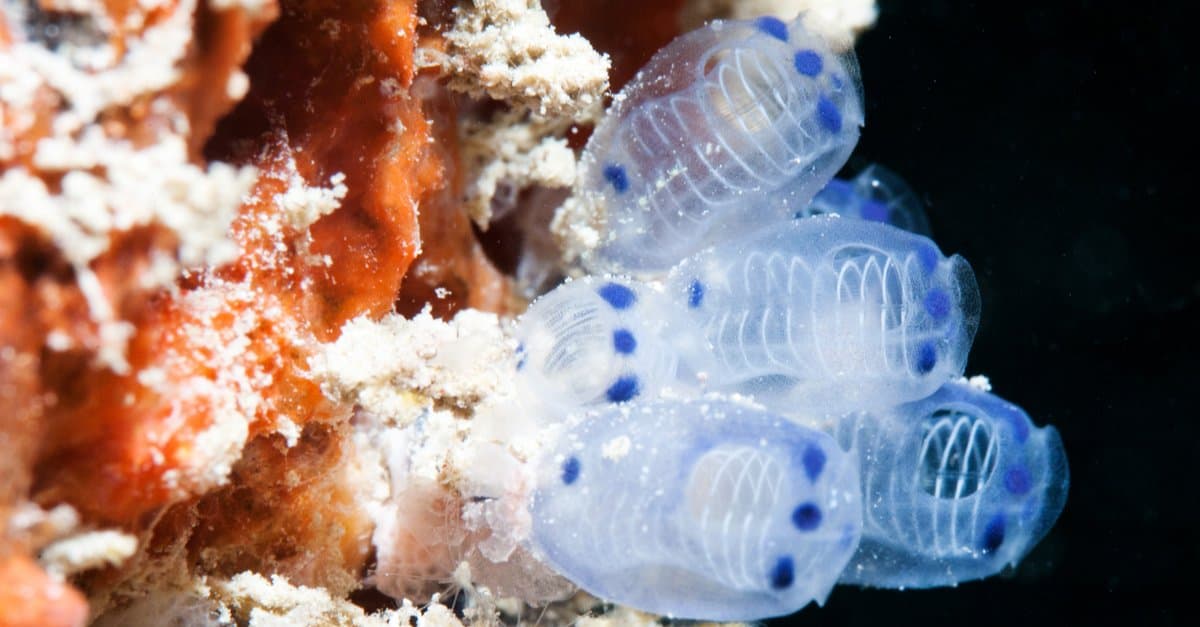

These animals have both male and female reproductive organs allowing them to make both eggs and sperm. But it is unlikely for one individual to fertilize their own eggs. Instead, the eggs and sperm are released into the sea for the fertilization process to take place. Fertilized eggs hatch into tadpole-like larvae that swim freely for a short period of time. The larvae find a solid surface on which to attach, then grow into their adult form there.

Colony-based sea squirts can use other methods of reproduction, such as budding. In budding, a bump develops on one animal. It is formed by the DNA of two parents. The bump grows to full size and eventually breaks off, becoming a new animal and part of the colony.

These animals can live for 10 years or more in the wild. Larvae reach sexual maturity within a few weeks of attaching to their permanent location. 

Sea Squirt Population

These animals live in every saltwater body in the world, where salinity is at least 2.5 percent. Populations continue to thrive for most subspecies, with some invading new regions and destroying native habitats. This invasion takes place via the hulls of ships and on some farmed crustaceans. Sea squirt conservation status is of least concern.
 

View all 390 animals that start with S

Sources

  1. David Burnie, Dorling Kindersley (2011) Animal, The Definitive Visual Guide To The World's Wildlife / Accessed January 4, 2010
  2. Tom Jackson, Lorenz Books (2007) The World Encyclopedia Of Animals / Accessed January 4, 2010
  3. David Burnie, Kingfisher (2011) The Kingfisher Animal Encyclopedia / Accessed January 4, 2010
  4. Richard Mackay, University of California Press (2009) The Atlas Of Endangered Species / Accessed January 4, 2010
  5. David Burnie, Dorling Kindersley (2008) Illustrated Encyclopedia Of Animals / Accessed January 4, 2010

  6. Dorling Kindersley (2006) Dorling Kindersley Encyclopedia Of Animals / Accessed January 4, 2010
Melissa Bauernfeind

About the Author

Melissa Bauernfeind

Melissa Bauernfeind was born in NYC and got her degree in Journalism from Boston University. She lived in San Diego for 10 years and is now back in NYC. She loves adventure and traveling the world with her husband but always misses her favorite little man, "P", half Chihuahua/half Jack Russell, all trouble. She got dive-certified so she could dive with the Great White Sharks someday and is hoping to swim with the Orcas as well.
Connect:

Thank you for reading! Have some feedback for us?


Sea Squirt FAQs (Frequently Asked Questions)

A sea squirt is a highly evolved animal. It looks like a plant, typically shaped like a potato or tube and attached to a hard surface, such as a rock or pier. But inside the sea squirt’s simple-looking tubular body are intricate systems for digestion, reproduction, and circulation. They also have a nervous system.