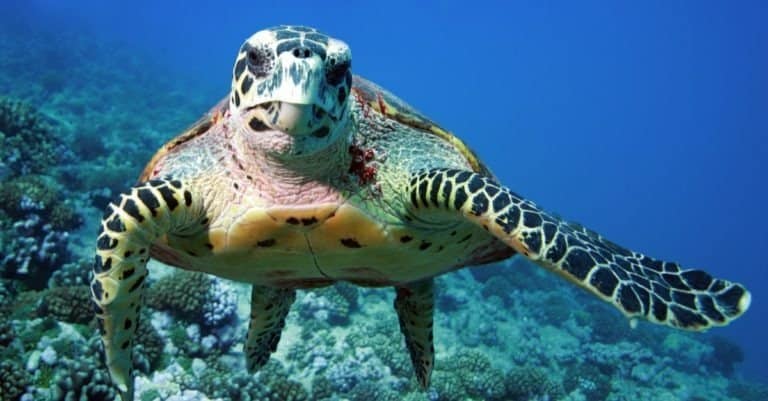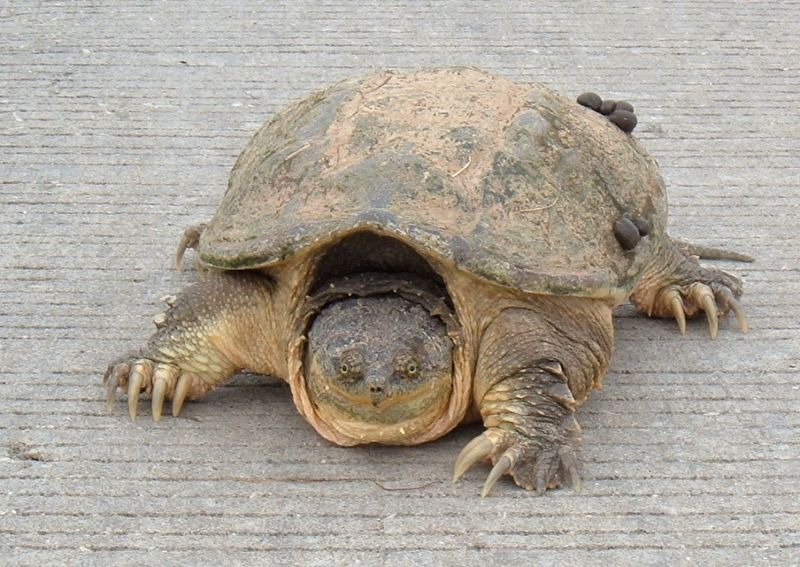
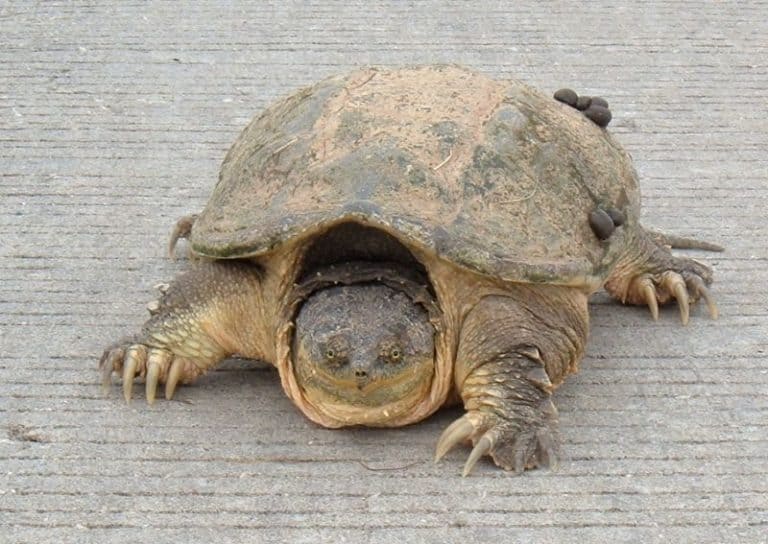
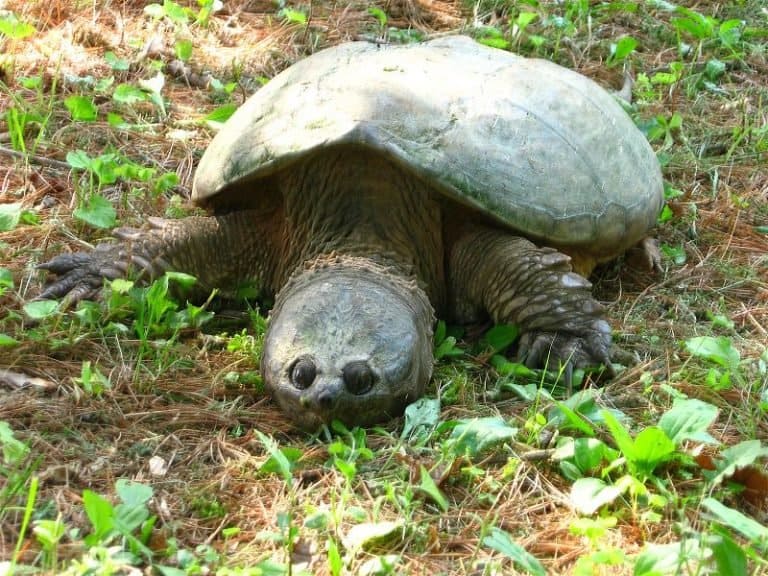








Unlike other turtles, a common snapping turtle is not able to fit its whole body into its shell.
Snapping turtles typically can live to be 30-45 years old in the wild, and alligator snapping turtles can live over a hundred years! Their living area spreads from southeastern Canada all the way down through the central and eastern parts of the United States and into the state of Florida. A snapping turtle’s shell can grow up to 20 inches in length. These turtles are omnivores, eating both animal and plant life. Adult turtles are aggressive and have very few predators.
5 Incredible Snapping Turtle Facts!
- A snapping turtle in captivity can live up to 50 years.
- These turtles are nocturnal so they hunt at night.
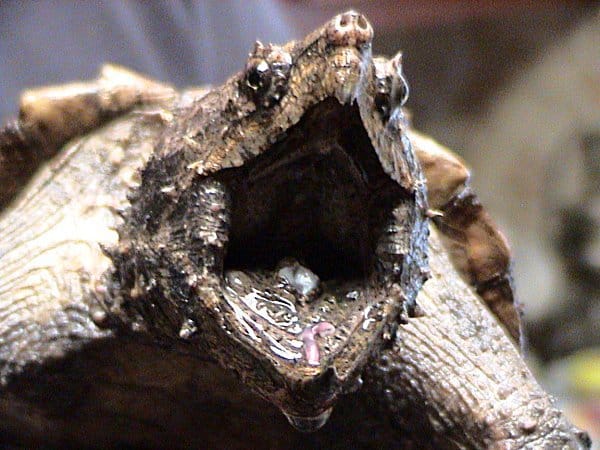
- The mouth of a snapping turtle is shaped like the hooked beak of a bird.
- These turtles live in lakes, ponds, canals, and rivers.
- Snapping turtles are solitary (live alone) most of the time.
Scientific Name
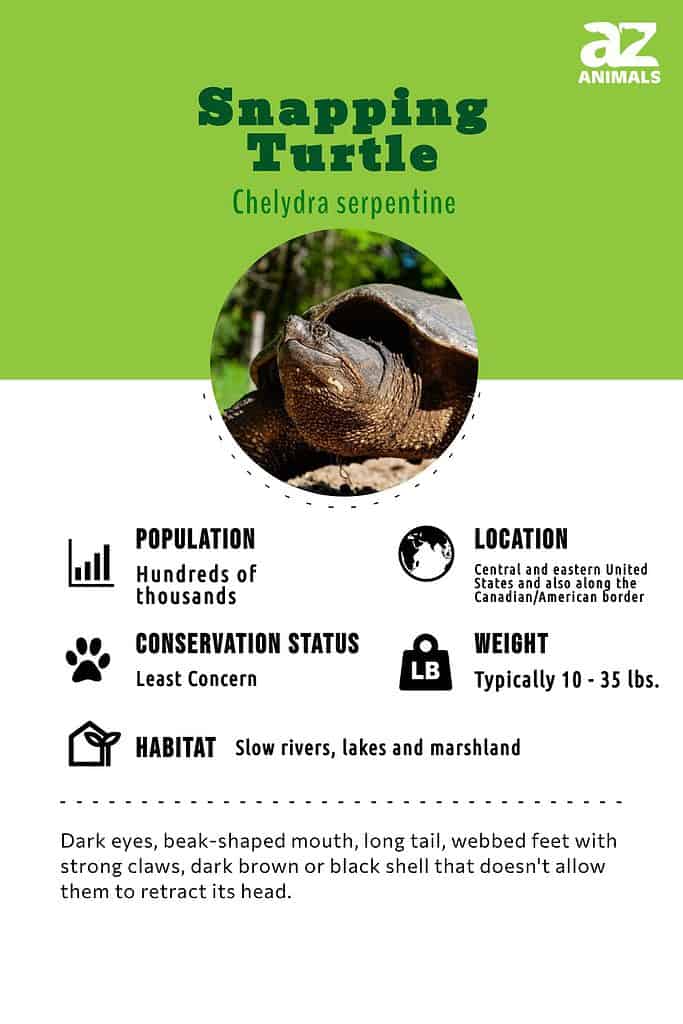
A snapping turtle goes by other names including snapper and Tortuga Lagarto. In English, Tortuga Lagarto translates to lizard turtle. The scientific name for this turtle is Chelydra serpentine. While the first part of the name refers to its family, the Latin word ‘serpentine’ refers to its serpent, or snake-like, behavior. It can move its head and neck in a way that’s similar to a snake. It is in the class Reptilia.
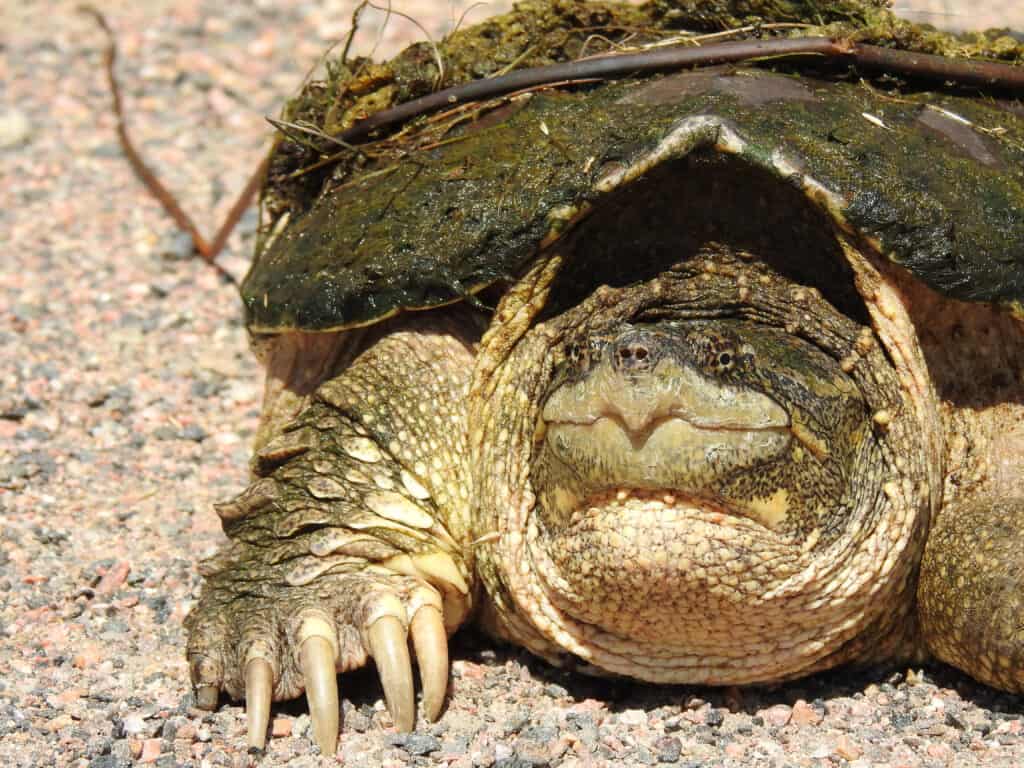
The Snapping Turtle’s scientific name is Chelydra serpentine, and the alligator snapping turtle’s is Macrochelys temminckii.
©iStock.com/Emily Jackson Photography
History and Evolution
The history of these members of the family Chelydridae goes back really far! Generally thought to have evolved 90 million years ago, these reptiles were walking around with dinosaurs making them one of the very oldest types of turtles! Even the way they look is prehistoric, especially the alligator snapping turtle!
Tens of millions of years ago, snappers ventured into Eurasia and remained up until a couple of million years ago. They died off and disappeared everywhere except for North America, where we see them today. This ancient species has seen a lot and endured a tremendous amount of change! It is thought that they are even the predecessor for four out of five turtle species that remain alive today.
Two Types of Snapping Turtles
There are two types of snapping turtles. One is the common snapping turtle while the other is the alligator snapping turtle. The alligator snapping turtle (Macrochelys temminckii) is also a member of the Chelydridae family.
- Common Snapping Turtle – Chelydra serpentine is the scientific name for the common snapping turtle.
- Alligator Snapping Turtle – Macrochelys temminckii is the scientific name for this turtle. They differ from common snappers with heavily-ridged shells, beaked mouths, and their primary location being in freshwater leading to the Gulf of Mexico.
- Suwannee Alligator Snapping Turtle – The Macrochelys suwanniensis is a divergent species from the alligator snapper and lives only in the Suwannee River Basin.
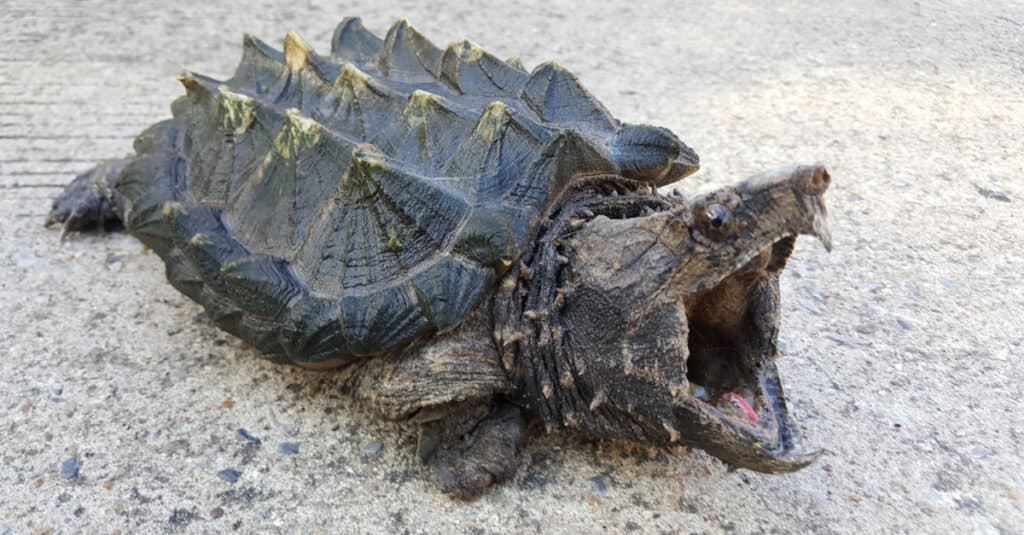
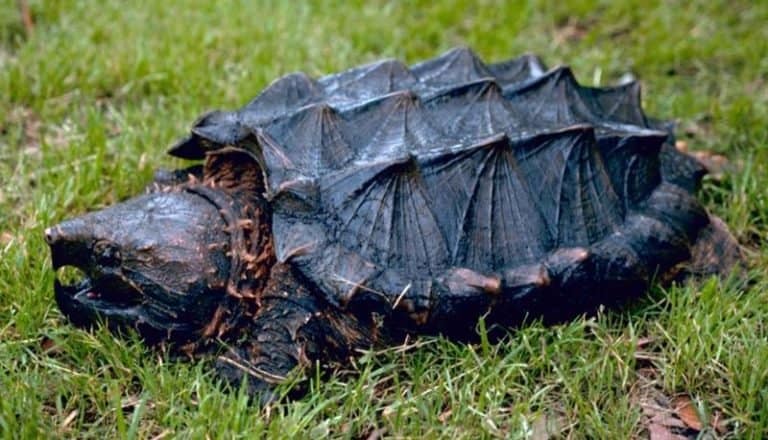
Alligator Snapping Turtles have ridged shells and beaked mouths.
©Sista Vongjintanaruks/Shutterstock.com
Appearance and Behavior
These turtles have two dark eyes and a mouth shaped like a hooked beak, along with four legs and webbed feet. Each foot of these turtles features five strong claws. The skin of this turtle is covered in rough bumps called tubercles.
The shell or carapace, of a snapping turtle can be dark brown or black. Out of the two types of snapping turtles, the ridges on the shell of an alligator snapping turtle are more visible than those on the shell of a common snapping turtle. Though this turtle’s shell can measure as much as 20 inches in length, it’s usually between eight and 18 inches long. If you lined up eight golf tees end to end, they would equal close to the length of a snapping turtle’s shell. The tail of a snapping turtle has ridges on its surface and usually measures as long as its shell.
The average weight of an adult snapping turtle ranges from 10 to 35 pounds. Picture a medium-sized dog playing in your yard. A 35-pound snapping turtle weighs about as much as an adult Spaniel Alternatively, a 10-pound snapping turtle weighs about as much as the average-sized adult house cat. The largest snapping turtle on record is an alligator snapping turtle weighing 249 pounds. That’s as heavy as two and a half toilets!
The underside of this turtle features a strong plate called a plastron. This plate is not large enough to allow a snapping turtle to retreat completely into its shell. So, disappearing into its shell (like other turtles) is not an option when a predator appears in front of this turtle.
Instead, if this turtle is in the water when a predator appears, it will swim away and hide near the bottom of a pond or river. But most of the time, this turtle acts in an aggressive way toward any predator especially when it’s moving around on land. They use their claws, sharp hooked beak, and powerful jaws to attack a predator.
Its neck and head have a large range of movement and it can move quickly against a threatening animal. This animal is definitely aggressive and is sometimes described as vicious when confronting predators.
Of course, being able to move its head and neck around easily can help this turtle to capture prey as well.
These turtles are solitary except during the mating season. The number of snapping turtles living near one another in a particular area depends on the amount of food available there.
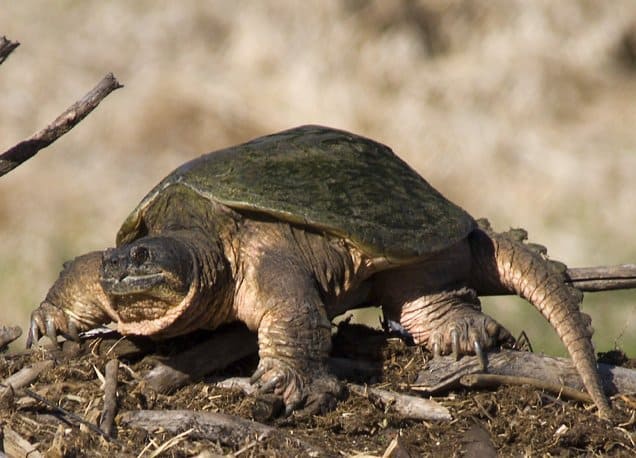
The tail of a snapping turtle has ridges on its surface and usually measures as long as its shell.
©Mjbaker / Creative Commons – Original
Habitat
These turtles can be found across a large part of North America. They live in areas of southeastern Canada down through the central and eastern parts of the United States. They live throughout the state of Florida as well.
Most snapping turtles live in a temperate climate – not too cold or too hot. However, some of these turtles do live in Canada where it gets very cold. These turtles actually hibernate for five or six months. They bury themselves in the mud until the warm weather months arrive once again.
These turtles live in streams, lakes, rivers, ponds, and other bodies of water. They spend most of their time in the water except during mating season.
These turtles have strong legs and webbed feet making them excellent swimmers. They may retreat to the muddy bottom of a pond or river when threatened. However, they are sometimes found sunning themselves on a fallen log in a pond or creek.
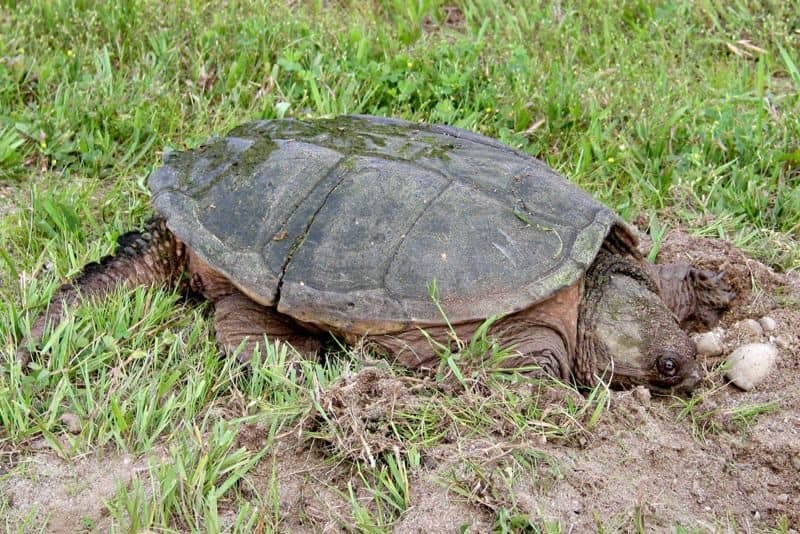
Snapping Turtles live in areas of southeastern Canada down through the central and eastern parts of the United States.
©Moondigger / Creative Commons – Original
Diet
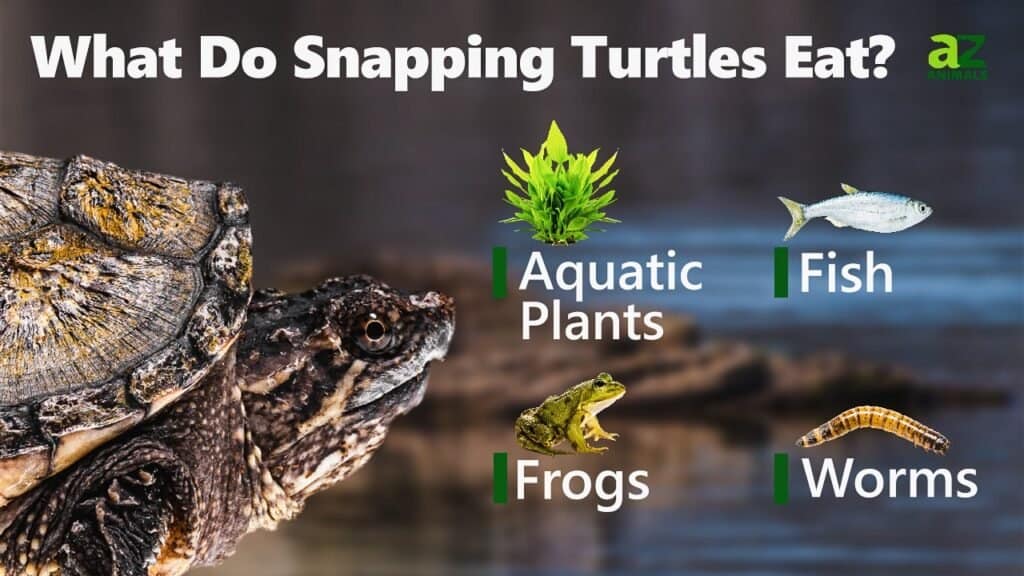
What do these turtles eat? Snapping turtles are omnivores, so they eat both animals and plants. Some of their prey include frogs, insects crayfish, dead rodents, fish, ducks, and vegetation growing in the water. Their powerful jaws allow these turtles to eat many types of animals and plants.
A common snapping turtle may sneak up on a duckling swimming in a lake and pull it under the water to eat it. Or it could dart after a frog in the water and capture it.
The alligator snapping turtle has a tongue it can wiggle like a worm. The turtle hides in the vegetation and wiggles its tongue. A fish approaches the hidden turtle thinking it’s found a worm, then the turtle grabs the fish and eats it. Snapping turtles can also feel vibrations in the water around them allowing them to detect prey. For a complete analysis of their diet, give our ‘What Do Snapping Turtles Eat?’ page a read!”
Predators and Threats
An adult turtle with its aggressive nature and powerful jaws doesn’t have many predators. Although, these turtles may be eaten by a larger turtle.
Humans are actually a threat to snapping turtles. Some humans capture these turtles to eat them or take young turtles to sell as pets.
Unlike adult turtles, turtle eggs and babies are vulnerable to many predators. Raccoons, skunks, foxes, largemouth bass, snakes, crows, and Great Blue herons all eat eggs and very young turtles.
The existence of these turtles is threatened by water pollution and they are suffering from the loss of habitat due to land clearing and construction. The official conservation status of these turtles, according to the International Union for the Conservation of Nature (IUCN), is threatened.
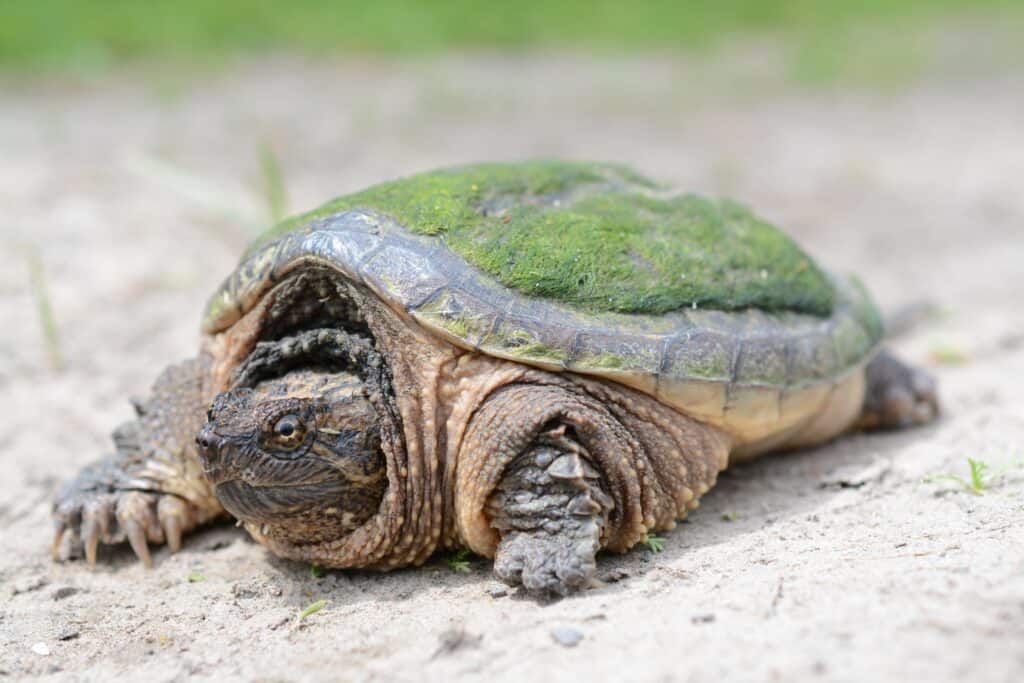
Snapping Turtles are threatened by water pollution and they are suffering from the loss of habitat due to land clearing and construction.
©Trevor Meunier/Shutterstock.com
Reproduction, Babies, and Lifespan
The mating season for this turtle goes from April to November. A male turtle uses his sense of smell to find a female to mate with. They communicate with one another using leg movements.
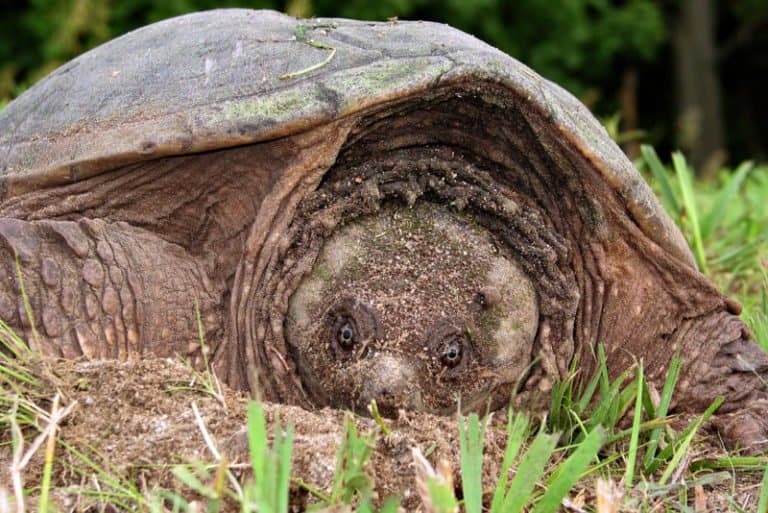
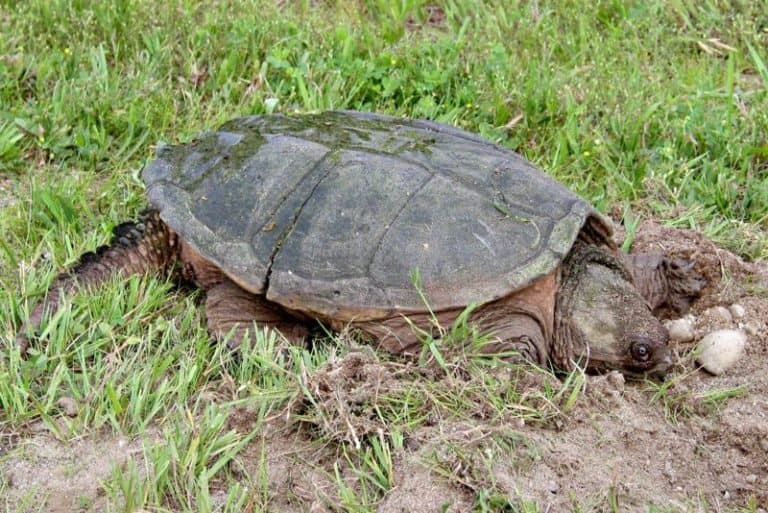
A few weeks later, a pregnant female moves onto land and digs a hole on the sandy shore using her legs and claws. She lays her eggs in the hole. A female can lay a group, or clutch, of about 10 to 80 eggs. They hatch in about 80 to 90 days. These turtles lay a lot of eggs because many of the baby snapping turtles don’t make it to adulthood.
One of the reasons not many baby turtles survive is because the female does not stay with the nest of eggs. She goes back into the water almost immediately and the eggs are left alone. The eggs are buried in the sand which is their only protection against predators.
Oftentimes, there are a few eggs in the nest that doesn’t even hatch. Also, many turtle eggs are discovered by predators and eaten. A predator such as a fox or a raccoon can smell the presence of turtle eggs in the ground.
When the eggs hatch, the baby turtles (also known as hatchlings) crawl out. A hatchling is about the same size as a quarter. After coming out of their eggs, the hatchlings immediately crawl toward a nearby pond or river. They have soft shells when they hatch so they are still very vulnerable to predators as they move toward the water.
Once they enter the water, they are on their own to find food and shelter. Turtle hatchlings find small pieces of vegetation and insects to eat. But, as they grow, they are able to eat larger prey. Also, a young turtle’s shell gets harder as it grows older.
These turtles can live to be 30 years old in the wild and live to the age of 50 in captivity. A wild turtle may be eaten by a larger turtle, captured by a human, or even killed while trying to cross a road. In short, a wild turtle faces more threats than one living in the safety of a zoo or wildlife conservation park. The oldest alligator snapping turtle in captivity lived for 150 years!
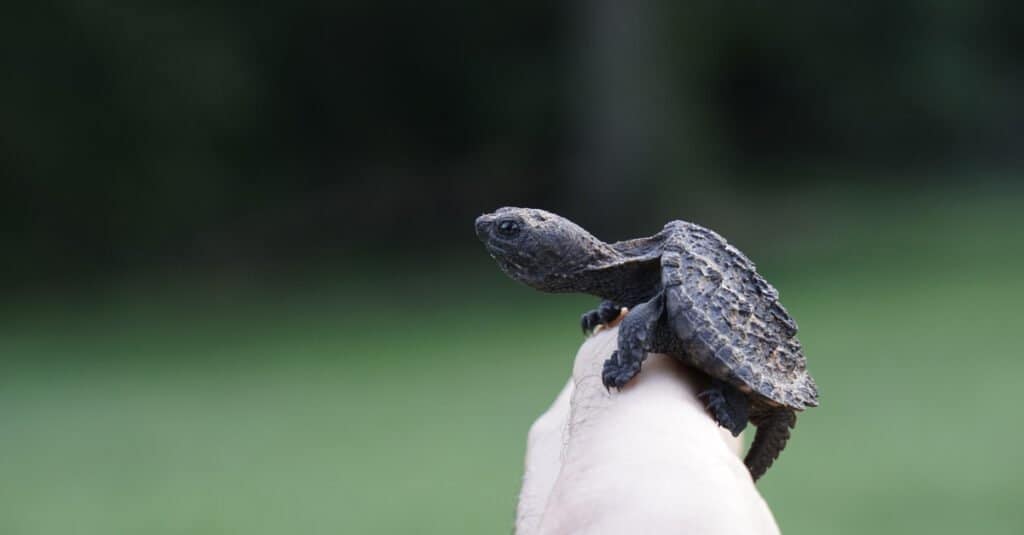
Turtle hatchlings find small pieces of vegetation and insects to eat, but, as they grow, they are able to eat larger prey.
©Hoth Cook/Shutterstock.com
Population
These turtles live in North America. They’re believed to number in the hundreds of thousands. This turtle’s population is decreasing, however. This turtle’s population is in danger as a result of habitat loss, water pollution, and poaching by humans.
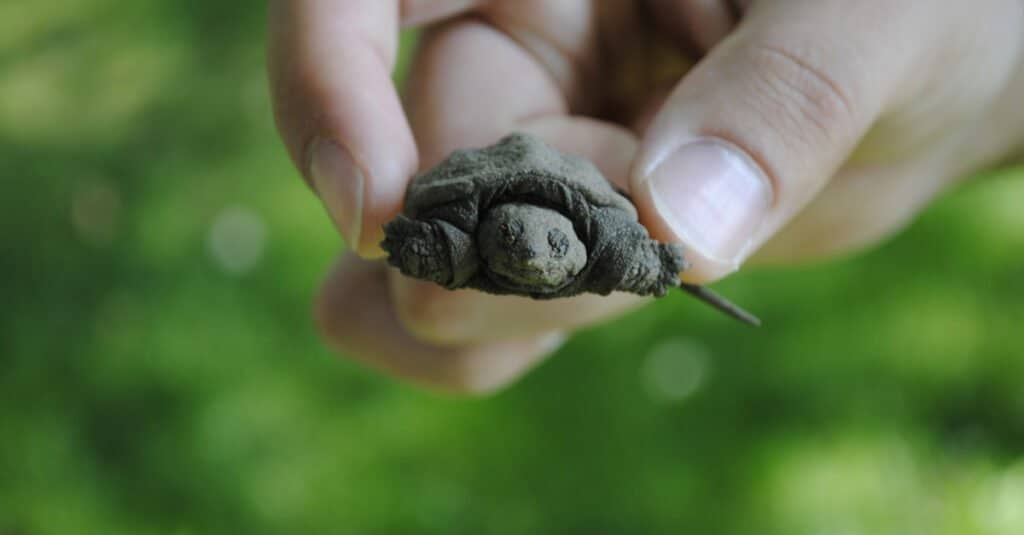
Snapping Turtles are in danger as a result of habitat loss, water pollution, and poaching by humans.
©JessKay/Shutterstock.com
Snapping Turtle Pictures
View all of our Snapping Turtle pictures in the gallery.

Sources
- David Burnie, Dorling Kindersley (2011) Animal, The Definitive Visual Guide To The World's Wildlife / Accessed November 17, 2008
- Tom Jackson, Lorenz Books (2007) The World Encyclopedia Of Animals / Accessed November 17, 2008
- David Burnie, Kingfisher (2011) The Kingfisher Animal Encyclopedia / Accessed November 17, 2008
- Richard Mackay, University of California Press (2009) The Atlas Of Endangered Species / Accessed November 17, 2008
- David Burnie, Dorling Kindersley (2008) Illustrated Encyclopedia Of Animals / Accessed November 17, 2008
- Dorling Kindersley (2006) Dorling Kindersley Encyclopedia Of Animals / Accessed November 17, 2008