
Sponges are one of the simplest, and perhaps oldest, animals on the entire planet. They are marine animals that are easily mistaken for plant life due to their lack of a nervous system, internal organs, and mobility.
All sponges belong to the taxonomic phylum Porifera, which is part of the kingdom Animalia and encompasses over 500 genera and between 5,000 and 10,000 different species. All sponges are aquatic animals, with the vast majority living in saltwater environments.
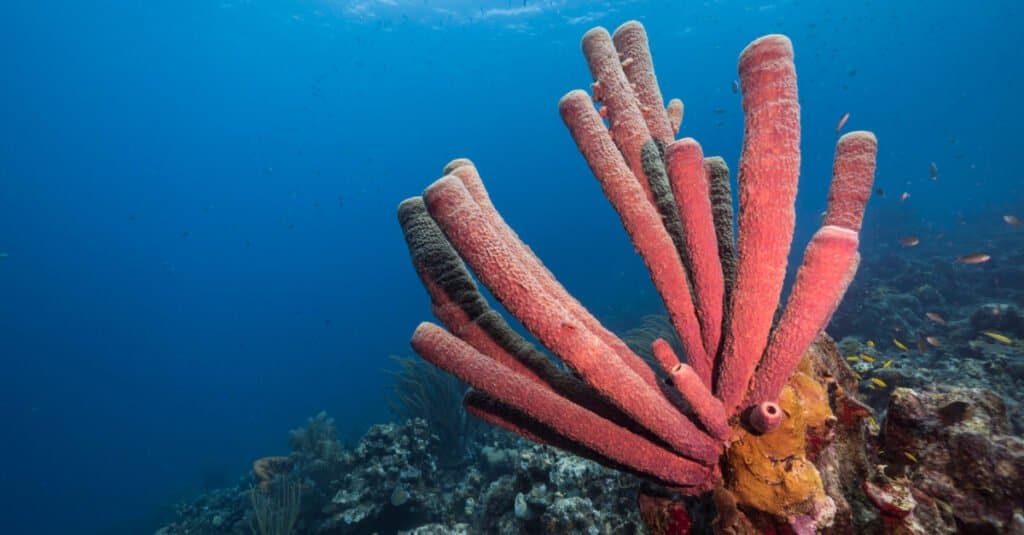
Sponges reproduce by both asexual and sexual means.
©NaturePicsFilms/Shutterstock.com
Evolution and Origins
According to an article from New Scientist, the emergence of sea sponges on Earth was previously believed to have occurred much later in history. However, the discovery of new chemical evidence indicates that this animal group actually evolved much earlier than previously estimated, dating back approximately 120 million years before the previous estimation.
The first animals on Earth, likely ancient sponges, are thought to have emerged around 700 million years ago. Sponges come in various sizes and shapes, and their bodies are comprised of a collection of cells that are bound together by collagen, a unique protein found in all animals.
Additionally, the evolutionary significance of sponges, ctenophores, placozoans, and cnidarians lies in the fact that they mark the period in which organized animal tissues were initially formed, fundamental cell types such as neurons and myocytes originated, and mechanisms for developmental patterning evolved.
Classification and Scientific Name
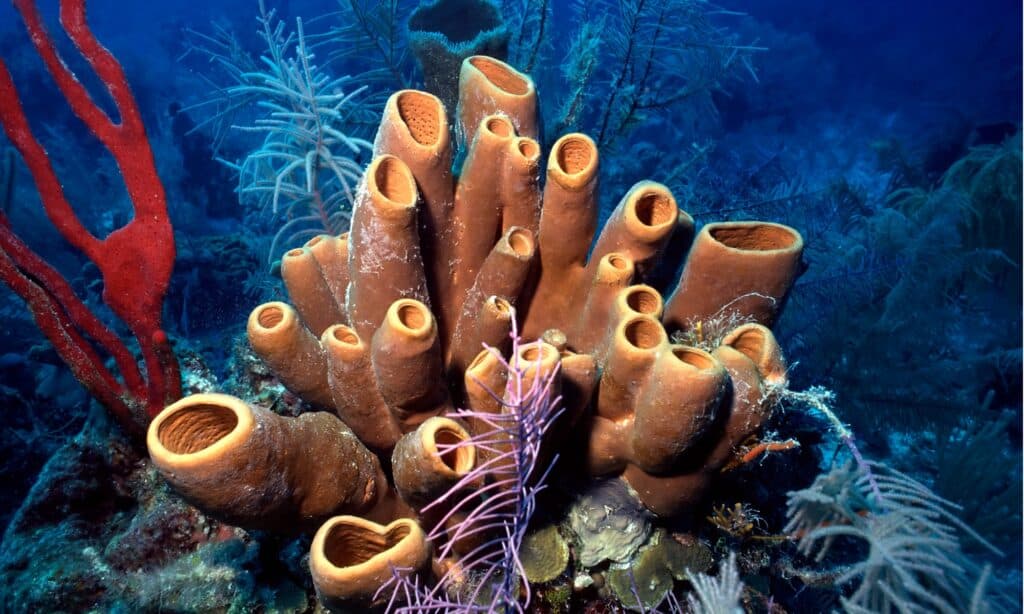
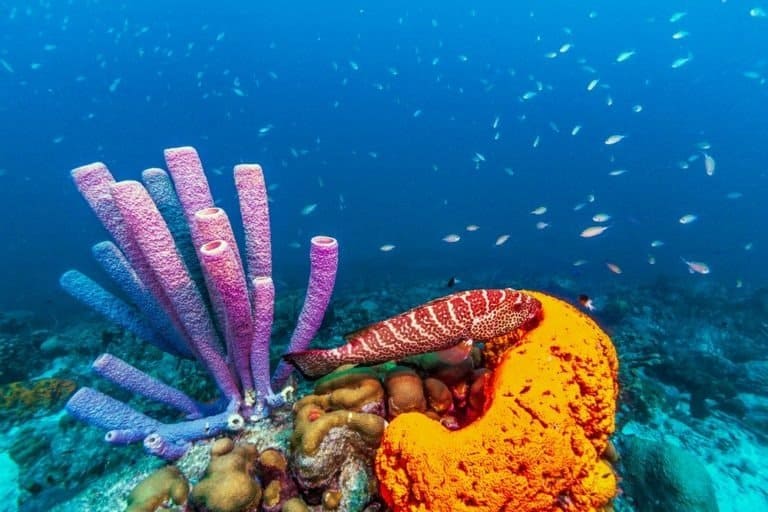
Colorful red finger sponge and brown tube sponges on the Belize reef.
©iStock.com/dsabo
All sponges are members of the Porifera phylum, which means “pore bearing” or “pore bearer” in Latin. This name comes from the many visible pores that cover their surfaces. This phylum is divided into four classes: Calcarea, Hexactinellida, Demospongiae, and Homoscleromorpha. The common name of “sponge” actually traces its origins back to Ancient Greek.
Species
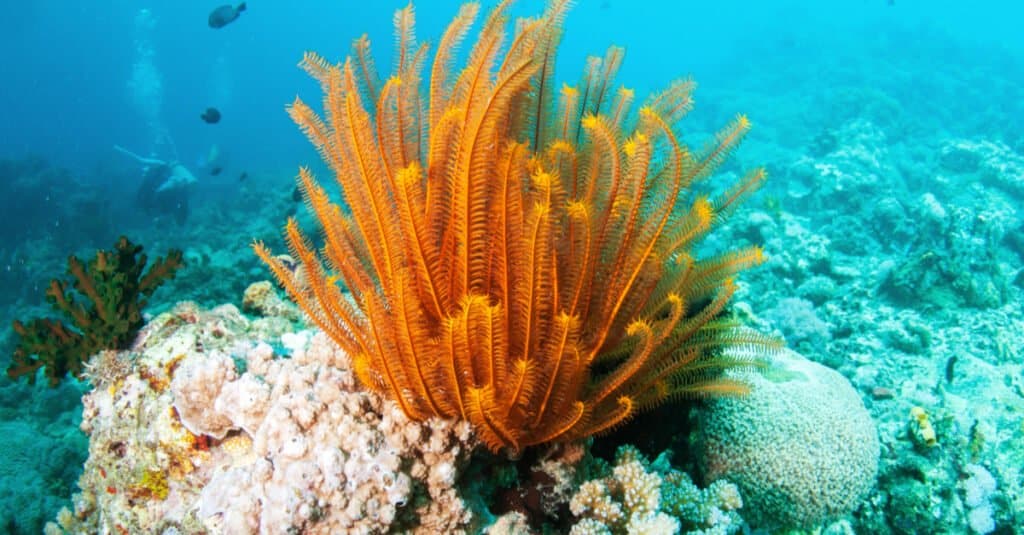
Sea lilies are immobile, just like sea sponges.
©Jung Hsuan/Shutterstock.com
Due to their many unique characteristics compared to all other types of animals, sponges have been designated into taxonomical isolation within their own phylum. However, despite their many shared characteristics, there are also plenty of genetic divisions among the thousands of known species. The four existing classes within the Porifera phylum are based on key differences in physiology and habitat.
- Demospongiae: The largest and most diverse of the four classes, which includes over 70 percent of known sponge species. They have soft, flesh exteriors that cover a sprawling skeletal structure that supports their vertical growth.
- Calcarea: A much smaller class of around 400 species characterized by calcium-based spicules, which are hard and pointy growths that serve as support and defense structures. Their spicules have between 2 and 4 points and are composed of calcium carbonates, which may present as either aragonite or calcite.
- Hexactinellida: Also known as “glass sponges”, these animals are an even rarer type of sponge. They often have 4 or 6 pointed spicules made from silica compounds that lend them a unique appearance.
- Homoscleromorpha: The smallest and most primitive of the four classes. These sponges may sprawl horizontally and have simple biological features compared to the species in the other classes.
Appearance
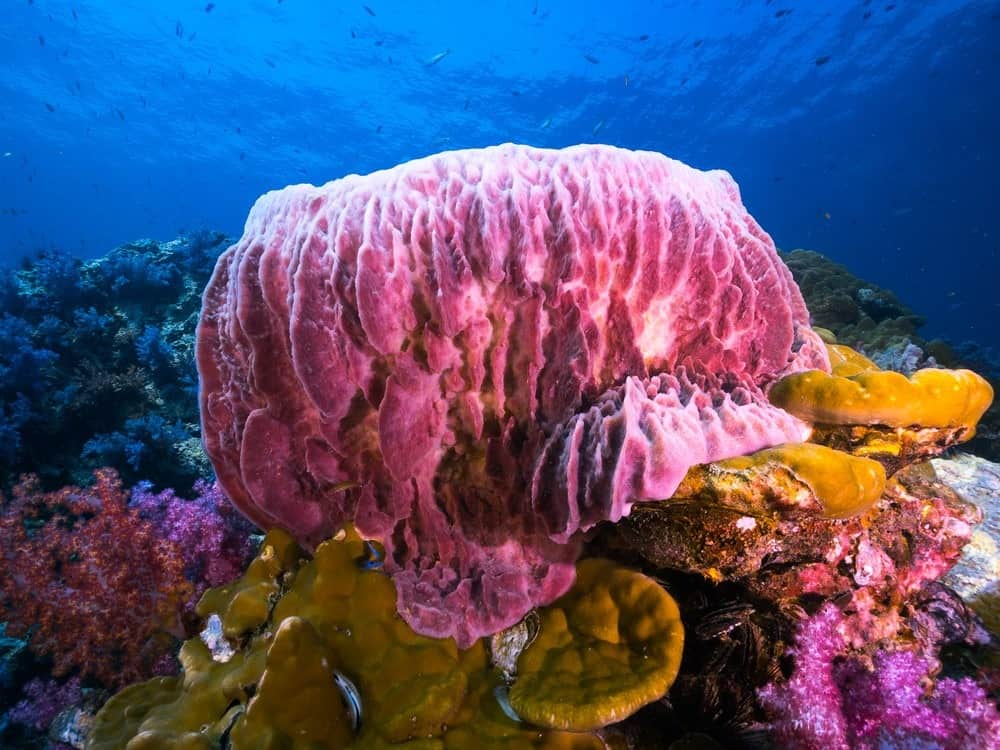
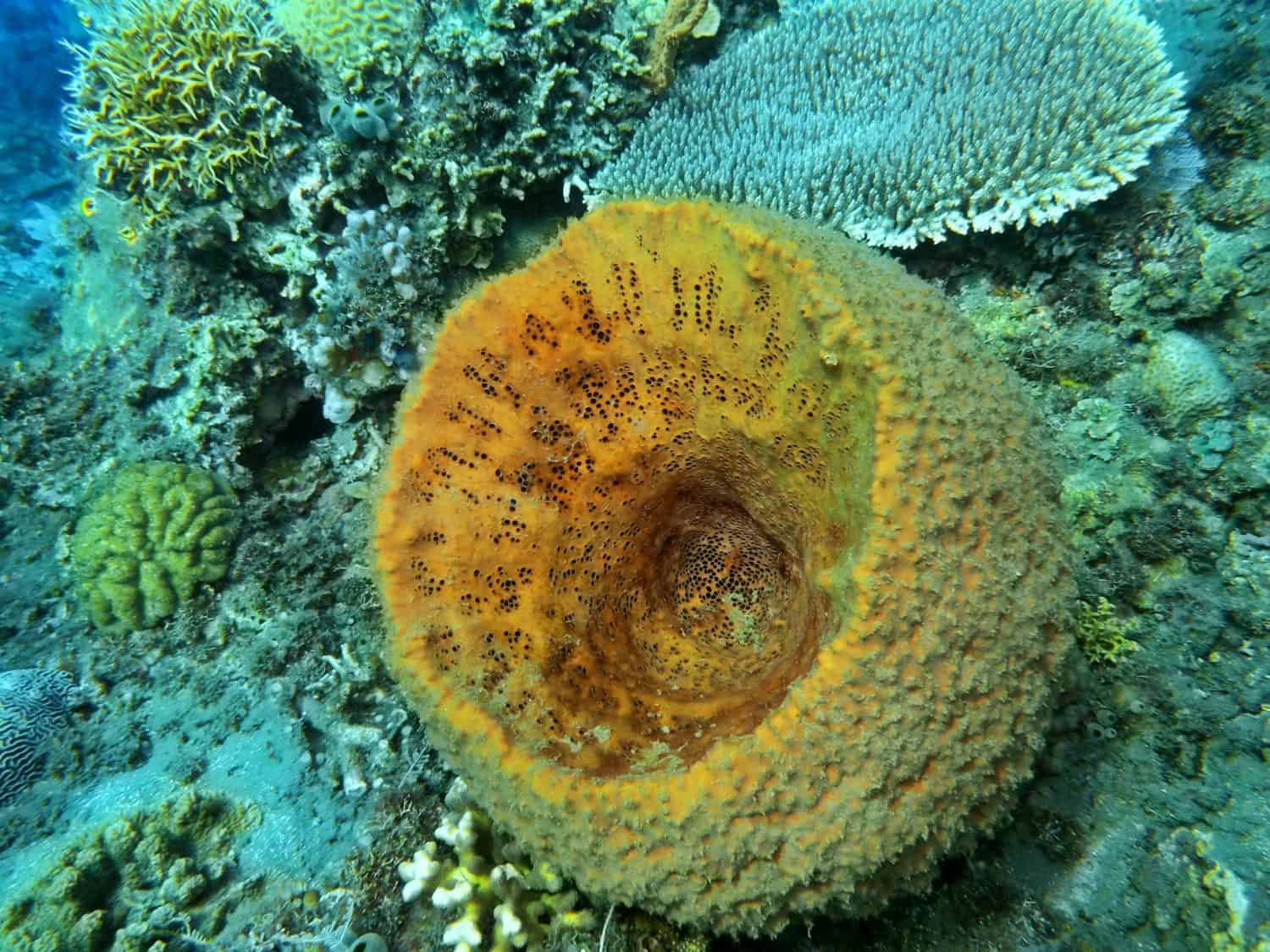
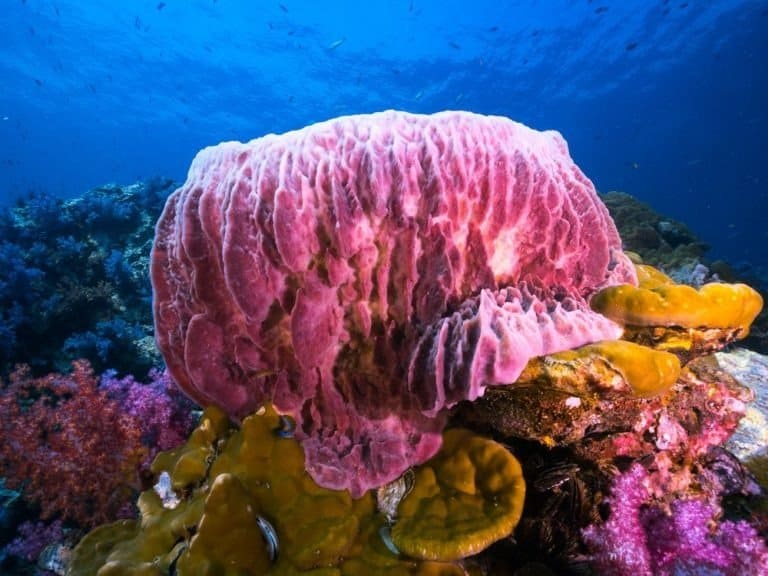
The Barrel Sponge — Similan Islands — Andaman Sea, Thailand.
©Bangtalay/Shutterstock.com
With thousands of different species within the phylum, it should be no surprise that there is immense diversity among them when it comes to size, shape, and color.
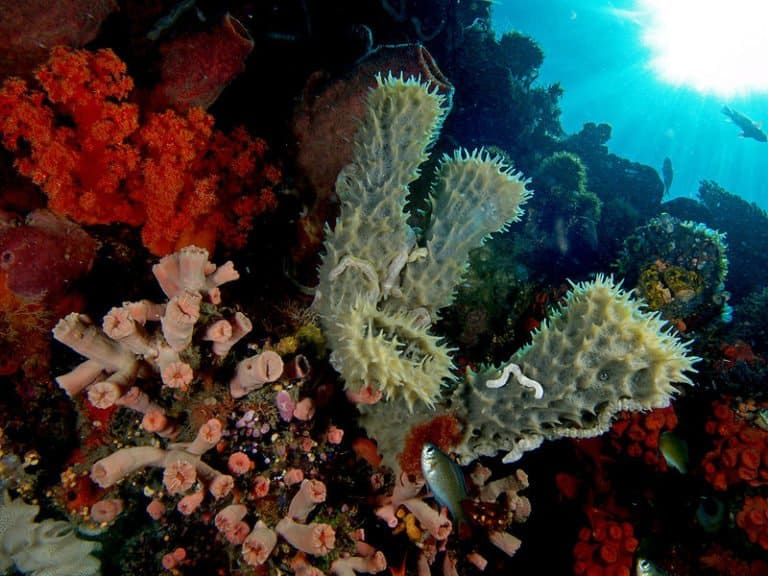
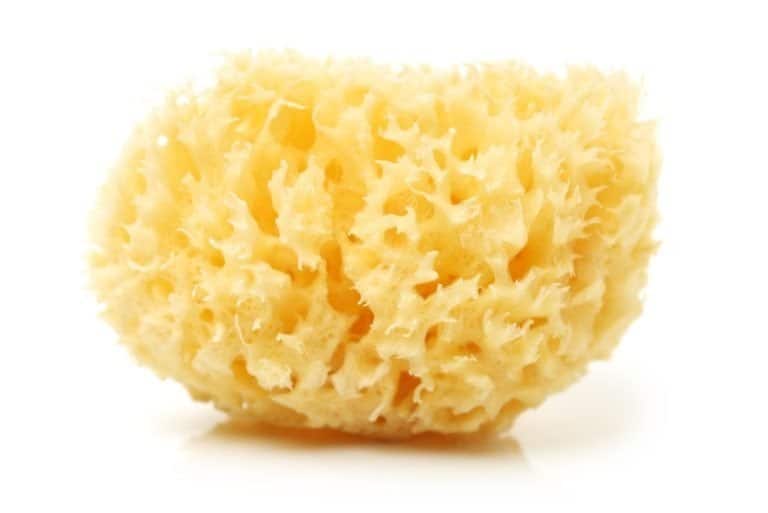
Most are easily mistaken for coral or plants due to their stationary nature and rigid structure. They are often covered by a soft and fleshy exterior, but their sharp and solid spicule skeletons may be exposed as a deterrent to predators or due to damage.
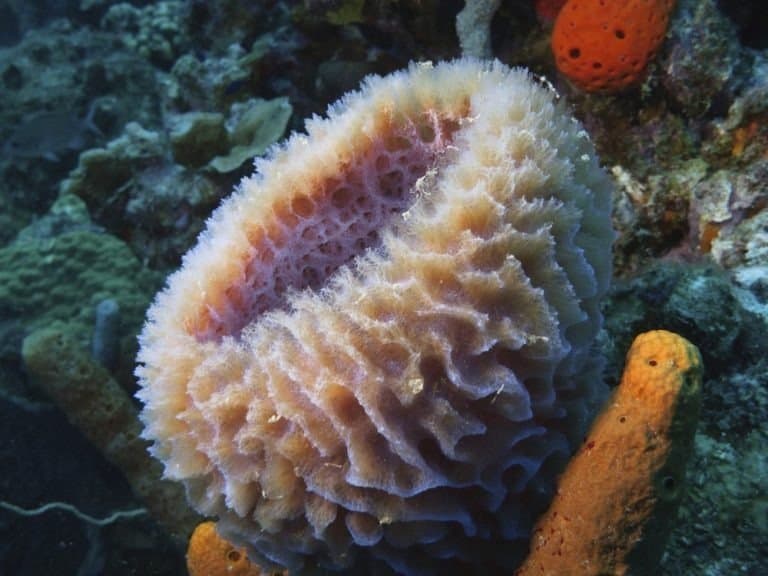
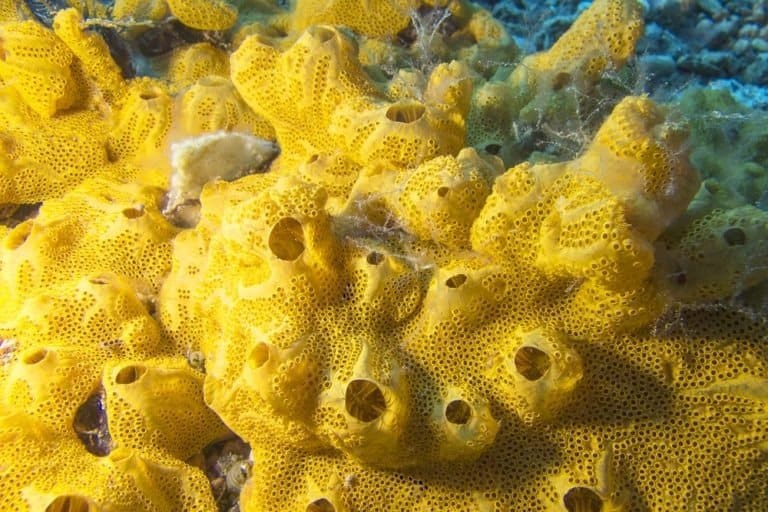
All sponges are also characterized by the presence of holes along their surface and channels throughout their body. Since they lack an internal circulatory system, these pores allow water to move through naturally to provide oxygen, introduce microscopic food particles, and remove waste.
Many of these animals are tubular with a large cavity visible in the center, but they can also grow into shapes similar to trees, fans, or shapeless blobs. Depending on the species, they can also be less than 1 inch tall or well over 5 feet in height.
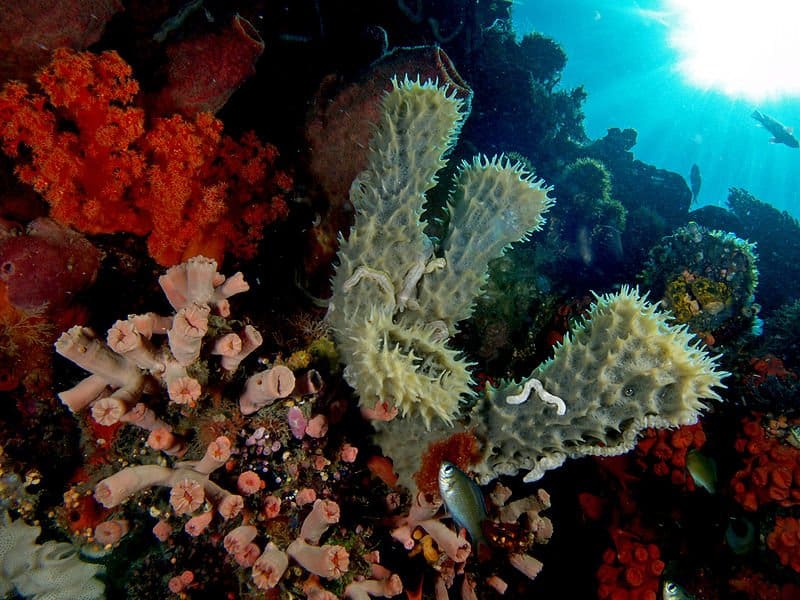
Sponge on a rock.
©Nick Hobgood / Creative Commons – Original
Distribution, Population, and Habitat
Members of the Porifera phylum are found throughout the world’s seas and oceans, as well as some lakes and other freshwater bodies. The overwhelming majority of the roughly 9,000 known species live exclusively in marine environments, with between 100 and 200 found in freshwater ecosystems. Some researchers estimate that there are still many thousands of sponge species left to be discovered in remote areas and deep ocean environments.
Since the vast majority of species consume plankton and other microscopic life by filtering the surrounding water, they prefer clear and calm waters with minimal contamination from sediment.
They often anchor onto a hard surface, like rocks, reefs, or even shelled animals, but some can also grow roots long enough to attach to sand and other loose substrates. Populations are typically more diverse in tropical climates compared to temperate and polar ones.
Predators and Prey
What Eats Sponges?
Their lack of mobility is a serious biological vulnerability for sponges, which has compelled the development of many natural defense mechanisms. Spiny spicules on the surface and released onto the surrounding terrain help repel starfish, sea urchins, and other echinoderms that can prey on sponges. Potential predators can include various types of insects, fish, turtles, and parasites, depending on the habitat. Sponges are also harvested and cultivated for various commercial purposes by humans.
What Do Sponges Eat?
Most sponges are filter feeders, which means they feed passively by consuming microscopic plant and animal life from the water. Some species form symbiotic relationships with photosynthetic bacteria that allow them to derive energy from sunlight.
Some smaller sponges take advantage of their size and passive mobility to prey on other animals. These so-called “boring sponges” attach to the hard exterior of shellfish and erode the shell to prey on the animal within. Clams, oysters, and other mollusks are a primary target, as well as some crustaceans.
Reproduction and Lifespan
Sexual reproduction is the typical method of propagation, but some can also conduct asexual reproduction. Most sponges are hermaphrodites, which means each individual has both male and female cells. In sexual reproduction, a sponge releases eggs into the water, where they float until captured by another sponge that fertilizes them.
Sponges may conduct both activities at the same time or undergo alternating periods of releasing and fertilizing eggs. The average lifespan ranges from less than 1 year to up to 20 years, with some species able to survive for many centuries.
Fertilized eggs are released as floating larvae that propel themselves with a layer of flagellating cells. Once they find a stable surface in a suitable environment, they attach and begin metamorphosis into a proper sponge. This process involves the movement and transformation of cells throughout the body to facilitate the development of specialized functions.
Asexual reproduction is often a survival mechanism that allows a sponge to release small colonies of cells. This process is called gemmulation, and it allows a degenerating or dying adult to release small clones that might fare better in unfavorable conditions. Sponges also have profound regeneration capabilities, so small pieces may develop into fully grown clones of the original if they are broken off from the original.
Fishing and Cooking
Sponge aquaculture is a blossoming industry in many areas around the world and has the benefits of being relatively simple and having few material requirements. Farming does rely on favorable water conditions and consistent management to ensure productive yields.
While they aren’t used as a food source by humans, they do have practical applications in bathing, feminine hygiene, and as a source of biological compounds. Bioactive chemicals have various medicinal properties, including anti-inflammatory and anti-viral potentials.
Sponge Pictures
View all of our Sponge pictures in the gallery.

V.Devolder/Shutterstock.com
Sources
- David Burnie, Dorling Kindersley Animal, The Definitive Visual Guide To The World's Wildlife / Accessed November 3, 2009
- Tom Jackson, Lorenz Books (2007) The World Encyclopedia Of Animals / Accessed November 3, 2009
- David Burnie, Kingfisher The Kingfisher Animal Encyclopedia / Accessed November 3, 2009
- Richard Mackay, University of California Press (2009) The Atlas Of Endangered Species / Accessed November 3, 2009
- David Burnie, Dorling Kindersley (2008) Illustrated Encyclopedia Of Animals / Accessed November 3, 2009
- Dorling Kindersley (2006) Dorling Kindersley Encyclopedia Of Animals / Accessed November 3, 2009
- NOAA Fisheries / Accessed November 20, 2020
- Marine Education Society of Australasia / Accessed November 20, 2020
- Exploring our Fluid Earth / Accessed November 20, 2020
- Britannica / Accessed November 20, 2020
- National Ocean Service / Accessed November 20, 2020
- Wikipedia / Accessed November 20, 2020