


S
Species Profile

Stingray

Myliobatiformes

Stingrays: discs, senses, and surprises
BlackFarm/Shutterstock.com

Stingray Distribution

Click a location to explore more animals from that region

This map shows coastal regions where Stingray are found.

Loading map...

At a Glance

Order Overview This page covers the Stingray order as a group. Stats below are general traits shared across the order.
Also Known As Ray, Sea ray, Devilfish, Whipray, Eagle ray, Manta ray
Activity Diurnal+
Lifespan 20 years
Weight 600 lbs
Status Not Evaluated
Did You Know?

Size range is huge: roughly ~15 cm to ~7 m disc width across the order (from small coastal stingrays to giant manta rays).

Scientific Classification

Order Overview "Stingray" is not a single species but represents an entire order containing multiple species.

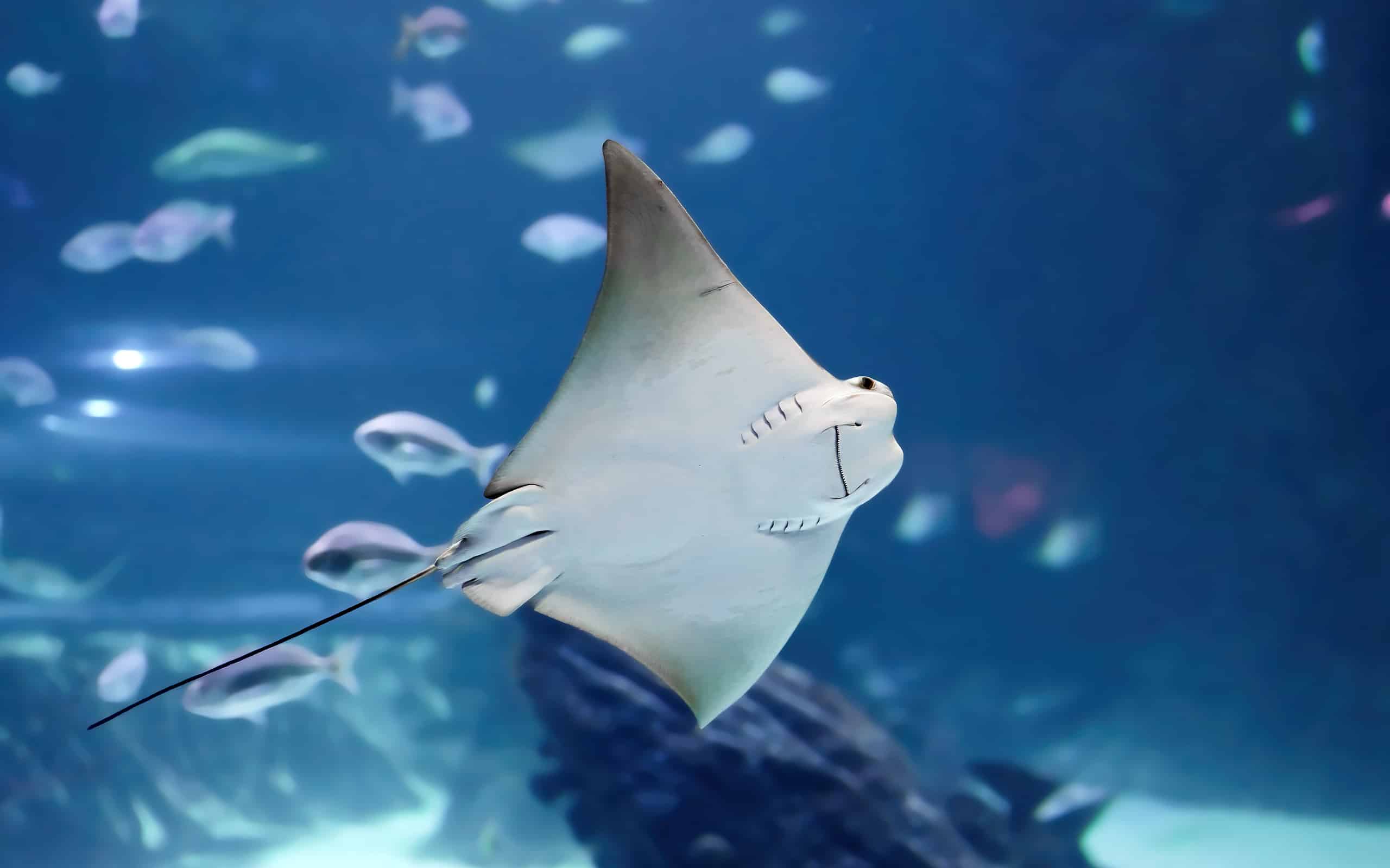
Stingrays are cartilaginous fishes (rays) typically characterized by a flattened body, enlarged pectoral fins forming a disc, and one or more venomous barbed spines on the tail used for defense. They occur in marine and some freshwater habitats worldwide, often feeding on benthic invertebrates and small fishes.

Kingdom
Animalia
Phylum
Chordata
Class
Chondrichthyes
Order
Myliobatiformes

Distinguishing Features

  • Flattened disc-shaped body with ventral gill slits (ray characteristic)
  • Whip-like tail often bearing one or more serrated venomous spines
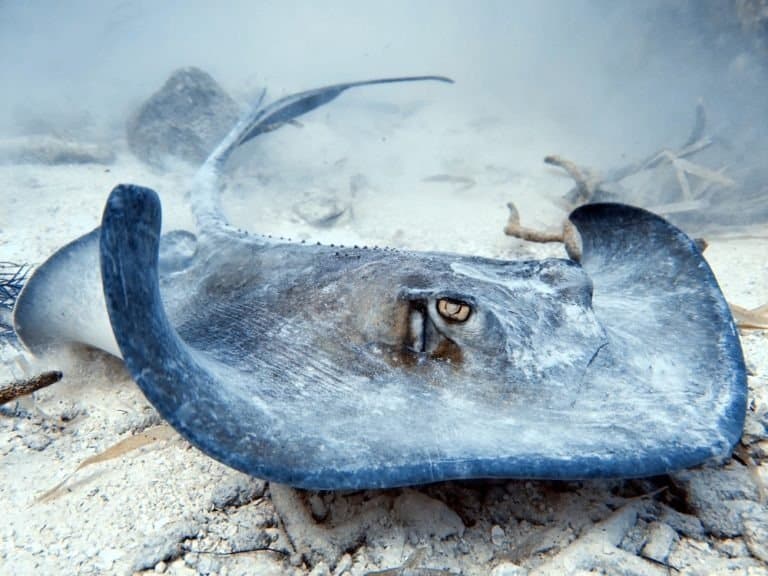
  • Eyes and spiracles on top of the head; mouth and nostrils on underside
  • Many species are bottom-associated, often partially buried in sediment

Physical Measurements

Males and females differ in size

Length
5 ft 11 in (1 ft 4 in – 16 ft 5 in)
5 ft 11 in (10 in – 16 ft 5 in)
Weight
33 lbs (0 lbs – 1,323 lbs)
66 lbs (0 lbs – 661 lbs)
Tail Length
2 ft 11 in (4 in – 11 ft 6 in)
3 ft 11 in (4 in – 9 ft 10 in)
Top Speed
25 mph
swimming varies by species
Venomous

Appearance

Primary Colors
Secondary Colors
Skin Type Cartilaginous fish skin with dermal denticles; texture ranges from smooth/velvety to sandpapery. Many have localized thorns or bucklers along the midline or tail base; a mucus coating is typical.
Distinctive Features
  • Flattened body with enlarged pectoral fins forming a disc; head and fin margins vary by family (round, diamond, or wing-like).
  • Size range across Myliobatiformes is extreme: disc width roughly ~0.15-7 m; total length (including tail) about ~0.3 to >6 m depending tail length.
  • Tail form varies widely: long whip-like tails in many benthic stingrays; shorter, more robust tails in some pelagic groups; mantas lack a typical stinging spine.
  • Defensive apparatus in many (not all) includes 1-several serrated tail spines with a venom gland; stings are typically defensive when stepped on/handled, and severity varies among species and circumstances.
  • Mouth position and feeding structures vary: many have ventral mouths for benthic feeding; some groups have broader heads/cephalic lobes for capturing plankton or schooling prey.
  • Ecology spans habitats worldwide: coastal shallows, reefs, estuaries, offshore waters, and multiple freshwater lineages (rivers, floodplains, lakes).
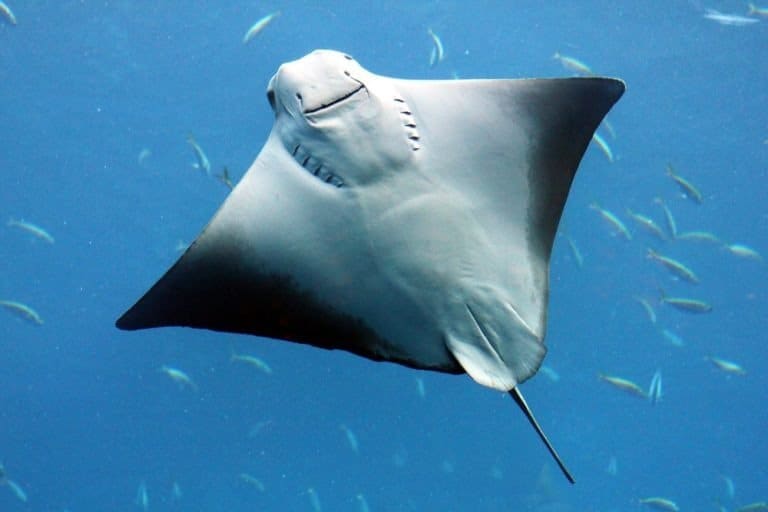
  • Common behaviors include benthic resting/partial burial, short bursts of swimming, and seasonal movements; some species school (notably several eagle rays), while others are solitary; large pelagic forms can undertake long migrations.
  • Typical diets range from benthic invertebrates and small fishes (many stingrays) to planktivory/filter-feeding in manta and some mobulid rays-illustrating major feeding-mode diversity within the order.
  • Lifespan varies substantially with size and ecology: roughly ~5-50+ years across the order, with smaller coastal species shorter-lived and large pelagic rays often long-lived.

Sexual Dimorphism

Sexes differ mainly in reproductive anatomy and size. Males have paired claspers and may mature at smaller sizes; females are often larger-bodied, reflecting high energetic costs of gestation and producing relatively few, well-developed young.

  • Paired claspers on the pelvic fins (external reproductive organs).
  • Often smaller average disc width/overall mass in many species.
  • In some species, proportionally longer tails or more pronounced dentition during mating season.
  • Often larger average disc width/overall mass, especially in larger-bodied taxa.
  • Broader abdominal region when gravid; gestation-related body shape changes.
  • Higher energetic investment in fewer, larger offspring; size-at-maturity commonly greater than males.

Did You Know?

Size range is huge: roughly ~15 cm to ~7 m disc width across the order (from small coastal stingrays to giant manta rays).

Lifespan varies widely by species: about ~5 years in some small rays to ~40-50+ years in large mobulid rays.

Not all "stingrays" sting: manta and devil rays (Mobulidae) lack the classic venomous tail spine found in many other families.

Many are bottom-feeders that uncover prey by fanning sand and sensing buried animals with electroreception; others (mobulids) are open-water plankton filter-feeders.

They give live birth: embryos develop inside the mother, typically nourished by yolk and then nutrient-rich uterine secretions ("uterine milk") in many species.

Freshwater stingrays (Potamotrygonidae) are a major radiation confined to South American river systems-true rays living entirely in freshwater.

Unique Adaptations

  • Flattened pectoral-fin "disc" for efficient gliding, maneuvering, and (in many species) substrate-hugging life; in pelagic mobulids the disc becomes wing-like for long-distance cruising.
  • Spiracles (behind the eyes) that let many bottom-dwellers draw water in while resting/buried, keeping sand out of the gills.
  • Tail spine and venom apparatus in many stingray families: a serrated spine with venom-associated tissue used primarily for defense; spine number/size and venom effects vary, and some groups (mobulids) lack spines entirely.
  • Crushing tooth plates common in many benthic-feeding rays, adapted for hard prey like clams and crabs; contrast with mobulids, which have fine structures for filter-feeding.
  • Filter-feeding specializations in mobulids: enlarged cephalic lobes help funnel plankton toward the mouth while swimming.
  • Ampullae of Lorenzini (electroreception) for detecting prey, navigation cues, and possibly social signals-shared broadly among cartilaginous fishes.
  • Reproductive strategy: live-bearing with relatively few, well-developed pups; gestation length and litter size vary widely across the order.

Interesting Behaviors

  • Burying and camouflage: many bottom-dwelling stingrays settle into sand or mud with only eyes/spiracles exposed; others (eagle rays, mantas) stay mostly in open water-behavior varies strongly by family and habitat.
  • Benthic foraging pits: numerous species create noticeable feeding depressions by jetting water and flapping fins to expose worms, crustaceans, mollusks, and small fishes.
  • Electroreceptive hunting: prey detection often relies on sensing tiny electric fields from hidden animals; this is especially useful in low visibility or at night.
  • Courtship "trains": in many species, multiple males may follow a female, with biting/holding behaviors (varies by species) preceding mating.
  • Cleaning-station visits: manta and some eagle/devil rays regularly visit reef cleaning stations where small fishes remove parasites; individuals may queue and circle repeatedly.
  • Leaping and surface activity: eagle rays and mobulids sometimes breach (jump) and slap the surface-hypotheses include communication, courtship, or parasite removal.
  • Habitat breadth: across the order, species range from shallow estuaries, seagrass beds, and coral reefs to continental-shelf/deeper waters; some lineages are fully freshwater in tropical rivers.

Cultural Significance

Stingrays (Myliobatiformes) matter in coastal cultures as food and for ray leather (shagreen). In Oceania they appear in art and tattoos for protection and navigation. Tourism around manta rays helps protection, while dried spines were used as barbs, daggers, or spear points.

Myths & Legends

In Hawaiian tradition, some families regard stingrays as ancestral guardian spirits believed to protect relatives, guide them at sea, or warn of danger near shore.

In Greek myth, Odysseus' prophesied death is fulfilled when Telegonus accidentally wounds him with a spear tipped with a stingray spine-an example of the stingray barb entering legend as a fateful weapon.

Aboriginal Australian "Dreaming" stories in several regions feature stingrays and their barbs (often alongside crocodiles or sharks), using the stingray's spine and distinctive shape to explain natural features, animal traits, or the origins of tools/weapons.

Polynesian and wider Oceanic carving and tattoo traditions sometimes depict rays (including eagle rays/mantas) as powerful sea beings associated with protection, grace, and safe passage across the ocean-motifs that persist in contemporary cultural art.

Conservation Status

NE Not Evaluated (order-level taxon; constituent species range from LC/NT to EN/CR, with some DD)

Has not yet been evaluated against the criteria.

Population Decreasing

Protected Under

  • CITES Appendix II (Mobula spp., including manta rays; some additional elasmobranch listings vary by country)
  • CMS (Convention on Migratory Species) listings for manta rays and some mobulids (implementation varies by range state)
  • Regional/national fisheries regulations (e.g., landing bans, gear restrictions, finning prohibitions) and Marine Protected Areas in parts of species ranges

You might be looking for:

Southern Stingray

22%

Hypanus americanus

Common western Atlantic stingray of shallow sandy flats; often encountered by waders and snorkelers.

Atlantic Stingray

16%

Hypanus sabinus

A smaller stingray of western Atlantic and Gulf coasts; tolerates brackish and even fresh water.

Common Stingray

14%

Dasyatis pastinaca

Widely known stingray of the eastern Atlantic and Mediterranean; a frequent reference species in Europe.

Bluespotted Ribbontail Ray

12%

Taeniura lymma

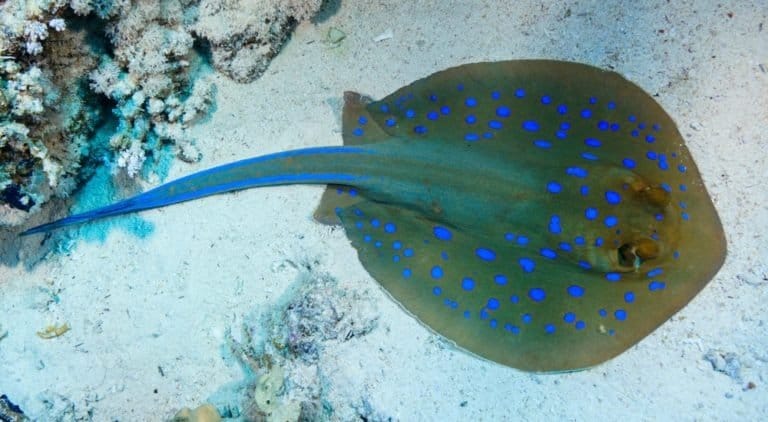
Indo-Pacific reef-associated ray with bright blue spots; popular in aquaria.

View Profile

Manta Rays (mantas)

10%

Myliobatiformes

Large plankton-feeding rays within the same order; often confused with or grouped with stingrays in casual usage.

View Profile

Life Cycle

Birth 3 pups
Lifespan 20 years

Lifespan

In the Wild
5–50 years
In Captivity
6–35 years

Reproduction

Mating System Polygynandry
Social Structure Transient
Breeding Pattern Transient
Fertilization Internal Fertilization
Birth Type Internal_fertilization

Across Myliobatiformes, males typically pursue and grasp females (often biting pectoral fins) and copulate using claspers; both sexes may mate with multiple partners. Encounters are brief, with no pair bonds; some species mate in seasonal aggregations.

Behavior & Ecology

Social Congregation Group: 5
Activity Diurnal, Nocturnal, Crepuscular, Cathemeral
Seasonal Migratory 932 mi

Temperament

Generally non-aggressive toward other animals; relies on avoidance and camouflage
Defensive when handled or cornered; tail-spine use is typically last-resort
Often site-faithful to favored resting/feeding areas, but some species migrate long distances
Variable boldness: individuals at tourism/cleaning sites may become habituated to divers
Intraspecific tolerance ranges from solitary spacing to dense aggregations during seasonal events

Communication

Vocal signaling is minimal or absent; communication is primarily non-vocal
Body posture and fin-disc movements during courtship, spacing, and threat displays
Tactile contact during mating Following, nudging, biting/holding in some species
Electroreception and mechanosensory cues used in close-range interactions and prey detection
Chemical cues likely important for reproduction and individual recognition in turbid habitats
Hydrodynamic cues and visual alignment support coordinated movement in schooling species
Cleaning-station signaling via approach patterns and circling to solicit cleaner fishes

Habitat

Coastal Beach Rocky Shore Coral Reef Kelp Forest Estuary Mangrove Seabed/Benthic Open Ocean Deep Sea River/Stream Lake Wetland +7
Terrain:
Coastal Island Riverine Sandy Muddy Rocky
Elevation: -108268 in – 3280 ft 10 in

Ecological Role

Mesopredators and prey-population regulators on soft-bottom and reef-adjacent seafloors, with some members functioning as pelagic planktivores that couple plankton to higher trophic levels; overall roles vary widely across the order alongside extreme size and life-history differences (approx. disc width from ~0.2 m in the smallest stingrays to ~7 m in the largest mobulid rays; lifespans commonly ~5-10 years in smaller species up to ~40-50+ years in large rays).

Regulate benthic invertebrate communities and some small-fish populations Bioturbation via sediment excavation while foraging, which can alter nutrient cycling and habitat structure Transfer energy from benthic/pelagic prey to higher trophic levels (prey for large sharks/orcas; fisheries interactions) In planktivorous lineages, link plankton production to upper trophic levels and contribute to carbon/nutrient movement through feeding and waste Serve as indicators of coastal ecosystem condition due to sensitivity to habitat quality and prey availability

Diet Details

Main Prey:
Benthic crustaceans Benthic mollusks Polychaetes and other marine worms Small demersal fishes Echinoderms Zooplankton and krill Small pelagic schooling fish +1
Other Foods:
Phytoplankton and suspended microalgae

Human Interaction

Domestication Status

Wild

Danger Level

Moderate
  • venomous puncture wounds from tail spines (usually defensive, often from accidental stepping/handling)
  • lacerations and retained spine fragments leading to severe pain, bleeding, and secondary infection
  • rare but serious injuries if punctures occur in the chest/abdomen/major vessels
  • handling/boating hazards around large rays (e.g., thrashing during capture/release; boat strikes affecting animals and occasionally people)

As a Pet

Not Suitable as Pet

Legality: Legal rules vary by country, region, and species. Many Myliobatiformes, including mobulids, need permits. Only some small freshwater rays are kept as pets; manta/devil and large marine rays are usually illegal. Check local laws, import rules, and CITES.

Care Level: Expert Only

Purchase Cost: $200 - $30,000
Lifetime Cost: $10,000 - $250,000

Economic Value

Uses:
Commercial and subsistence fisheries (food) Bycatch impacts and management costs Leather and specialty products Wildlife trade (ornamental/aquarium subset) Ecotourism (especially manta/devil ray diving) Cultural value and traditional uses
Products:
  • meat (fresh, dried, or salted in some regions)
  • leather (ray skin used for specialty leather goods in some markets)
  • gill plates (from some mobulids in certain markets, where trade occurs)
  • live specimens for public aquaria and limited private aquarium trade
  • tourism services (dive/snorkel encounters, boat tours)

Relationships

Related Species 9

Eagle rays
Eagle rays Myliobatidae Shared Family
Cownose ray Rhinopteridae Shared Family
Manta and devil rays Mobulidae Shared Family
Whiptail stingrays Dasyatidae Shared Family
River stingrays Potamotrygonidae Shared Family
Butterfly rays Gymnuridae Shared Family
Round rays Urotrygonidae Shared Family
Stingarees Urolophidae Shared Family
Sixgill stingray Hexatrygon bickelli Shared Species

Ecological Equivalents 5

Animals that fill a similar ecological role in their ecosystem

Skates
Skates Rajidae Similar flattened, bottom-associated predators that often hunt benthic invertebrates; they differ in tail structure and spines, and many are oviparous (egg-laying).
Guitarfish Rhinobatidae Benthic rays with diets overlapping those of stingrays (crustaceans, mollusks, small fish) and similar use of sand/soft-bottom habitats.
Electric ray Torpediniformes Share a demersal, ray-like body plan and benthic hunting behavior in many species, but use electric organs for predation and defense instead of a venomous spine.
Flatfishes Pleuronectiformes Convergent ecology on soft bottoms: they use camouflage and ambush feeding on benthic prey. They are bony fishes, not rays.
Mollusk- and crab-eating sharks Heterodontidae Occupy a similar niche as hard-prey benthic foragers; they overlap in prey types (crabs, bivalves, echinoderms) and in habitats.

Types of Stingray

19

Explore 19 recognized types of stingray

Oceanic manta ray Mobula birostris
Devil ray
Devil ray Mobula mobular
Porcupine ray (thorny stingray) Urogymnus asperrimus
Bluespotted ribbontail ray Taeniura lymma
Pelagic stingray Pteroplatytrygon violacea
Common stingray Dasyatis pastinaca
Spotted eagle ray Aetobatus narinari
Longheaded eagle ray Aetobatus flagellum
Cownose ray Rhinoptera bonasus
Bat ray Myliobatis californica
Southern stingray Hypanus americanus
Atlantic stingray Hypanus sabinus
Dwarf stingray Hypanus say
Round stingray Urobatis halleri
Southern stingaree Urolophus orarius
Sixgill stingray Hexatrygon bickelli
Ocellate river stingray Potamotrygon motoro
Black-spotted river stingray Potamotrygon leopoldi
Smooth butterfly ray Gymnura micrura

Stingrays are fish able to glide gracefully through the water. There are about 220 different species in the oceans around the world. They also live in lakes and freshwater rivers. Categorized as a group of sea rays, they are related to sharks.

They consist of eight families of fish: Plesiobatidae, Urotrygonidae, Hexatrygonidae, Urolophidae, Potamotrygonidae, Dasyatidae, Myliobatidae, and Gymnuridae. However, stingrays all around the world face threats to survival. They are known to hit predators with their tails upon sensing danger, which is particularly effective as a result of a barb on their tail.

Rather than bones, their bodies consist of cartilage. These fish also have camouflaging capabilities that allow them to escape their predators.

An Incredible Fish: Five Stingray Facts
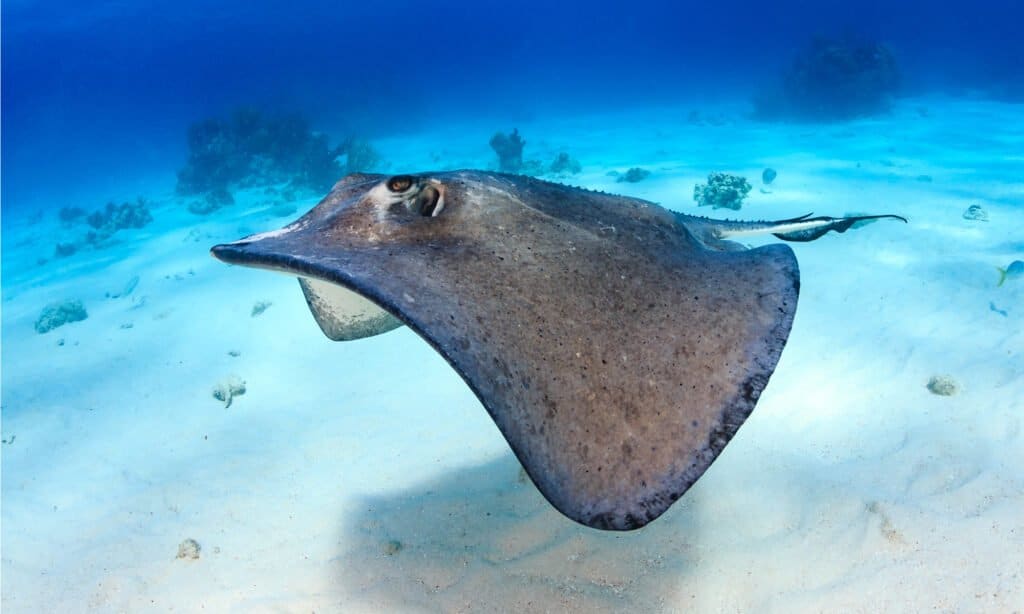
Skate Fish Vs Stingray- Stingray

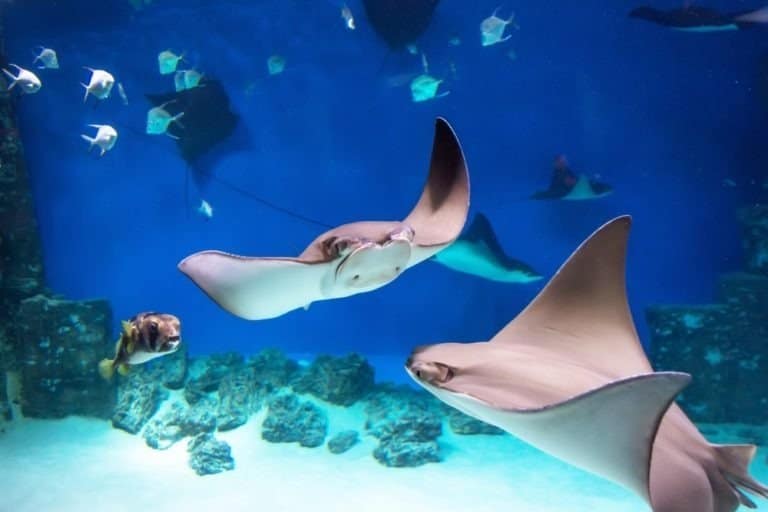
These fish have flat bodies that help them camouflage and blend with their surroundings.

  • Related to sharks: As part of a group of fish called batoids, stingrays aren’t that different from sharks. Though there are clear differences in size, shape, and anatomy, both animals have cartilage (rather than bone). This similarity has given them the nickname “flat sharks.”
  • Flat-bodied: Stingrays are fish that have flat bodies that help them camouflage and blend with their surroundings and eventually escape their predators. They also sting their predators with the spines or barbs in their tails.
  • Completely boneless: These fish have no bones in their bodies.
  • Hundreds of stingrays: There are about 220 different species, including the ocellate river, the thorntail, and the flower stingray.
  • All alone: These fish are solitary creatures and come together only for breeding or migration.
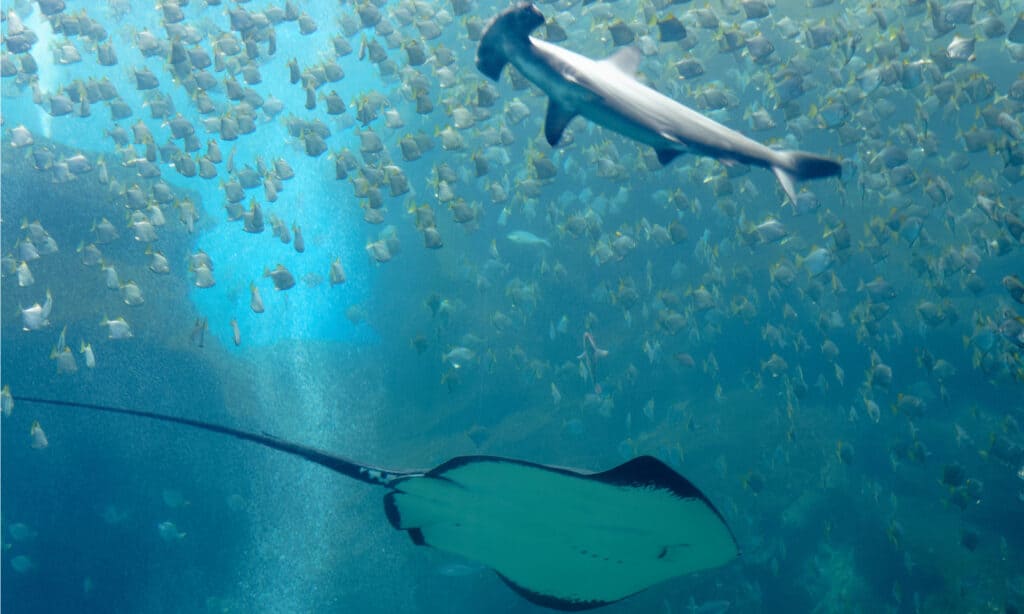
A manta ray gliding under a ferocious hammerhead shark.

They may hunt with a hammerhead shark, but the shark is a predator of the ray.

Classification and Scientific Name

Stingrays belong to the kingdom Animalia and phylum Chordata and are classified in the class Chondrichthyes and order Myliobatiformes. Stingray families vary by species, and there are 8 families with about 29 genera. One of the most common families of a stingray is Dasyatidae.

Evolution and Origins

Most scientists believe that the origin of the stingray is related to ancient marine incursions that happened during the Oligocene and Miocene periods.

Species
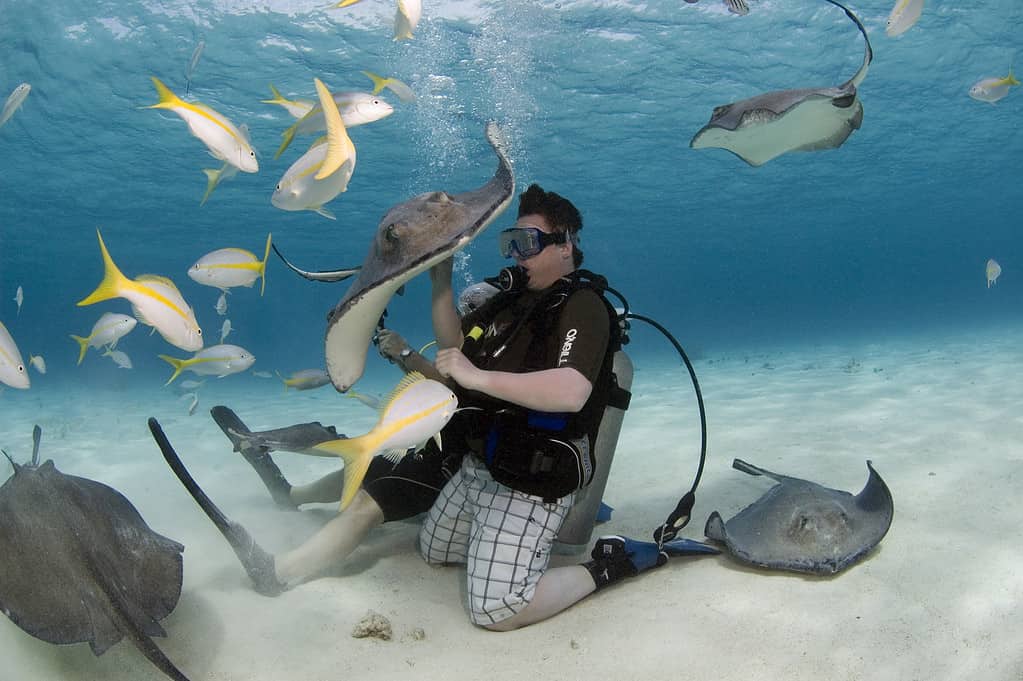
Divers and snorkelers are able to interact with wild stingrays at the Stingray City Sandbar - Grand Cayman

The Cayman Islands is home to Stingray City, where divers can swim with these majestic rays.

Stingrays include 8 different families of fish, and there are about 220 different species of these fish in oceans, freshwaters, and lakes around the world.

One of the most common freshwater stingrays is the river stingray, and the mother gives birth to live babies or pups. In the Atlantic Ocean (as well as in the Mediterranean and Black Seas), the common stingray thrives, though only in habitats with depths of no more than 200 feet. They prefer to reside in muddy or sandy regions. In general, none of the species are aggressive unless threatened.

The blue-spotted stingray, however, will attack with their venom, which may be fatal if they sting the victim in the abdomen or heart. If the sting occurs in other areas of the body, the outcome will not likely be fatal.

Appearance
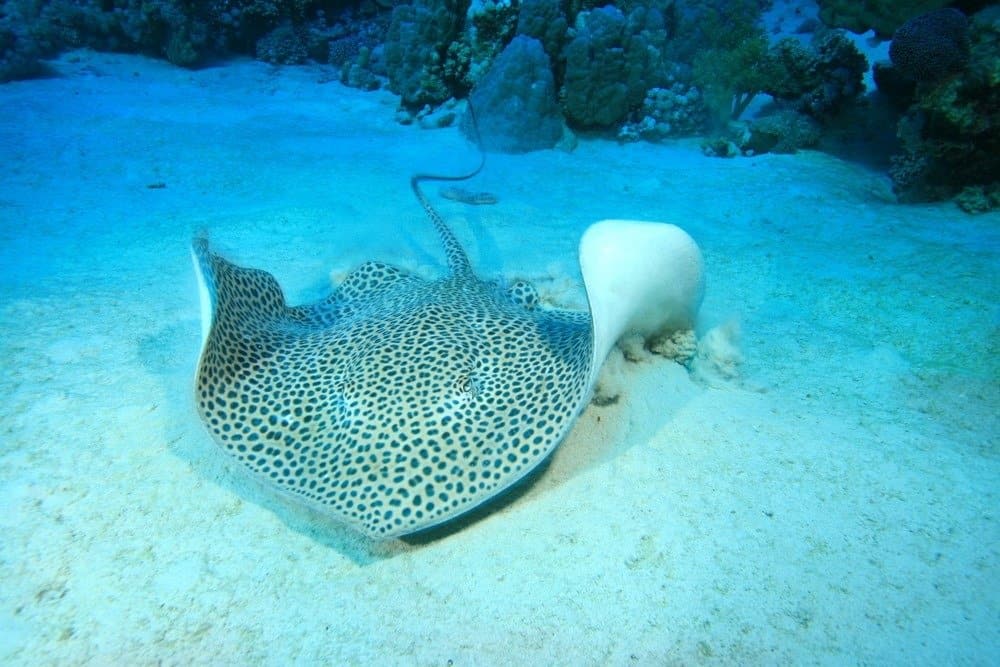
Darkspotted Stingray (Himantura uarnak)

Darkspotted Stingray (Himantura uarnak) is swimming over the ocean floor.

These fish have flat bodies only made of cartilage, which means that these fish lack any bones in their bodies. They have broad fins that are the length of their full bodies. Despite being flat, the fins can often give the stingray a round look. Some of these fish look like they “fly” through the water, but the facts indicate that this is just a smooth flapping motion of the fins. They also have defensive tails that usually help them to ward off predators when they sense danger.

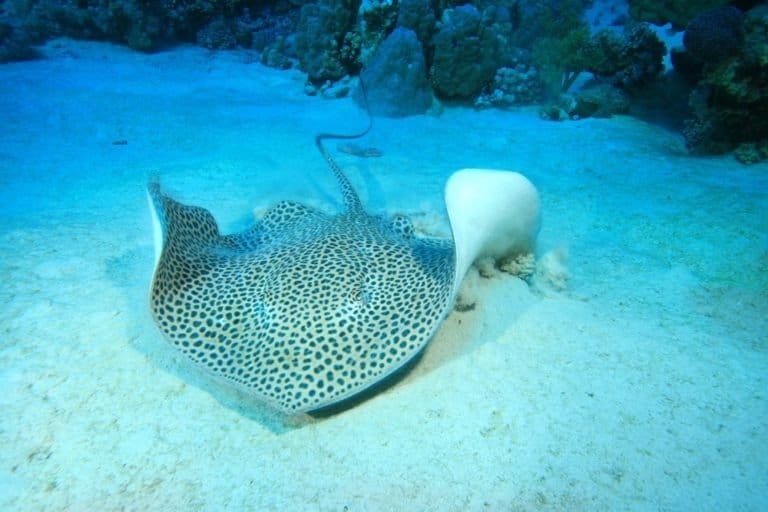
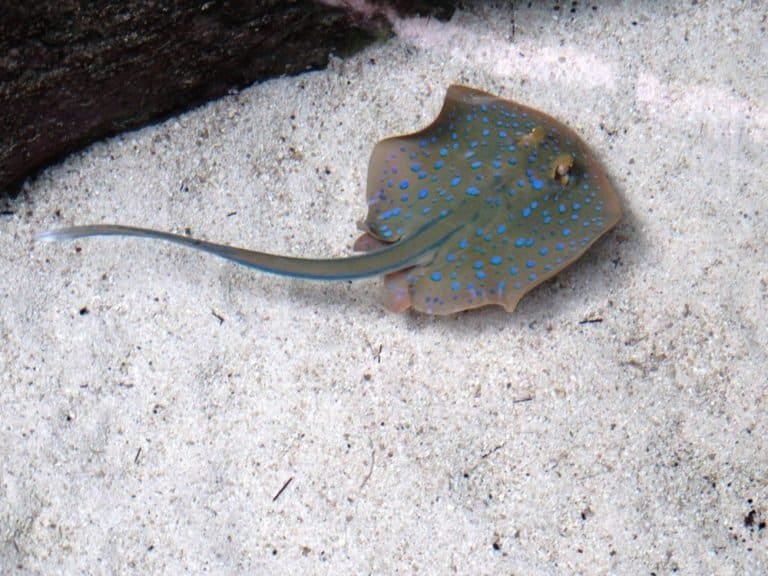
Since there are so many species, color can vary drastically. Though the majority of these fish have a grey or dark brown back with a pale belly, they may also have spots with blue dots, yellow dots, brown dots, and other colors.

Distribution, Population, and Habitat
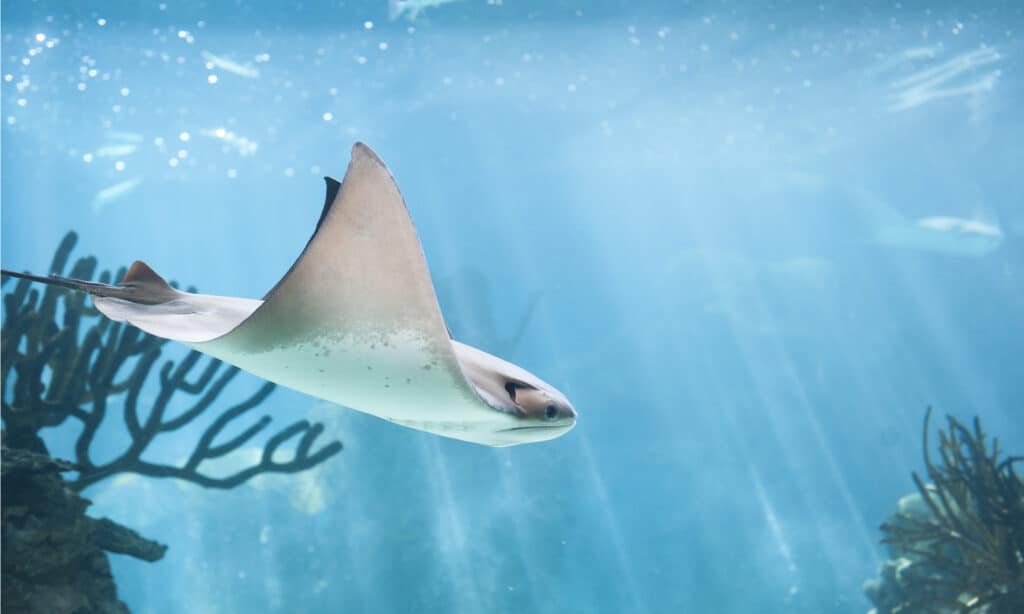
Skate fish Vs Stingray- Skate Fish

These fish also exist in the Black and Mediterranean Seas.

Stingrays live throughout the world.

The Black and Mediterranean Seas are primarily the home of the common stingray, the butterfly ray, the thorntail stingray, and the whiptail stingray. This area allows them to thrive in a calm area, often accompanied by sandy or muddy sea floors, as well as reefs.

Very few of them also exist in the northern Atlantic Ocean, off southern Norway, and the Canary Islands, depending on the particular species. The deepwater stingray prefers the Indian and western Pacific Oceans, and some live in depths of over 2,400 feet.

The Bahamas have become so concentrated with these fish that they are a major tourist attraction in Great Stirrup Cay. There is also a stretch from the Western Baltic Sea to Madeira that makes a great home for these fish.

However, while there are over 200 different species, many stingray populations are threatened or declining, and overall numbers are unknown.

Predators and Prey
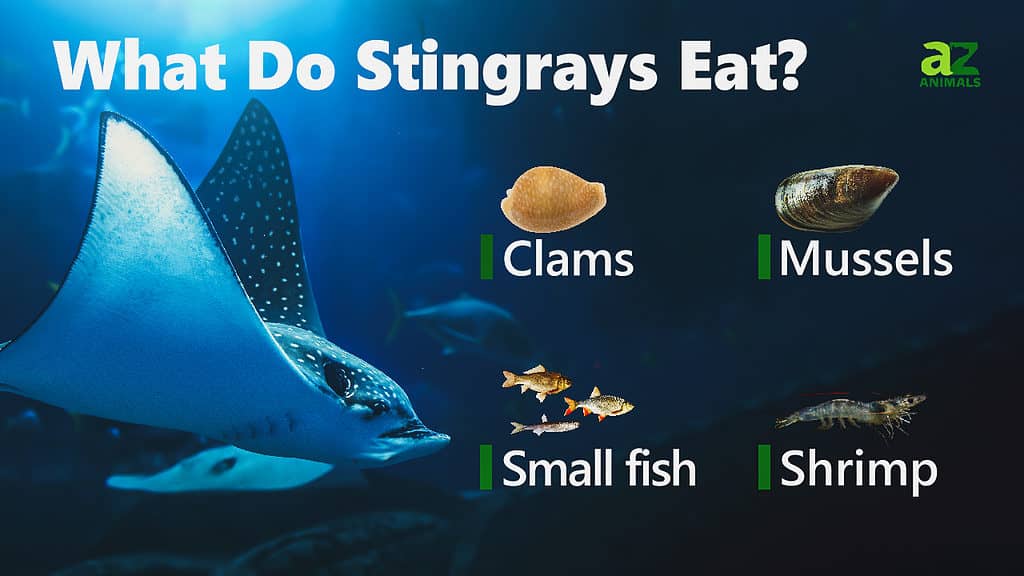
Their diet consists of clams, mussels, small fish, and shrimp.

The main predators of these fish include sharks and seals. Other large fish also feed on them since the larger predators in the ocean will go after almost anything smaller than them.

However, their flat body and smooth movements allow them to lie against the floor of their natural habitat to hide. Rather than attacking when threatened, most will simply flee as quickly as they can. For the most part, the primary prey that they go after are fish that are smaller in size than them.

They usually eat clams, oysters, shrimp, and other small fish that are found in shallow waters, though they have been known to eat snails and squid.

For the most part, stingrays are not aggressive and are not very high up on the food chain. However, humans will capture them as a healthy source of protein.

Reproduction and Lifespan
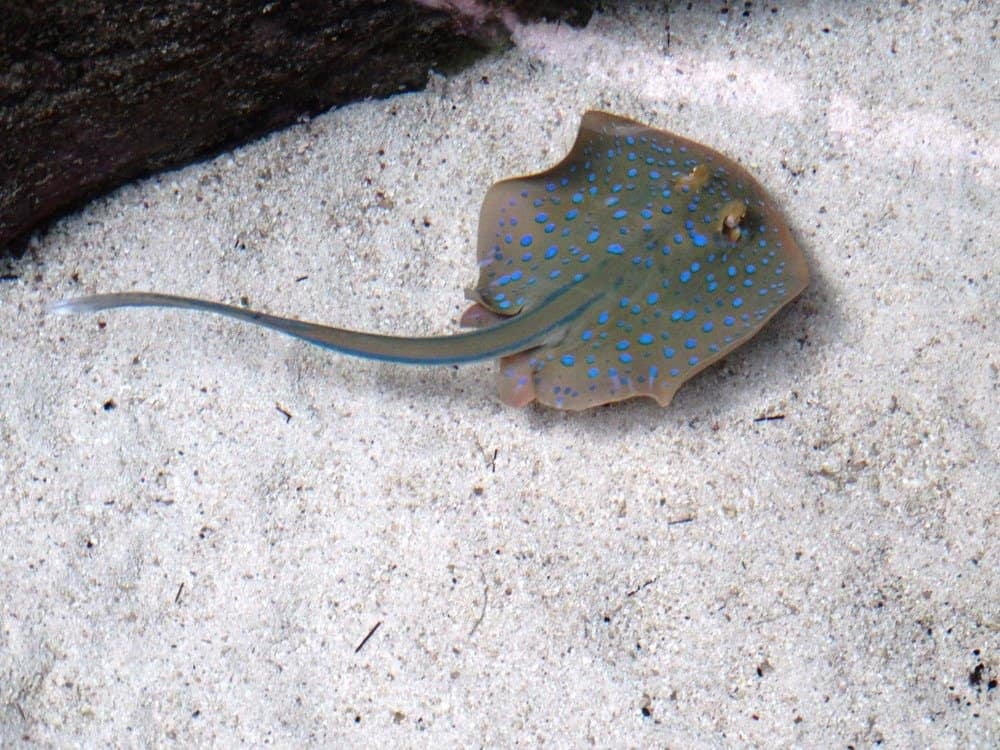
Baby Stingray in aquarium

Babies are known as pups.

Stingrays reproduce using internal fertilization, which means that a male impregnates the female. This reproduction is preceded by courting, which the male does by biting at the female’s pectoral disc. Some stingrays have longer mating periods, taking over half a year before the female becomes pregnant.

The unborn babies are nourished and grow inside the egg yolk inside the body of the female stingray fish. While the size of a litter of stingrays may vary, the birth typically brings 5-15 live young.

Since stingrays have survival instincts in their genes, the young do not stay with their parents after birth.

Stingrays live for around 15 to 25 years in the wild. In captivity, this lifespan can drop down to as little as five years with proper care.

Fishing and Cooking

These fish are caught using lines or spears and are safe to consume. They are eaten by humans across the globe.

The most common stingray dish worldwide is grilled or barbecued stingray, such as sambal stingray in Southeast Asia. People have often said that they find the meat rubbery, and it tastes a lot like shark meat or scallops.

View all 390 animals that start with S

Sources

  1. Wikipedia / Accessed December 3, 2020
  2. Live Science / Accessed December 3, 2020
  3. California State University / Accessed December 3, 2020
  4. National Geographic Kids / Accessed December 3, 2020
  5. Sea World / Accessed December 3, 2020
  6. All About Stingrays / Accessed December 3, 2020
  7. Smithsonian's National Zoo & Conservation Biology Institute / Accessed December 3, 2020
  8. National Geographic / Accessed December 3, 2020
Rebecca Bales

About the Author

Rebecca Bales

Rebecca is an experienced Professional Freelancer with nearly a decade of expertise in writing SEO Content, Digital Illustrations, and Graphic Design. When not engrossed in her creative endeavors, Rebecca dedicates her time to cycling and filming her nature adventures. When not focused on her passion for creating and crafting optimized materials, she harbors a deep fascination and love for cats, jumping spiders, and pet rats.
Connect:

Thank you for reading! Have some feedback for us?


Stingray FAQs (Frequently Asked Questions)

Stingrays are found in oceans, freshwaters, and lakes all around the world and are known to also exist in the Black and Mediterranean Seas.