

Quick Take
- Tang fish carry a hidden weapon on their bodies, though it is not what most reef fish use for defense. See their sharp spines →
- Some tang species have a bizarre survival trick that fools even the most dangerous predators. Discover the death-feigning trick →
- One of the most popular tang species looks harmless on a plate, though eating it can land you in serious trouble. Learn about ciguatera poisoning →
- Tang juveniles hatch in a condition so extreme it barely qualifies as alive, which raises real questions about what 'life' means for a fish. Explore juvenile development →
With its brightly colored body and stark patterns, the tang makes for an incredibly vivid display in the home. It is well-adapted for its natural habitat in the coral reefs. This can make it a little difficult to keep in an artificial environment. But for those with the budget and inclination to take care of its needs, the tang makes a very rewarding aquarium fish.

An Incredible Fish: 3 Tang Facts
- Tang fish prefer to travel and feed together in large schools, perhaps as a means of overwhelming other fish that jealously protect algae spots.
- Some species can lie motionless, as if dead, until a predator passes.
- The tang’s bright colors come from special crystalline cells in the skin. Some tangs can modify their colors based on their stress level or environmental conditions.
Classification and Scientific Name
The tang belongs to the family Acanthuridae. This name is derived from the Greek words akantha and oura, meaning ‘thorn’ and ‘tail.’ It belongs to the order Perciformes, one of the most diverse animal orders in the world. Included in the family Acanthuridae are surgeonfishes, tangs, and unicornfishes. The Royal Blue Tang/Palette surgeonfish (Paracanthurus hepatus) is the only member of the genus Paracanthurus.
Species
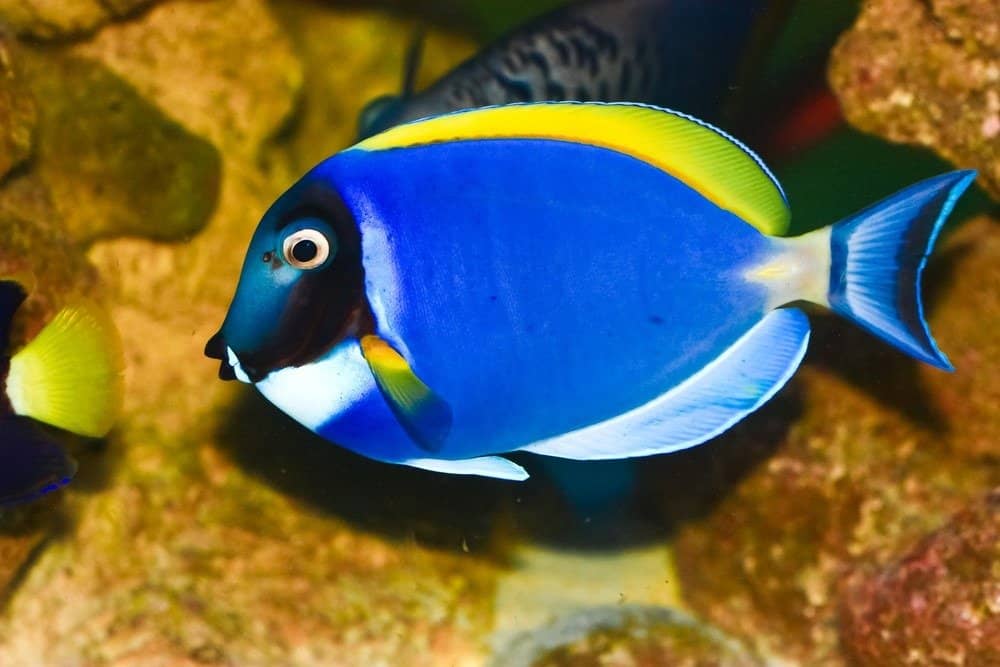
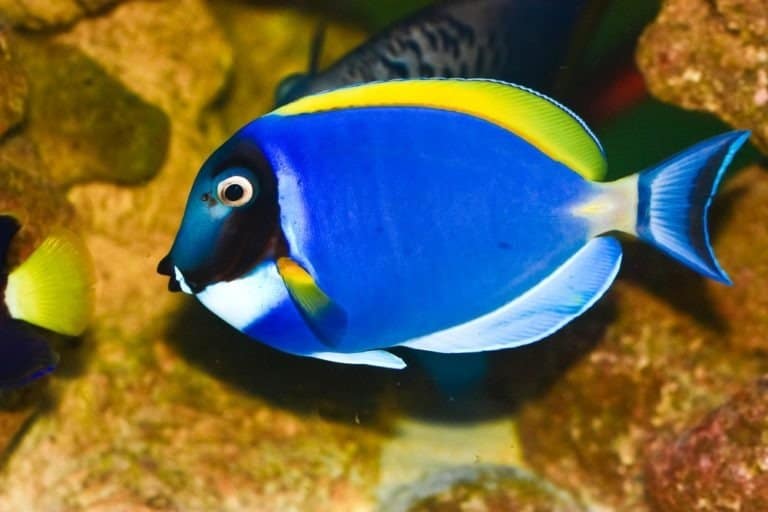
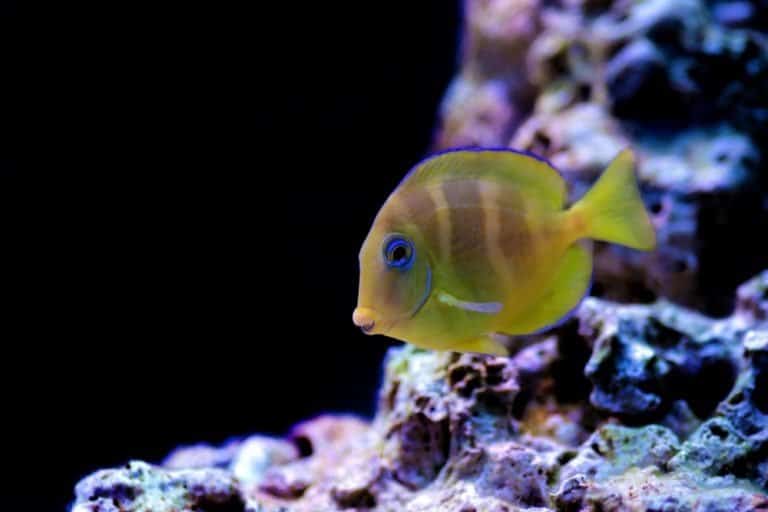
This powder blue tang is representative of the over 80 species of tang fish.
©Nantawat Chotsuwan/Shutterstock.com
There are over 80 species in the family of Acanthuridae, plus many more extinct types known from the fossil record. Many of them go by the name of surgeonfish, doctorfish, or unicornfish, but there isn’t much to distinguish these types from the true tang.
- Blue Tang: Also known as the surgeonfish or the hippo tang, and many other names, this species lives in the Indian and Pacific Oceans. It has a remarkably bright blue color with a yellow tail and black markings. In the movie Finding Nemo, the fish called Dory is a blue tang.
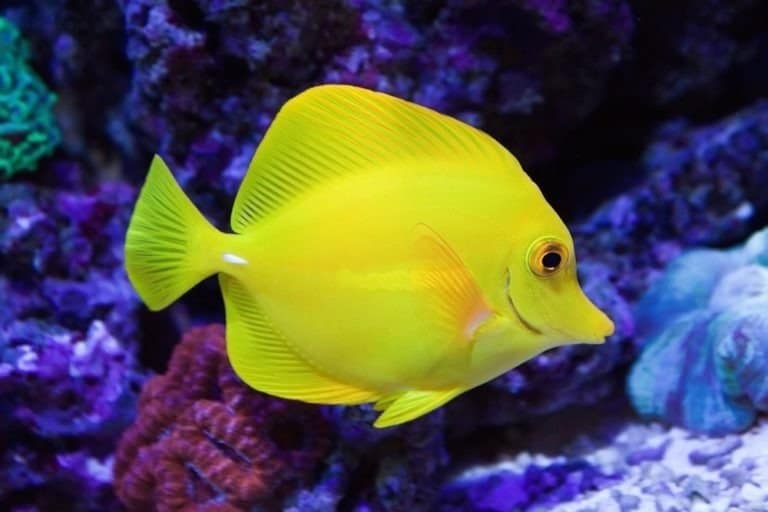
- Yellow Tang: This species has an all-yellow body and a narrow “nose.” It is one of the most popular aquarium fish in the world.
- Convict Tang: With its white body (fading to yellow near the back) and black stripes, it’s easy to see how this species got its name.
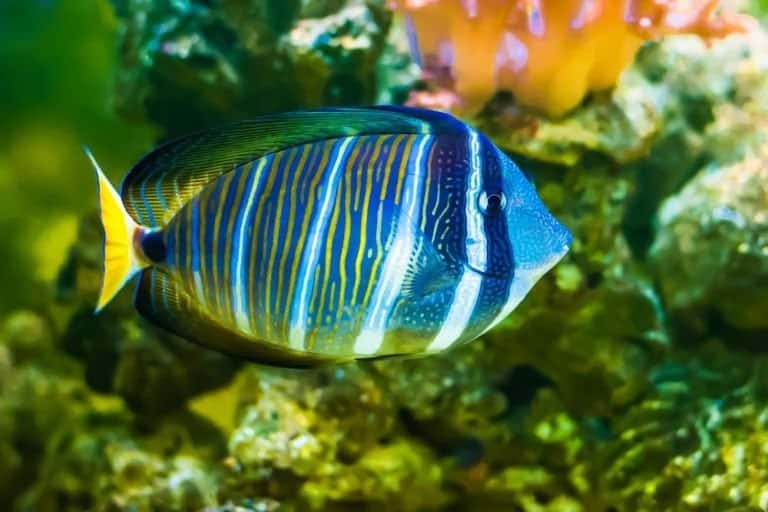
- Red Sea Sailfin Tang: The sailfin is aptly named. The highly elevated dorsal and anal fins have the appearance of gigantic sails. The sailfin’s blue body is also covered with dark blue bands and yellow-orange stripes and spots.
- Clown Surgeonfish: Also known as the lined or striped surgeonfish, the clown surgeonfish has alternating blue and yellow stripes all over its body. The clown surgeonfish has a wide range from East Africa to Hawaii.
Appearance
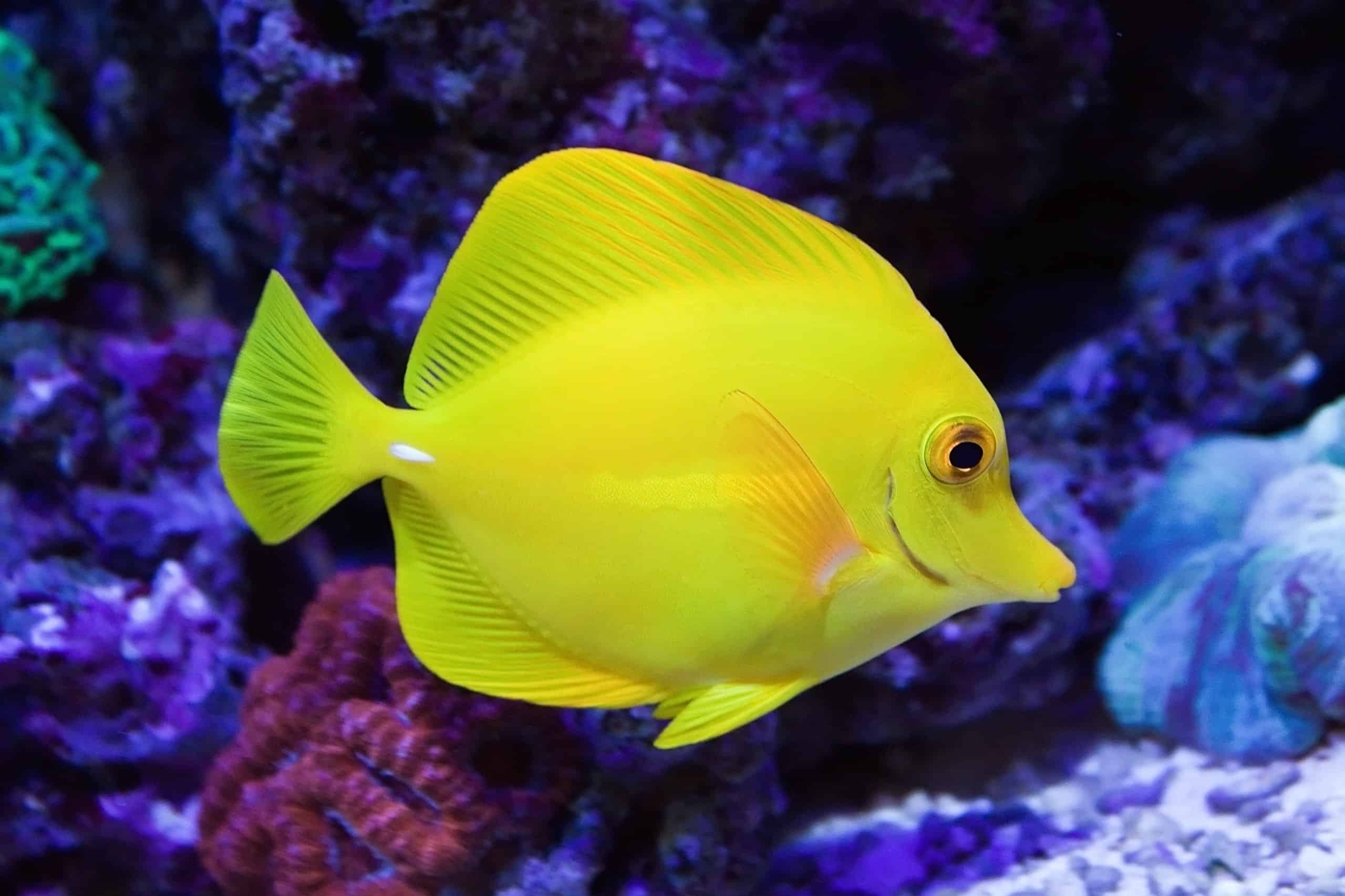
The yellow tang is another example of the bright colors found among the fish family.
©mexrix/Shutterstock.com
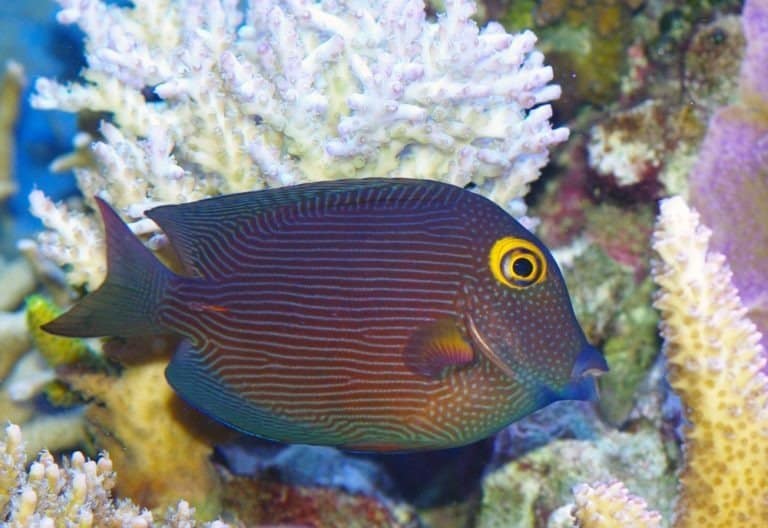
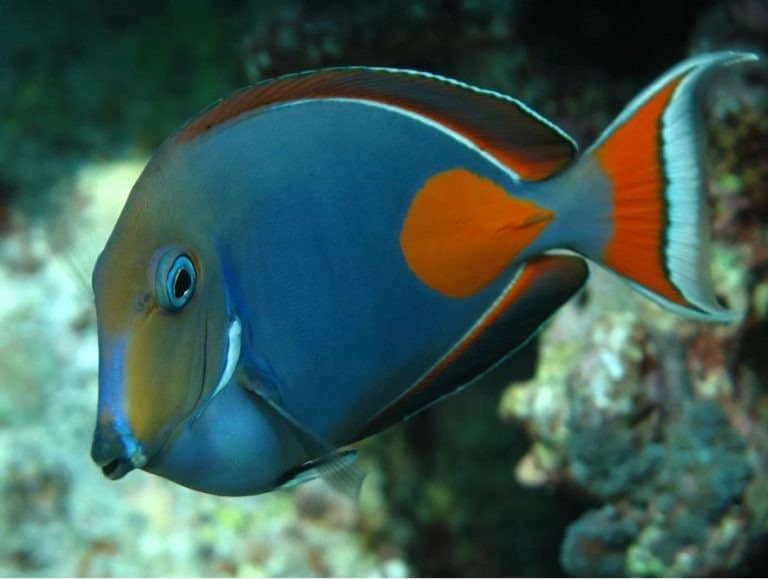
The tang is a small, rounded saltwater fish with all manner of bright colors and patterns adorning its body. The sheer diversity across species is truly remarkable — there is almost nothing else like it in the animal kingdom. Many theories have been suggested for why tropical fish are so brightly colored, but it probably has something to do with their coral environment.
In addition to the bright colors, these fish sport a single dorsal fin across the length of their backs and another long anal fin along the stomach. Perhaps the most distinctive physical characteristic is the sharp spine (scalpel) located on either side of the tail, used to protect itself against predators. It also allows the tang to duel other males to establish dominance.
Members of the tang family rarely grow larger than 2 feet (with few exceptions, such as the 3-foot-long whitemargin unicornfish). Most species are less than 10 inches long from head to tail.
Distribution, Population, and Habitat
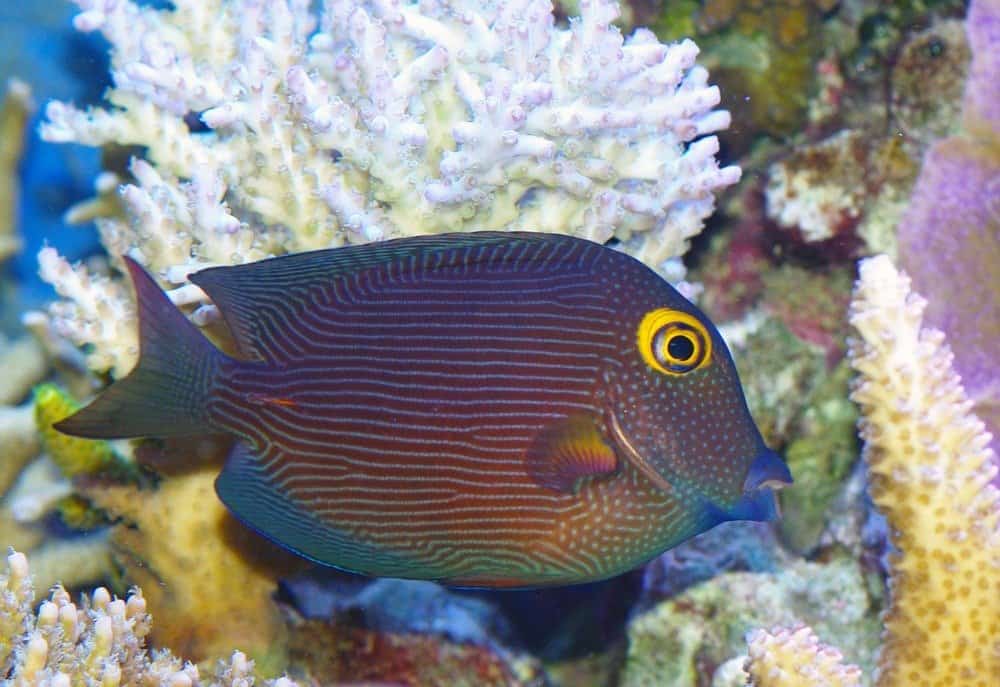
Tangs are endemic to tropical regions in the Indian, Pacific, and Atlantic Oceans as well as the Caribbean Sea.
©Dobermaraner/Shutterstock.com
Most members of the tang family are endemic to the tropical regions in the Indian and Pacific Oceans, as well as the Atlantic Ocean and the Caribbean Sea. The coral reef often provides an oasis for these vulnerable types of fish. When threatened, they can dip into small nooks and crevices in the reefs. These fish are incredibly abundant around the world’s oceans. The IUCN Red List considers many of them to be species of least concern. However, as more coral reefs die off from the effects of climate change, this could put stress on these fish.
Predators and Prey
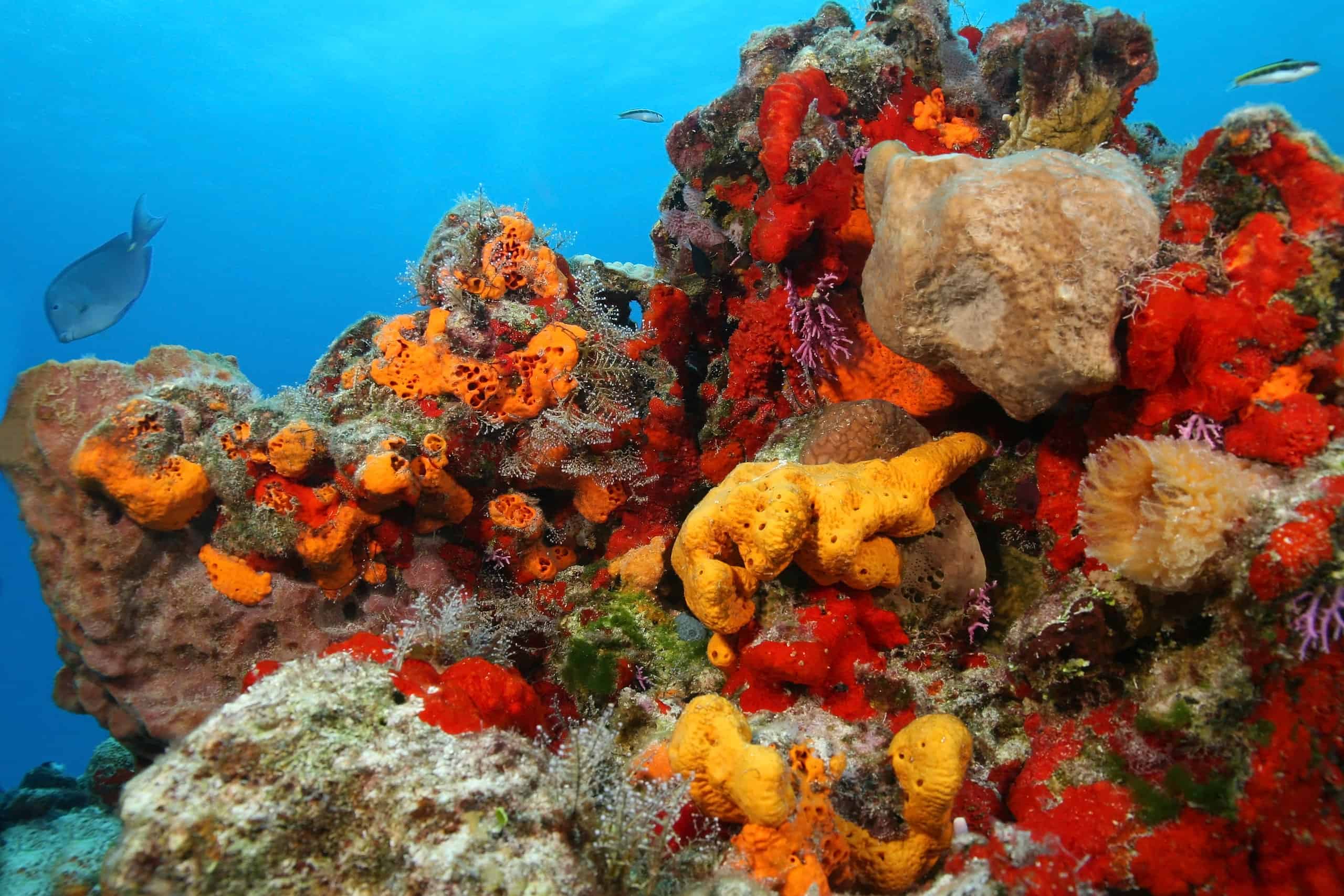
Tangs are an important intermediary fish in the coral reef food chain.
©Brian Lasenby/Shutterstock.com
Tangs are an important intermediary fish in the coral reef food chain. They extract vital nutrients from plant matter and also keep algae levels down, preventing them from suffocating the reefs. They are also an important source of food for secondary consumers in the food chain.
What does the tang eat?
Most species of tang are herbivorous consumers that constantly move along the surface of coral reefs and graze on algae and plankton growing in the shallower waters. Some species supplement this with a little meat.
What eats the tang?
The main predators of most tang are large carnivorous fish such as tuna, barracuda, groupers, and snappers. The sharp scalpels at its tail are its main means of defense against predators.
Reproduction and Lifespan
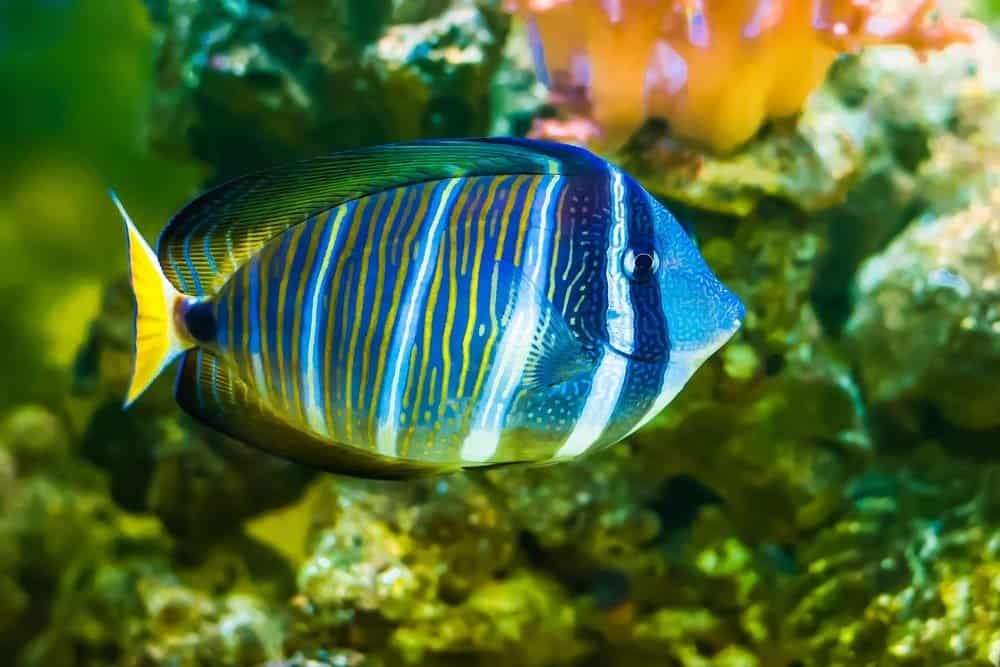
It takes up to a year for the juvenile tang to reach sexual maturity, like this adult sailfin tang.
©TigerStocks/Shutterstock.com
The tang as a family has many different methods of reproduction. Most are broadcast spawners that maximize the chances of fertilization by releasing many thousands of eggs and sperm into the water at the same time, where they mix.
The juveniles usually hatch in a matter of days and sometimes lack even rudimentary eyes, mouths, or a heartbeat. Some species spawn in protective coral or mangrove forests and then move toward the open coral surface as they age. It takes up to a year for the juvenile tang to reach sexual maturity. These are relatively long-living fish that may have a life expectancy of a few decades in the wild.
Fishing and Cooking
The tang is rarely used in human cuisine. The flesh of some species (like the regal blue tang) is poisonous and should be avoided completely. The fish does not produce this toxin itself; instead, it ingests it from another organism and passes it on to whatever eats it. Symptoms of the toxin include diarrhea, low blood pressure, and reduced heart rate. Deaths from ciguatera poisoning are extremely rare, with mortality generally estimated at below 0.5%.
Tang Pictures
View all of our Tang pictures in the gallery.

Nantawat Chotsuwan/Shutterstock.com
Sources
- Britannica / Accessed December 18, 2020
- Seaworld Parks & Entertainment / Accessed December 18, 2020
- Tropical Fish Magazine / Accessed December 18, 2020